'Why History Museums Collect Art' invites viewers to connect the dots
An exhibition at the Wichita-Sedgwick County Historical Museum presents several Kansas artists’ works as historical artifacts.
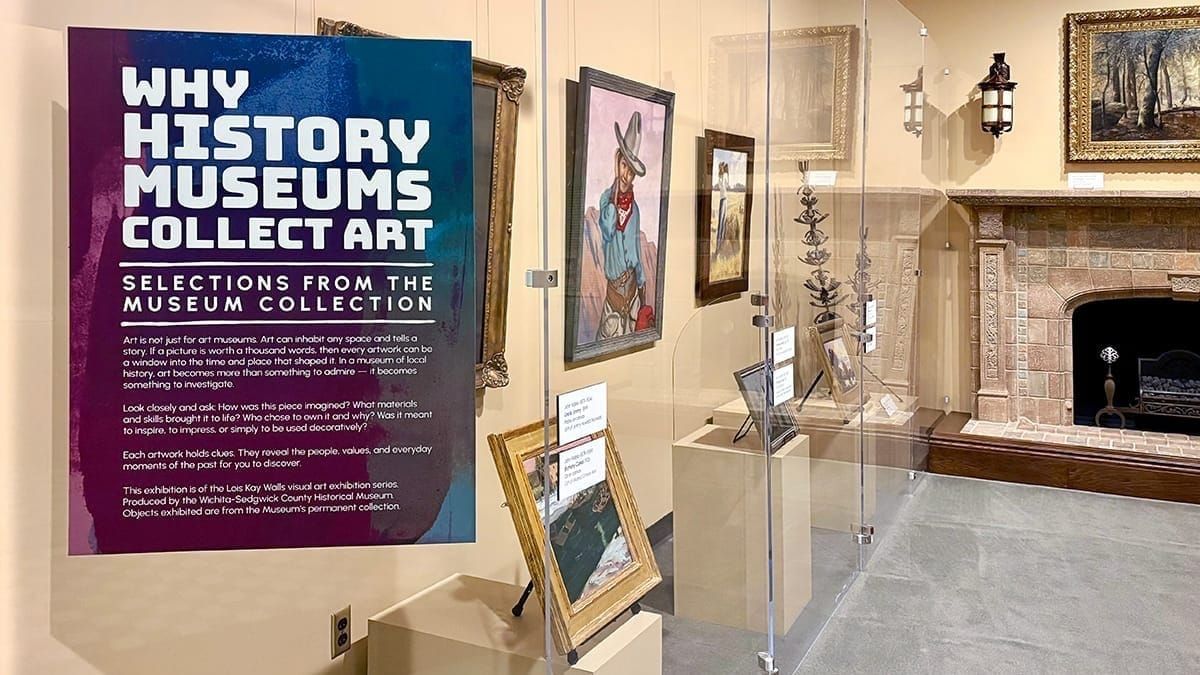
Tucked into a gallery at the Wichita-Sedgwick County Historical Museum, a small exhibition of paintings and sculptures is currently on display with seemingly no common theme, except for the fact that the works of art are housed in a history museum.
The exhibition on the third floor, aptly called “Why History Museums Collect Art,” showcases a dozen pieces by Kansas artists such as C.A. Seward, Cecil McAlister, John Noble, and more. A sign encourages visitors to look for clues as to why the works are on view in the historical museum.
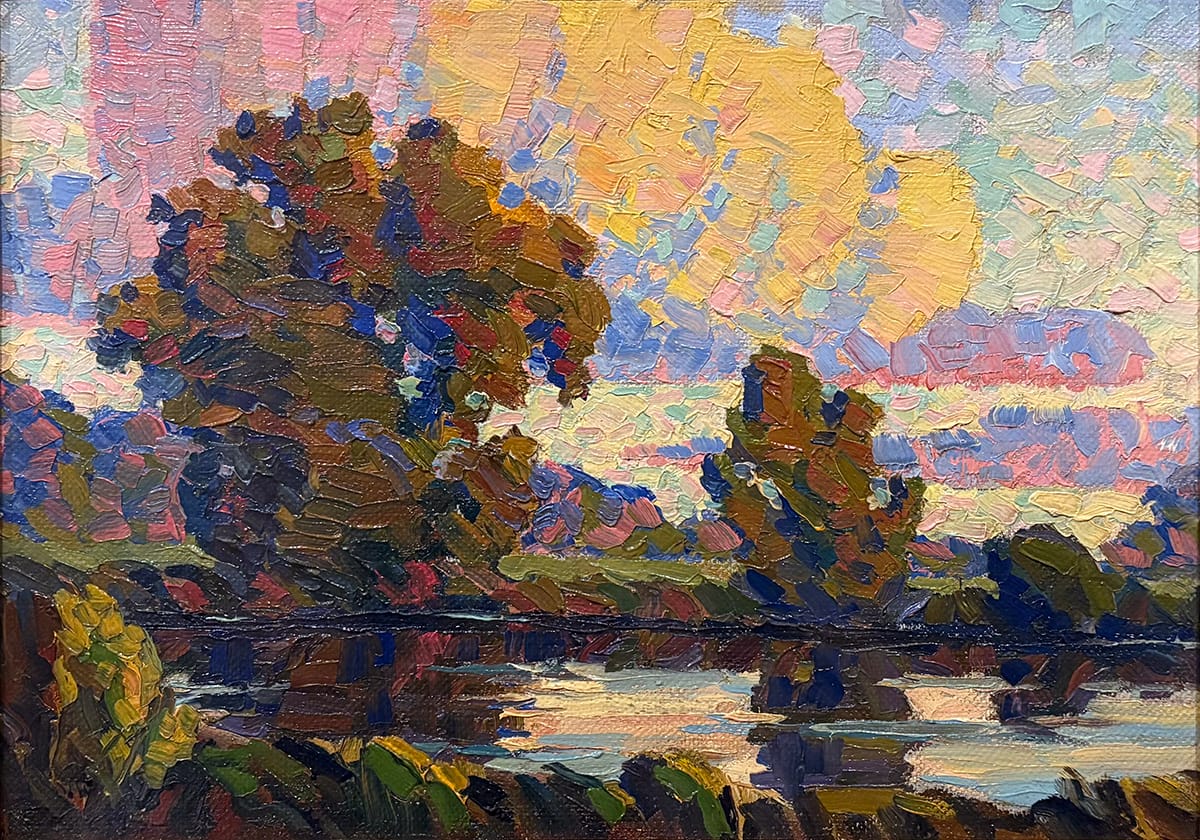
A kaleidoscope of colors first caught my attention in the show, particularly an impasto painting by C.A. Seward with thick, textural strokes blending into a serene landscape at sunrise. Looking up his other works, I was surprised to discover that he was predominantly a lithographer.
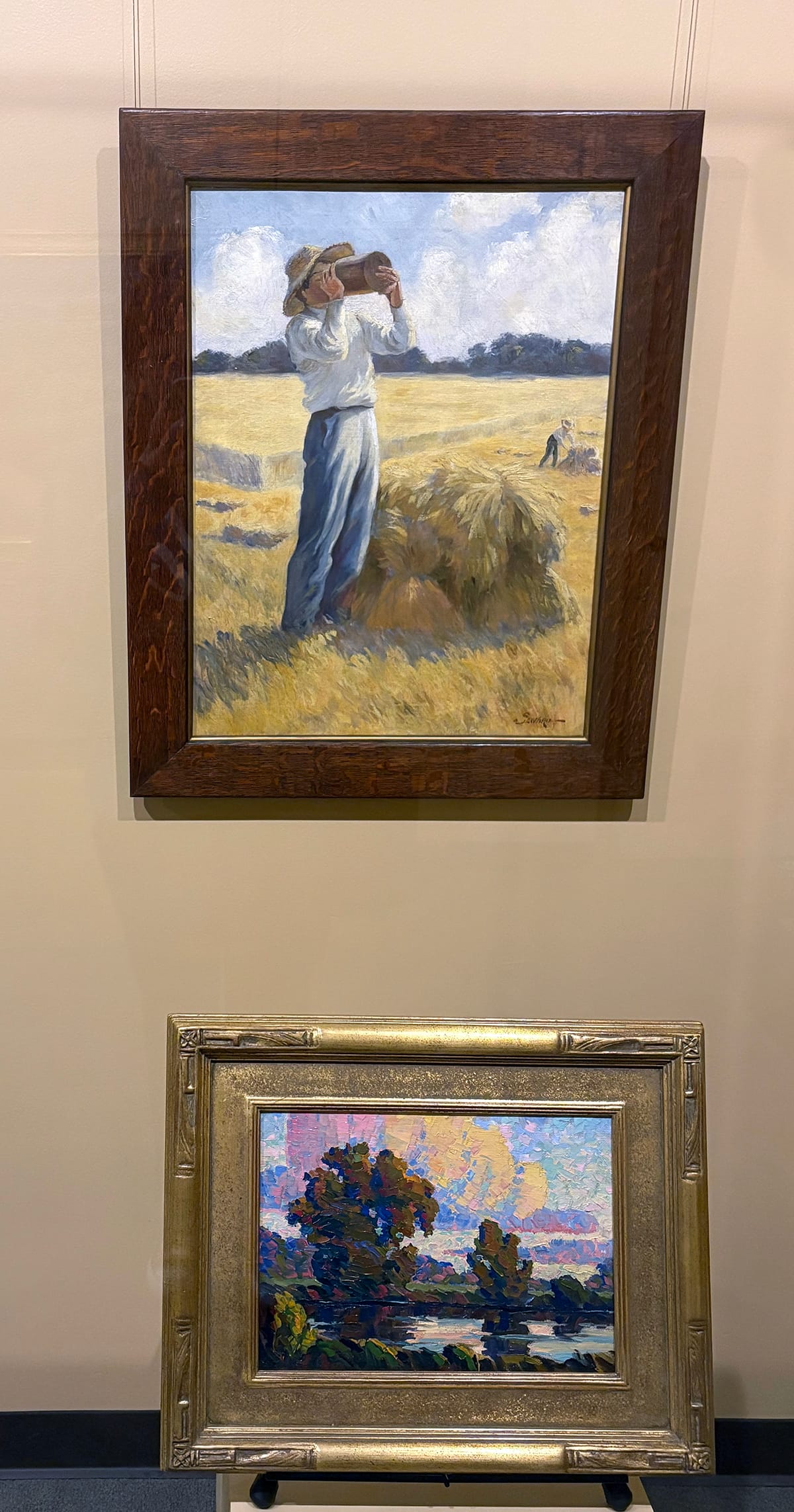
Seward, though, was an admirer of Birger Sandzén, a Swedish-American artist who lived and worked in Lindsborg, Kansas. Sandzén is known for the vivid landscape paintings he created using strong, colorful brushstrokes. Seward, a native Kansan, took classes with him. The untitled work of Seward’s hanging in this museum could easily be mistaken for a Sandzén original.
Both artists worked in Kansas, just over 70 miles apart from one another. Seward, born in Chase, spent most of his life in Wichita, building a studio and becoming a founding member of the Wichita Art Association, Wichita Art Museum, and the Wichita Artists’ Guild. It makes sense to include a Kansas artist inspired by another Kansas-based artist in a Kansas museum. These details are not literally printed on a placard, but Seward’s splashy eye-catcher is just one frame in a visual storytelling of Kansas history.
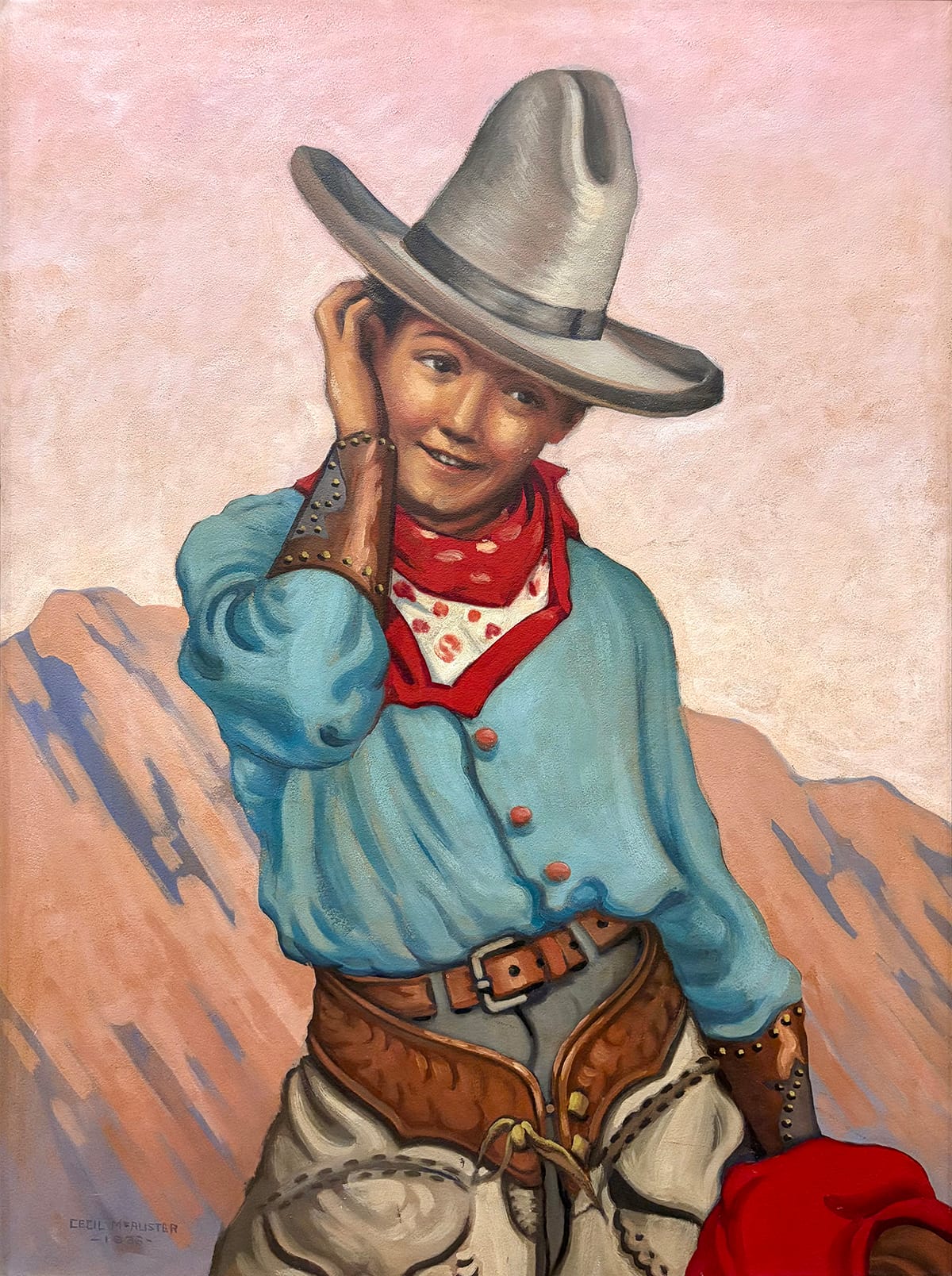
To the left of Seward’s work in the show is another marker of the past: Cecil McAlister’s 1940 untitled painting depicting a cowboy in an unusual pose. His cheeky expression, cocked hip, and cupped hand behind his ear implied bashfulness. Cowboys are usually portrayed as stony, aggressive, or heroic. McAlister counters the stereotype, instead creating a coy cowboy who looks like he’s giving a half-hearted apology.
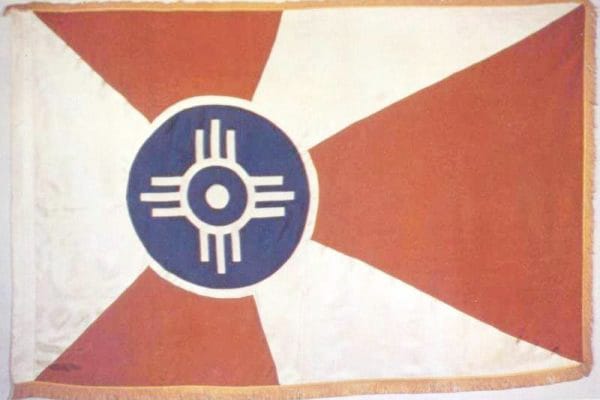
McAlister cemented his place in Wichita history a few years prior to this cowboy, when his design for a Wichita flag won a Rotary Club contest, bringing him $40 and, eventually, national recognition. In an interview with the Wichita Eagle in 1937, he said, “These stripes running in and out of red and white are symbols of rays of light or ways to come and go, open and free to all.”
That “open and free to all” sentiment is fitting for a cowboy’s lifestyle, usually independent and wild-ranging on the prairie. McAlister’s flag also symbolizes the Wichita Native Americans that originated in the area before it grew into the city carrying their name. McAlister’s exploration of Western characters and prairie history makes his art a perfect fit for a history museum.
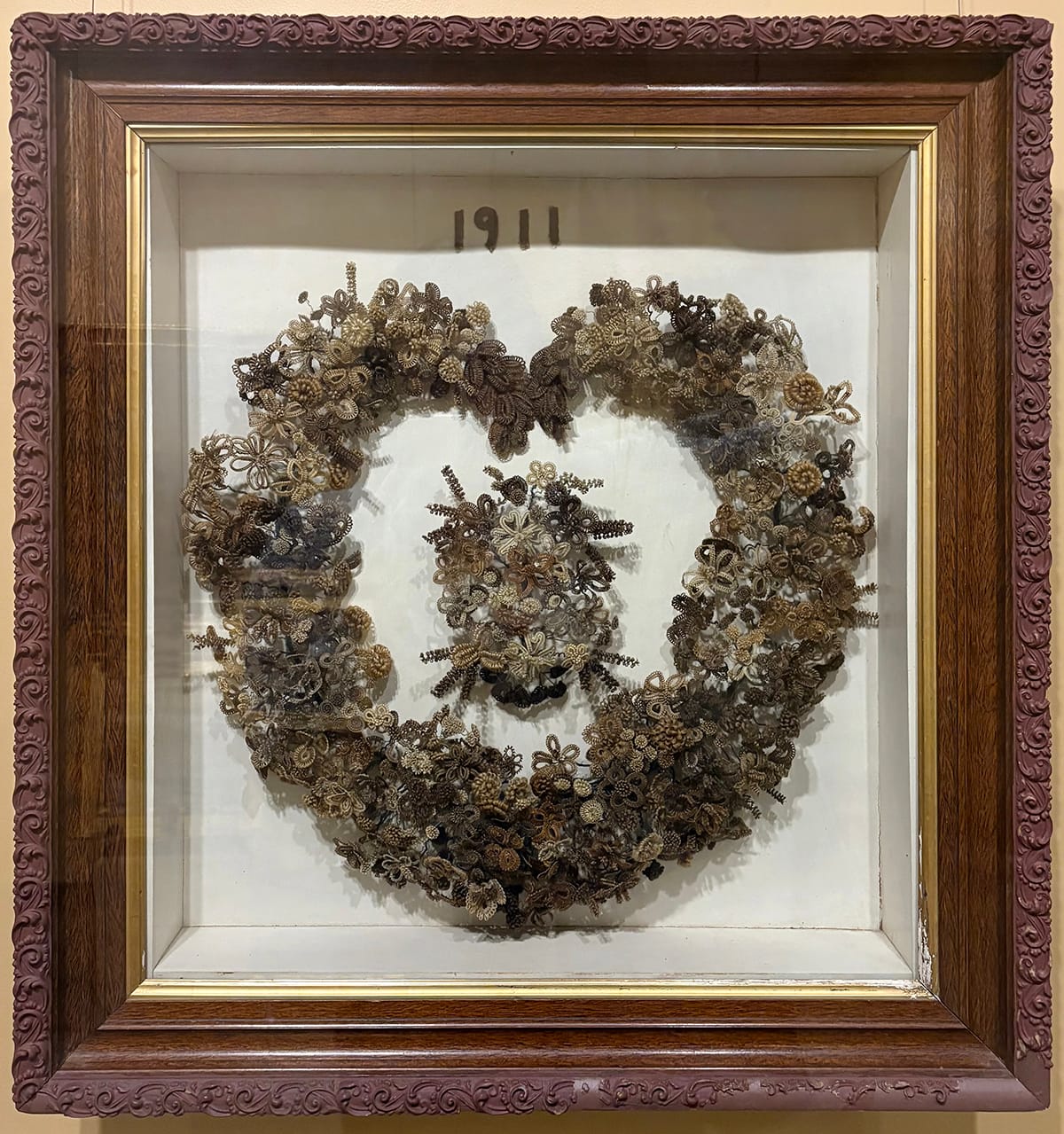
Across from McAlister’s cowboy, a large, fuzzy, three-dimensional heart sticks out in this exhibition filled almost entirely with paintings and sculptures. On closer inspection, you will notice it is made up of hundreds of tight coils in various neutrals, winding into and out of one another to form a heart and a centerpiece oval.
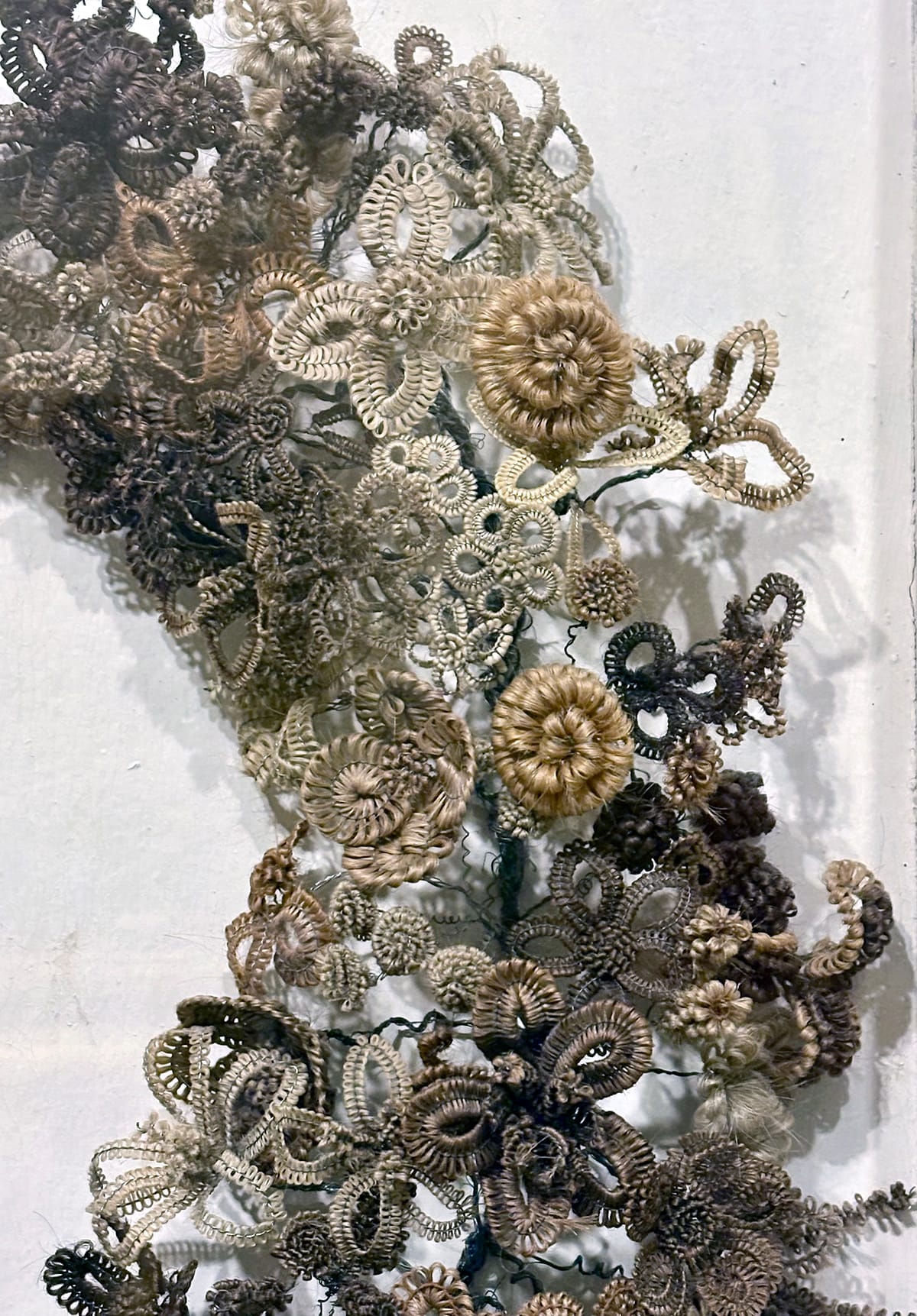
The untitled work by Sarah Wolfe was created out of human hair and wire. When you take a step back from it, the texture starts looking like moss or mold — fitting for the already organic art. It was gifted to the museum by Hazel Wolfe Bowman and Lizzie Wolfe Kratzer, suggesting a family connection, but it is unclear if it is a Kansas family. An untitled sculpture credited to Jerry Rothman also has no overt Kansas connection. Rothman was a ceramicist from Brooklyn and a key player in the California Ceramics Revolution in the 1950s, reinventing ceramics as a sculptural medium. Did the museum place red herrings for fun? I will accept this theory.
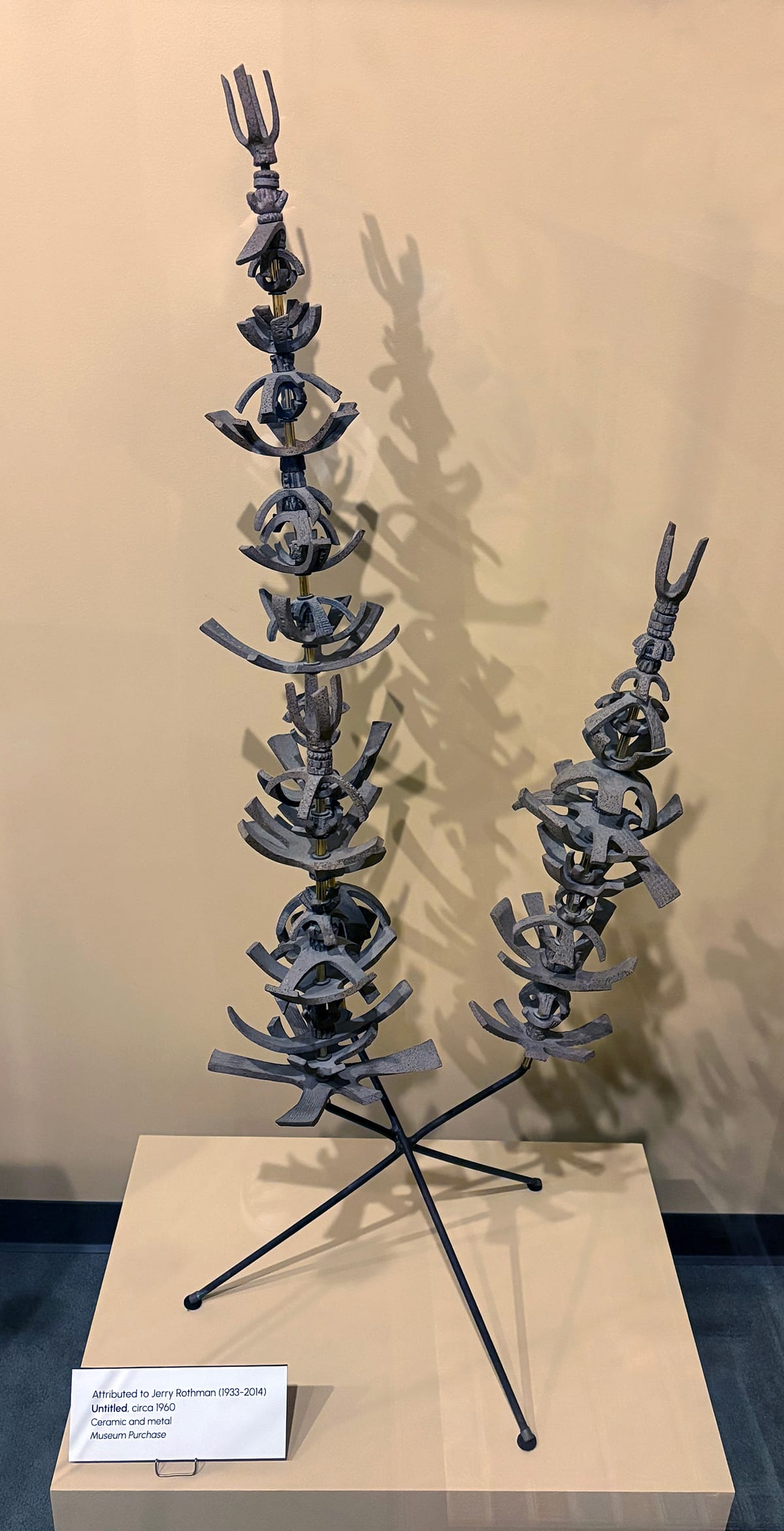
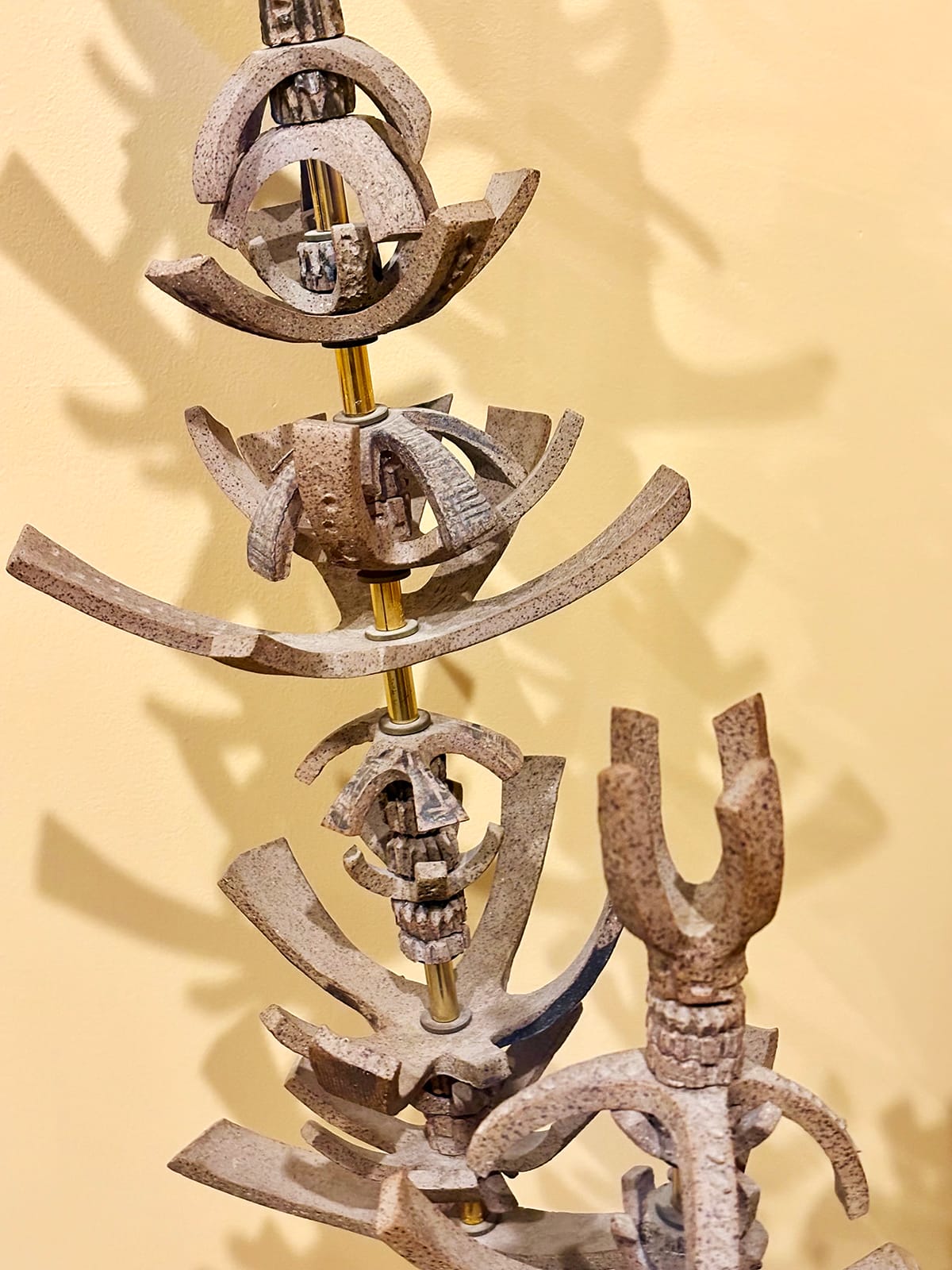
Attributed to Jerry Rothman, “Untitled,” circa 1960, ceramic and metal. Photo by Stefania Lugli for The SHOUT
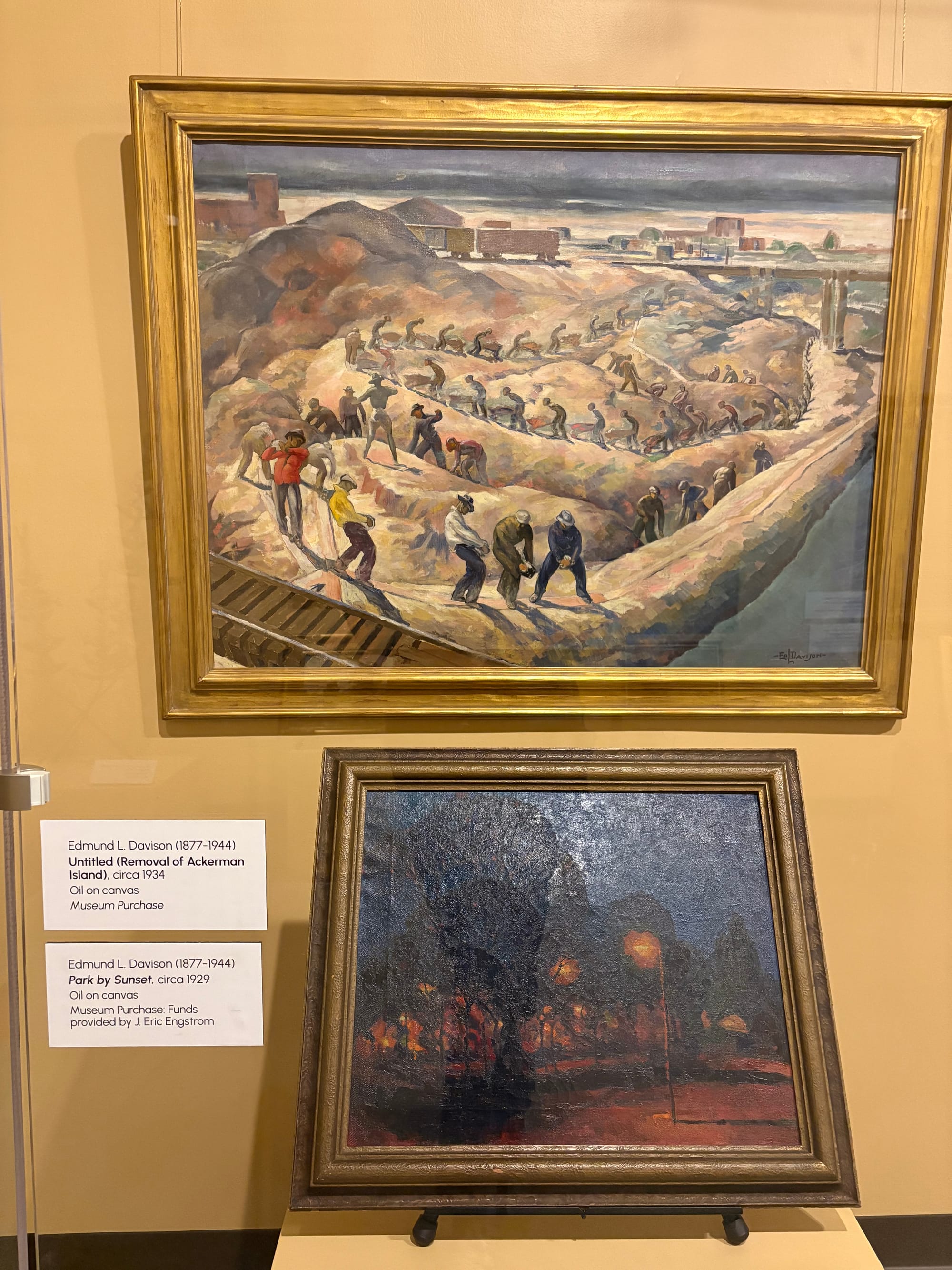
Two paintings in the show with contrasting light and dark scenes were painted by the same artist: Edmund Davison. He was born in Iowa but moved to Wichita as a child, and as an artist he specialized in oil painting and landscape scenes. Allegedly, he traveled the country to participate in juried exhibitions but never sold a painting, instead giving his work away.
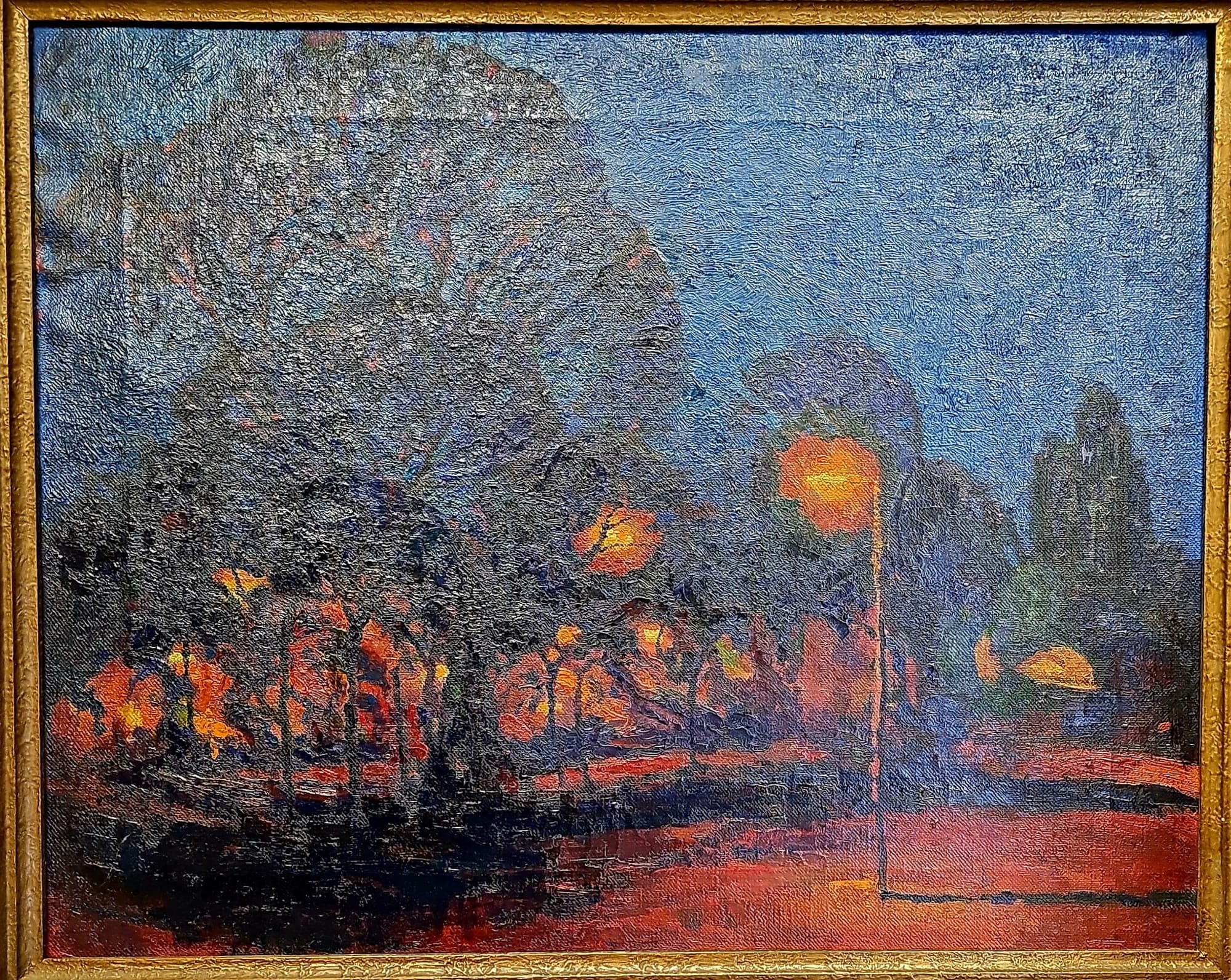
His Depression-era works clash in movement, too. “Park by Sunset,” circa 1929, lands the viewer into a nighttime stroll, blanketed by the night sky and led by amber lights. The black silhouettes of expansive trees and a tall building suggest a park in or near the city. Maybe Davison was inspired by a quiet moment in the company of trees instead of concrete. It's not clear whether the scene is Wichita-based, but the nostalgic feeling it evokes is all the same.
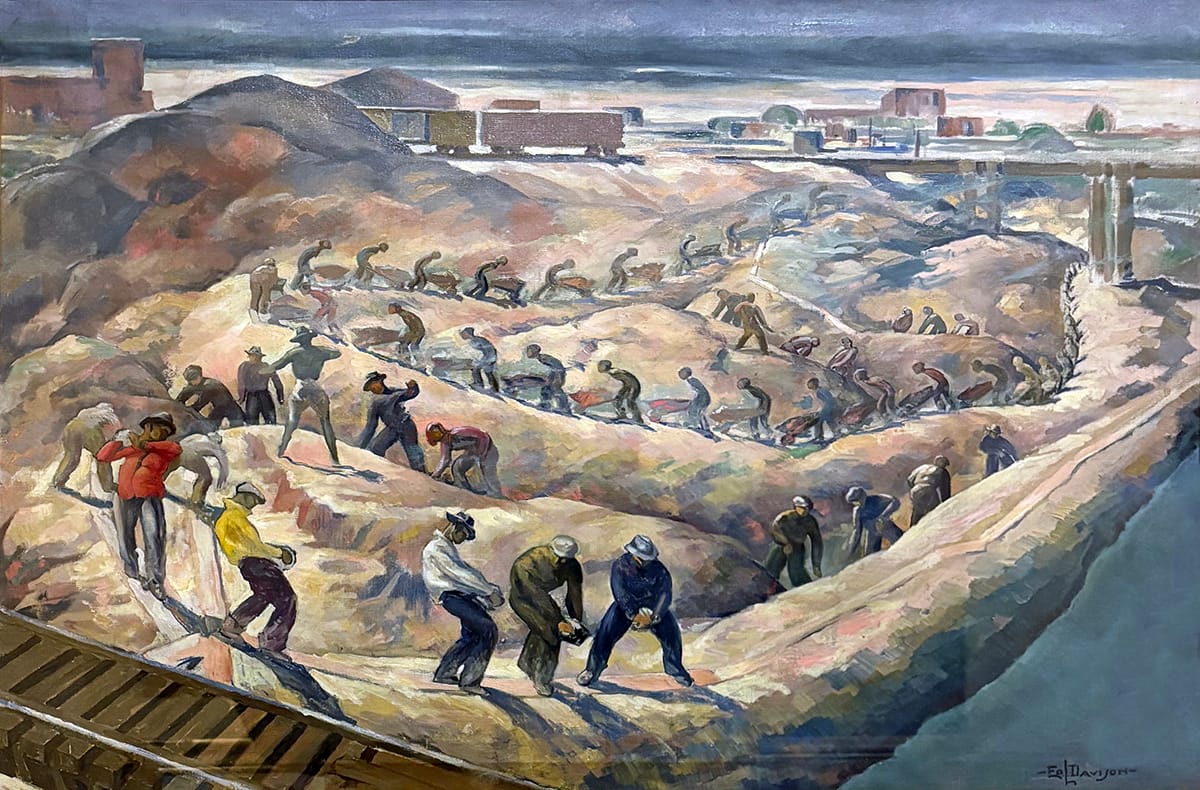
Davison, too, studied with Sandzén. If you look closely at his untitled 1934 painting showing the dismantling of Ackerman Island, Sandzén’s influence seems visible in Davison’s colorful shading applications, brushstroke upon brushstroke.
It might delight the museum's curator to know that, as a non-native, I learned about Wichita history by looking at the artworks on view in this show.
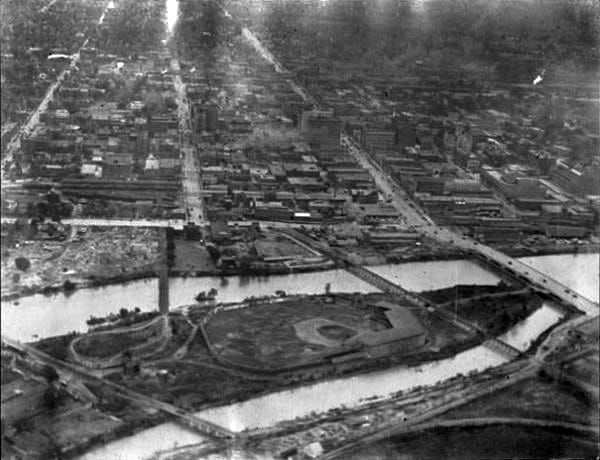
For instance, I found out about Ackerman Island, which was a sandbar in the middle of the Arkansas River between downtown Wichita and Delano in the late 1800s, back when the river was at least four times wider than it is today. The Island was the site of an amusement park and a baseball field, until hard times and persistent flooding led the Works Parks Administration to recommend its removal.
Davison depicted the historical moment of the removal as a winding line of workers carrying off pieces of the island. Their labor echoes the motion of a railroad train in the background. Each chugging forward, moving on, as a landmark slowly erodes into the past.
“Why History Museums Collect Art” is on view through December 31. It’s an exhibition but also a puzzle, encouraging guests to find the connections between the works and answer the show title’s implied question for themselves.
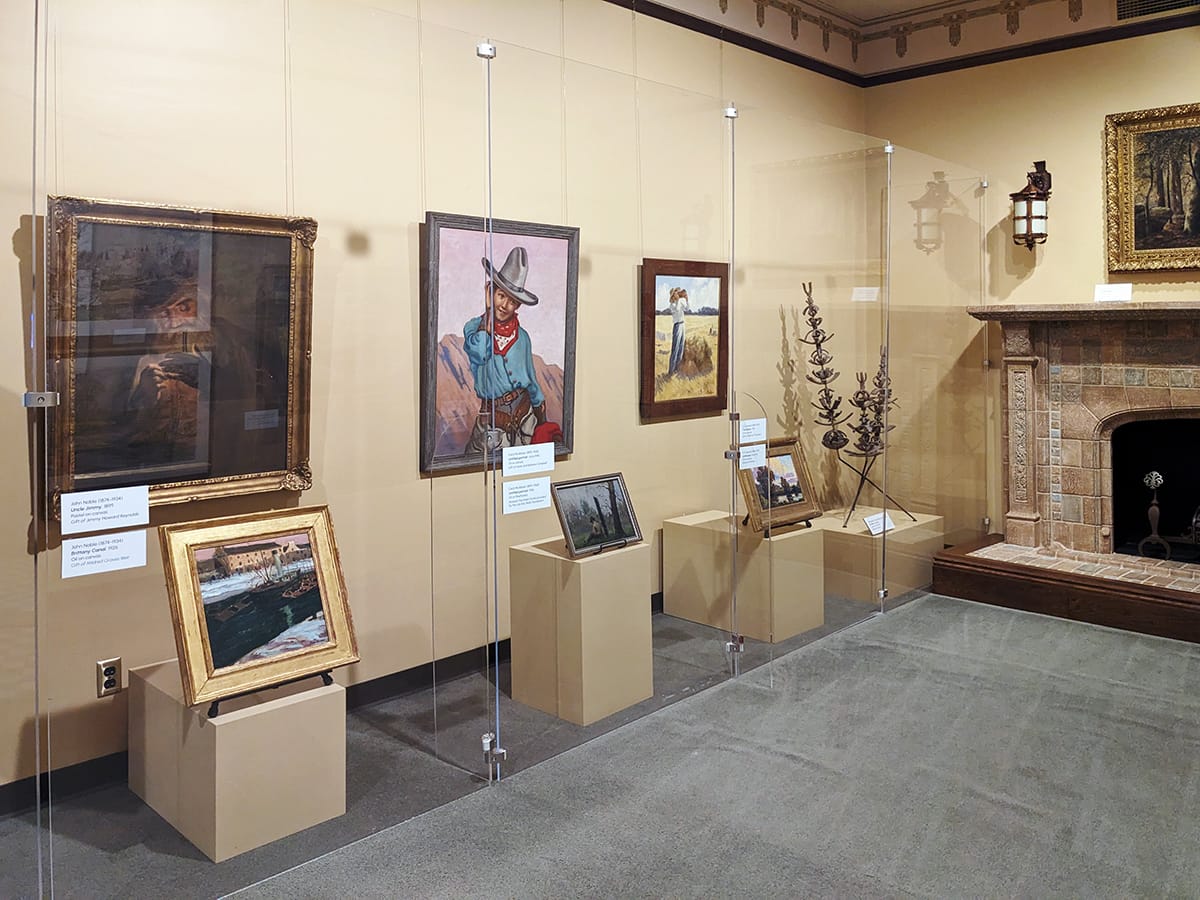
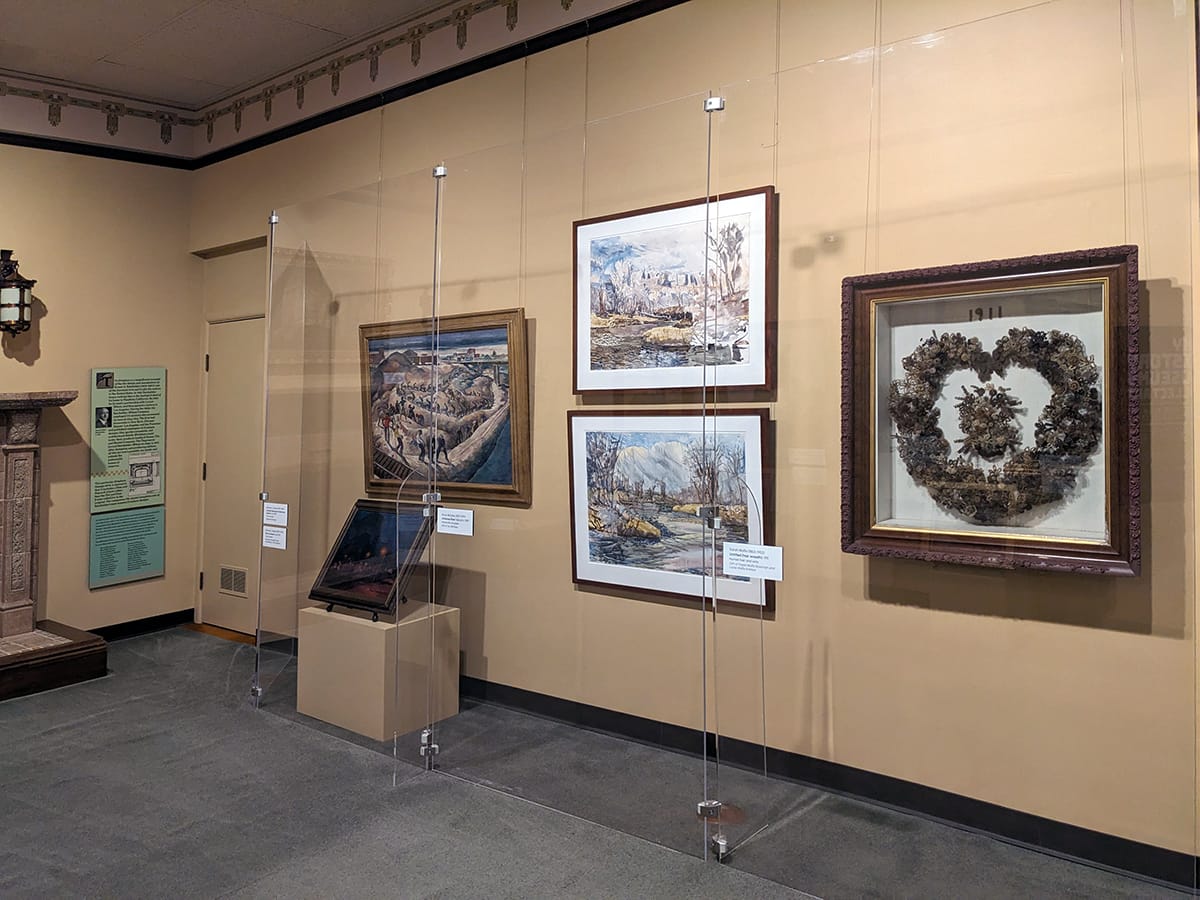
Installation views of the exhibition “Why History Museums Collect Art” at the Wichita-Sedgwick County Historical Museum. Photo courtesy of the Wichita-Sedgwick County Historical Museum.
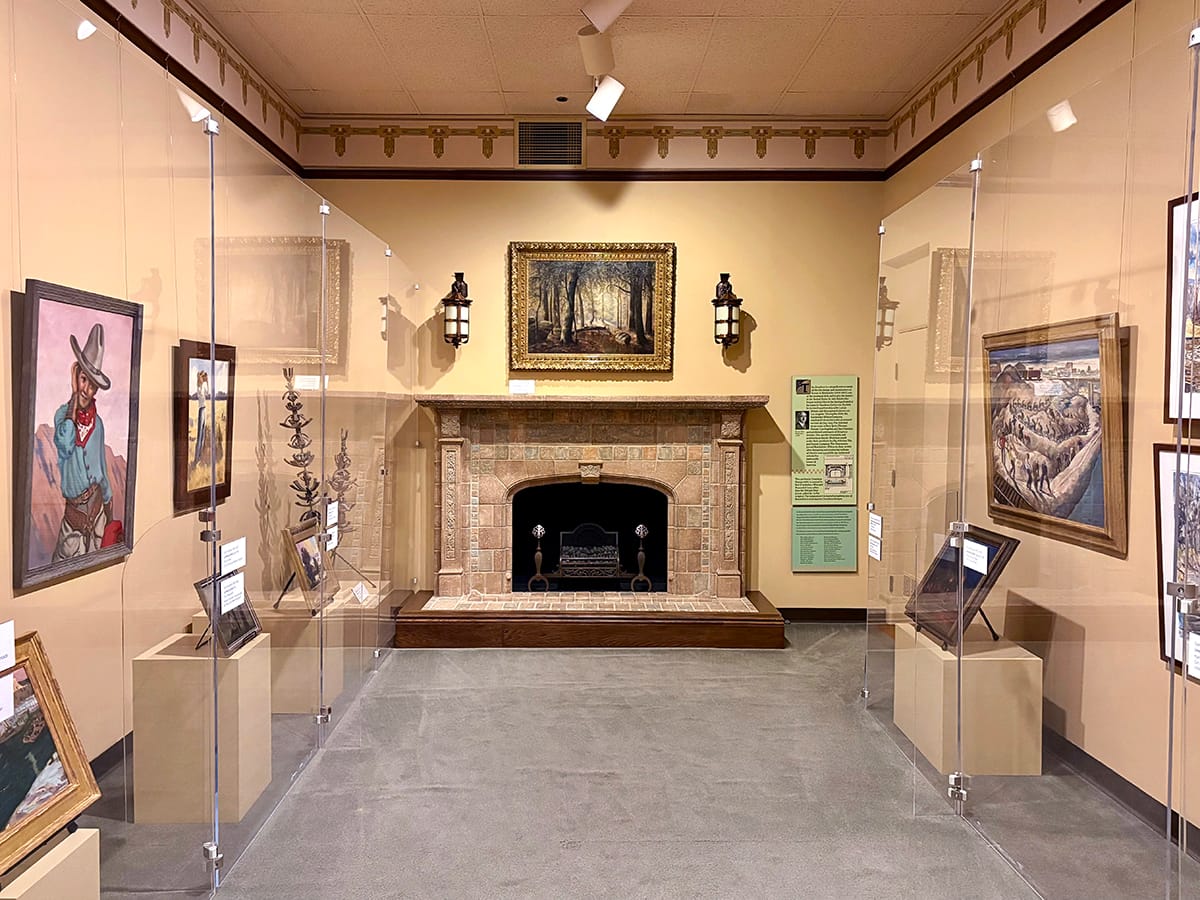
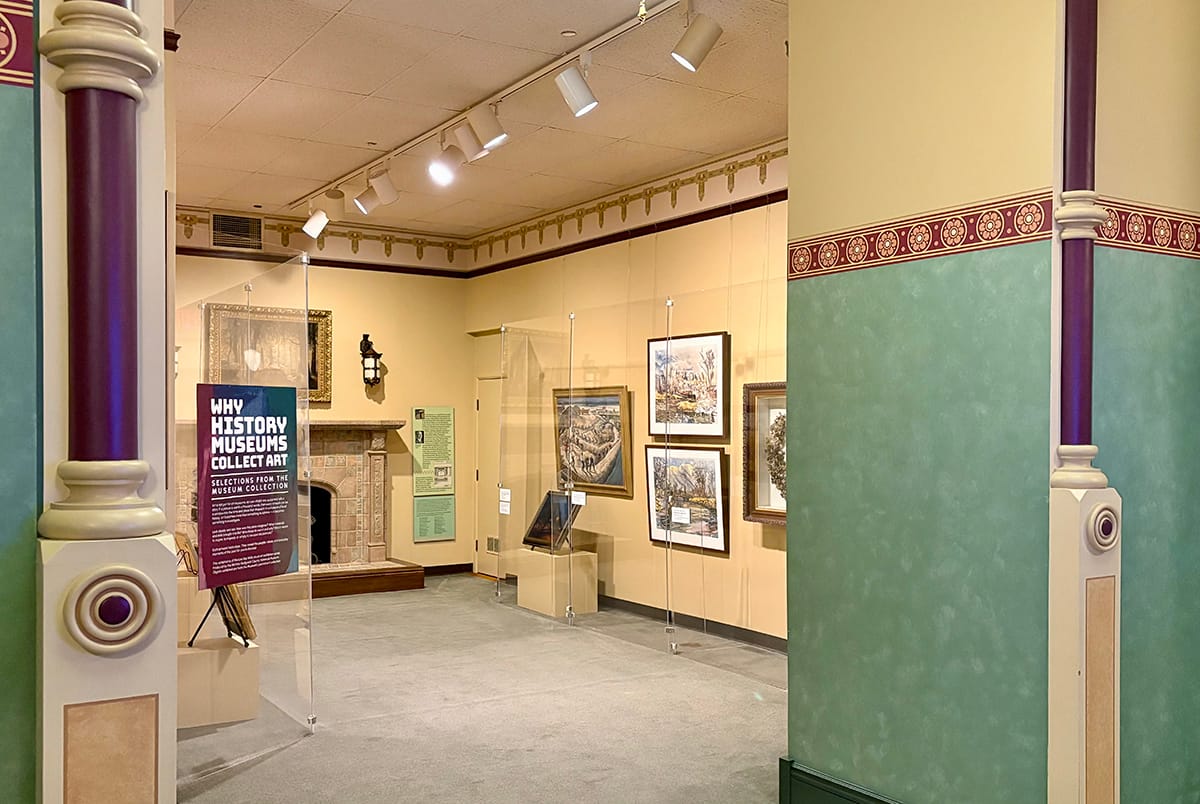
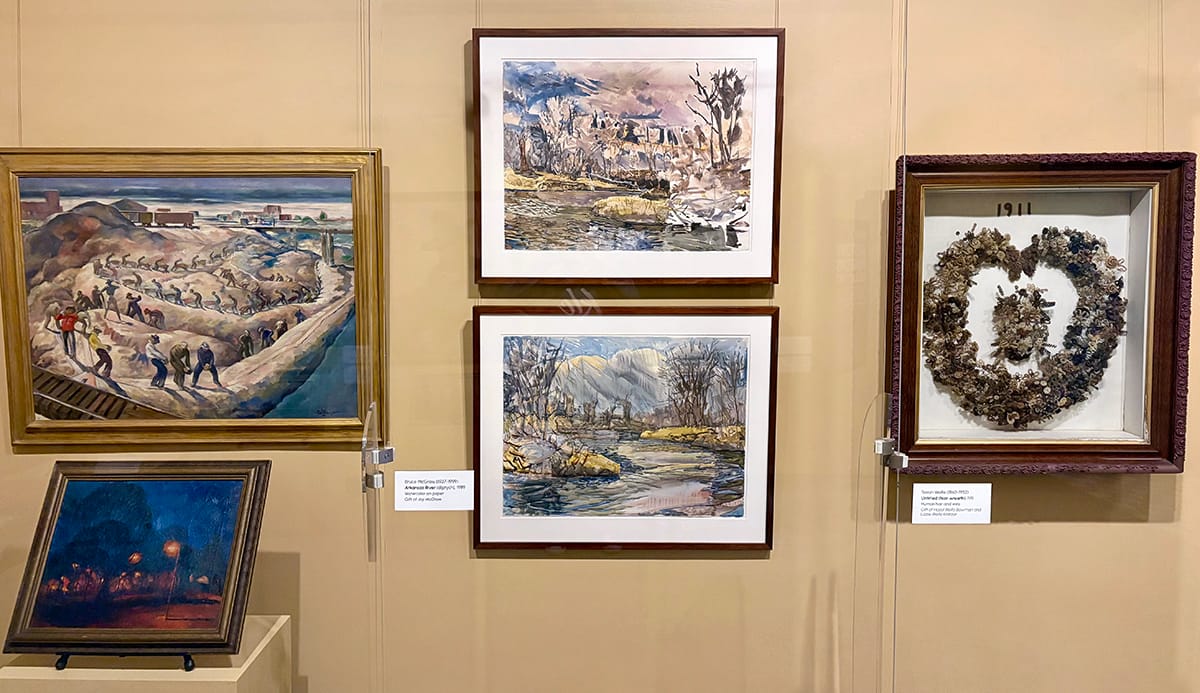
Installation views of the exhibition “Why History Museums Collect Art” at the Wichita-Sedgwick County Historical Museum. Photo by Stefania Lugli for The SHOUT.
The Details
“Why History Museums Collect Art”
April 3-December 31, 2026 at the Wichita-Sedgwick County Historical Museum, 204 S. Main St. in downtown Wichita
The Wichita-Sedgwick County Historical Museum is open 11 a.m.-4 p.m. Tuesday through Friday and 1-5 p.m. Saturdays and Sundays.
Admission is $5 for adults, $2 for children ages 6-12, and free for children under age 6. Admission is free on Sundays.
The facility is accessible to people with physical disabilities.
Stefania Lugli is a reporter for The Journal, published by the Kansas Leadership Center. She focuses on covering issues related to homelessness in Wichita and across Kansas. Her honors include being a national finalist for a Nonprofit News Award in investigative reporting last year and a two-time fellow with the Solutions Journalism Network. The Kansas Press Association also recently named her one of 2025's journalists of the year.
❋ Derby man has the kind of voice that turns heads — and chairs
❋ Socializing while sober: how some Wichitans are cultivating alcohol-free communities
❋ As a small creative business closes, the owner mourns
❋ Painting through it: Autumn Noire on 20 years of making art
❋ How a guy from Wichita resurrected 'Dawn of the Dead'
❋ Bygone Friends University museum housed curious collections
Support Kansas arts writing
The SHOUT is a Wichita-based independent newsroom focused on artists living and working in Kansas. We're partly supported by the generosity of our readers, and every dollar we receive goes directly into the pocket of a contributing writer, editor, or photographer. Click here to support our work with a tax-deductible donation.