
The language of steel: 'Train Stop' speaks to Wichita's history of rail service
A part of the 'Rails and Wheels' series, 'Train Stop' is a monument to the railroad's impact on our daily lives.
Commuting has become a mundane yet essential routine of modern life. We get stuck in traffic on our way to work, school, or an event for someone we love. Passing through intersections, highways, and railroad crossings so often, we rarely stop to think or educate ourselves about the history and development of these foundational structures that carry us through our daily lives.
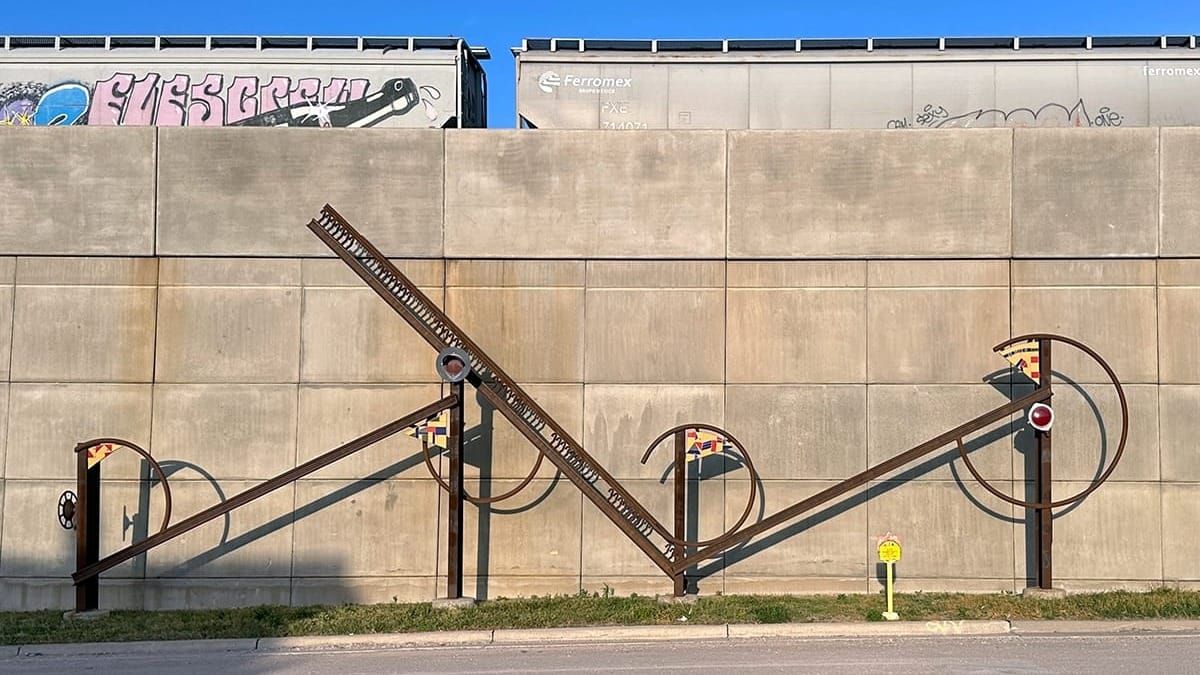
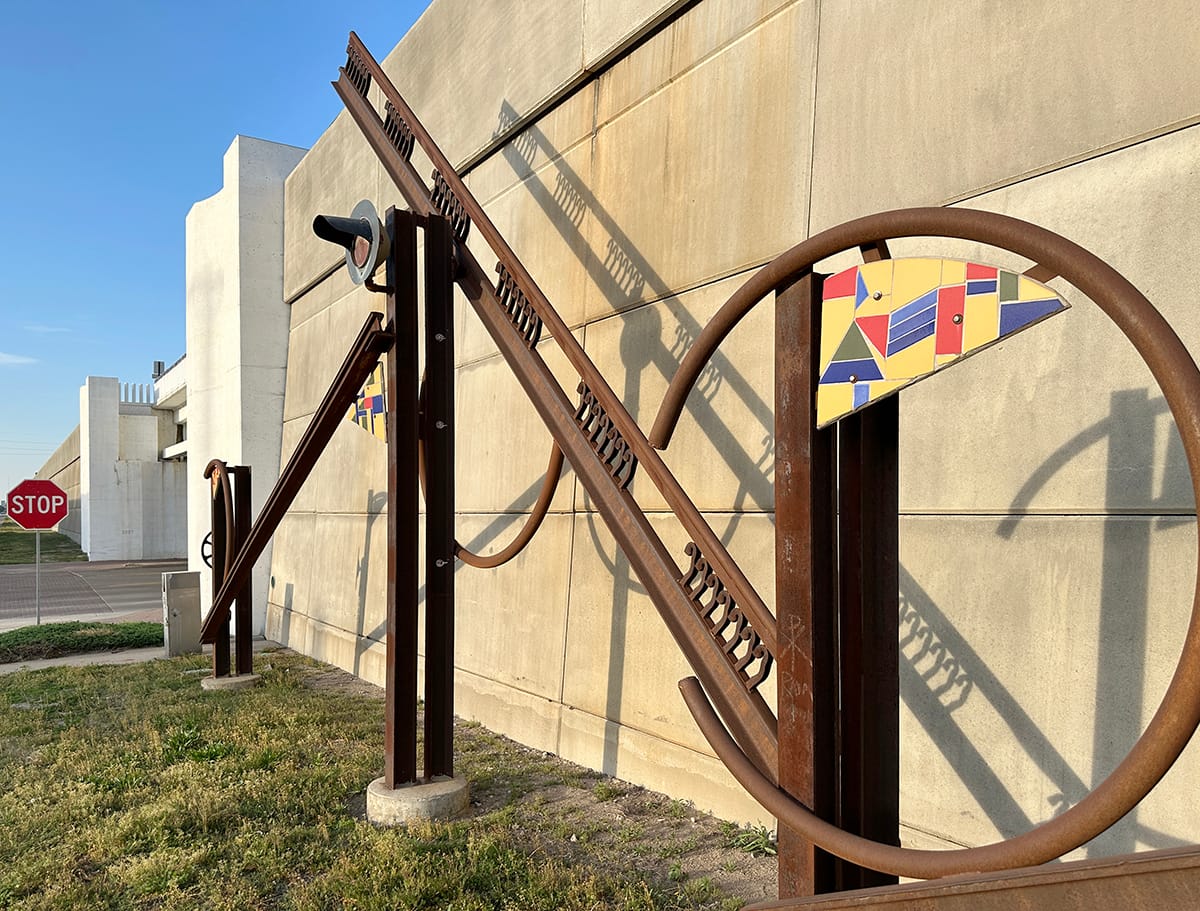
Wichita’s extensive public art collection adds moments of relief from the monotony of daily travel. Near the historic Old Town district, on the southwest corner of Central Avenue and Santa Fe Street, is a large metal sculpture beside the railroad corridor wall.
Titled "Train Stop," this sculpture belongs to the larger "Rails and Wheels" series installed in 2012 as part of Wichita’s Central Railroad Corridor Project.1 Richard Bergen, Terry Corbett, Larry Goodwin, Drew Meek, and Steve Murillo created the collaborative work.
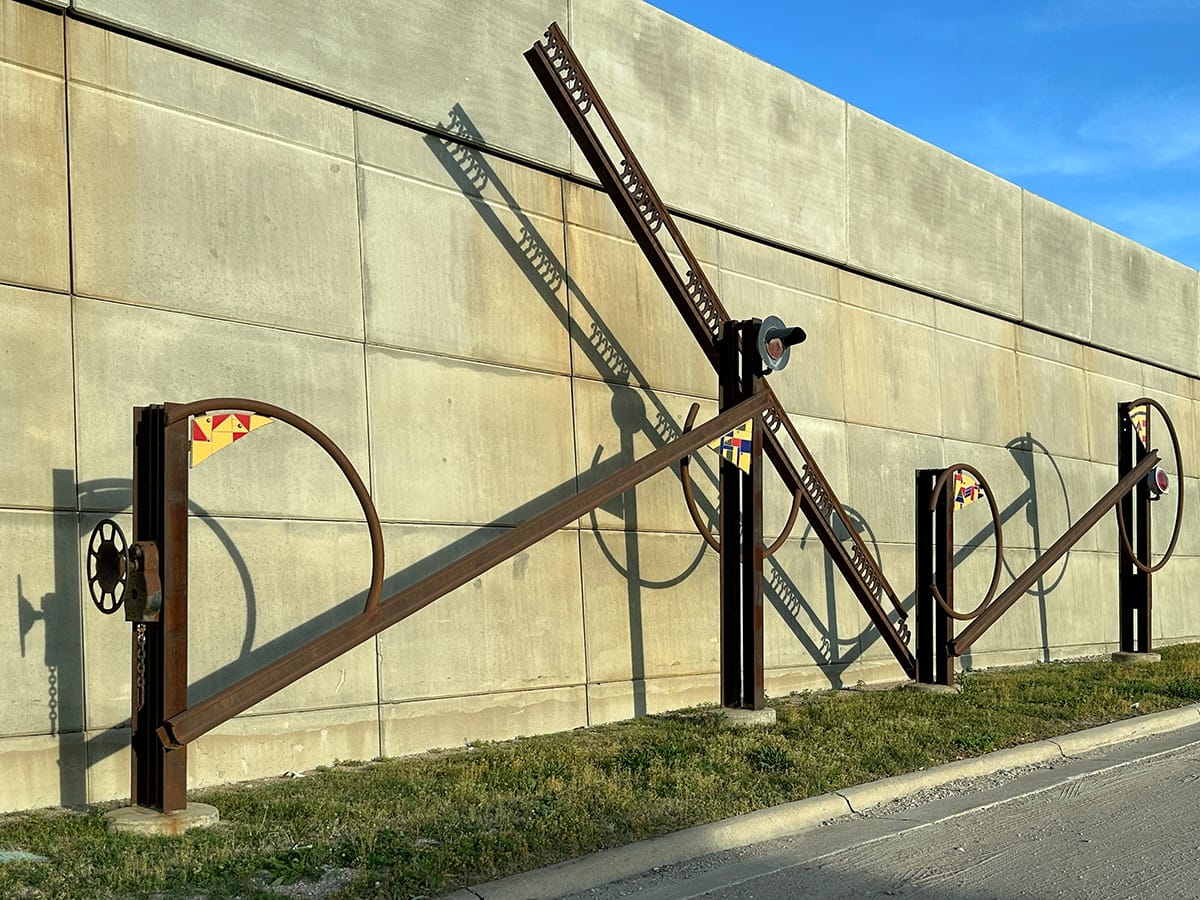
The series revolves around four central themes: Train Time, Electric Train, Timepiece, and Railroad Crossing. The sculpture installed at Central and Santa Fe is based on railroad crossings. It's an invitation to reflect on the necessary systems put in place when Wichita connected to the booming national railroad network and how they shape our reality today.
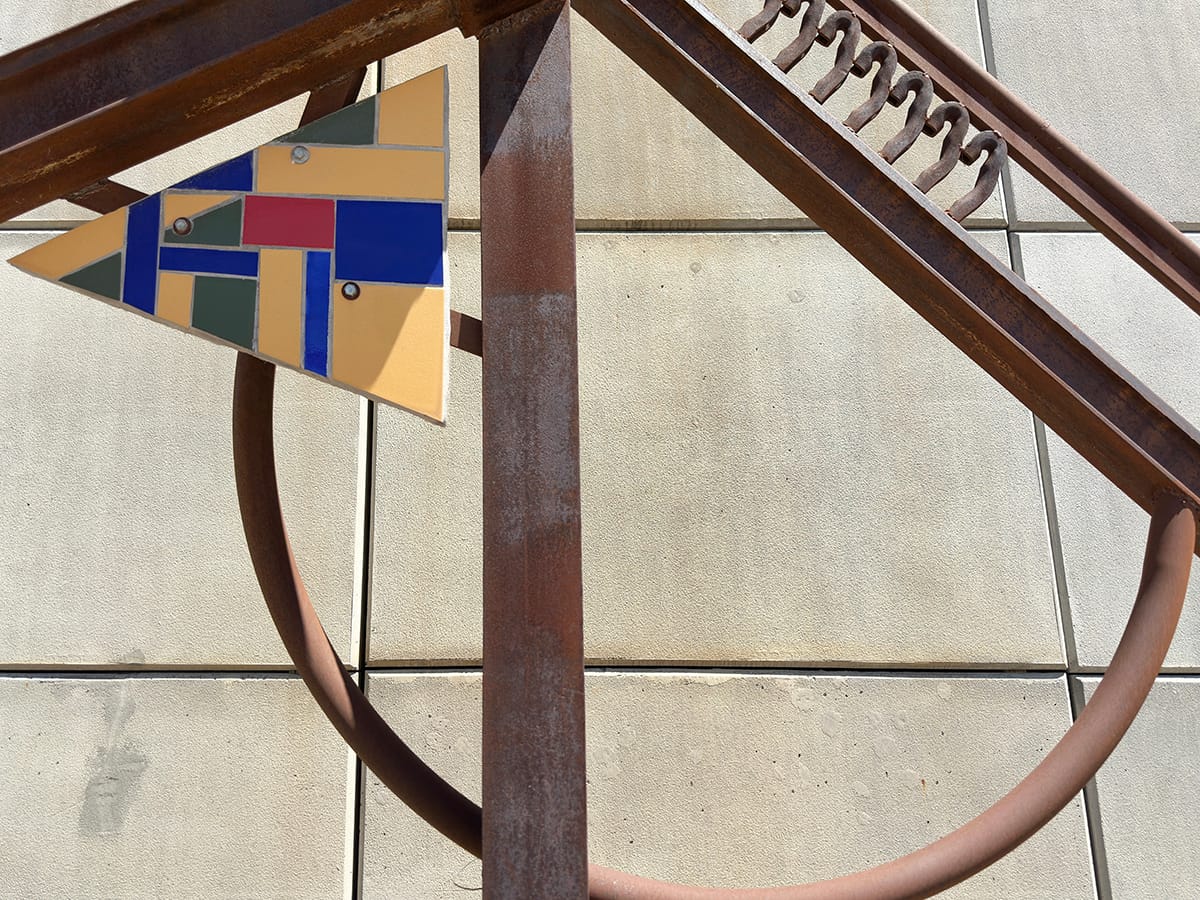
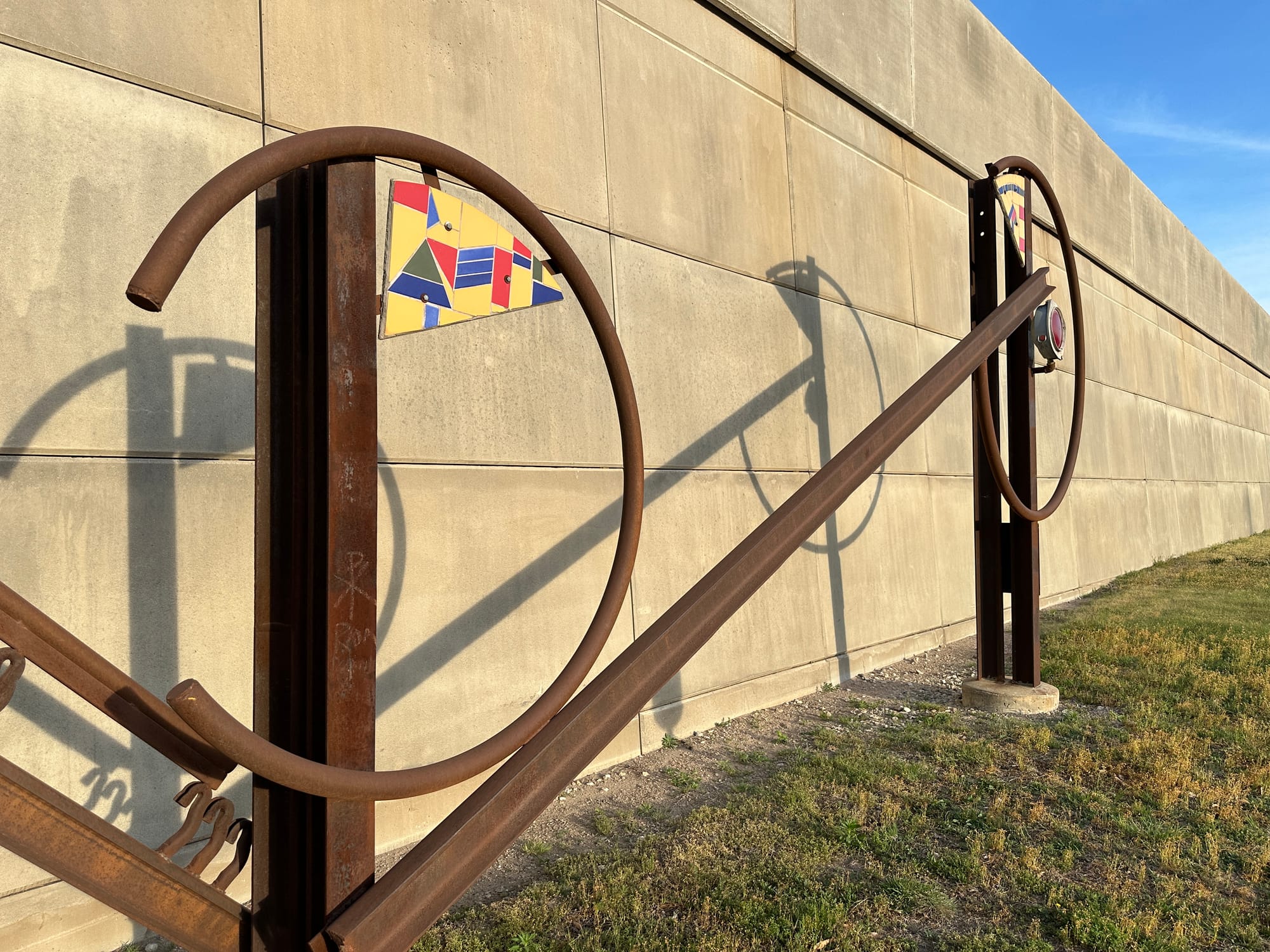
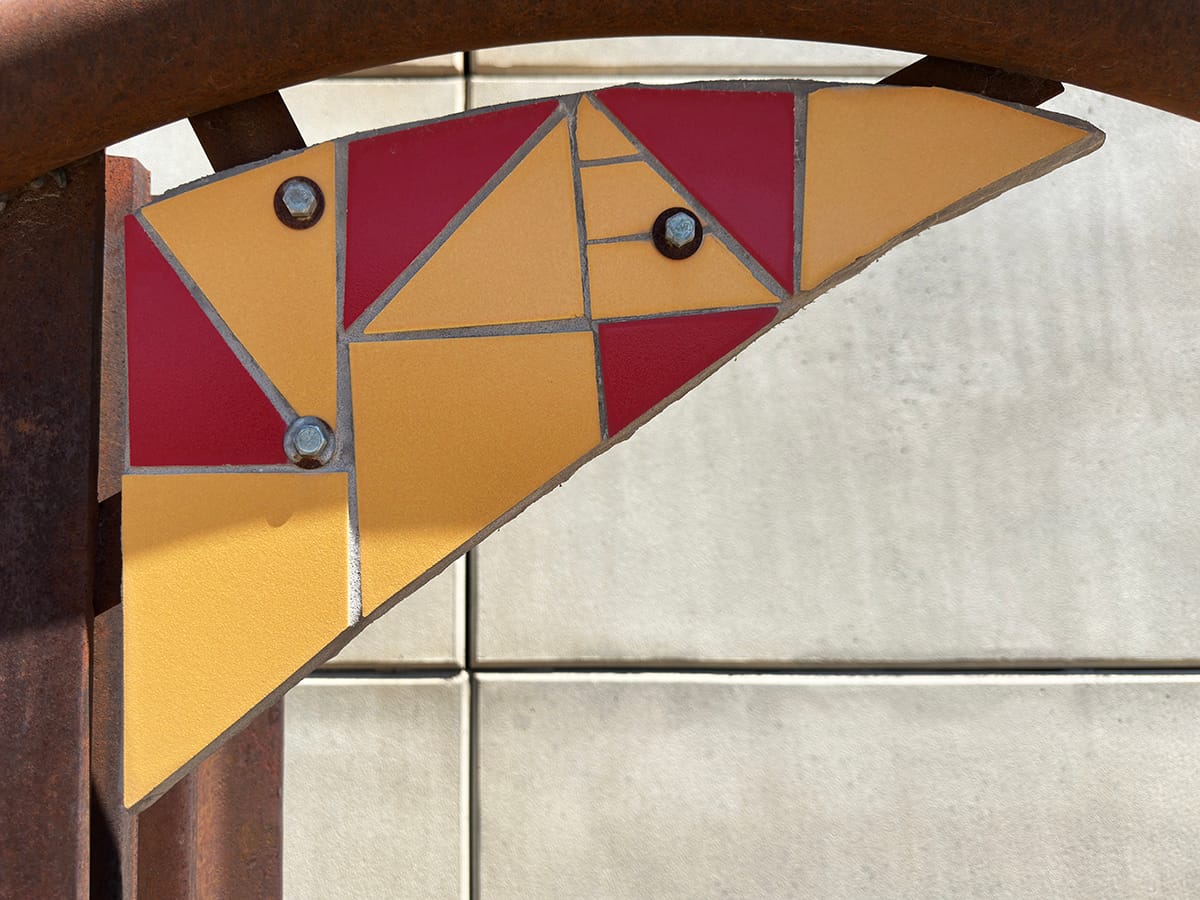
Initially, the sculpture seems quite mechanical. Four vertical steel railroad beams stand like signal posts and act as structural support for three other beams that cut across diagonally in a rising crescendo, linking one to the next — reminiscent of descending or ascending crossing gates. Partial circles float at each support beam, suggesting a glimpse of wheels in motion. Overall, the composition feels balanced and active. Ceramic tile surfaces in blue, green, red, and yellow contrast with the muted rust tones of the metal, providing a sense of warmth to a material typically associated with utility rather than beauty.
When the city first sent out requests for proposals for this project, many artists suggested murals. Murillo, who served as the lead creative force behind "Rails and Wheels," proposed a completely different idea. In a recent interview with The SHOUT, he explained that, in his view, spending $150,000 of public funds for a painted surface that might significantly deteriorate after a decade was difficult to justify. A sculpture offered permanence and could be appreciated by future generations. It would also physically embody the spirit of the railroad corridor by utilizing donated material tied directly to Wichita’s transportation history.
"Rails and Wheels" also belongs to a bigger story of transformation. Wichita’s Railroad Corridor Project was not a small beautification effort but part of the city’s $105 million initiative and a finalist for two major national infrastructure awards. The project elevated two miles of track above roadways, added new bridges, reduced delays, and improved safety in the heart of the city, allowing traffic to pass underneath without interruption.
“Old Town has greatly benefited from the Wichita Central Corridor Railroad Grade Separation project," wrote Dave Burk, a local developer and president of the Wichita Old Town Association, in a letter to the secretary of the Kansas Department of Transportation. "Travel to the destination has become more convenient and efficient, and the area once plagued with noise pollution from passing trains is now graced with the music coming from surrounding businesses and people interacting as they pass one another in the streets. The improvement removed a major obstacle to economic development in downtown Wichita, sparking new growth that will not only benefit Old Town, but the entire City. We are proud to have been a part of it.”
"Rails and Wheels" merges art with precise engineering to remind viewers that cities are not shaped solely by utility. Roads, bridges, and corridors solve problems but also shape a city’s identity, collective memory, and experience of daily life.
Drew Meek, an architectural engineer and volunteer at The Great Plains Transportation Museum, told me that Wichita’s relationship with the railroad stretches back to the late 19th century, with the arrival of major branch lines that transformed the city into a regional center of trade and travel. Cattle, grain, and people began passing through Wichita in increasing numbers. The city was no longer isolated, but connected to a national network of travel and exchange.
Railroad systems not only brought economic growth, but they also altered society’s understanding of distance and time. Before standardized time zones, local time varied from town to town. Railroads demanded synchronization, and in 1883, American railroads integrated time zones so trains could run smoothly on a universally coordinated schedule — a revolutionary system still used today.
After our conversation, I realized that trains and railroad systems were the perfect symbols of modern life and evolving perception that defined the Impressionist movement in art. Trains were among the most important technological advancements of the 19th century, and artists began to realize that a new world was inevitable — that life would begin to speed up exponentially, and that present moments were fleeting.
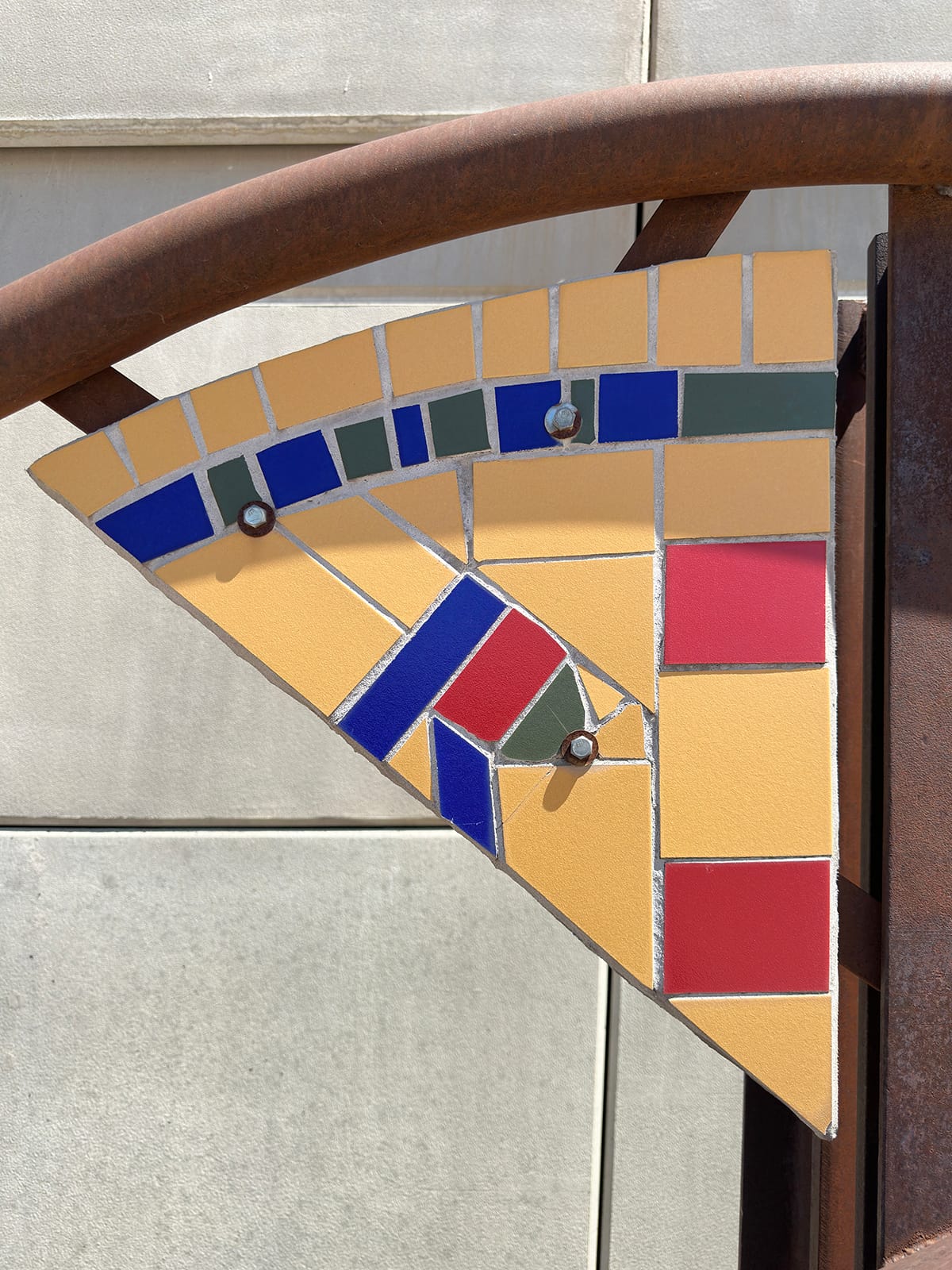
Terry Corbett, the ceramic tile artist for the project, embedded this idea directly into the work through a hidden easter egg in one of the sculptures. The word “time” appears in Morse code on the tiled surface at the Murdock and Santa Fe Street location.
In an interview, Corbett explained that tile allowed him to introduce color to a sculpture dominated by steel. The palette is based on railroad signage and represents companies that passed through Wichita, while the shapes and designs reference manufacturers, maps, and landscapes. Steel alone could have felt overwhelmingly industrial and impersonal. The combination of industrial materials and handcrafted elements is a clever way to re-envision and bring together various types of railroad visual culture.
Meek played a critical role in securing additional private funding and materials through his local connections. Union Pacific and Kansas & Oklahoma Railroad were among the long list of contributors who helped bring the vision for the sculptures to life by donating of railroad materials and small interactive elements like bells, engine brake wheels, and railroad lights. Richie Bergen and Larry Goodwin then fabricated the circular forms from rusted pipes and welded the structures to translate Murillo’s concept into physical form.
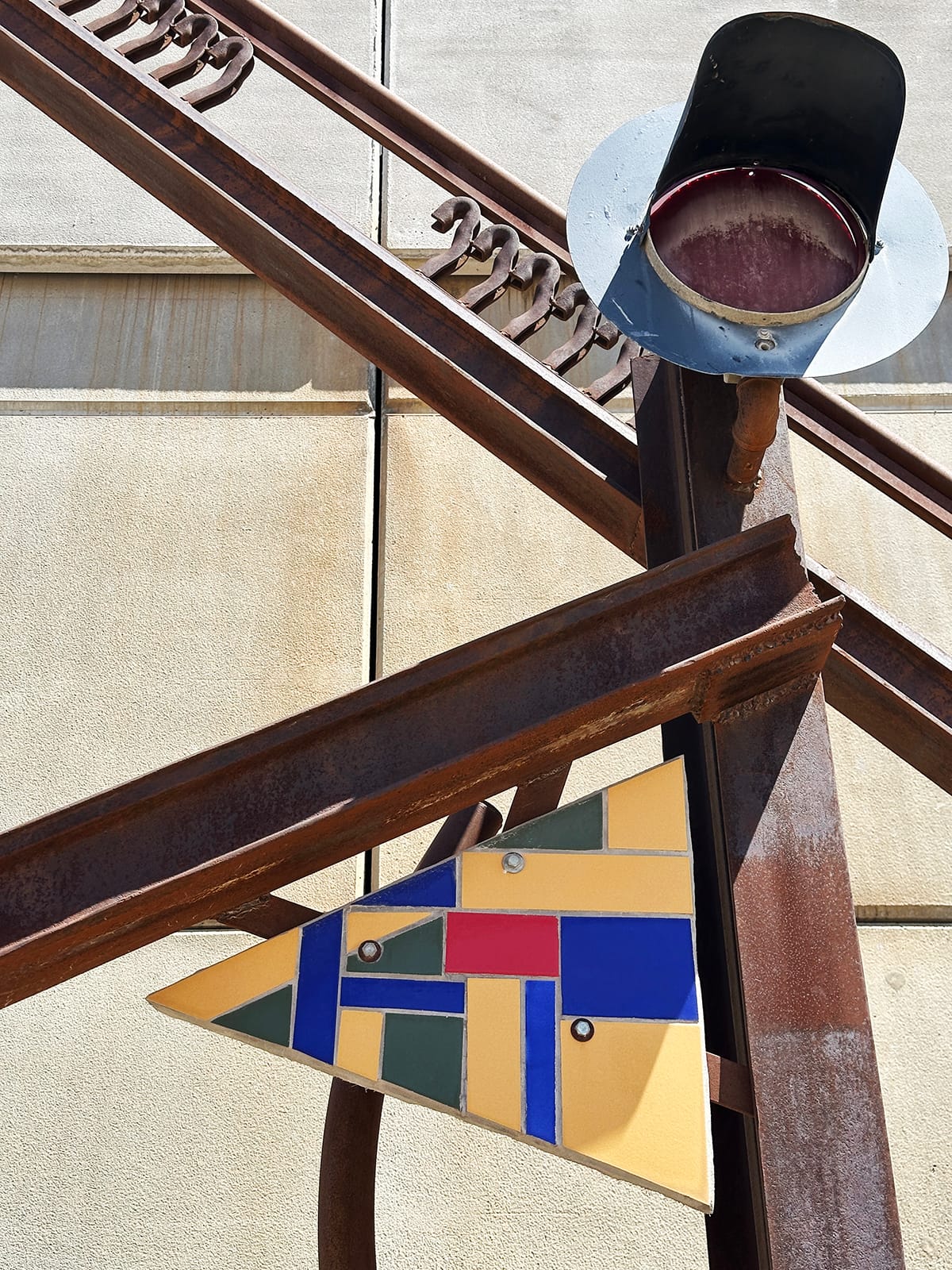
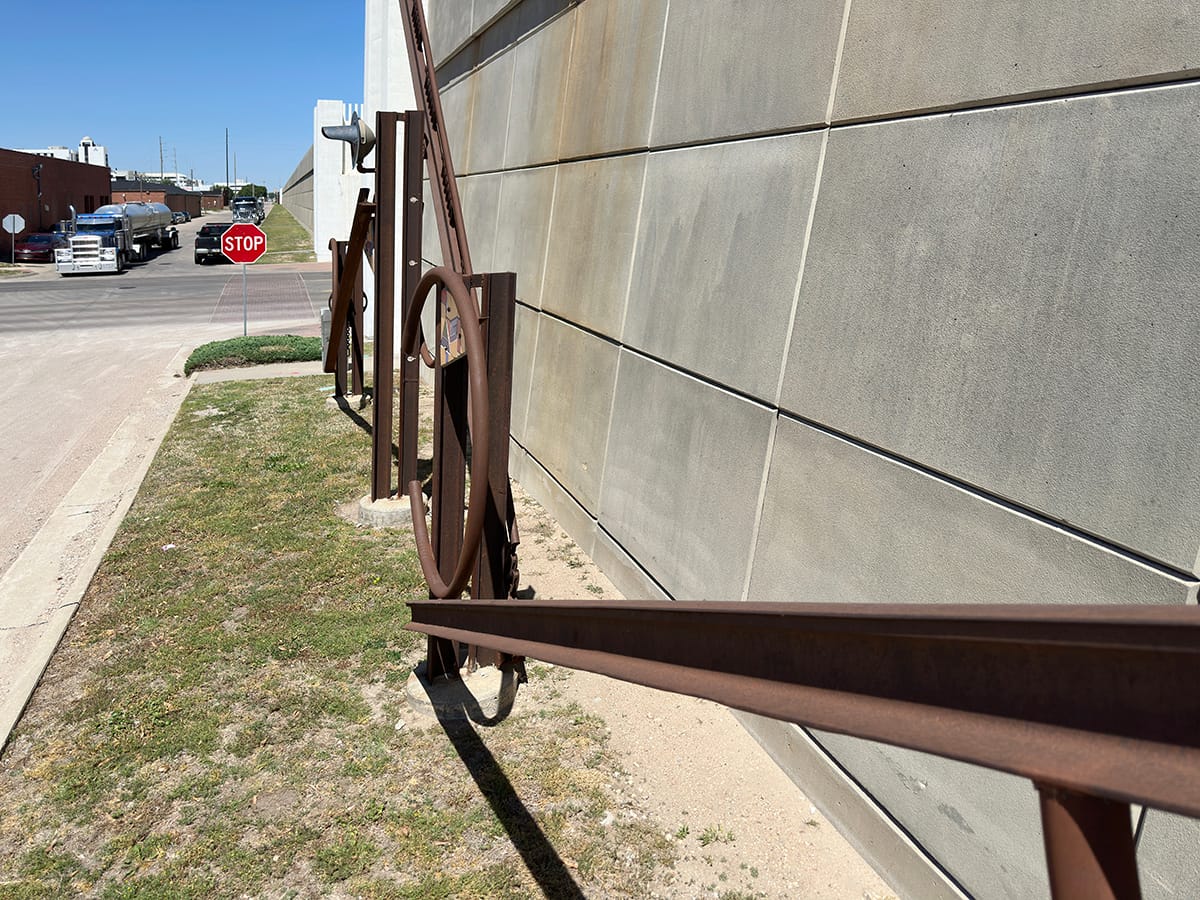
The placement and environment of the sculptures are fitting. Unlike parks or museums that inherently imply stillness, "Rails and Wheels" exists in a space defined by constant motion. Cars drive by, trains move directly above, and viewers must encounter the works in parts rather than altogether as a whole. That fragmented experience mirrors the Impressionist idea that modern life is filled with fleeting moments and divided attention.
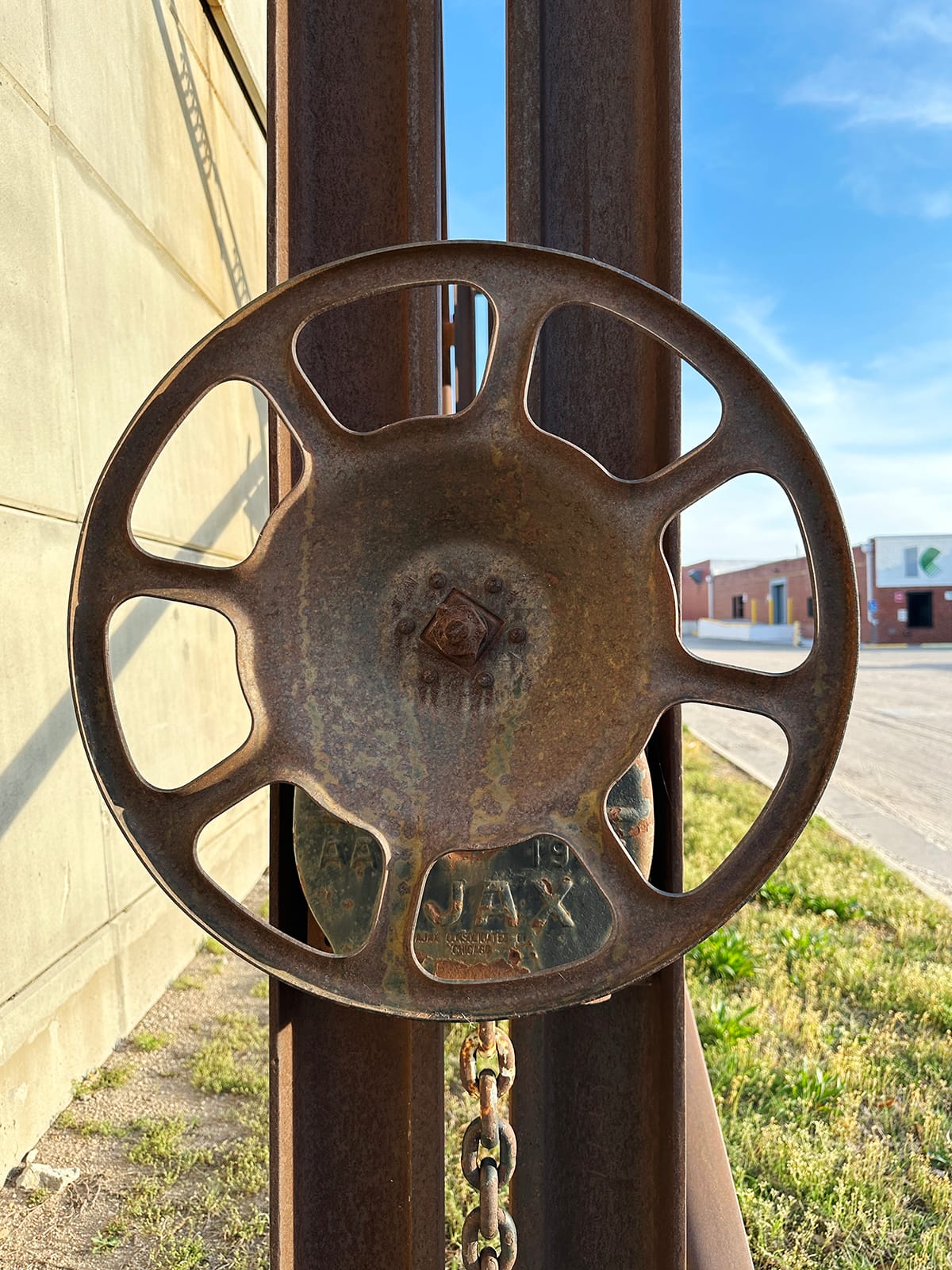
The sculptures do not fight against this condition. They adapt to it with their large steel forms, inviting quick glances from drivers while rewarding those who slow down. Small interactive details, such as bells, brake wheels, railroad lights, and hidden symbols, offer deeper engagement for people who spend time with the work.
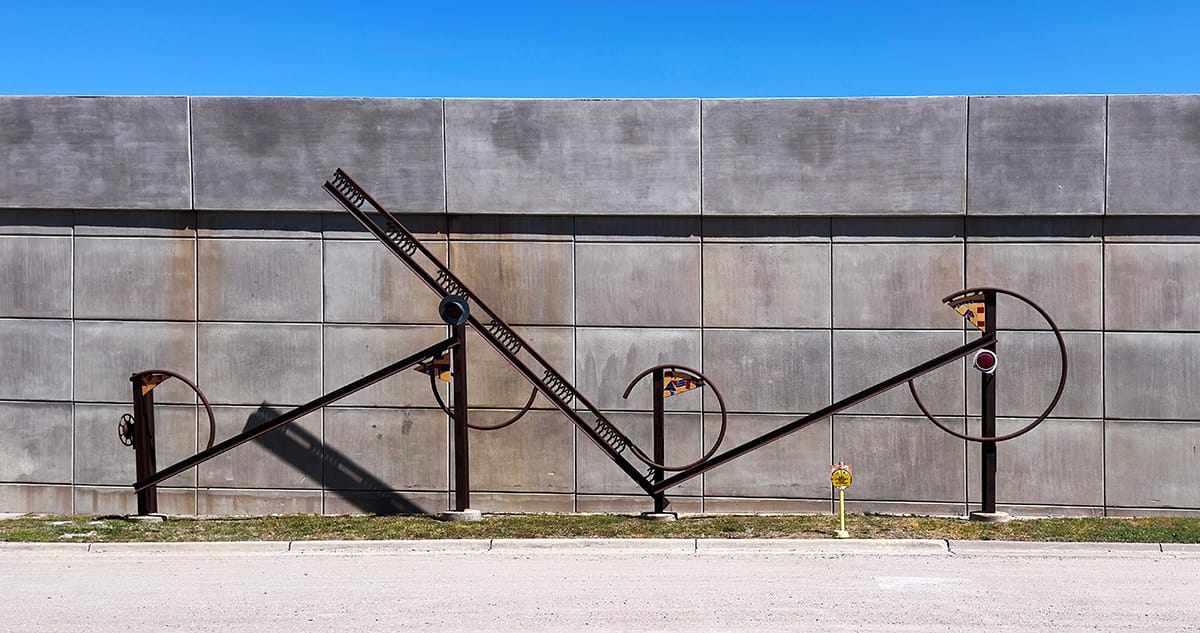
It is surprising that a project layered with history and meaning remains relatively under-discussed online, despite its connection to one of Wichita’s most ambitious and nationally recognized infrastructure projects. The more time I spent conversing with the artists and researching the local history of railroads, the less it became about machinery and more about a reflection on migration, connection, labor, and building foundational systems that would outlive their creators.
Spend enough time with the work and you’ll realize what once appeared industrial becomes layered with history and meaning. In a city still buzzing with movement, "Rails and Wheels" remind us that steel can carry stories too.
The Details
"Train Stop"
Richard Bergen, Terry Corbett, Larry Goodwin, Drew Meek, and Steve Murillo
Steel (alloy), metal, ceramic tile
Located along the railroad corridor at the south side of the intersection of East Central Avenue and Santa Fe Streets in downtown Wichita.
"Train Stop" is part of the City of Wichita Public Art Collection.
Learn more on the Public Art Archive pages for "Train Stop" and the other works in the "Rails and Wheels" series.
1 The Rails and Wheels series extends along the Santa Fe corridor, with additional sculptures located on the corners of Murdock, 2nd Street, and 1st Street.
Antonio Ramirez is a Wichita State alumnus with a multidisciplinary background in art history, cybersecurity, and entrepreneurship. He is a curator, writer, and aspiring art dealer guided by his curiosity to explore the connections between art, culture, and innovation.
❋ Derby man has the kind of voice that turns heads — and chairs
❋ Socializing while sober: how some Wichitans are cultivating alcohol-free communities
❋ As a small creative business closes, the owner mourns
❋ Painting through it: Autumn Noire on 20 years of making art
❋ How a guy from Wichita resurrected 'Dawn of the Dead'
❋ Bygone Friends University museum housed curious collections
Support Kansas arts writing
The SHOUT is a Wichita-based independent newsroom focused on artists living and working in Kansas. We're partly supported by the generosity of our readers, and every dollar we receive goes directly into the pocket of a contributing writer, editor, or photographer. Click here to support our work with a tax-deductible donation.


