
An utter need for revenge: 'Medea' at Wichita Community Theatre
The only documented ancient Greek tragedy with an all-female chorus, "Medea" depicts women in a manner atypical of its time, and its story still resonates today.
Cumulonimbus were boiling up to the north and east on Thursday night as I waited to take a seat at Wichita Community Theatre for opening night of “Medea.” Tornado sirens confirmed the warning on my phone, but they sounded distant. The threat felt mild — for now — but still hung there, leaving us patrons to wonder what might happen as we took a chair.
These uncertain conditions felt ideal for consuming the brutal tragedy of “Medea,” on stage through May 3. Unsettled anticipation seemed in order. (It turns out that the danger had passed, as WCT staff already knew, but at the time it was thrilling to wonder.)
Euripides wrote the original “Medea,” first produced in Athens in 431 B.C.E. It’s different from other Greek tragedies in a number of ways that have helped establish Medea’s story as more than a mere trope. She is a full-fledged monster with whom women secretly agree, at least in part. Her actions are horrific and utterly wrong, but we can see how she eventually got there.
This notorious character’s attributes — her intelligence, her determination, her refusal to forgive, her brutal rage — are not typical of the women who were represented on the Greek stage at that time. They tended to be shy, submissive — seductive, maybe, but not in a way that telegraphed danger. (For the record, every woman's role at that time was played by a man.)
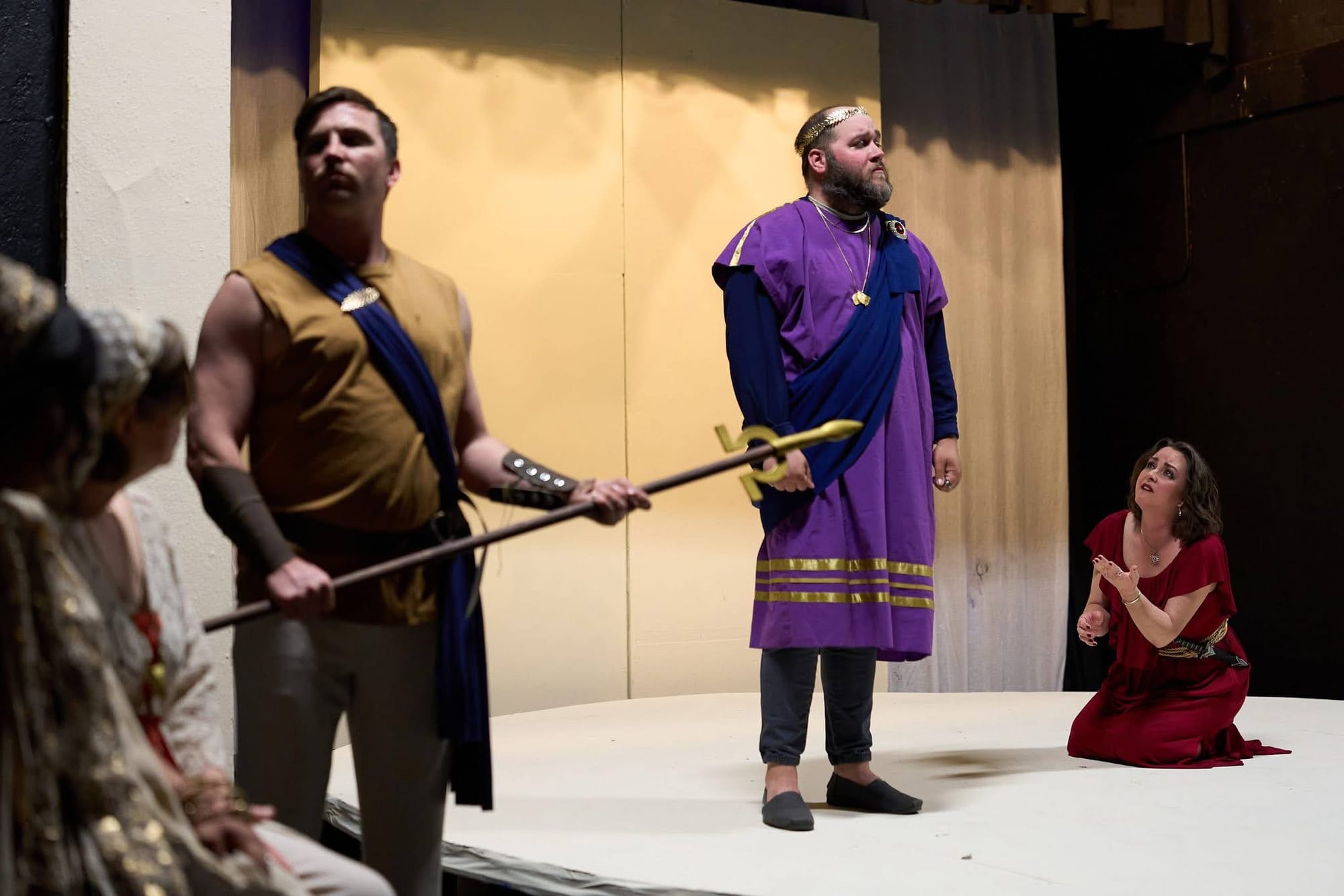
Director Misty Maynard places the production in a surreal space that references ancient Greece but accesses modern culture in a refreshingly direct way.
As the lights dimmed, a little thunder and a brief, hard rain could have been part of the sound design as we entered a stark world based on a round, raked stage framed by simple benches. (A higher level is used for shadow play to depict some graphic scenes and for a bizarre reveal later in the show.)
Designed by Maynard, the set projects a frank simplicity against which the wretched complexity of human emotions unspool.
Maynard chose a 2008 translation by the renowned Scottish poet Robin Robertson. This version feels modern and as familiar as the true-crime narratives that are perpetually infused in popular culture, and Robertson’s language is blunt yet lush without feeling pedantic:
“The old songs will have to change. No more hymns to our faithlessness and deceit. Apollo, god of song, lord of the lyre, never passed on the flame of poetry to us. But if we had that voice, what songs we’d sing of men’s failings, and their blame. History is made by women, just as much as men.”
The action begins when Linda McDonald’s Nurse, in agitated despair, brings us up to speed about the most recent concerns in the household. The news isn’t good (exemplified by the wails issuing forth from the mistress of the house, who can be heard offstage periodically). McDonald has a big job, communicating all that has taken place in the 10-plus years before the play begins, and she does it very well. We all leaned in, anxious to see where these unfortunate events would lead.
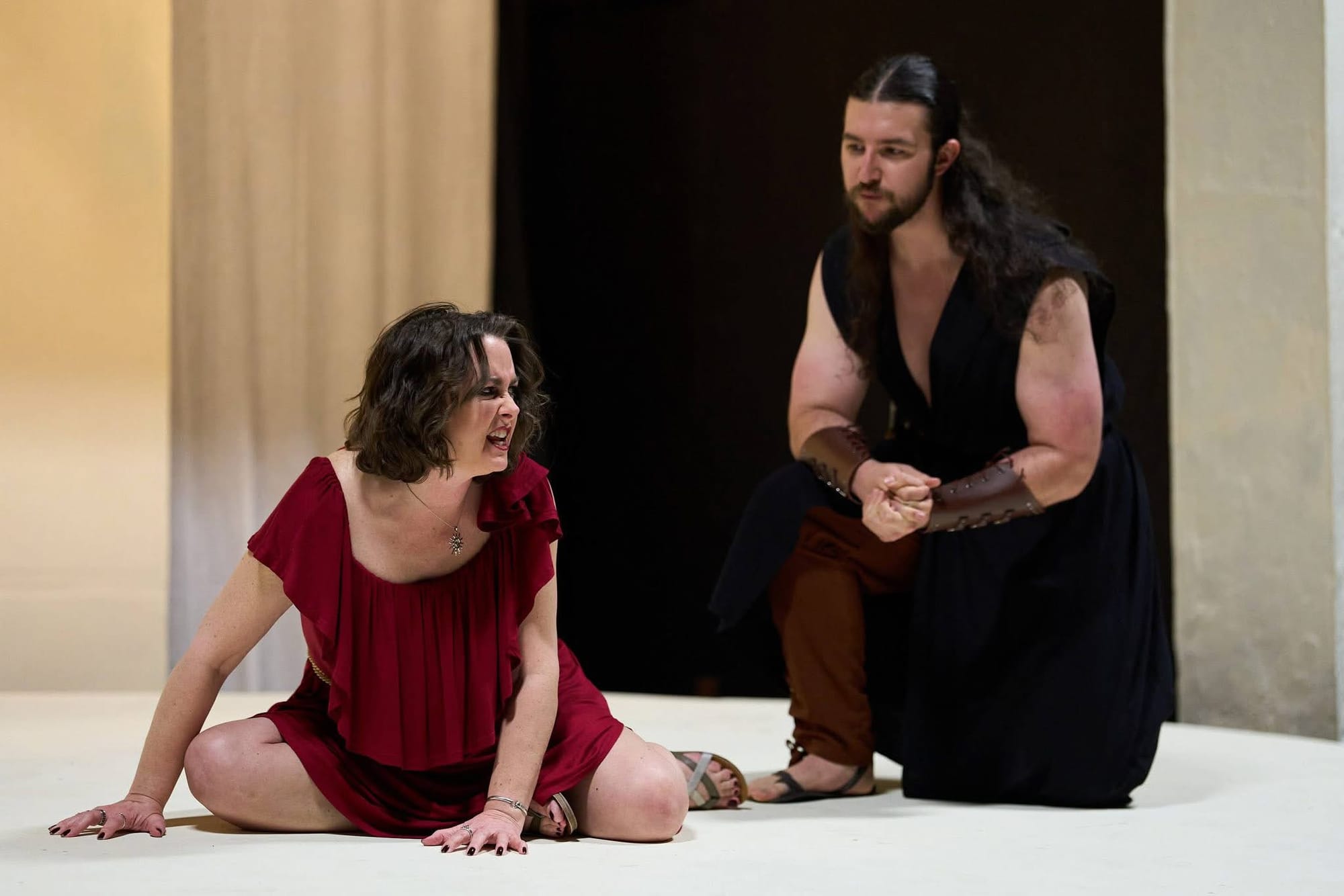
As Medea, Jami Thomas gives us a human woman with a variety of feelings, driven by an utter need for revenge she can’t, and doesn’t wish to, overcome. The character of Medea is so intense that the role presents the danger of maintaining a single scenery-chewing, screeching level that could dull the impact of the story. Instead, Thomas makes fine work of the savage lines Robertson crafted for Medea, acting with her voice, her eyes, her body. From heartbreak to hysteria to manipulation to fury, Thomas helps us start to understand why Medea makes these unthinkable choices.
Anthony Larkin-Valdez as Medea’s unfaithful husband, Jason, projects just the right amount of arrogance and genuine concern for his children, if not for Medea. His assured composure helps us believe that he can’t begin to know what’s coming.
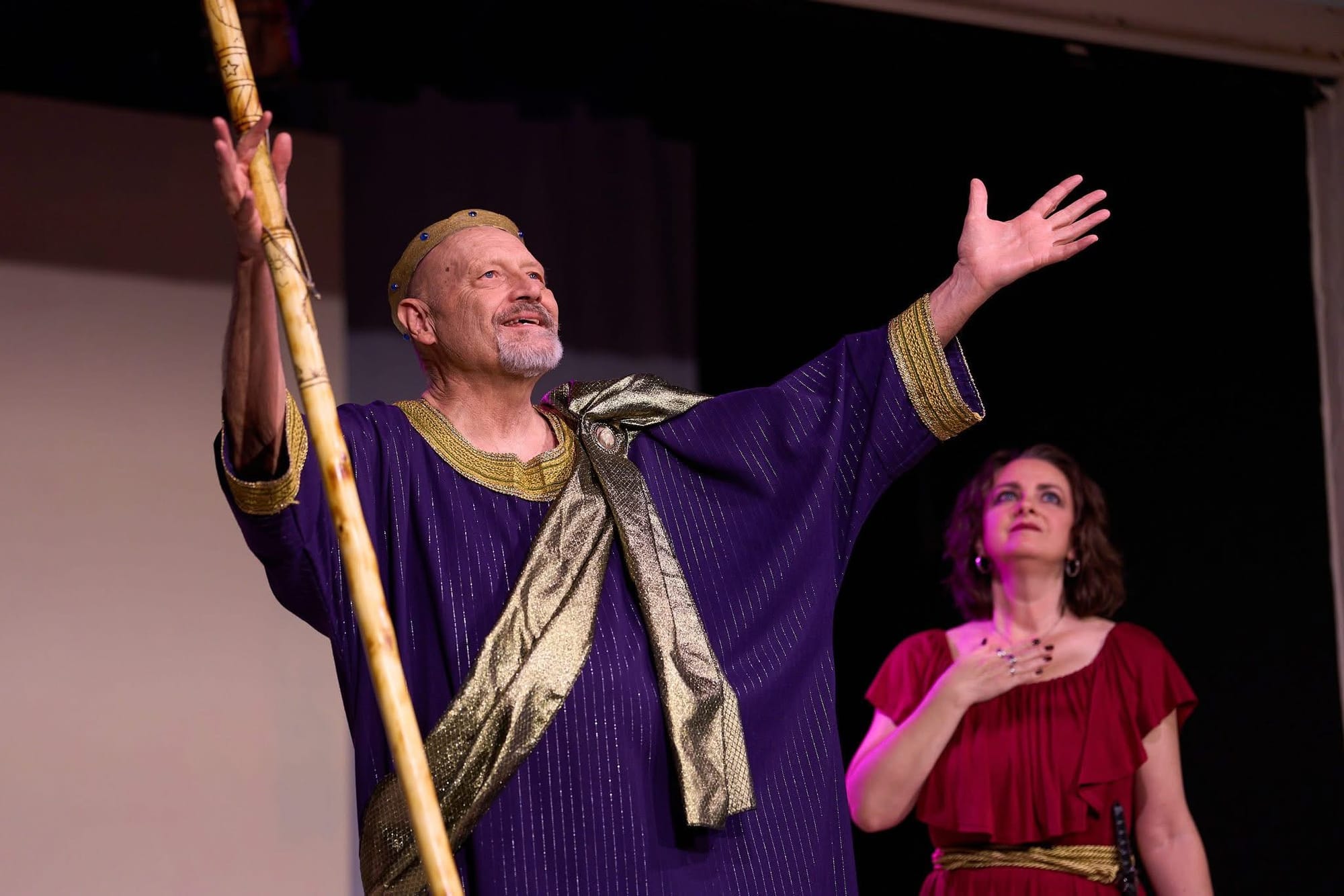
Caleb Jamal Manuel is a balm as the tutor to Medea’s young sons (I.A. Eldridge and A.B. Eldridge). Strong cameo appearances by Joe Parrish (Aegeus) and Chris Welborn (Creon) help us more fully understand our sorceress’s motives and fears. Kiera Abrienne’s first-person, graphic description of what had just gone down at the palace was right on point.
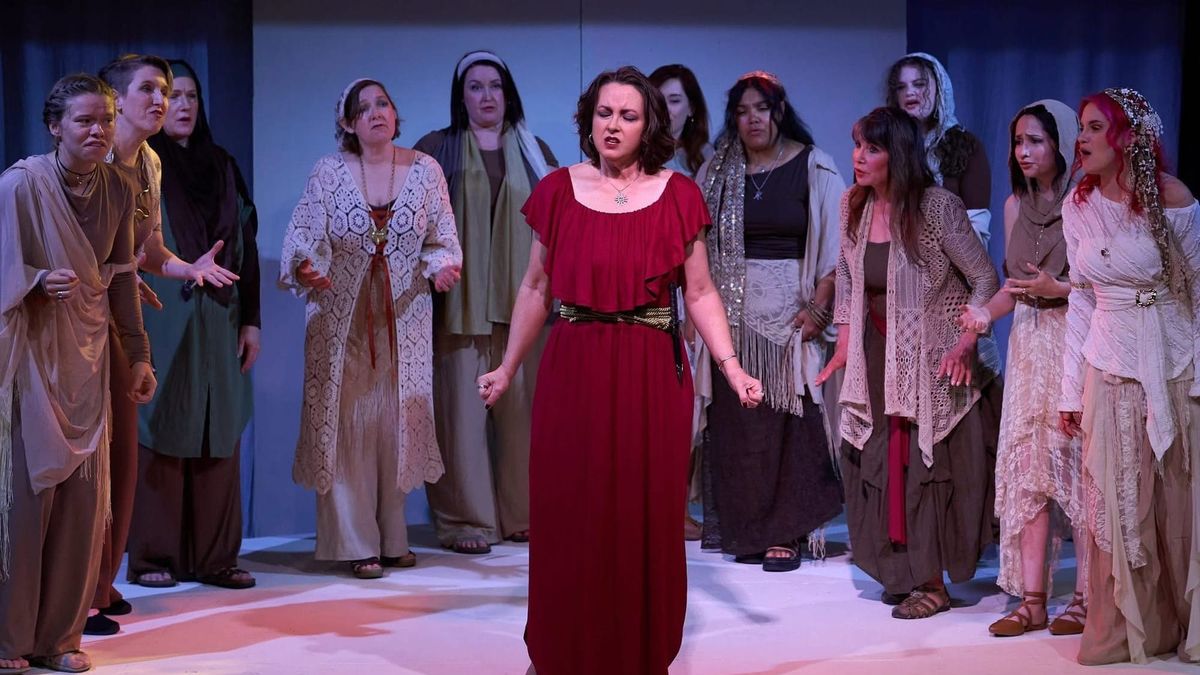
A highlight of this production is the Greek-style chorus of 10 Corinthian women, reflecting the play’s status as the only documented ancient Greek tragedy with an all-female chorus: Chelsea Daniel, Ashley Ferrer, Mariah Frye, Charlene Grinsell, Jo Herman, Jerusha Lofland, Abby Luchsinger, Crystal Meek, Lizzie Schmucker, and Annabelle Smith.
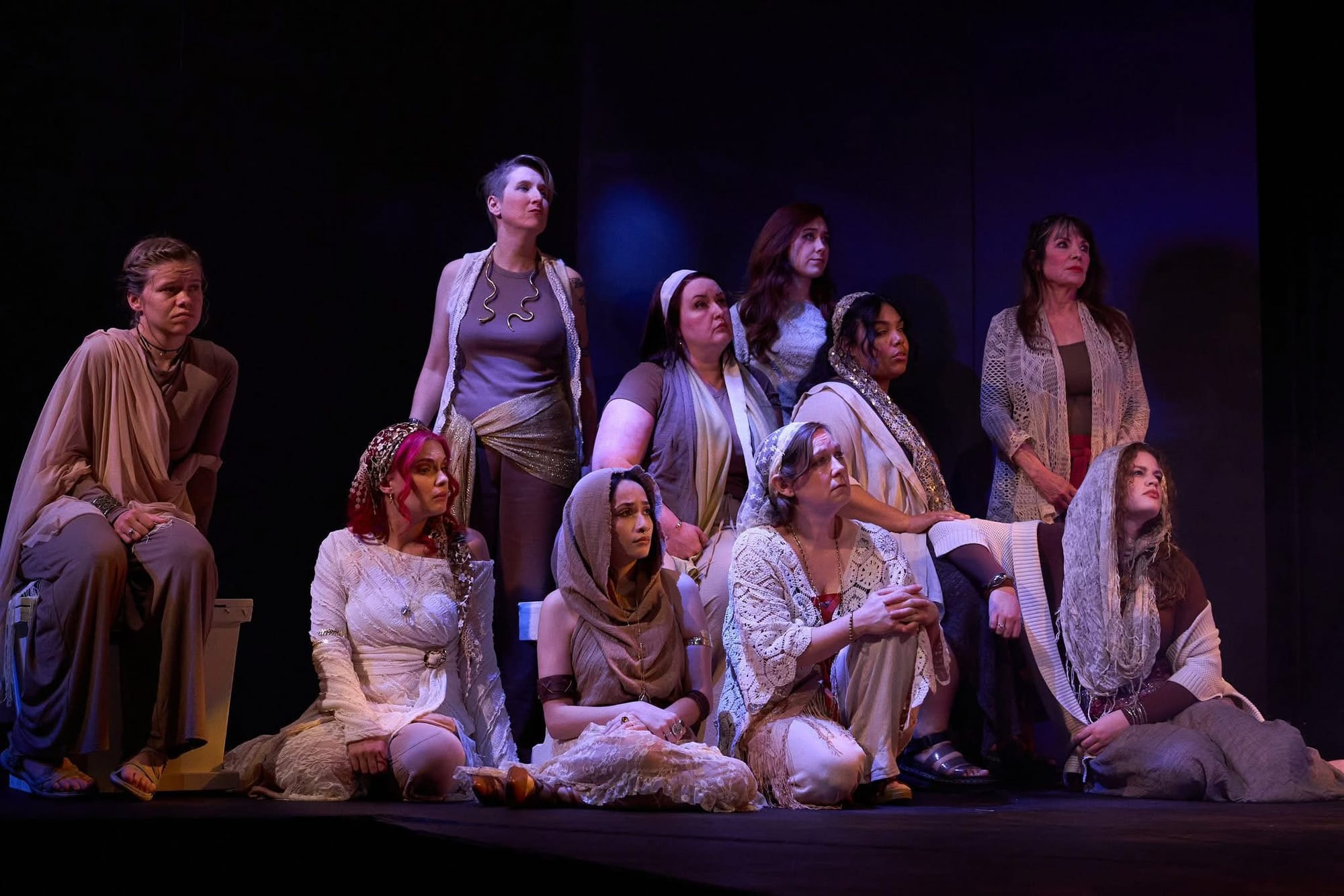
Simultaneously a support system and a conscience that tries to moderate Medea’s wild behavior, the women in the chorus communicate with her as a group while maintaining individual characters and viewpoints. Their bohemian costumes by Christy Railsback are a wonderful addition that also helps distinguish them.
This group of diverse and conflicted women validate Medea’s rage, if not her methods. Collectively, they shine a light on issues that we still struggle to discuss. The domestic violence that lies at the dark heart of "Medea" unfortunately remains relevant, 2,457 years later.
The Details
Wichita Community Theatre presents “Medea”
April 23-May 3, 2026, at Wichita Community Theatre, 258 N. Fountain St. in Wichita
Tickets are $16 for Thursday shows and $20 for all others. Discounts are available.
Teri Mott is a writer and actor in Wichita, Kansas, where she covers the arts as a critic and feature writer. She is co-founder of The SHOUT.
❋ Derby man has the kind of voice that turns heads — and chairs
❋ Socializing while sober: how some Wichitans are cultivating alcohol-free communities
❋ As a small creative business closes, the owner mourns
❋ Painting through it: Autumn Noire on 20 years of making art
❋ How a guy from Wichita resurrected 'Dawn of the Dead'
❋ Bygone Friends University museum housed curious collections
Support Kansas arts writing
The SHOUT is a Wichita-based independent newsroom focused on artists living and working in Kansas. We're partly supported by the generosity of our readers, and every dollar we receive goes directly into the pocket of a contributing writer, editor, or photographer. Click here to support our work with a tax-deductible donation.