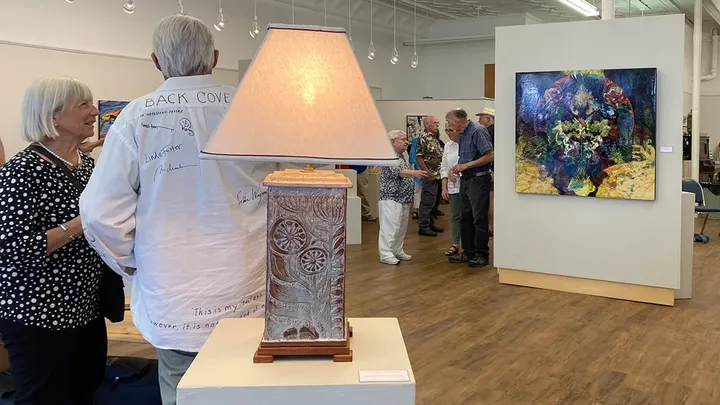
Apocalyptic positivity: A journey through Emily E. Ritter’s 'Ecologies of the Self'
The Wichita artist metabolizes our collective waste into speculative biology in an exhibition at the Clayton Staples Gallery.
“Ecologies of the Self,” a solo exhibition by the interdisciplinary artist Emily E. Ritter, is currently on view in the Clayton Staples Gallery at Wichita State through May 15. Ritter is a WSU alum (Bachelor of Fine Arts 2012) and graduate of Arizona State’s Master of Fine Arts program in 2018. In this exhibition, she digs into “human irresponsibility and its consequences” while celebrating the evolution of ecological forms. 1
Ritter invites viewers to experience her personal response to the profound issues of materialism and consumption in the Anthropocene era. Over the past decade, she has explored the concept of “the unwanted,” using materials we typically throw away to make works inspired by weeds. Her personal symbolism draws from regional flora and fauna.
Academically trained as a printmaker, Ritter employs a range of materials from traditional to unlikely. Moving through the “Ecologies of the Self,” you see Ritter’s restless range — from classic printmaking to digital hybrids to three-dimensional plastics.
In her sculptures, Ritter doesn’t simply incorporate the ephemera and “trash” of modern culture into assemblages; she transforms the trash itself into an artist’s medium. Through her work, she explores the concept of "apocalyptic positivity” — finding resilient, hybrid beauty in a world reshaped by human impact and artistic resistance in the face of ecological decay.
Evolution
In her artist talk at the opening reception of the show, Ritter described “Ecologies of the Self” as a survey of her work as an undergraduate student and the decade since. Examples she discussed from her undergraduate career reveal her early ease with diverse materials. She completed a printmaking series on gray wolf persecutions, then a group of pencil drawings of animals depicted as toys in human hands. A stint at the Women’s Studio Workshop in Rosendale, New York, deepened her grasp of papermaking, book arts, and ceramics. She also created digital xeroxes of her face overlaid with images from discarded consumer packaging.
In this show, viewers can trace some of Ritter’s evolution through four works representing her shifting relationship with mediums: from recycled materials to traditional techniques like screen printing and acrylic painting, and finally to objects lifted directly from nature.
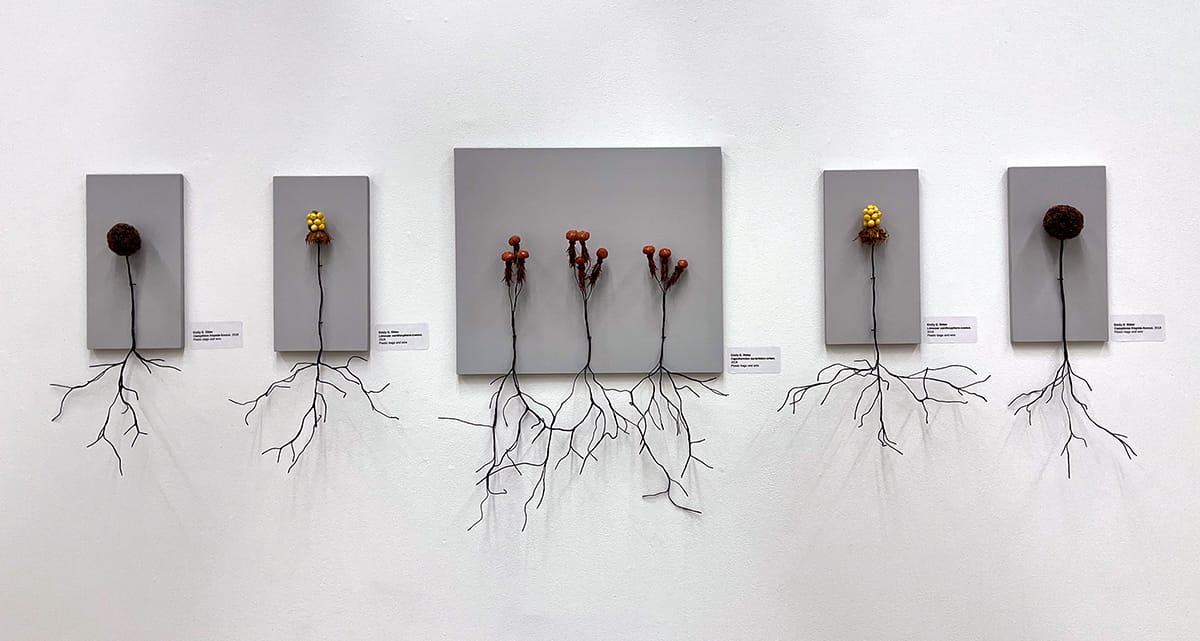
The 2018 sculptural wall piece, “Caputiunctus aurantiaco-orbes,” represents an early phase in Ritter’s practice. On a gray-painted panel, the artist affixes three bundles of orange-brown plants with black stems and roots that fan out below the edge of the panel. She uses purely human-made materials — plastic bags and wire — to mimic real plants and organic, root-like structures. This work serves as a commentary on the permanent footprint of synthetic waste in our natural ecosystems.
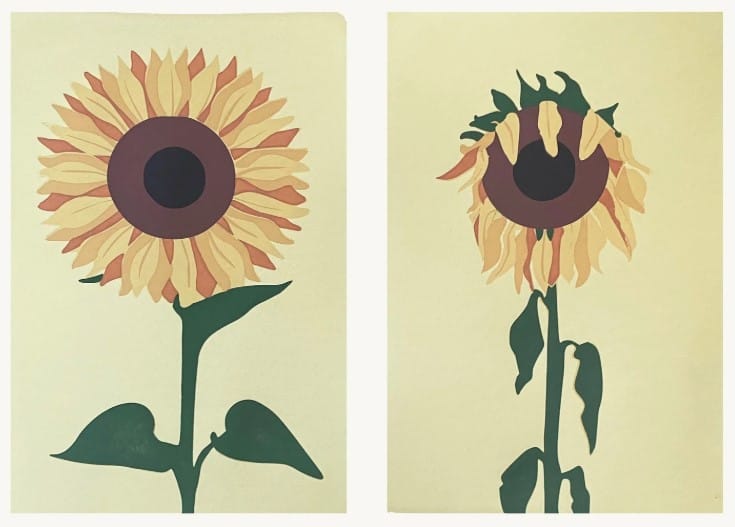
Moving into 2020, Ritter’s focus pivoted from physical sculpture to graphic observation. She also returned to her roots in traditional media and printmaking. This shift resulted in a series of regional flora and wildlife portraits. The screen print “Wilted” captures the life cycle of a sunflower, with an image of the flower in full bloom on the left and a depiction of the same flower with withered petals and leaves on the right. It reflects the artist’s interest in botanical decay and the passage of time.
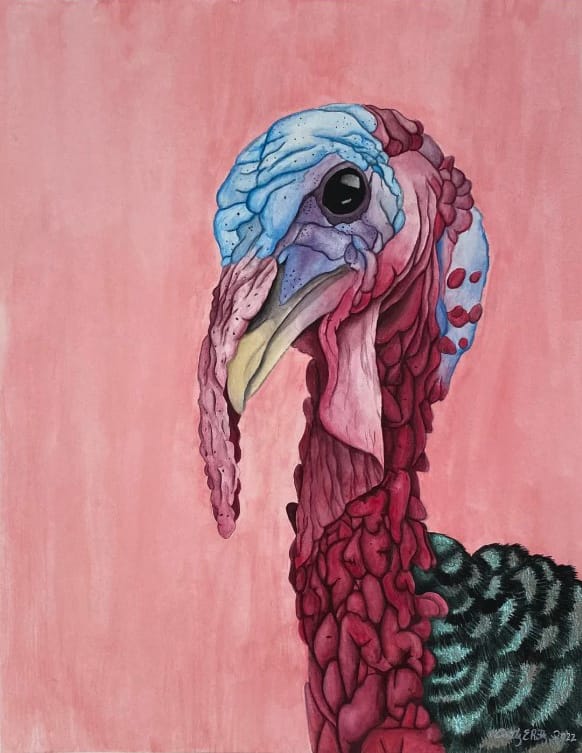
By 2022, Ritter had refined her work into detailed wildlife portraits. In the “Ecologies” exhibition, a gouache painting of the head and neck of a wild turkey, in shades of red, blue, and black on a pink background, underscores Ritter’s scientific precision and establishes a direct connection to native Kansas fauna.
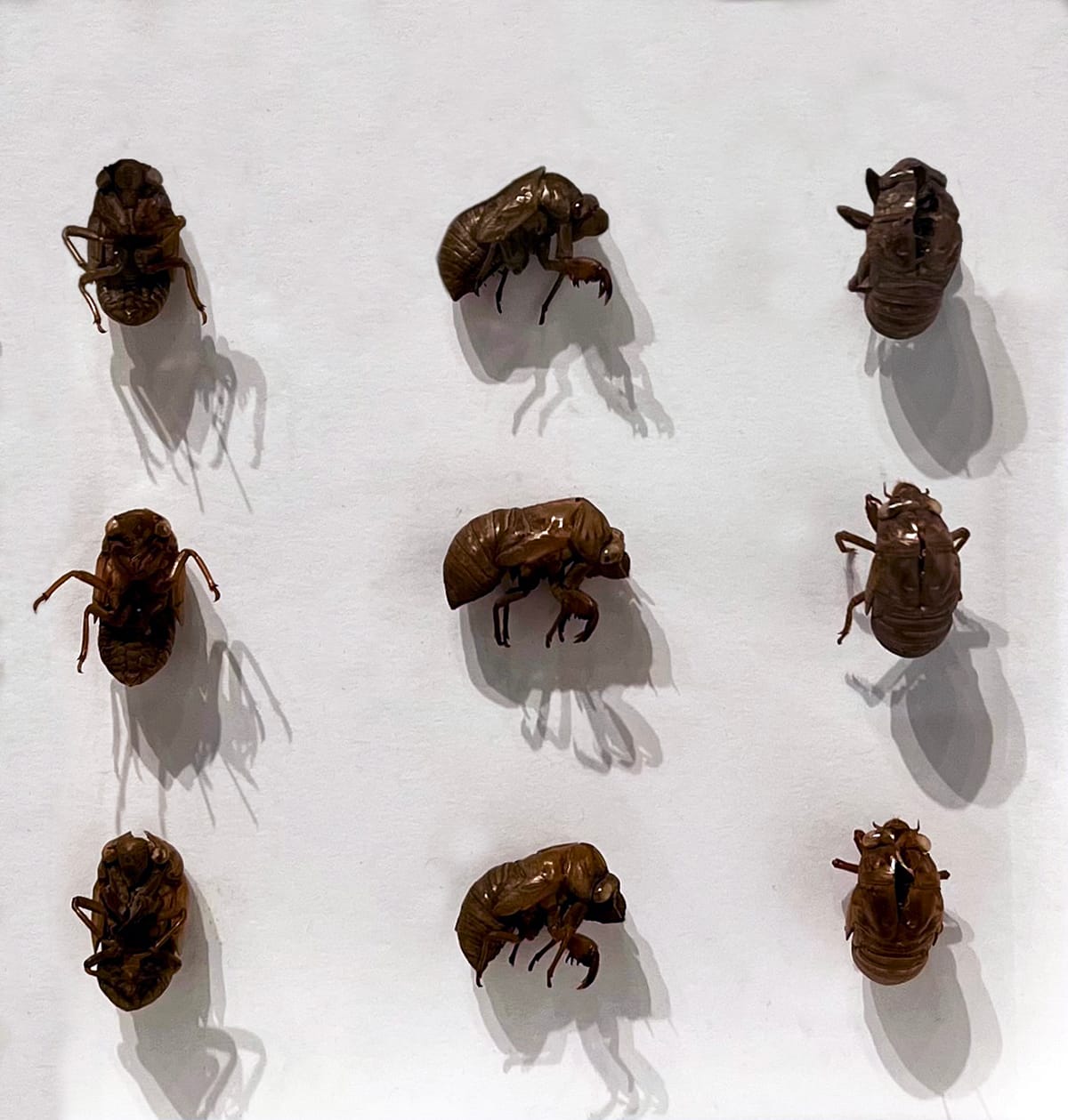
In her 2023 installation “Superb Dog-Day Cicada Husks,” Ritter completes a fascinating material arc. Here, from using synthetic media to imitate life, she moves to lifting elements directly from nature. By arranging unaltered cicada exoskeletons in a specimen-like grid, Ritter reveals the elegance of a natural world existing as art itself, with no editing or adornment.
Ecosystems
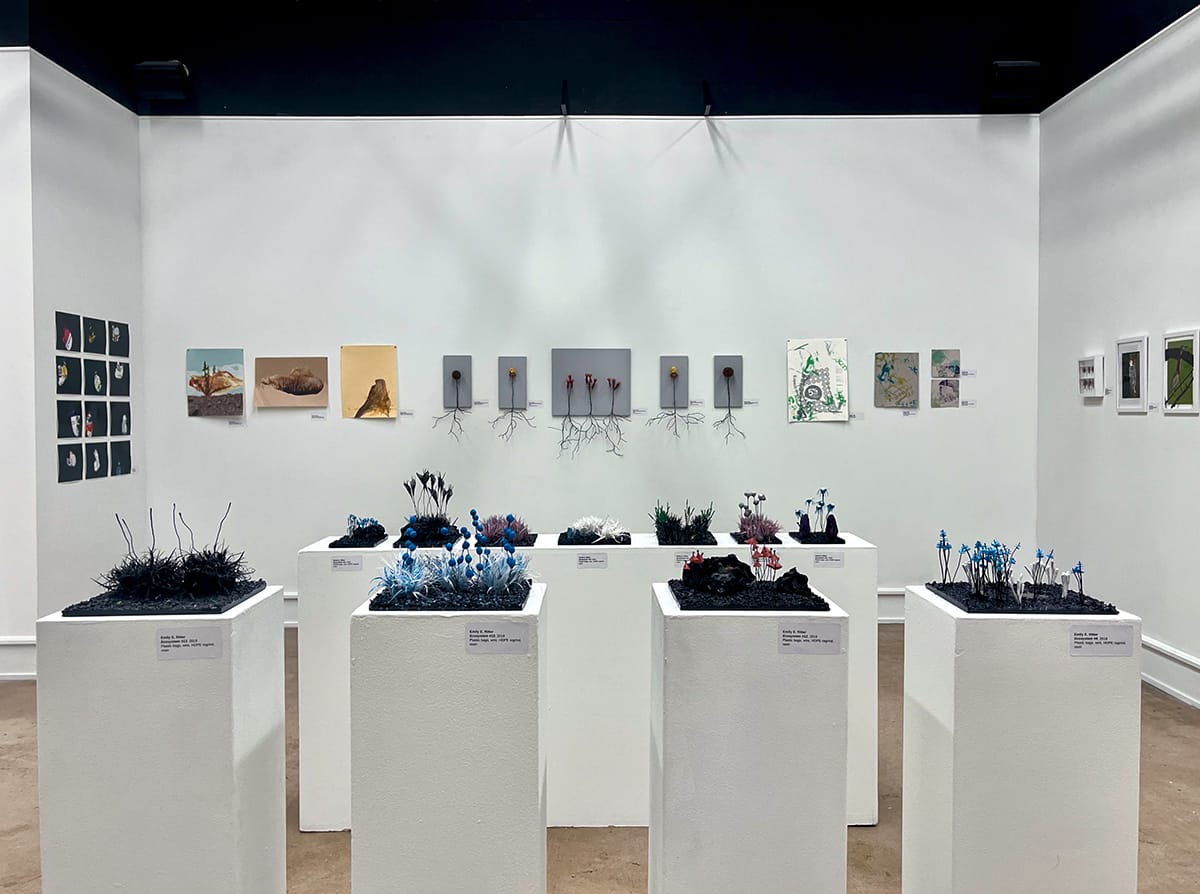
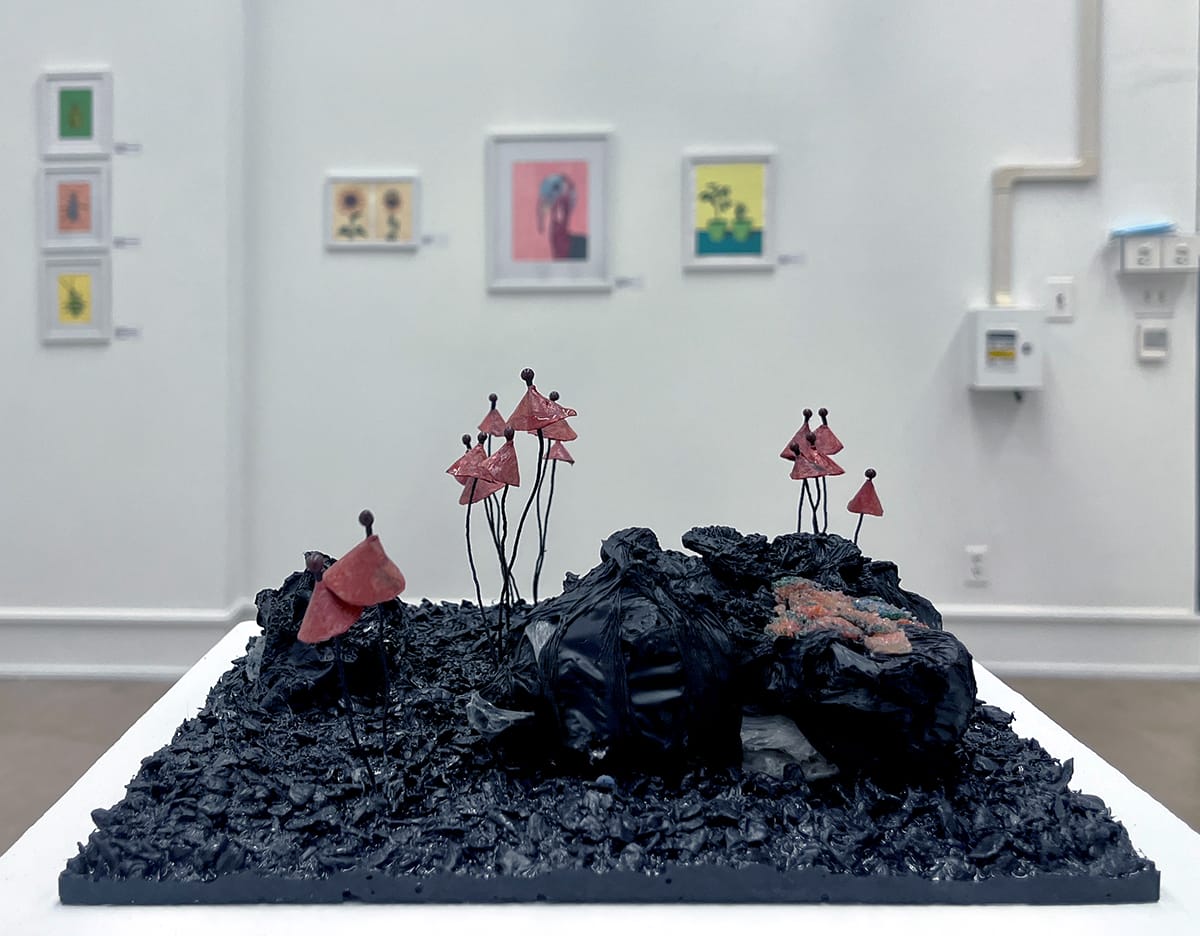
The heart of "Ecologies of the Self" is a group of three-dimensional mini installations in the center of the gallery space. This "Ecosystem" series draws on shapes inspired by desert weeds. In a Phoenix Art Museum profile, Ritter explained her fascination with undesirable plants: "I love watching weeds grow in the cracks of concrete and at the edges of buildings. The resilience of the natural world always astounds me, and that astonishment definitely informs my work."
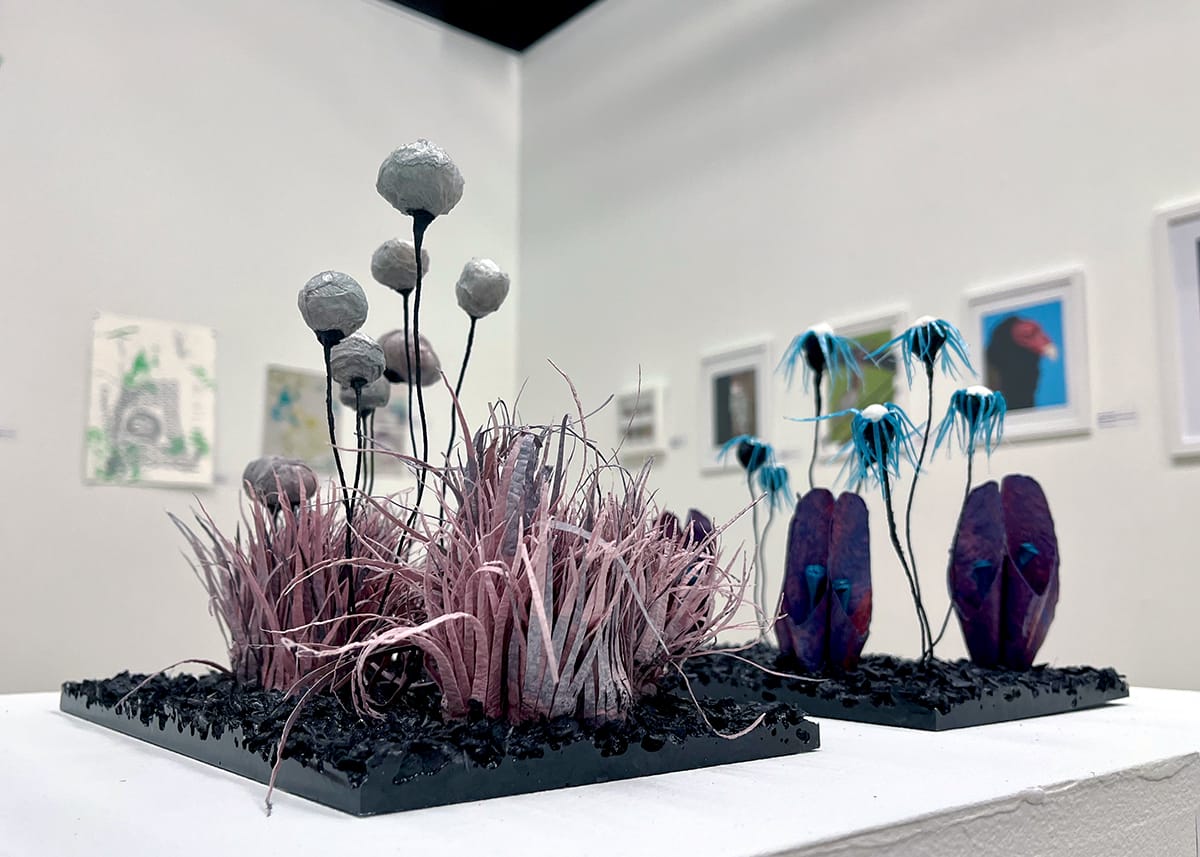
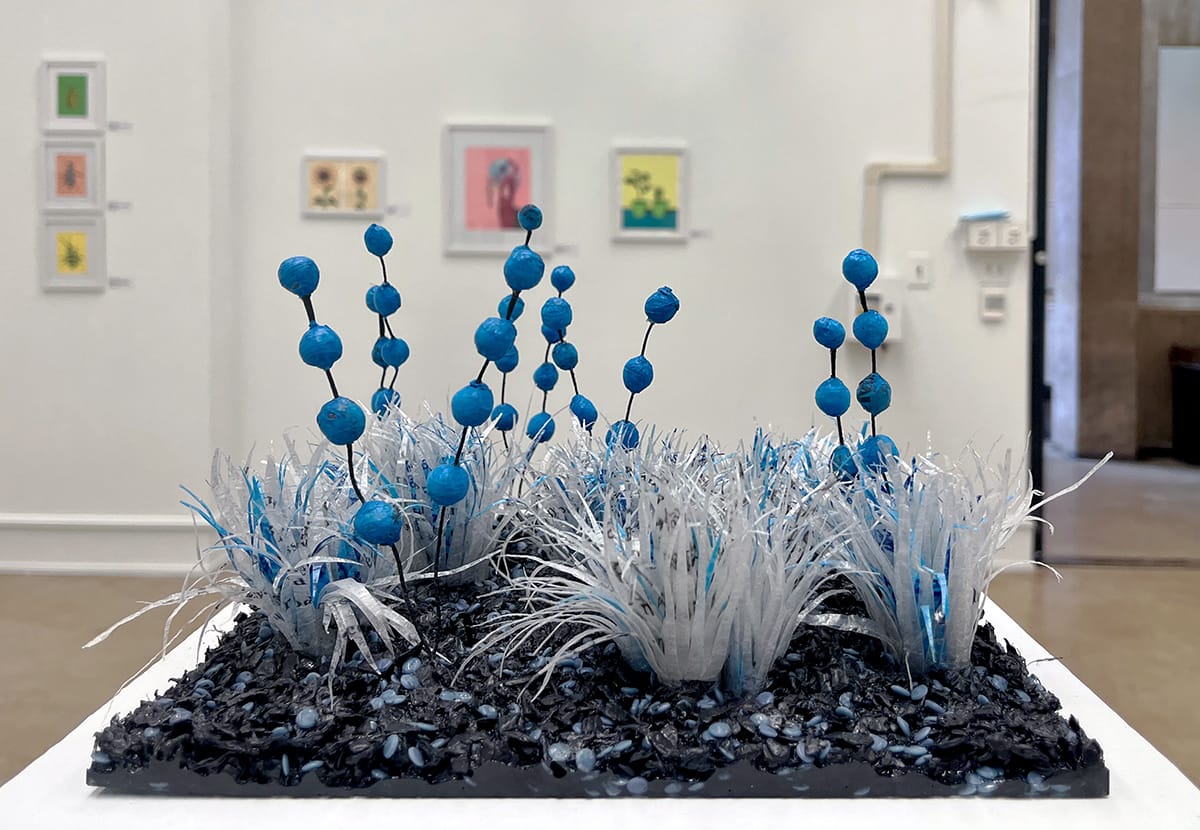
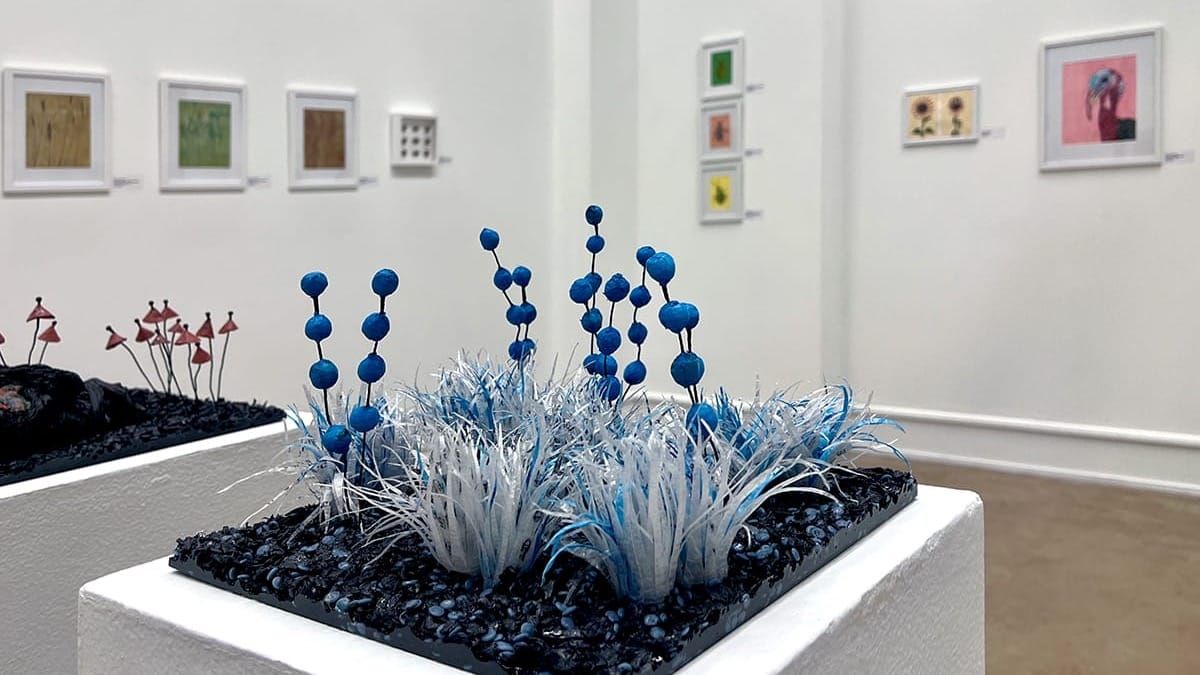
Works by Emily E. Ritter, from left: “Ecosystem #18,” 2018, plastic bags, wire, HDPE regrind, resin. Muted pinks and soft grays dominate this ecosystem, where globe-shaped forms tower over delicate, frayed textures. “Ecosystem #15,” 2018, plastic bags, wire, HDPE regrind, resin. Striking blue orbs perched on wire stems rise above a bed of white and blue plastic “flora.” Photos by Skyler Lovelace for The SHOUT.
The "Ecosystem" series sits on pedestals like a row of industrial terrariums. Up close, the "soil" in these miniature landscapes is actually a dark, granulated plastic— black HDPE regrind. It’s a jarring realization to see the ghosts of old milk jugs and detergent bottles acting as the literal bedrock for Ritter’s flora. The flowers and blades of grass emerge from the black soil in unnatural colors and forms.
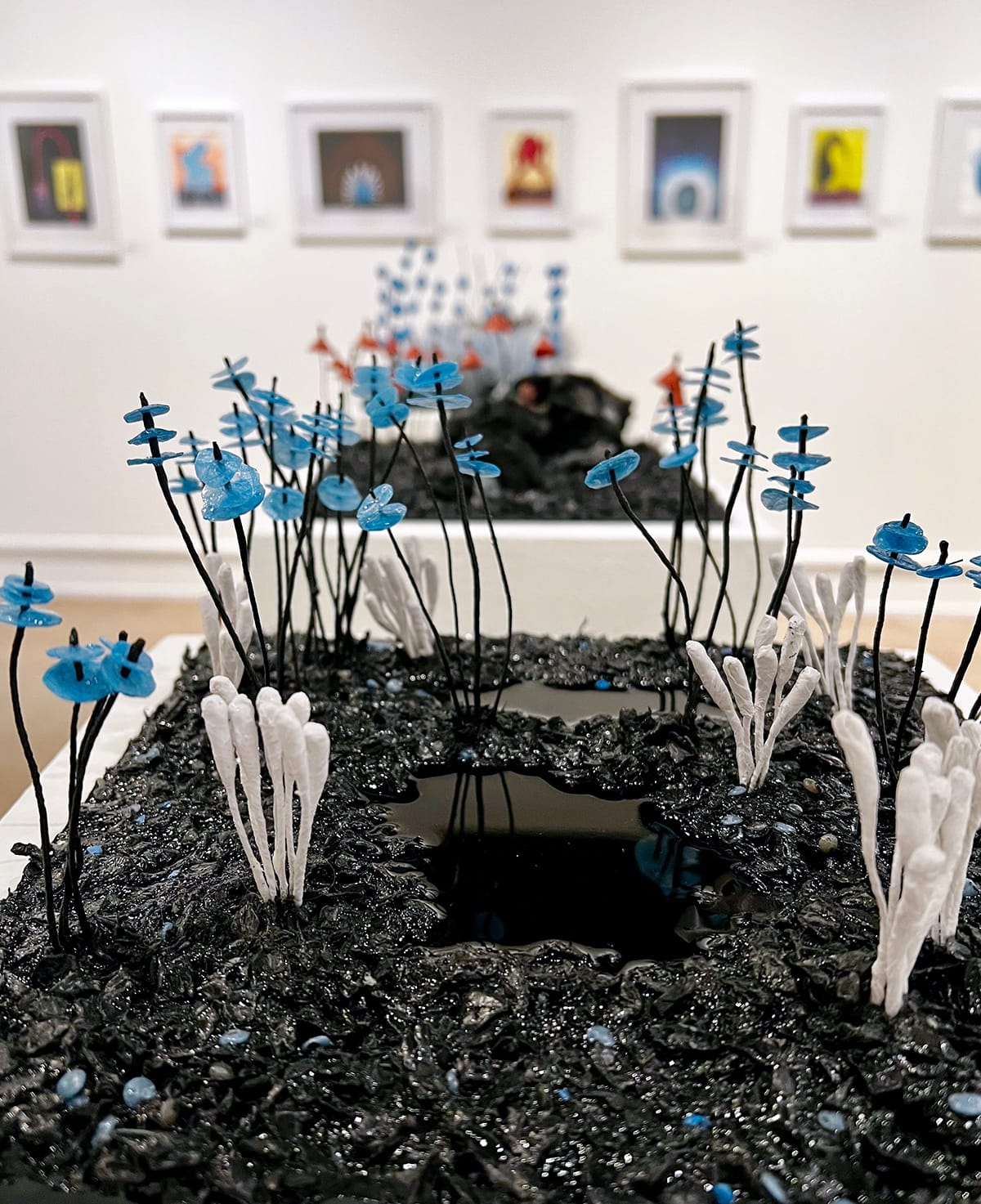
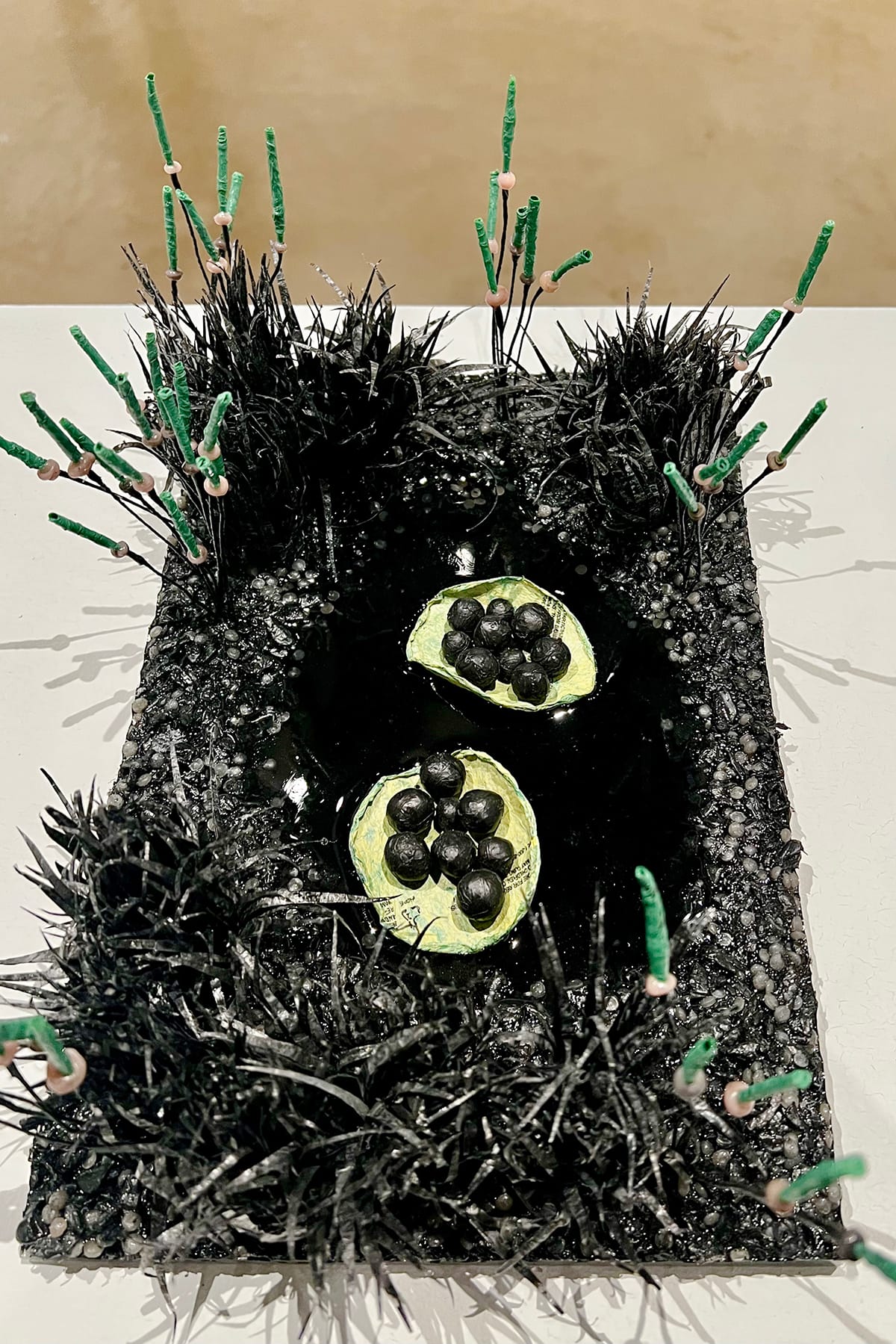
Works by Emily E. Ritter, from left: “Ecosystem #9,” 2018. This detailed sculpture uses unexpected materials — plastic bags, wire, HDPE regrind, and resin — to mimic an organic environment. “Ecosystem #14, 2018, plastic bags, wire, HDPE regrind, resin. Dark, grass-like textures cradle seed-like pods in this otherworldly environment. Photos by Skyler Lovelace for The SHOUT.
Ritter is imagining a future where human detritus and nature have fused so completely that the distinction is gone. The flowers, with their fused textures and alien colors, are vigorous, resilient hybrids ready to thrive in whatever concrete is left behind.
These pieces exemplify Ritter’s ability to blend scientific observation with imaginative world-building, creating landscapes that feel both otherworldly and deeply familiar.
Scars
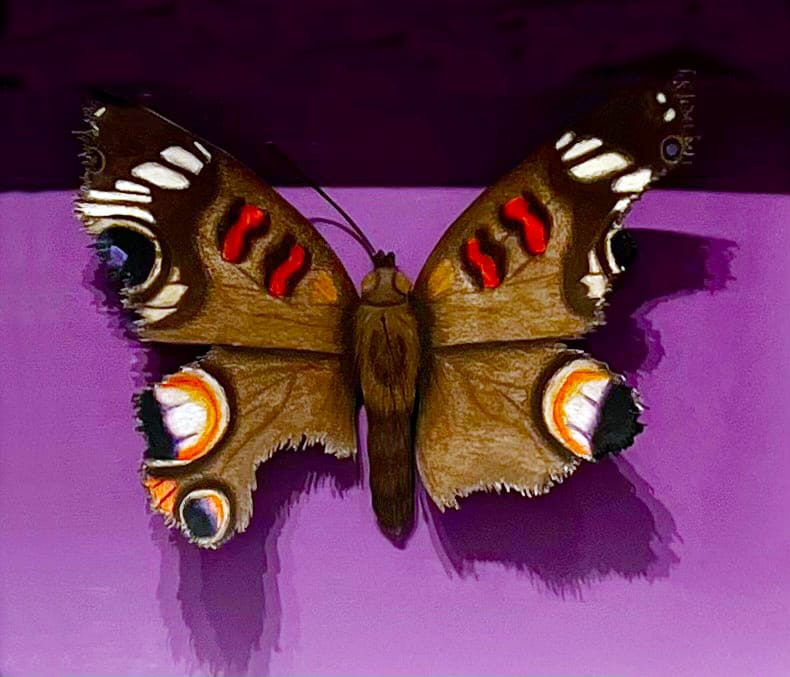
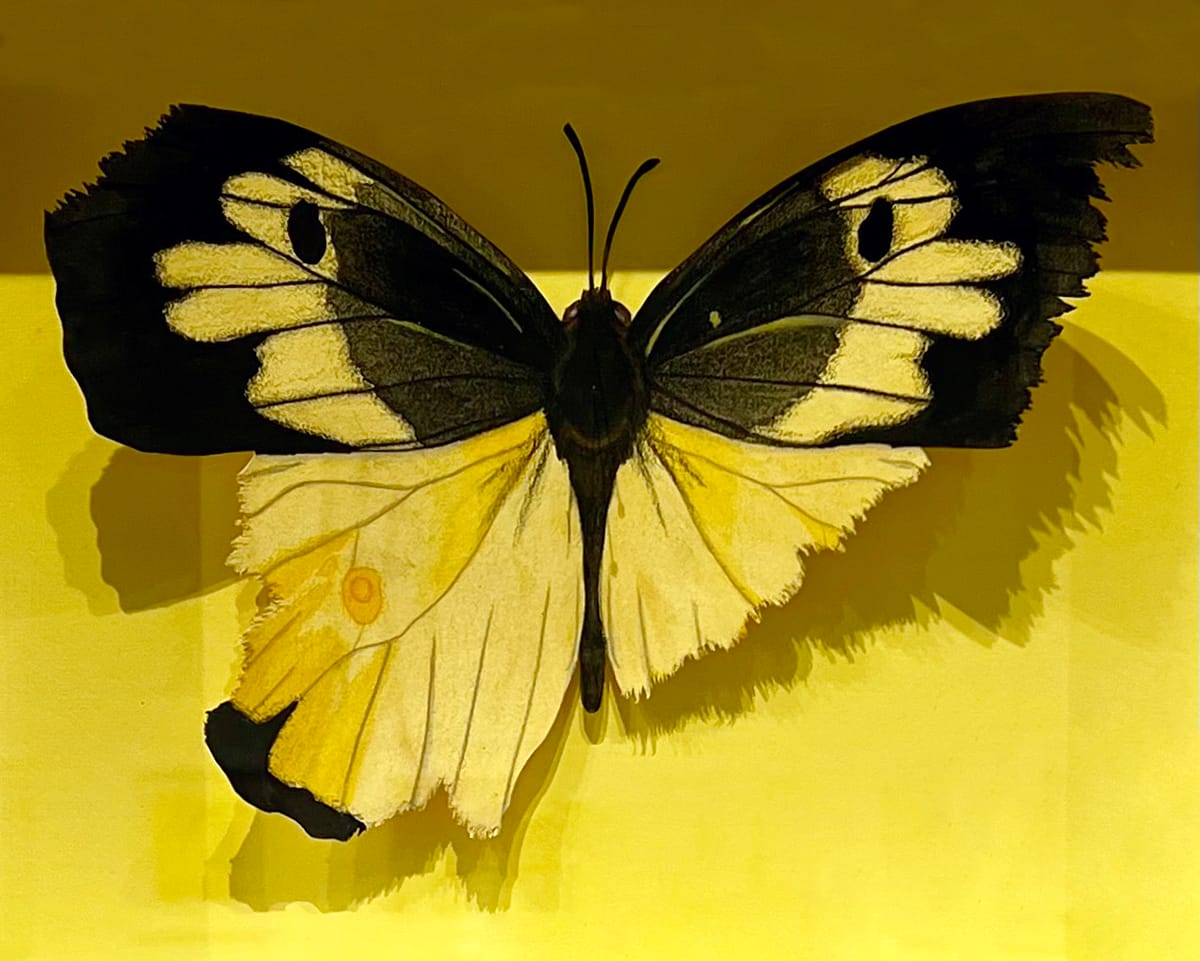
In the 2026 “Scars” series, Ritter explores how we carry our histories. For these works, Ritter returned to more traditional art materials — watercolor, colored pencil, and cut paper — to recreate vividly detailed butterflies native to Kansas. Pinned to colorful backgrounds and framed under glass, these creations look like biology-class specimens.
Each butterfly displays a torn wing — a powerful symbolic reminder that injury and beauty co-exist. For Ritter, a torn wing isn't just damage; it's a badge of survival.
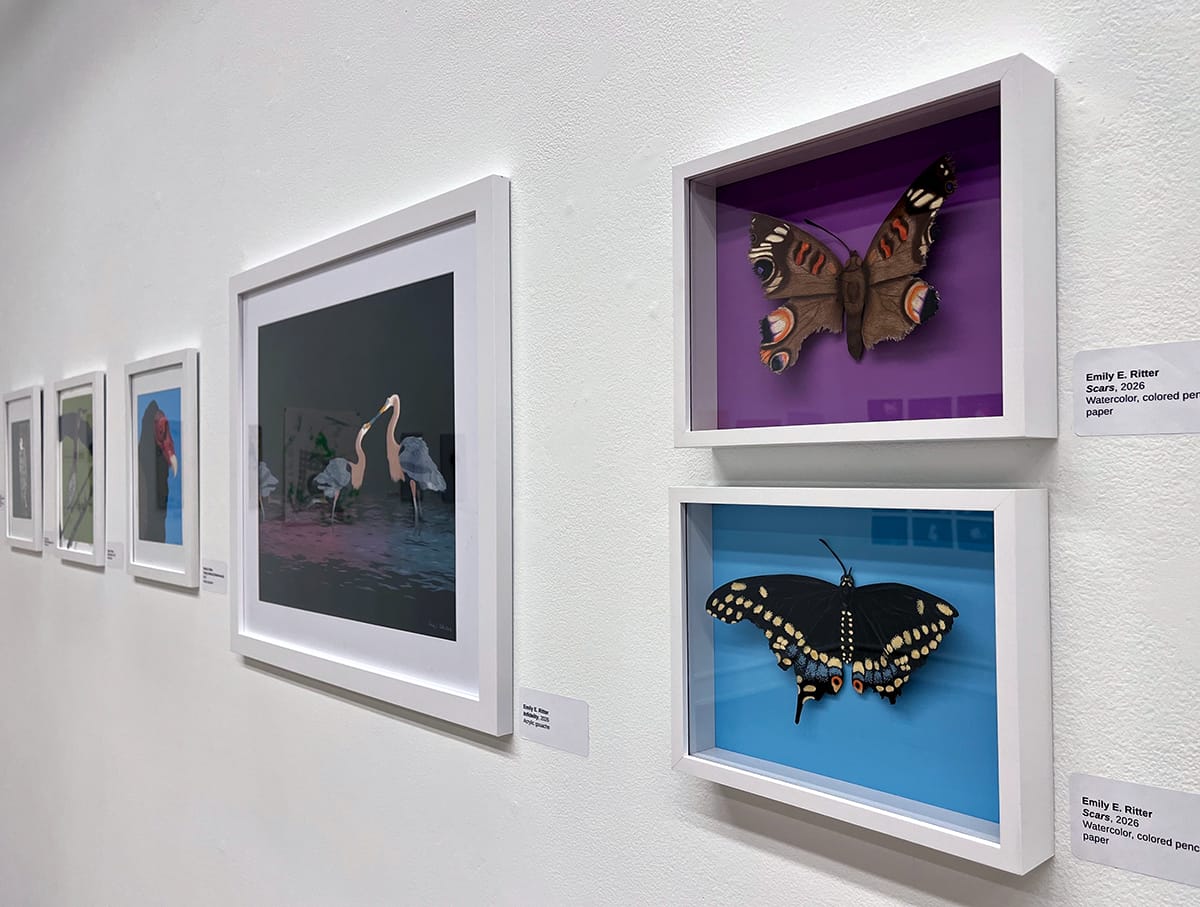
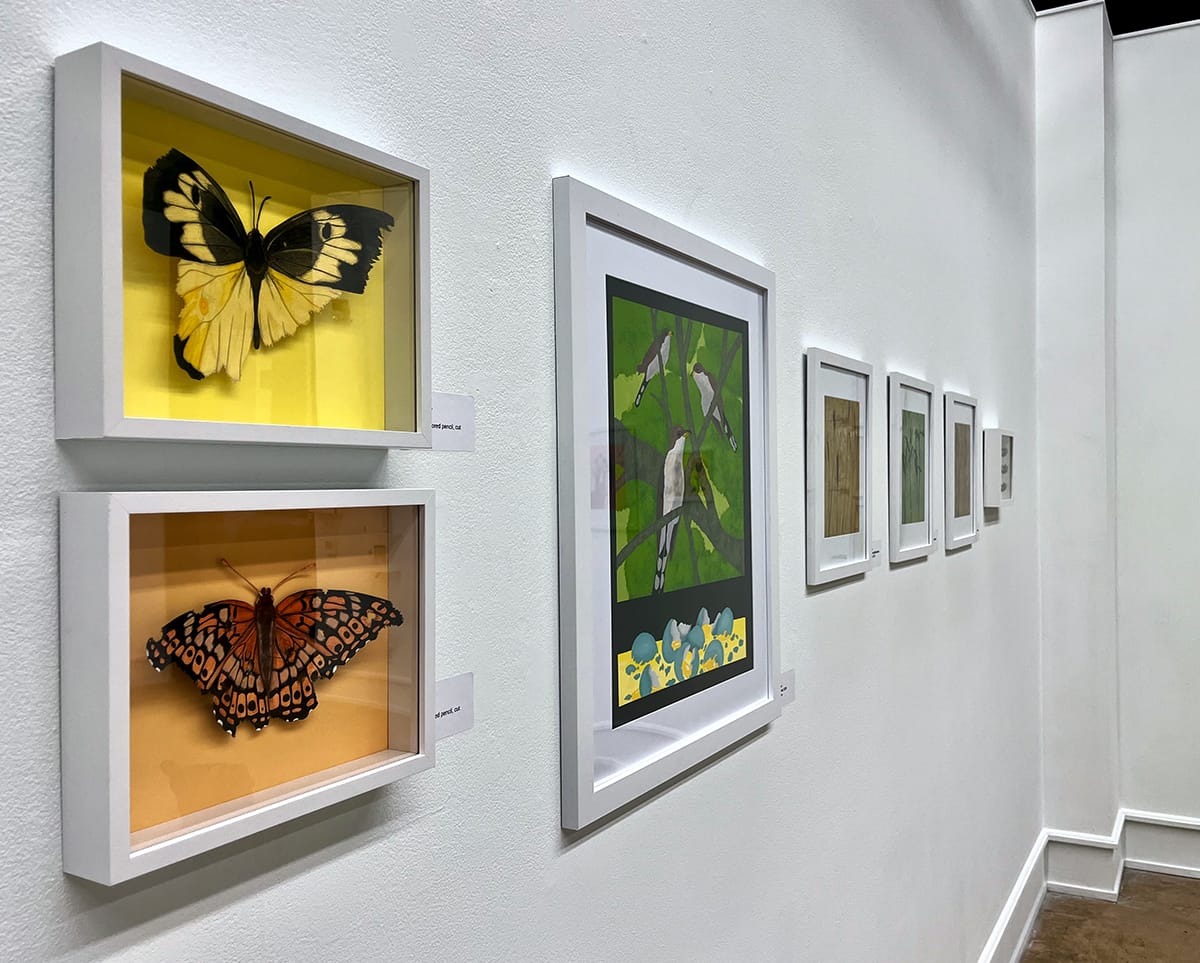
The "Scars" 'butterflies' hang frozen in time on the gallery walls. Photos by Emily Christensen for The SHOUT.
By combining scientific detail with personal symbolism, Ritter creates a space where “emotions connect us all,” turning a simple illustration of local fauna into a reflection on resilience.
While the “Ecosystems” series is a broad environmental critique, the “Scars” series makes the message intimate. By framing these injured butterflies like lab specimens, Ritter turns a torn wing into a quiet, personal story of surviving a changing planet.
Lineages
Many artists have examined how we deal with the materialism and trash of our current age. In a world of plastics and convenience, we’re challenged to respond to the profound fact that “every toothbrush we’ve ever owned still exists.” 2
Ritter’s use of cast-offs makes it easy to include her in the lineage of artists who found gold in the garbage — from Marcel Duchamp’s provocative plumbing to the assembled narratives of fellow Kansans Lester Raymer and Joelle Ford. But where those artists often leaned into the irony or the chaos of consumer "trash," Ritter does something quieter and more hopeful. She isn’t just critiquing our waste, she’s metabolizing it into a speculative biology. It’s a strange, staggering realization to stand among these fused hybrids of plastic and plant life. The message seems to be that even if we manage to break the world, life will find a way to make it beautiful again. That is the heart of her "apocalyptic positivity" — the stubborn, inevitable persistence of nature.
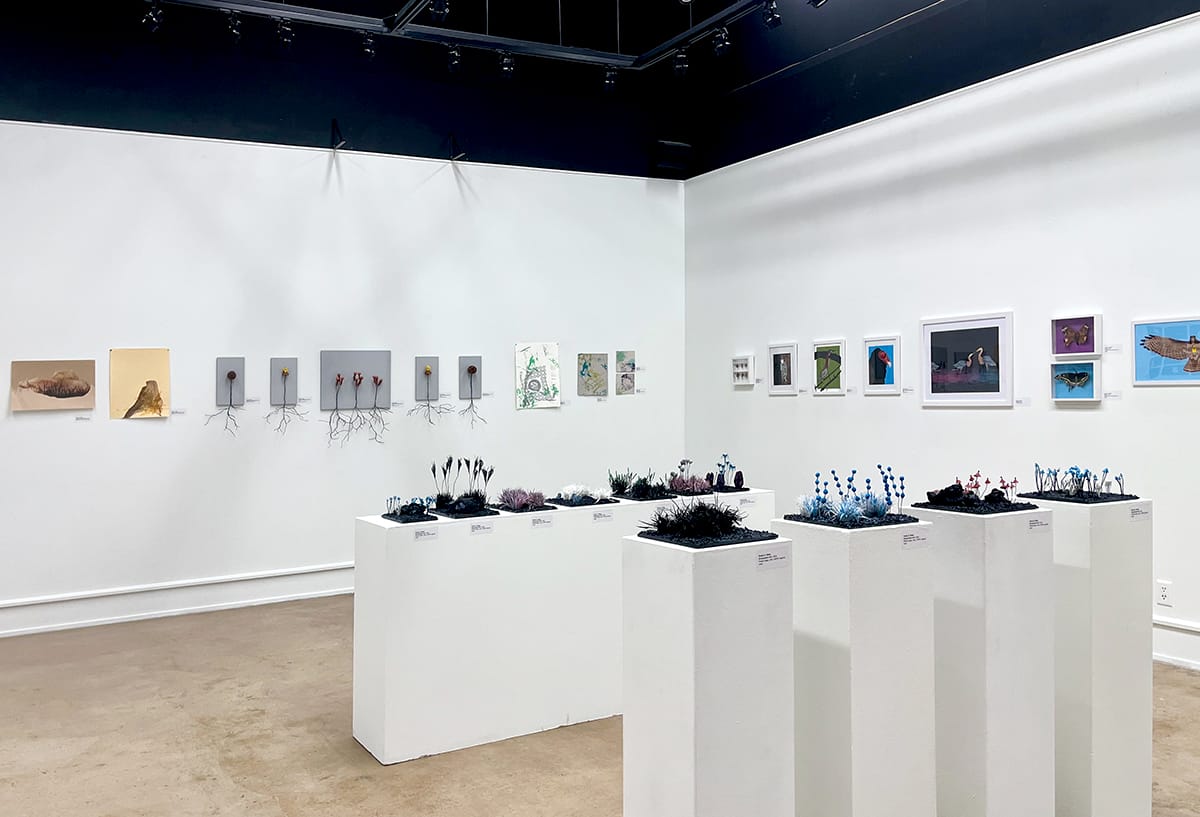
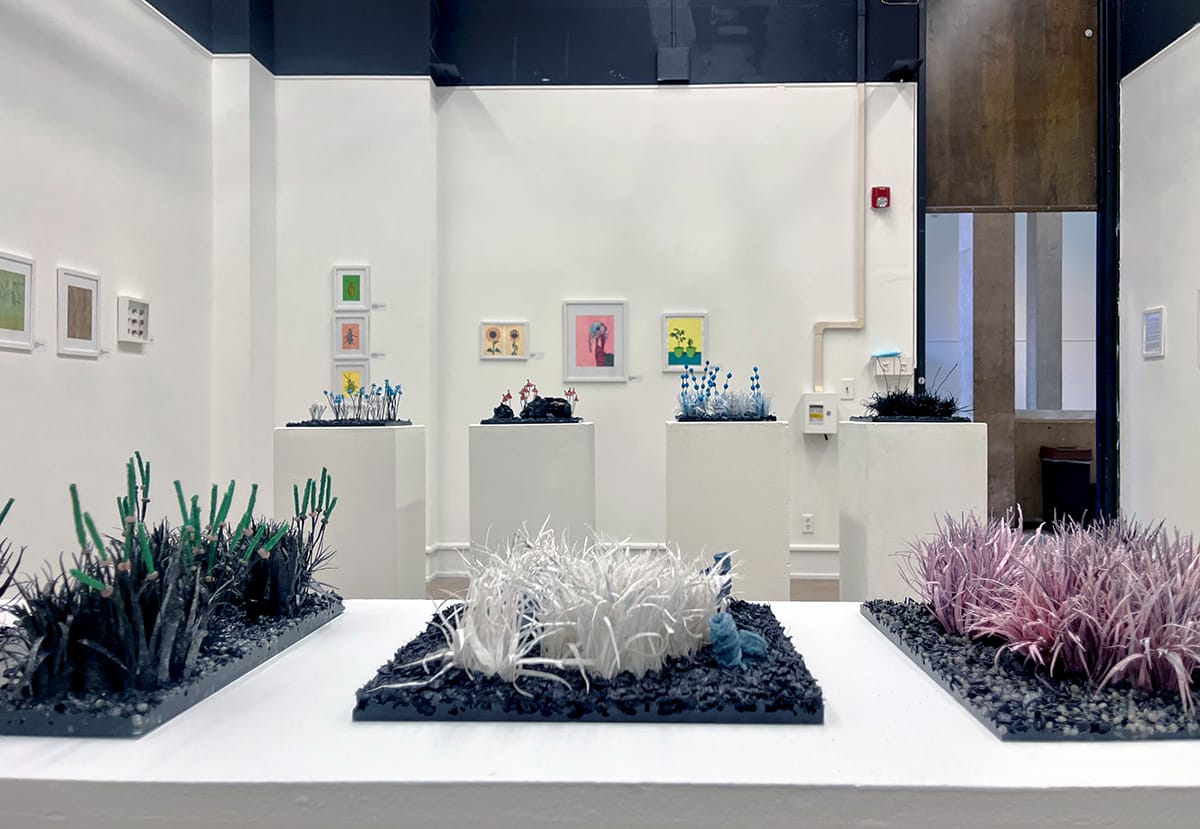
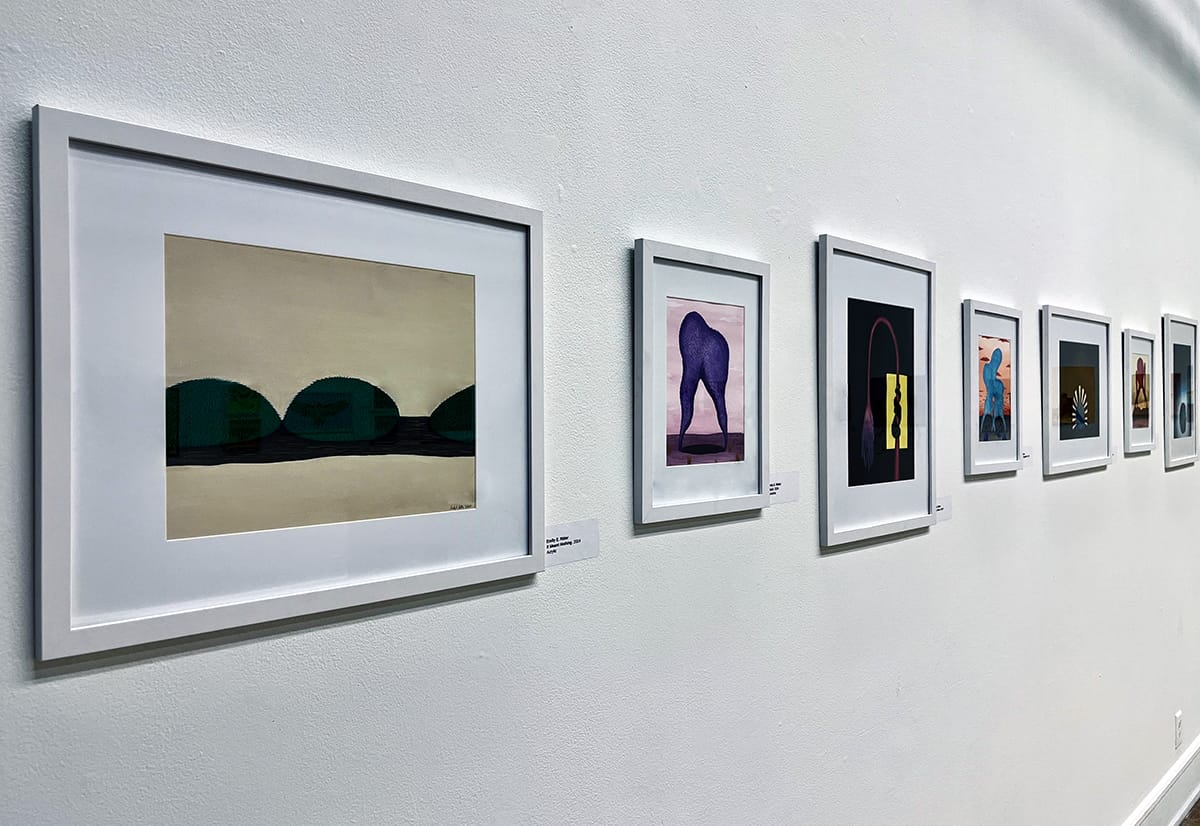
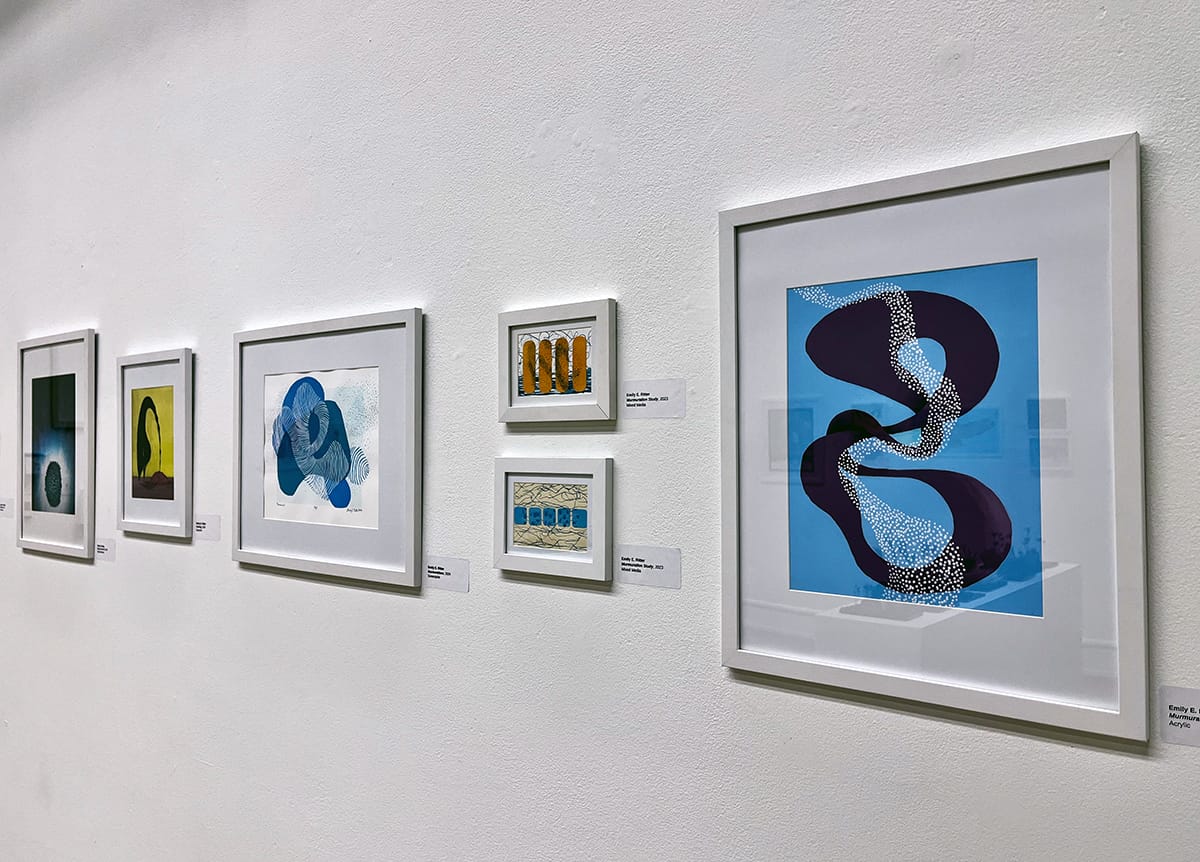
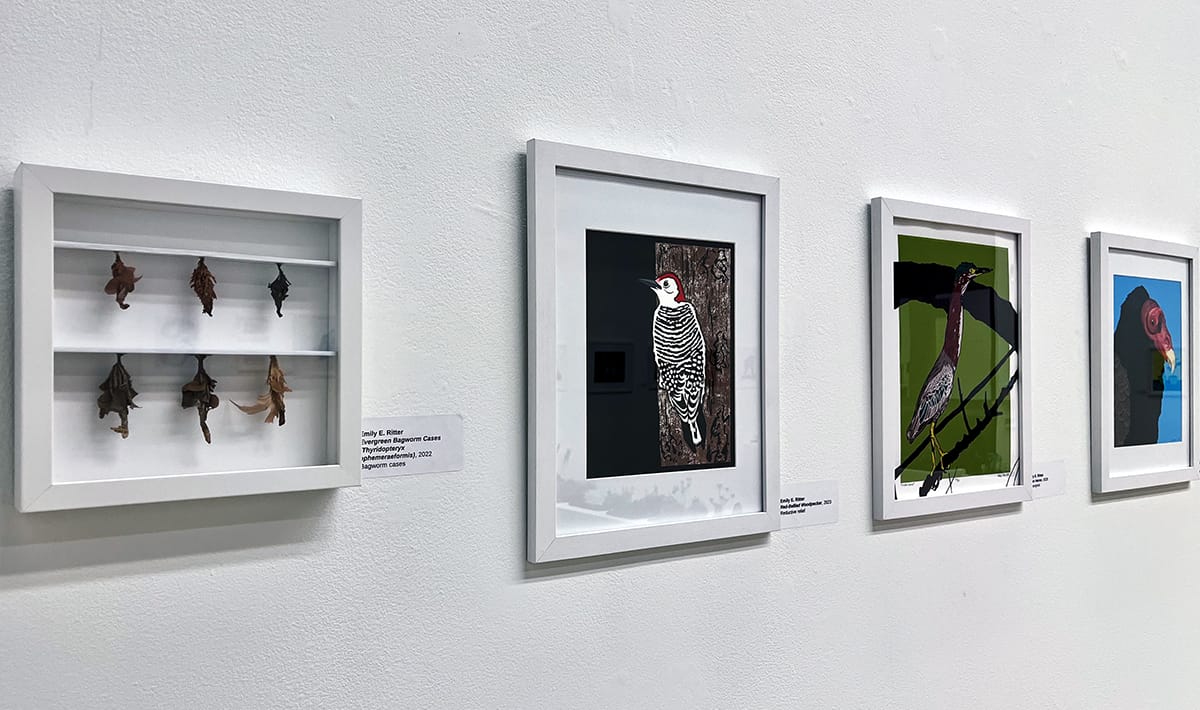
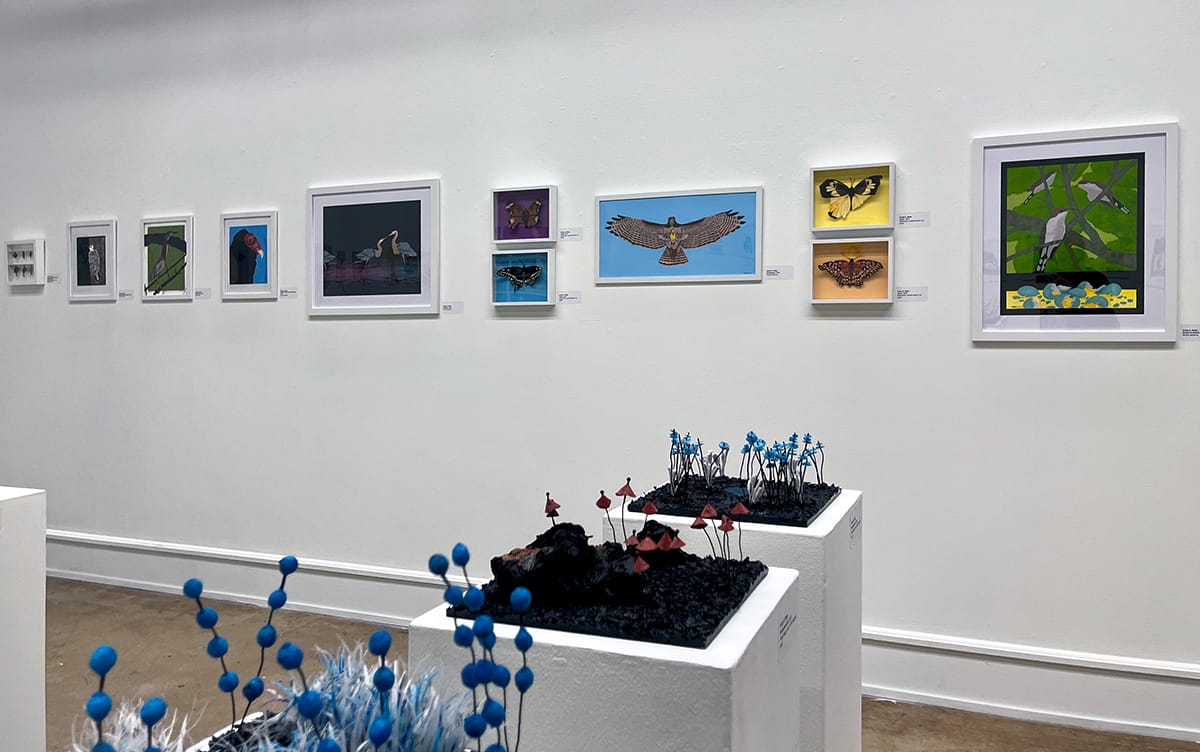
Installation views from "Emily E. Ritter: Ecologies of Self" in the Clayton Staples Gallery on the Wichita State campus. Photos by Emily Christensen for The SHOUT.
1 These and subsequent quotes come from Emily Ritter’s artist statement.
2 A quote by scientist Ellie Mackay from the documentary “A Plastic Tide.”
The Details
"Emily E. Ritter: Ecologies of Self"
March 17-May 15, 2026, in the Clayton Staples Gallery on the Wichita State campus, 1845 Fairmount St. in Wichita
The Clayton Staples Gallery is located in Room 205 on the second floor of McKnight Center (West), across the skybridge from the Ulrich Museum of Art. It’s free to visit and open 9 a.m.-5 p.m. Monday through Friday with the exception of university holidays.
Wichita State offers limited free visitor parking. Find WSU campus maps and parking information here.
Skyler Lovelace wrangles pixels, pigments, and poetry into new shapes at the Studio School in Wichita, Kansas. She leads a poetry group in the former principal’s office and hosts Art Club and StitchKraft in upstairs classrooms. She is also the creator of "Frequencies of Place," a project exploring the intersection of architecture and the human heart
❋ Derby man has the kind of voice that turns heads — and chairs
❋ Socializing while sober: how some Wichitans are cultivating alcohol-free communities
❋ As a small creative business closes, the owner mourns
❋ Painting through it: Autumn Noire on 20 years of making art
❋ How a guy from Wichita resurrected 'Dawn of the Dead'
❋ Bygone Friends University museum housed curious collections
Support Kansas arts writing
The SHOUT is a Wichita-based independent newsroom focused on artists living and working in Kansas. We're partly supported by the generosity of our readers, and every dollar we receive goes directly into the pocket of a contributing writer, editor, or photographer. Click here to support our work with a tax-deductible donation.