
Heavy hitters on an overflowing stage: Wichita Symphony Orchestra and Chorus present Verdi's Requiem
Maestro Daniel Hege and WSO chorus master Ryan Beeken led a sizable group of musicians in a memorable performance.
The composer Giuseppe Verdi knew when he had a hit on his hands. He is said to have warned the cast of “Rigoletto” not to hum or whistle "La donna è mobile" prior to its March 11, 1851, premiere — certain that once its earworm tune was released into the wild, it would spread rapidly. Sure enough, by the evening of March 12, it was being whistled, hummed, and sung all over Venice.
Verdi must have had the same premonition when he came up with the "signature tune" of his Requiem, the "Dies Irae." Though not exactly hummable, it is immediately memorable, with its alternation of pummeling brass chords and bass-drum wallops. Verdi was so confident in what he had that he reprised the "Dies Irae" music three times and used it to lend dramatic structure to the entire 80-minute work.
On April 11 at Century II Concert Hall, the Wichita Symphony Orchestra and Chorus lit into the first "Dies Irae" with zeal. Maestro Daniel Hege avoided any sense of hesitation or preparation as he abruptly shifted the ensemble out of the work's quiet opening movement — maximizing the surprise of the moment and eliciting a feeling of sudden velocity.
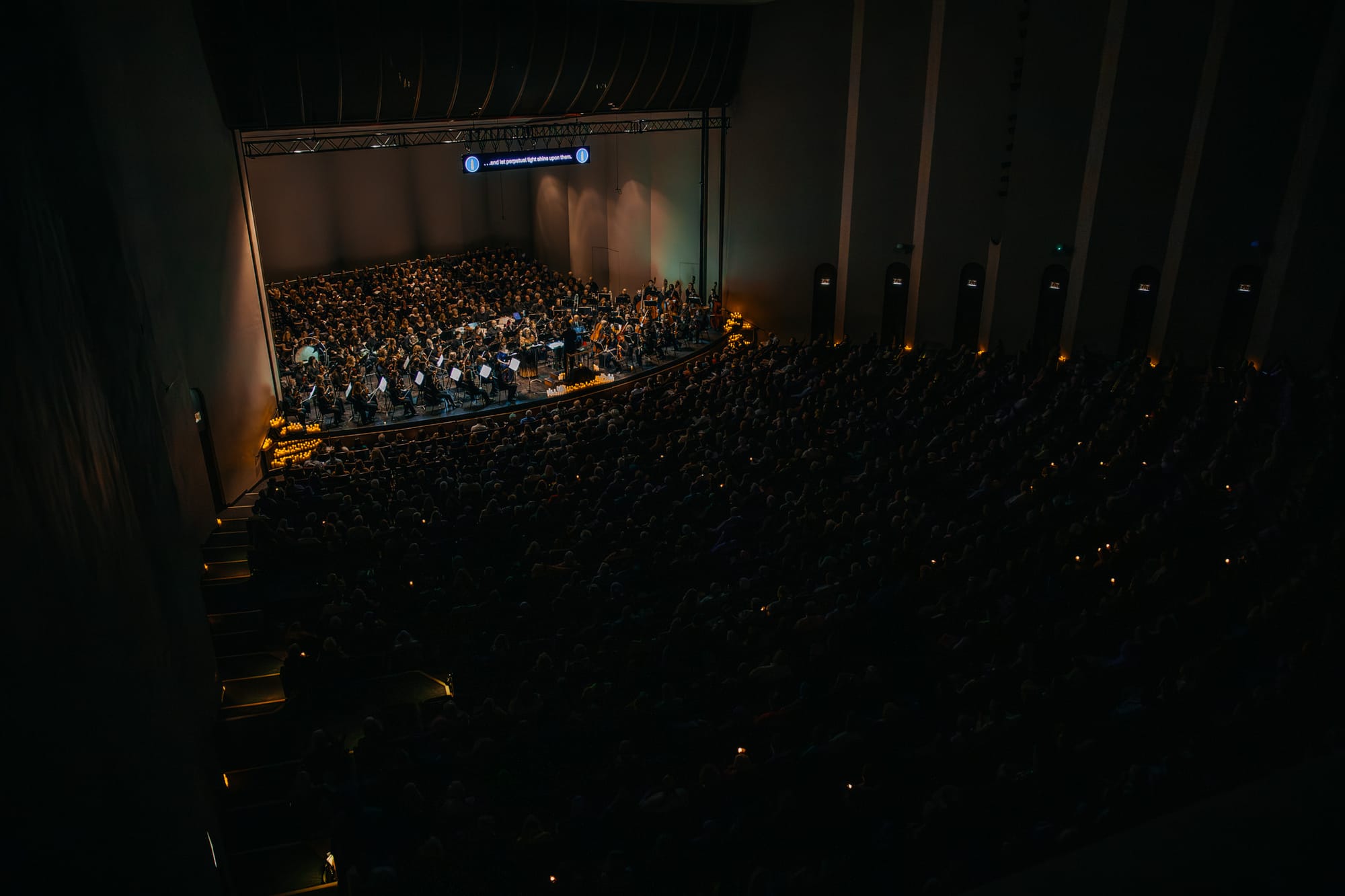
For this concert, the chorus was made up of around 180 Wichita State students and community members, making the stage look nearly as packed as the house. The chorus had started weekly, two-hour rehearsals in November under the leadership of Ryan Beeken.
Last month, Beeken announced that he is leaving Wichita to take up a new post as director of choirs at the University of Kentucky. He came to Wichita in 2021 with dual appointments as WSO chorus master and director of choral activities at WSU. Tasked with restarting the symphony chorus program after a two-year COVID interruption, he has built the choir’s numbers to the point where, on Saturday, the singers overflowed onto the floor on either side of their risers. Singing masterworks like the Verdi Requiem, the Mozart Requiem, and Beethoven's Ninth is a heavy lift for any community ensemble, and it takes an inspirational leader to keep people coming back season after season for that kind of challenge.
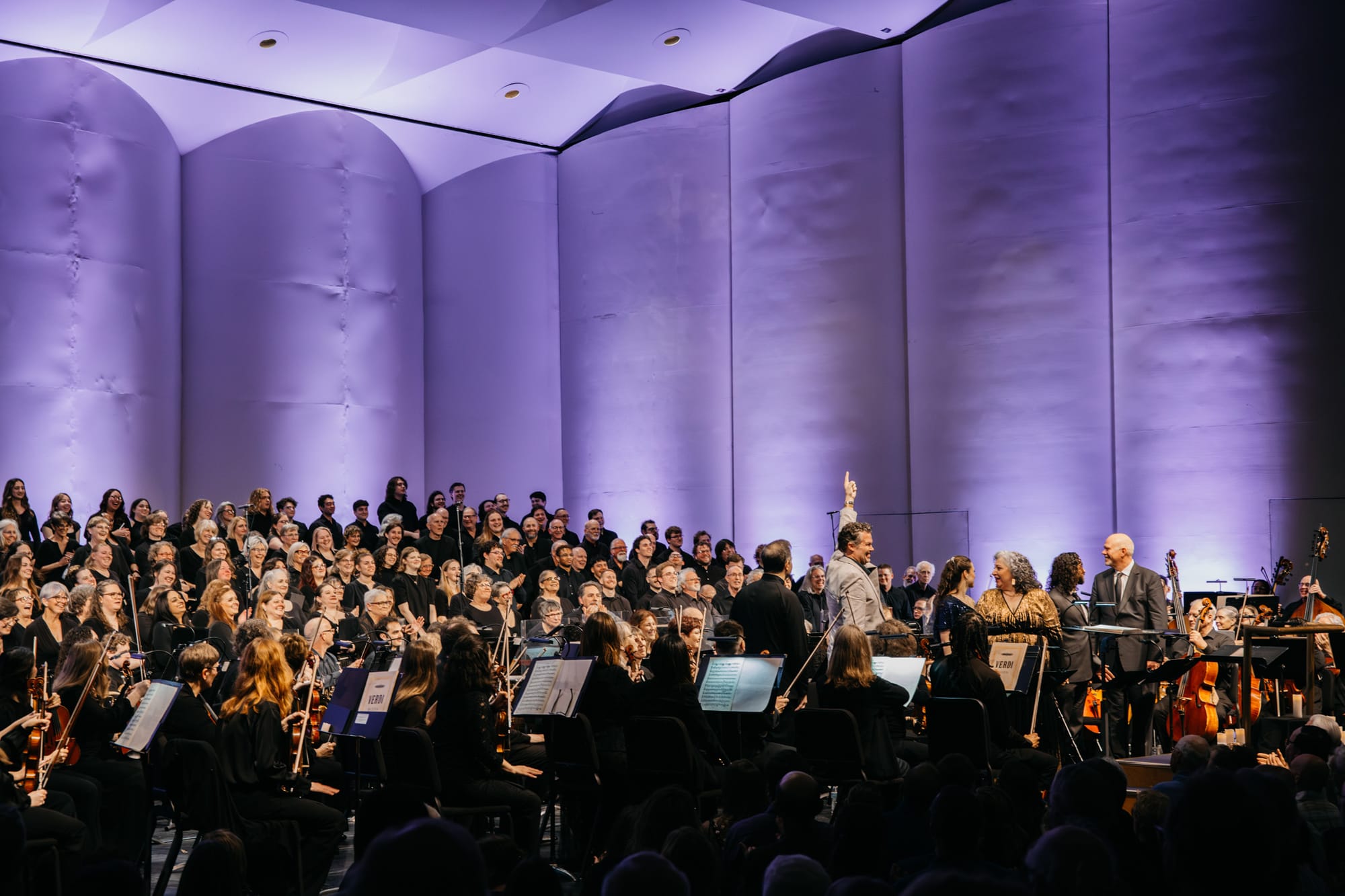
I got the chance to sing for Beeken last season, when I joined the WSO Chorus for Beethoven's Symphony No. 9, so I can say from experience that he is a dynamo in the rehearsal hall — upbeat and encouraging, clear in his requests and instructions, never wasting time, and laser-focused on diction, accuracy, and rhythmic vitality. The results were on display Saturday. In the two tricky fugal movements, "Sanctus" and "Libera me," the entrance of each overlapping line was clear and confident. The balance between the men's and women's voices was surprisingly good, given that women outnumbered men by almost two to one. The chorus was ready and clearly excited to pay off their months of preparation.
The WSO and Wichita State have a task before them as they search for Beeken’s replacement.
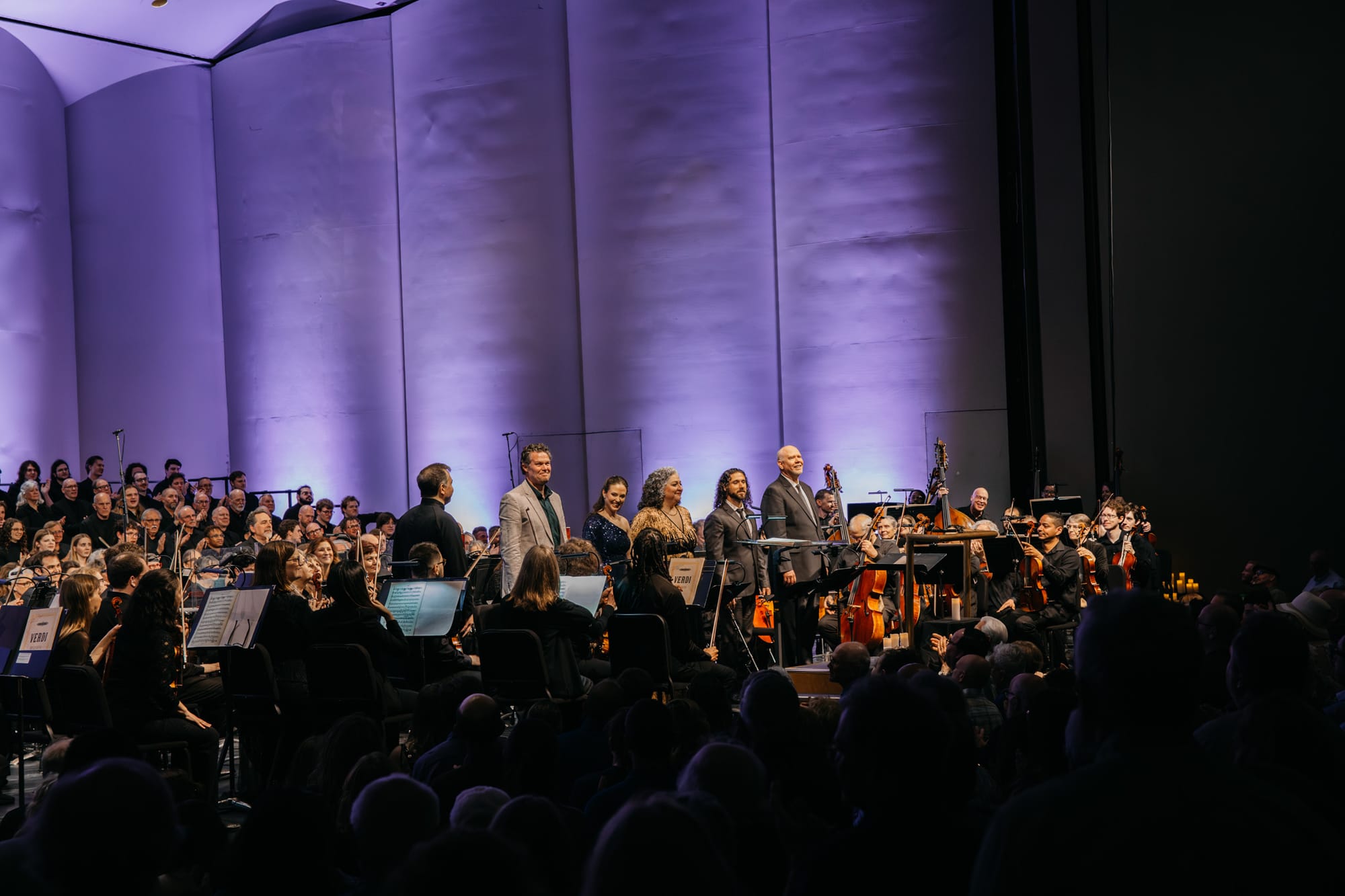
For the Requiem’s quartet of soloists, the WSO had four heavy hitters in Shannon Jennings, Christine Goerke, Victor Starsky, and Alan Held.
Goerke has been one of America’s leading sopranos for more than a quarter century. After making her mark in lyric repertoire early in her career, she moved into heavy, dramatic roles, such as Turandot, Elektra, and Brünnhilde, starting in the 2010s. Saturday’s performance was her role debut in the Requiem’s lower-lying mezzo-soprano solo part. Goerke assumed the character of the consoler, darkening and warming her naturally brilliant instrument to find a maternal, grounded quality in the lower tessitura. She was dramatically present throughout, acting and reacting tastefully even between her solos.
Held, the bass soloist, likewise created drama through his imposing physical presence. His voice had power to match, along with beauty of tone. The bass soloist first sings just after the “Tuba mirum” episode, when trumpets spread through the auditorium have announced the end of the world — and, in the process, thoroughly jangled the audience’s nerves. When Held rose, I heard somebody behind me whisper, “Oh my God.” What is this guy going to do? “All creation will stand before the Judge,” Held sang, and the irremediable verity of that final judgment felt very intimidating indeed.
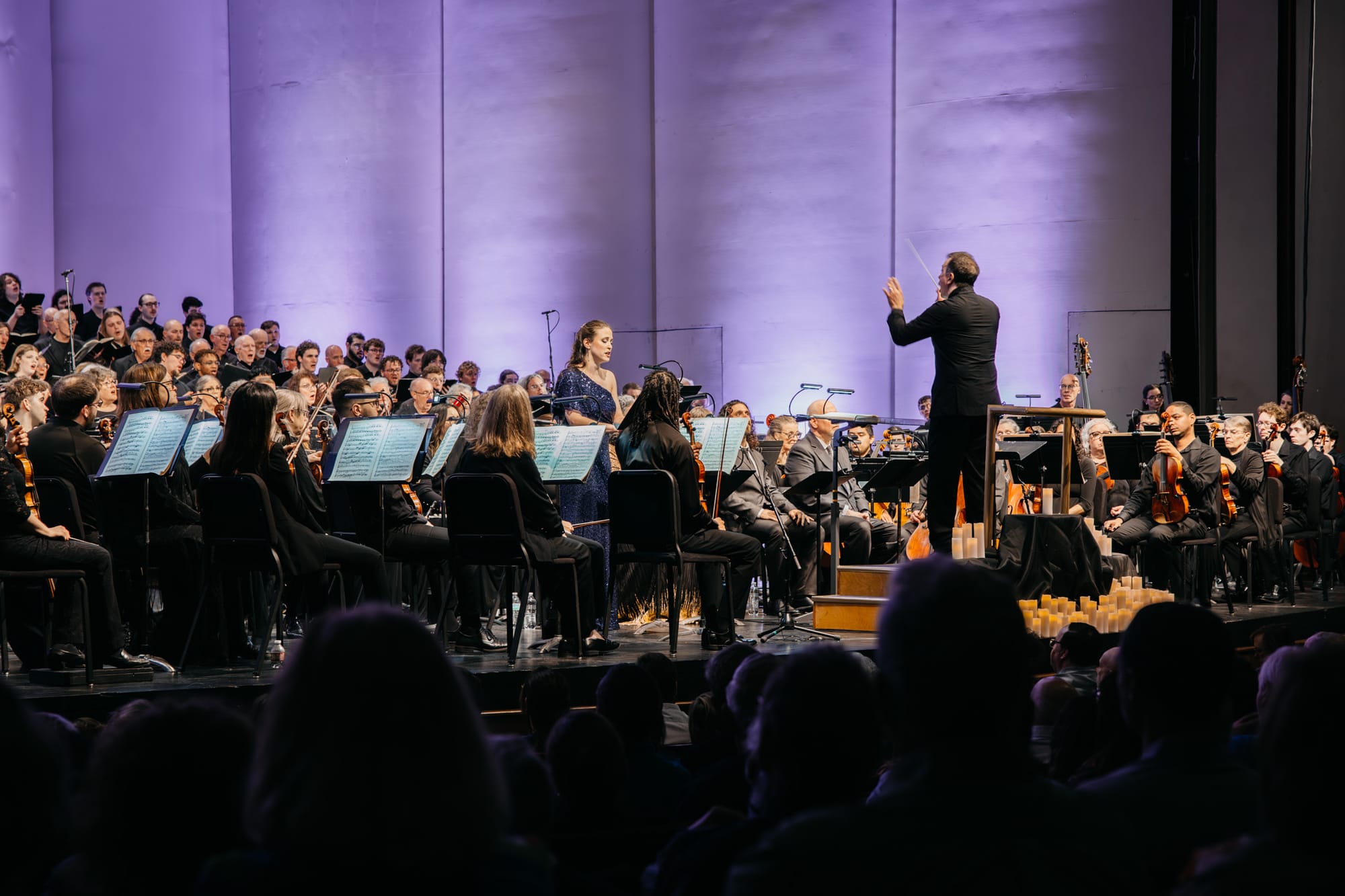
Soprano Shannon Jennings and tenor Victor Starsky both brought the vocal stamina that the Requiem demands and rewarded the audience at the moments that matter most. Starsky sang “Ingemisco,” the tenor’s plea for mercy, with a live-wire intensity. Jennings delivered the “Libera me” — the sprawling final movement that asks the soprano for everything from a near-whisper to full cry — with dramatic conviction and reserves of power after more than an hour of singing. Wichita audiences heard Jennings and Starsky again last weekend, in very different roles, as Minnie and Dick Johnson in Wichita Grand Opera’s “La Fanciulla del West.”
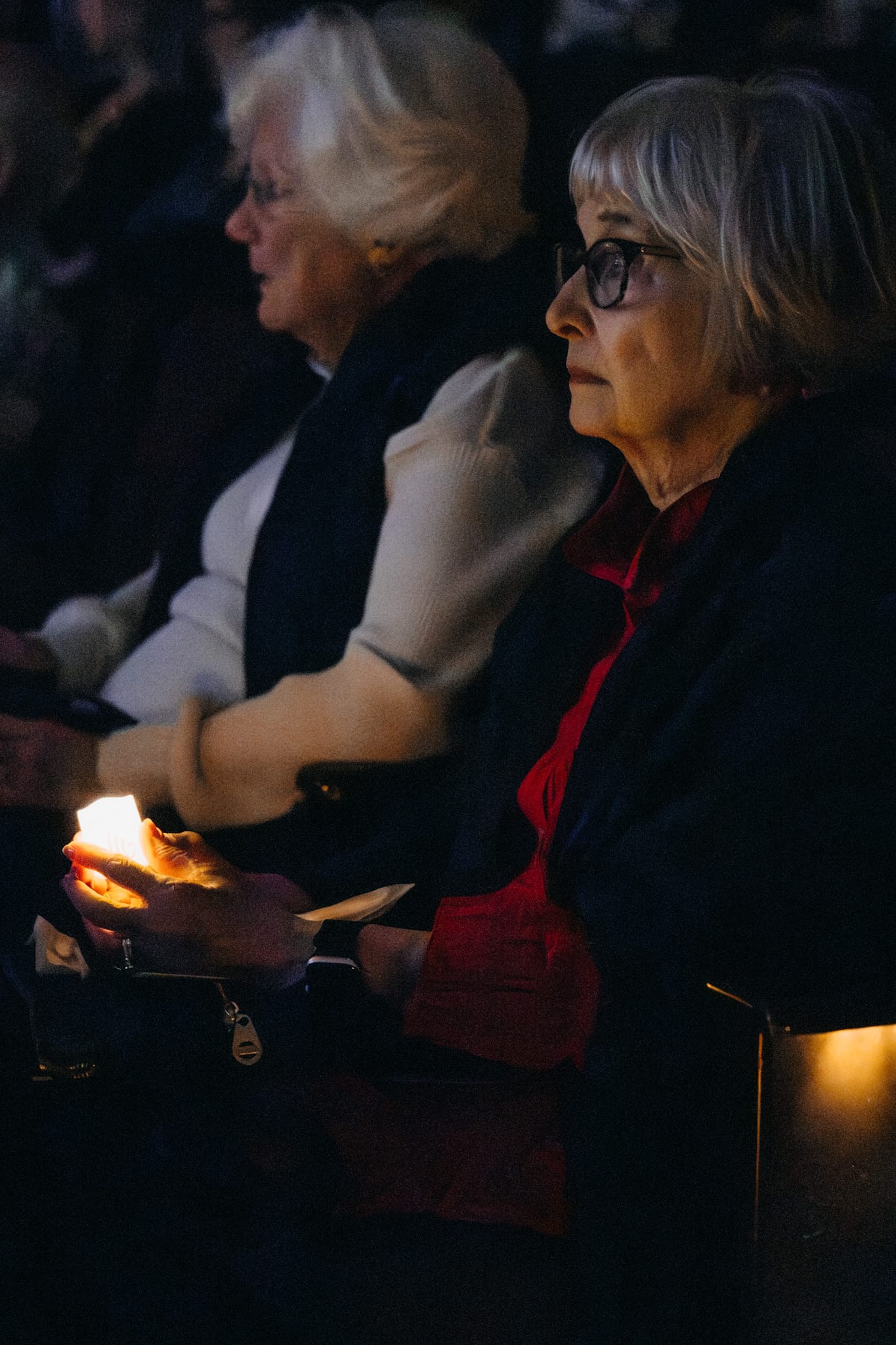
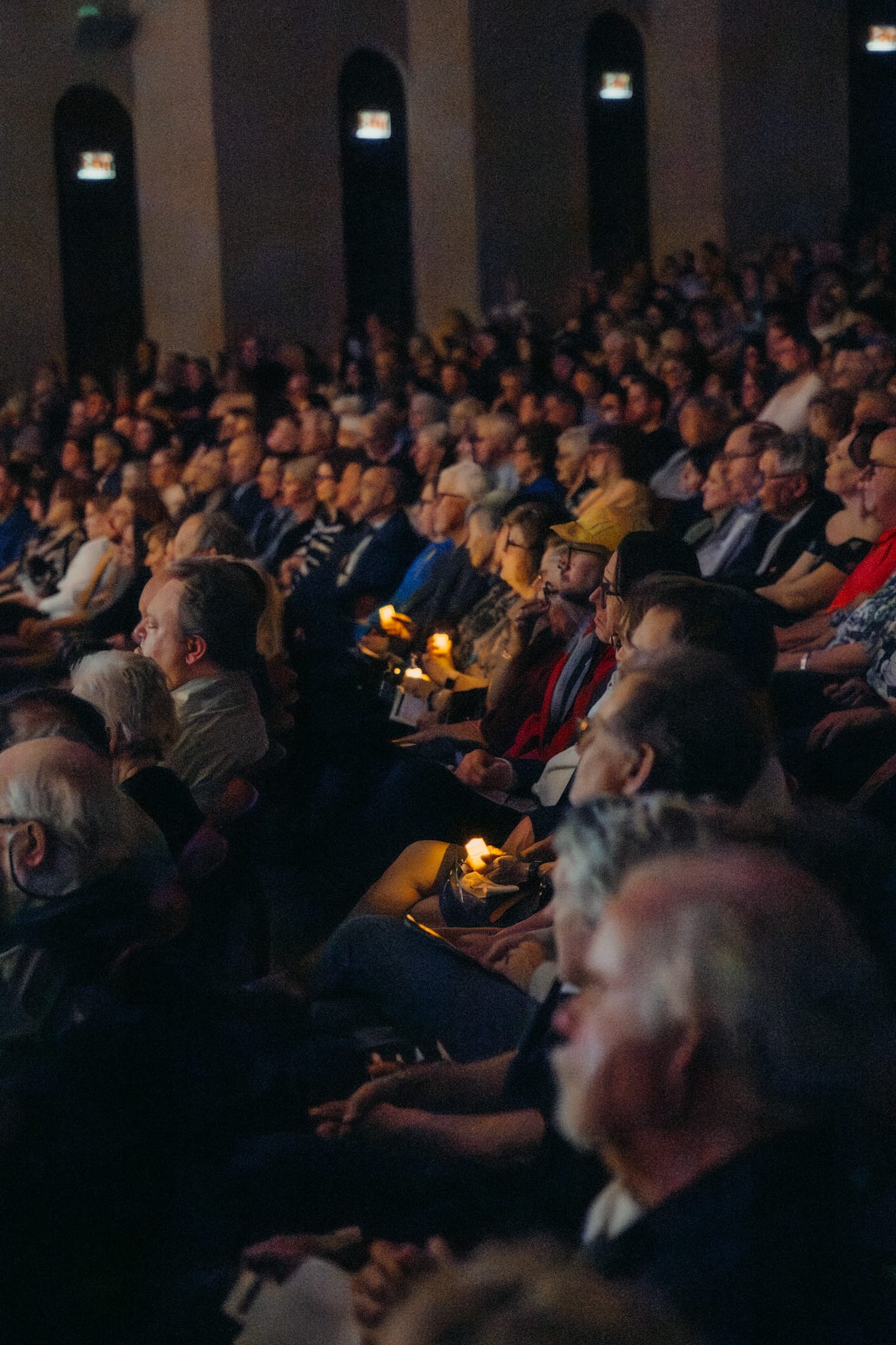
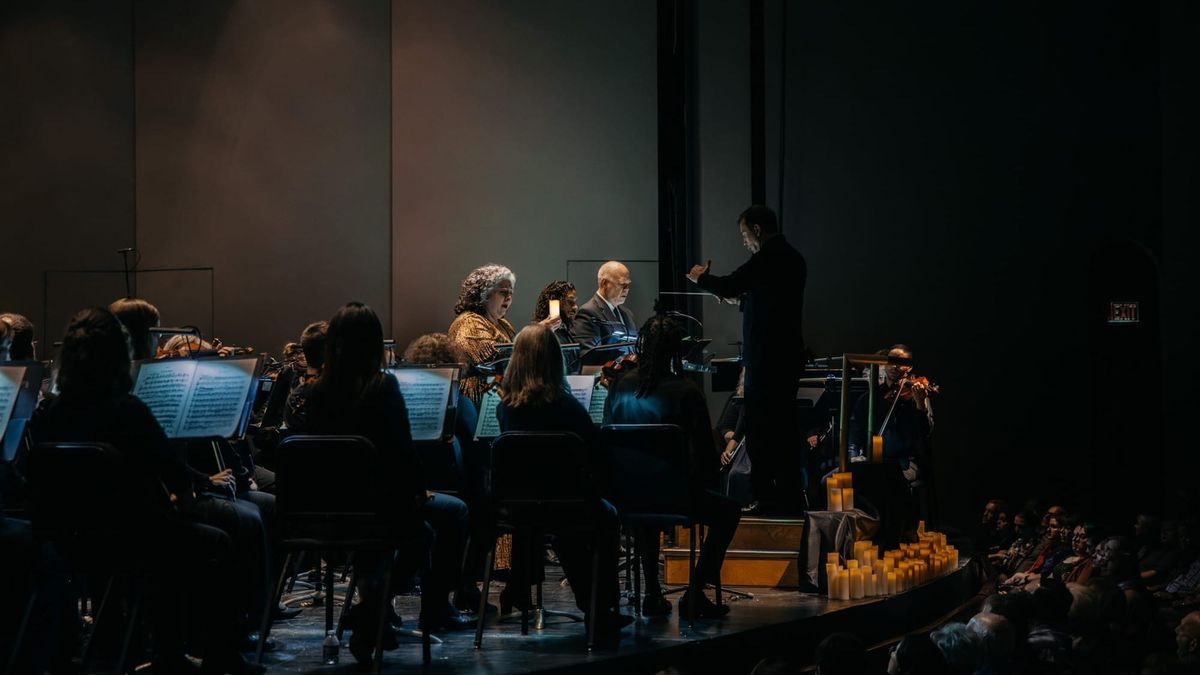
Audience members who made donations in memory of a loved one found electric candles at their seats. Courtesy photo by C. Nicole Photography for the Wichita Symphony.
For this concert, the WSO invited audience members to donate in memory of a loved one. Those who participated found electric candles waiting at their seats. During the “Lux Aeterna,” the hall lights dimmed, and flickering candles switched on throughout the house, joining the rows of electric candles already lining the edge of the stage. It was clearly a deeply meaningful moment for many in the audience.
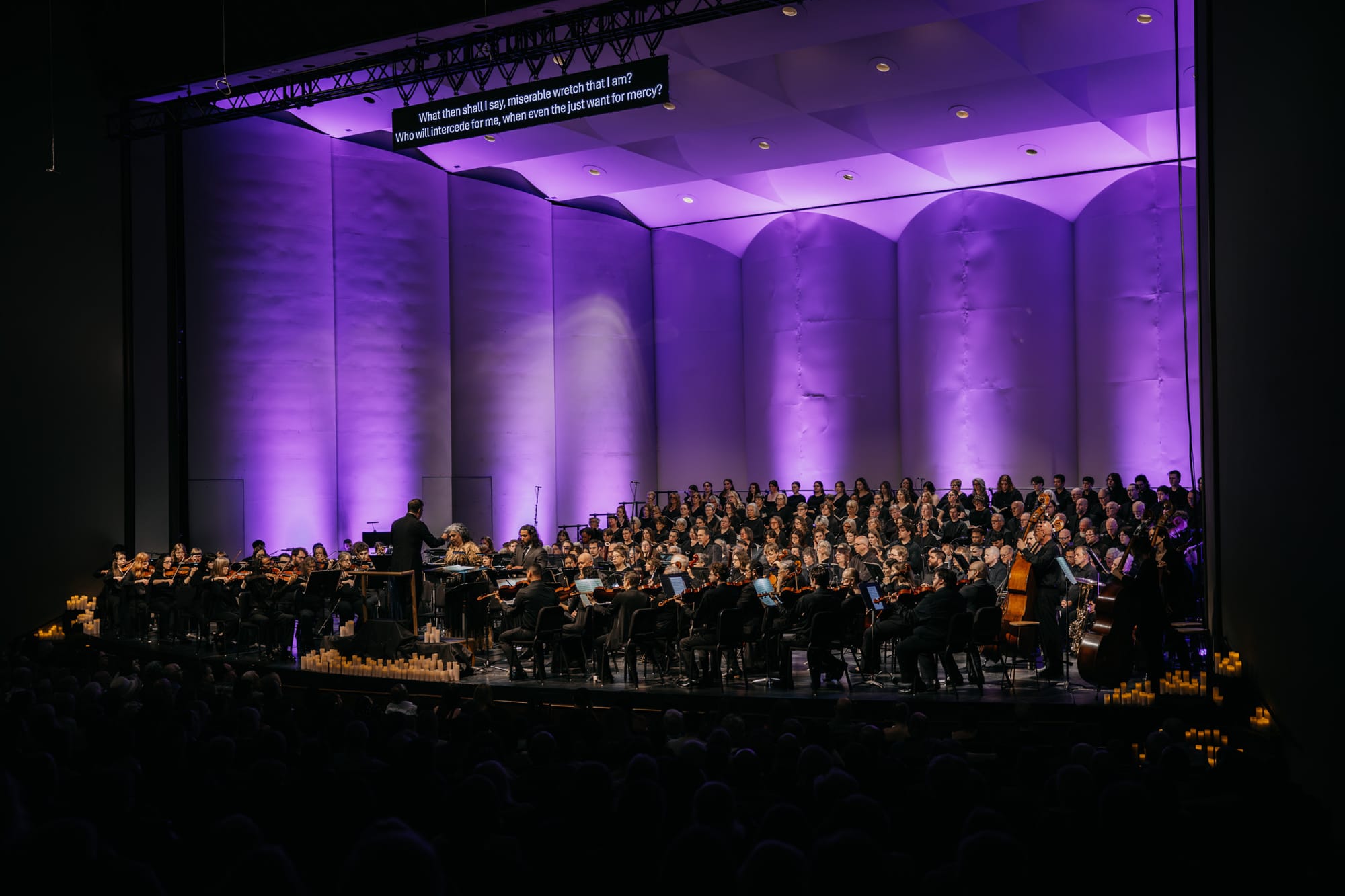
If I have a small reservation about the candle tribute, it’s that the Verdi Requiem is not, in the main, a consoling work. Verdi spends most of the Requiem in urgent, even terrified confrontation with mortality, and the textual subtleties of the Requiem Mass give him plenty of fuel for that fire. A candlelight memorial might have been a more natural fit for, say, the Brahms Requiem, which sets out explicitly to comfort the living. But Goerke made the moment her own, holding up a candle as she sang and drawing the audience into a shared act of remembrance — one more demonstration of the dramatic confidence and stage presence she brought to the entire performance.
Sam Jack is a poet, a classical tenor, and the adult services librarian at Newton Public Library. He performs with several local groups, including Wichita Chamber Chorale, Wichita Grand Opera, and Opera Kansas. He received a Master of Fine Arts in creative writing from the University of Montana.
❋ Derby man has the kind of voice that turns heads — and chairs
❋ Socializing while sober: how some Wichitans are cultivating alcohol-free communities
❋ As a small creative business closes, the owner mourns
❋ Painting through it: Autumn Noire on 20 years of making art
❋ How a guy from Wichita resurrected 'Dawn of the Dead'
❋ Bygone Friends University museum housed curious collections
Support Kansas arts writing
The SHOUT is a Wichita-based independent newsroom focused on artists living and working in Kansas. We're partly supported by the generosity of our readers, and every dollar we receive goes directly into the pocket of a contributing writer, editor, or photographer. Click here to support our work with a tax-deductible donation.