An imagined West: Wichita Grand Opera's 'La Fanciulla del West'
A sensation faded into semi-obscurity, Giacomo Puccini’s 1910 opera is on stage at Century II.
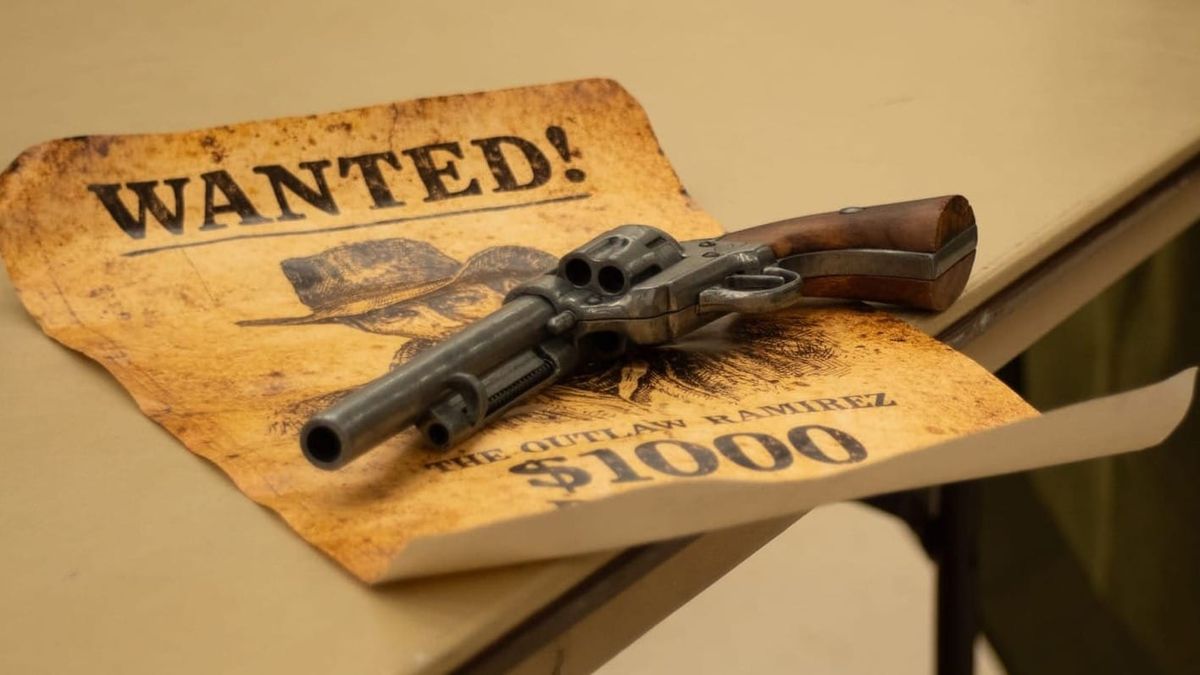
Wichita Grand Opera closes its 2025-26 mainstage season with Saturday and Sunday performances of “La Fanciulla del West” (“The Girl of the Golden West”). It’s one of Giacomo Puccini’s most ambitious, and least familiar, operas.
The opera is sung in Italian, but set in the California Gold Rush of 1849. Minnie (the title's “fanciulla”) is the owner of the Polka Saloon in a remote mining camp. When a stranger named Dick Johnson arrives, Minnie is drawn to him — only to discover he is the bandit Ramerrez, hunted by the Wells Fargo agent Ashby and pursued in a different way by Sheriff Jack Rance, who wants Minnie for himself. A high-stakes poker game, a near-lynching, and a plea for mercy drive the story to one of Puccini’s rare happy endings.
Puccini is the most widely performed opera composer of the past century, but “Fanciulla” has never shared the popularity of “La Bohème,” “Tosca,” or “Madama Butterfly.” It premiered in New York City in 1910, with Toscanini conducting and Enrico Caruso in the tenor role. The premiere production was a sensation, but in the decades that followed, it gradually faded from the standard repertoire. More recently it has made a comeback. The Met is staging a new production in its 2026-27 season.
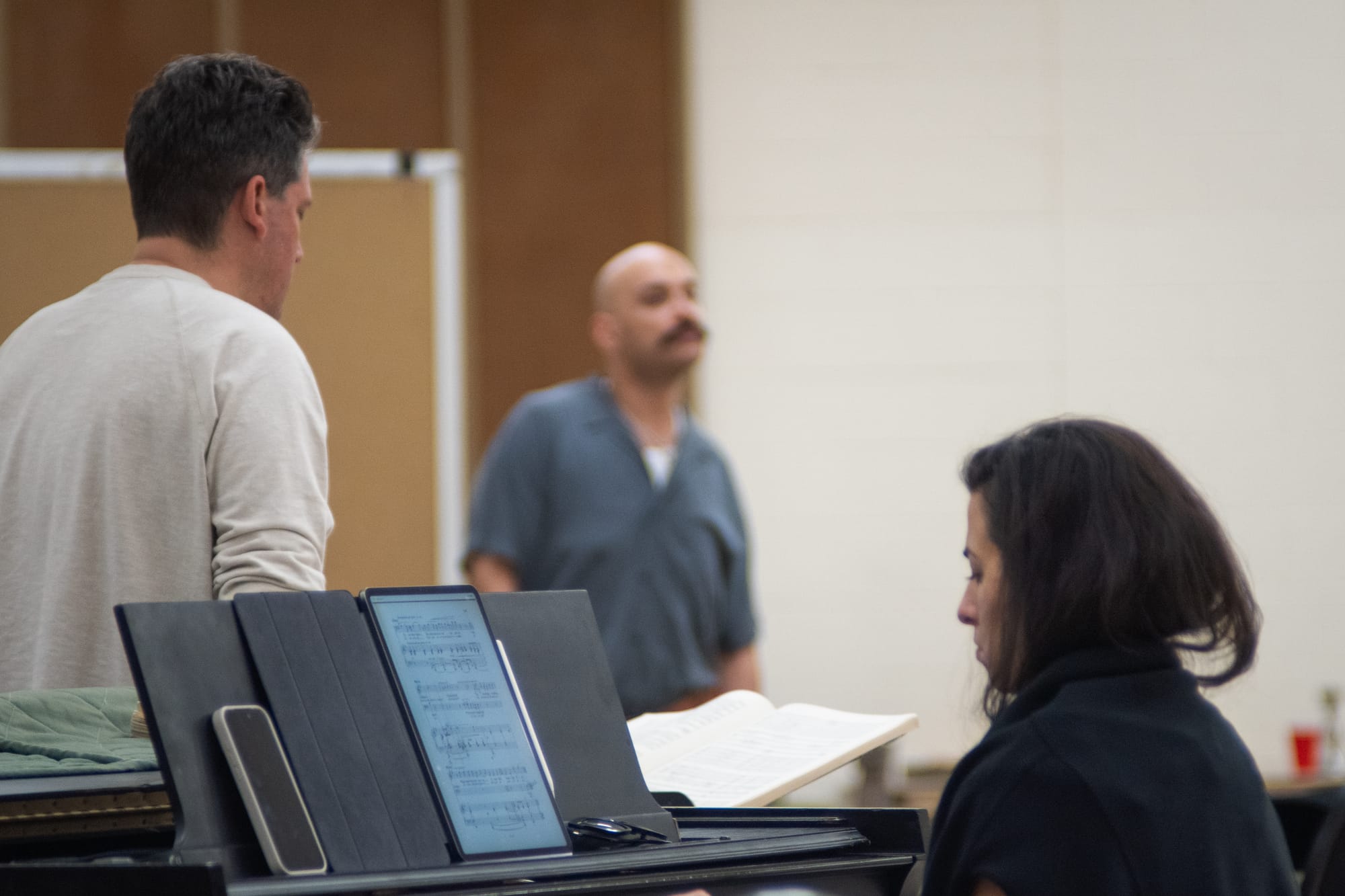
Whitney Reader, WGO’s general and artist director, conducts. He said the opera’s difficulty – the size of the cast, the demands of the vocal writing, the complexity of the orchestration – was part of what drew him to it. “I wanted to take the challenge and meet it head on,” he said.
He also expressed confidence that audiences unfamiliar with the work will respond to it. “We can do ‘Carmen,’ ‘Barber,’ and ‘La Bohème’ until we’re blue in the face; there’s a reason those are evergreens, and they should be heard. But I think people who hear this ‘Fanciulla’ will be excited and thrilled by it.”
I’m in the chorus, playing one of the miners, and I find the world Puccini builds an exciting, and interesting, one to inhabit. The opera is through-composed: the music flows continuously, without pausing for applause. Puccini fills his score with the sounds of an imagined West, represented with vividness, intensity, and even rapacity.
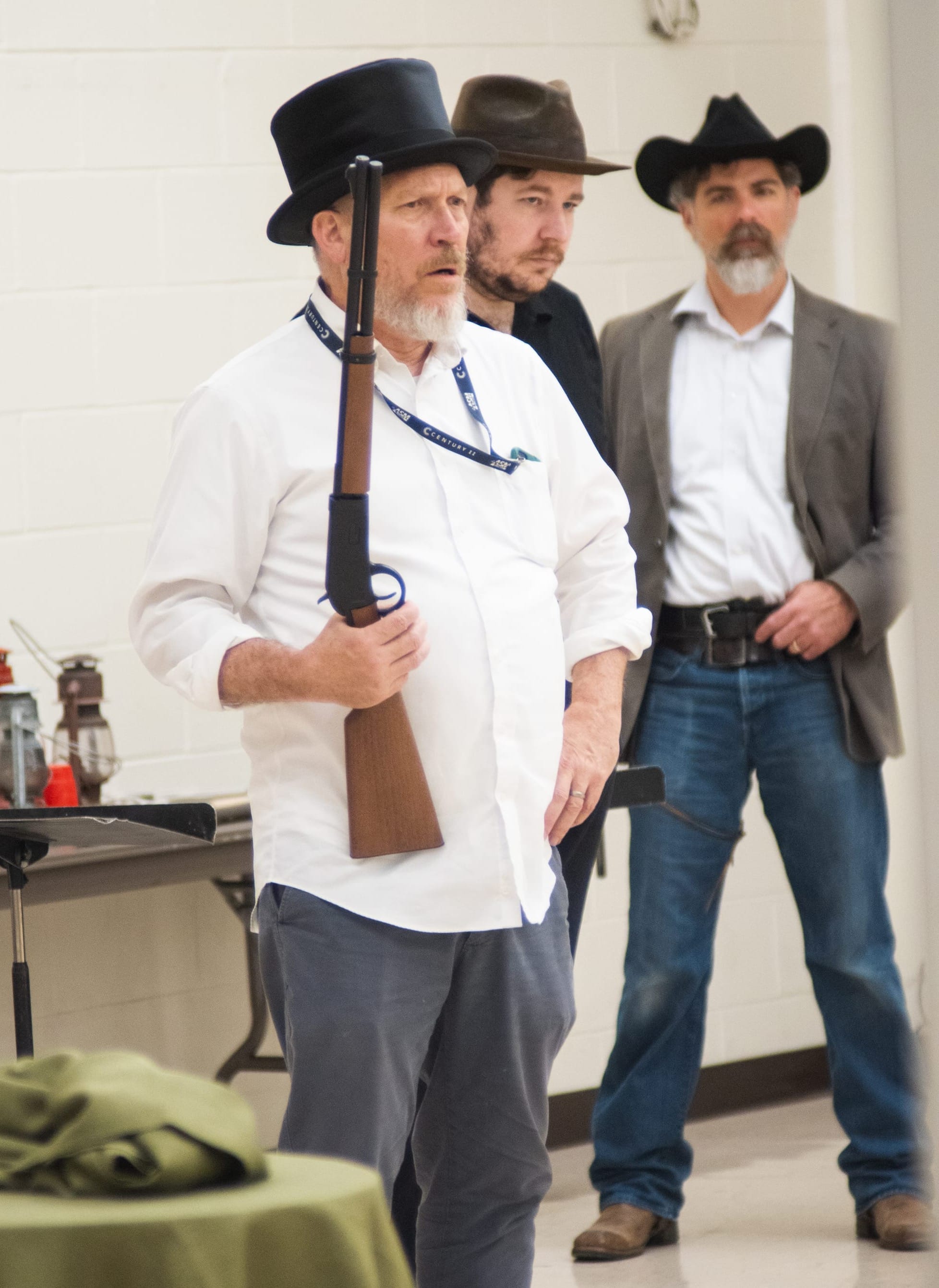
The opera’s primary setting, the Polka Saloon, is a masculine milieu pushed to its extreme: men drinking, gambling, picking fights, with no real sense of why they’re doing any of it beyond the fact that there’s gold in the ground. The men compete with one another to most enthusiastically embody a frontier masculinist ethic, but they can’t quite recognize that if they’re this miserable — homesick, drunk, ready to weep at a sentimental song — maybe that ethic isn’t serving them as well as they think.
Minnie stands as a symbol and reminder of the possibility of a better-rounded, more ethical way of living; one that includes women as well as men. Between serving drinks and breaking up their fights, she reads to the men from the Bible — and the miners are hungry for what she offers. The miners’ competition for her attention and affection is cast as lightly comical in Act 1, but Rance’s pursuit of her is genuinely menacing. He doesn’t just want Minnie’s attention; he wants to possess her. (“I set forth on my journey drawn solely by the allure of gold. Gold alone has never deceived me. For a kiss from you, I’ll pay a fortune.”)
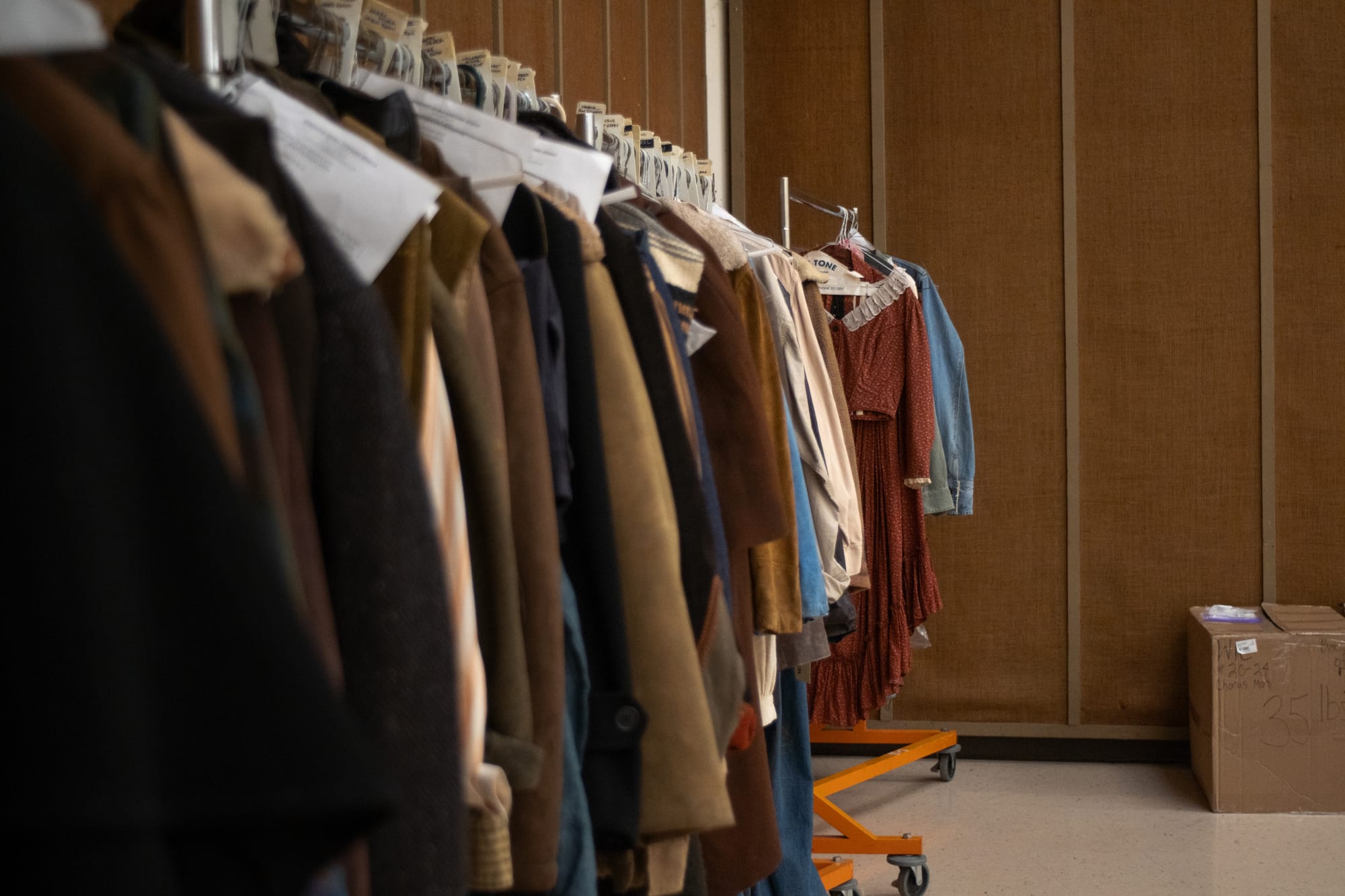
By Act 3, when the miners capture Johnson, now Minnie’s lover, and prepare to hang him, the stated charge is banditry. He's a highwayman who inherited his father's gang. But Johnson has never killed anyone, and the miners haven't lost any gold to him. What he has done is win Minnie's love. Rance's jealousy is the most visible engine of the lynching, but the miners have their own tangled reasons for wanting this man dead. They've depended on Minnie, competed for her attention, placed her at the center of their emotional lives — and she's chosen someone, and it's not any of them. The banditry gives them a cover story for a resentment they can't quite name.
When Minnie rides in and confronts them, she strips that cover away. The miners have to reckon with the gap between the reverence they profess for her and the claim they feel entitled to make on her life. When the two lovers leave the camp together, the ending is happy but not comfortable. The community is left without the one person who held it together, and with a clearer, less flattering picture of itself.
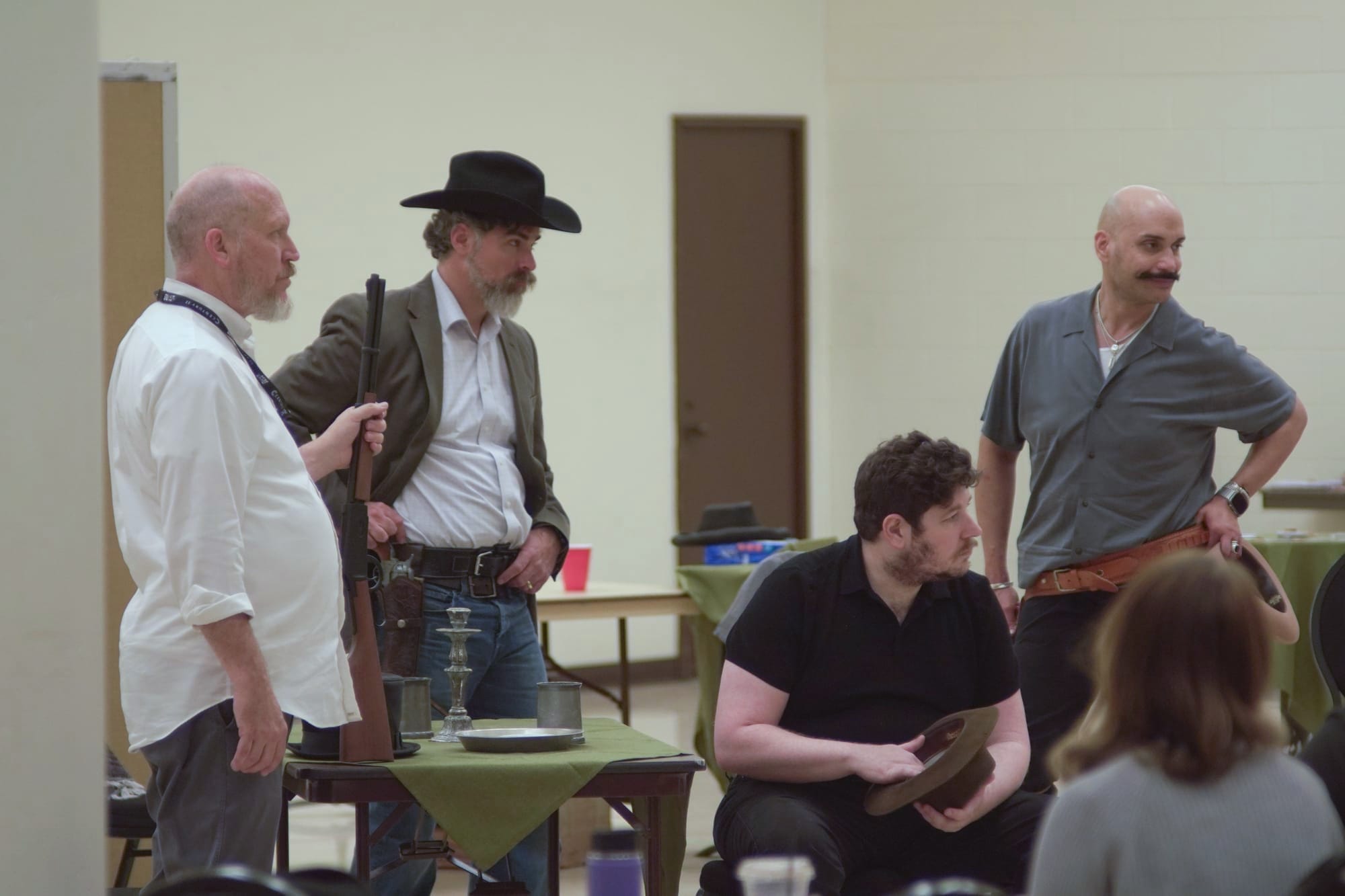
Shannon Jennings sings Minnie, returning to WGO after her Rusalka last season and her Maria in "West Side Story" this past November. Reader said he is cultivating a company culture inspired by the European “fest” system, in which principal singers return across multiple seasons rather than being assembled anew each time. Jennings' three consecutive WGO appearances are a case in point.
“When you bring people back, it's an entirely different camaraderie that develops over time than when you throw a bunch of different singers together for each production,” he said.
Victor Starsky is Dick Johnson, and Craig Verm is Sheriff Rance. The supporting cast includes Alan Held as Jake Wallace, Michael Anthony McGee as Wells Fargo agent Ashby, and Spencer Reichman as Sonora. The physical production came together in part through a collaboration with Dallas Opera, which provided props and a repurposed set. Reader said representatives from companies including Utah Opera and San Diego Opera have expressed interest in seeing the production, and he is hopeful it will have a life beyond its April performances in Wichita.
The Details
Wichita Grand Opera presents “La Fanciulla del West,” 7 p.m. Saturday, April 18, and 3 p.m. Sunday, April 19 at Century II Concert Hall, Wichita.
Tickets are $20-$85; youth tickets for ages 5 to 18 are free. Buy tickets at SelectASeat.com.
Sam Jack is a poet, a classical tenor, and the adult services librarian at Newton Public Library. He performs with several local groups, including Wichita Chamber Chorale, Wichita Grand Opera, and Opera Kansas. He received a Master of Fine Arts in creative writing from the University of Montana.
❋ Derby man has the kind of voice that turns heads — and chairs
❋ Socializing while sober: how some Wichitans are cultivating alcohol-free communities
❋ As a small creative business closes, the owner mourns
❋ Painting through it: Autumn Noire on 20 years of making art
❋ How a guy from Wichita resurrected 'Dawn of the Dead'
❋ Bygone Friends University museum housed curious collections
Support Kansas arts writing
The SHOUT is a Wichita-based independent newsroom focused on artists living and working in Kansas. We're partly supported by the generosity of our readers, and every dollar we receive goes directly into the pocket of a contributing writer, editor, or photographer. Click here to support our work with a tax-deductible donation.