Susan Mayo’s new orchestra work 'Malaqatin Meetings' brings together two cultures, three works of art, dozens of community musicians
The cellist and composer’s first work for orchestra premiered last month in Winfield, Kansas. The last performance takes place May 19 in Arkansas City.
Much of what cellist and composer Susan Mayo does as a musician focuses on connection.
“I try and keep in mind in all the projects I do that it’s about bringing community together,” she said.
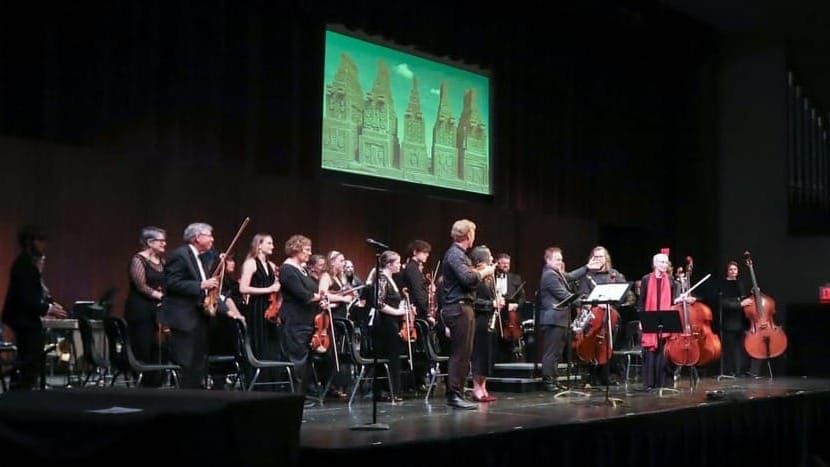
Mayo’s newest piece, her first for orchestra, received its premiere performance by her trio Multifarious and the South Kansas Symphony on April 26 in Winfield, Kansas. “Malaqatin Meetings” is part of Yakja Hona, her ongoing cultural exchange project between Pakistan and Kansas. (Yakja hona means “to gather together” in Urdu).
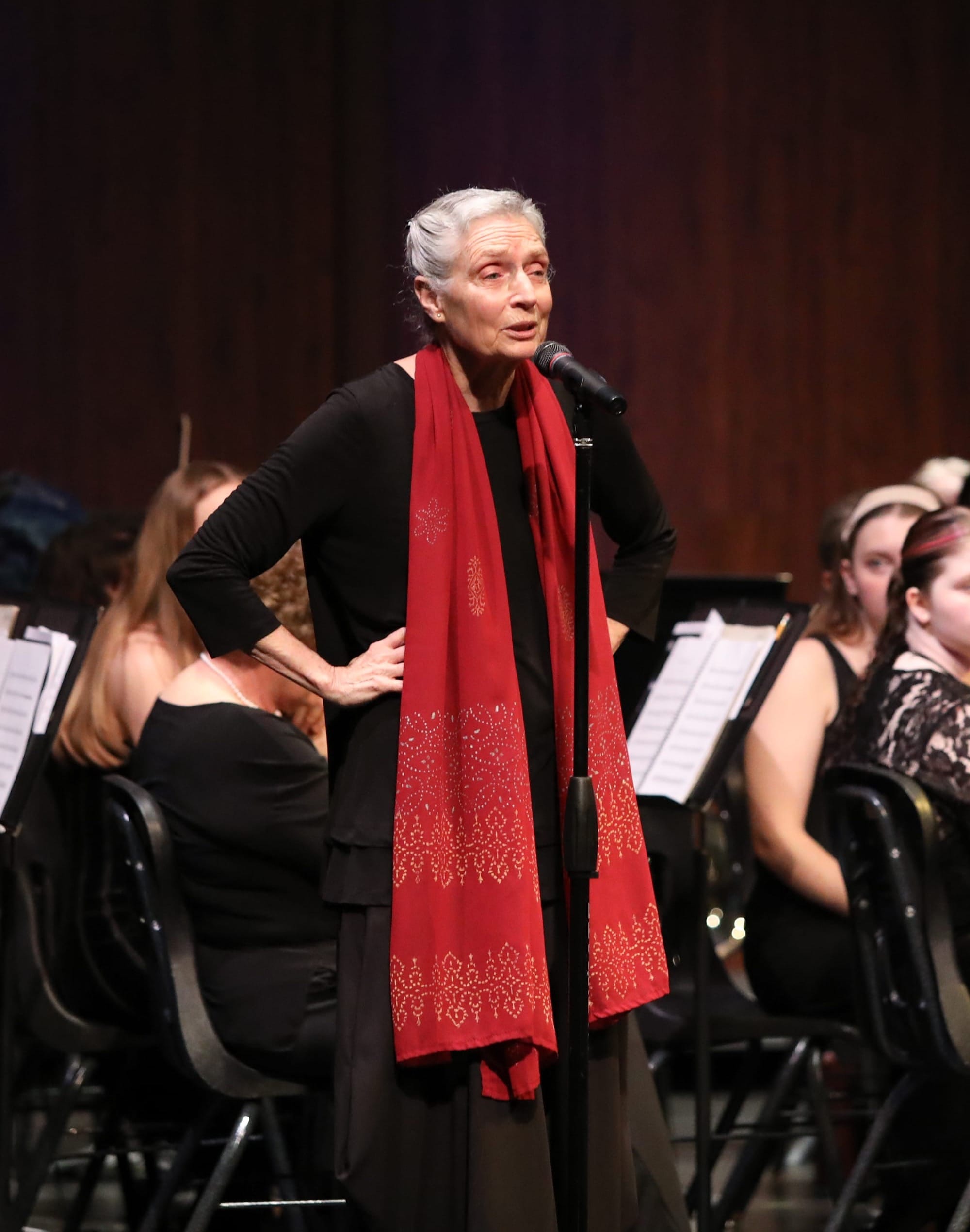
Mayo’s roots are Midwestern, but her husband is from Pakistan, and Mayo wanted to do something musically “to connect more with his culture.” Her husband is not musical himself; Mayo collaborates with others to foster this cultural exchange. She’s brought Pakistani musicians to Kansas and traveled to Pakistan to record the “Yakja Hona” album with Sue McKenzie, Zohaib Hassan, and Vicky Baba. Through these collaborations, Mayo cultivates community not just with her fellow musicians but also with audiences around the world.
Making 'Malaqatin Meetings'
“Malaqatin Meetings” is an outgrowth of this relationship, capturing the joining of two classical music traditions (“Malaqatin” means “meetings” in Urdu). The Kansan side of the relationship is represented by “Western” classical music, a term that refers to the large body of music that originated in Europe and includes orchestral music, while Pakistan is heard through South Asian classical music, specifically the Hindustani tradition that originated in North India.
Each tradition has its own melodic and rhythmic structures and its own instruments. One of the main differences is that for the past few centuries, Western classical music has been fully notated and rarely requires musicians to play something that isn’t on the page, while South Asian music is much more improvisatory. This push and pull between written music and improvisation forms Mayo’s musical foundation for “Malaqatin Meetings.”
As Mayo balanced her own Western classical background with Pakistani musical influences, she was careful to honor the cultural integrity of both. “It’s about combining and honoring and not taking over, especially when you’re coming from a dominant culture,” she explained. “I think about that a lot in my work.”
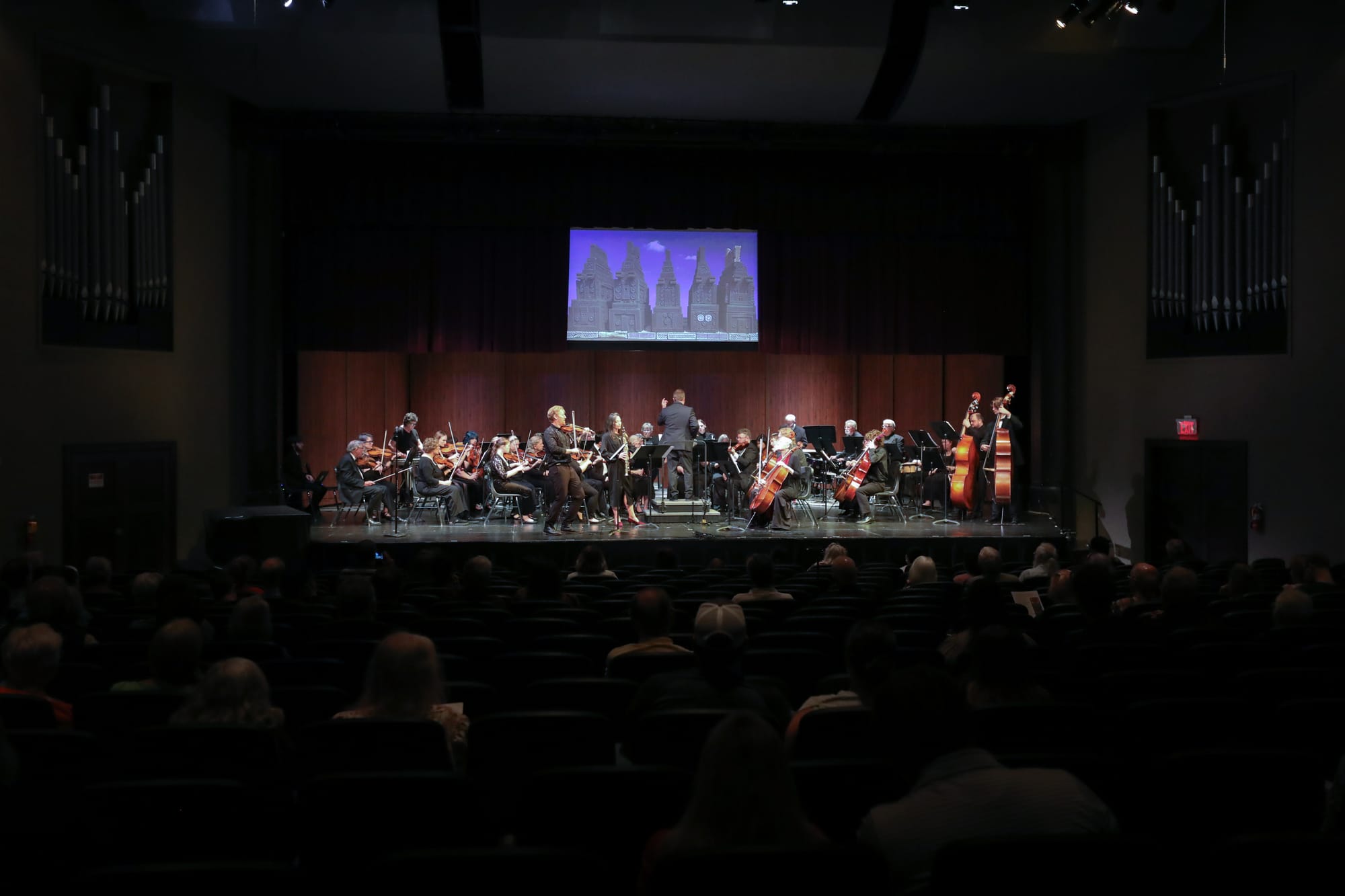
For the third movement of "Malaqatin Meetings," Mayo drew inspiration from 500-year-old stone tombs. Photo by Hannah Crickman for The SHOUT.
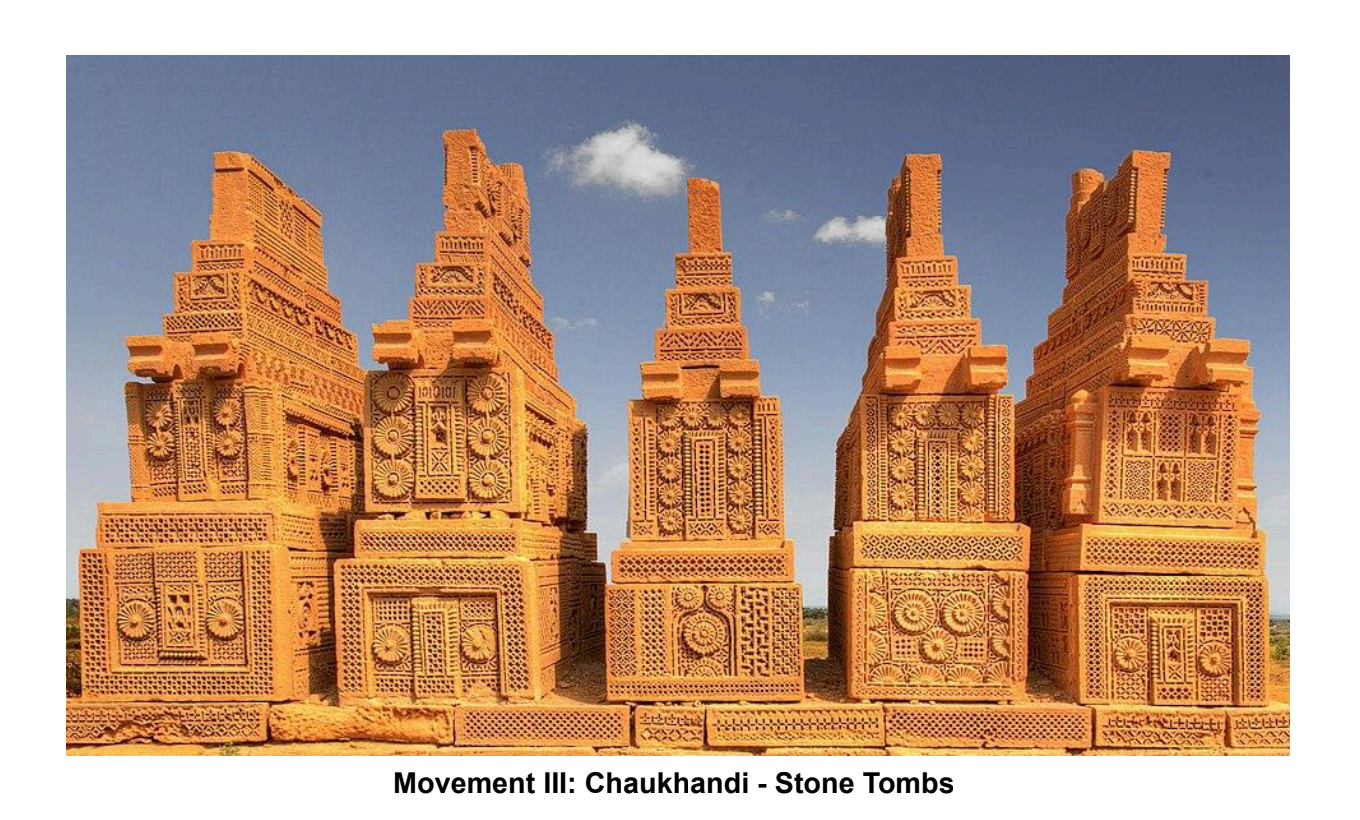
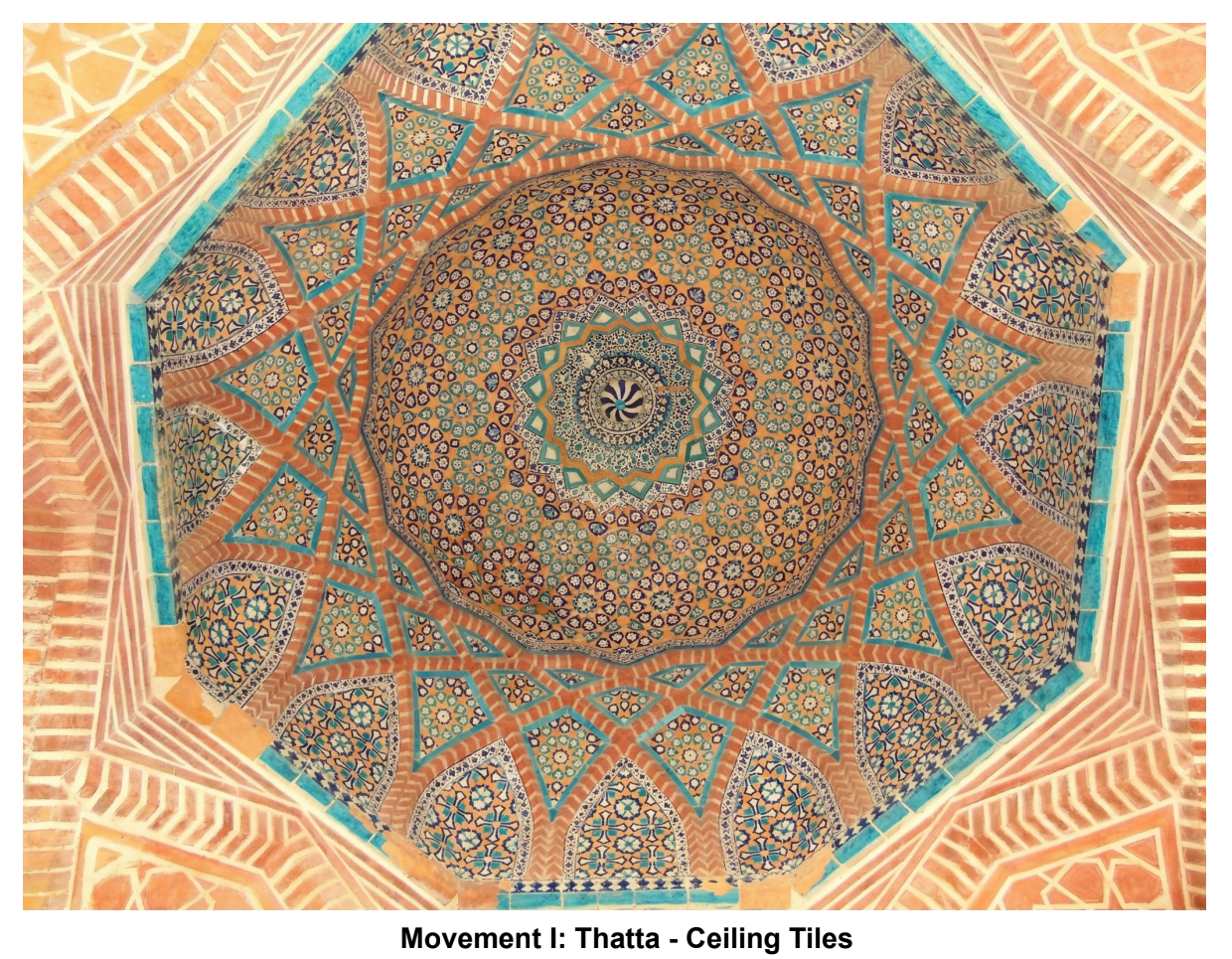
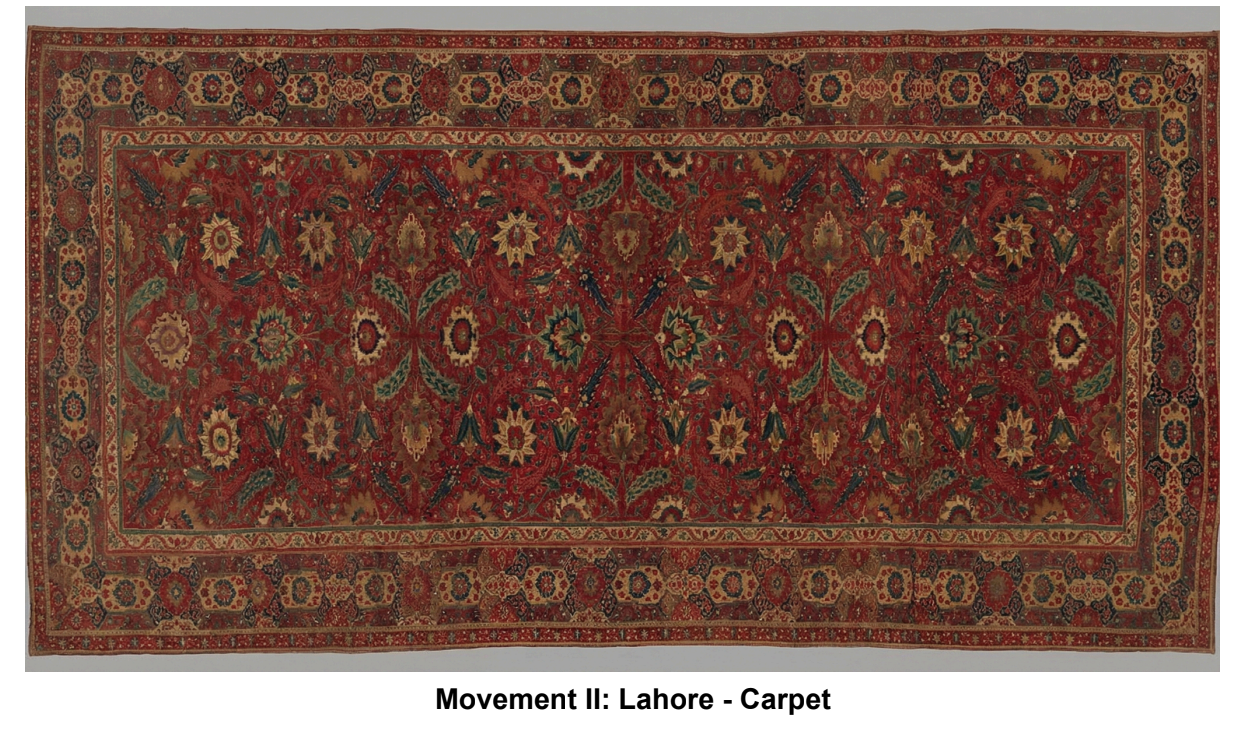
Mayo’s inspiration for a piece of music based on Pakistani art came from an exhibit of Anila Quayyum Agha’s work at the Wichita Art Museum last spring. “It just looked like music to me,” Mayo said. She began to look for more art or architecture in which she could see music, eventually landing on three works: the tiled ceiling of the 17th-century Shah Jahan Mosque in Thatta, a 17th-century carpet originating in Lahore, and the 500-year-old stone Chaukhandi Tombs located to the east of Karachi.
Motives of 'Malaqatin Meetings'
As she composed, Mayo derived the rhythmic structures for each movement from the art itself. The tilework, the shapes woven into the carpet, and the carvings on the stone tombs all looked like musical motives to her.
To help audiences understand the relationship between the art and the music, the three images are projected during the performance with visual enhancements highlighting the “motives” in the art created by new media artist John Harrison. Mayo approached Harrison with a clear idea of what she hoped for. Harrison, who has now collaborated with Mayo as both a violinist and an engineer, figured out how to bring it to life.
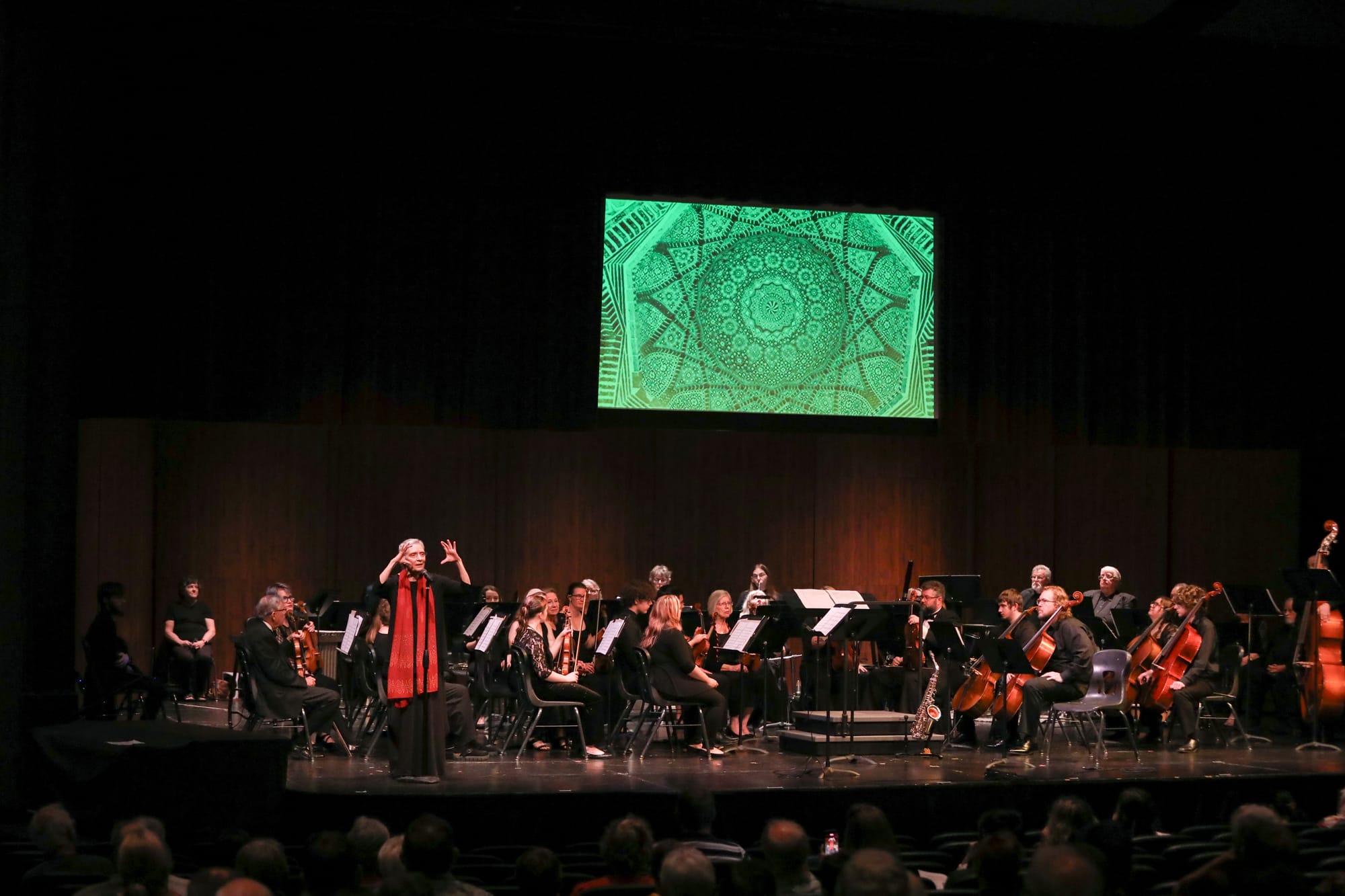
Movement I is inspired by the ceiling of a mosque, visualized through projected image on a screen behind the performers. Photo by Hannah Crickman for The SHOUT.
“Immediately, I was struck by the big technical challenges here,” Harrison told me. “For example, when we look at the images with our eyes, the geometric regions are really clear, but that's not clear to the machine.”
Once Harrison solved the problems with the images, he created a program that illuminates the musical motives. The program is tied to the beat of the music, so anyone who can follow the conductor can run the program during the performance. Thus, “Malaqatin Meetings” combines visual art, music, and technology to create an interdisciplinary experience for the audience.
The first movement, Thatta, based on the ceiling of the Shah Jahan Mosque, introduces the dialogue between written and improvisatory music. The motives derived from the patterns in the ceiling tiles move between the soloists and the orchestra; when the soloists improvise, the orchestral strings perform pizzicato (plucking the strings instead of using a bow) underneath, while Harrison’s illuminations trace the musical motives around the projected image of the ceiling.
Lahore, the second movement, is the slowest of the three. The city of Lahore, home to the Alhamra Arts Council, is regarded as the art center of Pakistan; it’s also where Mayo’s husband was born and raised. The movement opens with a pizzicato motive in the string bass section, derived from the outer pattern of the carpet, which Mayo describes as “curlicues.” The illuminations move slowly around the projected image of the carpet, beginning at the outer edges and moving inwards.
In Chaukhandi, Mayo spotlights her seven percussionists playing rhythms derived from the teen taal tala, a 16-beat rhythmic cycle usually performed by the tabla drum in Hindustani music. Harrison’s visual enhancements really come to life in this fast and exuberant music; it’s fun to watch the layers of percussion build onto the statues.
Surprised that this was Mayo’s first work for orchestra, I wanted to know what it was like approaching a new medium after composing for so long. “Really fun!” was her answer.
“It was fun to have access to the whole orchestral palette,” Mayo explained. “I got out the orchestration books and looked through them. Percussion was really a new one for me.”
Mayo ran parts by musician friends to make sure they would work — sometimes what looks good on paper might not actually lay comfortably in the hands — and she even took percussion lessons from a Wichita State graduate student so she could try out some instruments and learn about different techniques. She decided to write for a chamber orchestra (strings plus flutes, oboes, clarinets, bassoons, and trumpets) with an unconventionally large percussion section.
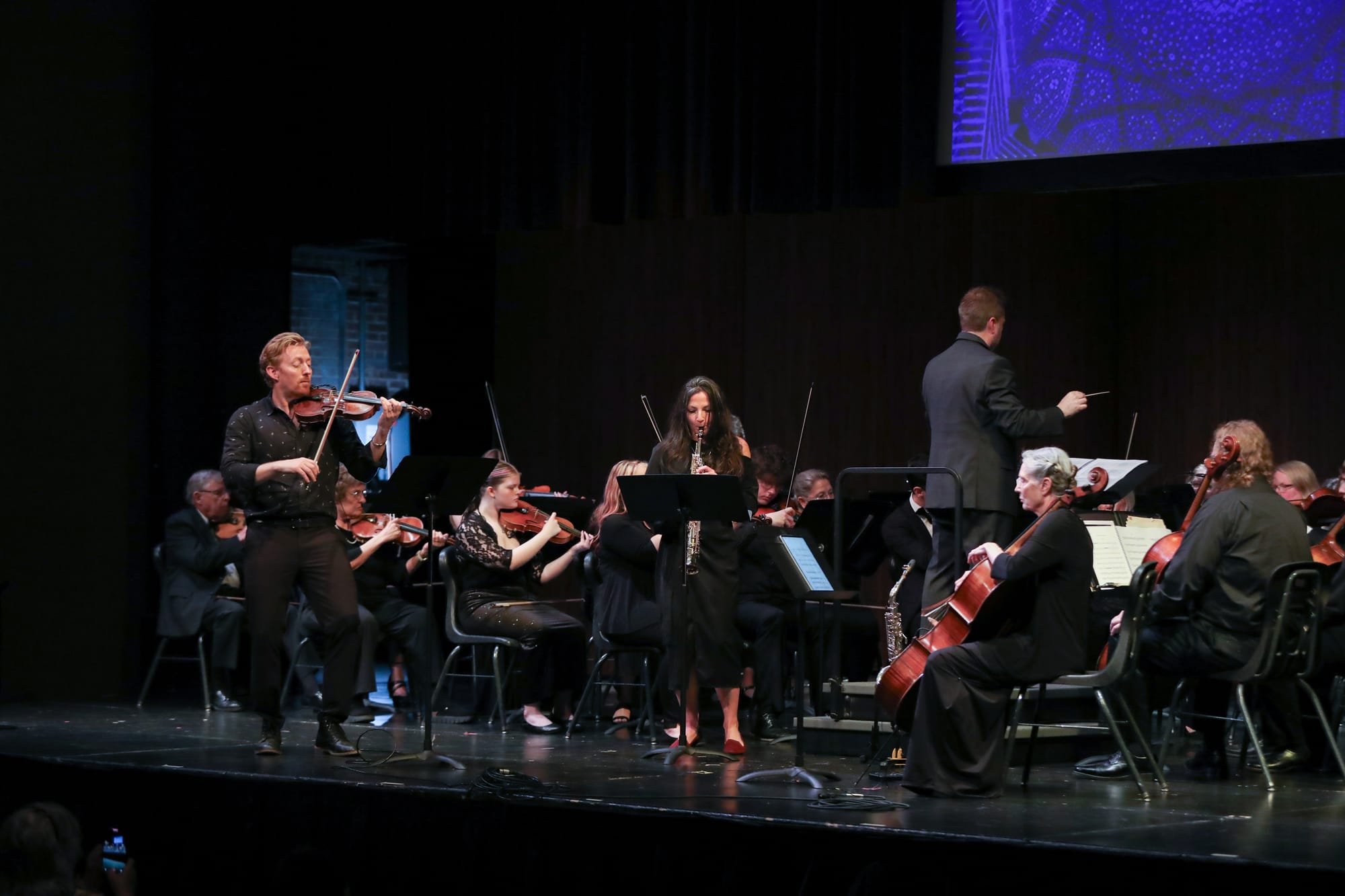
This chamber instrumentation also works well to aurally spotlight the soloists from the Multifarious trio: Mayo on cello, Tim Snider on violin, and Courtney Long on soprano saxophone. The timbres of these three instruments blend together beautifully. Most of the improvisation in the piece falls to the trio; as a group that primarily performs music heavily influenced by jazz and folk genres, tackling the South Asian-inspired improvisatory passages is natural for the three musicians.
The Performance
The South Kansas Symphony performed the work twice in April, first in Winfield on April 26 and then in Peabody, where Mayo lives, on April 27. The SKS is a completely volunteer orchestra, made up of adults with experience as both professional and amateur musicians as well as college and high school students. Since 2023 the orchestra has been conducted by Dr. Michael Christensen, who also teaches at Cowley College.
Mayo’s focus on creating community through shared music-making means she relished collaborating with the local orchestra. The group worked with Mayo in rehearsals to bring the piece to life, taking the time to experiment with the overall sound. For example, they had to figure out how to dampen the percussion sounds in the third movement.
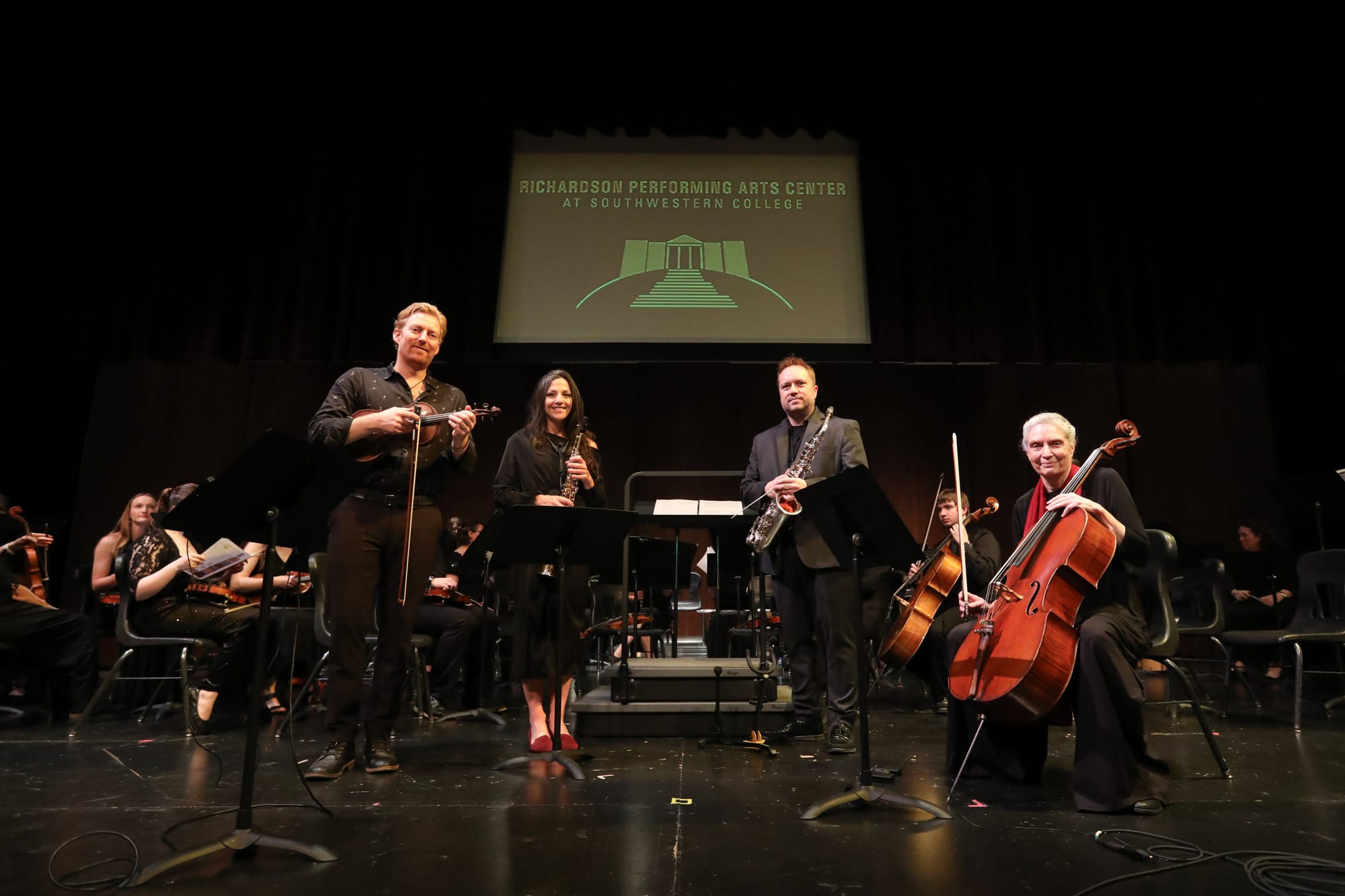
“It feels as though this is truly a community project,” Mayo said. “They have been so generous with their time and in agreeing to do this project.”
A nice surprise for the audience happened when Christensen stopped conducting, leaned down to pick up his alto saxophone, and joined in with the soloists. An accomplished saxophonist, Christensen asked Mayo if she could write him a part as well, which she found to be a nice way to personalize the premiere performance. In addition to his solo, Christensen joined Multifarious at the end of the piece as all four soloists came together with the full orchestra.
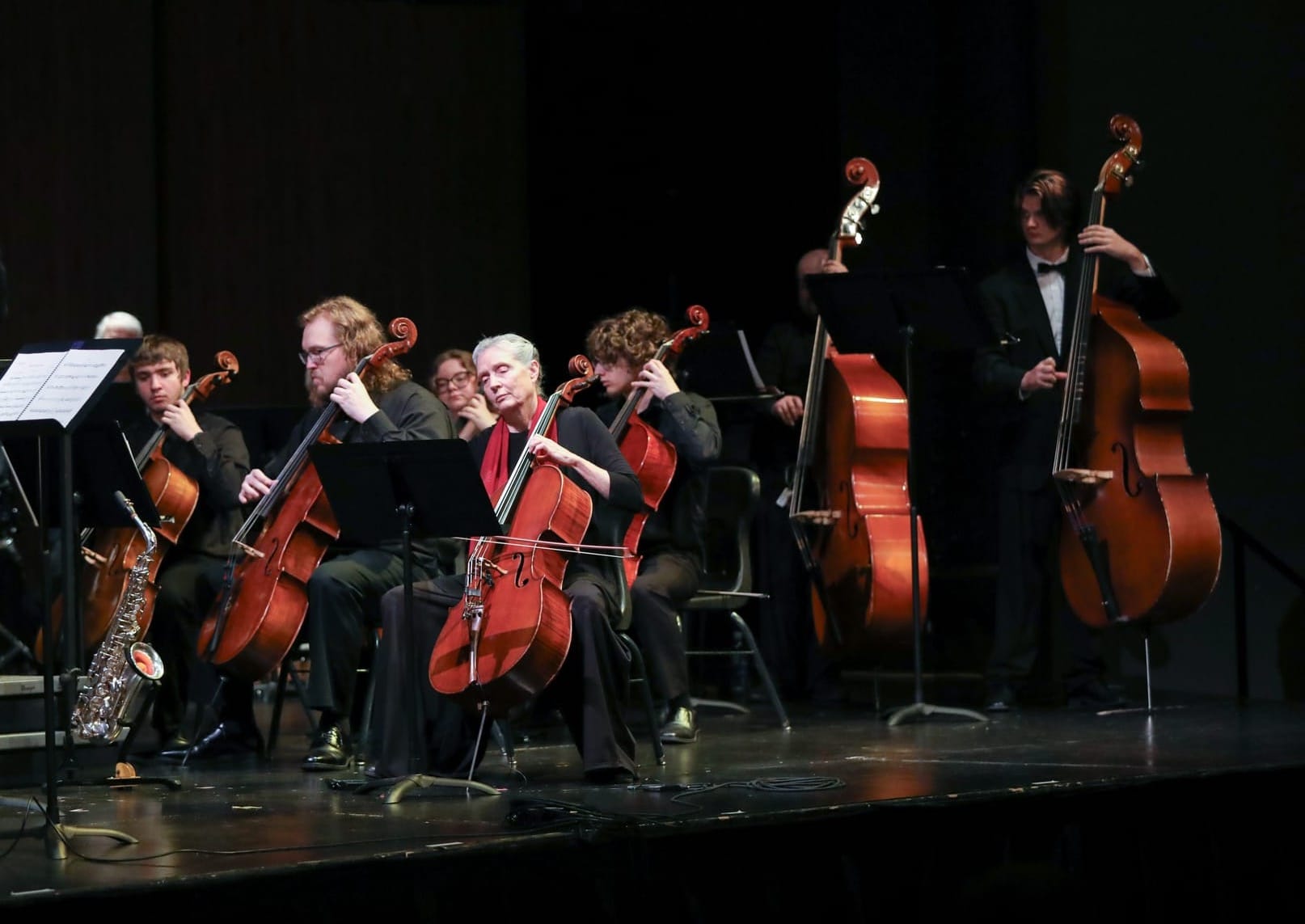
“Malaqatin Meetings” makes for an exciting and introspective concert opener; it’s melodically, harmonically, and rhythmically interesting, yet highly accessible for all kinds of listeners. Mayo is an expert at blending the familiar and the new, and the piece really grooves.
“It’s a fairly simple work, but I think it works pretty well,” Mayo said. “I tried not to let it get too complicated.”
The concert continued with Gabriel Fauré’s Pavane — an apt pairing for Mayo’s piece, as the instrumentation is similar (albeit with much less percussion) — and Howard Hanson’s Symphony No. 2, which has ties to Kansas because one of its themes was adopted by the Interlochen Center for the Arts, the prestigious Michigan-based arts program founded by Kansan Joseph Maddy.
The Details
"Malaqatin Meetings"
7 p.m. Tuesday, May 19 at Cowley College’s Brown Center, 125 S 2nd St. in Arkansas City, Kansas
The South Kansas Symphony will reprise this program — with the addition of Mozart’s Clarinet Concerto — in Arkansas City.
Tickets are $10.25 and can be purchased on the South Kansas Symphony website.
Learn more about Susan Mayo on her website.
Mayo and the South Kansas Symphony received support for “Malaqatin Meetings” from the Kansas Arts Commission and the National Endowment for the Arts.
Kate Storhoff is a musicologist whose research focuses on contemporary American composers. Before moving to Wichita, she managed an independent bookstore and taught at Wake Forest University and the University of North Carolina School of the Arts. She plays the clarinet, piano, and Northumbrian smallpipes.
❋ Derby man has the kind of voice that turns heads — and chairs
❋ Socializing while sober: how some Wichitans are cultivating alcohol-free communities
❋ As a small creative business closes, the owner mourns
❋ Painting through it: Autumn Noire on 20 years of making art
❋ How a guy from Wichita resurrected 'Dawn of the Dead'
❋ Bygone Friends University museum housed curious collections
Support Kansas arts writing
The SHOUT is a Wichita-based independent newsroom focused on artists living and working in Kansas. We're partly supported by the generosity of our readers, and every dollar we receive goes directly into the pocket of a contributing writer, editor, or photographer. Click here to support our work with a tax-deductible donation.