Belonging to the land and each other: 'Land in Alliance' at the Salina Art Center
A group exhibition curated by Wichita artist Taiomah Rutledge wrestles with difficult topics like responsible stewardship and equitable multi-species relations.
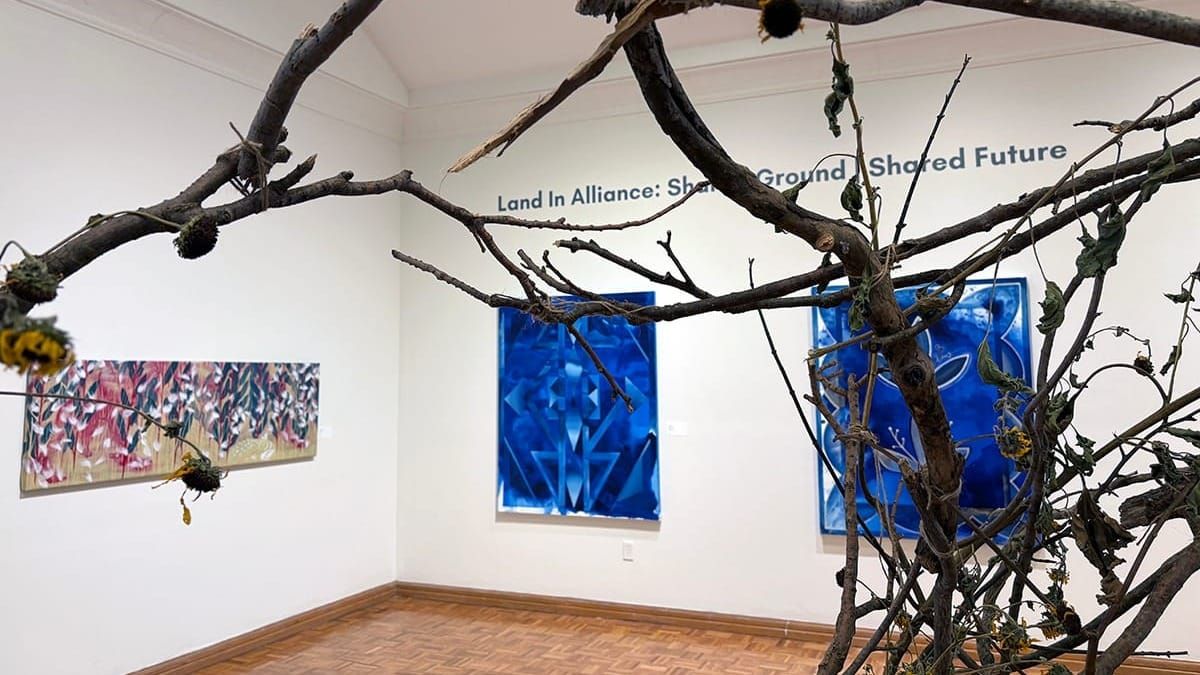
“Land in Alliance: Shared Ground / Shared Future” is the main fall exhibition on view at the Salina Art Center, curated by Taiomah Rutledge (Ojibwe/Meskwaki/Dakota). Working across a wide range of media, Native and non-Native artists from the region offer representations of land, explore human and more-than-human relationships, and even borrow artistic materials from their local ecologies.
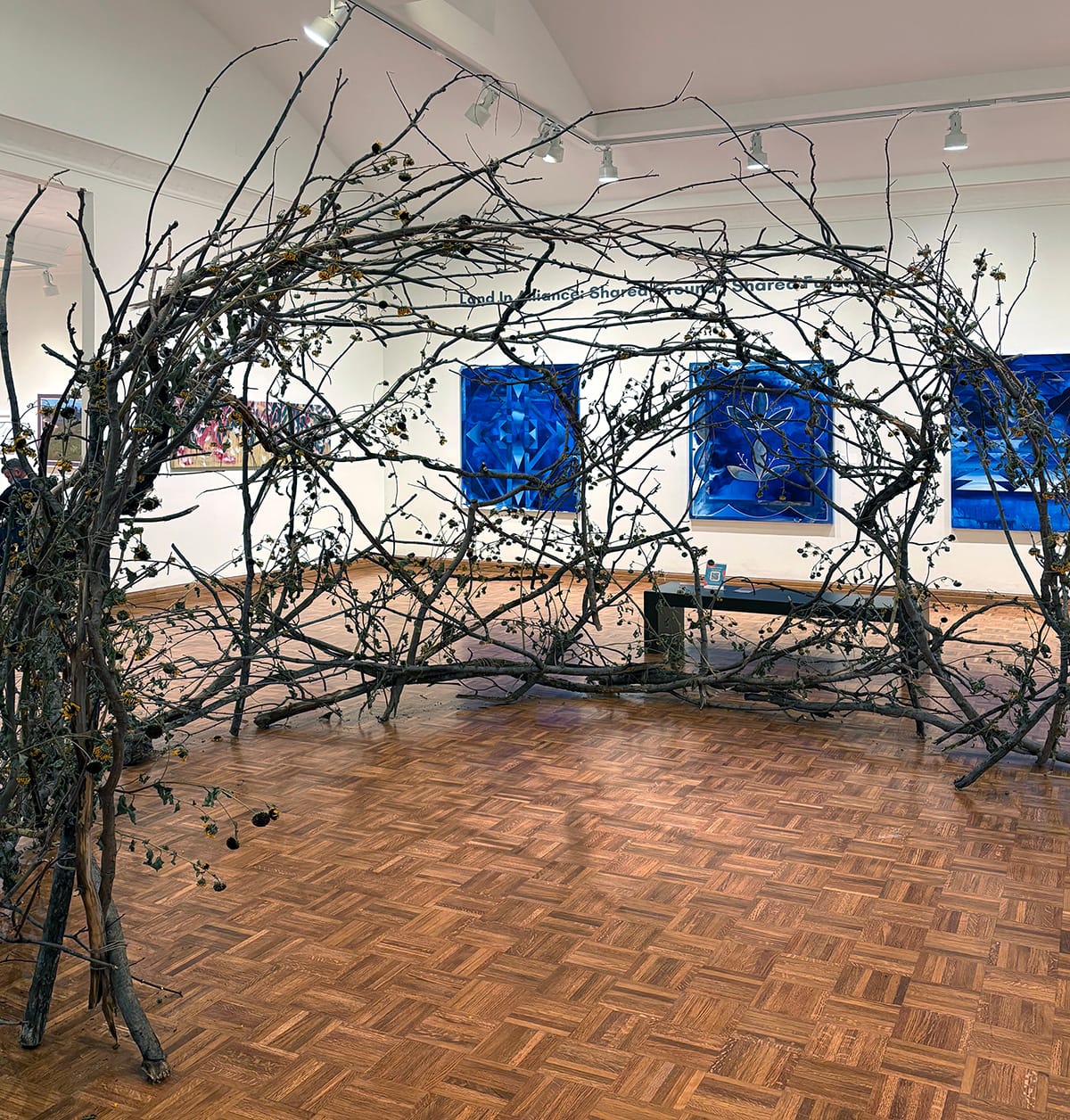
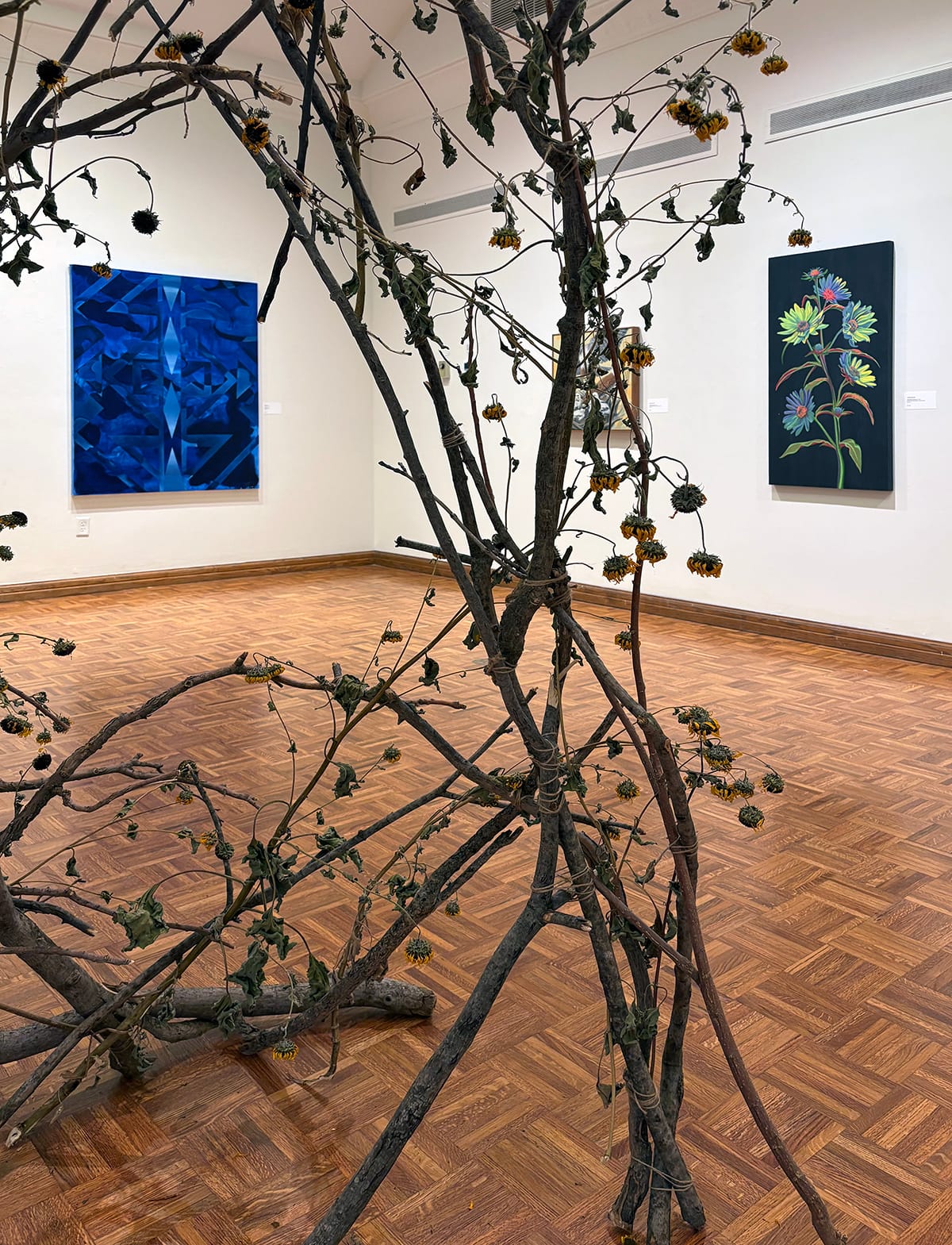
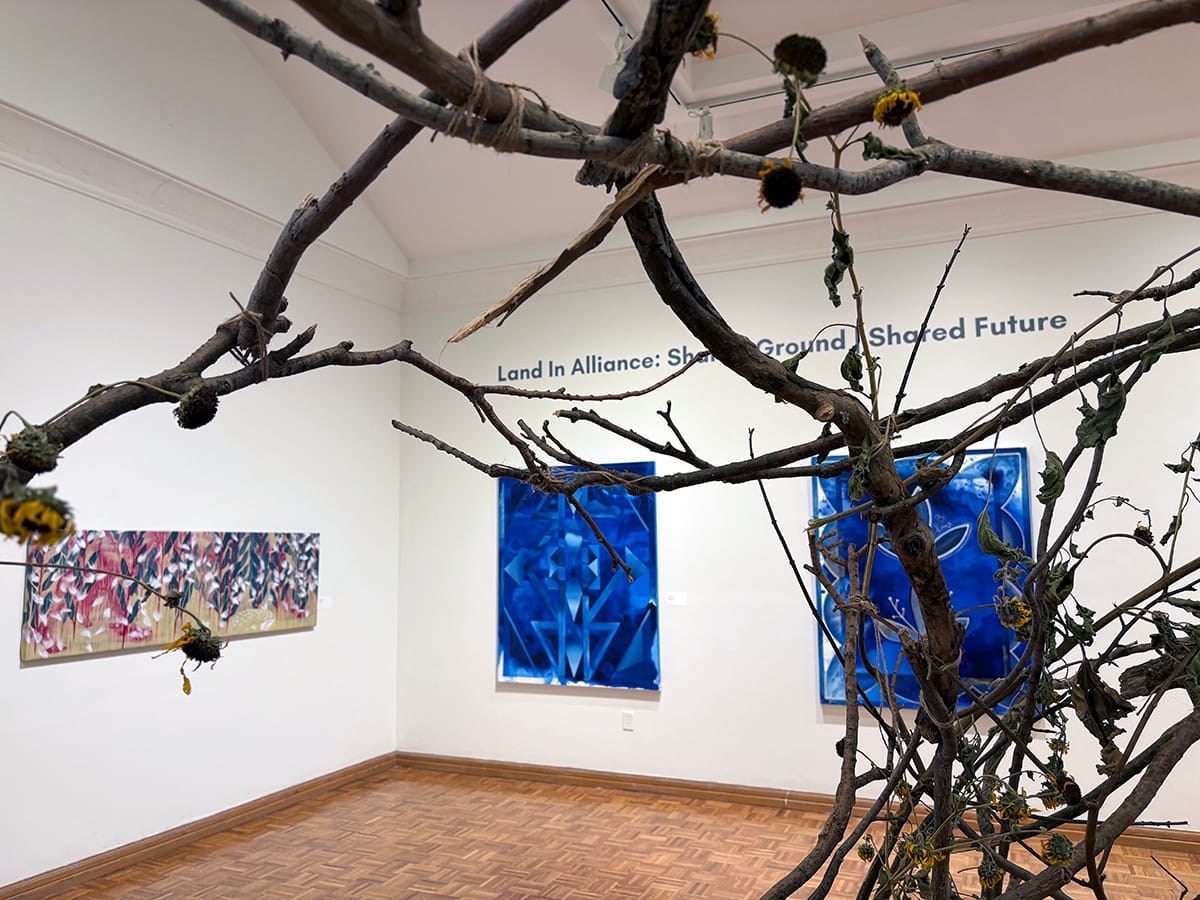
Detail images of Yulla Faun Vega's “Grass Nest.” (Rachel Epp Buller/The SHOUT)
Occupying the Art Center’s two main galleries, the exhibition welcomes visitors with Yulla Edward Faun’s “Grass Nest” (2026), a large-scale installation placed just inside the main entrance. Woven from sticks and grasses, the nest reaches up and over visitors who step inside. It simultaneously creates an unusual vantage point from which to view other works in the gallery. Faun’s contributions to “Land in Alliance” stand out for their diversity of approaches. While the artist assembles “Grass Nest” entirely from natural materials, in other works like “The Osage Orange,” Faun relies on paint and charcoal to evoke the tree’s distinctive hue.
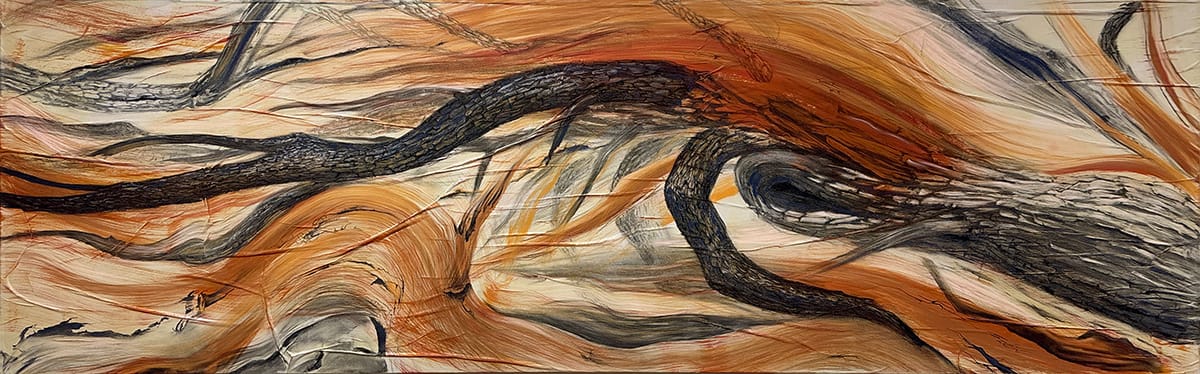
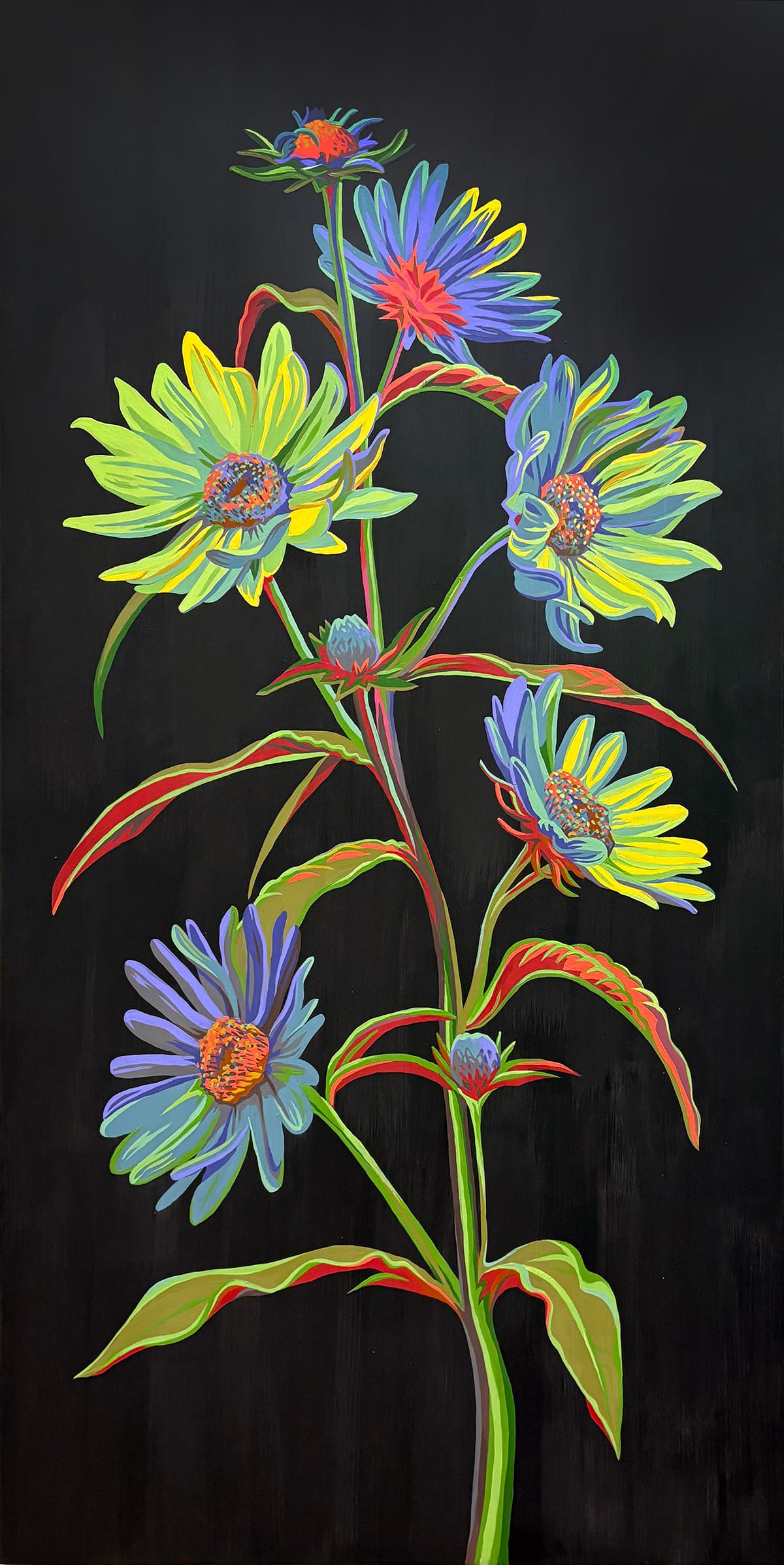
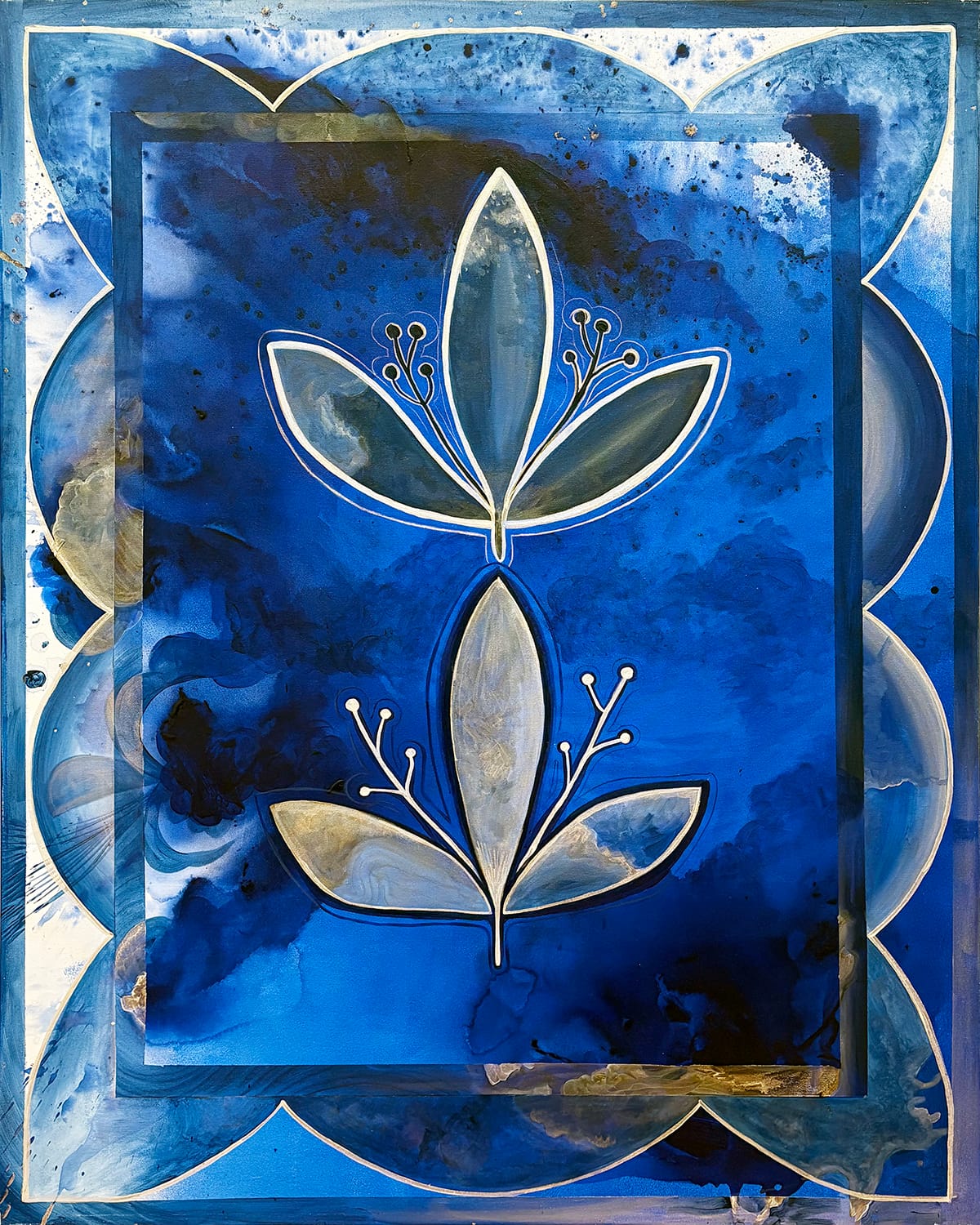
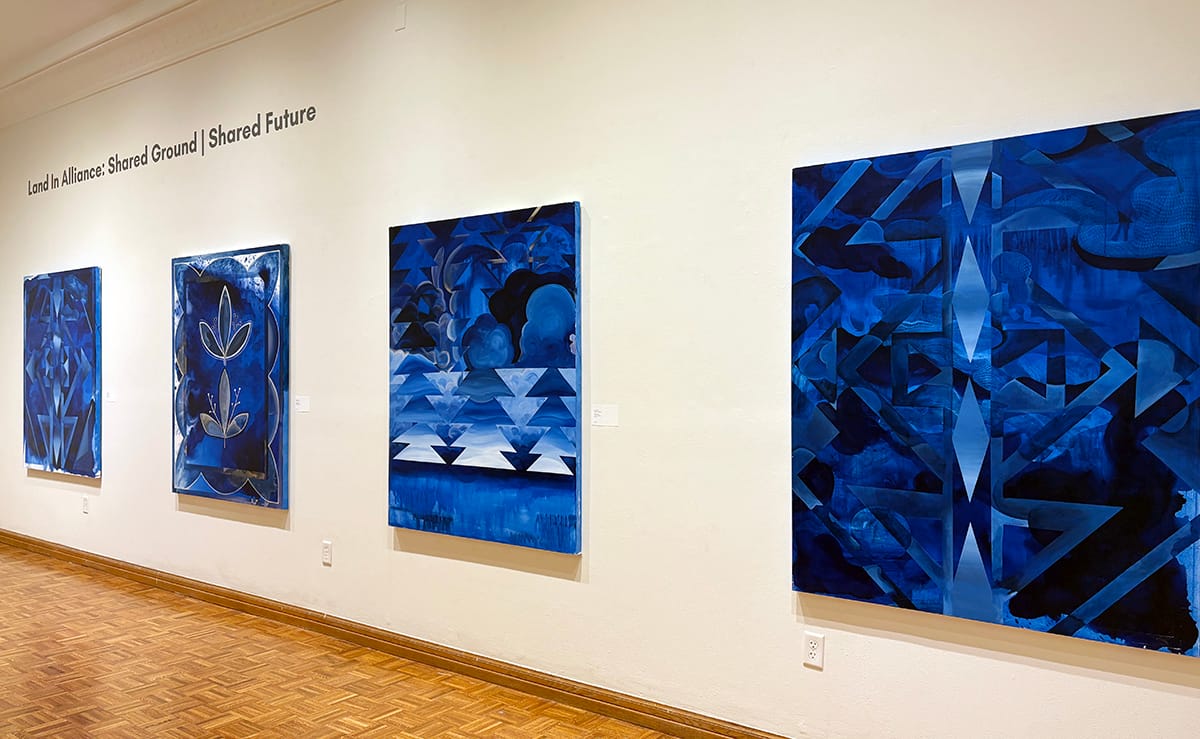
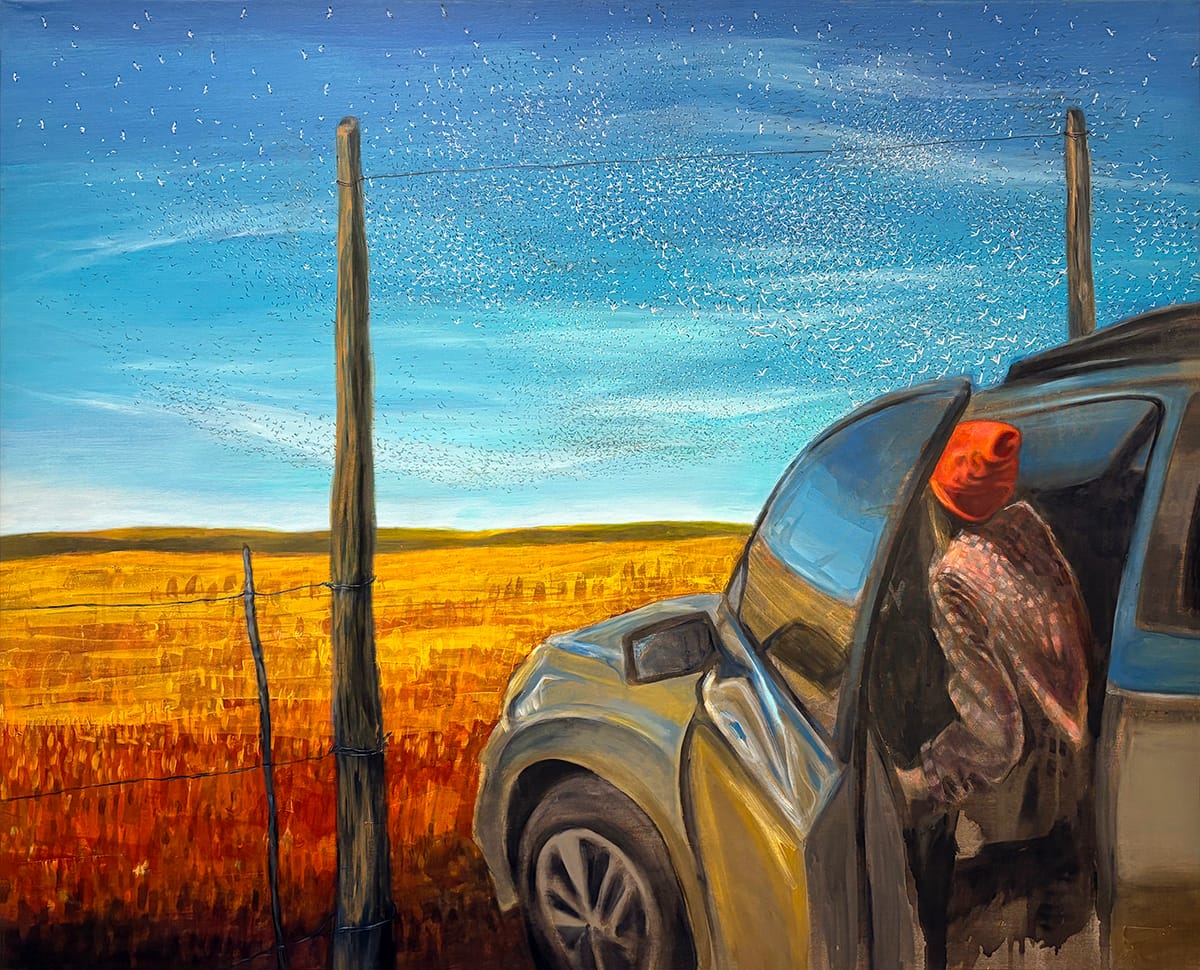
Several artists in the show profile plant and animal forms in a kind of portraiture, whether naturalistic, as in Lindsey Kernodle’s “Maximilian Sunflowers,” or abstract, as seen in the large untitled blue paintings by Mona Cliff (Aaniiih/Nakota). Kelly Yarbrough visualizes the “Snow Geese Migration” in an acrylic on canvas work, while Emily Ritter’s small acrylic and gouache on paper paintings draw attention to distinctive differences between the “Elm Leaf Beetle,” “Spotted Cucumber Beetle,” and “Ashgray Blister Beetle.”
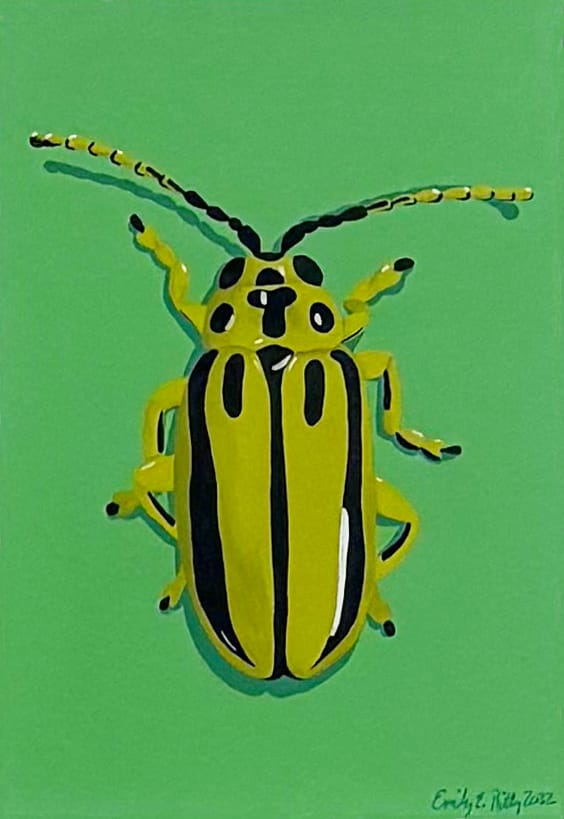
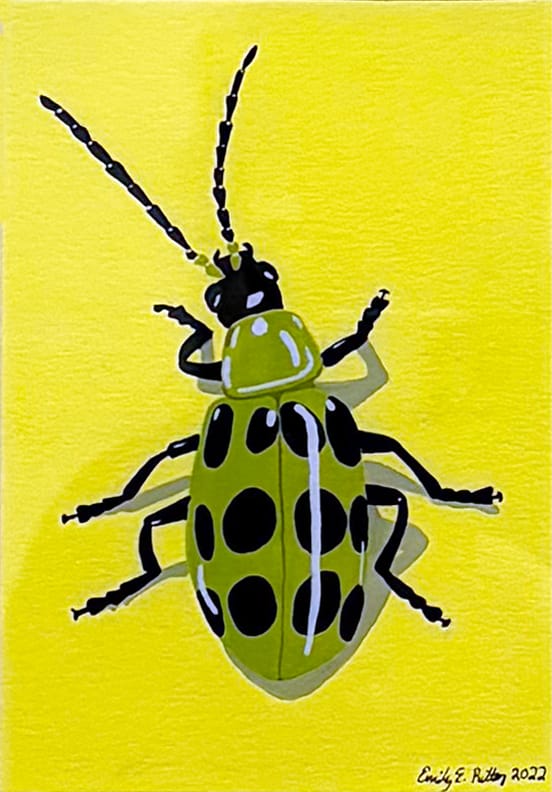

Works by Emily Ritter: “Elm Leaf Beetle,” 2022, acrylic and gouache, 7 by 5 inches; “Spotted Cucumber Beetle,” 2022, acrylic and gouache, 7 by 5 inches; “Ashgray Blister Beetle,” 2022, acrylic and gouache, 7 by 5 inches. (Rachel Epp Buller/The SHOUT)
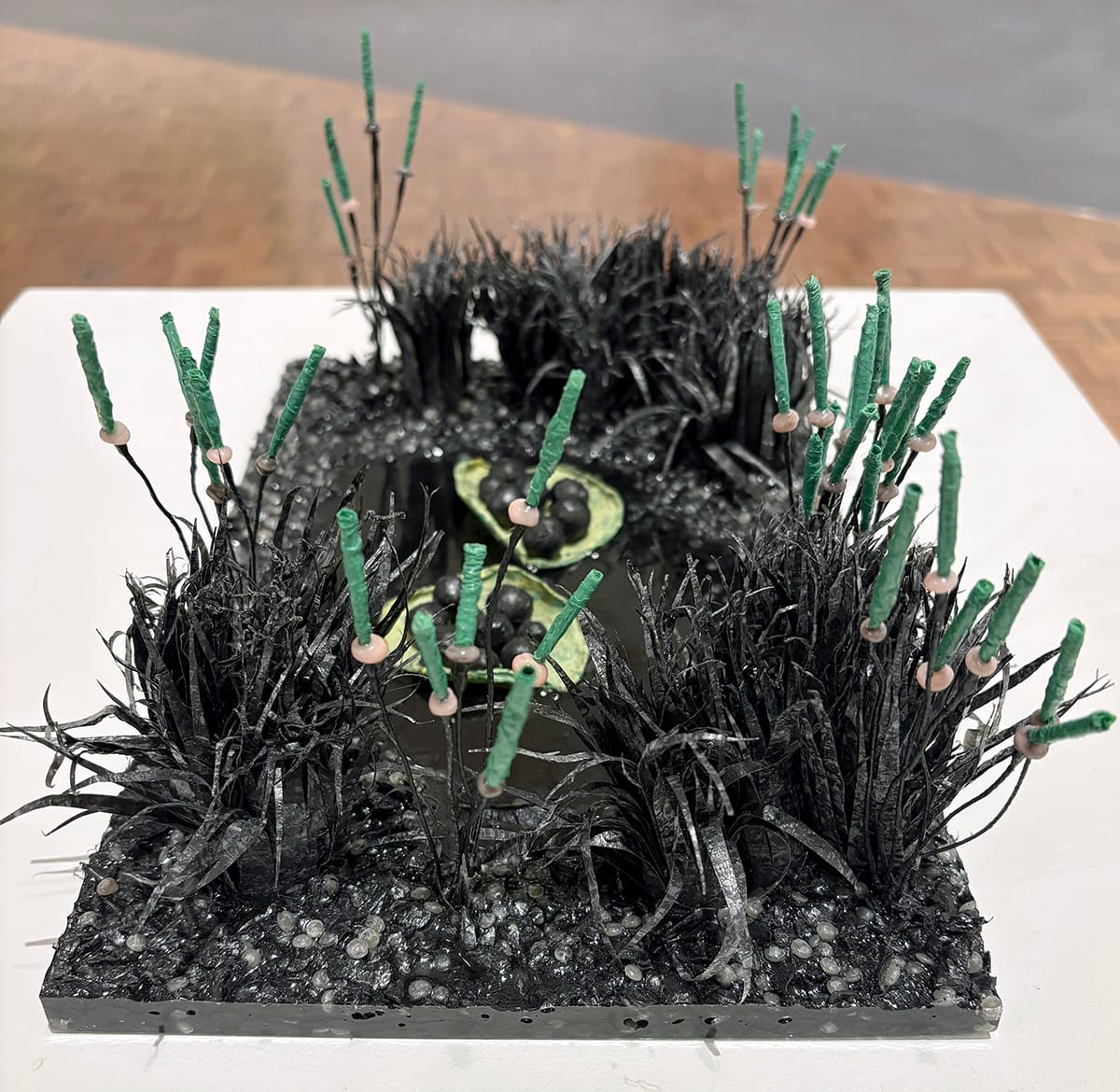
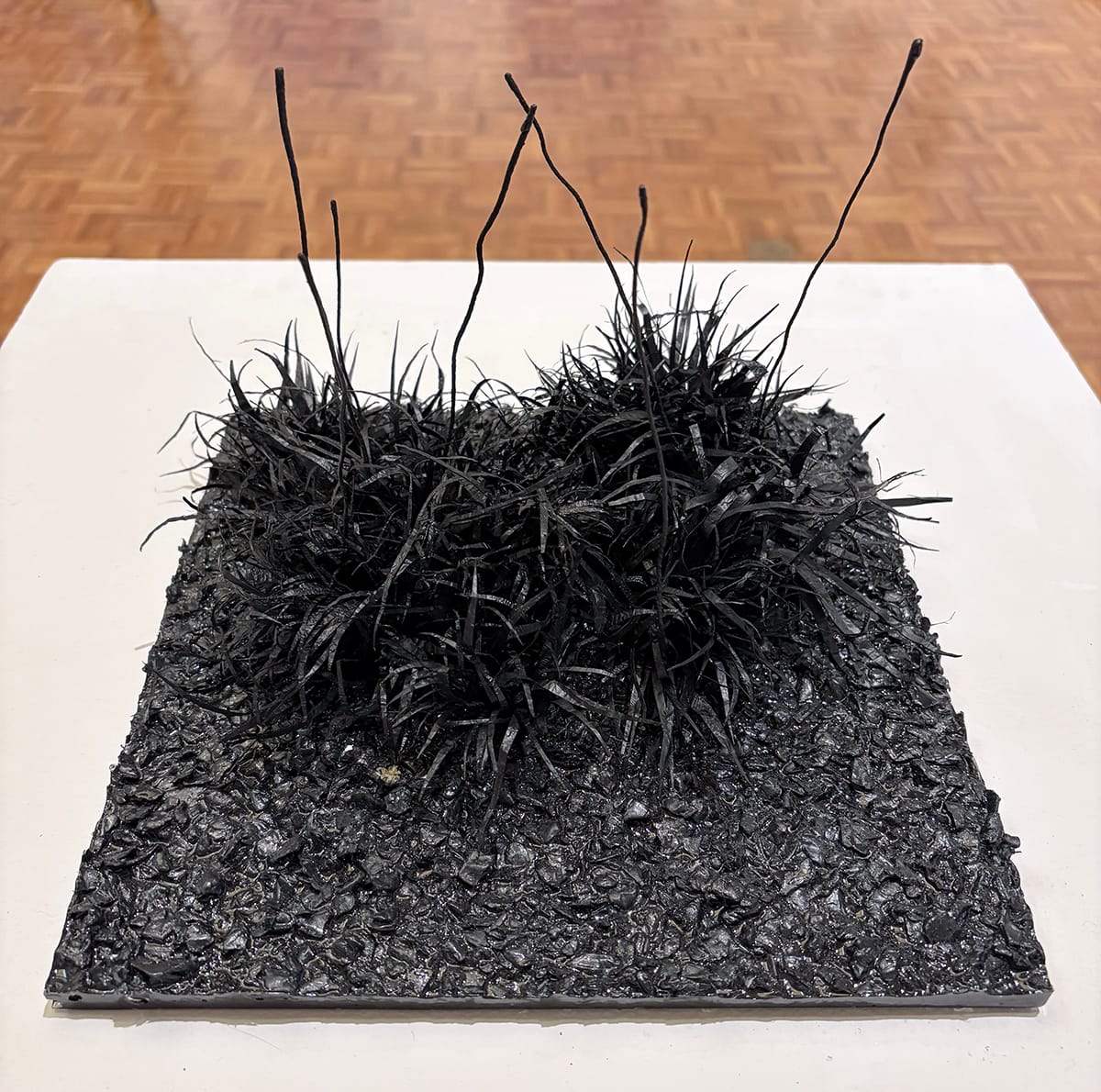
Works by Emily Ritter: “Ecosystem #15,” 2018, plastic bags, wire, HDPE regrind, and resin, 10 by 10 by 8 inches; “Ecosystem #17,” 2018, plastic bags, wire, HDPE regrind, and resin, 10 by 10 by 8 inches. (Rachel Epp Buller/The SHOUT)
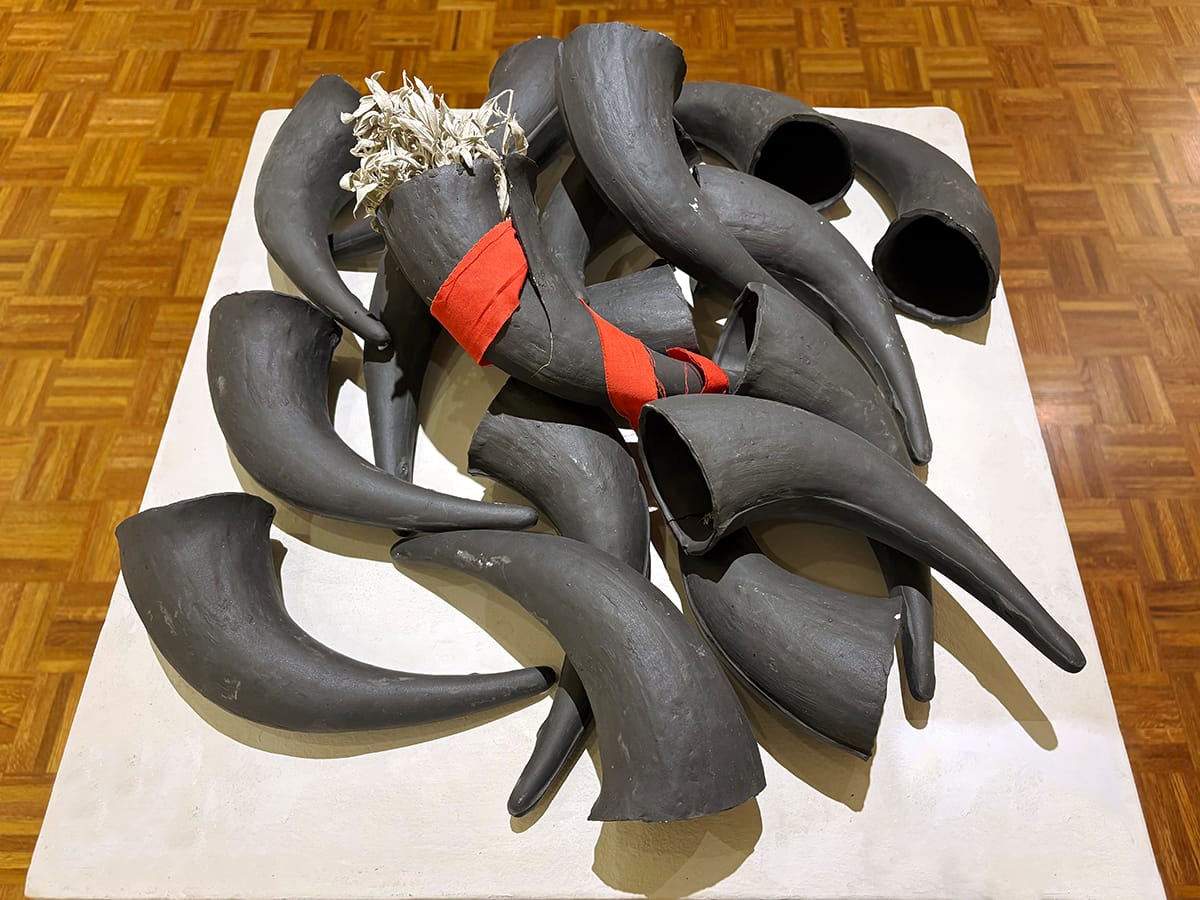
Some artists in the exhibition employ a trompe l’oeil approach, producing sculptural works that invite viewers to question the truth of the materials. Ritter transforms such unlikely materials as plastic bags and resin to create tiny landscapes, as in “Ecosystem #15” and “Ecosystem #17.” Michael Patton (Lakota/Pueblo) uses plaster casts to evoke a pile of animal horns in “Caring for those in our community.” In one corner of the gallery, a (seemingly real) potted plant hangs next to an unidentified poem, “Housesitting for the Fig Enthusiast,” which includes lovely phrases such as “the sweaty exhale of summer” — words that feel appropriate for the long summer weather that has extended into the fall months.
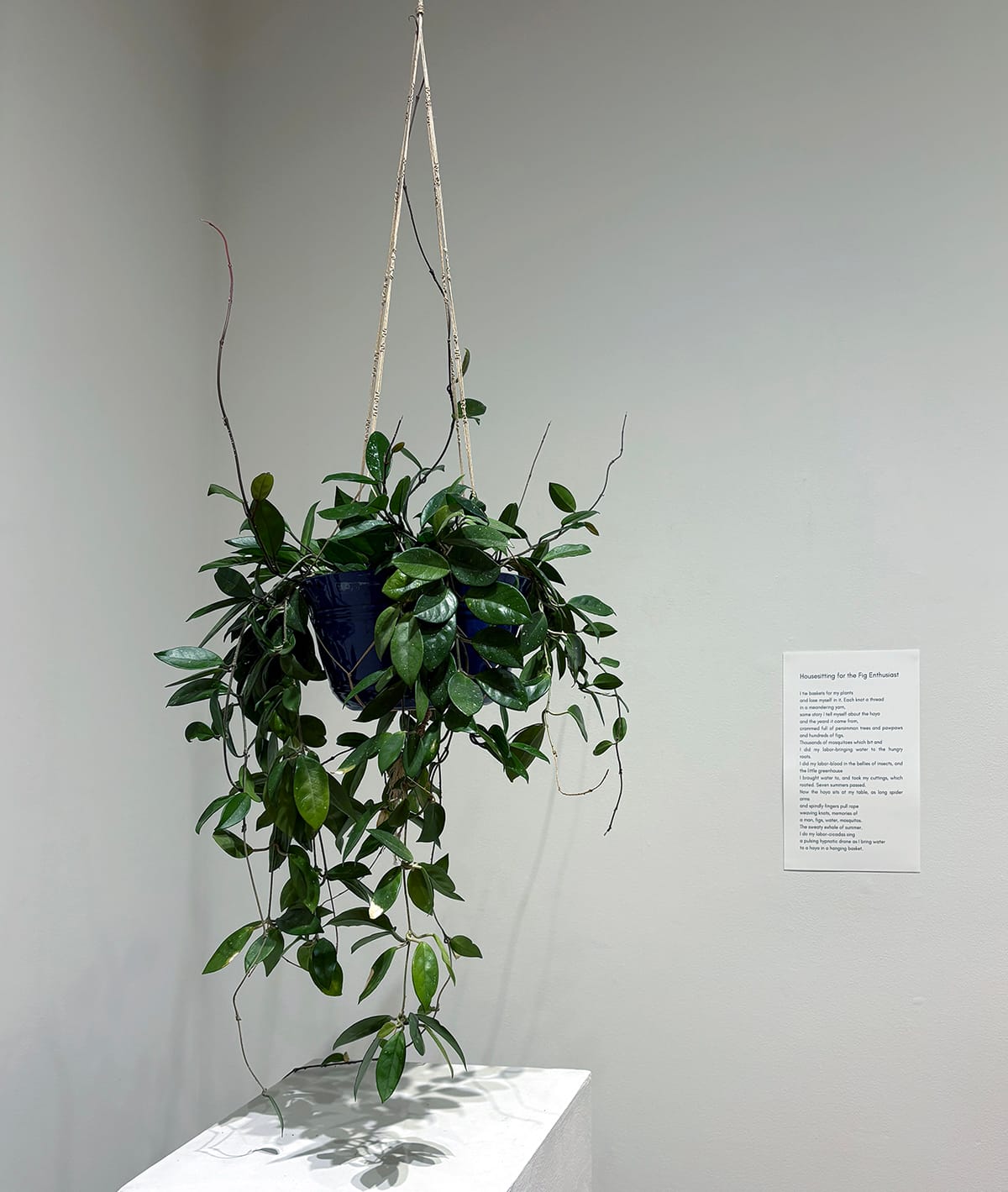
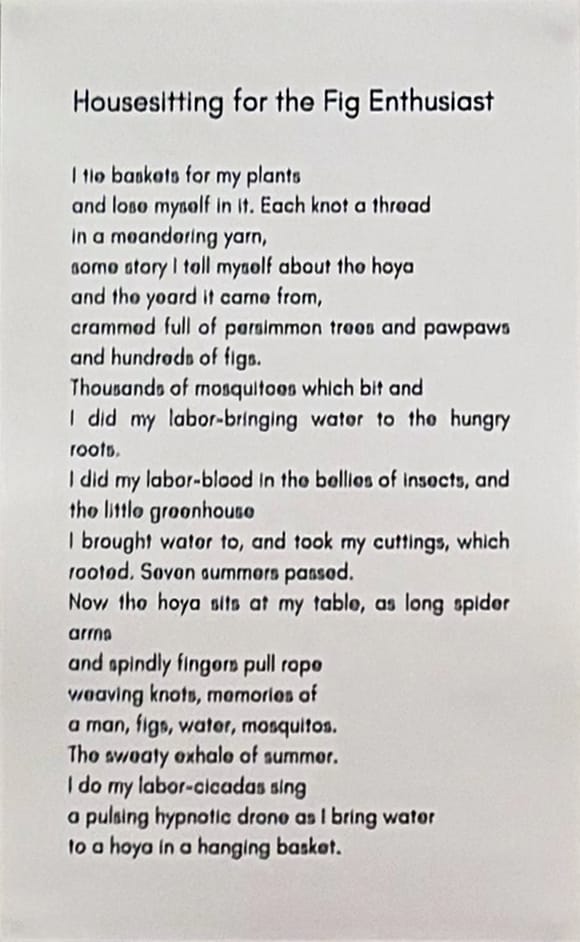
An unidentified plant in the “Land in Alliance” exhibition with an accompanying poem on the wall titled “Housesitting for the Fig Enthusiast.” (Rachel Epp Buller/The SHOUT)
As I wandered the galleries, I found myself contemplating the possible intentions behind the exhibition’s title, “Land in Alliance.” Is Rutledge, the curator, recognizing the agency of the land and proposing that it can forge an alliance between beings? Is the exhibition a proposal for alliances between Native and non-Native peoples, as hinted at in the makeup of the exhibiting artists? Or is Rutledge urging us all to build alliances with each other and the land?
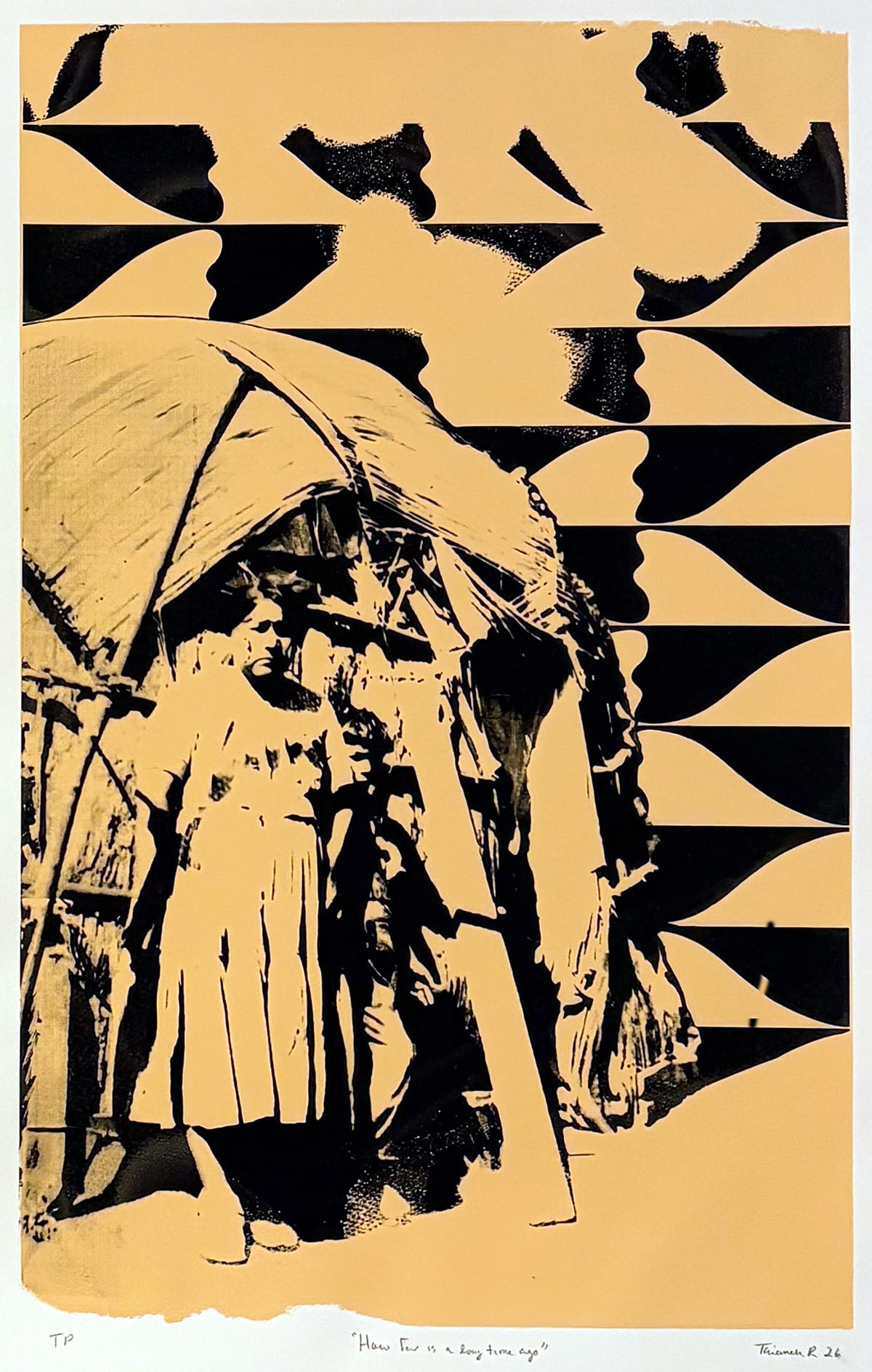
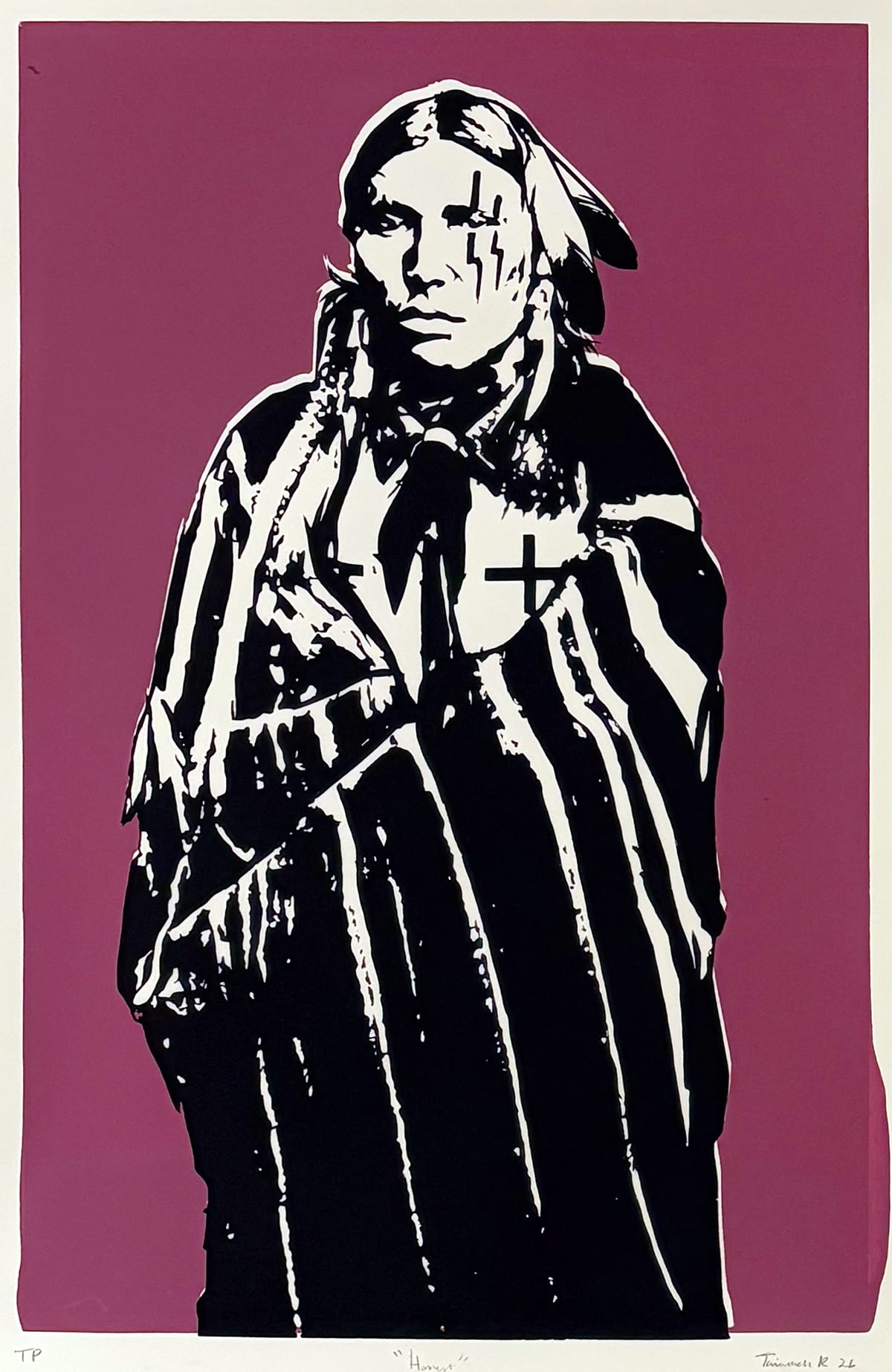
Works by Taiomah Rutledge (Ojibwe / Meskwaki / Dakota): “How far is a long time ago?,” 2026, screenprint on archival paper, 30 by 22 inches; “Charlie Wildcat,” 2026, screenprint on archival paper, 30 by 22 inches. (Rachel Epp Buller/The SHOUT)
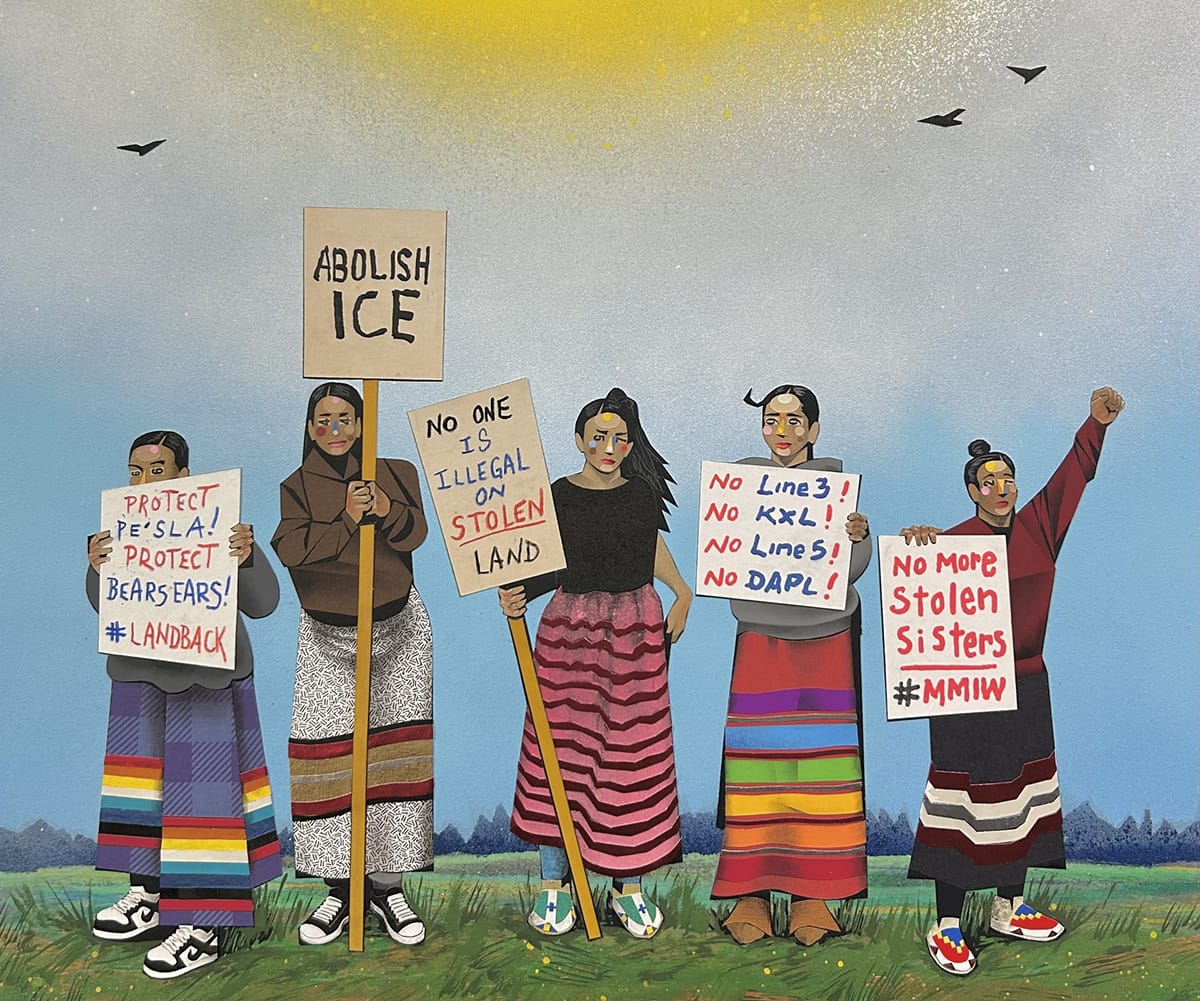
One artwork offers a possible answer: “Frontline Aunties” by Henry Payer (Hochunk). In this collage and mixed-media piece depicting five Native women in ribbon skirts carrying protest signs with slogans such as “ABOLISH ICE” and “NO ONE IS ILLEGAL ON STOLEN LAND,” Payer conveys a story of activist Indigenous women who speak out against stolen lands and stolen peoples and he implicitly frames them as interconnected oppressions.
A brochure that I picked up upon leaving the show offered “three questions to carry with you”: How do we belong to the land? What does it mean to be a good steward? What can we learn from one another? Provocative questions that I wish would have been woven into the exhibition in a more visible way so that viewers might ponder them in the context of specific artworks.
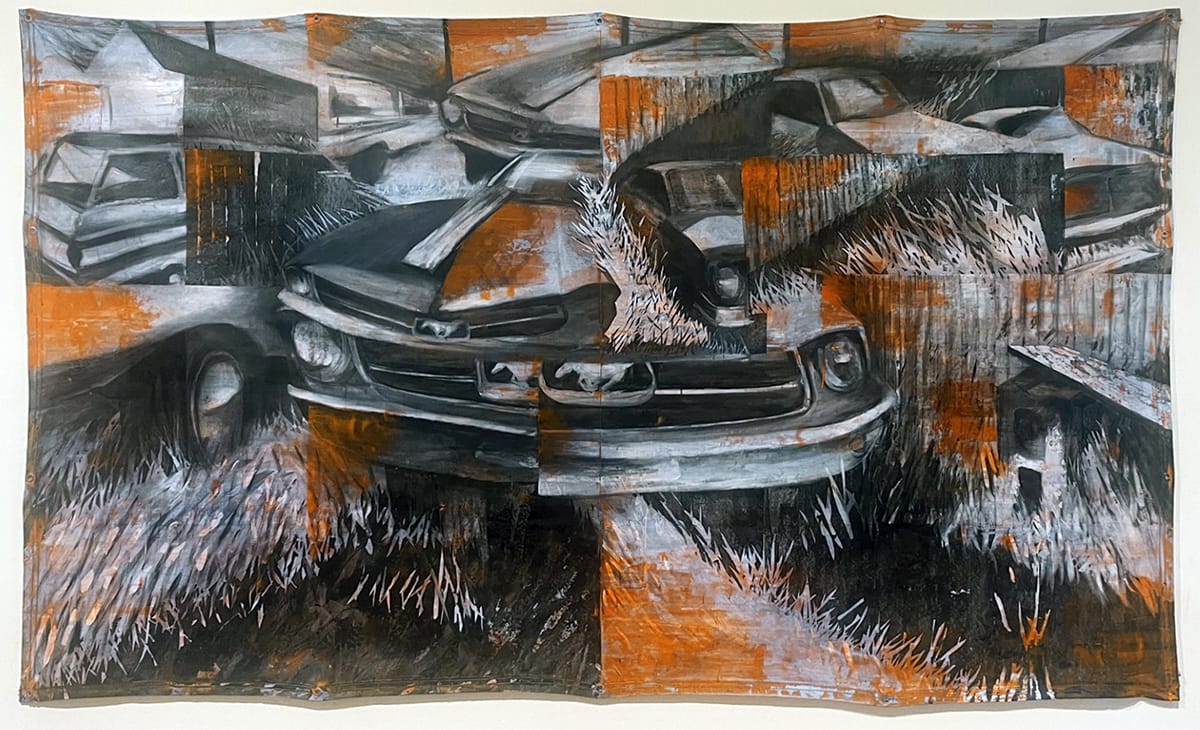
Kevin Kelly includes a short artist statement with his painting “Revise vs. Redo,” in which he portrays collaged views of a vintage Ford Mustang in shades of orange and gray, with tall grass growing up around it. He offers guidance in the text to understanding his visual commentary on ecological degradation in his south Wichita neighborhood. Kelly is an exception, however, in assisting viewers in their understanding of his work. Without curatorial exhibition texts or other artist statements, individual artworks can feel disconnected and the thinking behind the exhibition risks being lost.
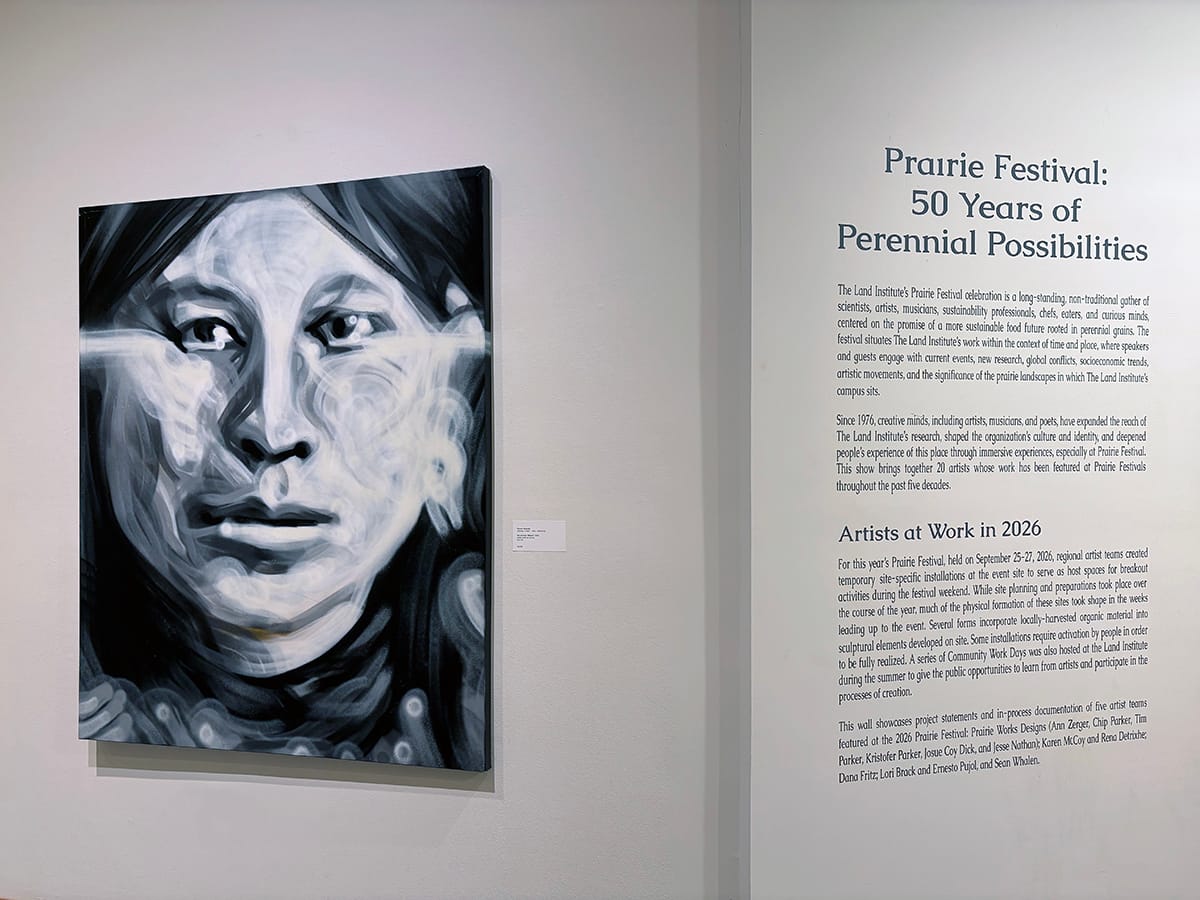
Perhaps fittingly, I visited “Land in Alliance” during the same weekend that I attended the Prairie Festival at the Land Institute outside of Salina. This regular event promotes and celebrates the promise of perennial agricultures, and art was in abundance for the 50th anniversary of the first Prairie Festival. A variety of artists led participatory performances and constructed land-based art installations on site. For the Salina Art Center’s smaller gallery, Cori Sherman North curated an exhibition titled “50 Years of Perennial Possibilities” to survey some of the featured artists from past Prairie Festivals. Taken together, “Land in Alliance” and the Prairie Festival installations and exhibition provide artistic food for thought as humans continue to wrestle with difficult topics like responsible stewardship and equitable multi-species relations, particularly as we attempt to envision our way, on shared ground, toward shared futures.
“Land in Alliance” is part of a broader Great Plains collaboration called “Home Is Where We Are: Art of First Americans,” led by staff at the Marianna Kistler Beach Museum of Art at Kansas State University in Manhattan and designed to highlight contemporary Indigenous art. In addition to “Land in Alliance” and “Home/Land,” an exhibition currently on display at the Beach Museum, keep an eye out for current and upcoming related exhibitions at other participating institutions in Kansas, including the Chapman Center for Rural Studies at KSU in Manhattan, the Kansas Studies Institute at Johnson County Community College, Mid-America All-Indian Museum in Wichita, the Nerman Museum of Contemporary Art in Overland Park, the Ulrich Museum of Art in Wichita, and Volland, A Place for Art and Community, in Alma, Kansas, just west of Topeka.
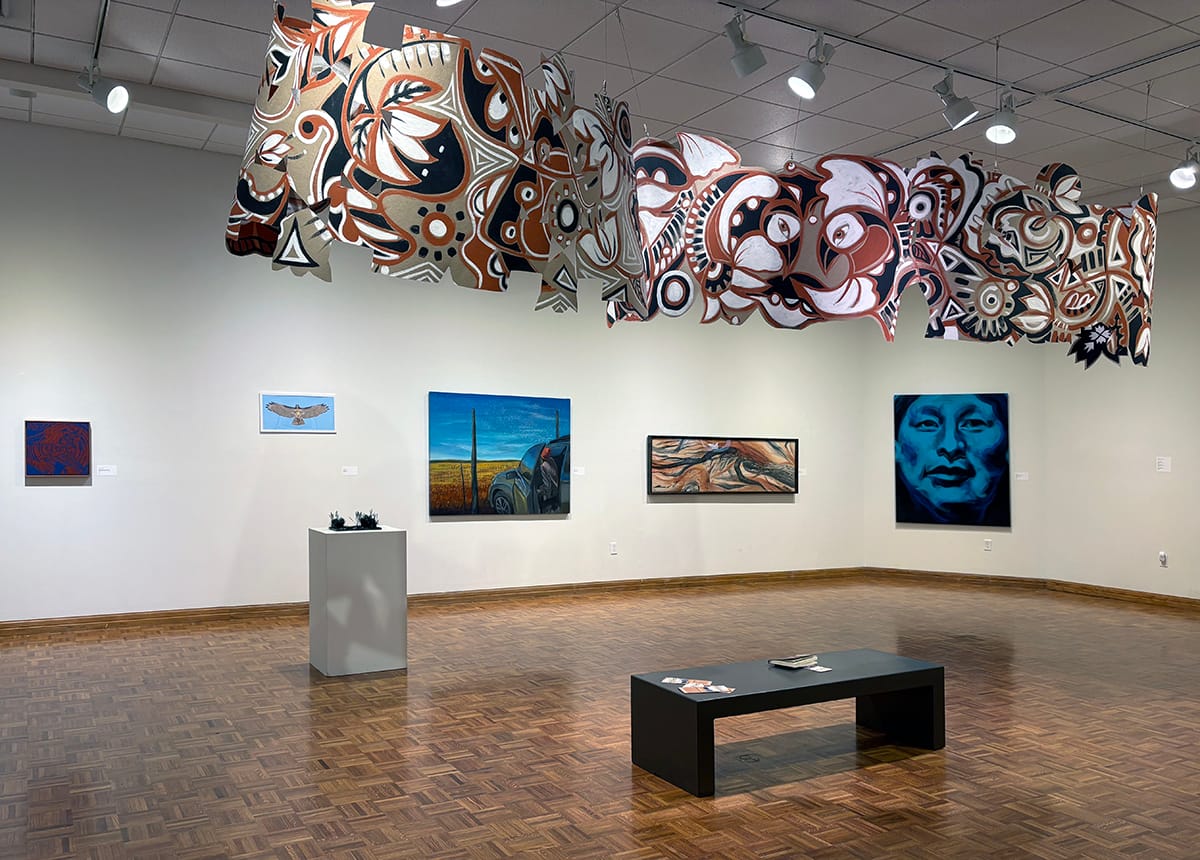
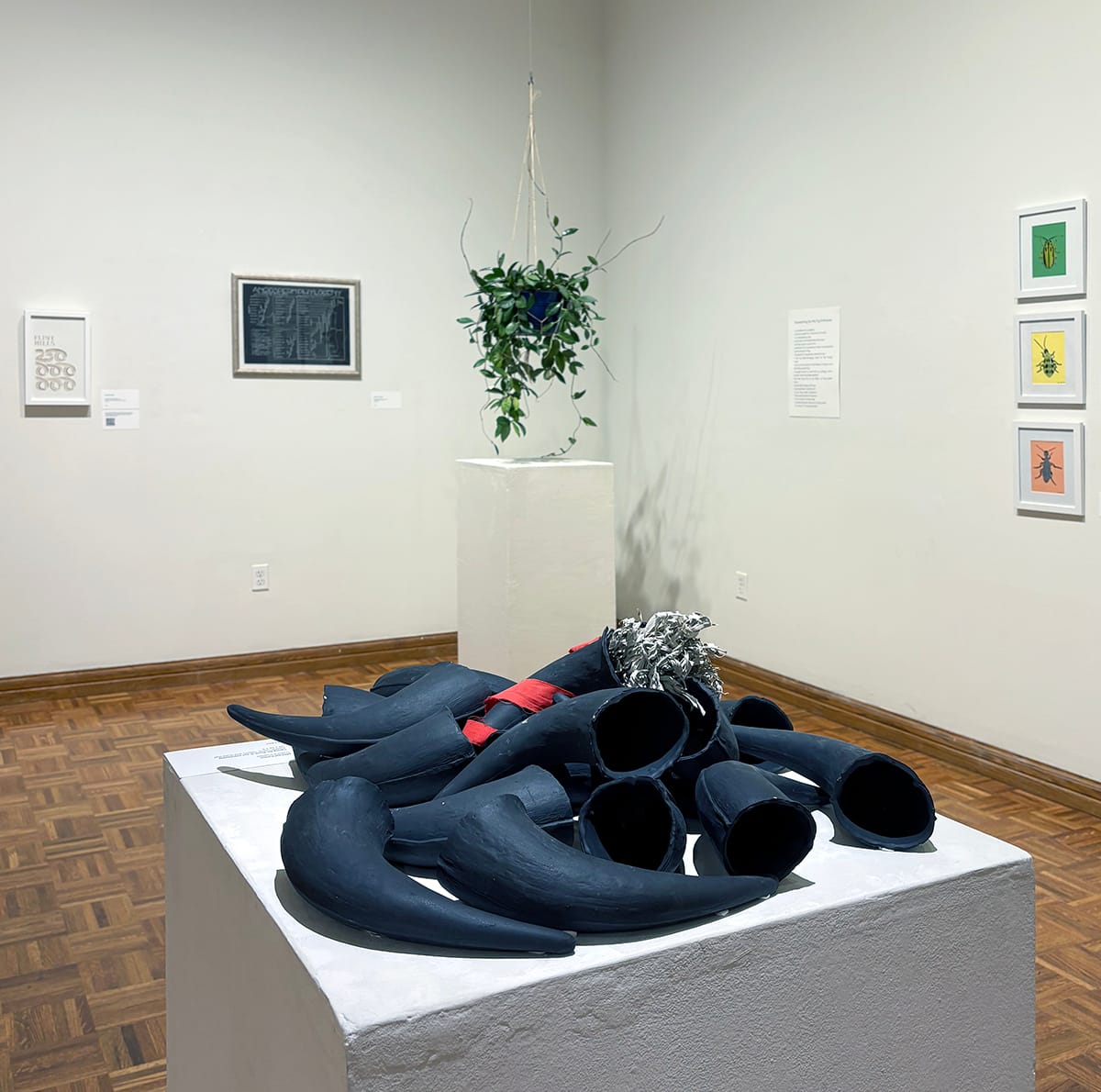
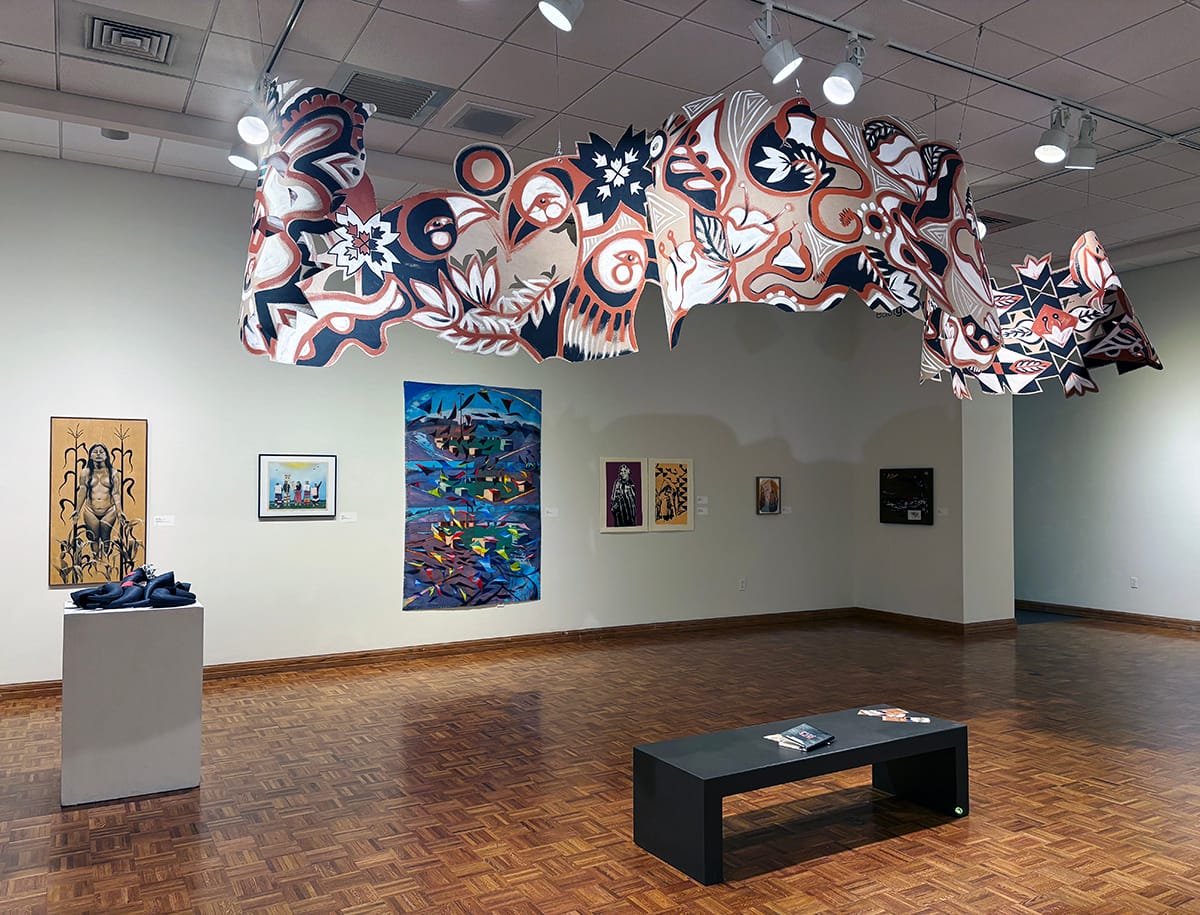
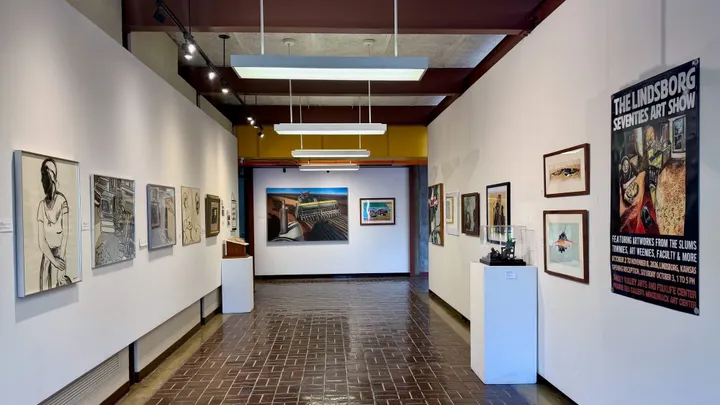
Installation views of “Land in Alliance: Shared Ground / Shared Future” at the Salina Arts Center. (Rachel Epp Buller/The SHOUT)
The Details
“Land in Alliance: Shared Ground / Shared Future”
September 16-December 27, 2026 at the Salina Art Center, 242 S. Santa Fe Ave in Salina, Kansas
The gallery is open 10 a.m.-6 p.m. Tuesday-Saturday, 10 a.m.-2 p.m. Sundays, and Monday by appointment.
Admission is free, and the facility is accessible to people with physical disabilities.
Related coverage in The SHOUT:
- Apocalyptic positivity: A journey through Emily E. Ritter’s 'Ecologies of the Self' [Skyler Lovelace]
- Unplanned conversations & unexpected correlations: Taylor McQueary & Yulla Faun Vega at Art House 310 [Kevin Kelly]
- Inside Out: 'Following Blackbear' at the Mid-America All-Indian Museum [Jessy Clonts Day]
- In the Galleries: Mountain Plains Contemporary Art Biennial at the Salina Art Center [Emily Christensen]
Rachel Epp Buller is an artist and art historian whose current research explores listening as an artistic method. She is a two-time Fulbright Scholar, a certified practitioner in deep listening, and a professor of visual arts and design at Bethel College.
❋ Derby man has the kind of voice that turns heads — and chairs
❋ Socializing while sober: how some Wichitans are cultivating alcohol-free communities
❋ As a small creative business closes, the owner mourns
❋ Painting through it: Autumn Noire on 20 years of making art
❋ How a guy from Wichita resurrected 'Dawn of the Dead'
❋ Bygone Friends University museum housed curious collections
Support Kansas arts writing
The SHOUT is a Wichita-based independent newsroom focused on artists living and working in Kansas. We're partly supported by the generosity of our readers, and every dollar we receive goes directly into the pocket of a contributing writer, editor, or photographer. Click here to support our work with a tax-deductible donation.