Breaking through to freedom: Tchaikovsky and Shostakovich at the Wichita Symphony
On October 24, young pianst Clayton Stephenson and the Wichita Symphony Orchestra gave an intense, energetic performance.
Among the many overlapping tribes that make up the world of classical music, there is a group that I think of as “the piano people.” The piano people are, by and large, either highly accomplished pianists or people who, up until high school or college, imagined that they could be highly accomplished pianists. They have idols and icons: performers like Horowitz, composers like Liszt. They also have in-group favorites — composers such as Alkan and Sorabji whose works are valued, at least in part, for being nearly impossible to play.
And they have competitions. Most classical musicians enter competitions, at one time or another, but for would-be concert pianists, competition culture is central — a ladder pianists climb or fall from during their teens and early twenties.
At the highest level are the Chopin Competition (Warsaw), the Leeds (England), the Cliburn (Fort Worth), and the Queen Elisabeth (Brussels): These can be gateways to solo careers. To win, or do well, in one of these contests, an aspirant must demonstrate that they can transcend technique and make an individual artistic statement. To get a sense of the difficulty level, imagine … I don’t know, imagine composing a perfect sonnet while acing an American Ninja Warrior obstacle course.
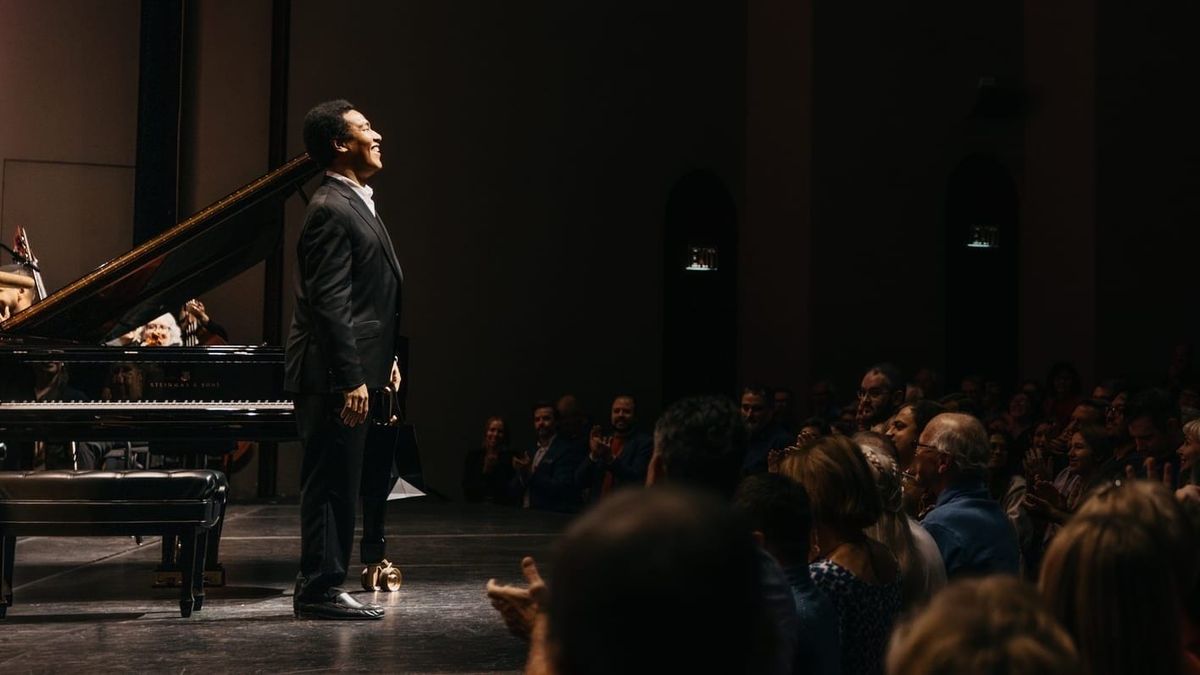
Clayton Stephenson, 27, is among the young pianists who have emerged victorious from this fiercely competitive world, with a Nina Simone Piano Competition victory and a Cliburn finalist appearance to his name, ready to perform not only for the piano people but for the rest of us.
One way to understand what it means to distinguish oneself in these competitions is by hearing someone like Stephenson play. The Wichita Symphony Orchestra's audience on Saturday night was hardly unfamiliar with accomplished piano soloists. But whatever fine distinctions judges needed to make between Stephenson and the other gifted pianists assembled in Fort Worth or Cincinnati, the magnitude of his ability seemed to render such comparisons beside the point Saturday night in Wichita. At the keyboard, he seemed capable of just about anything.
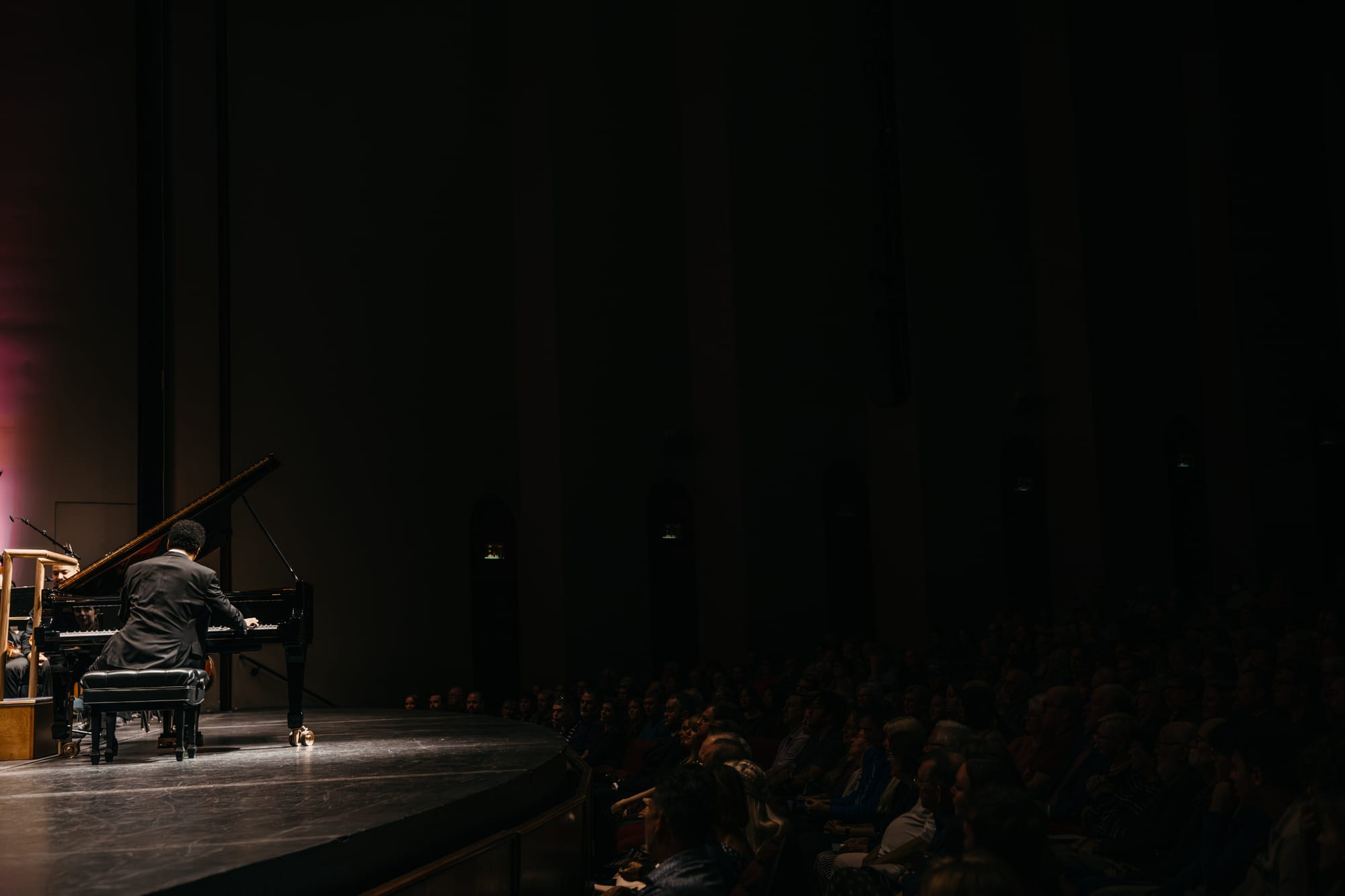
Tchaikovsky’s Piano Concerto No. 1, the piece Stephenson essayed, has come in for the same sorts of criticism leveled against other virtuoso showpieces of the Romantic era. All that flash — what’s it all for? Skipping up and down the keyboard in profligate arpeggios and scales, left hand crossing over and under the right in pretty patterns, so many doubled-octave melodies to pound away at. What’s the point?
I can’t exactly tell you what the point is; there are as many answers as interpretations. But one point that Stephenson brought forward is right there in the title of a French song that Tchaikovsky quotes in the middle section of the concerto’s middle movement: “One must have fun, dance and laugh.” If Stephenson didn’t quite laugh, he certainly grinned. He just about danced.
And he definitely had fun. “Clayton loves this piece,” I wrote in my notes during the second movement. The thought struck me as Tchaikovsky gave the “One must have fun” melody to the orchestra and set the pianist to twiddling away at accompanying filigrees in a manic, Bugs Bunny sort of mode.
Stephenson’s rhythmic vitality, accuracy, and judicious use of pedal created breathing room even in those most frenetic moments, not just in the second movement but throughout the work. I had a feeling that, despite the prodigious amount of musical information being downloaded from performer to audience, there was plenty of bandwidth left over for even more — a mind-expanding feeling.
There’s something about the figure of the concerto soloist, seated before an orchestra, that evokes the Romantic ideal of the hero: the individual asserting himself against the masses. The Romantic hero is a figure of strength, of the power to express himself, to make his feelings and his sense of self known to the outside world through acts and deeds.
Stephenson was that hero on Saturday, simply by virtue of what he did at the keyboard, but he also assumed the role deliberately, as an actor does onstage. The first step of that assumption came seconds into the performance, when he pounded out those famous opening chords, which leapt up the keyboard while the orchestra played the sweeping opening theme. The passage makes relatively modest demands on the pianist's agility, but it requires a performer to establish their power — and with it, their authority as both guide and protagonist — right away.
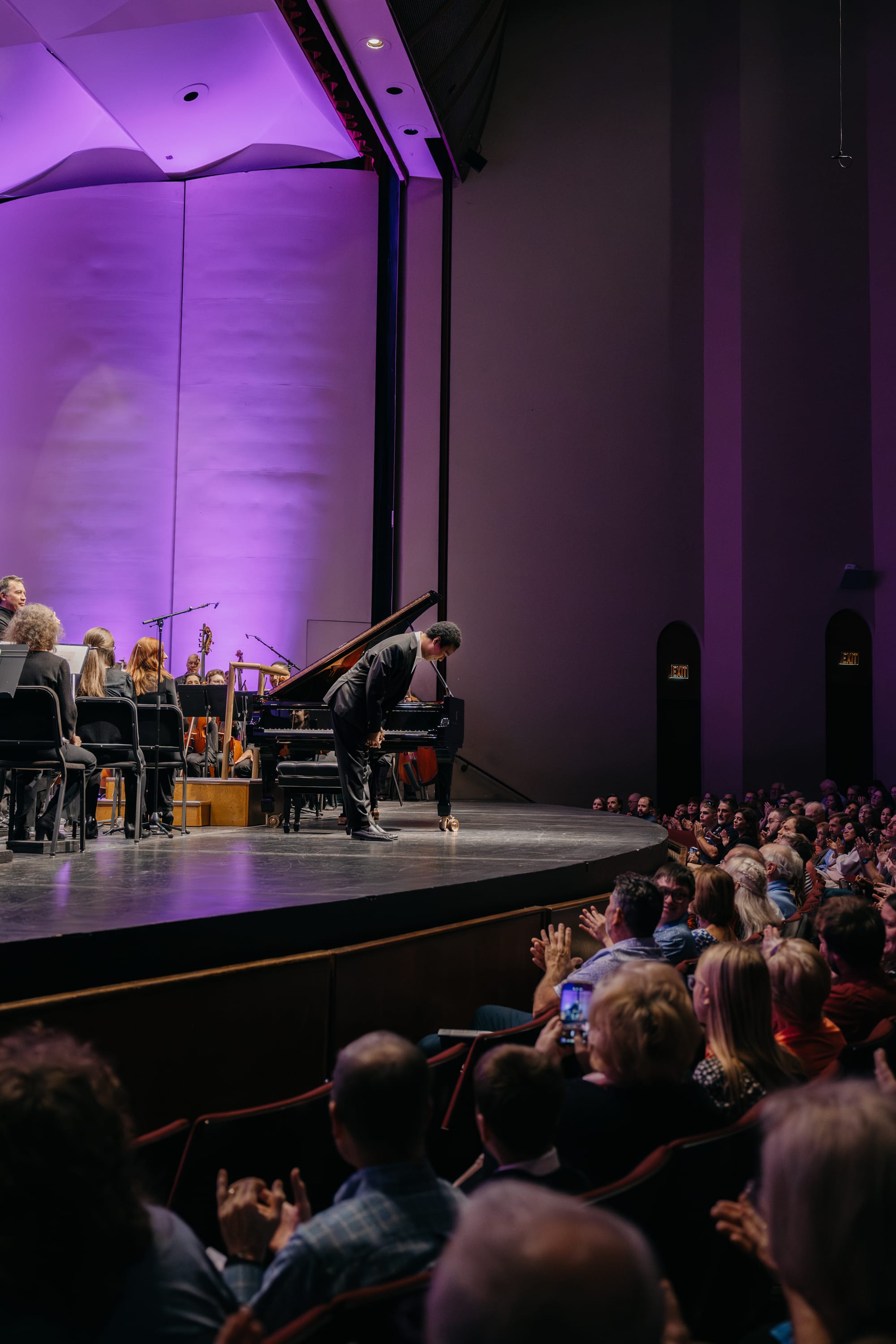
Stephenson did that — a good first impression — and he quickly showed more than mastery of a few well-judged chords. He brought a piquant, playful touch to the contrasting material, and delicacy where the music invited it. When Tchaikovsky demanded violence, as in the rapid, unison octaves that thunder through both hands, he delivered that too. Most impressive was the extraordinary range of his crescendos, the inexorable upward pressure of sound carrying him repeatedly to peaks just a bit higher than I'd anticipated.
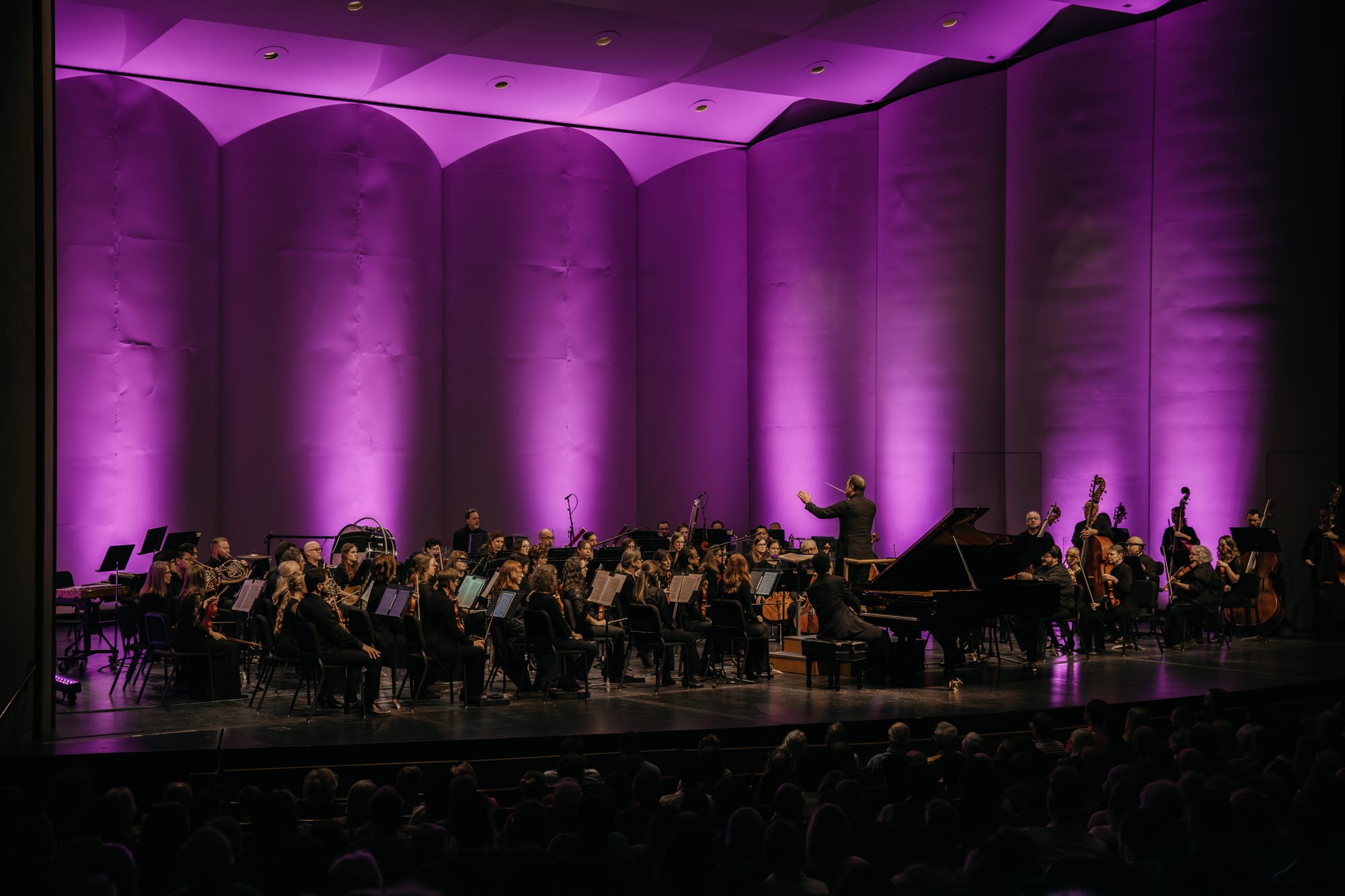
My oh my, it was exciting, and the audience responded with not just applause but a standing ovation after the first movement. (Music director Daniel Hege noted in a Facebook post on Sunday that it was a first in his experience.) The orchestra sounded inspired, too. In rapid third movement passages, I’ve rarely heard the WSO strings play with better unison and punch.
Ideas of power and strength give off very different vibes in Shostakovich’s Fifth Symphony, the second half of the program. Where Tchaikovsky’s concerto evokes the Romantic ideal of power as a means of individual self-expression, Shostakovich wrote his symphony under the shadow of power that worked to suppress such expression.
In 1936, an opera by Shostakovich had been denounced in Pravda, the Soviet Communist Party’s newspaper. The attack — widely understood to have been issued with Stalin’s blessing — came at a time when falling afoul of the authorities could mean imprisonment or death. Shostakovich withdrew his Fourth Symphony before its premiere. The Fifth, completed in 1937, was his public return to symphonic composition.
Shostakovich knew perfectly well the kind of music expected of Soviet composers: accessible, optimistic, and celebratory of the Soviet people and their supposed achievements, reflecting glory on the regime and its leader. The Fifth is not as simple as that. It reflects the suffering Shostakovich endured at the hands of the Stalin regime — as well as the complicated meanings he may have attached to that suffering.
That much was clear to at least some of the audience members at its premiere, the musicologist Francis Maes has written, and it may even have dawned on some Soviet officials. The overwhelming acclaim the work received initially aroused suspicion among those leaders, but authorities eventually found it expedient to count the symphony as a victory, declare Shostakovich properly corrected and reformed, and give the work their stamp of approval.
There’s much more to this story — whole books have been written about it. It’s all pretty fascinating, and unsettling. But anyone listening to the symphony on the hunt for “clues” to support one interpretation or another is doing themself a disservice. The Fifth is novelistic, polyphonic in the sense of enfolding multiple contradictory currents. Its ambiguities are better held uncomfortably in mind, not tidily resolved.
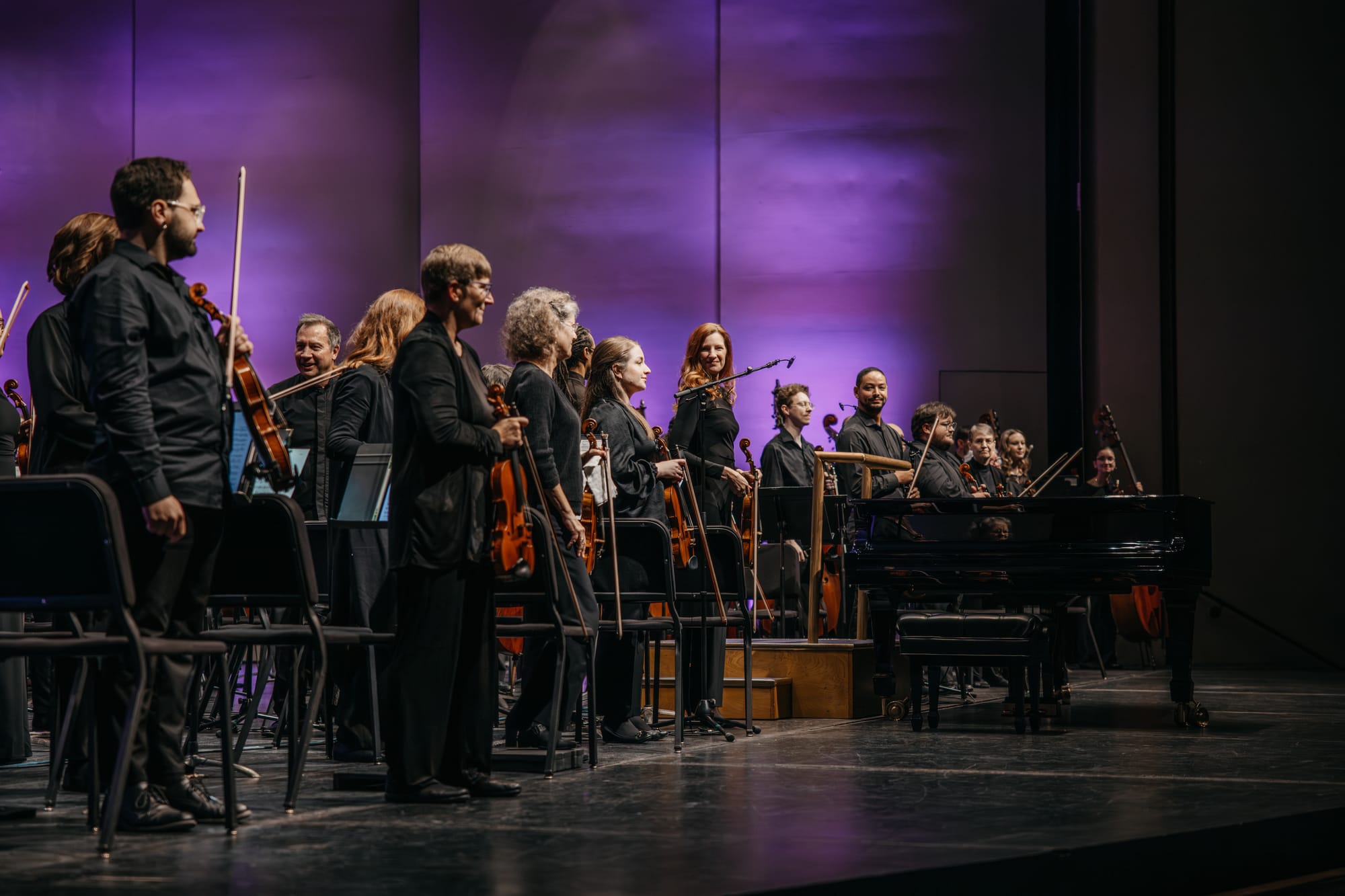
Hege and the orchestra gave a measured, balanced interpretation of the Fifth — a valuable counterbalance to the work itself, which, despite its conventional structure, often feels like it's skating on the edge of a breakdown.
In the first movement, thematic fragments passed between ever-changing subsets of the ensemble. The music seemed to turn over one thought after another without arriving at a settled state of mind. A mounting accelerando eventually brought on a pungent military march.
The second movement offered a sardonic sort of scherzo, with lumbering dance rhythms and chortling woodwinds that reminded me of the carnival atmosphere of Stravinsky’s “Petrushka.” In one particularly funny passage, solo violin and solo flute seemed to lose interest in their own tunes, stuttering helplessly on a repeated note before disposing of the whole business with a banal cadence. It struck me as comic relief without the relief: a frivolity that infuriates.
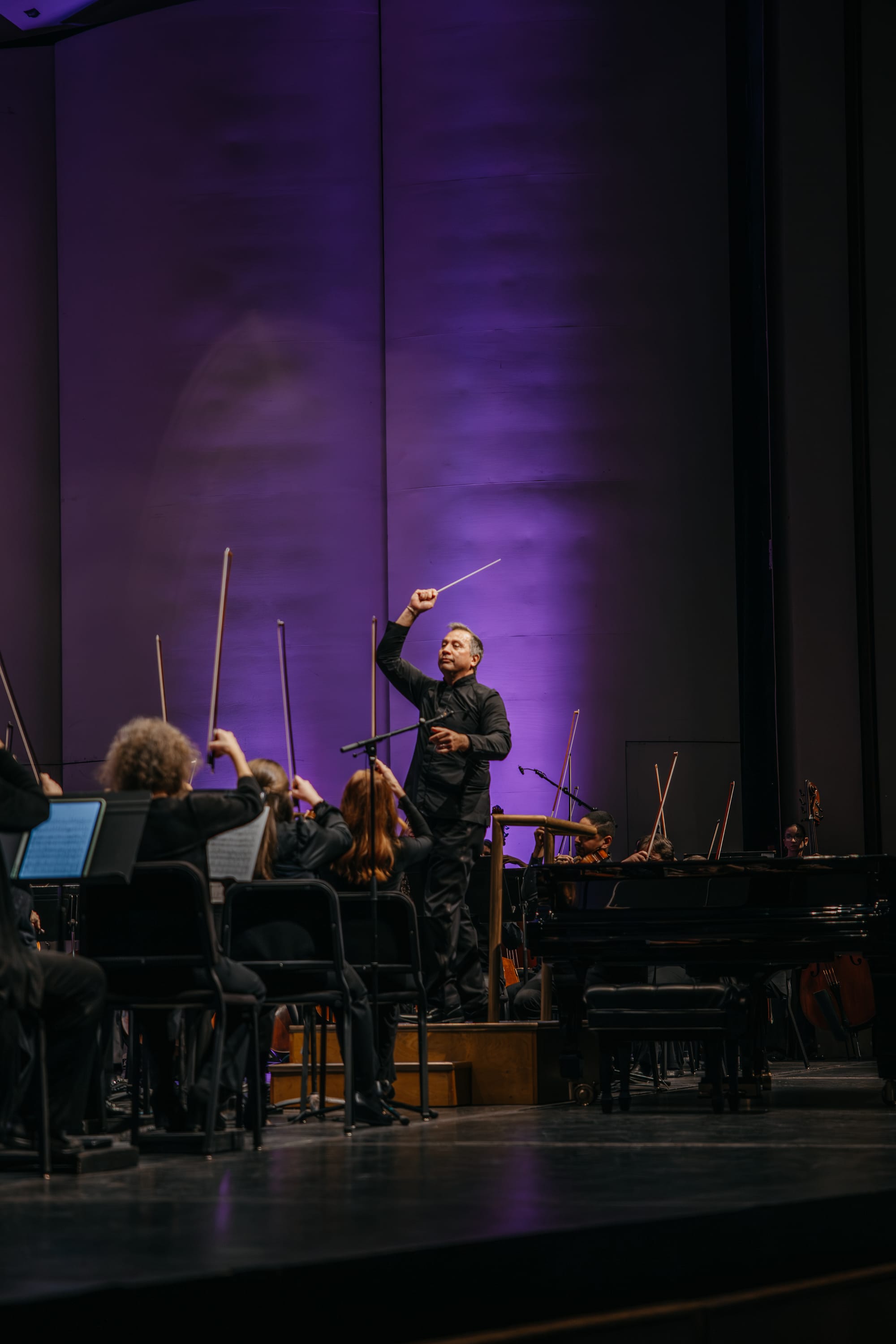
The brass section stayed silent for the third movement, marked Largo, leaving the remaining instruments to play in chamber-like combinations. Harmonies slid sickeningly from one chord into the next. Later, Hege sustained a long buildup of tension, conducting with heavy, emphatic gestures and occasionally audible vocalizations. He kept the movement’s disparate episodes within a single expressive frame.
That discipline carried through the finale, even as the orchestra reached tremendous levels of volume and intensity. At one point, the strings took up a great, sweeping melody, punctuated by curt interjections from the trumpets. Hege allowed the tempo to broaden, but only a little. Had I been conducting, I think I would have indulged myself and slowed down much more. Hege knew better. The music soon returned to a state of near-panic, the strings sawing away furiously, and the tempo needed to pick up again. Too much broadening earlier would have made nonsense of the transition and sacrificed the movement's momentum. Like a skilled chess player, Hege was thinking several moves ahead, making decisions in the present according to what the music would require a few moments later.
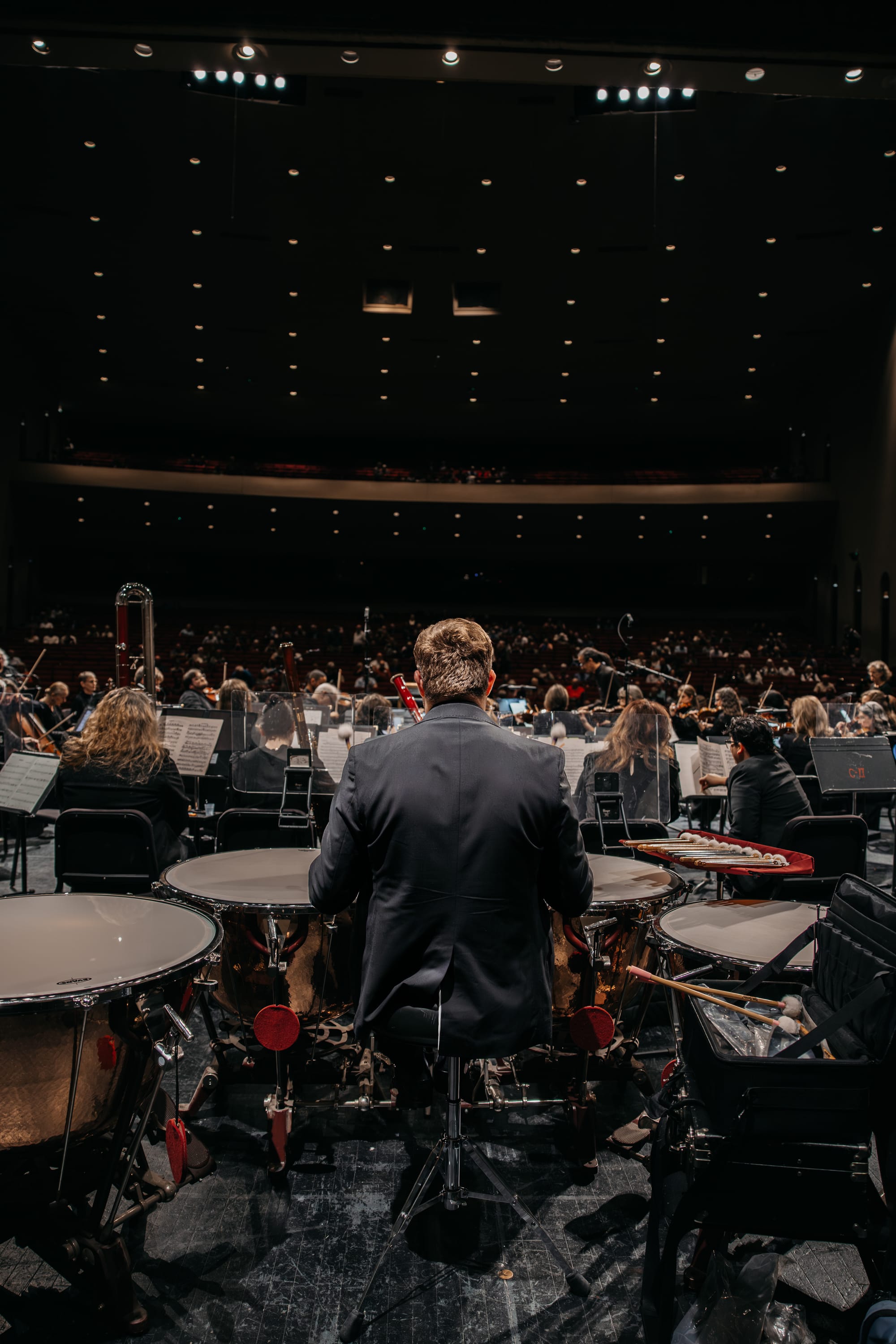
The same restraint also governed the symphony’s notorious closing bars, with their seemingly endless repetition of the note A. I’ve heard conductors take these measures at a furious clip, turning them into a battering ram, or slow them down as though the orchestra were staggering beneath their weight. Hege neither pushed the repetition forward nor resisted it. One A followed another — 252 consecutive eighth notes — and then with a last boom from the timpani, it was over.
Sam Jack is a poet, a classical tenor, and the adult services librarian at Newton Public Library. He performs with several local groups, including Wichita Chamber Chorale, Wichita Grand Opera, and Opera Kansas. He received a Master of Fine Arts in creative writing from the University of Montana.
❋ Derby man has the kind of voice that turns heads — and chairs
❋ Socializing while sober: how some Wichitans are cultivating alcohol-free communities
❋ As a small creative business closes, the owner mourns
❋ Painting through it: Autumn Noire on 20 years of making art
❋ How a guy from Wichita resurrected 'Dawn of the Dead'
❋ Bygone Friends University museum housed curious collections
Support Kansas arts writing
The SHOUT is a Wichita-based independent newsroom focused on artists living and working in Kansas. We're partly supported by the generosity of our readers, and every dollar we receive goes directly into the pocket of a contributing writer, editor, or photographer. Click here to support our work with a tax-deductible donation.