Mark Arts' National Watercolor Exhibition illustrates the possibilities of water media
Some 60 artists from across the U.S. artists flaunt technical ability in the annual juried exhibition.
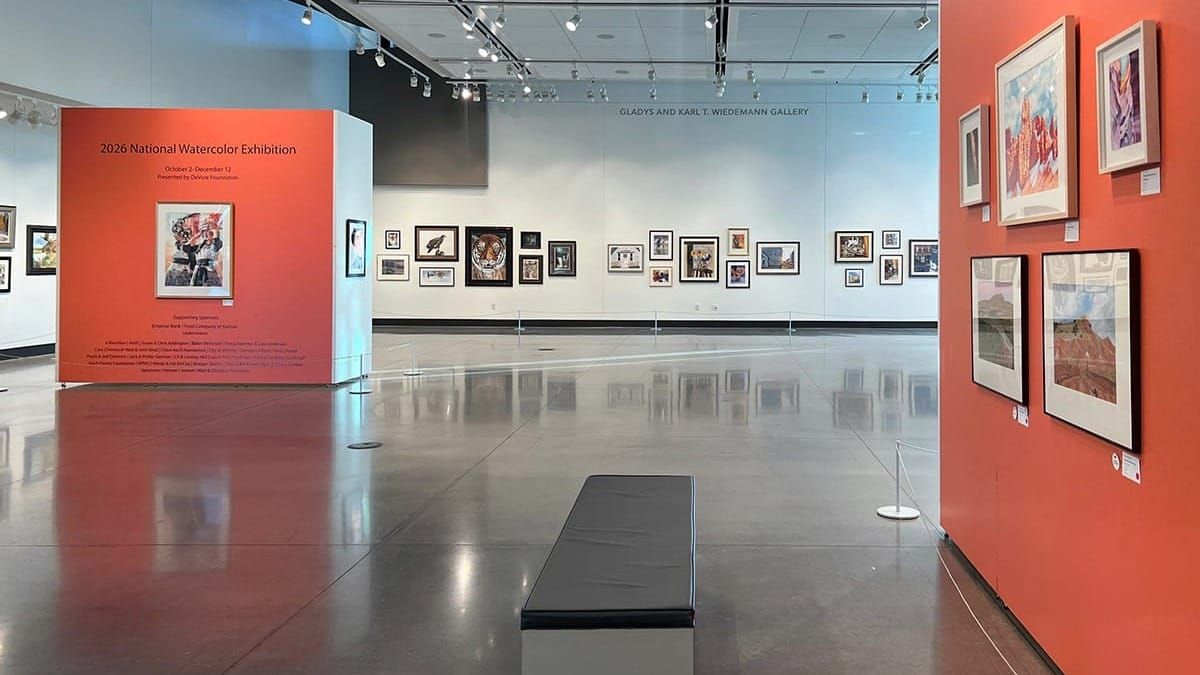
I tried to time my visit to the National Watercolor Exhibition at Mark Arts to be able to spend some quiet time considering the large number of paintings on display. This can be a challenge in a high-traffic space like Mark Arts, which holds studio art classes, hosts field trips and community events, and uses its galleries as event spaces. I did manage to spend a contemplative 45 minutes with the many pieces before wedding entertainment staff began to set up for an after-hours reception.
I was, of course, trying to put myself in the same focused headspace required to produce so many of the careful compositions in this annual exhibition. Mark Arts has been hosting this juried art show since 1968. The competitive opportunity attracts 300 to 400 entries on average, with a $25-$30 entry fee per artist. Each year, Mark Arts presents three large-scale juried exhibitions of this type, which adds up to big business.
The 91 selected pieces are displayed in the spacious Gladys and Karl T. Wiedemann Gallery in a tasteful, salon-style hanging. Considering the huge task of organizing this exhibition, its history, and the long list of corporate and private donors and patrons that make it possible, I wanted to focus my attention on the artistic efforts at the heart of this competition.
There are 59 artists from 21 states represented in this year’s show. The subject matter mostly fits into traditional genres: many landscapes, florals, animal portraits, and figures, with a smaller number of abstracts, architectural scenes, or interiors. Only one piece refers directly to current events (which I will mention later). The star of this exhibition is the use of the medium, or rather the celebration of the wide-ranging vocabulary and application that is possible in water media.
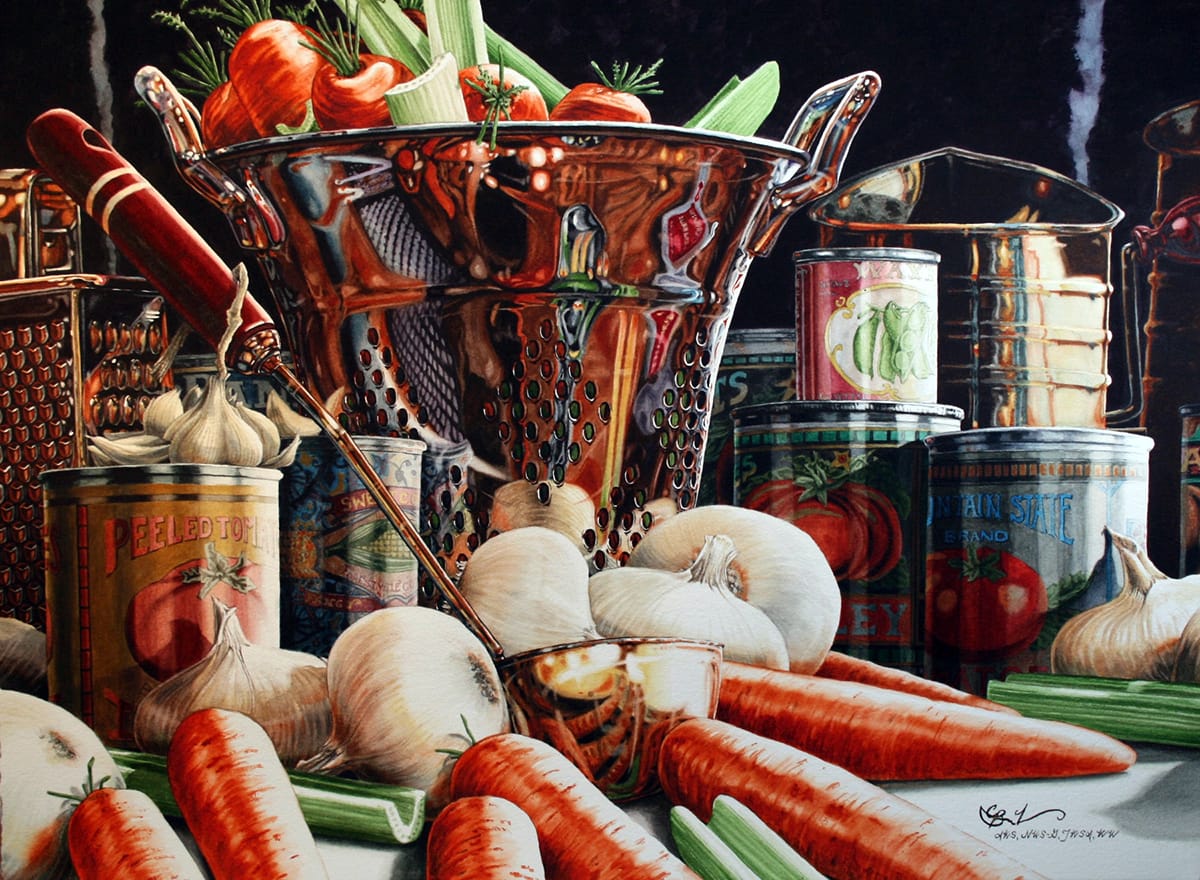
The spectrum includes photo realistic virtuosity, as seen in “Stay for Supper” by Cindy Brabec-King (of Grand Junction, Colorado). In this kitchen still life, Brabec-King uses a close-cropped, low perspective to draw the viewer into the diverse surfaces, light, and shadows of the busy composition. In the foreground, carrots, celery, and onions rest. Behind them we see a strainer filled with more of these veggies as well as various canned vegetables and kitchen implements. Here, the artist makes a strong effort to minimize any gestural mark. This is a painting laser focused on rendering almost impossible detail (the reflection of a steel cheese grater on a chrome colander, for instance).
Watercolor is famously unforgiving as a medium. Painters rely on carefully layered glazes to avoid awakening unstable pigments and binders in previous layers. Watercolor is also often translucent, meaning that artists like Brabec-King cannot easily cover up missteps when depicting such complicated imagery.
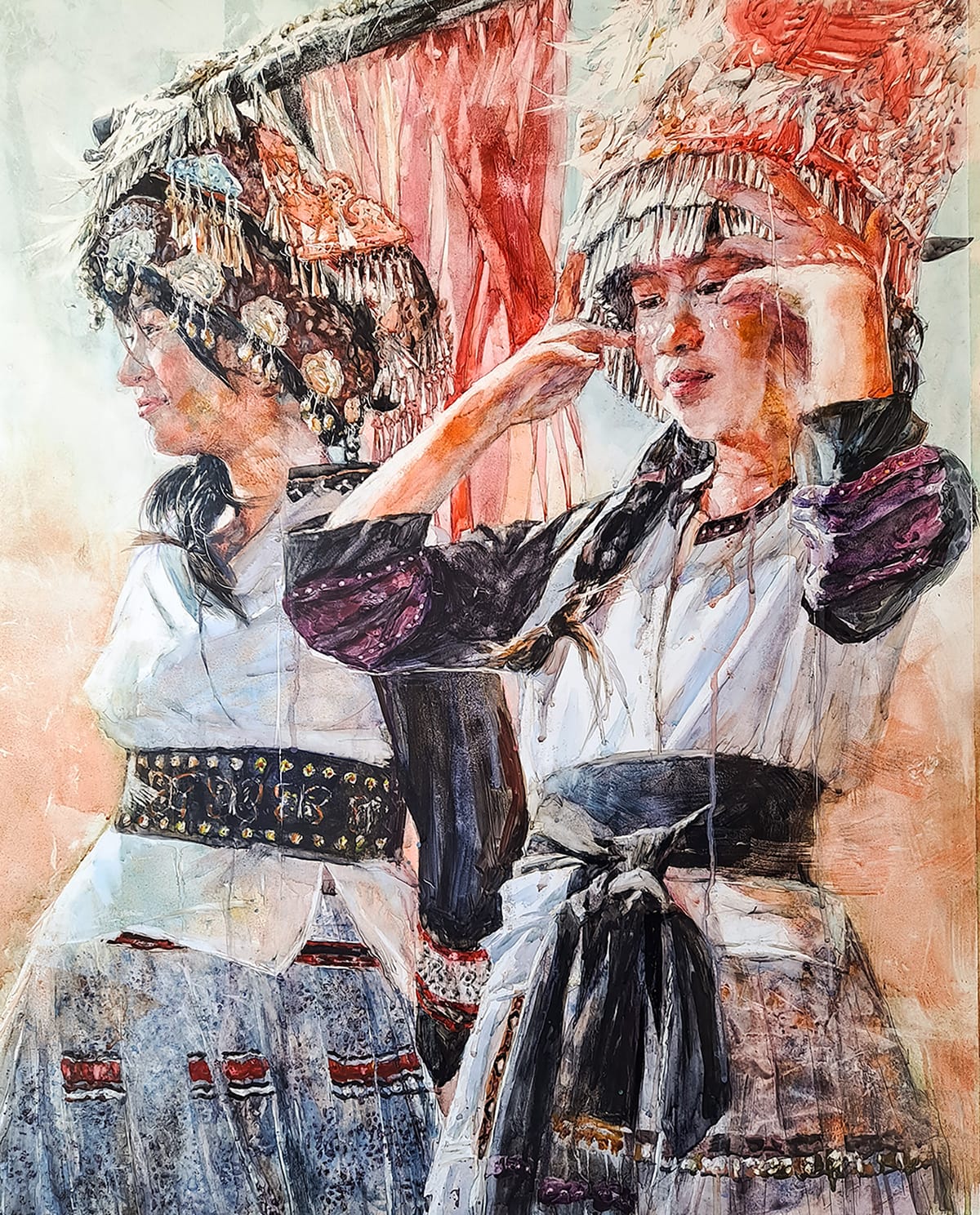
Other painters like Dongfeng Li (of Woodland, California) draw attention to the more expressive and idiosyncratic possibilities of the medium. Li’s “Daughter of the Plateau” features two female figures in dresses in shades of black and white who are wearing elaborate headdresses with silver jingles and red and black embellishments. Li brings the work to a compelling resolution using pencil lines, drips, and uneven textures to build the forms. The active surface contributes a strong vitality to the figures in motion.
Water media is inherently suited for landscape because it allows for delicate transitions in atmosphere, temperature, and surface texture. One third of the works in this exhibition explore the landscape in various creative modes. Wichita painter Hugh Greer has been depicting the seasons, skies, and land of the rural Midwest for decades. His “Back Road to Walnut Creek” is a great example of his mastery.
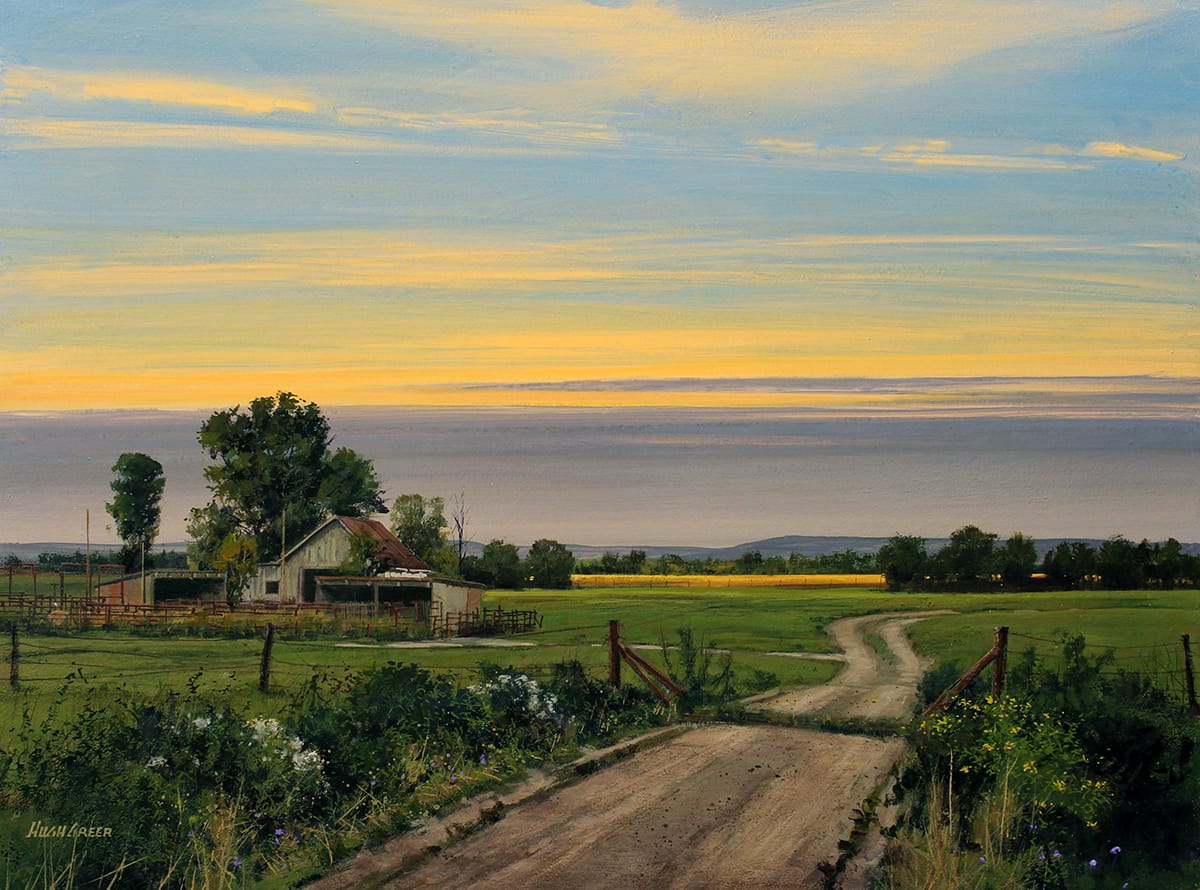
In this work, the artist depicts a dirt road lined with flowering shrubs that bends and disappears into the distance, with green fields on either side, a barn nearby, and in the middle ground stands of trees and hills butt up against a huge sky at sunset. Greer, who has three works featured in this competition, is especially skilled at capturing the fleeting light of particular seasons. The colors of his skies echo throughout the neutral shadows and highlights of the scene, providing a convincing depiction of the moment.
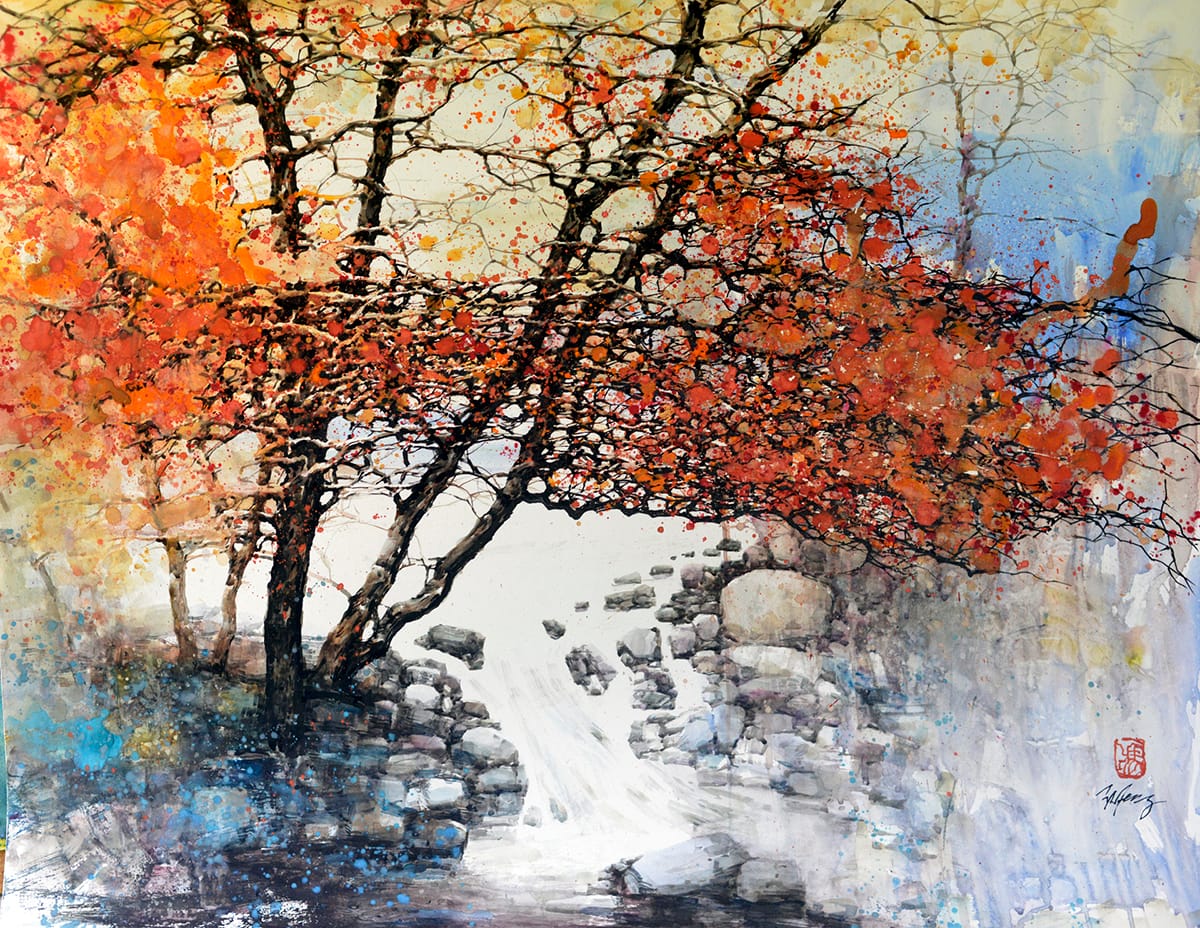
By contrast, Zheng Feng (of Radford, Virginia) offers a more illustrative interpretation of the landscape. In “Waterfall in the Fall,” Feng portrays a half-bare tree with orange foliage next to a waterfall with blocky rocks and pebbles peeking out of the water below and a glimpse of blue sky in the background. Here, forms sometimes read as crisp edges of trees and rocks and sometimes dissolve into one another in drips and strokes. As Feng lets the medium declare its materiality, the painting might be read as a memory or a meditation on a place. The fluid nature of watercolor is certainly a ready metaphor for our fluid understanding of our environment.
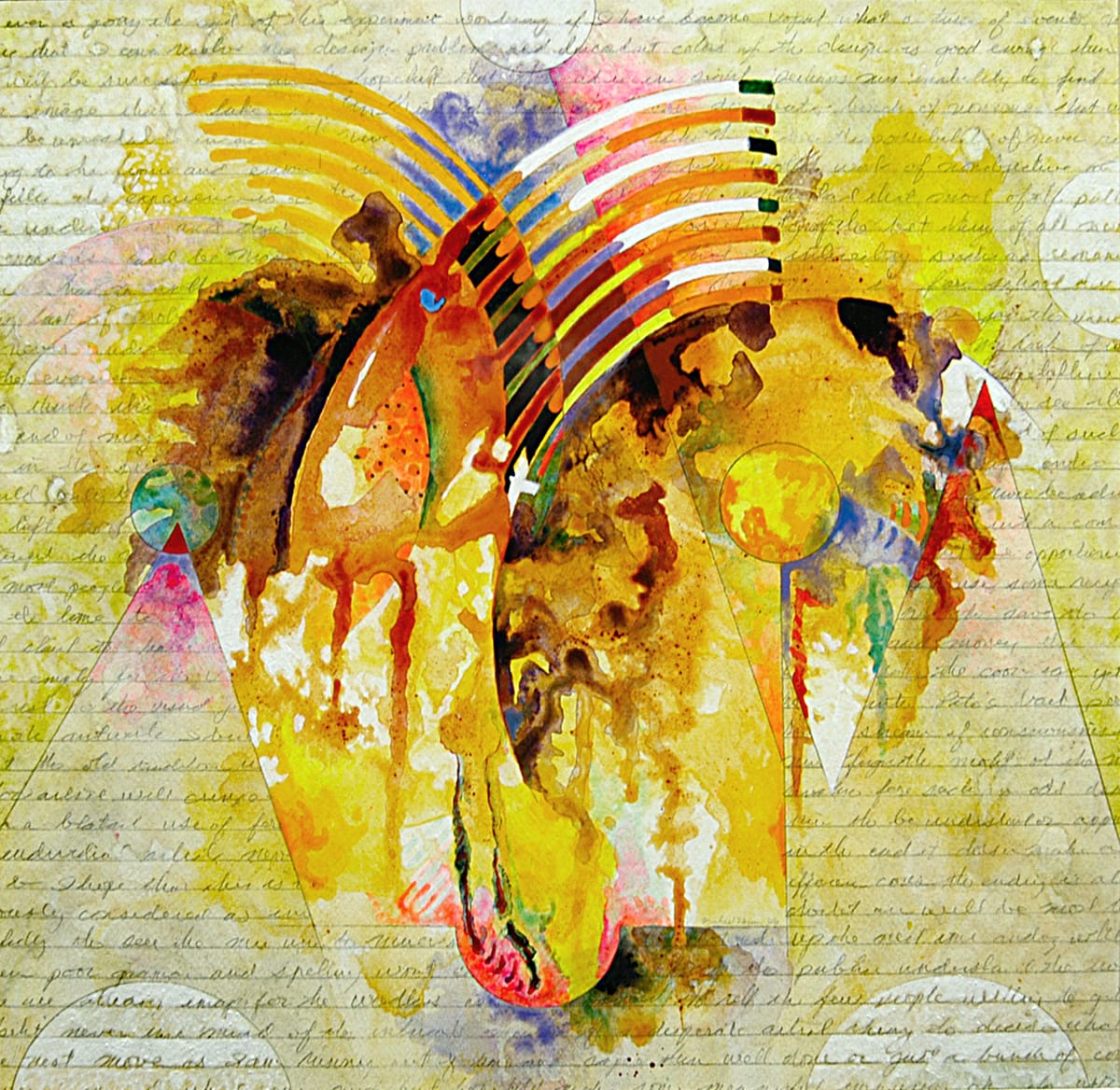
Given the flexible vocabulary available with watercolor, it is a bit surprising that this national exhibition features so few abstract paintings. One such piece that caught my eye is “The Kronos Affect” by Michael Jilg (of Hays, Kansas). The title of this layered work might refer to legal theories about innovation and competition in the marketplace (unfortunately, there isn't room for descriptive wall text in this exhibition). Jilg has distilled these heady ideas into a wonderful interplay of washes, text, accentuated strokes, and playful geometry. In the center of a sheet of lined paper filled with handwritten cursive text in graphite, Jilg paints a composition of arches and drips, primarily in an orange-yellow hue, that layer over and obstruct the words underneath. The dynamic arrangement kept pulling my attention back as I scanned the wall, inviting more investigation.
A busy juried art competition has a way of inviting viewers into the adjudicating process. You might agree with the jurors’ selections, puzzle over some choices, or compile your own list of winners. Below is my own list of standouts.
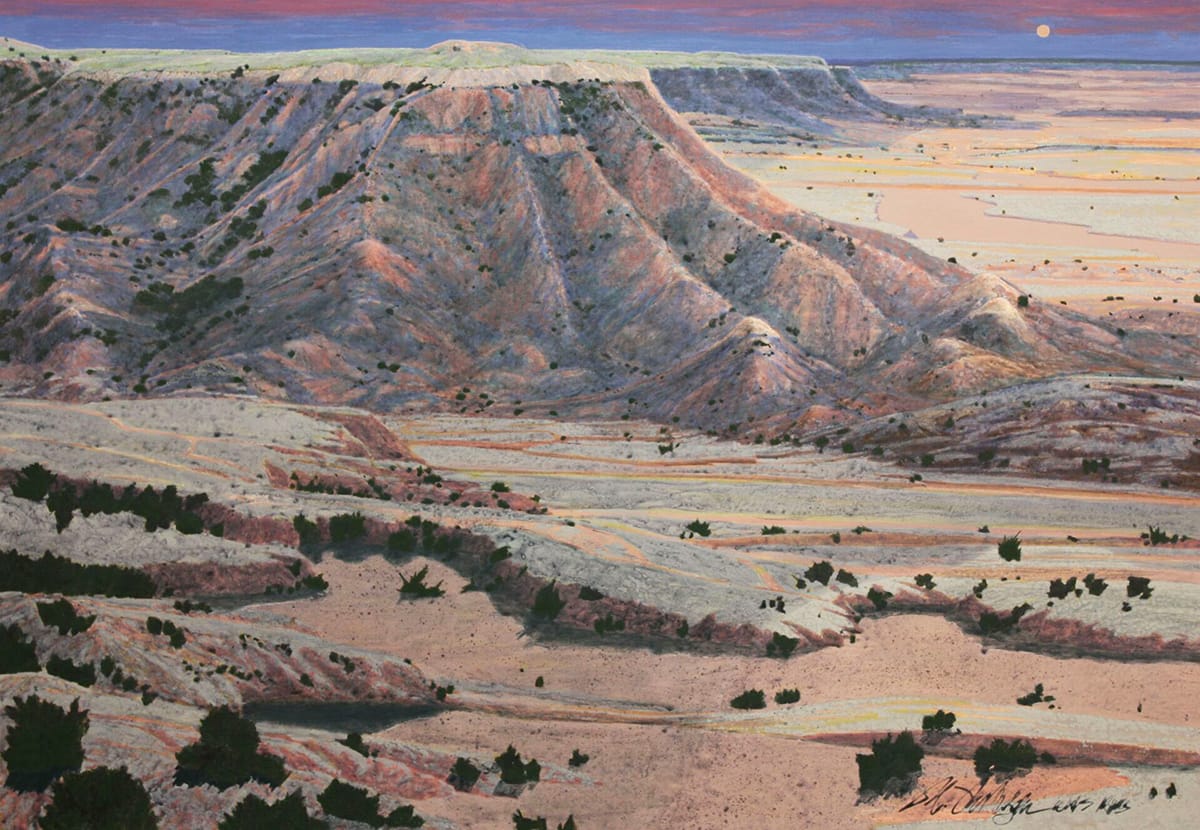
Michael Nicholson (of Edmond, Oklahoma) has three landscape paintings on display. His elevated views of arid hill country — as in “Coyote Club,” with its mesa-topped mountains towering over rocky plains dotted with shrubs and trees — are understated but sublime in their depiction of light and terrain. I was glad to see his wall tag sporting one of the many red dots around the room (which signify a sale).
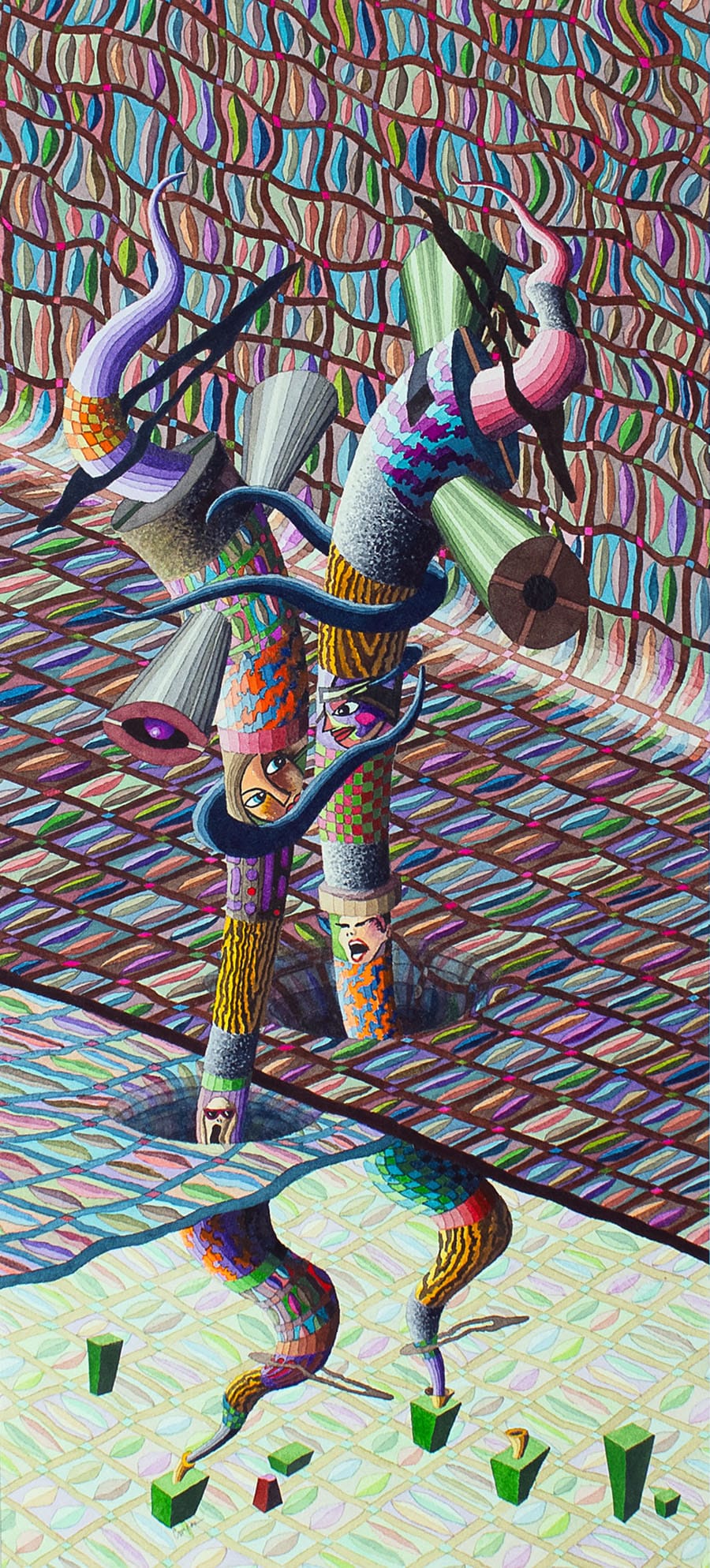
Wayne Conyers (of McPhersen, Kanas) is a unique voice in this exhibition and in the Kansas art community. His style is both meticulous and freewheeling in his exploration of color forms and surreal structures. His “Unexpected Consequences of Drastic Climate Change” manages to be both whimsical and full of contemplative dread. Some of the former might come from the hours and hours involved in developing such complicated objects. In this work, two tree-like forms made up of patterned segments, including some with faces, sprout up from a carpet or fabric ground covered in a colorful, repeated pattern that climbs up the wall behind. Bonus points to Conyers for using a nonconventional vertical format.
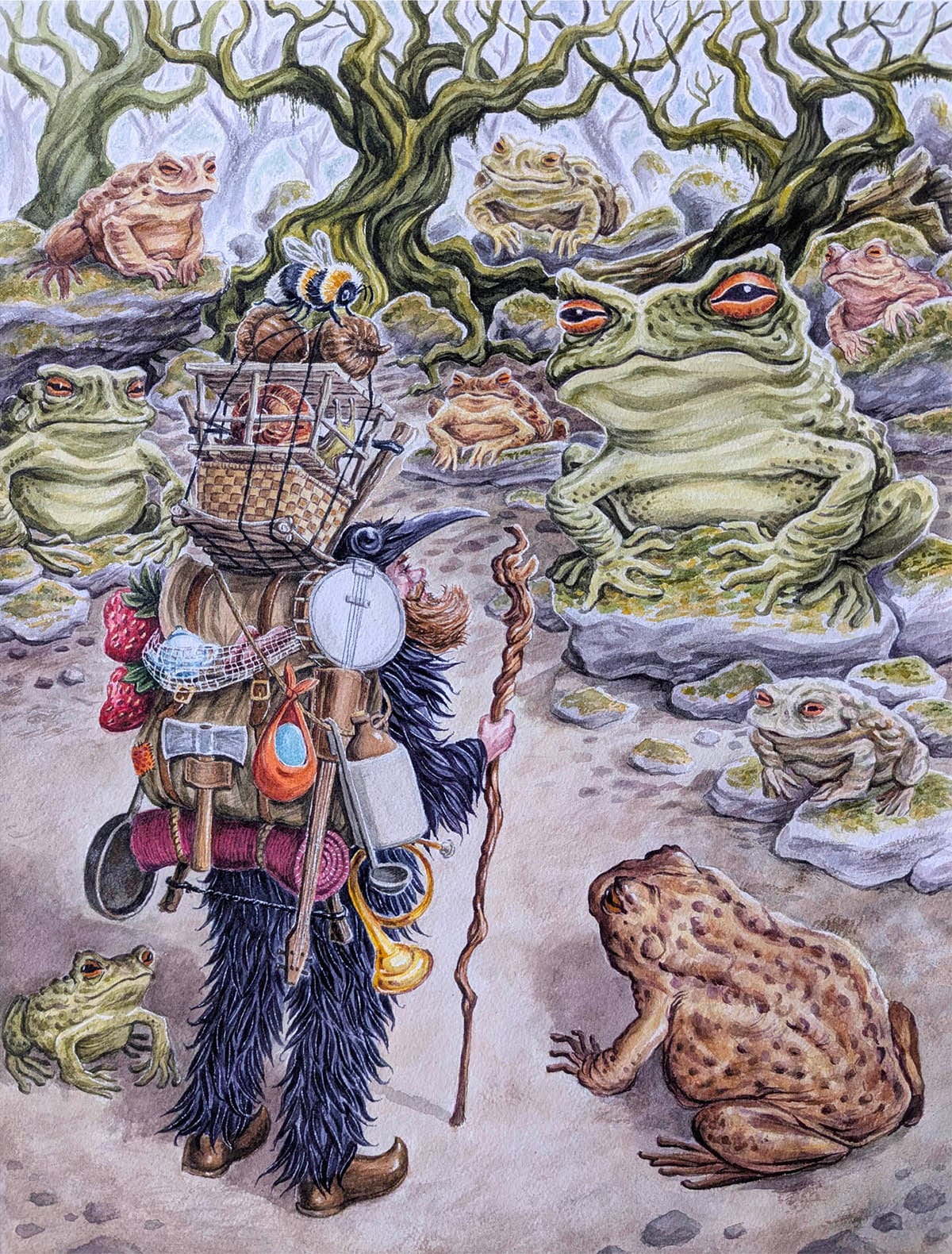
Matthew Lord (of Lawrence, Kansas) takes my prize for playful fantasy. His painting “Council of Toads” is one of the only works in the show that draws on the tradition of watercolor in narrative illustration. This small yet delightful painting places you right into the middle of a charming storybook, no context necessary. The scene Lord depicts focuses on a bearded man in a black, hairy crow suit with a walking stick and a backpack filled with tools, instruments, food, and creatures, who encounters a group of confrontational, oversized toads in a forest clearing. Who is this little guy? Where is he going? Why is he carrying that? What is he wearing? What are they talking about? Lord gives you plenty of visual material here to flesh out an entire story (maybe an entire world).
The three cityscapes in the exhibition by Marilynne Bradley (of Webster Groves, Missouri) strike a beautiful balance of opposing forces. They feel as though they reference specific places, and yet they also read as composites of various times and locations. Bradley builds substantial architectural forms with a careful arrangement of values, temperatures, saturations, and plane changes. And yet the thin transparent layers she builds with appear as hard-edge panes of stained glass. “Under the L,” with its one-point perspective composition of the tracks and girders of a bridge in shades of blue, red, and black, demonstrates her wonderful pairing of rhythmic movement and solid integrity.
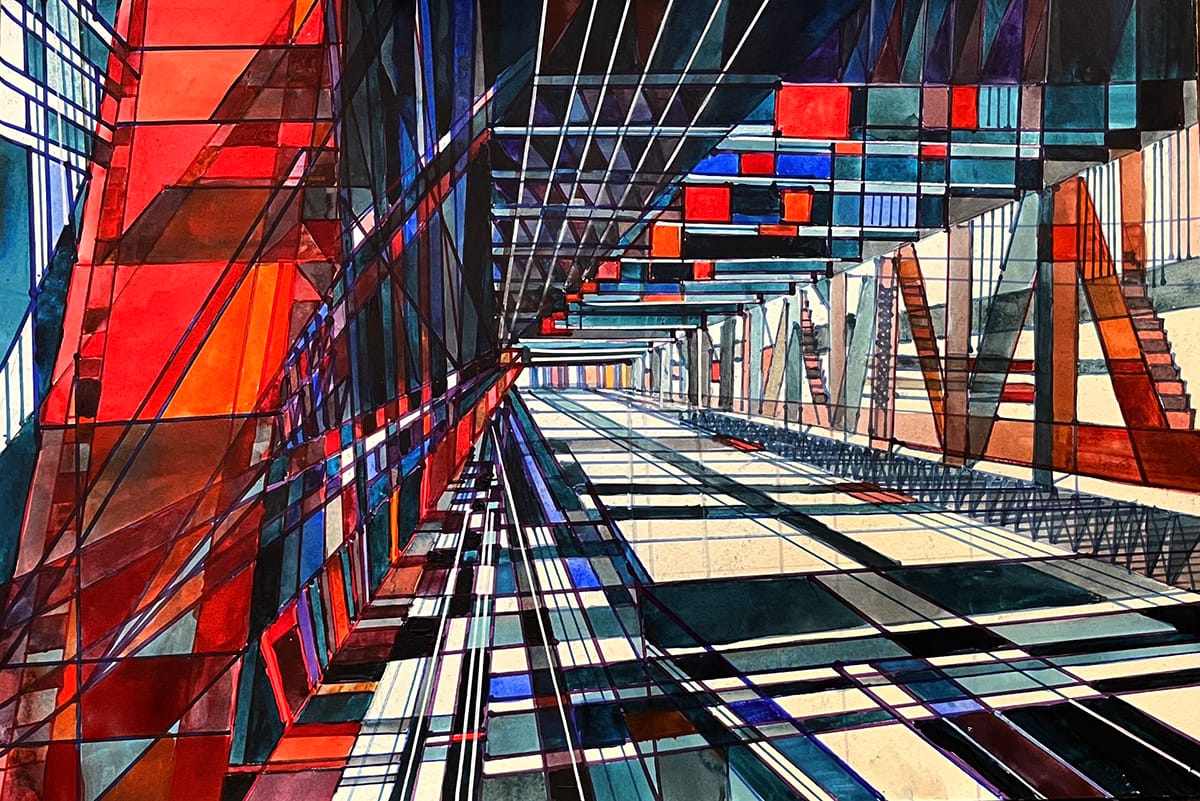
Marilynne Bradley, “Under the L,” watercolor on printmaking paper, 15 by 22 inches (Mark Arts/Courtesy)
While reading up on Richard Russell Sneary, the juror for this year’s National Watercolor Exhibition, I noticed his many professional affiliations. He is a signature member of the American Watercolor Society, the National Watercolor Society, and the Missouri and Kansas Watercolor Societies (as well as other non-media-specific groups). I also noticed that some of the artists in this exhibition note their own affiliations with these or similar groups by using abbreviations such as AWS or KWS when signing their paintings.
This detail made me wonder about building art community in the context of wide-reaching juried competitions. On the one hand, there is an obvious motivation for hosting such competitions (an increase in revenue and foot traffic, for example). The technical focus on watercolor painting makes for an uncomplicated yet specific theme. The number of artists involved might foster comradery, networking, and mutual admiration, especially for those who can travel to the exhibition venue. Seeing such diverse applications of a beloved medium might spark new ideas and approaches.
On the other hand, it can be difficult for an individual artist’s work to resonate with viewers in such a crowded field. And, of course, competition in general may be contrary to ideas of building community and uplifting individual artistic voices. With these impressions in mind, I suggest watercolor enthusiasts use the occasion of this exhibition to find your new favorite painter(s) and then dig deeper into their work.
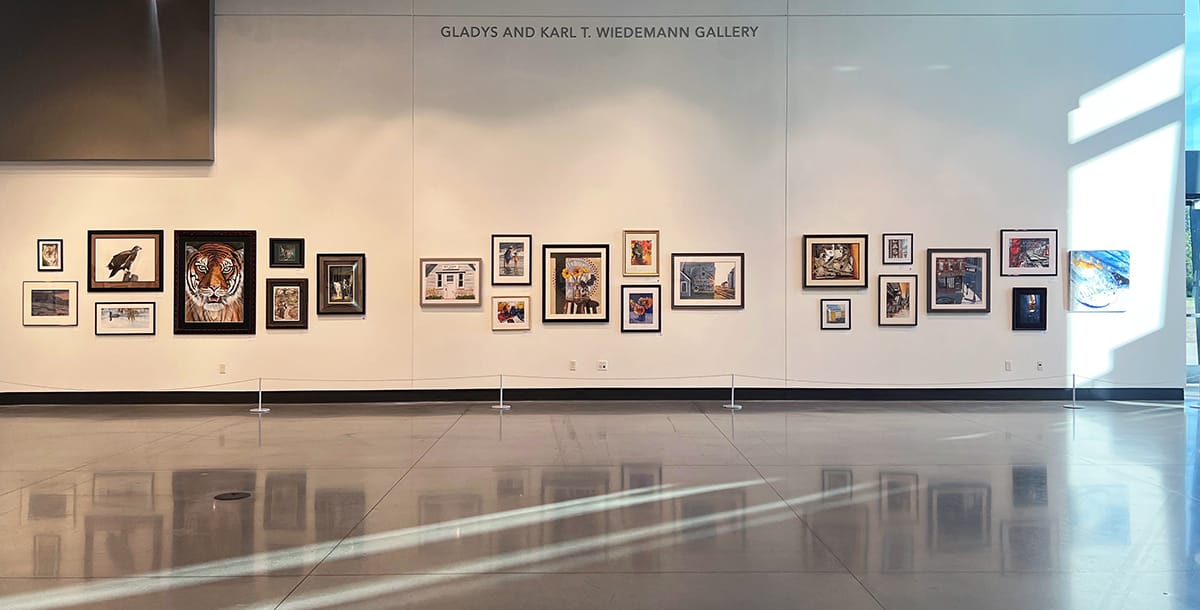
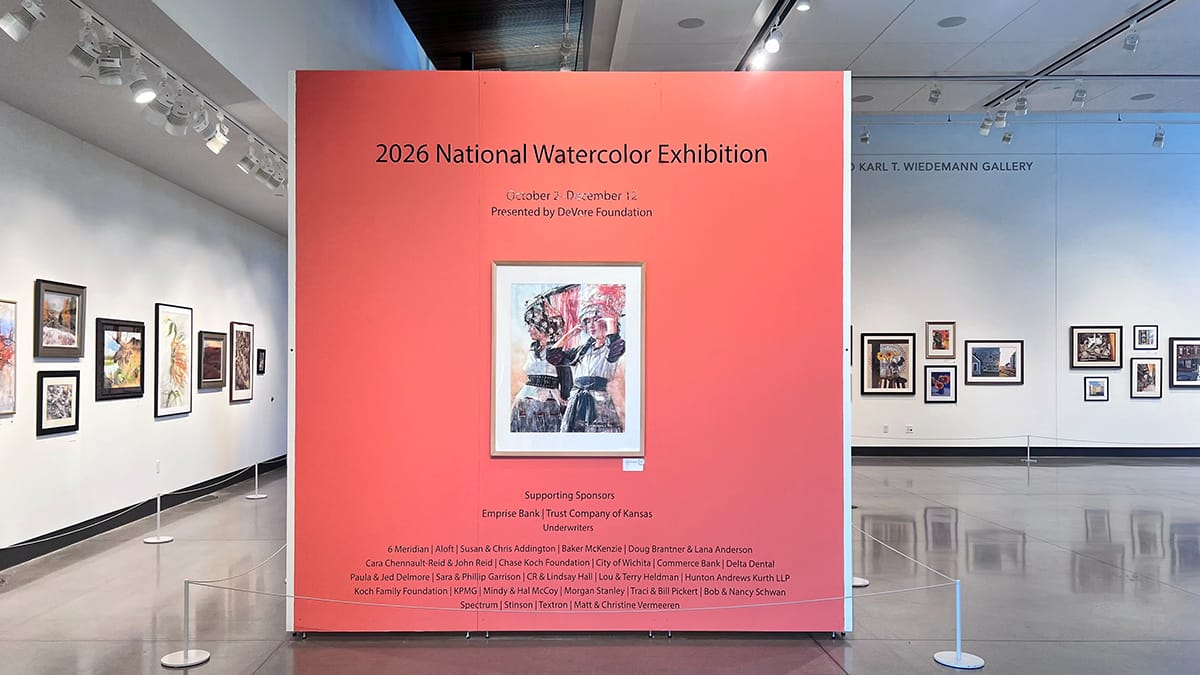
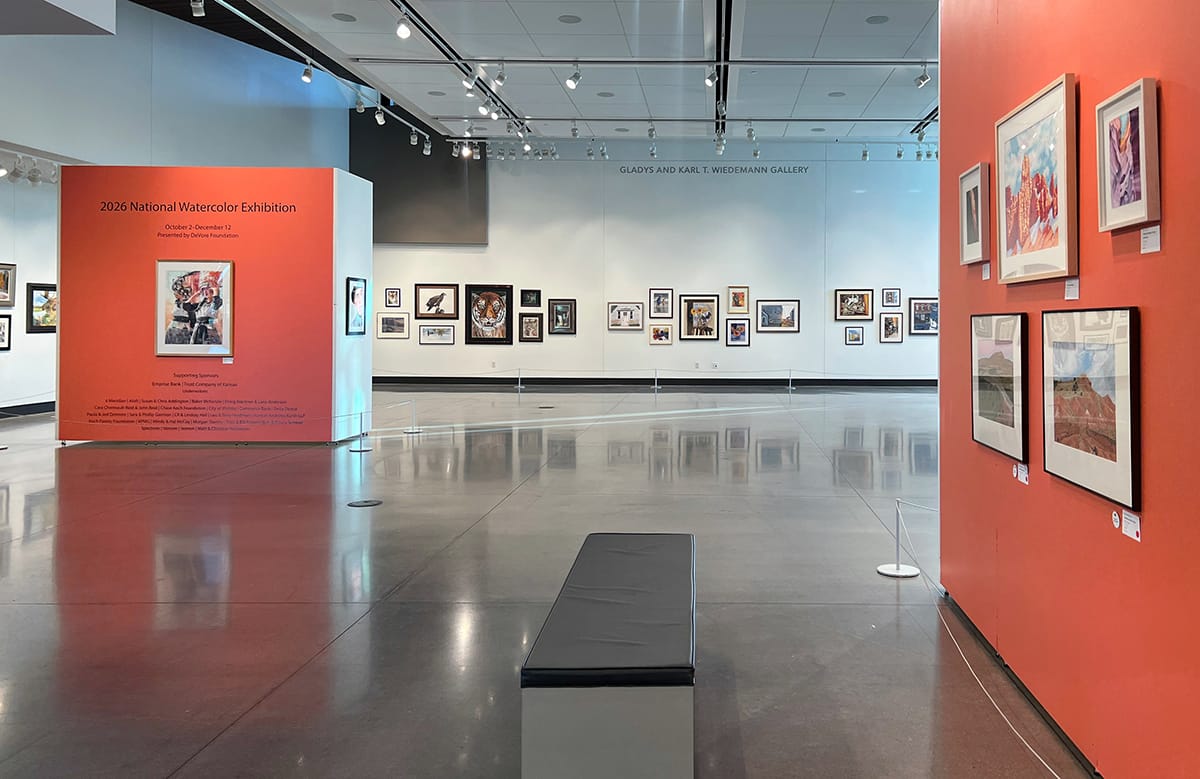
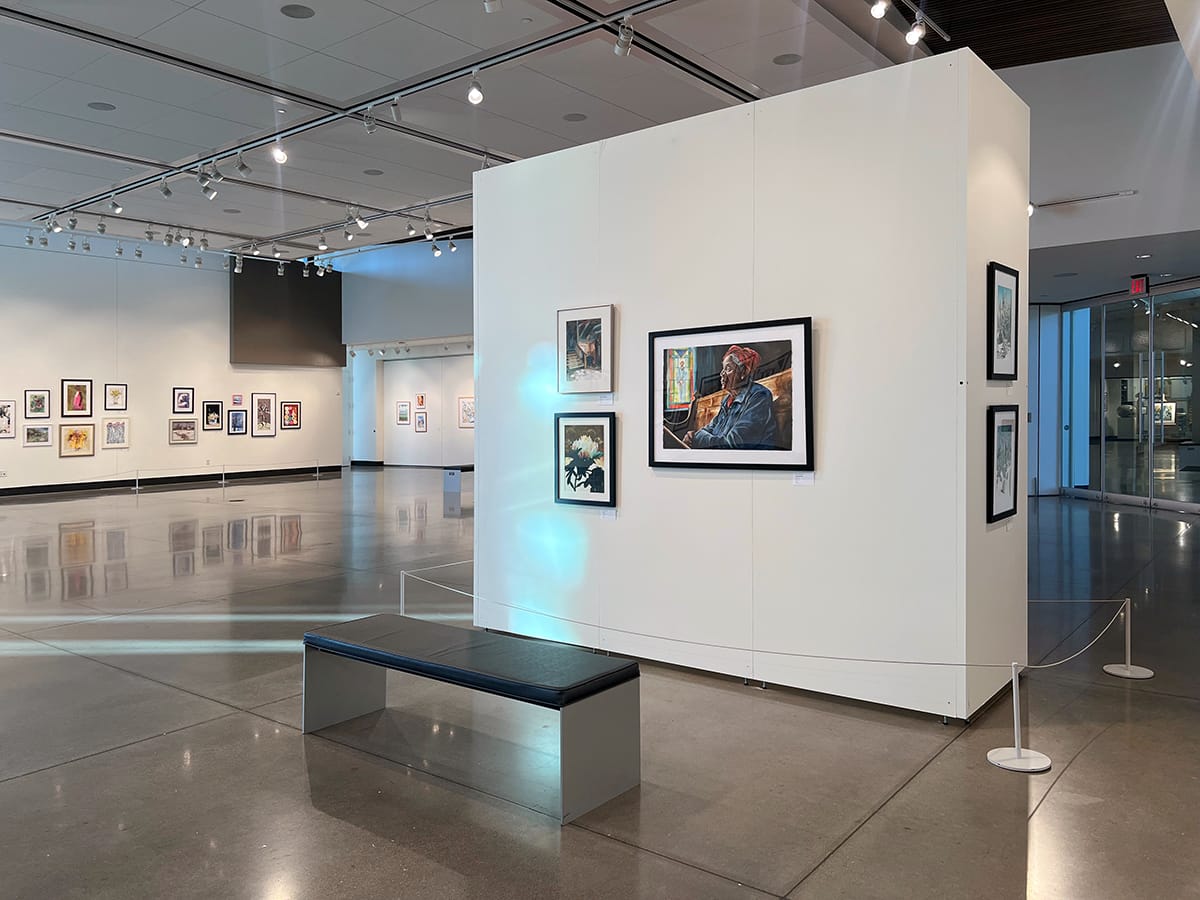
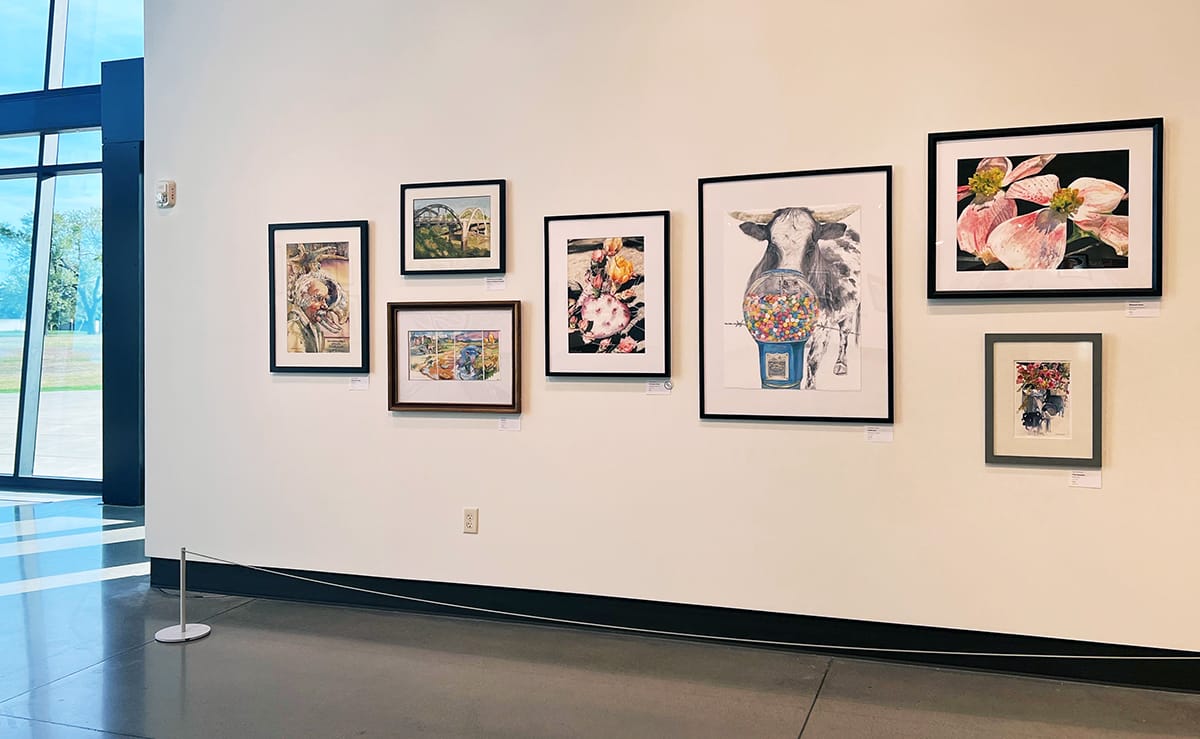
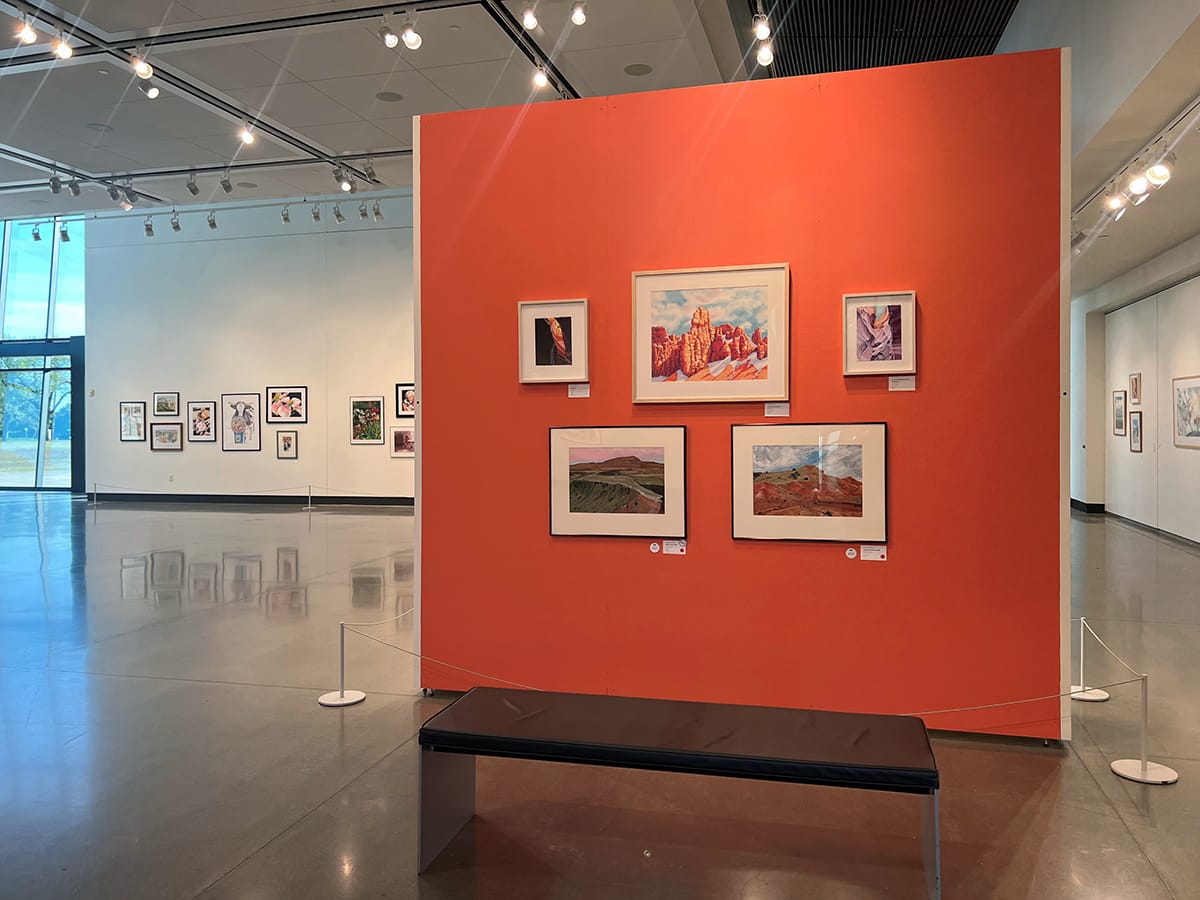
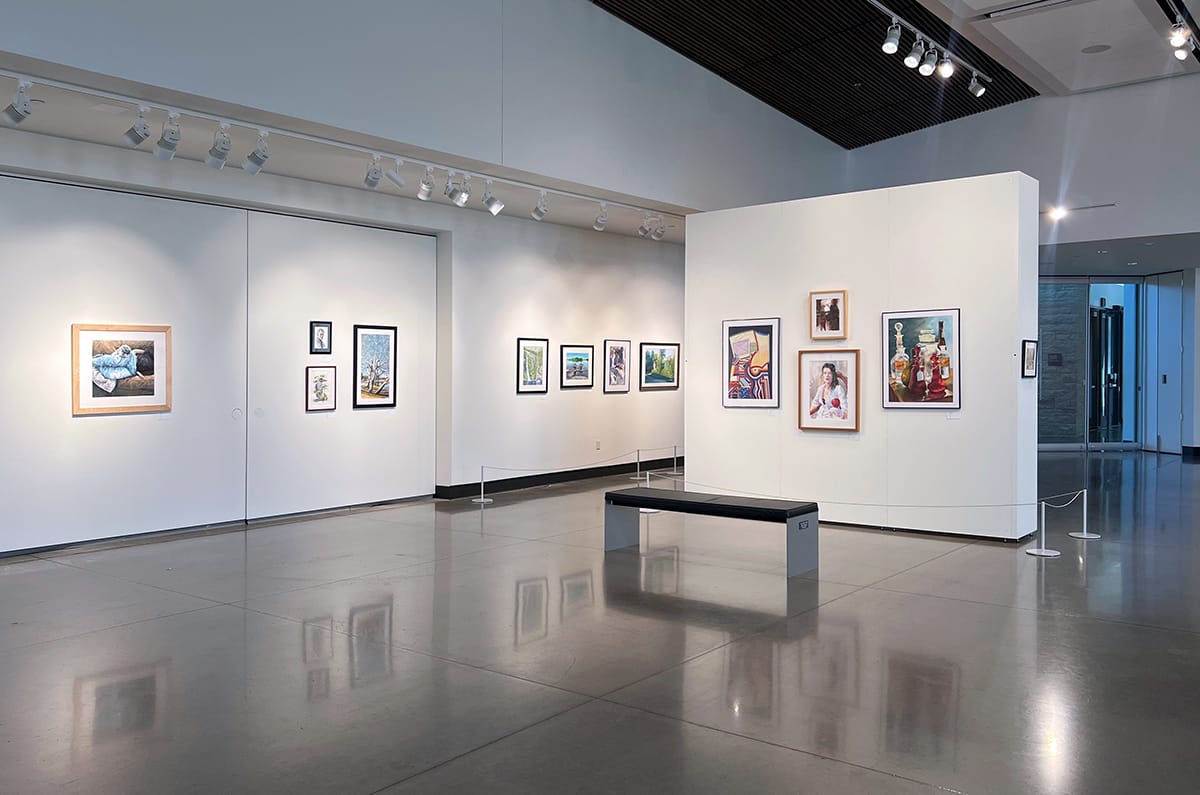
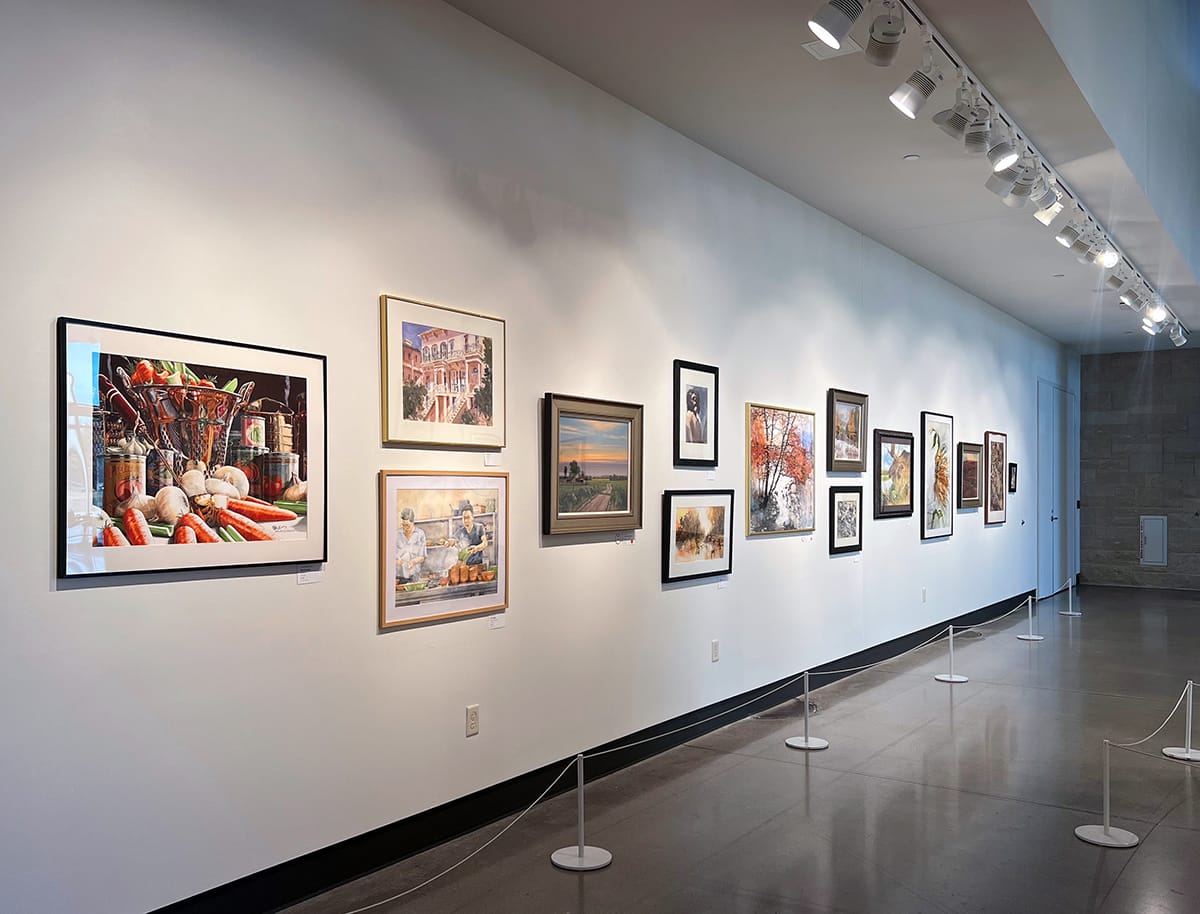
Installation views of the National Watercolor Exhibition at Mark Arts in Wichita (Mark Arts/Courtesy)
The Details
National Watercolor Exhibition
Oct. 2-Dec. 12, 2026 at Mark Arts, 1307 N. Rock Road in Wichita
Mark Arts is open 10 a.m.-5 p.m. Tuesday through Saturday.
Admission is free, and the facility is accessible to people with physical disabilities.
National Watercolor Exhibition juror Richard Sneary will speak at Mark Arts at 5:30 p.m. on November 12. Sneary is also offering a technical workshop on November 12-14 ($400). Find more information on the Mark Arts website.
Kevin Kelly is an artist and educator. He lives and paints in Wichita and teaches art at Butler Community College in El Dorado, Kansas.
❋ Derby man has the kind of voice that turns heads — and chairs
❋ Socializing while sober: how some Wichitans are cultivating alcohol-free communities
❋ As a small creative business closes, the owner mourns
❋ Painting through it: Autumn Noire on 20 years of making art
❋ How a guy from Wichita resurrected 'Dawn of the Dead'
❋ Bygone Friends University museum housed curious collections
Support Kansas arts writing
The SHOUT is a Wichita-based independent newsroom focused on artists living and working in Kansas. We're partly supported by the generosity of our readers, and every dollar we receive goes directly into the pocket of a contributing writer, editor, or photographer. Click here to support our work with a tax-deductible donation.