Wichita Community Theatre unearths creepy classic ‘The Haunting of Hill House’
Who’s in charge: Scientists, ghosts, mental illness — or the estate itself?
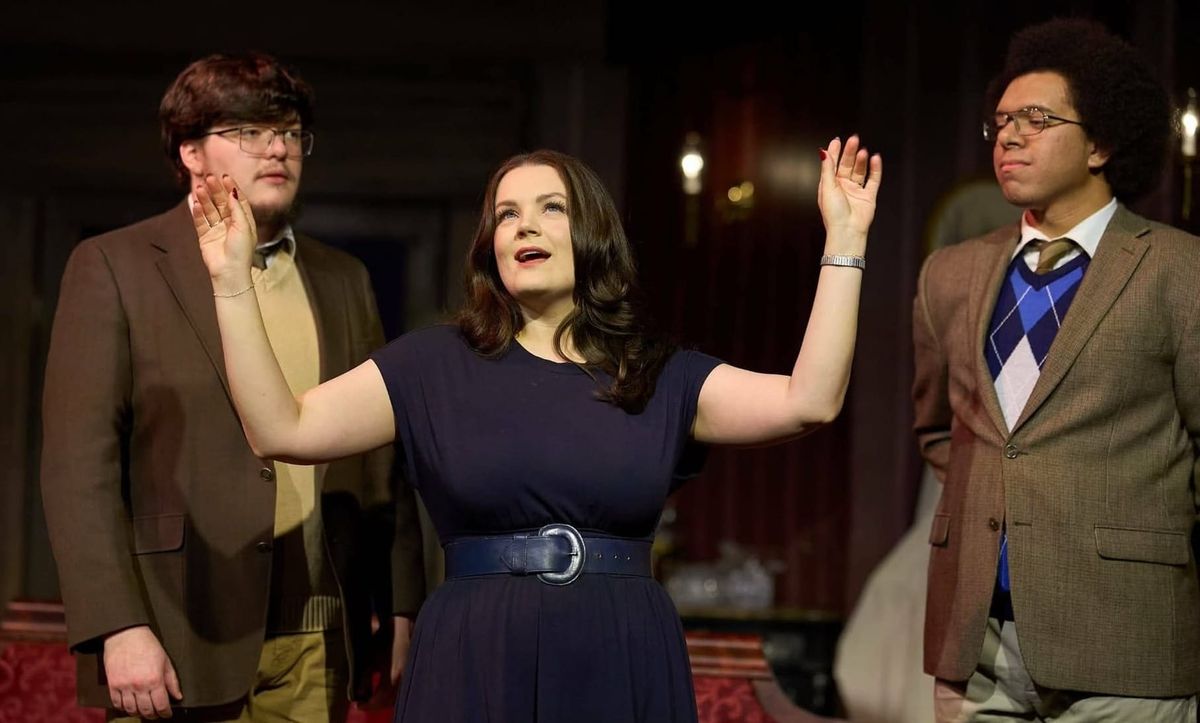
Do you believe in ghosts? And from whence do they originate? The corpses of the dead? The minds of the believers? Or a more sinister place? The parapsychologists willingly trapped in a creepy mansion in Wichita Community Theatre’s “The Haunting of Hill House” are about to find out.
Join them, won’t you, as they explore their own fears and foibles — and their very sanity — in this popular script written in 1964 by F. Andrew Leslie and based on Shirley Jackson’s 1959 neo-gothic novel. The play is fairly true to the book, with a few adaptations for length. Director Coleman Adams presents a character-driven production with plenty of dry humor, set at a pace that keeps us fixed. On opening night, the audience frequently leaned stage-ward, at times gasping as a unit at unexpected developments. I like that.
The horror in “Hill House” is psychological and atmospheric. Its terror lies in a sense of uncertainty, the ever-present knowledge that the characters are isolated in an unnamed location with strangers. The premise, a small group of people staying together in a sentient dwelling at the mercy of paranormal activity, has been employed repeatedly in popular films and plays, but Jackson had a well-earned reputation for making creepy things creepier, and Leslie captures her dark view with effective dialogue.
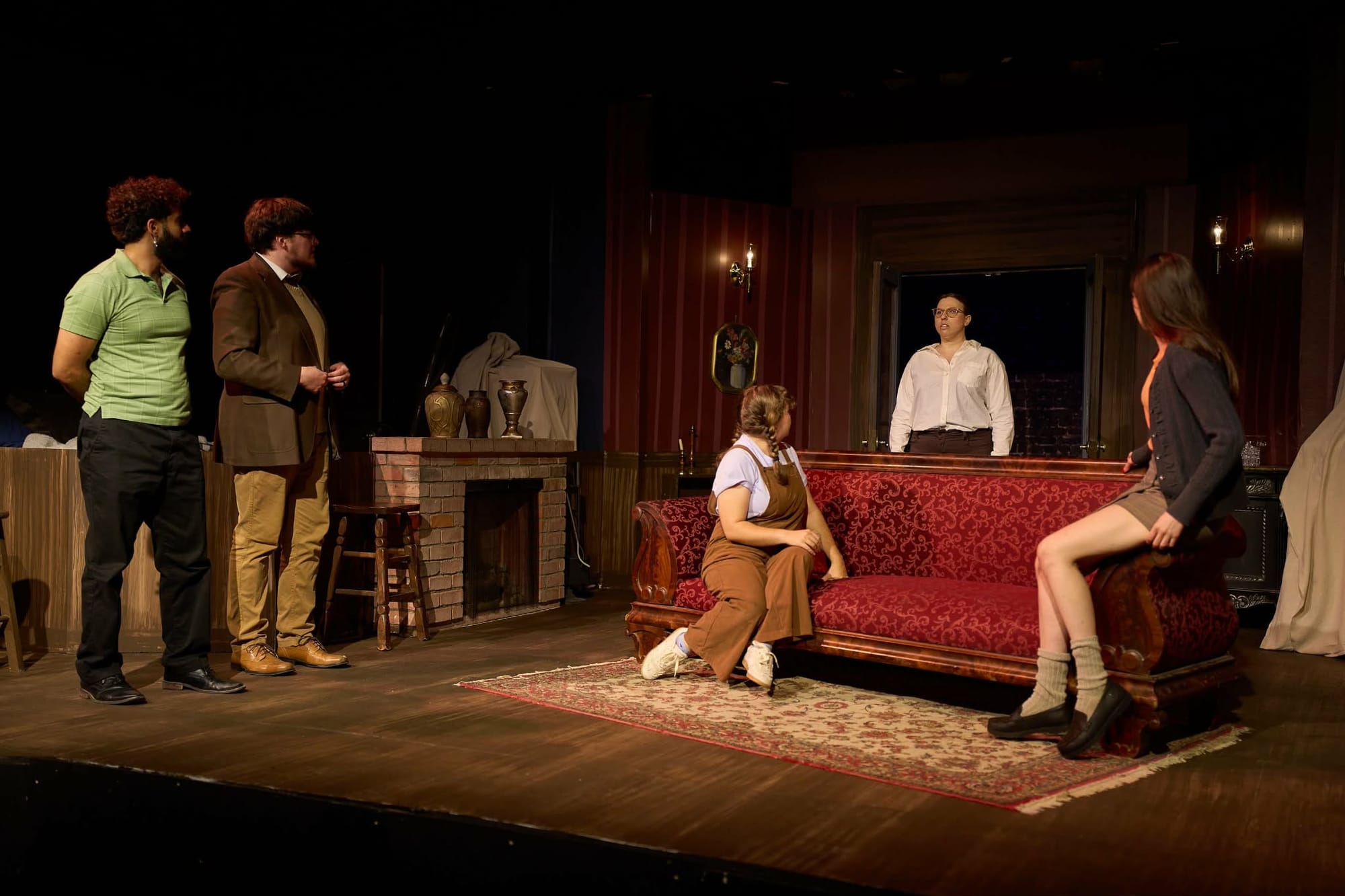
Adams’ cast is comfortable with the language and grows increasingly so as the play progresses, giving each character a distinct opportunity to be a part of the puzzle that is Hill House.
Renee Tanner gives a wonderfully stilted and weird performance as Mrs. Dudley, housekeeper of the isolated estate, whose husband Mr. Dudley never appears on stage. Oddly cold, yet nevertheless insistent, Tanner’s Mrs. Dudley is intimidating for reasons I can’t quite put my finger on. She definitely needs her guests to know that, as concerns service, she definitely has boundaries, especially when it comes to being anywhere near the house after dark. And, intriguingly, she does not excel at direct eye contact.
First to arrive for the mysterious visit is the sensitive Eleanor (Laura Koerner). A young woman who has experienced paranormal visitations as long as she can remember, she is both confident in and unnerved by those experiences. She longs for more information and wants to contribute her knowledge to metaphysical research. She has been caring for her abusive mother until the matriarch’s recent death, about which she feels relief. Koerner gives Eleanor a sweet and intelligent countenance, bound to insecurity and ultimately unmoored by her deep need for acceptance.
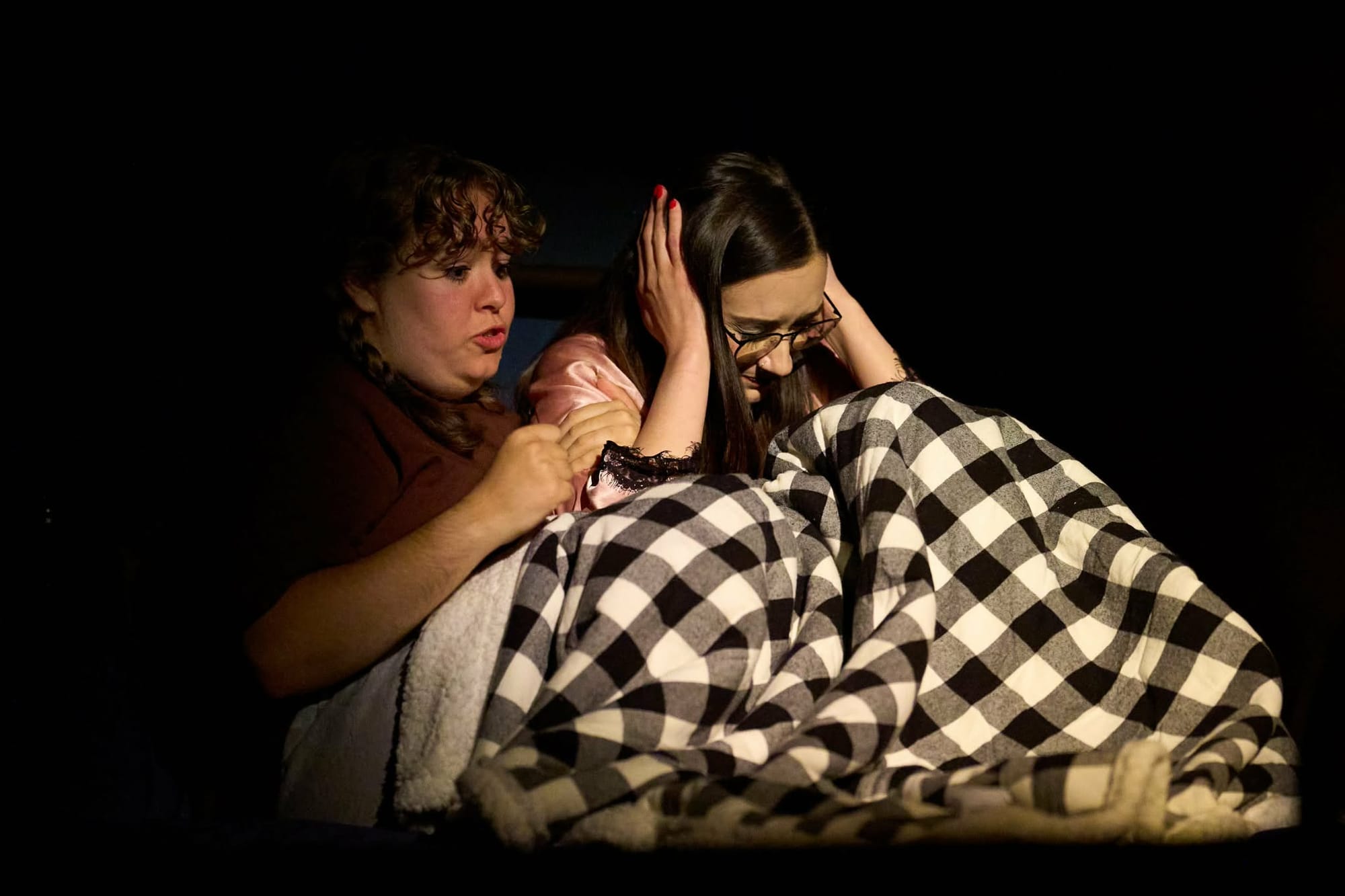
Theodora (Elle Crook), an artist with a flair for the psychic, comes on the scene and takes command. Crook gives Theodora the confidence the role demands, putting her energetic delivery to good use to highlight her slightly blue humor and independent spirit. Koerner and Crook provide an enjoyable balance for these two disparate characters.
The future heir to Hill House, Luke (Thaer Karam) is a bit of a scoundrel and certainly a flirt. He doesn’t put much stock in ghosts and initially seems to be above such foolishness, though willing to play along. Karam’s Luke is charming and fun to watch as he starts to doubt what he believes and experiences.
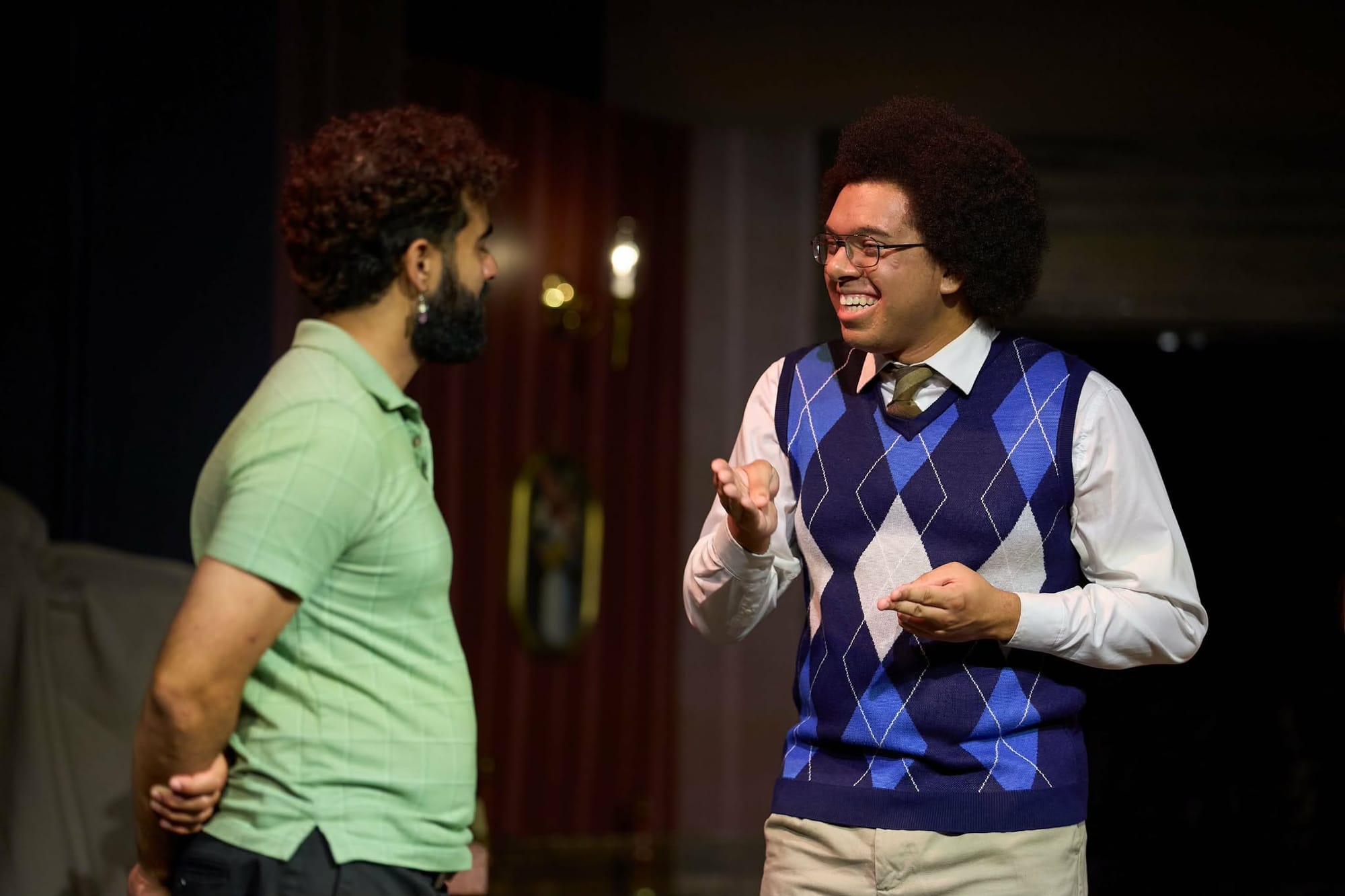
Luke accompanies Dr. Montague (Robert Brining), the anthropologist and parapsychologist responsible for the gathering. Brining plays Montague at a very consistent level vocally and emotionally. Little disturbs him as he trains his attention on the events swirling around him and his guinea pigs — er, guests — like the research scientist that he is.
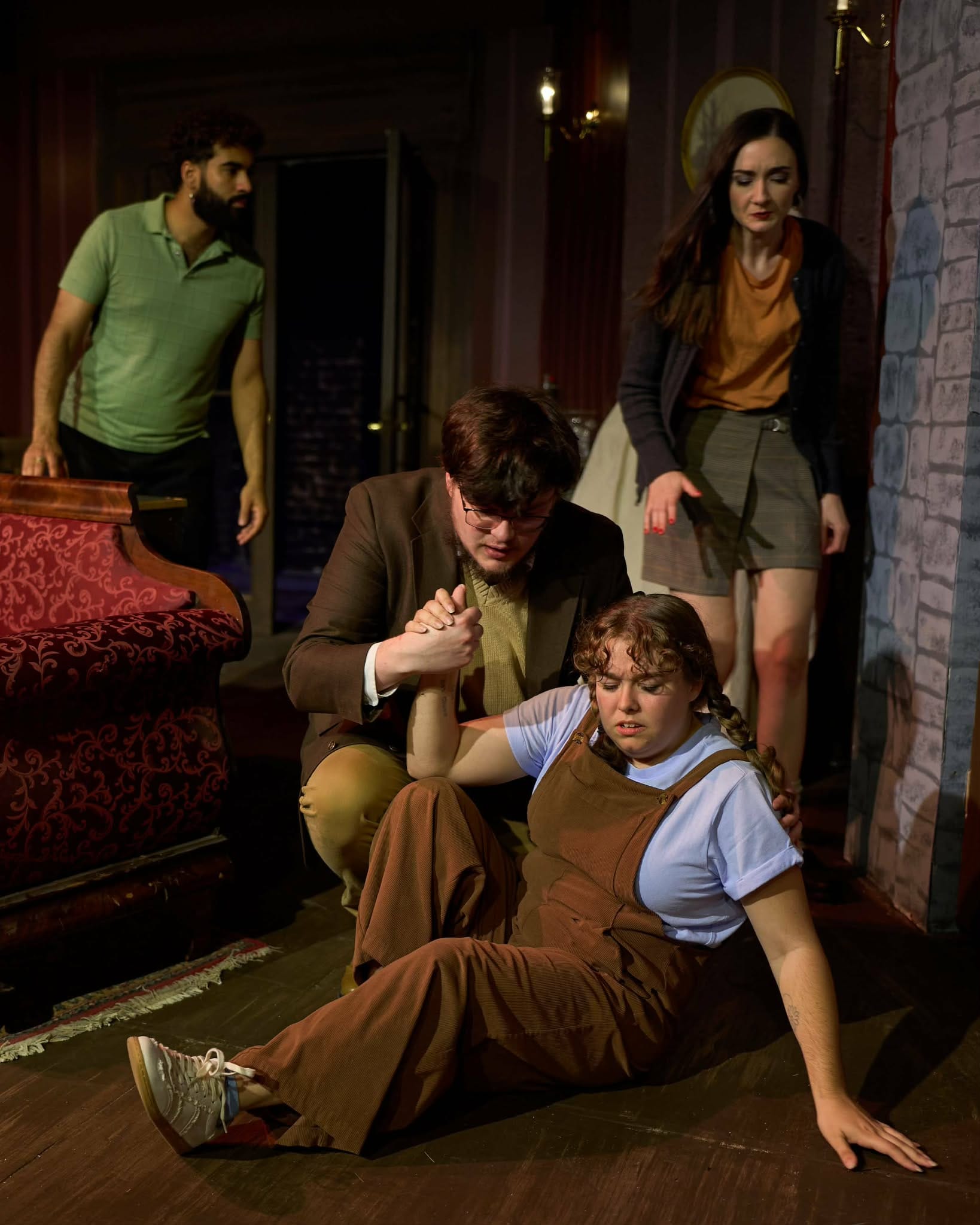
Holland Kiser gives us an elegant and kooky Mrs. Montague, a satisfying choices for the wife of the doctor — a parapsychologist in her own right, or at least her own mind. A human tornado, she shows up to “help” with the investigation with her friend Arthur (Caleb Jamal Manuel) in tow. No concerns! Arthur has many dubious talents to contribute, in addition to odd communication skills, thanks to Manuel’s offbeat performance.
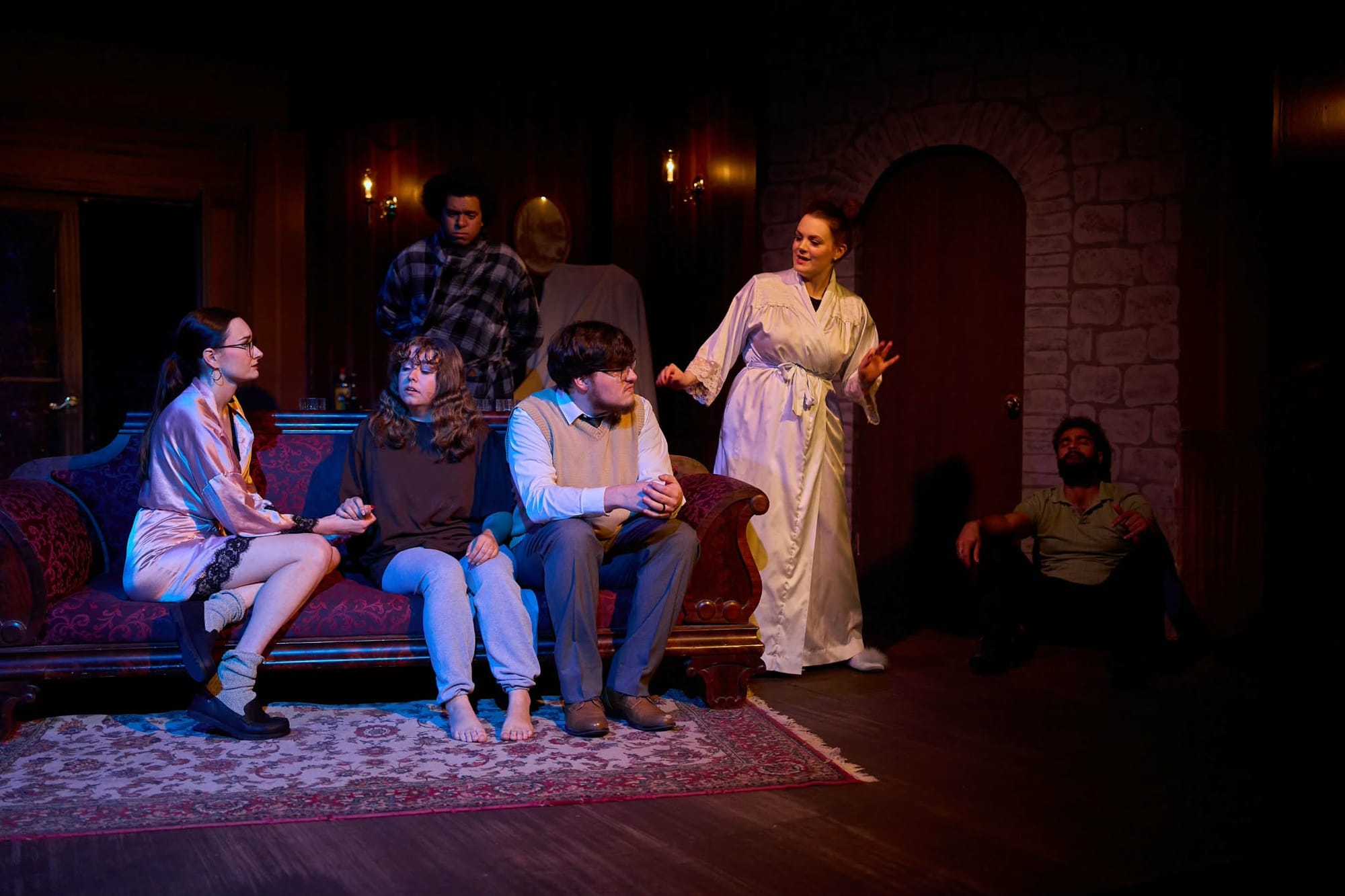
Hill House itself is represented by three indoor areas and an outdoor one, all designed by Angela Forrest and Adams. These areas are separated by a set of double doors that seem to open and close on their own at whim. Other effects add to the macabre setting and drive the plot forward. My only suggestion would be to crank up the recorded sound effects, but I admit my hearing isn’t what it used to be.
Props and costumes are provided by the cast, which is not unusual at Wichita Community Theatre, as everyone — actors, designers, technicians, box office workers — volunteers their time. And they’ve been doing that for 80 years. Aren’t we lucky?
The Details
Wichita Community Theatre presents “The Haunting of Hill House”
October 22-November 1, 2026, at Wichita Community Theatre, 258 N. Fountain St. in Wichita
There isn't a show on Halloween (October 31).
Tickets are $16 for Thursday shows and $20 for all others. Discounts are available.
Learn more and buy tickets or make reservations online.
Teri Mott is a writer and actor in Wichita, Kansas, where she covers the arts as a critic and feature writer. She is co-founder of The SHOUT.
❋ Derby man has the kind of voice that turns heads — and chairs
❋ Socializing while sober: how some Wichitans are cultivating alcohol-free communities
❋ As a small creative business closes, the owner mourns
❋ Painting through it: Autumn Noire on 20 years of making art
❋ How a guy from Wichita resurrected 'Dawn of the Dead'
❋ Bygone Friends University museum housed curious collections
Support Kansas arts writing
The SHOUT is a Wichita-based independent newsroom focused on artists living and working in Kansas. We're partly supported by the generosity of our readers, and every dollar we receive goes directly into the pocket of a contributing writer, editor, or photographer. Click here to support our work with a tax-deductible donation.