In 'Shouting Fire,' photographer Jennifer Ray illuminates gun violence
A new book documents the Wichita State professor's decade-long project focused on improvised shooting targets in rural Wyoming.
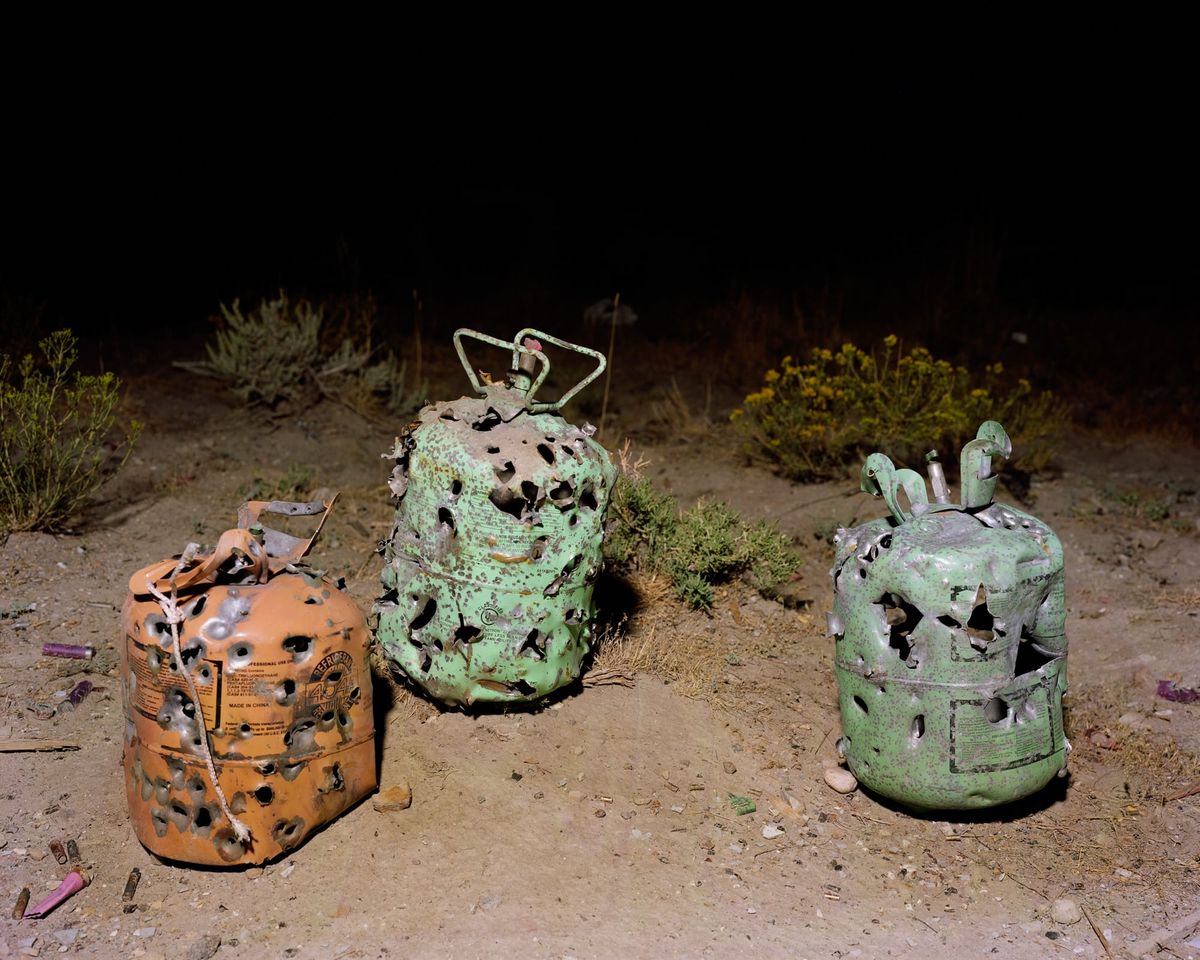
The targets that firearms enthusiasts use for practice reveal a great deal about their character and intentions. Typically you point a loaded gun at a piece of paper printed with a human silhouette and concentric circles. But some gun owners train their attention on improvised targets: an empty can of spray paint, an abandoned vehicle, a tree stump, a discarded shop mannequin, even a watermelon.
“Shouting Fire,” photographer Jennifer Ray’s powerful new book, presents photographs that explore targets she discovered on back-country shooting ranges in some of the fraught landscapes of the western United States. The form and content of the book work together with a reinforcing symbiotic synergy: compact and dense as a shell casing, the photographs unfold in a coherent and descriptive sequence.
The book’s sturdy cover is wrapped in rust-colored cloth with the title in all caps on the spine. The cover design is a foil-stamped simple anthropomorphic figure (taken from one of the targets Ray found), which is drilled through with mock bullet holes. The photographer’s name is listed on the inside title page. This minimalism focuses attention on the overall subject and primes a visual, visceral experience.
Video by Philip Heying for The SHOUT.
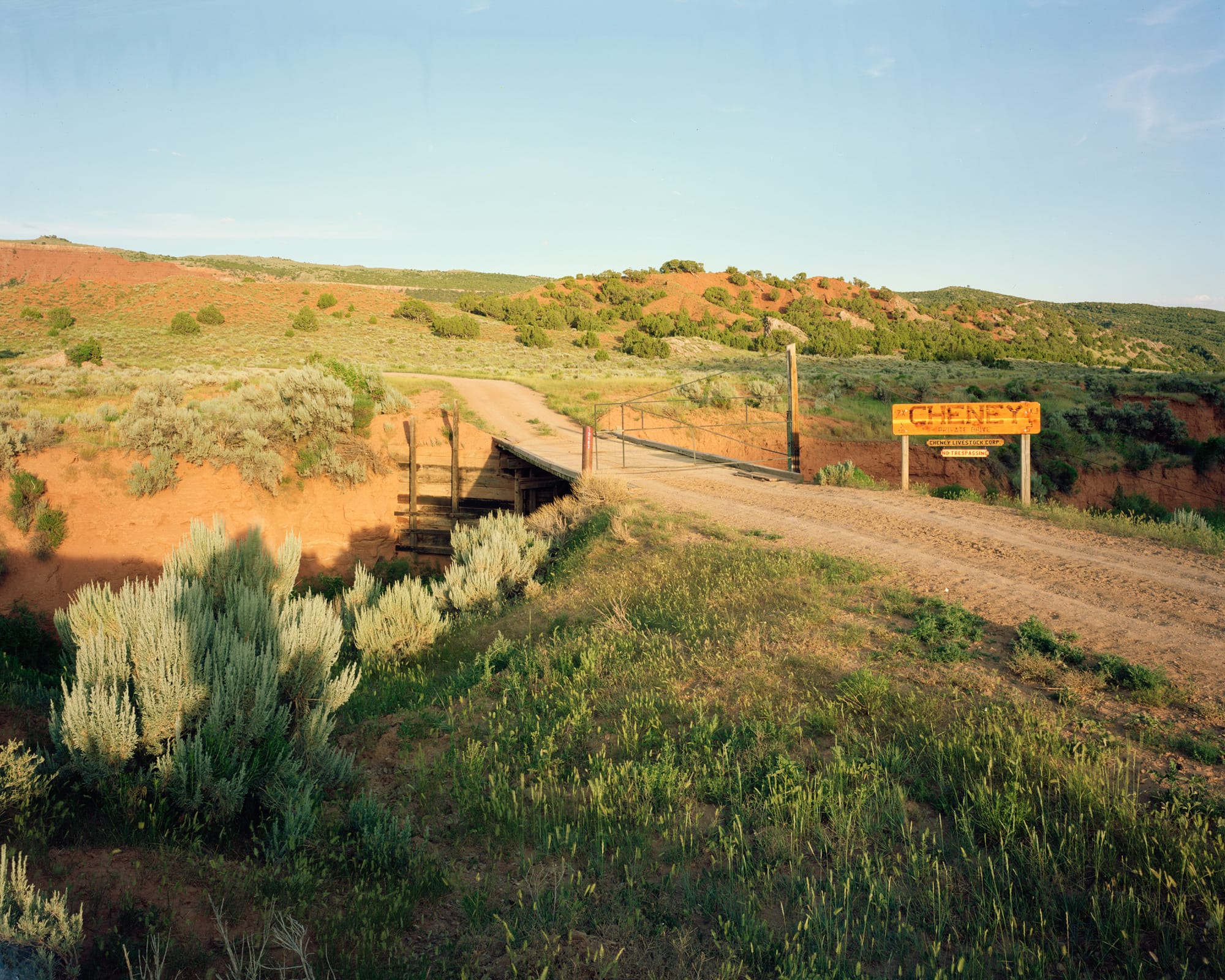
Heavy black end pages introduce the title page, immediately followed by the first image: a full-bleed spread depicting a rickety bridge over a ragged, dusty gulley in the liminal light of dawn or dusk. The bridge has a flimsy gate blocking it aside a sign that reads “Cheney – Private Drive – Cheney Livestock Corp. – No Trespassing.” We are entering into forbidden, foreboding territory. The name Cheney evokes the former vice president, a determined gun rights advocate and hunting enthusiast, notorious for shooting one of his friends in the face with a shotgun on a hunting excursion.
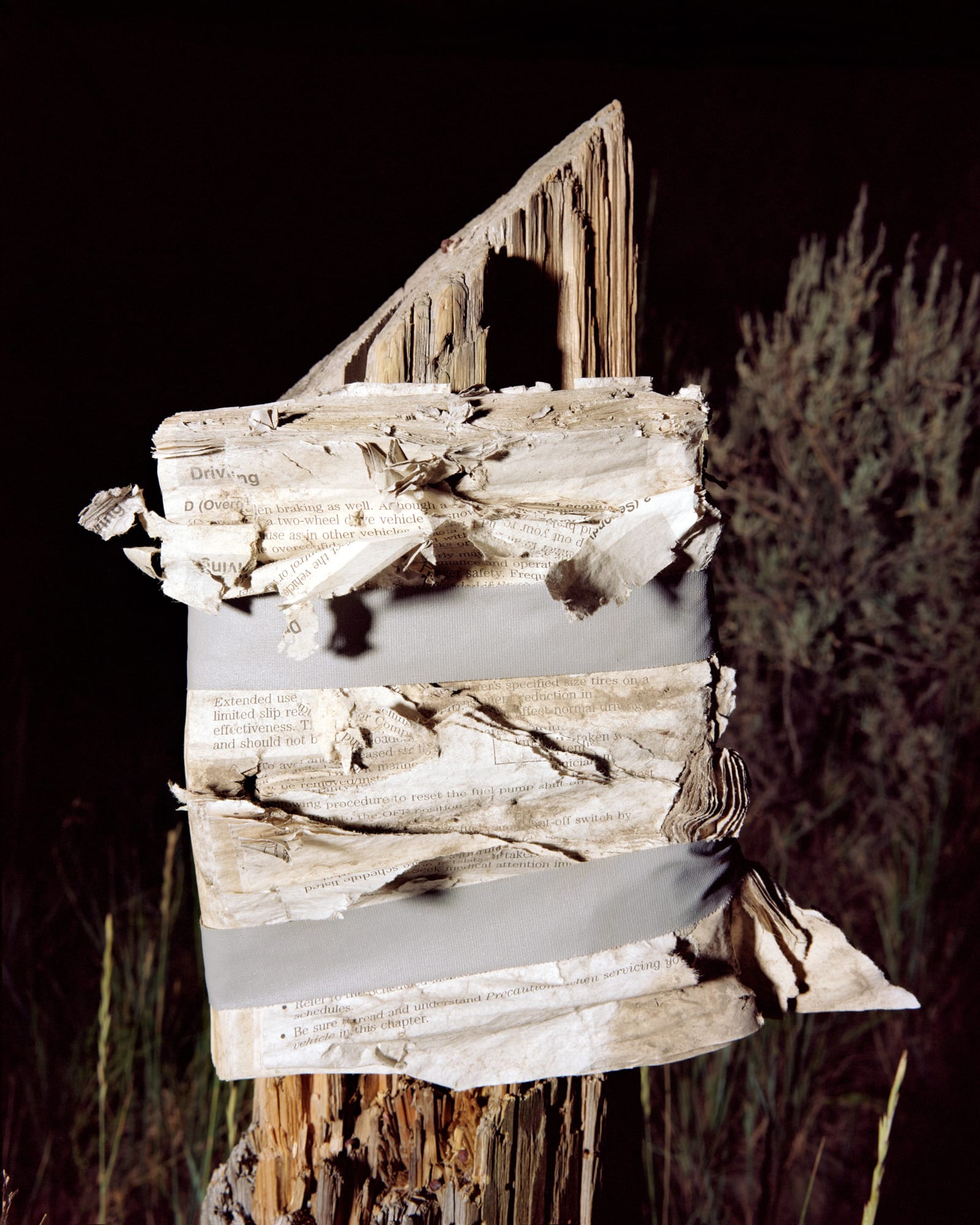
With the locale and atmosphere of the book immediately established, the first of four single-page essays by Robin C. Henry follows. Henry’s crisp, unpretentious prose does not directly address Ray’s photography. Instead, it underscores the political intentions of the photographs with compelling historical anecdotes. The first essay tells of an assassination attempt on Theodore Roosevelt’s life that was thwarted by a 52-page copy of the speech he was about to give. It prevented the assassin’s bullet from penetrating Roosevelt’s lung (though it did pierce his skin and lodged in his chest tissue). Henry’s essay faces a photograph of a thick book (instructions on operating a vehicle) wrapped in duct tape and riddled with bullet holes. The photograph was made in darkness, lit by a flash, giving the subject a startling glow that enhances the shredding of the pages and the splintered post the book is strapped to. The association between Henry’s text, the image of a book, and the simulated bullet holes on the cover suggest that books, as cultural artifacts and physical objects, might literally and figuratively provide a kind of protective armor in a nation awash in firearms.
This kind of tight, interwoven layering of metaphor and meaning continues throughout the book. “There’s no such thing as an innocent photograph of the American landscape,” wrote the critic Teju Cole. These pictures are not innocent. They stare unflinchingly into the violent nature that characterized the fulfillment of Manifest Destiny, as settlers moved westward across the continent in the 18th and 19th centuries. That violence persists today, as these pictures compellingly demonstrate.
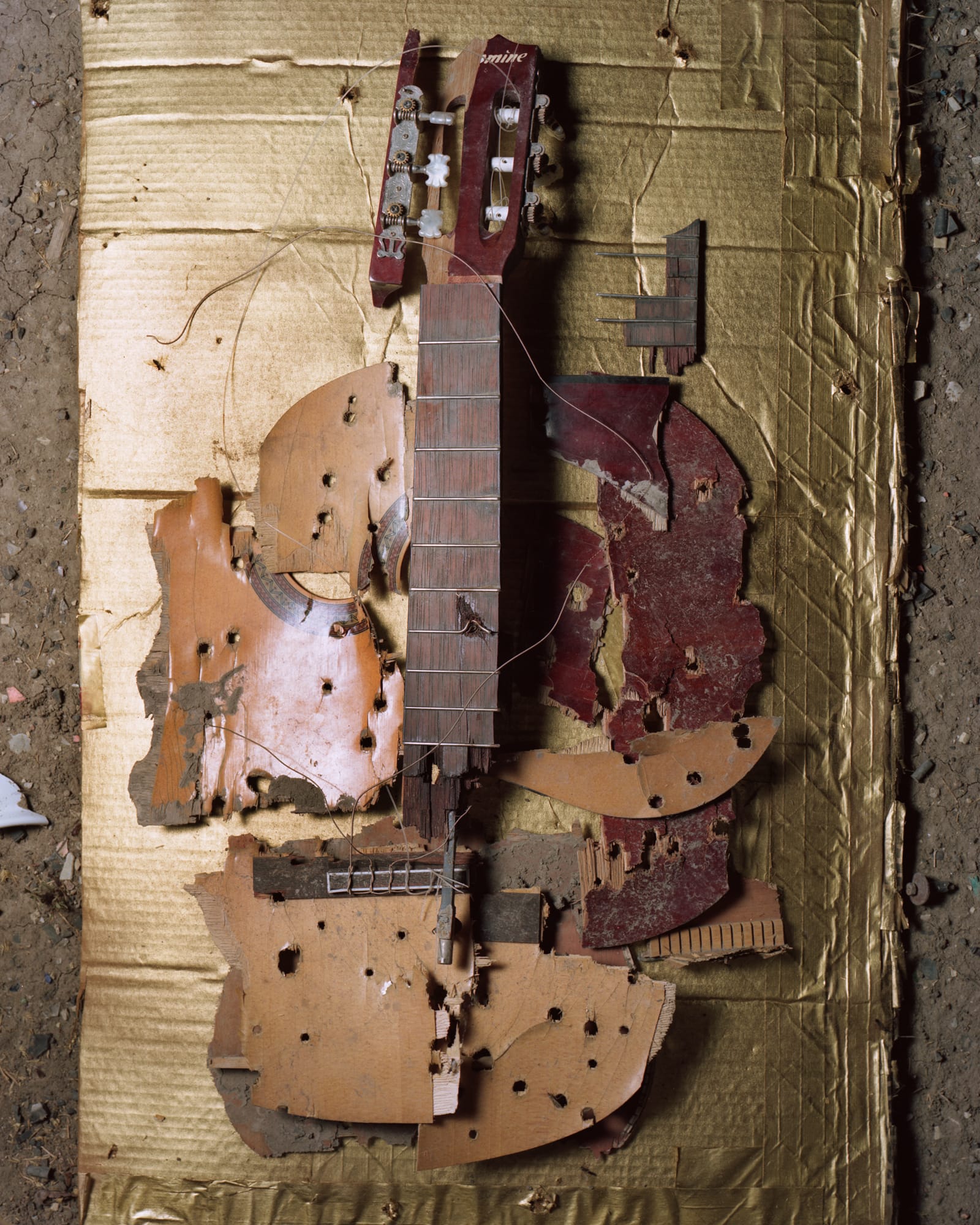
Ray made nearly all the images either at night or at dusk or dawn. Careful flash lighting allows her to make use of a bold and playful color and tonal palette that counterpoints the grim nature of the fundamental subject. As ugly as gun violence is, these pictures are paradoxically beautiful and interspersed with a healthy zest of humor. As awful as the implications of these targets are, Ray makes them comprehensible by finding art in them. If there was any doubt about this, the sixth image in the book makes it crystal clear. One of the target objects Ray came across was a blasted-to-pieces acoustic guitar. Ray rearranged the pieces into a near perfect copy of Picasso’s famous cubist guitar. Aside from that, many of her subjects — fragmented and pierced propane tanks, assemblages of painted wood planks, a trinity of three wooden crosses strung on a fence and old refrigerators — are presented as found objects in the classic Dadaist tradition.
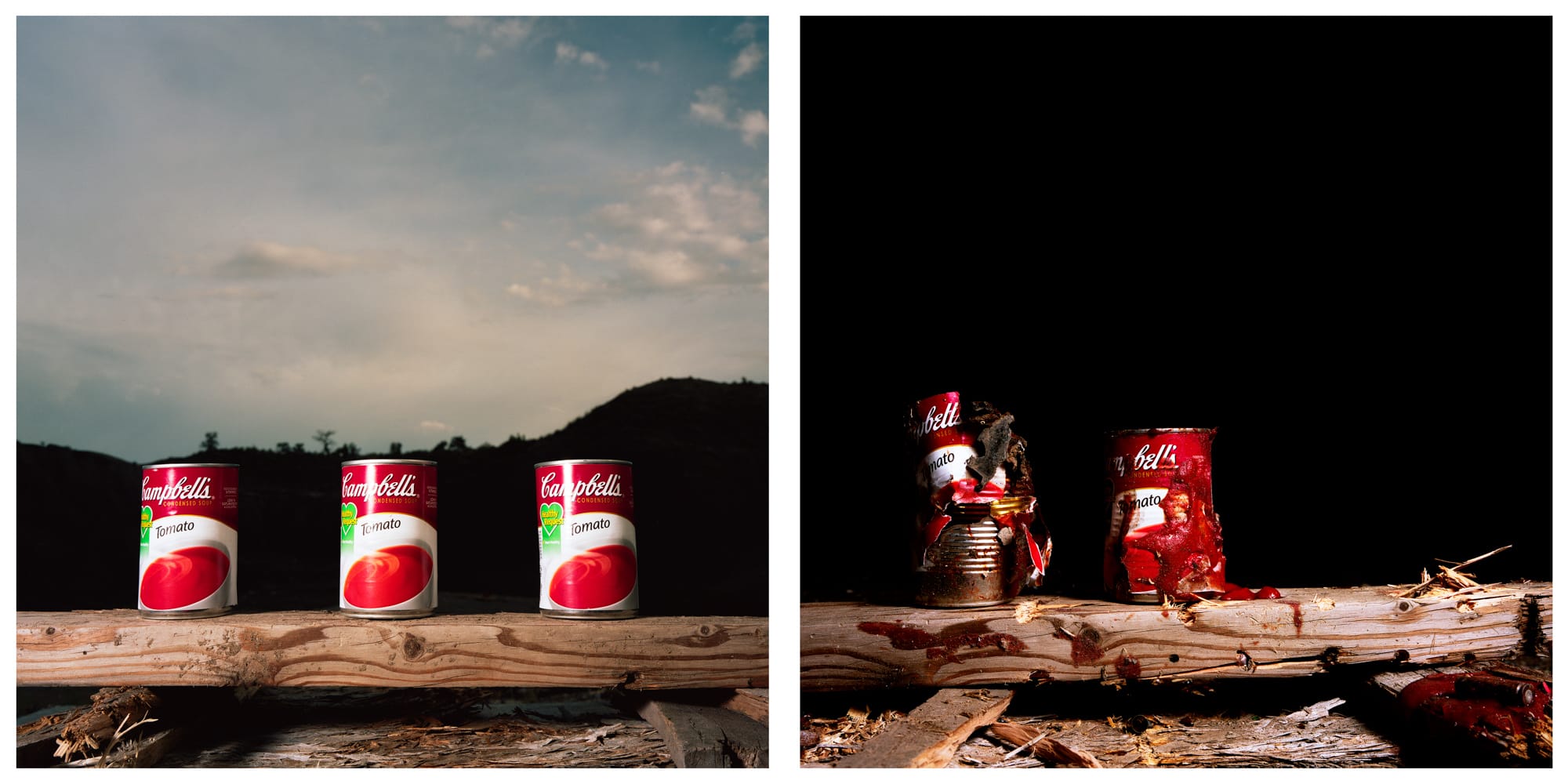
There are also various cultural artifacts that have been shot up: a Culture Club album cover, a box of Luvs diapers, a “safety first” hardhat, three cans of Campbell’s tomato soup (a clear reference to Andy Warhol), a record sleeve for the soundtrack of the musical “Hair,” an old bicycle, and a pair of SX-70 Polaroids with unrecognizable imagery shot through.
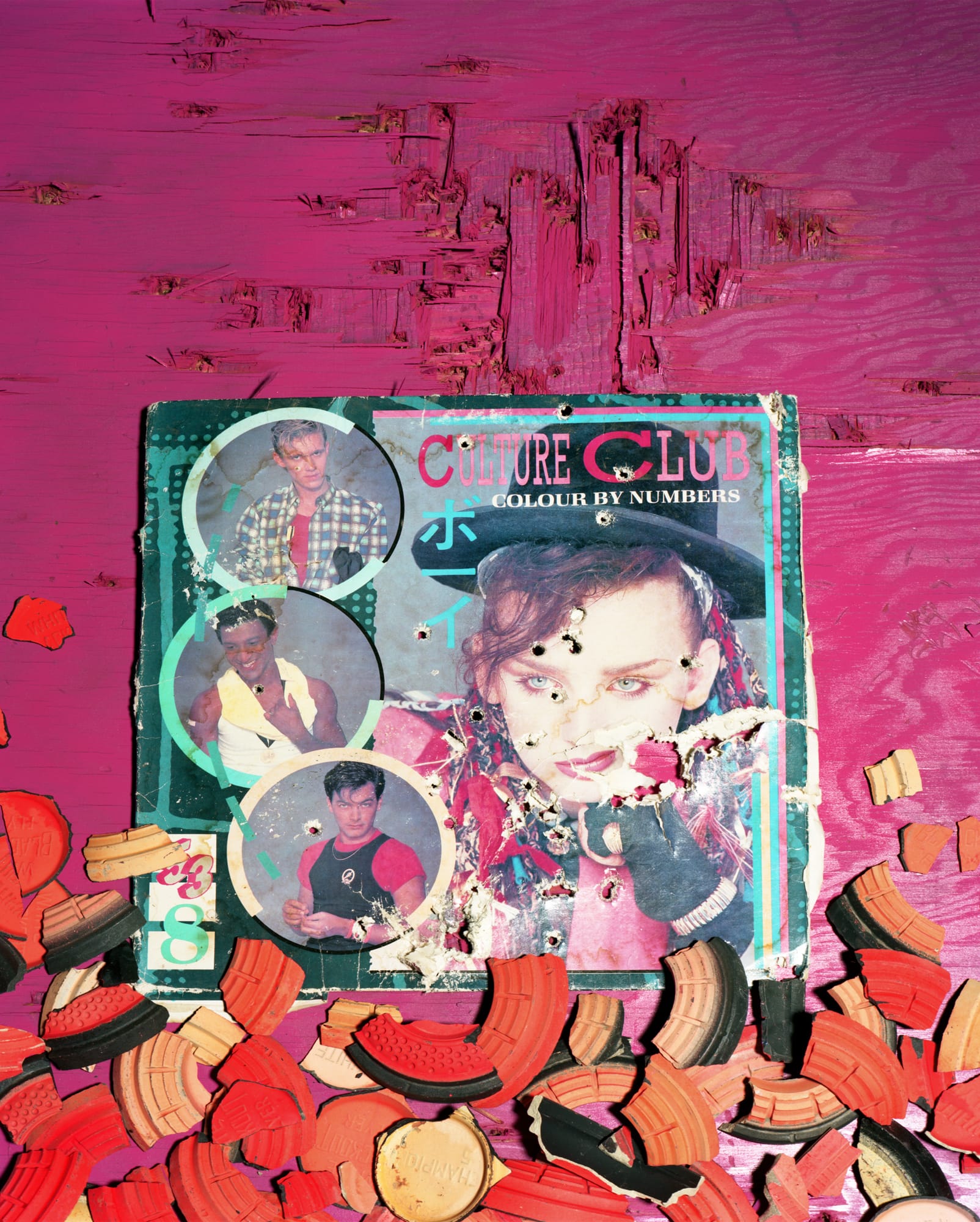
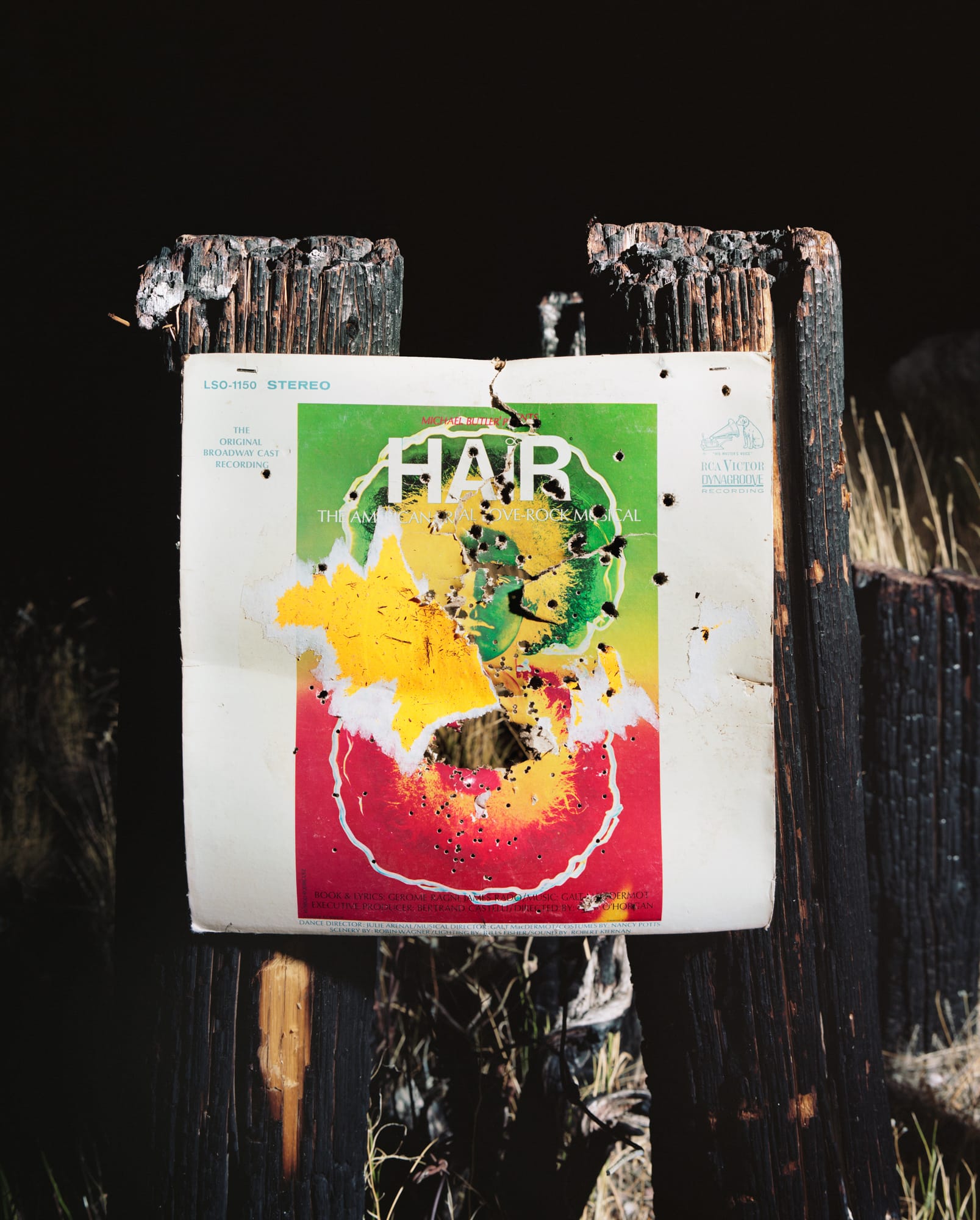
Photographs by Jennifer Ray, from left: "Vinyl - Culture Club;" "Vinyl - Hair - The American Tribal Love-Rock Musical." Photos courtesy of the artist.
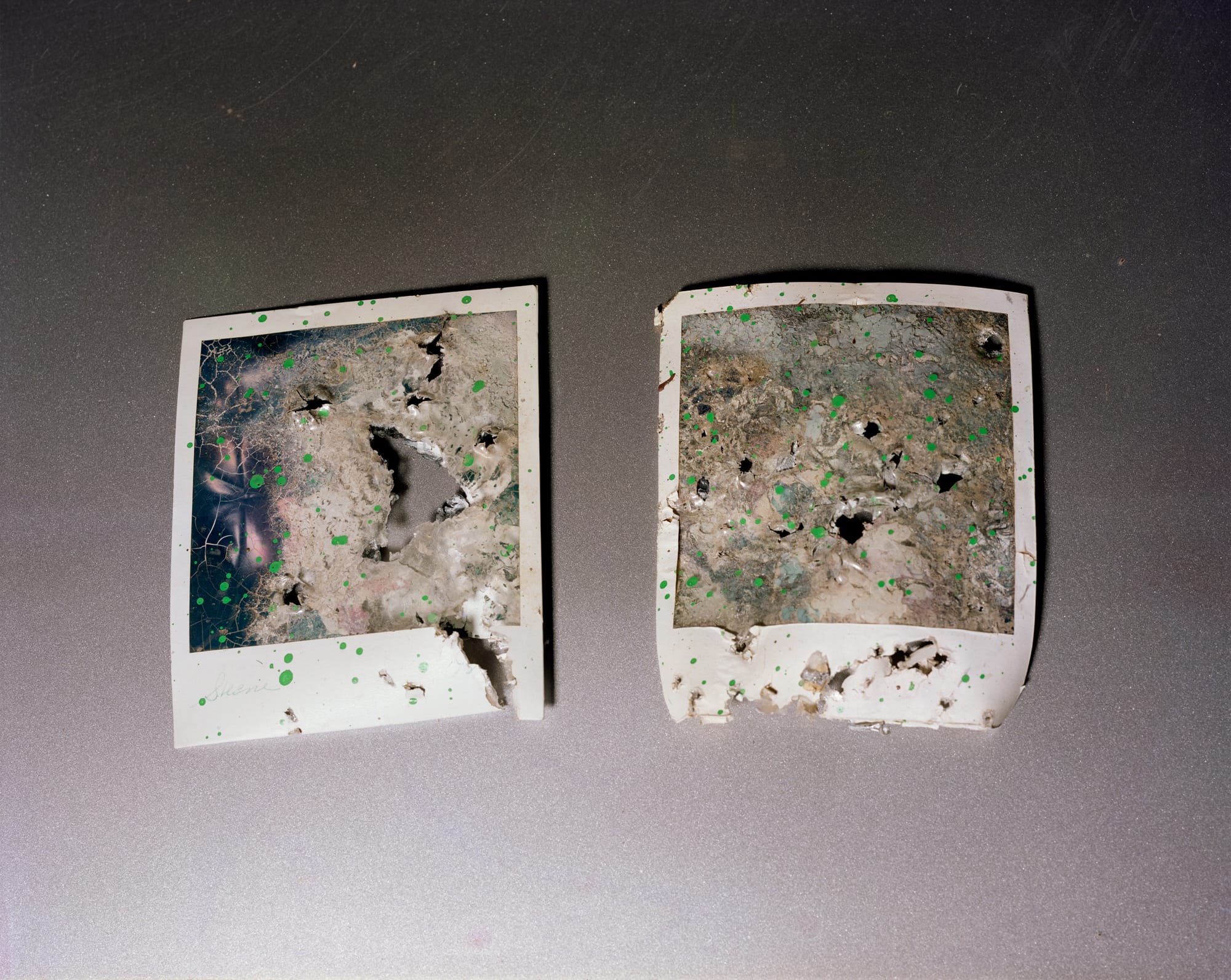
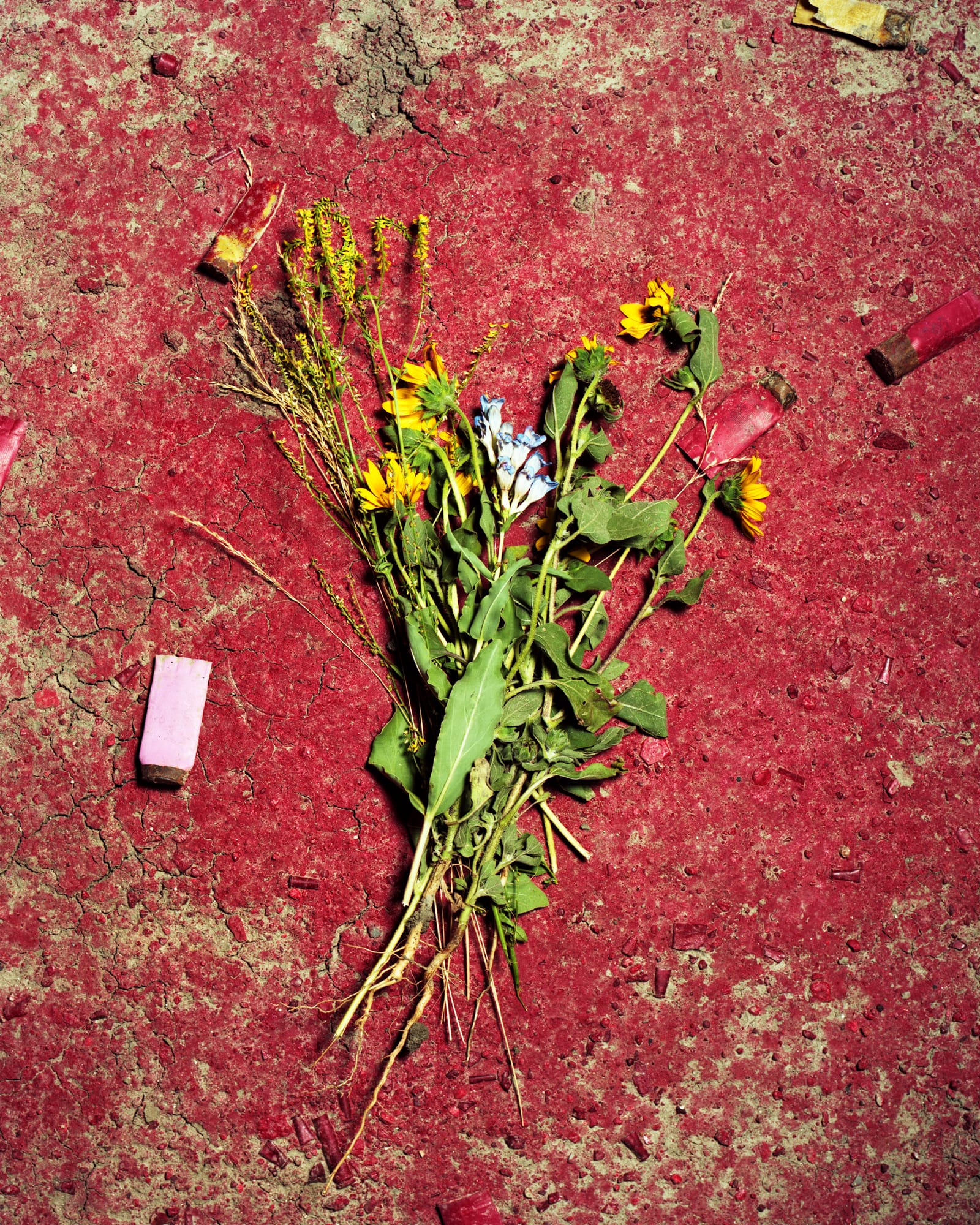
Some firearm detritus, shotgun shell casings in particular, is also depicted in a way that makes it look like it could be some kind of lipstick dispenser or other handbag accessory. All these items are transformed into psychically charged, even iconic, subject matter, first by being targeted by the individuals who chose to shoot them, then by Ray’s selection, arrangement, and photography (another kind of “shooting”). The light of her flash is single point and high contrast, with the sparkling highlights, deep shadows and saturated color that might be glimpsed in the lightning of a thunderstorm. Individual images are full of organized chaos pushing out against the edges of their frames. This is echoed through the dense and varied pacing of the image sequence in the book. This is like the aftermath of a storm.
There’s no denying that a social, political and economic storm fueled by greed has led this nation to be inundated with firearms and violence empowered by firearms. The situation is extreme, difficult to comprehend. The statistics, when available, are gobsmacking. This context makes “Shouting Fire” especially relevant. Statistics only say so much. The measure of the book’s success is in the paradoxical exuberant and strange beauty of pictures that depict horrifying psychosis. It shouldn’t be possible to look so deeply at something ultimately so awful. The book concludes with an exceptionally illuminating essay by Ksenya Gurshtein that objectively situates Ray’s work in the conversation of contemporary art and its subjective relationship to the personal effects of living with such violence.
Given the importance of this subject matter and the tremendous potency of Ray’s photography, it’s somewhat surprising to learn that only 100 copies of the book have been published. The current economics of photography book publishing are certainly complex, but I would personally hope there’s enough demand for such a work as this that it would be possible to distribute at least ten times that number. In any case, this is a relatively rare book, both in quantity and quality. If you find yourself wanting a copy, best order it now. It will make a notable addition to any library of artists’ books.
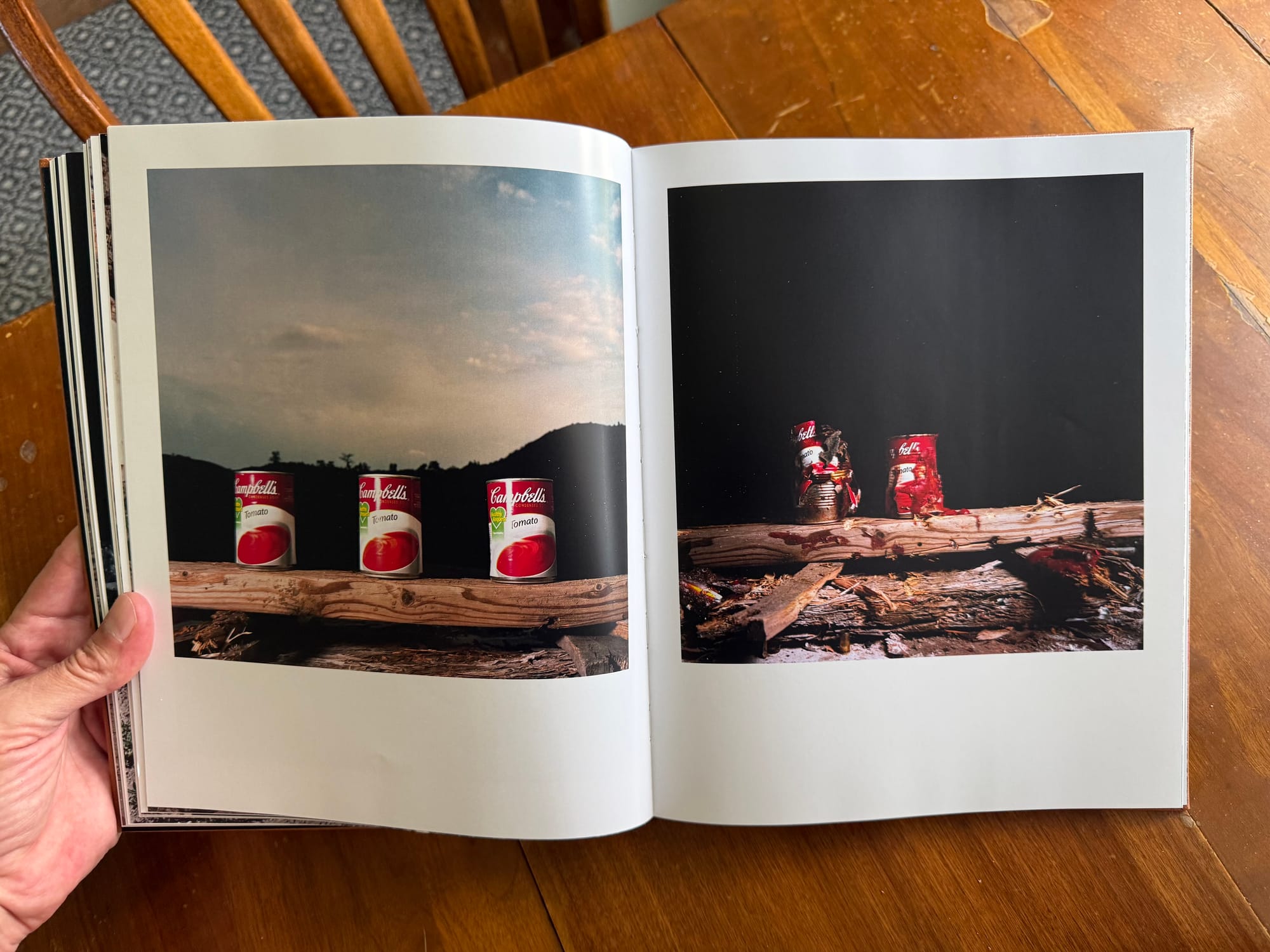
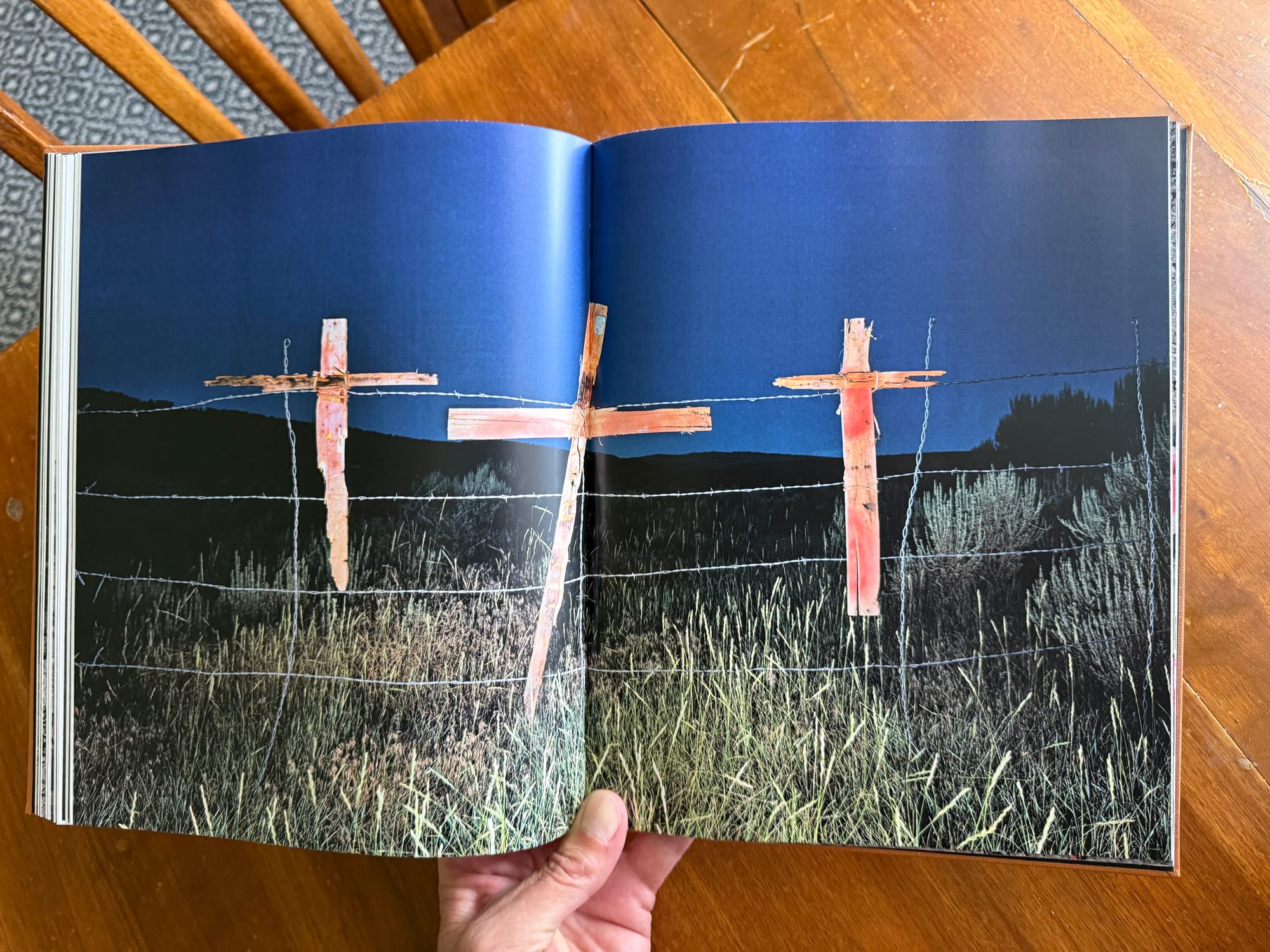
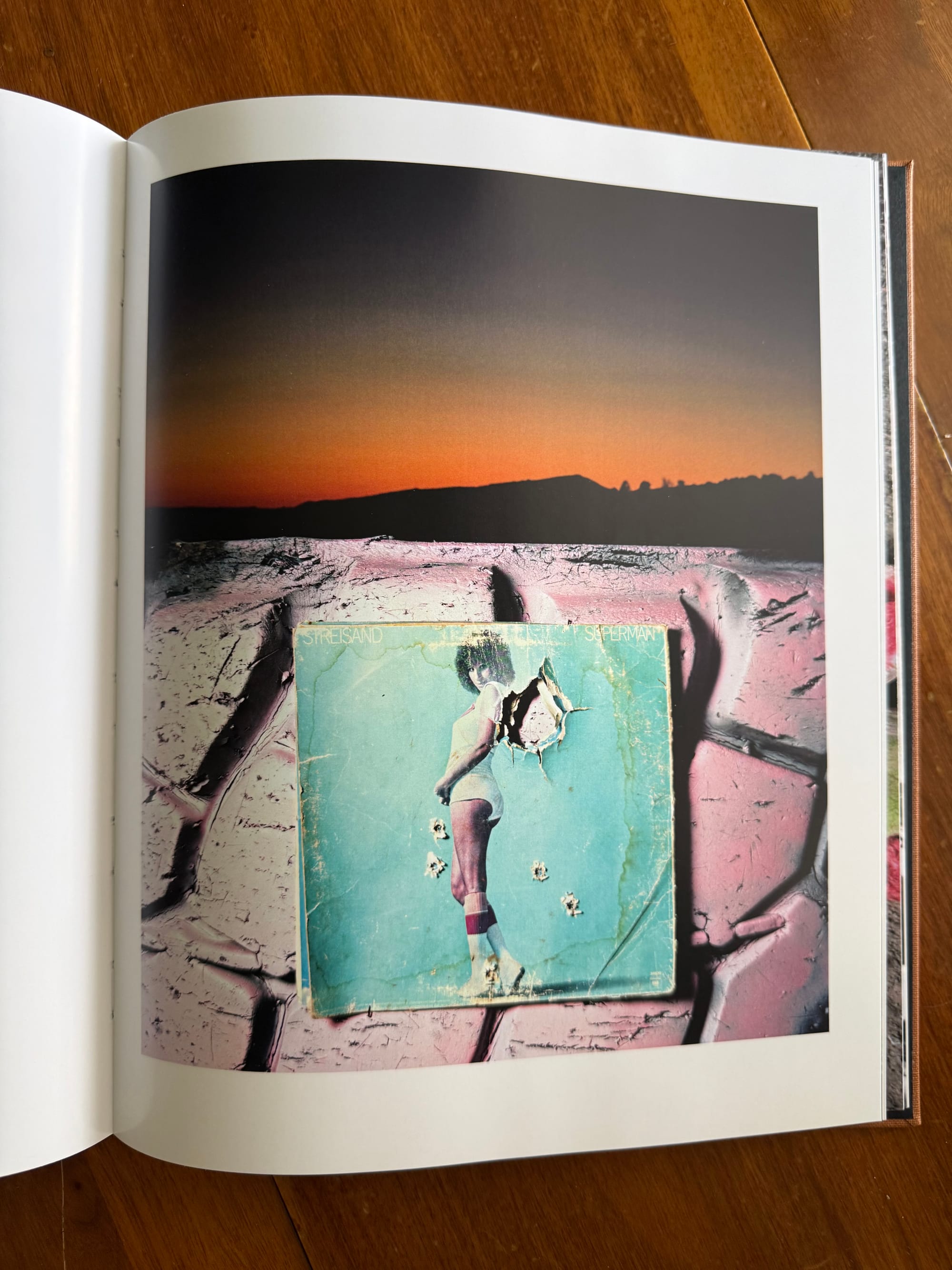
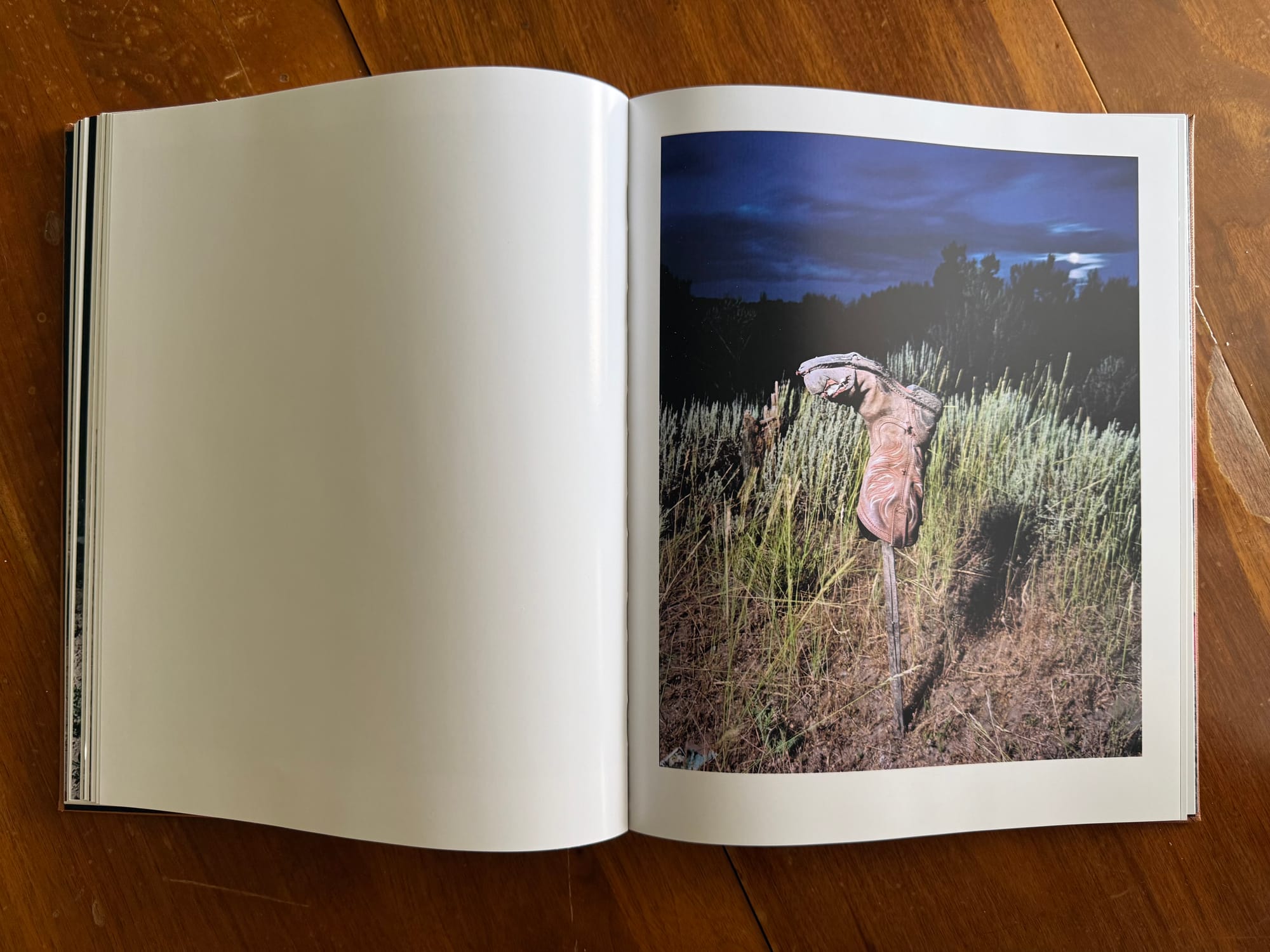
Views of "Shouting Fire." Photos by Philip Heying for The SHOUT.
The Details
“Shouting Fire” by Jennifer Ray
Published July 2026 by Composit Press, 128 pages, $50
The book is available from the publisher.
Jennifer Ray is an associate professor and the director of the School of Art, Design and Creative Industries at Wichita State. Learn more about her work on her website.
Philip Heying is a photographer based in Matfield Green, Kansas.
❋ Derby man has the kind of voice that turns heads — and chairs
❋ Socializing while sober: how some Wichitans are cultivating alcohol-free communities
❋ As a small creative business closes, the owner mourns
❋ Painting through it: Autumn Noire on 20 years of making art
❋ How a guy from Wichita resurrected 'Dawn of the Dead'
❋ Bygone Friends University museum housed curious collections
Support Kansas arts writing
The SHOUT is a Wichita-based independent newsroom focused on artists living and working in Kansas. We're partly supported by the generosity of our readers, and every dollar we receive goes directly into the pocket of a contributing writer, editor, or photographer. Click here to support our work with a tax-deductible donation.