Two cities, shared symbols: Joan of Arc and the Keeper of the Plains
Two iconic sculptures stand as reminders of a decades-long relationship between Wichita and Orleans.

On October 24 and 25 this year, Orleans, France hosted the congress for the Rassemblement National — the far-right political party that has its roots in the Vichy, Nazi-controlled government of France during World War II.
Joan of Arc (Jeanne d’Arc), the young woman who came to Orleans in 1429 and led French troops to victory against the English siege of the city, is a defining figure for Orleans. A bronze sculpture of Joan of Arc on horseback sits in the middle of the city’s central square, a museum devoted to her was built on the site in Orleans where she stayed in 1429, and each year the city holds a Joan of Arc Festival in late April and early May. And since the 1980s, the Rassemblement National (formerly the Front National) has used Joan of Arc as a nationalistic symbol of “purity, Catholicism, and ‘Frenchness’” (i.e. French racial purity).
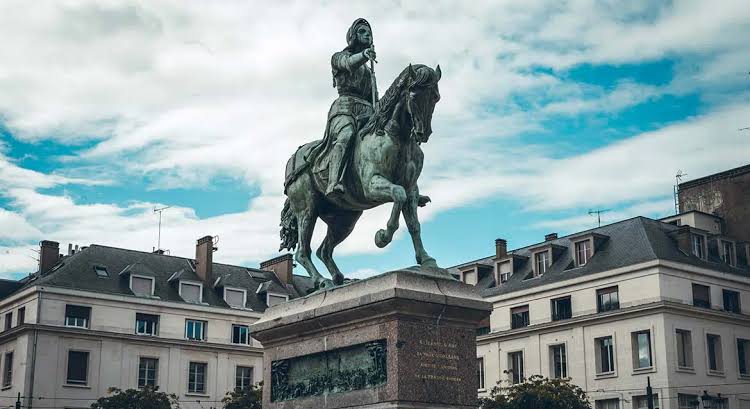
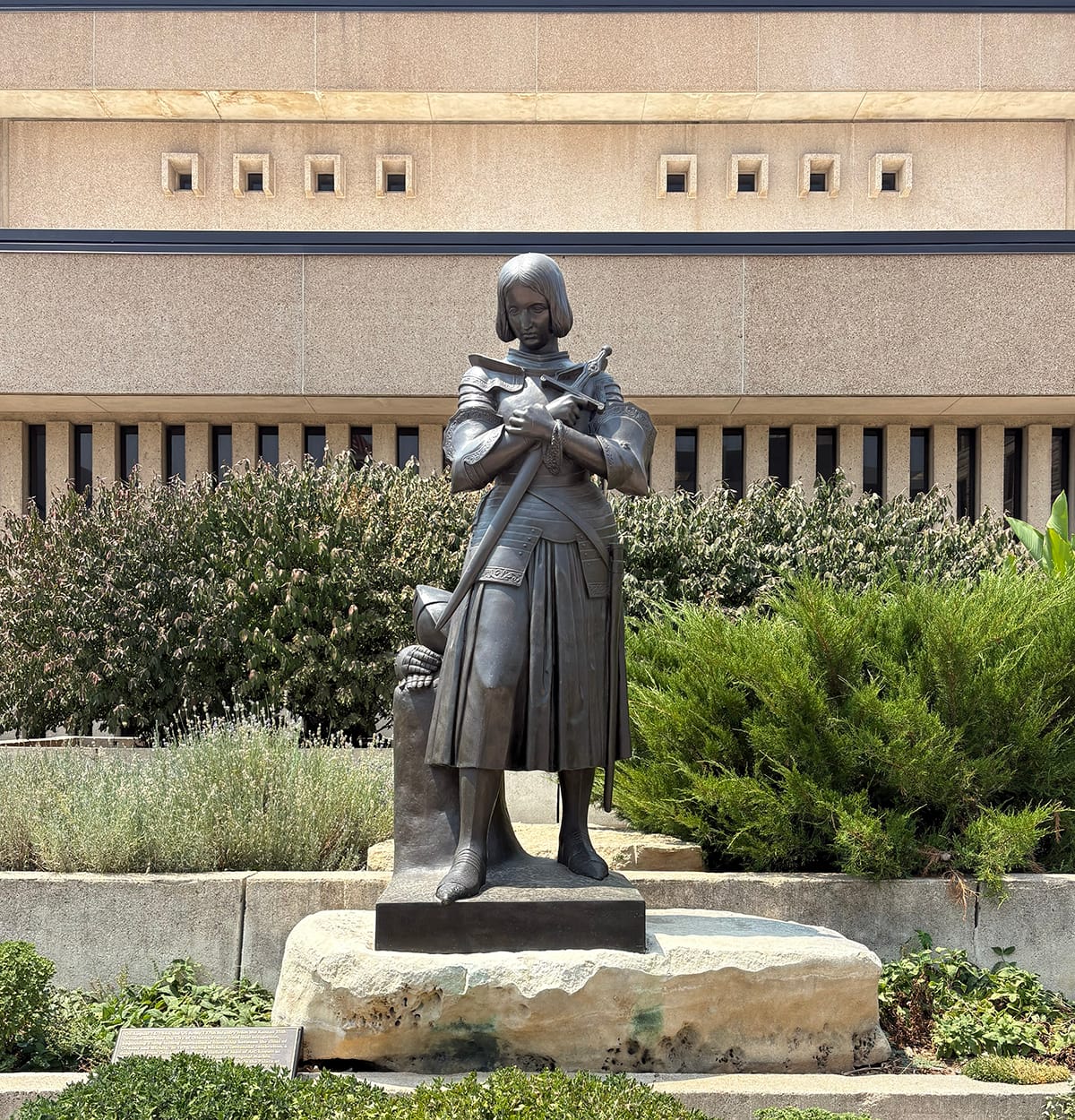
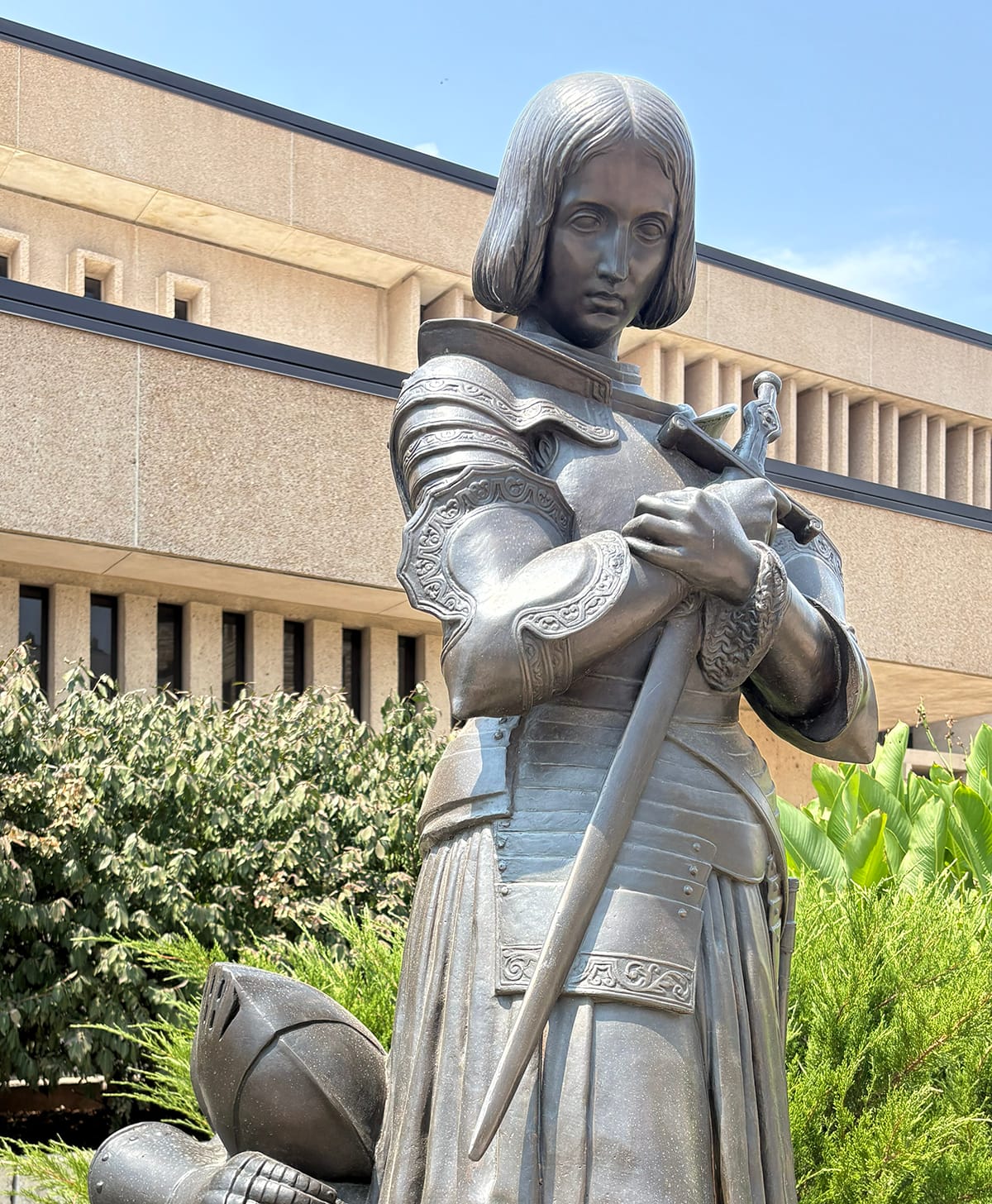
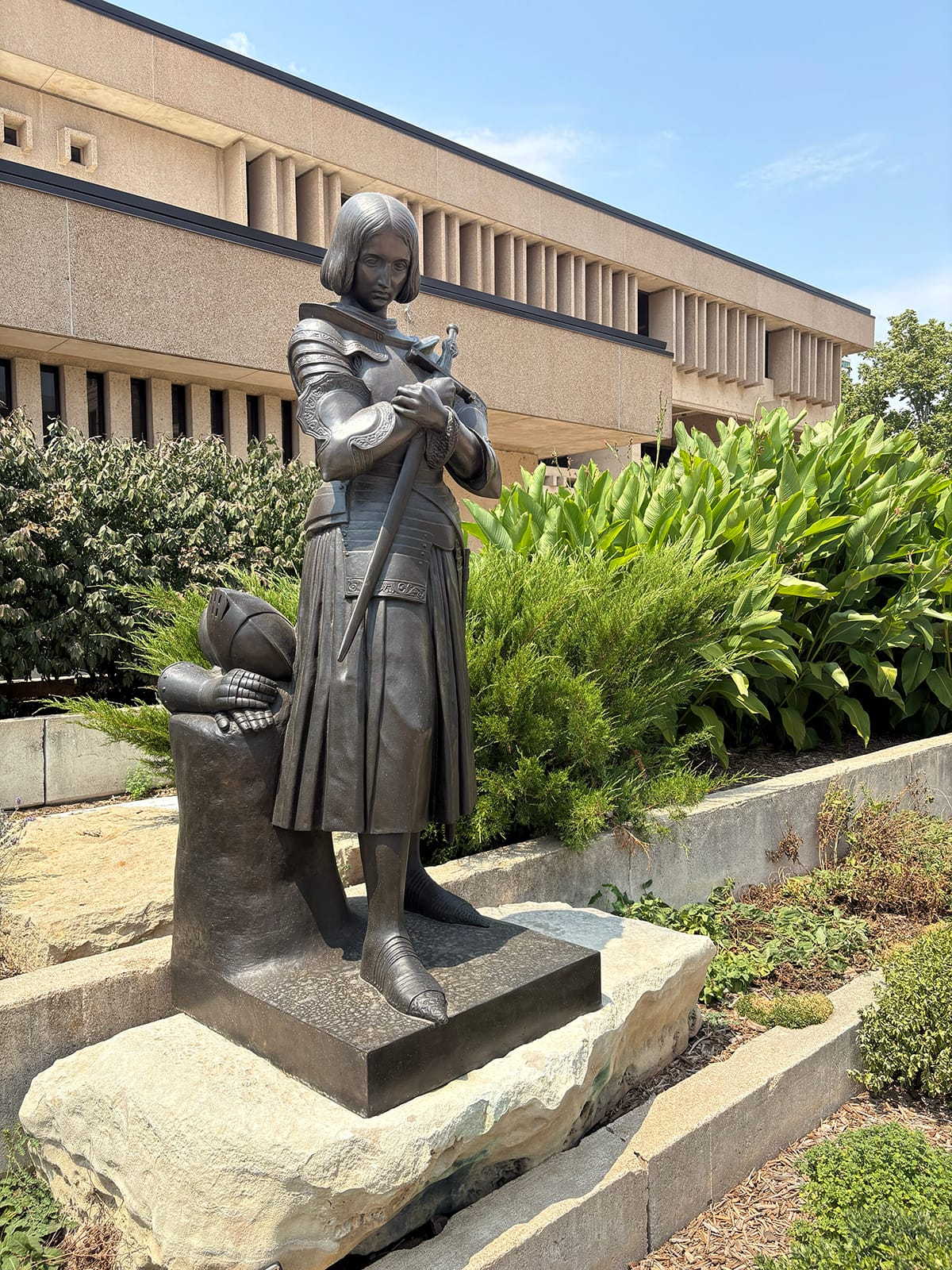
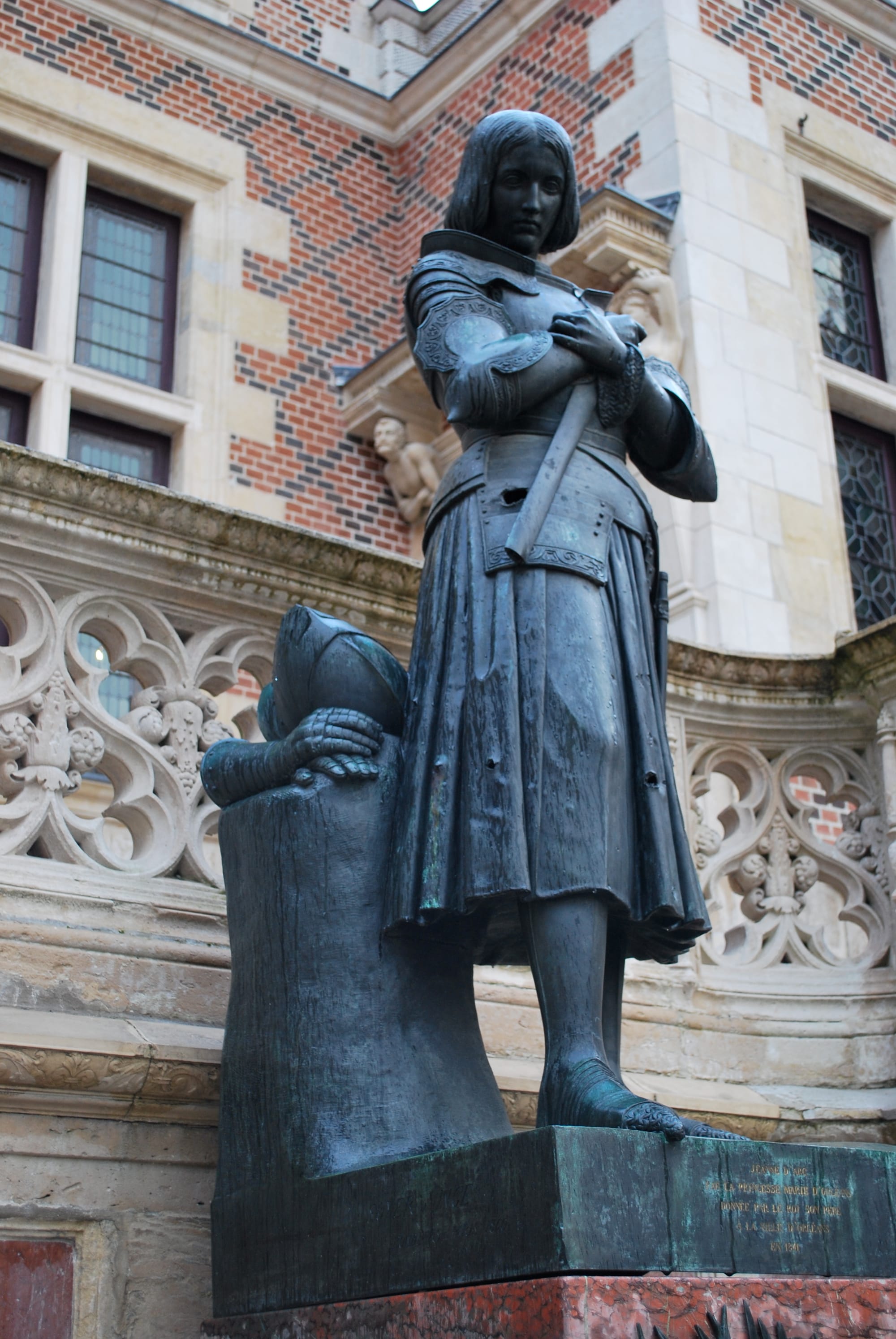
Notice the high level of detail and texture rendered in bronze, including the woven, possibly chainmail cuff that hangs from Joan’s left wrist, the rivets holding the layers of armor in place, and the decoration on the sword hilt and the edges of the armor, with floral and meander patterns. (Genevieve Waller/The SHOUT)
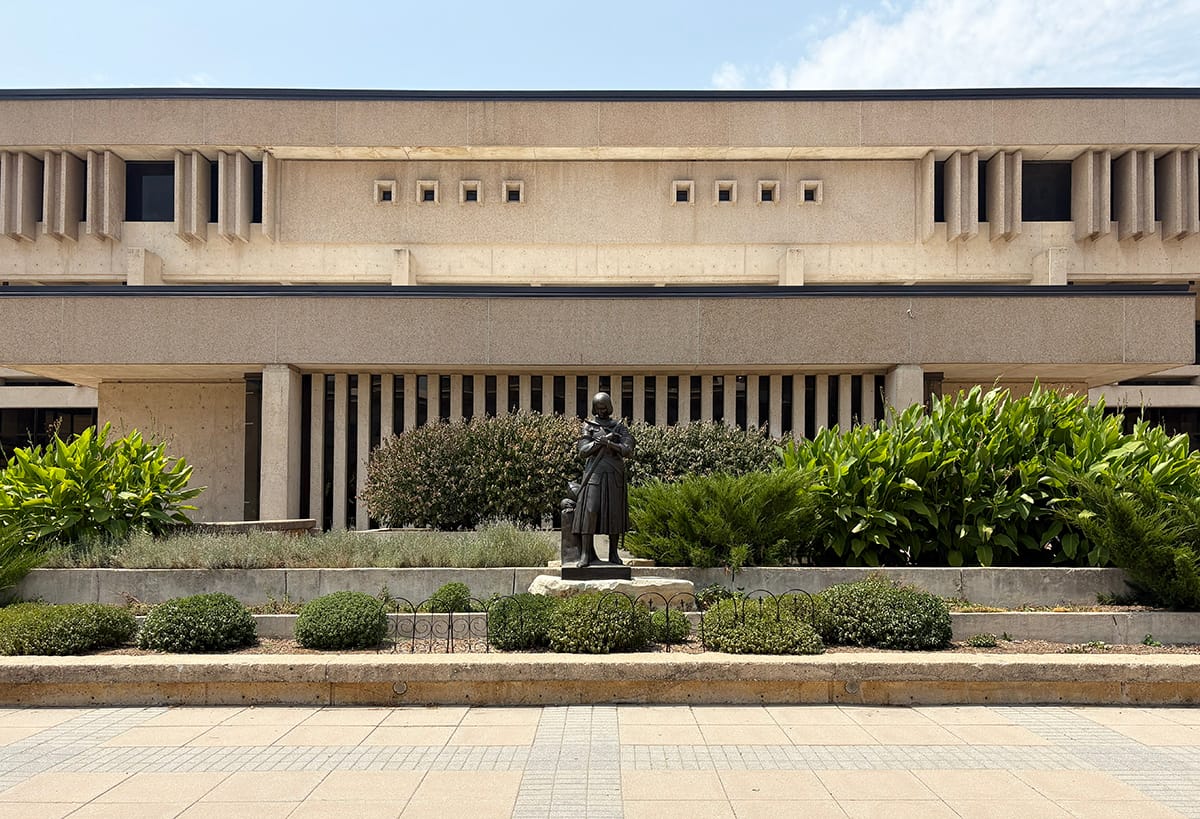
The bronze sculpture of Joan of Arc installed in downtown Wichita, in front of the former central library, depicts the heroine standing in her armor, arms crossed over her sword, with her head bent down in prayer. Her helmet and metal gloves rest on a platform behind her. The fine details of the work are striking, including the part of Joan’s hair and delineation of the strands, the decorative patterns on the edges of her armor, and the folds of her skirt. The proportions of the figure and the face are truly pleasing, unlike a number of contemporary bronze figural sculptures in the U.S.
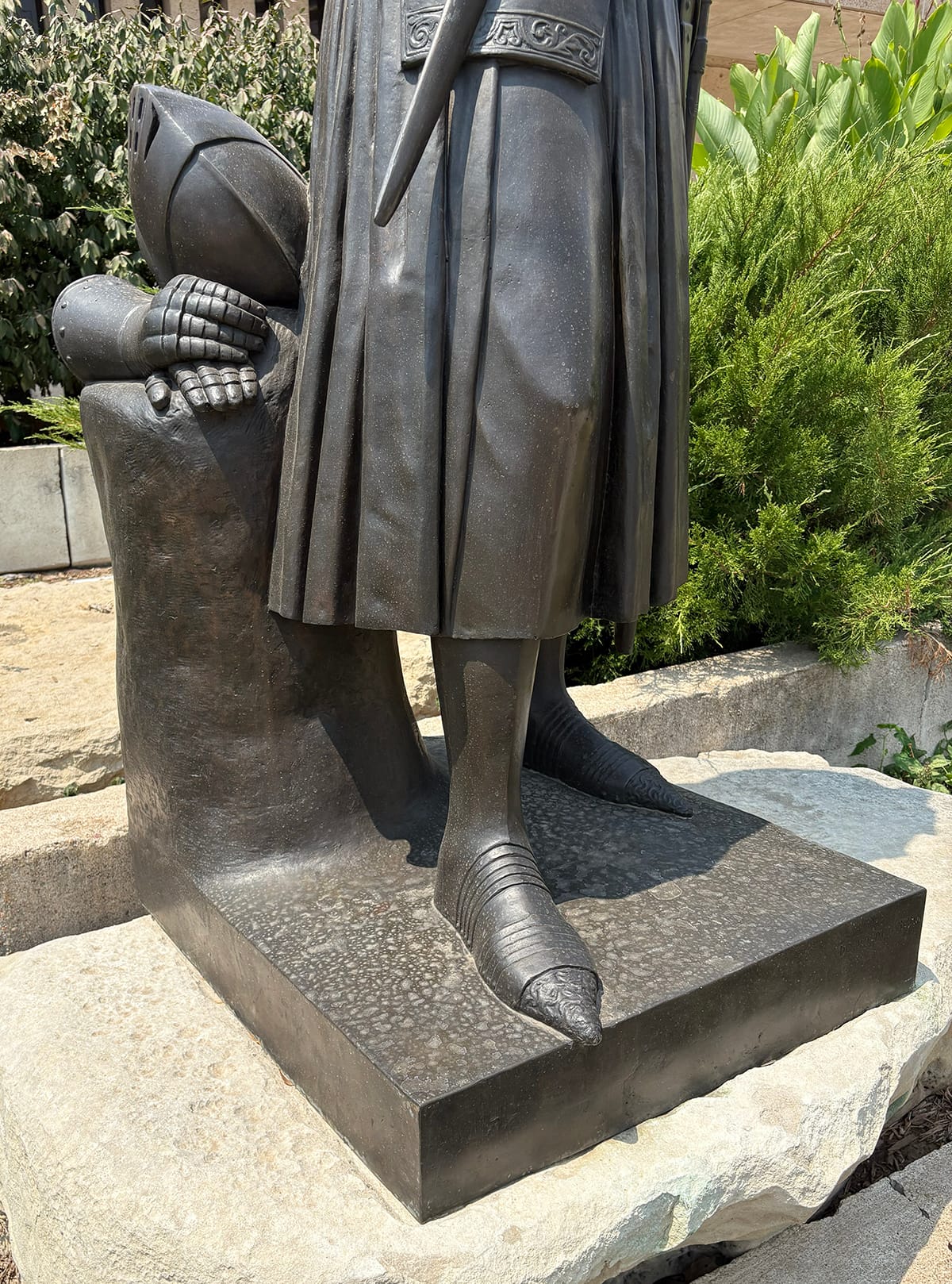
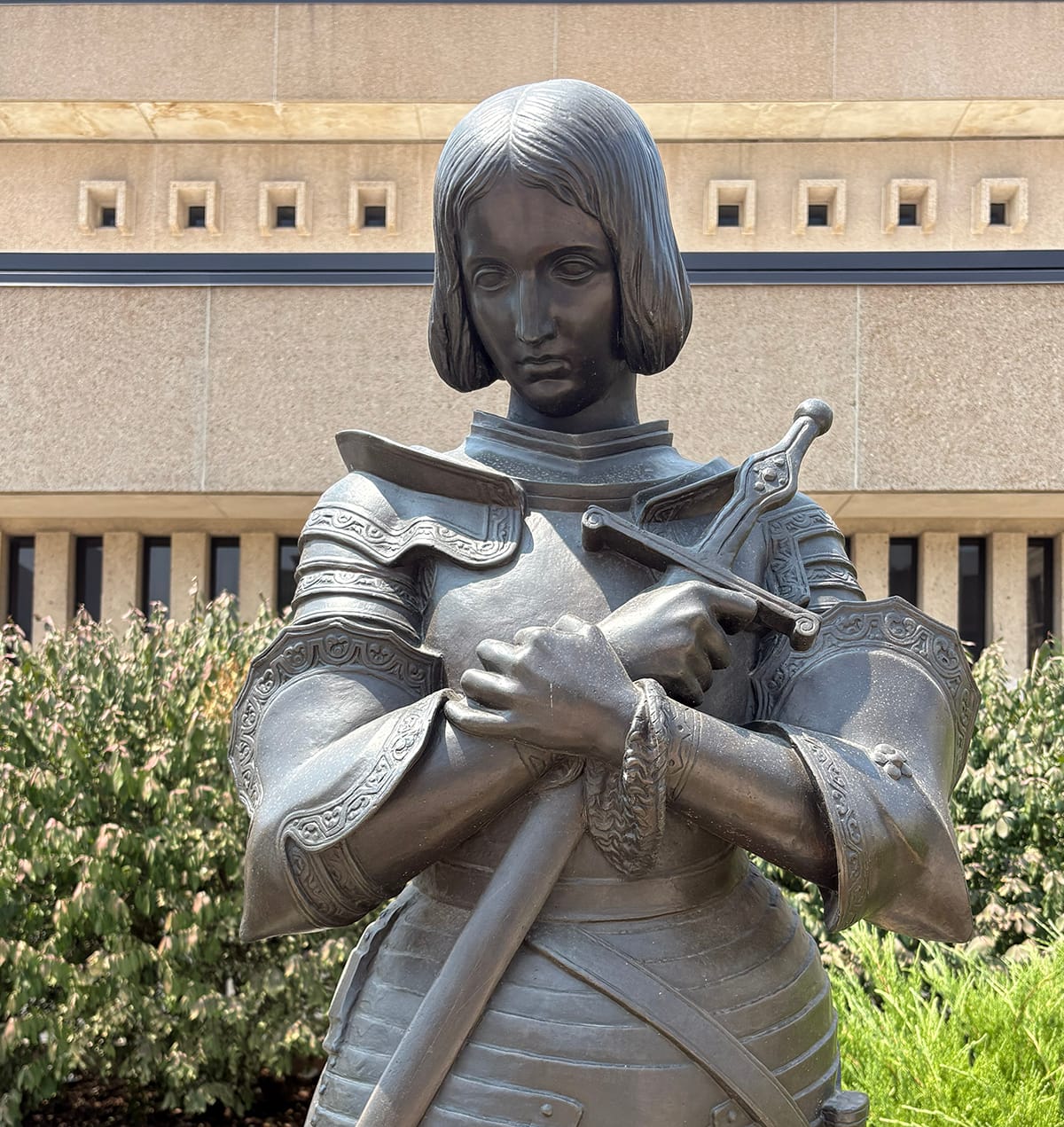
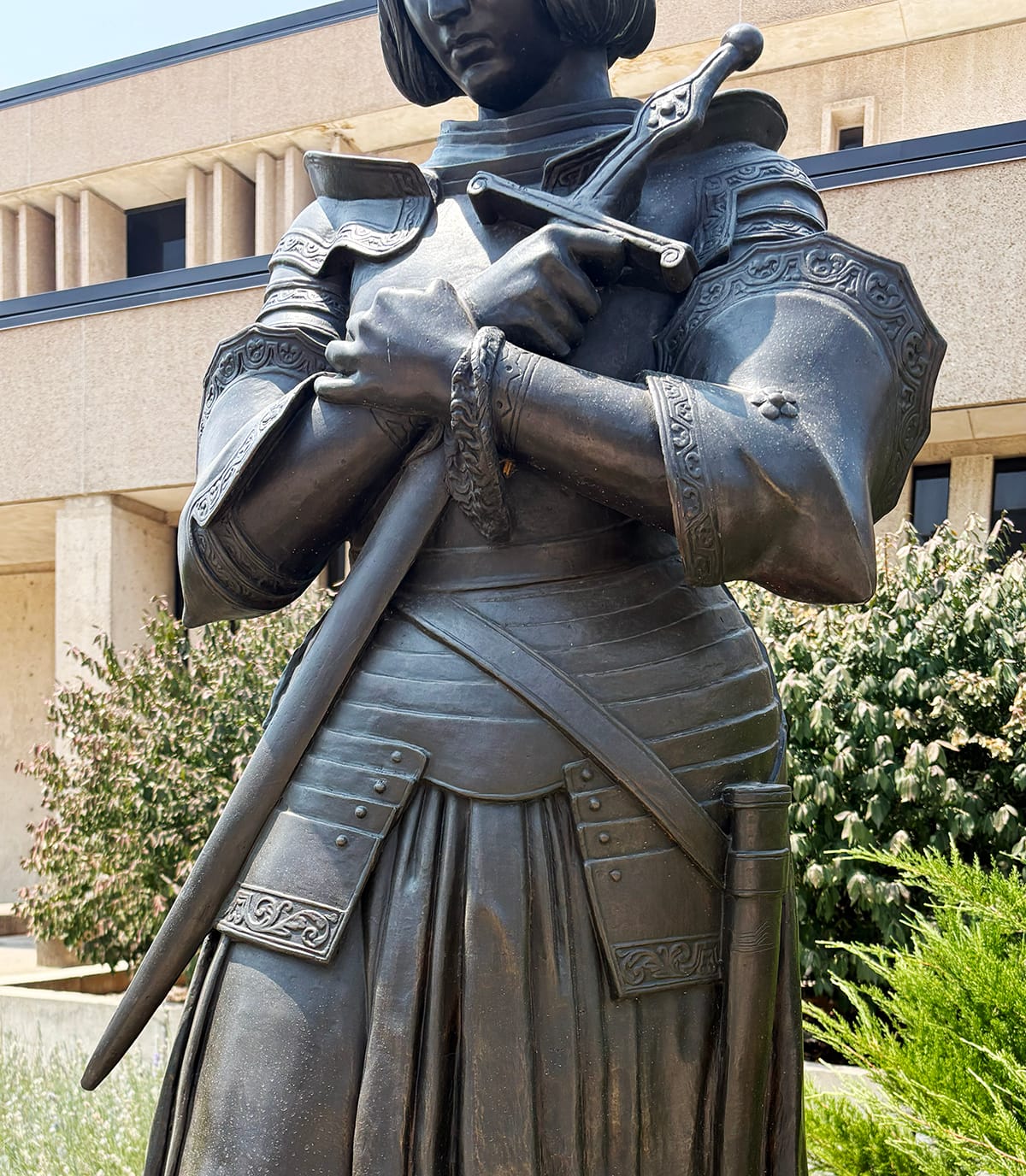
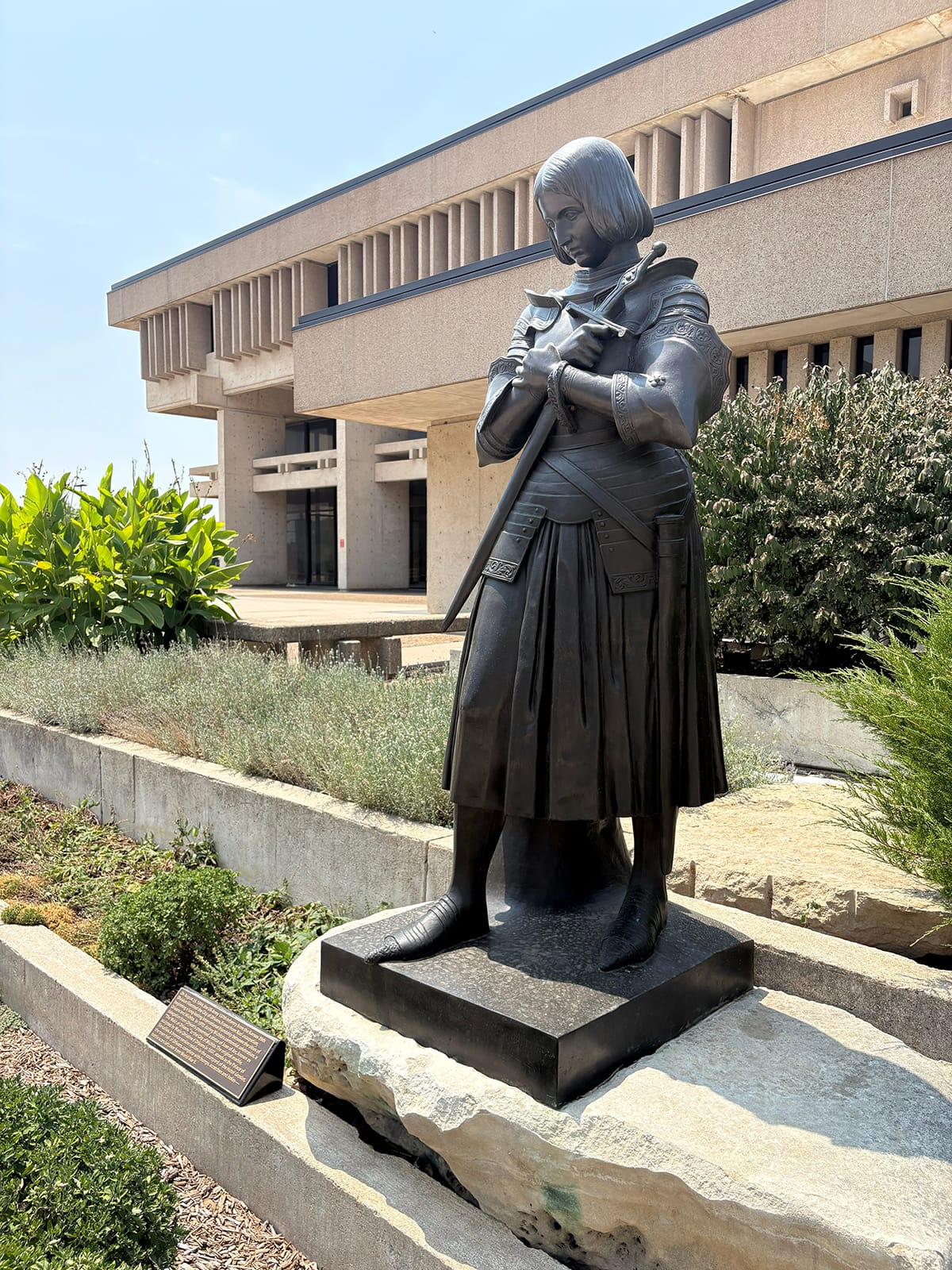
Although this is a copy of “Joan of Arc at Prayer,” the figure’s head bent down in prayer also looks down at viewers below, perhaps acknowledging our presence and seeking our sympathy. (Genevieve Waller/The SHOUT)
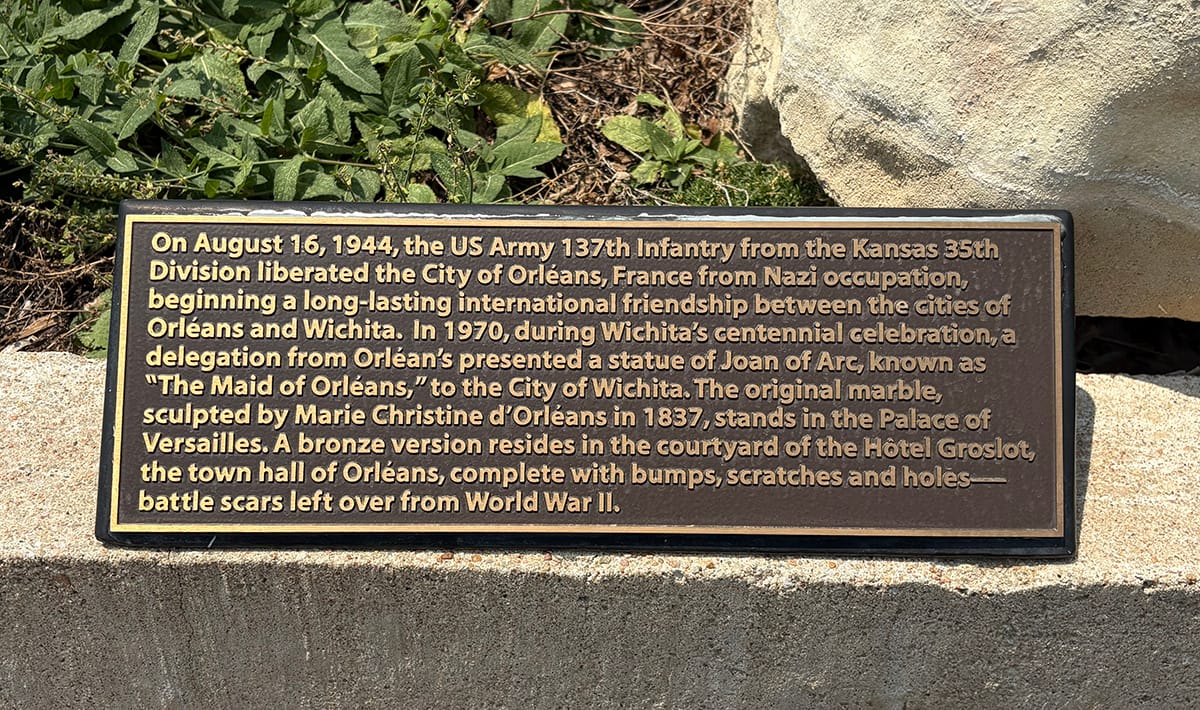
This work is a copy of a copy of the marble sculpture “Joan of Arc at Prayer” created by Princess Marie Christine d’Orléans, a skilled artist, between 1835 and 1837 for her father King Louis-Philippe for the Palace of Versailles, where it is still housed today. The white marble original was celebrated in its day. After the young artist’s early death in 1839, various replicas were made, including a bronze version for the city of Orleans’ city hall (the Hôtel Groslot, where the sculpture is on display in the courtyard).
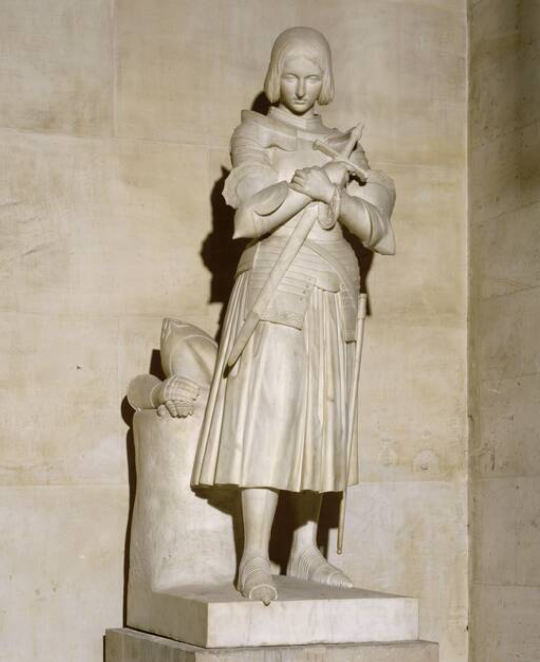

The original “Joan of Arc at Prayer” sculpture by Princess Marie Christine d’Orléans, sculpted in white marble and installed in the Palace of Versailles in 1837. (Chateaux de Versailles/Courtesy); Auguste Vinchon, “Louis-Philippe and the royal family visit the Historic Galleries of Versailles,” 1848, oil on canvas, 74.8 by 59 inches, from the collection of the Museum of the History of France in the Palace of Versailles. (Wikimedia Commons/Courtesy)
How the reproduction came to Wichita is perhaps well known to many residents, but the gravity and modern-day significance of the work may not be so obvious. Like Joan of Arc liberated Orleans in the 15th century, troops from the 137th Infantry Regiment, made up of soldiers from various parts of Kansas, liberated Orleans from German control in 1944. This important World War II event created ties between Orleans and Wichita, which led to the mayor of Orleans’ visit to Wichita in 1970 to celebrate the city’s 100-year anniversary. The Joan of Arc sculpture was a birthday gift.
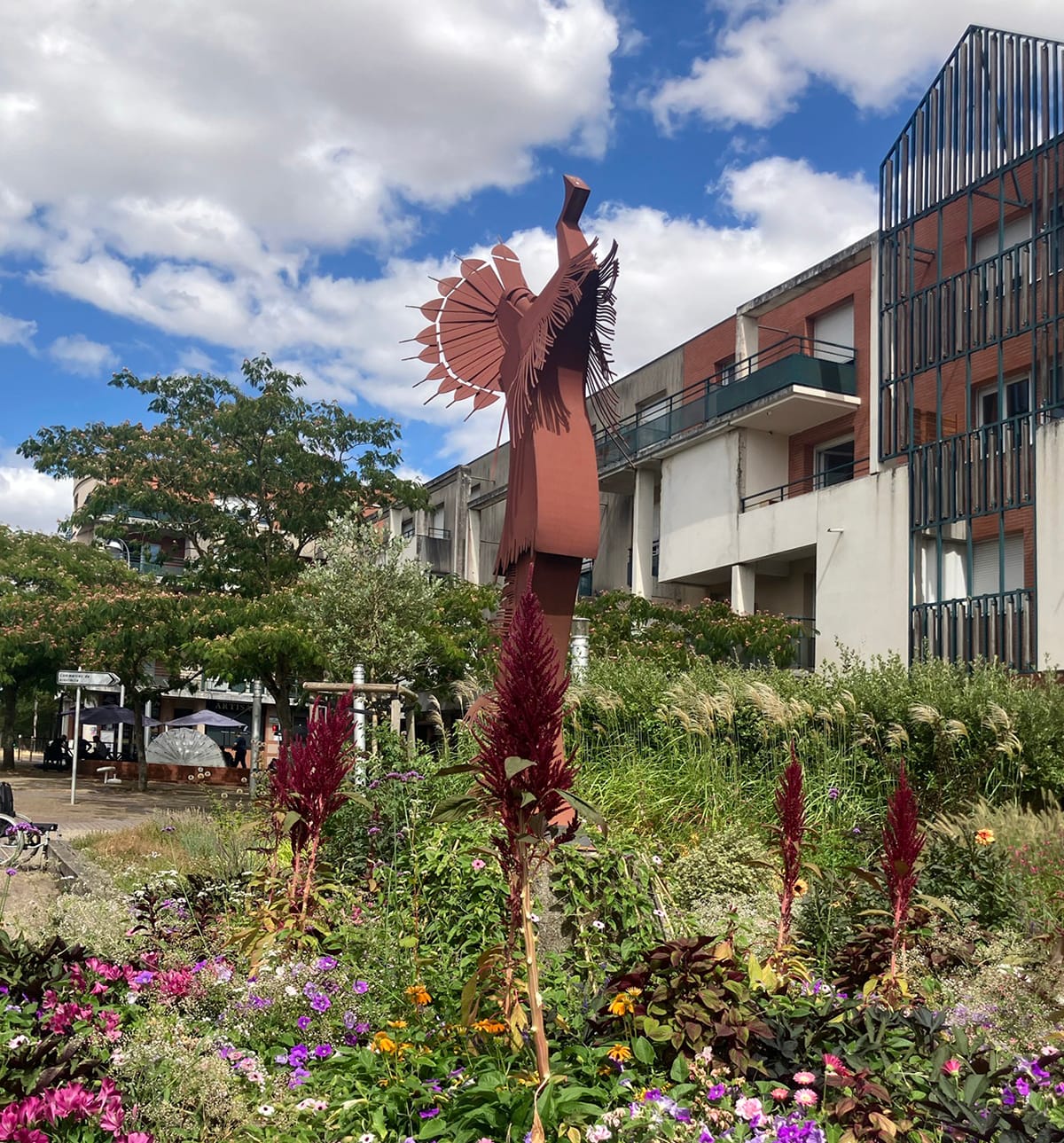
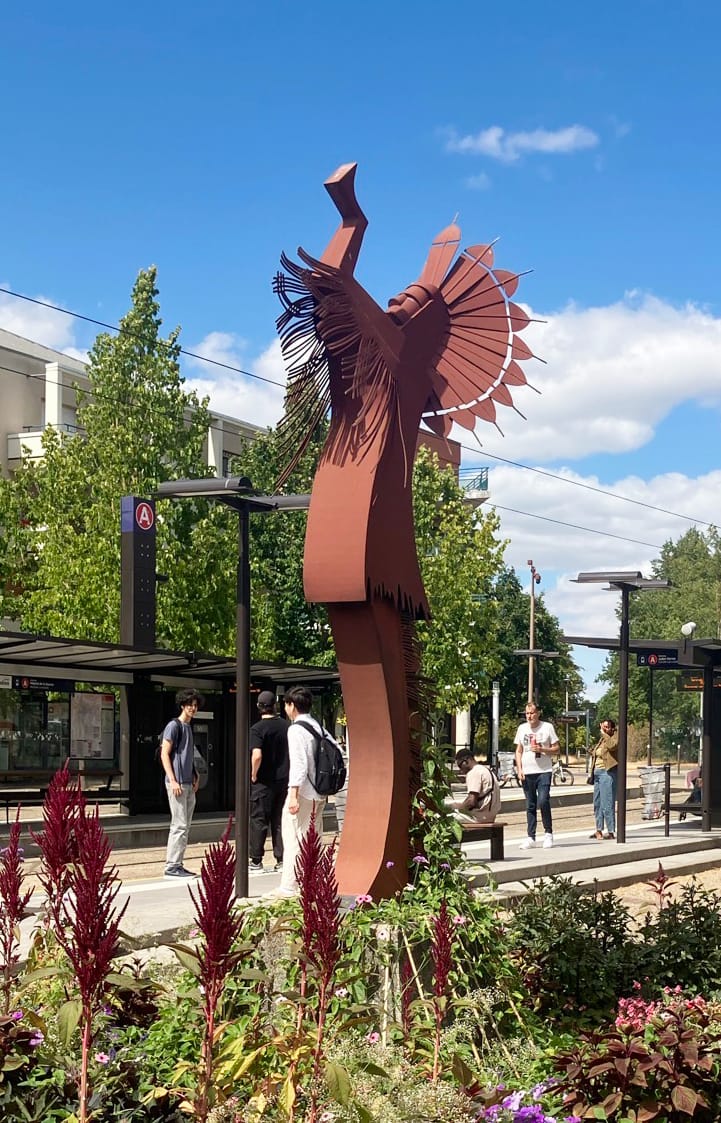
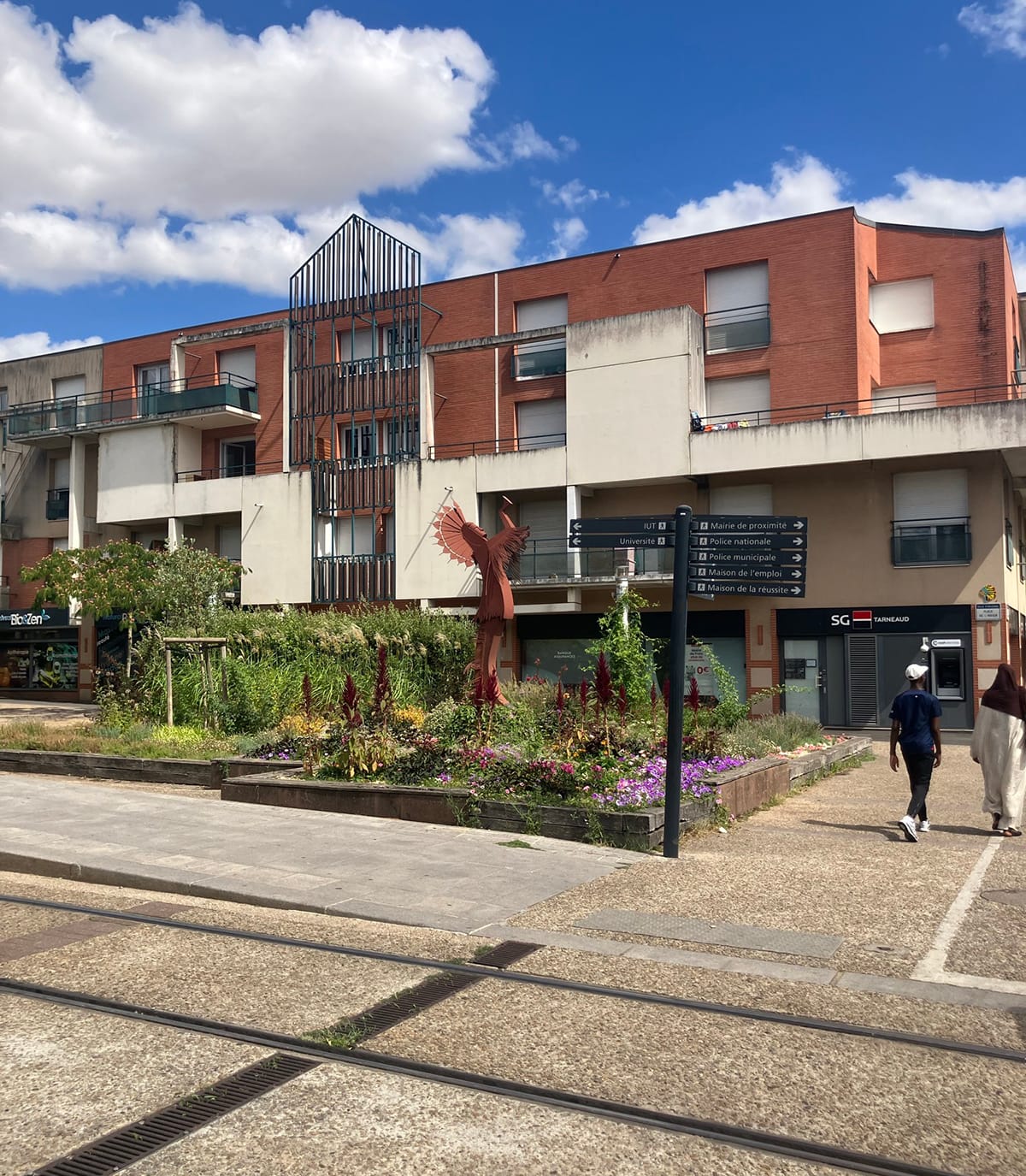
The replica of the “Keeper of the Plains” sculpture is installed in an area of Orleans called La Source, south of the city center. (Alexandros Chasapis)
In 1973, Orleans and Wichita officially became “sister cities,” and since then, both municipalities have organized cultural and educational exchanges. In 1975, Wichita gave Orleans a 10-foot replica of Blackbear Bosin’s 44-foot “Keeper of the Plains” sculpture, which had been installed in Wichita in 1974 and quickly became an emblem of the city.
This work in Cor-Ten steel, a material designed to rust to a red-brown hue, portrays a Native American chief with his arms and head raised in prayer. Fringe dangles from his arms and legs, he wears a giant headdress of feathers with spiky points, his face is formed by layered undercuts that represent his eyes, nose, and mouth, and his body is made up of curving and angular geometric forms. The combination of fine detail with abstraction creates an arresting silhouette from afar and an engaging visual experience up close.
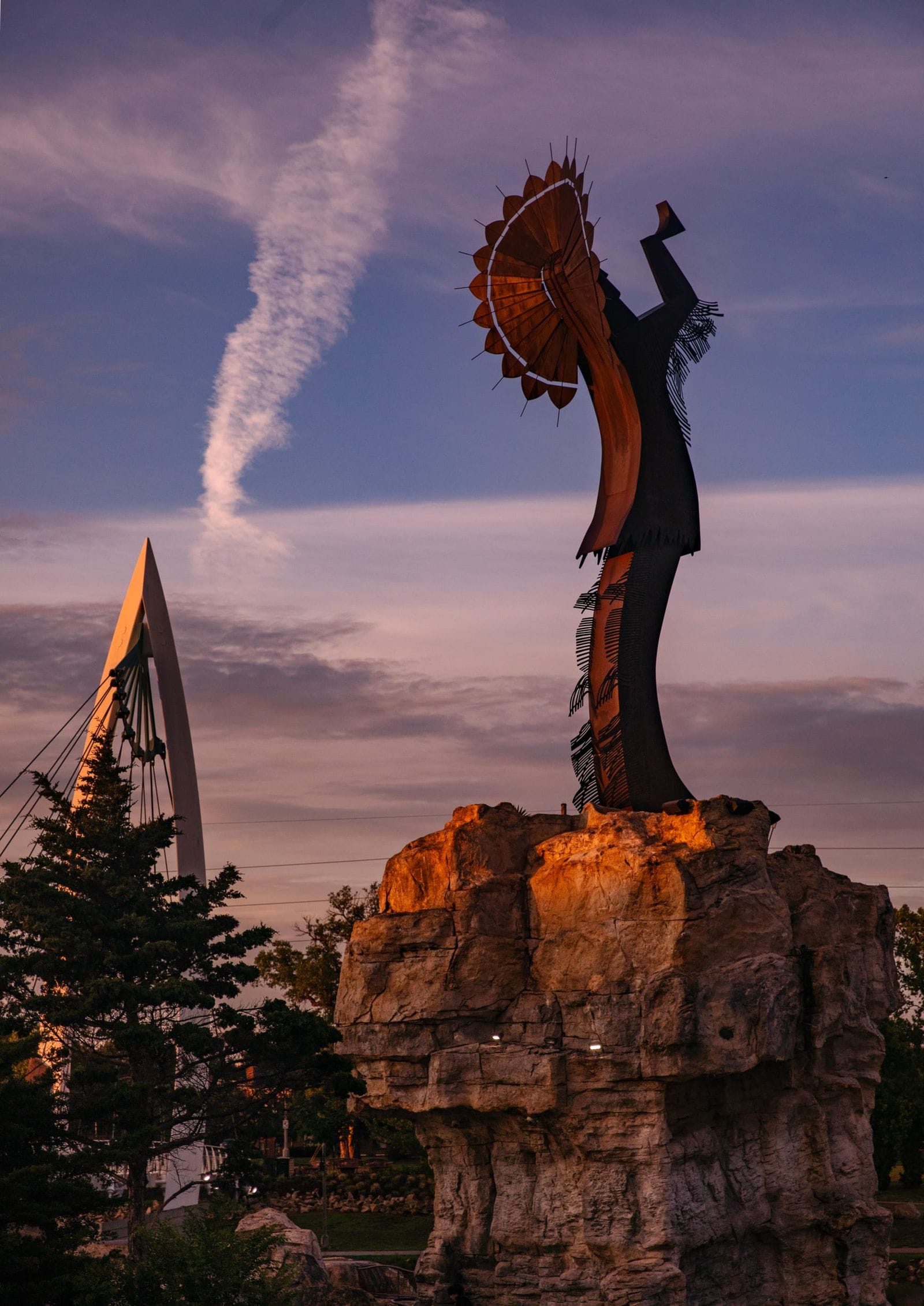
Bosin was Kiowa and Comanche, and he wanted this sculpture to represent the tribes that lived and gathered in Wichita before European settlers arrived, and still resided in the city and the Great Plains in 1974 (and continue to).
This ancient history, going back at least 14,000 years, resonates with the Medieval history of Joan of Arc and the ancient past of France. The smaller version of the “Keeper of the Plains” in Orleans, called “The Indian,” is installed in the Place de l’Indien on the southern edge of the city, near the University of Orleans, an institution founded in the 1200s.
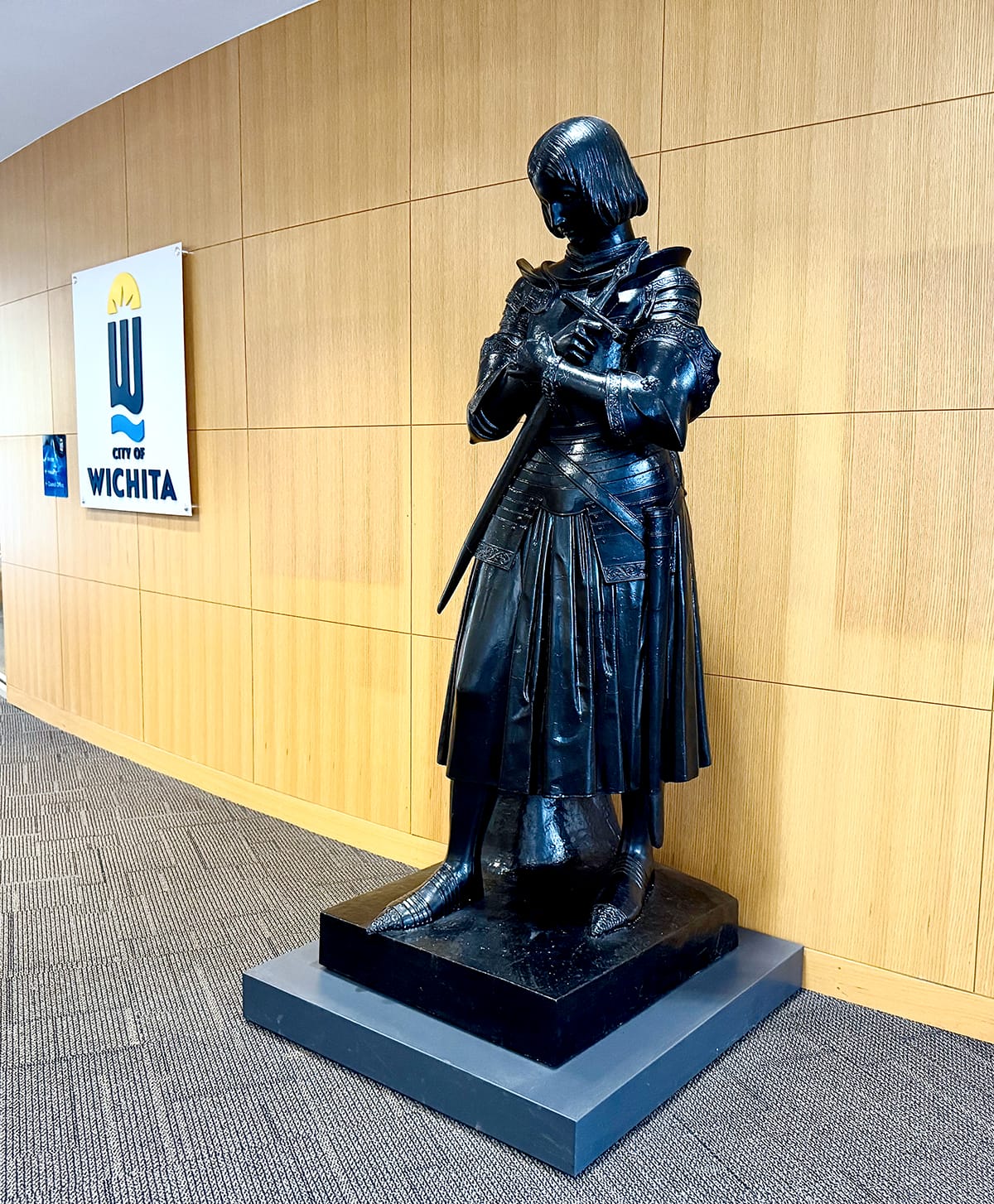
The bronze sculpture of Joan of Arc in Wichita is a cast reproduction of the original cast-stone work that Orleans gave to Wichita. The latter was moved inside in 1996 to protect it from the elements and the bronze copy set in its place. In 2025, this original version was put on display in the lobby of Wichita’s City Hall. With its stone painted a glossy black, it has a somewhat different quality than the more matte, gray-brown bronze work — more like a lacquered ornament — and its setting indoors under artificial lights heightens this effect.
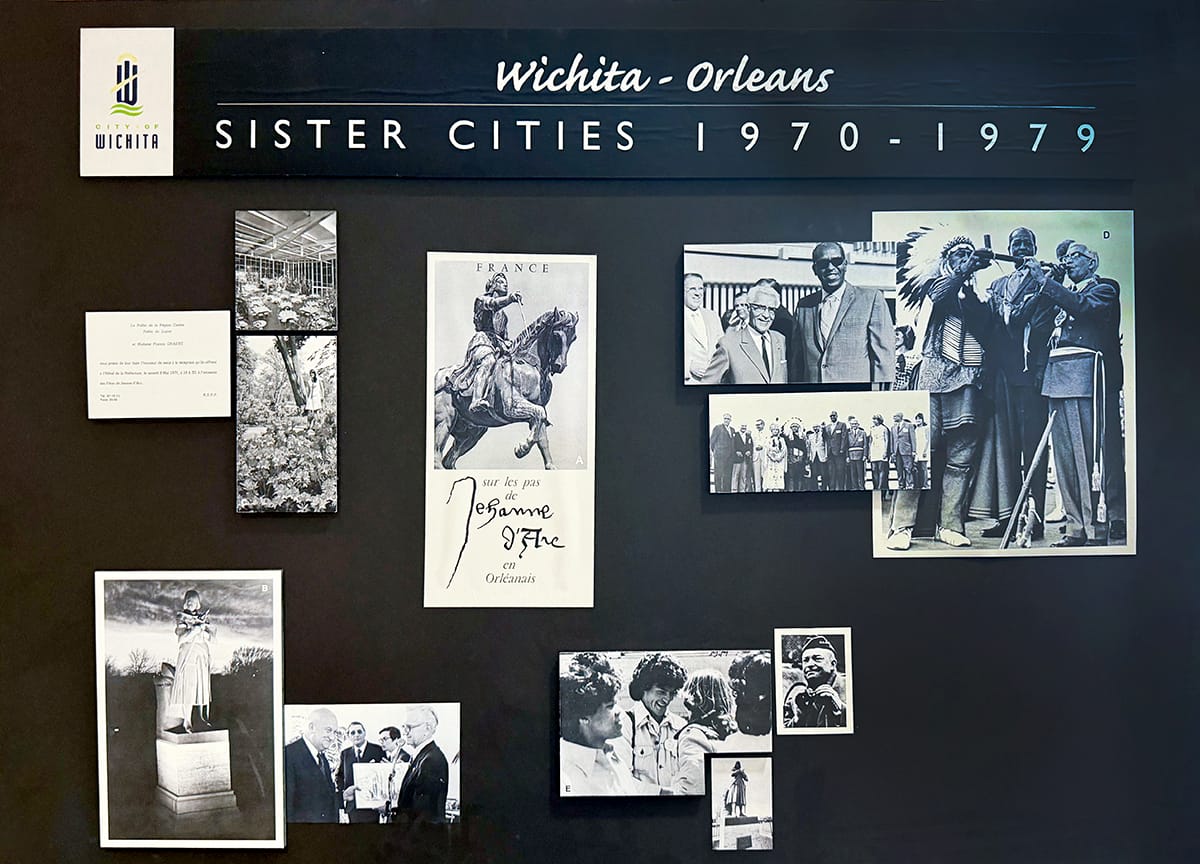
Joan of Arc’s modern-day association with French far-right political sentiments has sullied her image for most people in France, yet this connection is barely known in the U.S. Instead, in the anglophone world Joan of Arc has long represented female independence and agency for her role as a leader, particularly in an all-male military context. Her depictions with short-cropped hair and armor suggest androgyny and genderbending, which have contributed to her reputation as a queer as well as feminist icon in the U.S. and the U.K. These interpretations are at odds with her contemporary political meaning in France and are largely unknown there.
But within the context of the Orleans-Wichita bond of friendship, the figure of Joan of Arc represents everything that the French far-right and fascists of all stripes detest. The cultural exchange of placing Joan of Arc in a Great Plains city in the U.S. and a Native American figure in a historic French city enacts a pro-immigration and integration stance that flouts xenophobia, racist rhetoric, and nationalistic superiority.

On Sunday, October 18, the weekend before the Rassemblement National held their convention in Orleans, members of the Run Wichita group participated in Orleans’ “Courses de l'Indien," an annual race organized by the city and named after the sculpture from Wichita. This was one of many visits Wichitans have made to Orleans for decades, and citizens of Orleans have visited Wichita regularly through the years as well.
While this event did not make national or international news, it offers a very different picture of Orleans and the nation of France than the far-right party wants to see. Symbols like the “Keeper of the Plains” and Joan of Arc can be used to forge ties between disparate communities and combat fear of other cultures.
Each exchange between the two cities underscores the fact that the liberation of Orleans from fascism in 1944 is vital to recall and celebrate today, particularly in the face of far-right nationalism. And surely it is something Joan of Arc would have been proud of.
Related coverage in The SHOUT:
- The Keeper of the Plains turns 50 [Fernando Salazar]
- What is ‘percent for art?’ About the public art funding program that Wichita arts advocates don’t want to lose [Emily Christensen, Jacinda Hall, and Teri Mott]
- The City of Wichita’s public art collection preserves 141 years of history — and it's still growing [Jacinda Hall]
Supplemental reading:
- Say ‘bonjour’ to visitors from Wichita’s Sister City [Celeste Racette for The Active Age]
- The House of Joan of Arc through history [Les Musēe D'Orlēans]
- In Joan of Arc footsteps through Orléans [Tourisme Loiret]
Genevieve Waller (she/her) is an artist, curator, and writer who was born in the heyday of disco and grew up in Wichita. She currently splits her time between Wichita and Denver, where she is the founder and editor of the art magazine DARIA: Denver Art Review, Inquiry, and Analysis. She is also a longtime college radio DJ, most recently on Radio 1190 in Boulder, Colorado.
❋ Derby man has the kind of voice that turns heads — and chairs
❋ Socializing while sober: how some Wichitans are cultivating alcohol-free communities
❋ As a small creative business closes, the owner mourns
❋ Painting through it: Autumn Noire on 20 years of making art
❋ How a guy from Wichita resurrected 'Dawn of the Dead'
❋ Bygone Friends University museum housed curious collections
Support Kansas arts writing
The SHOUT is a Wichita-based independent newsroom focused on artists living and working in Kansas. We're partly supported by the generosity of our readers, and every dollar we receive goes directly into the pocket of a contributing writer, editor, or photographer. Click here to support our work with a tax-deductible donation.