Family Blues: ‘Fences’ at The Forum
A potent setting frames powerhouse storytelling in The Forum’s production of August Wilson’s classic.
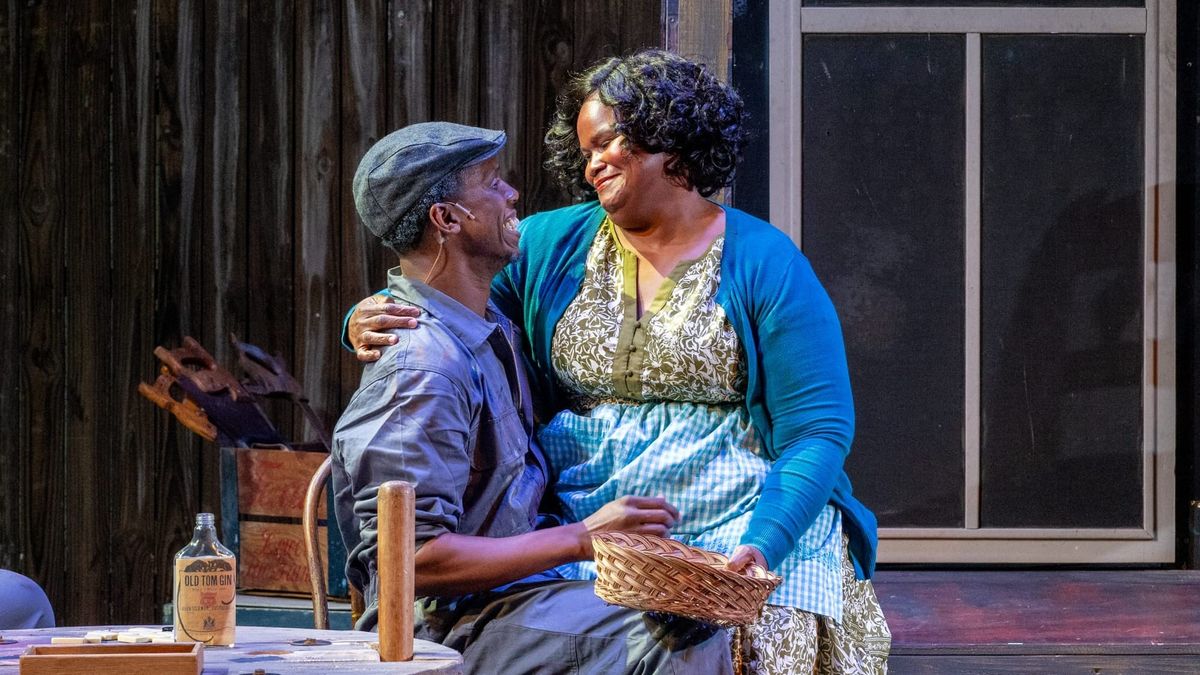
The Forum Theatre Company’s “Fences” is warm and bleak, joyful and devastating. Built on the rock that is August Wilson’s script, this production is not to be missed. It runs through November 15.
“Fences” is fueled by Wilson’s 1950s memories of his difficult childhood in the economically disadvantaged Hill District of Pittsburgh, Pennsylvania, where the play is set. It feels like it’s written directly from his battered heart. Developed at the Eugene O'Neill Theater Center's 1983 National Playwrights Conference, “Fences” debuted on Broadway in 1987 featuring James Earl Jones as Troy Maxson and Mary Alice as Rose. Copious awards and productions followed, off-Broadway, nationally, and across the pond, culminating in the 1987 Pulitzer Prize for Drama. This is the sixth in Wilson's 10-part Pittsburgh Cycle (or Century Cycle) exploring the evolving African American experience through race relations, family themes, economic issues, and themes of survival and personal quest for fulfillment, one play per decade. This is the first time it has been produced in Wichita.
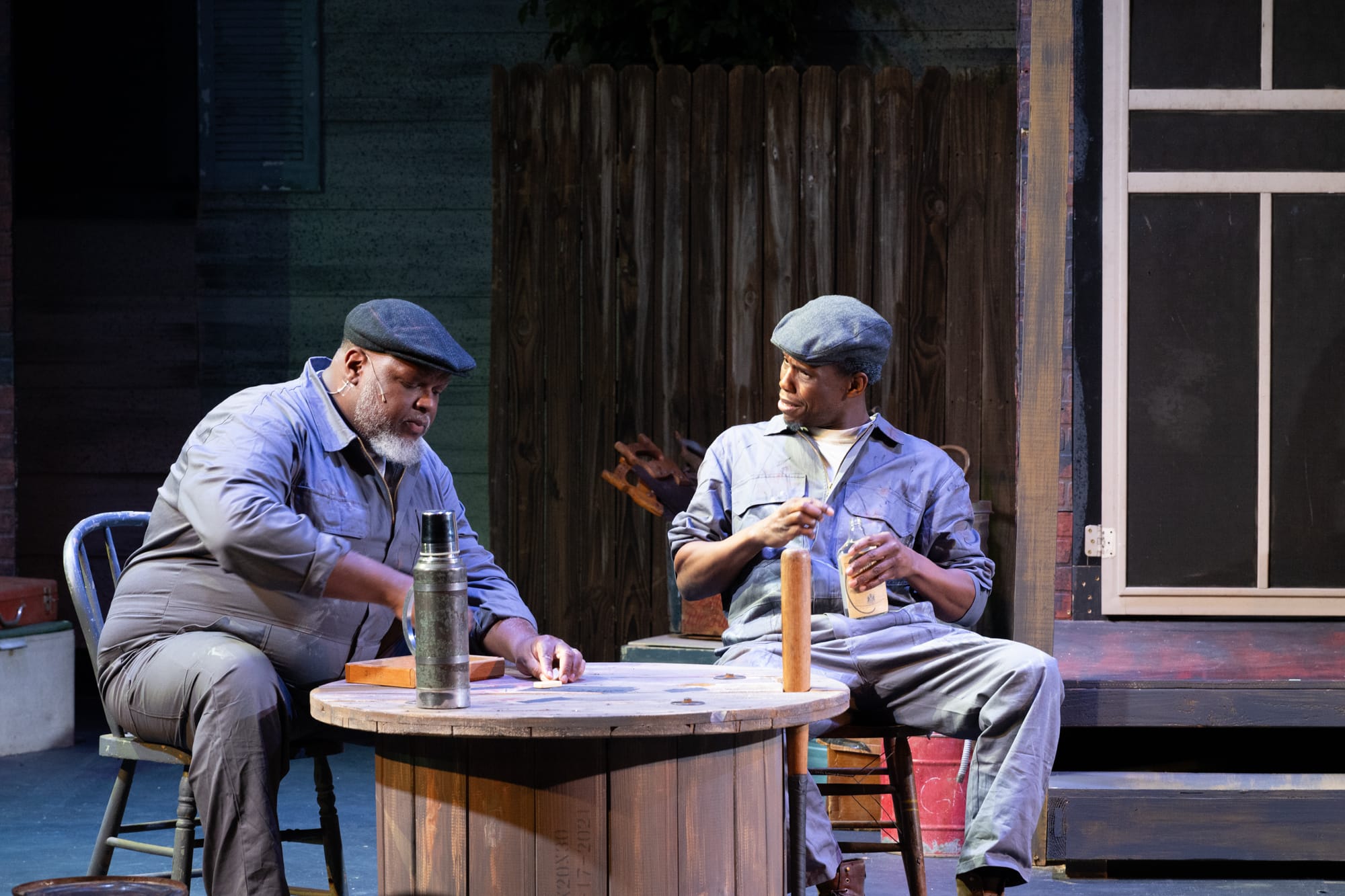
A majority of the show takes place over several months in 1957. The action is set in the back yard of the Maxson home, where Troy and Rose have been living since they married. In this space, Set designer Ben Juhnke creates an environment that supports the telling of a story not just of poverty, but of love and familial history. The unassuming, two-story row house lacks many basics, including a fence that Rose constantly reminds Troy to build. Its practical and metaphorical purpose becomes clear: to protect the family and keep them together.
An improvised table is a regular gathering place for friends and relatives. Rose fills a clothesline with hand-washed items. A sawhorse reminds Troy of his fence-building task and gives him a place to commune with his best friend, Bono, and attempt to guide his younger son Cory. In the side yard, a knot hangs at the end of a rope. Troy — a garbageman who was once a successful player in the Negro Leagues — regularly vents his rage on it with a baseball bat.
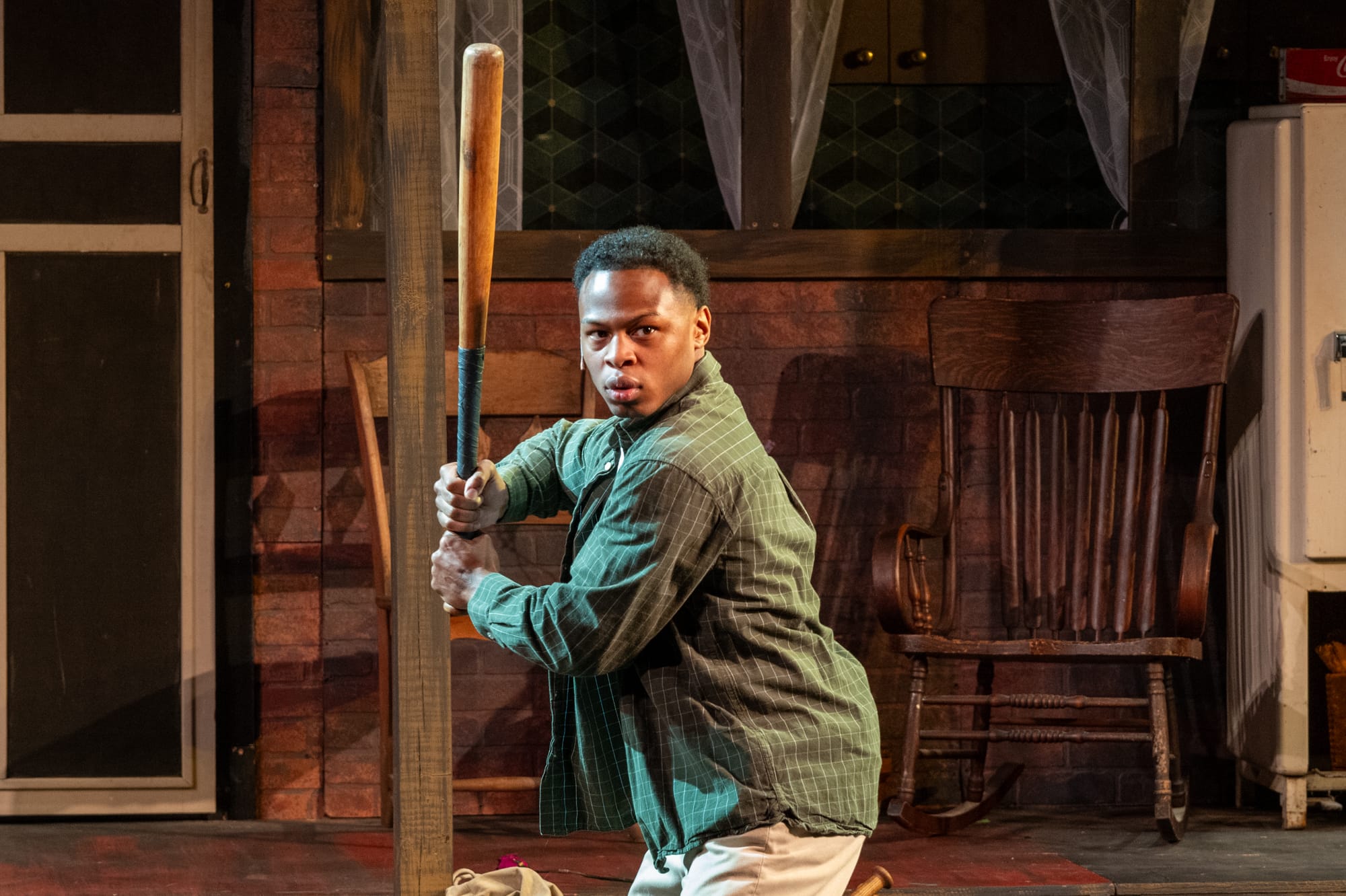
All of these stage elements are presented in a rich, earthy color palette and heightened with carefully curated vintage properties, designed by Aaron Profit. When lighting designer David Neville ignites this homey space with warm light, which burns with a nostalgic fire that reminds us of our own homes, the good memories and the bad. This artistic collaboration establishes the ideal place from which to share this American tragedy.
Producer and co-director Kathryn Page Hauptman and co-director Anjelica McRae Breathett have assembled and conducted an extraordinary ensemble cast, which brings the many layers of this work to life. Blues-inspired dialogue flows through the script's lyric text. At the show’s beginning, following the conversation was briefly challenging, but within minutes I was so engrossed in the story that I realized I understood every word.
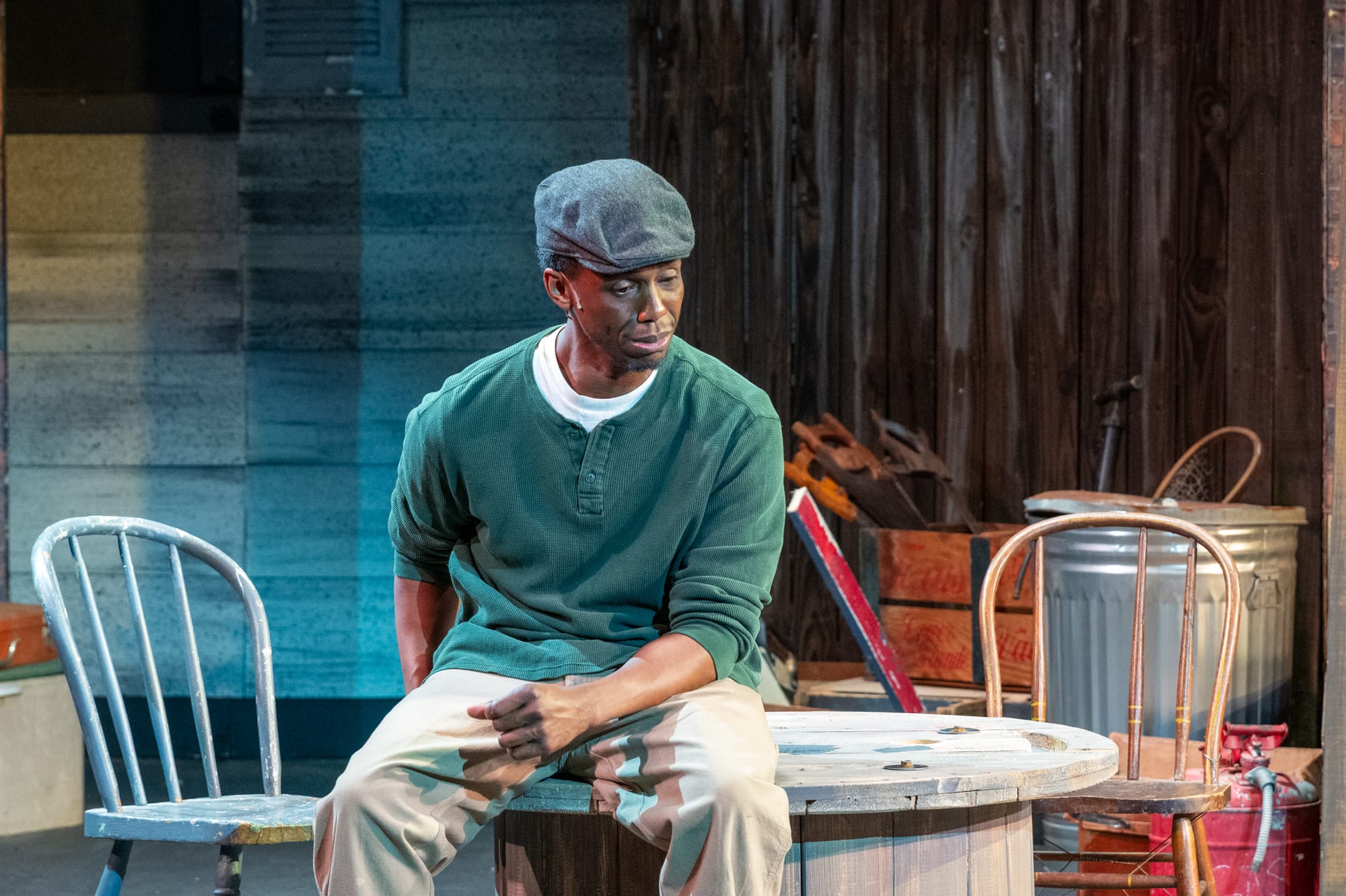
Arron Profit shines as tragic hero Troy Maxson. Our protagonist has more than one tragic flaw, but his determination to provide for his family allows his loved ones to look the other way. Troy is enthusiastic, energetic, full of ideas, and fearless — he has the courage to approach his boss for a promotion.
He also has a temper, a drinking problem, episodes of self-loathing, and other issues that impede his happiness and hope for the future. Profit has an impressive energy level and a strong handle on Wilson’s poetic language and rhythm. His Troy is funny, remorseful, kind, romantic, stubborn, cruel, clueless, hopeless, dedicated, ambitious, angry, and deeply human.
Troy can sing and dance. He can entertain his loved ones. He can, and does, make terrible decisions at the drop of a hat. It’s important that we see all of who Troy is so we can cheer for him and also find his actions frustrating and appalling. It takes an actor as versatile and focused as Profit to knock this role out of the ballpark, and believe me, he does.
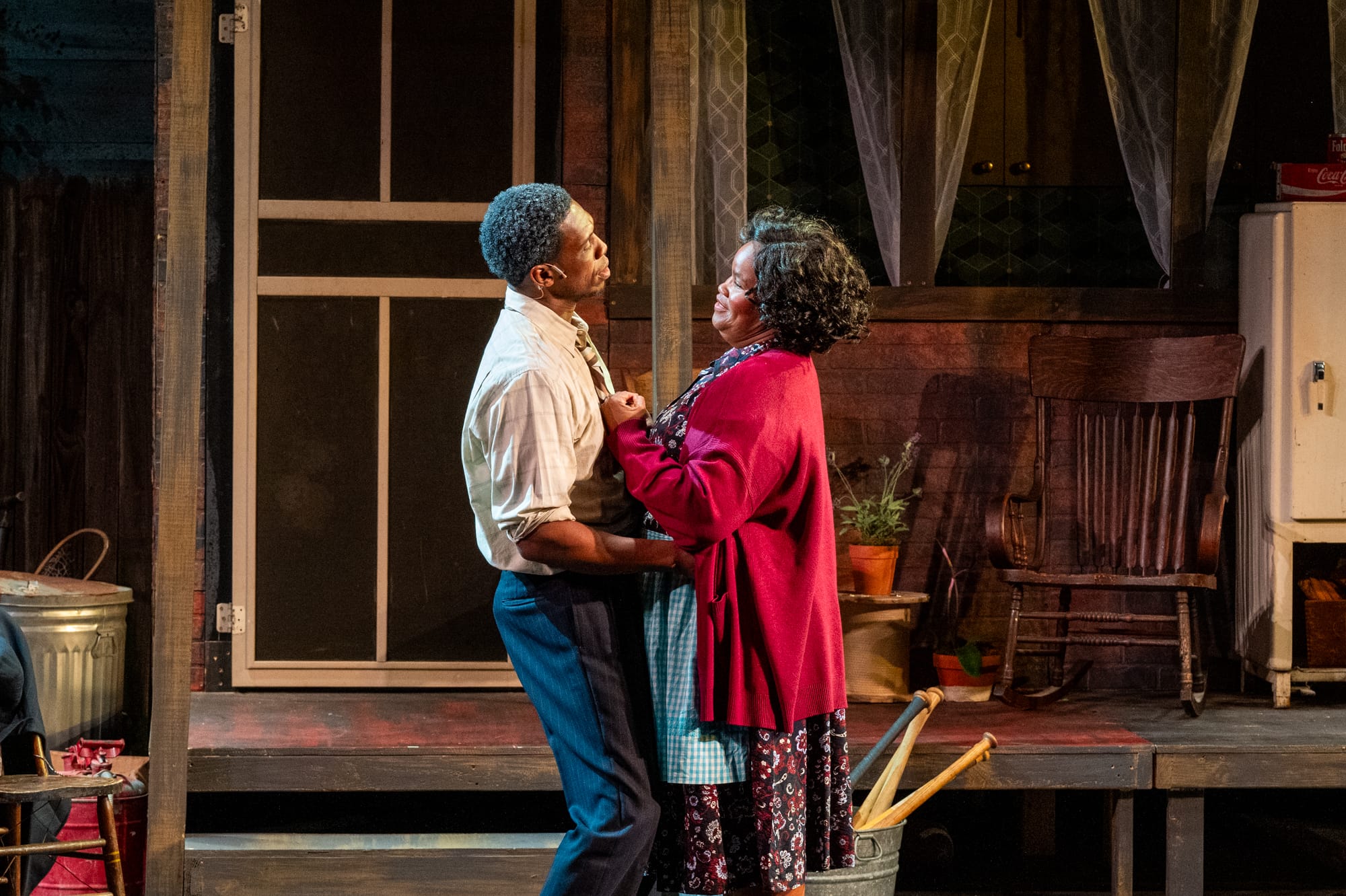
Our hero is lucky to have a champion in Rose (Kim Henderson), his committed wife of 18 years. A resourceful blur of domestic activity and the mother of Cory, Rose is in charge of making things go smoothly — a demanding role at best. Henderson’s emotional portrayal allows us to see how much Rose tolerates while also observing her deep love and belief in Troy, regardless of his misguided choices. No doormat, however, Rose will only take so much.
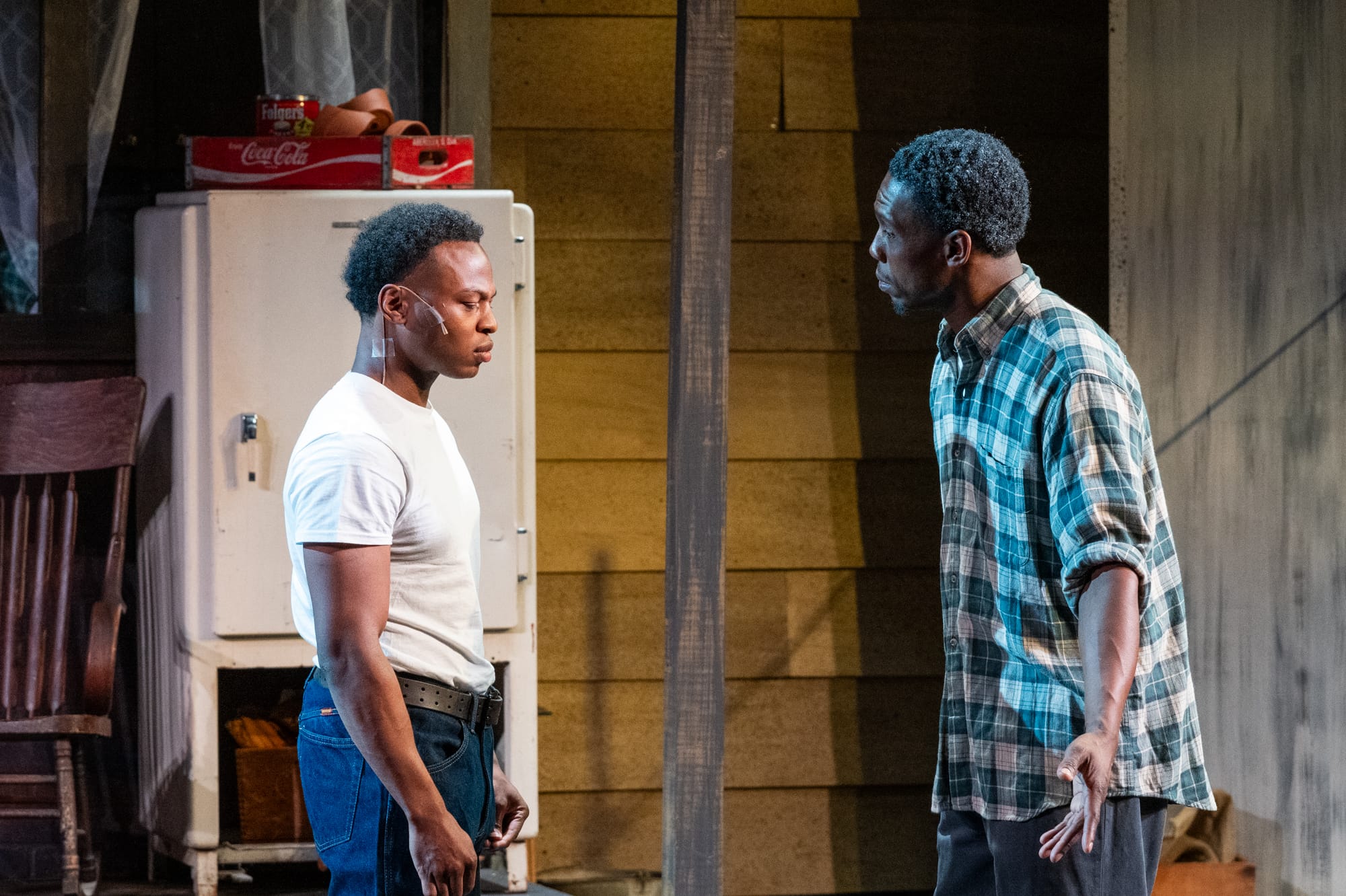
A young man doing his best to fulfill his own dreams but also make his father proud, Cory (Tyrone Jackson) longs to play football — and he has a chance. Troy, fearing his sons will suffer the same heartache he did when he pursued his dream of professional baseball, fights against him and Rose. Jackson does a fine job playing Cory’s many levels — excitement, outrage, sadness, confusion, sullenness. At times Cory is as like his father as Troy was like his own father, to the horror of both men.
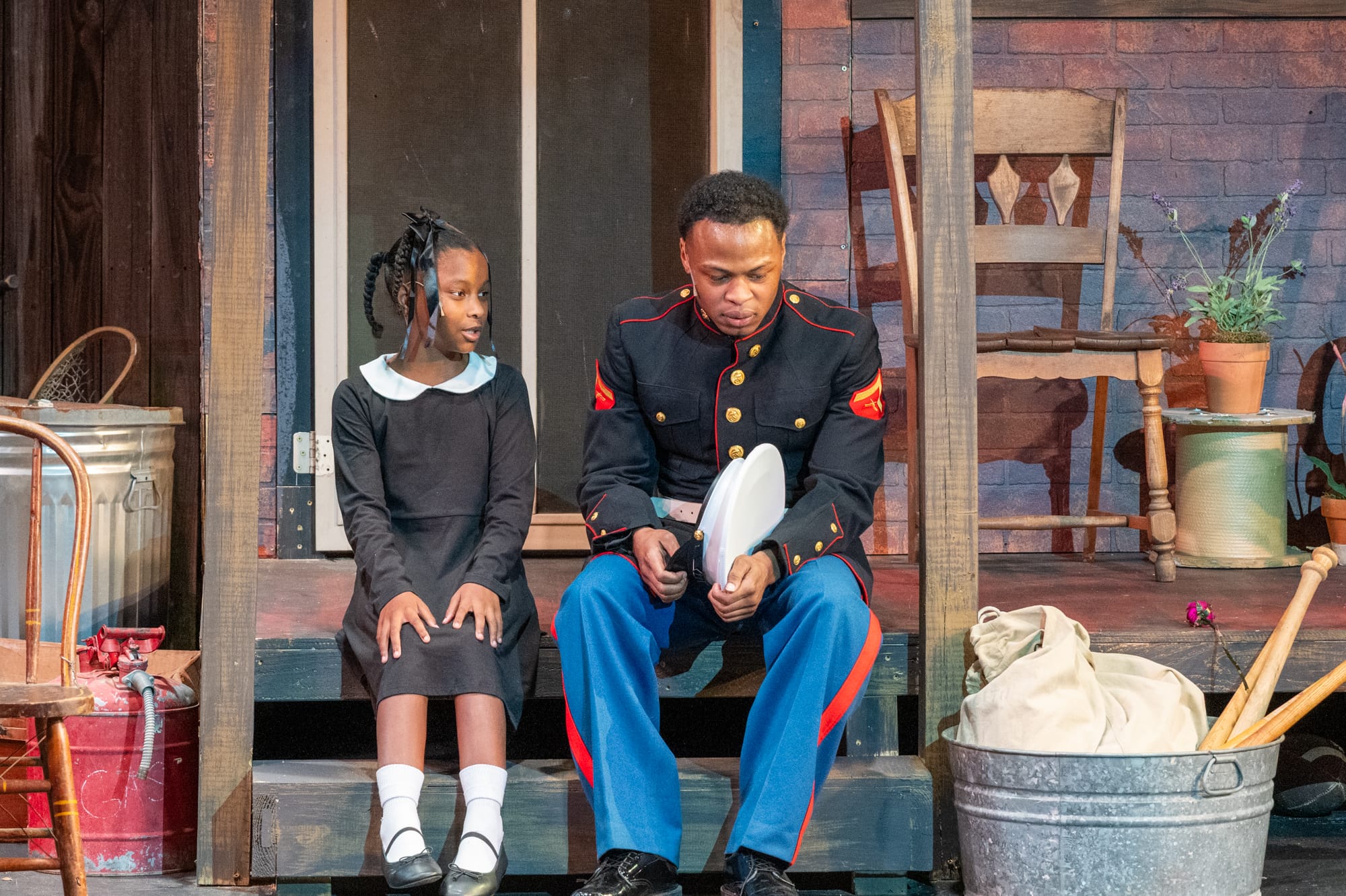
Troy’s older son Lyons (Titus Hayden) has his own dream, to be a musician whether his father approves or not. Hayden makes Lyons' easy style feel natural, and his visits bring some comic relief. In the role of Gabe, Troy’s brain-damaged brother, Nathaniel Lee is at turns winsome and loving then unstable and scary; his final scene is marvelous. Khaliya Brown is an adorable Raynelle.
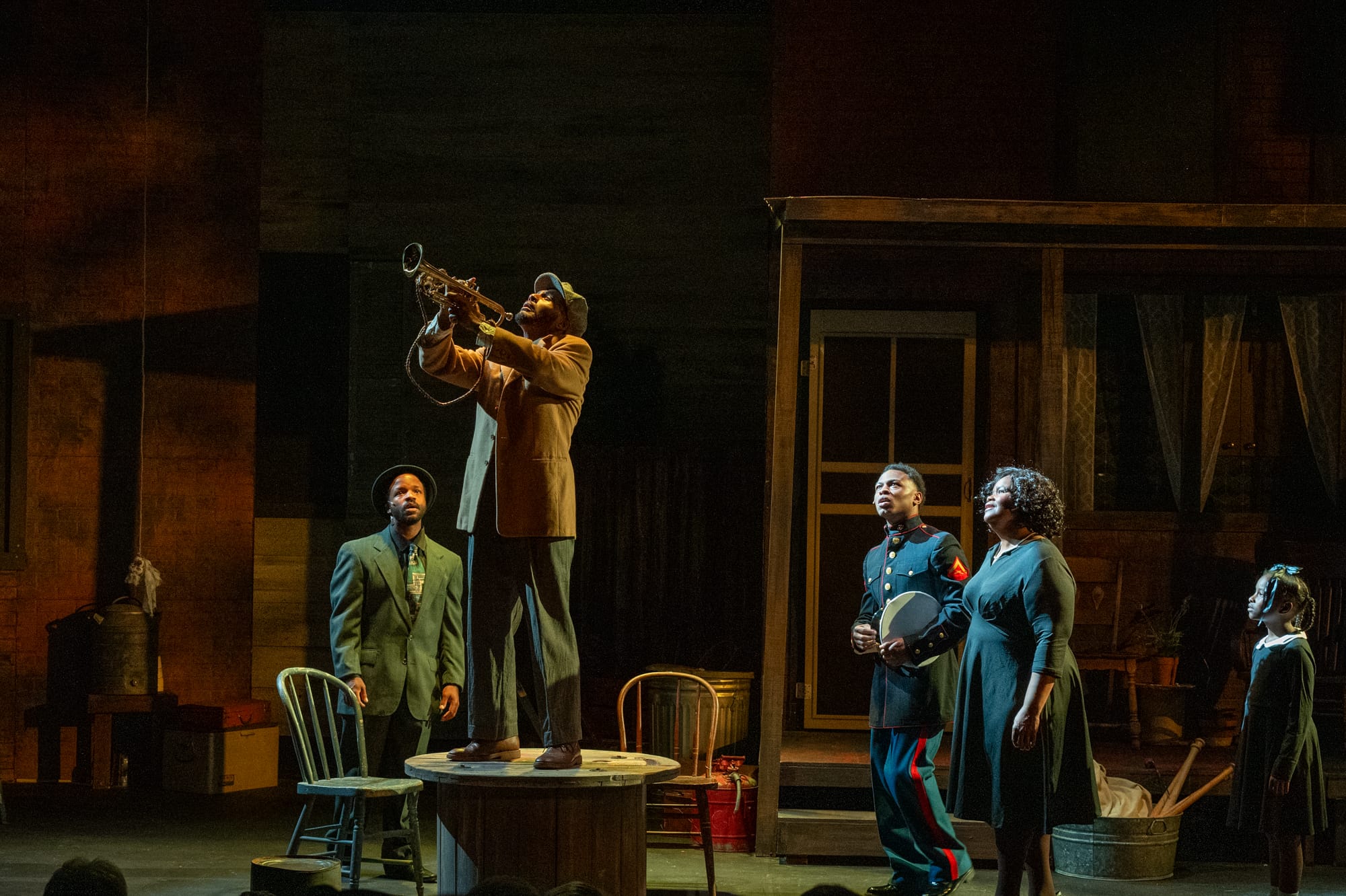
With his gorgeous voice, Alexander Ogburn’s Bono is a sturdy, benevolent presence, ever projecting hope and patience, ever on Troy’s team until even he can see his dear friend slipping away. A scene near the end where he visits Troy made me begin to weep, and I never stopped.
The Details
The Forum Theatre Company presents “Fences”
October 29-November 15, 2026, at the Forum Theatre, 141 S. Ellis St. in Wichita
Tickets are $32-47. Discounts are available.
Learn more and buy tickets or make reservations online.
Teri Mott is a writer and actor in Wichita, Kansas, where she covers the arts as a critic and feature writer. She is co-founder of The SHOUT.
❋ Derby man has the kind of voice that turns heads — and chairs
❋ Socializing while sober: how some Wichitans are cultivating alcohol-free communities
❋ As a small creative business closes, the owner mourns
❋ Painting through it: Autumn Noire on 20 years of making art
❋ How a guy from Wichita resurrected 'Dawn of the Dead'
❋ Bygone Friends University museum housed curious collections
Support Kansas arts writing
The SHOUT is a Wichita-based independent newsroom focused on artists living and working in Kansas. We're partly supported by the generosity of our readers, and every dollar we receive goes directly into the pocket of a contributing writer, editor, or photographer. Click here to support our work with a tax-deductible donation.