
Different ways to see: Maggie Garner at Envision Arts Center
In her first major solo exhibition, the Georgia artist invites visitors to spend time inside her immersive world.
In an interview with The SHOUT, artist Maggie Garner shared a memory of kayaking with a friend. As they moved through the water together, her friend described the colors painting the sky and the shapes of clouds. In return, Garner pointed out faint sounds of birds and other audible details. By relaying their experiences, the friends each drew attention to sensory impressions that neither could fully appreciate alone.
This exchange perfectly reflects "A Hidden Place," Garner's first major solo exhibition, which is on view at Envision Arts Center's new location in Wichita's Delano District. Created in collaboration with Autumn Gary and Taiomah Rutledge, the exhibition invites visitors to slow down and explore beyond what is visually apparent to discover how meaningful connections emerge through touch, sound, shared memories, and active participation.
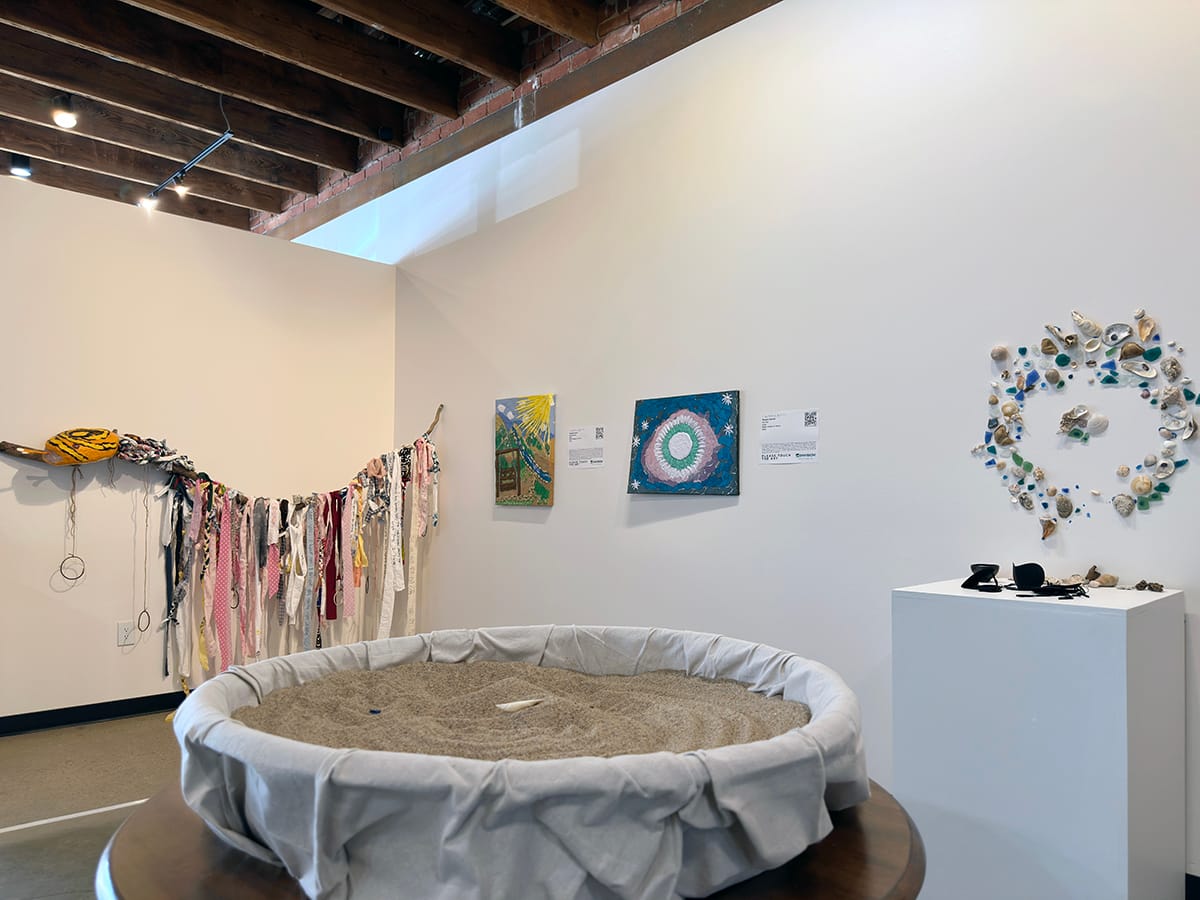
Garner is a blind artist who spent her early childhood years between Georgia and Florida, where she developed a fond relationship with the coastal landscapes that influence her work today. Although she has created art since she was child, experimenting with braille designs, pottery, knitting, and other tactile mediums, she did not begin pursuing art as a profession until the past few years. That ambition stemmed from encouragement from her friend Autumn Gary, whom she met through a program offered by the Jepson Center in Savannah, Georgia, where Garner currently lives.
For Garner, art is a magical way of sharing experiences, beliefs, emotions, and perspectives to help humans better understand one another. Whether through visual art, music, or stories and memories, she asserts that creative expression can bring individuals together across distance, time, and cultures. This philosophy is central to "A Hidden Place.”
In the exhibition, Garner is not solely concerned with displaying works for aesthetic appreciation, but also with creating a space that fosters opportunities for connection. Instead of treating art as something that should only be appreciated from a distance, she produces multi-sensory artworks that encourage visitors to touch and even participate in, transforming the gallery into a space for exploration and imagination.
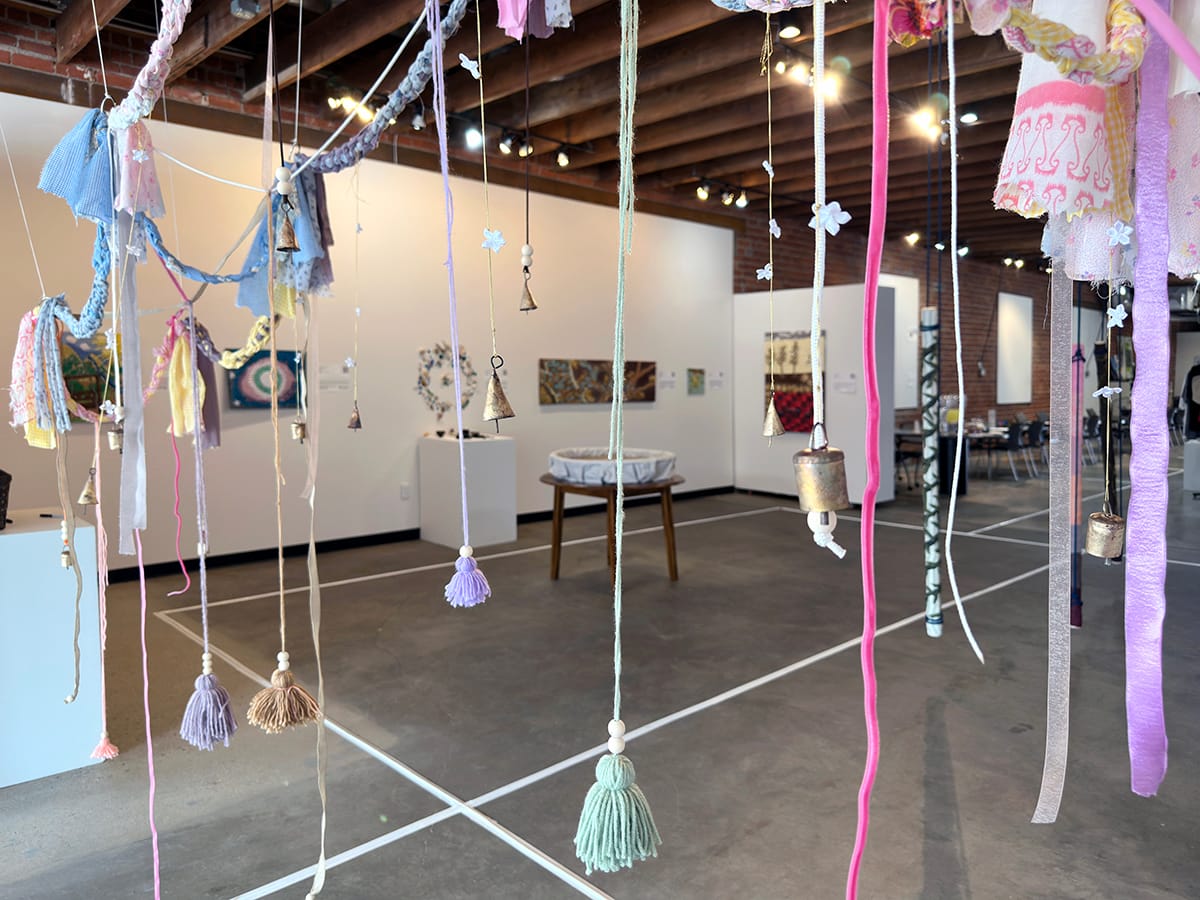
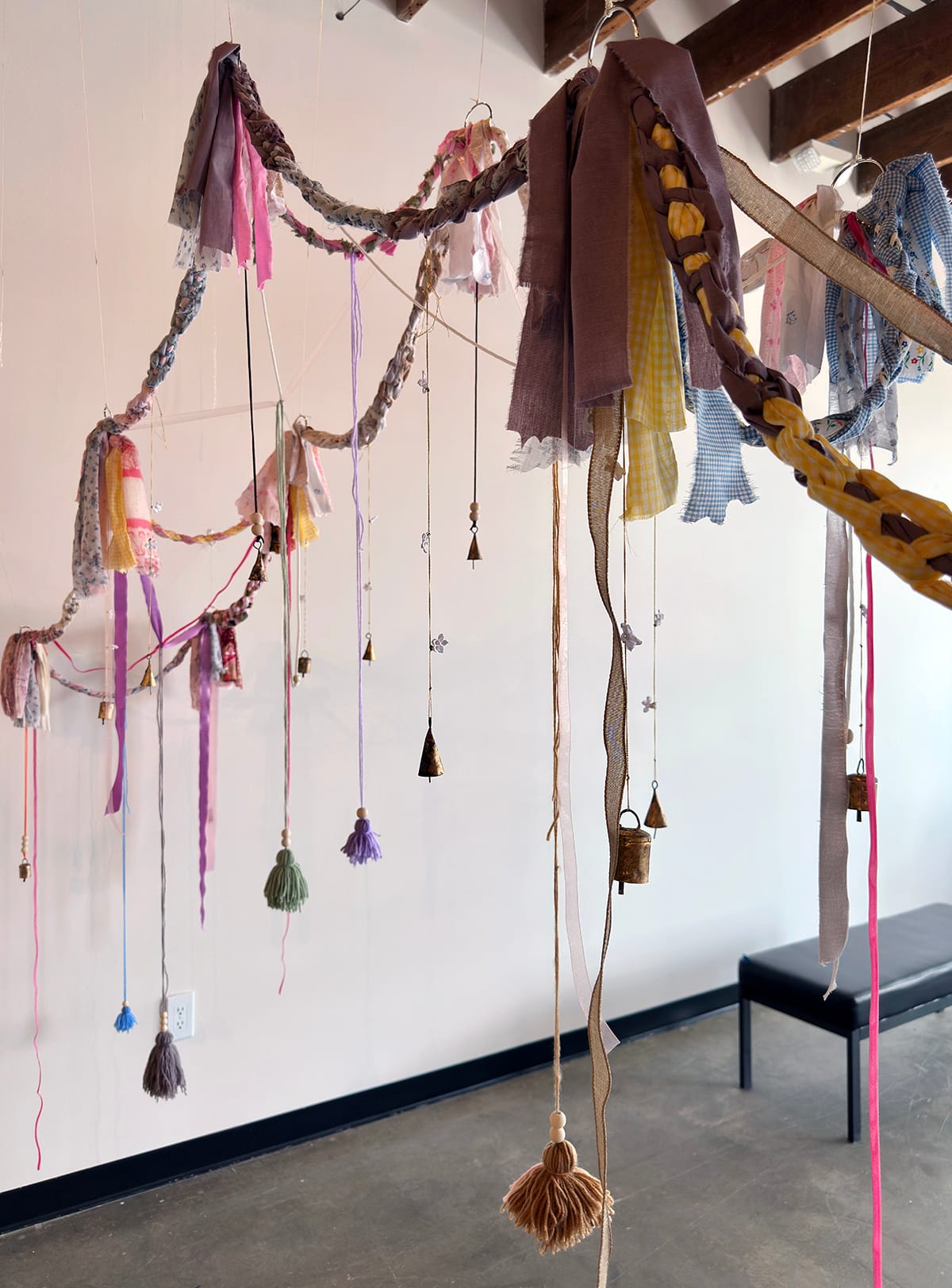
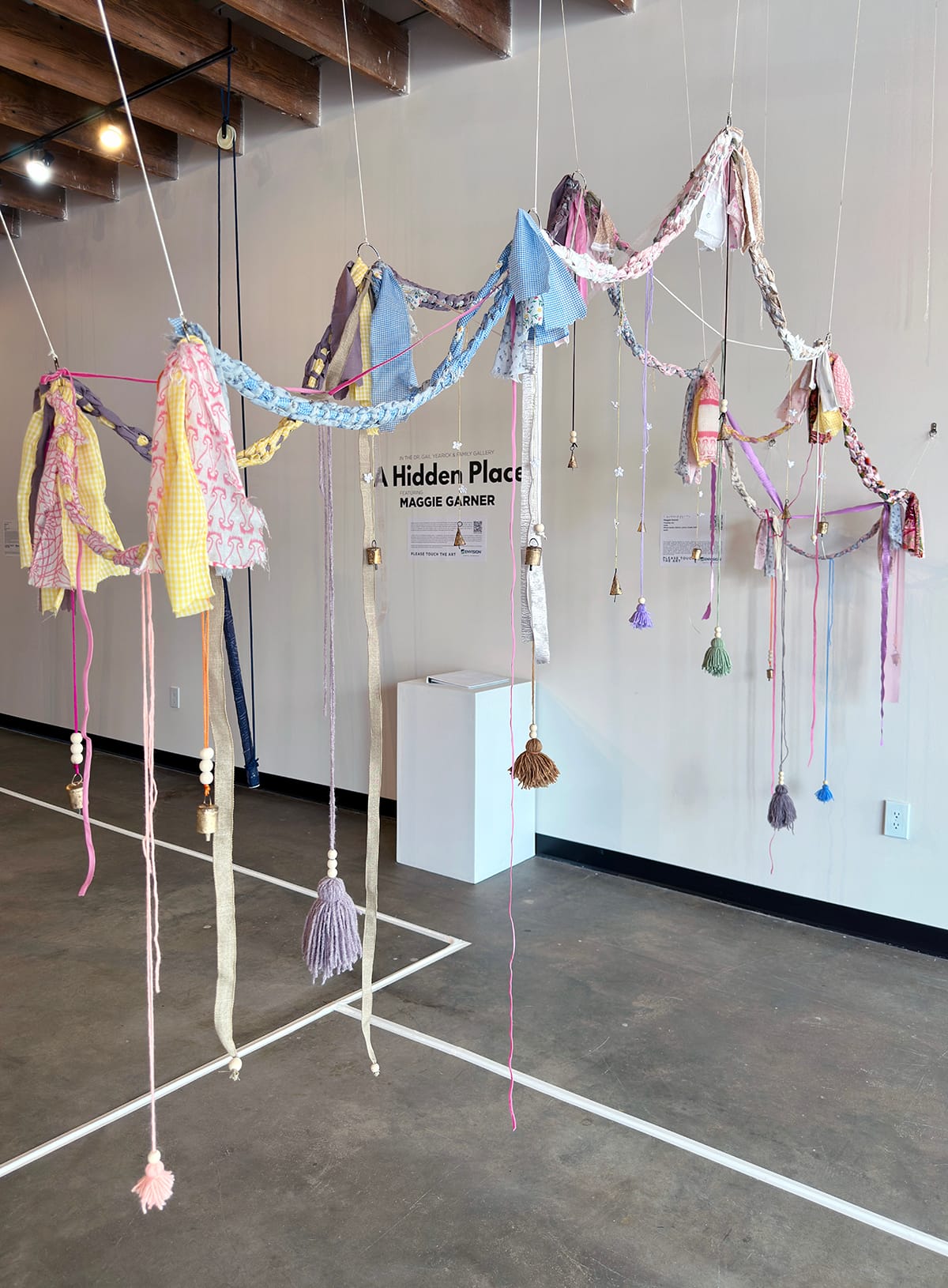
Detail views of Maggie Garner’s “A Floating Joy.” Photos by Antonio Ramirez for The SHOUT.
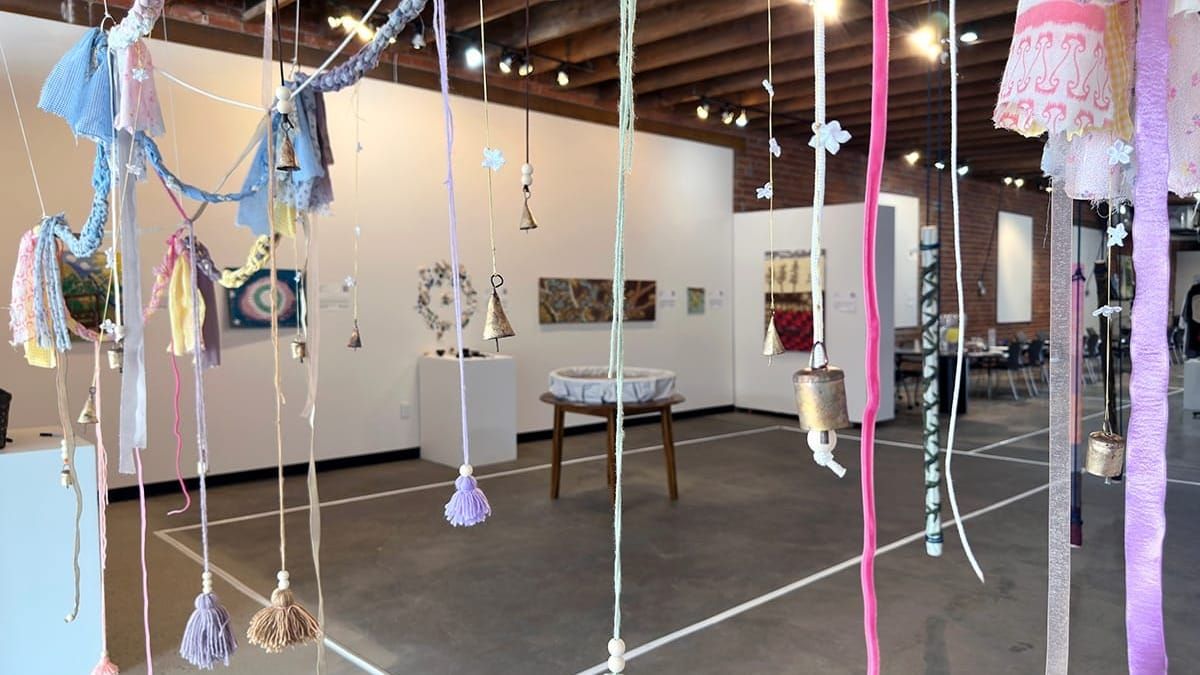
This emphasis on shared experiences is apparent the moment visitors step into the gallery. Suspended near the entrance is "A Floating Joy," a playful mixed-media work composed of braided fabric, yarn, beads, and bells. Its variety of soft fabrics invites exploration and, as the work moves, gentle ringing emerges from the bells — a symbolic gateway into Garner's world.
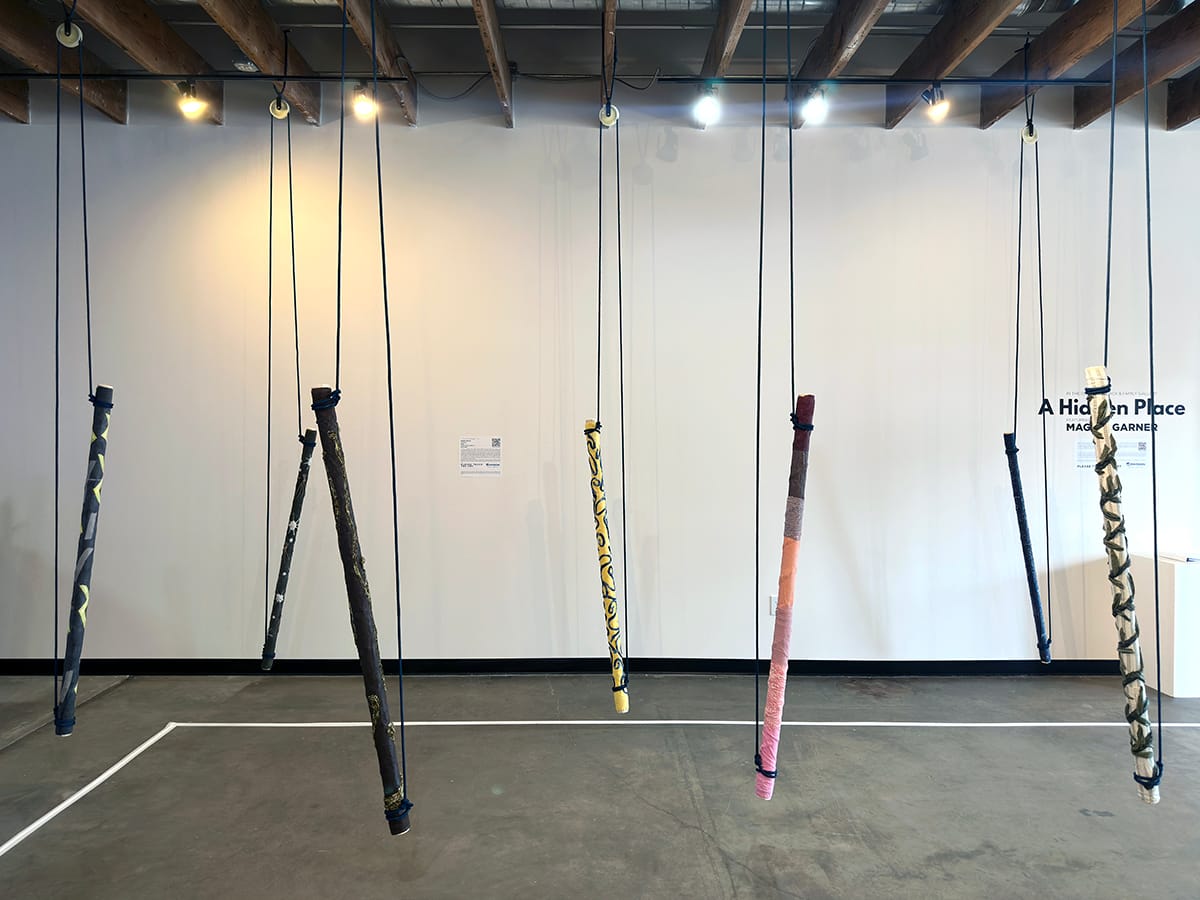
On display directly behind this work is “Stormsoul,” a series of rain-stick sculptures inspired by the stages of an approaching storm. Using recycled cardboard tubes that she sourced from a local fabric store, Garner drilled roughly 100 screws in unique patterns into them and filled the interiors with materials such as sand, lentils, rice, wooden beads, and marbles. She covered the exteriors in fabric collage and repurposed embroidery, adding a sense of identity to each.
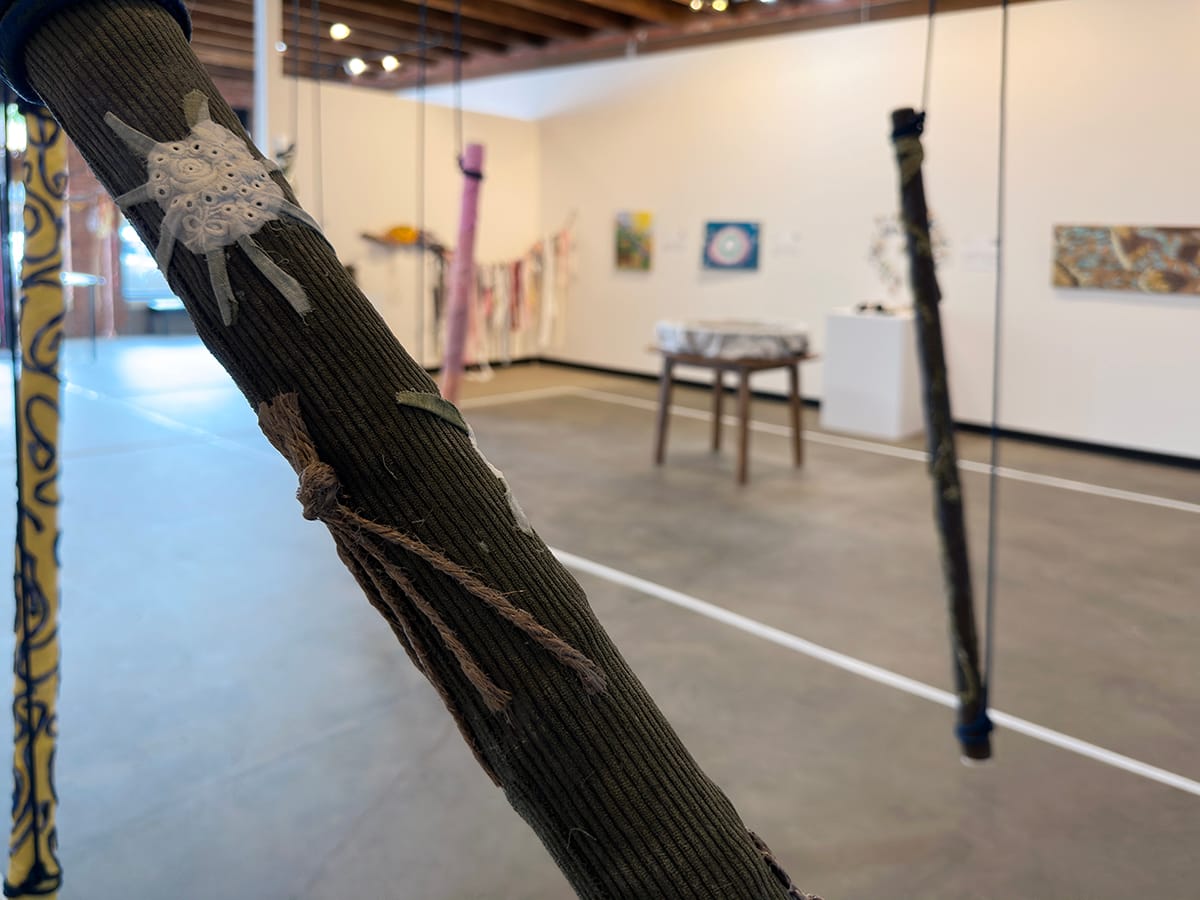
Instead of illustrating an incoming storm visually, Garner translates the experience into an immersive encounter. The sculptures hang dormant until visitors activate them, triggering an array of sounds. Attendees are met with instructions: “Turn over each rain stick to explore their individual sounds, vibrations, and textures.” They are also encouraged to “experiment with the loudness and duration of sounds by turning the rain sticks more slowly or quickly, and by turning multiple rain sticks at a time.”
Those packed with rice, lentils, and sand produce softer notes that resemble distant rainfall. Others, loaded with materials like marbles and wooden beads, create a reverberating clash of sounds like booming thunder and the intensity of a heavy storm. There is an element of chance in how each participant produces a slightly different soundscape depending on how they interact with the sculptures. In this way, “Stormsoul” becomes a collective experience among the artist, artwork, and audience.
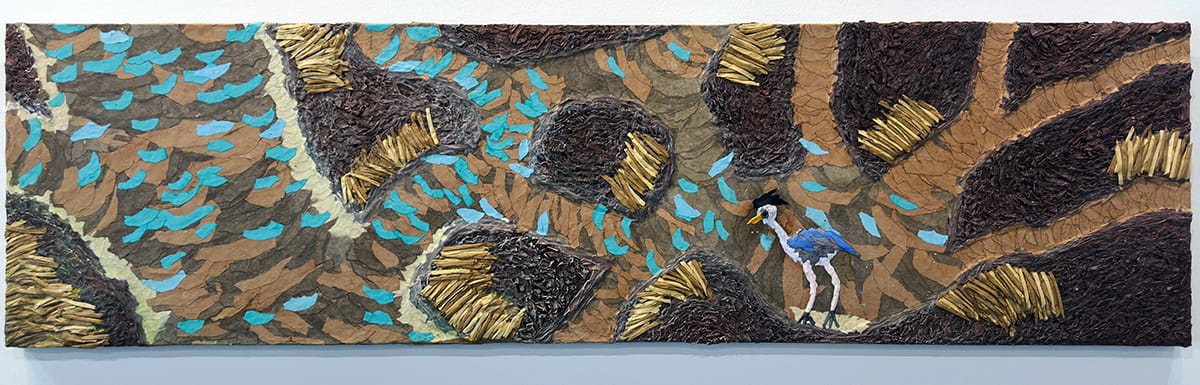
While "Stormsoul" captures the substantial force of nature, "Wintermarsh" represents one of Garner's most intimate memories. Drawing on her profound connection to bodies of water in Georgia and Florida, the artist constructs a tactile, elongated horizontal story panel of a bird in a landscape filled with trees, grasses, and rivulets of water.
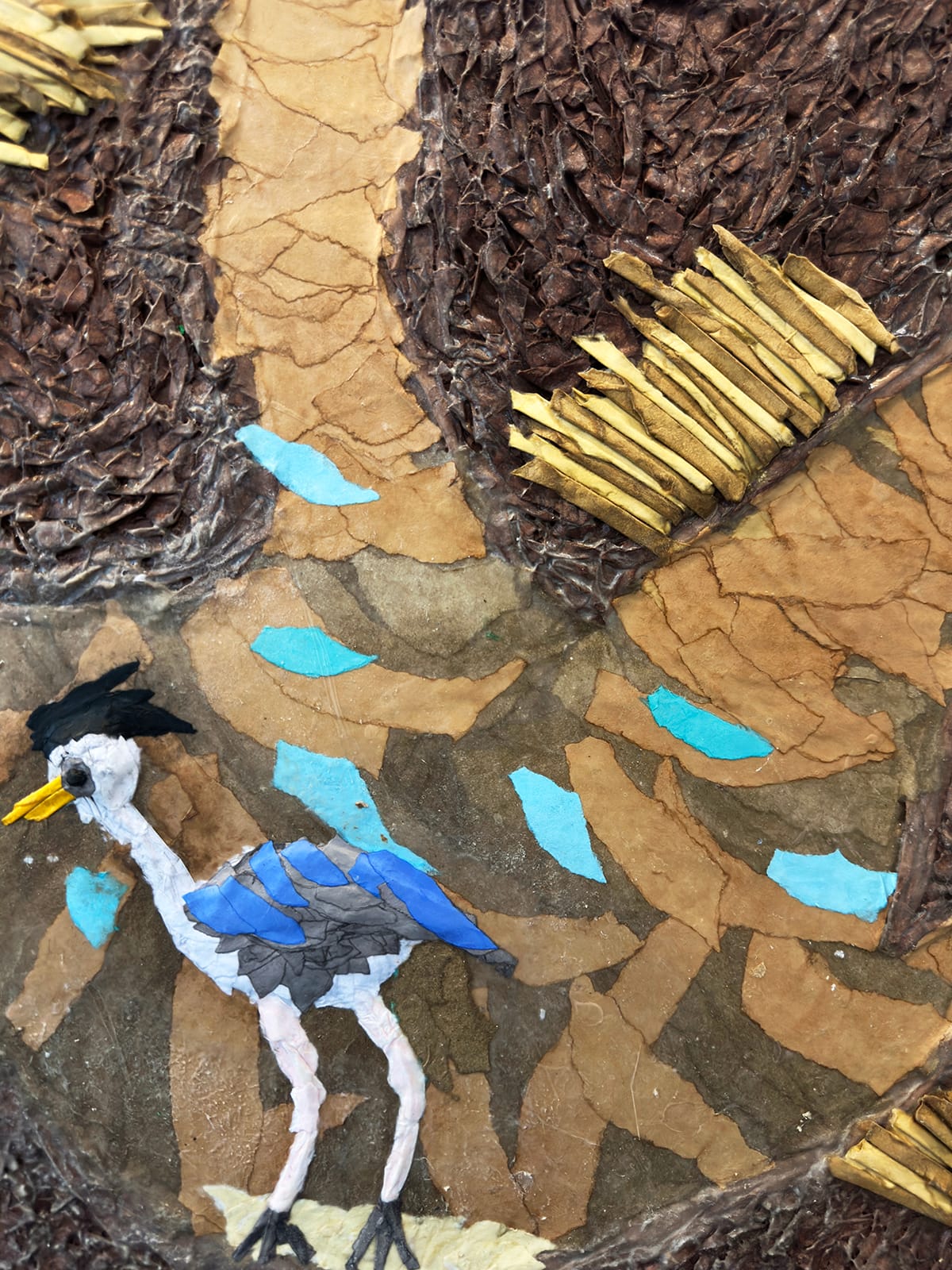
Layered with torn and crumpled packing paper drenched in glue, "Wintermarsh" tempts viewers to experience the work through physical touch and to create a mental projection of the scene Garner's love for the marsh originates in her appreciation for being removed from the noise of city life and tuning into the harmony of sounds of nature, including various birds, the subtle sounds of flowing water, blowing wind, and wildlife. "Wintermarsh" is her attempt to share an experience that brings her comfort and healing.
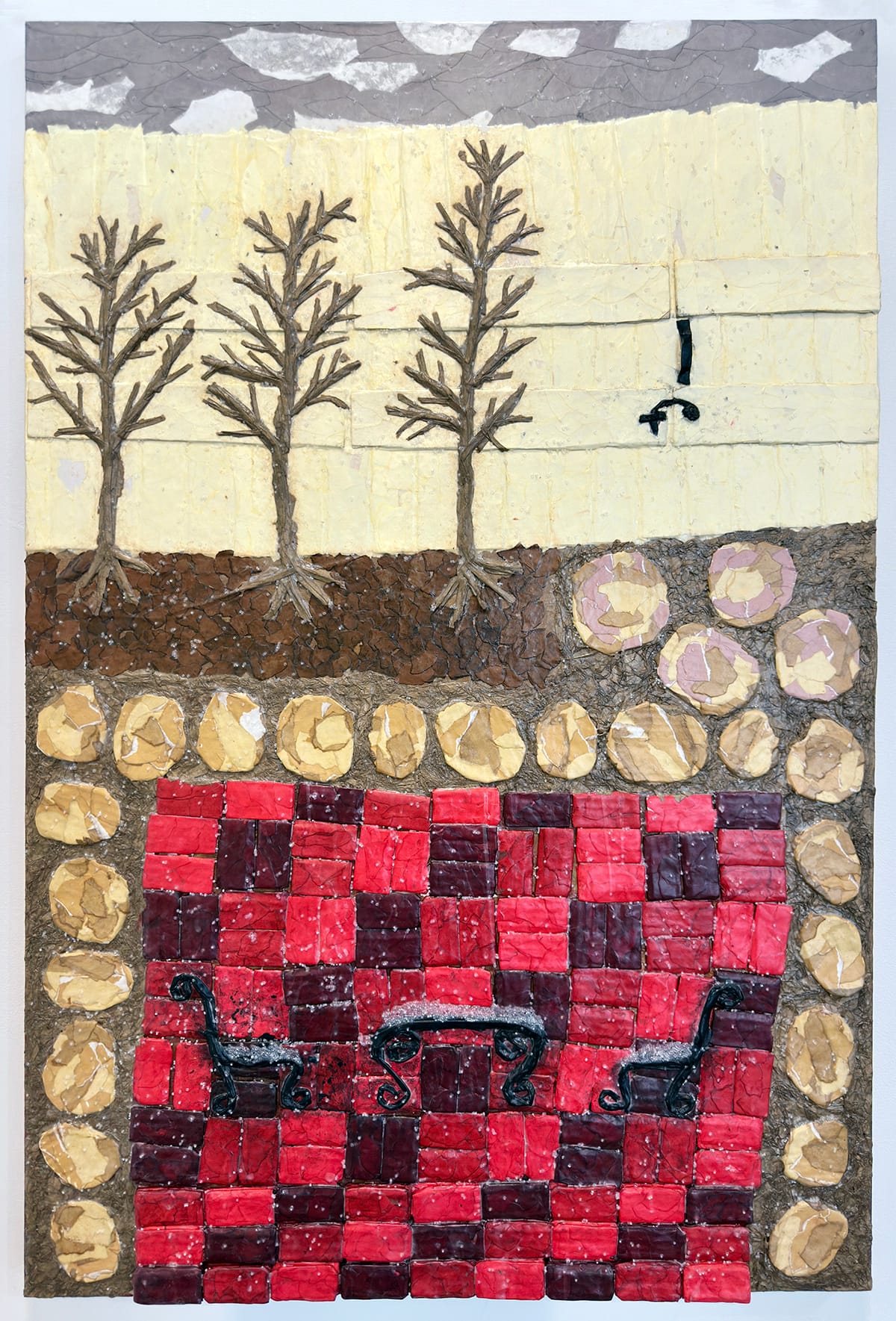
Another large-scale work, "Time out of Time," captures an ephemeral scene shortly after the first snowflakes fall in Savannah, Georgia. Based on her friend's brick courtyard, "Time out of Time" centers on the town's eager anticipation and collective appreciation of a rare snowfall. The composition of bricks and fence are built from layers of cardboard and paper, and glass beads on chairs and branches represent the first snow on the ground. Garner portrays an event that prompts the town to pause its daily routines and take notice of the precious moments that life and nature provide.
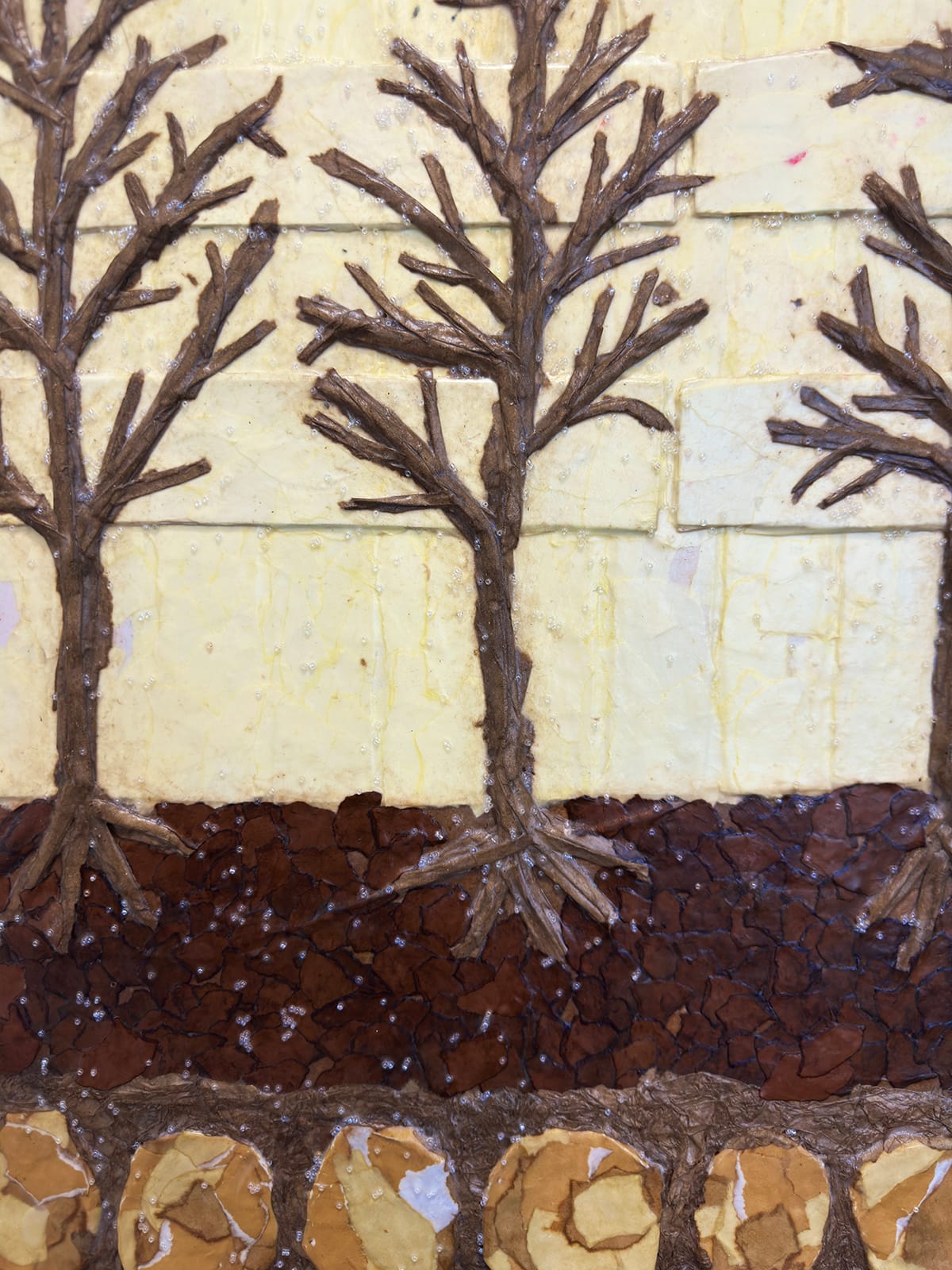
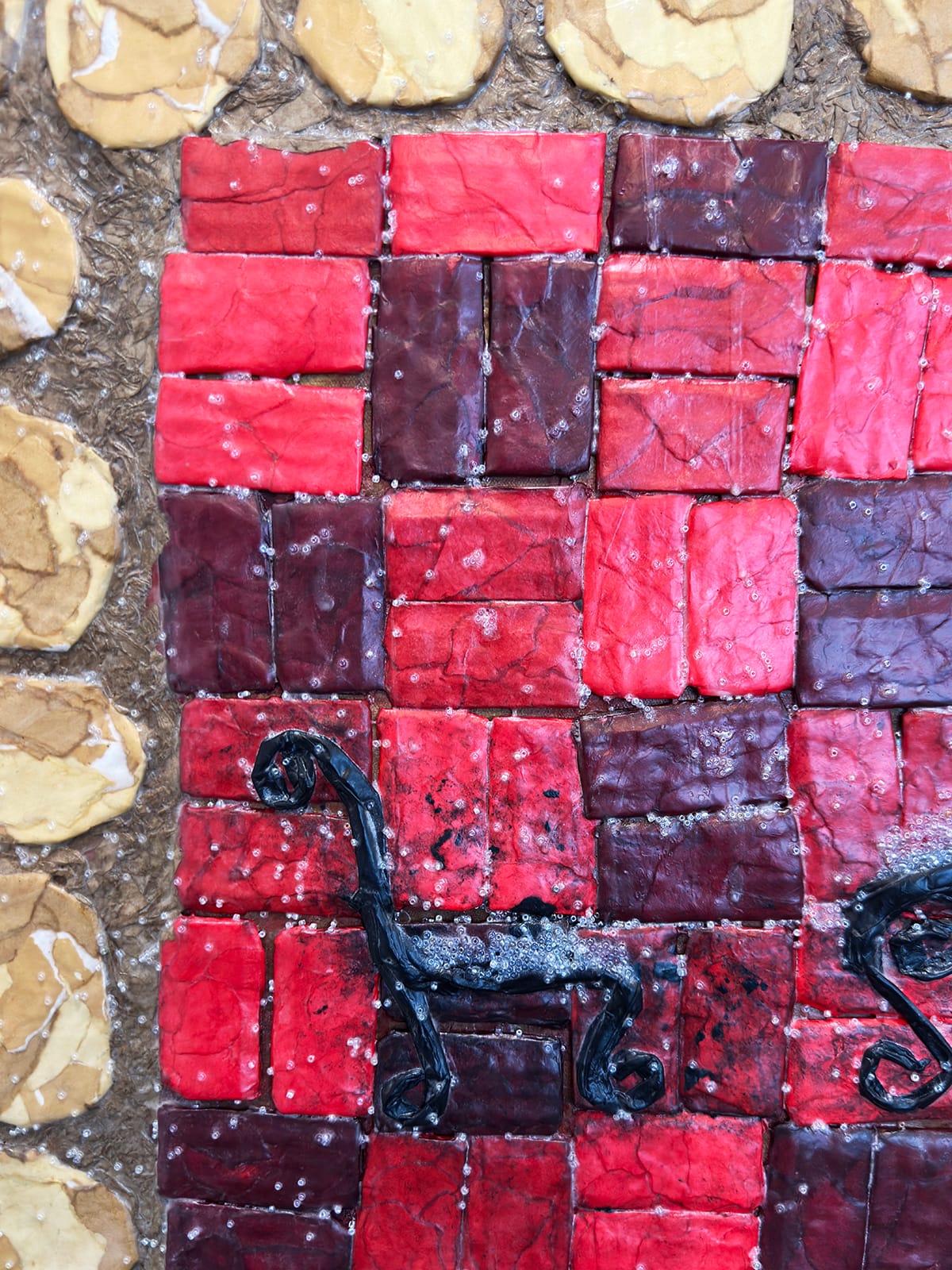
Details of Maggie Garner's “Time out of Time.” Photos by Antonio Ramirez for The SHOUT.
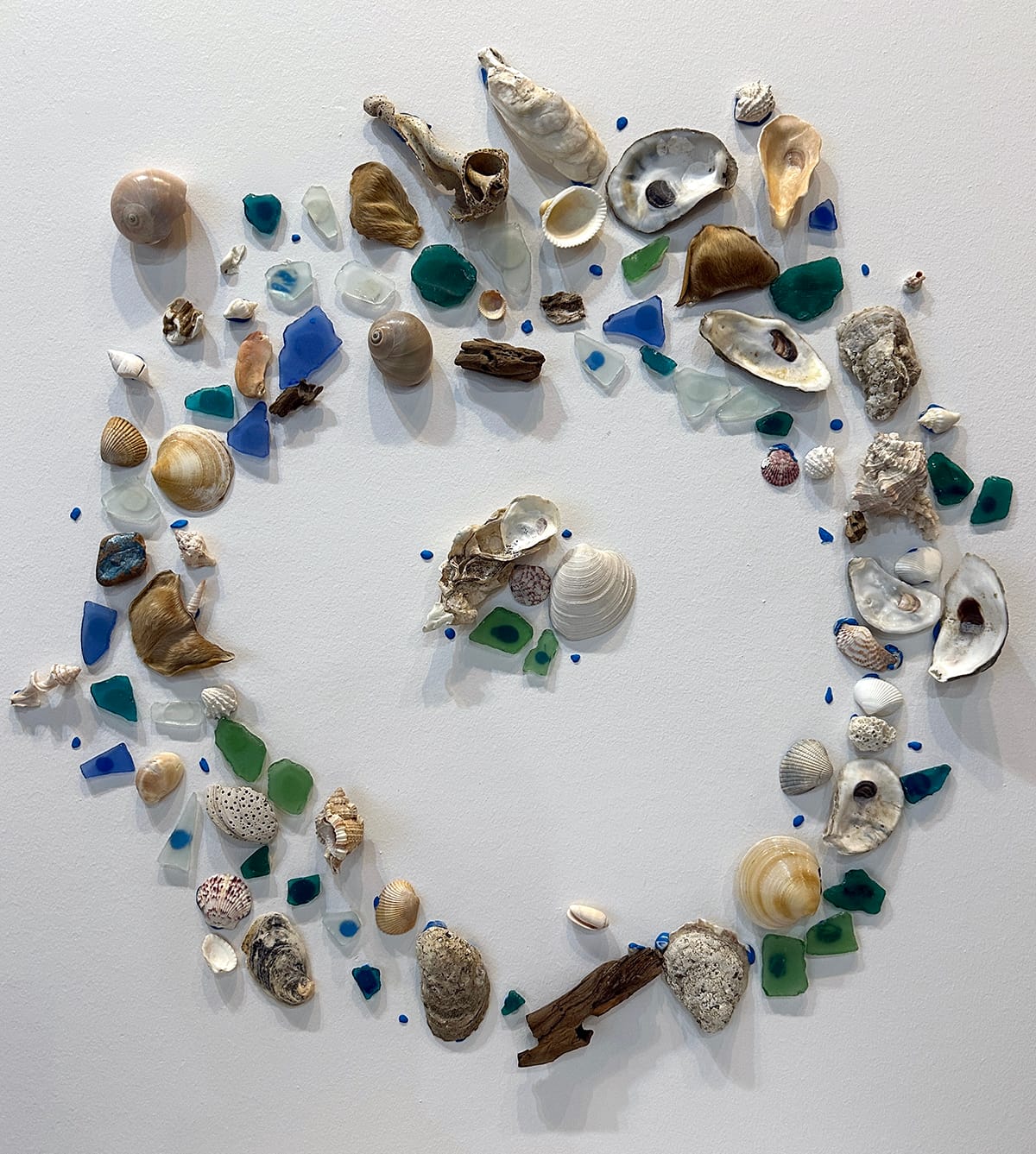
In "Changing Shapes,” arguably one of the most interactive works in the show, a label instructs visitors to search through a sandbox filled with buried objects and contribute their discoveries to what the wall text calls a "tactile mural." The work continuously transforms through participation. Each gallery visitor leaves behind a small piece of evidence of their presence, such as sea glass and shells. They become a collaborator in the work rather than a passive observer, reinforcing Garner's belief that art can bring people together through a collective experience.
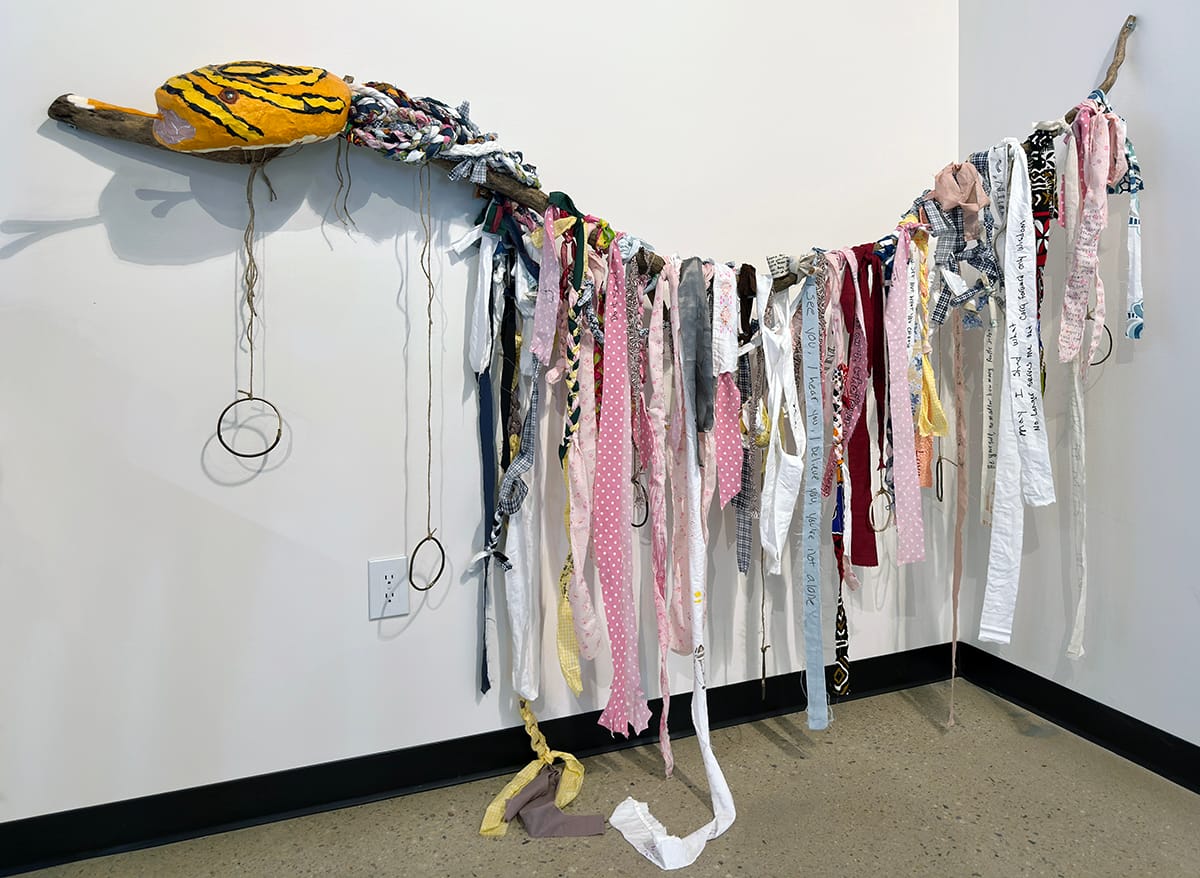
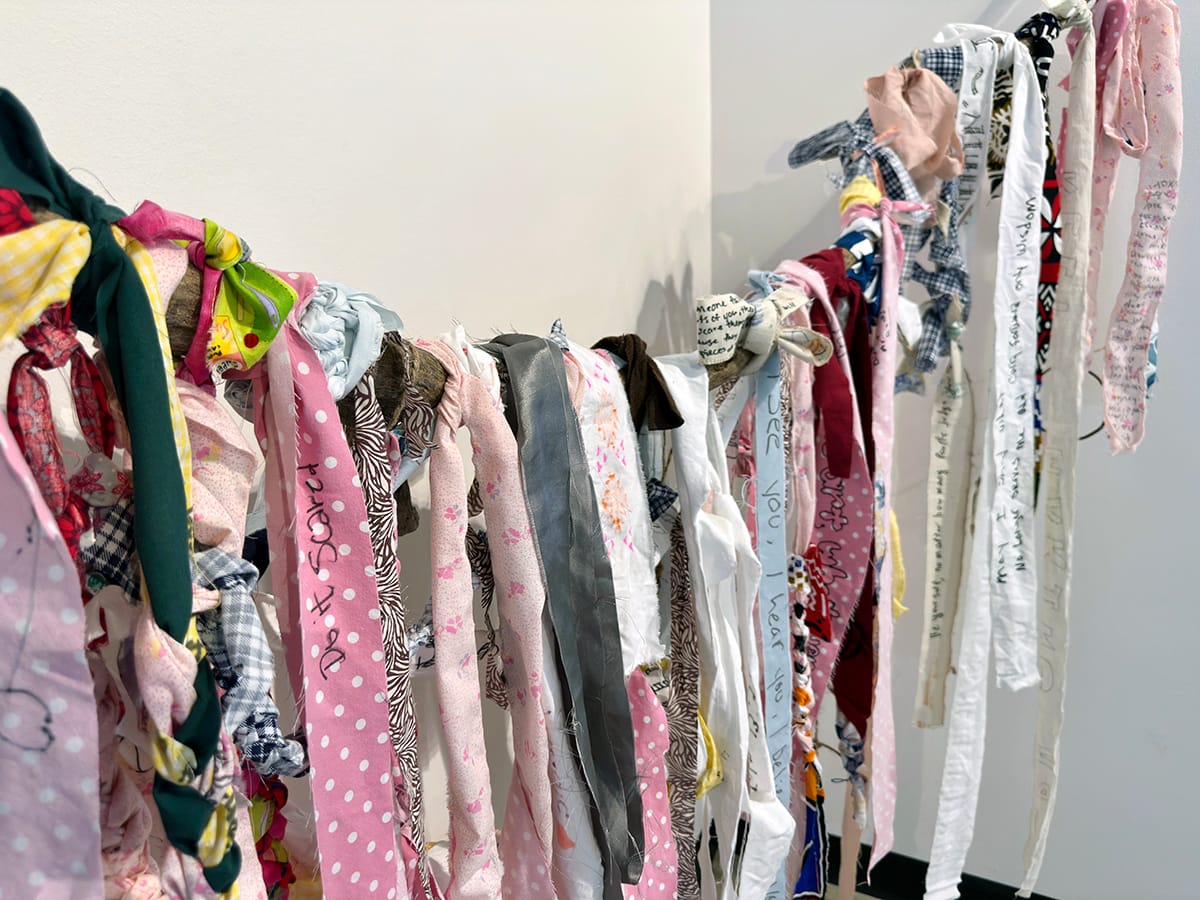
Garner also advocates for participation and the idea of co-creation in “Sunny.” Located in the right corner of the dividing wall where visitors exit the gallery, this work depicts a corn snake resting on a branch before it goes out into the world. Gallery-goers select a piece of cut fabric and write a message on it, then tie the fabric onto the branch. “Sunny” highlights Garner’s belief that perception is enriched when people bring their experiences together.
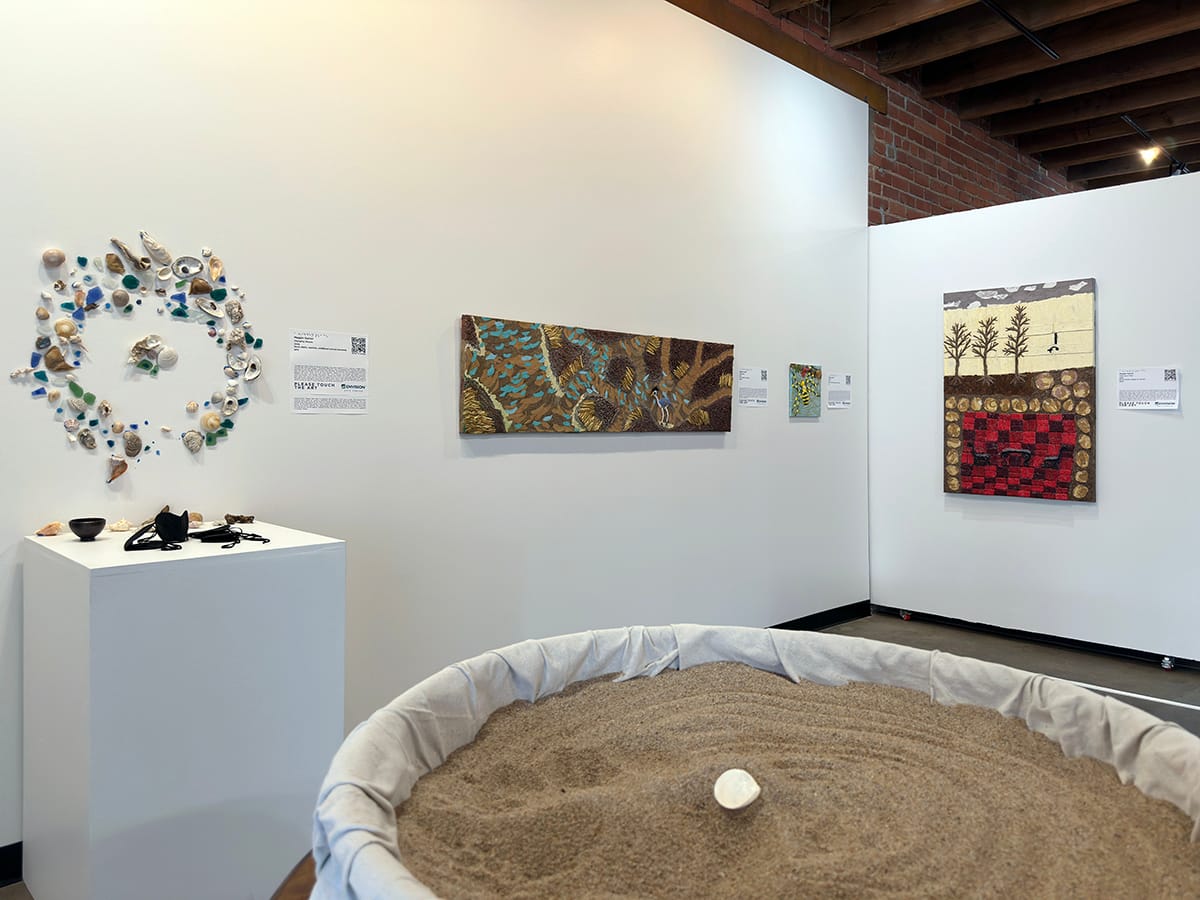
Installation view of Maggie Garner’s exhibition “A Hidden Place,” on view at Envision Arts Center through June 25. Photo by Antonio Ramirez for The SHOUT.
Ultimately, “A Hidden Place” invites visitors to examine and reconsider what it means to experience not just art, but life as a whole. In opposition to the standard gallery experience of hurriedly gazing at works from afar, Maggie Garner closes the gap by asking attendees to make physical contact with the artworks, focus on the unique sounds produced by different materials, and draw connections from their own memories and imaginations. By doing so, she expands the possible ways we perceive life, art, and understand one another.
The Details
“A Hidden Place,” a multi-sensory exhibition by Maggie Garner, created in collaboration with Autumn Gary and Taiomah Rutledge
May 1-June 25, 2026 in the Dr. Gail Yearick and Family Gallery at Envision Arts Center, 535 W. Douglas Avenue, Suite 160, in Wichita
Envision Arts Gallery and Community Engagement Center is open from 10 a.m.-noon and 1-4 p.m. Tuesday through Friday.
Admission to the gallery is free, and the facility is accessible to people with physical disabilities. Many of the works in "A Hidden Place" are available for sale.
Antonio Ramirez is a Wichita State alumnus with a multidisciplinary background in art history, cybersecurity, and entrepreneurship. He is a curator, writer, and aspiring art dealer guided by his curiosity to explore the connections between art, culture, and innovation.
❋ Derby man has the kind of voice that turns heads — and chairs
❋ Socializing while sober: how some Wichitans are cultivating alcohol-free communities
❋ As a small creative business closes, the owner mourns
❋ Painting through it: Autumn Noire on 20 years of making art
❋ How a guy from Wichita resurrected 'Dawn of the Dead'
❋ Bygone Friends University museum housed curious collections
Support Kansas arts writing
The SHOUT is a Wichita-based independent newsroom focused on artists living and working in Kansas. We're partly supported by the generosity of our readers, and every dollar we receive goes directly into the pocket of a contributing writer, editor, or photographer. Click here to support our work with a tax-deductible donation.


