Reveling in place: 'A Tribute to the Art of Symphony in the Flint Hills Field Journals'
Artists honor the diversity of a beloved Kansas region in the current exhibition at the Volland Store in Alma.
Too often, whole worlds are overlooked simply because we do not take the time to be present and curious. Kansas is often maligned as a “flat” state — a boring, mostly empty place without any real distinguishing features, where there is nothing to do and nowhere to go.
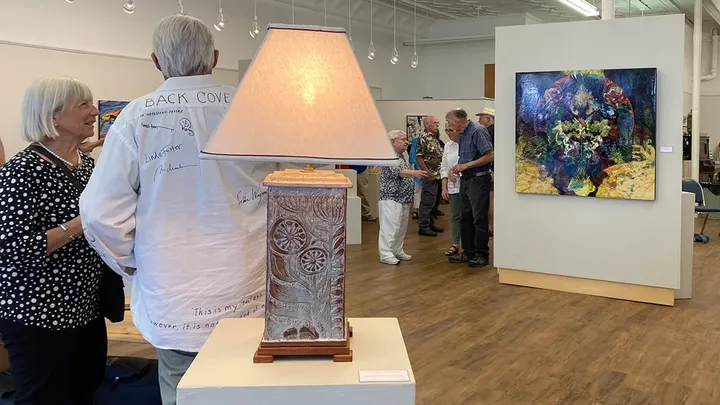
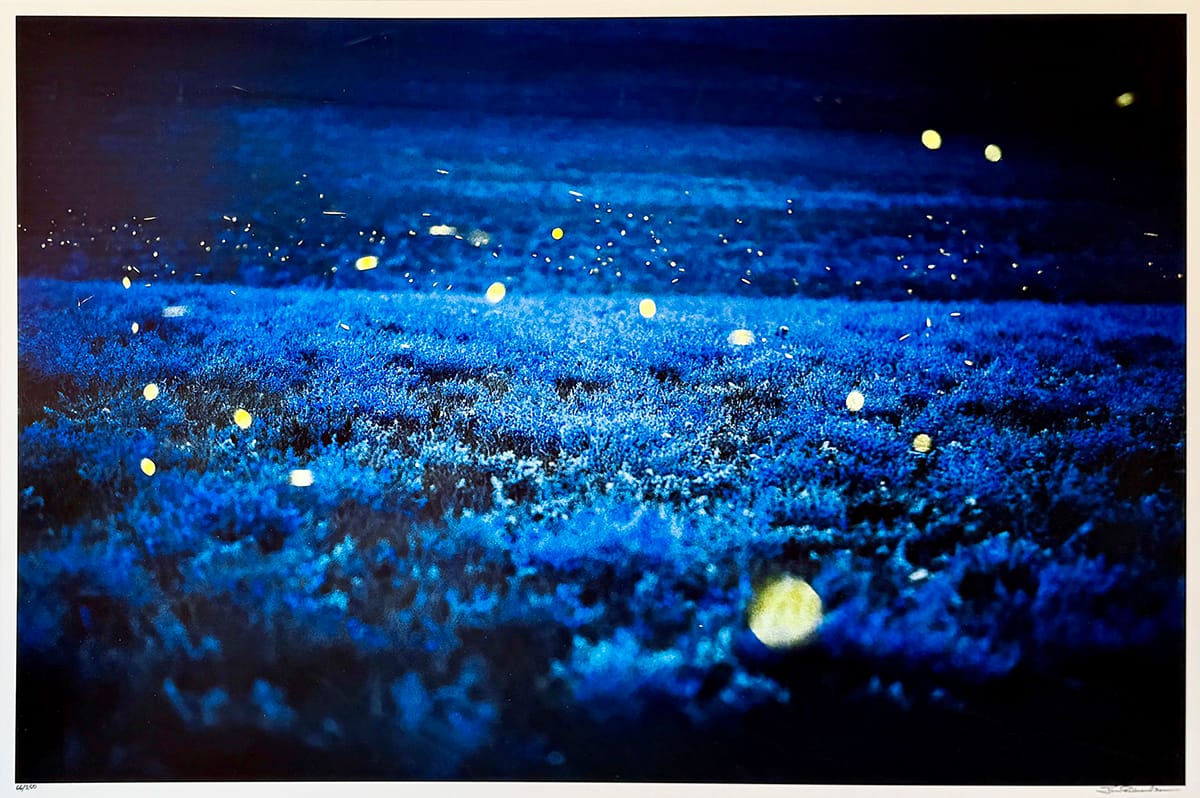
The artists participating in “A Tribute to the Art of Symphony in the Flint Hills Field Journals,” curated by Matt Regier and currently on view at the Volland Store, would undoubtedly take exception to that description. Each of their works in the exhibition speaks to the multitude of worlds and possibilities alive in the richly diverse region of the Flint Hills, from the network of waterways that flow through the land to the swarms of fireflies that dance across flowering fields at night.
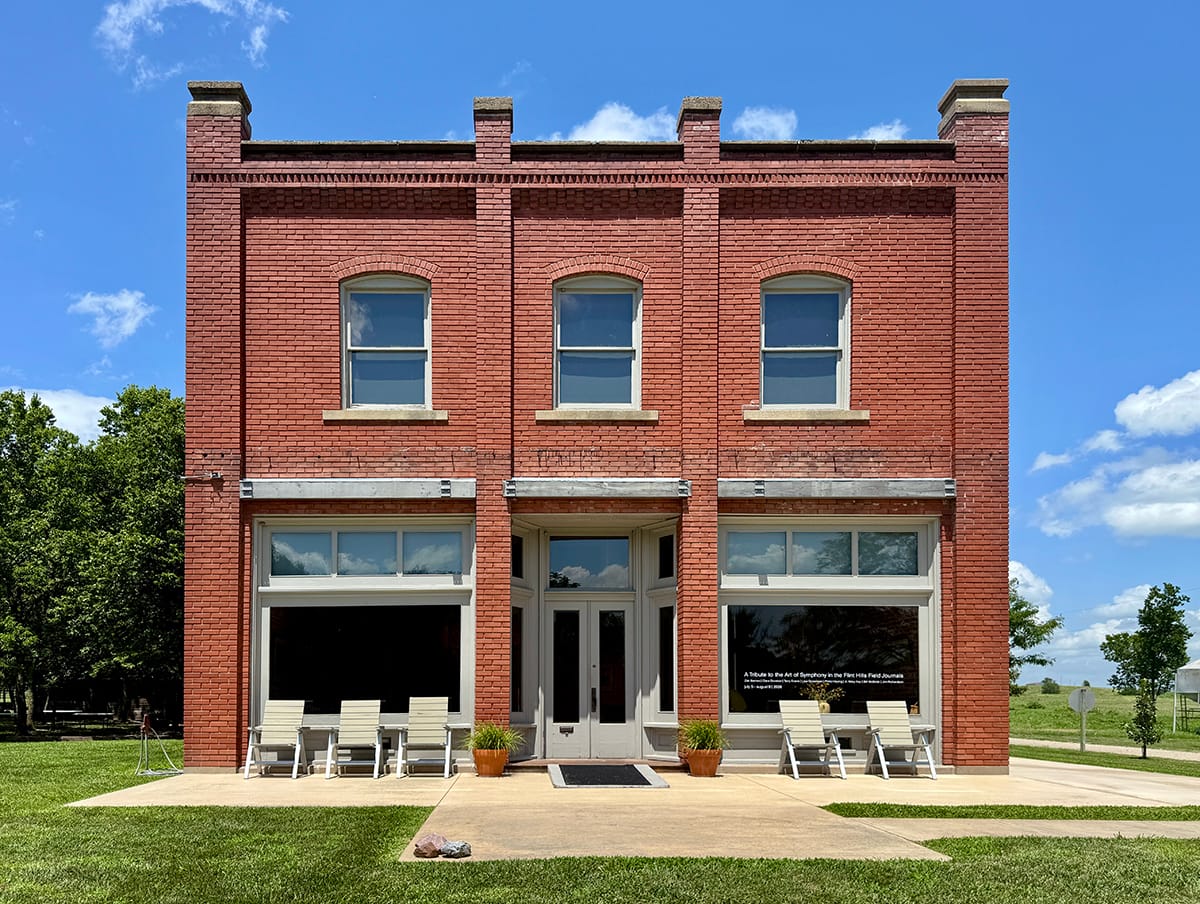
The Volland Store, which serves as the main gallery space for the Volland Foundation, is another hidden gem in the Flint Hills. The historic building was constructed in 1913 as the Kratzer Brothers Mercantile and was donated to Volland Foundation in 2021 to be preserved and adaptively reused as a community art gallery and venue. It is a bit off the beaten path, located 13 minutes southwest of Alma, the nearest town, but the drive there is gorgeous — almost worth a trip in itself. The diverse beauty of the Flint Hills unfolds in hills and hollows, rolling prairies, creeks, and woods. Herds of cattle — and, occasionally, bison — dot the countryside, disrupted only by the historic stone fences of Wabaunsee County and the occasional house or barn.
On my visit to the gallery, I was lucky enough to be greeted by Ryan Jones, co-executive director of the Volland Foundation. He provided insight into the show, explaining that all of the artists had contributed work to at least one of the 17 Field Journals published as companion pieces to the Symphony in the Flint Hills — an annual event hosted by the nonprofit organization of the same name to heighten appreciation and understanding of the Flint Hills tallgrass prairie through music and art. Many artists contributed to multiple volumes of the Field Journal.

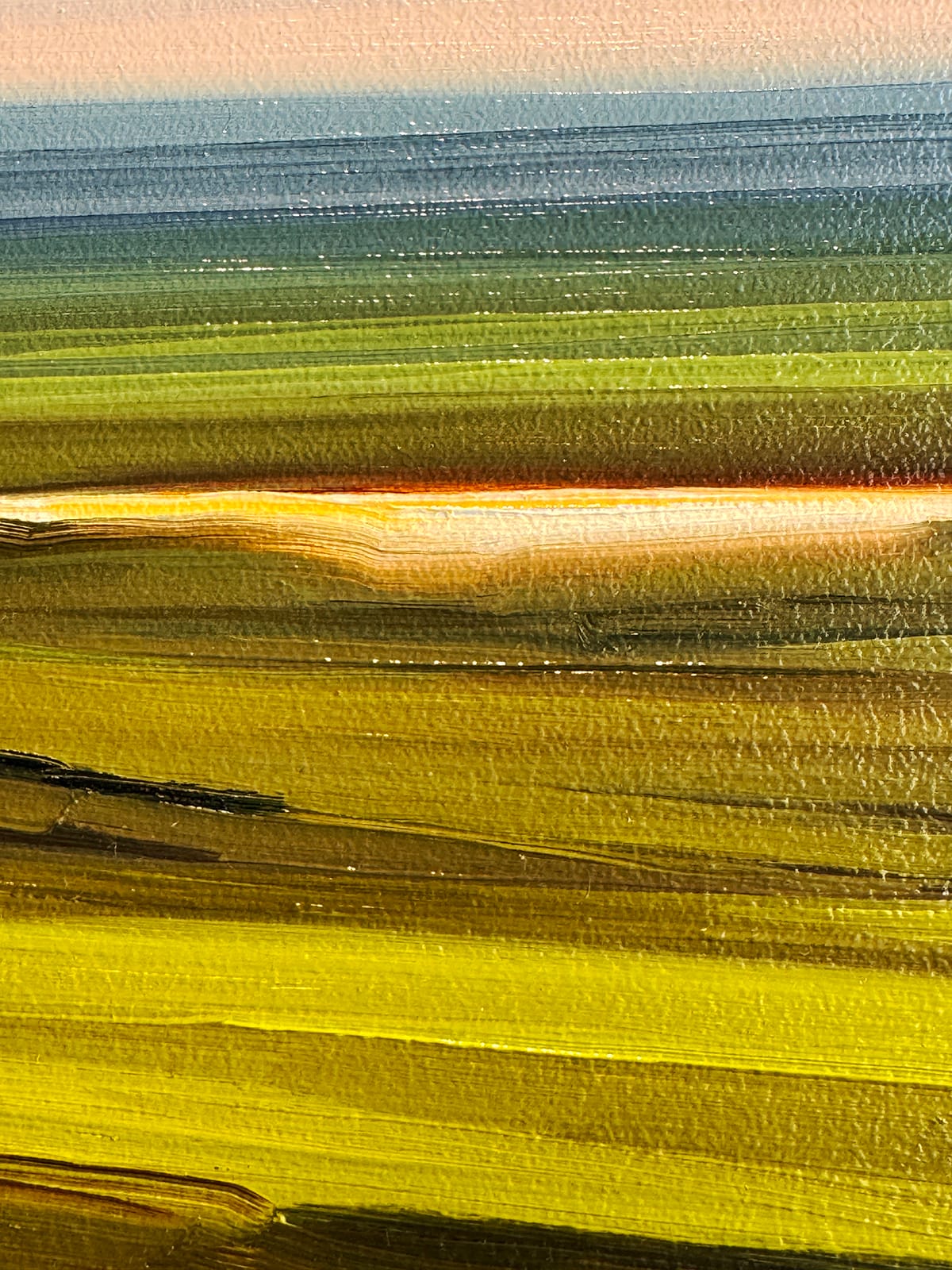
“O’ PRAIRIE,” an oil painting by Lisa Grossman, conveys the sense of awe and grandeur that the Symphony in the Flint Hills inspired in its audiences for 20 years. An expansive panoramic landscape, Grossman renders the gentle slopes and inclines of the prairie against a placid, hazy sky, both immersing the viewer and inviting a sense of distance and wide-open space. Much like the prairie, Grossman’s painting reveals more detail the closer one looks. Hidden by the smooth, unhurried brush strokes, there is a surprisingly crackled texture to the painting, creating an effect not unlike film grain — or, perhaps, wild grains.
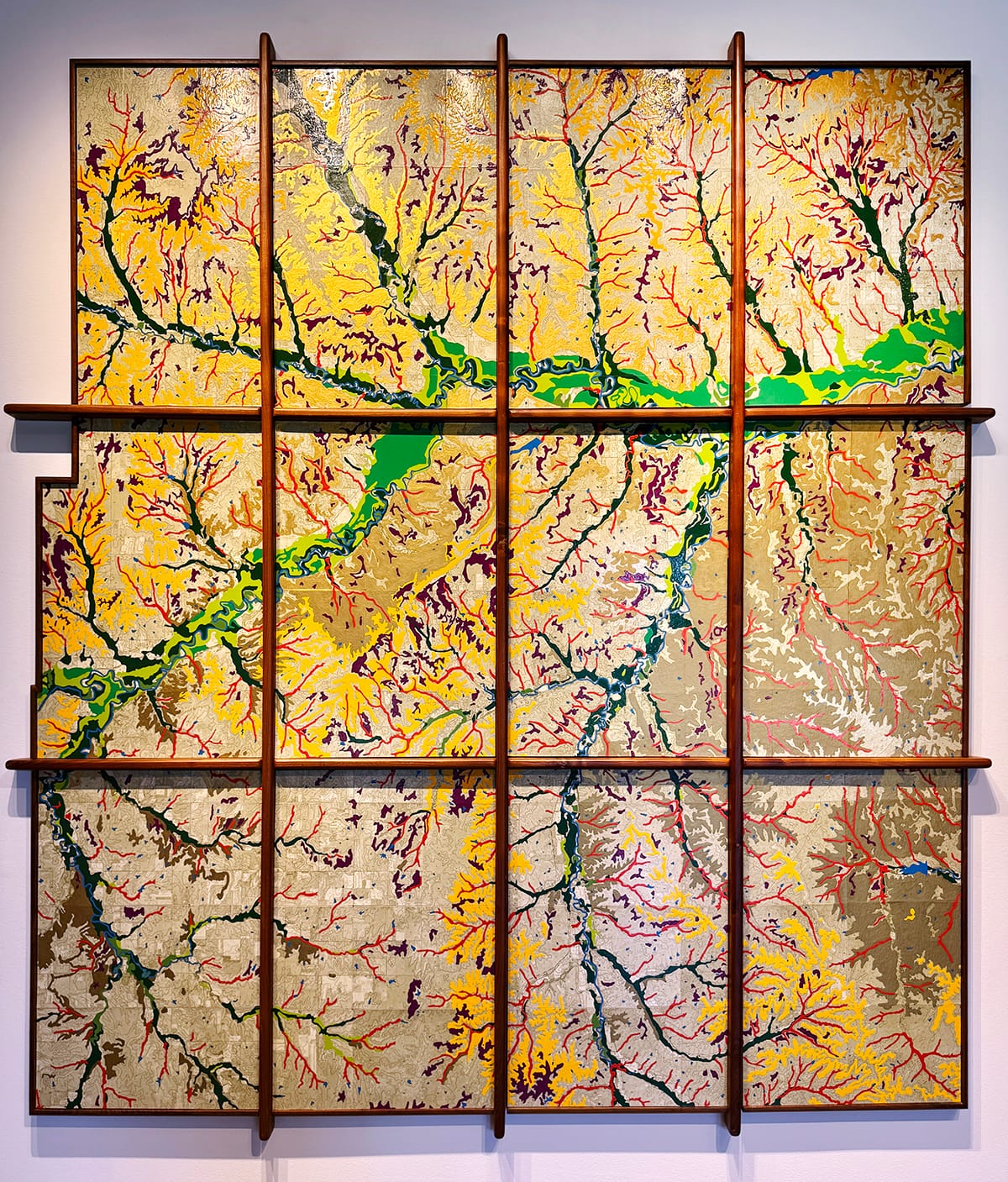
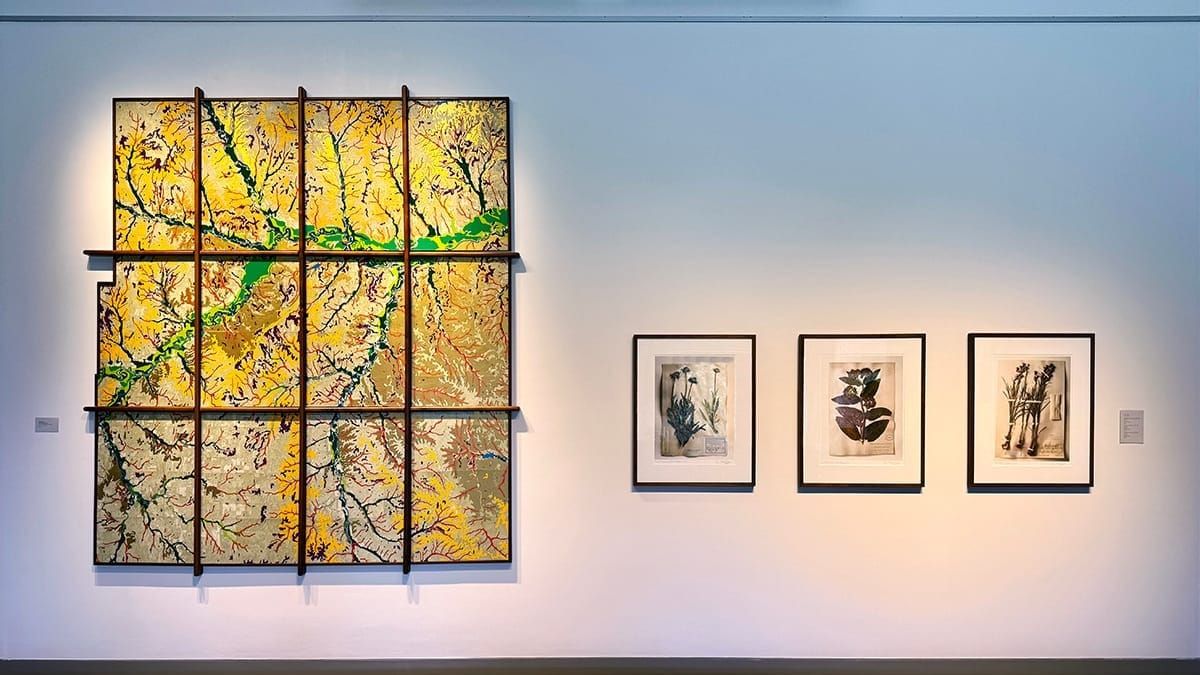
Likewise, Jones pointed out a detail of Bill McBride’s “Flint Hills Map” that I would have missed on my own. McBride’s massive painting takes the shape of Chase County, Kansas, which was the subject of William Least Heat-Moon’s 1991 book "PrairyEarth: (a Deep Map)." The book is an intimate study of the history, geology, and ecology of Chase County, where the Tallgrass Prairie National Reserve was established a few years after the book’s publication. Heat-Moon’s book is divided into twelve chapters; as a visual homage to the book, McBride’s painting is divided into twelve sectors.
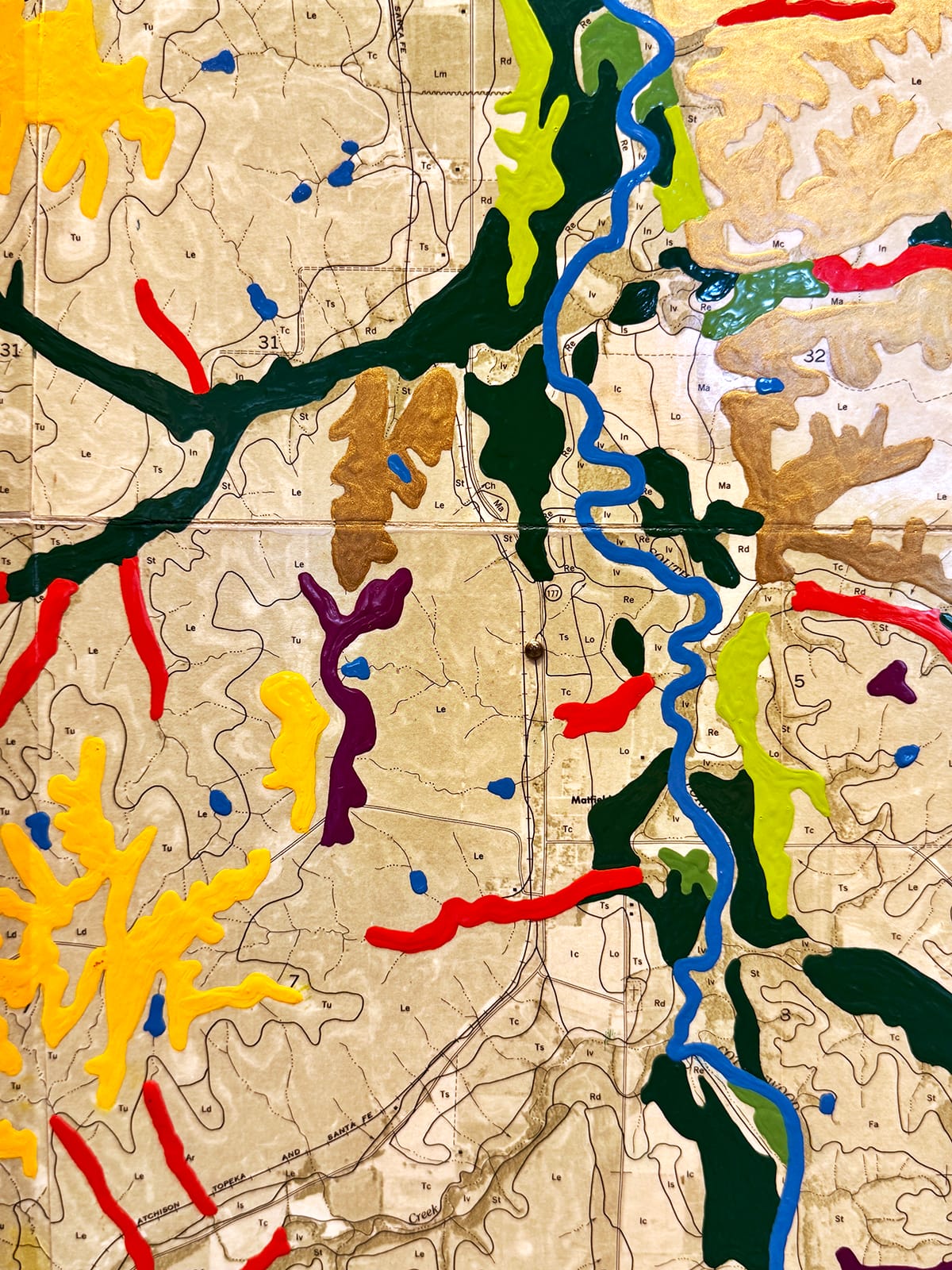
The layers of paint mimic the shapes of watersheds and topographic features, celebrating the diverse geography of the Flint Hills tallgrass prairie. Even the choice of colors breathes life into the map, with little red streams and creeks branching off from green rivers like capillaries. Jones also pointed out that McBride stuck one pin in his map — marking his hometown of Matfield Green, Kansas.
Bill McBride operates Matfield Station in Matfield Green, where lodgers can rent and stay in the historic railroad bunkhoue. Matfield Station also hosts artists for the Tallgrass Artist Residency, a program of the Kansas Arts Commission.
Many artists included in the show have ties to Matfield Green, a town in south central Chase County with a population of 49 as of the 2020 Census. Matt Regier, curator of the show, lives in Matfield Green, where he and his wife Tia co-founded the School for Rural Culture and Creativity — a community space housed in the old Matfield Green Elementary School that seeks to integrate art, agriculture, and ecology into a vision for a place-based life on the land.
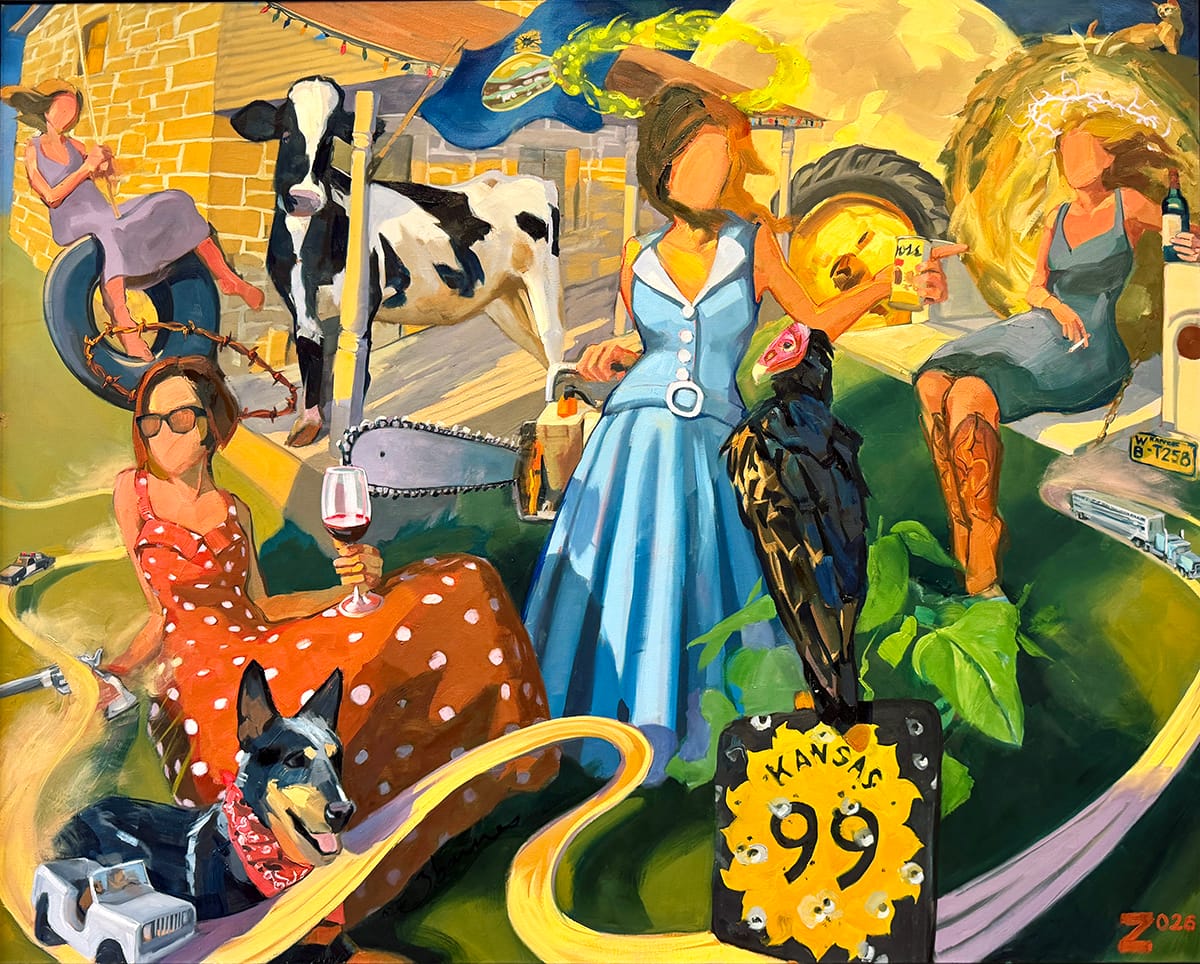
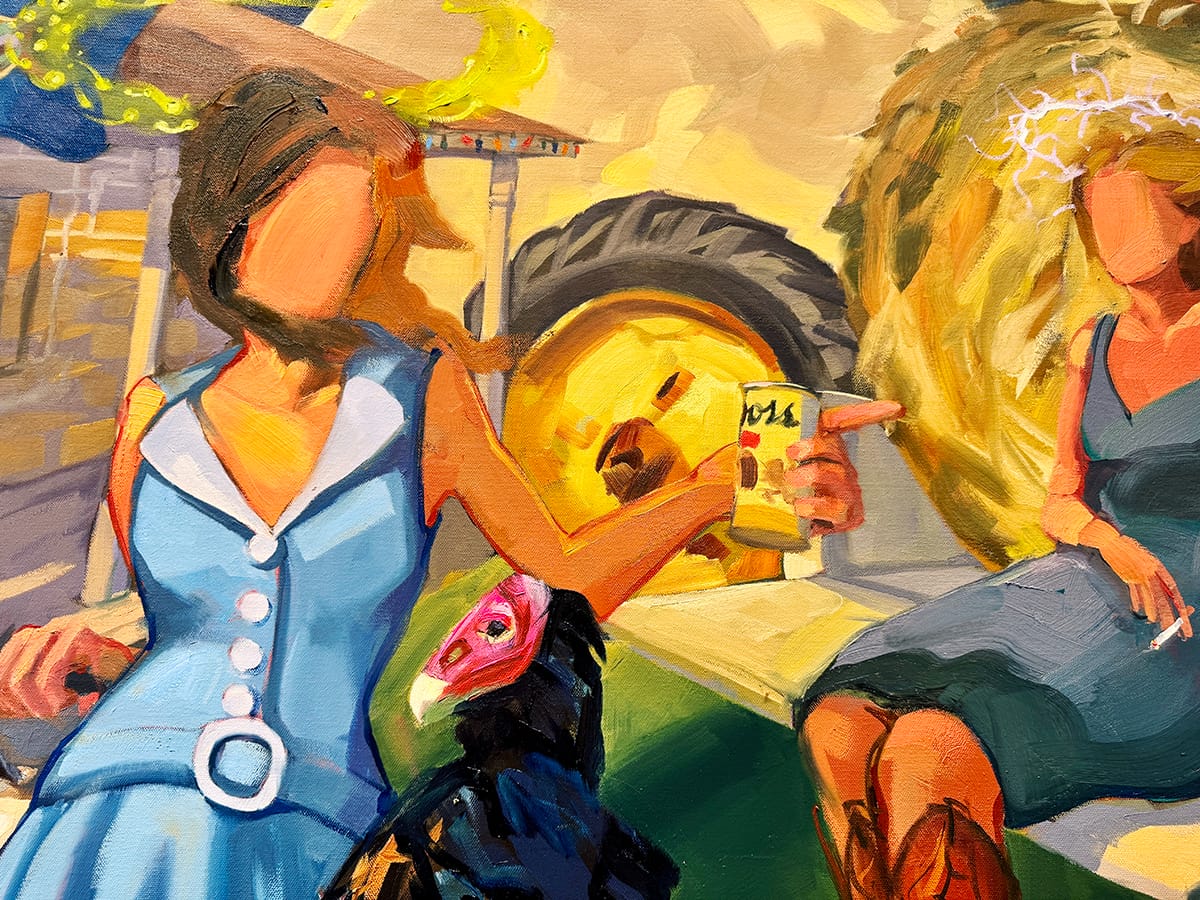
The nearby town of Alma features in the show as well, portrayed by Zak Barnes’ “Alma Matter 2,” a picture of small-town life that is livelier and more exuberant than a typical farmhouse scene. The dresses of the four women in the painting give the impression of a mid-century setting, but their languid, confident demeanor — one drinks a Coors, another casually aims a gun out of frame, while another drinks wine from the bottle and smokes a cigarette — appears more modern. Perhaps Barnes intends to connect rural or small-town life with a sense of possibility and a degree of recklessness. The way the ribbon of highway meanders around the periphery of the image suggests a road to somewhere, but the women do not seem particularly interested in abandoning their home.
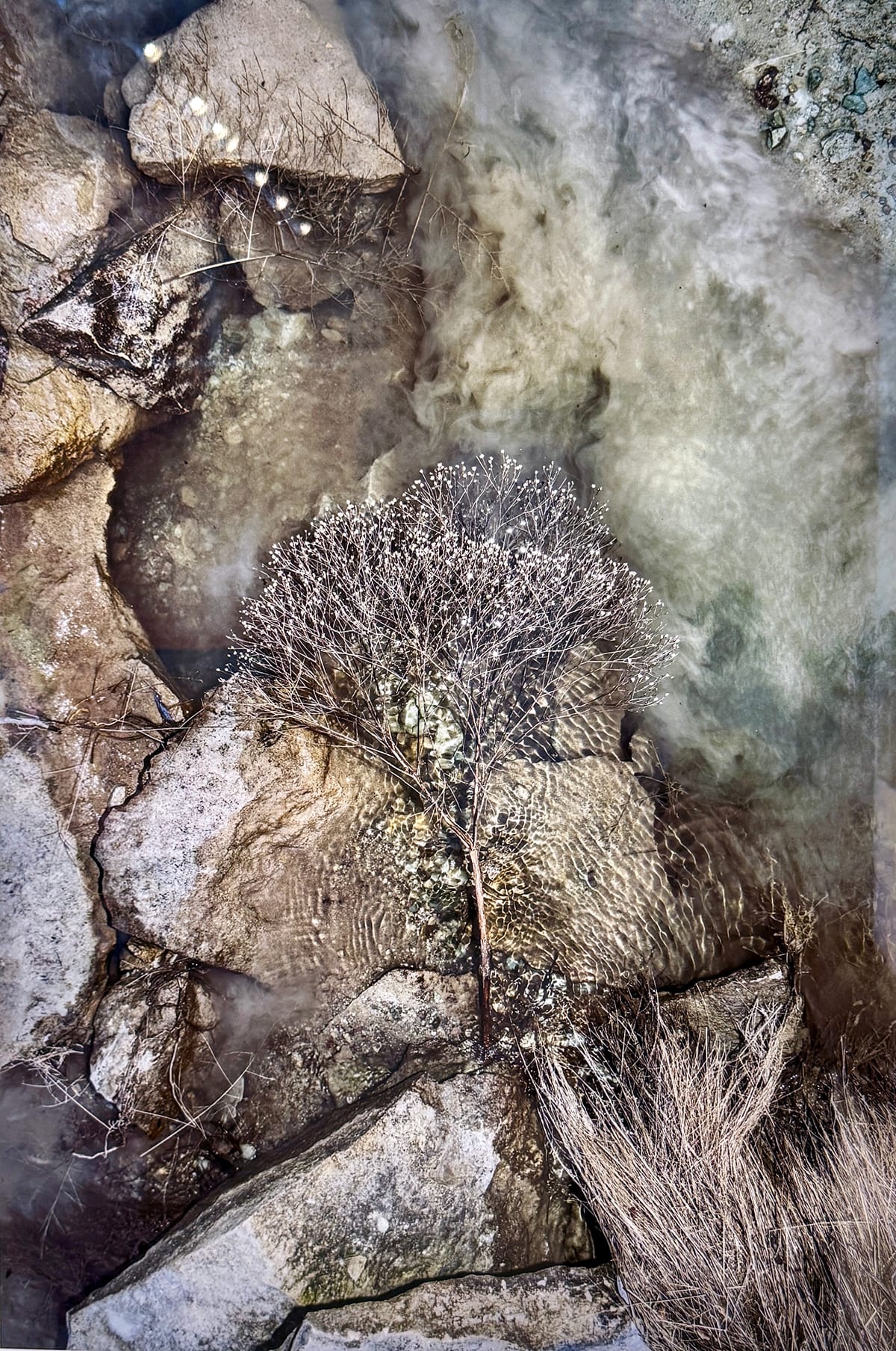
Throughout the show, all the pieces are stubbornly rooted in a sense of place. They ask the viewer to look closer and to celebrate the wonder of life in all its varieties. Philip Heying’s photography insists upon the beauty of fallen foliage in “Desiccated broom weed in a brook in the North Branch Verdigris River watershed – 2 June 2022 - 9:15am.” He captures the texture of light as it reflects off the ripples around the broom weed and the way the loose sediment blurs the boundaries between stones and riverbed. Glancing from a distance, one might only register the shades of brown and gray, but Heying’s keen eye and framing show an entire lifecycle beyond the moment frozen by the camera, during which the broom weed grew, died, and decayed to nourish and return to the ecosystem around it.
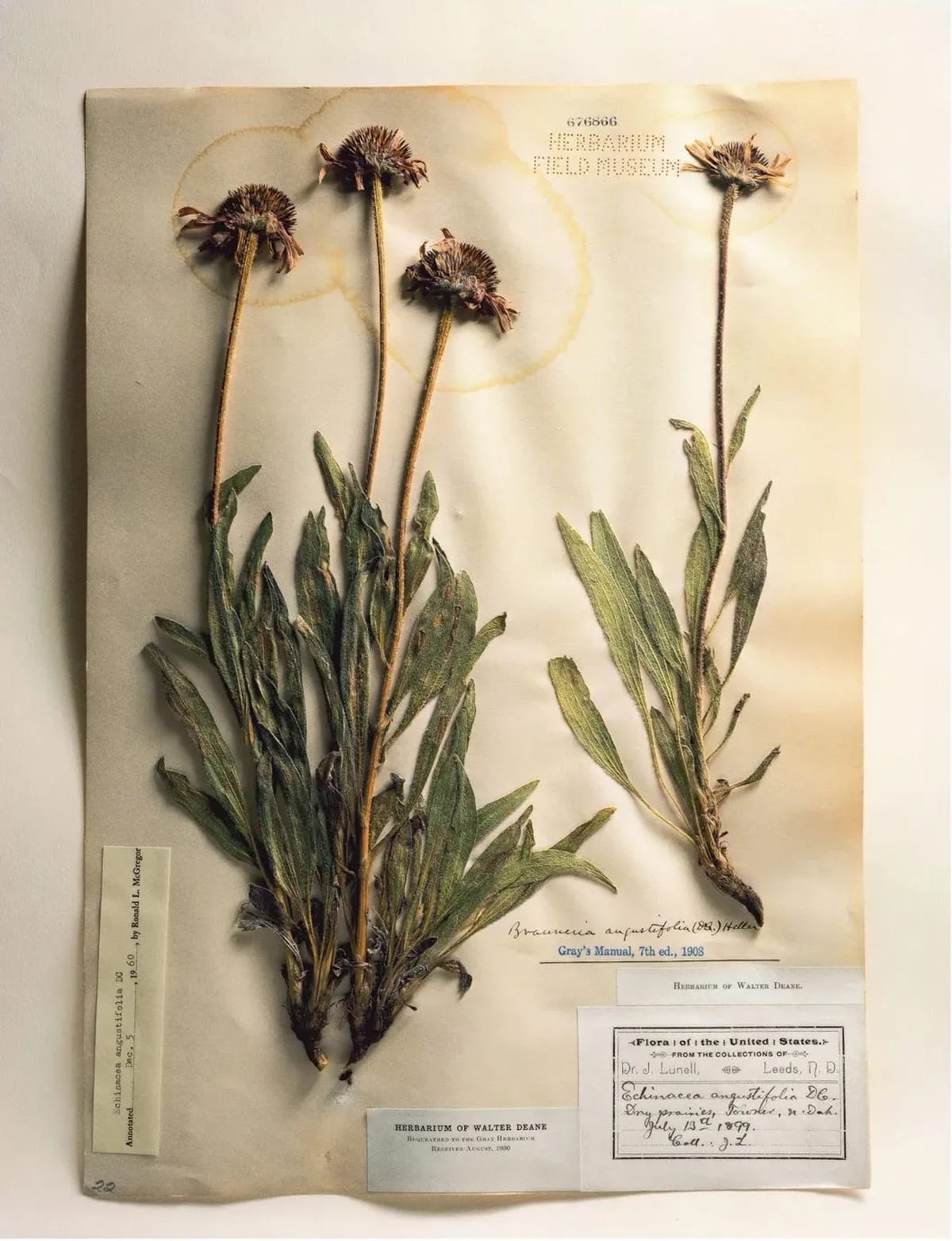
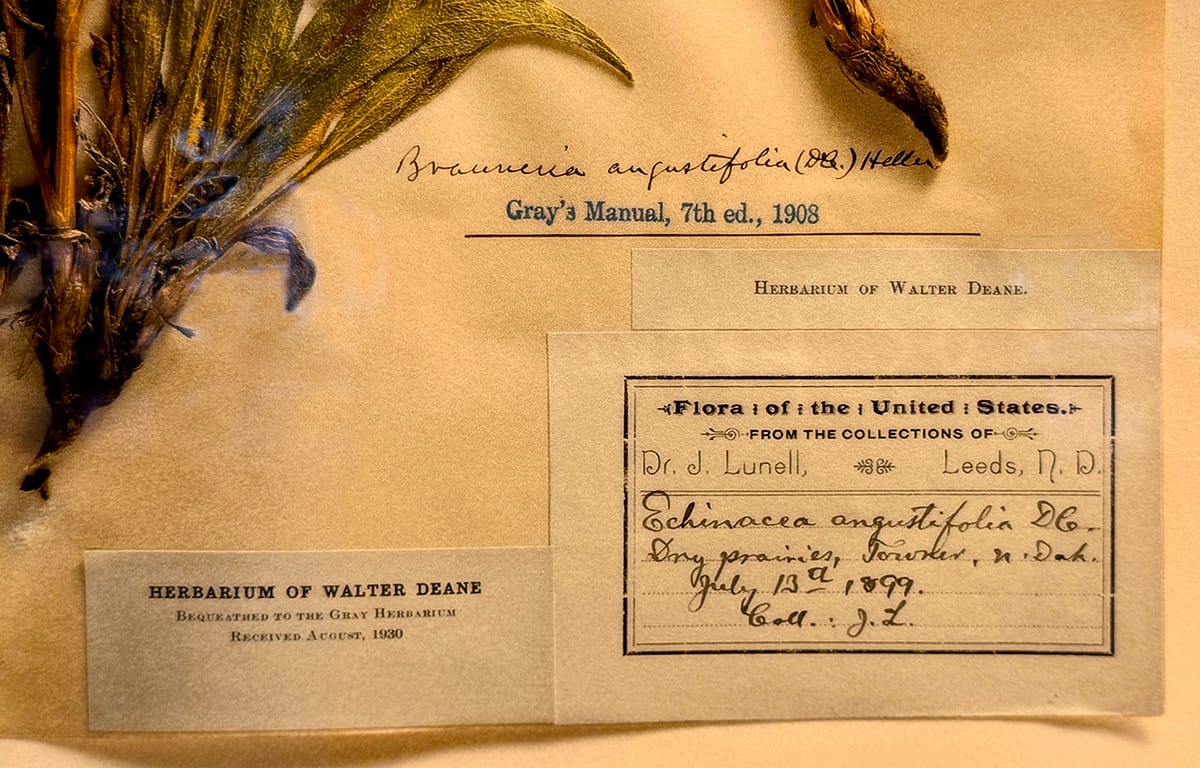
From left: Terry Evans, “Field Museum, Echinacea, 1899,” 2000, edition 7/15, iris print, 24 by 19 inches. Photo courtesy of the Volland Store; Detail of “Field Museum, Echinacea, 1899.” Photo by Abby Bayani-Heitzman for The SHOUT.
Terry Evans’ photography is similarly concerned with the life of prairie plants. A kind of triptych, her three works each display a field specimen that includes stalk, leaves, and flowers. The scientific treatment of the subjects shows a concern not merely for aesthetics but for ecology as well. For these artists, the Flint Hills tallgrass prairie is not merely a beautiful place but a place that is alive with beauty.
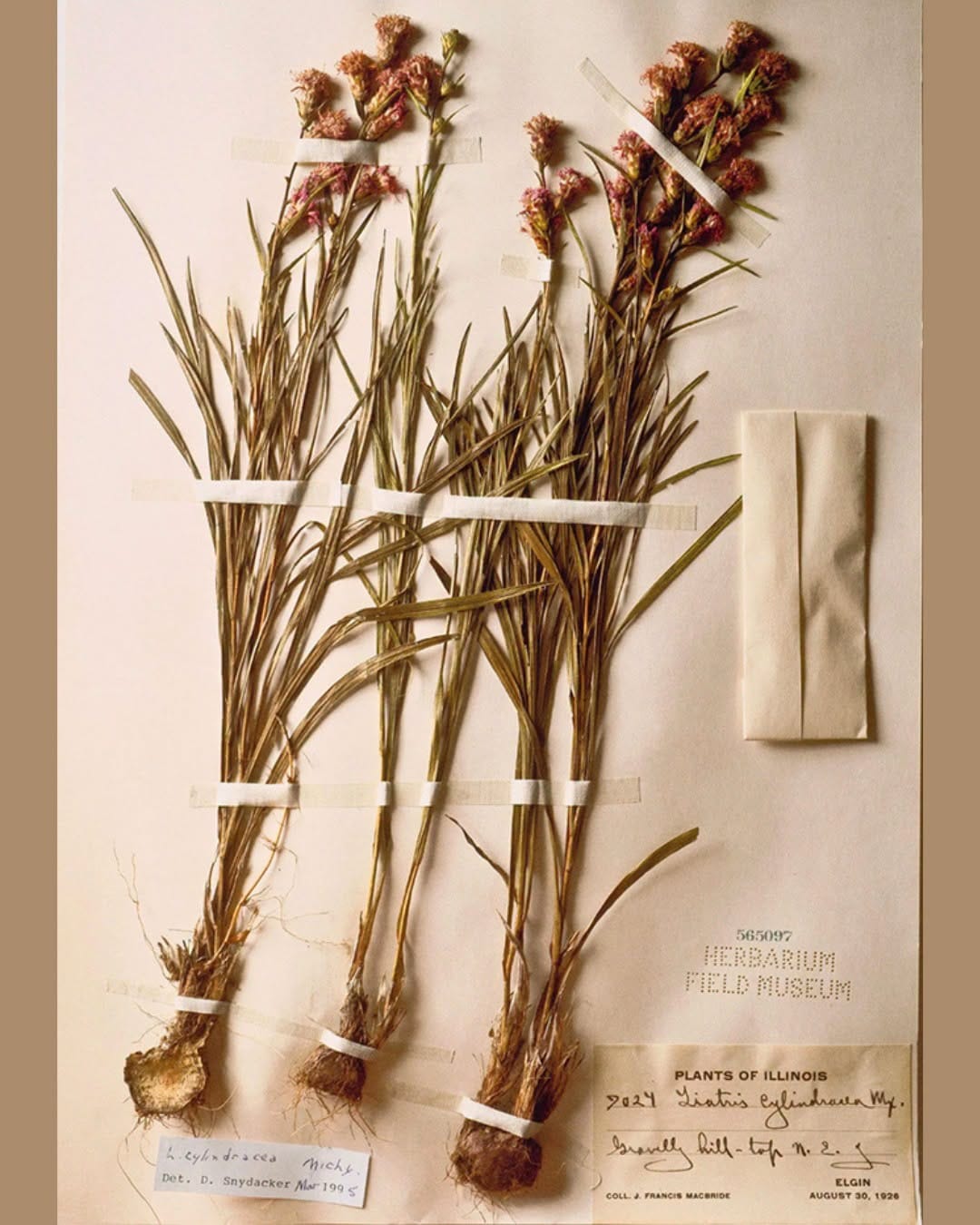
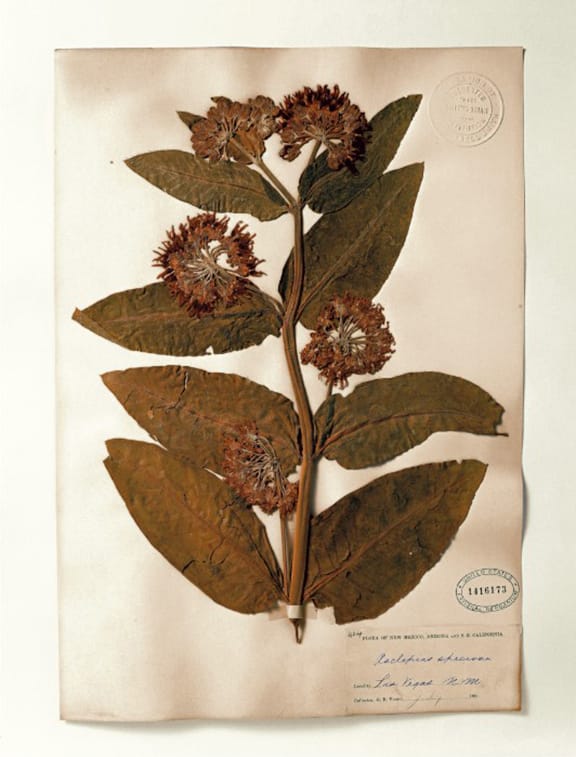
Works by Terry Evans, from left: “Field Museum, Liatrus, 1926,” 2002, edition 1/15, iris print, 24 by 20 inches; “Smithsonian, Asclepias, 1881,” 2001, edition 7/15, iris print, 24 by 20 inches. Photos courtesy of the Volland Store.
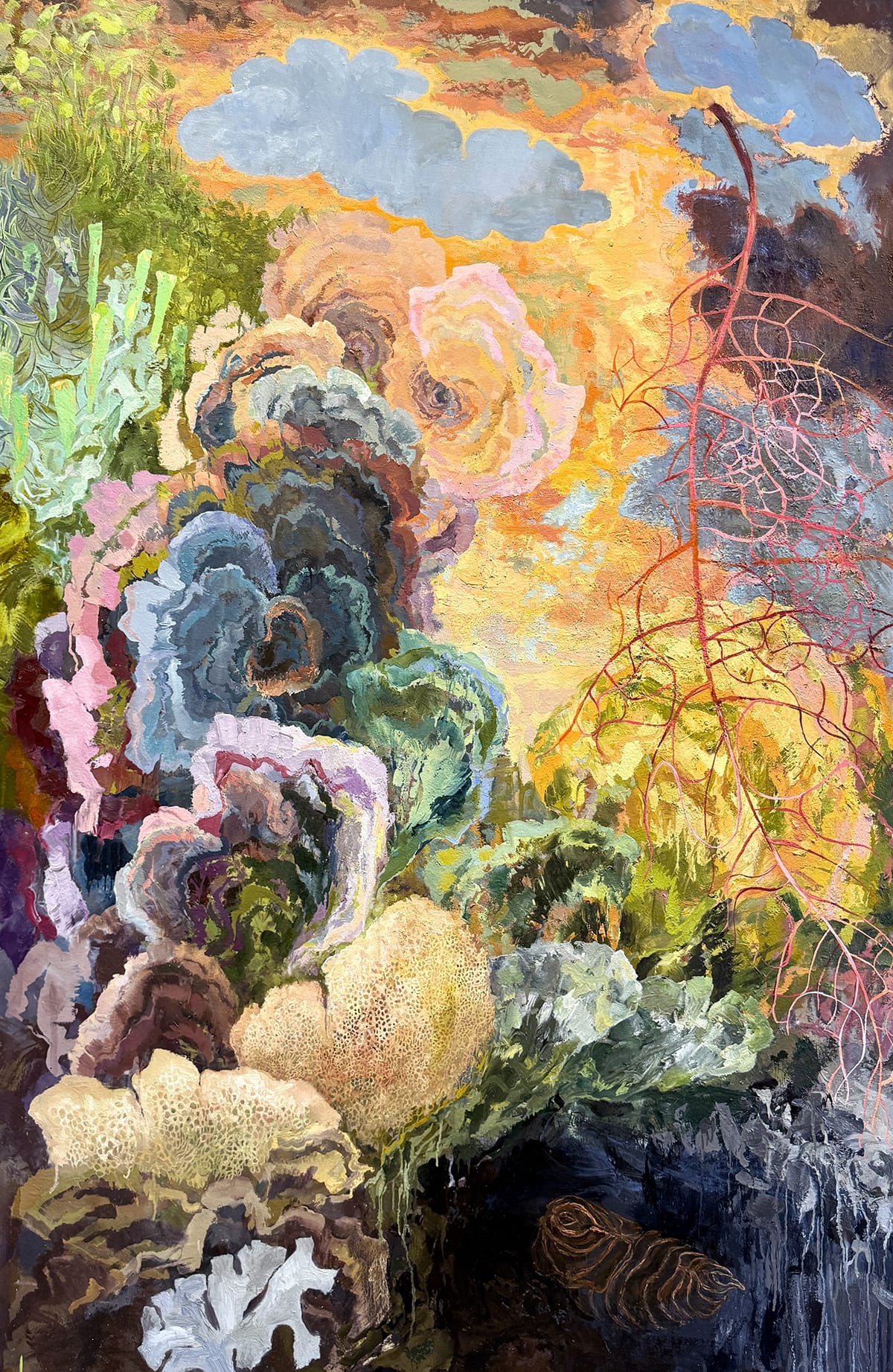
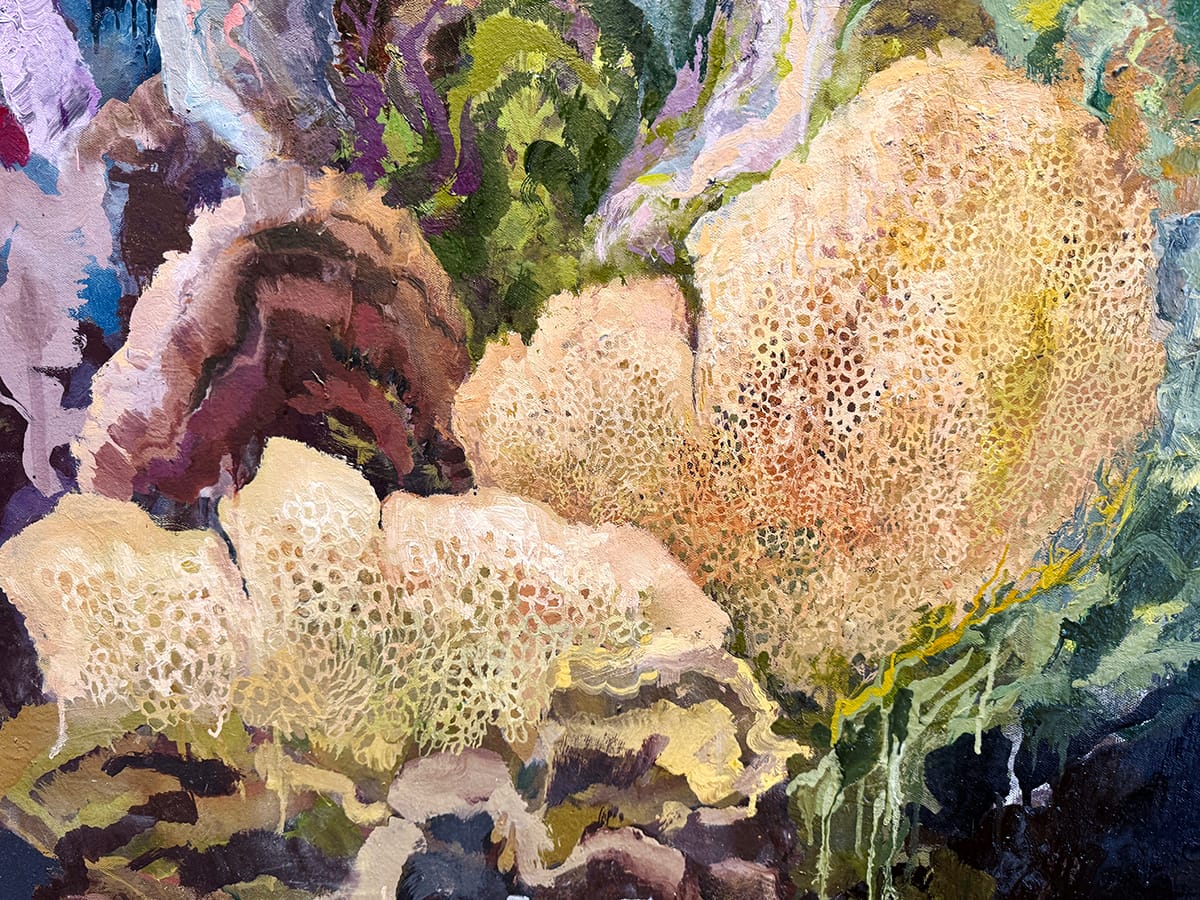
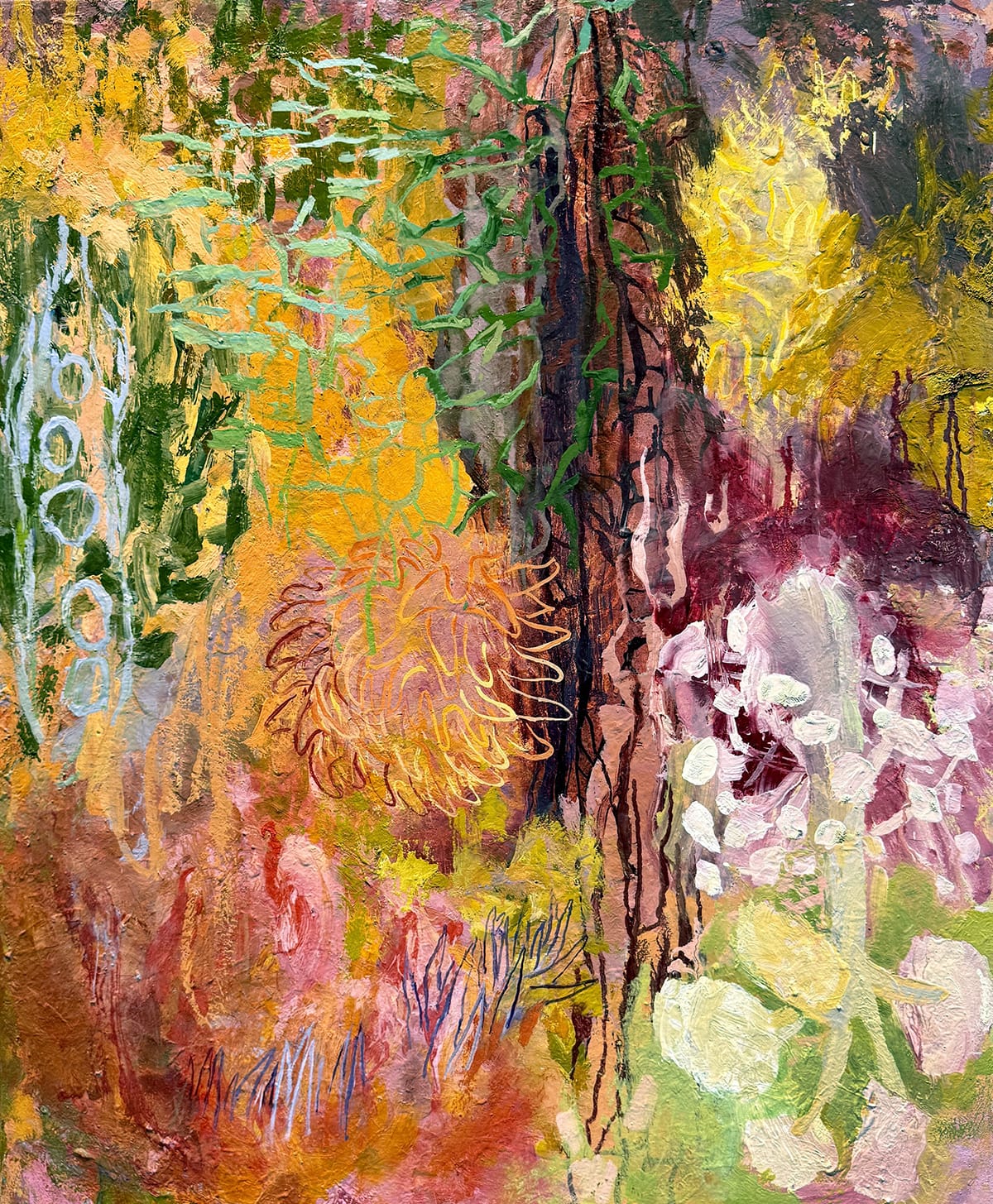
A. Mary Kay, “Betweenwhiles,” 2026, oil on canvas, 72 by 48 inches; detail of “Betweenwhiles.” Photos by Abby Bayani-Heitzman for the SHOUT.
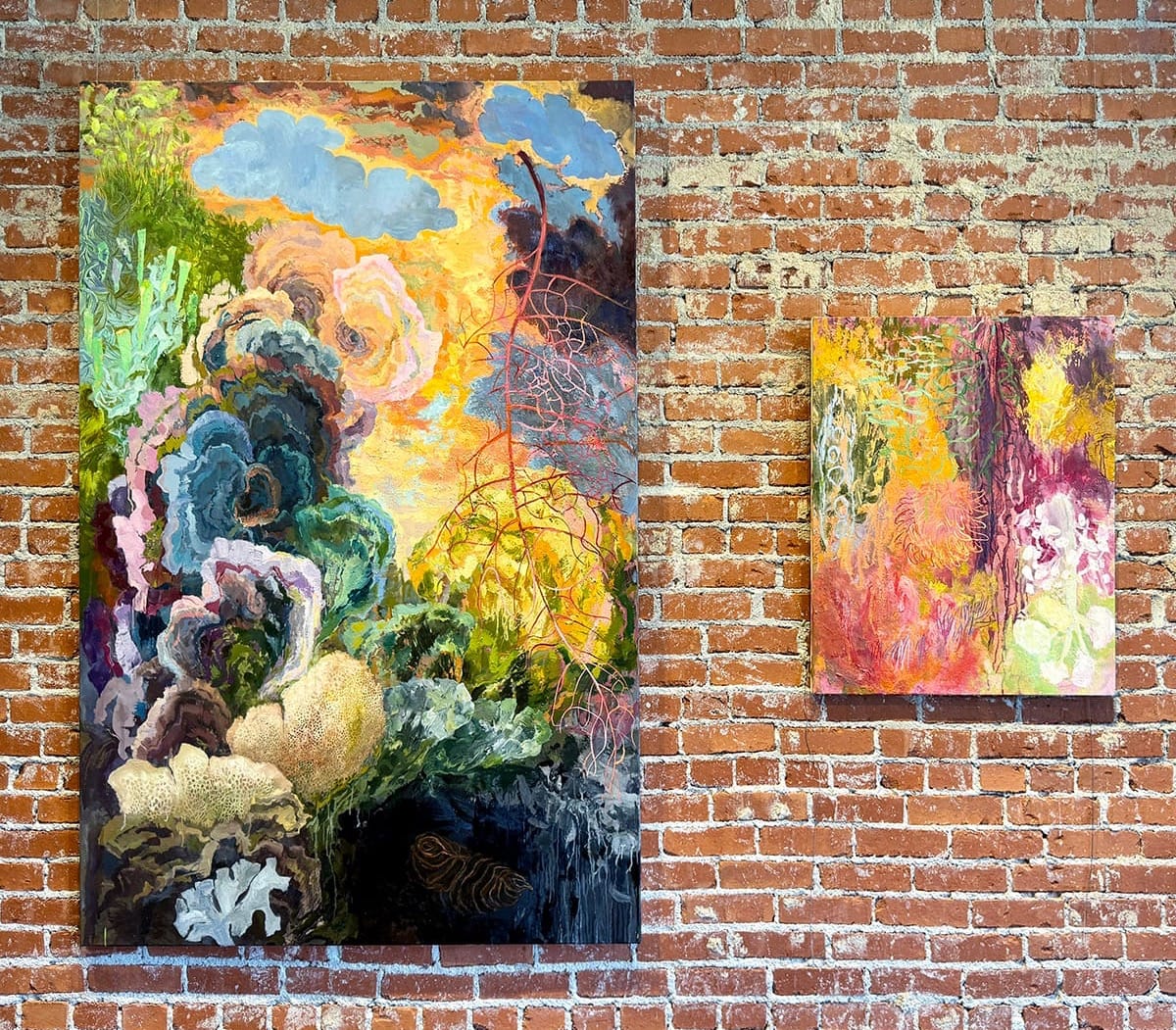
Two pieces by A. Mary Kay, “Betweenwhiles” and “Rudiments,” take a less direct approach to visually translating the prairie ecosystem. The paintings, both bursting with vivid colors and exuberant floral motifs, are not typical prairie scenes but instead reinterpretations of the landscape through abstraction, suggesting the prairie as a dynamic network of color, movement, and living forms rather than a place to be depicted literally. In “Rudiments,” the presence of clouds against the confluence of blues, greens, greys, and yellows is also reminiscent of a summer storm, something that is always a striking sight on the prairie.
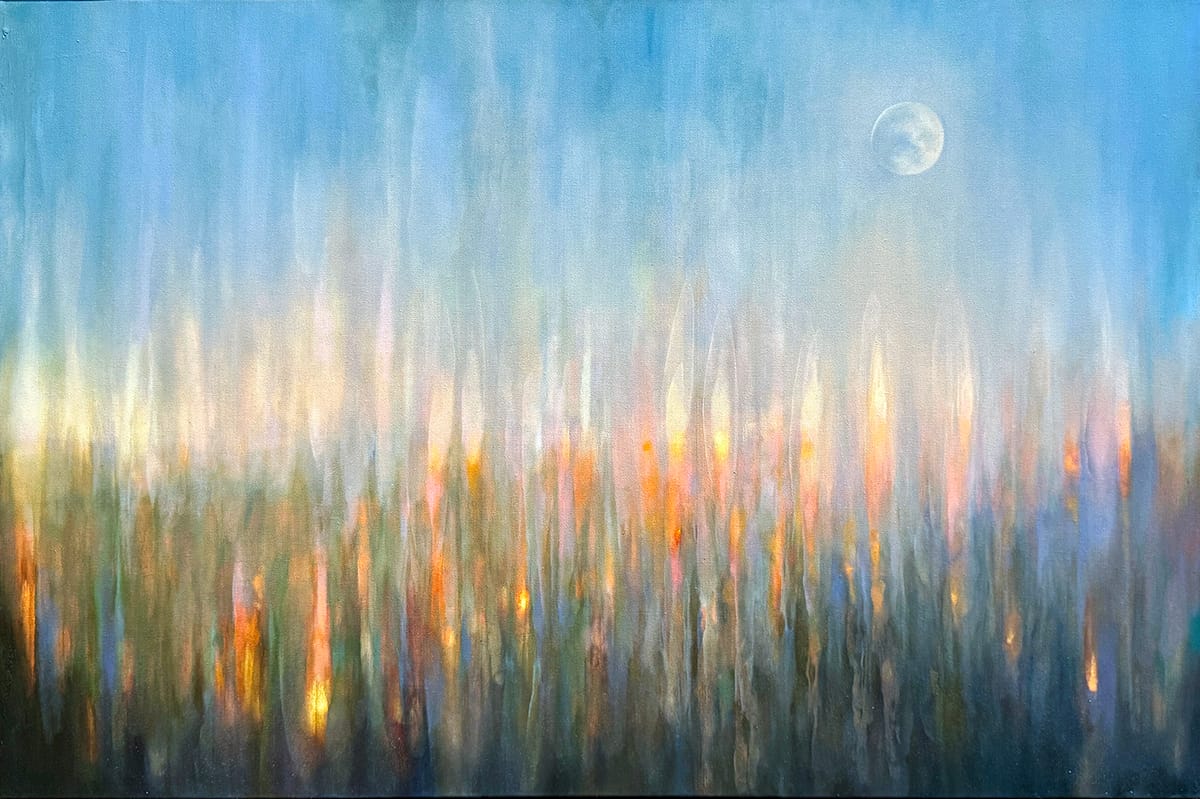
Dreamlike and glowing, Clare Doveton’s “Burn” depicts the strange glamor of a controlled burn, illustrating both the natural lifecycle of the prairie as well as the role of human stewardship over the land. Before colonization, the Indigenous peoples of the prairie used controlled burns as a key land management tool to maintain ecological balance. In the modern day, science is beginning to catch up to the traditional ecological knowledge cultivated and maintained by Indigenous communities, and controlled burns are routinely utilized to burn off old growth and make space for new life. Doveton’s indistinct flames and stalks of tallgrass seem to flow into each other, demonstrating the moment of transformation and rebirth beneath a serene full moon, itself locked in a cycle of becoming and unbecoming.
Although it is small show, and although it demands a small trek for those living outside of the Flint Hills, “A Tribute to the Art of Symphony in the Flint Hills Field Journals” is an exhibition that all Kansans — especially those who think everything west of Topeka is just “flat” — should view if they are able. Represented here are not just the beauty and diversity of the Flint Hills tallgrass prairie but also the amazing community of artists that delight in capturing and sharing the beauty of their home.
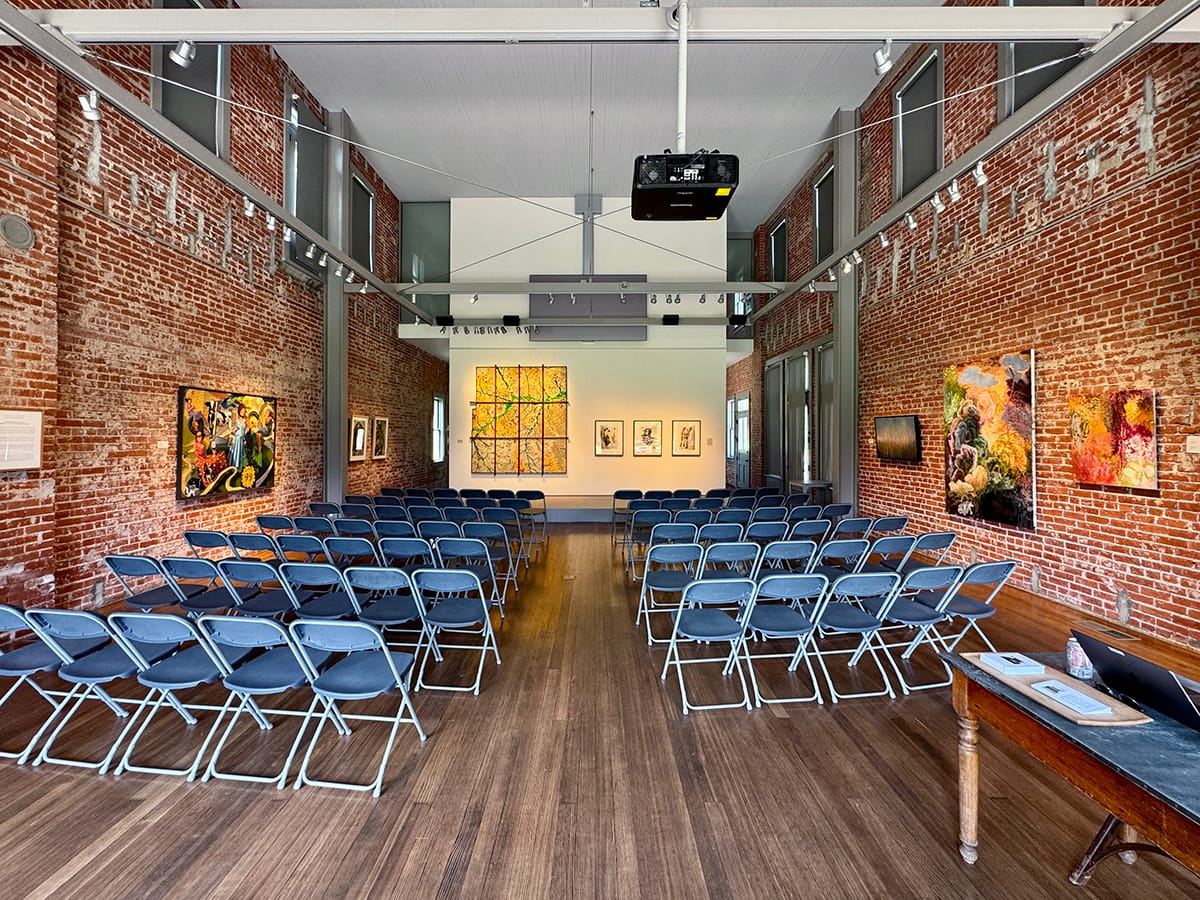
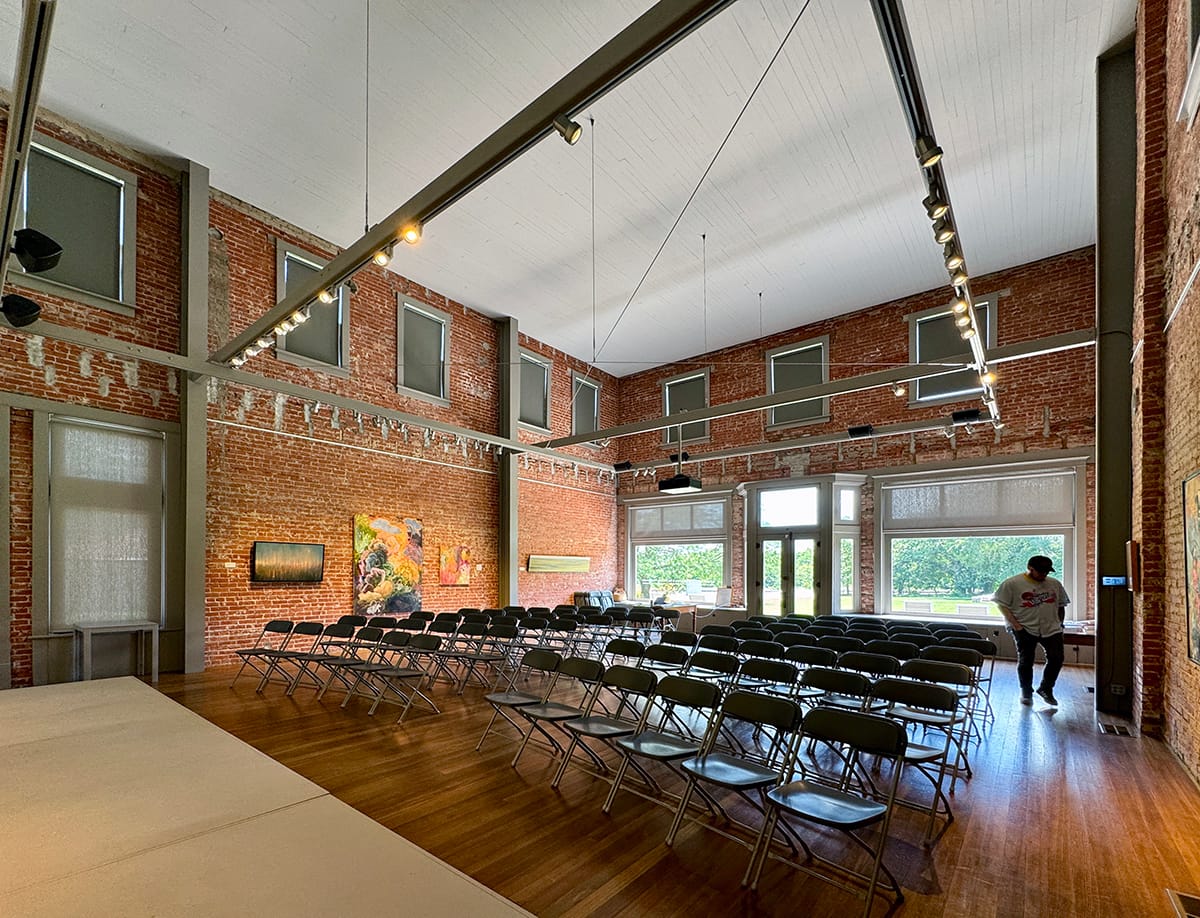
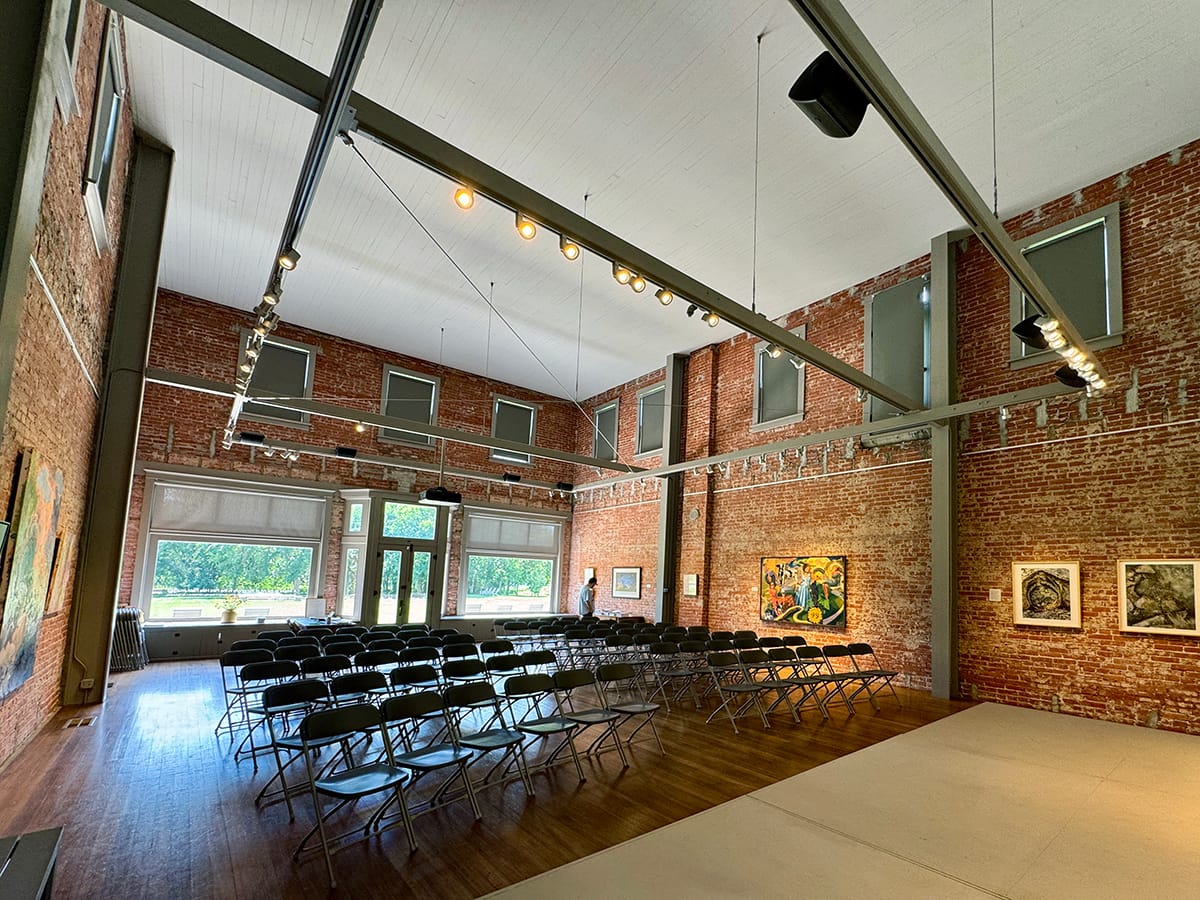
Installation views of “A Tribute to the Art of Symphony in the Flint Hills Field Journals” at the Volland Store. Photo by Abby Bayani-Heitzman for The SHOUT.
The Details
“A Tribute to the Art of Symphony in the Flint Hills Field Journals”
July 4–August 9, 2026, the Volland Store, 24098 Volland Road in Alma, Kansas
The Volland Store is open from 1 p.m.-4 p.m. Friday through Sunday and by appointment.
Admission is free, and the facility is accessible to people with physical disabilities.
Learn more about current and upcoming exhibitions on the Volland Foundation website.
Abby Bayani-Heitzman is a Filipino American writer from Northeast Kansas. She received her Master of Arts in English from Wichita State and participated in the second cohort of the Kansas Arts Commission’s Critical Writing Initiative. Her work has appeared in publications such as The New Territory, The Lawrence Times, and the Kansas Reflector. She also self-publishes the fanzine series Played Out, which focuses on music and subculture in Kansas and has distributed hundreds of zines both locally and internationally.
❋ Derby man has the kind of voice that turns heads — and chairs
❋ Socializing while sober: how some Wichitans are cultivating alcohol-free communities
❋ As a small creative business closes, the owner mourns
❋ Painting through it: Autumn Noire on 20 years of making art
❋ How a guy from Wichita resurrected 'Dawn of the Dead'
❋ Bygone Friends University museum housed curious collections
Support Kansas arts writing
The SHOUT is a Wichita-based independent newsroom focused on artists living and working in Kansas. We're partly supported by the generosity of our readers, and every dollar we receive goes directly into the pocket of a contributing writer, editor, or photographer. Click here to support our work with a tax-deductible donation.