How Wichita formalized spending on public art
While the city of Wichita has long incorporated art into municipal buildings and infrastructure, the City Council established ongoing, dedicated funding in 2019.
When Wichita City Council Member Becky Tuttle talks about public art, she also uses a somewhat different term: public design.
People often think of art as a painting hanging above a mantel or a sculpture that shouldn't be touched, she said in a recent interview. But artistic elements can also make public spaces safer, more functional and more welcoming.
She pointed to the recently renovated teen space at the Rockwell Branch Library, where Joe Worley of Brickmob installed “Illuminated Tales,” a collection of vinyl panels in the style of stained glass.
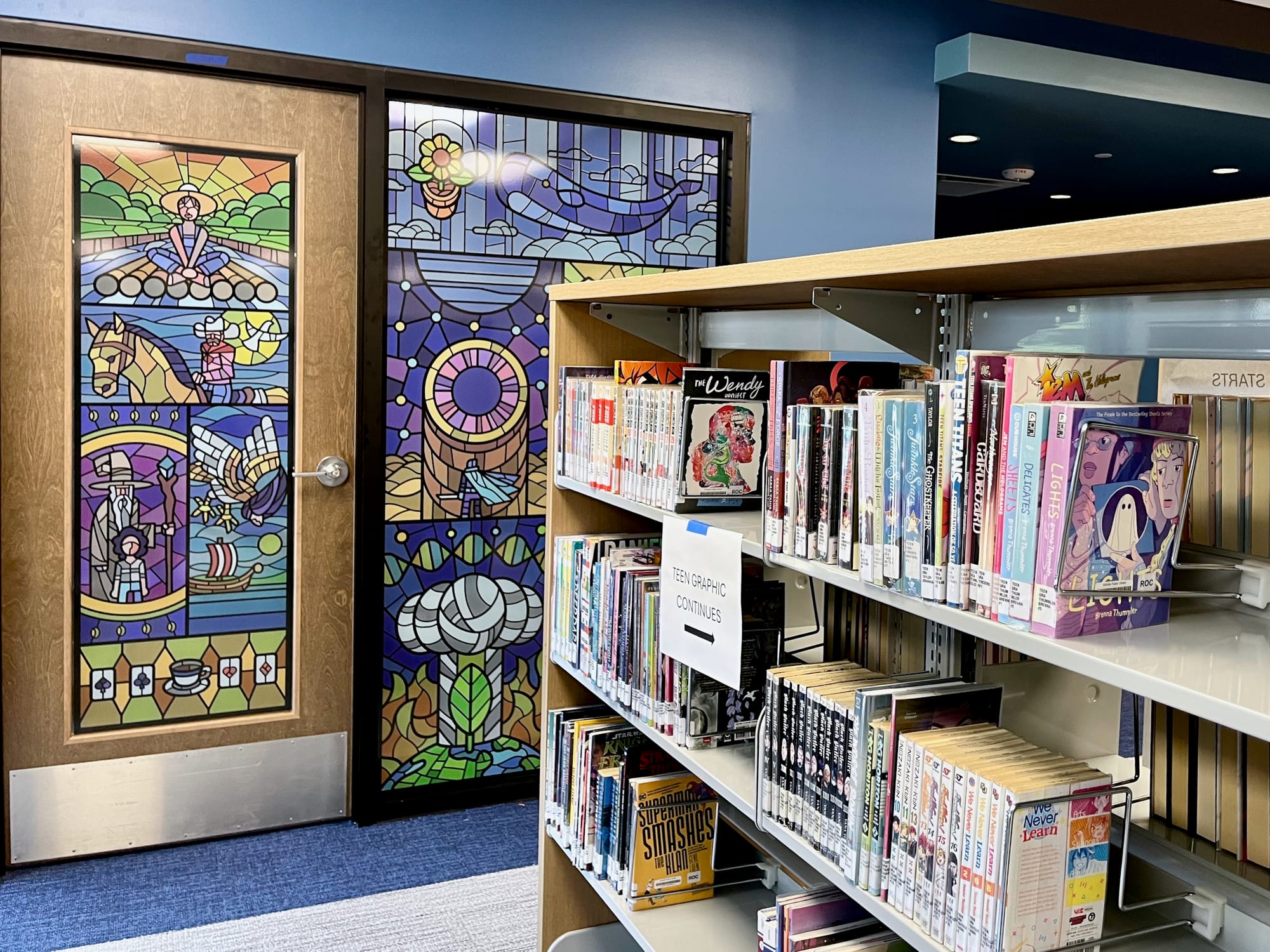
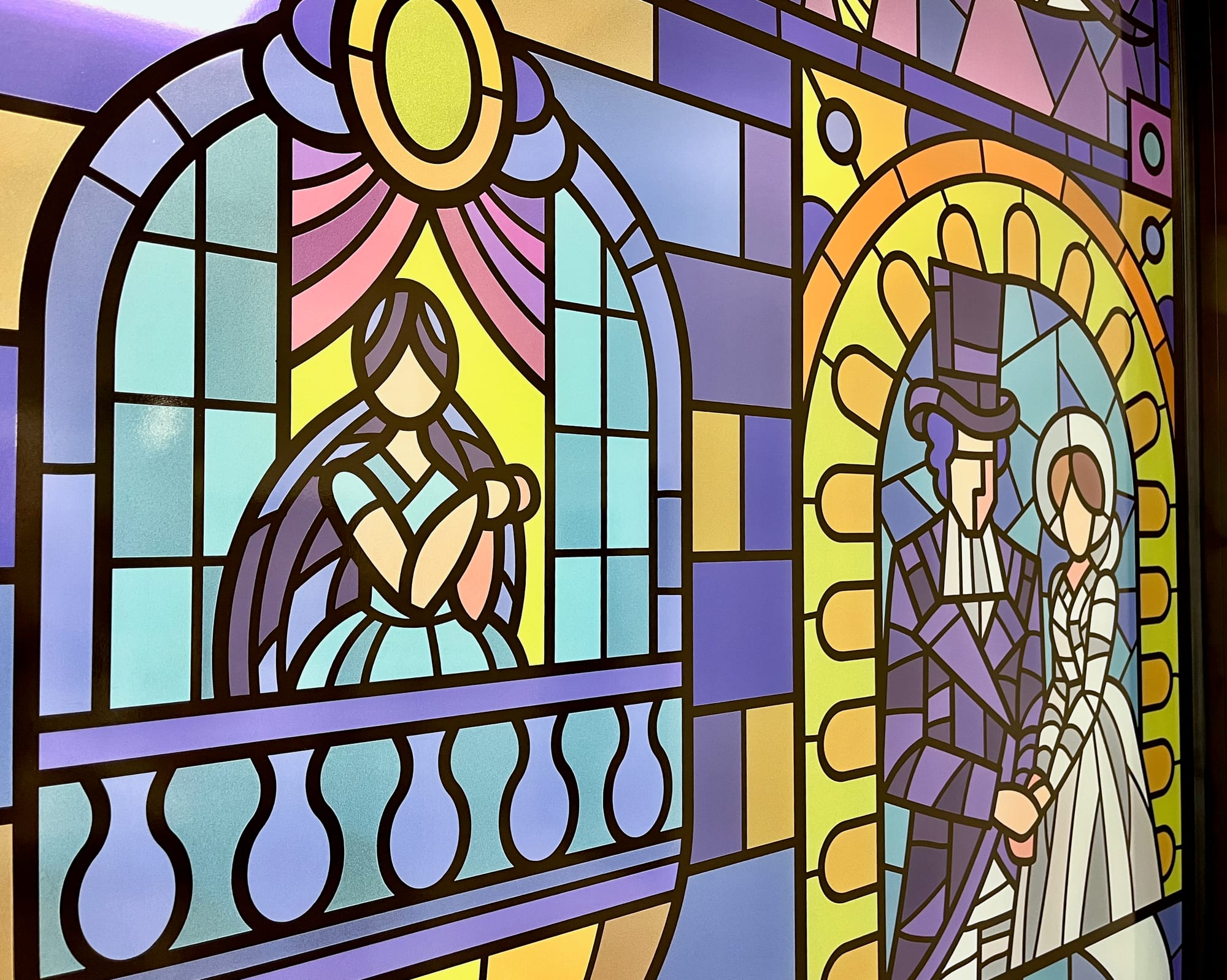
"When you go there, it changes the entire character and the atmosphere of that space," Tuttle said.
That understanding of public art helps explain why Tuttle supported Wichita's "percent for art" ordinance in December 2019, during her first year on the City Council.
The measure, which passed 6-1, committed the city to allocating 2 percent of certain capital improvement funds for public art. Tuttle said she and her colleagues didn't see it as a radical departure from the way Wichita had been spending money.
"We wanted to take something that was a practice, of incorporating public art and design into our projects, and codify it, make it more formal," she said.
Nearly seven years later, the ordinance has changed the city's approach to commissioning public art – opening opportunities for artists and setting a default expectation that artistic considerations will factor into the planning of new construction.
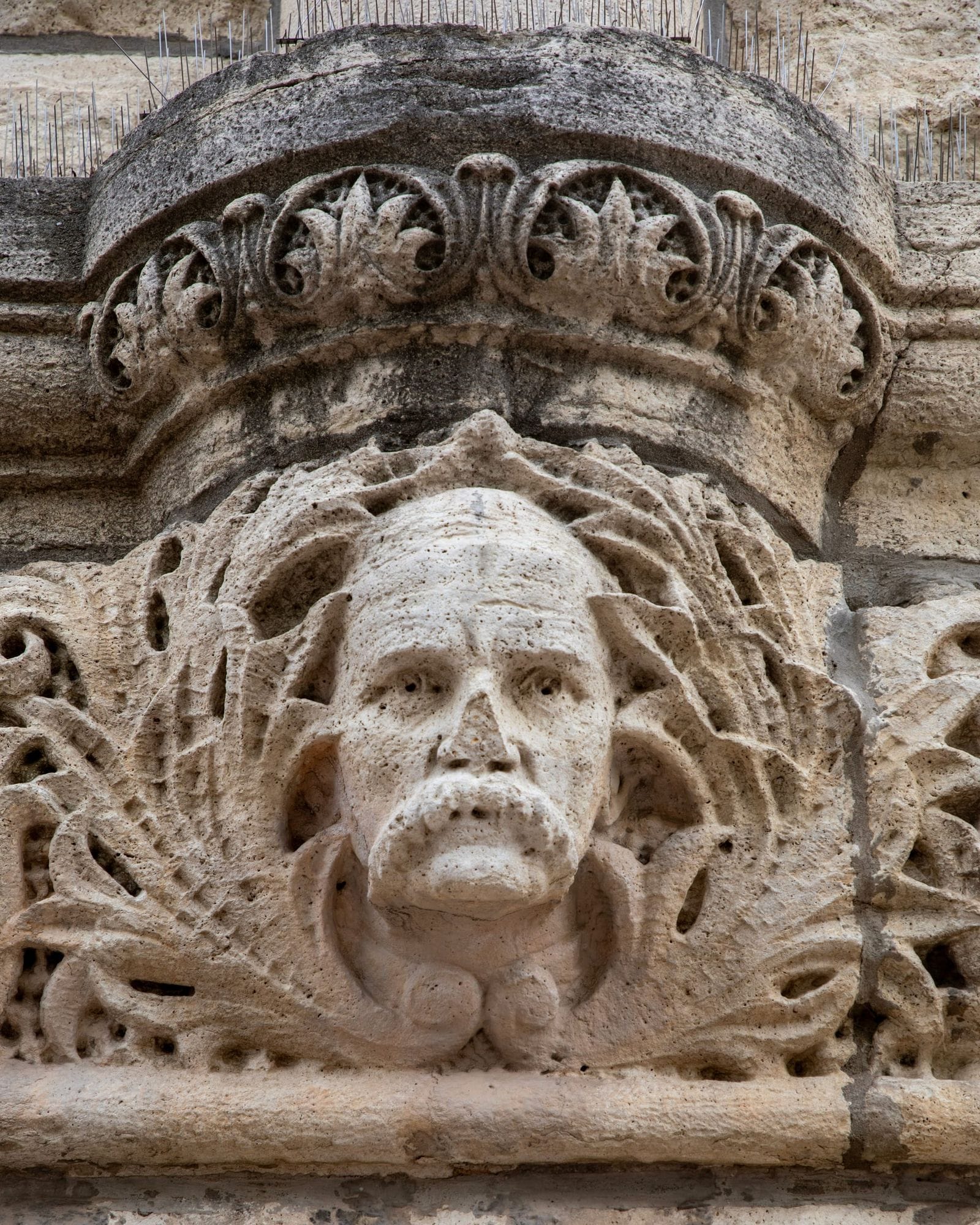
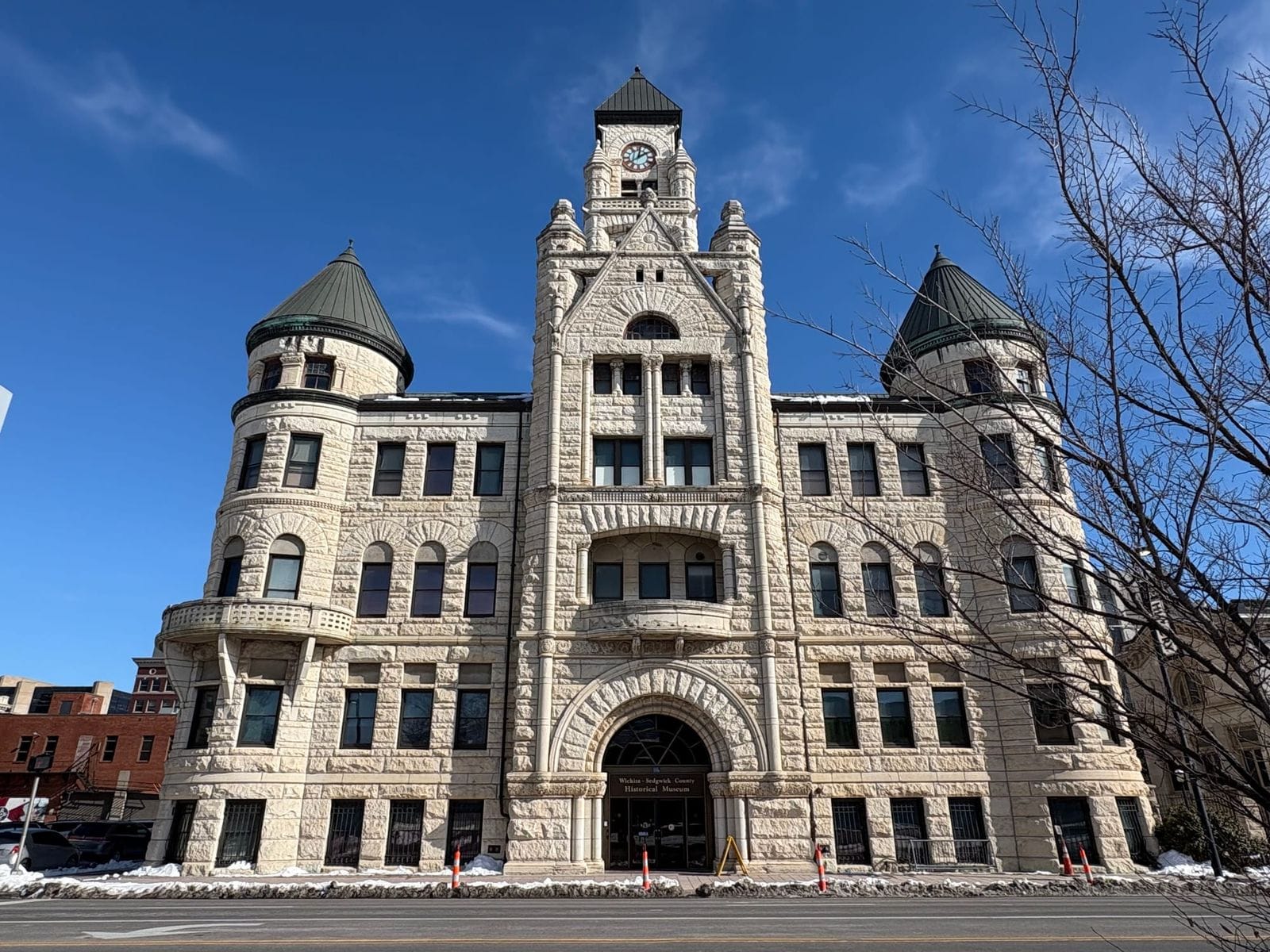
The group of carvings on the facade of Wichita's former city hall, now the Wichita-Sedgwick County Historical Museum, is a historic example of how artwork has been incorporated into municipal buildings throughout the city's history. Stefania Lugli wrote about the history of this artwork earlier this year in The SHOUT. (Stefania Lugli/The SHOUT)
Building consensus
Wichita incorporated artistic elements into bridges, parks, and municipal buildings long before adopting the ordinance, but those decisions were formerly made largely on a project-by-project basis, without a consistent formula for funding or a consistent framework for artist selection.
Around 2017, City Manager Robert Layton asked Wichita Art Museum director Patricia McDonnell to convene a committee to develop a more systematic approach.
The 10-member group included artists, architects, arts advocates, and people with experience in city government, among them former City Council member Sharon Fearey, Design Council chairman Phil Meyer, and arts consultant Elizabeth Stevenson. The committee studied other communities and developed a proposal modeled on percent-for-art programs that had become common across the country.
The proposal that reached the City Council in December 2019 requires a public art allocation equal to at least 2 percent of new capital projects funded through certain sources, including at-large general obligation bonds, local sales taxes, and the transient guest tax. The ordinance requires city staff to include that allocation in the capital improvement program, but the City Council retains final approval over individual expenditures.
In 2019, Wichita's adopted 10-year capital improvement plan already included about $7.9 million for public art, equivalent to 1.5 percent of eligible capital funding. The proposed 2 percent allocation would increase the total to $10.6 million.
At the December 17, 2019, city council meeting, Meyer emphasized that Wichita had been incorporating art into capital projects for more than two decades. The ordinance would establish predictable funding and a consistent process for work the city was already undertaking.
Several council members offered their own reasons to make the change. Brandon Johnson said a formal process would provide checks and balances, and opportunities to review spending, while James Clendenin argued that the new framework would promote transparency rather than unnecessary bureaucracy.
Bryan Frye spoke about the importance of public art in attracting residents and workers to Wichita. "Wichita is in a battle for people," he said.
Tuttle also remembers economic competitiveness as one of the key considerations behind the council's decision. The council wanted Wichita to keep pace with its peers.
Vice Mayor Jeff Blubaugh, who now serves on the Sedgwick County Commission, cast the sole no vote, saying that he preferred considering art expenditures individually rather than establishing a standing allocation for public art in the city's capital improvement program. He questioned whether the city should commit money to art when residents who participated in a budget simulation exercise had ranked it 39th out of 40 municipal spending priorities. David Inkelaar, then president of Wichita's Fraternal Order of Police Lodge 5, also argued that public safety needs should come first.
Turning an ordinance into a program
Passing the ordinance did not amount to opening a spigot from which public art would immediately flow. Capital projects take years to progress from budgeting to construction. And Wichita city staff needed to establish administrative procedures to implement the new requirements.
When Lindsay Benacka became the city's director of arts and cultural services in December 2021, she found a program with substantial financial commitments but saw a need to establish equally robust administrative procedures. "We had a lot of projects, a lot of money, but no one really dedicated to managing it," she recalled.
Benacka's department added the position of public art manager, and Jana Erwin joined the city to fill it in September 2022.
Together, Erwin and Benacka developed a more formal system for identifying potential projects, recruiting artists, overseeing commissions, and caring for the city's collection.
The process begins with the Design Council, which reviews upcoming capital improvements and recommends where public art might be appropriate. Artists are then recruited through competitive calls and, whenever possible, brought into projects early enough to help shape their designs.
Previously, Benacka said, opportunities often depended on an artist's professional connections.
"If you were in the know, you knew, and if you didn't know, it was really hard to get that foot in the door," she said.
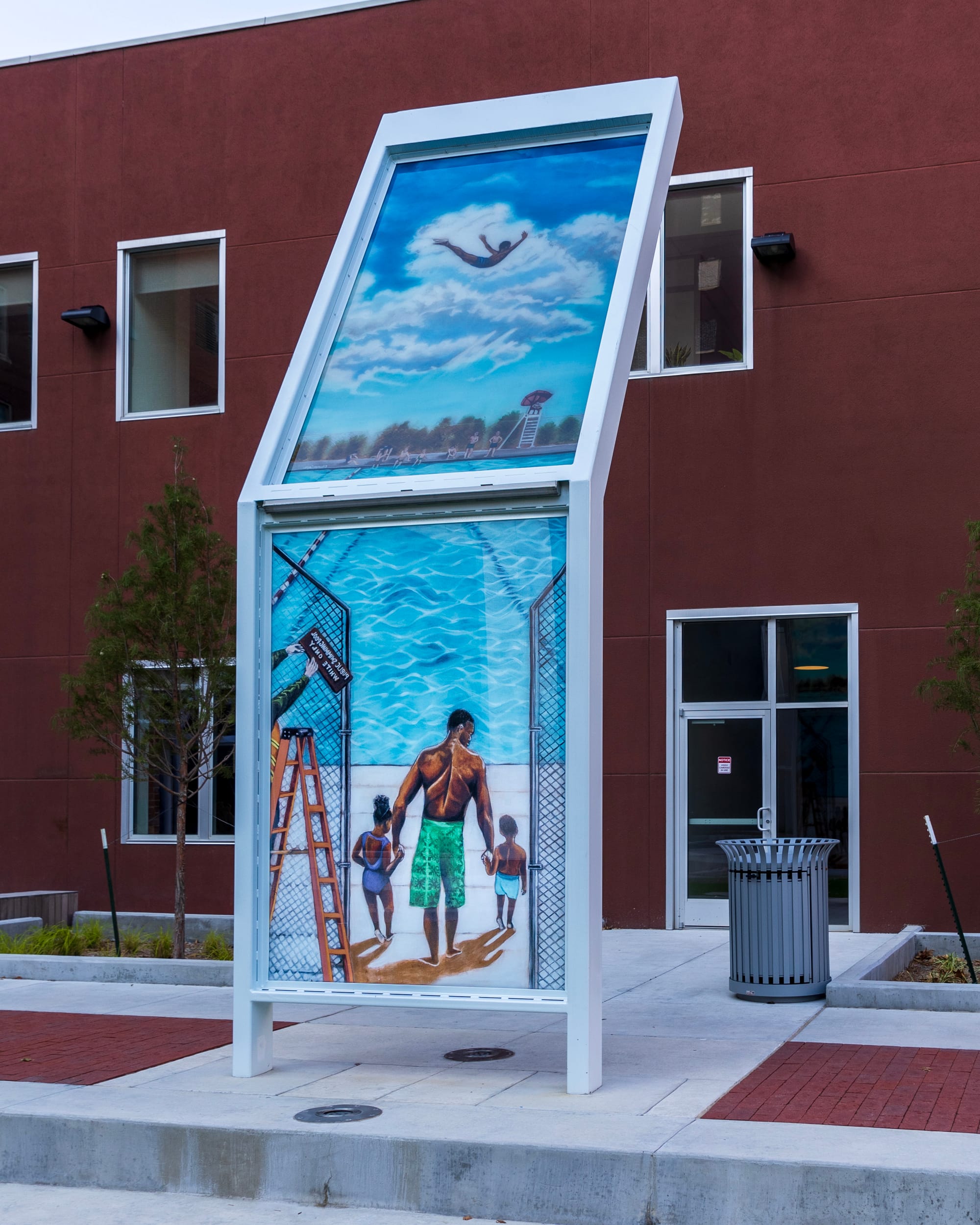
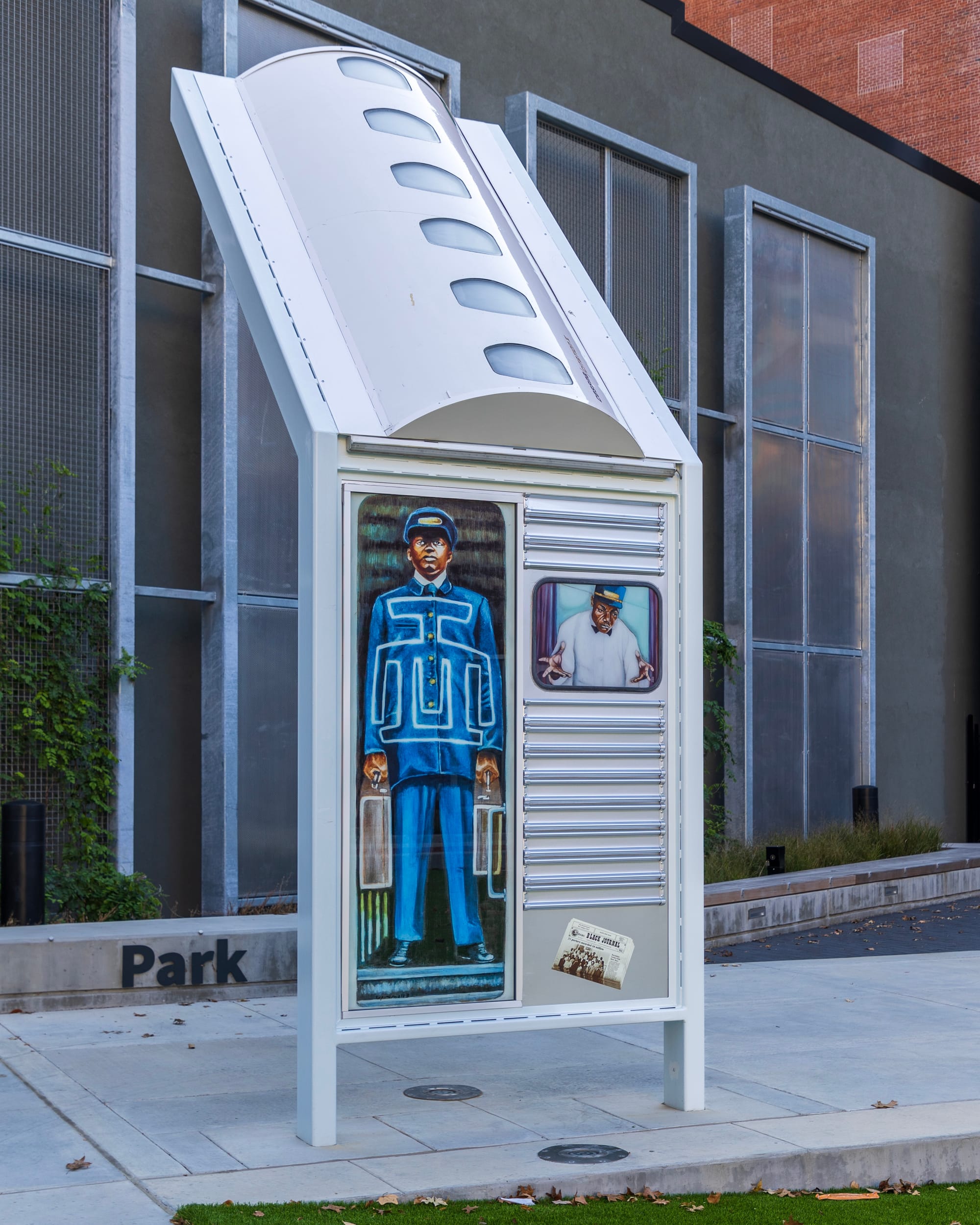
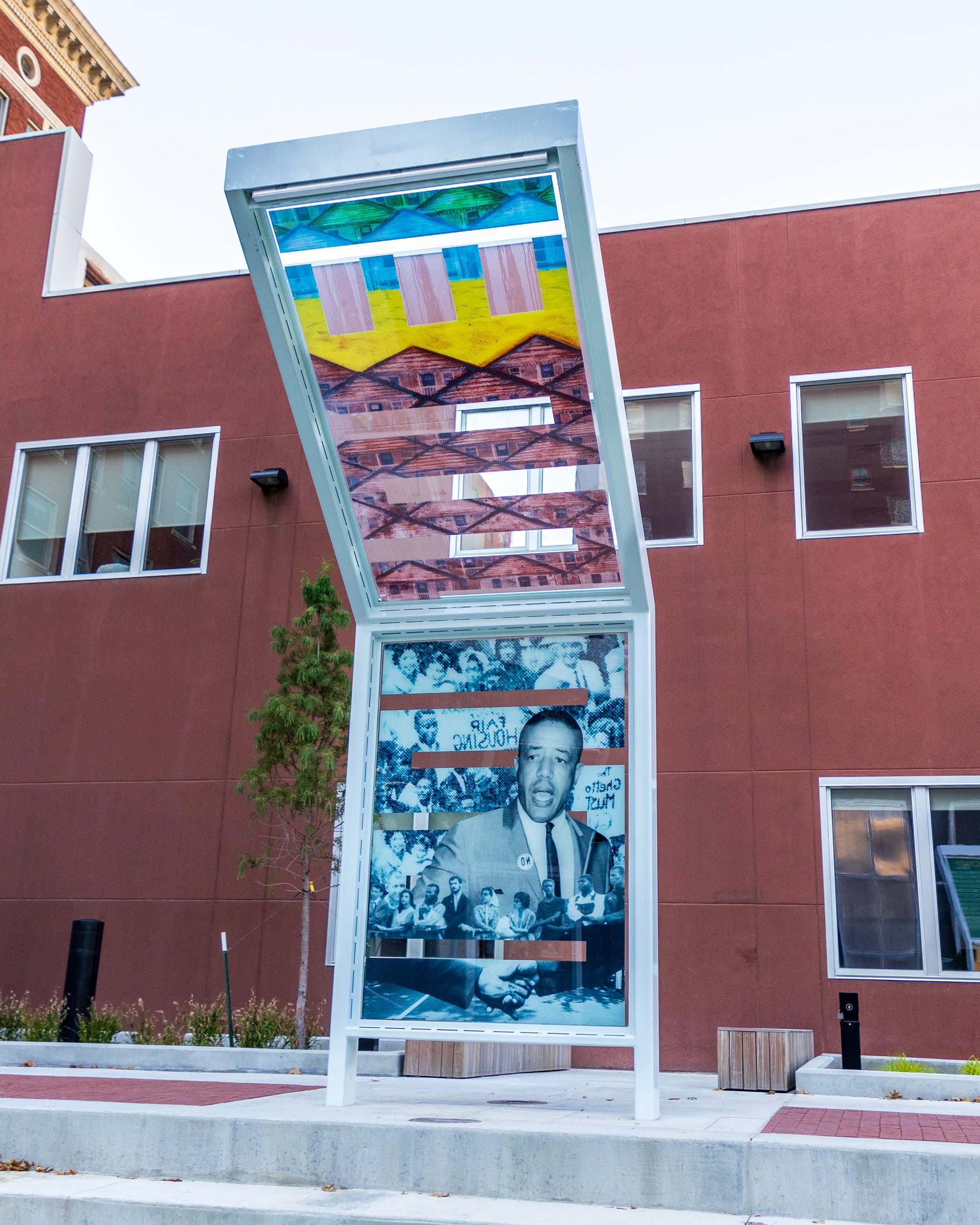
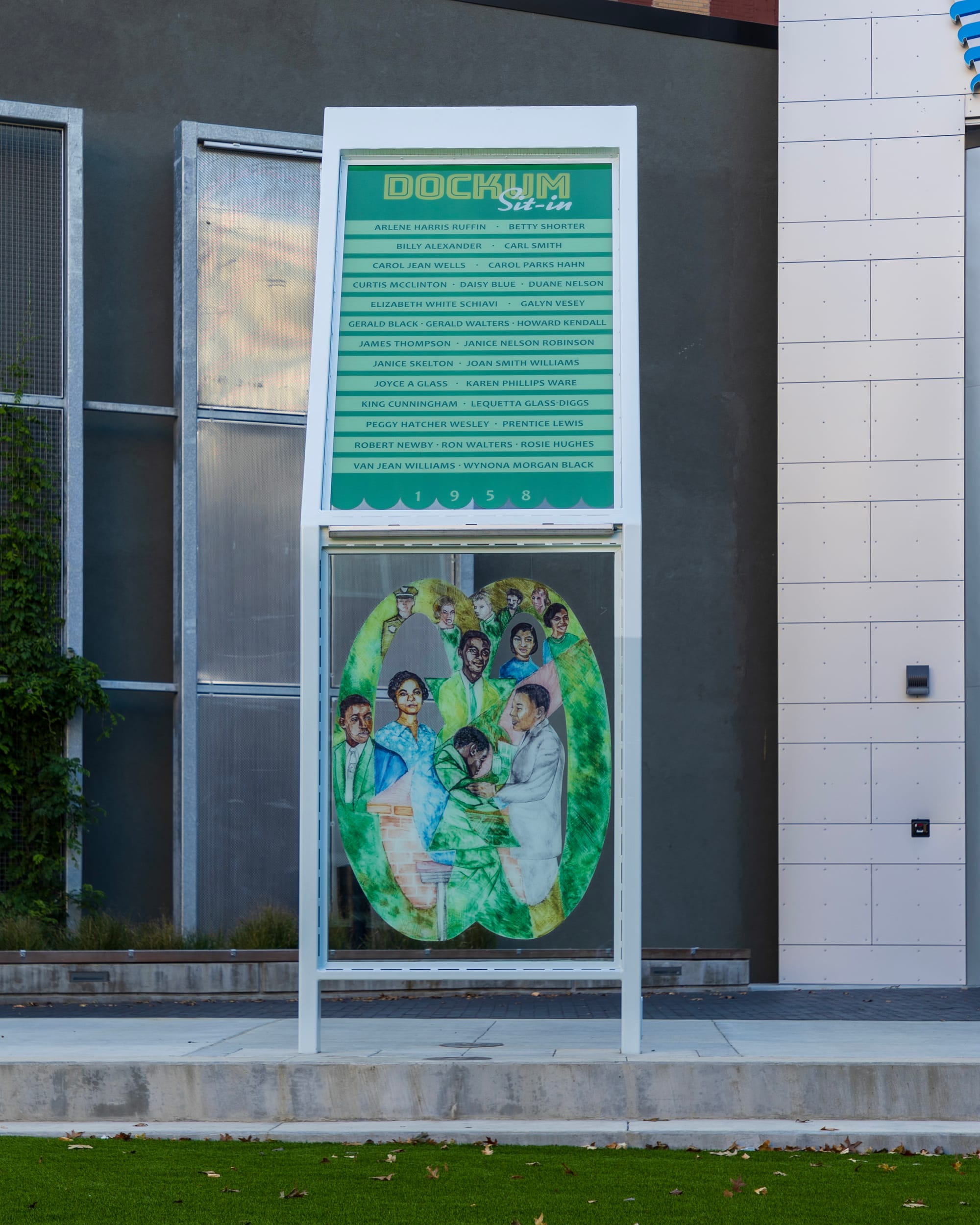
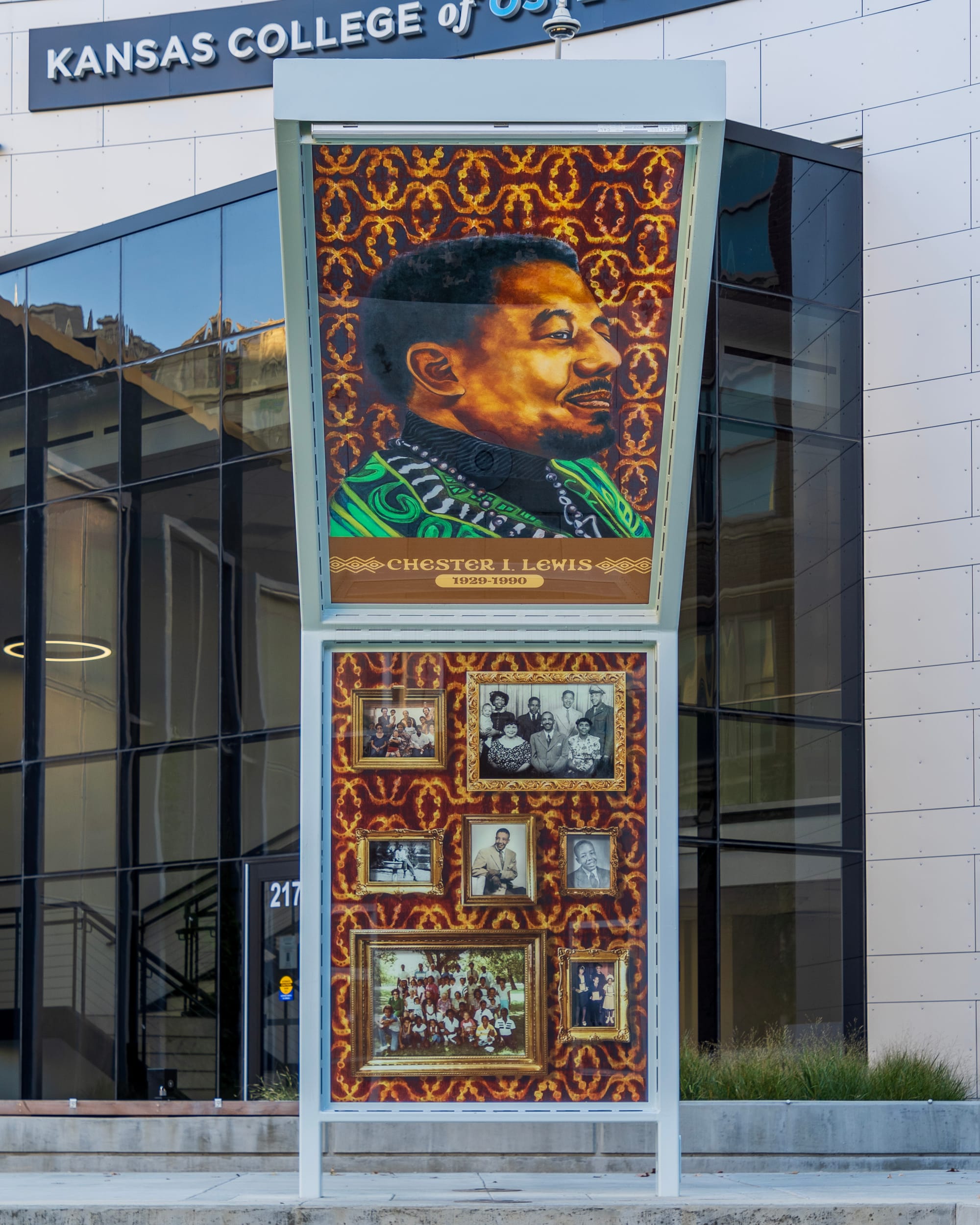
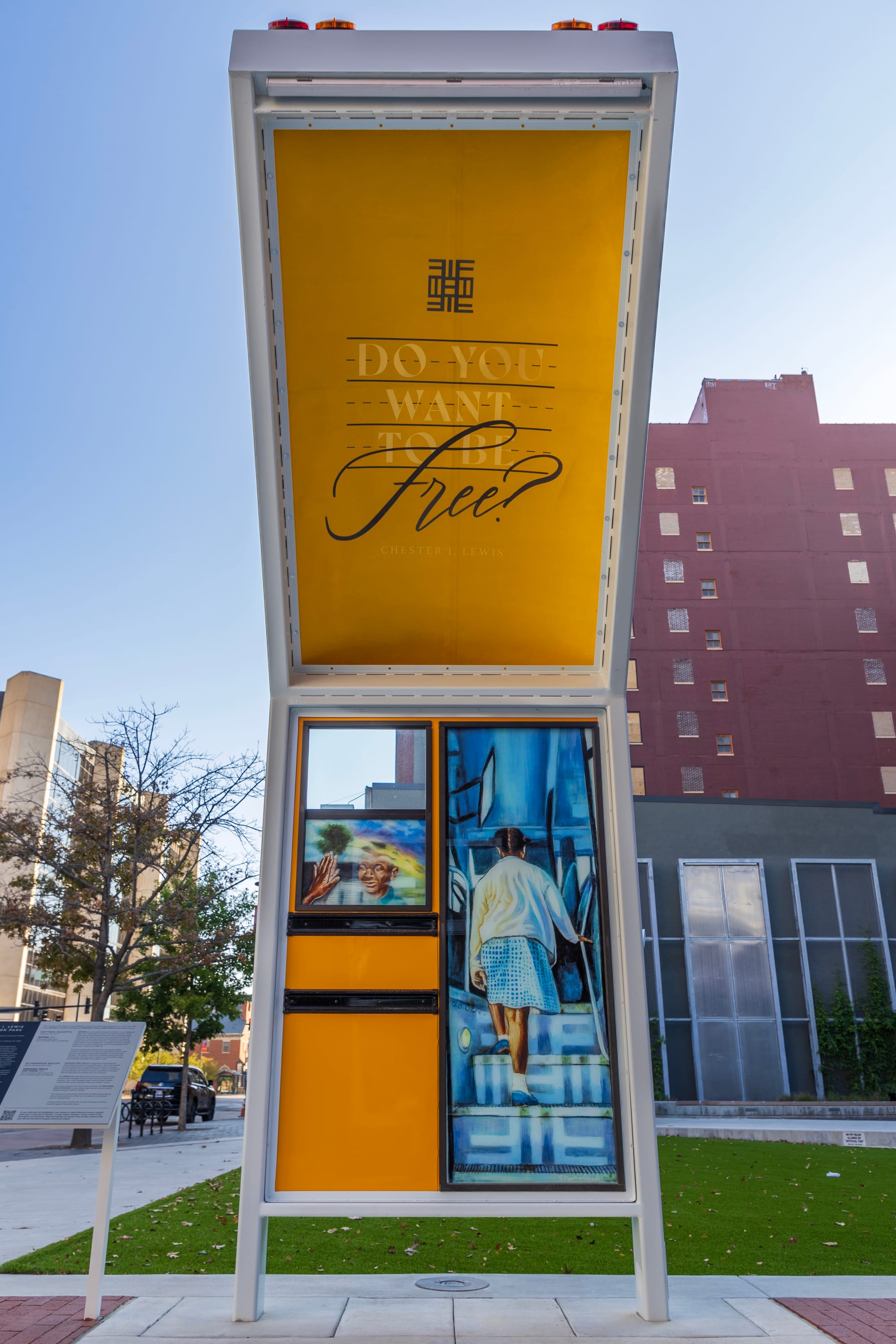
Ellamonique Baccus, Matthew Mazzotta, "Chester I. Lewis Reflection Square Park," 2023, steel, paint, glass, ceramic tile, and limestone. This immersive work of public art commemorates the life and advocate work of Wichita civil rights attorney Chester I. Lewis. (Courtesy/City of Wichita Public Art Collection)
The city now advertises opportunities through CODAworx, and it posts requests for qualifications on callforentry.org, where artists can apply. Erwin said the city initially evaluates artists based on their qualifications and previous work.
"We don't want artists to be putting together detailed proposals without some kind of compensation," she said.
Larger commissions can attract anywhere from 80 to more than 200 submissions. Over the past several years, Erwin said, about half the city's commissions have gone to local artists and half to artists from elsewhere.
She believes the new procedures have made public art more accessible to emerging artists.
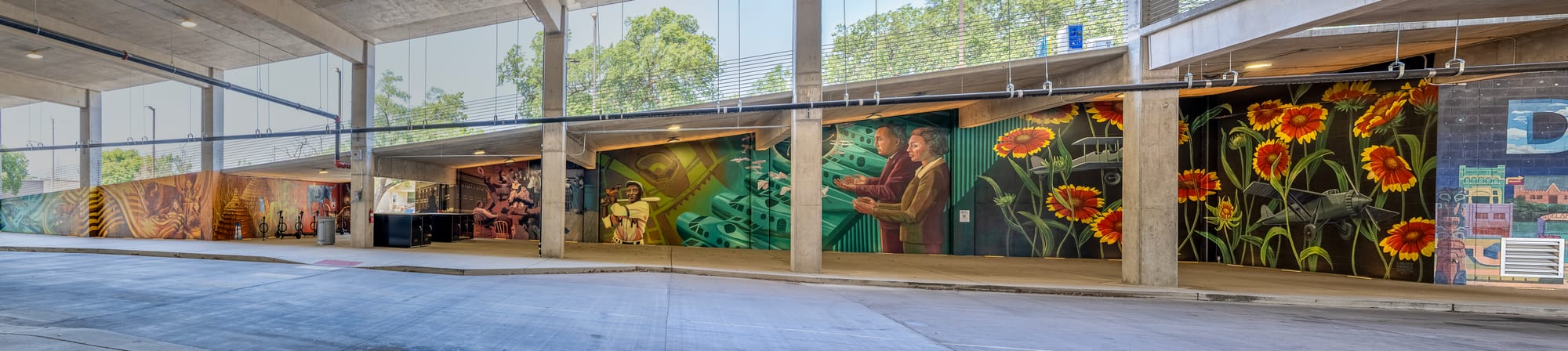
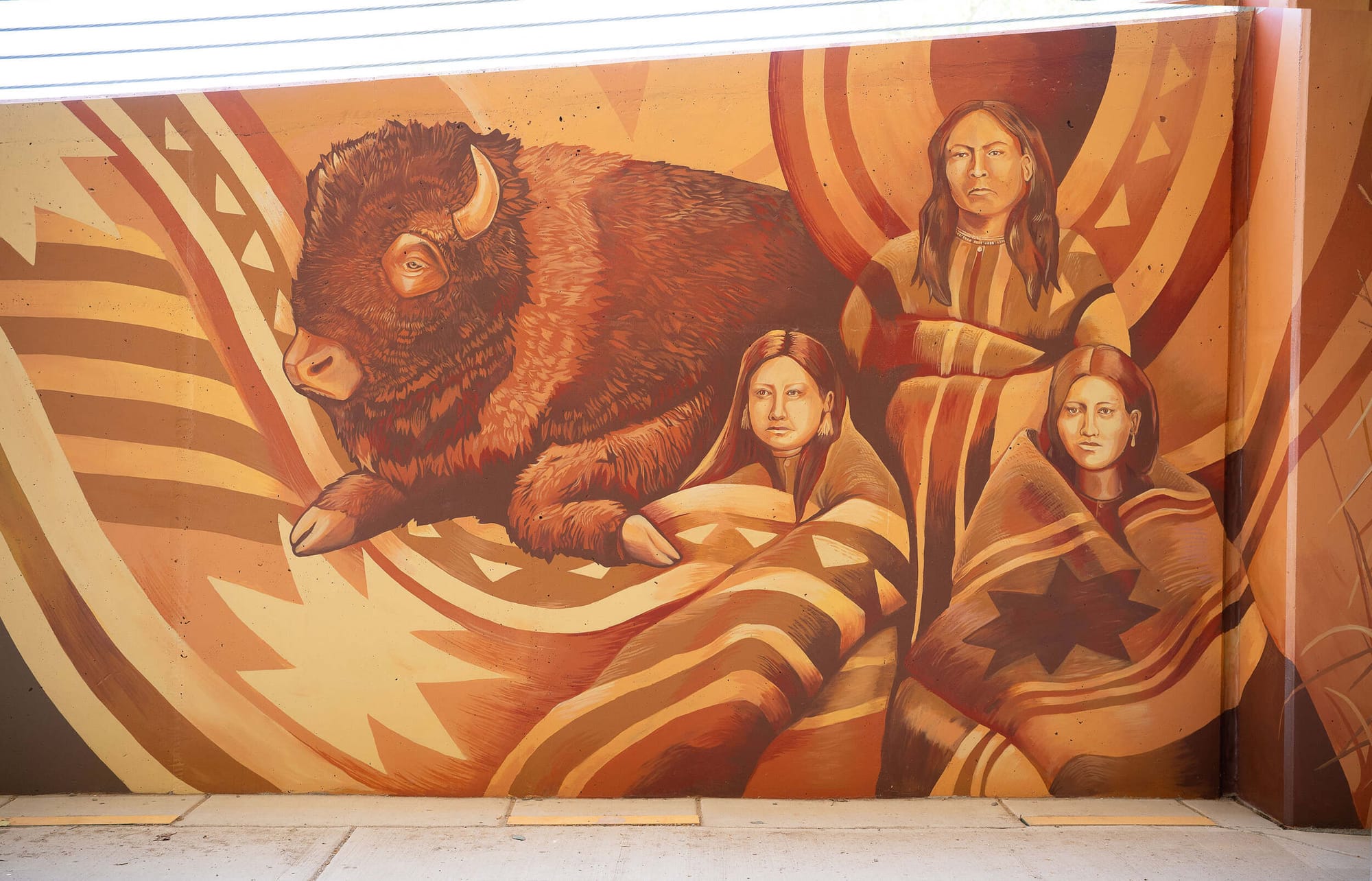
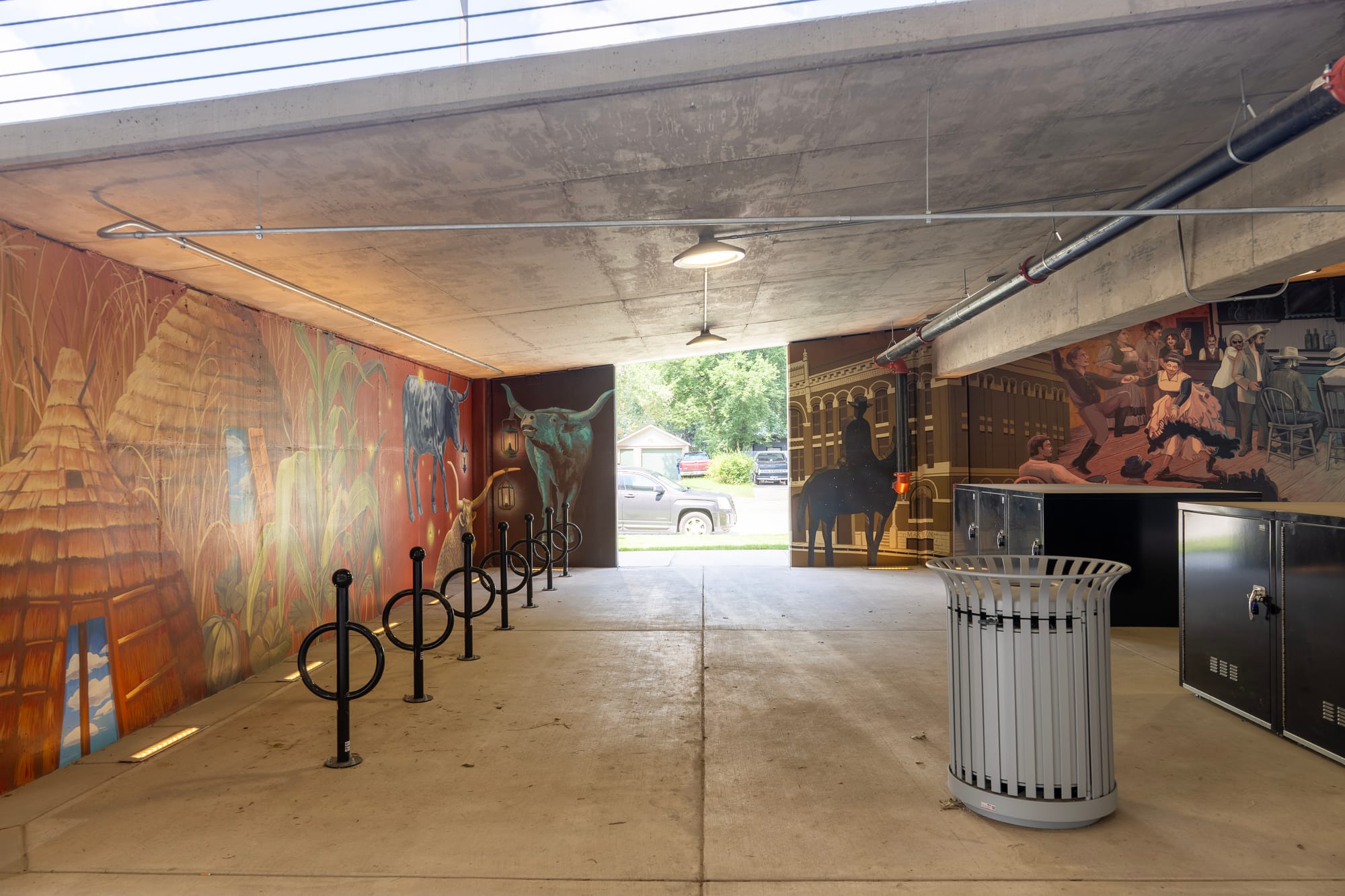
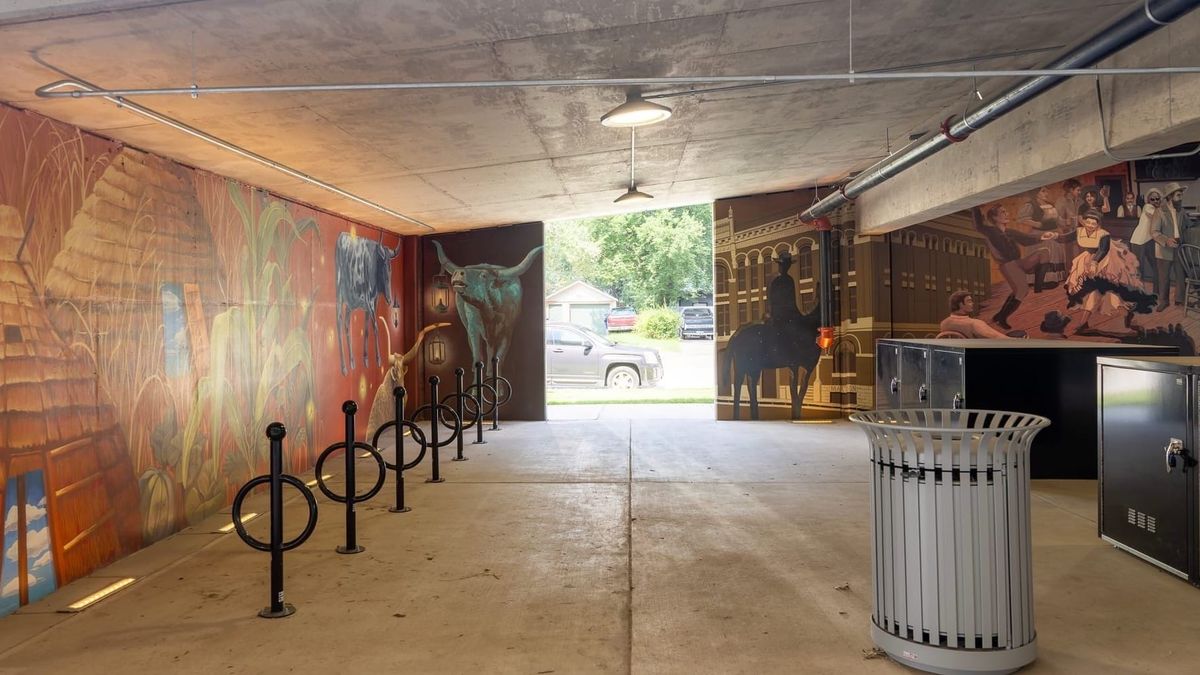
Other portions of the Delano transit hub murals honors Wichita's native history and "Cowtown" period. (Courtesy photo by Emmett Joseph)
One example is 300 feet of murals inside the new Delano transit hub, completed earlier this year. The designer and lead artist, Lindsey Kernodle, assembled a team of more than 20 emerging artists to help execute the murals, giving them experience with a major public commission.
The city has also partnered with Harvester Arts to develop and release a public artist toolkit to help local artists understand how to pursue opportunities.
An artist's view
Local resident Malissa Long broke into the ranks of Wichita's public artists with a hanging installation at the Maya Angelou Branch Library, incorporating small fabric collages made by students at Gordon Parks Academy and members of the public.
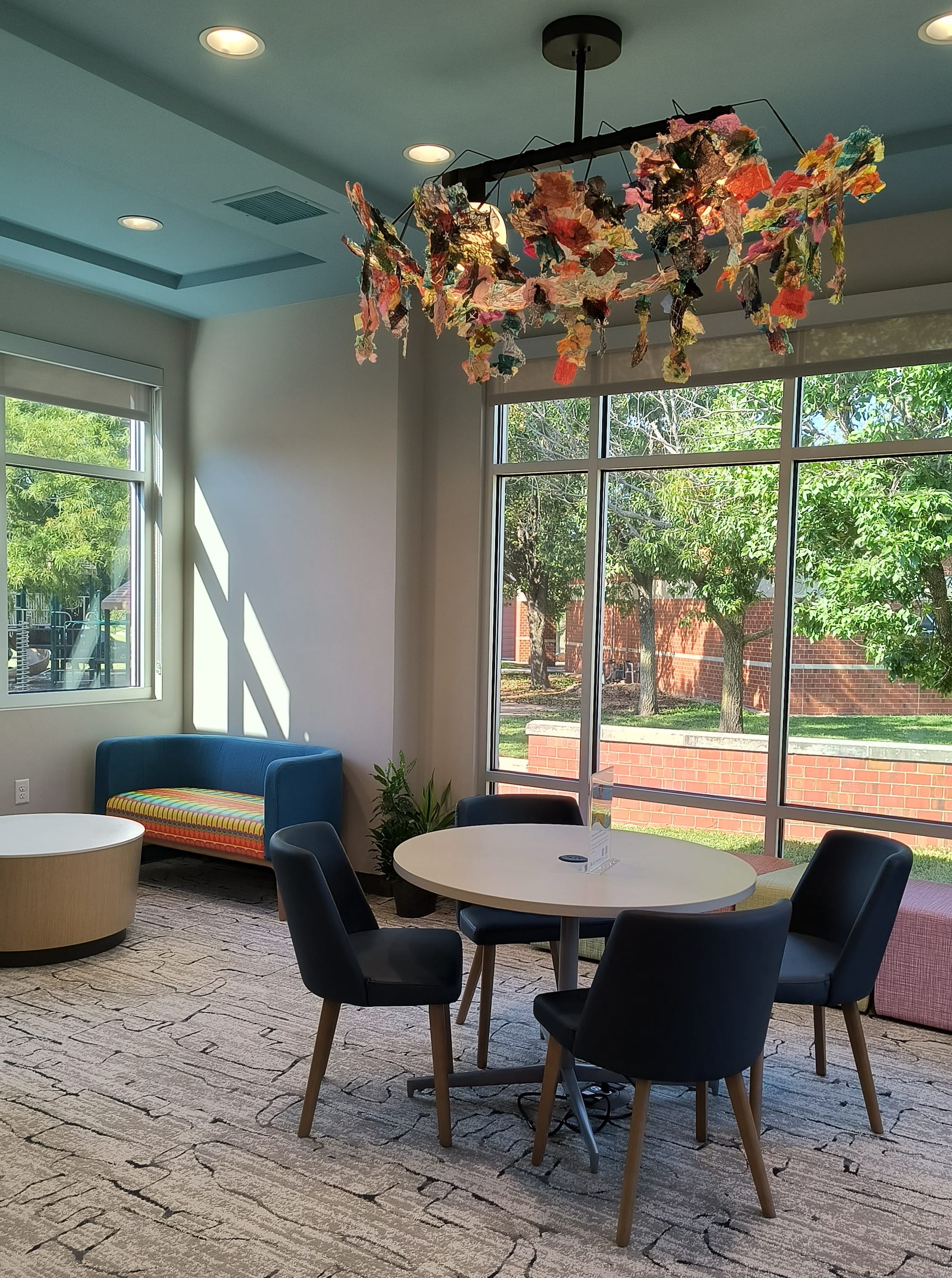
Long has submitted several unsuccessful proposals for other public art projects — both in Wichita and across the country — and she sometimes wishes she could receive more feedback.
She suspects that concerns about the durability and maintenance of textile art may have worked against some of her proposals, but without feedback, she cannot be certain.
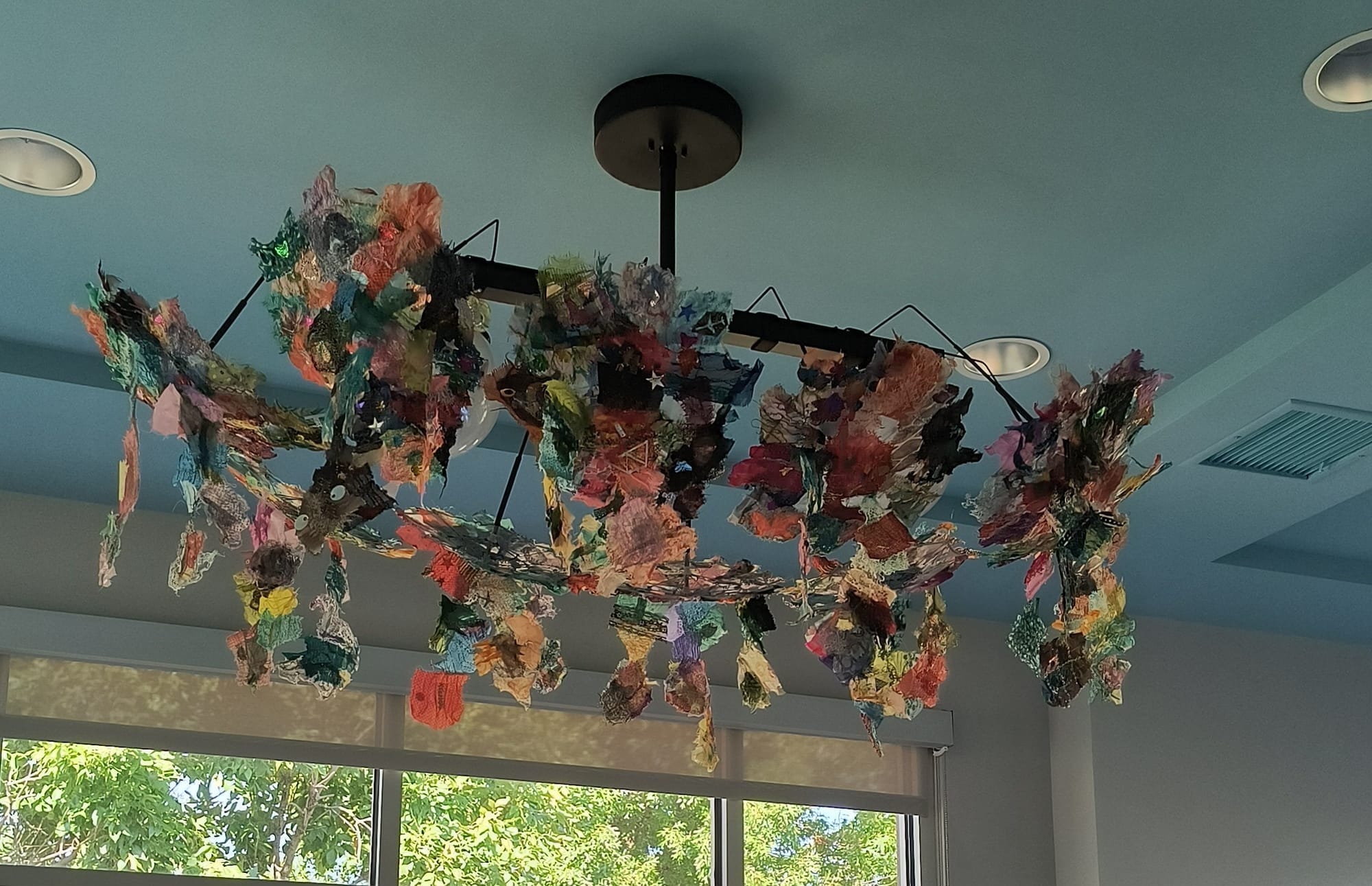
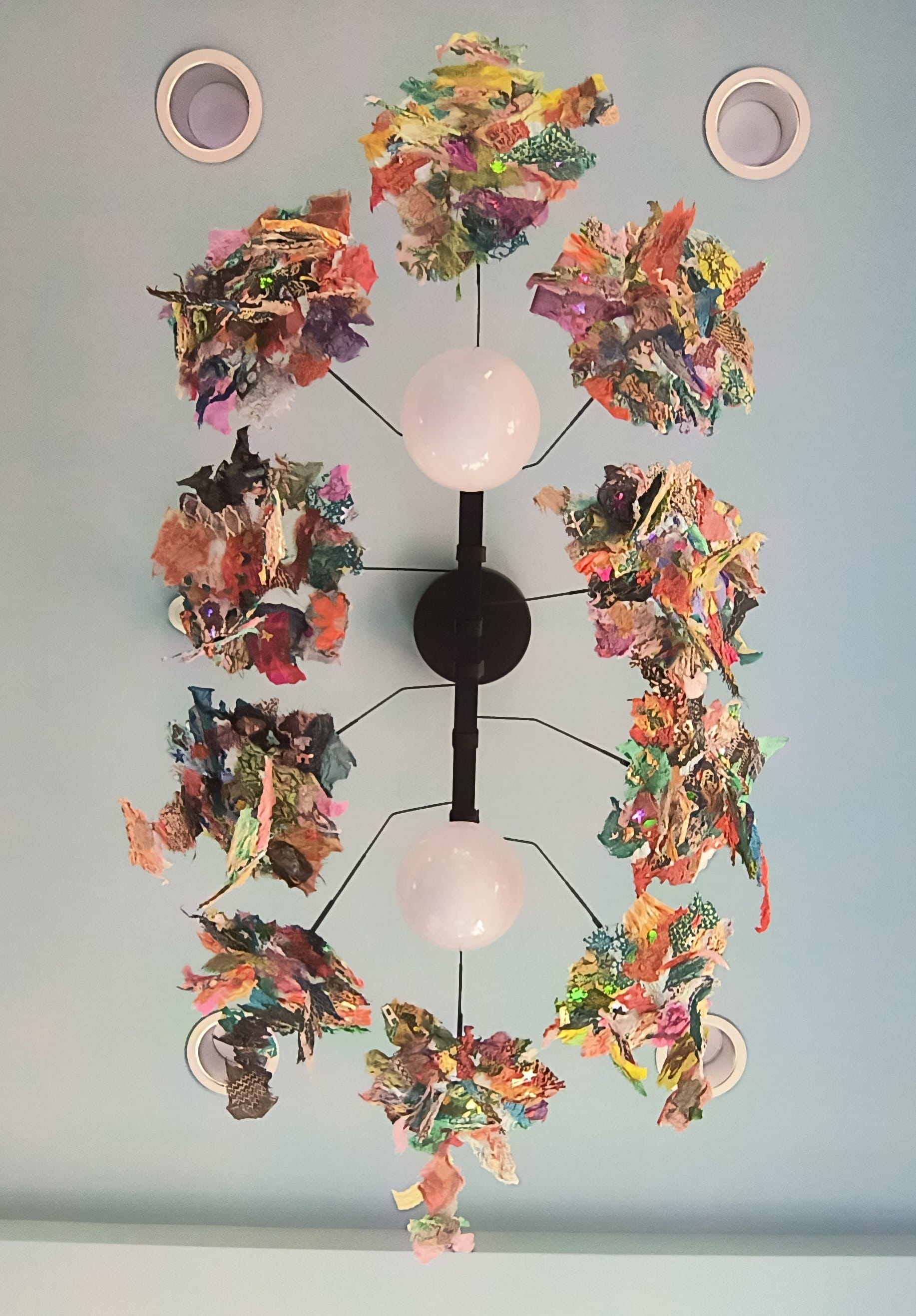
Detail images of Malissa Long's textile installation at the Angelou Northeast Branch Library. On the meaning of the artwork, Long writes, "'Brillants in a Cloud of Mist (Nebula)' serves as a metaphor for the human experience championed by both Maya Angelou and Gordon Parks. The "Cloud of Mist" represents the societal hardships and systemic oppression that Parks photographed and Angelou wrote about. Parks’ photography often captured the complex realities of race, poverty, and segregation, portraying the "mist" of inequality that obscured the lives of African Americans. Similarly, Angelou's writing used vivid imagery and direct language to confront racism, depicting the struggles and confinement faced by her community." (Courtesy/Malissa Long)
"I wish there were ways that I would know, what are the obstacles that I need to overcome?" she said.
Long believes public art should give residents opportunities to participate directly in making it, rather than simply encounter the finished work.
"I think there's more buy-in when there is more opportunity to interact with the artist while the art's being made," she said.
For city staff, balancing opportunities for local artists with the demands of larger projects is a constant consideration.
Benacka said the city sometimes recruits nationally because the complexity of a project exceeds the capacity of available local artists. Even then, out-of-town artists often work with local fabricators and contractors.
Setting Priorities
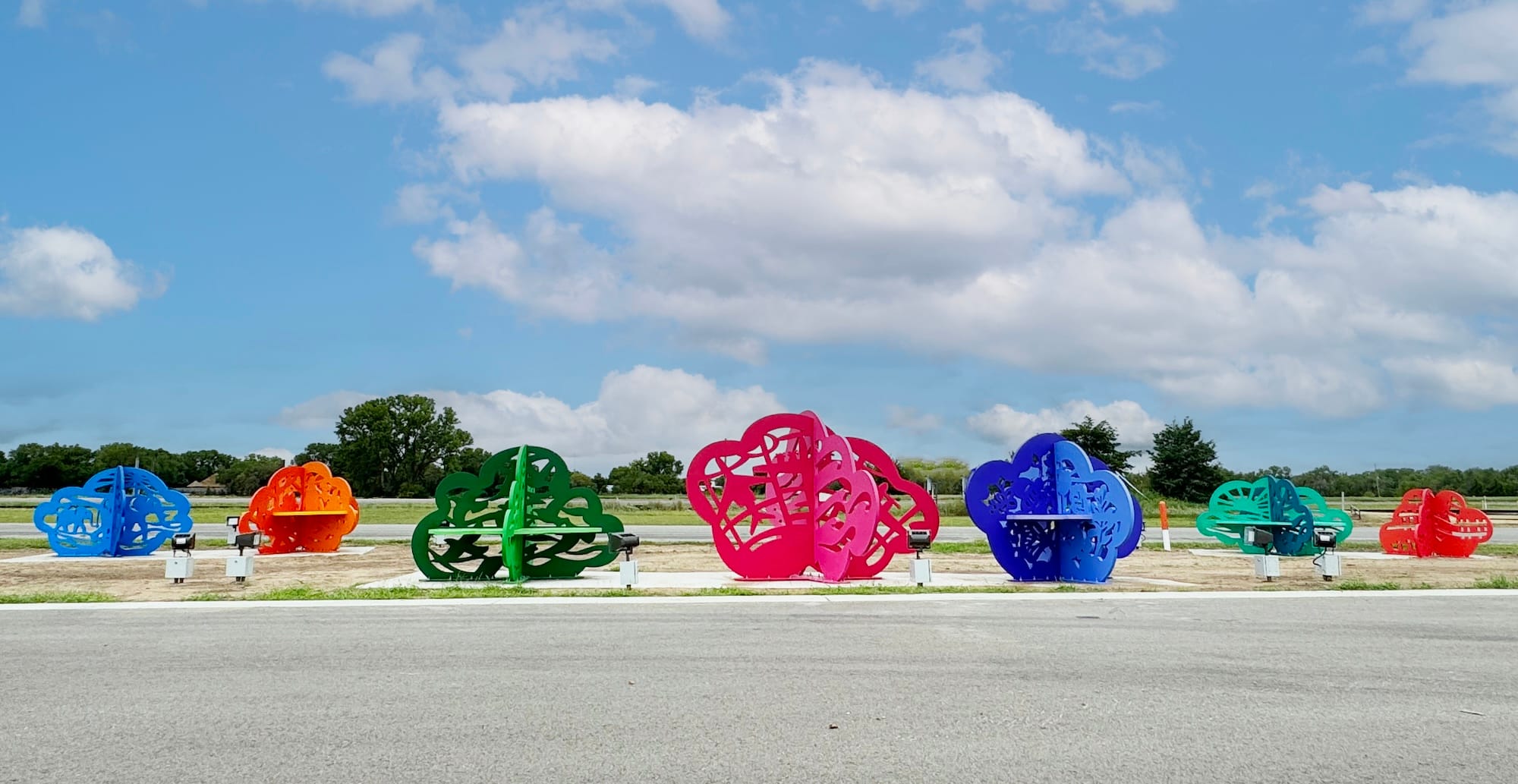
The question of whether public art deserves a guaranteed place in Wichita's capital budget has resurfaced repeatedly since the 2019 ordinance's passage.
In 2024, Mayor Lily Wu raised the possibility of reducing public art funding amid wider budget concerns. Arts advocates organized against cuts, and the council ultimately retained the program.
In 2025, city staff proposed reducing the public art allocation from 2 percent to 1 percent beginning in 2027, but the ordinance's 2 percent budgeting requirement remained in place.
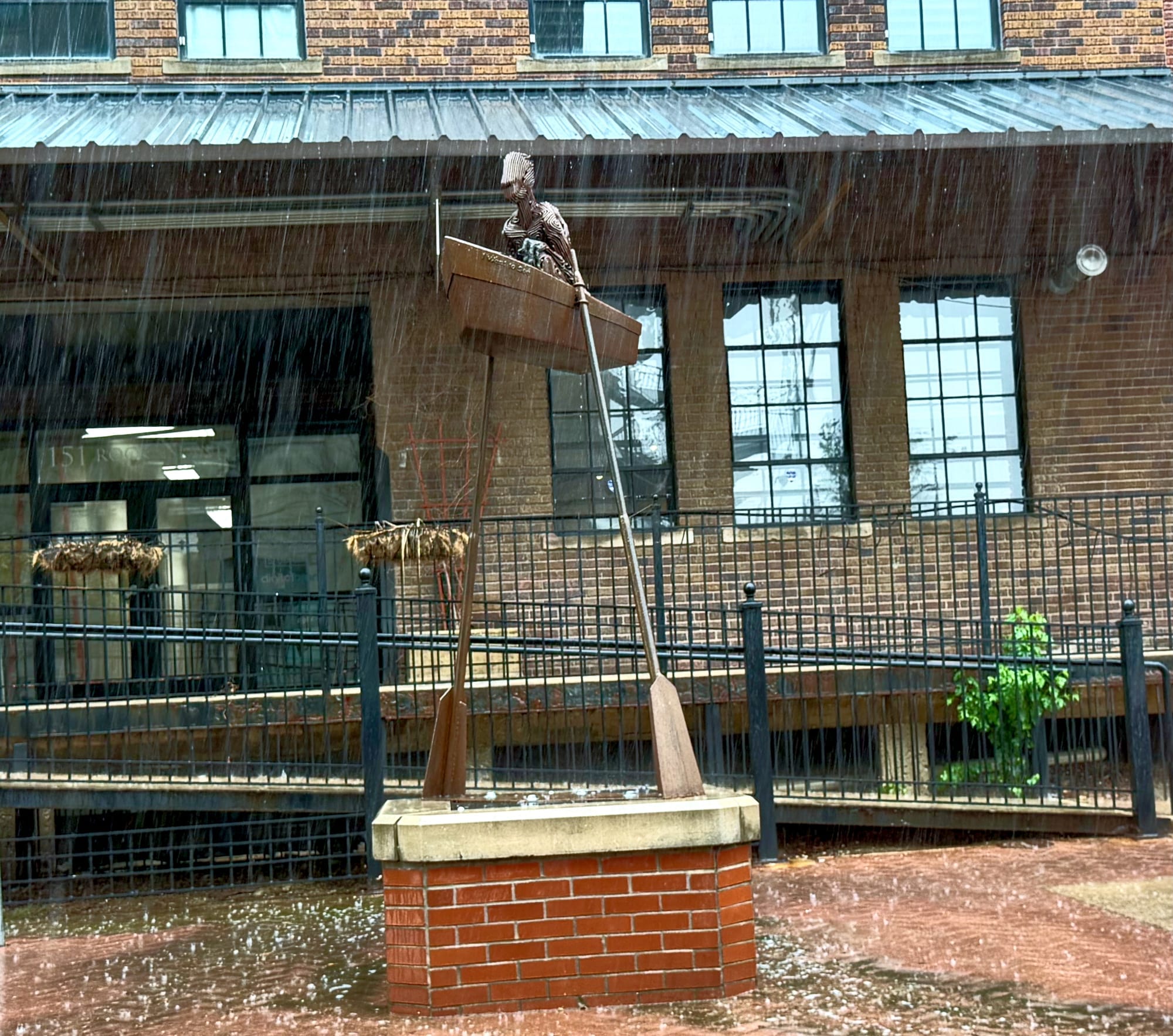
Debate has also continued over individual commissions, including the City Council's 6-1 approval of 13 sculptures for vacant downtown pedestals in March 2026. Wu, who cast the dissenting vote, questioned aspects of the selection process and suggested the artworks should have a unifying theme.
Tuttle believes elected officials should generally defer to the artists and selection committees entrusted with such decisions. She acknowledges that some of Wichita's public art is not to her personal taste, but argues that public spaces should reflect a broader range of perspectives than those of any one council member.
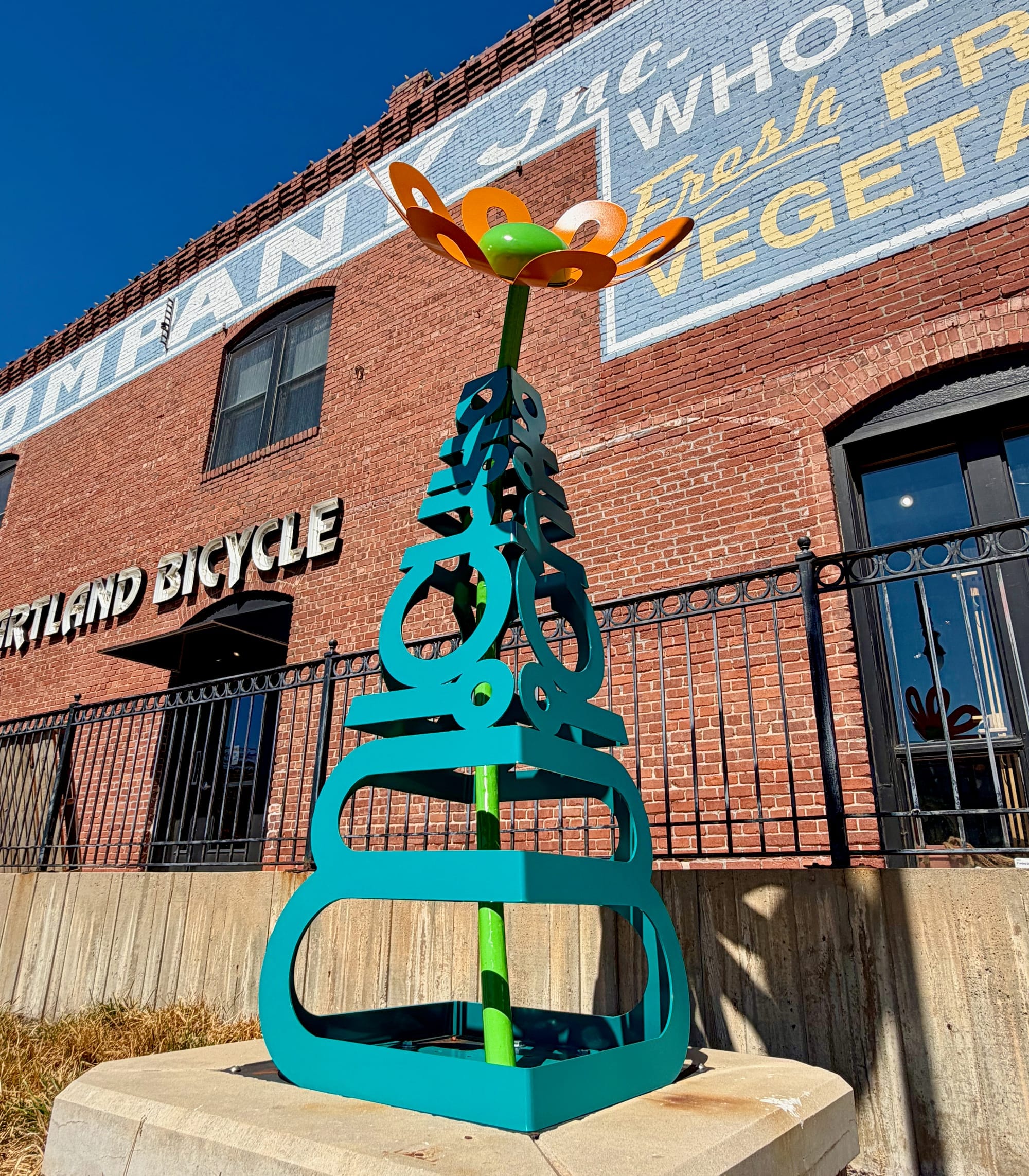
"You may not like every design element that we do, but that doesn't mean you should do away with the art entirely," she said.
Tuttle believes the commitment represented by the percent for art ordinance has made the city more attractive and has made public spaces more functional and welcoming. She intends to preserve that commitment.
"That is going to be a battle that I will fight every single time," she said.
Sam Jack is a poet, a classical tenor, and the adult services librarian at Newton Public Library. He performs with several local groups, including Wichita Chamber Chorale, Wichita Grand Opera, and Opera Kansas. He received a Master of Fine Arts in creative writing from the University of Montana.
❋ Derby man has the kind of voice that turns heads — and chairs
❋ Socializing while sober: how some Wichitans are cultivating alcohol-free communities
❋ As a small creative business closes, the owner mourns
❋ Painting through it: Autumn Noire on 20 years of making art
❋ How a guy from Wichita resurrected 'Dawn of the Dead'
❋ Bygone Friends University museum housed curious collections
Support Kansas arts writing
The SHOUT is a Wichita-based independent newsroom focused on artists living and working in Kansas. We're partly supported by the generosity of our readers, and every dollar we receive goes directly into the pocket of a contributing writer, editor, or photographer. Click here to support our work with a tax-deductible donation.