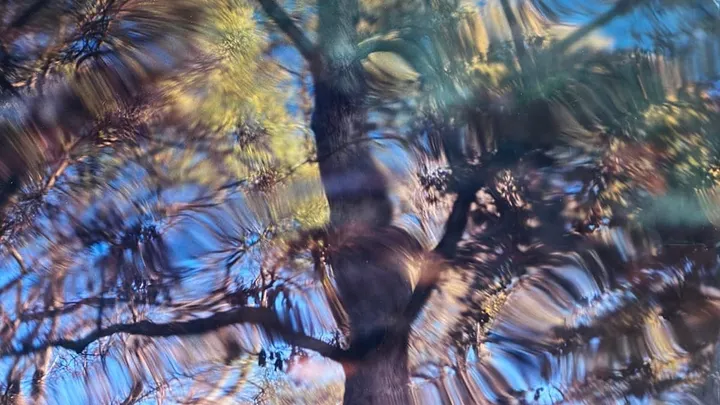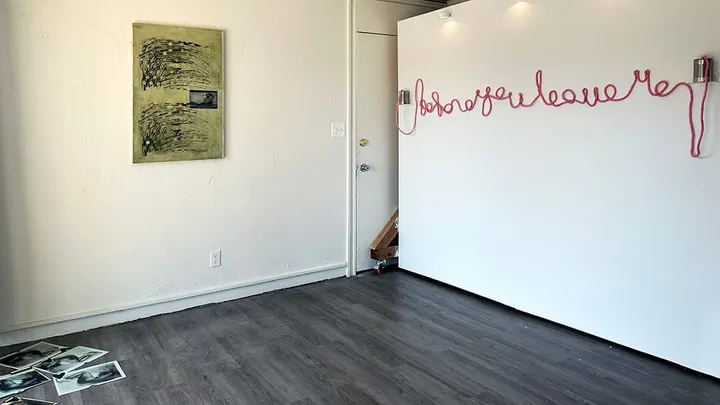
Photo and print traditions are the focus of 'Four Eyes 2 Visions' at the Deines Cultural Center
More than 100 print and photo works by Salina natives Shelly Beech and Mike Alexenko are on view through July 12 in Russell, Kansas.
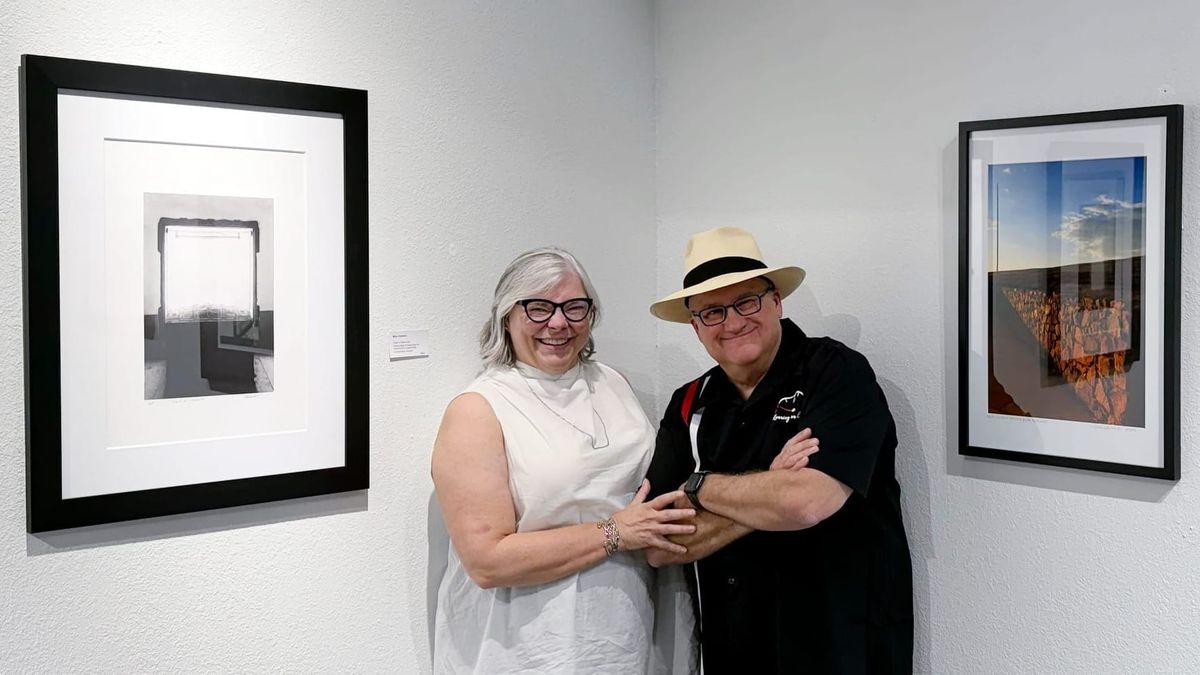
Shelly Beech and Mike Alexenko’s “Four Eyes 2 Visions” exhibition at the Deines Cultural Center in Russell, Kansas invites us to see photographs primarily as a part of printmaking, and printmaking as an expressive contemporary and historical mode of producing photographic images. The show contains more than 100 pieces on two floors. These range from traditional darkroom-produced silver gelatin prints and archival inkjet prints to hand-inked and pulled photogravures.
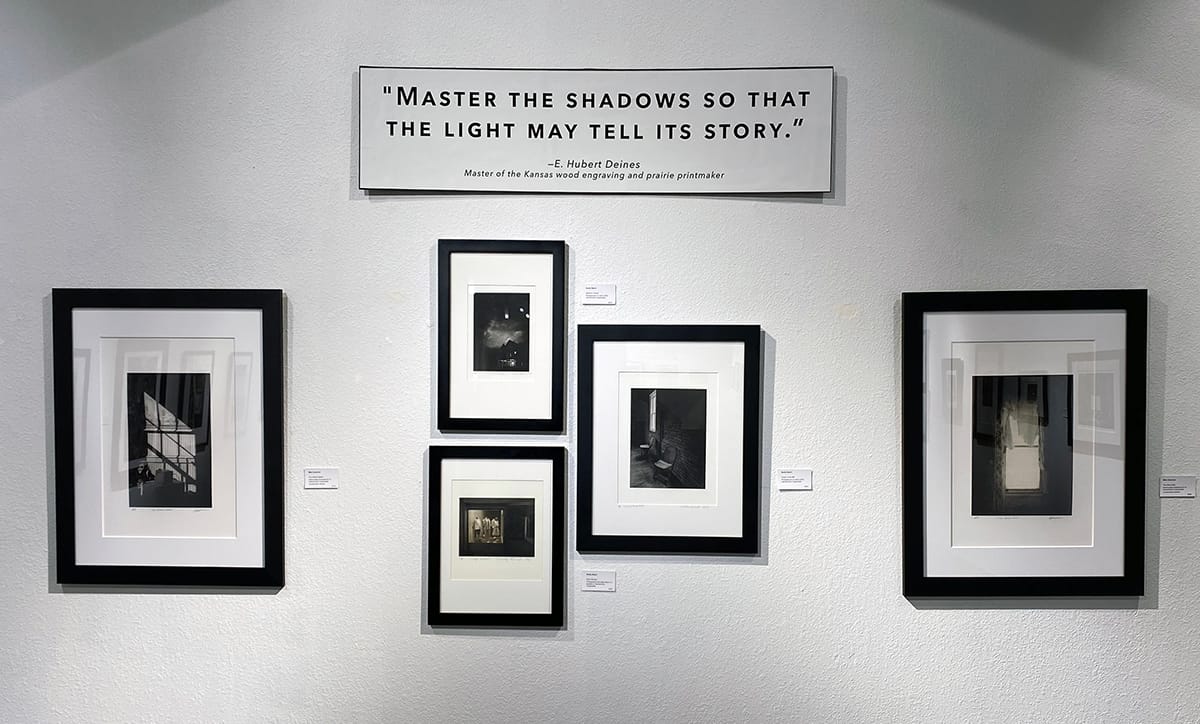
Beside the photographic prints, stone lithographs drawn by Beech and experiments with chine-collé and á la poupée prints of photographs are included. Subjects include nature and landscapes, New Mexico interiors, architecture, and familiar Kansas landmarks. The point of view is technical and material. The artists list each of the nearly 15 different image-making processes on each label as well as the selected materials and surfaces. Technique is the through-line of the exhibition.
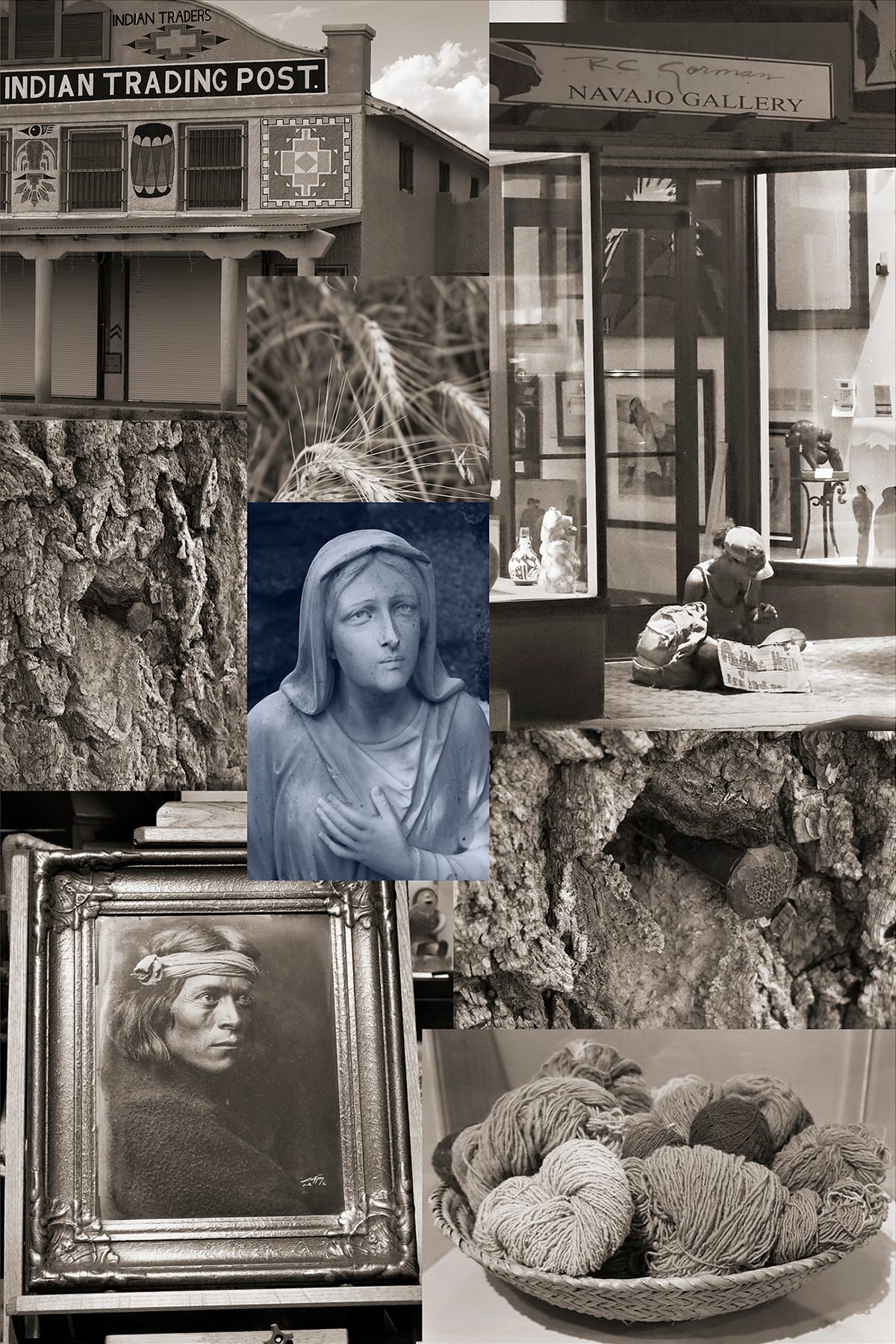
Beech’s stint at Universal Limited Art Editions in New York, where she worked with Robert Rauschenberg’s photo-collages, influence her large, layered collages in which she uses rectangular photographs as elements of design. “Faces of New Mexico,” a multi-plate photogravure with blue chine-collé, is printed on Hahnemuhle copperplate. At least eight separate photographs — historical subjects, organic textures, architectural images, and a religious sculpture printed in delicate blue — make compelling metaphors for the typical definition of “face.”
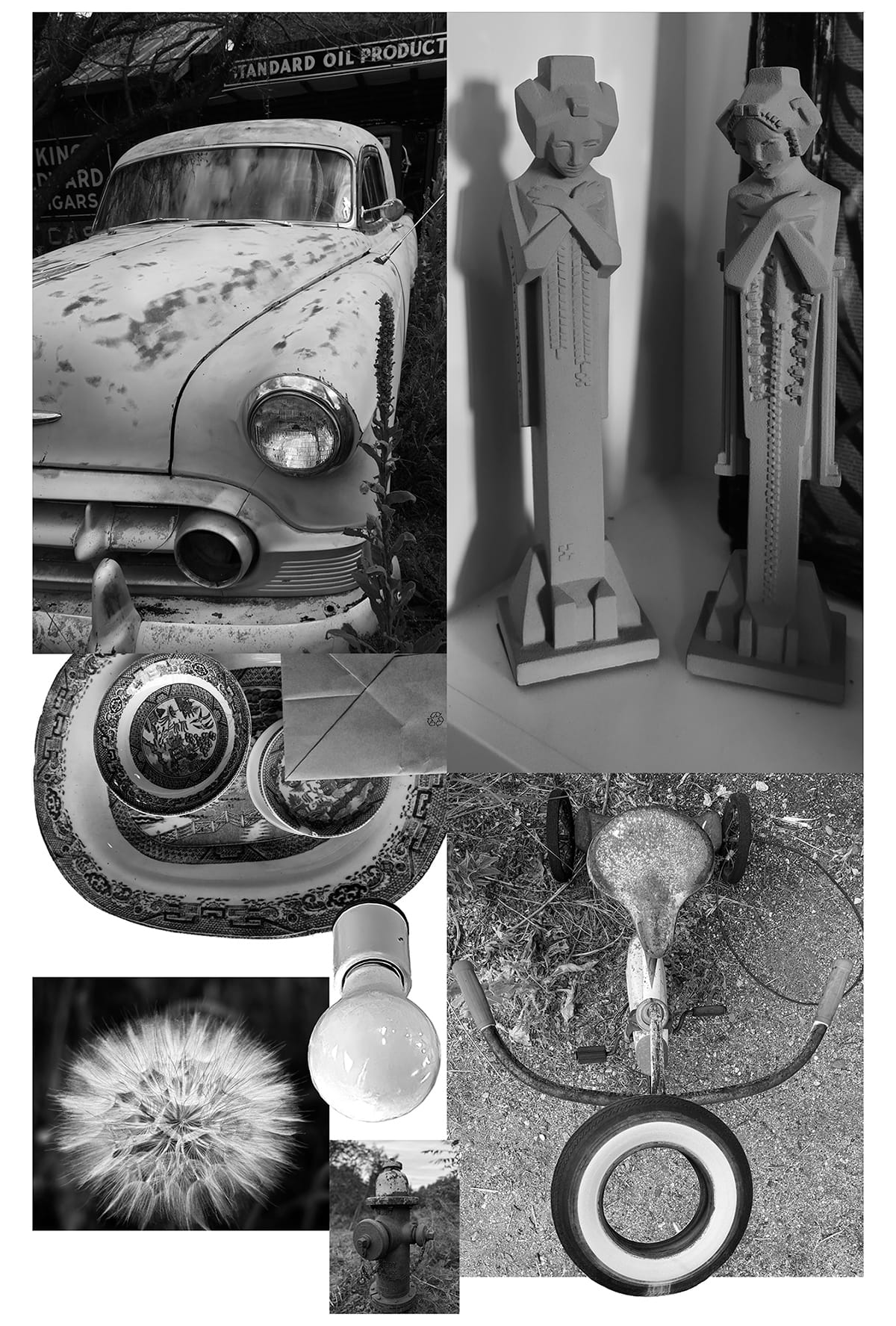
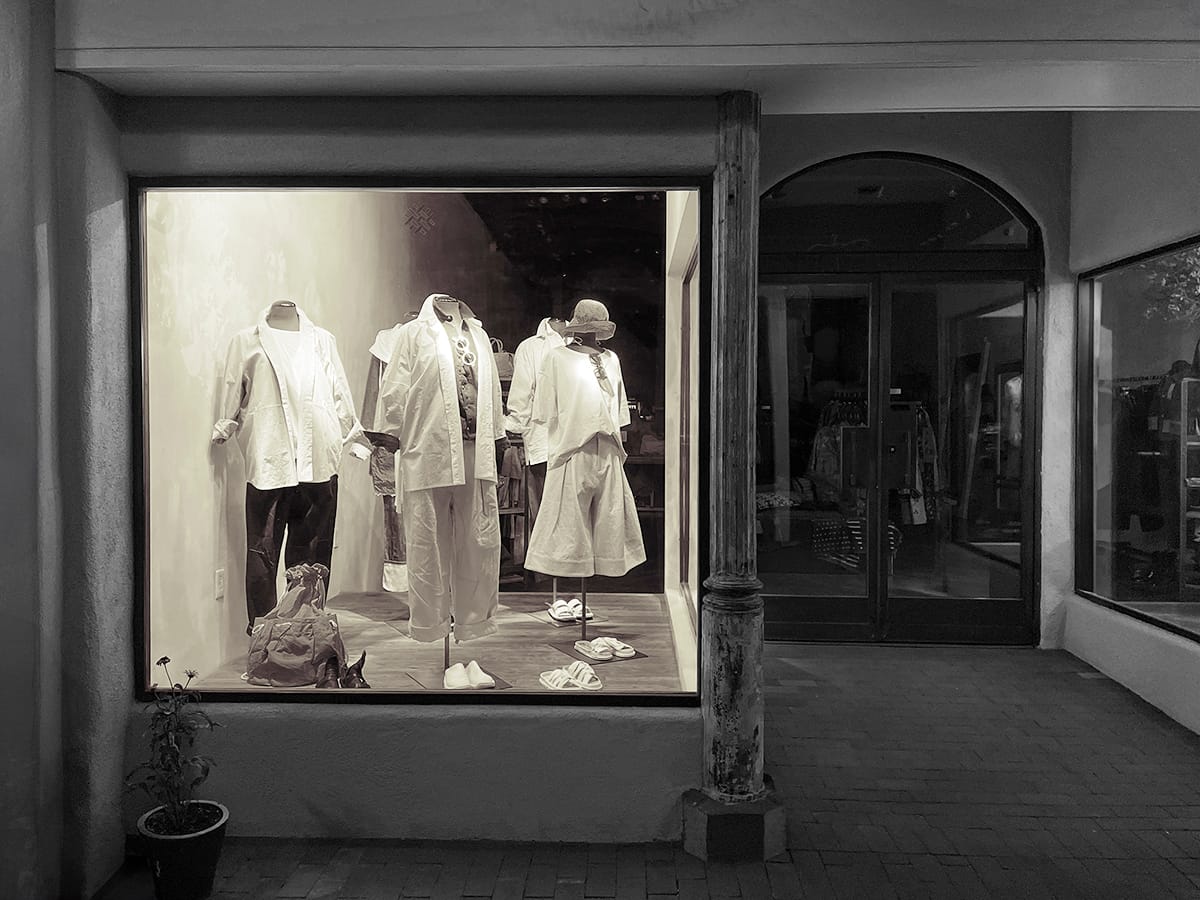
Another large photogravure collage, “Bob, a Nod to Robert Rauschenberg,” playfully juxtaposes found objects, cultural crafts, and everyday American symbols of the past — subjects the pop and neo-dada master often depicted. “Shop Window,” a moody nighttime image of mannequins dressed in summer clothing inside the lit box of a shop window, recalls the lonely figures behind glass in Edward Hopper’s 1942 painting “Nighthawks.” Beech’s image drains out the bright colors shining into darkness. Her photograph is a photogravure and sepia á la poupée on copperplate paper. (À la poupée is an inking technique in which different colors are applied to a single printing plate using a “dolly” or poupée — fabric rolled into a ball. Chine-collé is named for thin Chinese paper glued to thicker paper and run through a printing press.)
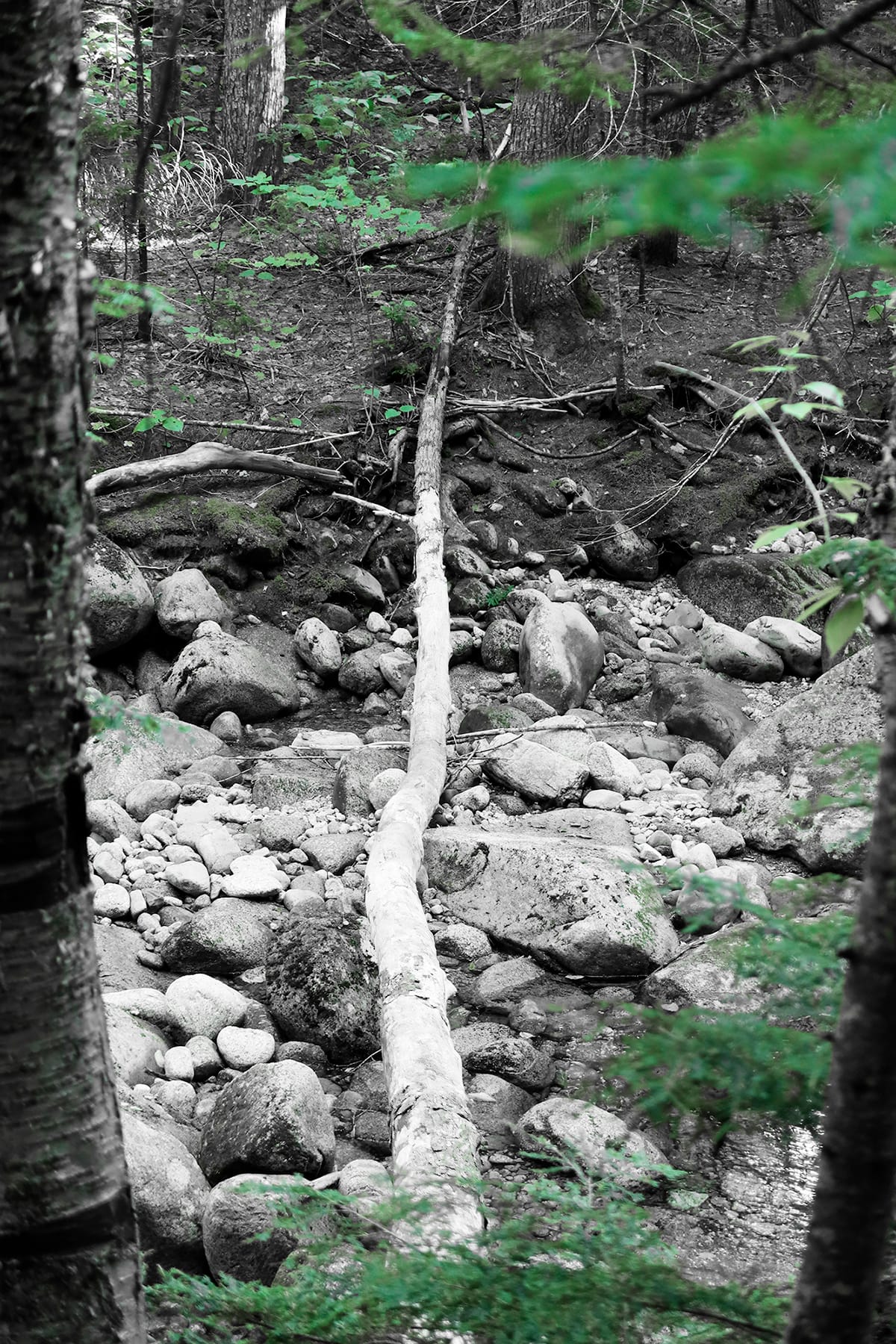
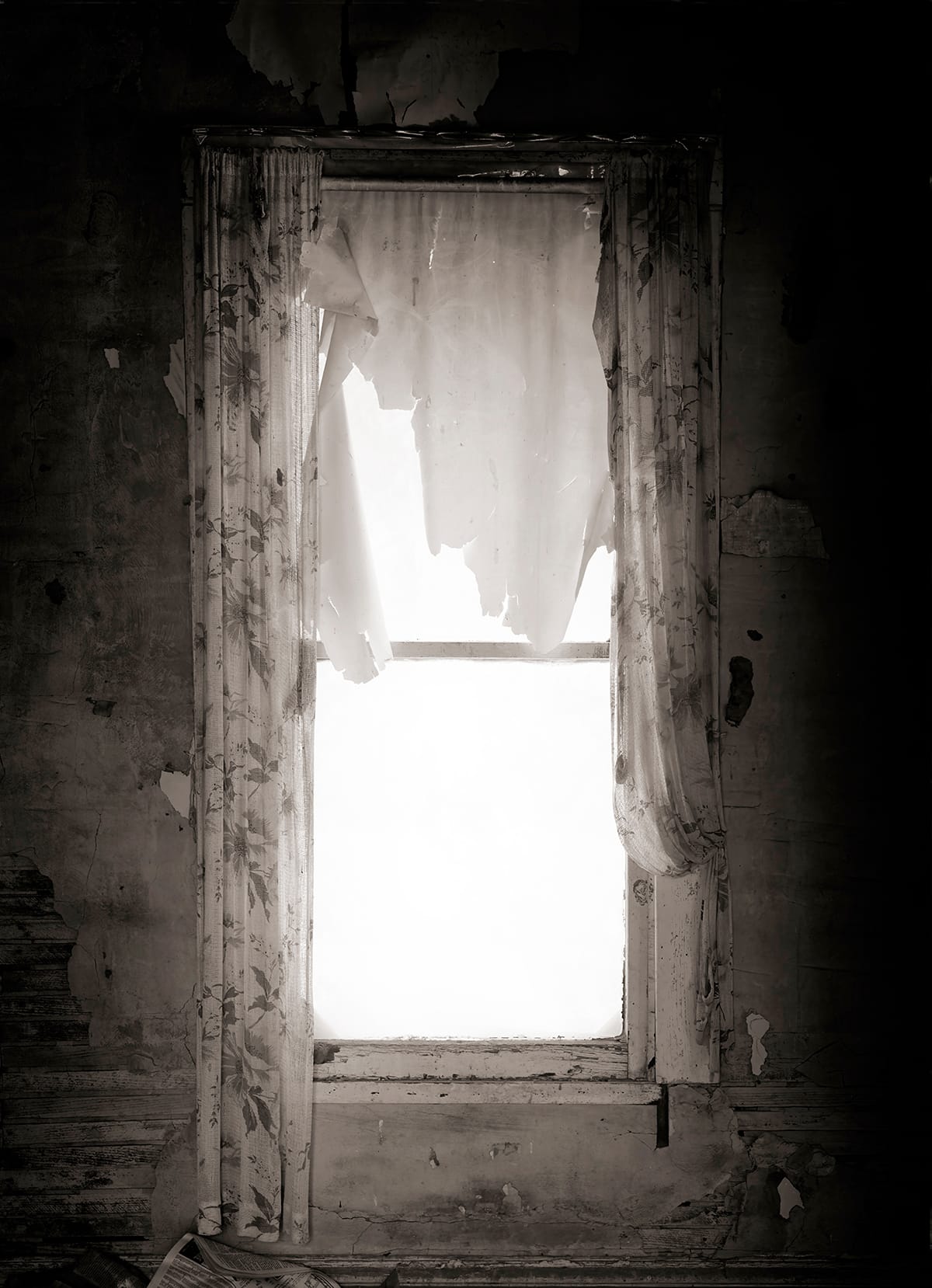
Both artists have pieces titled “The Other Side” in the exhibition. Beech’s archival inkjet plays with black, white, gray, and saturated green. A tree fallen over rocks stretches away from the viewer to a vanishing point in a forest. Alexenko’s “The Other Side” is similar only in its composition. Like Beech’s image, his photograph places the important information at the center. Alexenko’s photogravure prints make use of the negative spaces he focuses his camera upon to highlight the rich texture of the copperplate paper and tones of the printing process. In his “The Other Side,” a window’s rectangle framed by rough wood and tattered drapery is centered in a dark room. Whether or not the light tones outside the window are adobe, stucco, or something else, the paper’s grain makes the texture visually palpable.
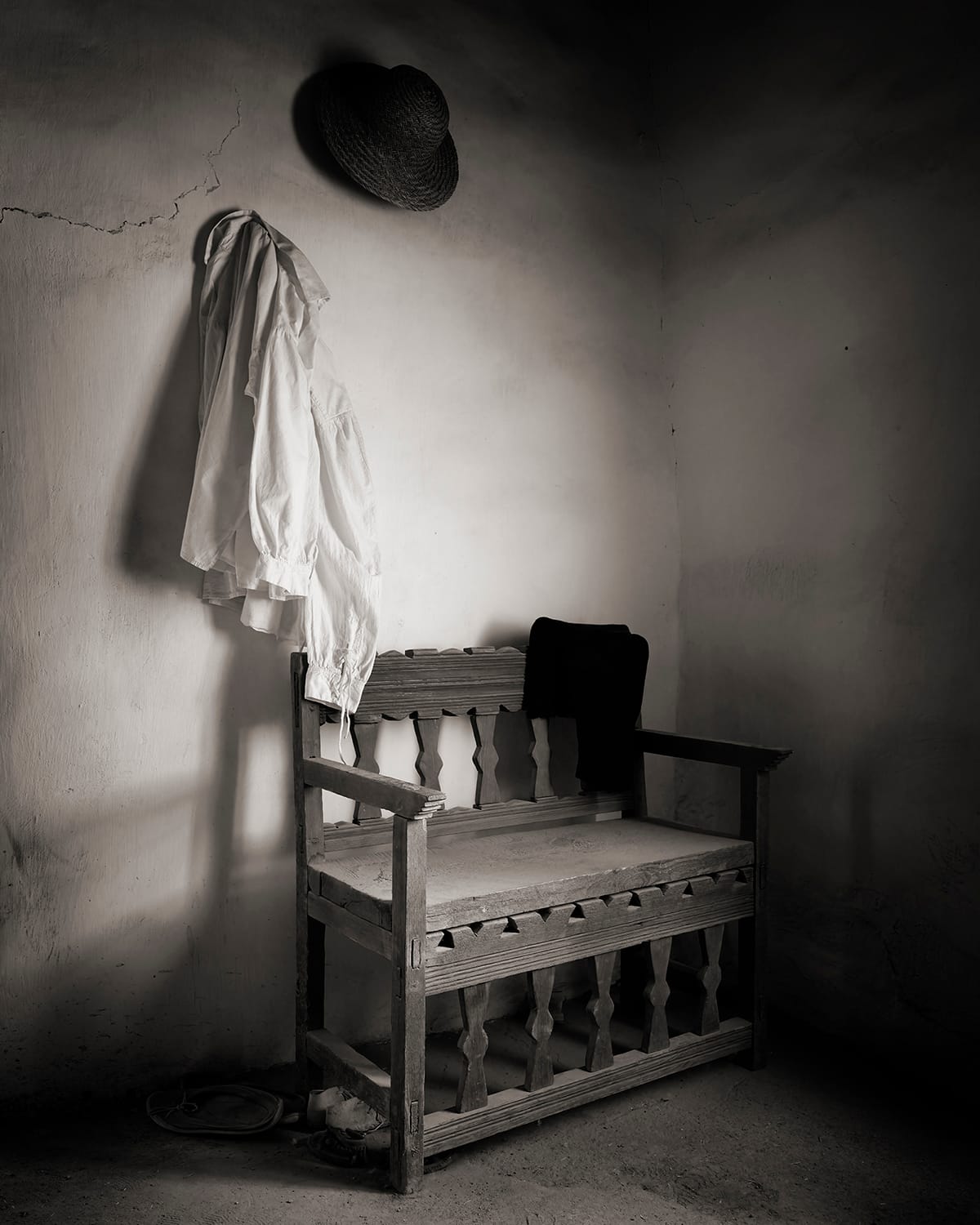
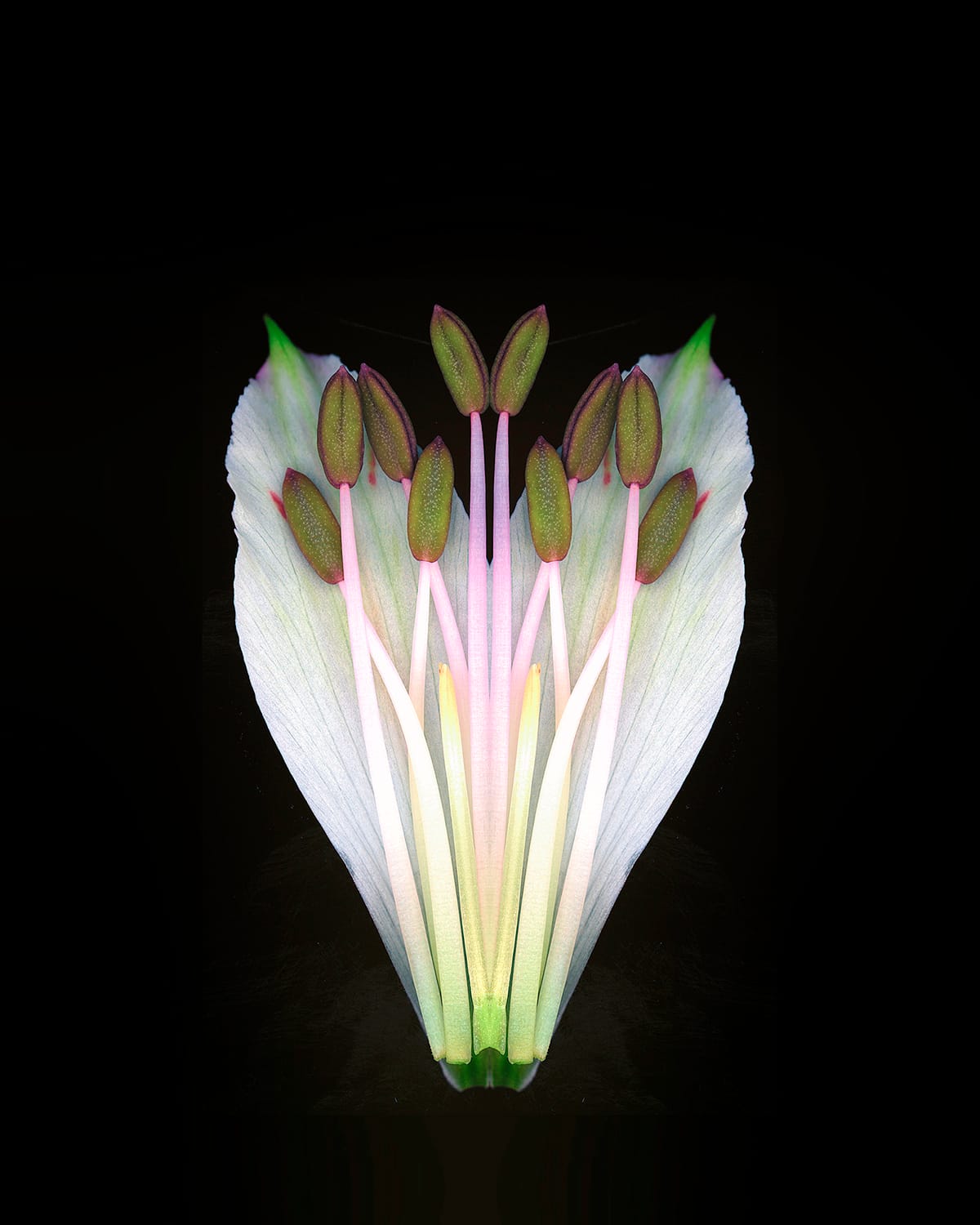
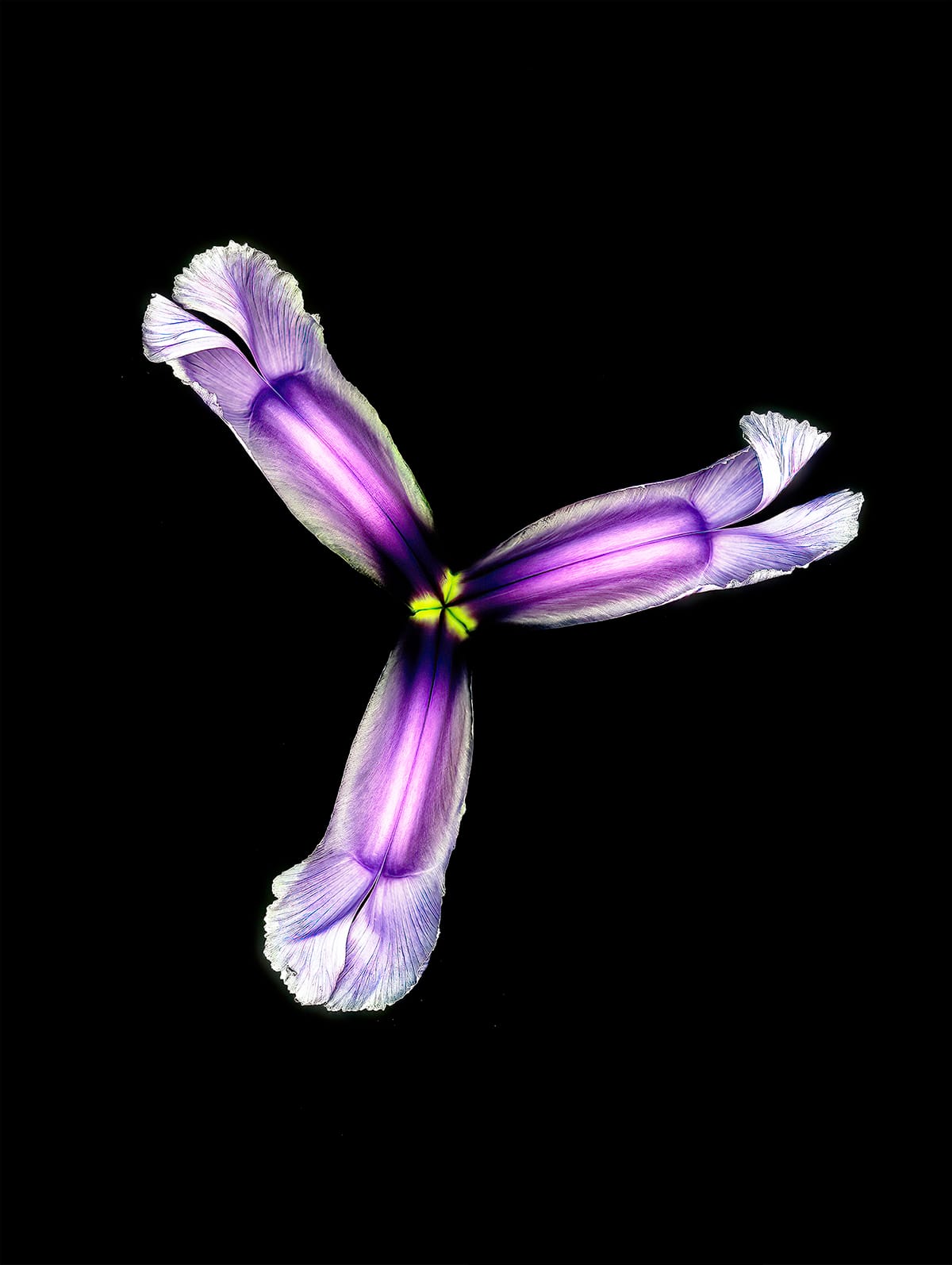
The brown or sepia color of the ink communicate historical rooms in works like “Fin Del Dia,” a chine-collé hand-pulled photogravure of an interior featuring clothing hanging above Spanish colonial furniture. Alexenko’s photographs present moments of breath and meditation. Textured geometry repeats across his work, whether printed from a metal plate running through a press or digitally edited inkjet color prints of individual flowers, as in “Nature’s Neon” and “Tribute to Georgia.”
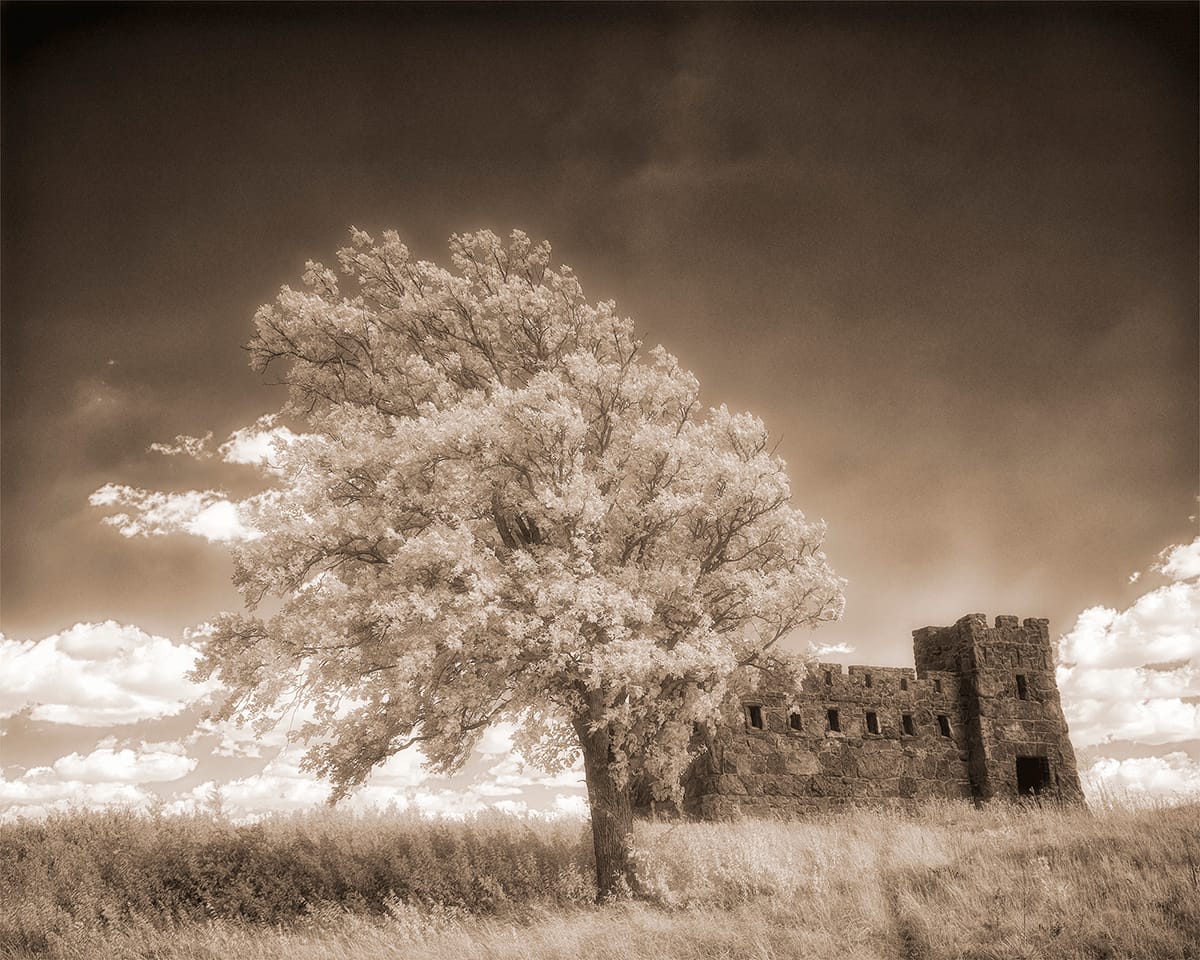
In addition to experimenting with printing methods, Alexenko uses a variety of photographic technologies. The WPA-built castle atop Coronado Heights outside Lindsborg — a well-known central Kansas landmark — is the subject of an infrared photo titled “Prairie Castle.” The warm, almost pink tones of a dramatic tree and puffy white clouds shrink the structure hunching against the sky.
Beech and Alexenko are creative partners with Kansas roots. Their exhibition combines Beech’s background and education in painting and printmaking with Alexenko’s informal, lifelong study of photography. They see their collaboration as an exchange of craft, as Beech was drawn into photography and Alexenko into the manual art of printmaking. Both have shown their work in Colorado, Kansas, Vermont, and beyond. Together, they edit and combine images and make decisions about which processes for printing best convey their intentions.
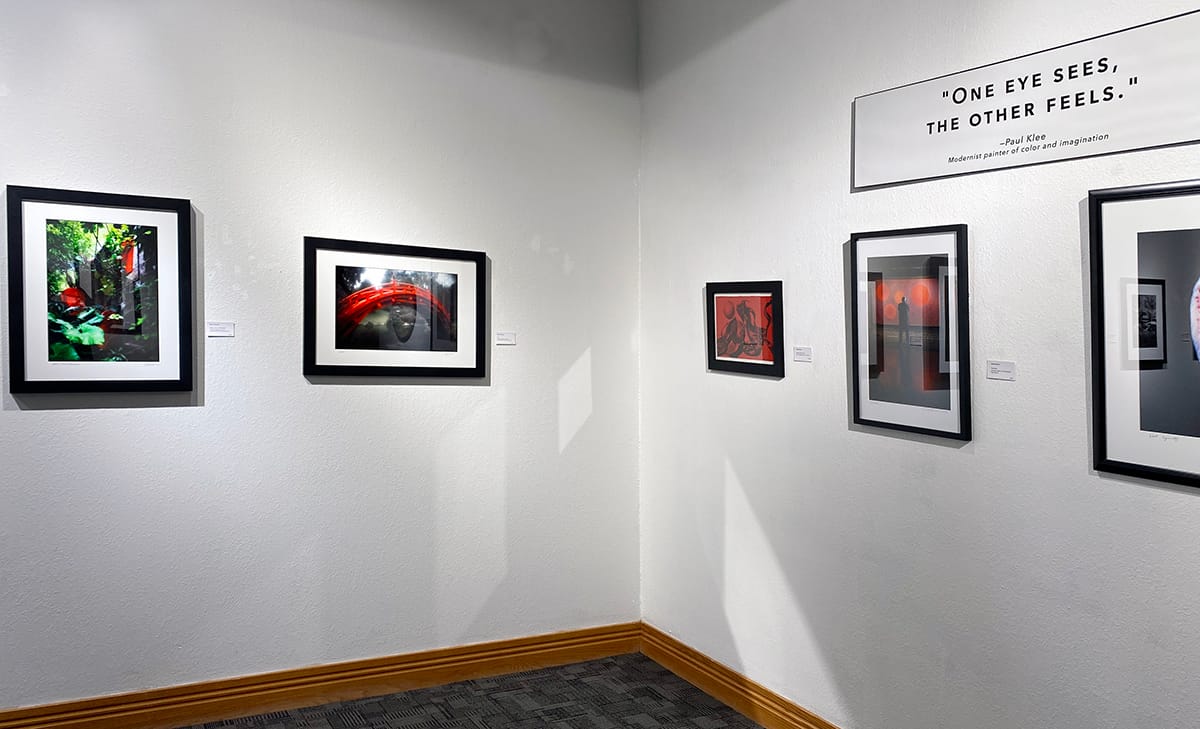
Throughout the Deines Center galleries, Alexenko and Beech suggest artistic affinities by displaying quotations from a variety of artists, including Rauschenberg and landscape photographer Ansel Adams, as well as local printmaker E. Hubert Deines, whose name and legacy are honored by the Russell arts institution. Deines was a member of the Prairie Print Makers, and his work is always exhibited in the building, which his brother donated to the city of Russell. Some of Deines’s woodblocks and accompanying prints, along with his comments, are currently on display in an outer gallery.
These historical works, added to the contemporary images displayed in the current exhibition, will especially appeal to printmakers and photographers who might see the show as an opportunity to study familiar and experimental photographic and printing processes.
The Details
“Four Eyes 2 Visions: Photography and Printmaking by Mike Alexenko and Shelly Beech”
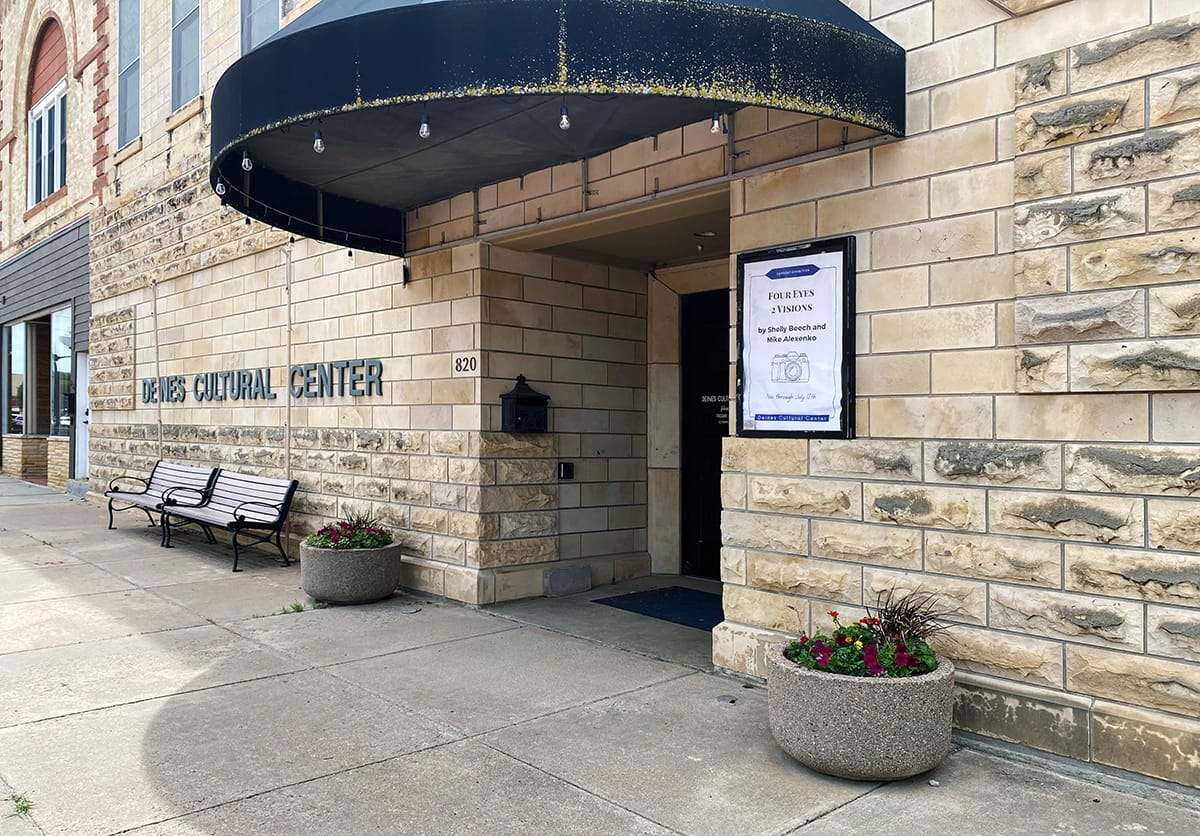
May 24-July 12, 2026, at the Deines Cultural Center, 820 N. Main in Russell, Kansas
The Deines Cultural Center is open to the public Tuesday through Sunday from noon-5 p.m.
Admission is free, and the building is accessible to people with physical disabilities. Free street parking is available in front of the center.
Lori Brack is a writer and arts worker based in Lucas, Kansas. She is the author of three books of poems and many essays in anthologies and journals. Links to her writing and full bio are at www.loribrack.com.
❋ Derby man has the kind of voice that turns heads — and chairs
❋ Socializing while sober: how some Wichitans are cultivating alcohol-free communities
❋ As a small creative business closes, the owner mourns
❋ Painting through it: Autumn Noire on 20 years of making art
❋ How a guy from Wichita resurrected 'Dawn of the Dead'
❋ Bygone Friends University museum housed curious collections
Support Kansas arts writing
The SHOUT is a Wichita-based independent newsroom focused on artists living and working in Kansas. We're partly supported by the generosity of our readers, and every dollar we receive goes directly into the pocket of a contributing writer, editor, or photographer. Click here to support our work with a tax-deductible donation.