How funding for public art has become a polarizing issue in Wichita
A public art kerfuffle
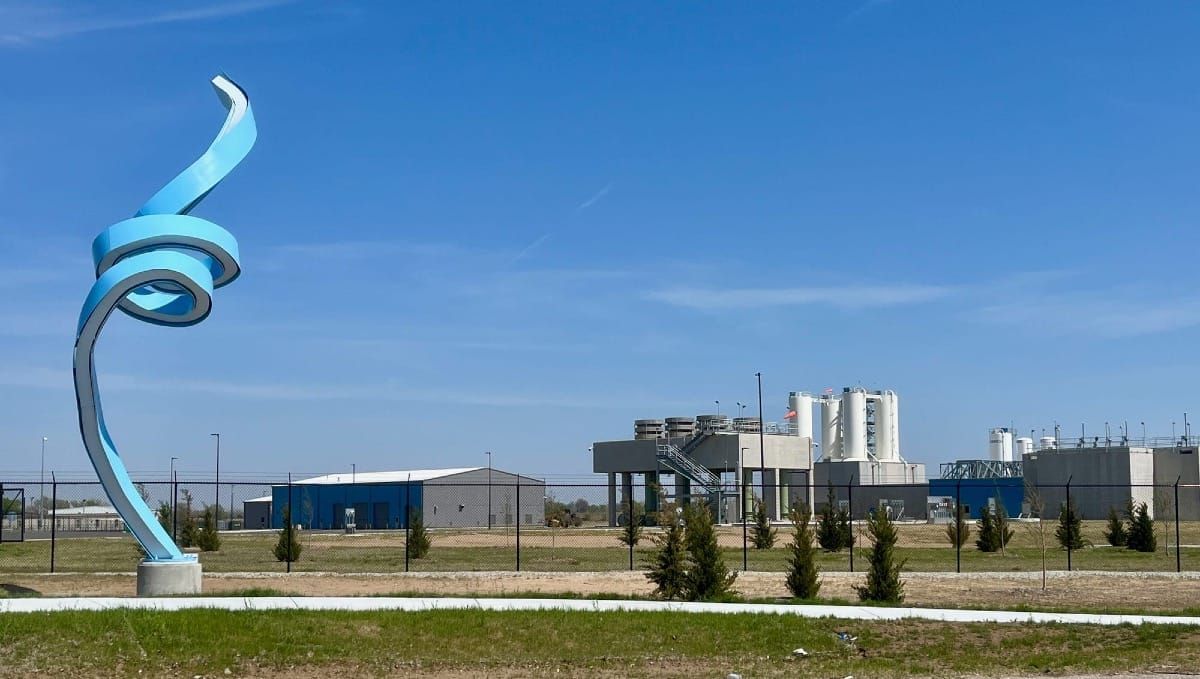
On Thursday, the Sedgwick County Republican Party declined to hold a vote to censure Wichita City Council Member Becky Tuttle, Chance Swaim reported for the Wichita Eagle. An anonymous member of the organization’s precinct committee proposed censuring Tuttle for a number of reasons, one of which is her support for funding public art. Tuttle is one of three registered Republicans on the nonpartisan seven-member council.
The kerfuffle is an indicator of the changing political climate around funding for public art. In an opinion piece published before the planned censure vote, the Eagle’s Dion Lefler pointed out that the percent-for-art ordinance was a popular initiative:
[T]his was a Republican idea when it passed the council on a 6-1 vote in December of 2019. The mayor at the time was Republican Jeff Longwell, and he led a council made up of six Republicans and one Democrat.
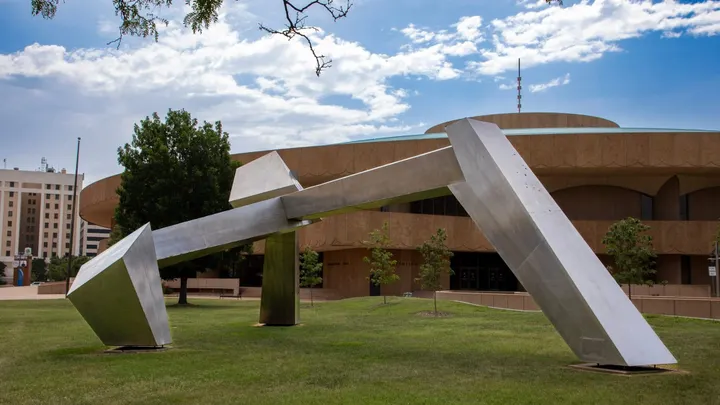
That was then. Over the past year, public spending on art has become an increasingly polarizing issue. In an August council meeting, Mayor Lily Wu raised questions about the decision to allocate funds to public art on the grounds of the new water treatment plant, which is located across the street from the Sedgwick County Zoo. Three sculptures were recently installed at Wichita Water Works next to a public bike path: Jill Anholt’s “Source,” Sijia Chen’s “Cloud Field,” and the illuminated “Water is Life Wichita” by Joseph O'Connell (Creative Machines).
After the meeting, Wu told the Eagle’s Matthew Kelly that she had no immediate plans to push for cuts to public art funding. But since then, it’s become a frequent talking point of the mayor’s. In a podcast interview with the Wichita Business Journal’s Kirk Seminoff recorded on January 13, she raised the topic twice.
Distinguishing between “needs” (crime, roads, economic development, and homelessness) and “niceties,” Wu appeared to assign public art to the latter category.
“I have to keep reminding this community, we have to focus on the needs,” Wu told Seminoff. “I would love to focus on the wants, but the reality is when you are facing $22 million in the hole, we have to prioritize. And so while I love art and public art, maybe that is not a priority.”
Proponents of public funding for art, including Council Member Brandon Johnson, have cited research that indicates a positive relationship between crime reduction and public art.
In its current form, a majority of council members support art funding. However, that could shift in the next year, as three seats are up for election this November: Council members Mike Hoheisel (District 3) and Maggie Ballard (District 6) will defend their seats, and an open election will be held in the District 1 race, as Johnson is term-limited. The three seats are currently held by Democrats.
Learn more about Wichita’s percent-for-art ordinance from an August 2024 story by Jacinda Hall, Teri Mott, and me, and find all of our public art coverage here.
— Emily Christensen, managing editor (with thanks to the journalists whose work is cited above)
Support Kansas arts writing
The SHOUT is a Wichita-based independent newsroom focused on artists living and working in Kansas. We're partly supported by the generosity of our readers, and every dollar we receive goes directly into the pocket of a contributing writer, editor, or photographer. Click here to support our work with a tax-deductible donation.
❋ Derby man has the kind of voice that turns heads — and chairs
❋ Socializing while sober: how some Wichitans are cultivating alcohol-free communities
❋ As a small creative business closes, the owner mourns
❋ Painting through it: Autumn Noire on 20 years of making art
❋ How a guy from Wichita resurrected 'Dawn of the Dead'
❋ Bygone Friends University museum housed curious collections