Take a break at Larksfield Place: 'Oh, What a Beautiful World' by Wichita Women Artists
At the gallery of a Wichita senior living community, the work of local artists inspires connection.
I keep a mental list of art galleries to visit in Wichita, especially if they’re easy to pop into and out of with a small child. After reading in The SHOUT about a fiber arts exhibition that took place in late 2024 and early 2025, the gallery at the senior living community Larksfield Place was high on my list.
On view through July 23, the Gallery at Larksfield Place presents “Oh, What a Beautiful World,” a collection of paintings by 24 local artists, all members of Wichita Women Artists. A similar show by the same name was on display at CityArts earlier this year, which included mosaics and sculptures in addition to paintings.
Wichita Women Artists was founded in 1950, originally as a Painting of the Month Club. It quickly evolved into a collective of all kinds of visual artists who regularly gather to critique and support each other’s art. Membership is conferred upon a juried review of five submitted works and usually sits around 35-40 members.
Larksfield Place’s gallery spans two spacious hallways connecting in a “T” shape. If you visit during the day, like I did, you’ll get to chat with residents and visitors who pass through as they go about their day. Before I arrived, I worried that I might feel like I was intruding; I needn’t have. The Gallery feels like a communal space, and there’s something nice about being invited into a community to connect over the works of local artists.
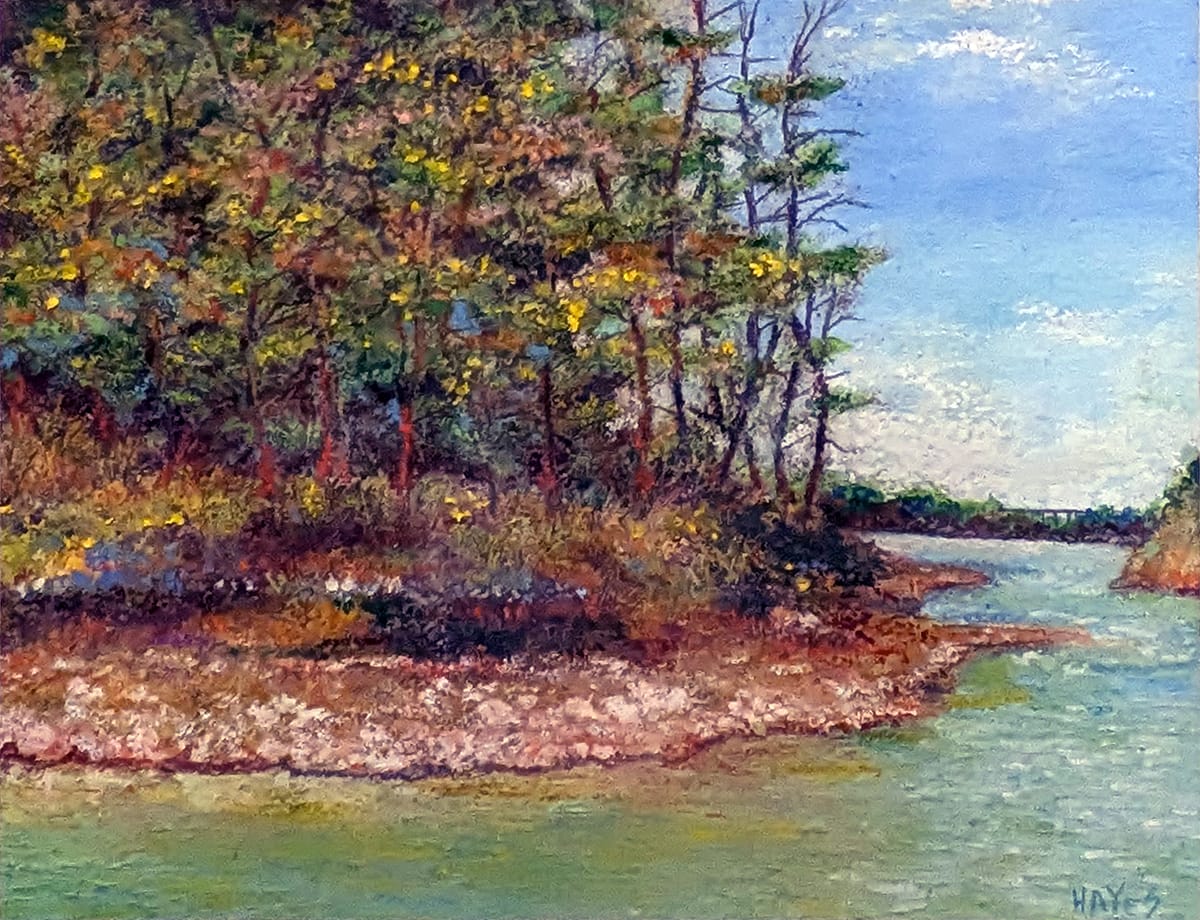
“Oh, What A Beautiful World” features a variety of painting styles and media, including acrylic, alcohol ink, oil, pastel, and watercolor. As the title of the exhibition suggests, many of the works are realistic landscapes, animals (including a lovely cat that captivated my daughter), and still lifes; there are a few abstract works as well.
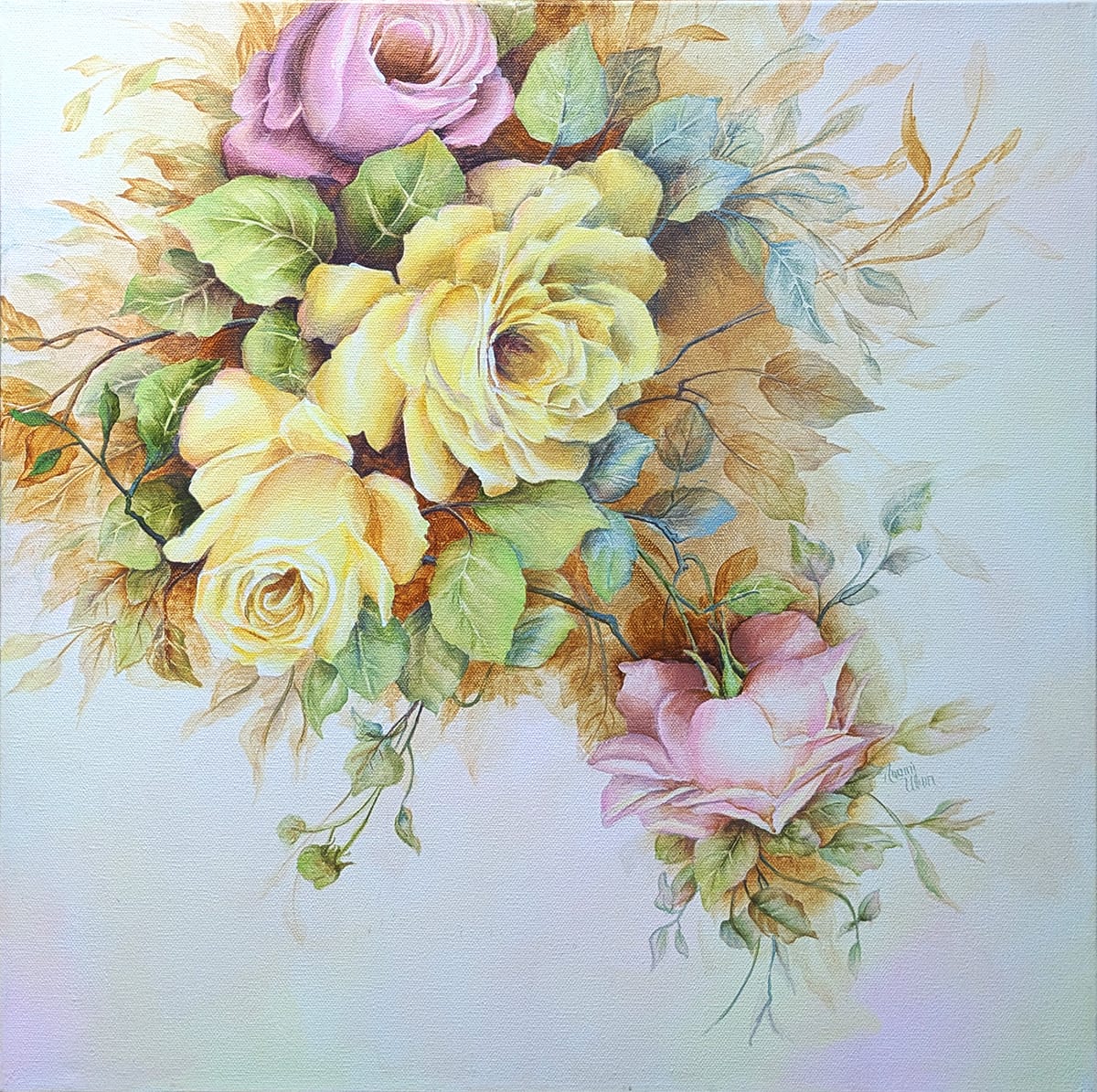
Of the 24 artists on display, several caught my eye. I’m usually drawn to abstract works, so the paintings by Ann Riggins and Deb Ryan were very much up my alley. But landscapes that capture a sense of home speak to me, too; scenes by Pam Hayes, Jan Butler, and Lori Thomas all drew me in. And you can’t miss Naomi Ullum’s paintings, some of the largest and most vibrant on display.
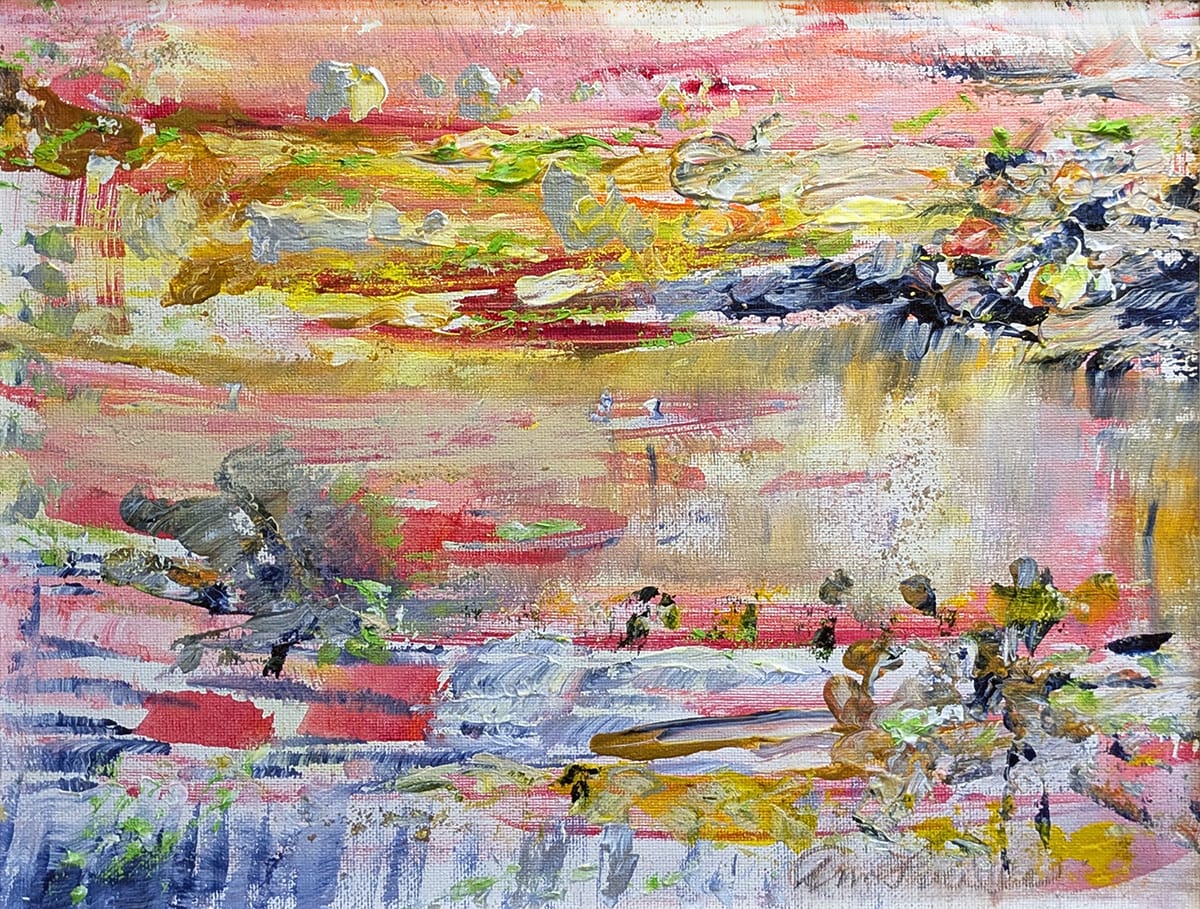
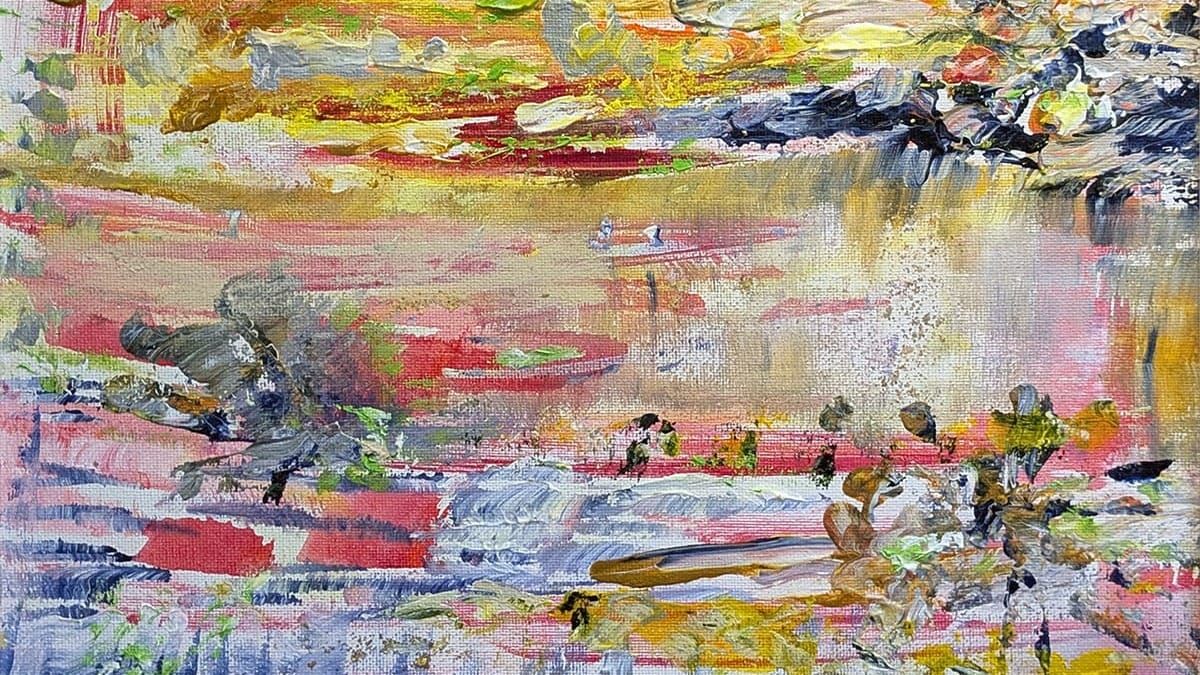
Ann Riggins’ painting “Picnic” is striking, due to both the texture of the acrylic paint and the color palette that stars flamingo pink, mustard yellow, and cornflower blue, but what stood out to me most was the sense of motion. The lower third is energetic, with short vertical lines of blue rising from the bottom left of the canvas; dark gray and lime green splotches speckled throughout; and broad strokes of red and yellow.
Initially drawn by the colors, I didn’t look at the title until my second time through the gallery. Looking at the work again, I realized I could see a landscape in which one would have a picnic: the gray dabs at the top could be clouds, the blurry middle a field or pond, and the happy chaos of the bottom could be people and plants. A picnic can also just mean an enjoyable experience more generally, and this painting certainly conveys joy.
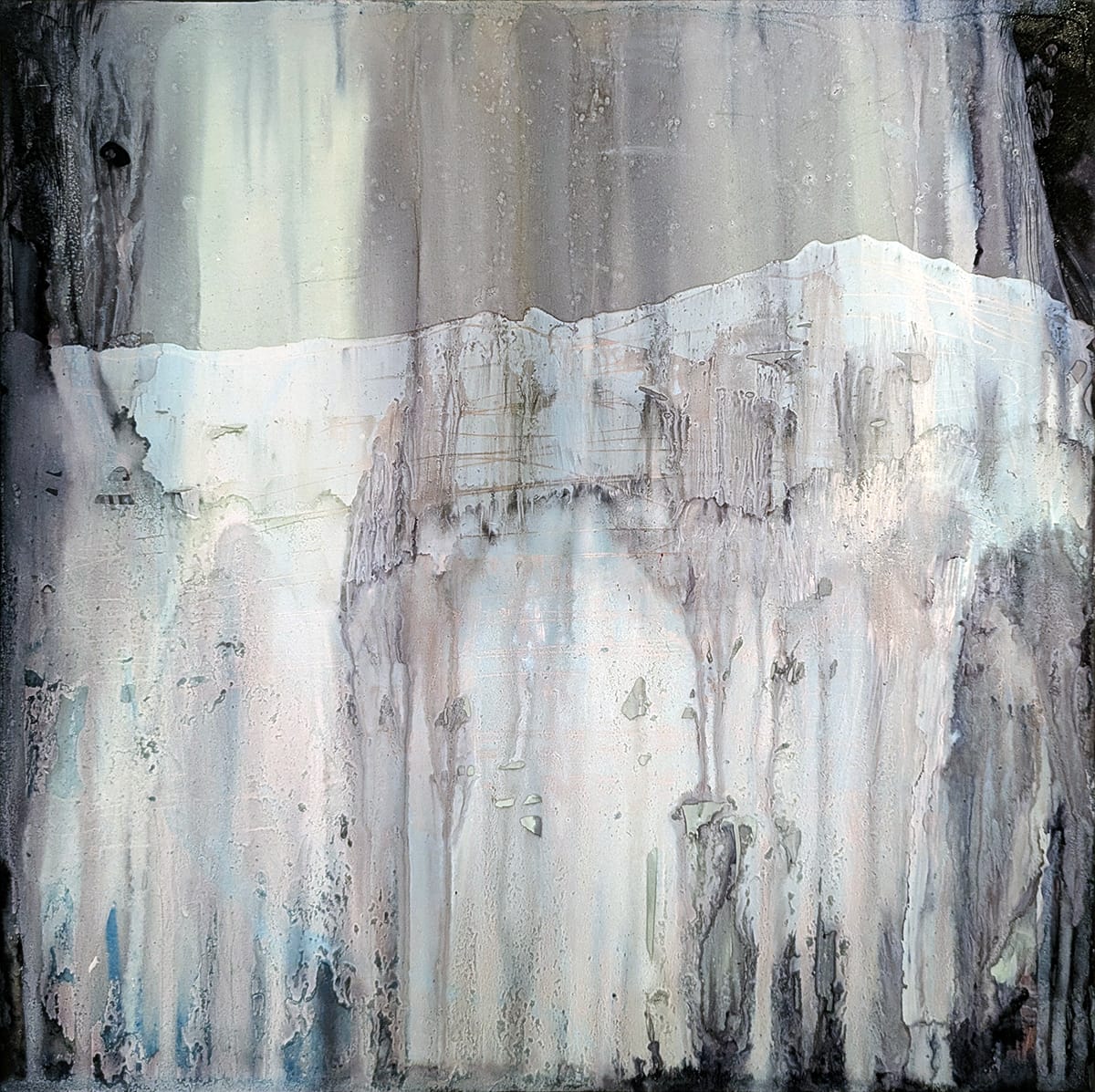
Deb Ryan’s “A Ghost Tour,” painted with alcohol ink, is small but stunning. I was not familiar with alcohol ink, but this painting made me curious. On a very basic level, ink is different from paint — it is runnier and sinks into the paper or canvas surface, whereas paint sits on top. Artists prize the quick-drying alcohol ink in particular because it is perfect for creating layers.
Unlike my experience with “Picnic,” I saw a scene in “A Ghost Tour” upon first viewing: a glacier under the aurora borealis. The painting is mostly white and gray with the palest of greens tinting the top left and right, a richly pigmented bright blue at the bottom left, and the deepest of blacks framing the sides and corners. Most eye-catching is the ethereal glow captured throughout but especially on the top left. The texture is incredible, too; the delicate layers created with the ink look simultaneously as smooth as agate and as satisfyingly tactile as velvet (but I did not touch the painting to find out).
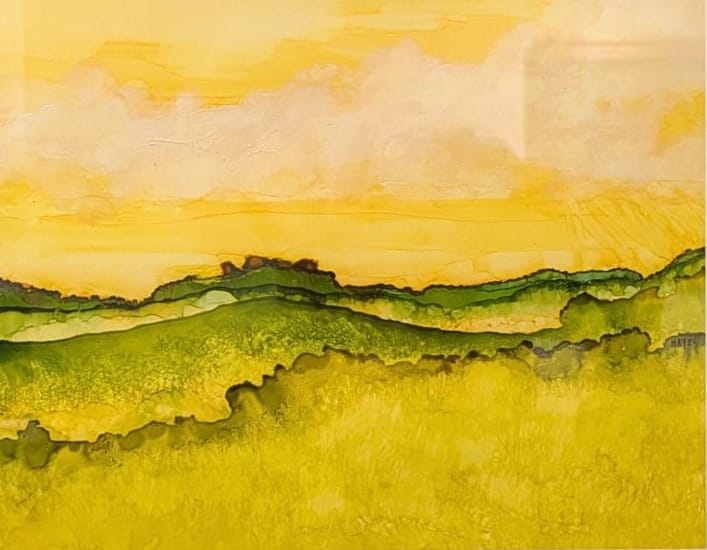
Another eye-catching work in alcohol ink is “In That Bright Land” by Pam Hayes, which captures her impression of a landscape in vibrant yellows and greens. A butter yellow sky glows above chartreuse and olive green layers of grassy hills.
Reading Hayes’ artist statement later, these words caught my attention: “The variety of color, line, and shape found in nature is as intriguing and as stimulating as a song or a poem. The vocabulary for these disciplines is quite similar. For example, the terms ‘composition’, ‘rhythm’ and ‘movement’ apply to both music and art.”
Perhaps this is why her work spoke to me, for as a musician, I think about shape and form differently than a visual artist may, and I find it surprisingly difficult to study a piece of art all at once instead of over time. “In That Bright Land” makes it easier: the warmth of the hues invited me in; the complexity of the alcohol ink drew my attention to really examine the layers; and when I took a step back, I felt as if I could see the parts and the whole at the same time.
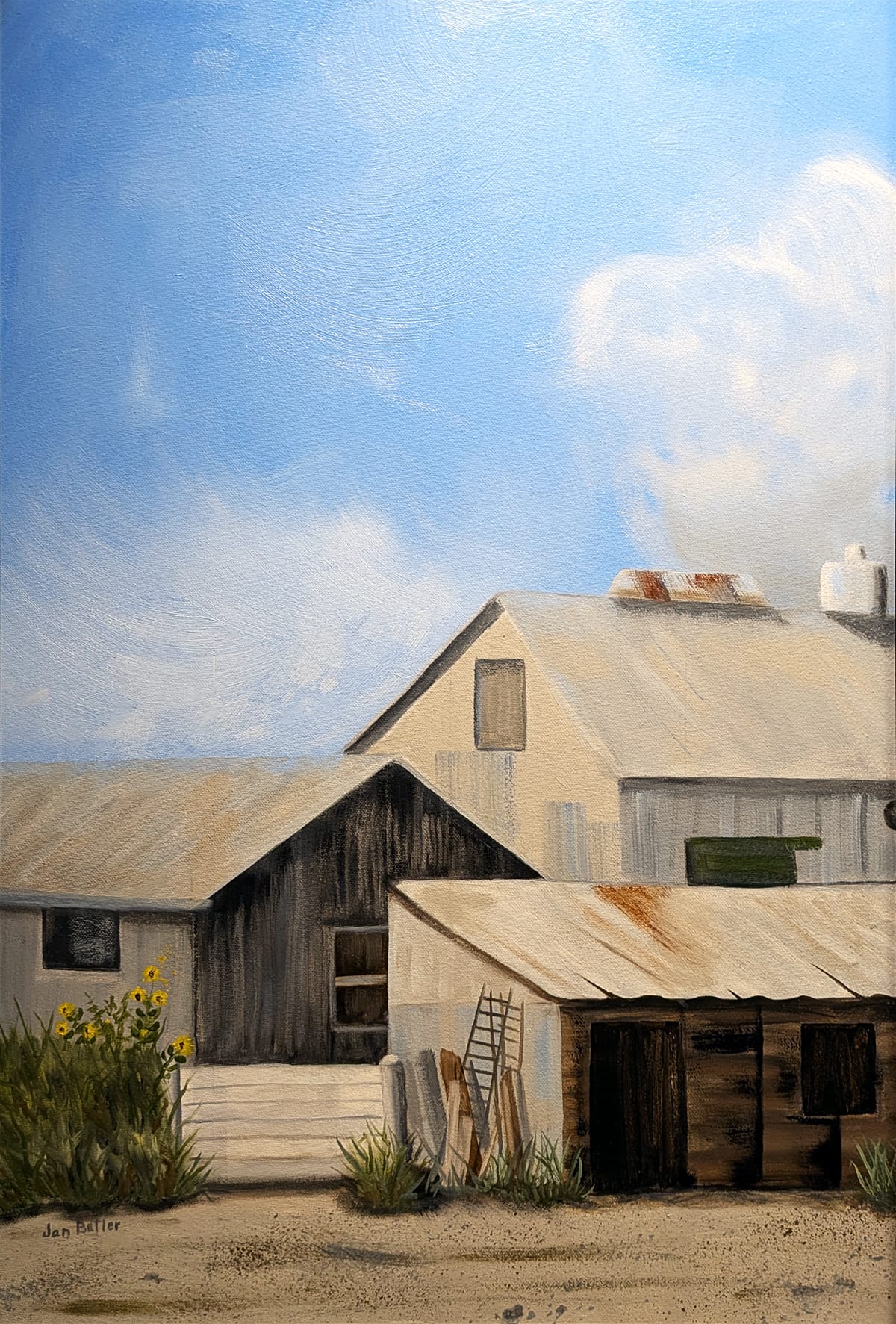
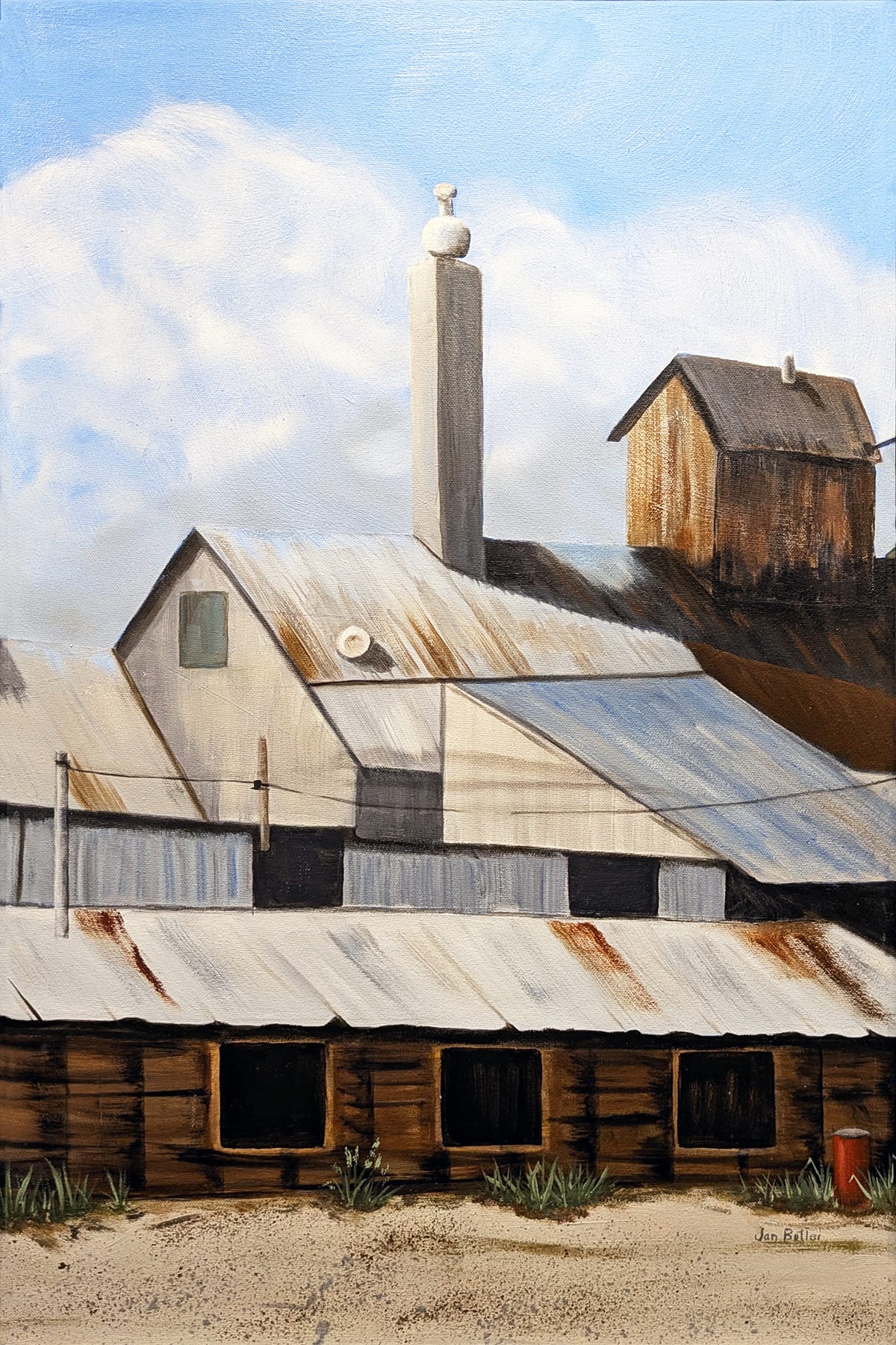
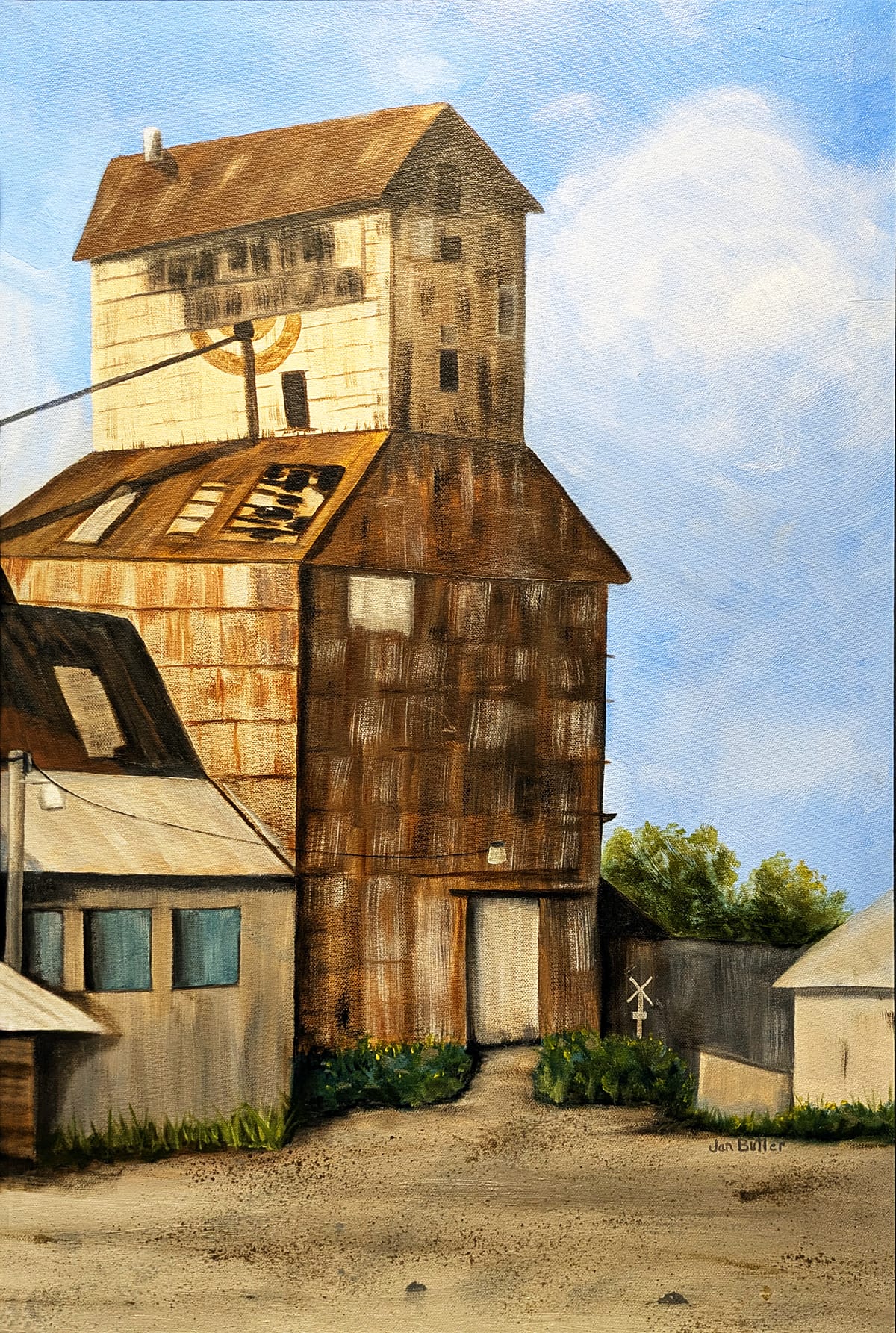
Jan Butler, “Past Its Prime” triptych, oil on canvas. Photo by Kate Storhoff for The SHOUT.
“Past Its Prime” by Jan Butler stood out both because it is a large triptych and the only work in the exhibit with an author’s note hanging beside it. The trio of oil paintings depicts a series of old buildings in Concordia, Kansas, on a bright, sunny day.
“I am struck by the geometry of the buildings cobbled together over the years,” Butler writes. “Each addition has its own character due to the variety of building materials that have weathered and rusted over years of use. The painting shows the effects of time and disuse.”
Butler captures the varied textures in the buildings masterfully. Looking at the painting, I can easily imagine how each component would feel beneath my fingers. The structures ascend in height from left to right through the three panels. The tallest building takes up most of the far right panel, with its top half tilting upward into the azure sky, suggesting to me that even something past its prime can look optimistically toward the future.
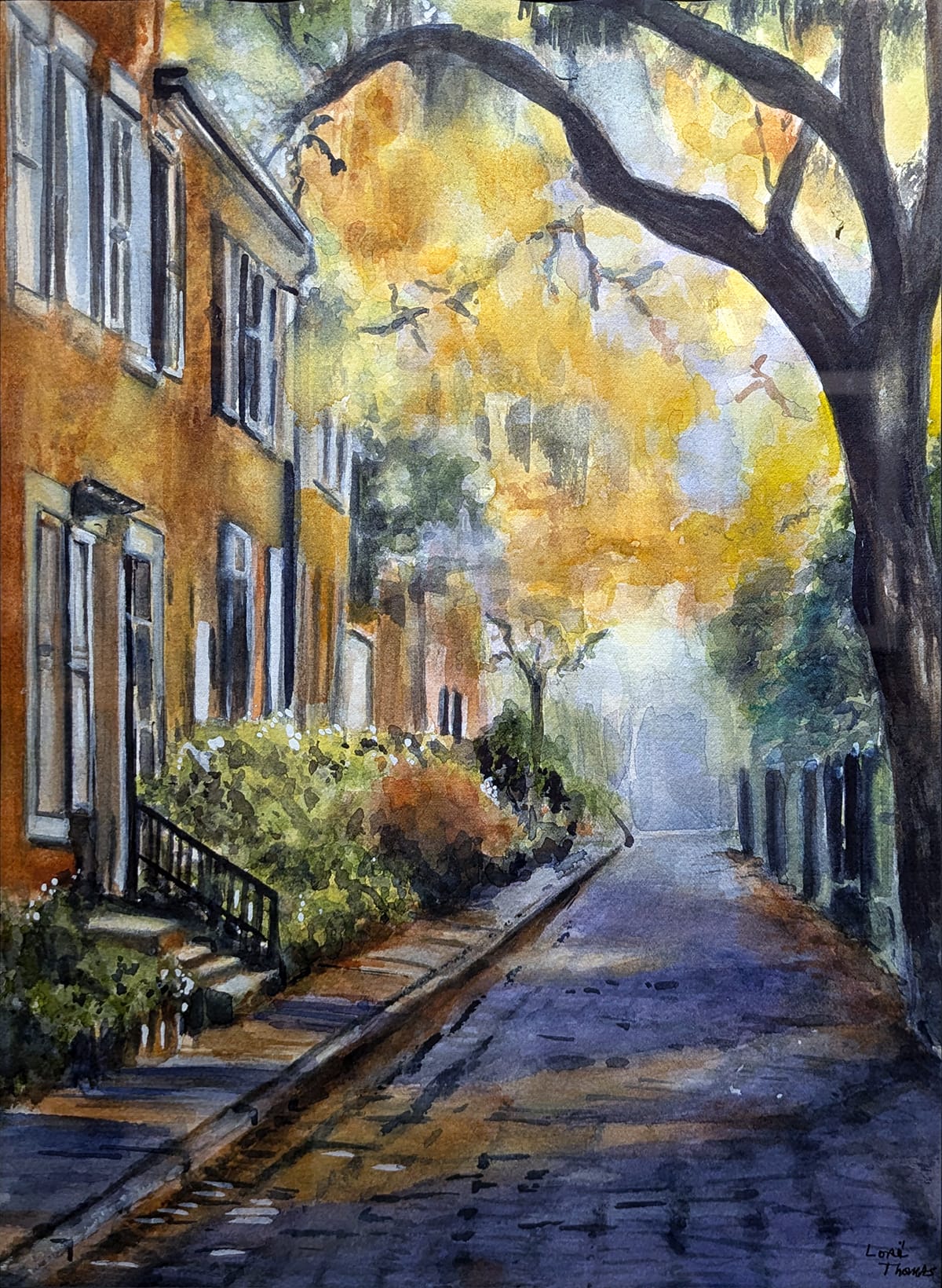
As a transplant from North Carolina, I enjoyed Lori Thomas’s watercolor “Southern Morning” because it feels like the South. The painting features a shadowed cobblestone street under a canopy of tall trees draped with Spanish moss, which stand in front of a row of terracotta-colored rowhouses. The warmth of the house façades is mirrored where the sun hits the cobbles, revealing their honey-brown color, and the trees’ foliage glows in a warm yellow. But the purplish gray of the shadowed cobbles provides a contrasting sense of coolness.
I think of watercolor as a light, weightless medium, but looking at Thomas’ work I could sense the heaviness of the air. I could imagine what it would feel like to walk down that cobbled street on a humid summer day, feeling the breeze wafting through the Spanish-moss covered trees.
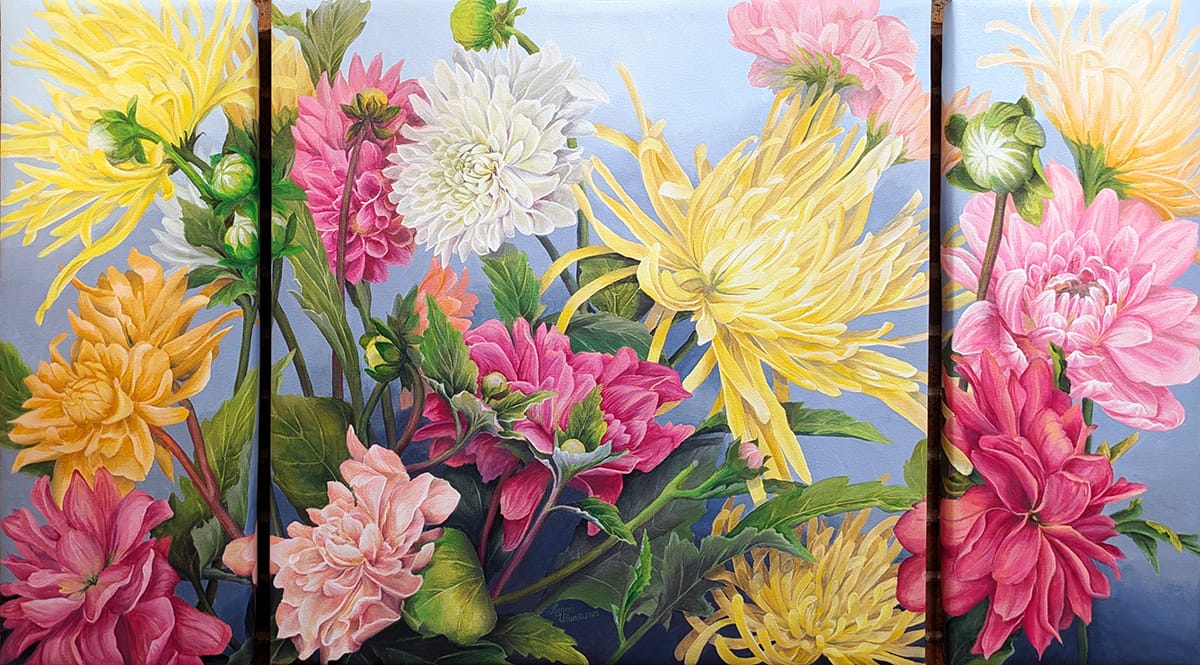
Finally, Naomi Ullum’s gorgeous large-scale works are impossible not to stop and admire, especially “Spring Flowers — Spider Mums and Dahlias,” a huge acrylic painting spread across three canvases in radiant shades of yellow, white, pink, and green on a pale blue background. The sheer amount of detail in a painting this size demanded my attention.
“Oh, What a Beautiful World” provides a delicious variety of scenes to sink into. The venue is easy to access for a quick viewing, so you can treat the show as a palate cleanser in the middle of a hectic day, or dedicate some time early in the morning or late in the evening to linger. Because Wichita Women Artists has been active for the past 76 years, this exhibition represents a long tradition of fostering and spotlighting artistic talent in our community. It’s worth the visit!
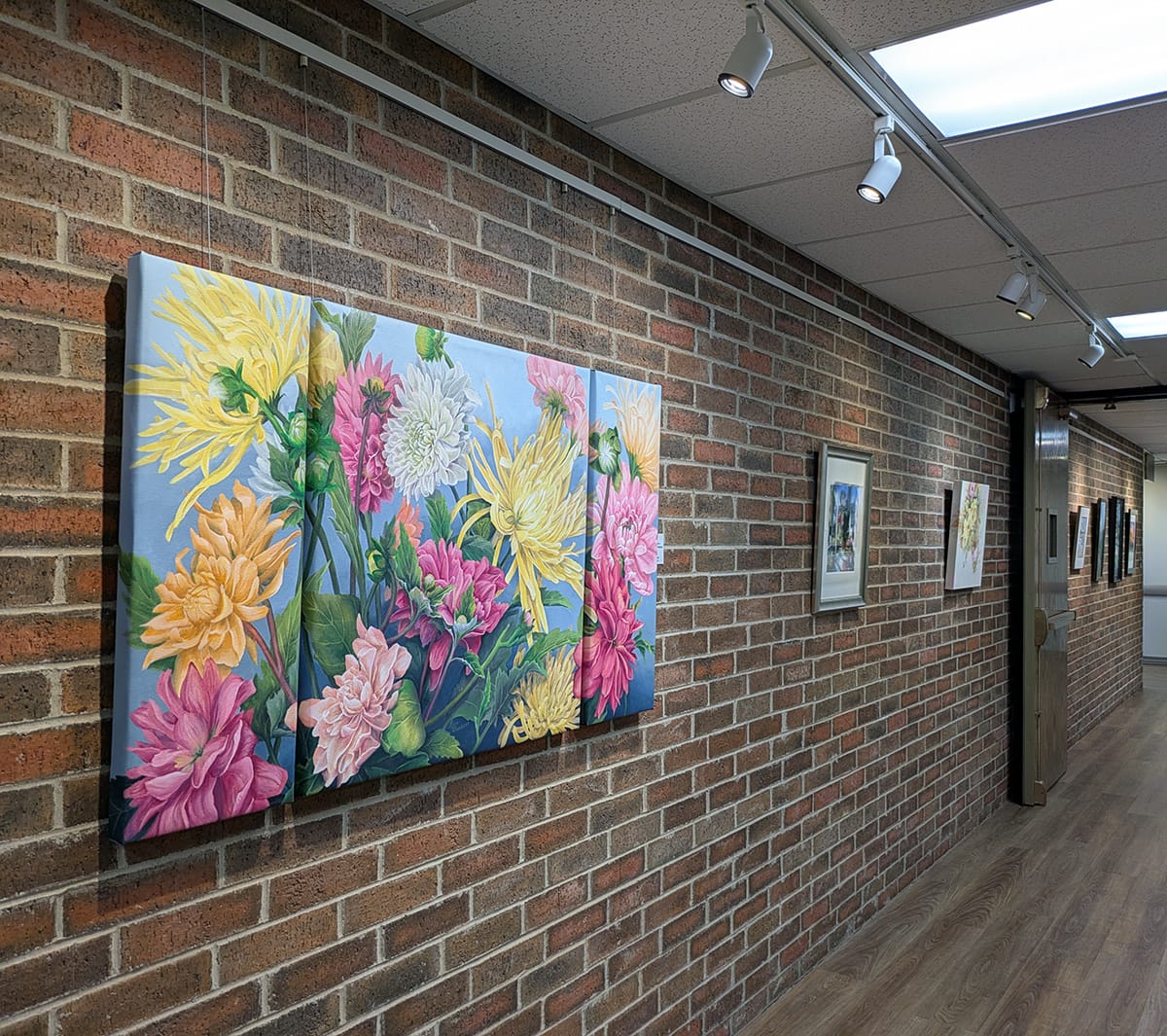
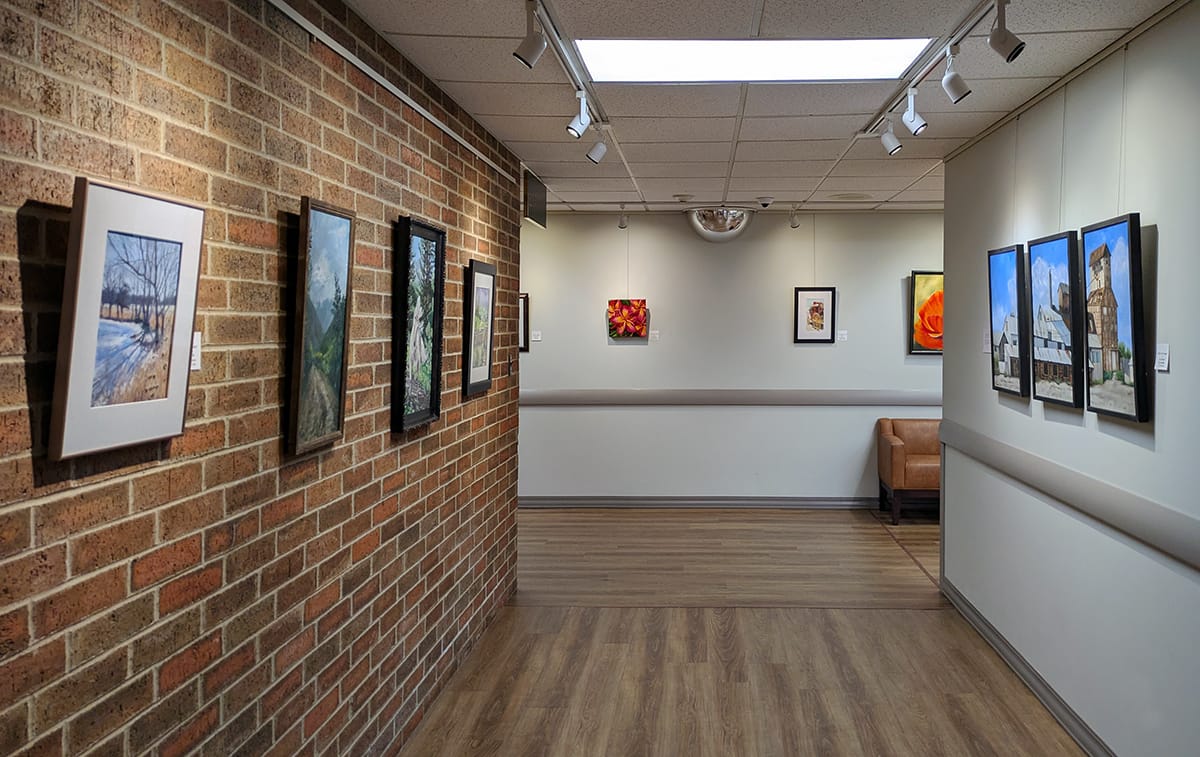
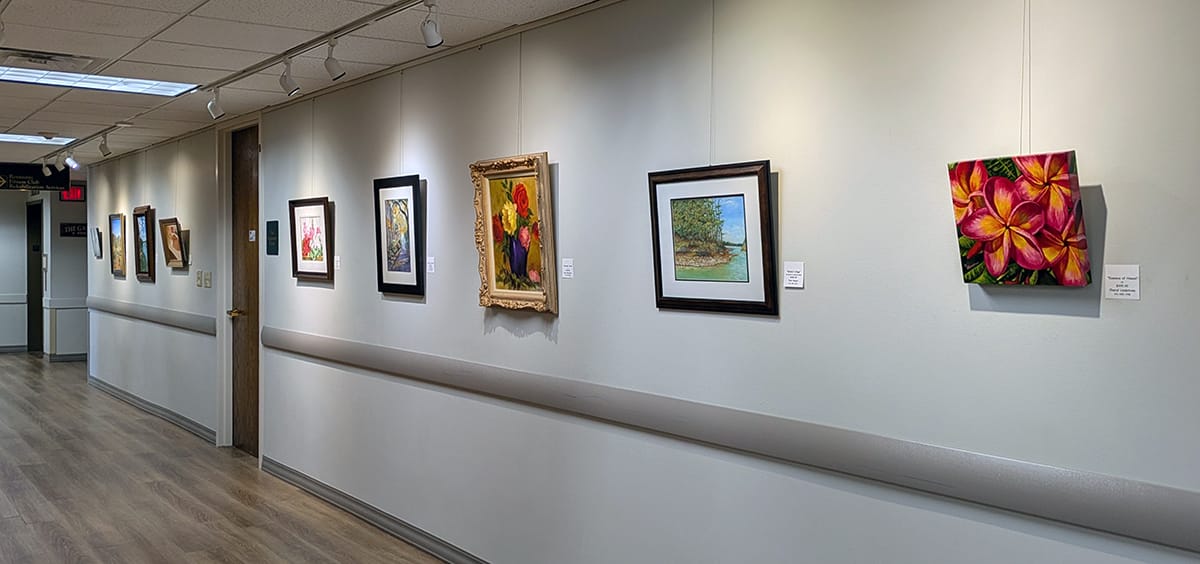
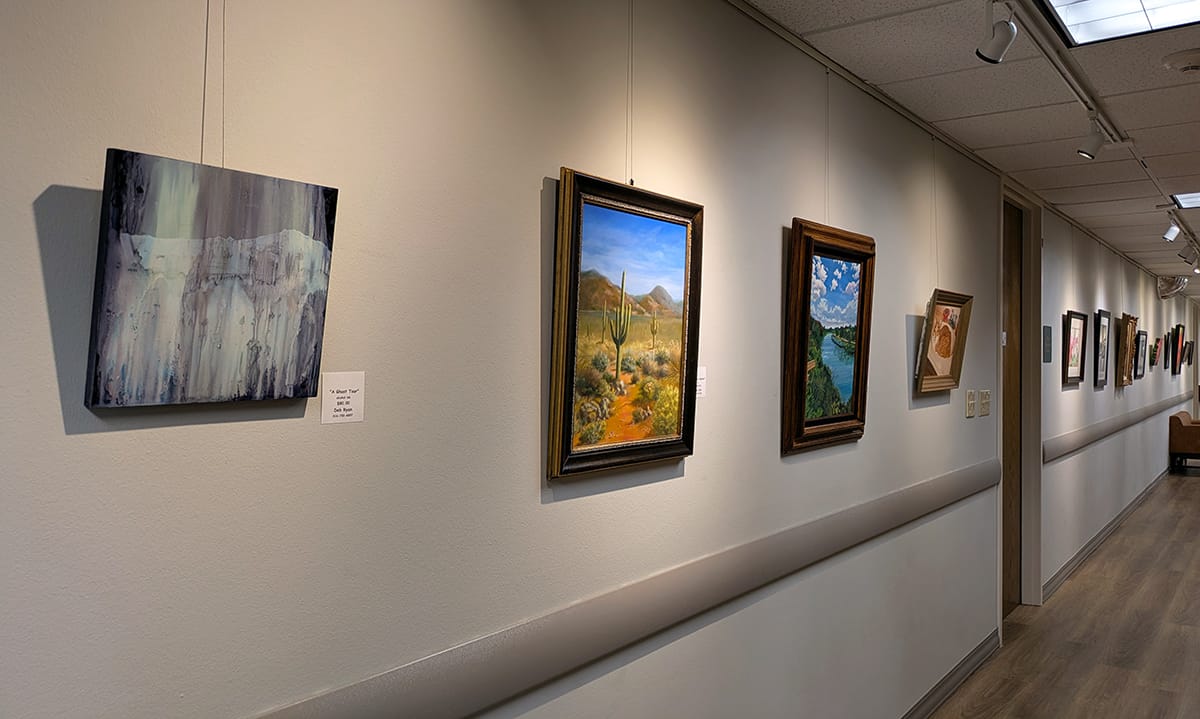
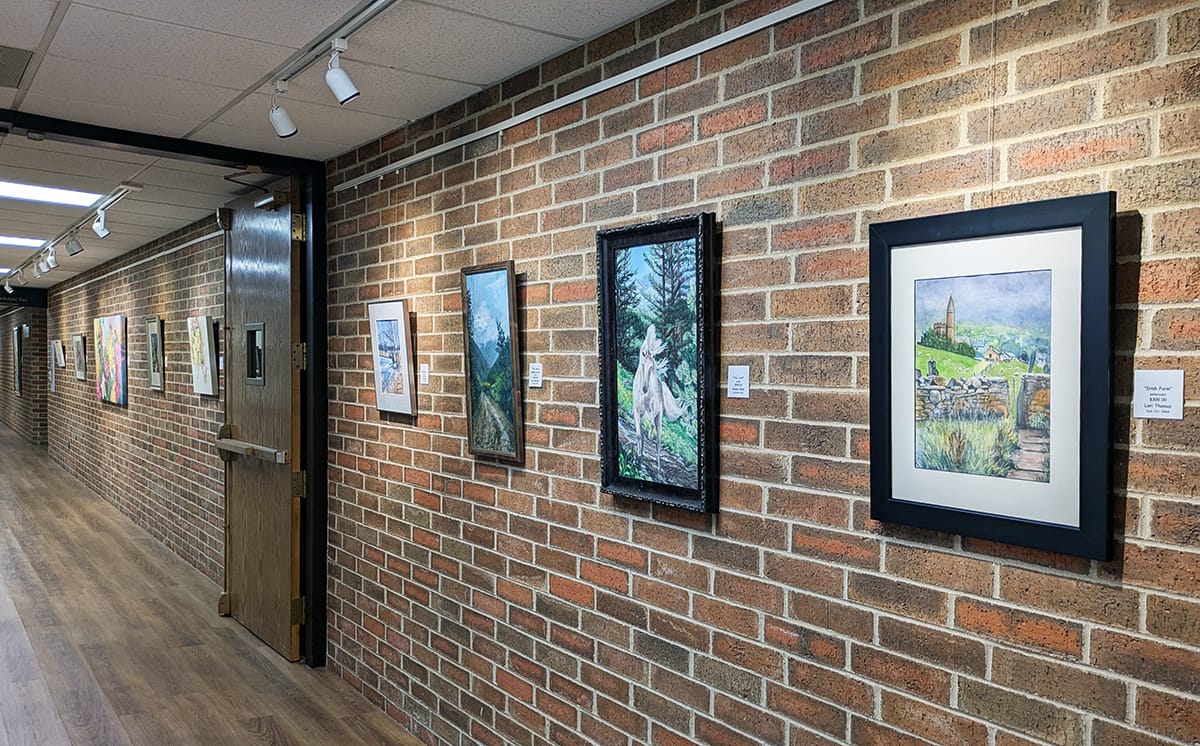
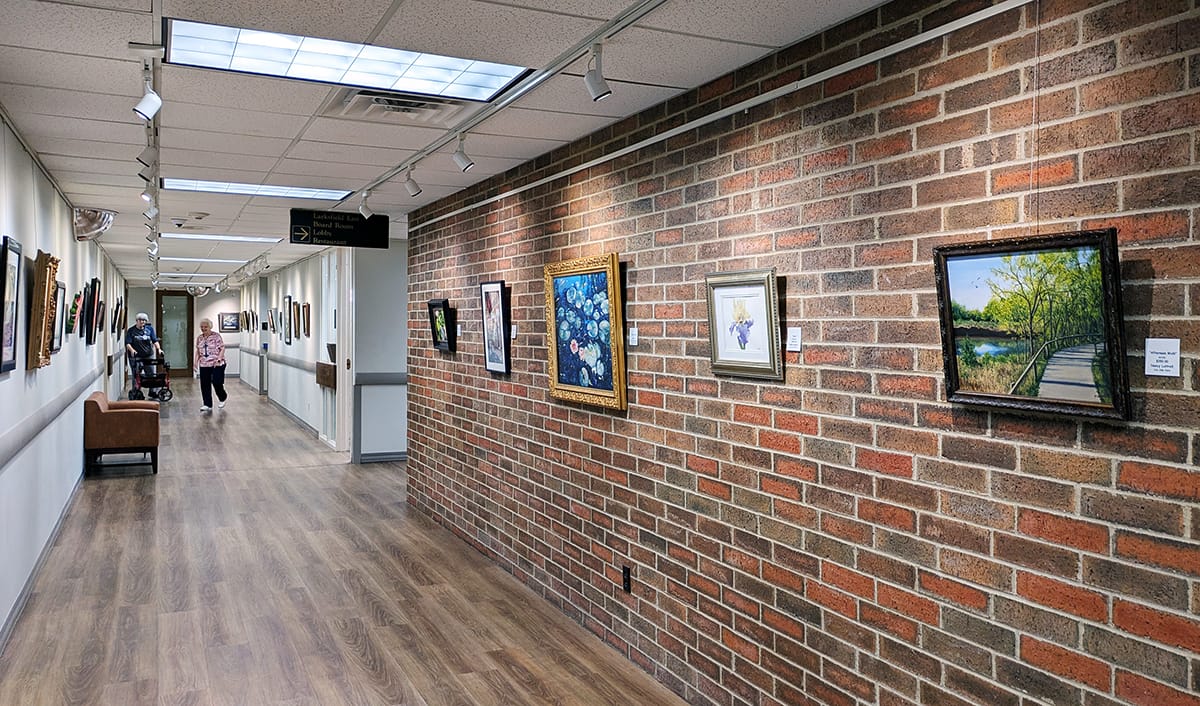
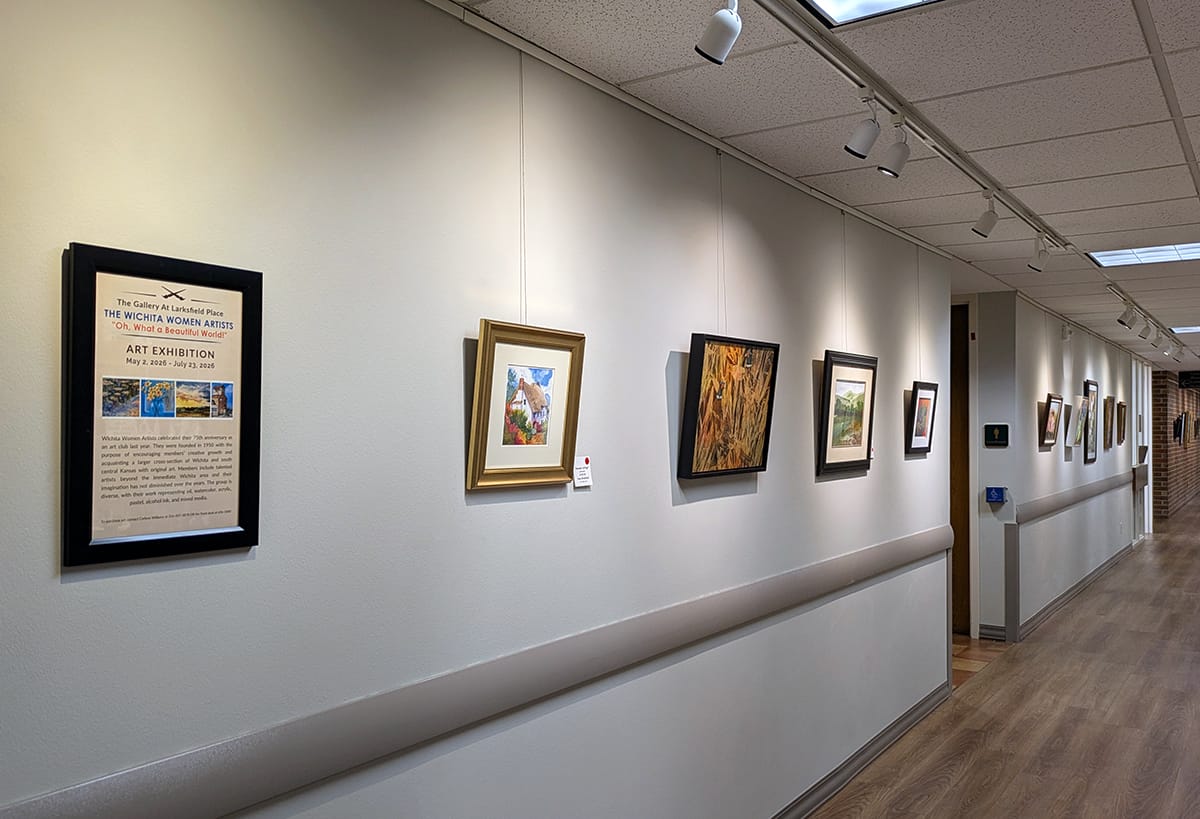
Installation views of “Oh, What a Beautiful World” by Wichita Women Artists on view at The Gallery at Larksfield Place. Photos by Kate Storhoff for The SHOUT.
The Details:
“Oh, What a Beautiful World”
May 2-July 23, 2026, at The Gallery at Larksfield Place, 7373 E. 29th St. N. in Wichita
This group exhibition includes work by Kayann Ausherman, Jane Bradfield, Jan Butler, Janice Crotts, Carol Davis, Vera Davis, Lesa Gardner, Pam Hayes, Kathy Hunter, Hope Just, Sharon Leiker, Cheryl Lindstrom, Nancy Luttrell, Linda Nollette, Diane Post, Ann Riggins, Deb Ryan, Patt Sharpe, Shauna Shelton, Lori Thomas, Bonnie Tymeson, Naomi Ullum, Sue Vautravers, and Diane Warta.
The Gallery at Larksfield Place is open from 8 a.m. to 8 p.m daily. Some paintings on display are available for sale.
Admission to the gallery is free, and the facility is accessible to people with physical disabilities.
Kate Storhoff is a musicologist whose research focuses on contemporary American composers. Before moving to Wichita, she managed an independent bookstore and taught at Wake Forest University and the University of North Carolina School of the Arts. She plays the clarinet, piano, and Northumbrian smallpipes.
❋ Derby man has the kind of voice that turns heads — and chairs
❋ Socializing while sober: how some Wichitans are cultivating alcohol-free communities
❋ As a small creative business closes, the owner mourns
❋ Painting through it: Autumn Noire on 20 years of making art
❋ How a guy from Wichita resurrected 'Dawn of the Dead'
❋ Bygone Friends University museum housed curious collections
Support Kansas arts writing
The SHOUT is a Wichita-based independent newsroom focused on artists living and working in Kansas. We're partly supported by the generosity of our readers, and every dollar we receive goes directly into the pocket of a contributing writer, editor, or photographer. Click here to support our work with a tax-deductible donation.