American Memeplex: James Gates' 'Hot Sandwiches in 2026* (*some served cold)'
Load your plate with culture sandwiches through August 29 at Harvester Arts
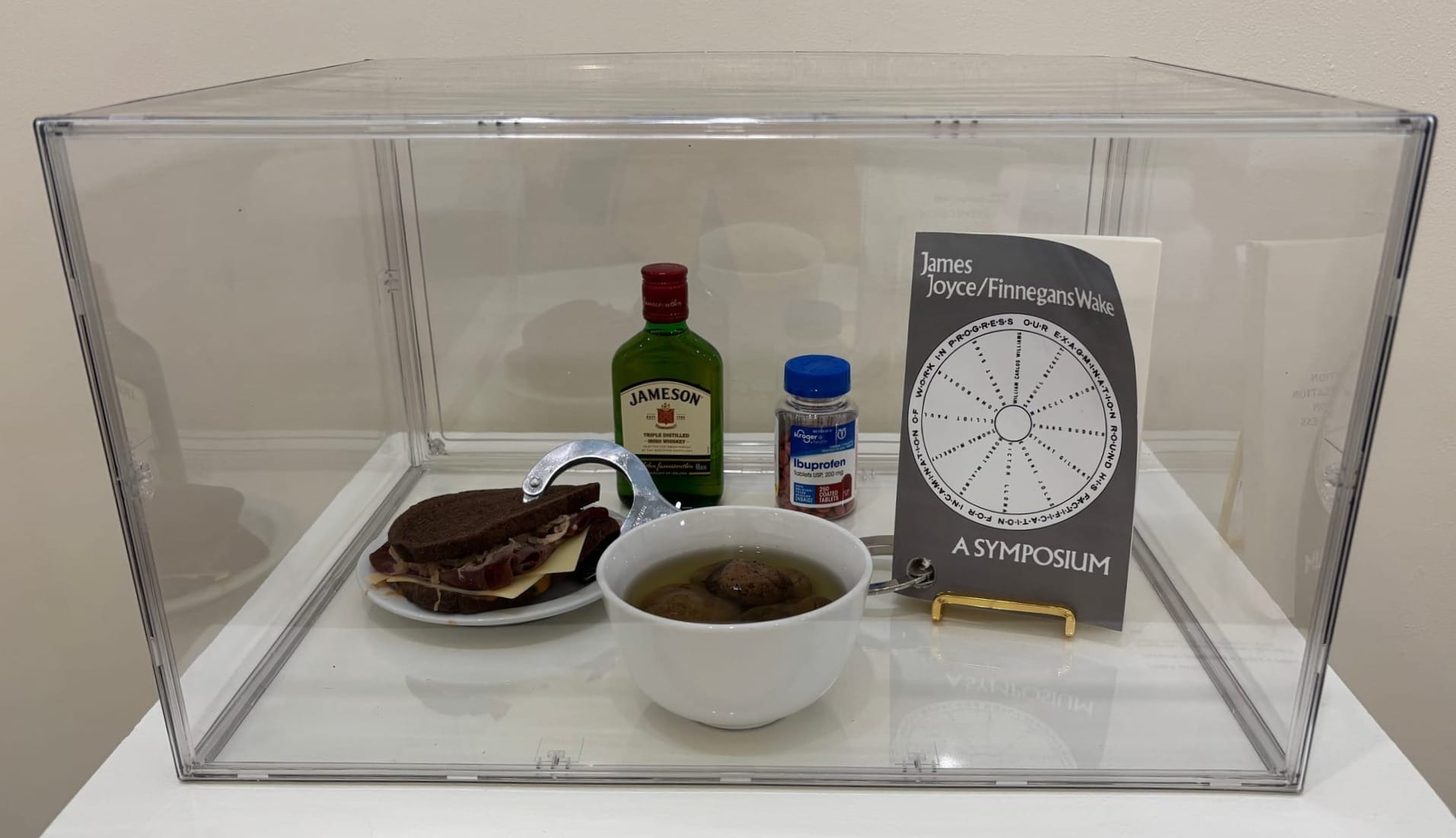
In an attempt to understand the work titled "Reuben/Finnegan's Wake Combo" by James Gates, I googled a piece of language from its media description, "Rocks that look like potatoes," and the phrase "Finnegan's Wake."
Having not read James Joyce's notoriously elusive novel, I thought perhaps the rock-potato thing was a direct allusion. Google's AI-overview, however, promptly informed me that there is "no direct connection between James Joyce's novel "Finnegans Wake" and collecting rocks that look like potatoes."
Instead, I learned, Irish actor Jamie Dornan of "50 Shades of Gray" fame evidently revealed quite recently that he has a penchant for collecting rocks that look like potatoes — an admission that went viral — while "Finnegans Wake" makes reference to the potato famine. The lack of "direct connection" notwithstanding, the large language model added with typical flair, "both share a distinctly surreal, Irish absurdity."
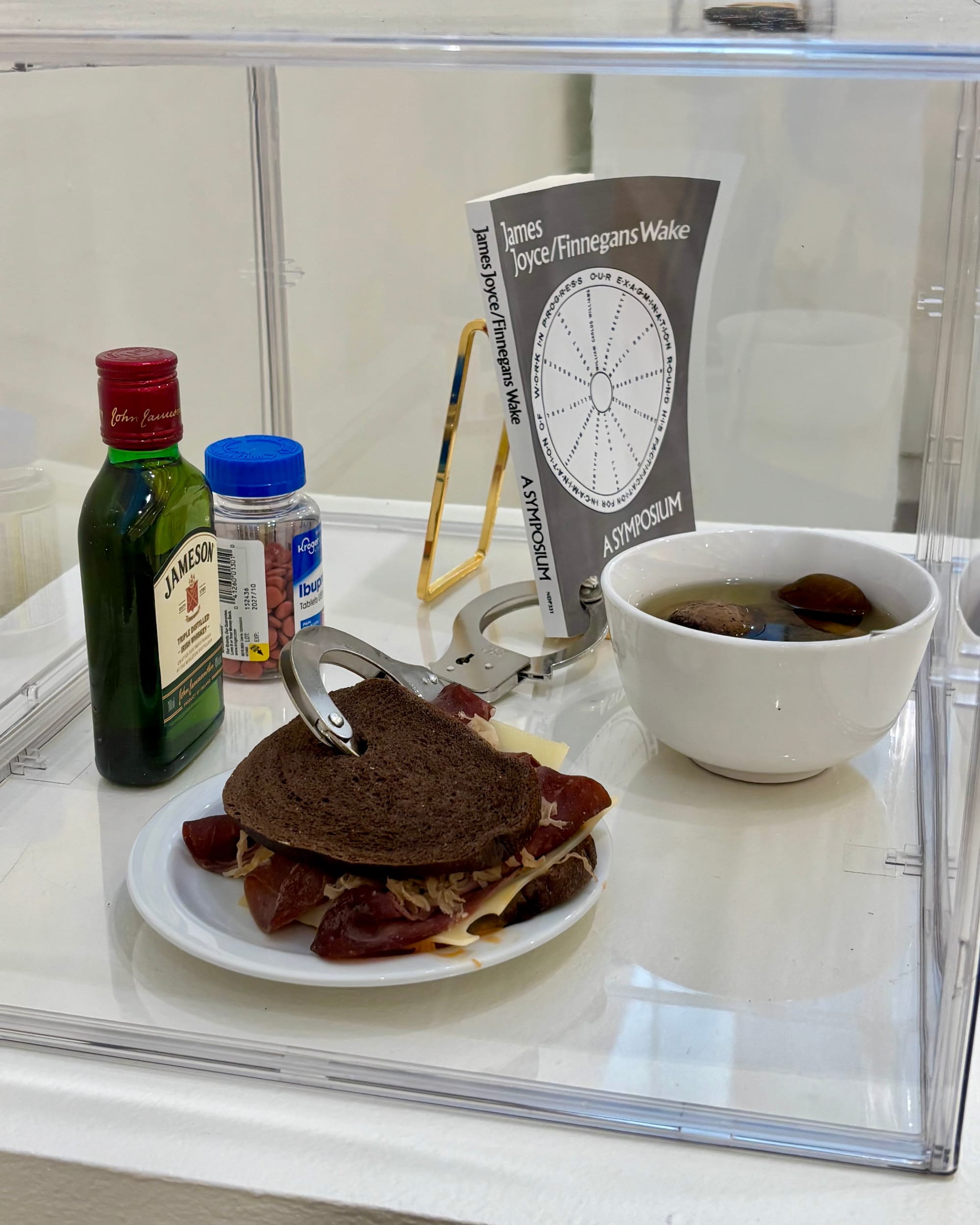
Welcome to hell. And welcome to James Gates' own dioramatic inferno “Hot Sandwiches in 2026* (*some served cold)” on view at Harvester Arts through August 29. Gates' show consists of sandwich dioramas accessorized with various objects and accompanied by humorous menu descriptions in place of the traditional media description. For instance, "Reuben" is "served with whiskey, Ibuprofen, and a cup of 'Rocks That Look Like Potatoes' soup." The diorama consists of a Reuben sandwich handcuffed to a copy of "Finnegans Wake," a bottle of ibuprofen, a small bottle of Jameson, and a bowl of rocks in water.
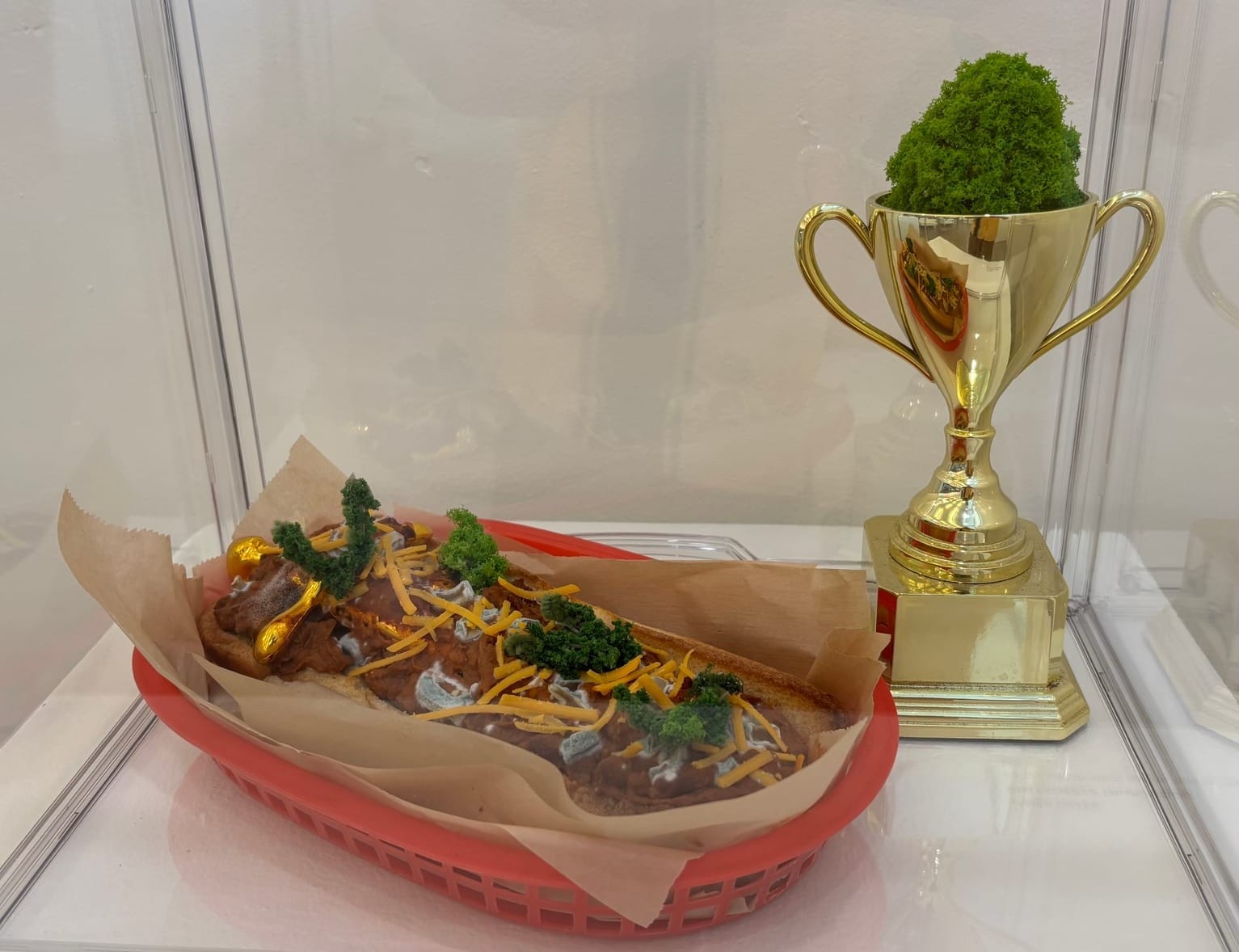
What does that mean? Hell if I know. But then again, what does "Finnegans Wake" mean? Or the fact that a great many people seem to care about Jamie Dornan's rock-collecting habits, or that a machine can detect the "distinctly surreal, Irish absurdity" underpinning this particular work of Gates'?
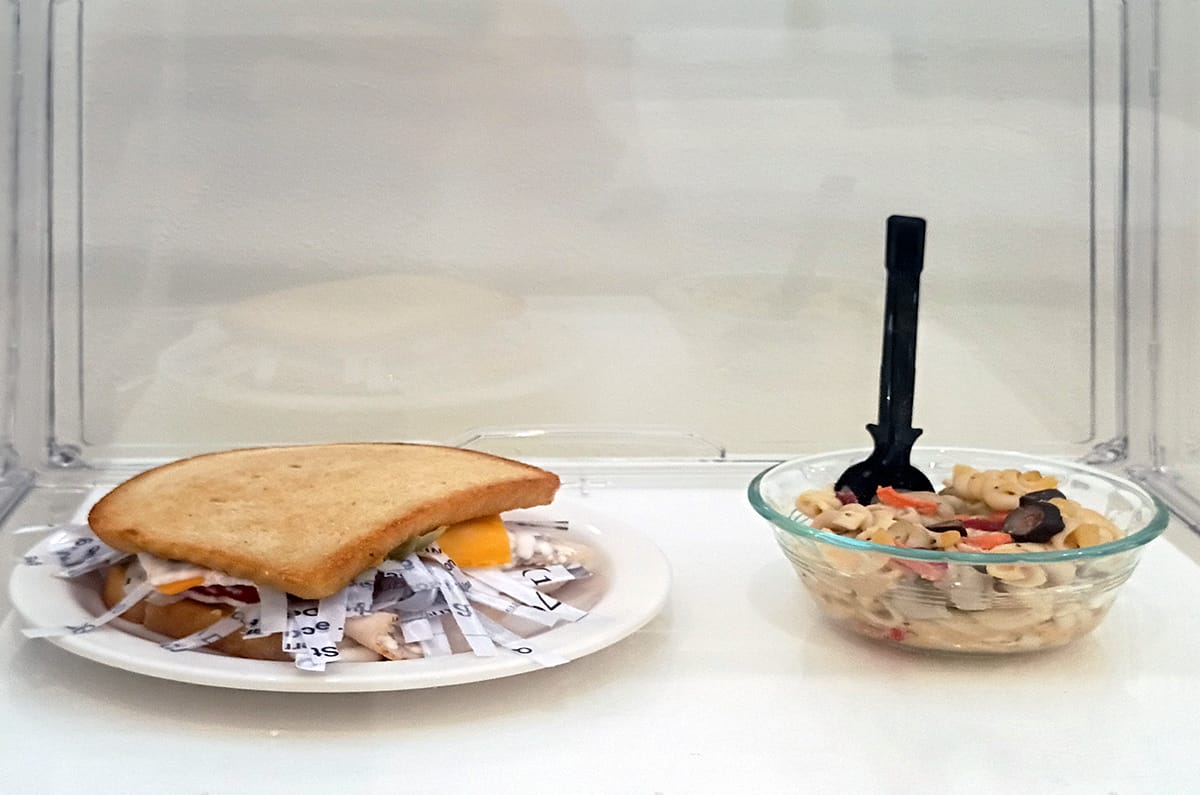
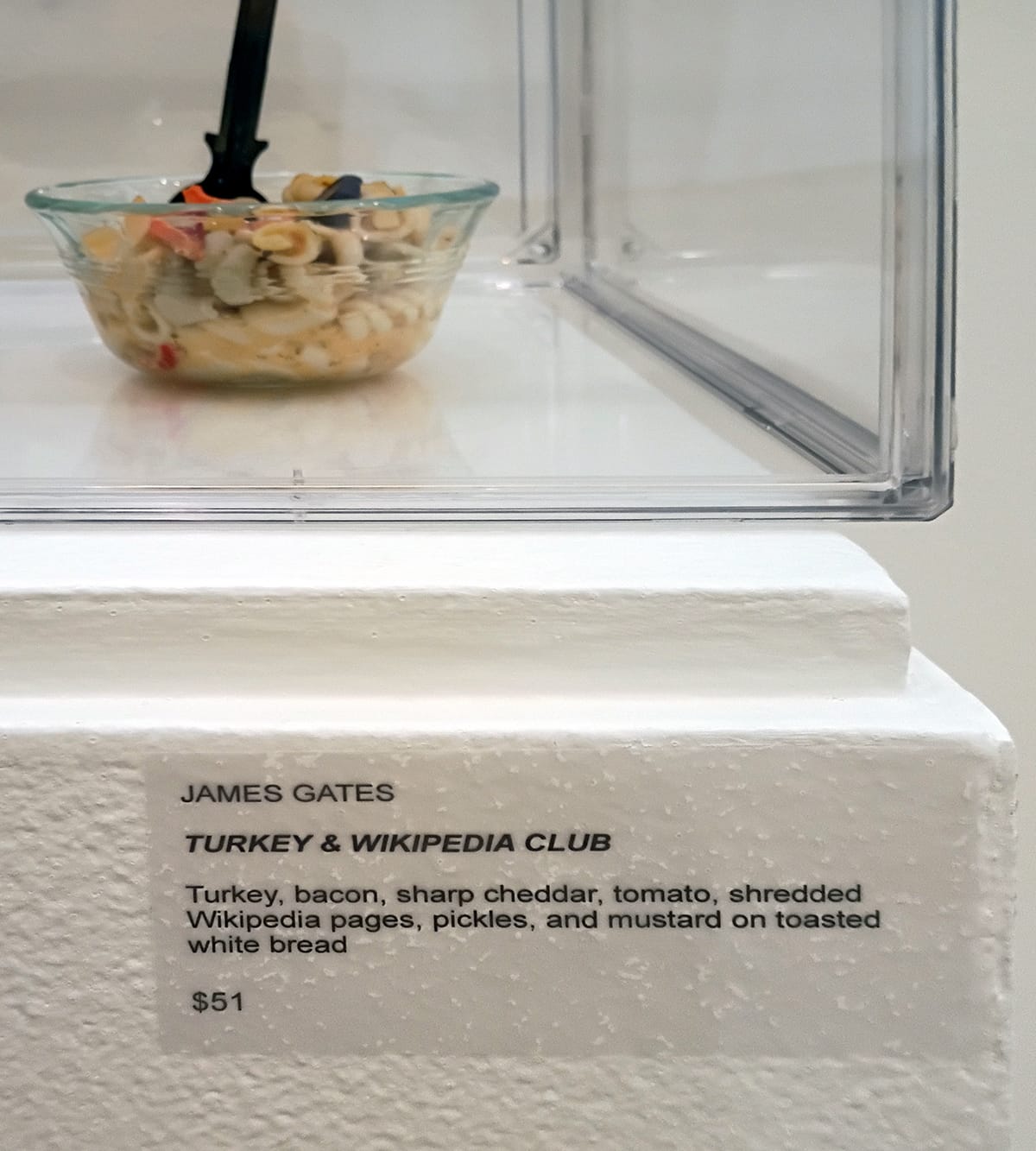
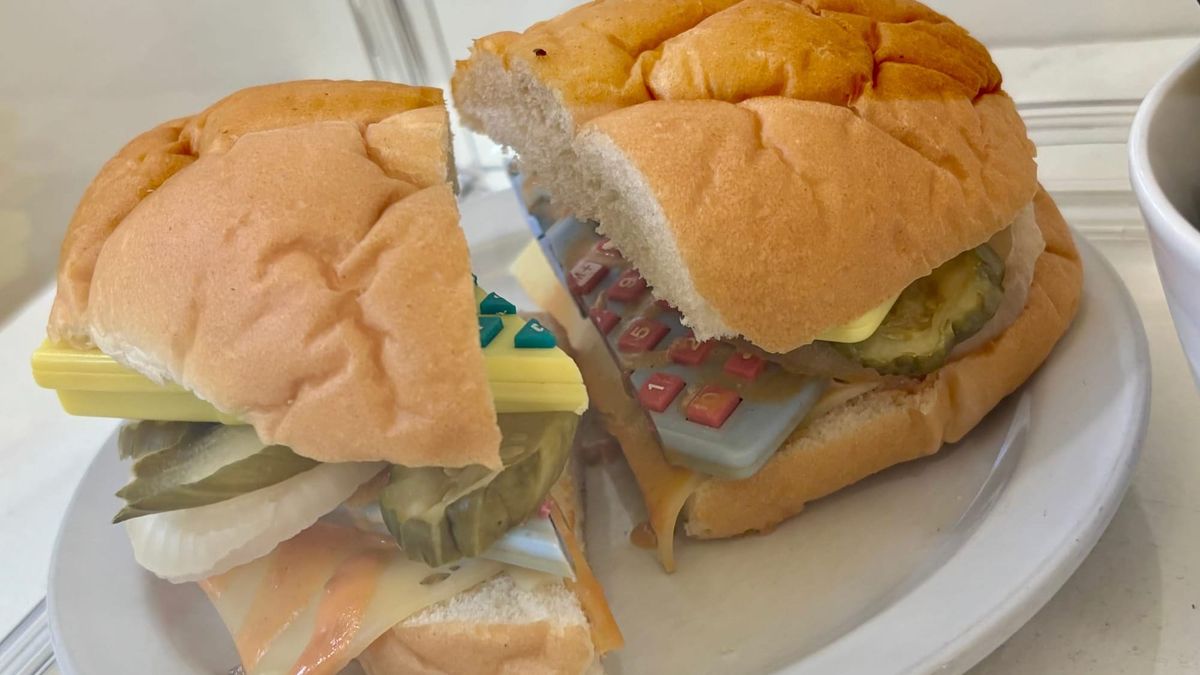
James Gates, "Turkey and Wikipedia Club," turkey, bacon, sharp cheddar, tomato, shredded Wikipedia pages, pickles, and mustard on toasted white bread. Photo by Jeromiah Taylor for The SHOUT.
But there are themes. Rock-soup could be the last resort of a famished people. Dornan is Irish, and maybe some traumatized strand of DNA demands he collect rocks for soup. There are also confusions. Reubens are quintessentially Jewish-American — why is one chained to an Irish literary masterpiece? Again, Google AI overview comes to the rescue — apparently the sandwich is often "mistakenly associated with Ireland or Irish pubs due to its use of corned beef." Is its link to "Finnegans Wake" an indictment of the novel's authenticity? Or an ironic juxtaposition of pseudo and bonafide Irishness?
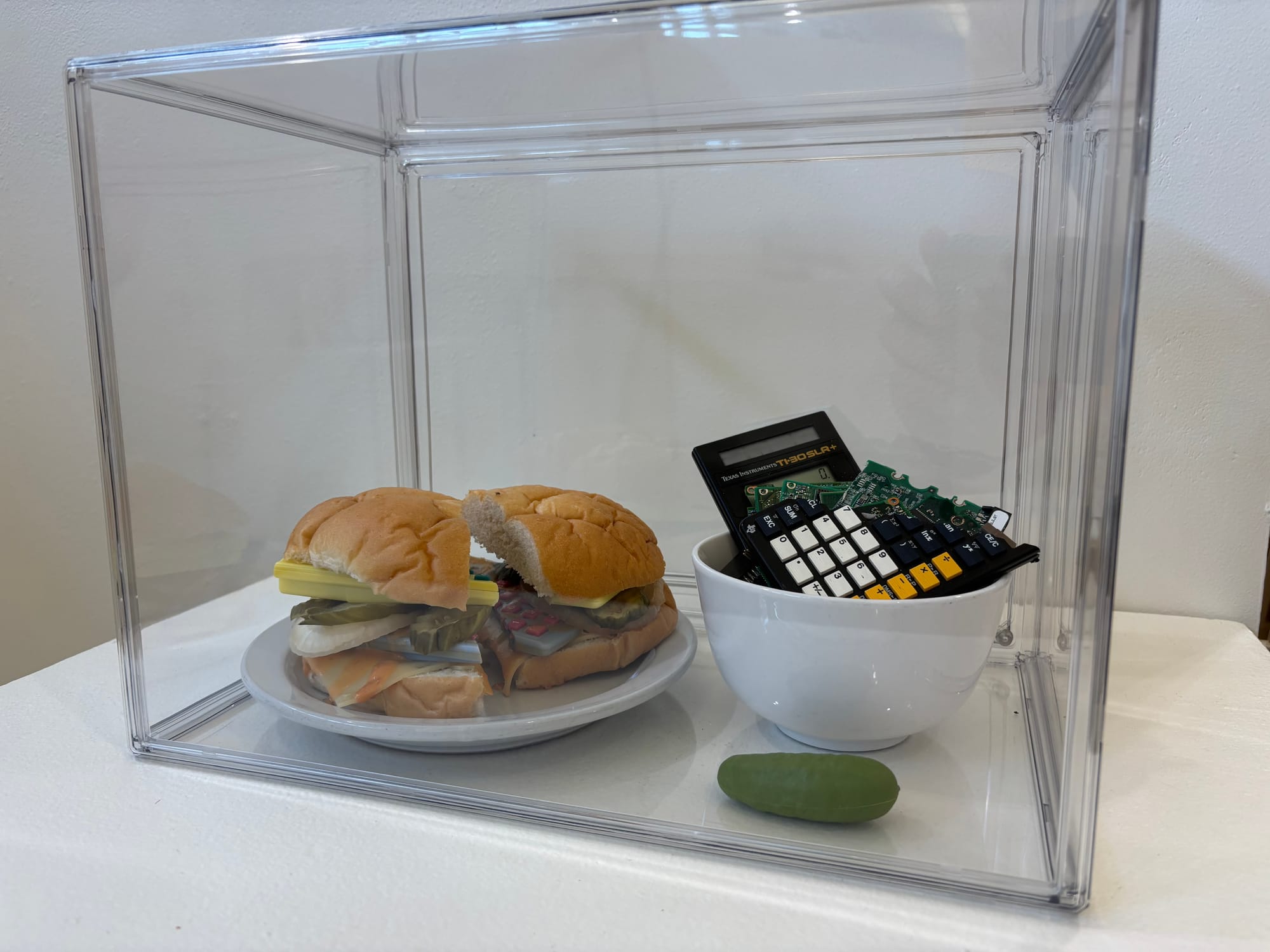
The works are essentially memes: matrices of text, image, allusion, and irony that thematically accrue but elude exposition. In the study of cultural evolution, memes are the basic unit of culture. Culture that is, as Peter Richardson and Robert Boyd defined it in their work "Not By Genes Alone: How Culture Transformed Human Evolution," "Information capable of affecting individuals' behavior that they acquire from other members of their species through teaching, imitation and other forms of social transmission."
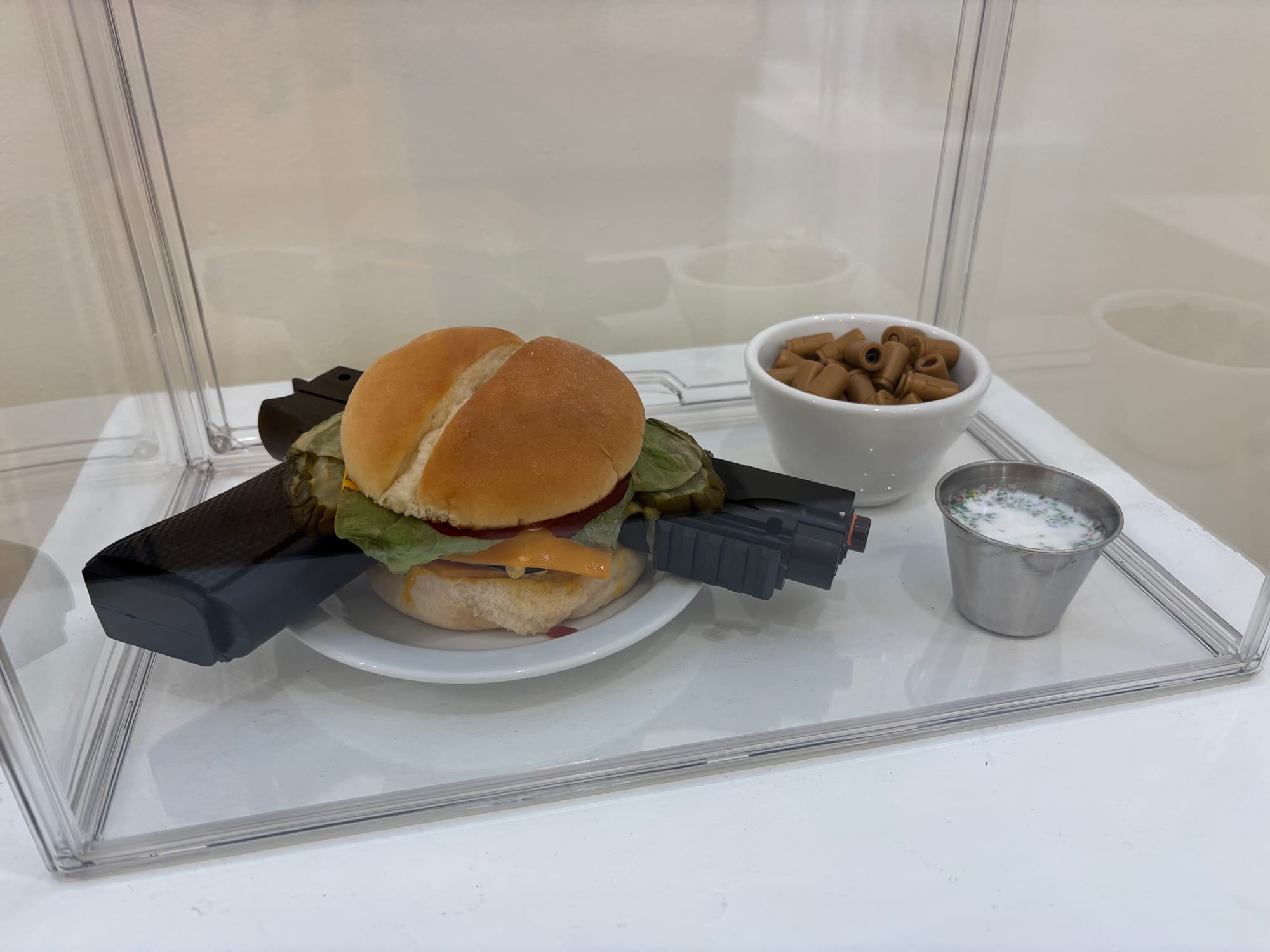
Behavior and our acquisition of it seems a key preoccupation of Gates'. Take, for instance, the offering "Grilled Gunburger" consisting of "Gun, American cheese, whitest mayonnaise available, pickles, ketchup, lettuce and tomato on a sourdough bun." A side bowl is filled with ammunition, and a little ramekin with what one presumes is the whitest mayonnaise possible; not white after all, but speckled with glitter. Somewhere in that information soup is commentary on violence, white supremacy, and definitions of Americanness. Memes spread through transmission — they go viral — but so does fear. Something you swallow everyday between your hamburger bun and that you stave off with your gun.
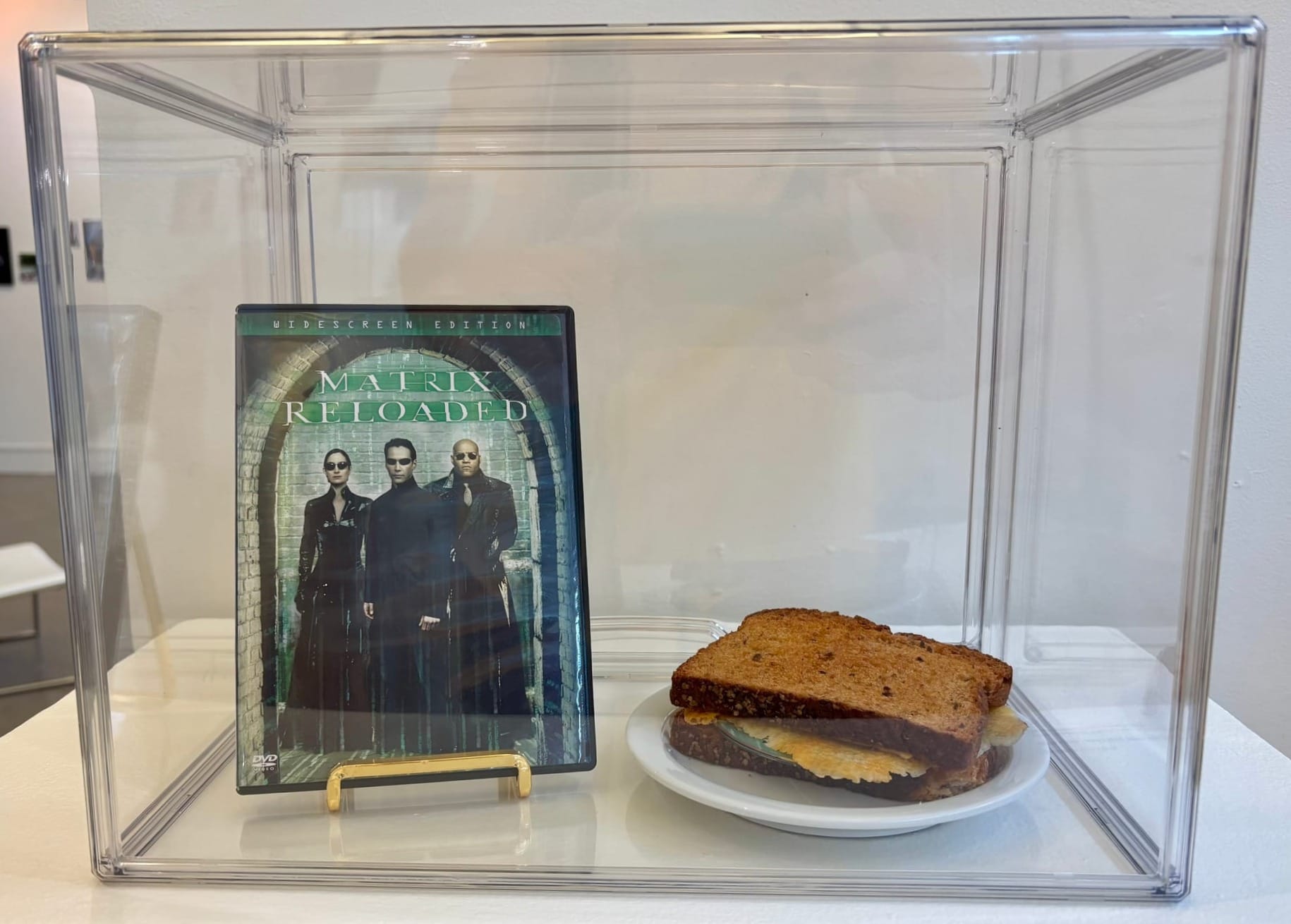
Then there's one of my favorites: "Grilled 'Matrix Reloaded' and Cheese," complete with "Special Features including BTS footage and caramelized commentary." Admittedly, my professional disillusionment as an opinion editor and critic contributed to my amusement at the phrase "caramelized commentary" — a thing actualized on the sandwich; one of the skimpier ones, little more than sprouty bread, a CD-ROM, and the fried square one takes for the commentary. Is the vague, fried commentary that of the cinephiles raging against commercial film and all things franchise, or the unhinged mania of fandom, or the talking-head pretension of any given director's cut?
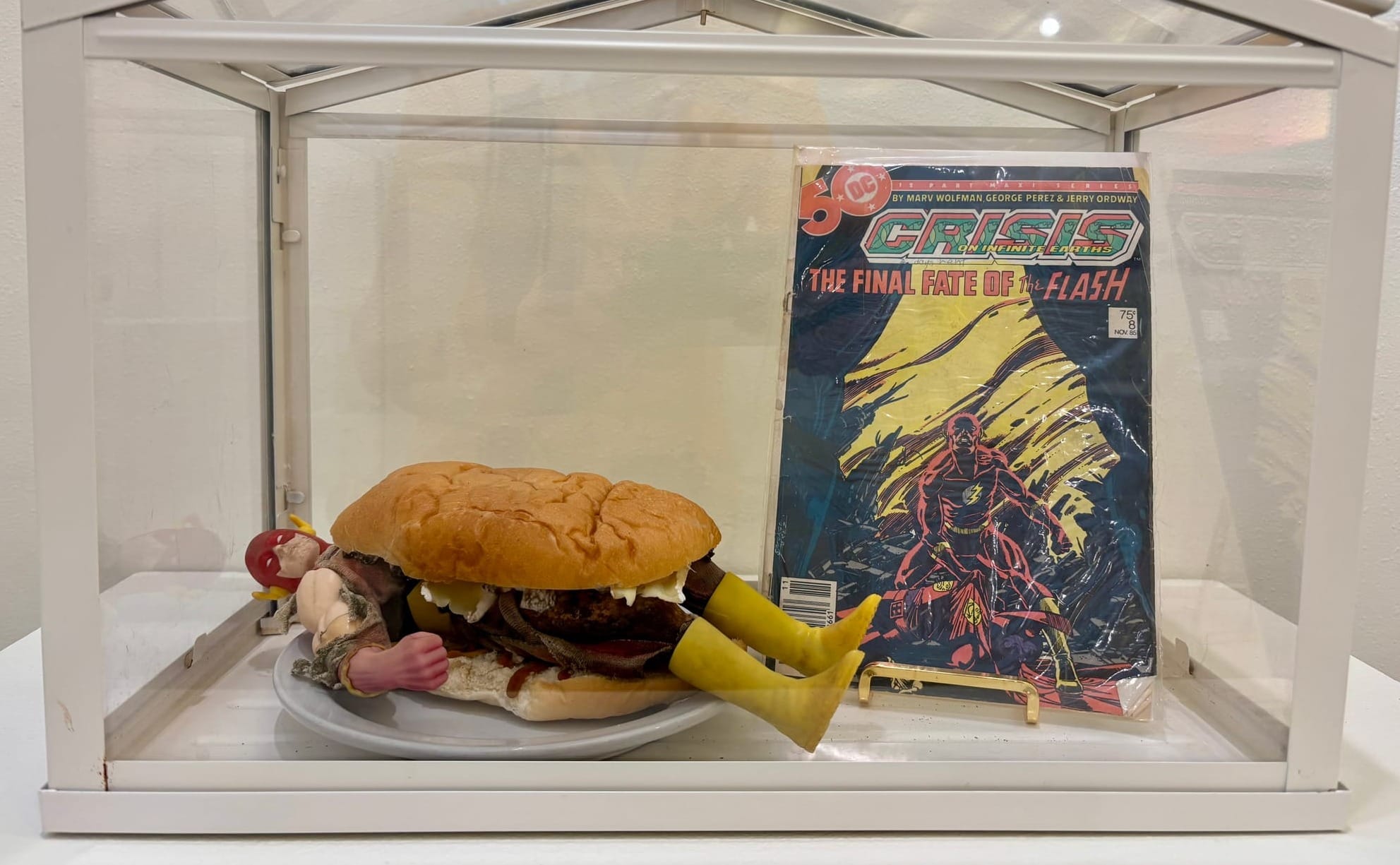
You could say one or the other or all three or you could certainly infer some other meaning that eludes me. The point of Gates' work seems less to present crystal-clear didactics and more so to demonstrate the faculty of meaning — how we craft, transmit, appropriate, and warp it through our cultural actions. The show as a whole is a great memeplex, concerned largely if not exclusively with America — not the nation state but the concept and the lived inheritance of meanings accrued over centuries. America itself is a great memeplex, hence the legibility of Gates' work — a place where guns and hamburgers and action movies carry totemic weight with which artists can play. Gates does give the impression of being at play, and yet the show is hued in darker shades by the artist's keen awareness that his toys are dangerous.
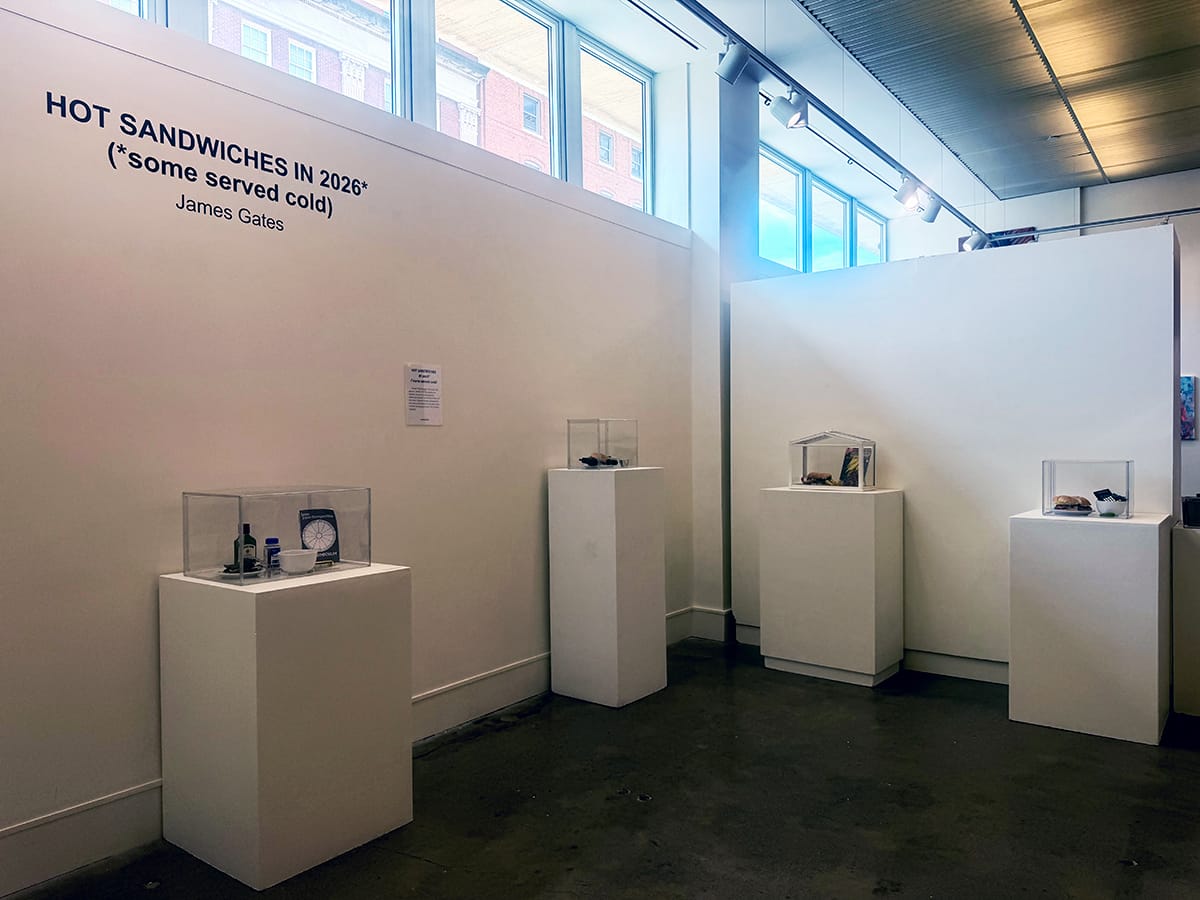
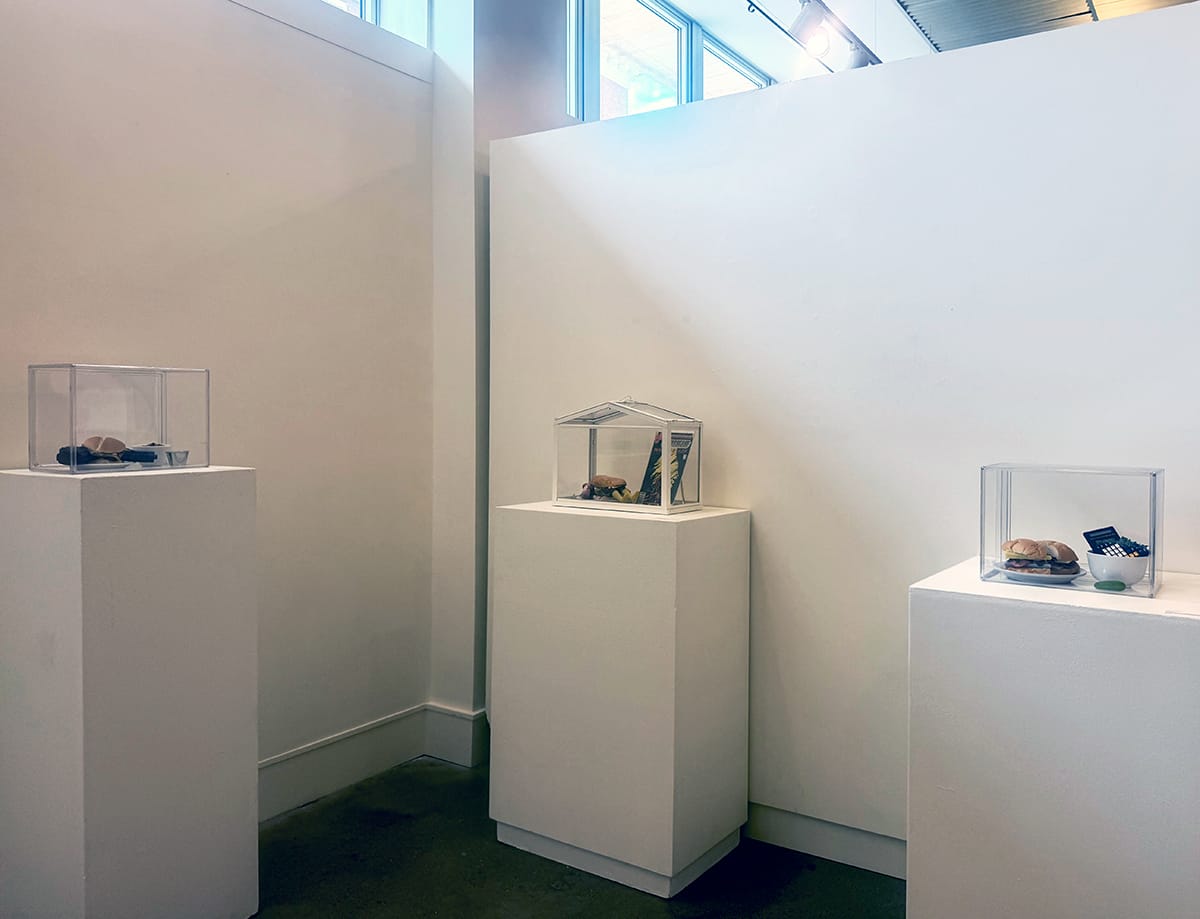
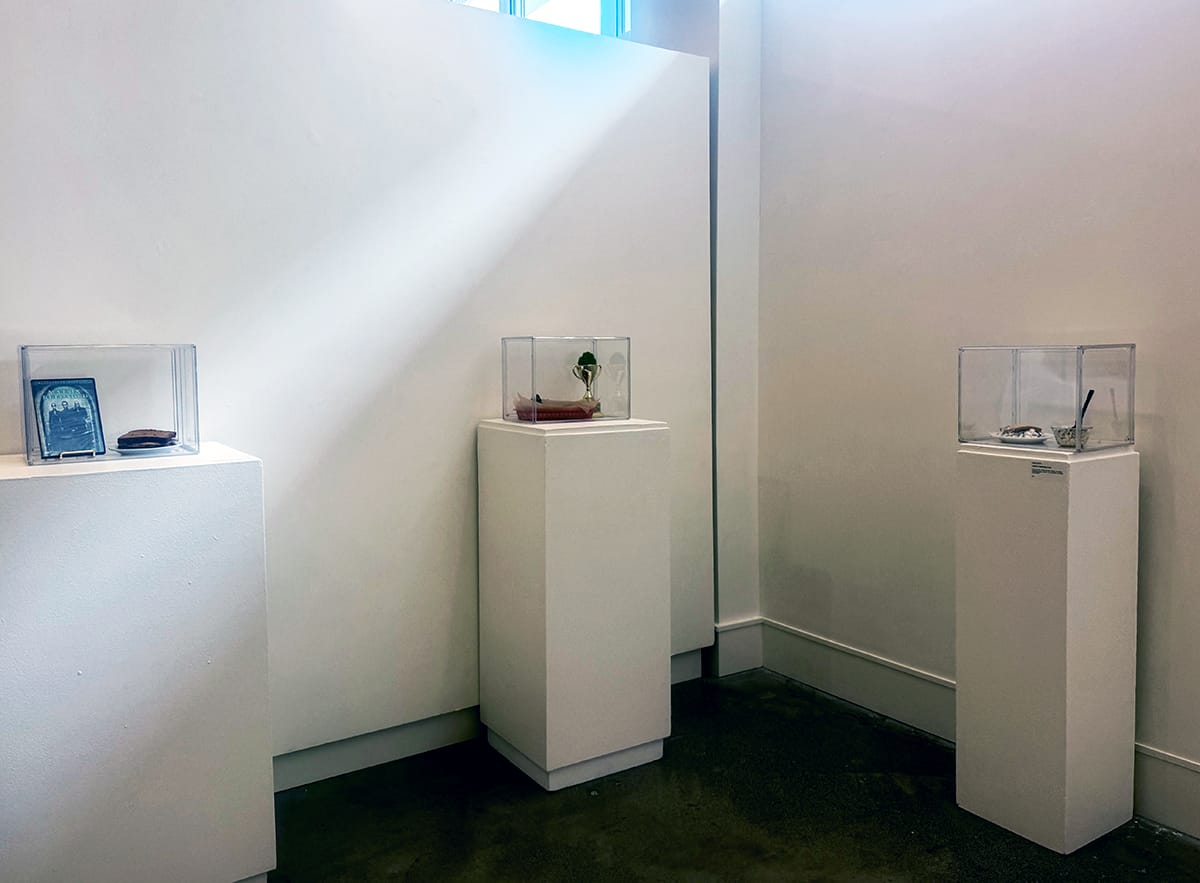
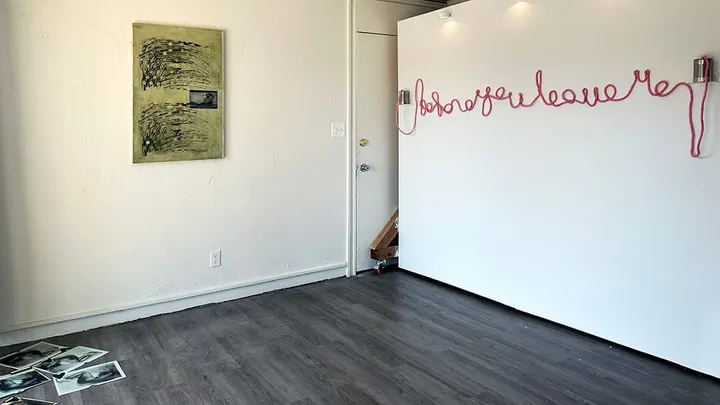
Installation views of James Gates' exhibition "Hot Sandwhiches in 2026* (*some served cold)" at Harvester Arts through August 29. Photos by Emily Christensen for The SHOUT.
The Details
"Hot Sandwiches in 2026* (*some served cold)" by James Gates
August 7-2, 2026, at Harvester Arts, 120 E. 1st St. N. in Wichita
The gallery is free and open to the public from 3-6 p.m. Monday-Friday and 10 a.m.-2 p.m. Saturdays.
Admission is free, and the facility is accessible to people with physical disabilities.
Jeromiah Taylor is a writer from Wichita, Kansas. He is the associate opinion editor at the National Catholic Reporter.
❋ Derby man has the kind of voice that turns heads — and chairs
❋ Socializing while sober: how some Wichitans are cultivating alcohol-free communities
❋ As a small creative business closes, the owner mourns
❋ Painting through it: Autumn Noire on 20 years of making art
❋ How a guy from Wichita resurrected 'Dawn of the Dead'
❋ Bygone Friends University museum housed curious collections
Support Kansas arts writing
The SHOUT is a Wichita-based independent newsroom focused on artists living and working in Kansas. We're partly supported by the generosity of our readers, and every dollar we receive goes directly into the pocket of a contributing writer, editor, or photographer. Click here to support our work with a tax-deductible donation.