'Fault Lines' exhibition examines a police raid on a small-town Kansas newspaper
A collaborative project by photographer Jeremiah Ariaz and writer Timothy Schuler gives context to the 2023 raid on the Marion County Record. An exhibition based on their work is on view at the Volland Store through December 6.
In August 2023, the small town of Marion, Kansas became the center of a First Amendment controversy that set off an international outcry, investigations, and ongoing debate about the role of the local press and a community’s responsibility to it.
It began with allegations that a Marion County Record reporter and a city council member had illegally obtained information about the driving record of a local business owner. The Marion chief of police responded by raiding the newspaper office as well as the homes of editor Eric Meyer and his mother, the staff reporter, and the council member. The following day, 98-year-old Joan Meyer, Eric’s mother and the publisher of the Record, died of sudden cardiac arrest.
The information that spurred the raid was legally obtained, and the raid itself was illegal. The police chief had been in a relationship with the business owner and advised her to delete text messages between them. He faced felony charges. The reporter and the business owner moved away. The city council person sued the town. The mayor did not seek reelection. And the editor doubled down and refused to shutter the paper despite his immense loss.
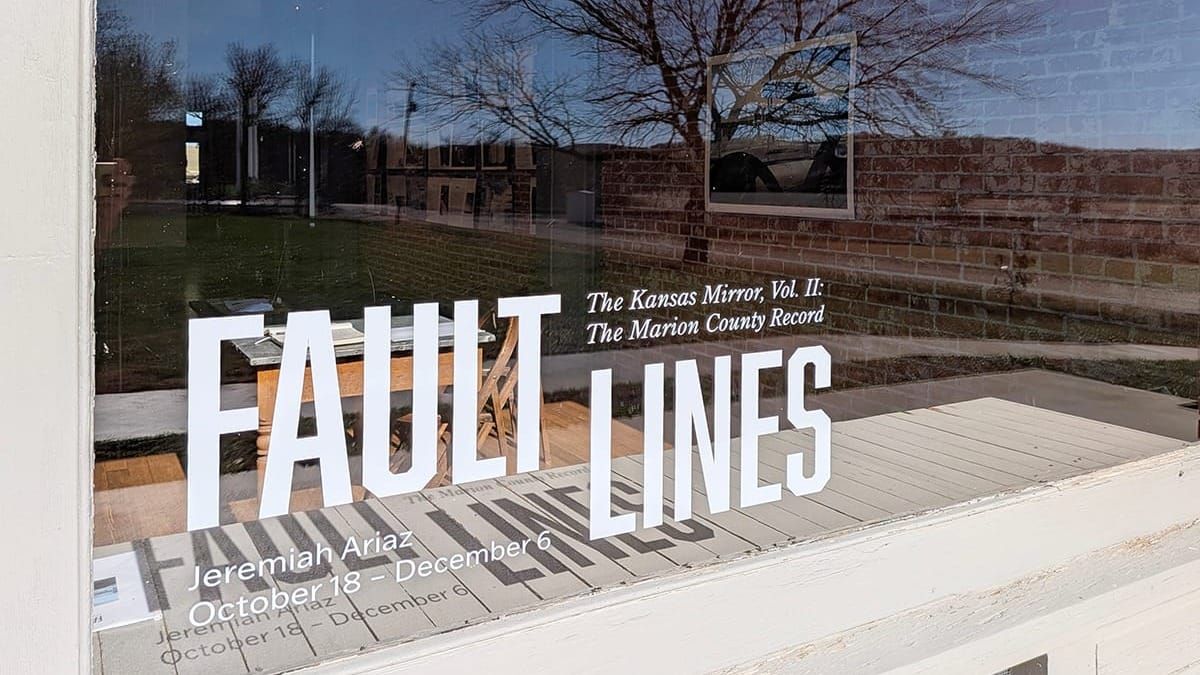
In the three years since, the raid on the Marion County Record has inspired podcasts and documentary films. The latest project is a photographic examination by Guggenheim fellow Jeremiah Ariaz in a newspaper-style publication, “The Kansas Mirror Volume II: The Marion County Record,” and an exhibition titled “Fault Lines,” on view through December 6 at the Volland Store in the Kansas Flint Hills.
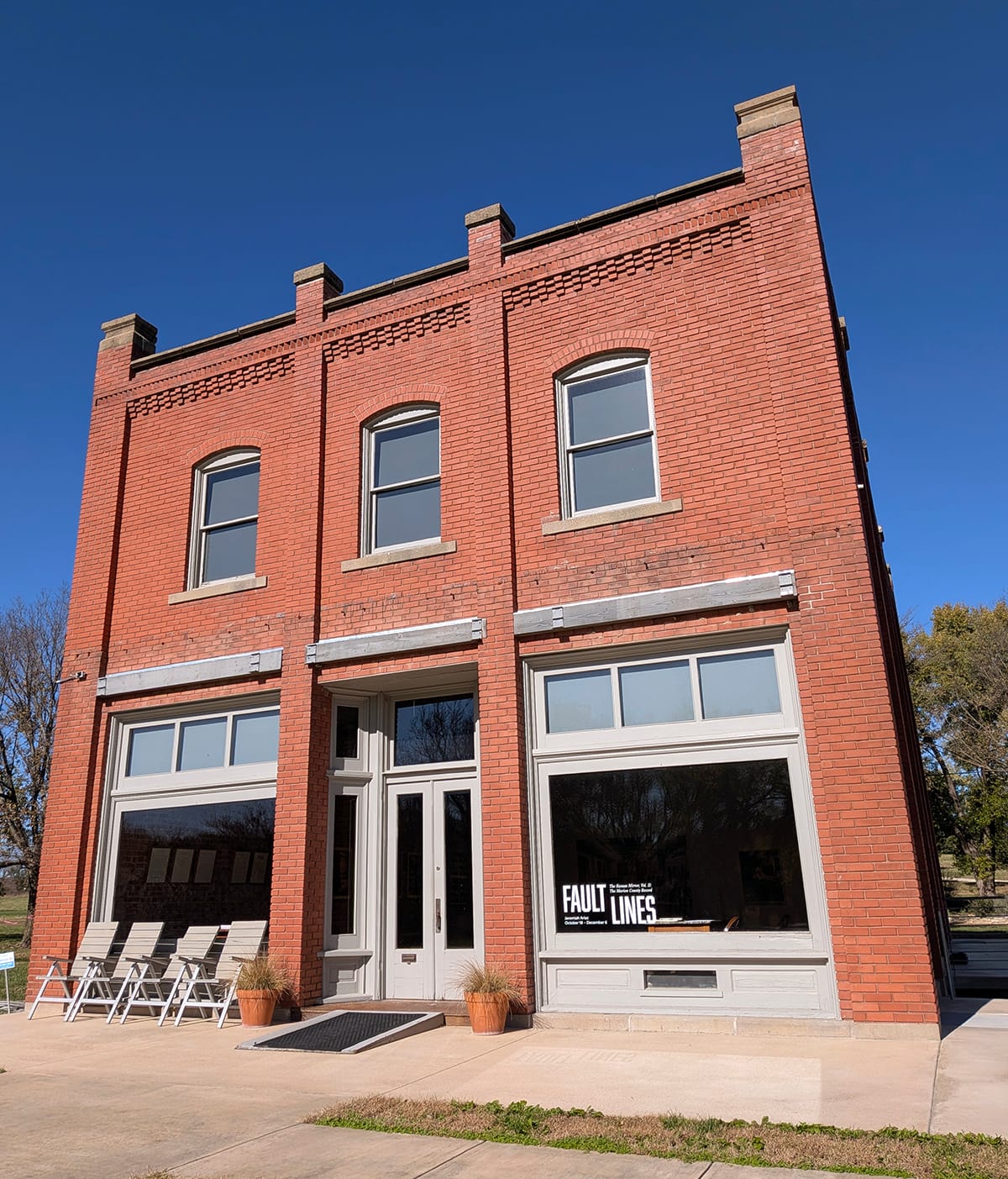
Located in an unincorporated community in Wabaunsee County on the Native Stone Scenic Byway, the Volland Store operated as a rural general store from 1913 until the early 1970s, serving as a commercial and social center for the area. Now an art center for exhibitions, workshops, community programs, and short-term art residencies, the Volland Store grounds are once again a hub of community activity.
“My subject is rural America, and I hope rural America will be my audience,” Ariaz said in an email. “Volland’s proximity to Marion, Kansas is also important. I wanted the town to be able to see the show, and I was happy to meet some Marion folks at the opening. Volland also happens to be just above the Humboldt fault line. ‘The Mirror’ essay ‘Fault Lines,’ written by journalist and Marion native Timothy Schuler, describes the Humboldt Fault, geologically and geographically locating the reader to this area of Kansas. It also serves as the central metaphor for the raid and its disruptive aftermath.”
Sculer's feature-length story details the raid on the Marion County Record in a riveting, fact-filled narrative that unfolds like a crime novel. An 1867 earthquake in Marion County serves as the thread that follows the town's social and political fault lines. Schuler skillfully weaves the story of a community divided long before and after the raid over whether Eric Meyer was a watchdog journalist keeping the town honest or a provocateur who made mountains out of molehills — and whether local leaders were victims of Meyers’ muckraking or part of a pervasive “good old boys” network that needed oversight.
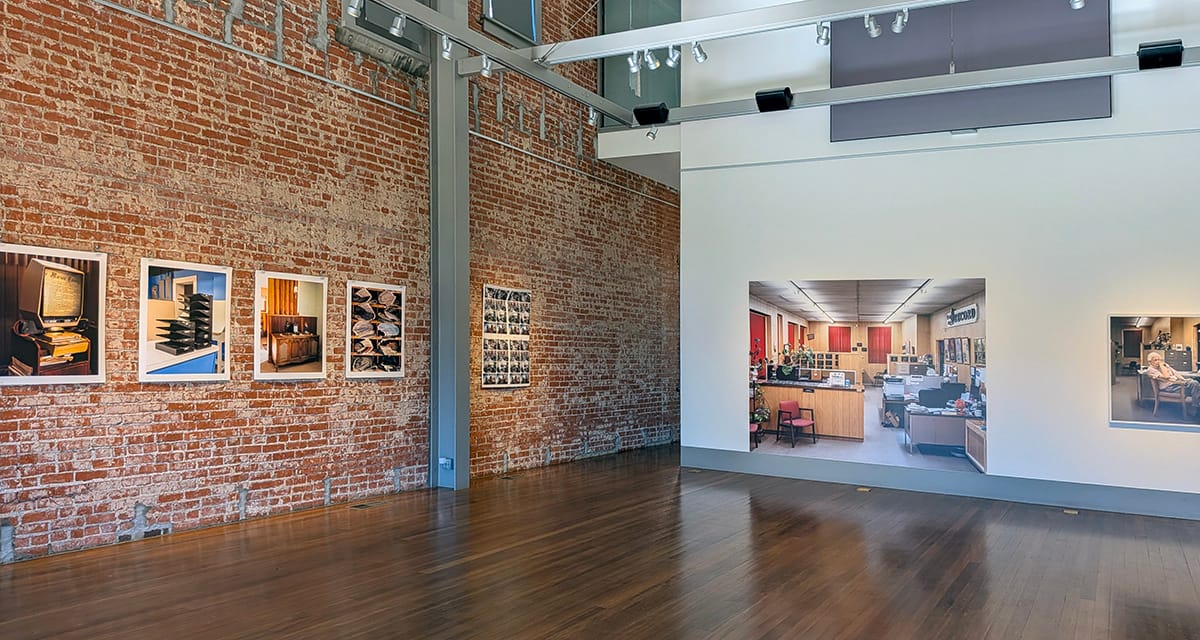
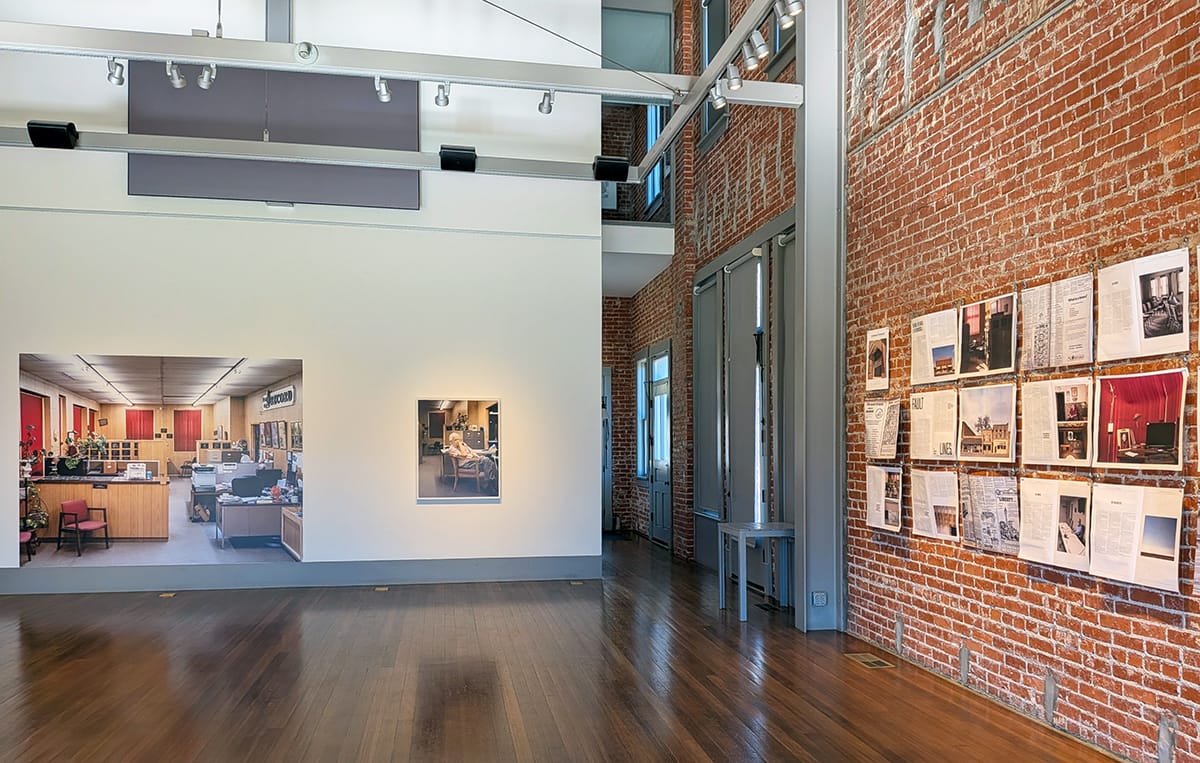
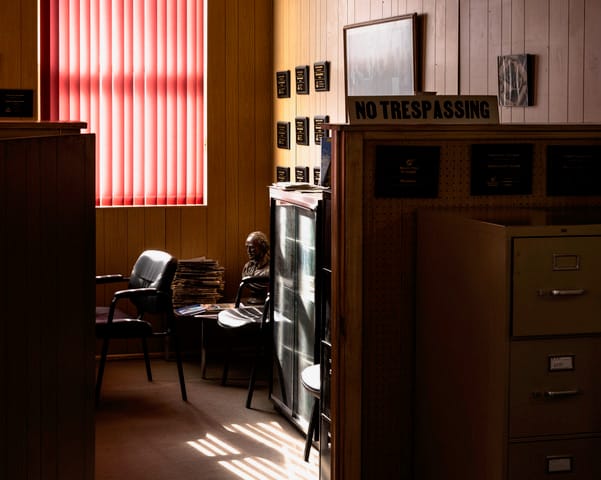
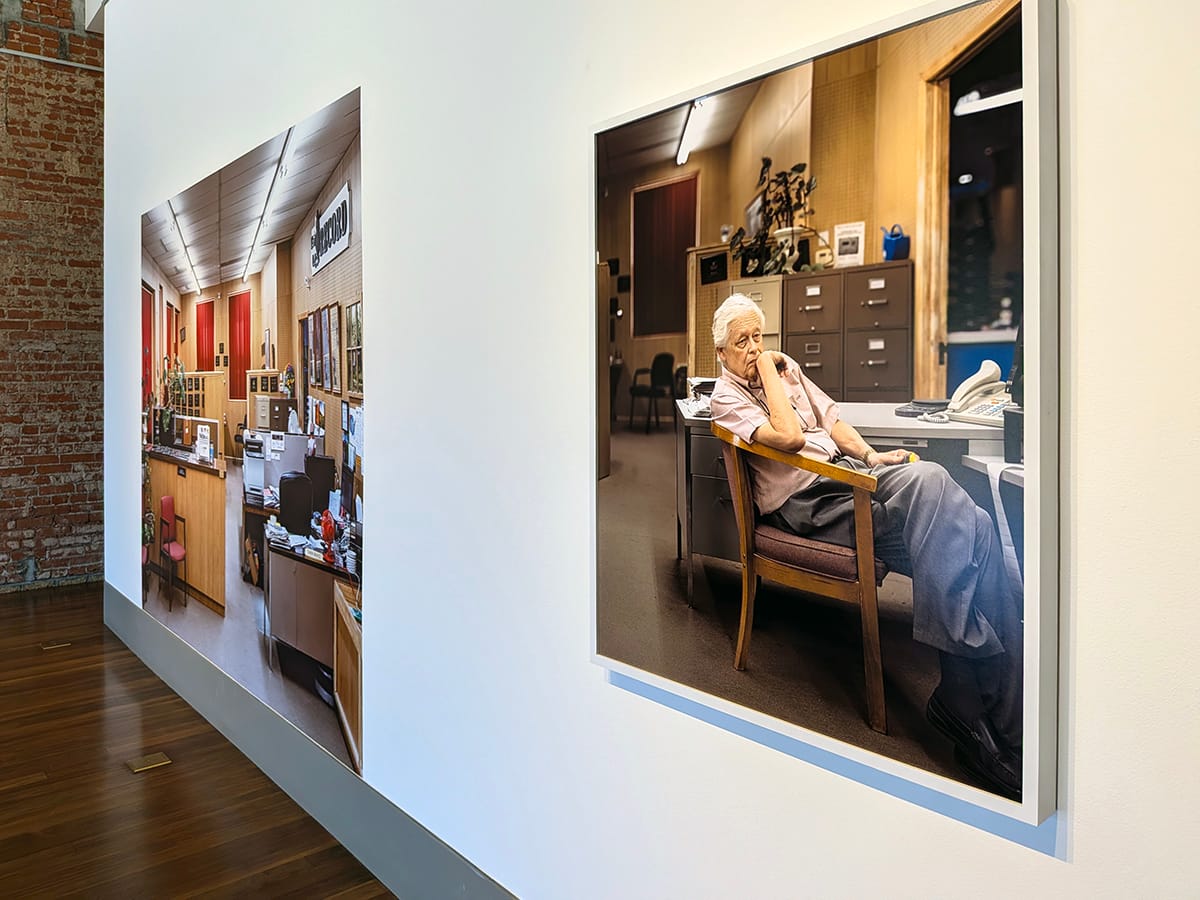
“Fault Lines” is visually spare and clean. The minimal exhibition text is placed in an 8-by-10-inch frame, lost in a row of other frames that call out the Volland Foundation’s donors and sponsors. A large vinyl photo reproduction of the Marion Country Record office and a portrait of Eric Meyer occupy the wall opposite the front door. The office image is almost life-size, giving the viewer the sense that they're standing at the front desk of the newsroom. In the near-life-sized portrait of Meyer, he's seated in the same newsroom, gazing forlornly off camera.
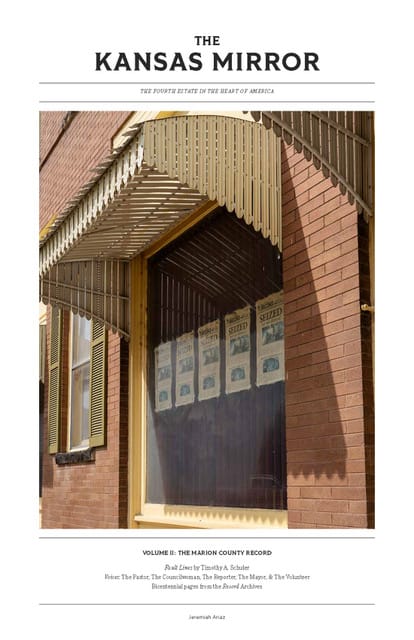
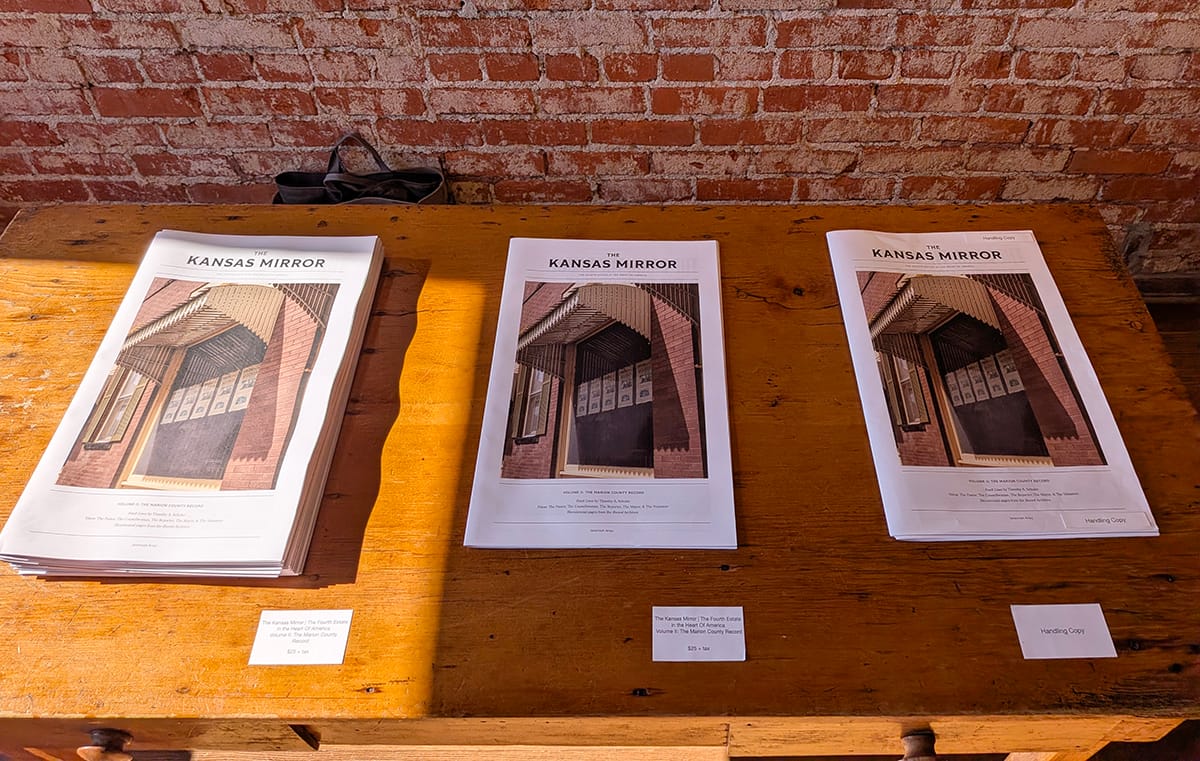
Jeremiah Ariaz, “The Kansas Mirror Volume II: The Fourth Estate in the Heart of America: The Marion County Record.” (Jessy Clonts Day/The SHOUT)
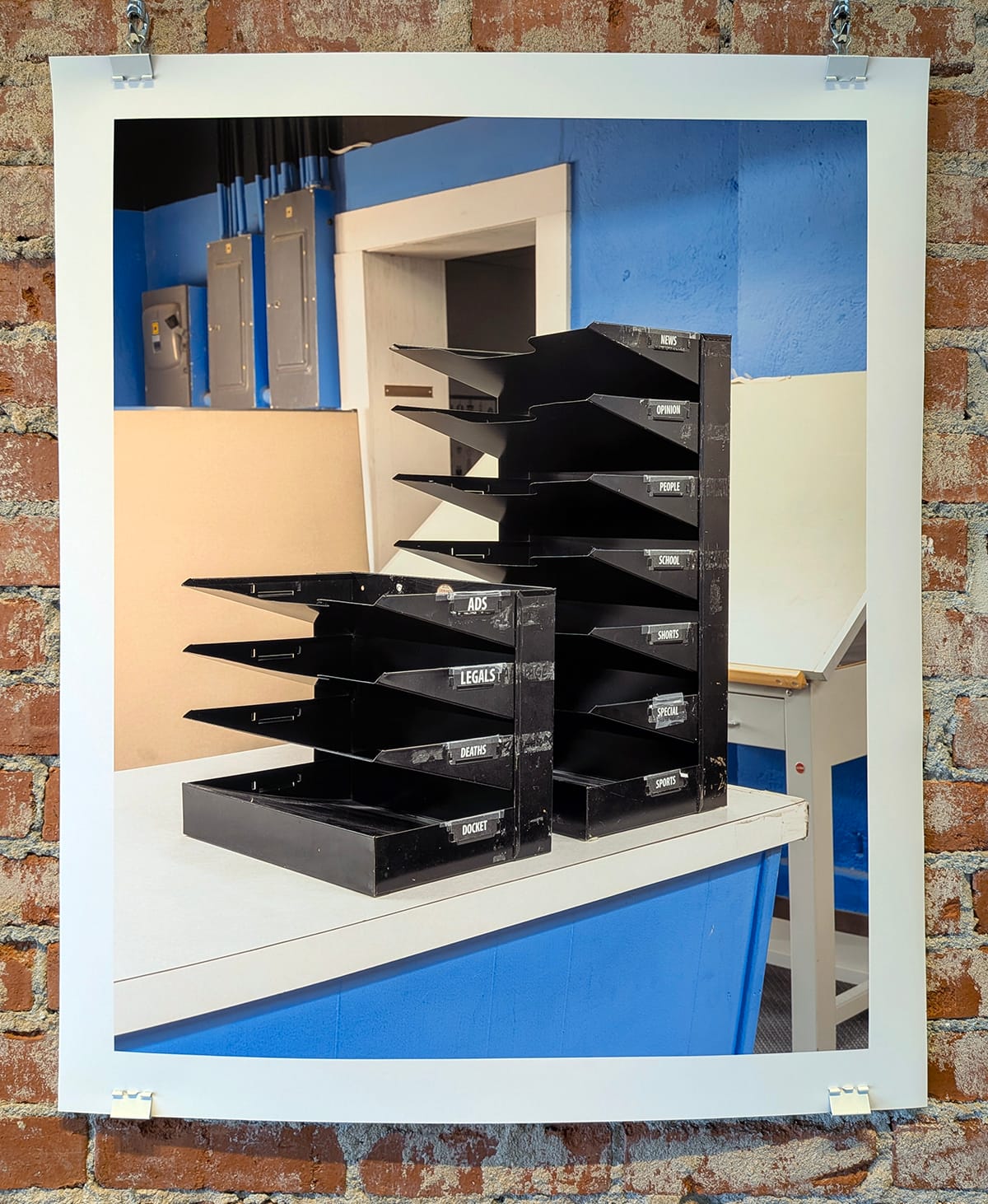
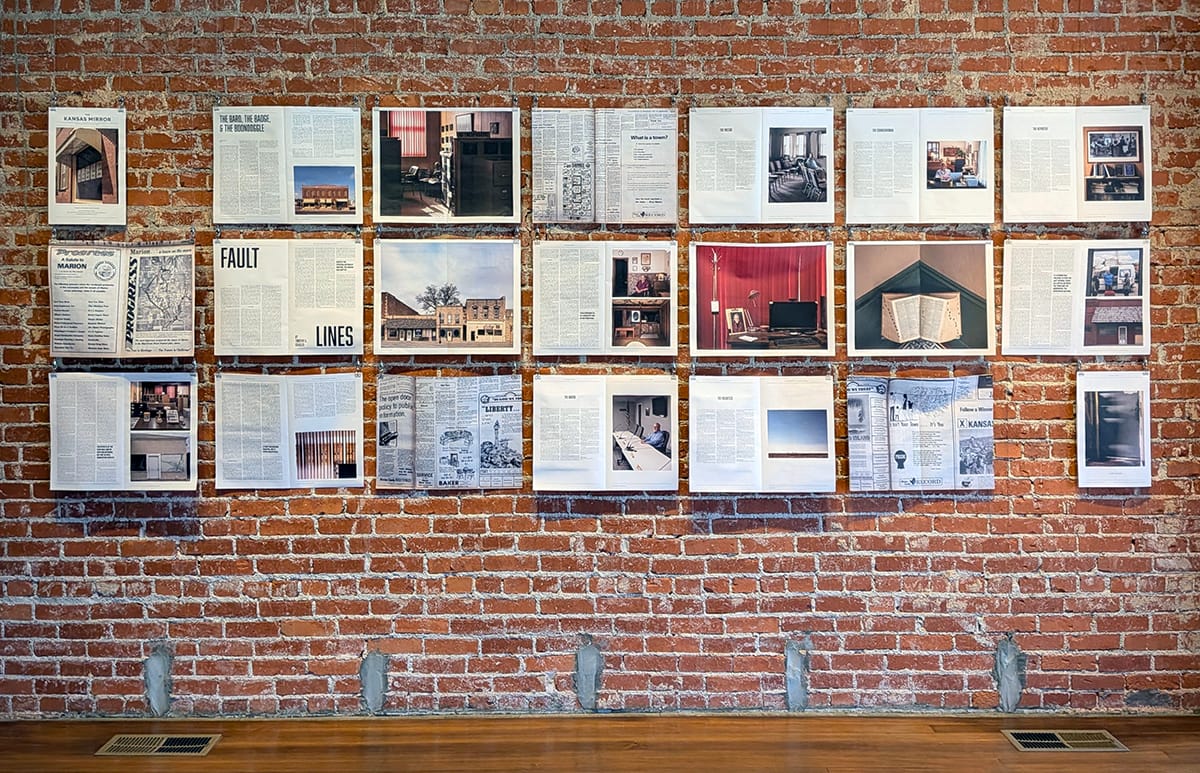
Displayed on the surrounding walls are a mix of five large-scale printed photographs and full-spread pages from “The Kansas Mirror: The Fourth Estate in the Heart of America, Volume II: The Marion County Record.” The publication hangs, grid-like, on the brick walls of the Volland Store in its entirety, opened and hanging on clips. "The Kansas Mirror" looks like a feature-length newspaper magazine, but printed on heartier stock than newsprint. Humidity and sunlight streaming through the large, south-facing, plate glass windows have caused the paper to buckle and slump.
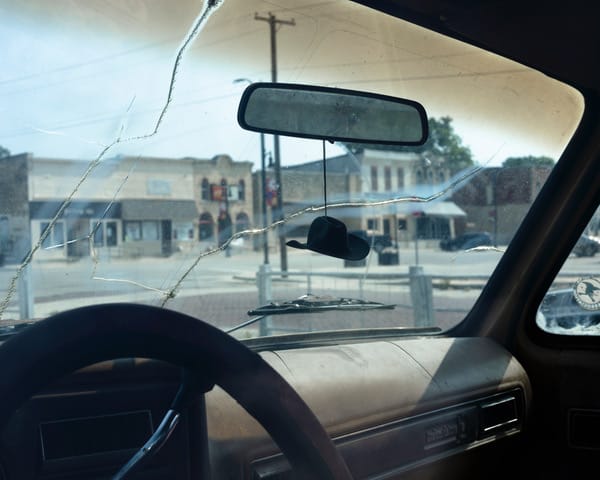
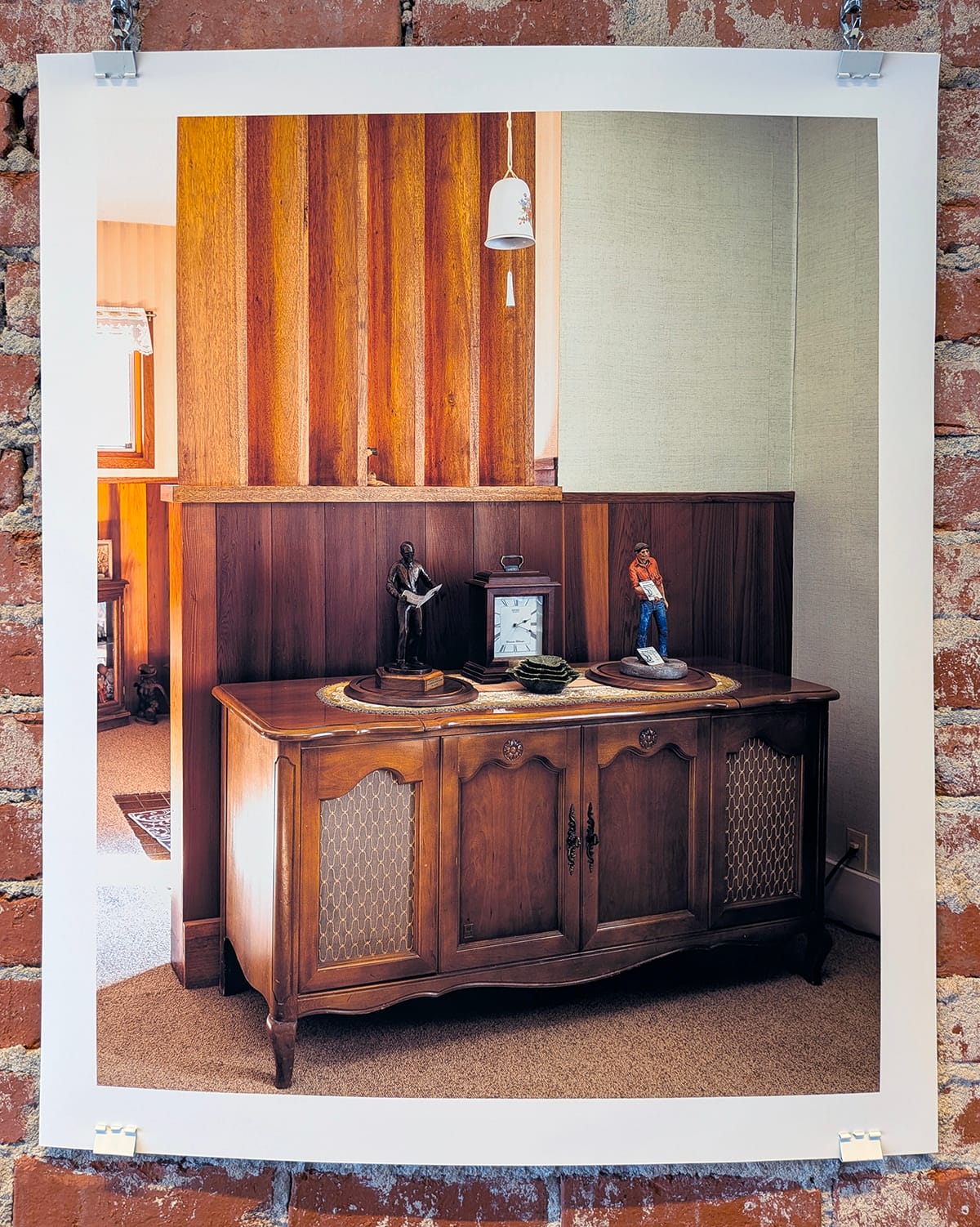
In images of building interiors cladded in 50-year-old wood paneling, limestone-bordered exteriors with business signs long removed, and portraits of exhausted-looking Marion citizens, the sense of slow small-town decline is omnipresent. Compounded by the raid and the national microscope that followed, this community appears broken. A view of the town’s storefronts, seen through the spiderweb cracks of a fractured car windshield in a photograph titled “Windshield,” appears to be a visual representation of the town’s sense of community after the raid’s fallout.
Because “The Kansas Mirror” is not actually a newspaper, Ariaz could take liberties with narrative photography. He documents rather than stages the scenes, but he frames them to trigger visual cues. Furniture appears on the same-size scale. He scales portraits of the story’s key figures to the same size as well. Ariaz finds substance in the empty spaces and the multiplicity of his surroundings.
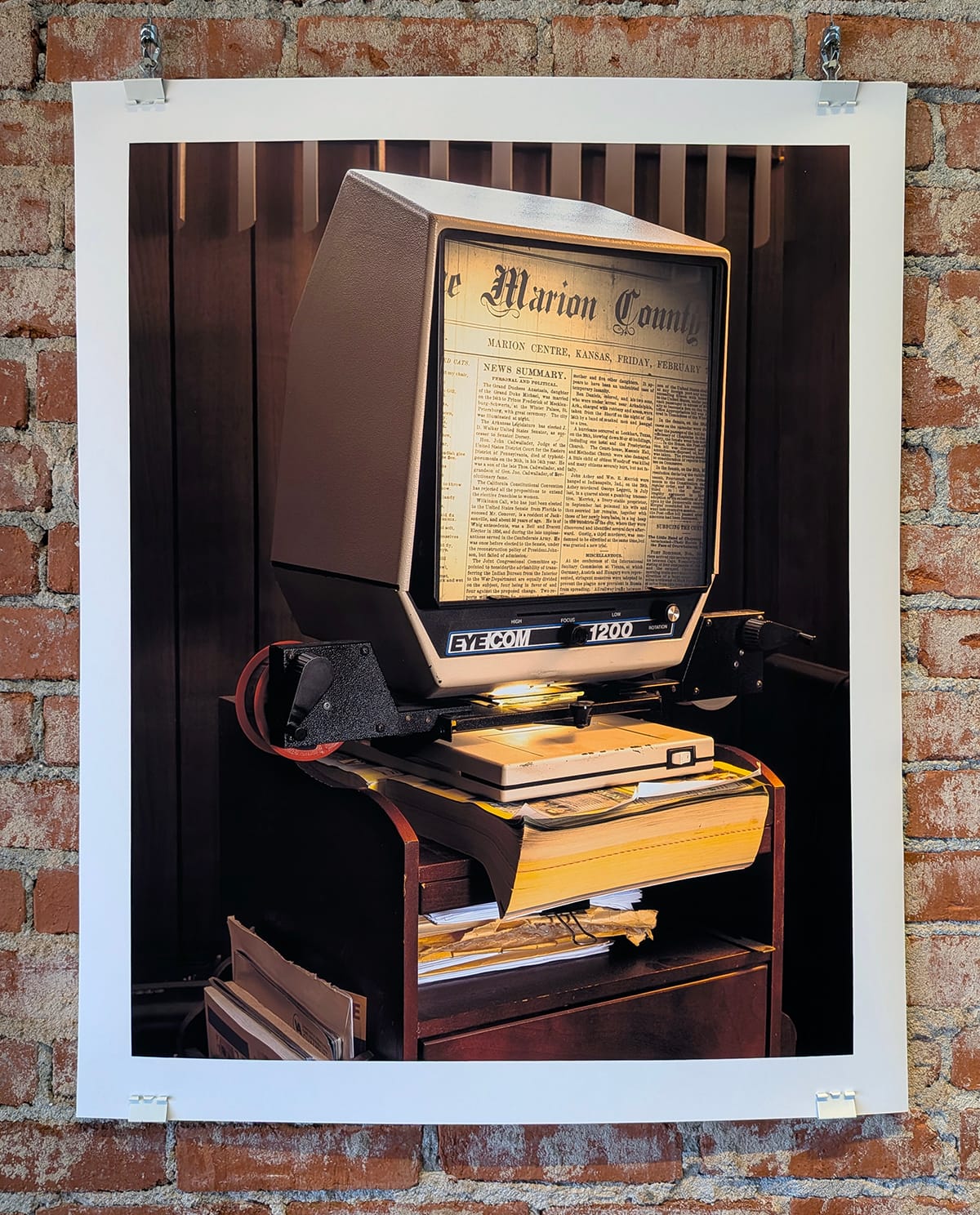
In “Microfiche Reader, Home of Joan Meyer,” an illuminated microfiche reader displays an archival issue of the Record, part of Joan Meyer’s research for her weekly “Memories” column, and the last thing she wrote for the Record. This image conveys a clear sense of loss.
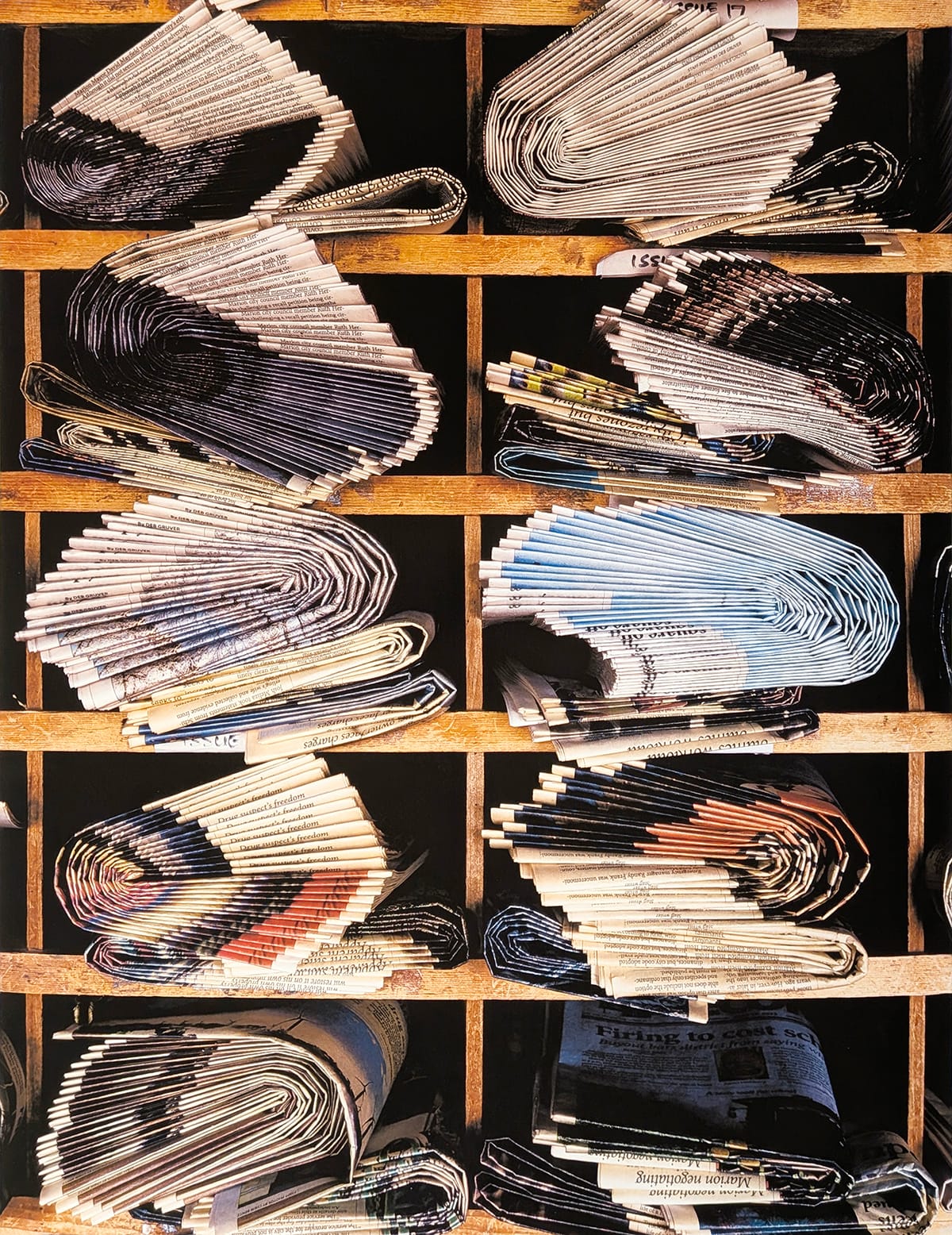
Another image of maybe 150 folded newspapers stuffed into cubbies show ribbons of repeated color and lines of repeated copy. Titled “The Morgue,” the photograph refers to a collection of “dead news,” or an archive of published news clippings. In one folded stack reads the partial sentences, “Mayor David Mayfield violated the city’s eth—,” and, throughout more than a dozen folded papers stacked atop one another, the line, “Although it did not seem to affect the city adversely,” “Although it did not seem to affect the city adversely,” “Although it did not seem to affect the city adversely.”
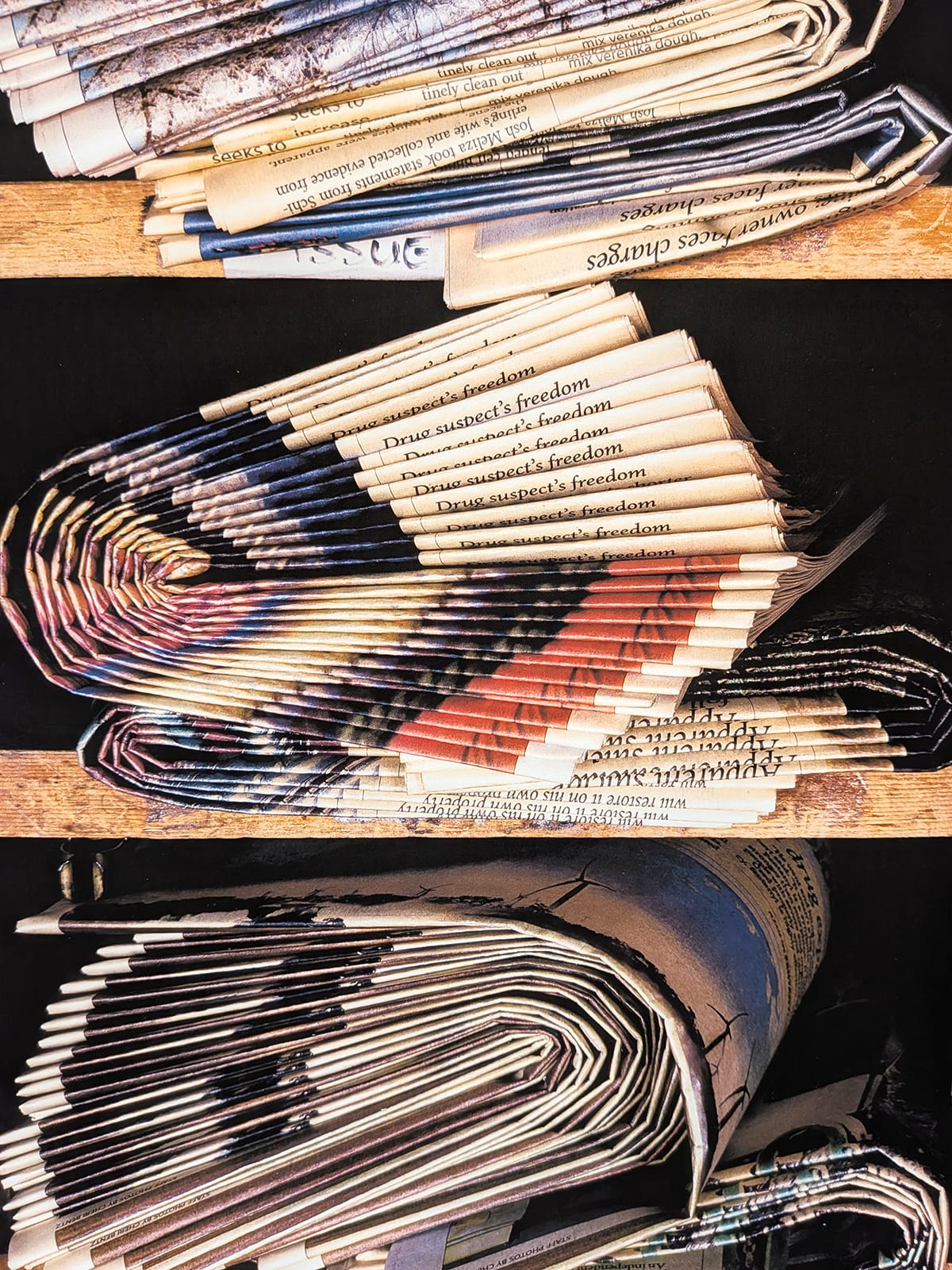

Detail images of Jeremiah Ariaz's “The Morgue, Marion County Record, Marion, KS, 2026 (Jessy Clonts Day/The SHOUT)
The exhibition relies on the viewer to determine how much of this news story they are willing to learn. Stacks of the same edition of the 48-page publication sit for sale on a table. One, labeled “Handling Copy,” invites visitors to read the writing from the wall; small creases and curled corners indicate that it has been handled. Within these pages lies the story of the raid. As with the responsibility of being an informed citizen, it's up to the reader to decide how deep they want to go.
In addition to Schuler’s central narrative, interviews titled “Voices” with Marionites — “The Pastor,” “The Councilwoman,” “The Mayor,” “The Reporter,” and “The Volunteer” — are conversational and paint a more nuanced backstory of the raid than in newspaper reports.
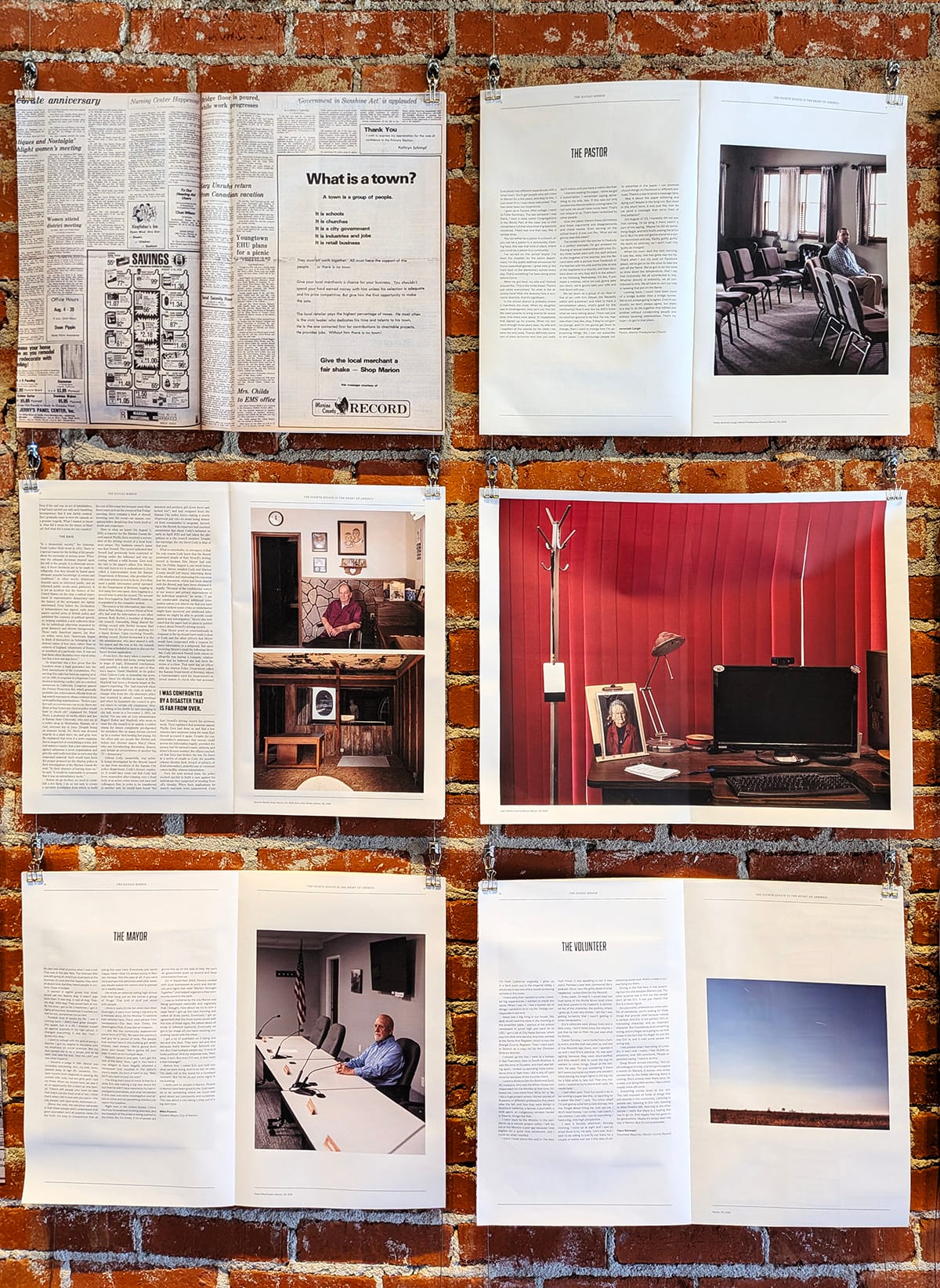
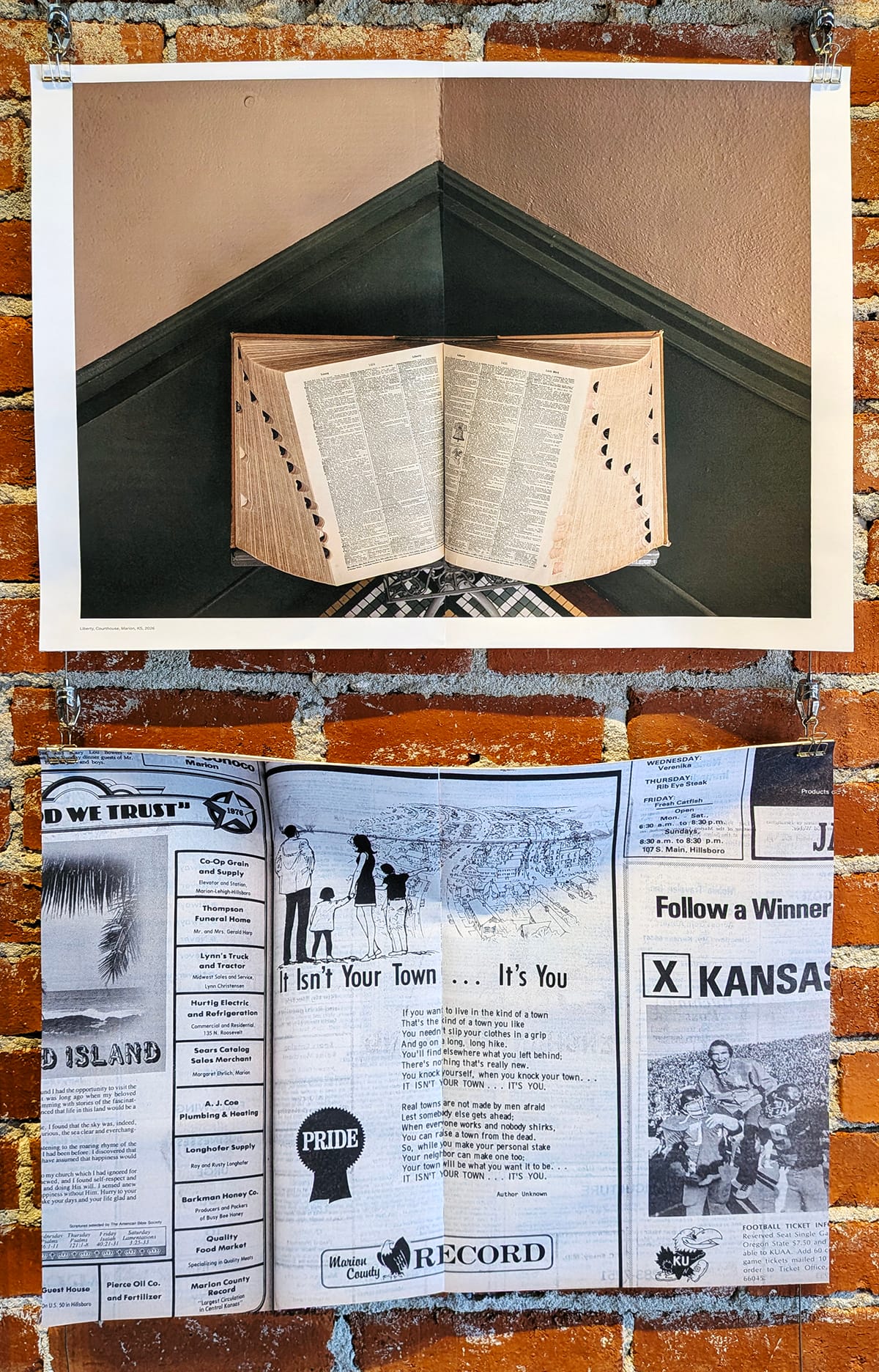
Details of “The Kansas Mirror Volume II: The Fourth Estate in the Heart of America: The Marion County Record” by Jeremiah Ariaz (Jessy Clonts Day/The SHOUT)
Interspersed throughout the “Mirror” are copies of archival pages from 1976 American bicentennial editions of the Marion County Record. One contains a public service announcement on behalf of the Record titled “What is a Town?” It's a call for its citizens to shop local: “A town is a group of people. It is schools. It is churches. It is a city government. It is industries and jobs. It is retail business. They must all work together. All must have the support of its people … or there is no town.”
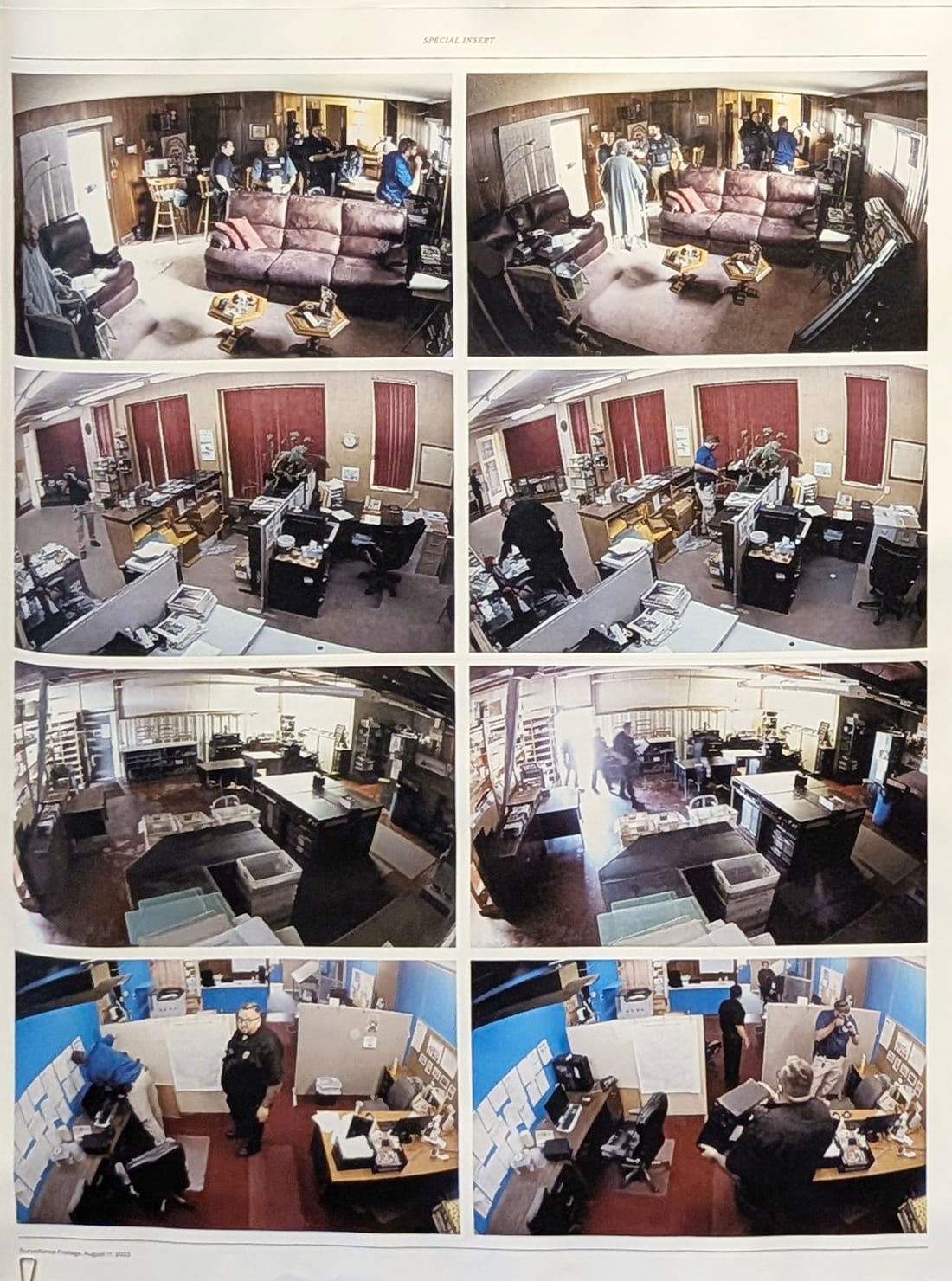
A “special insert” section of the “Mirror” includes screenshots from security footage of the raid on both the newsroom and Eric and Joan Meyer’s home. In two frames, 98-year-old Joan leans on a walker, her small home overrun by police officers who speak to her and search her belongings. What the image can't convey is what she was saying: “This is illegal as hell.”
The timing of “The Kansas Mirror Volume II” — released in the 250th year of the founding of the United States — and “Fault Lines” — on view during and after the 2026 midterm elections — is doubtlessly intentional. Newsrooms have shuttered in the wake of declining readership and advertising, the digitization of news distribution, and the powerful leaders who vilify “radical” watchdog journalists who seek the truth.
Ariaz has spent more than five years documenting more than 100 small-town newsrooms across Kansas, both operational and defunct, and, more broadly, the plight of American journalism in general under a project he calls “The Fourth Estate.” A nickname for the news media, the term suggests journalism has a powerful role in a democracy: to keep the public informed and investigate those in power.
Ariaz released the first edition of “The Kansas Mirror” in 2023. In addition to his photographs of Kansas newsrooms, the publication includes text written by journalists from across the state. One is Eric Meyer, himself an award-winning journalist and Pulitzer Prize nominee. It was published 10 months before the raid.
Ariaz isn't planning to further document Marion, but he's not finished with Kansas newsrooms. With support from a 2026 Guggenheim fellowship and funding from the Robert Frank Foundation, he's back in Kansas making additional photographs for “The Fourth Estate,” which will lead to more volumes of “The Kansas Mirror.”
This true story does not end when the viewer closes the pages of “The Kansas Mirror.” The council person, the mayor, and the editor still live in Marion, a town forever marred by the raid. The scars of overreach and truth-at-all-costs will be fault lines in Marion — and beyond — for years to come.
As citizens, we owe it to our democracy to remain informed. Run, do not walk, to see this poignant and important exhibition in the heart of the Flint Hills.
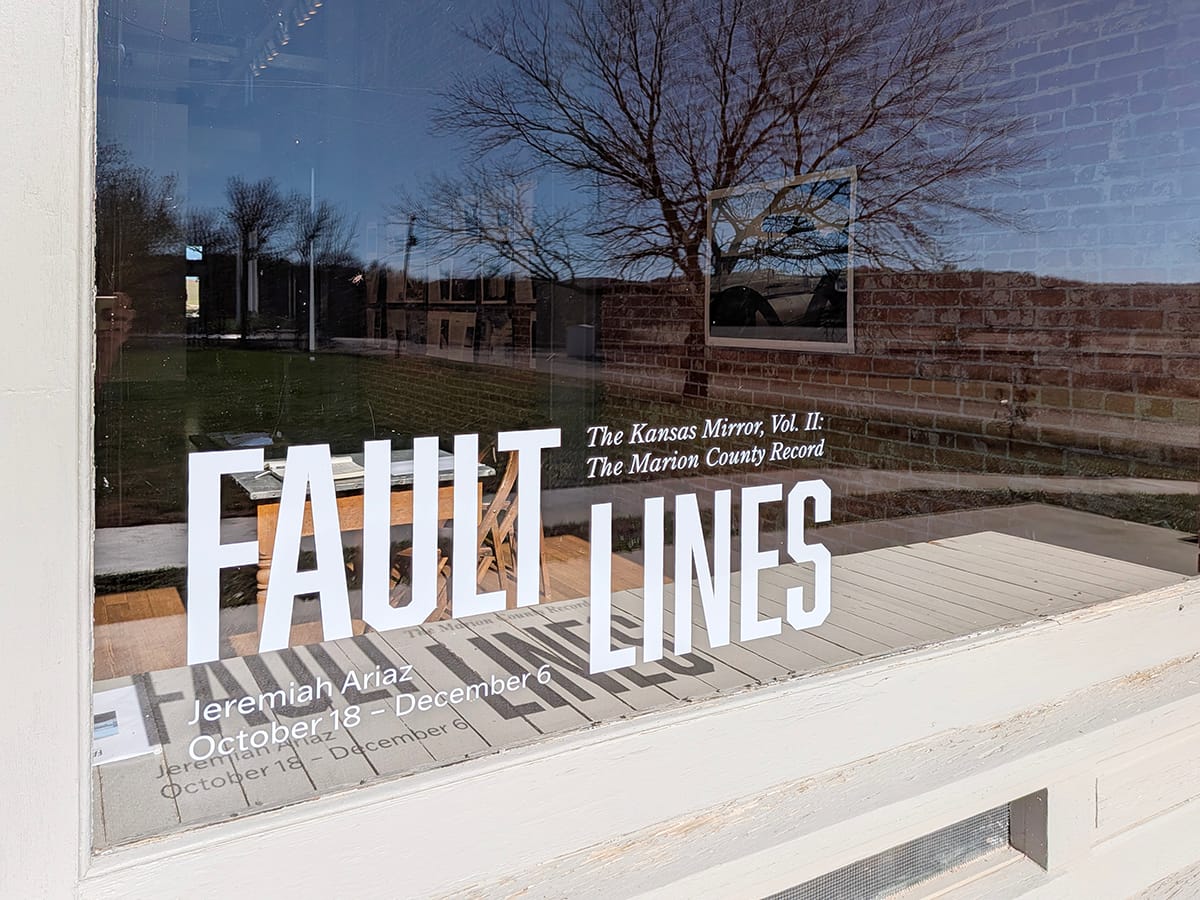
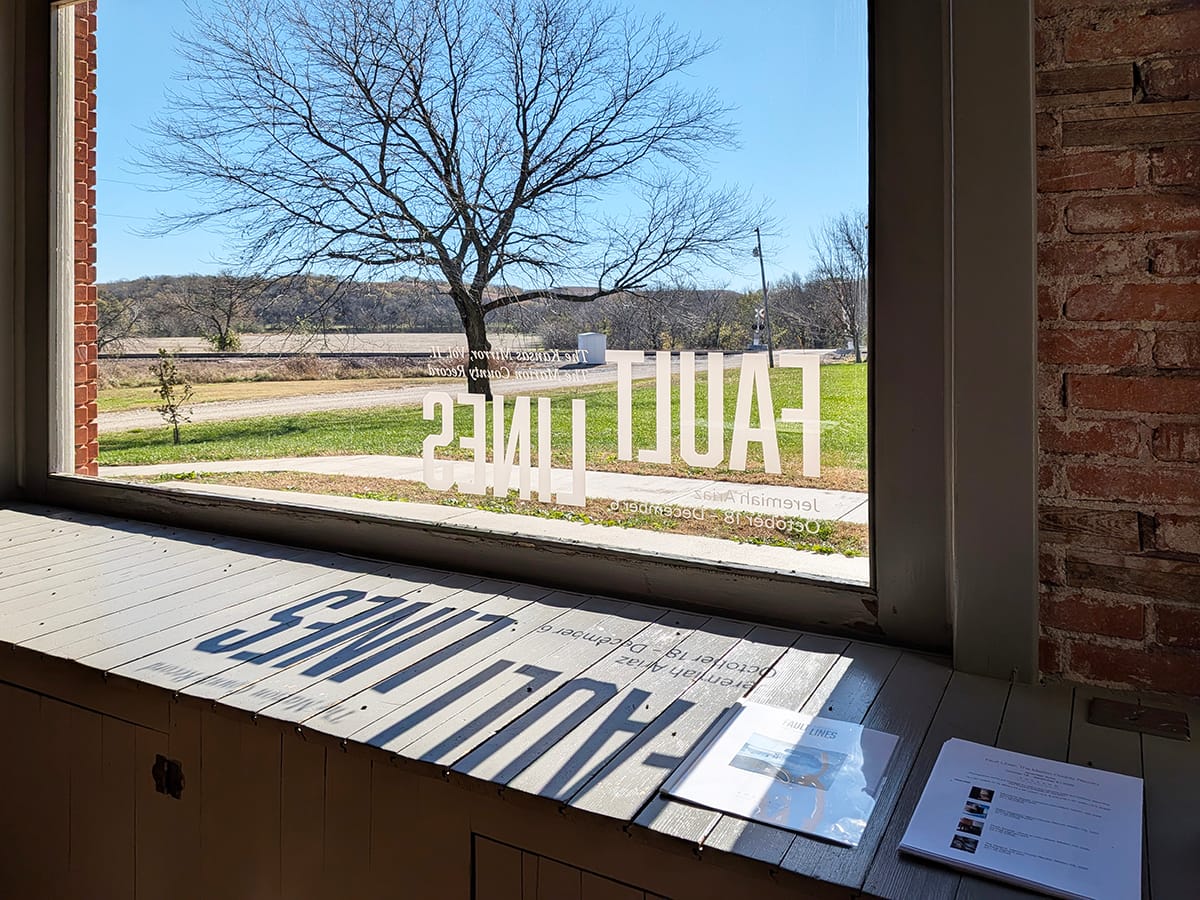
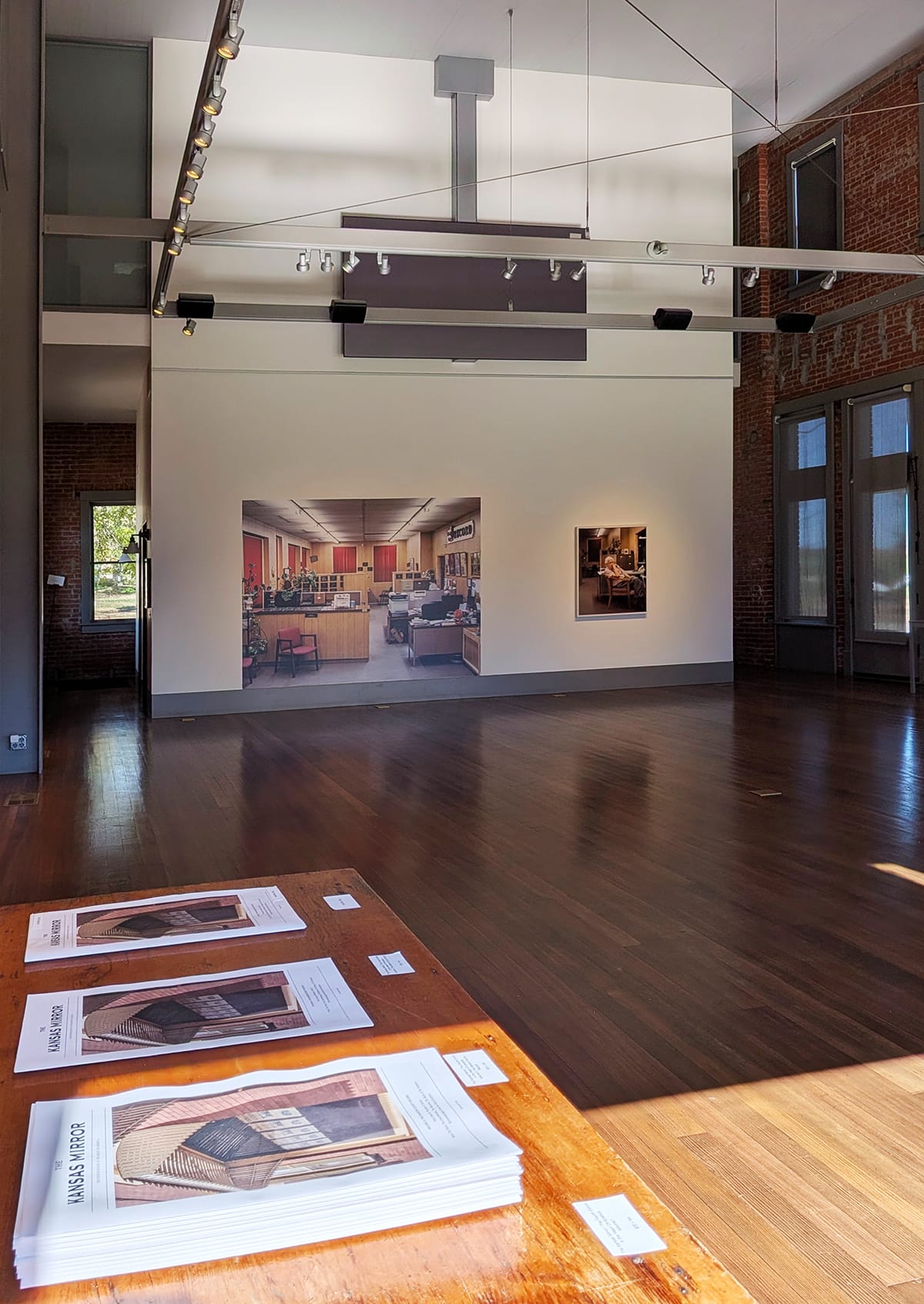
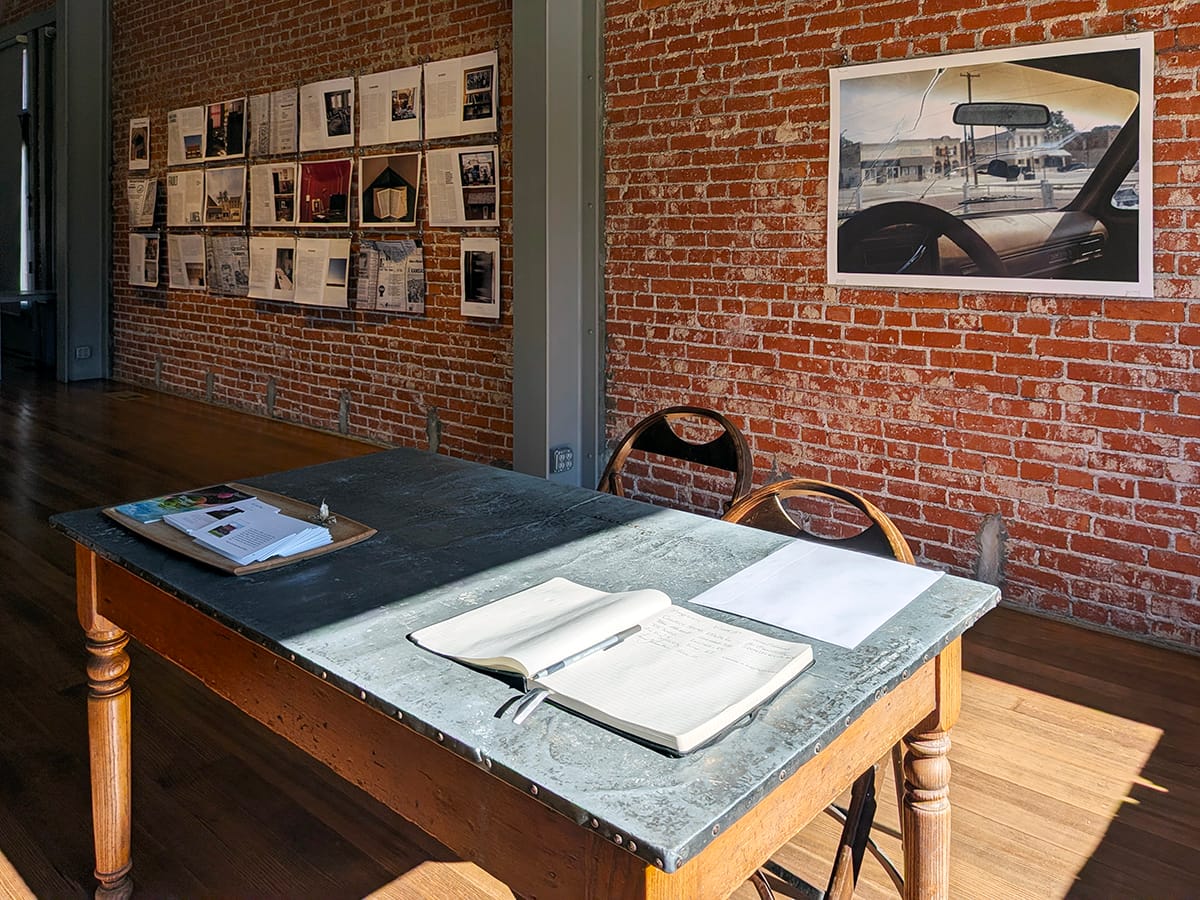
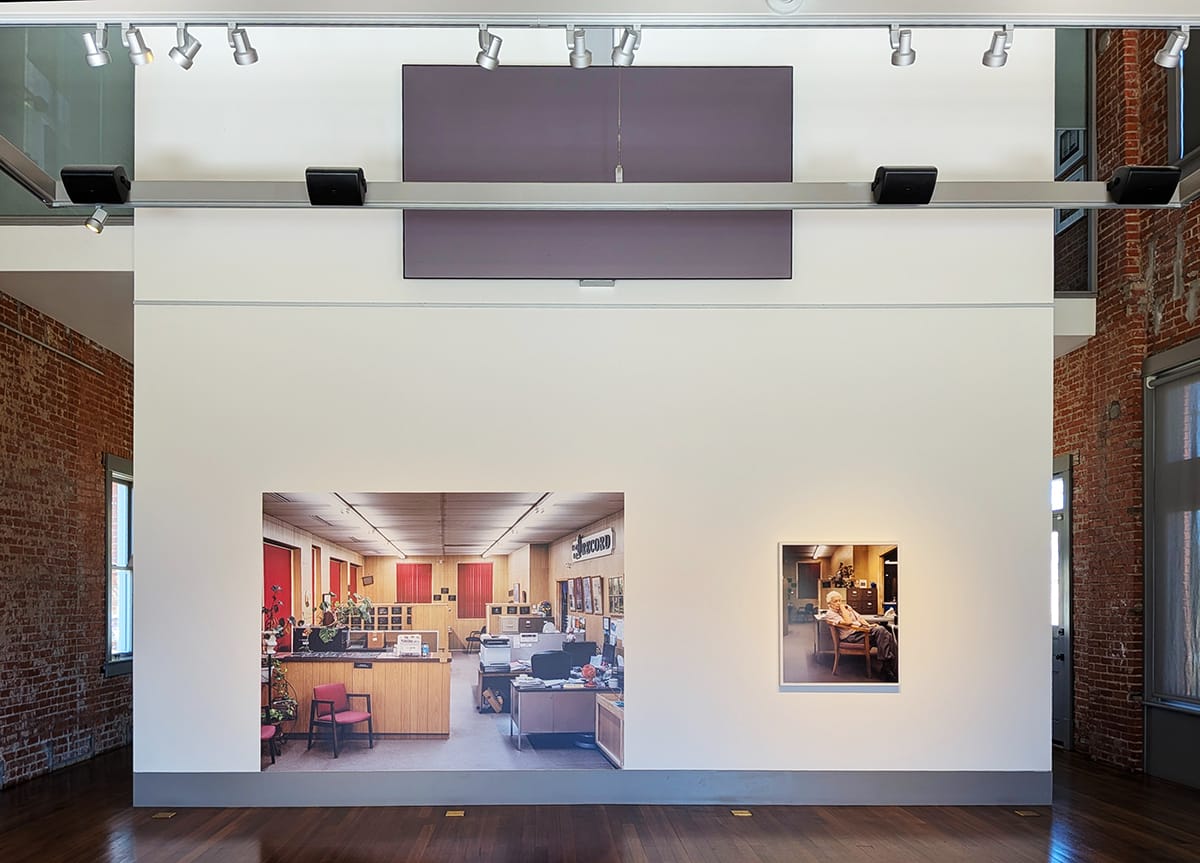
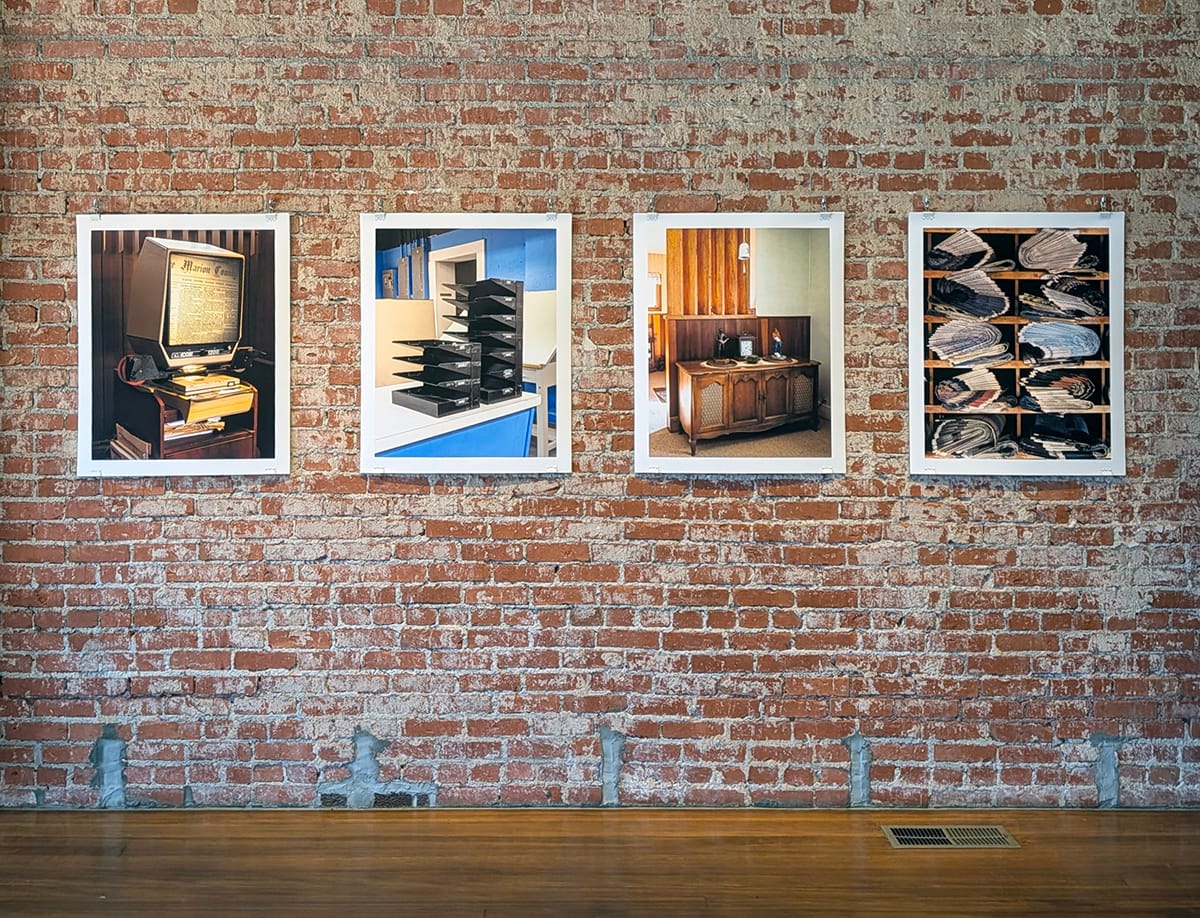
Installation views of "Fault Lines" at the Volland Store. (Jessy Clonts Day/The SHOUT)
The Details
“Fault Lines: The Marion County Record” by Jeremiah Ariaz
October 18-December 6, 2026, at the Volland Store, 24098 Volland Road in Wabaunsee County, Kansas
The Volland Store is open Friday through Sunday, 1-4 p.m. or by appointment (visit vollandfoundation.org to schedule). The Volland Store will take a winter break from December 7, 2026 through February 5, 2027, following the closing of “Fault Lines.”
Volland is located 8 miles west of Alma, Kansas, via Old K-10. Admission is free, and the facility is accessible to people with physical disabilities.
Jessy Clonts Day is a writer, roller skater, and mother. After living 10 years in the American South and Southwest, she and her spouse returned to Kansas to raise their family, where the sunsets are otherworldly and the arts community is alive and well.
❋ Derby man has the kind of voice that turns heads — and chairs
❋ Socializing while sober: how some Wichitans are cultivating alcohol-free communities
❋ As a small creative business closes, the owner mourns
❋ Painting through it: Autumn Noire on 20 years of making art
❋ How a guy from Wichita resurrected 'Dawn of the Dead'
❋ Bygone Friends University museum housed curious collections
Support Kansas arts writing
The SHOUT is a Wichita-based independent newsroom focused on artists living and working in Kansas. We're partly supported by the generosity of our readers, and every dollar we receive goes directly into the pocket of a contributing writer, editor, or photographer. Click here to support our work with a tax-deductible donation.