In good hands: 'Ripple in Traditions' at the Mid-America All-Indian Museum
The Oklahoma-based Four Mothers Collective curated the exhibition by women and two-spirit artists that traces the evolution (and preservation) of their culture.
To belong to a tradition is to be responsible for both the past and the future. The present, by comparison, becomes less a place and more so a condition of perpetual obligation wherein we are effaced, primarily concerned as we are with them: those who came before and will come later. It's appropriate then that more than one piece on display in the mixed-media show “Ripple in Traditions” features faceless figures. On view at the Mid-America All Indian Museum through June 6, “Ripple” is a traveling exhibition described in an accompanying text as an exploration of "how culture moves — through land, memory, and the hands of those who carry it forward."
Curated by an Oklahoma-based indigenous arts group called the Four Mothers Collective, “Ripple in Traditions” is already off to a good start with that bit of language. What better definition for tradition than the carrying forward of something? The famous assertion — variously attributed, most often to the composer Gustav Mahler — that tradition is not the "worship of ashes but the preservation of fire" receives robust affirmation in the works that make up this exhibition.
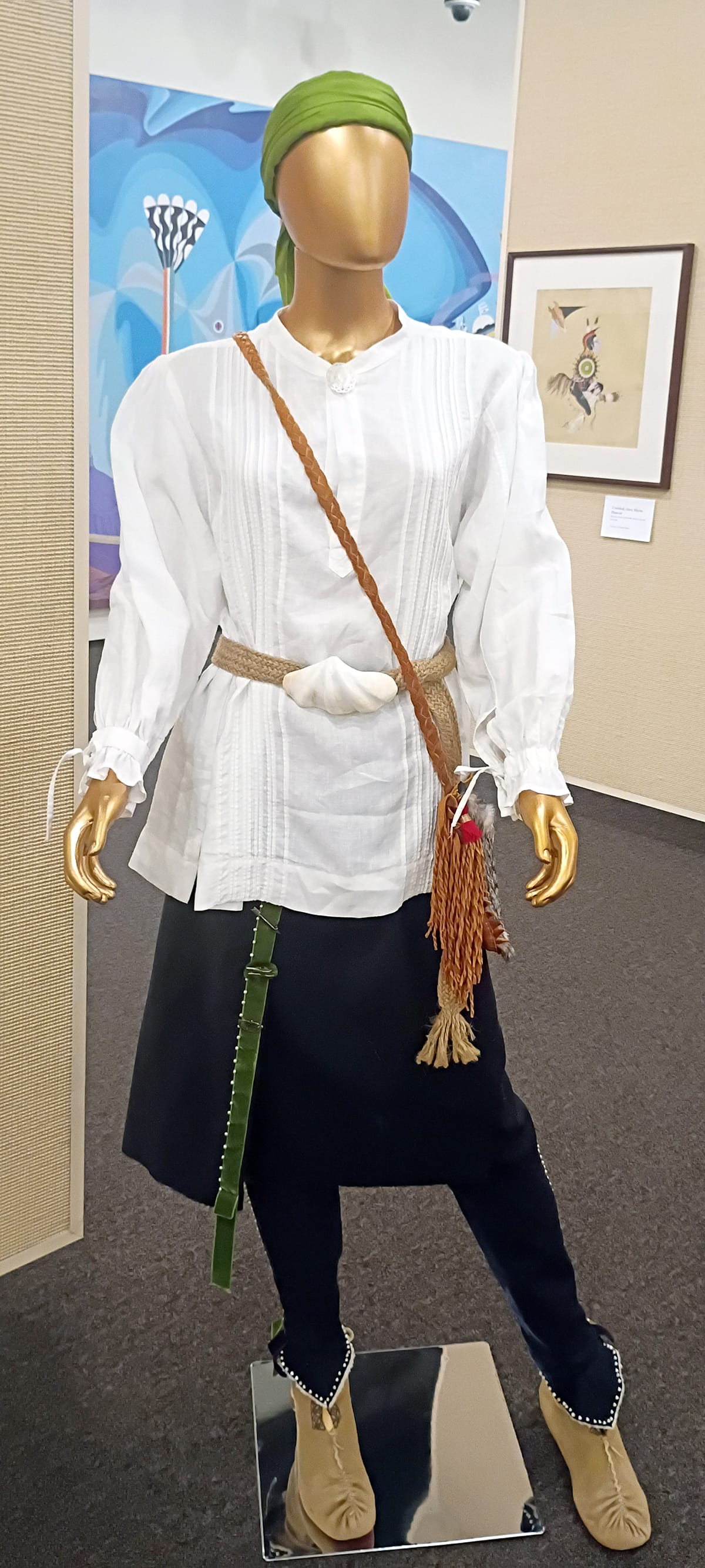
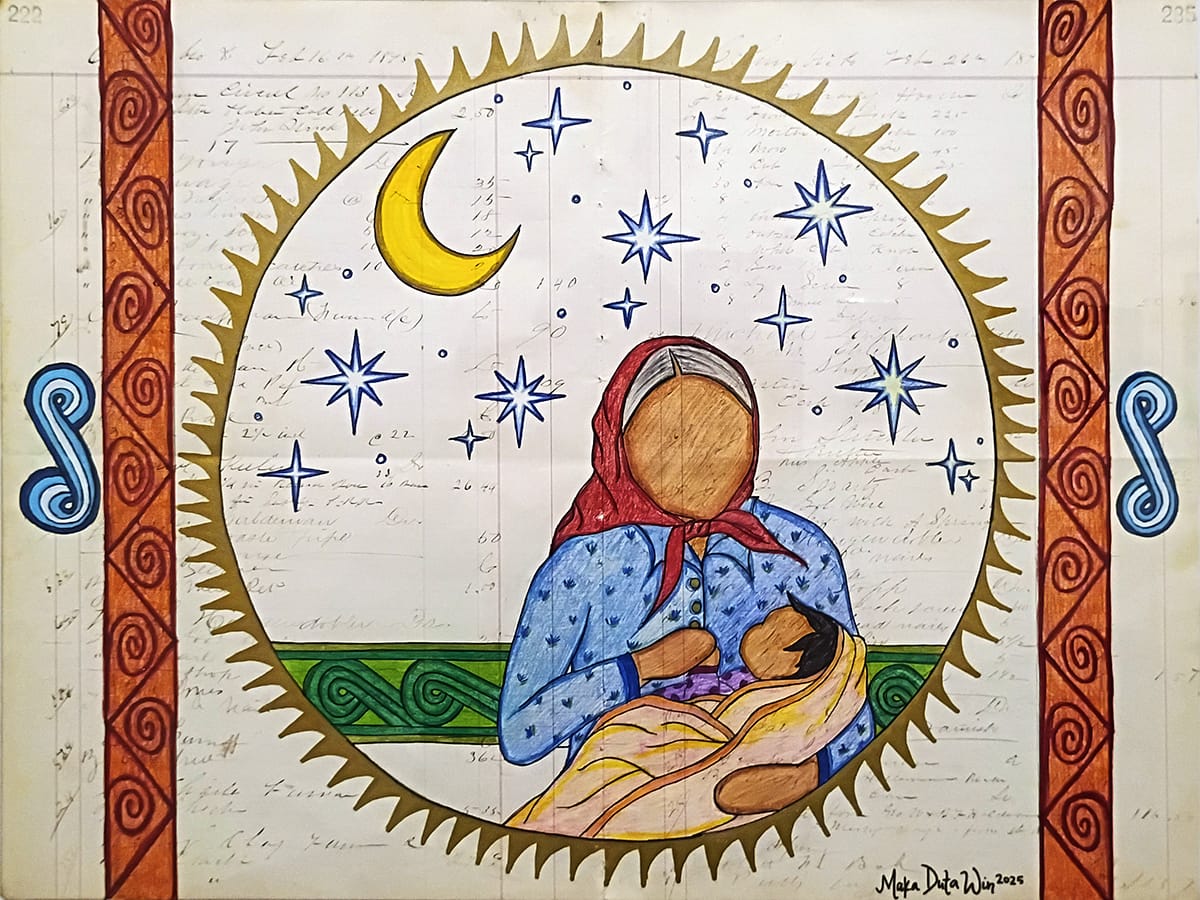
The facelessness was the first thing I noticed: initially, in a quite literal way, in the two-dimensional works, then in the form of two mannequins, and finally in the ubiquity of totems. A poignant instance of figural facelessness appears at the front of the exhibition in "Our Grandmothers Knew the Stars" by Brittany Hill. A drawing on ledger paper, the work portrays a faceless grandmother cradling a faceless baby.
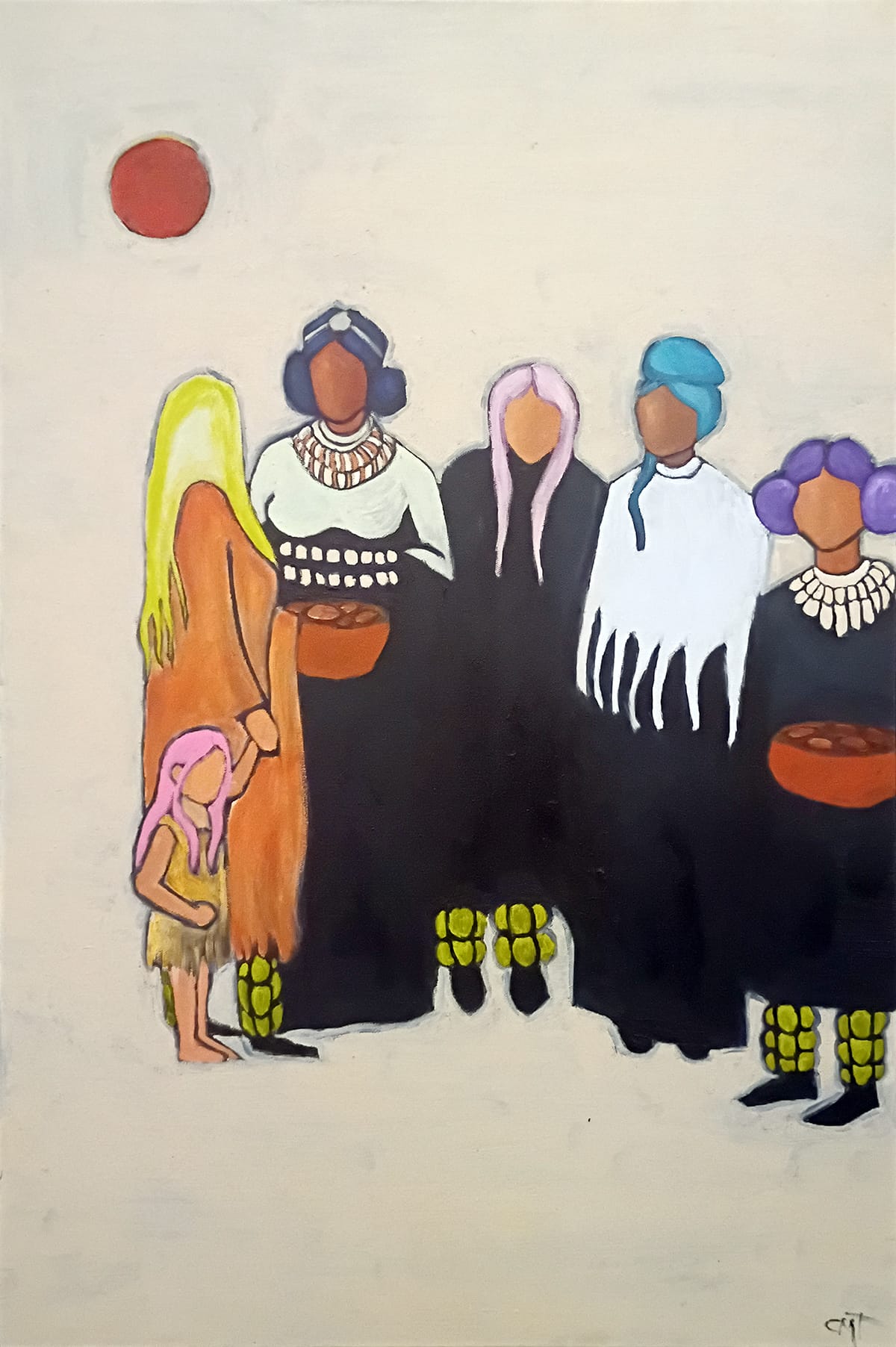
In Carly Treece's oil painting "Generational Voices," the gathered women dressed mostly in black and lined up together as if for a photograph are also faceless. And in the graphite drawing "Generational" by Bayley Ross, the faces of a young woman and an older one are repeated and blurred by tessellation — stretching into the anonymous past.
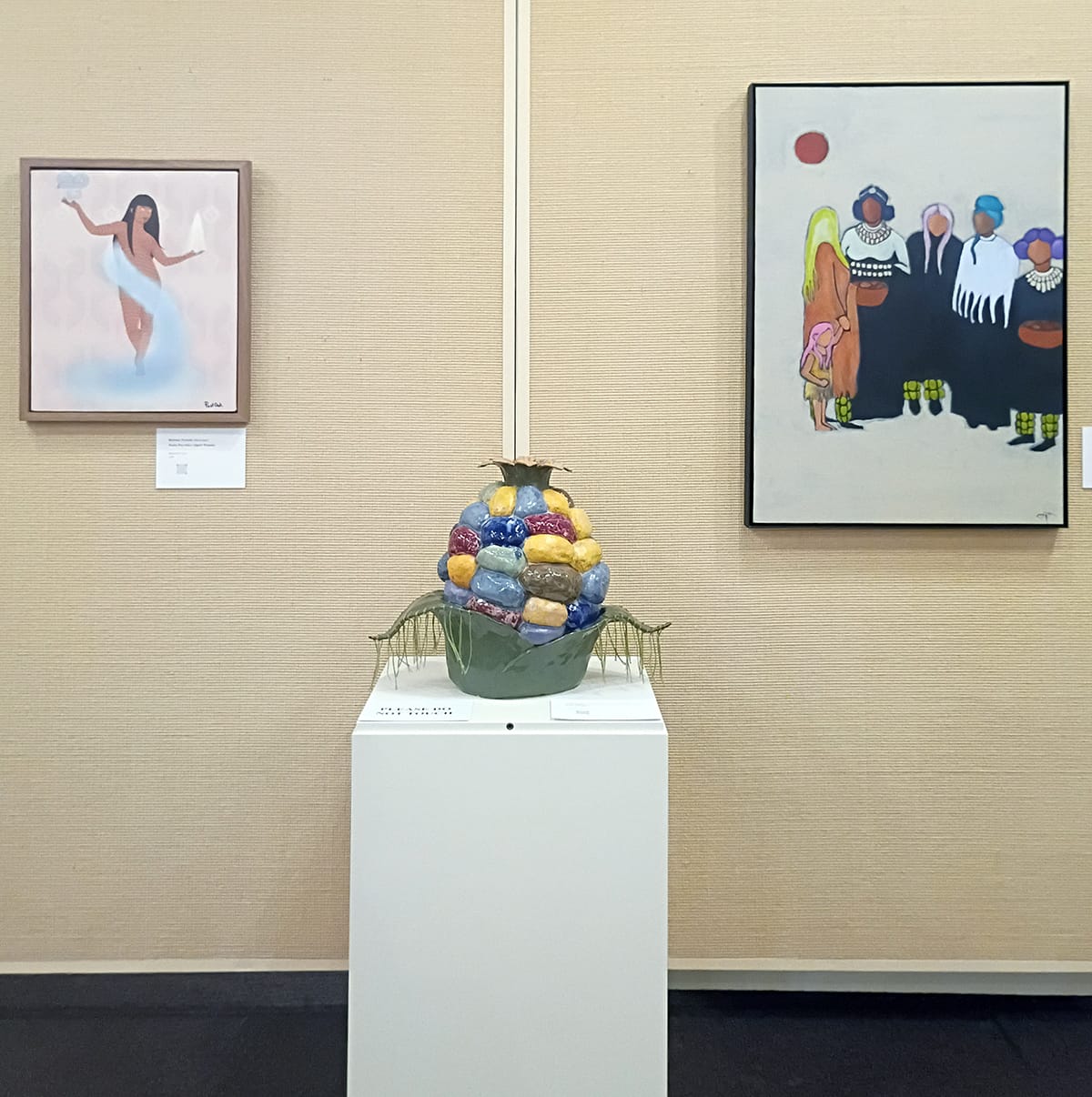
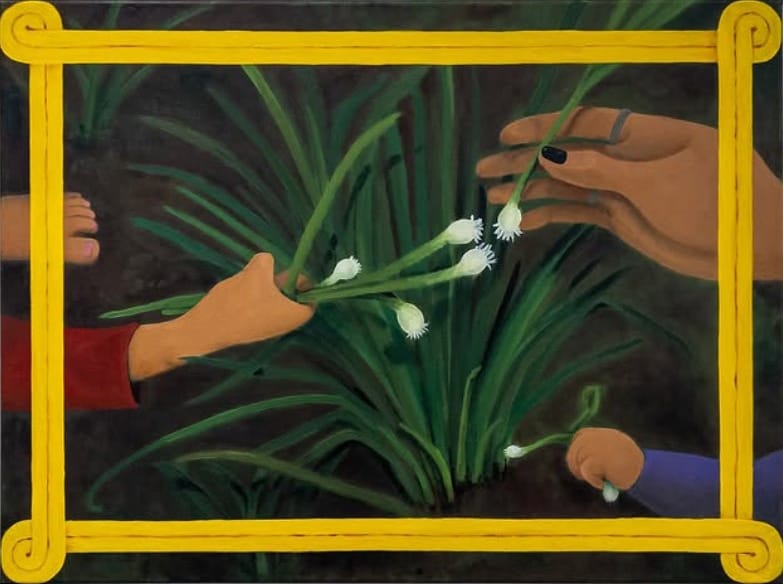
Totems are their own form of facelessness, whereby the personal is rendered iconic. “I” disappear into a “we” symbolized by an “it”: corn, wild green onions, a shell filled with seeds. The “it” reminds me who I am: one of us. A member of a body of women who marked time by the color of plants, who carried seeds close to their chests as they were violently ripped from their homes. Jessi Sands' oil painting “Lanē” depicts the hands of children and an adult foraging for wild onion, tafvmpuce, sacred to the Mvskoke people. "Lanē" means "growing season" — the onion's life cycle from green to yellow to brown represents "Mvskoke cosmology and our connection with the land," according to the exhibition text.
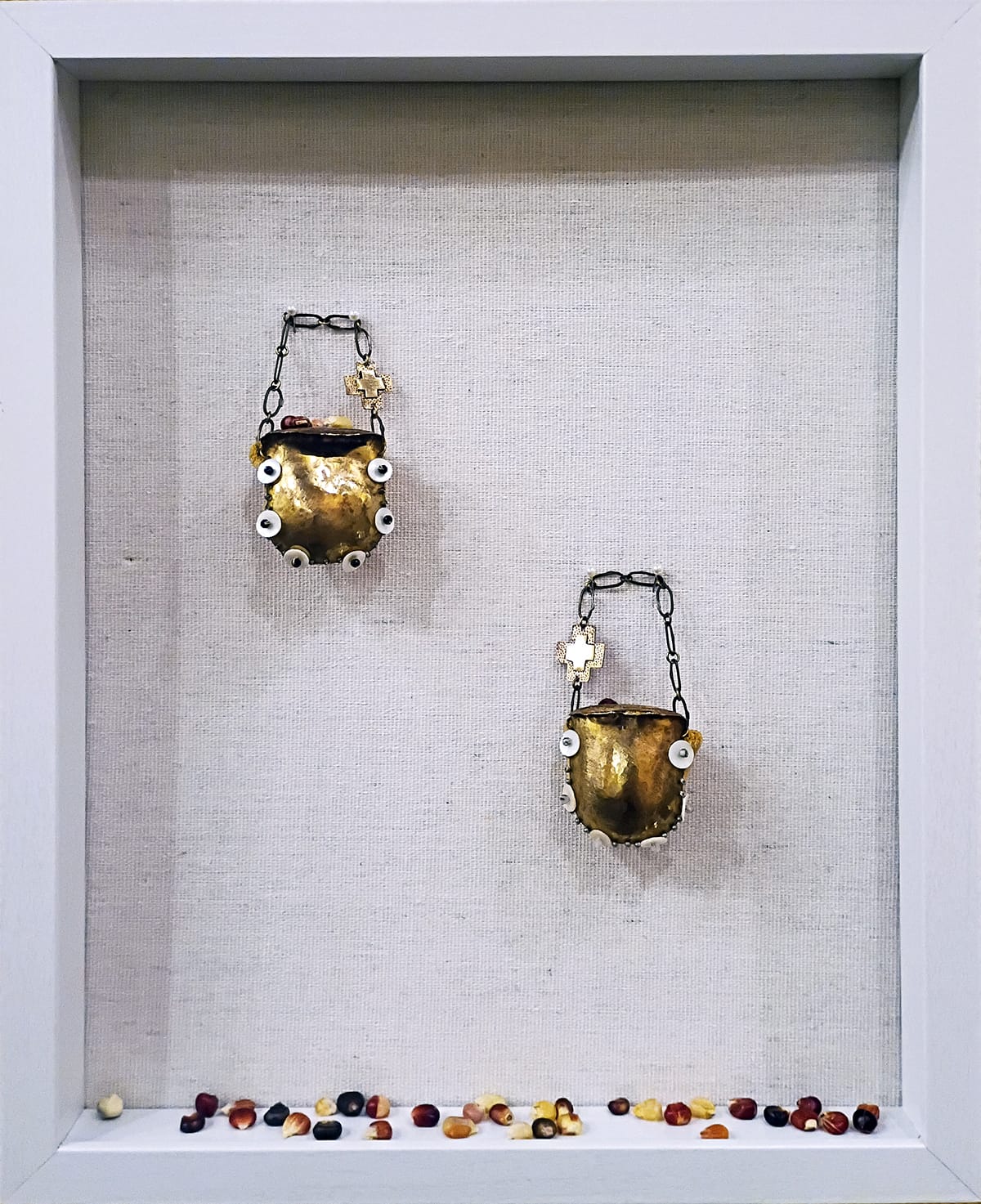
In “Seed Protectors: Stewards of the Future,” Rykelle Kemp invokes the handicraft and strength required to "protect that which nourishes our communities." Two brass pouches decorated with semiprecious stones hang from chains in a shadow box, with dried corn kernels of various colors scattered below them. Seed protectors were worn by indigenous women to hold the seeds their communities had long cultivated. When forbidden to wear external signs of their culture, the women sowed the seeds into the hems of their dresses.
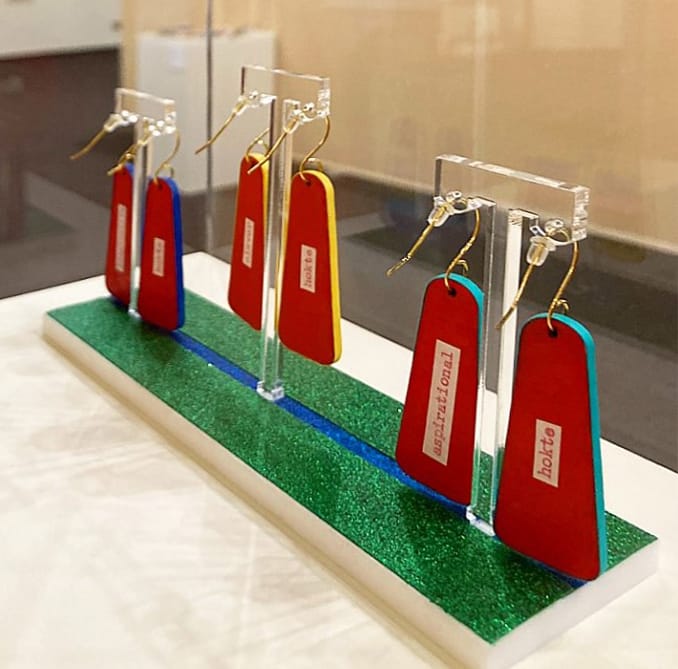
This is an emblematic detail that is invoked in the title of Okcate Evita Smith McCommas' “Sew the Seeds: Three Generations,” a set of three pairs of red painted wood earrings with the words “imaginative,” “clever,” “inspirational,” and “hokta” emblazoned on them in red text on white fields. The two titles of Kemp and Smith McCommas’ works, “Stewards of the Future” and “Sew the Seeds,” encapsulate the dynamic of tradition. "Stewardship" sounds like a stuffy word, despicably preservationist. But Kemp understands that a steward’s obligation is not to the past but to the future. When the seed protectors are lost, you sew the seeds so that you may sow them once again.
Which brings us to the relative merits of seeds and their protectors. Any good traditionalist understands that one is more important than the other — the seeds are the tradition, not their vessel. When necessity demands, one is disposable, the other is not. Tradition requires adaptation — another theme prevalent throughout “Ripple in Traditions.”
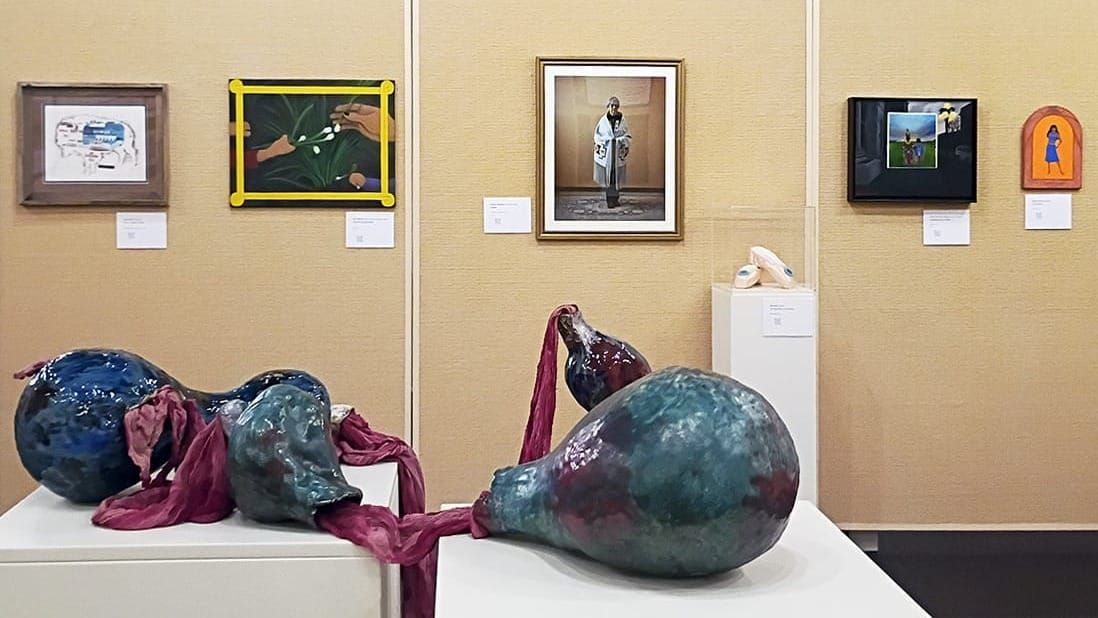
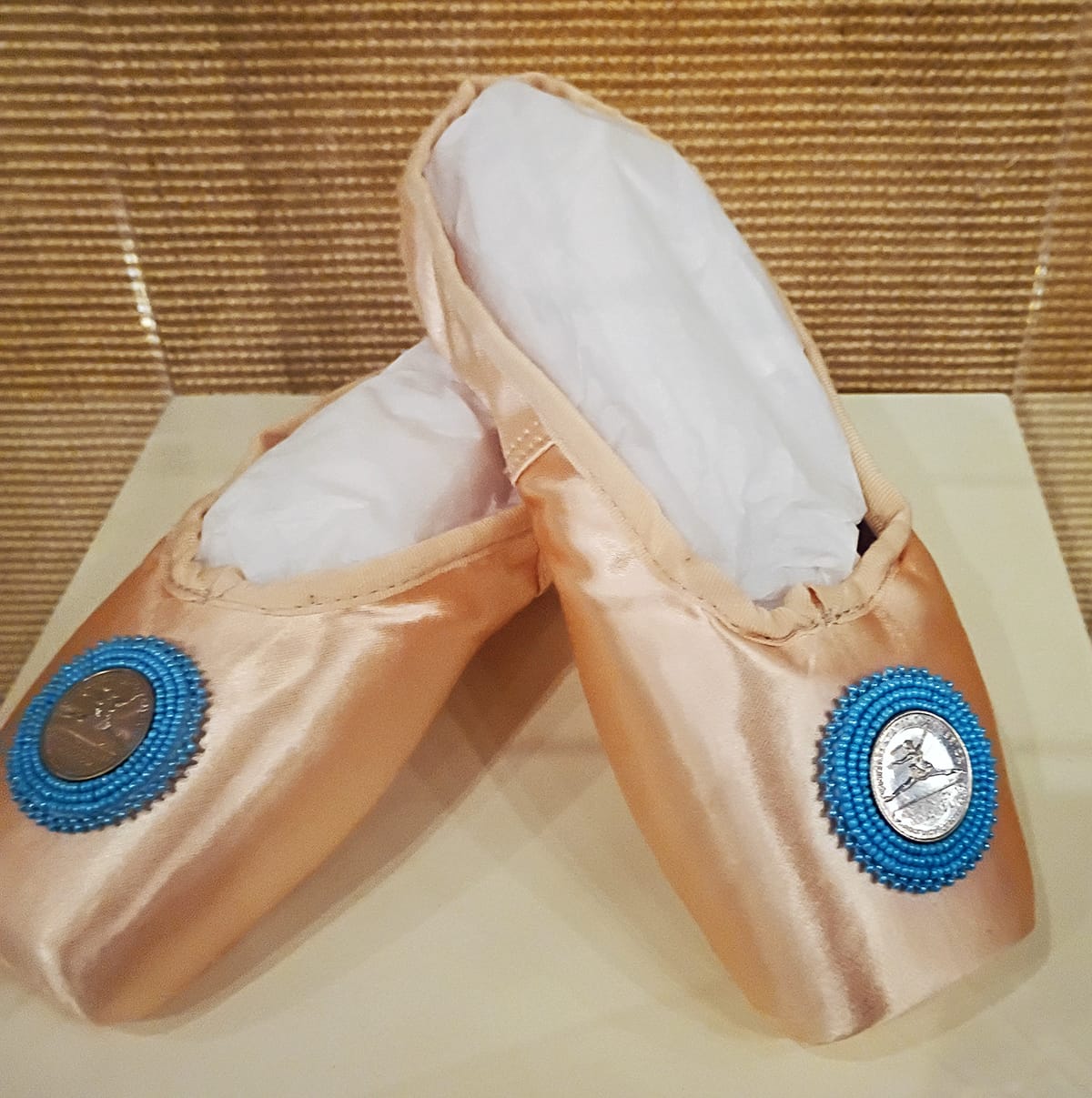
For instance, Dana Bear adapts Osage moccasins to the exigencies of ballet. Bear's "For Those Who Cannot Dance" features a pair of pointe shoes embellished with Osage beadwork and a coin on the toes. The shoes were made in honor of Bear's great-aunt Maria Tallchief, the first Native American prima ballerina (whose likeness and name are commemorated on the coins). They were presented to the contemporary ballerina Misty Copeland in 2023.
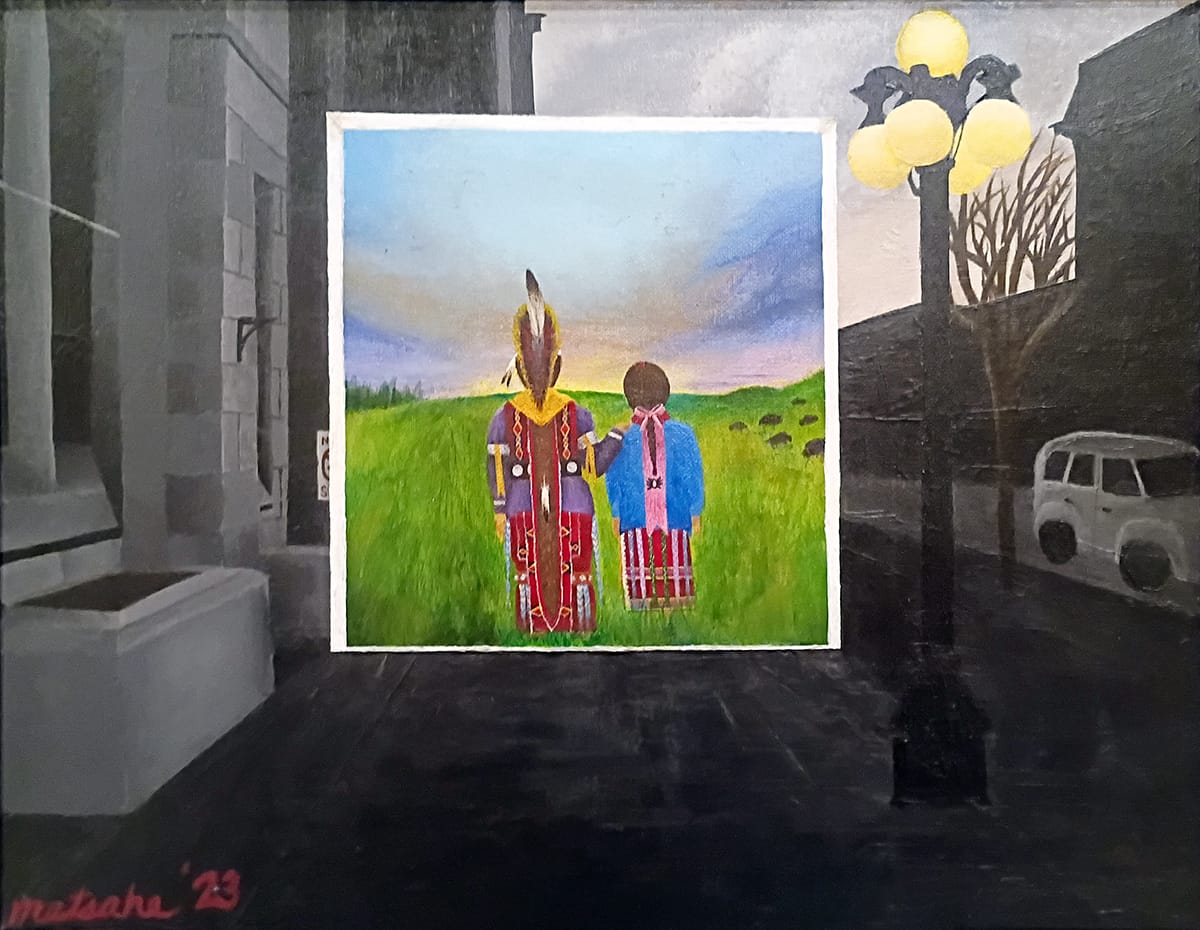
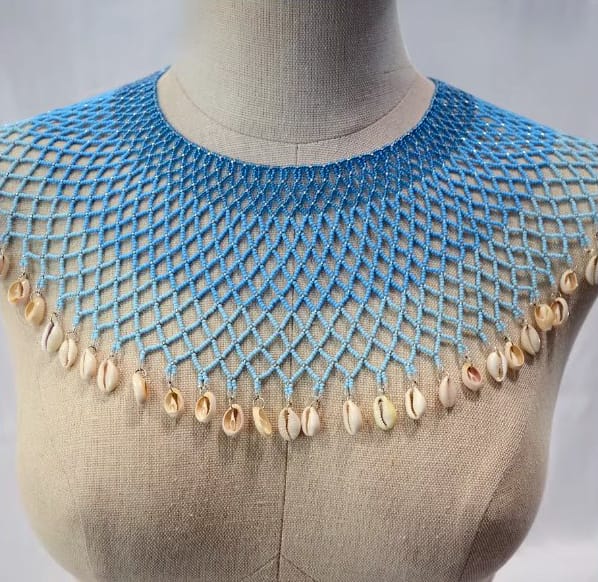
In the painting "A Step Between Two Worlds" by Little Star Gallegos, two figures in regalia, their backs turned to the viewer, consider the open plains in full color, and yet they are framed by the background of a black-and-white urban scene. The contrast is telling. And Irene Creek's glass and shell necklace titled "Where the River Flows" is described on the title card simply as a "contemporary spin on a traditional southeastern beaded collar."
“Ripple in Traditions” does a fine job at its stated aim of exploring how "how culture moves — through land, memory, and the hands of those who carry it forward." It has been said that "If you educate a man you educate an individual, but if you educate a woman you educate a nation." Looking at the hands, faces, and handwork in “Ripple in Traditions,” I was impressed by the truth of that statement. The various cultures represented in the exhibition have undoubtedly been forced to move through land — been forced to re-member themselves. Yet, if “Ripple in Traditions” is any indication, they have not only moved through very good hands but remain in them.
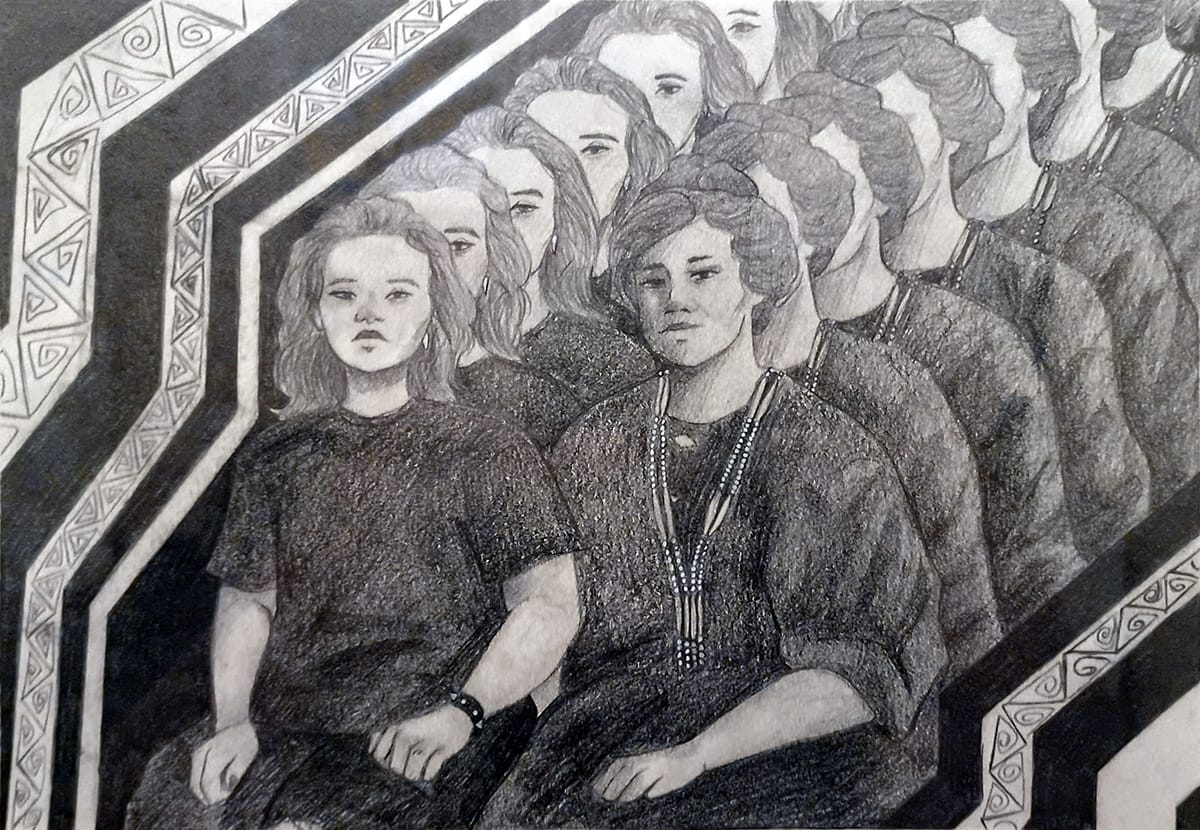
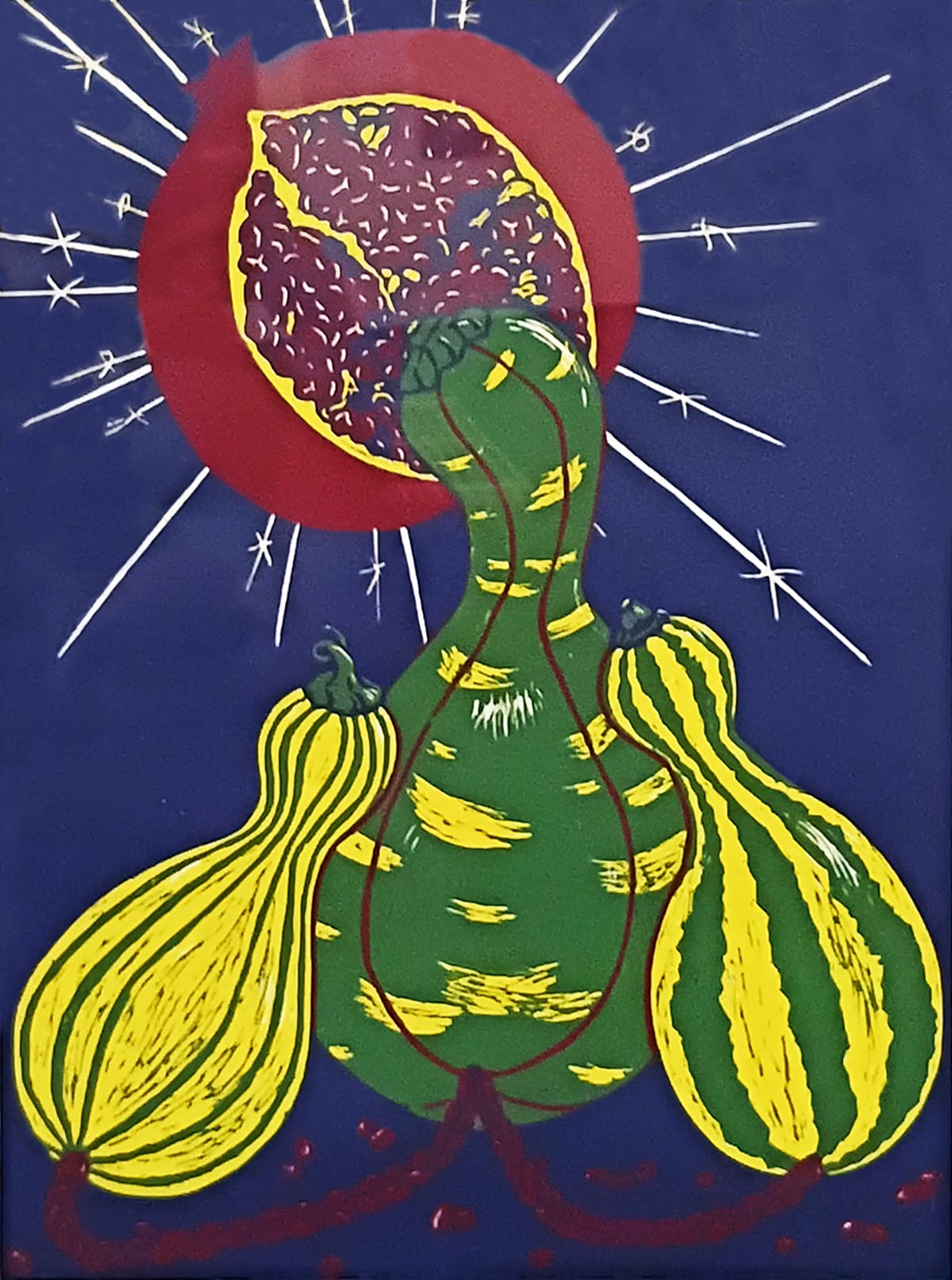
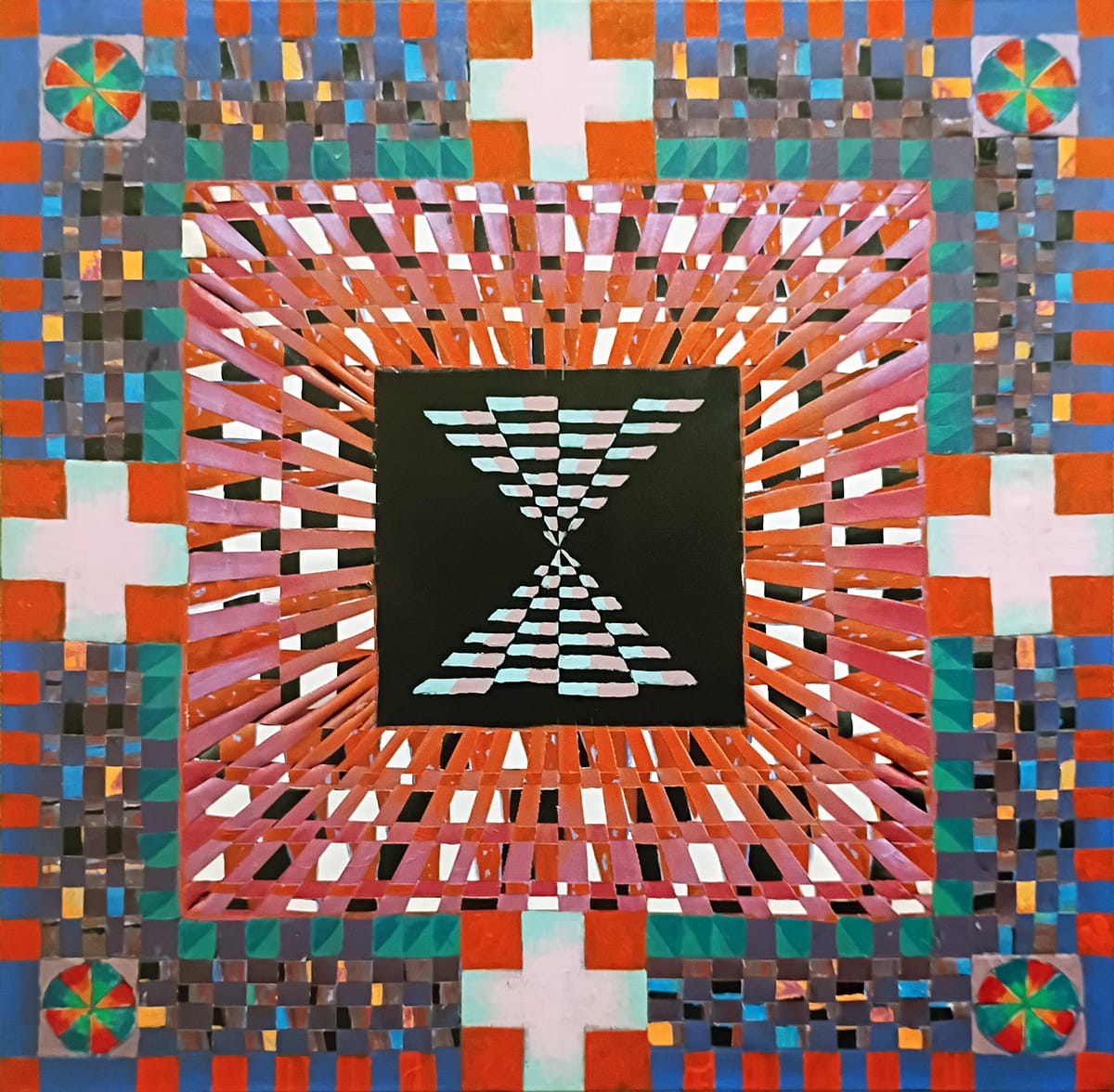
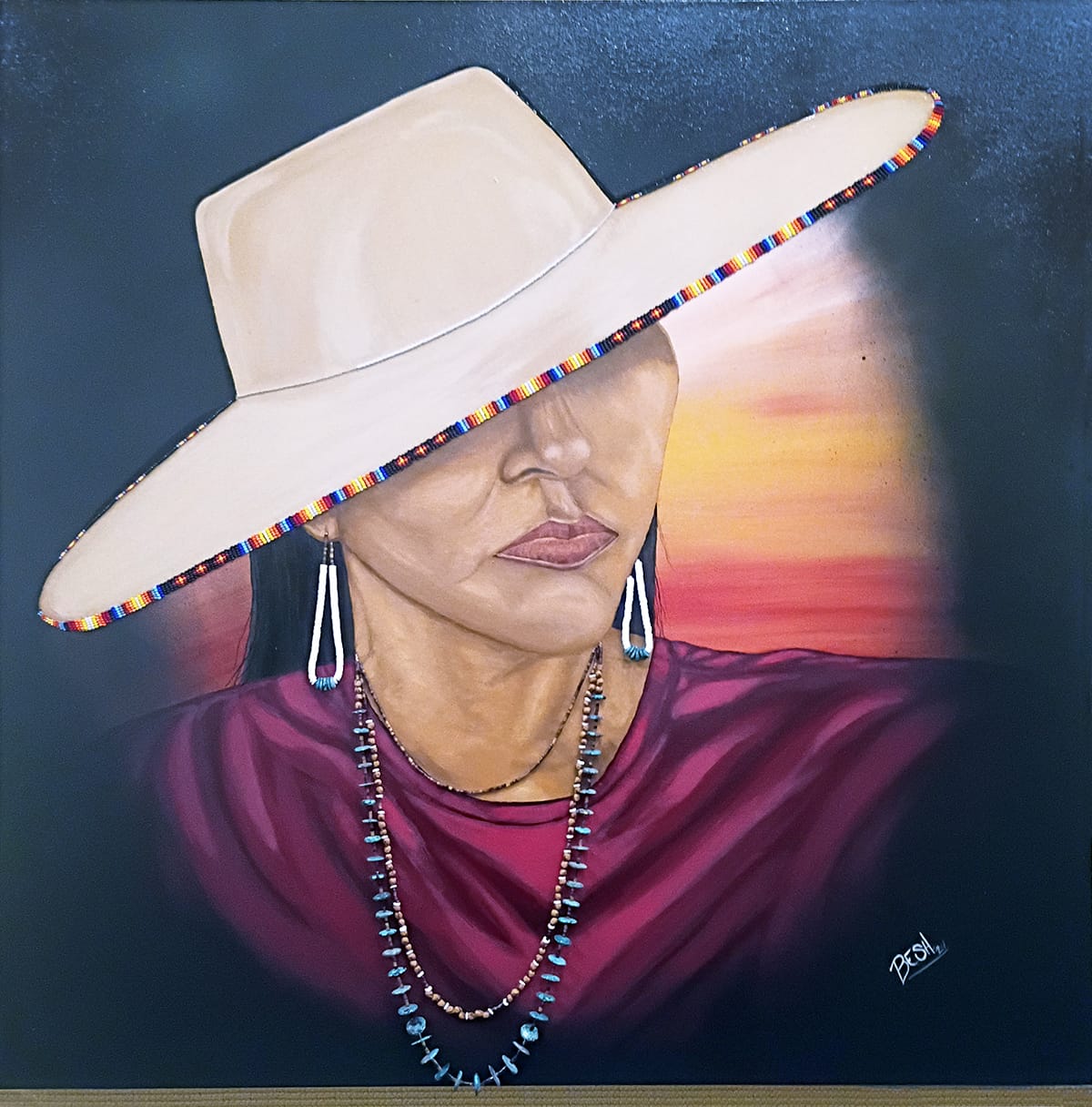
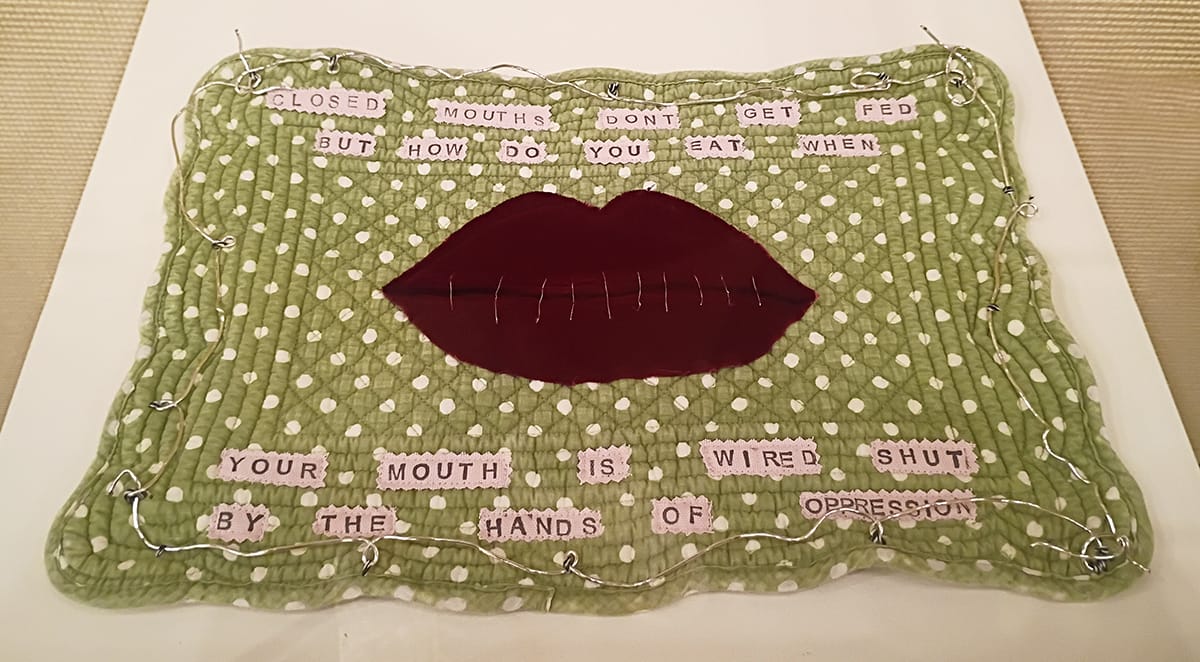
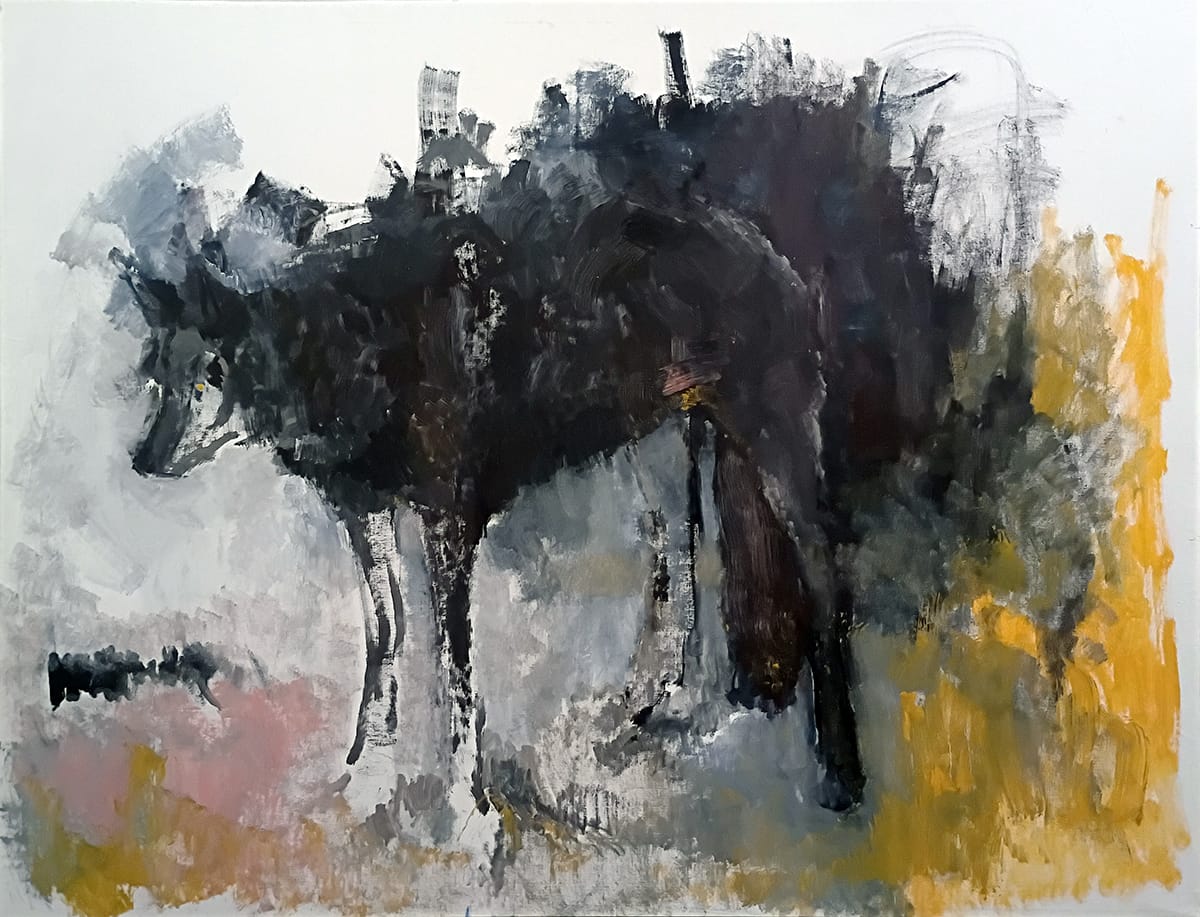
From top left: Bayley Ross, "Generational," graphite on paper; Jessi Sands, "Endless Warmth," wood-block print on paper; Kalyn Fay Barnoski, "ᎢᏳᏊᏂᎦᎵᏍᏗ / ᎾᎿᎯᎸᏢ (sometime / somewhere)," acrylic and spray paint on stretched canvas, woven; Raychelle Shabi, "The Alchemist," acrylic and beadwork on canvas; Carmen Wiley, "Wired Shut," contemporary poetry textile; Jaime Misenheimer, "Nashoba (Wolf)," oil in linen. Photos by Jeromiah Taylor for The SHOUT.
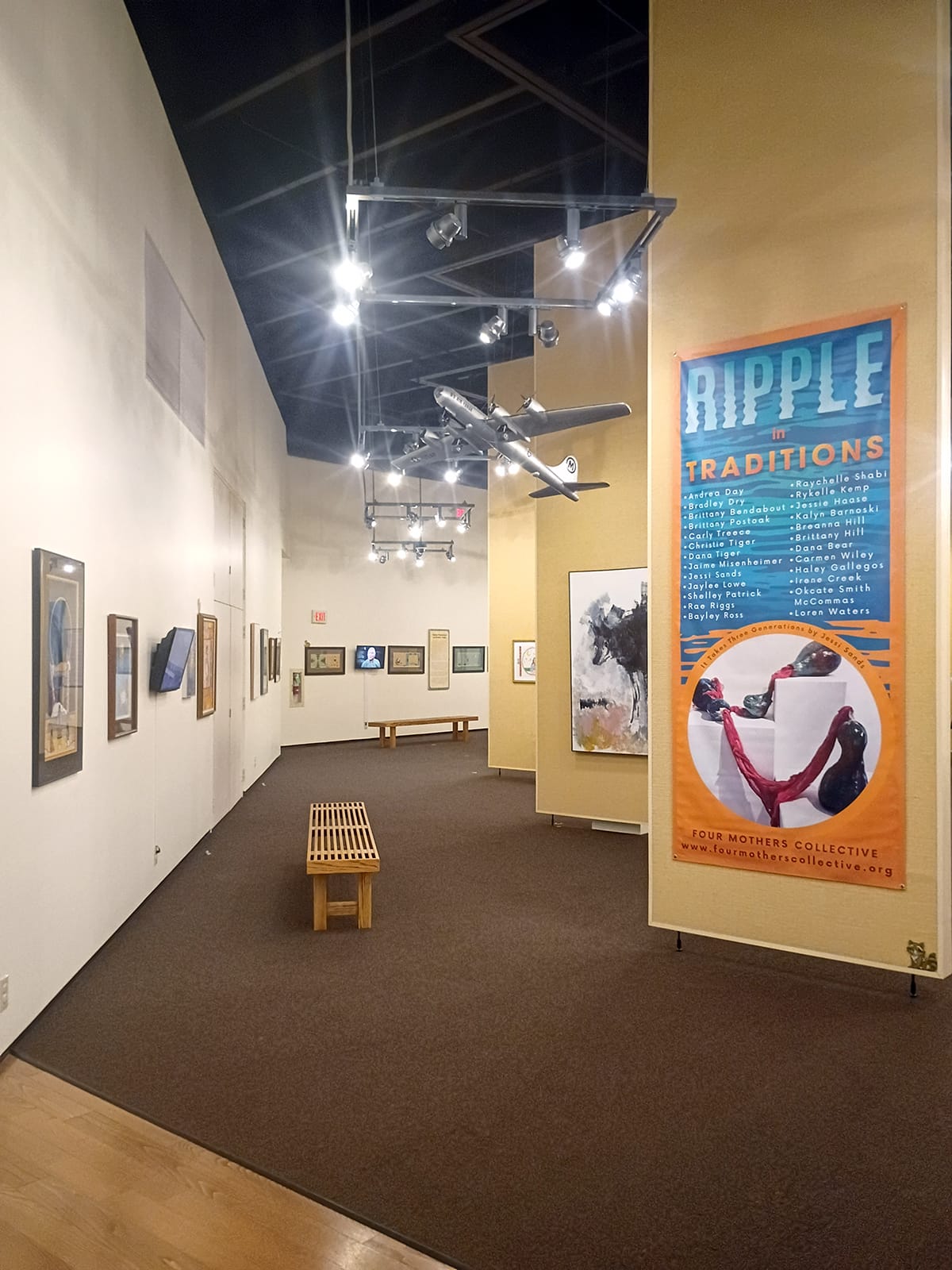
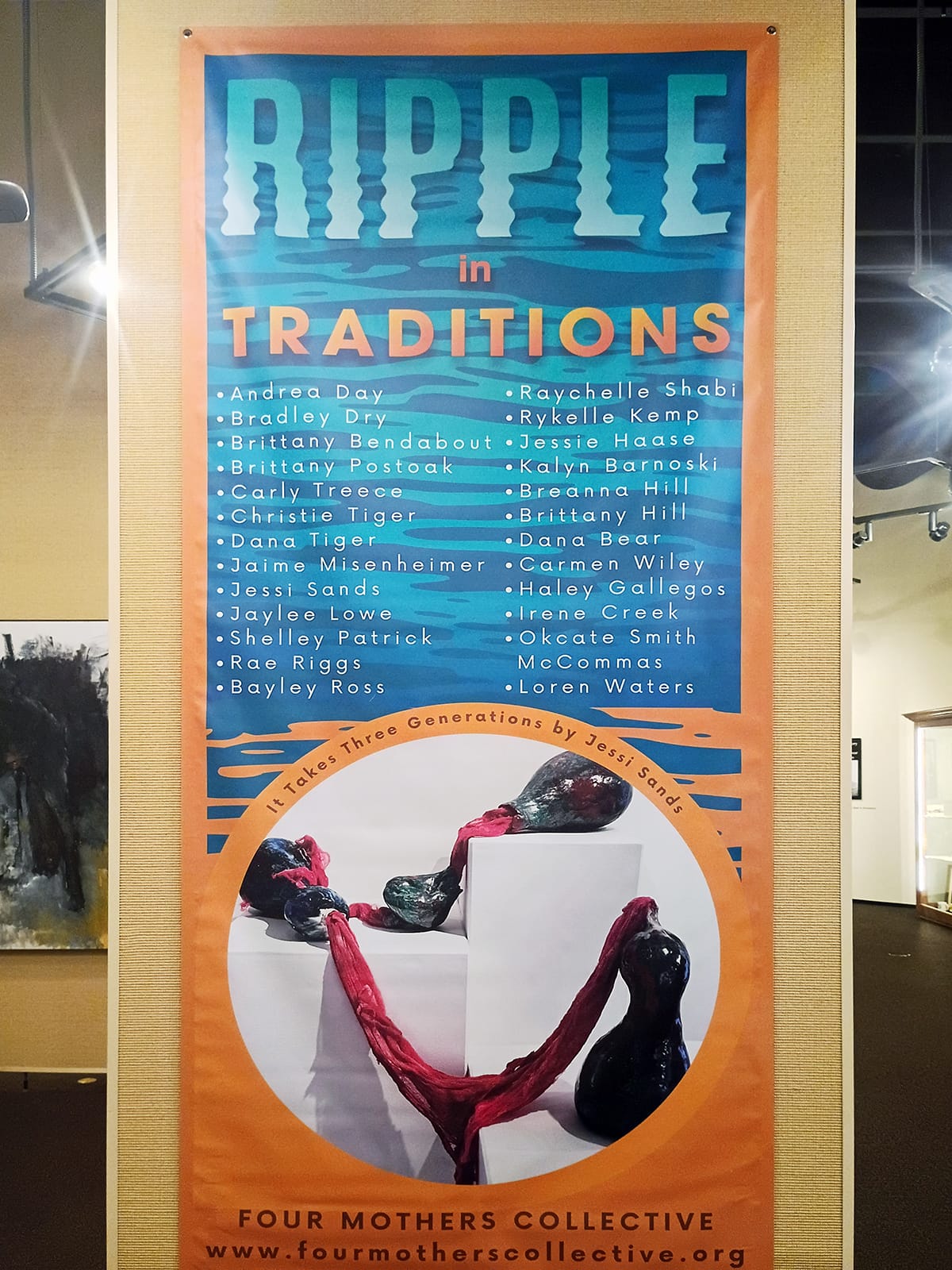
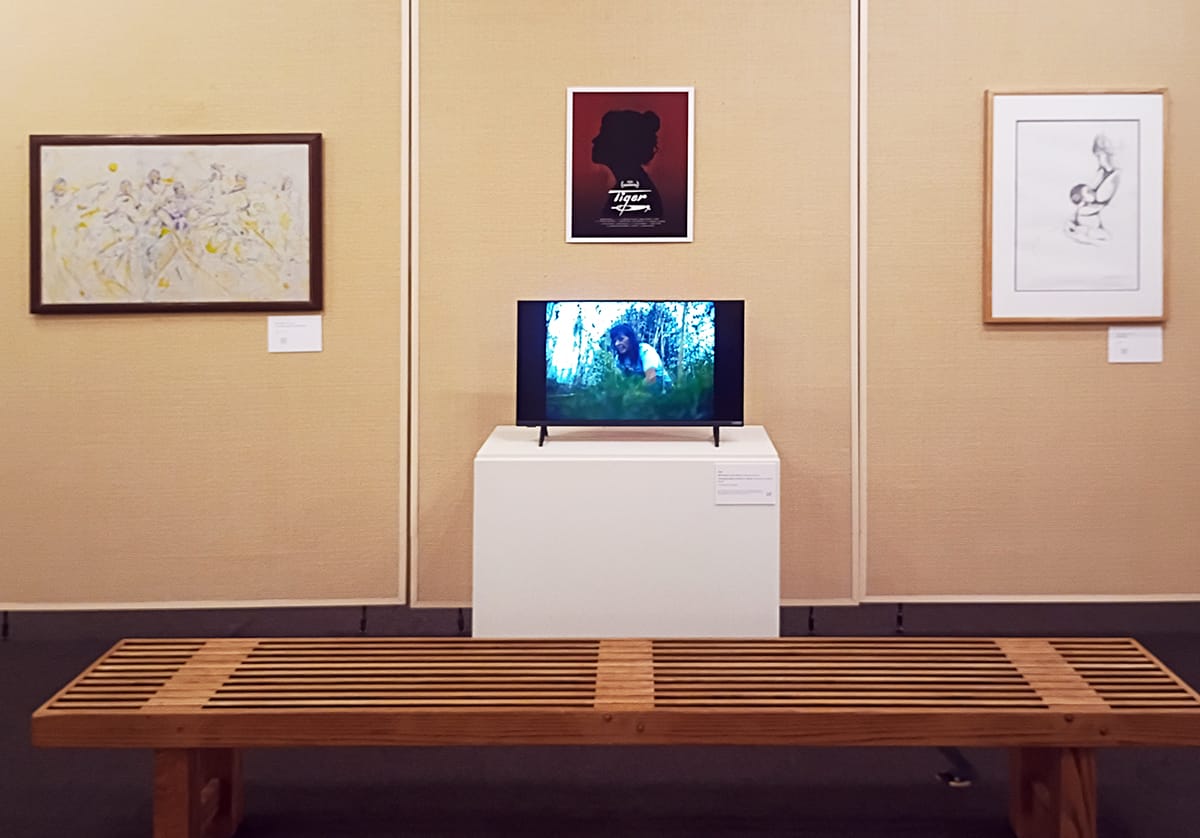
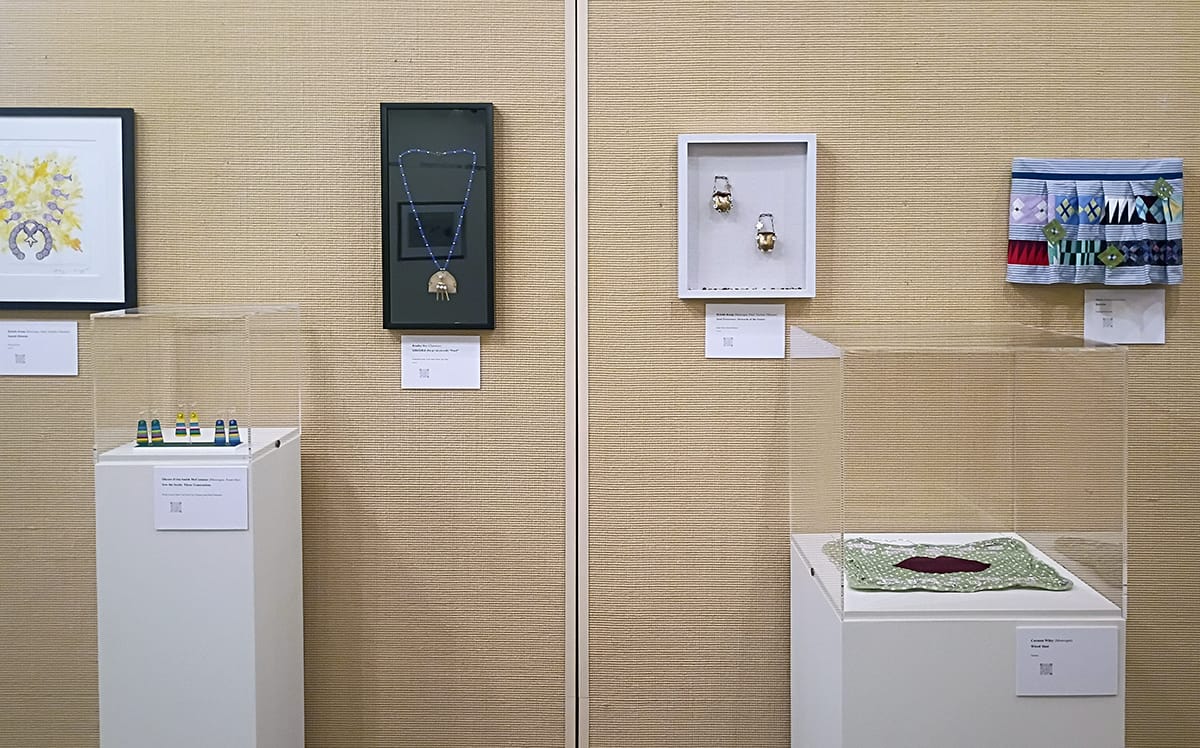
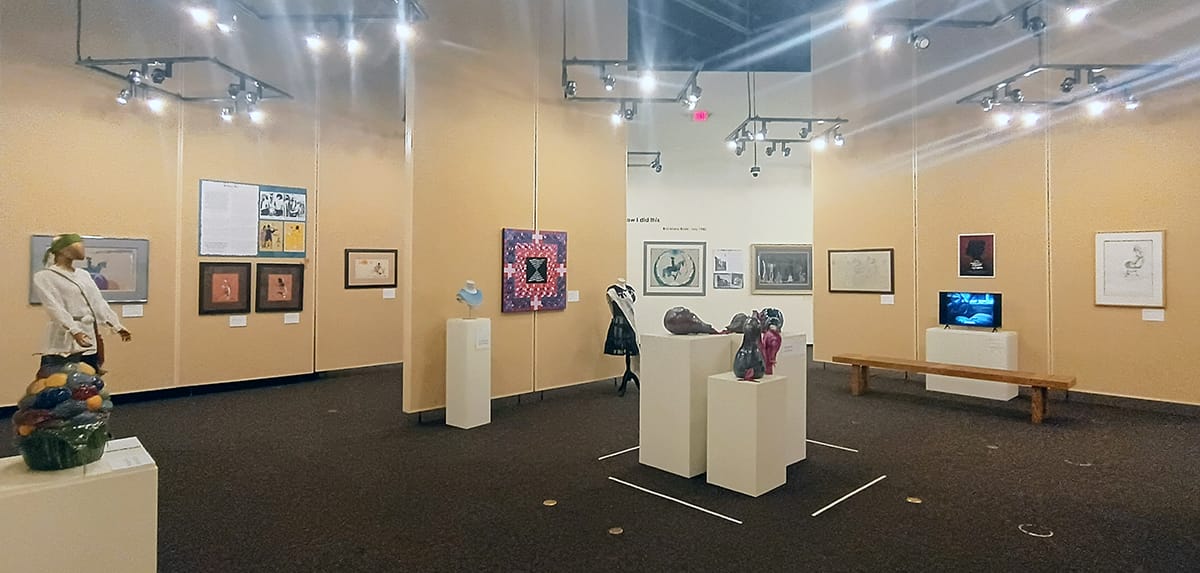
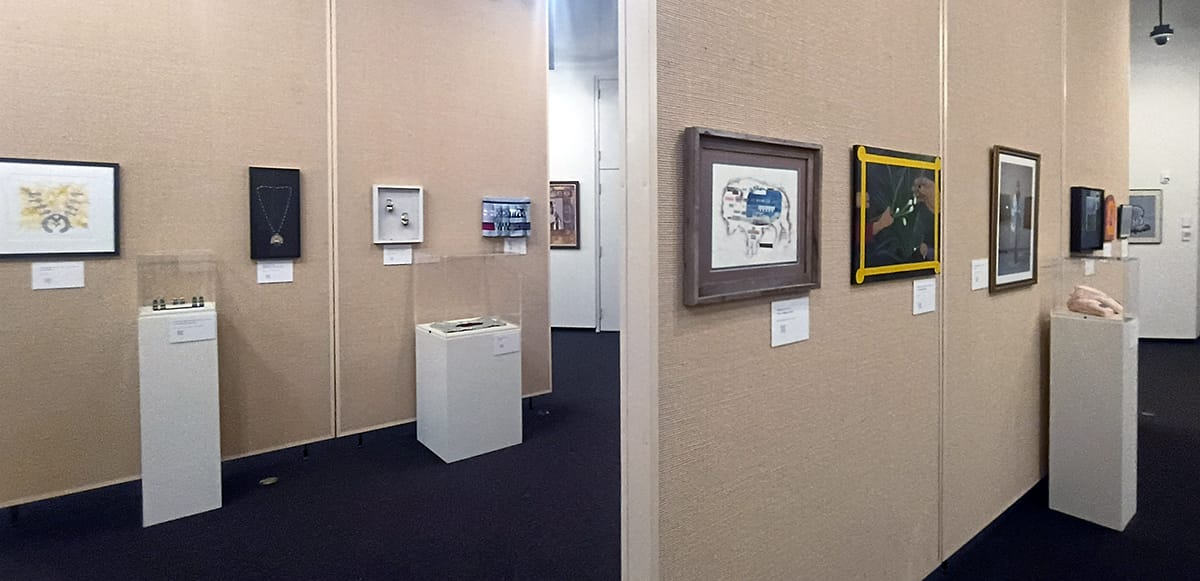
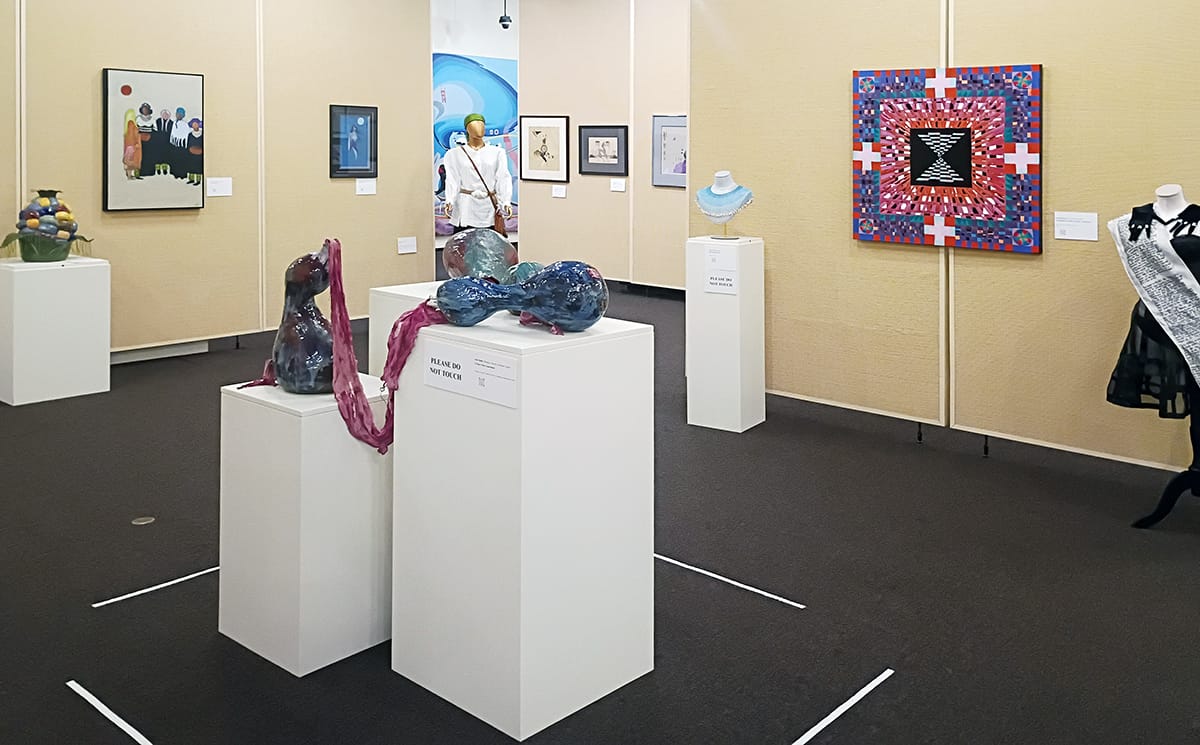
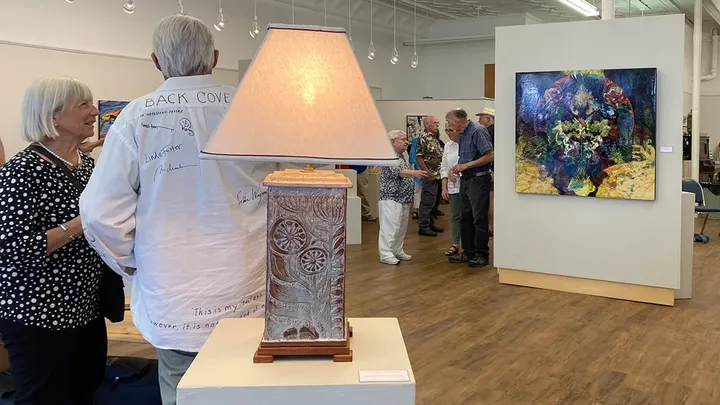
Installation views of "Ripple in Traditions." Photos by Jeromiah Taylor for The SHOUT.
The Details
"Ripple In Traditions"
March 7-June 6, 2026, at the Mid-America All-Indian Museum, 650 N. Seneca St. in Wichita
"Ripple in Traditions" was curated by Carly Treece, Rae Riggs, and Brittany Bendabout of Four Mothers Collective.
The Mid-America All-Indian Musuem is open to the public from 10 a.m.-4 p.m. Tuesday through Saturday. It will be closed on May 26 for Memorial Day.
Admission is $9 for adults with discounts for seniors, active military with ID, high school and college students with ID, and children ages 6-12. Children under the age of 6 receive free admission. The Mid-America All-Indian Museum also offers up to four free admissions with an EBT card and photo ID. Learn more about museum admission.
Parking is free in the dedicated lot adjacent to the building, and the museum is accessible to people with physical disabilities.
Jeromiah Taylor is a writer from Wichita, Kansas. He is the associate opinion editor at the National Catholic Reporter.
❋ Derby man has the kind of voice that turns heads — and chairs
❋ Socializing while sober: how some Wichitans are cultivating alcohol-free communities
❋ As a small creative business closes, the owner mourns
❋ Painting through it: Autumn Noire on 20 years of making art
❋ How a guy from Wichita resurrected 'Dawn of the Dead'
❋ Bygone Friends University museum housed curious collections
Support Kansas arts writing
The SHOUT is a Wichita-based independent newsroom focused on artists living and working in Kansas. We're partly supported by the generosity of our readers, and every dollar we receive goes directly into the pocket of a contributing writer, editor, or photographer. Click here to support our work with a tax-deductible donation.