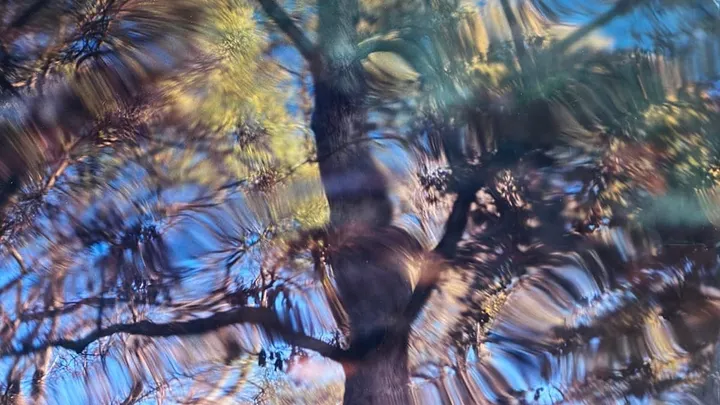
Butler Community College alumni share how the school shaped their creative identities
An exhibition of works by emerging, mid-career, and established alumni artists is a testament to the visual art program's supportive but challenging atmosphere.
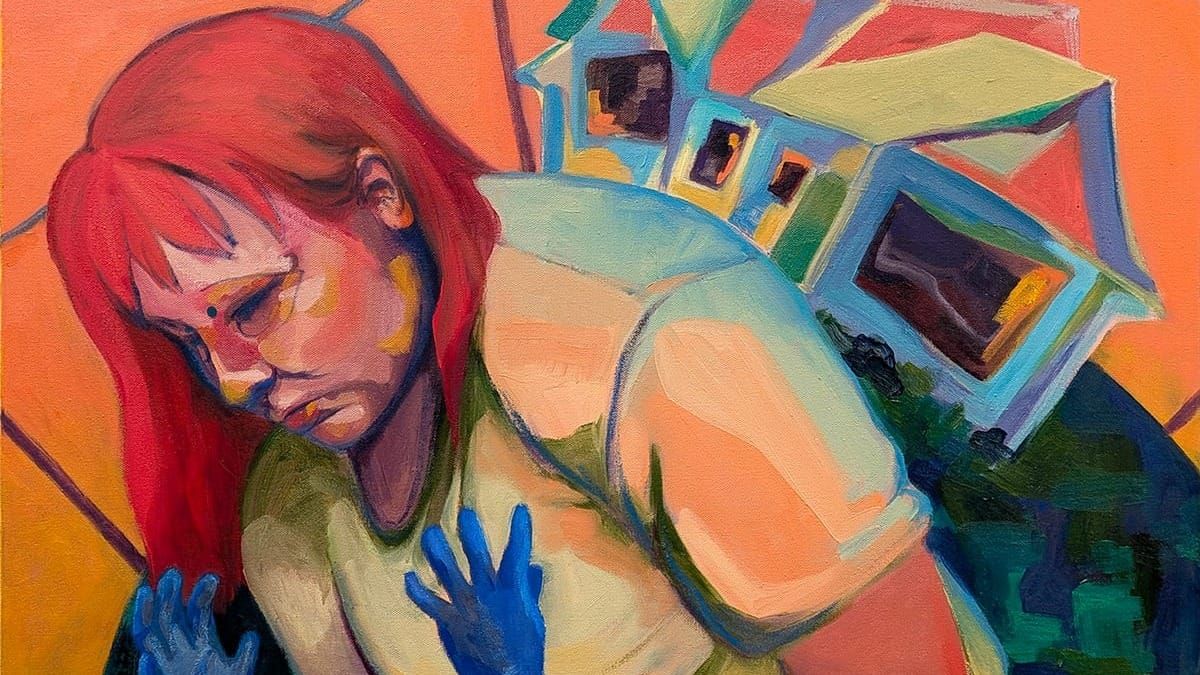
From 1984 to 1991, Raymond “Skip” Morgan animated characters for five TV shows with Disney Television Animation including “Duck Tales,” “Chip ’N Dale Rescue Rangers,” “Adventures of the Gummi Bears,” “The New Adventures of Winnie the Pooh,” and, my personal favorite, “TaleSpin.” as director of character animation from 1991 until his retirement in 2007, Morgan oversaw licensing for action figures, games, and other Disney merchandise.
Skip Morgan may well be the most nationally distinguished alumnus of the Butler Community College art program. In addition to Skip, two more Morgan brothers graduated from Butler’s art program: Gale “Nip” Morgan, an animator with Warner Bros. who worked notably on “Batman: The Animated Series,” and James “Tuck” Morgan, also a Disney character animator who was largely responsible for creating the Disney Babies.
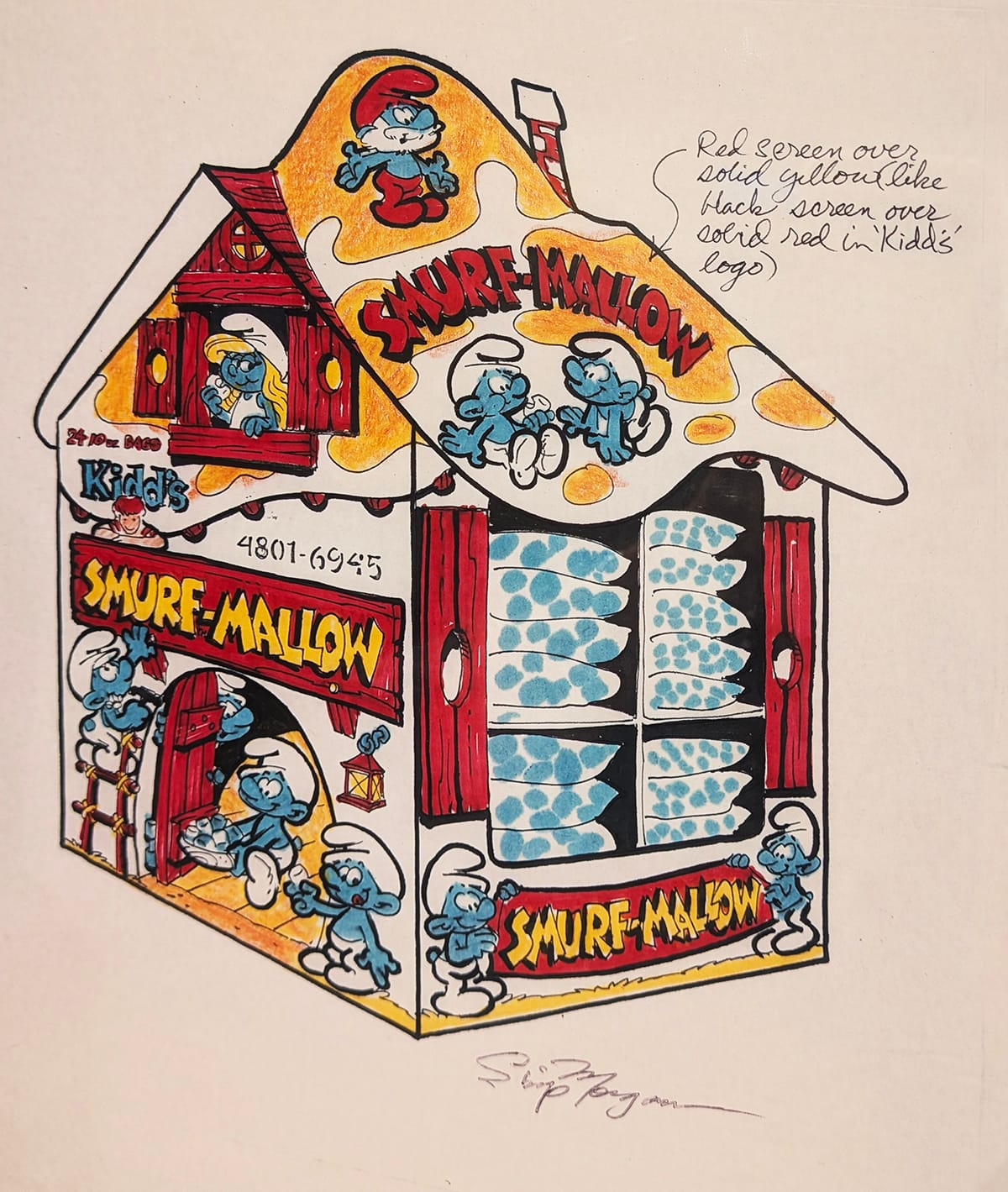
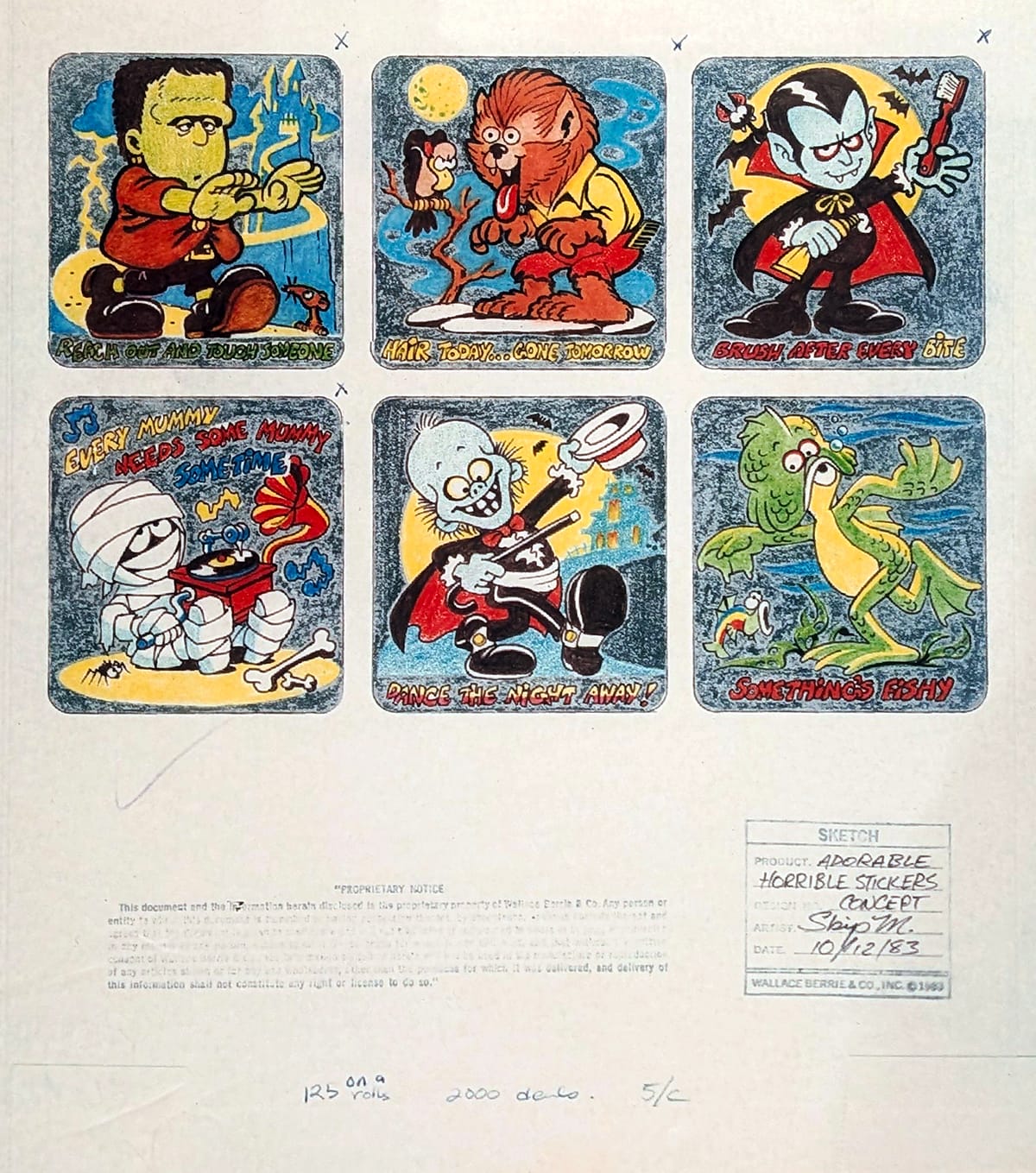
Works by Raymond “Skip” Morgan: "Smurf House," mixed two-dimensional media. and "Adorable Horrible Stickers," mixed two-dimensional media. (Jessy Clonts/The SHOUT)
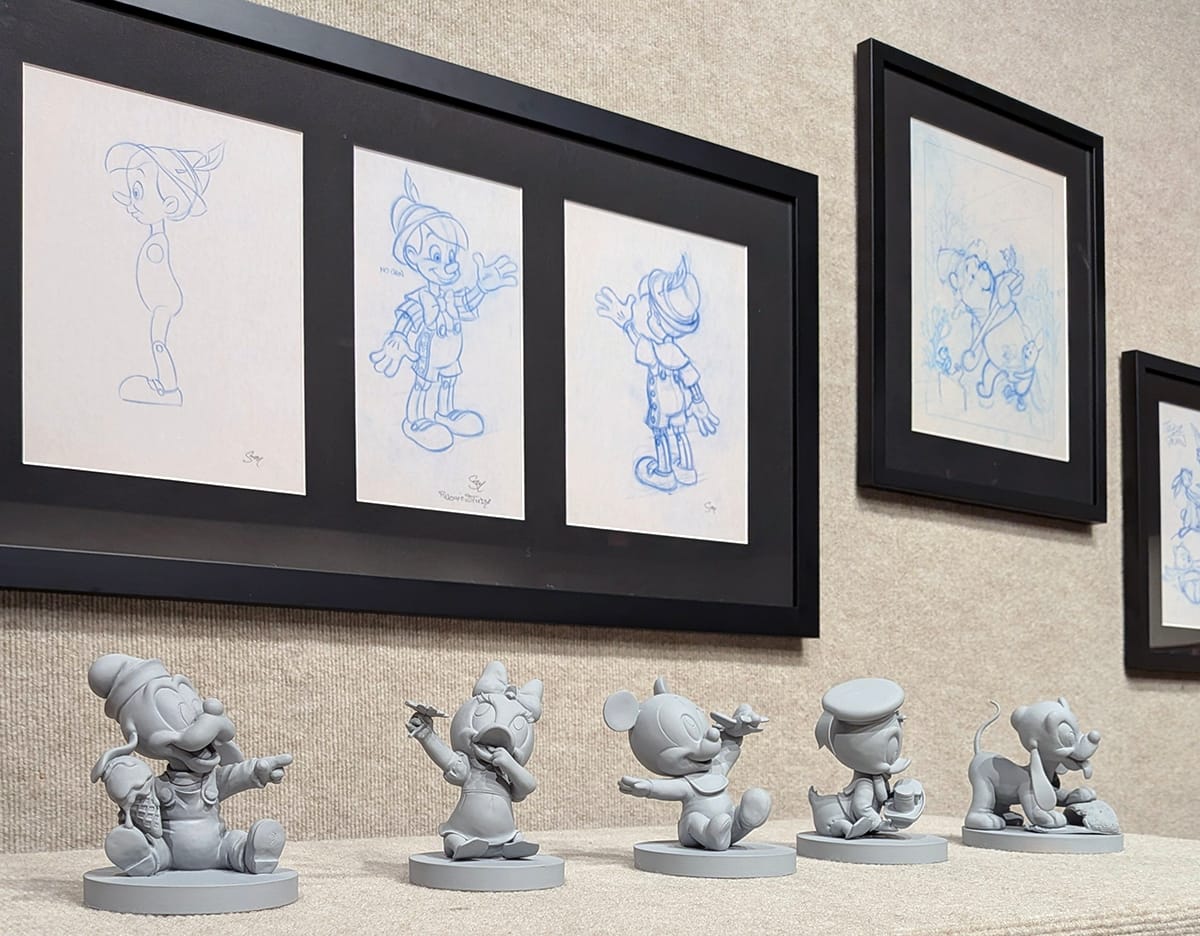
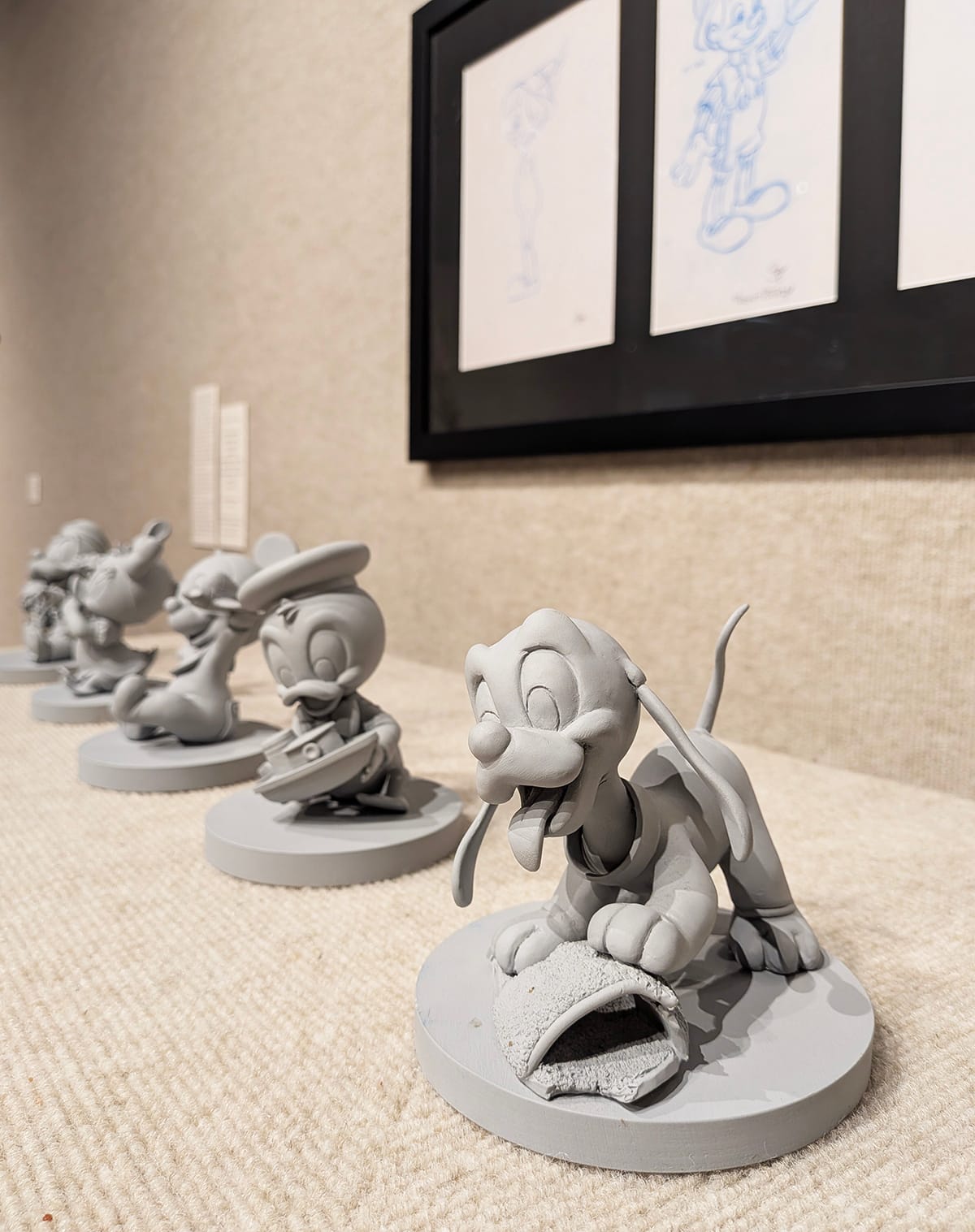
James “Tuck” Morgan, "Disney Babies," sculpture resin maquette. (Jessy Clonts/The SHOUT)
Five resin sculpture maquettes and nearly a dozen illustrated works on paper by the Morgan brothers, many used as official Disney mockups with handwritten notes and lines for sign-offs on them, are currently on loan from the Coutts Museum of Art to the Butler Community College Alumni Exhibit, on view through October 26 at the Erman B. White Gallery of Art at Butler’s El Dorado campus, some 30 miles northeast of Wichita.
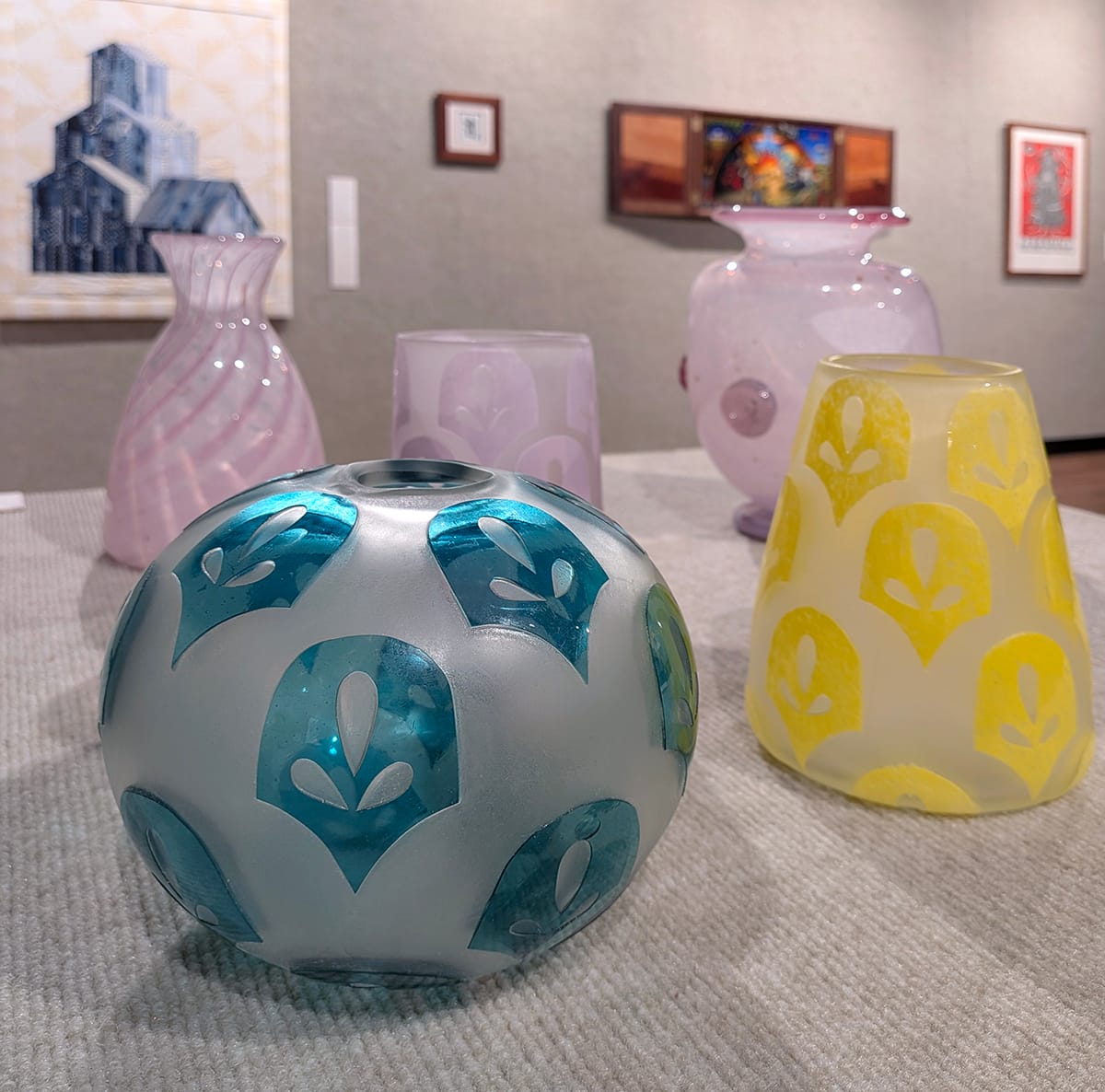
From left: Maura Bruenger, "Fleur-de-lis-Set," glass; Claire Davidson, "Mycelium," oil on canvas. (Jessy Clonts/The SHOUT)
Nineteen Butler alumni dating back as far as the 1980’s who are emerging, mid-career, and established artists display more than 50 works under the umbrella of their alma mater in this exhibition. Among media and studio practices represented are ceramics, glass, painting, printmaking, and textiles.
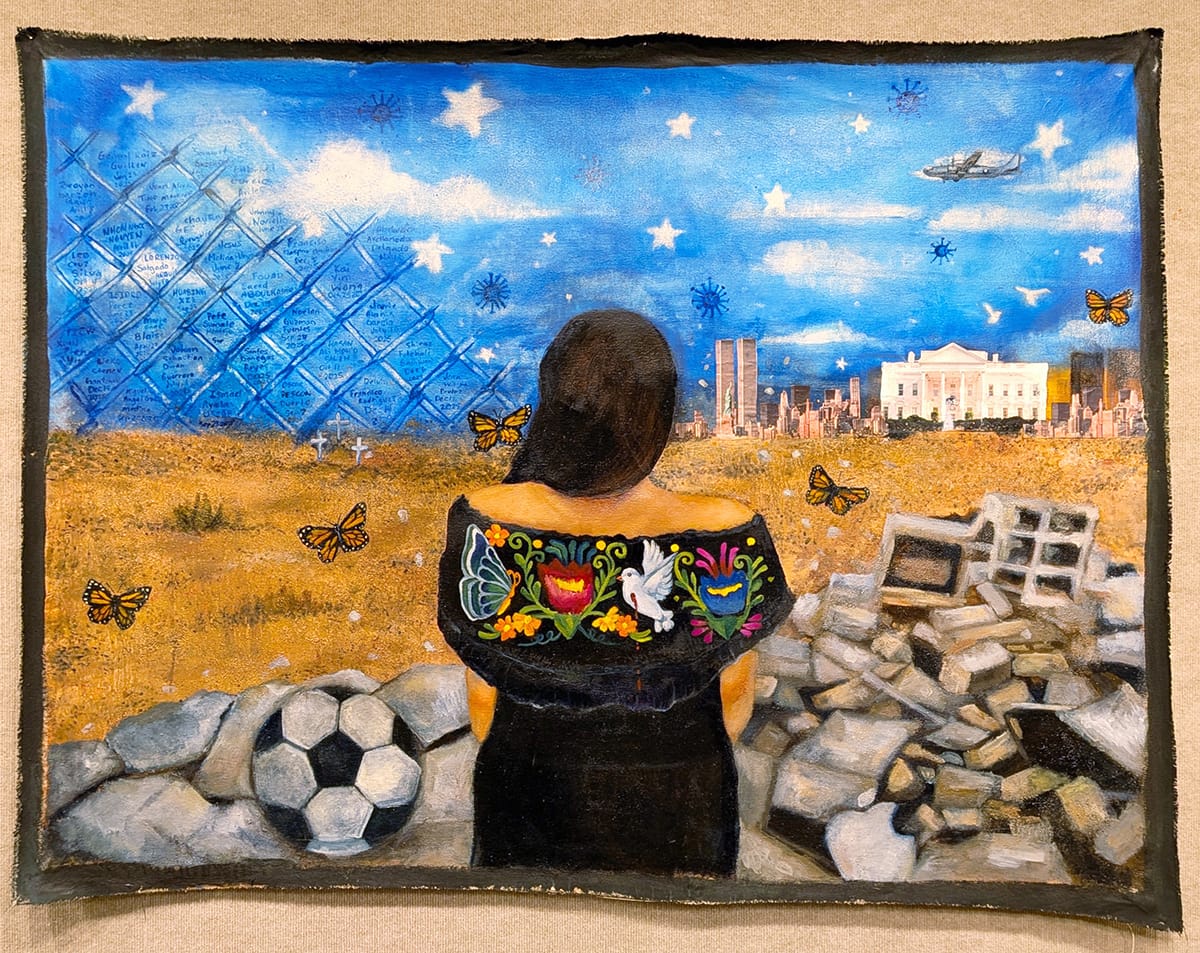
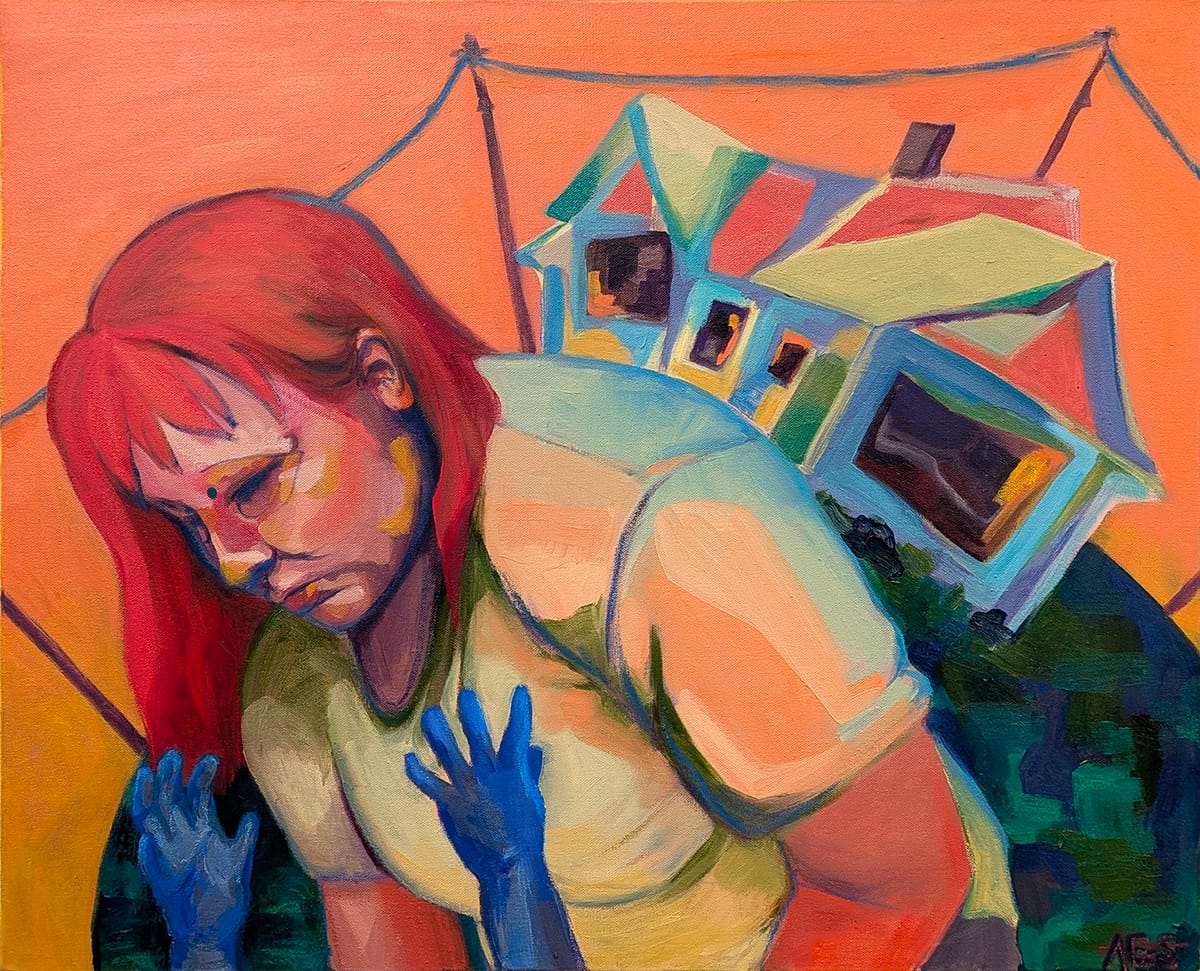
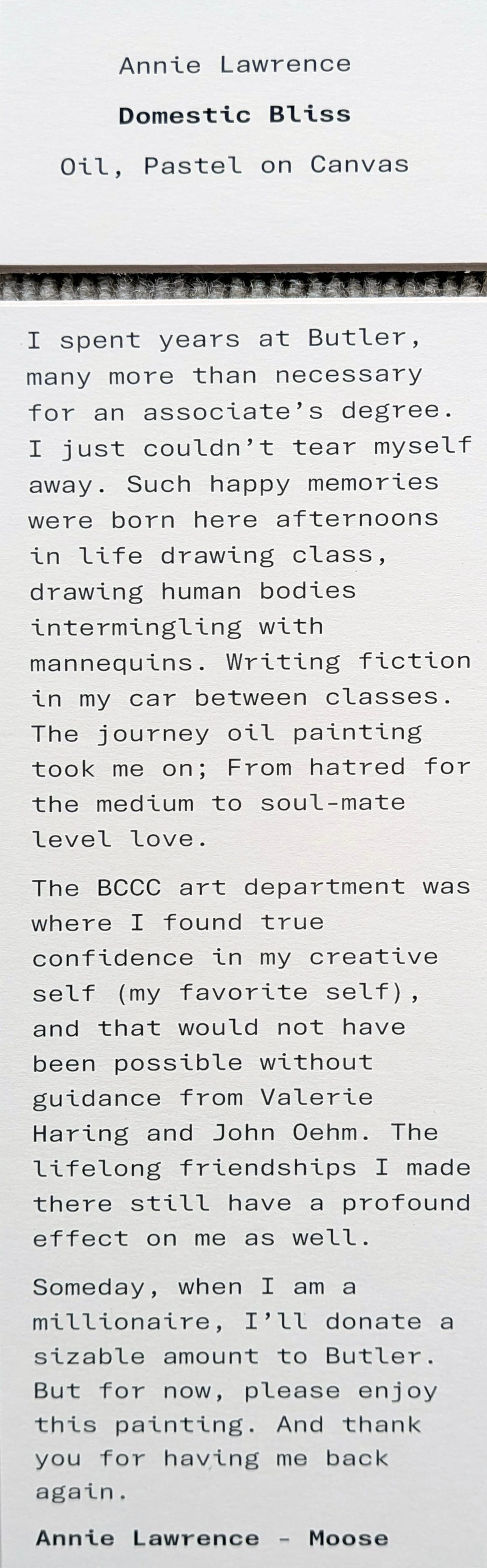
Annie Lawrence, "Domestic Bliss," oil and pastel on canvas. (Jessy Clonts/The SHOUT)
Perhaps most touching are the many personal stories on display of time spent as students within the art department (“the journey oil painting took me on; from hatred for the medium to soul mate-level love,” writes painter Annie "Moose" Lawrence). Tributes to the gallery’s founding director, Lynn Havel, recently retired instructor John Oehm, and current art director Valerie Haring (who “helped create an environment where genuine creative energy could flourish,” states printmaker Jack Baumgartner), paint a picture of faculty who both nurture and challenge their students. In effect, these works represent snapshots of where the artists currently are in their artistic journeys since their time as community college students.
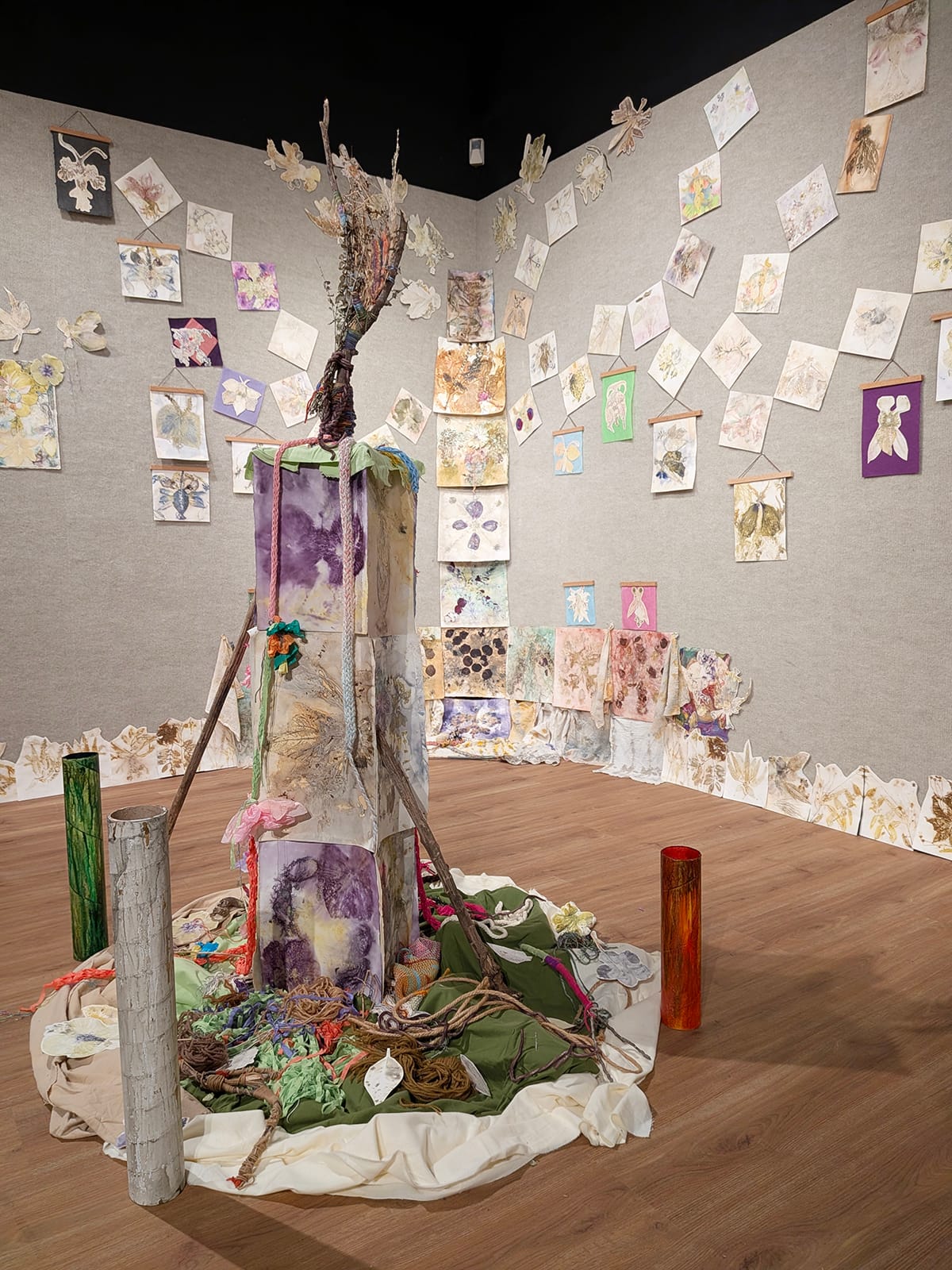
The E. B. White Gallery is located within the fine arts facility, frequently called the “700 Building” in reference to its address on campus. The gallery itself is a cavernous rectangle, close to 2,000 square feet — or about the size of a three-bedroom house — which lends abundant open space for the multimedia exhibition. It incorporates stands for ceramics and glass and a brightly colored wood, fabric, and eco-print-on-paper installation by Wichita State professor Lori Santos that occupies a full corner from floor to ceiling.
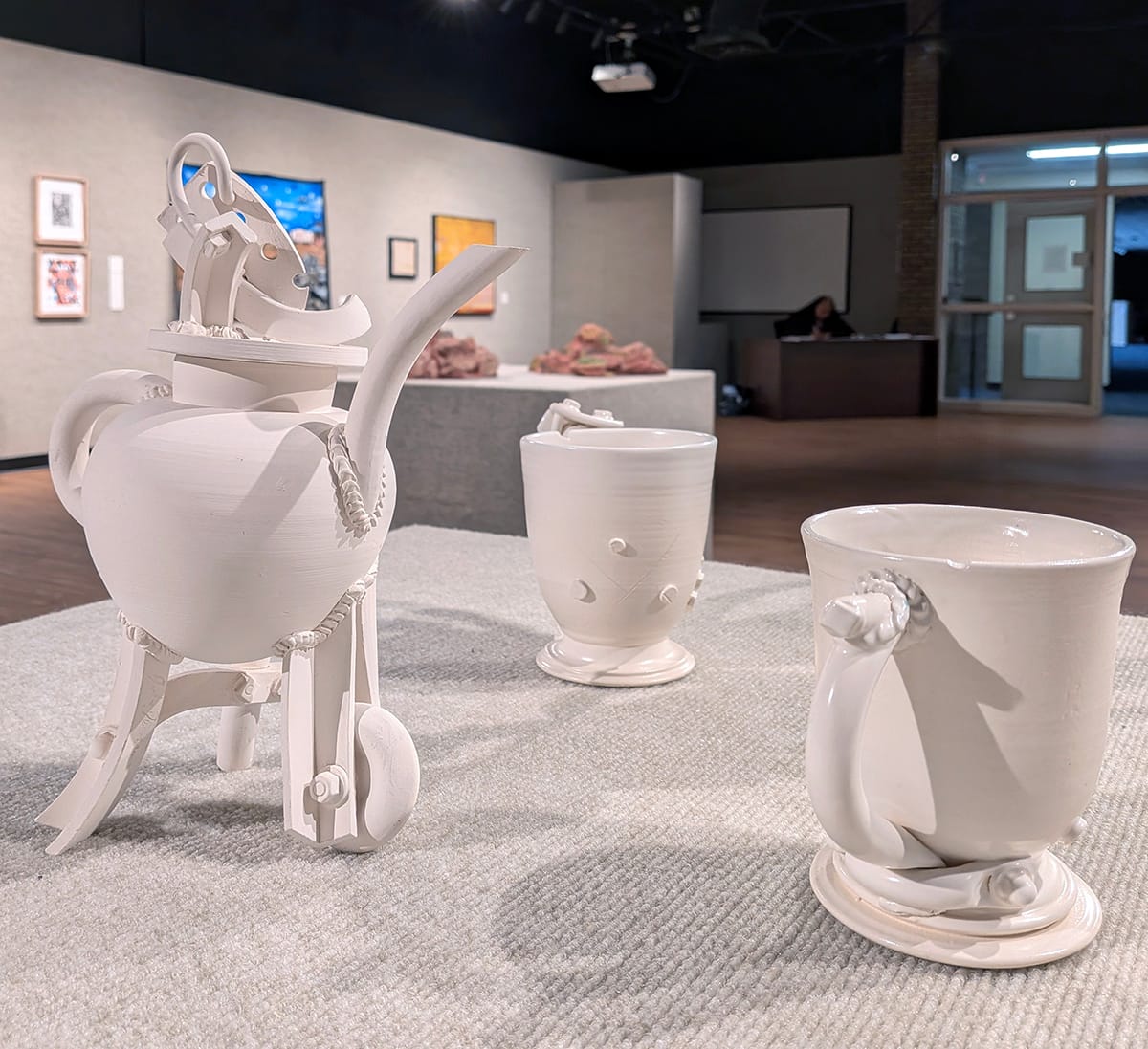
A ceramic teapot and two-mug set by the late Jake Jacobson, on loan from local patrons and collectors Lee and Ron Starkel, embody the generous spirits for whom the pieces are named. The mugs are actually titled “White Mug: Lee” and “White Mug: Ron,” featuring ceramic nuts and bolts affixing handles to vessels and intentionally made chips in each rim. Relationships bind us together and fill us. Long-term relationships, done well, can temper and make us stronger separately, and stronger still, as a set.
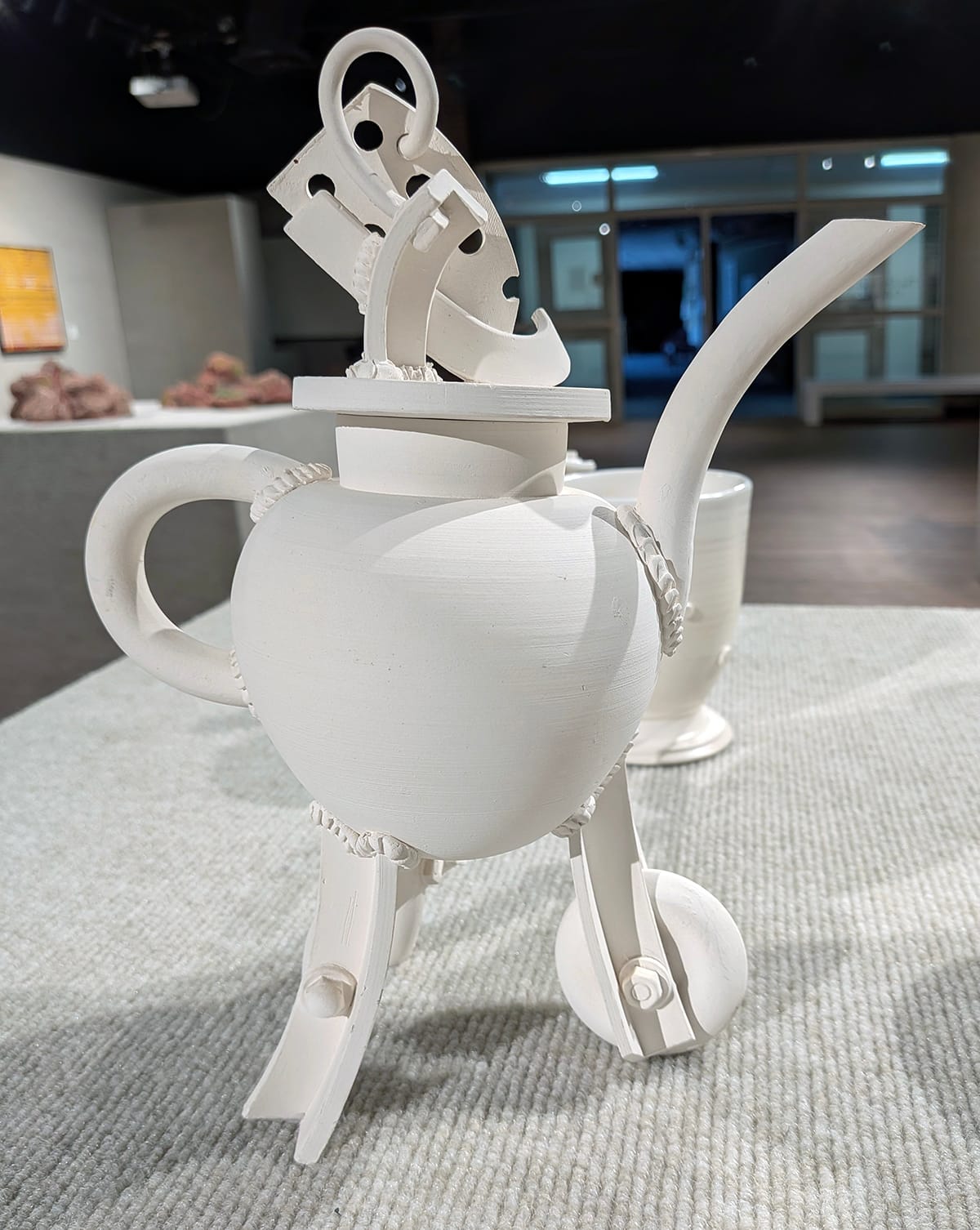
The teapot appears to have ceramic welded seams around its conjoined handle and spout. It is retrofitted onto a front caster wheel with curved, bolted legs, sparking the idea that each of us are imperfect works in progress, connected by the human tension of fragility and strength.
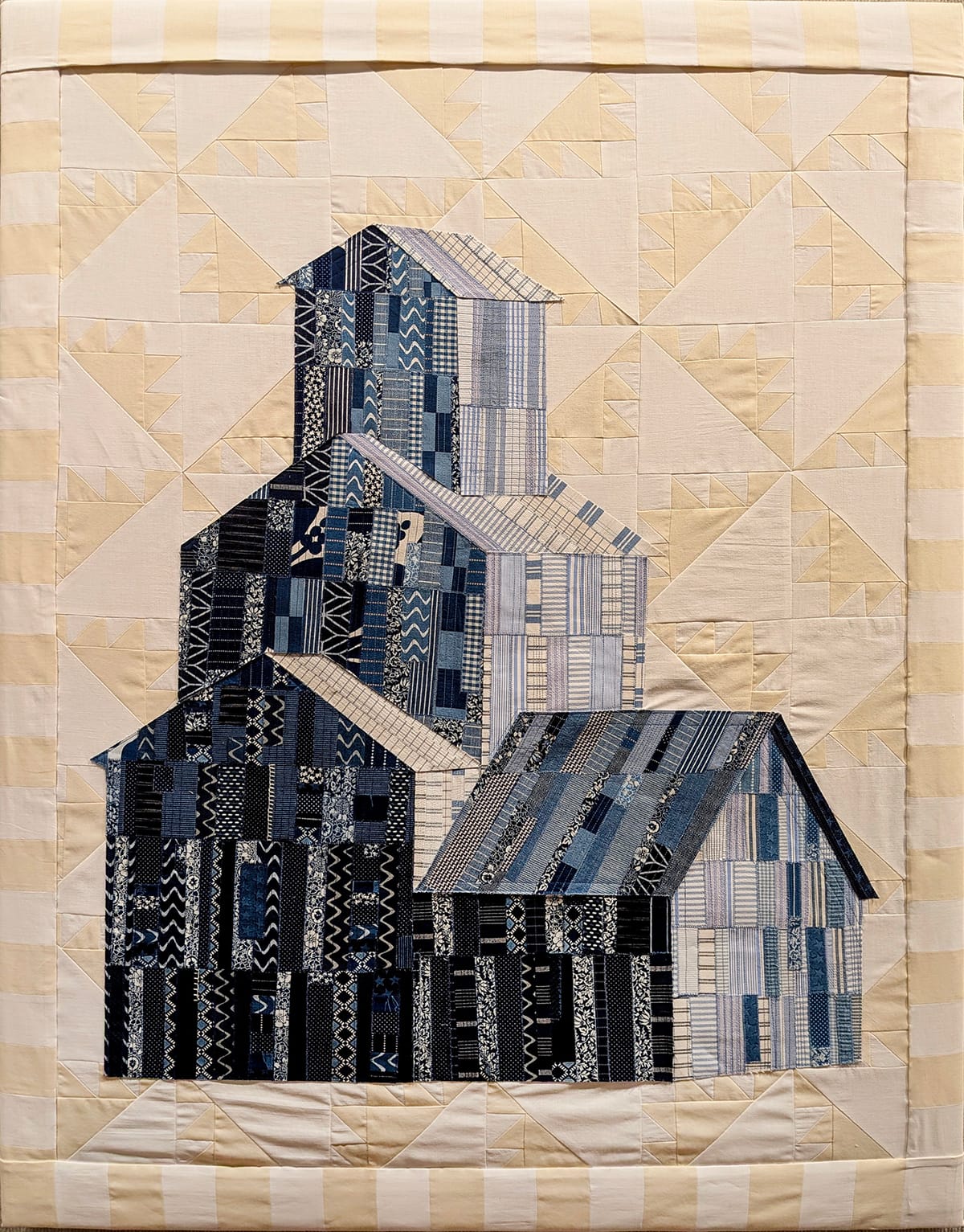
Kelsie Doty was not sure where her curiosity about art and design would lead, she shares in her artist statement, but credits Butler’s faculty for giving her the “space and scaffolding to find out.” Her fabric panel titled “Kansas Widowmaker” depicts a grain elevator stitched in a gradient of indigo recycled fabric strips, skillfully implying shadow and light on a cream and pale-yellow turnstile background known as the Kansas Troubles quilt pattern.
Now an Assistant Professor of Fashion Studies at Kansas State University, Doty’s use of the historic pattern is a proud and distinctive display of her homeland. The panel appears to be a quaint depiction of a common scene in rural Kansas, but the object label shares a tragic story of how the death of Doty’s grandfather as a young man at this grain elevator forever altered the trajectory of her family, forcing her widowed grandmother to run a ranch and raise three young sons on her own. Suddenly the quaint, bucolic scene feels stark and sinister, a reminder that tomorrow is never guaranteed.
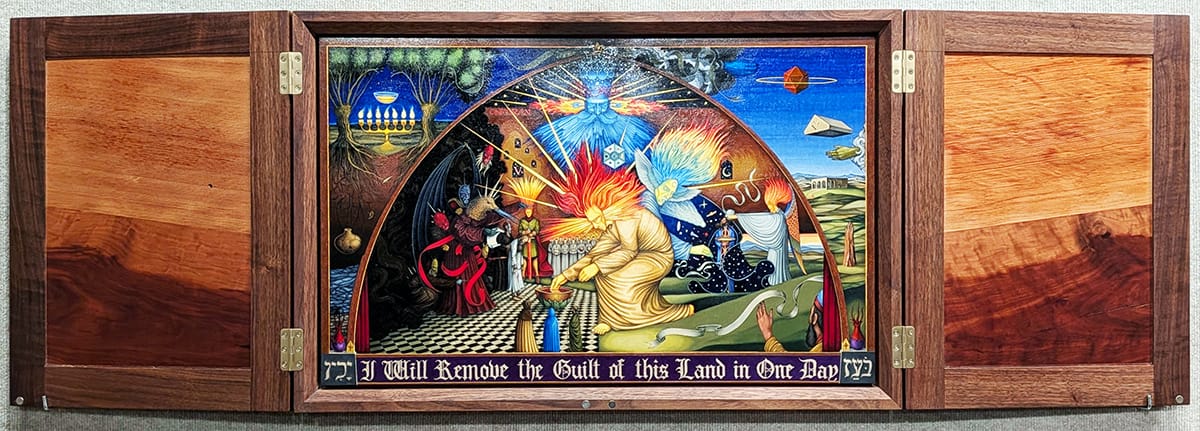
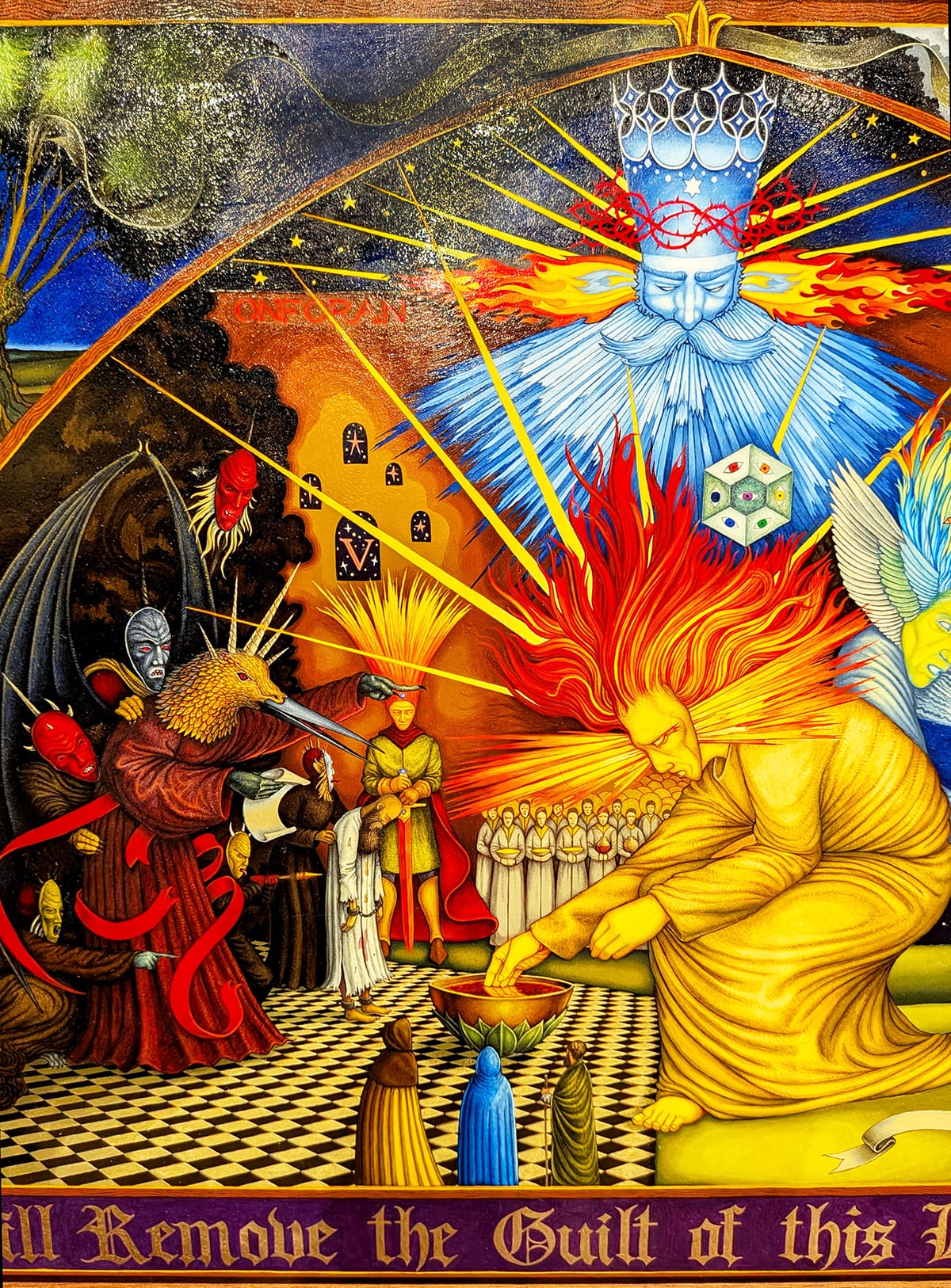
Jack Baumgartner, "The Fourth Vision of Zechariah" detail. (Jessy Clonts/The SHOUT)
Jack Baumgartner is a mid-career painter and printmaker whose work is heavily rooted in theological symbolism. Though his oil painting “The Fourth Vision of Zechariah,” depicting a scene from the Old Testament in painstaking detail of Renaissance-style influence is striking, it is his small black and white wood engraving of a laborer whose face is obscured by a large straw hat that catches my eye.
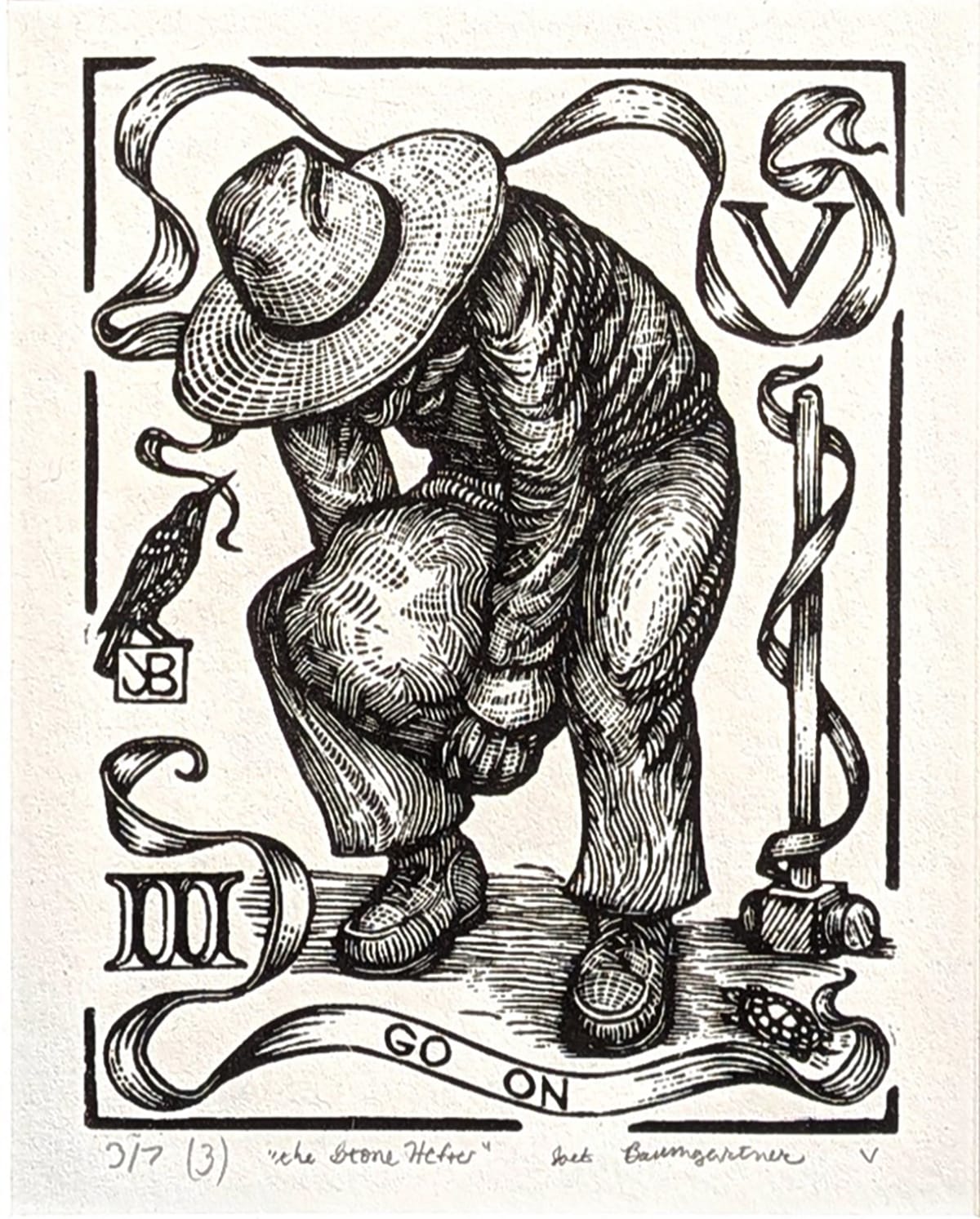
“The Stone Hefter” depicts a mustachioed man hunched over by the weight of a large boulder in his arms. Surrounding him is imagery from nature and industry: a turtle, a crow, and a sledgehammer, that symbolize the virtue of slow and steady hard work. It took a deep dive on Baumgartner’s website for me to learn that the Roman numerals three and five in opposing corners of the print represent the core Christian doctrines of the Trinity and the five wounds of the stigmata. As someone who was raised outside of the Christian faith, I view its imagery as powerful tools for storytelling and education, but from the standpoint of a simple, non-denominational observer.
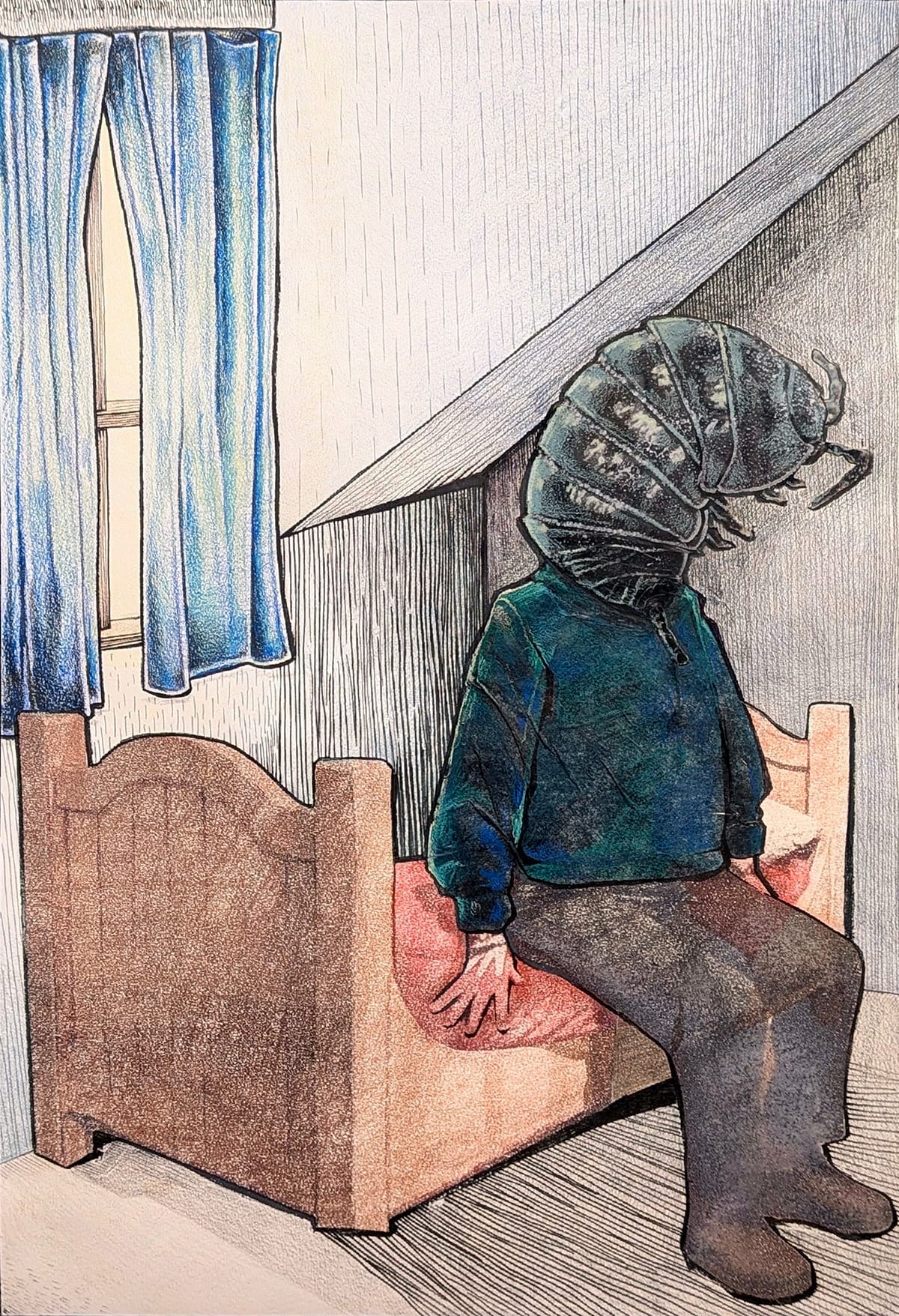
Emerging artist Savanna Nichols captures a snapshot of contemporary existential dread in both composition and title in the mixed-media work “Bed Rot,” also a self-care term for spending all day resting in bed while awake to escape stress or recharge from burnout. An austerely dressed human figure sits rigidly upright on the edge of a small twin bed, hands flexed, nearly gripping the pink unpatterned bedspread, and feet flat on the bare floor as though in anxious waiting. In place of its human head, a large pill bug, or “roly-poly,” tiny champion decomposer of the natural world, sits curled atop the figure’s shoulders, nearly touching the claustrophobically low, angled ceiling. The room’s only adornment is a set of blue curtains, slightly open, on the window at the foot of the bed. This figure is clearly not achieving the relaxation that the title demands.
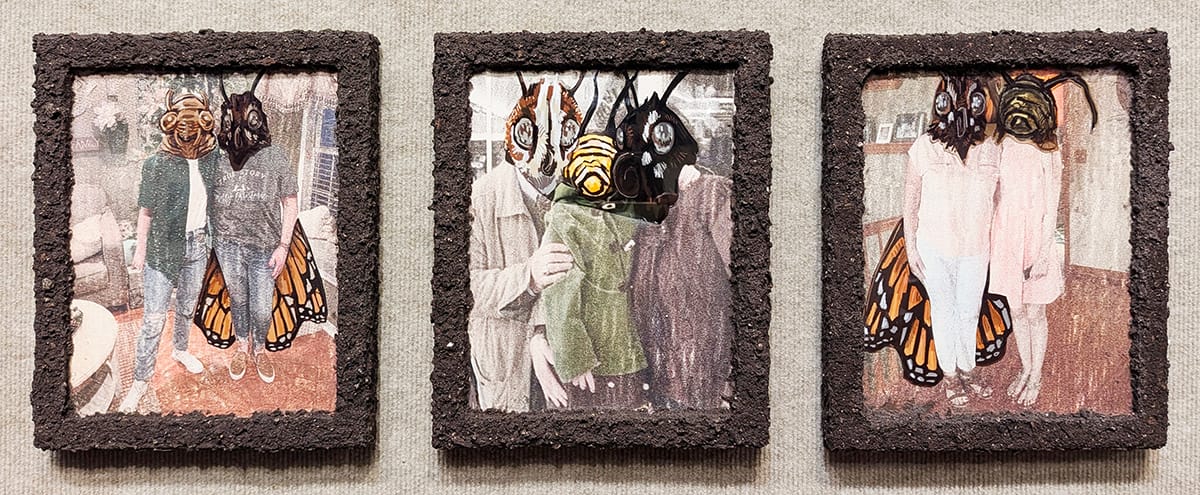
It is fascinating to see how the foundational education that Butler provided these alumni has informed their current practices. Over and over, I read artist statements that many attribute the discovery or rediscovery of the creative self to the guidance received, relationships formed, and confidence gained at this esteemed, nearly-century-old institution . Lexi Gruenwald pithily sums up the drive to take a chance in the realm of visual arts and pursue an art degree at Butler: “I knew only that I couldn’t spend the rest of my days curating a secret sticky note doodle gallery in an empty cabinet at the bank.”
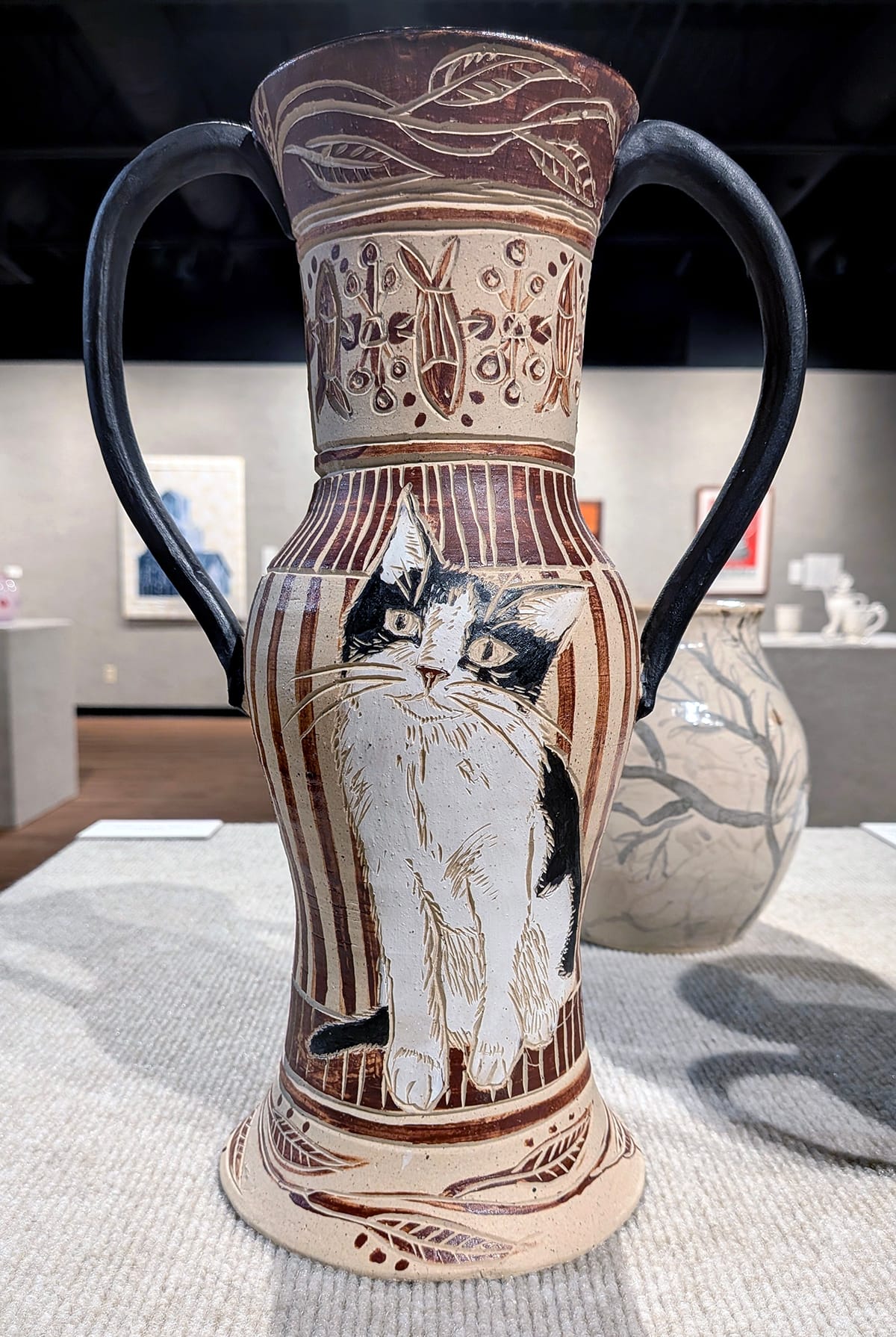
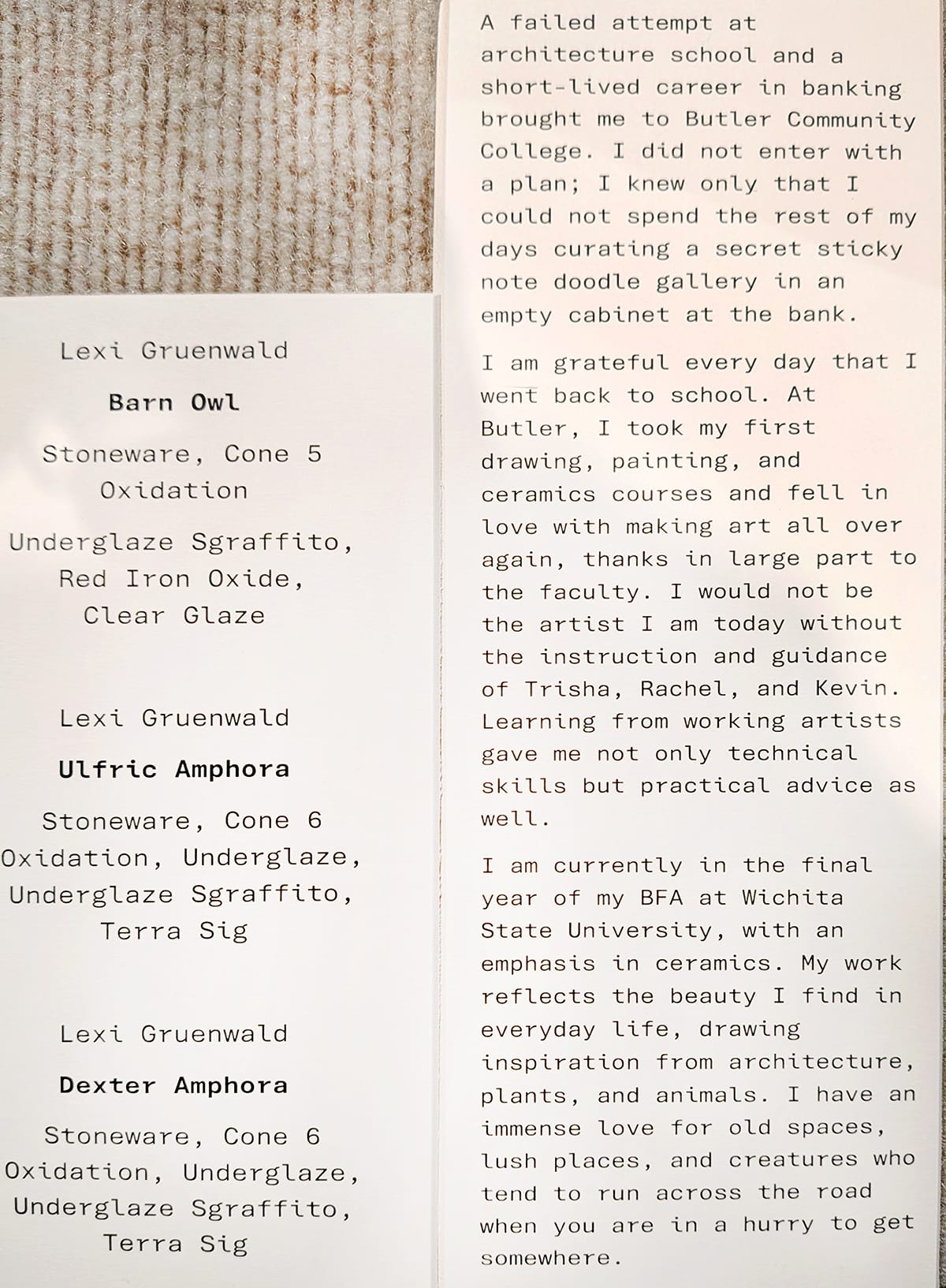
Lexi Gruenwald, "Dexter Amphora," stoneware, cone 6 oxidation, underglaze, underglaze sgraffito, and terra gig. (Jessy Clonts/The SHOUT)
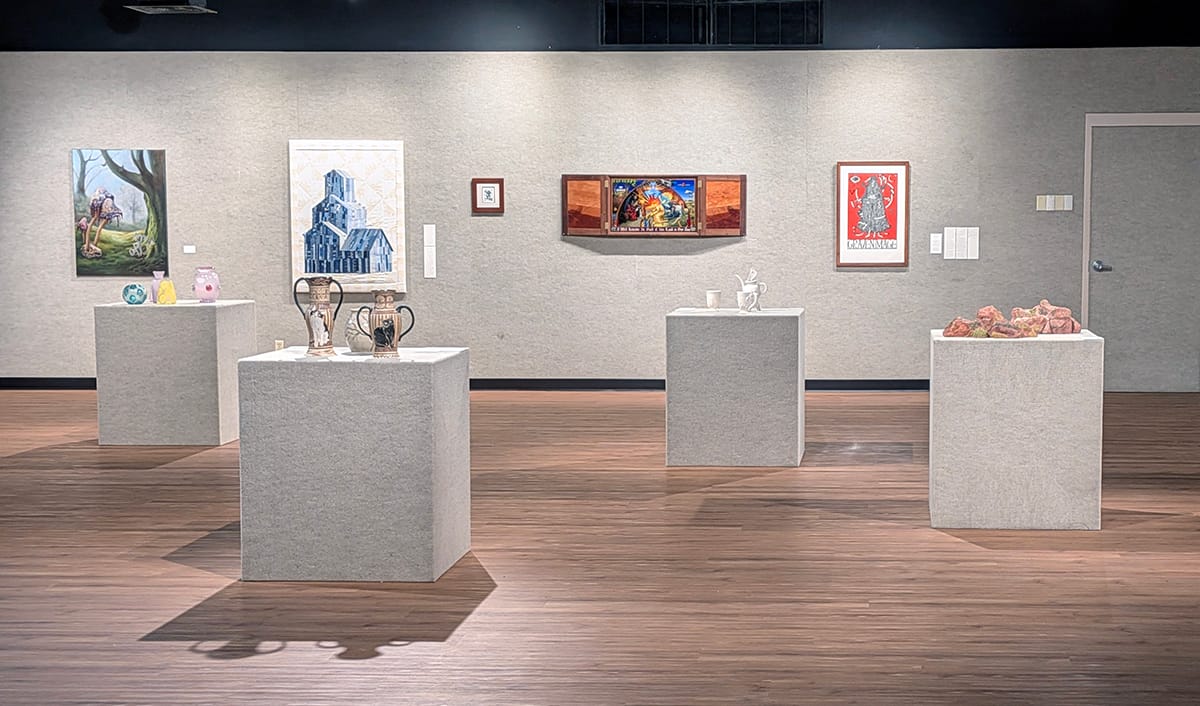
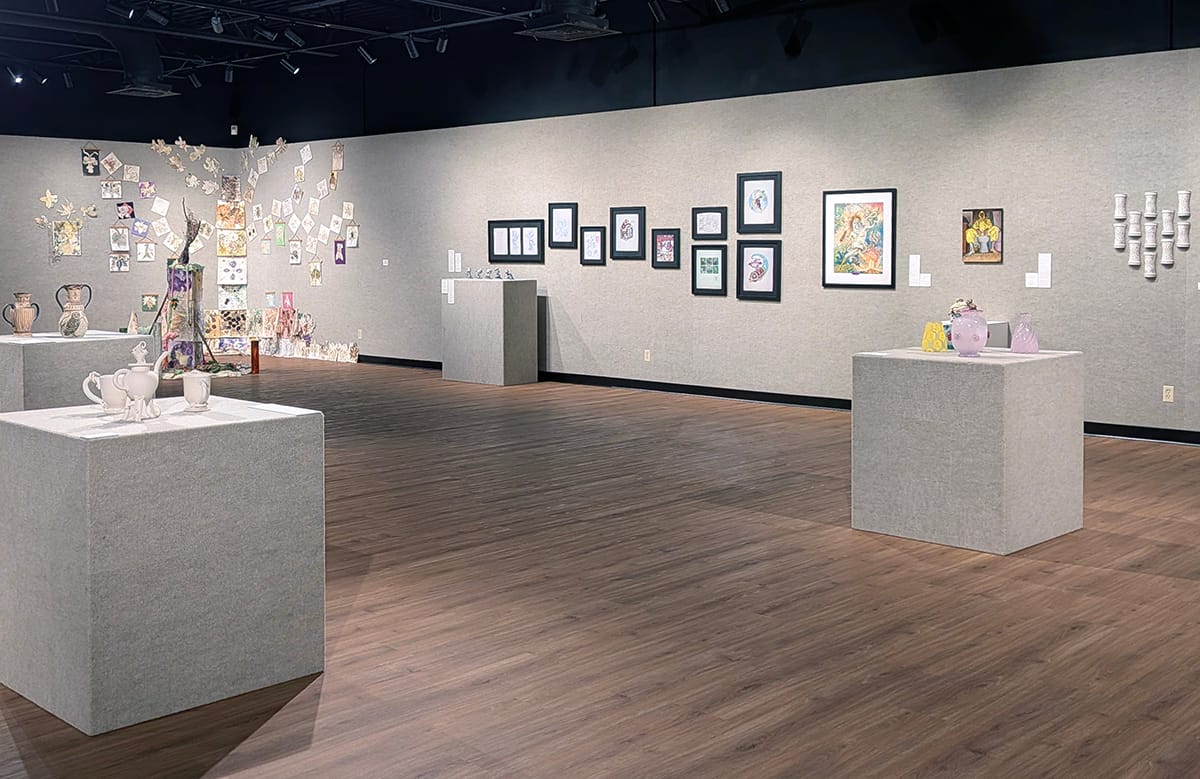
Installation views of the alumni exhibition in the Erman B. White Gallery at Butler Community College. (Elizabeth Moore/Erman B. White Gallery of Art)
The Details
Butler Community College Alumni Exhibit
October 1-26, 2026 at the Erman B. White Art Gallery of Art at Butler Community College, 901 S. Haverhill Road., 700 Building, in El Dorado, Kansas
The Erman B. White Art Gallery of Art is open 10 a.m.-4 p.m. Monday-Friday.
Admission is free, and the facility is accessible to people with physical disabilities.
Learn more about current and upcoming exhibitions on the Erman B. White Art Gallery of Art Facebook page and website.
Jessy Clonts Day is a writer, roller skater, and mother. After living ten years in the American South and Southwest, she and her spouse returned to Kansas to raise their family, where the sunsets are otherworldly and the arts community is alive and well.
❋ Derby man has the kind of voice that turns heads — and chairs
❋ Socializing while sober: how some Wichitans are cultivating alcohol-free communities
❋ As a small creative business closes, the owner mourns
❋ Painting through it: Autumn Noire on 20 years of making art
❋ How a guy from Wichita resurrected 'Dawn of the Dead'
❋ Bygone Friends University museum housed curious collections
Support Kansas arts writing
The SHOUT is a Wichita-based independent newsroom focused on artists living and working in Kansas. We're partly supported by the generosity of our readers, and every dollar we receive goes directly into the pocket of a contributing writer, editor, or photographer. Click here to support our work with a tax-deductible donation.