A big-city jazz album has roots in small-town Kansas
Vocals/trumpet duo Sounds of April and Randall is based in the New York area, but "Dishes Ain't Clean" is rooted in the Sunflower State.
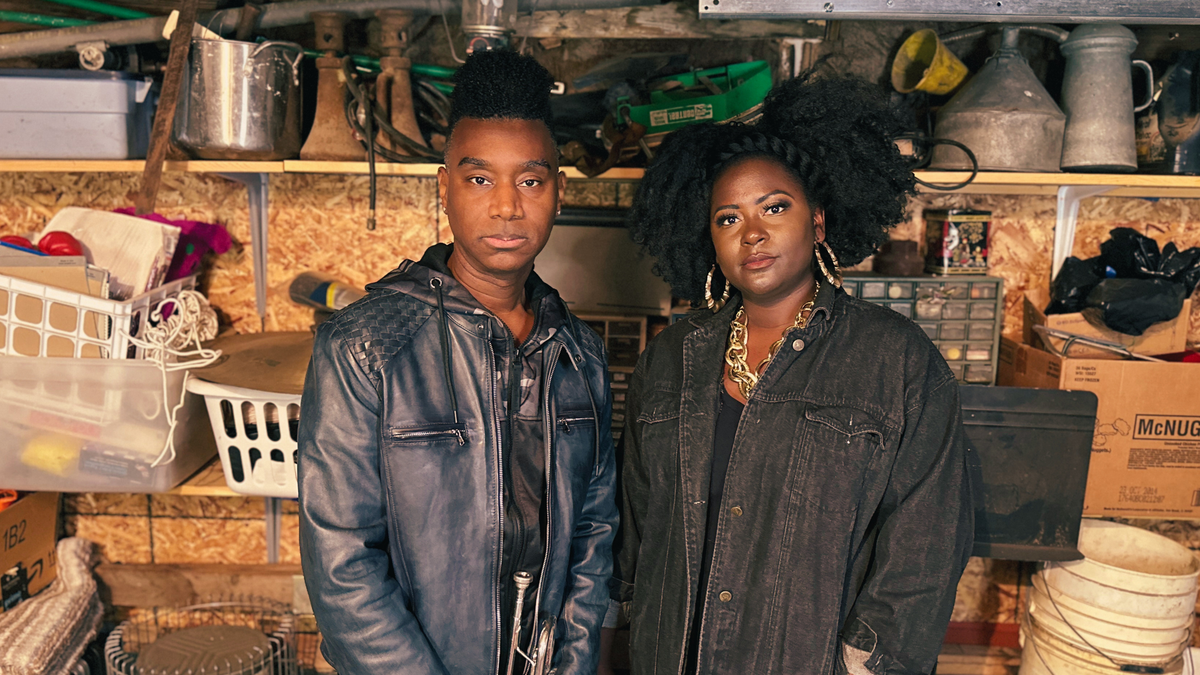
Singer April May Webb doesn't mince words. The latest album from Sounds of April and Randall, the project she leads with her husband, trumpeter Randall Haywood, examines the tension between the realities of life (both positive and negative) and the falsity of social media and influencer culture. The title and chorus of one song bluntly declare "Everybody Ain't Gonna Like You" with an unmistakable note of triumph.
So, when Webb describes why she left Newton, Kansas, in the brief prelude to "Cottonwood Tree" — a song she wrote while visiting her hometown — she tells it like it is: "There's an old familiar story," she sings in a natural but always controlled, slightly breathy but unfailingly clear voice, "about a girl who knew/ that her dreams would not come true/ if she stayed in her neighborhood."
For Webb — who, after leaving Newton, studied with pianist Mulgrew Miller (the Duke Ellington Orchestra, Art Blakey's Jazz Messengers, Tony Williams) at William Paterson University's jazz studies program — coming home isn't a chance to wonder about roads not taken or indulge in fond nostalgia. She knows why she had to leave and why her return will be "only for a little while."
The place where you grew up can nourish you long after you've left it, if you're lucky. A former home, or, as Webb puts it, "the place where she had been," can be a place for rest and rejuvenation, as it is in "Cottonwood Tree," which blends polyrhythmic hand percussion with a sunny, simple bass hook and multi-layered, Bobby McFerrin-style harmonies. But a hometown visit can also offer the space and spare time necessary to get some work done. The cottonwood tree that inspired the song sits in her parents' backyard. And the cover photo of "Dishes Ain't Clean," depicting Webb and Haywood sitting in a kitchen filled with dirty dishes, was shot by Webb's mother in the family home. (While the dishes are real, the dirt is digital.) For Webb, the mess of creation is just as important as the inspiration. Sometimes, it can even serve as the creative spark.

On the title track, Webb sees the messiness of her house as tangential to the more serious problem: the disparity between her real state of being and the false self she presents to the world. Over a fat, swinging bass line punctuated by a thick, nodding drumbeat (the rhythm section consists of Webb's brothers, Jacob and Nathan), Webb sings, stretching syllables in the time-honored jazz manner while keeping her soulful phrasing intact: "I ain't got it all together/ like I claim it ought to be/ because the dishes ain't clean, my life ain't really what it seems." Haywood, in addition to his tidily evocative muted trumpet accents, also contributes a capable rap verse, adding to the track's hip hop edge.
Webb also deals with the disconnect between inner space and outer appearance on the cabaret number "The Sunken Place," which revolves around walking upright bass and Webb's slinky blue notes. "If from the outside looking in/ you'd never know this trance I'm in," she sings, as strings, arranged and played by Gabe Valle, bloom behind her, turning a smoky nightclub number into a quasi-ironic show tune, like a less cartoonish, more grounded take on Bjork's "It's Oh So Quiet." The slick yet vulnerable "The Way Life Used to Be," effectively repeats the same trick, putting a modern COVID-era spin on Tin Pan Alley's old paeans to vanished yesteryear.

Haywood mainly confines himself to brief, colorful lines and short solos, usually played in punchy, Randy Brecker fashion, but gets to cut loose on the abstract "Life's Continuum," in which he accompanies Webb's wordless melismatic vocals in a slithery, technically impressive duet. Though "He Fell in Love" neatly tells the story of the couple's meeting and courtship in soul-pop form, it's the intuitive grace, creative spark and deep trust on display in "Life's Continuum" that captures the strength of their connection.
Webb may get what she needs from hometown visits while pursuing her art in the big city, but it's clear where her heart really lies.
The Details
Sounds of April & Randall, “Dishes Ain't Clean"
Purchase the CD album online ($20) and stream on SoundCloud, Spotify, or Apple Music.
For more information about the duo, visit their website and Facebook.
Reed Jackson lives, works and buys records in Kansas City. He is the managing editor of the Spectrum Culture website and has written for Aquarium Drunkard, Spin, Still Alive!, Revolver, and several now-defunct publications. ch.reed.jackson@gmail.com
❋ Derby man has the kind of voice that turns heads — and chairs
❋ Socializing while sober: how some Wichitans are cultivating alcohol-free communities
❋ As a small creative business closes, the owner mourns
❋ Painting through it: Autumn Noire on 20 years of making art
❋ How a guy from Wichita resurrected 'Dawn of the Dead'
❋ Bygone Friends University museum housed curious collections
Support Kansas arts writing
The SHOUT is a Wichita-based independent newsroom focused on artists living and working in Kansas. We're partly supported by the generosity of our readers, and every dollar we receive goes directly into the pocket of a contributing writer, editor, or photographer. Click here to support our work with a tax-deductible donation.