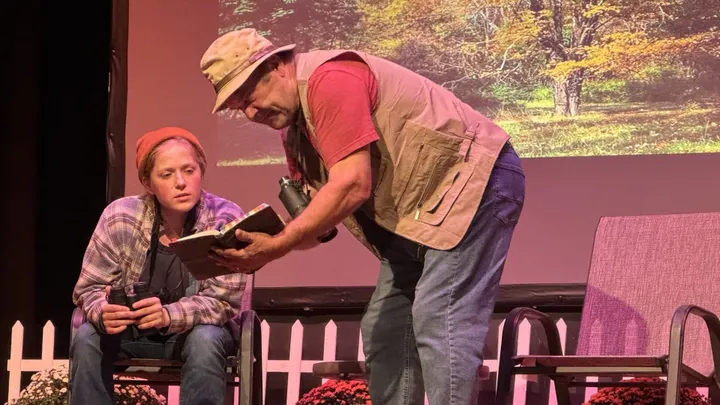
‘The Woman in Black’ haunts downtown Wichita
Roxy’s ushers in the Halloween season with theater tricks and powerful storytelling.
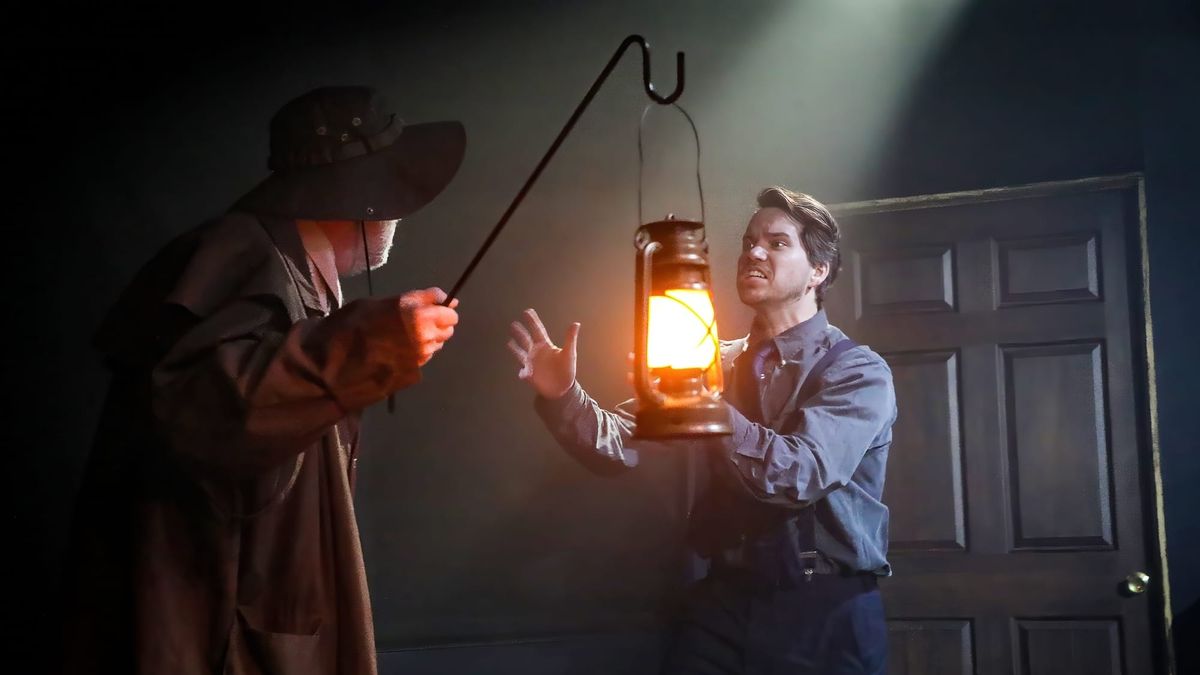
Roxy’s Downtown is celebrating the Halloween season with the delightful “The Woman in Black” by Stephen Mallatratt, a play based on the 1983 Susan Hill novel of the same name. The “play within a play” meta-theater two-hander provides an opportunity for one actor to portray multiple characters and the other to dive fully into enthusiastic terror. This production’s solid acting, careful sound design, and theatrical tricks of the trade combine with the script’s beautiful text to offer a treat we all deserve.
The narrative centers around Arthur Kipps, who needs to tell a story. Trembling at center stage with a hefty manuscript in hand, he stammers through the opening paragraph of what certainly is an important text. He has hired an actor to help coach him, but it’s not going well. Kipps openly declares theater is “not his sort of thing,” and that’s obvious. This opening scene offers enough levity to settle the audience into the conceit of two likeable figures telling a story.
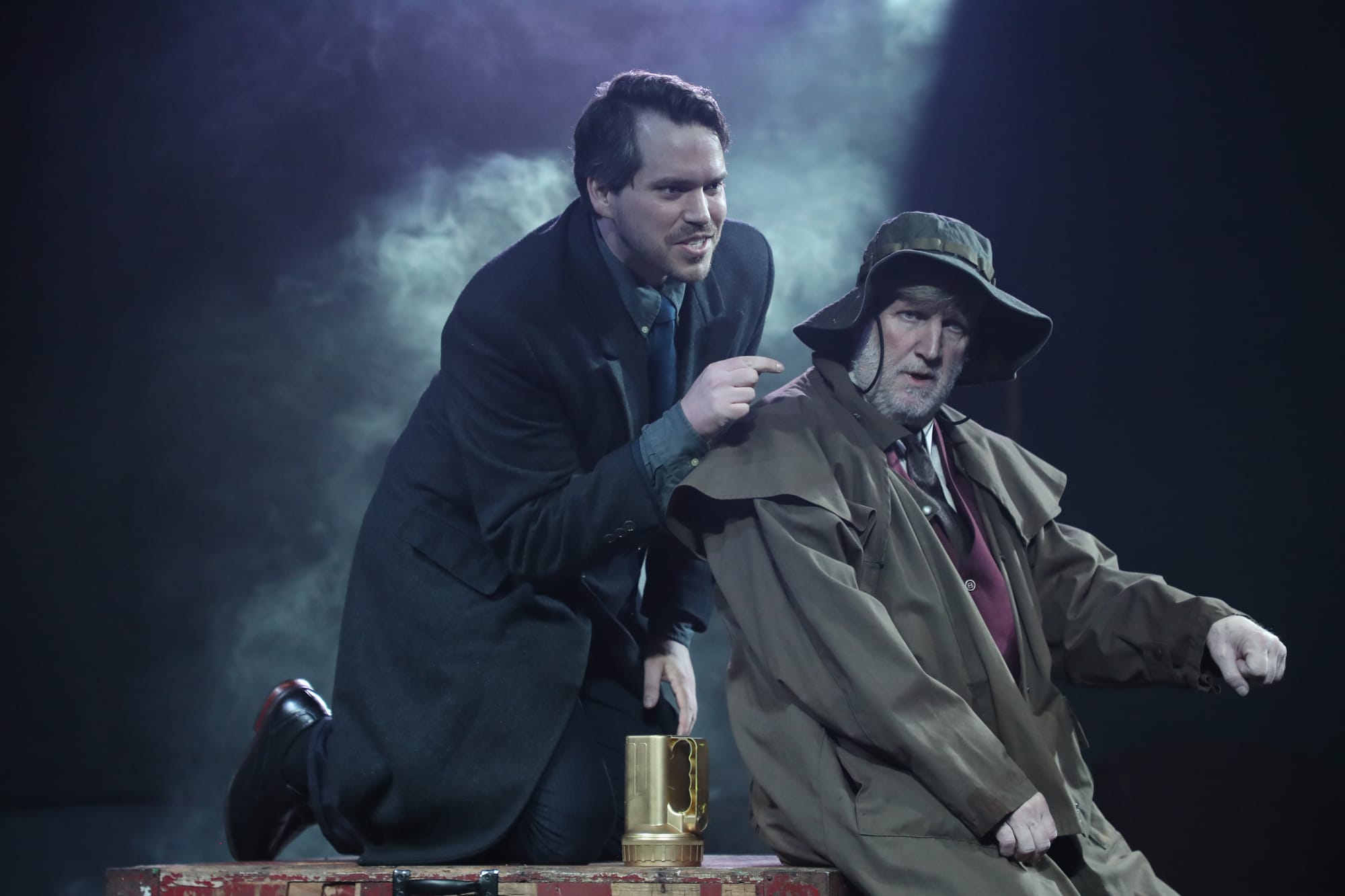
Eventually, the hired acting coach, played by Simon Hill, takes on the role of Arthur Kipps, and the real Arthur Kipps, played by Rick Bumgardner, handles the myriad characters encountered along the way. Kipps is a solicitor who has been sent to Eel Marsh to handle the estate of Mrs. Drablow. The directions to her home are convoluted, and the locations are obscure, if even real. The drama begins to unfold as Mr. Kipps, now played by the actor, learns about her haunted life. The story is well written but made better if one does not know what’s coming. I won’t be spoiling anything here.
As convoluted as it might sound, the multi-character, two-actor setup works very well in the theater. Bumgardner demonstrates great range playing roles including a sniveling bookkeeper and salty trap driver, all the while rooting each portrayal within the character of the Mr. Kipps presented in the opening scene. Much of the first half requires the actors to slip in and out of the retelling, and Bumgardner handles these shifts well. His control of body and voice ground each character in something precise and distinct from the others while avoiding over-the-top caricature.
Simon Hill plays the actor-for-hire who helps Arthur Kipps tell his story. In the opening moments, the eccentricities of the theater artist land a little strong. But once the retelling of the mystery begins, Hill abandons the affectations of the first scene. Later, when circumstances become harrowing, his enthusiasm in reacting to alarming events keeps the action moving.
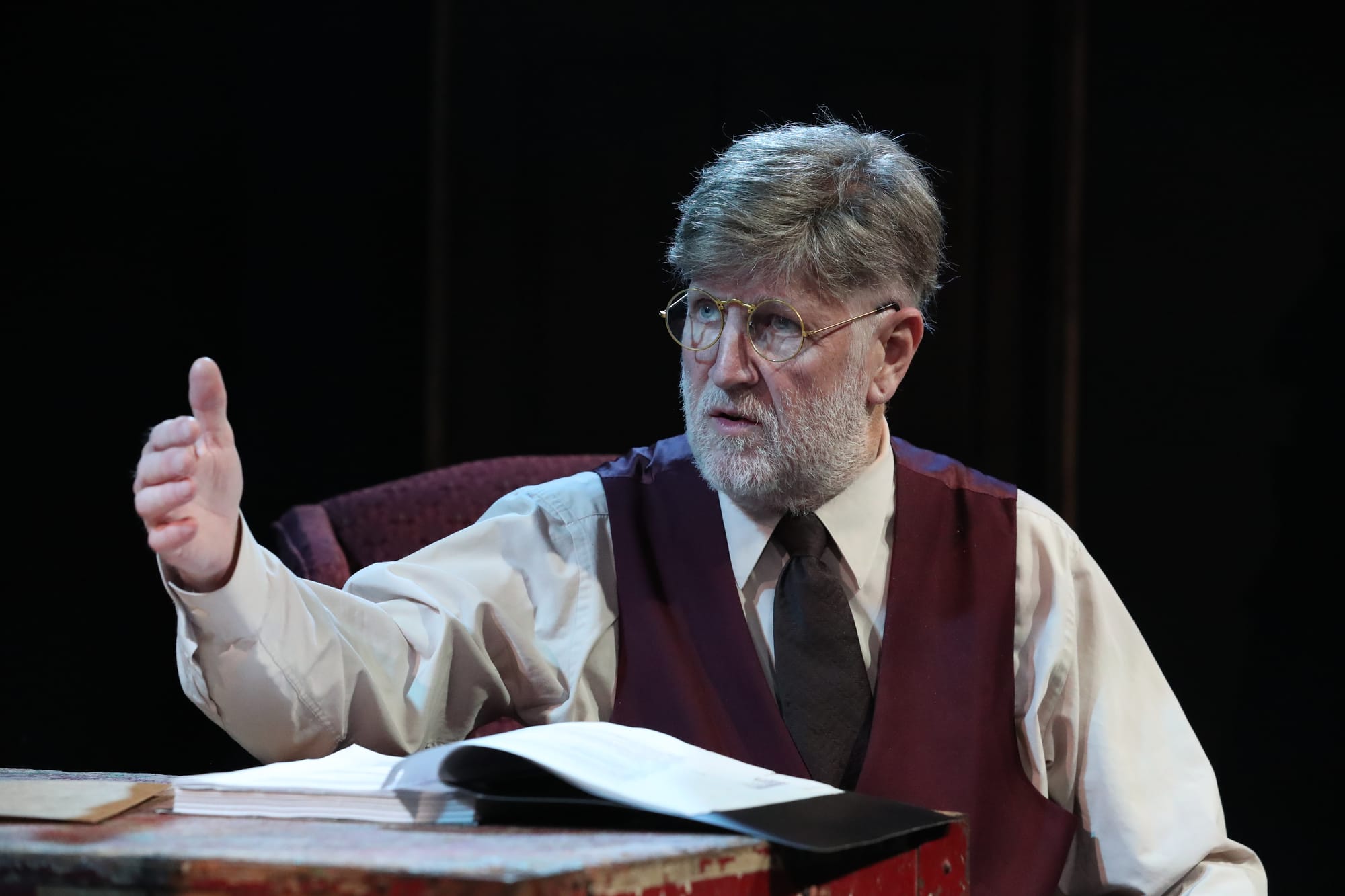
Both actors employ soft standard British dialects. While they may not be perfectly consistent or accurate, if the viewer is open to the conceit, they never distract. These two actors work well together, and, despite a few uneven moments, their chemistry brings a unified effort to invite the audience into their reality.
“The Woman in Black” leans heavily on Brad Thomison’s sound design. The characters themselves explain this: At one point, the actor-for-hire declares, “I have cut much of the descriptive passages.” When Kipps objects, the actor rebuts, “Recorded sound, Mr. Kipps, recorded sound!”
Recorded sound, indeed. The soundscape is vital throughout the show and brings life to its telling. Everything from simple London street sounds to entire passages recited by an unseen priest, voiced by Joseph McGrath, come together to create a rich aural environment. As the action moves from London to Eel Marsh, seaside sounds wash over the space, and as action intensifies, sound brings unseen action to life. (On opening night, a few of these critical sound cues were called a hair early or cut off a bit abruptly.)

The lighting design by Jamison Rhoads works in lockstep with sound. A storm scene with lightning and wind creates suspension and surprise with the added benefit of cleverly obfuscating the underlying staging.
Despite its strong technical elements, the production is reduced by technical excess in a few places. For example, two projections (also designed by Thomison) seem to appear from nowhere to indicate what is already being demonstrated on stage. In a simple story like this, anything too far beyond what is necessary detracts from the moment and pulls focus from the narrative.
The original score, created and prerecorded by Chris Henderson, Landon Hook, and Aimee Norris, offers music eerie enough to tell the audience what kind of play we were seeing. It’s deployed with discernment, taking a supporting role instead of upstaging the action. I have seen theater of this genre so overwrought with “spooky” music it overwhelmed and detracted, but here it lifts the show in just the right spots and allows silence and sound effects to play balanced counterparts.
Costumes, designed by Kalon Kirk, are simple but effective. The character playing the various roles can add or subtract a piece and keep a seamless look while moving the story. The scenery, designed by Jason Huffman, is delightfully simple and pragmatic, yet at times surprisingly detailed.
Roxy’s Downtown is a difficult staging space, but it is well suited for this play’s intimate storytelling. Director Terry Erbe has put together a cohesive story that allows each element of a potentially convoluted script to shine through. Erbe keeps the pacing up and the storytelling front and center, so much so I was surprised both when intermission arrived and again at the final blackout.
I would suggest ticket-buyers select seats farther back in the house. I was seated on the floor only a few feet from the front of the stage, and from my vantage some of the mystery was revealed by over-spilled light. It didn’t spoil the fun, but my own bad habit of getting lost in production details occasionally pulled me out of the moment.
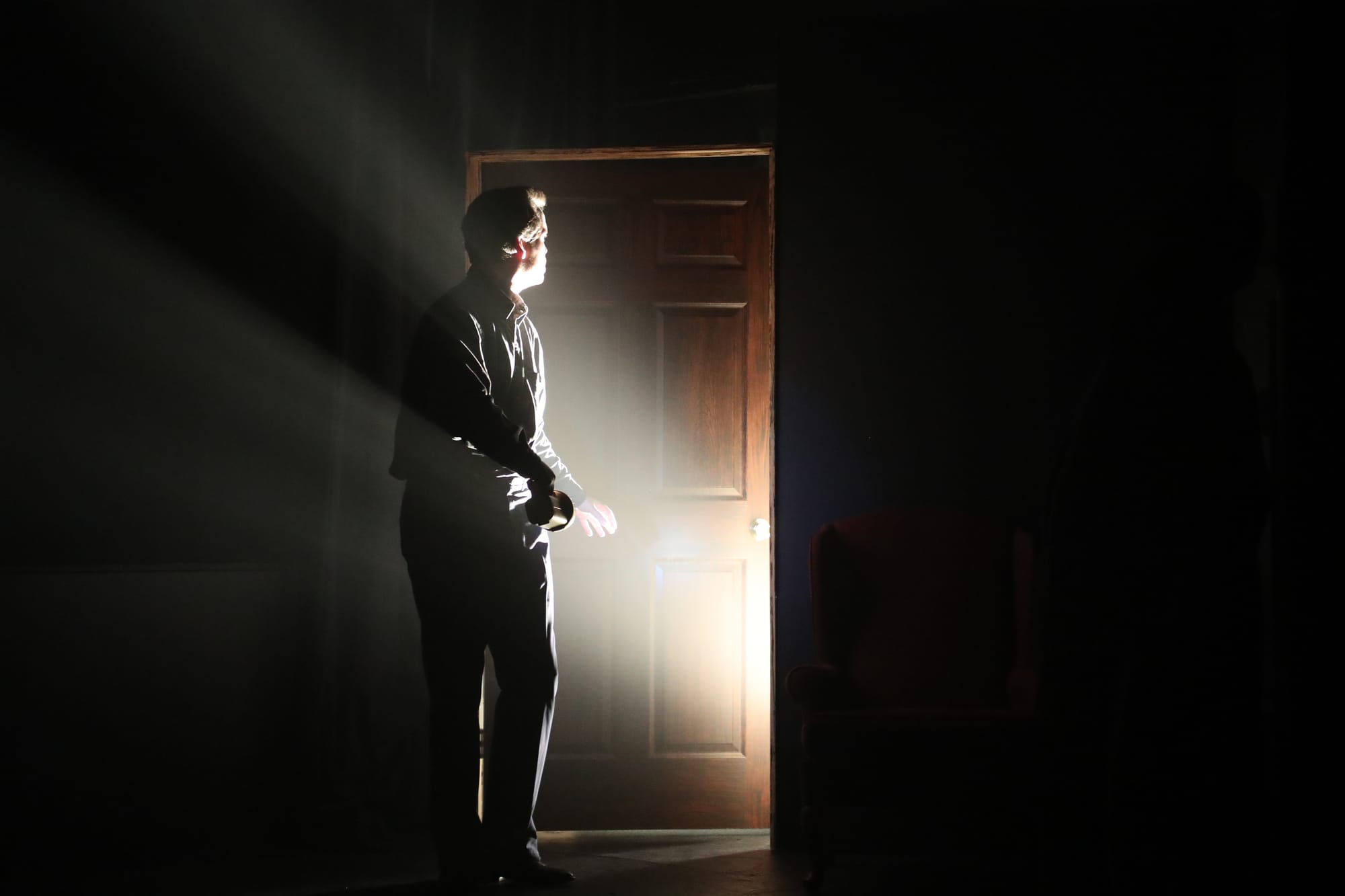
Ghost stories, at their core, are celebrations of life. We speak of terrorizing events to comfort ourselves by comparison. Good ones raise our heart rate and open our senses; by the end, one should be giddy at the unexpected reveal and feel an inclination toward gratitude.
Ghost stories also are immersive, and Roxy’s ensures this experience well before the house lights dim with very clear communication regarding audience expectation. I received several pre-show emails with messages — reiterated in the pre-recorded curtain speech — about when to arrive, where to enter, and what to expect. I cannot imagine watching this kind of show with waitstaff clunking about and latecomers pushing their way through the house. I only wish every live theater experience were so well managed.
The Details
Roxy’s Downtown presents “The Woman in Black”
October 9-November 7, 2026, at Roxy’s Downtown Theatre, 412 ½ E. Douglas Ave. in Wichita
Performances take place at 7:30 p.m. Thursday-Saturday. A 2 p.m. Saturday matinee is offered on October 17 and October 31.
Reserved Tickets are $47.
Learn more and buy tickets online.
Leslie Alan Coates is a theater faculty member at Butler Community College and has acting and directing credits from San Diego to New England. He is a former board member for Forum Theatre Company, where he also appeared in "Christmas Letters," "Pump Boys and Dinettes," and various Words and Music performances.
❋ Derby man has the kind of voice that turns heads — and chairs
❋ Socializing while sober: how some Wichitans are cultivating alcohol-free communities
❋ As a small creative business closes, the owner mourns
❋ Painting through it: Autumn Noire on 20 years of making art
❋ How a guy from Wichita resurrected 'Dawn of the Dead'
❋ Bygone Friends University museum housed curious collections
Support Kansas arts writing
The SHOUT is a Wichita-based independent newsroom focused on artists living and working in Kansas. We're partly supported by the generosity of our readers, and every dollar we receive goes directly into the pocket of a contributing writer, editor, or photographer. Click here to support our work with a tax-deductible donation.