Ballet Wichita springs forward, presenting civil rights history in ‘Breaking Barriers’
The dance company's spring concert features two original works. One honors the participants in Wichita's 1958 Dockum Drug Store sit-in, a key moment in the Civil Rights Movement.
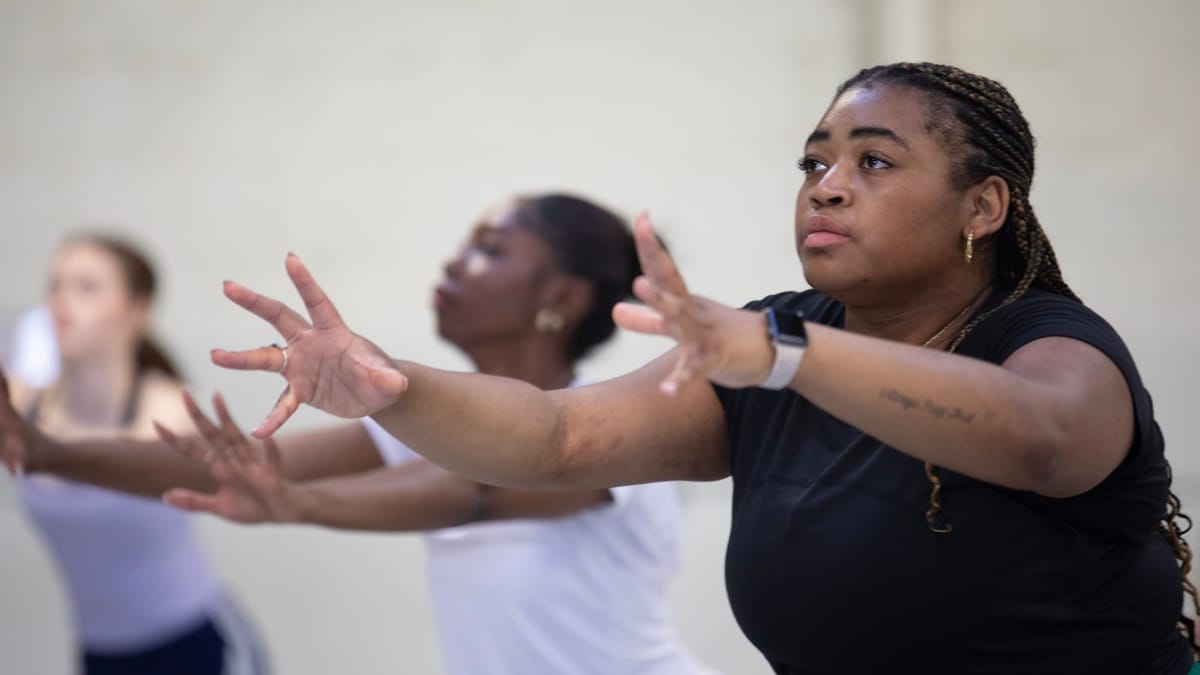
Ballet Wichita presents work about pioneering young people in “Breaking Barriers,” which opens the company’s season April 3-4. Guest choreographer Yusha-Marie Sorzano and the company’s new executive director Sandra Shih Parks contribute original dances to the company’s spring concert, which,
since 2024, has been dedicated to new work and surprising explorations.
Sorzano’s work, second on the program, will be what she calls an “honoring, reverencing” of bravery in the summer of 1958: teenagers and other young Black people who were members of Wichita’s NAACP Youth Council planned a sit-in at the Dockum Drug Store’s lunch counter in protest of its whites-only service policy.
The sit-in in downtown Wichita lasted from July 19 to August 11, 1958 and involved some 24 NAACP Youth Council members, including its President Ron Walters. Sitting quietly at the lunch counter — not reading or chatting, simply looking forward with dignity — was a silent appeal for equal access.
The Wichita youth achieved their goal when the owner of all the Rexall Drug Stores in Kansas issued a policy of serving “all people without regard to race, creed or color.” It was the first youth-led lunch counter sit-in of the Civil Rights Movement.
Sorzano reveres “the specificity of the moment where young people made a decision and created change,” she said in an email interview.
The visiting choreographer studied at the New World School of the Arts and Dance Theatre of Harlem before joining companies including Complexions Contemporary Ballet, Alvin Ailey American Dance Theater, and TU Dance. She is also a founding co-artistic director at Zeitgeist Dance Theatre. In April 2025, her work “This World Anew” accompanied the Whitney Museum of American Art’s exhibition honoring the legacy of Alvin Ailey.
She has been working with Ballet Wichita over the past year to bring the Dockum Sit-in to life through dance, a task she embraced.
“I felt a kind of responsibility land in my body — to respond with care,” she said. “These young people chose to sit, and that choice shifted something real.”
To ground a work of dance in history, Sorzano visited The Kansas African American Museum to learn about and view artifacts related to the sit-in.
The resulting piece “asks the dancers to hold something, to embody an environment of waiting, pressure, and endurance,” she said.
The piece casts five Black dancers to represent the students who sat at that counter.
“Their bodies were the site of the action, and they hold a kind of stillness, yes — but the world around them witnesses, creates pressure, and gives in to pressure, resulting in change,” Sorzano said. “Both sides of the counter are important. It’s all one organism.”
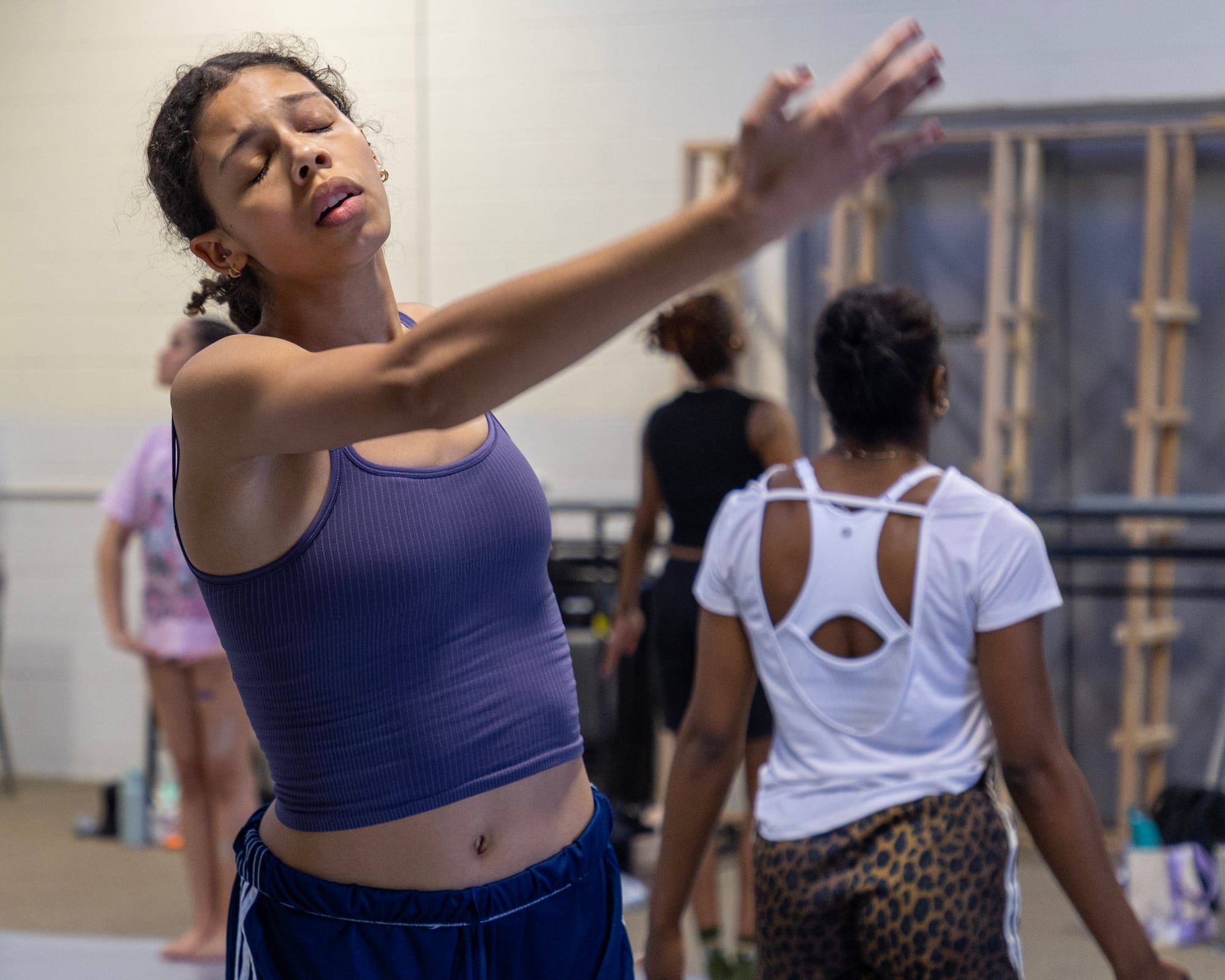
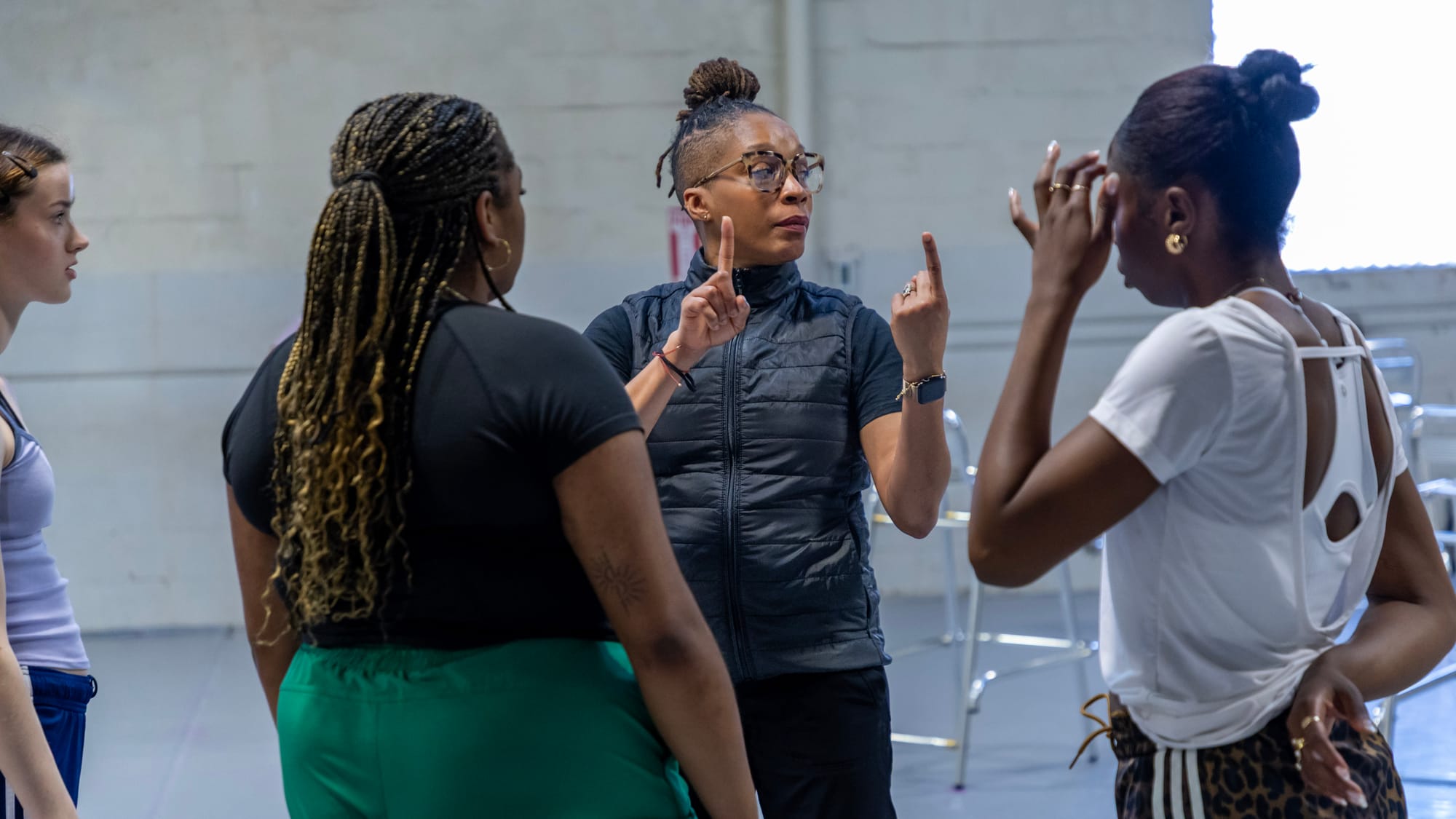
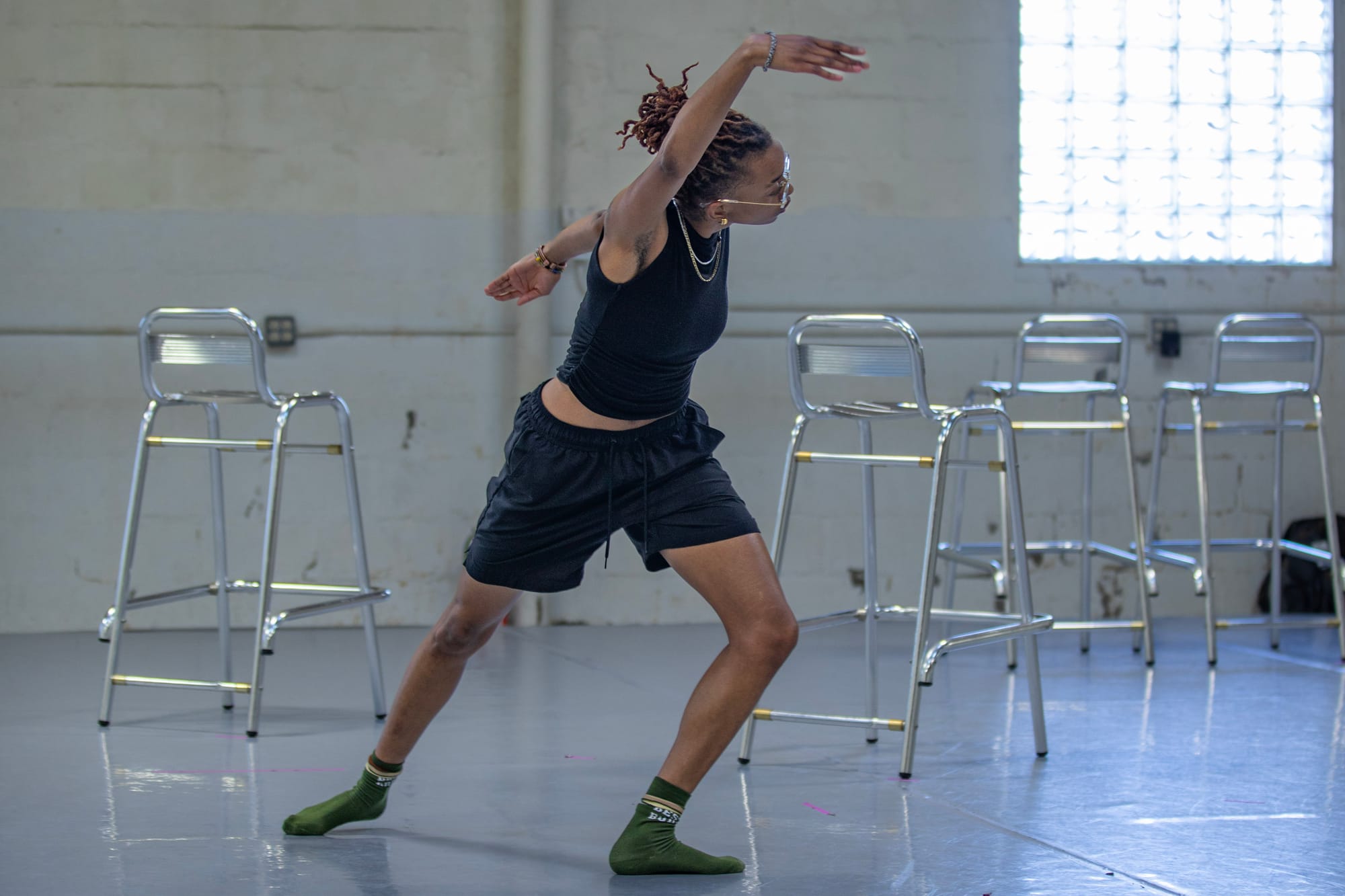
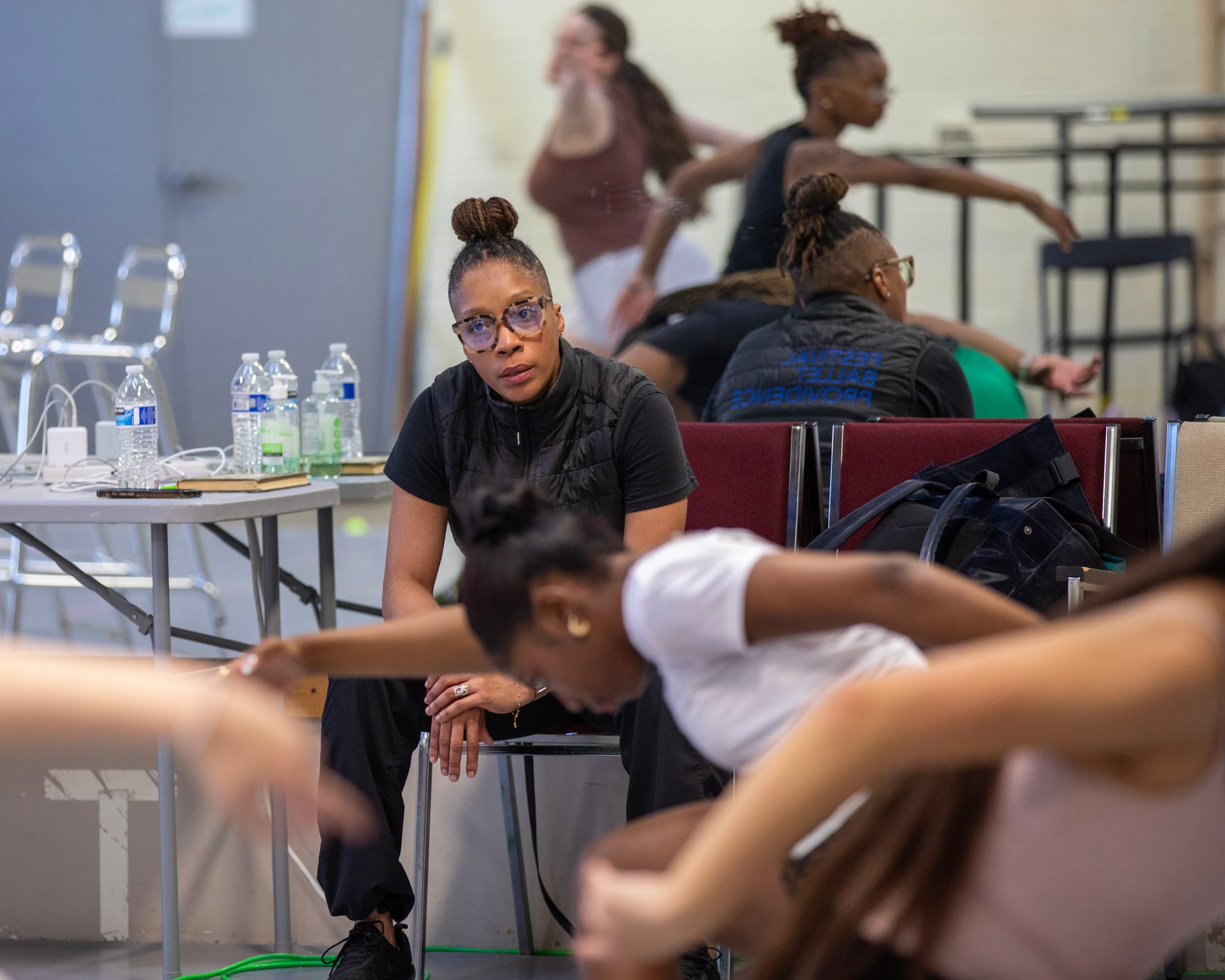
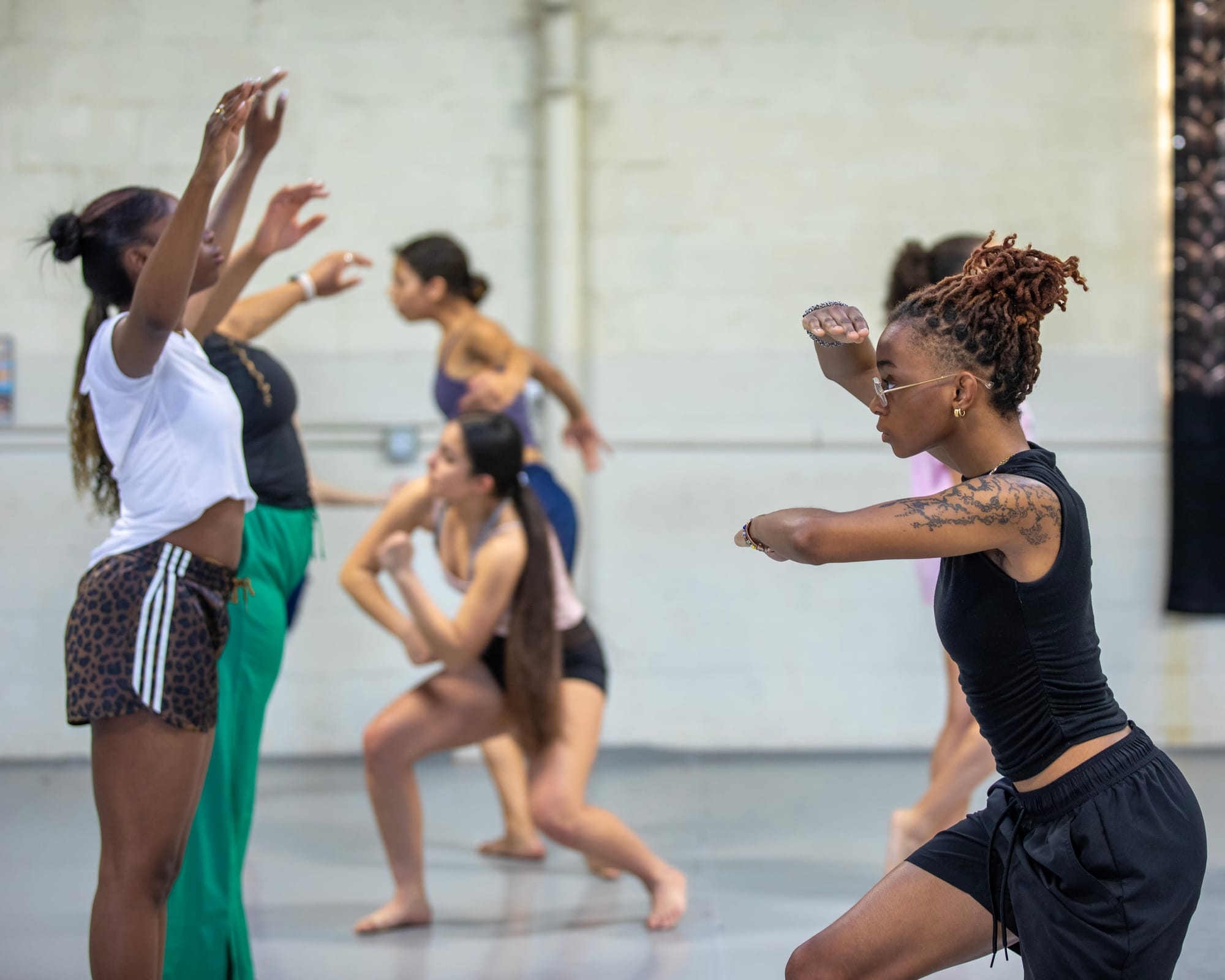
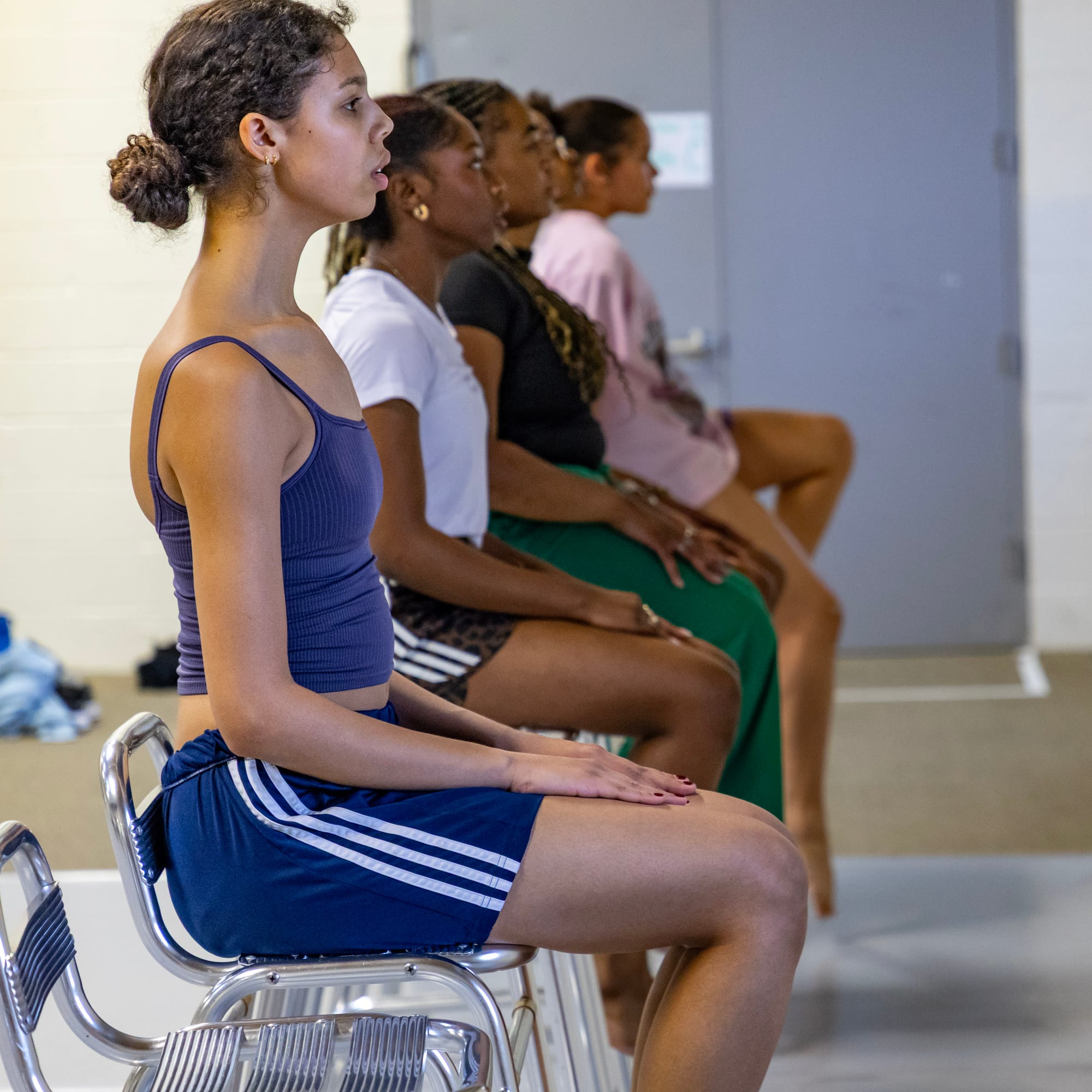
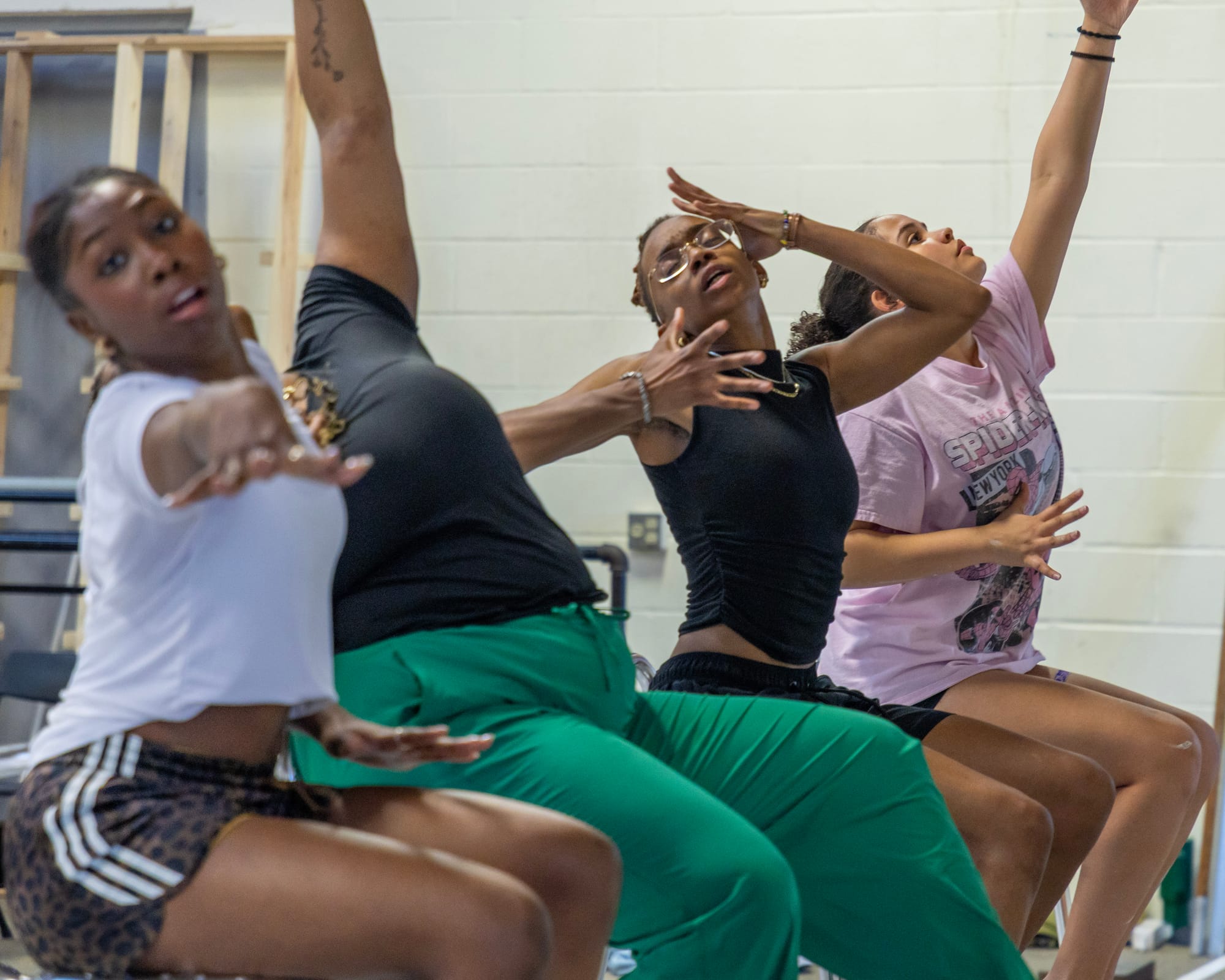
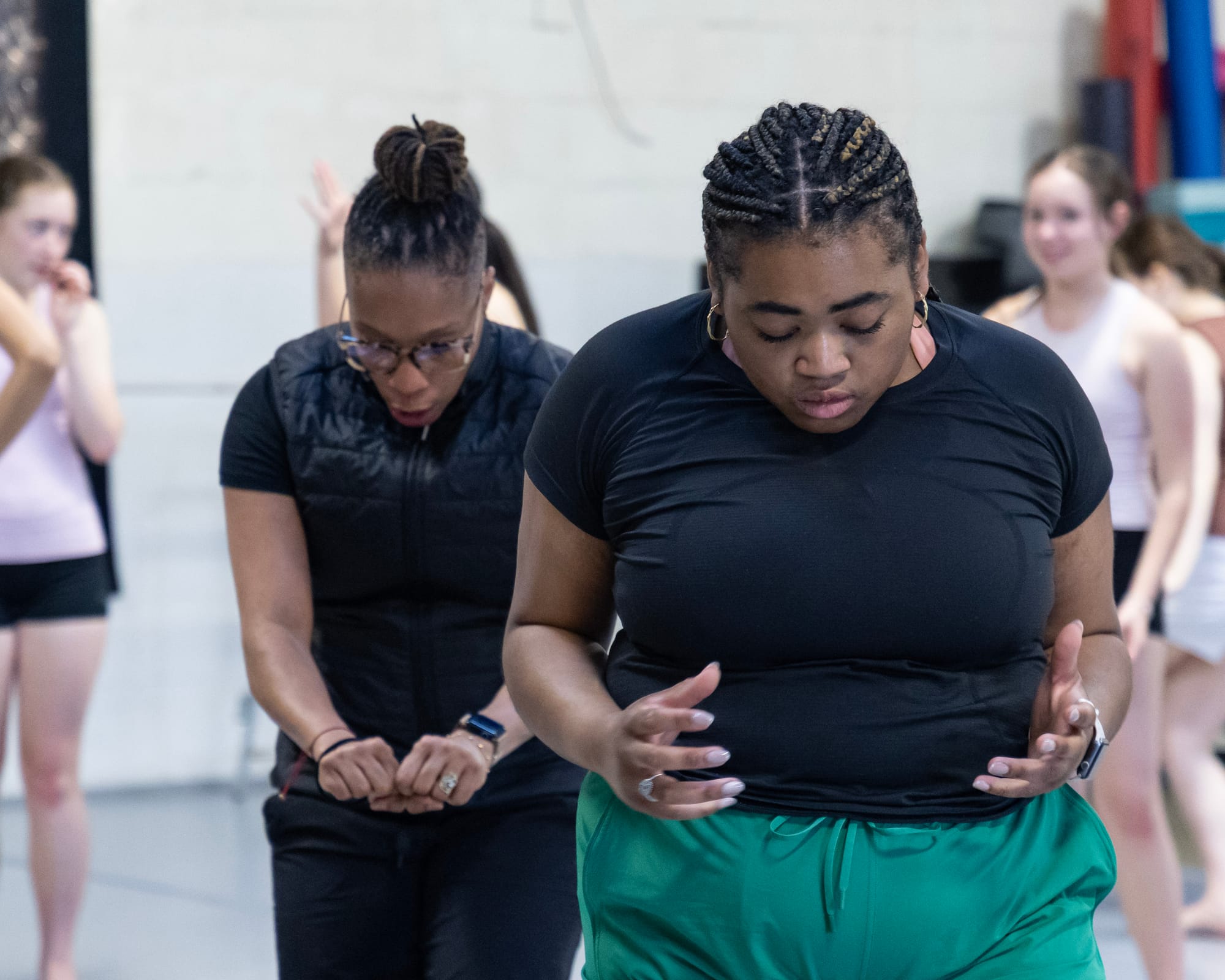
In rehearsal, Sorzano’s choreography on the teenage dancers show a compacted and escaping energy: containment and release. At “the counter,” five Black dancers sit in profile, in a line away from the viewer, with square shoulders, hands facing down on knees, fingertips precisely aligned, and time seemingly suspended. They cycle through three counts: an extended pose of arms and torso, a contraction, a fanned pose with torsos twisted and fingers in bursts near their faces. On “four,” they withdraw like a Rubik's Cube, swiftly spun, clicking into solid colors: the original fingertips-aligned, straight-backed, chins-high pose.
Behind them, nine more teenage dancers are on their feet internalizing a passage that Sorzano created prior to rehearsing the “counter” group. The tormented, violin/piano passage squeals, “one, two, three, four, FIVE! rest,” and the dancers, each in a wide-legged stance, whip through four beats of side-to-side leaning, reaching, enclosing, and churning both arms, the stretch direction alternating by row. Everyone pulls inward on “FIVE!’ — wrists crossed, two fists to the gut. On the third repetition, beats three, four, five are weaving, retreating steps backwards, like a staggering boxer.
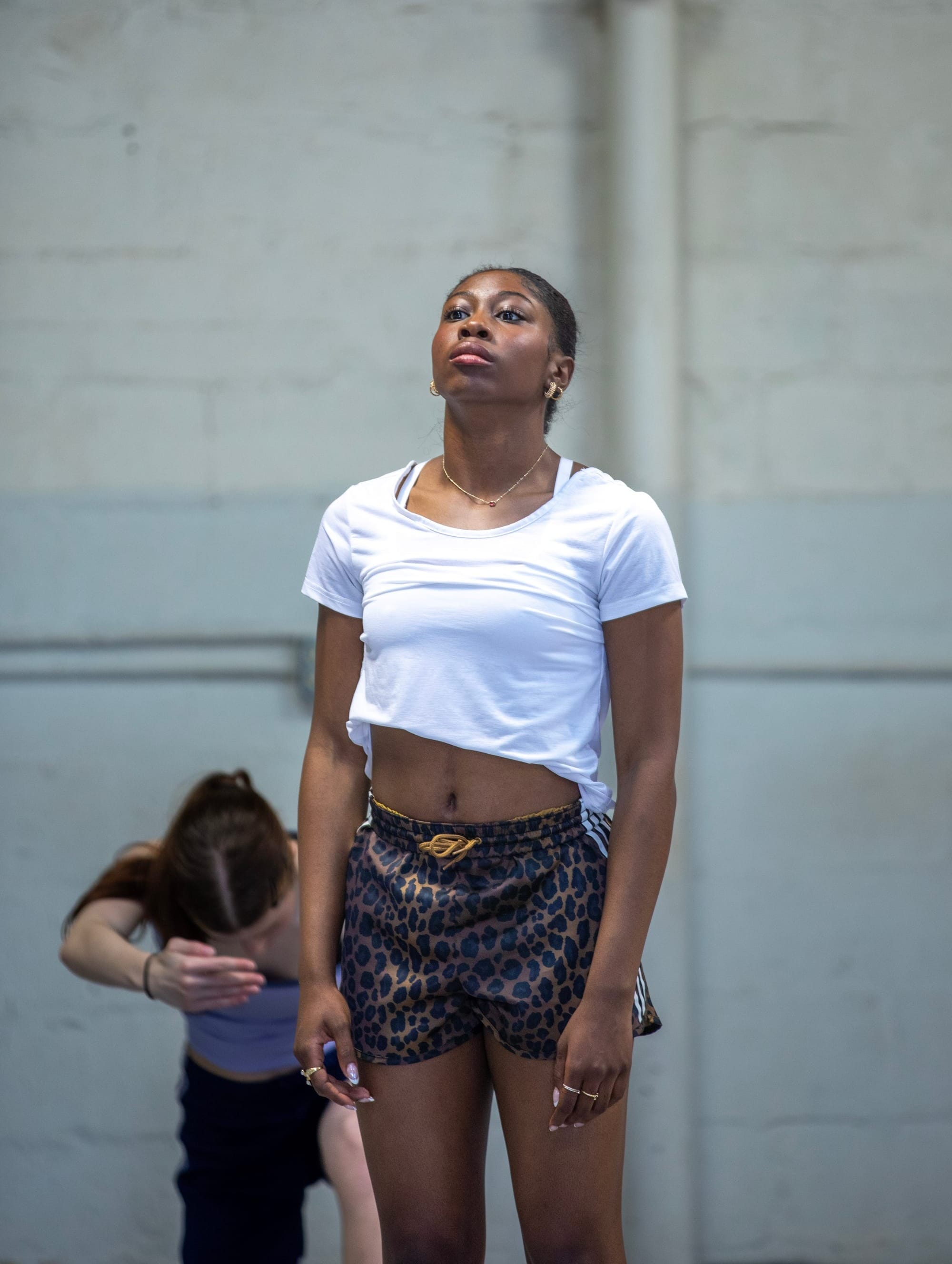
The atonal, non-metric music by Estonian composer Arvo Part holds tension and stretches time, so the audience can feel the waiting, the pressure, the endurance.
Sorzano suggests the piece raises the question, “What does it mean to hold your ground now? That’s a sacred choice — to sit, to endure, to not move when everything in the world is pushing against you.”
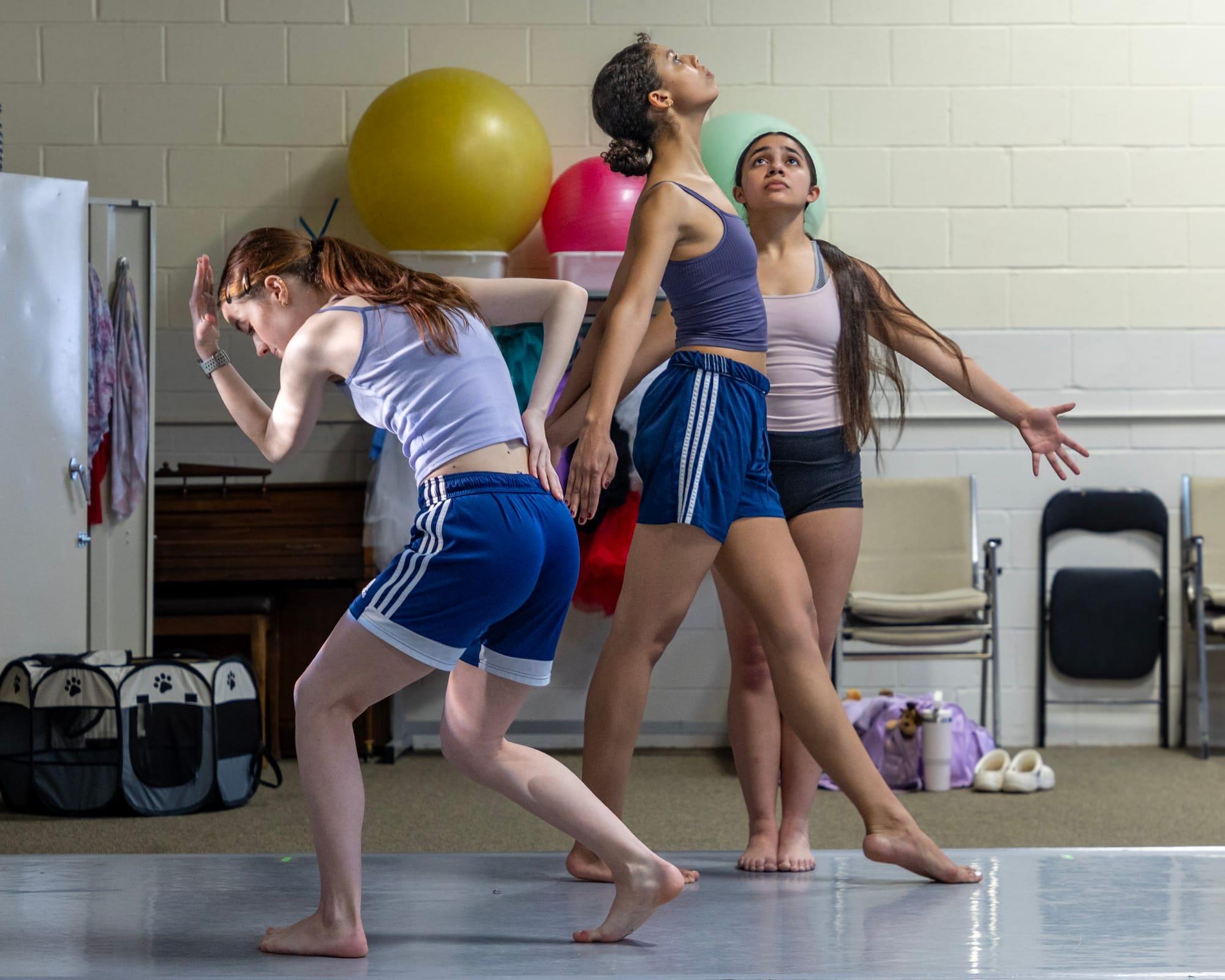
The first half of the evening, “Invisible,” is a newly reworked dance by Parks that focuses on visibility and legacy. The 18-minute piece is based on concerts sung by female orphans raised at the Ospedale della Pietà in Venice, where a metal grill — a literal barrier — separated audiences from the performers. Founded by nuns in the 14th century, the orphanage and music school taught vocal and instrumental music. The orphans performed music by composers including resident artist Antonio Vivaldi, who wrote many of his sacred works for the female musicians.
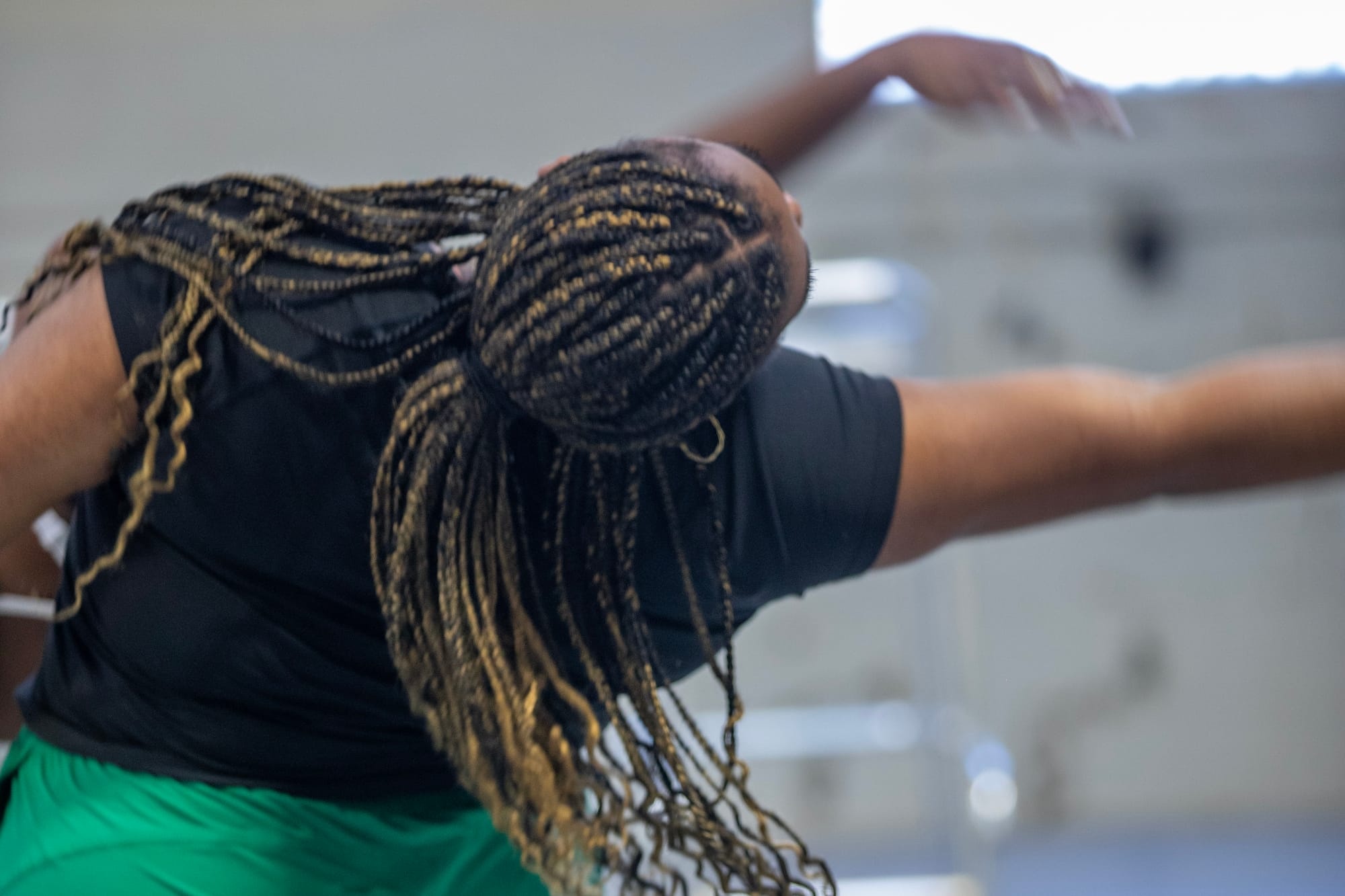
Parks recently assumed the position of executive director and CEO of Ballet Wichita. She is excited by the “genuine passion and support for the arts” she has observed here during her brief tenure. In an email interview, Parks said her first concert with Ballet Wichita aligns with her own approach to presenting dance.
“I am interested in connecting past and present and in creating work that invites audiences to reflect on whose voices are seen, heard, and remembered,” she said.
Coaching dancers to present “Invisible” within weeks of her arrival in Wichita allowed Parks to immediately model “a shared creative process,” she said, showing that “leadership is artistic and collaborative, not just administrative.”
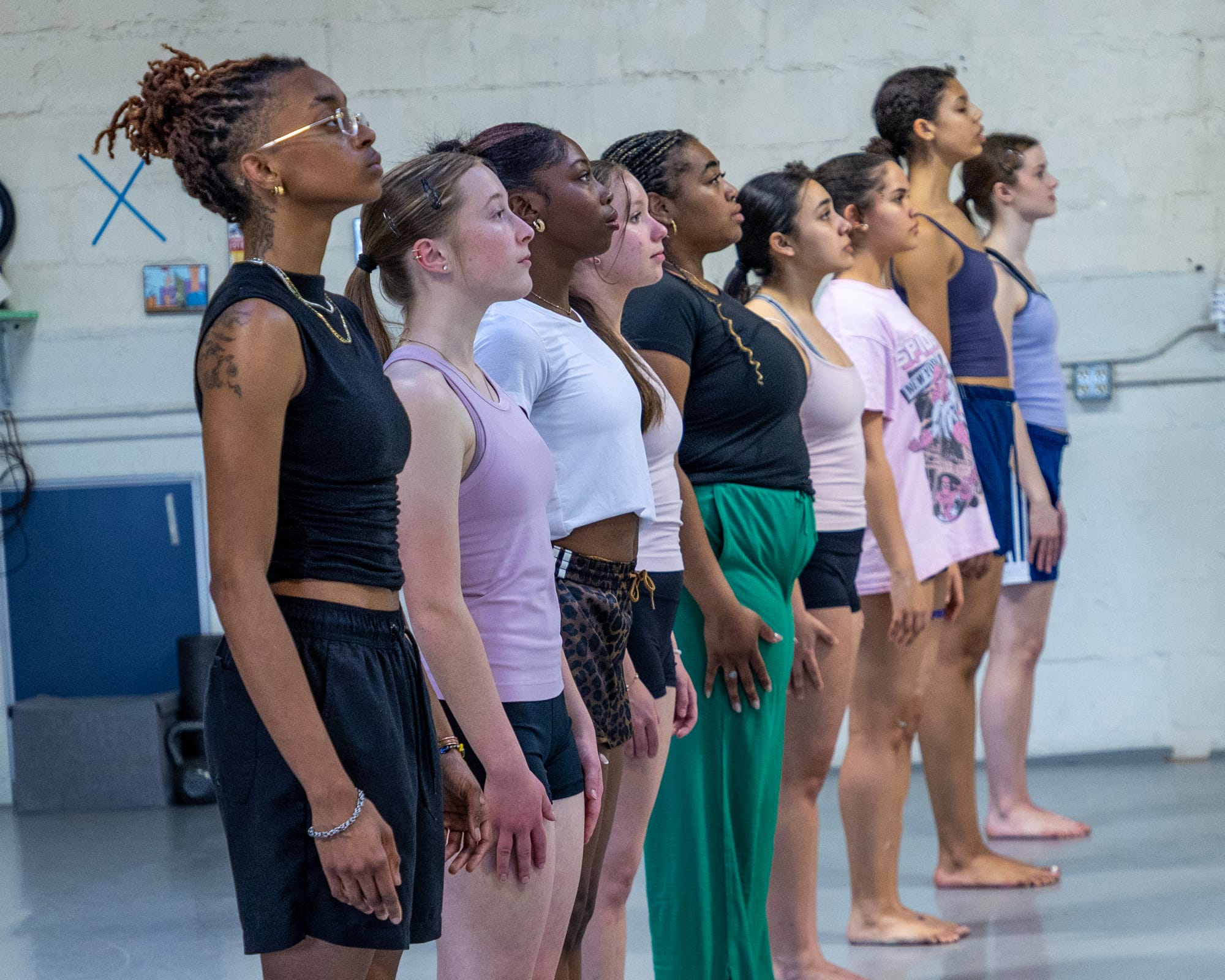
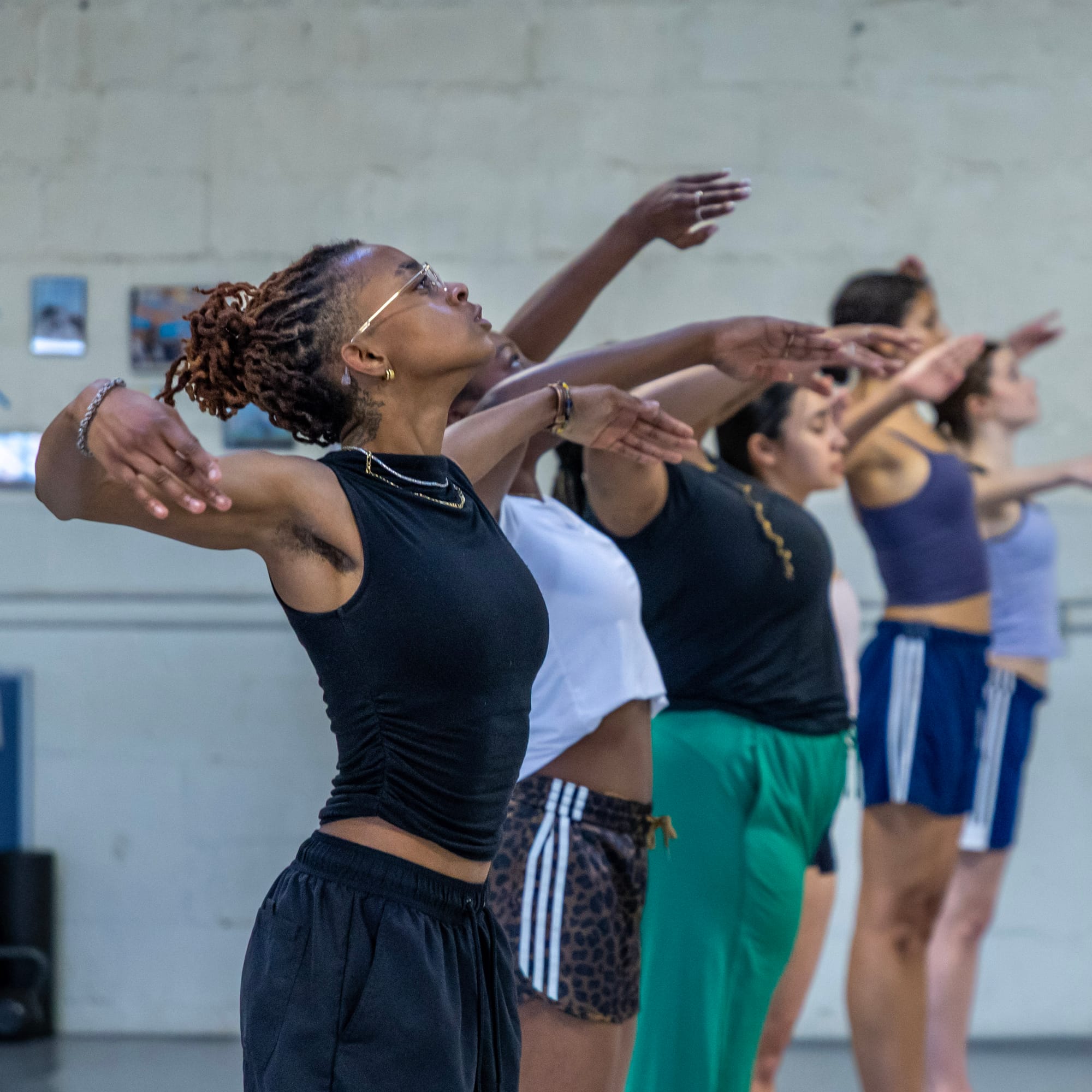
"Breaking Barriers" dancers in rehearsal, from left: Lena Castro, Evangeline May, JaNyah Core, Avery Smith, Shawn Gordon, Juliana Gonzalez, Tatiana Rivera, Emma McDonald, and Isabelle Johnson embody the tension and restraint of the choreography honoring Dockum sit-in organizes. Photos by Kendra Cremin for The SHOUT.
Both works in “Breaking Barriers” reflect what Ballet Wichita producing artistic director Logan Pachciarz calls “the dance language of humanity” that can excite audiences of all ages. He hopes that reflecting an important piece of local history will help nurture an appreciation of dance.
And, perhaps, what it can convey.
“A dancer’s body can relay resistance, limitation, and release,” Parks said. “We hope viewers will witness and feel the act of breaking through.”
The Details
Ballet Wichita presents “Breaking Barriers,” a night of contemporary dance
April 3-4, 2026 at the B-29 Doc Hangar, Education & Visitors Center, 1788 S. Airport Road in Wichita
Performances take place from 7:30-9 p.m. with a 15-minute intermission. Doors open at 6:45 p.m. A cash bar will be available.
General admission tickets are $21.75 or $32.25 for premium seats with the best sight lines.
“Breaking Barriers” is funded in part by a $25,000 City of Wichita Arts Thrive Grant, a regranting program funded by the National Endowment for the Arts.
Jan Swartzendruber began dancing after she left her hometown of Hesston, Kansas, for the East Coast in 1973, where lessons in modern, jazz, tap, folk, and ballroom dance were easy to find. In Botswana, Africa, and Fairfax, Virginia, she taught a blend of dance forms to adult beginners before taking "serious" jobs in journalism, design, and public school teaching. She previously served on the board of the Regina Klenjoski Dance Company.
❋ Derby man has the kind of voice that turns heads — and chairs
❋ Socializing while sober: how some Wichitans are cultivating alcohol-free communities
❋ As a small creative business closes, the owner mourns
❋ Painting through it: Autumn Noire on 20 years of making art
❋ How a guy from Wichita resurrected 'Dawn of the Dead'
❋ Bygone Friends University museum housed curious collections
Support Kansas arts writing
The SHOUT is a Wichita-based independent newsroom focused on artists living and working in Kansas. We're partly supported by the generosity of our readers, and every dollar we receive goes directly into the pocket of a contributing writer, editor, or photographer. Click here to support our work with a tax-deductible donation.