Connection with photographer brings Yo-Yo Ma to Wichita
Austin Mann, who has traveled the world with the celebrated cellist, brought him home for an artist talk and pop-up performance December 3.
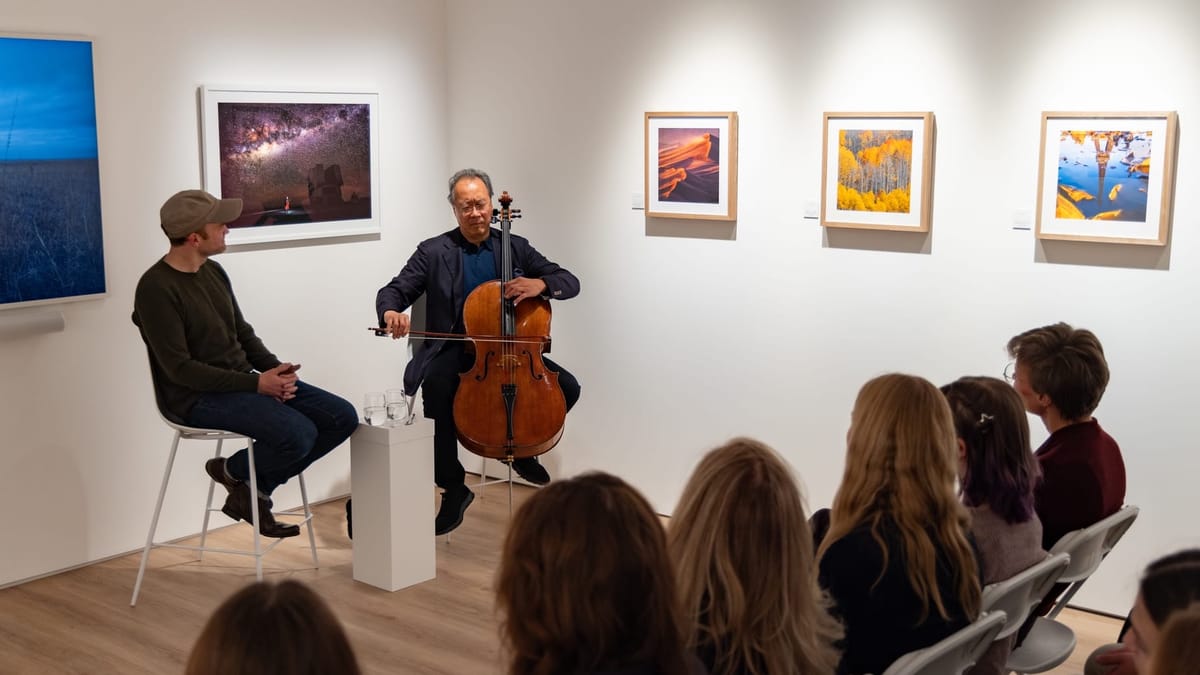
Yo-Yo Ma, the celebrated cellist, made time between solo concerts in Kansas City and Lincoln, Nebraska for an artist talk and pop-up performance in Wichita’s College Hill neighborhood on December 3.
Seated in the Maven Gallery’s compact, white-walled space, Ma greeted an audience of around 50 students and gallery supporters with a plainspoken account of Mark O’Connor’s “Appalachia Waltz.” His interpretation was probing, with a sense of discovery rather than simple recital.
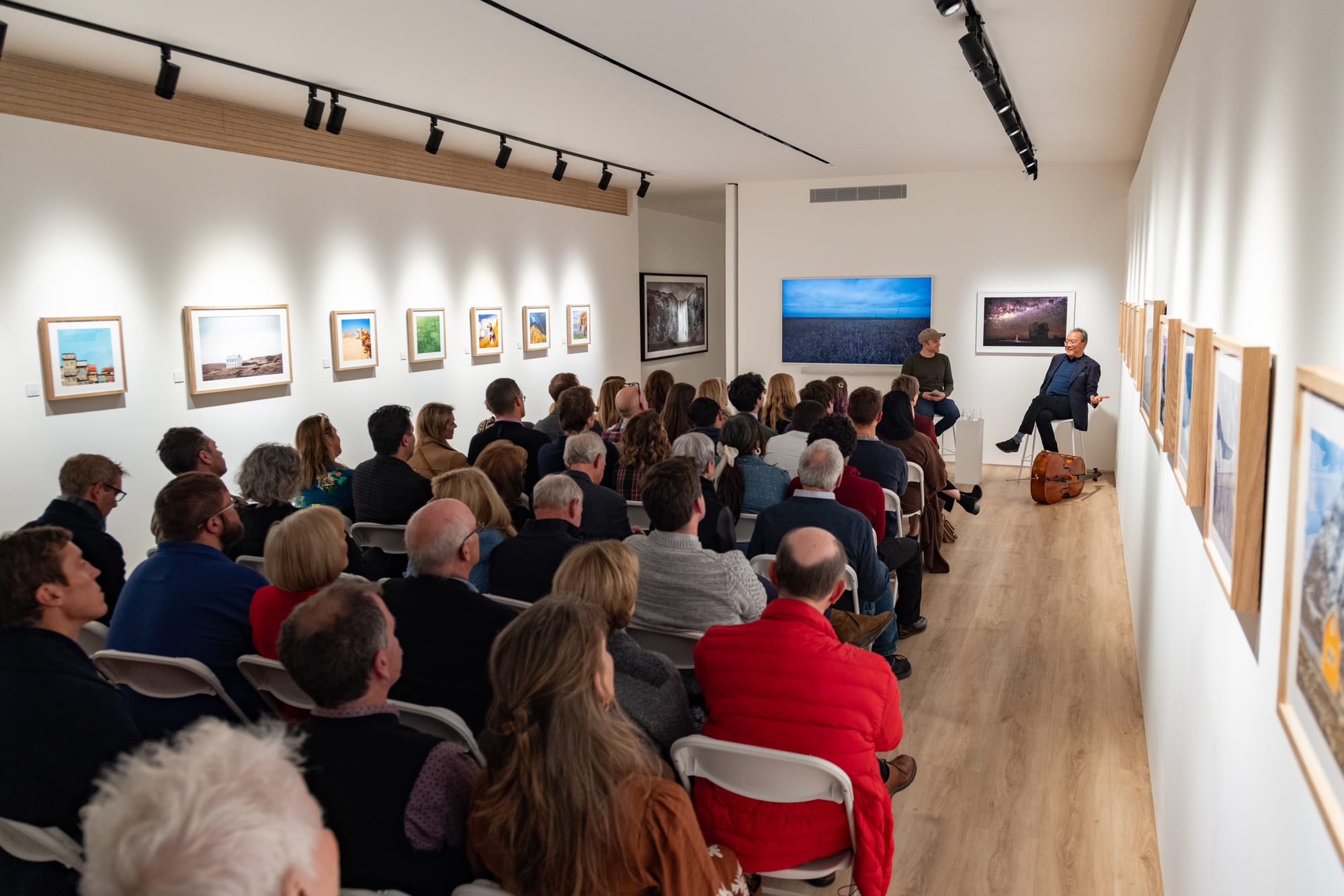
The music led into a conversation with Wichita photographer Austin Mann. With student-musicians filling the first few rows of chairs, Ma told an anecdote from his own student days. He recalled fantasizing about delivering a flawless recital, a performance with no wrong notes. At around age 19, he practiced obsessively in pursuit of that goal, and nearly reached it. But midway through his performance, he realized something had gone missing. In prioritizing control, he had drained the vitality from his music-making. Today, he said, he’s not so worried about the tiny imperfections.
“Instead of thinking so much about techniques, maybe you’re able to move into connection. Once you master the technique, that allows you to do what we want to do as artists: to connect and create,” he said. “The reason to have technique is so you can transcend it.”
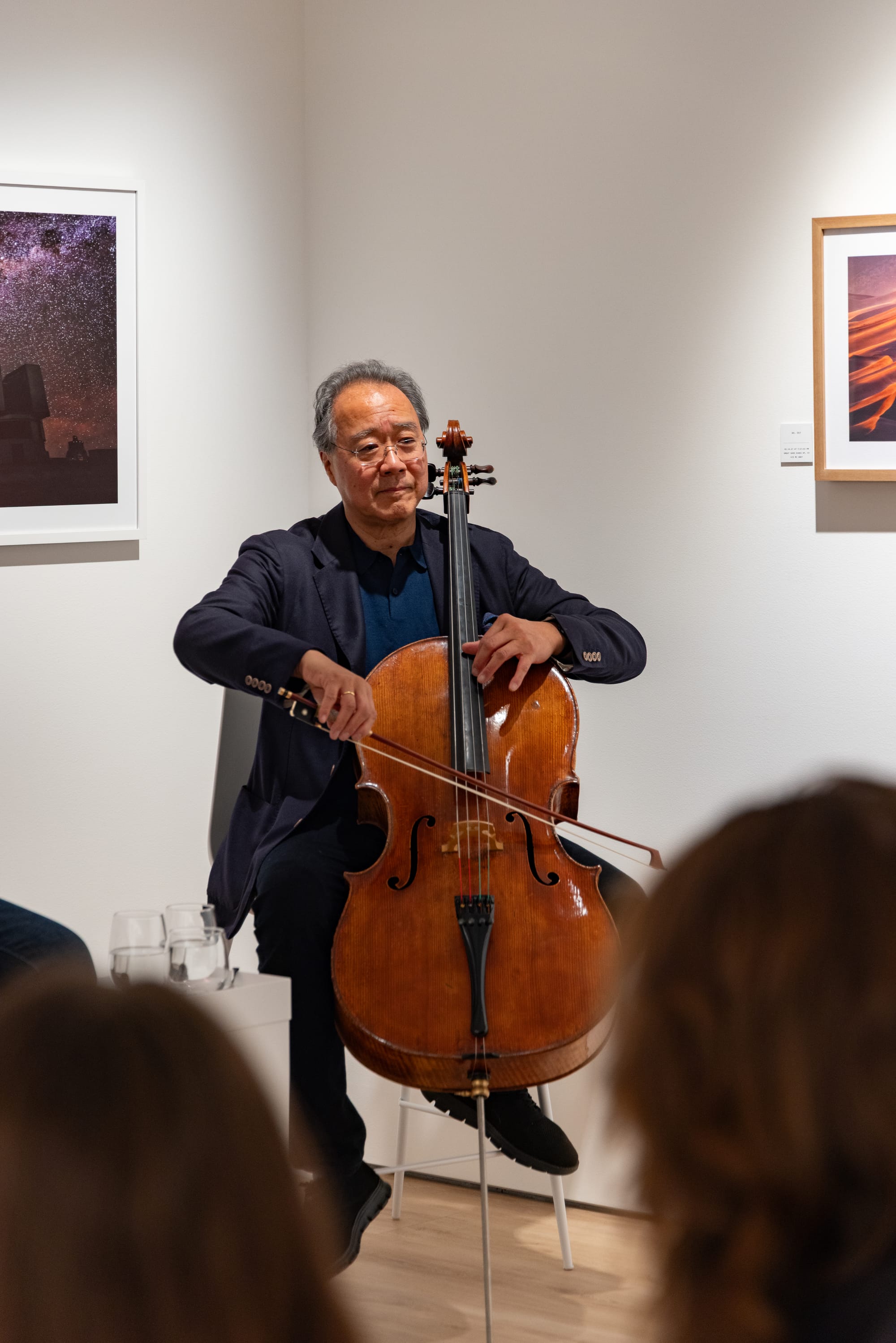
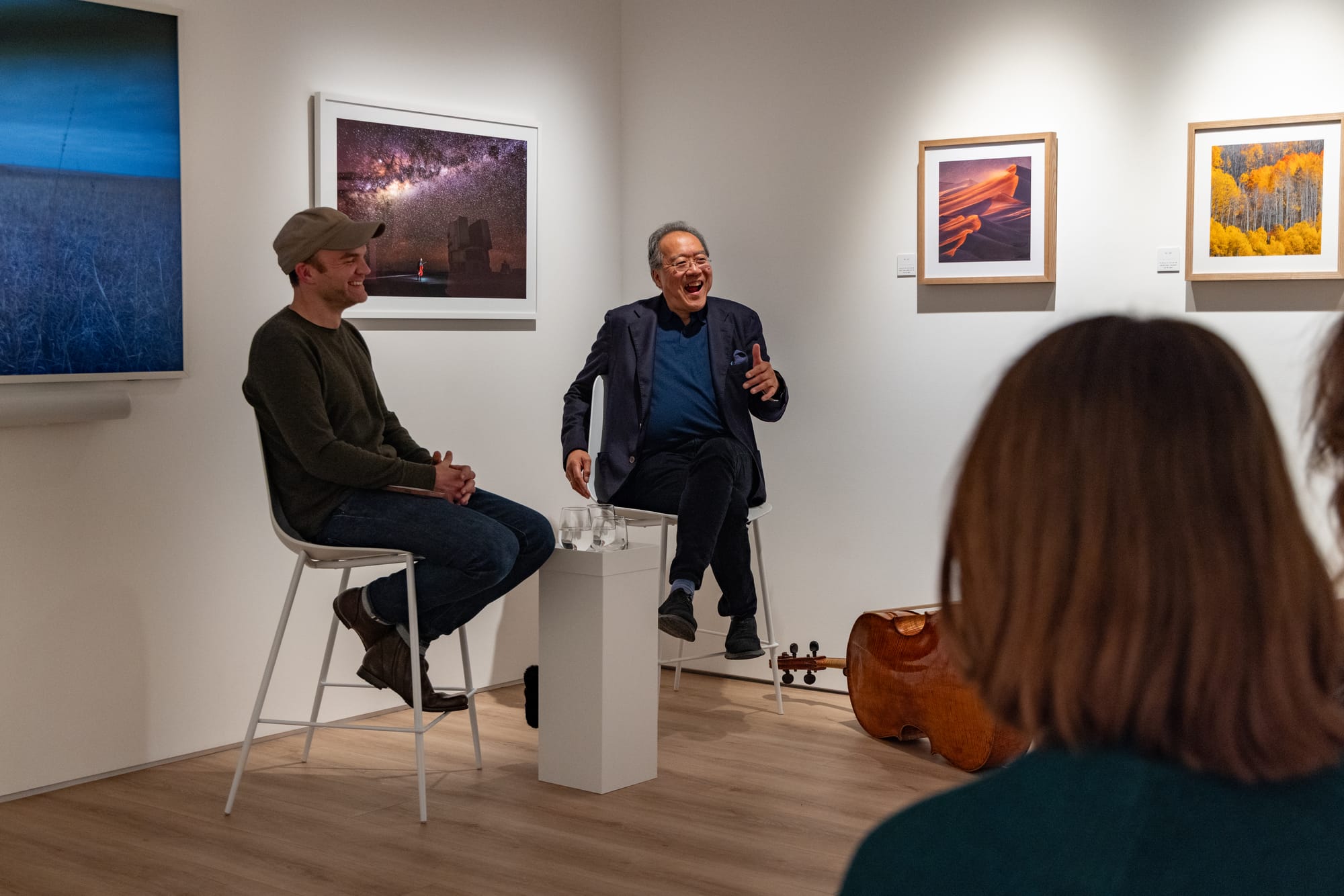
Ma and Mann talked about the connections between art and spirituality, and about the inspiration they both draw from nature. One of Ma's recent, multi-disciplinary projects is Our Common Nature, which explores the "deep connections" between music and landscape. Courtesy photos by Wyatt Glosson for Maven Gallery.
Ma’s Wichita visit was the product of a friendship that has grown over the course of seven years. Mann first collaborated with Ma in late 2018, when he was recruited to create photos of Ma’s Bach Project, a multi-year odyssey across 36 locations on all six continents. They still travel together frequently, to places such as Bhutan, Chile, and now Kansas’s Flint Hills.
The Flint Hills visit was a quick detour on the way down to Wichita from Kansas City. Filmmaker Taylor McKay took the opportunity to create a brief film: Ma sitting with his cello amid open prairie grasses, performing “Simple Gifts” and “Amazing Grace.” The film debuted during the gallery event, and Mann said they plan to release it more broadly soon.
The Wednesday evening program functioned as a kind of mission statement for Maven, a photography gallery focused on work by Mann and his wife, Esther Havens Mann, as well as “inspiring artists from near and far.”
Mann and Havens Mann have returned to Wichita – to the College Hill area and, for Mann, even to his childhood home – after years of travel and international work. Maven opened in March with “Chromatica.” Its current exhibition, “Seasons of Light,” draws from eight years of the couple’s annual photo calendars, with images arranged seasonally to match the months they originally occupied on collectors’ desks. Among the images: a single autumn leaf in California’s eastern Sierra; an autumn forest scene from Kebler Pass, Colorado; weathered urban apartments under a cloudless Porto sky; a leafless aspen rising from a stark, snowy field in Steamboat Springs. Each is labeled with the distance, in miles, that separates the Maven Gallery and the site where the photo was captured.
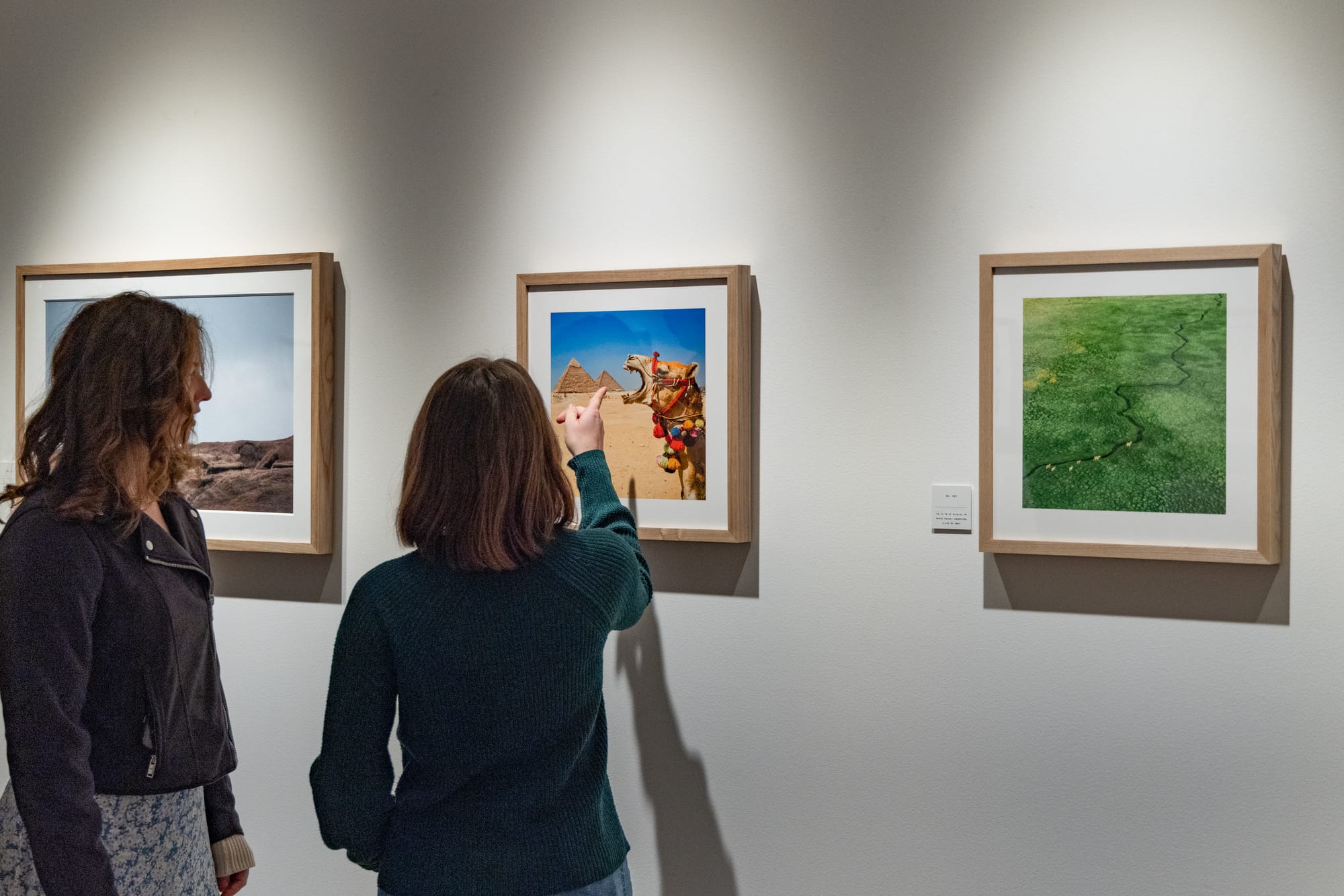
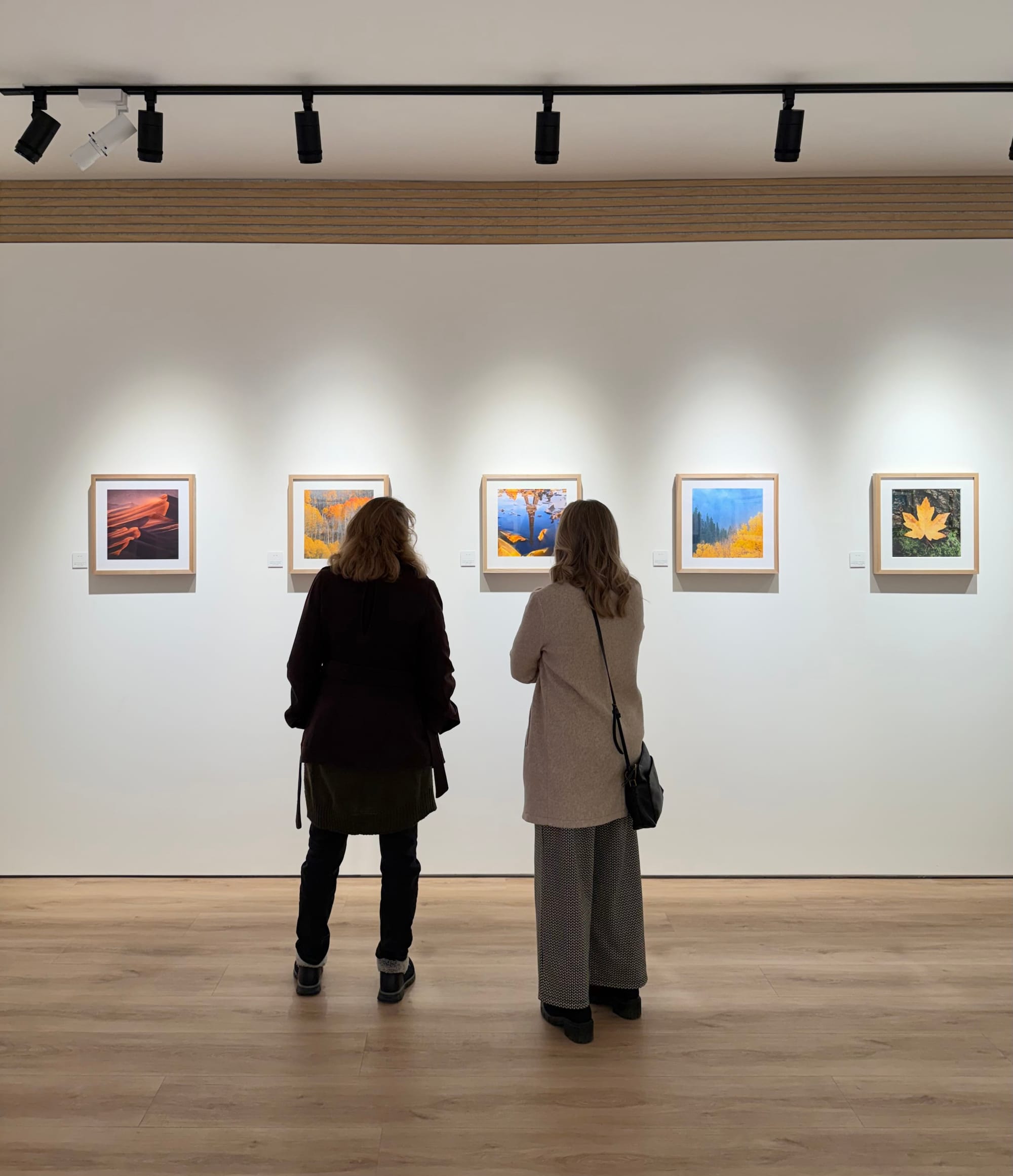
The Maven Gallery opened in March, in a College Hill storefront formerly occupied by Himali Eats. "Seasons of Light," which highlights images from gallery owners Austin Mann and Esther Havens Mann's annual photo calendar. Courtesy photos by Wyatt Glosson for Maven Gallery.
Over the course of his career, Mann has made use of photographic technologies both mass-market and rarefied.
On the mass-market end is the iPhone: the tool that has put a capable camera in the pockets of more than a billion people. Mann has built a public role as a field tester and explainer of iPhone camera systems, publishing “camera review” essays timed to new releases, and placing his work on billboards for Apple’s “Shot on iPhone” campaign.
On the rarefied end is the gear used to create works such as “Foss,” a large-scale, black-and-white image included in the current show, which Mann captured at the Skógafoss waterfall in Iceland in 2018. Using a Hasselblad H6D studio camera, he took multiple frames, then used Photoshop to stitch them into a digital file exceeding a billion pixels. The finished “Foss” contains a dazzling, almost uncanny amount of detail. The waterfall is so bright it seems backlit, and the rock faces carry fractally variegated textures. A small human figure standing at the base of the waterfall anchors the scale of the composition.
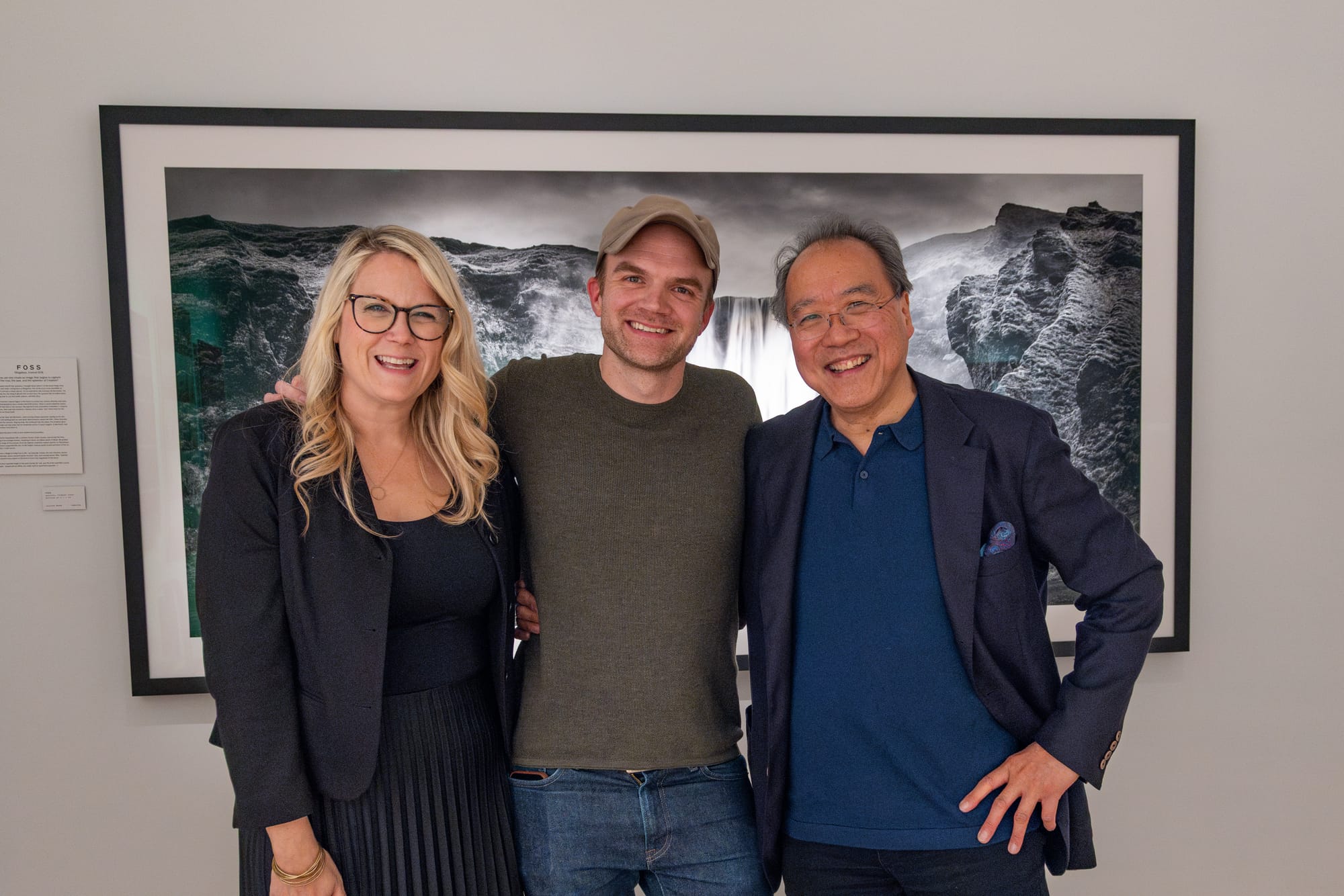
“I had a shot in mind. I set it up, and then I waited to see what would happen. I like to leave room for serendipity,” Mann said in an interview. “I knew it was a really powerful frame, and I was just waiting. I thought I might see a rainbow, or some birds flying by, but then I saw the hiker with the rain jacket on, and I realized she was going to walk as close to the base of the water as she possibly could. She must have felt both incredibly alive and freezing cold. I think she was experiencing the moment that I was trying to capture, that sense of awe and the sublime.”
On a surface level, the intensely up-to-date, technology-intensive nature of Mann’s photography practice contrasts with Ma’s reliance on a cello that was fabricated (by Stradivarius) in 1712. But in fact, both artists are tinkerers interested in finding ways to get more out of their tools.
“Yo-Yo has told me that in his free time, he tries to figure out ways to get more sound out of his cello,” Mann said. “I also share that sentiment. Like, how can I push this further, to do something that’s different or better? I am looking to push the boundaries of what’s possible, so that I can accomplish my mission and calling as an artist. But that billion pixels is meaningless if it misses the point of connection. The same goes for getting a louder sound from a cello. Those are just means to an end.”
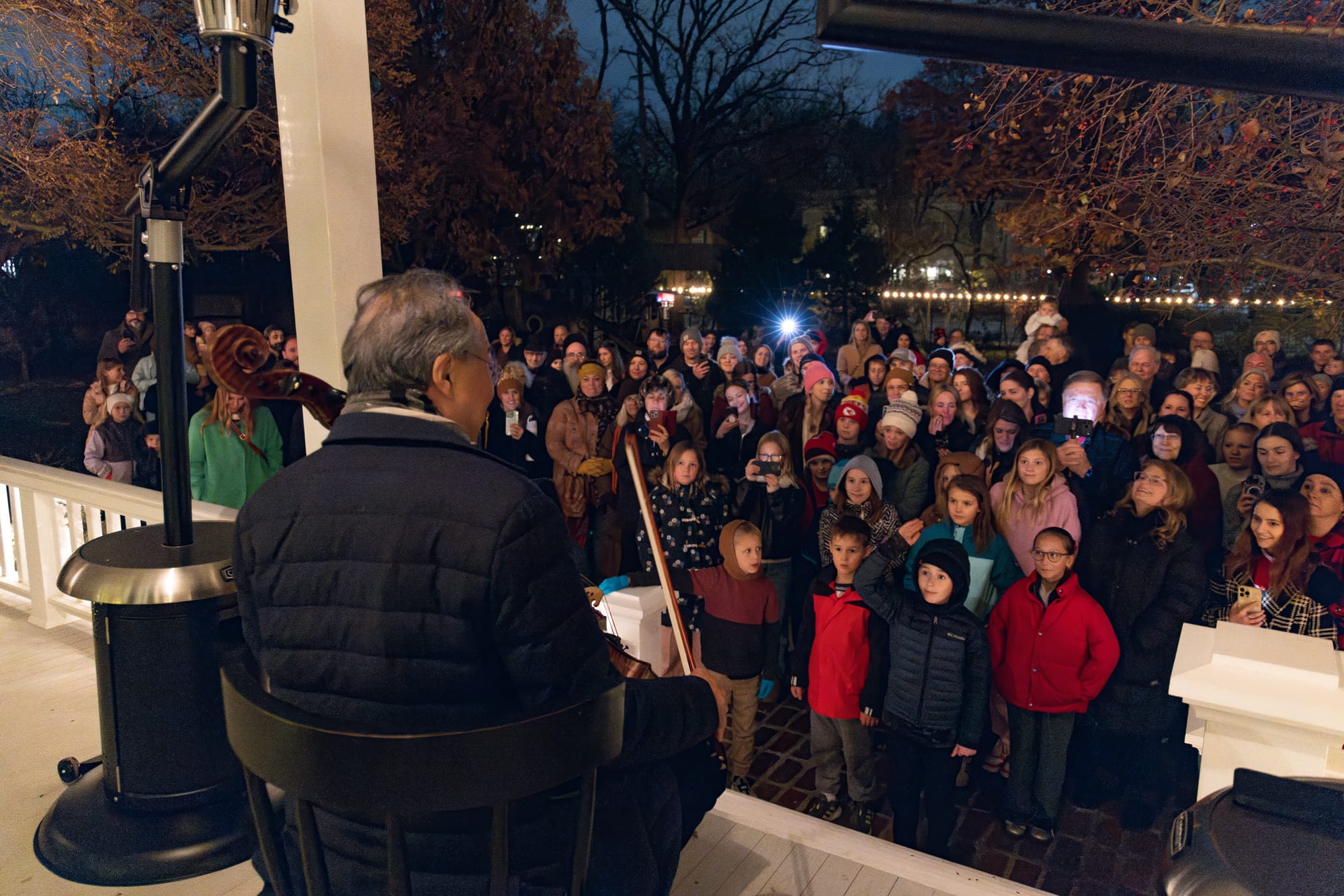
Connection was likewise the point of the “pop-up” performance that concluded the evening. Gallery guests walked over to the College Hill home of Mann’s sister, joining neighbors who had been tipped off to expect a special visitor. Ma emerged onto the front porch, greeted the crowd, and drew his bow, leading off with “Somewhere Over the Rainbow.” As with the earlier “Appalachia Waltz,” he played with simple sincerity: probing, questioning, but tender and unaffected.
Ma concluded the brief set with a singalong of two Christmas carols: “Silent Night” and “White Christmas.” Each word he spoke, and each note he played, was well-suited to its time, place, and occasion.
The Details
“Seasons of Light”
November 23-January 24 at Maven Gallery, 3238 E. Douglas Ave. in Wichita
The gallery is open during posted hours or by appointment.
Admission is free, and the facility is accessible to people with physical disabilities.
Sam Jack is a poet, a classical tenor, and the adult services librarian at Newton Public Library. He performs with several local groups, including Wichita Chamber Chorale, Wichita Grand Opera, and Opera Kansas. He received a Master of Fine Arts in creative writing from the University of Montana.
❋ Derby man has the kind of voice that turns heads — and chairs
❋ Socializing while sober: how some Wichitans are cultivating alcohol-free communities
❋ As a small creative business closes, the owner mourns
❋ Painting through it: Autumn Noire on 20 years of making art
❋ How a guy from Wichita resurrected 'Dawn of the Dead'
❋ Bygone Friends University museum housed curious collections
Support Kansas arts writing
The SHOUT is a Wichita-based independent newsroom focused on artists living and working in Kansas. We're partly supported by the generosity of our readers, and every dollar we receive goes directly into the pocket of a contributing writer, editor, or photographer. Click here to support our work with a tax-deductible donation.