The five faces carved into the walls of Wichita’s former city hall
Some of the most unusual works in the City of Wichita's public art collection are a series of limestone gargoyles carved in the late 1800s.
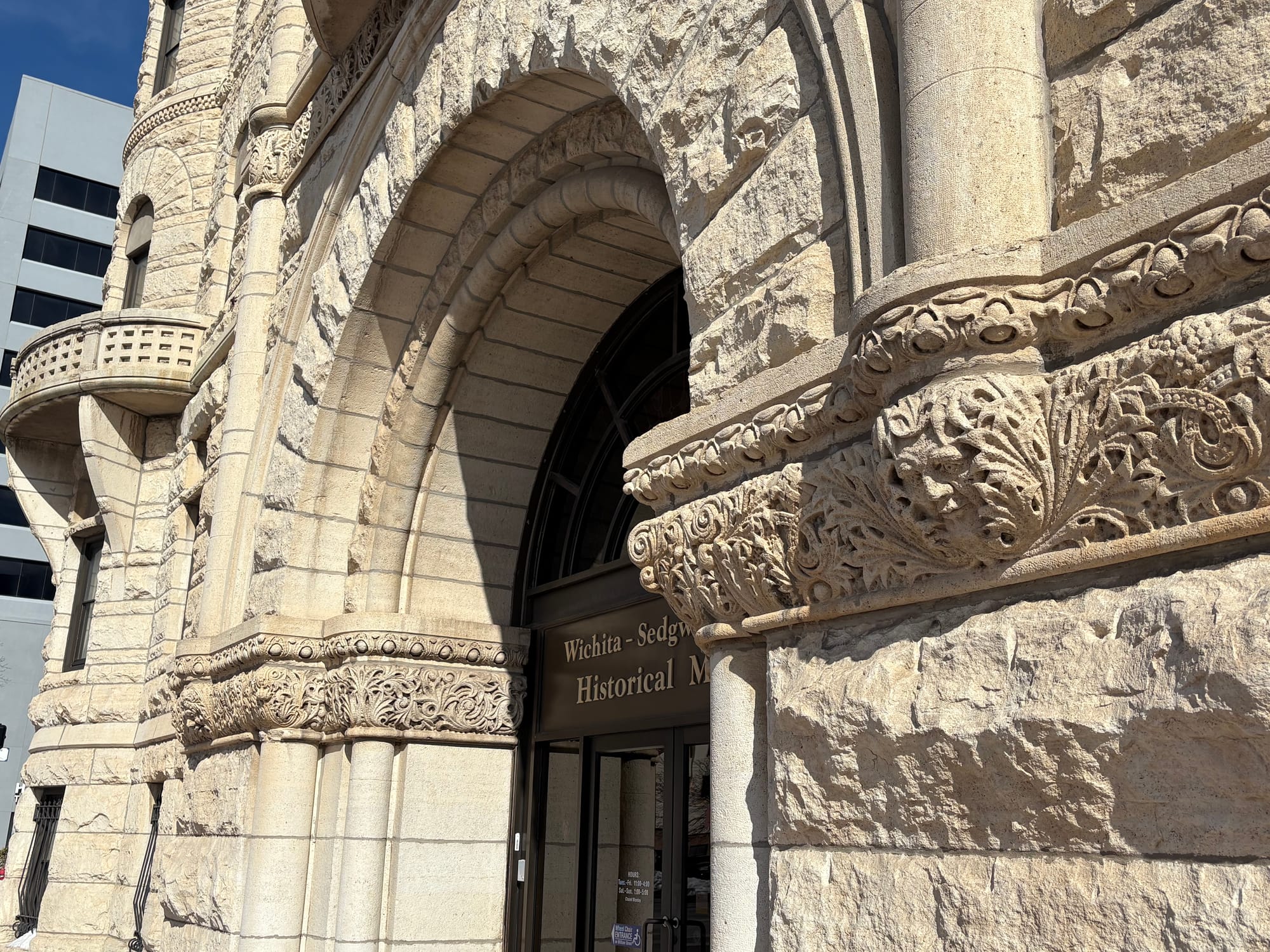
At the corner of Main and William Streets, a structure stands out from its more modern, downtown surroundings: the original city hall, a time capsule of 19th century Wichita. A clock tower sits in the center of this castle-lookalike with conical pillars on each corner.
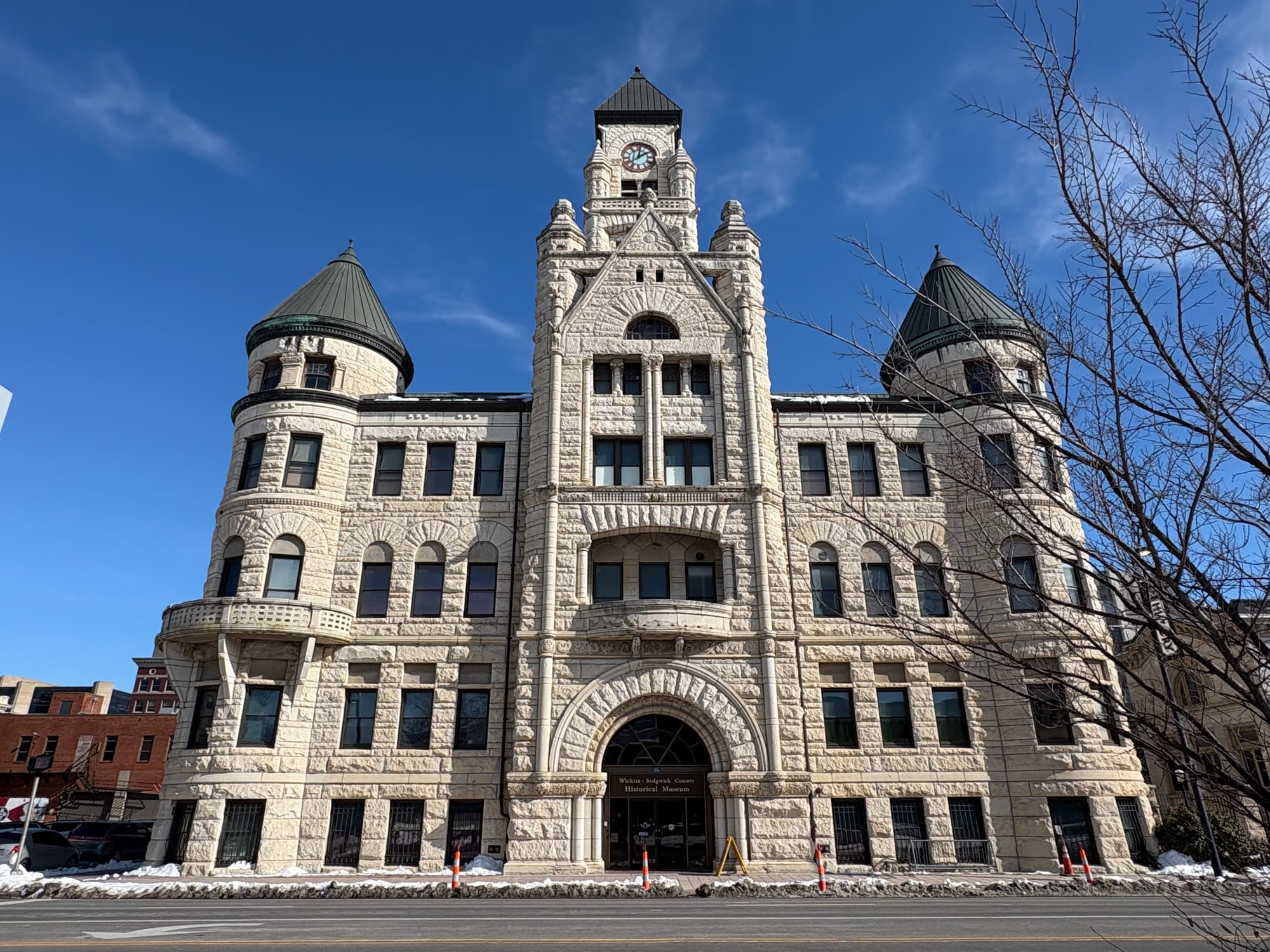
Architects Willis Proudfoot and George Bird completed the limestone building in 1892. Until 1975, it housed all city offices, including the police and fire departments and a designated balcony for the mayor. Today, it’s the Wichita-Sedgwick County Historical Museum and a registered historic landmark.
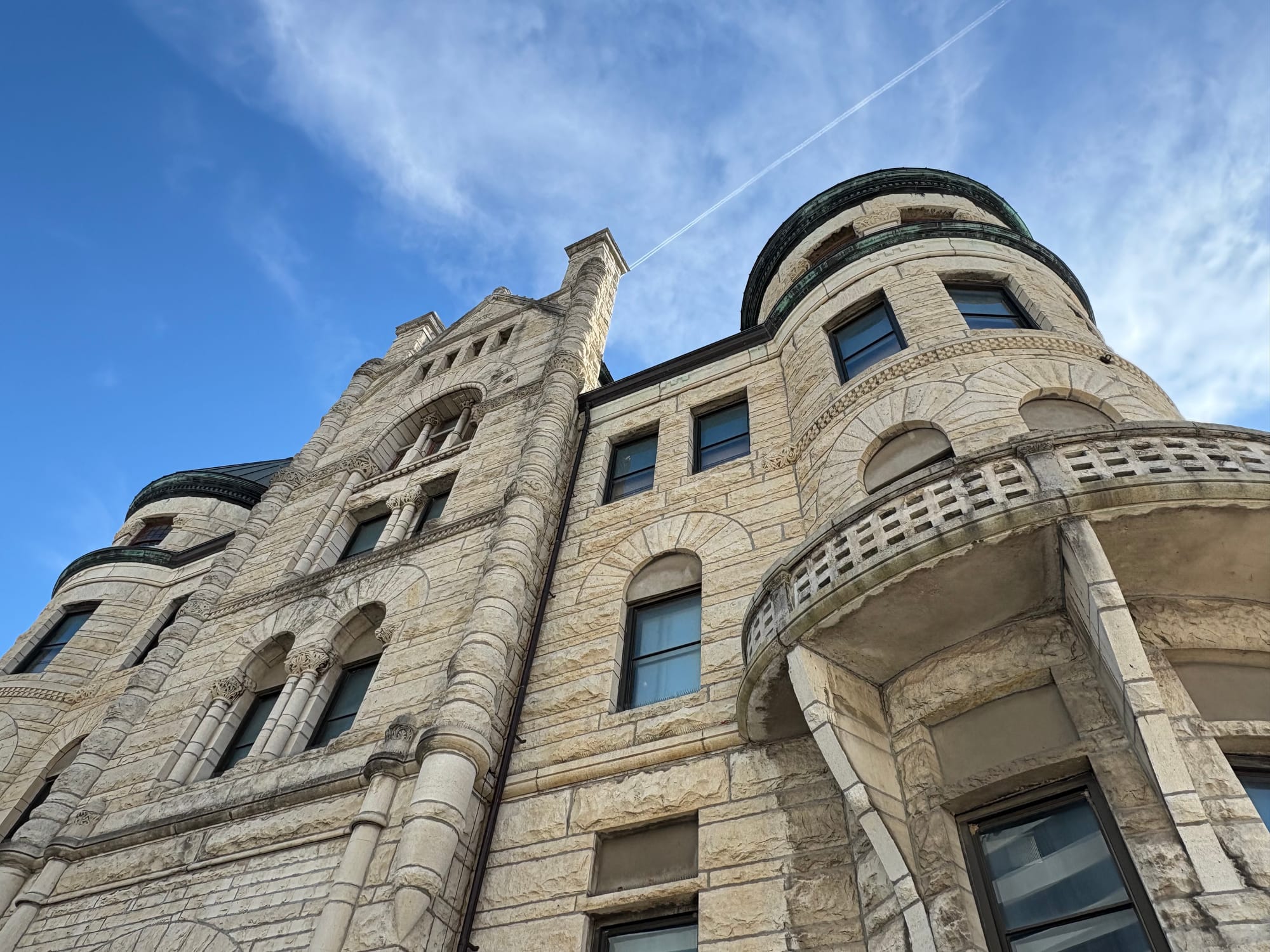
Guarding the north and east entrances are gargoyles of various species and expressions. Their faces are easy to miss, as they don’t have a distinct platform or color. Each head blends in, perhaps startling passersby who happen to glance into their blank limestone eyes.
If you look halfway up towards the top of the building, on its east side, you may notice a fifth face carved from limestone peeking out. It has engorged cheeks, a prominent nose, and an expression that lacks amusement, in contrast to the faces of the rest of its family.
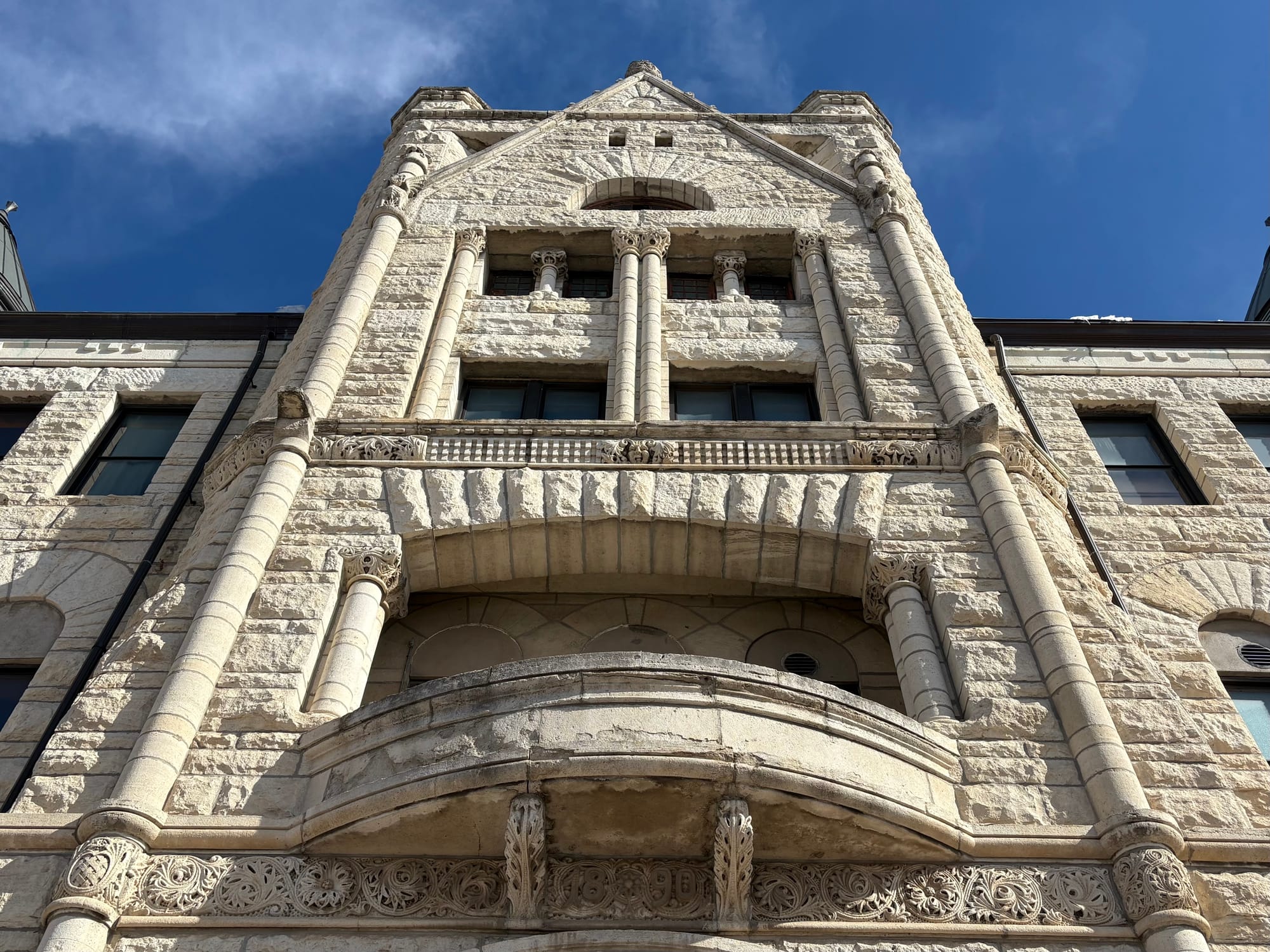
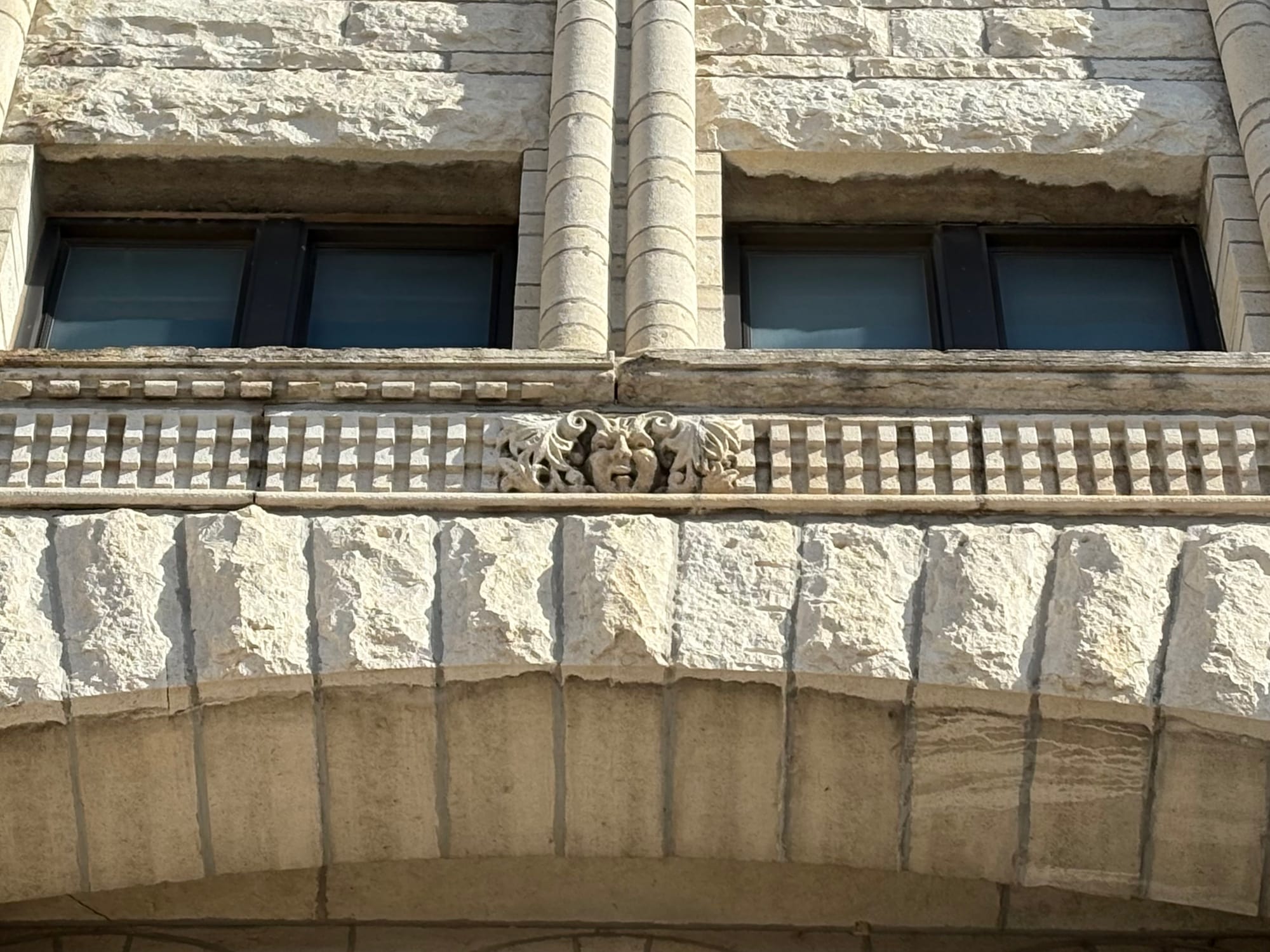
The gargoyles, generically named Gargoyle 1, Gargoyle 2, Gargoyle 3, Gargoyle 4, and Gargoyle 5, have little recorded justification for their existence. Unlike gargoyles from the Middle Ages, they’re not waterspouts to clear rain off the walls. They could be “grotesquely carved” to scare off modern-day evil spirits like their historical predecessors. Or maybe the five exist to suggest “mystery and otherworldliness” to the former city hall’s aesthetic.
I visited the museum and the public library’s microfilm archive to dig for background information, but only Gargoyle 3 (the mustache-bearing human) has a written history.
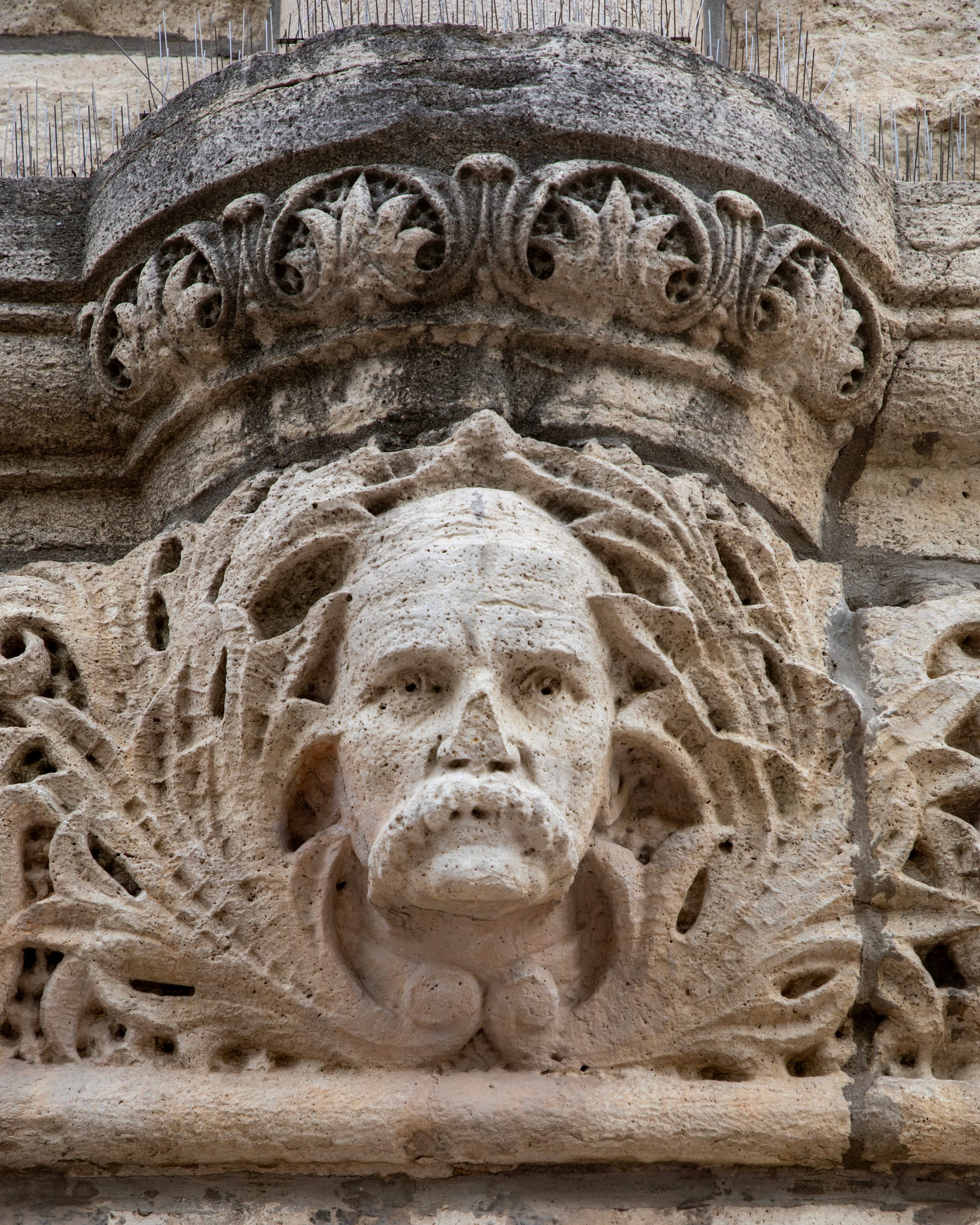
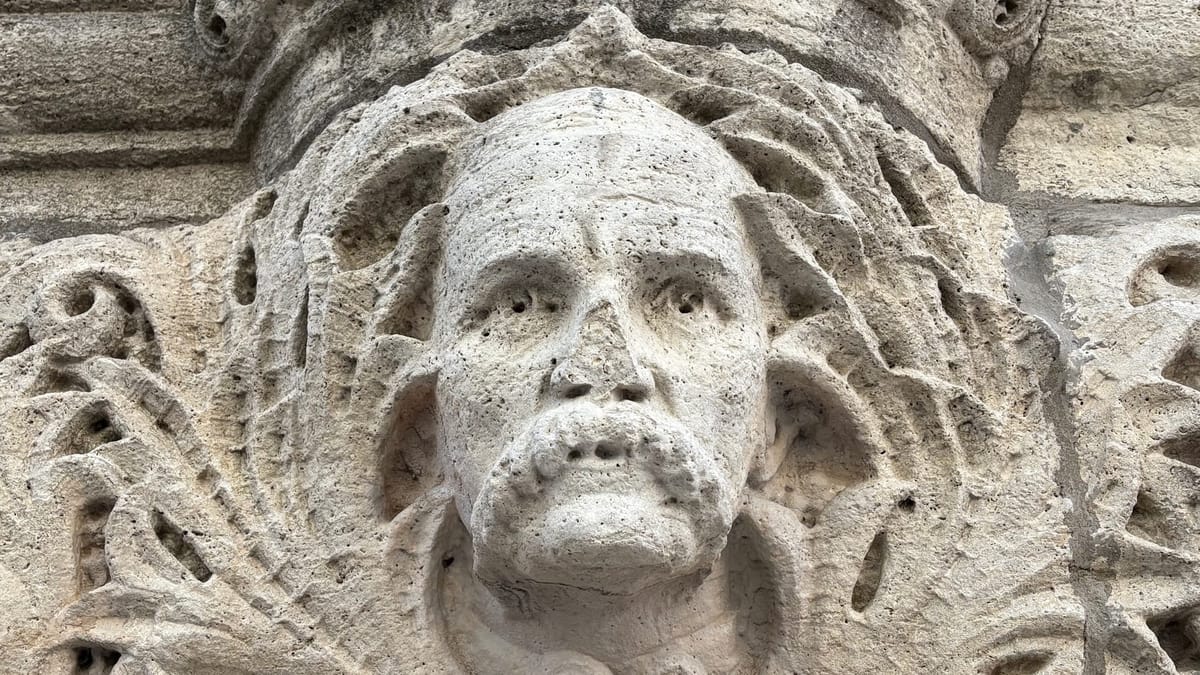
Gargoyle 3 is John B. Carey, one of the first mayors of Wichita. The city hall was built during his term, but the geological immortalization was total happenstance, according to a 1932 Wichita Eagle article. One of the gargoyles cracked shortly after Carey moved in, rendering the rock defective. A contractor suggested that the new face be Carey, who was apparently “not adverse to the idea.”
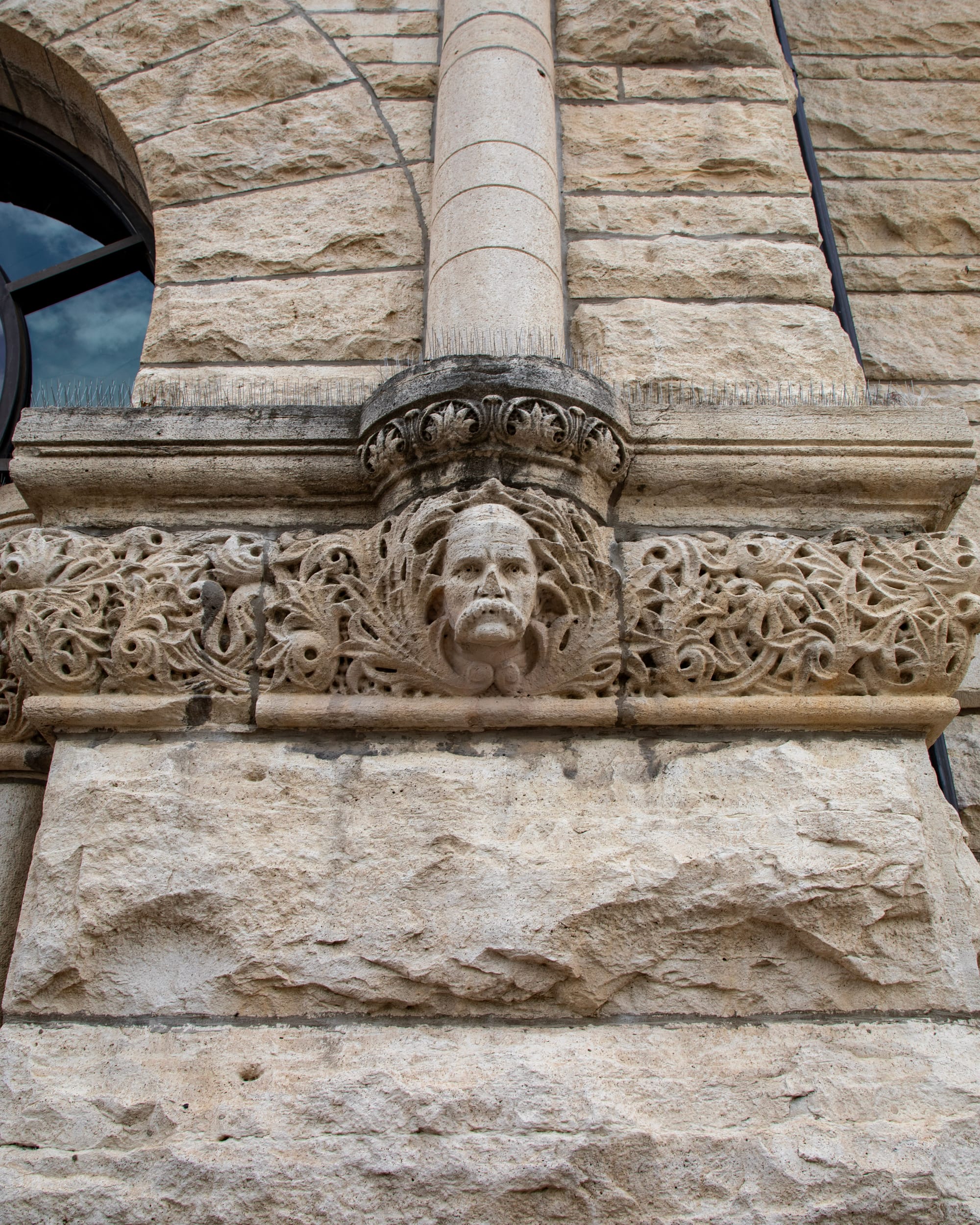
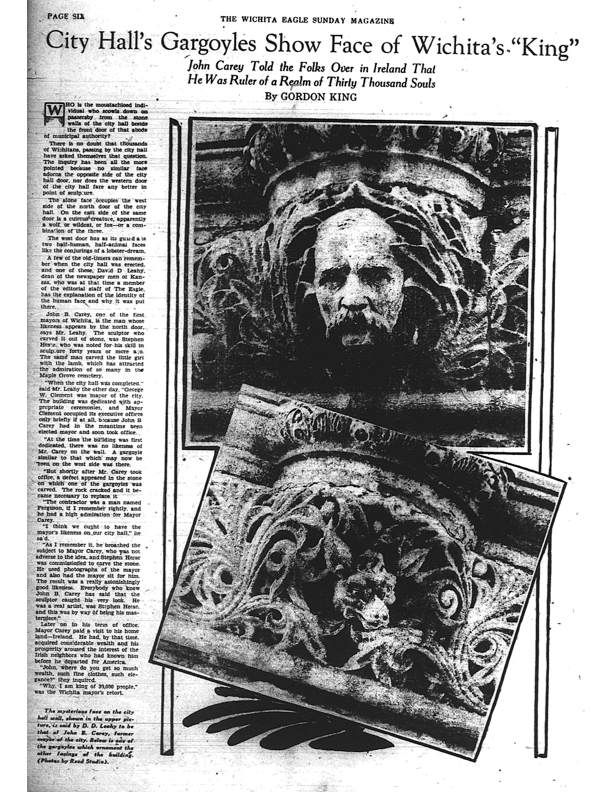
Sculptor Stephen Hesse crafted the rock using photos and modeling from Carey, finishing what a former Eagle editor called an "astonishingly good” masterpiece. The city’s public art archive credits Hesse with all five of the ornaments, but I couldn’t find any additional research or inspiration for the other four.
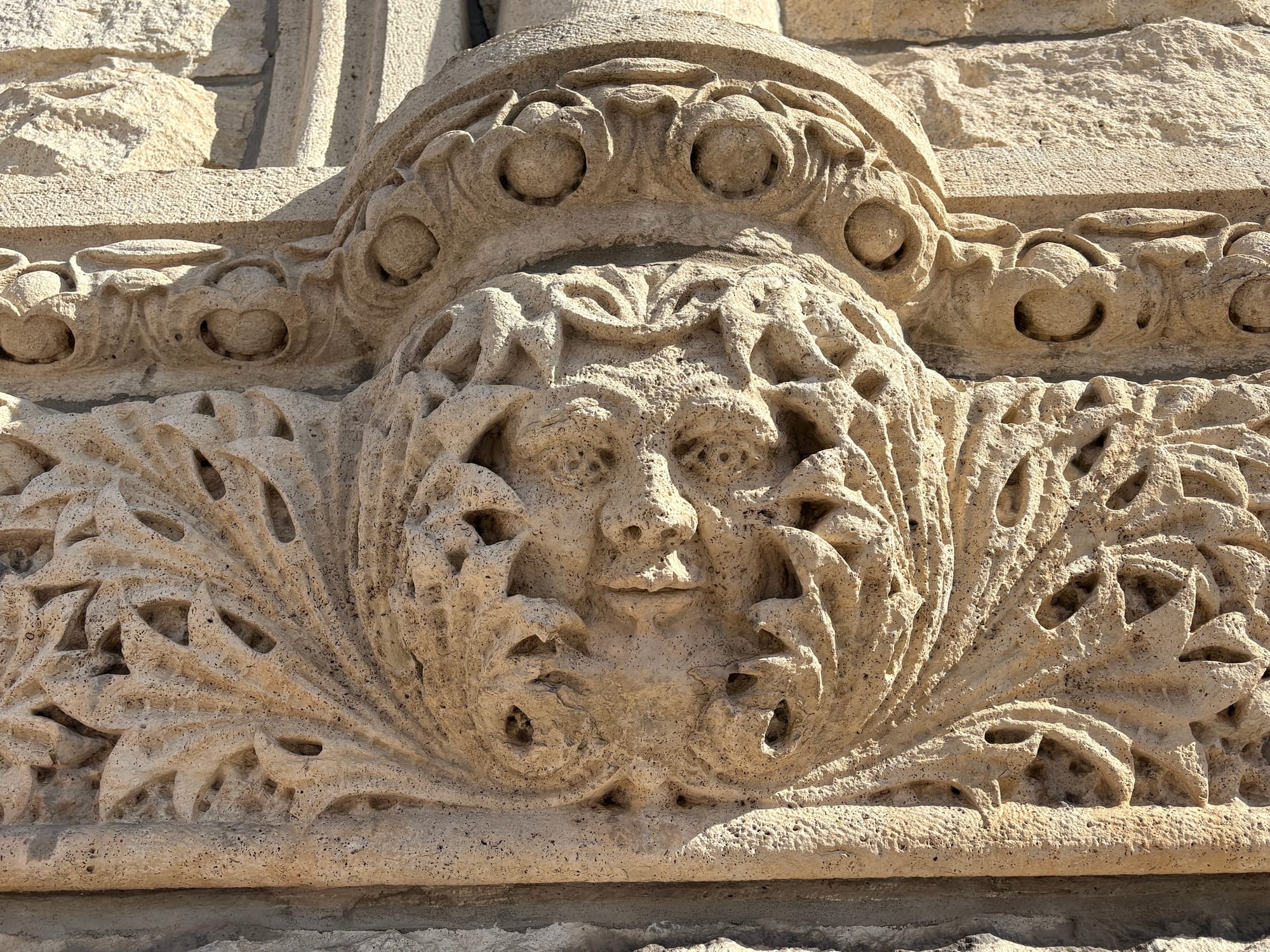
Frankly, three of the gargoyles make me uncomfortable, which is probably the point. The trio share the same cherub-like face but differ in expressions. One has a dismayed look (Gargoyle 4), one seems disgruntled (Gargoyle 2), and the last looks like it would enjoy your plight (Gargoyle 5).
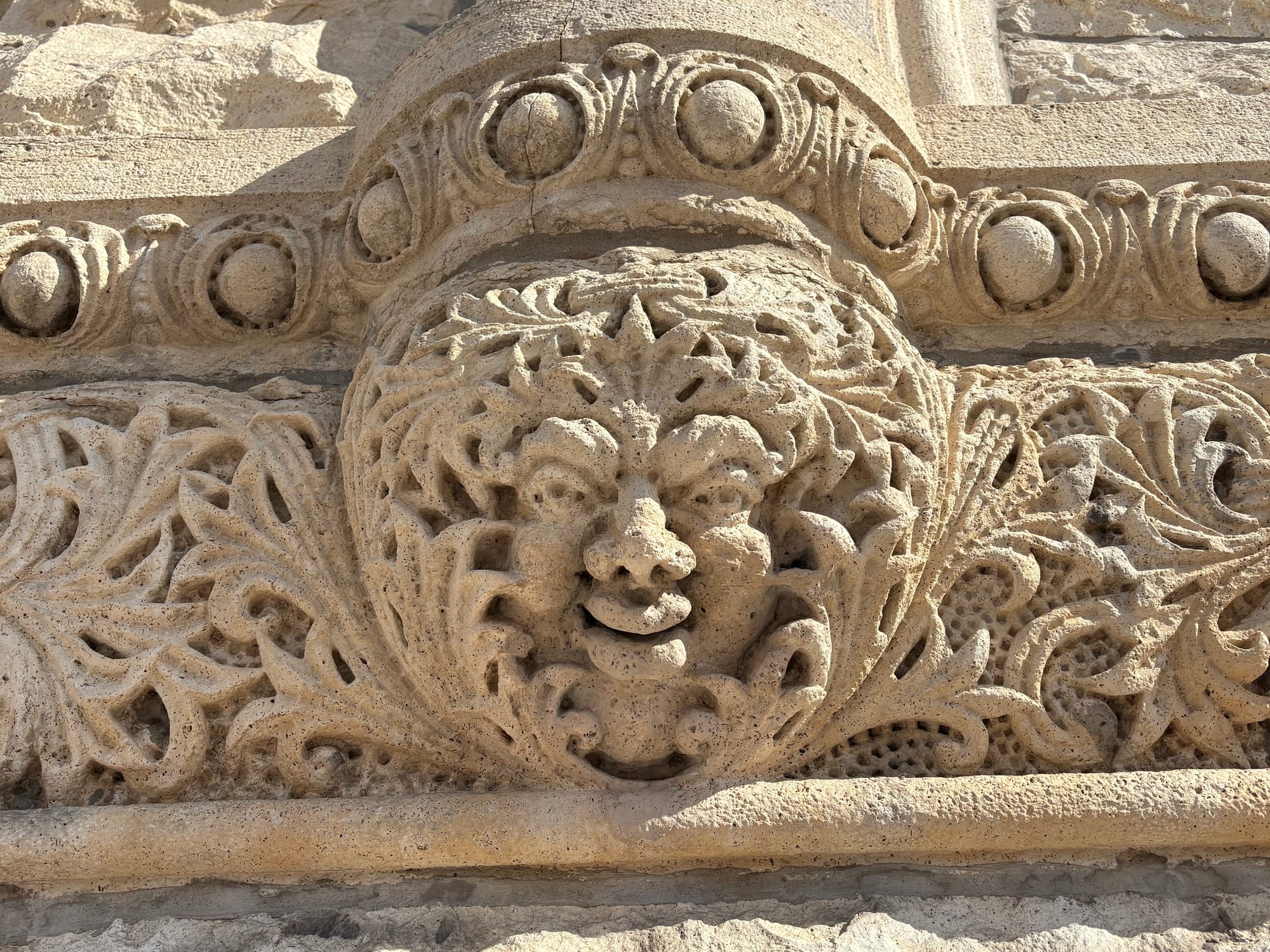
The only gargoyle I feel any pleasantness towards is the one accompanying John Carey at the north door: Gargoyle 1. Looking at it today, “I spy” a cartoonish goblin. A big, crumpled nose in the center, two large elf ears, small indents for eyes between them, and an expression reminiscent of the slant face emoji: :/
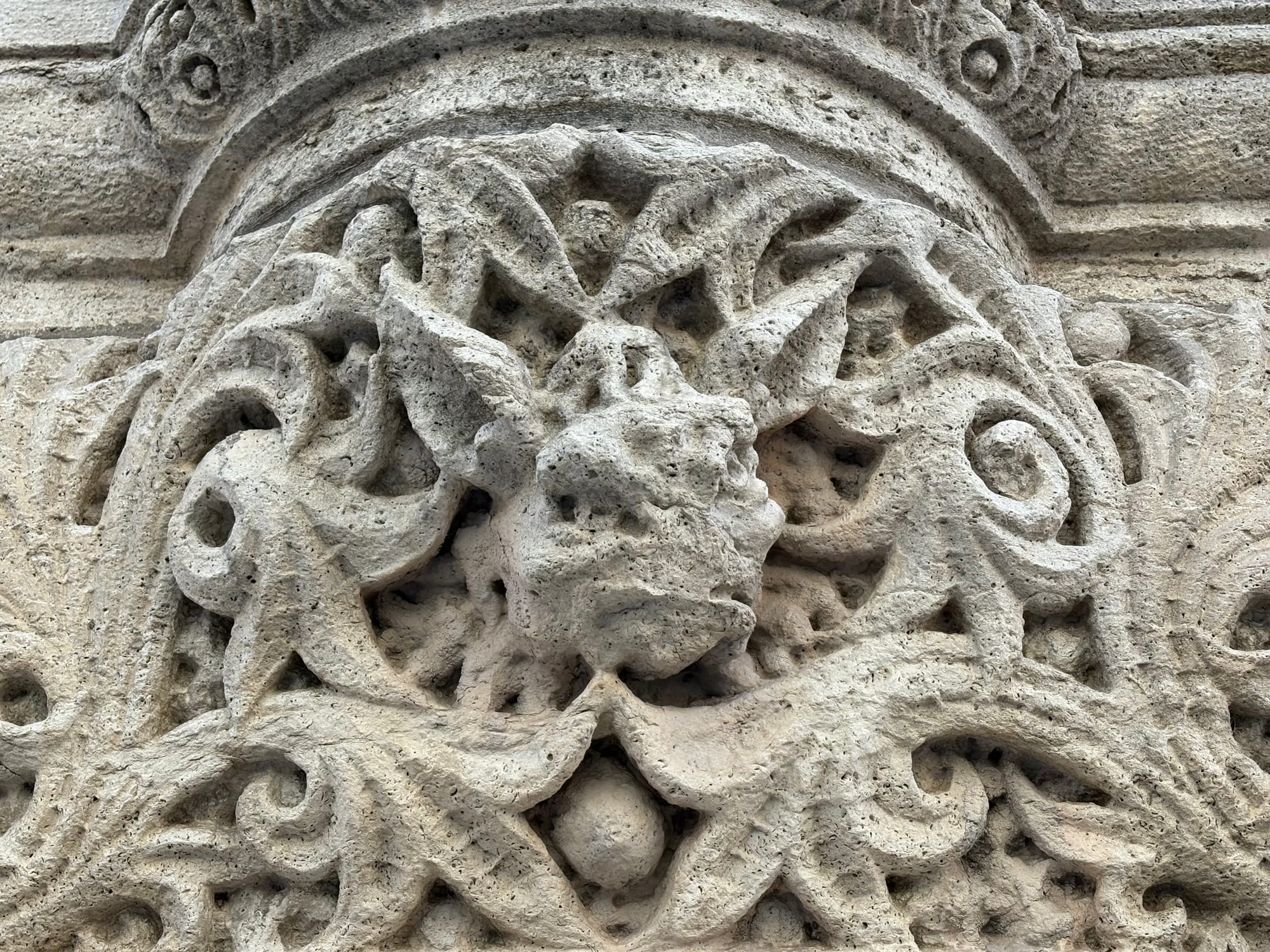
It’s certainly abstract. A photo of it in a 1932 Eagle article suggests that it used to look more like a fox (the goblin’s chin is the snout, its eyes more spread apart and just above said snout), but 134 years outside have worn it to the dopey character I see today. Maybe we can think of Gargoyle 1 as kind of a Rorschach test.
While I didn’t learn much about the faces themselves, their presence did send me to exhibits and newspapers of the 1890’s, which was well worth the exploration as someone who relishes any reason to look something up.
This piece is part of a series about works in the City of Wichita's public art collection. Many works in the collection can be viewed online, and you can find our work on public art here.
The Details
Sedgwick County Historical Museum Gargoyles 1-5
Bas-reliefs limestone sculpture
Located at the Sedgwick County Historical Museum, 204 S. Main St. in downtown Wichita.
The gargoyles are a part of the City of Wichita Public Art Collection. Learn more on the Public Art Archive.
Stefania Lugli is a reporter for The Journal, published by the Kansas Leadership Center. She focuses on covering issues related to homelessness in Wichita and across Kansas. Her honors include being a national finalist for a Nonprofit News Award in investigative reporting last year and a two-time fellow with the Solutions Journalism Network. The Kansas Press Association also recently named her one of 2025's journalists of the year.
❋ Derby man has the kind of voice that turns heads — and chairs
❋ Socializing while sober: how some Wichitans are cultivating alcohol-free communities
❋ As a small creative business closes, the owner mourns
❋ Painting through it: Autumn Noire on 20 years of making art
❋ How a guy from Wichita resurrected 'Dawn of the Dead'
❋ Bygone Friends University museum housed curious collections
Support Kansas arts writing
The SHOUT is a Wichita-based independent newsroom focused on artists living and working in Kansas. We're partly supported by the generosity of our readers, and every dollar we receive goes directly into the pocket of a contributing writer, editor, or photographer. Click here to support our work with a tax-deductible donation.