'The Art of Benching' makes the case for taking a closer look at train graffiti
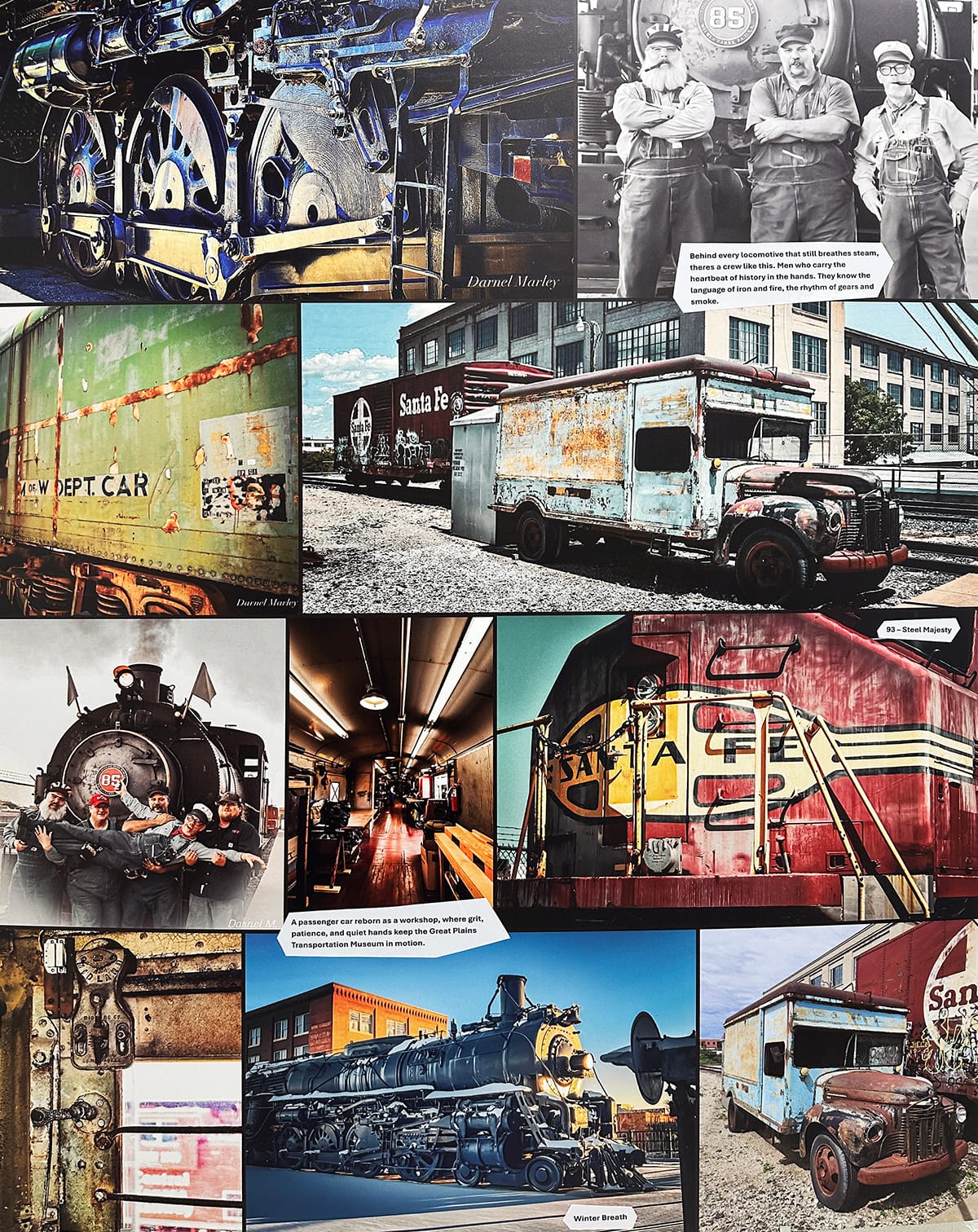
Have you ever waited on a train? Not for a ride, but to analyze the art as it passes? In an exhibition at the Great Plains Transportation Museum, photographer Darnel Marley schools us on a practice called 'benching.'
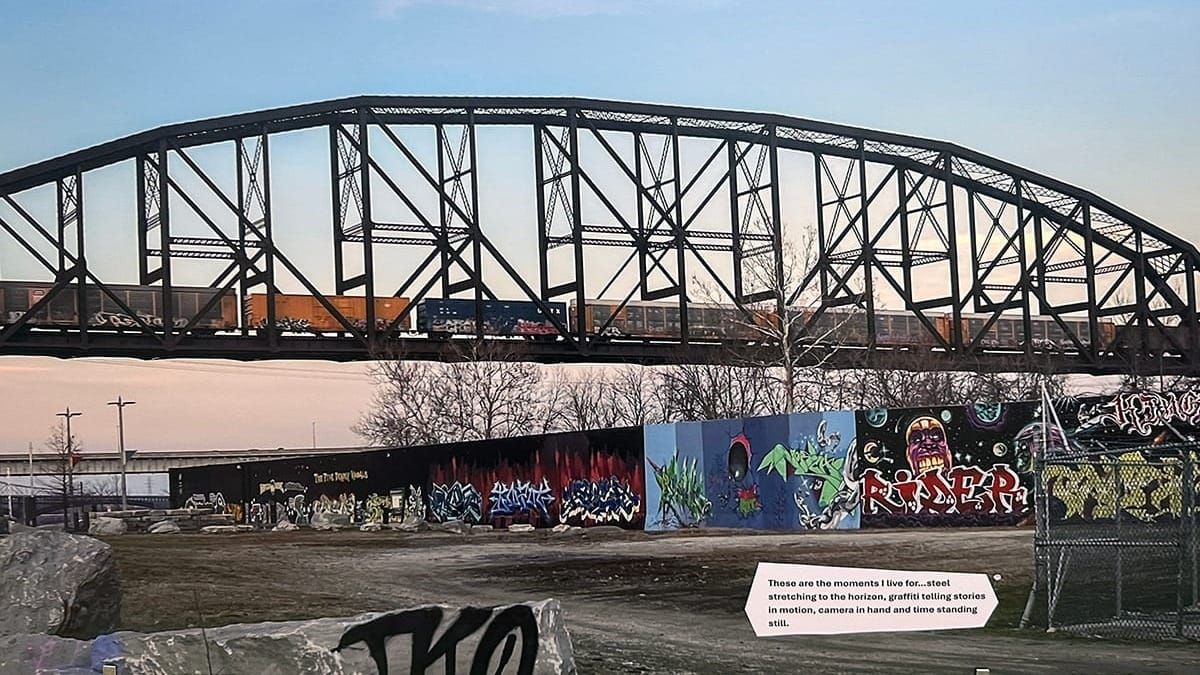
The graffiti rolling past Wichita on the sides of freight trains doesn't usually receive the kind of close attention viewers pay to art in galleries or museums. In her current show at the Great Plains Transportation Museum, photographer Darnel Marley is making the argument that it should.
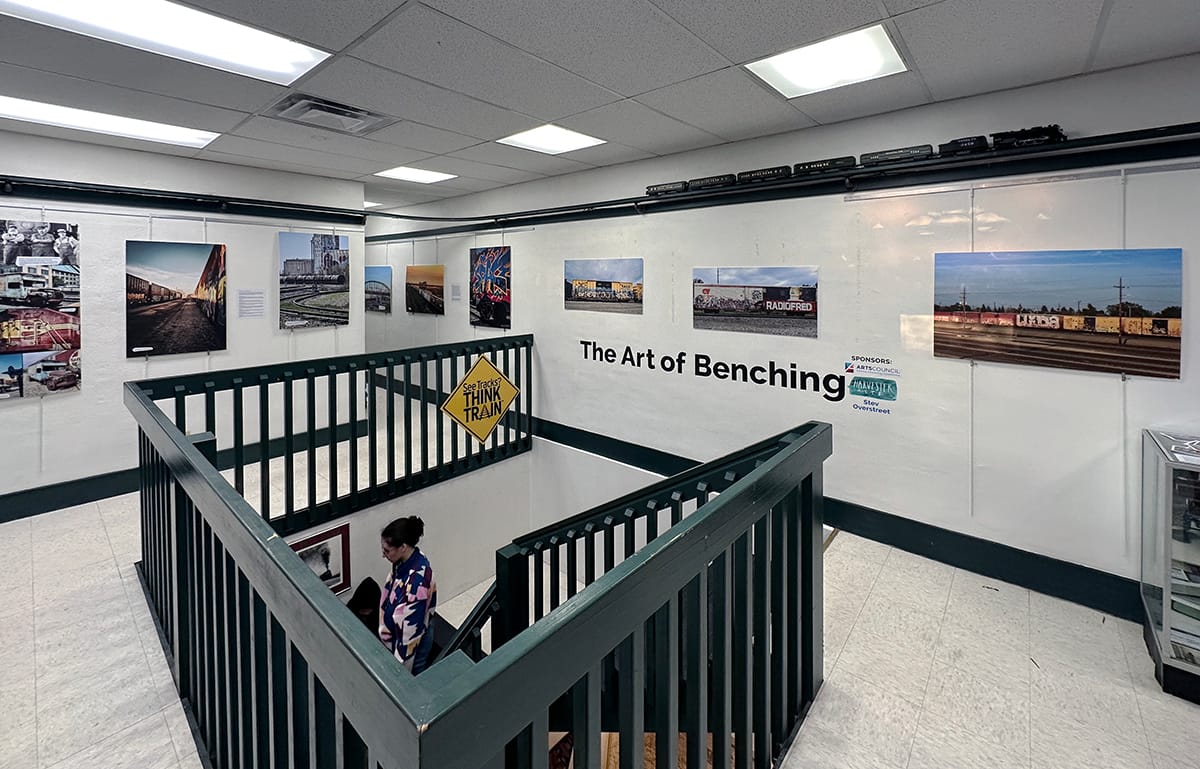
"The Art of Benching," on view Saturdays through the end of June, gathers photographs from Marley's ongoing project of documenting freight-car graffiti, a practice known in the community as “benching.” The term is said to have originated in 1970s New York City, where graffiti writers gathered on a bench in the 149th Street subway station to critique the work passing through. Today, benchers post images online, trade leads with one another, and sometimes reconnect artists with pieces they painted years ago in another part of the country.
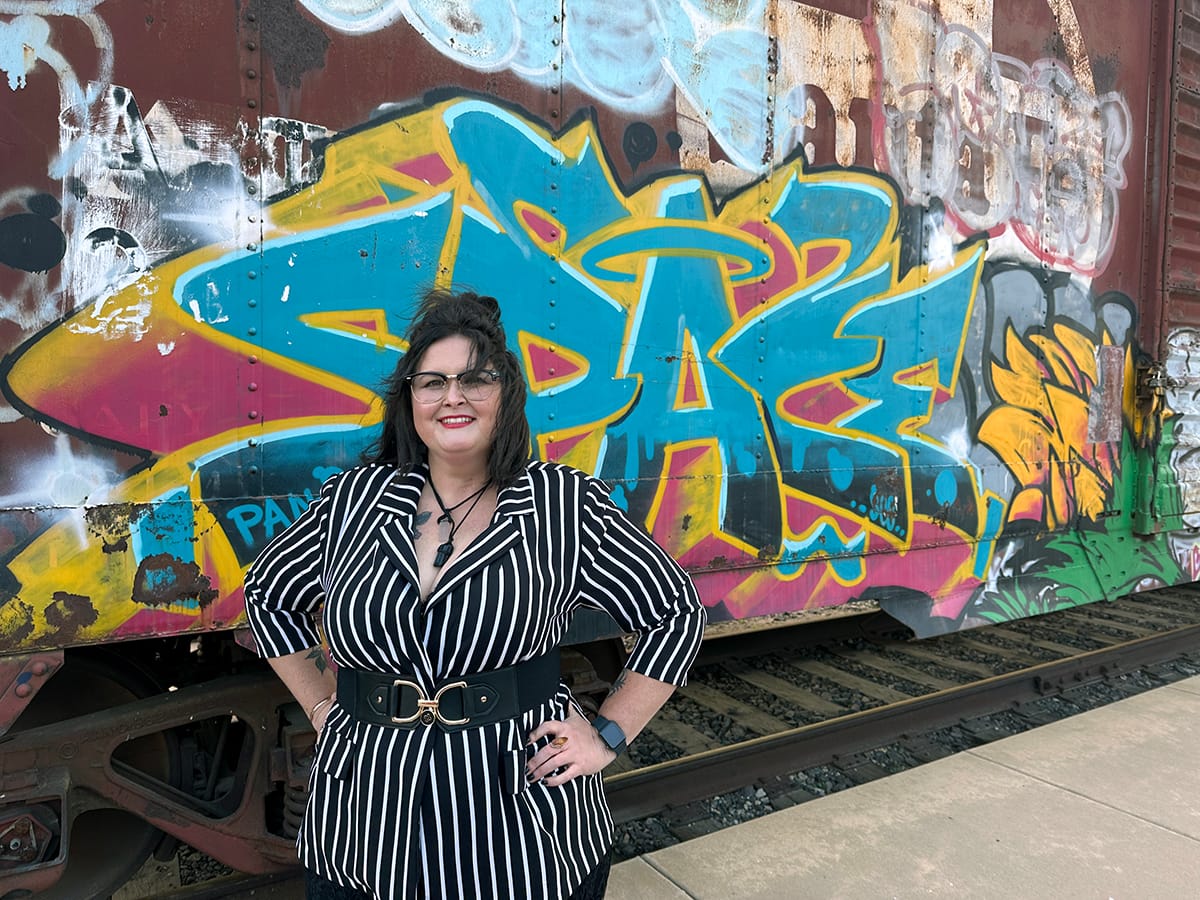
"There are a lot of graffiti writers who appreciate the benchers, because we are documenting their works," Marley said. "I will let them know, 'Hey, I just saw your piece roll through Wichita, or I saw your piece roll through Wellington.' It gives them the chance to say, 'Oh wow, I painted that piece five years ago in Seattle or the Bay Area.'"
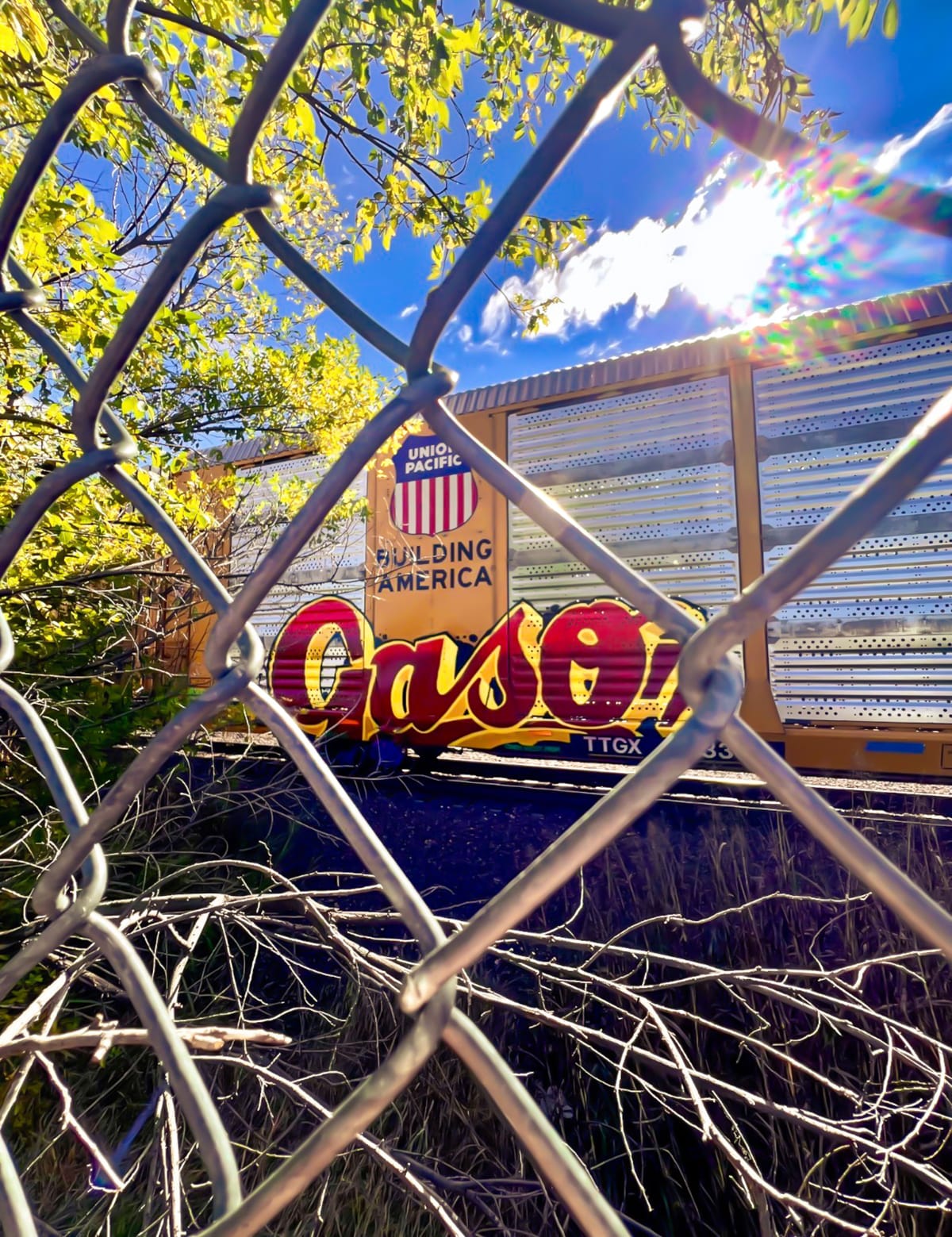
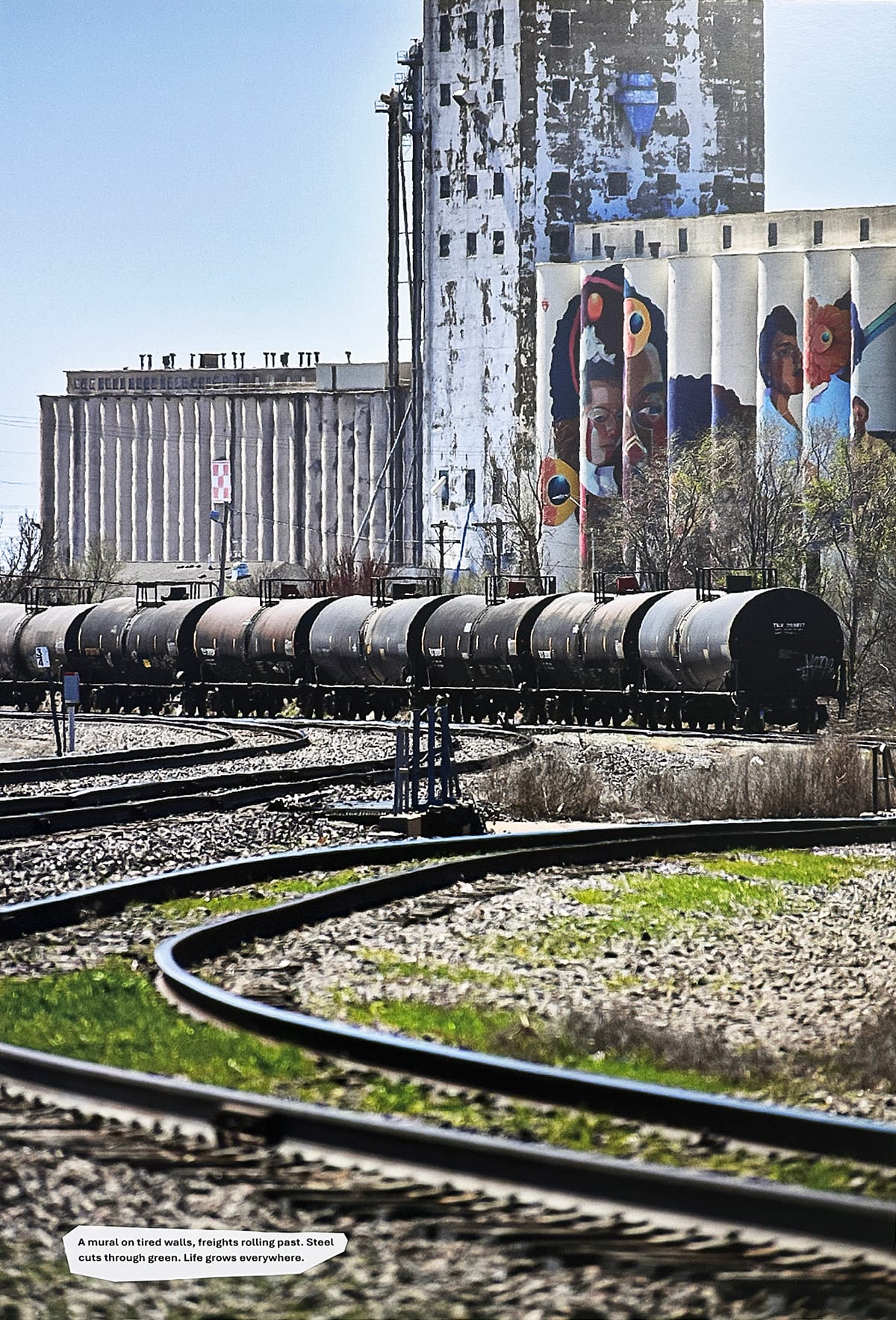
The exhibition opened on April 3 as part of the Transportation Museum's first-ever First Friday event, which also featured food trucks, a DJ, and the unveiling of a new mural painted on a shipping container on museum grounds. The museum received a $3,000 cultural partner grant from the Arts Council for the project.
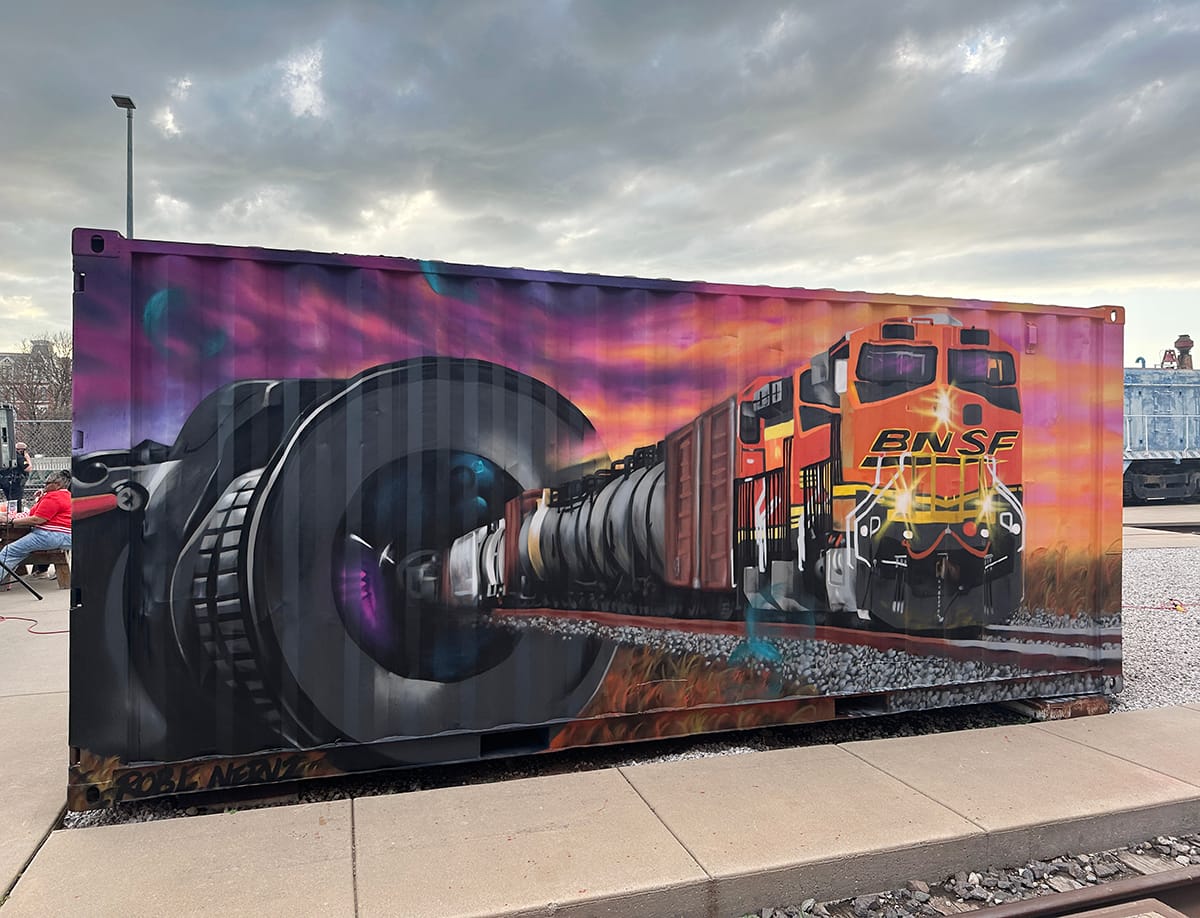
The mural, by Wichita artist Nervz, is based on one of Marley's photographs and incorporates a stylized version of her camera. It depicts a train with Burlington Northern Santa Fe Railway livery. BNSF is one of two main lines that run past the museum. The institution is now raising money to paint the other side of the container with a mural featuring the Union Pacific Railway colors and insignia.
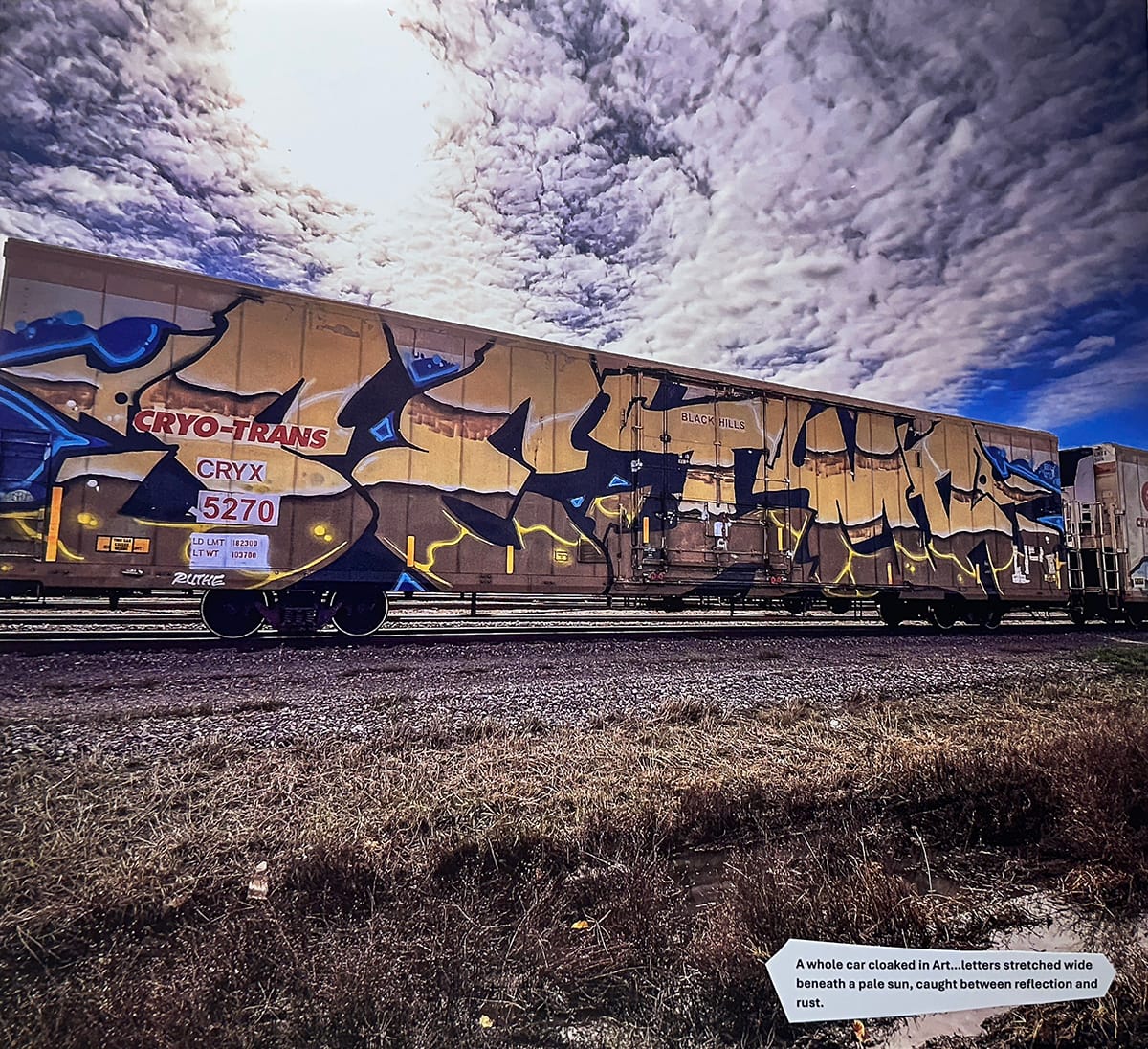
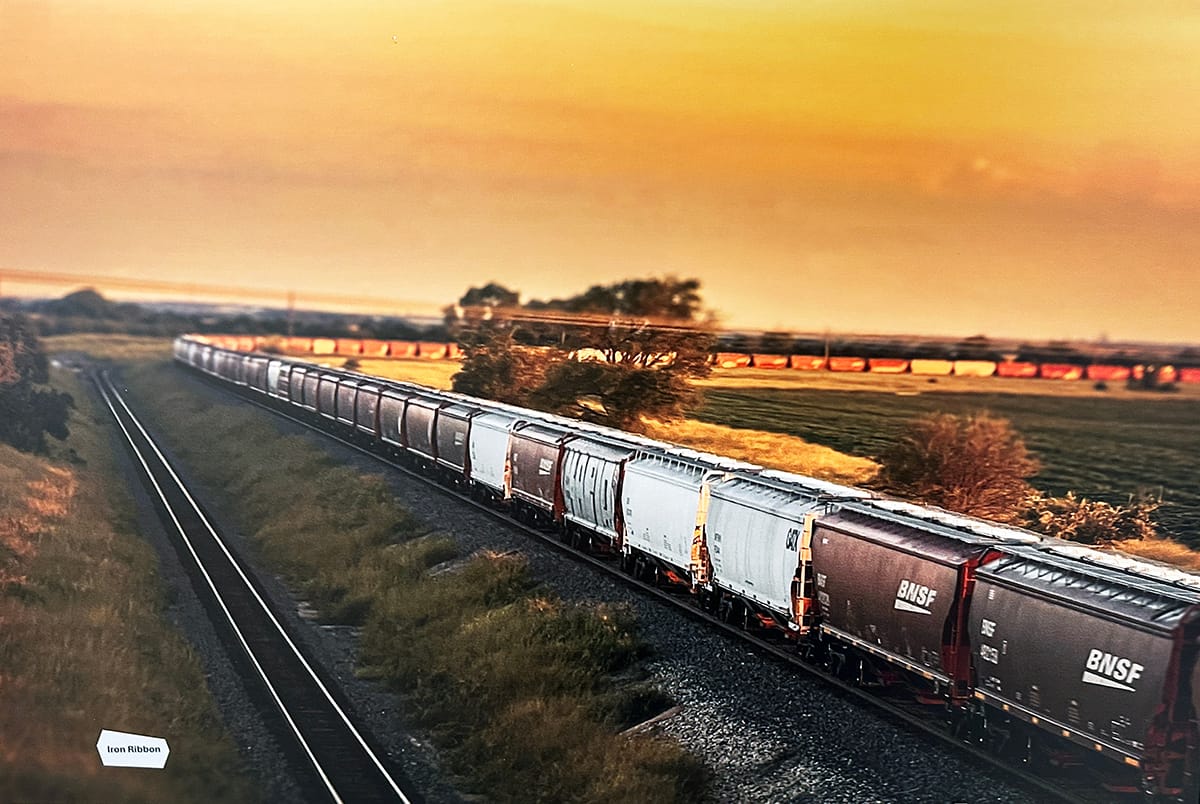
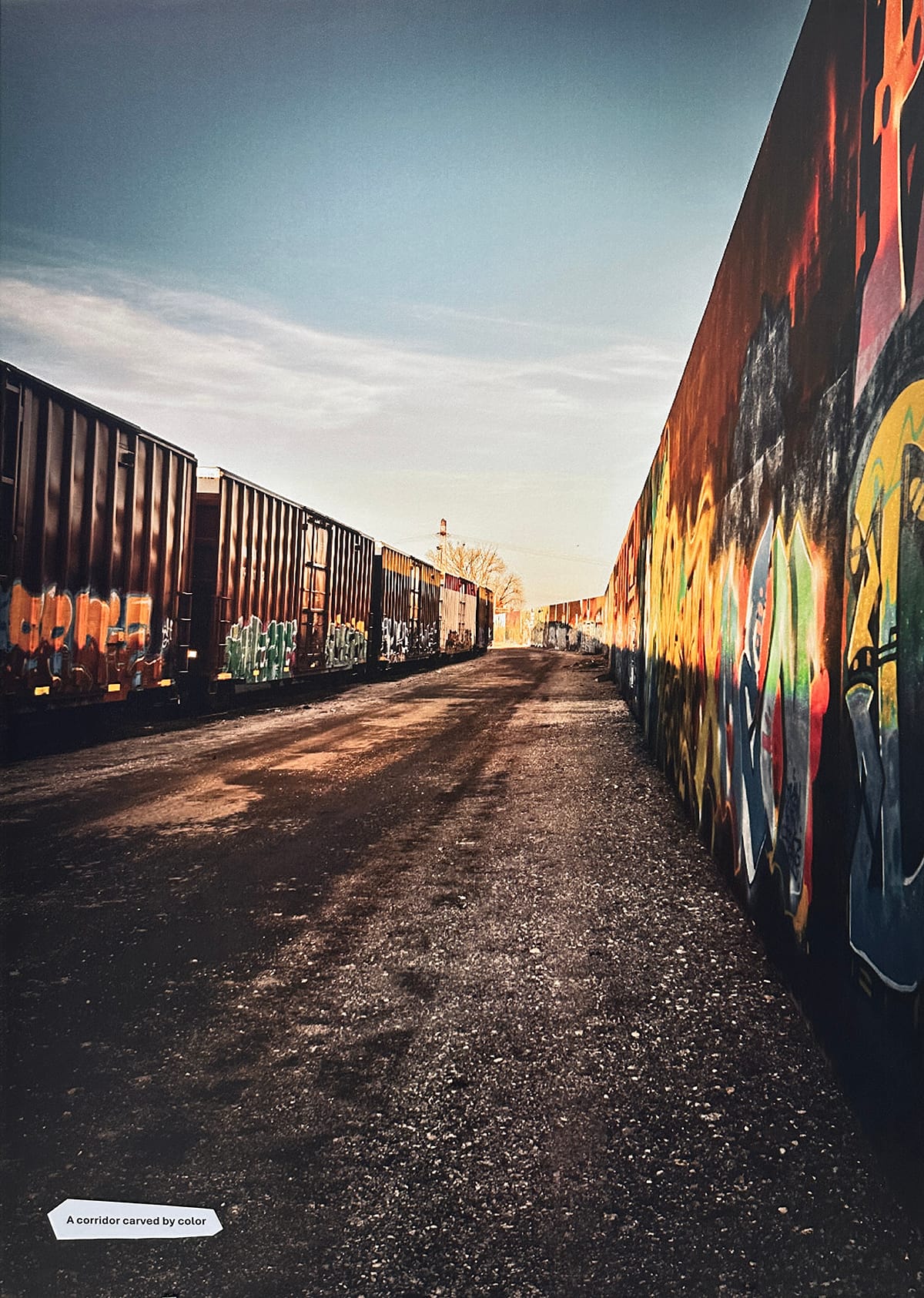
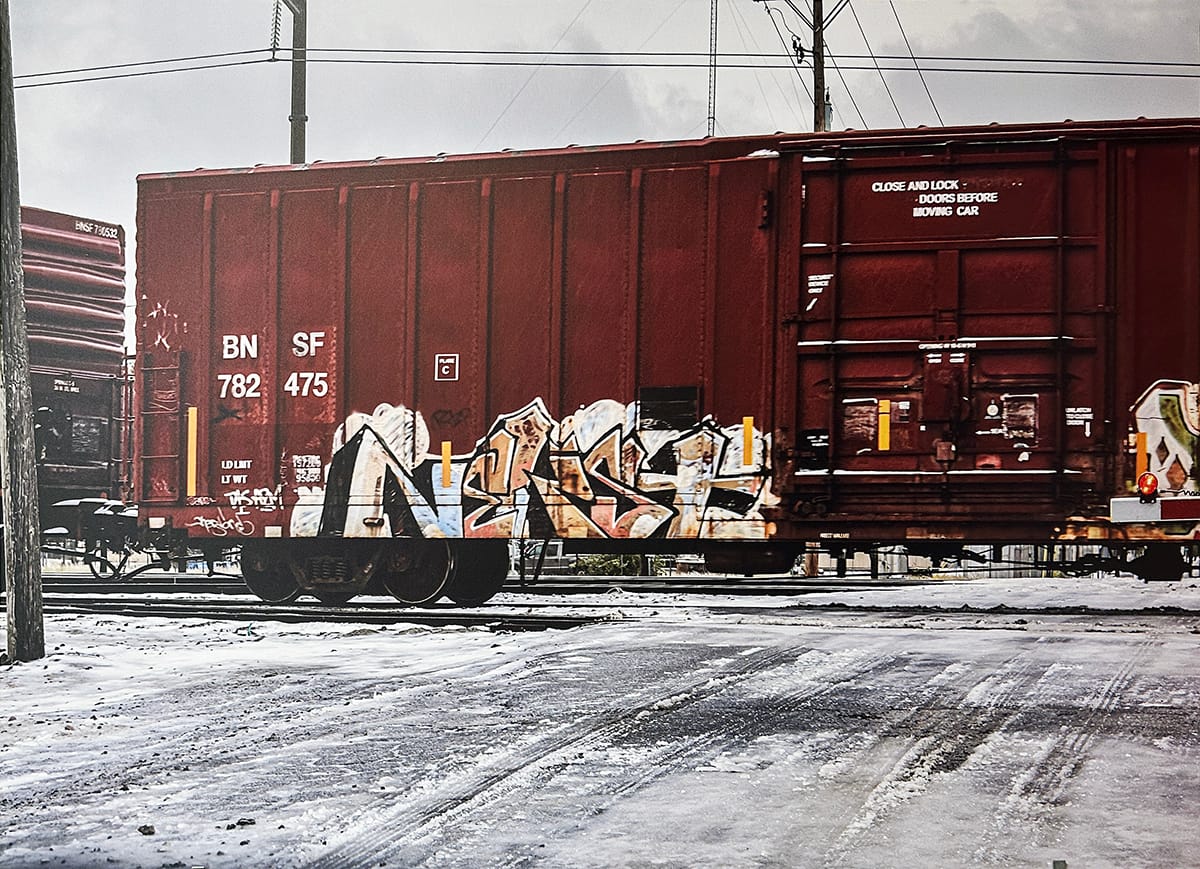
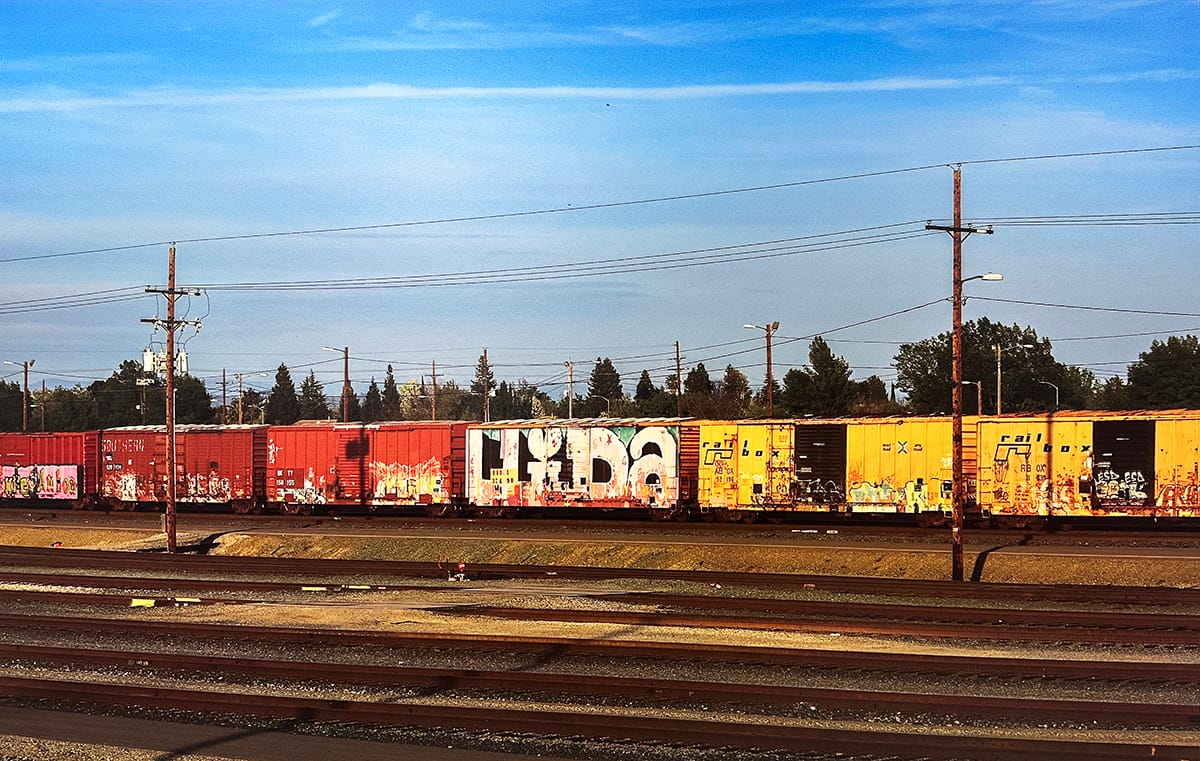
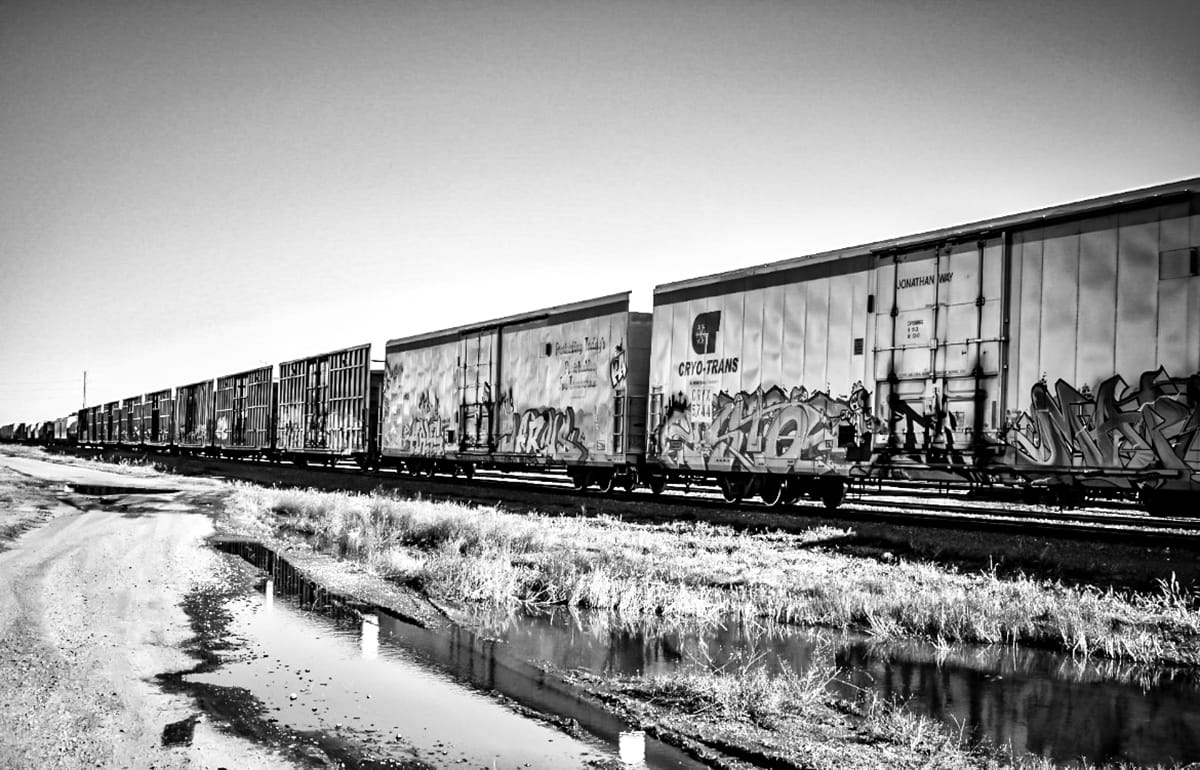
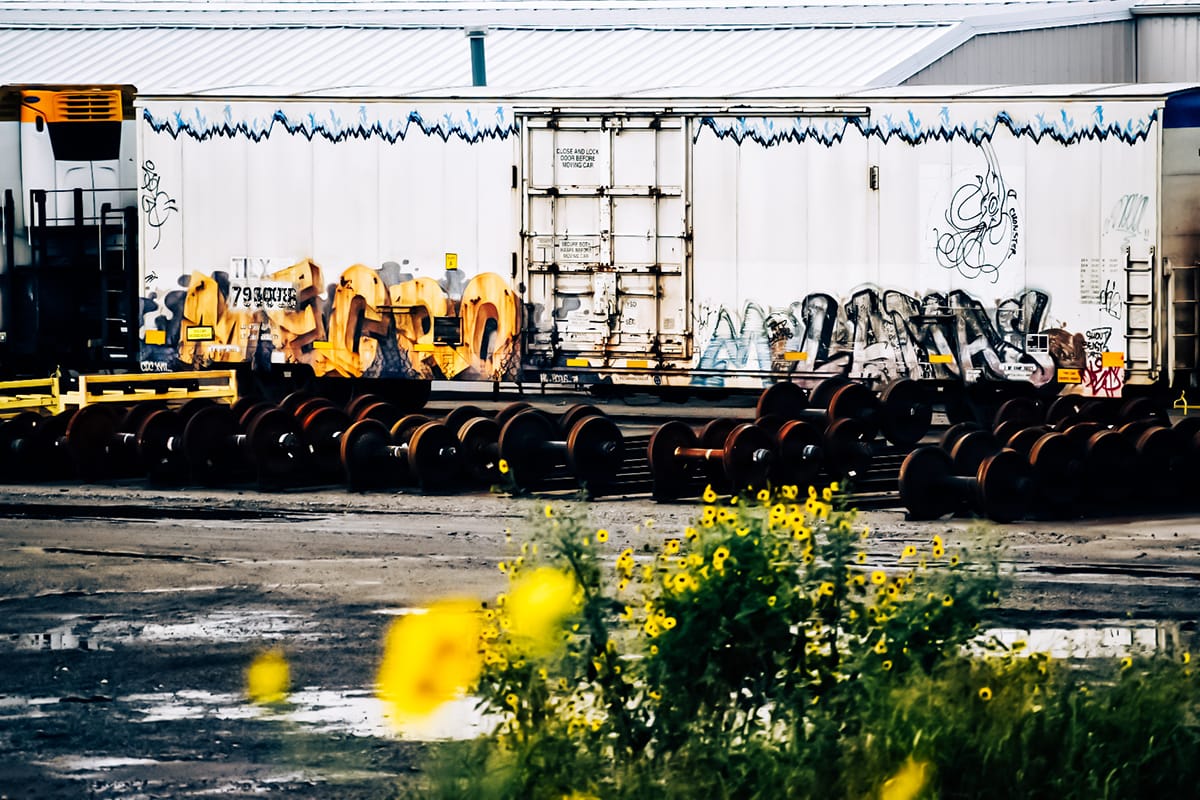
A group of untitled archival pigment prints of digital photographs by Darnel Marley. Photos by Sam Jack for The SHOUT.
Marley has been meticulous in building her personal archive of train graffiti. She works as a floral designer in Wichita and spends most lunch breaks watching for trains. "It's a way for me to unwind, and on a good lunch break I might be lucky enough to catch two or three trains, or I sit there and see nothing," she said. "It’s the same as fishing: You may sit there and come home skunked." To improve her odds, she listens to a rail-traffic scanner and watches Virtual Railfan, a YouTube channel that streams from rail cameras across North America.
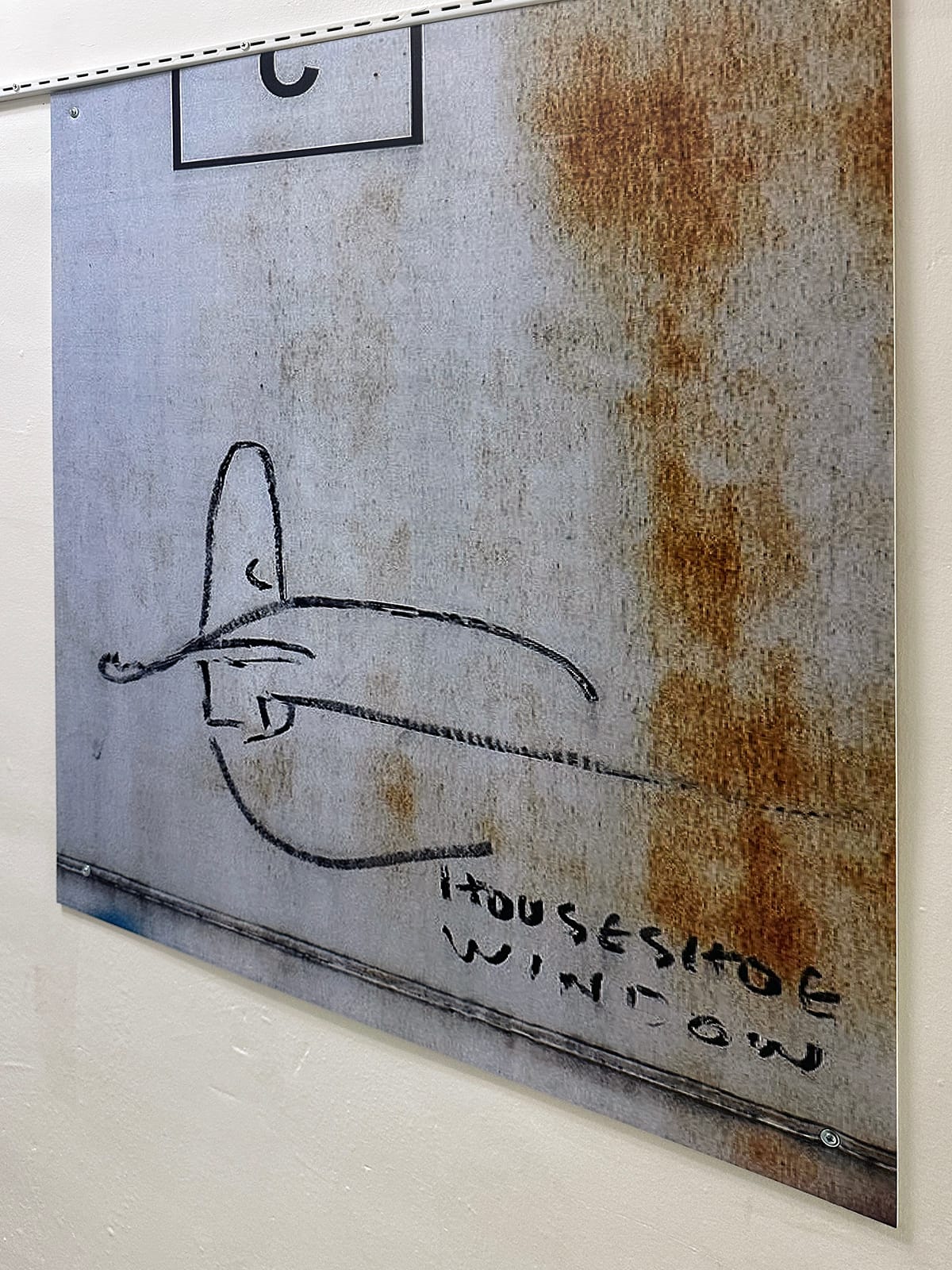
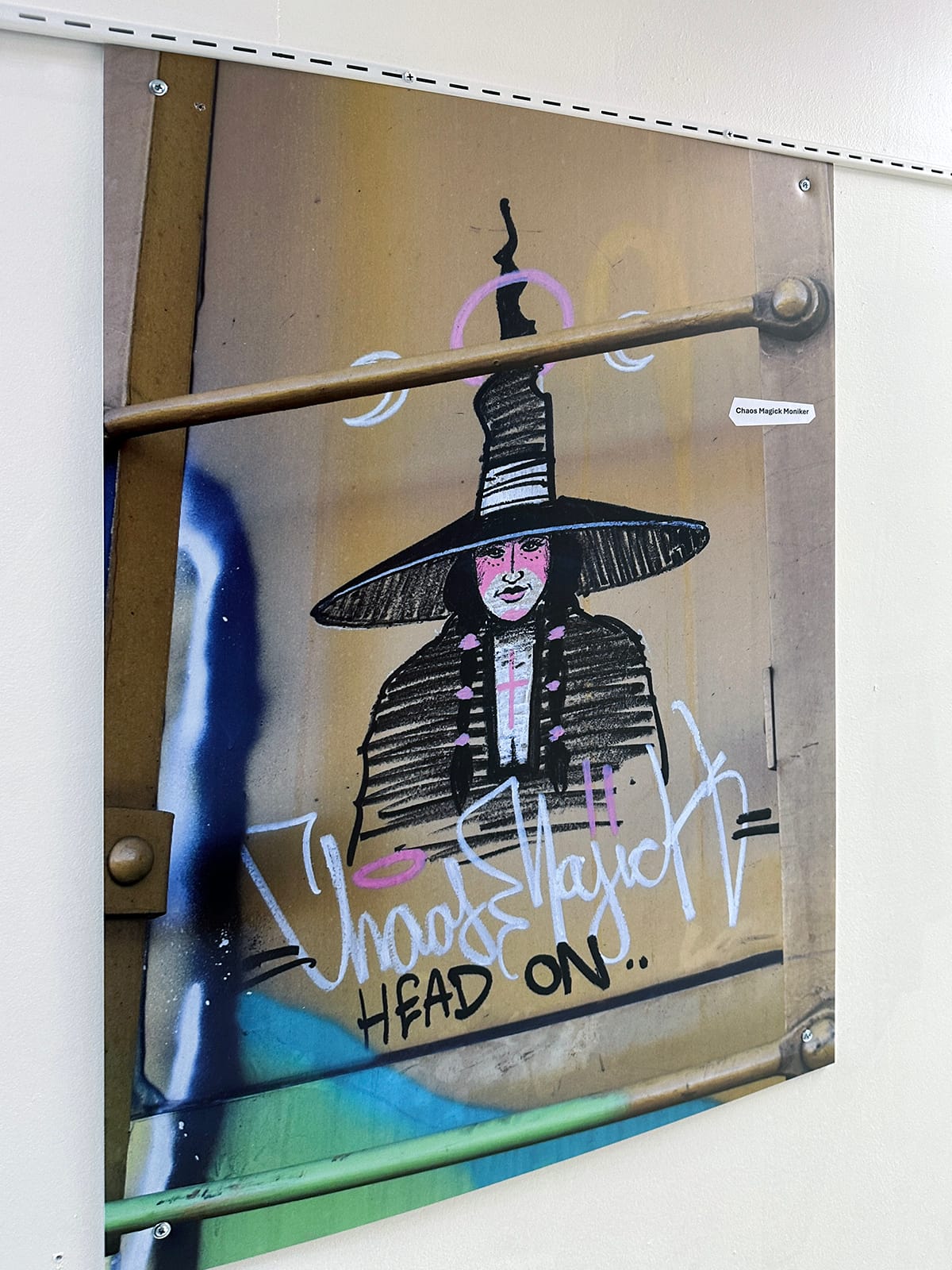
The work she is drawn to varies. There are throw-ups — quick, unpolished pieces painted swiftly — and tags, which she described as quick signatures. There are monikers: small drawings, often less than two feet across, that function like calling cards. The form descends from hobo monikers left on rail cars more than a century ago, and Marley said today's moniker writers include graffiti artists as well as people with no other connection to graffiti culture, such as railroad workers. She has found monikers from the 1970s on cars still in service. "You can barely see them, they're so worn down, and you have to have a trained eye, especially if the train is rolling," she said.
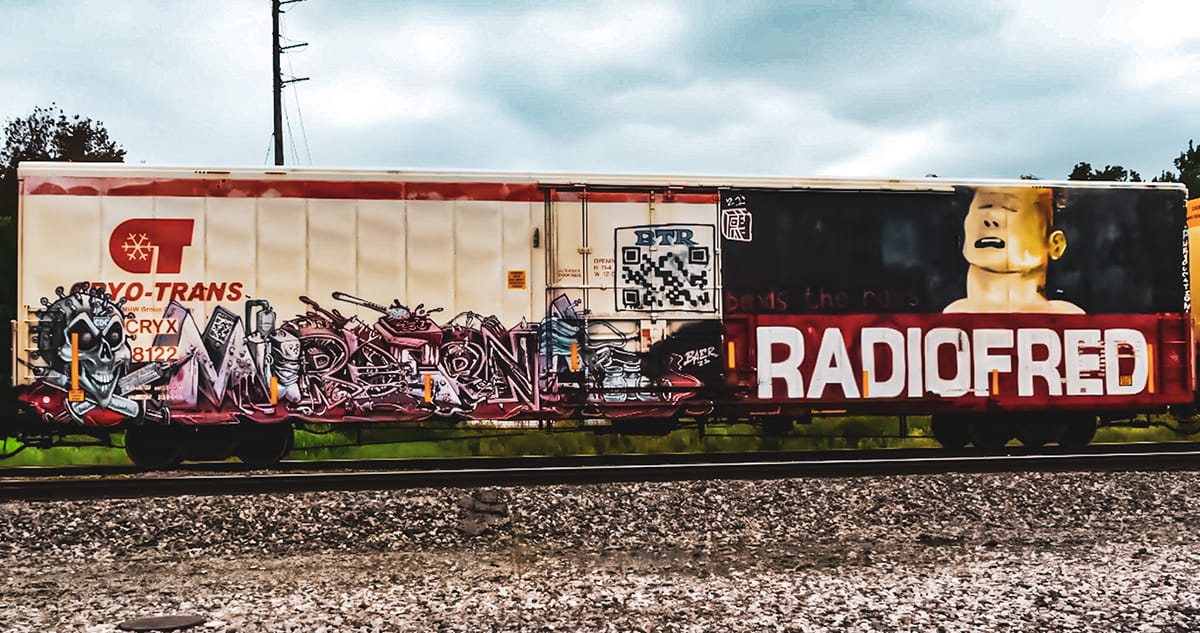
Full pieces — the elaborate, multi-color works that can take all night or longer to paint — get her attention, but characters are a specific draw. "Not all graffiti writers are good at actual character painting. They're more trained on the letters,” she said. “So it's cool to see an artist who can paint actual art outside of merely their name on a train."
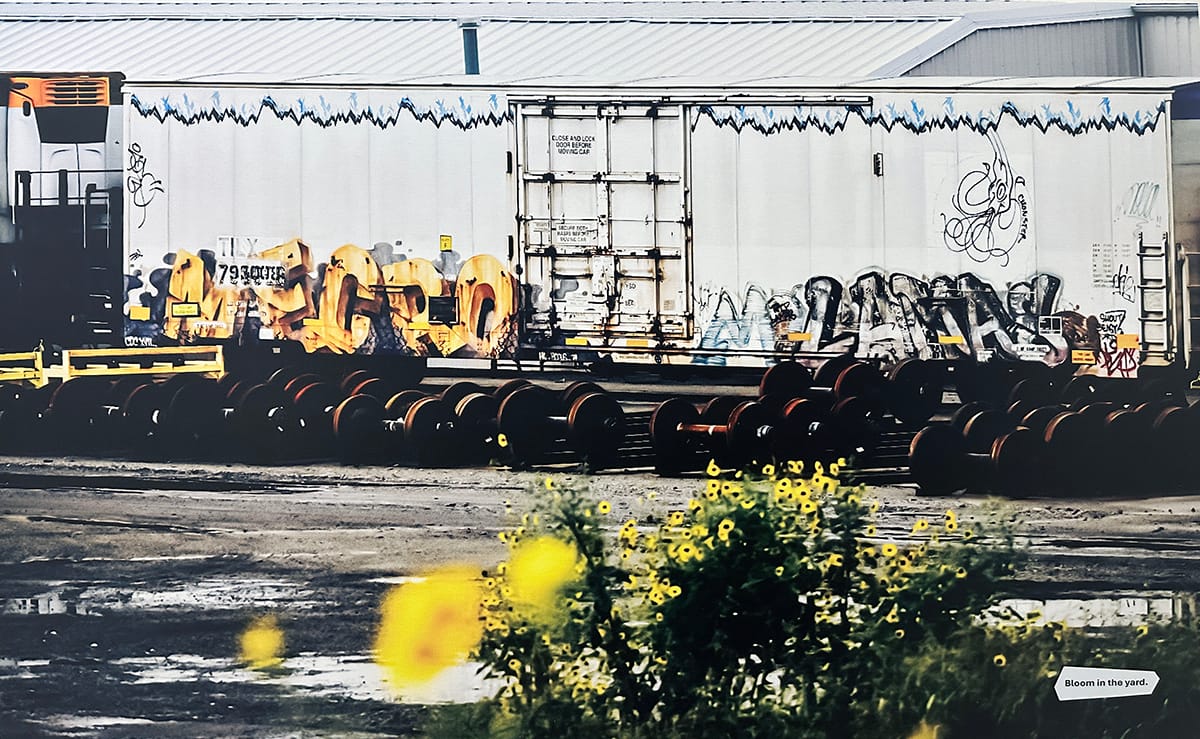
Pop-culture designs are prized in the community for their rarity. Marley has seen works referencing The Simpsons and South Park. One notorious car carries a tribute to Ozzy Osbourne, which she is hoping to see one day.
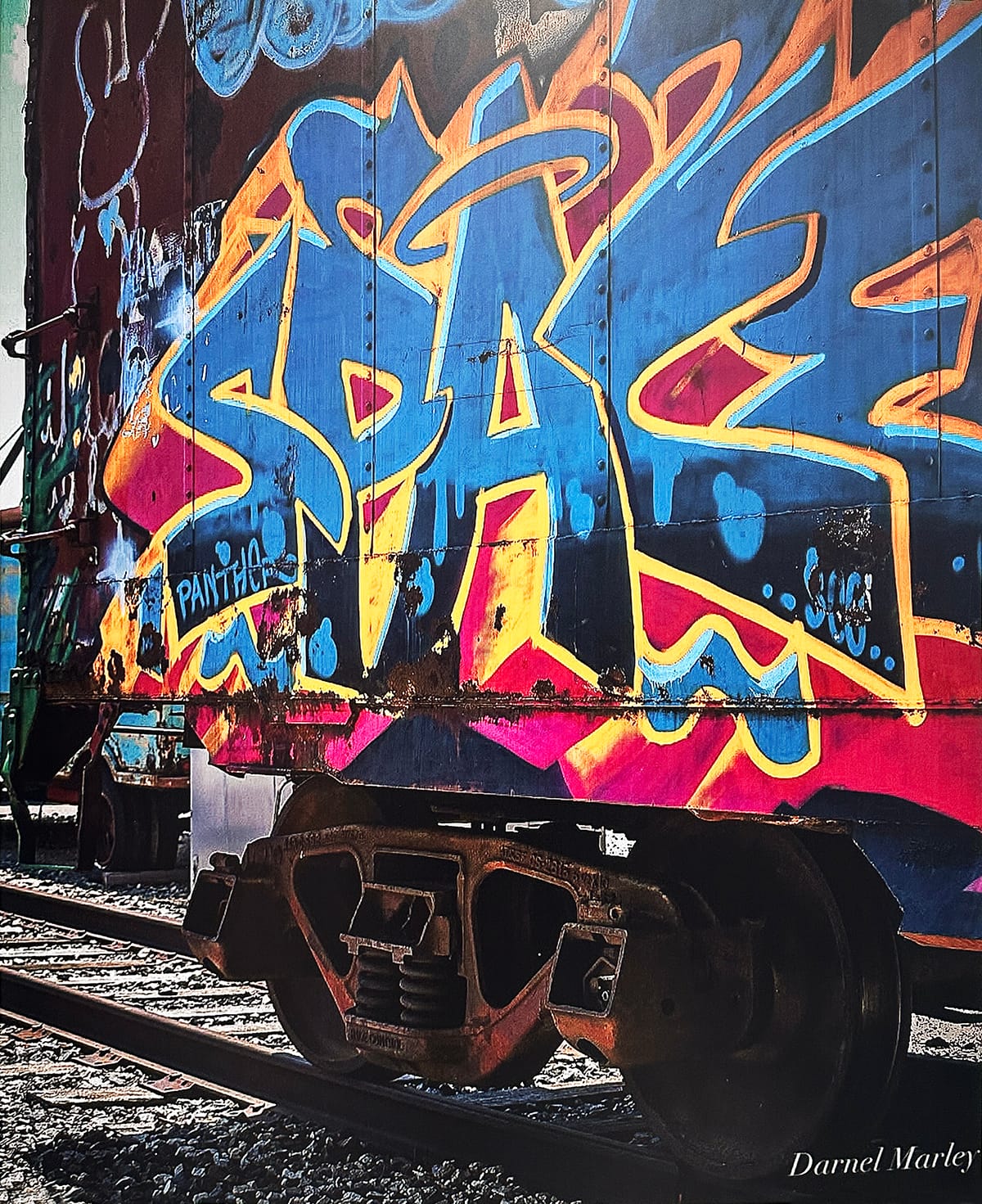
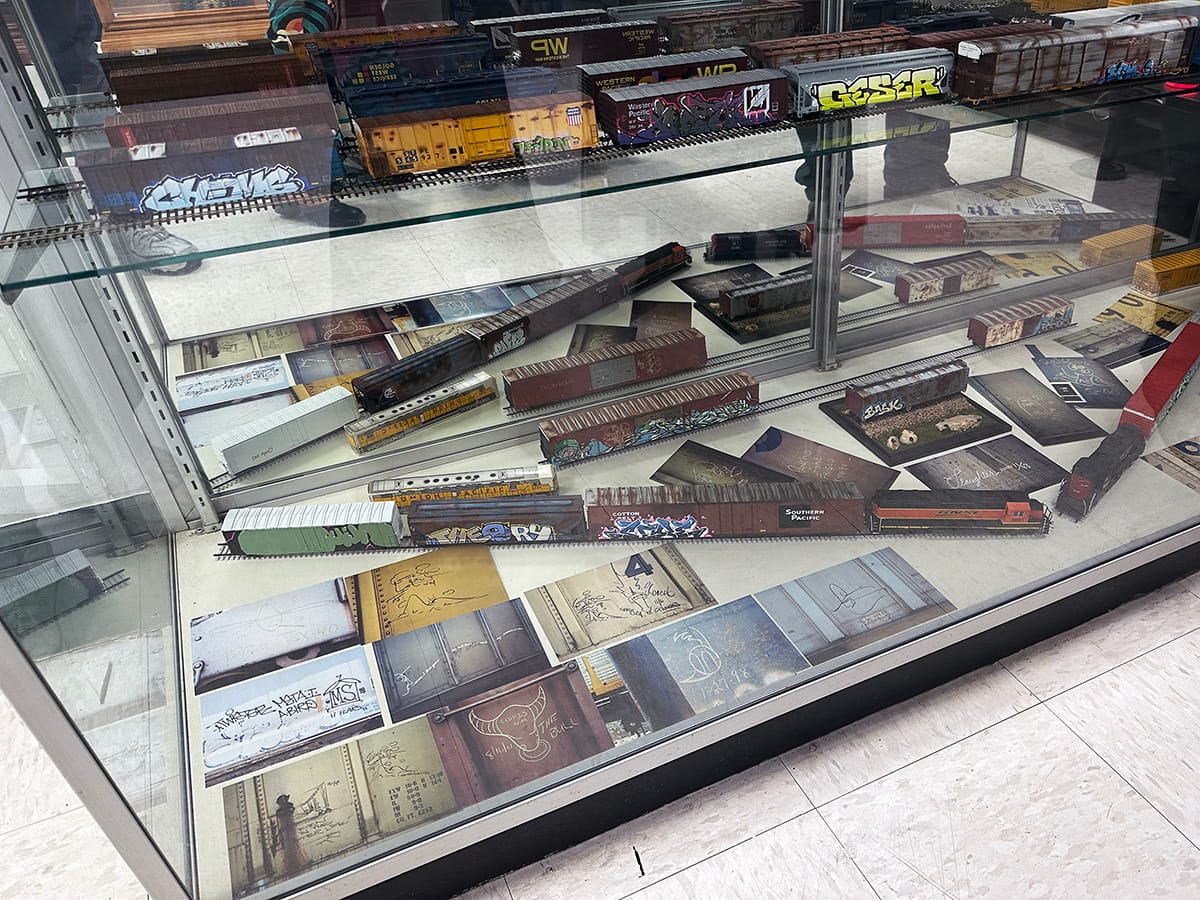
The culture is, by necessity, secretive, but Marley said she has met some of the artists whose work she has photographed, sometimes without knowing it until later. She does not paint herself, partly out of caution and partly because of her role as a volunteer at the museum. She also draws a line between train graffiti and the tagging that shows up on Wichita streets and buildings. Train artists, in her telling, work to a code: They do not paint on engines, and they paint around the numbers and letters railroads use to track cars.
"It's a respect thing," she said. "They also know that if they leave those things alone, their work could keep going for years."
Marley said the exhibition has already shifted some attitudes. "Since I started taking photographs for the museum, a few people who were anti-graffiti — usually the traditional rail fans. Now, they still might not approve, but they can take a moment to look at the artwork. It is going to be there regardless.”
The Details
"Darnel Marley — The Art of Benching"
April 3-June 27, 2026, at the Great Plains Transportation Museum, 700 E. Douglas Ave. in downtown Wichita
The Great Plains Transportation Museum is open 9 a.m.-4 p.m. on Saturdays. The majority of the museum is accessible by stairs.
Admission is $9.75 for ages 13 and older, $6.25 for ages 4-12, and free for children 3 and under.
Sam Jack is a poet, a classical tenor, and the adult services librarian at Newton Public Library. He performs with several local groups, including Wichita Chamber Chorale, Wichita Grand Opera, and Opera Kansas. He received a Master of Fine Arts in creative writing from the University of Montana.
❋ Derby man has the kind of voice that turns heads — and chairs
❋ Socializing while sober: how some Wichitans are cultivating alcohol-free communities
❋ As a small creative business closes, the owner mourns
❋ Painting through it: Autumn Noire on 20 years of making art
❋ How a guy from Wichita resurrected 'Dawn of the Dead'
❋ Bygone Friends University museum housed curious collections
Support Kansas arts writing
The SHOUT is a Wichita-based independent newsroom focused on artists living and working in Kansas. We're partly supported by the generosity of our readers, and every dollar we receive goes directly into the pocket of a contributing writer, editor, or photographer. Click here to support our work with a tax-deductible donation.