Music Theatre Wichita's ‘Fiddler’ is just that good
MTW's revival of ‘Fiddler on the Roof’ showcases the uniformly strong talents of the cast, the crew — and the musical itself.
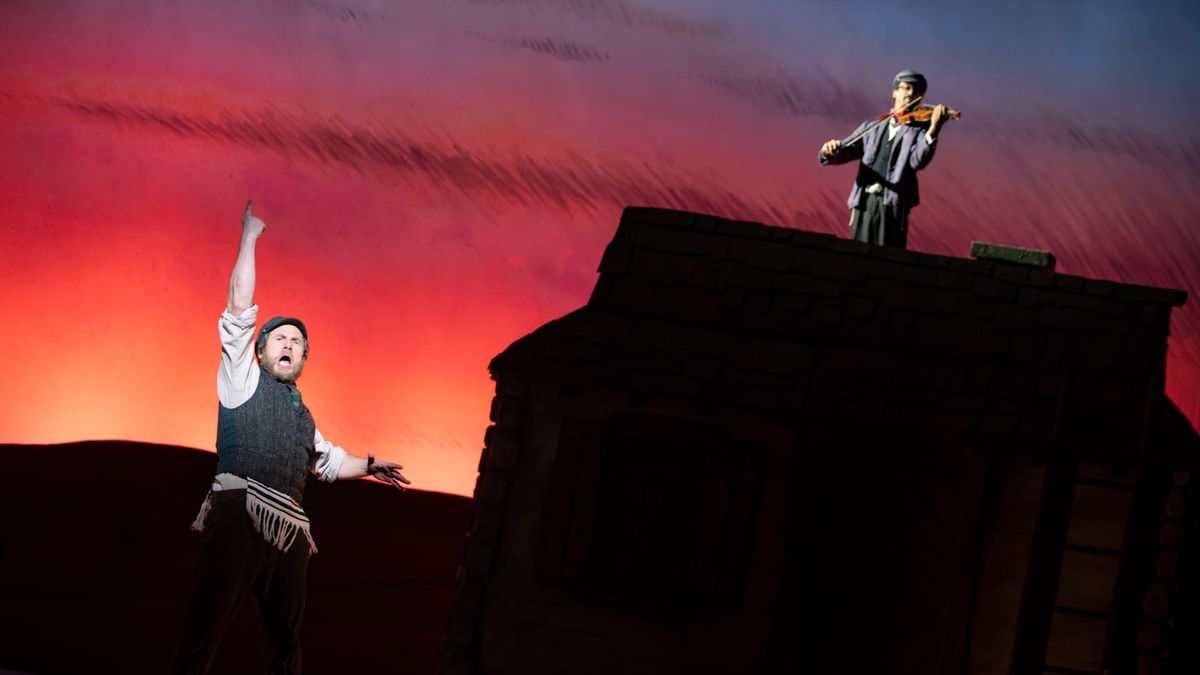
In “Fiddler on the Roof,” Tevye the dairyman spends much of the show on the stage's downstage lip, poised between the modern audience in the house and his un-modern neighbors onstage, both narrating and experiencing his life's upheaval. The role asks its performer to pour out a lot of energy and generate a lot of charisma. Danny Rothman, Music Theatre Wichita's Tevye for the Century II production on stage through Sunday, has both to spare.
One of Tevye's running complaints is that his horse has gone lame, leaving him to haul the milk cart himself. Other Tevyes I've seen have leaned into the exhaustion of that labor, a weariness at the piled-up misfortunes of a hard life that plays as ironically self-mocking and sincere at once. Rothman keeps the irony, which is baked into the character, but he plays Tevye first as a man of great vigor, all bonhomie until a rage roars out of him with sudden force.
Rothman's performance is detailed and tightly knit, a credit both to the actor and to stage director Robert W. Schneider. For all of Tevye's irreverence — the jokes at his own tradition's expense and the scripture quotations he cheerfully invents — Rothman makes it plain from the outset that this is a man of deep and sincere devotion, on unusually personal terms with God. As the interlocutor between the audience and the villagers, Tevye casts an affectionate but jaundiced eye on Anatevka's customs and foibles. God is never part of that mockery. Tevye knows God can take a joke, but never makes Him the butt of one, and that steady attachment is what binds him to his people and his village. It lets Rothman's Tevye guide us through Anatevka without ever standing outside it.
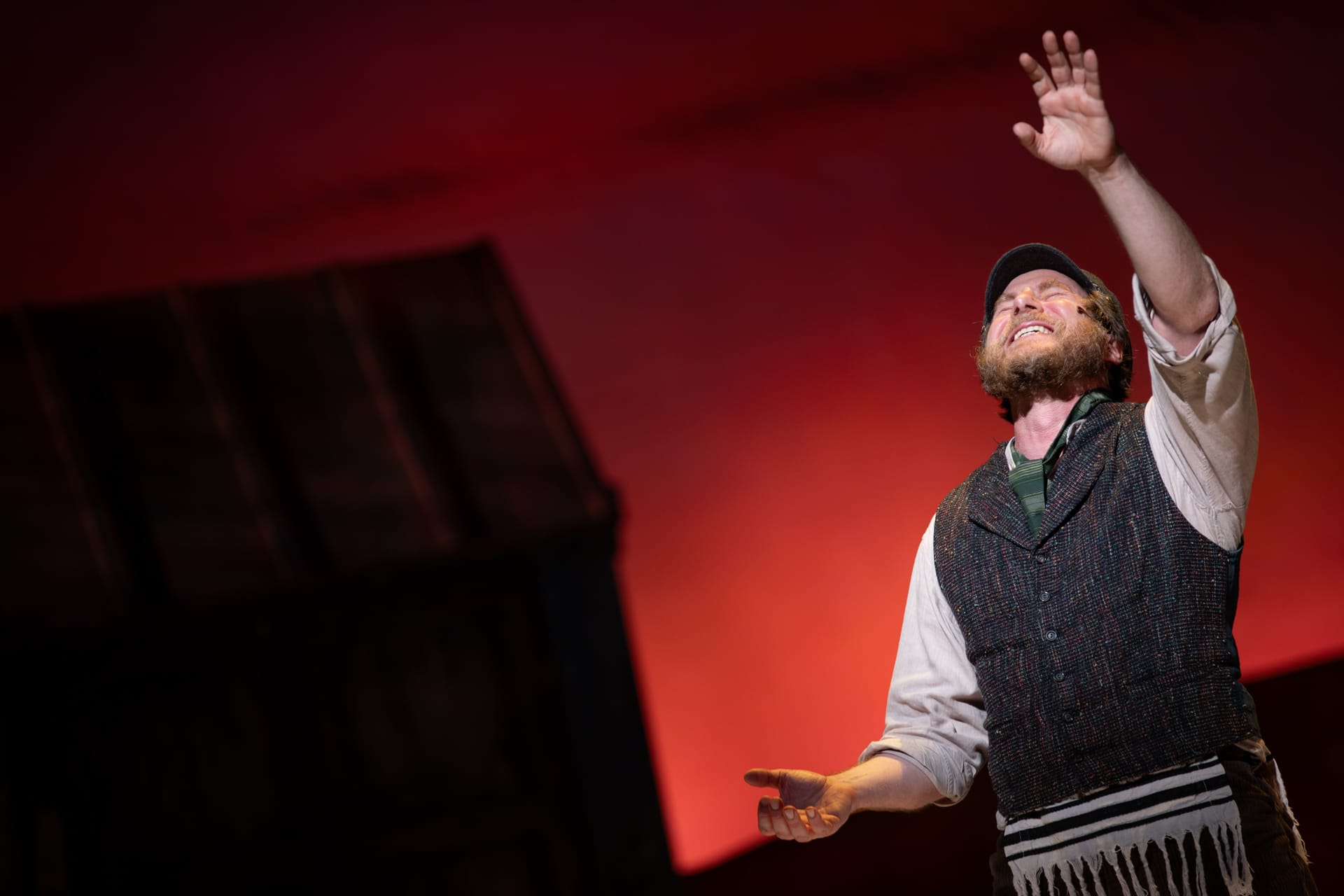
Rothman is a first-rate singer with a firm, well-produced baritone, and he delivers as written several passages that other productions hand over to half-spoken sprechstimme. Under the musical direction of Laura Bergquist, that disciplined approach to delivering the score was evident across the entire ensemble; it was a night of uniformly high musical values. As Golde, Pamela Bob commits to fully lyrical singing in "Do You Love Me?," another number that often tempts its performers toward overusing a speech-like approach.
In that number, I was struck by Bob's breathless reading of the line "I'm your wife," Golde's final deflection before she allows that yes, after 25 years, she does love Tevye. It's one of many lines in the show that gives performers the choice of going for a laugh or digging for more textured, emotionally nuanced readings. Either approach can work — “Fiddler” is just that good — but MTW's leads mostly did the latter.
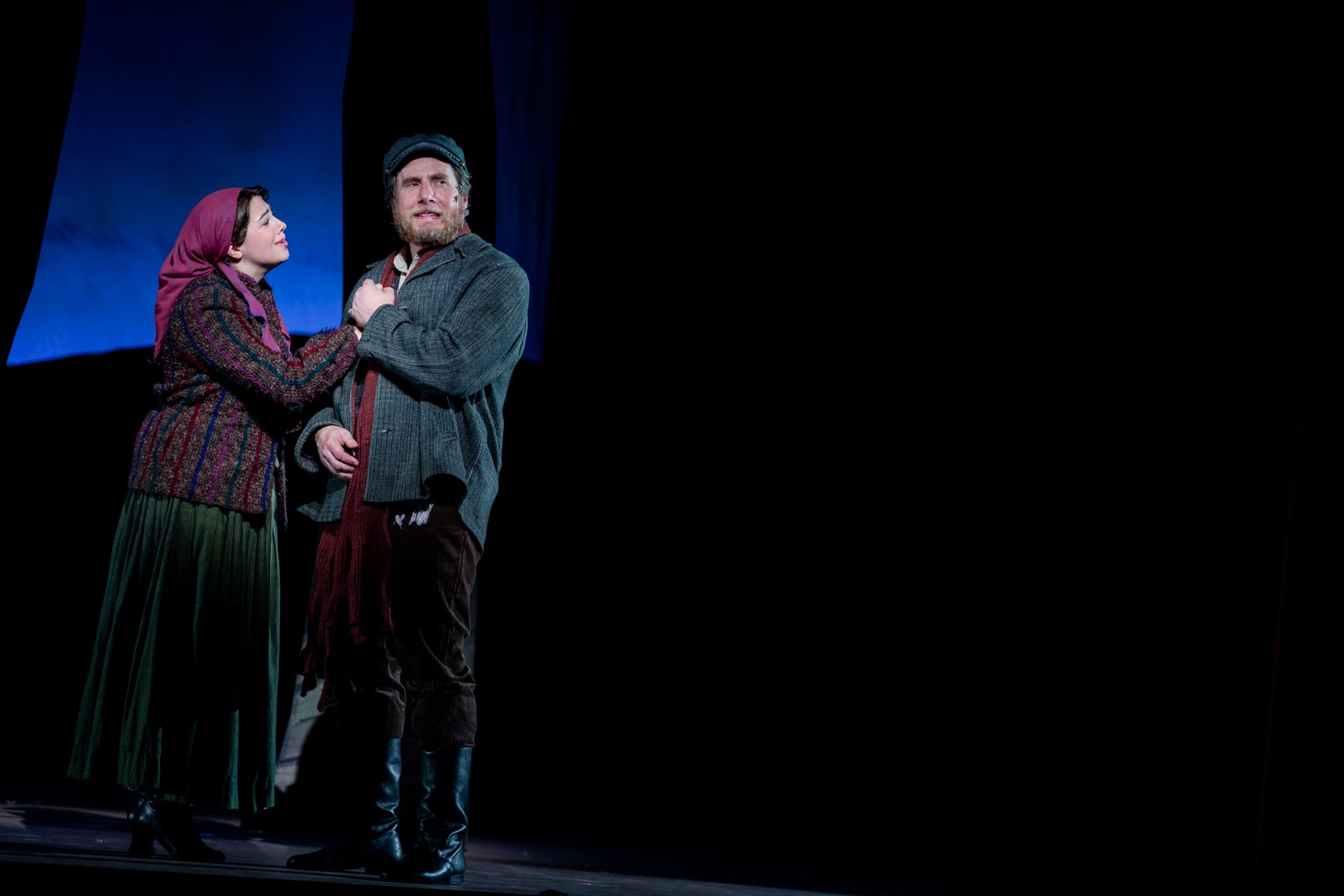
That includes Tevye's three oldest daughters, who each marry a step further outside custom than the last. Tzeitel (Hannah Ervin) turns down the prosperous butcher her father has arranged for her and takes a poor tailor whom she loves. Hodel (Lianna Paglia) attaches herself to a firebrand student and follows him into Siberian exile. (Paglia gives "Far From the Home I Love" a clean, unforced line.) Chava (Abigayle Kate Gatton) marries outside the faith, the one break Tevye cannot bend far enough to bless. The three are wholly credible as sisters, and recognizably their mother's daughters, each of them brave enough to speak up for themselves to the men who control their fates in a deeply patriarchal society.
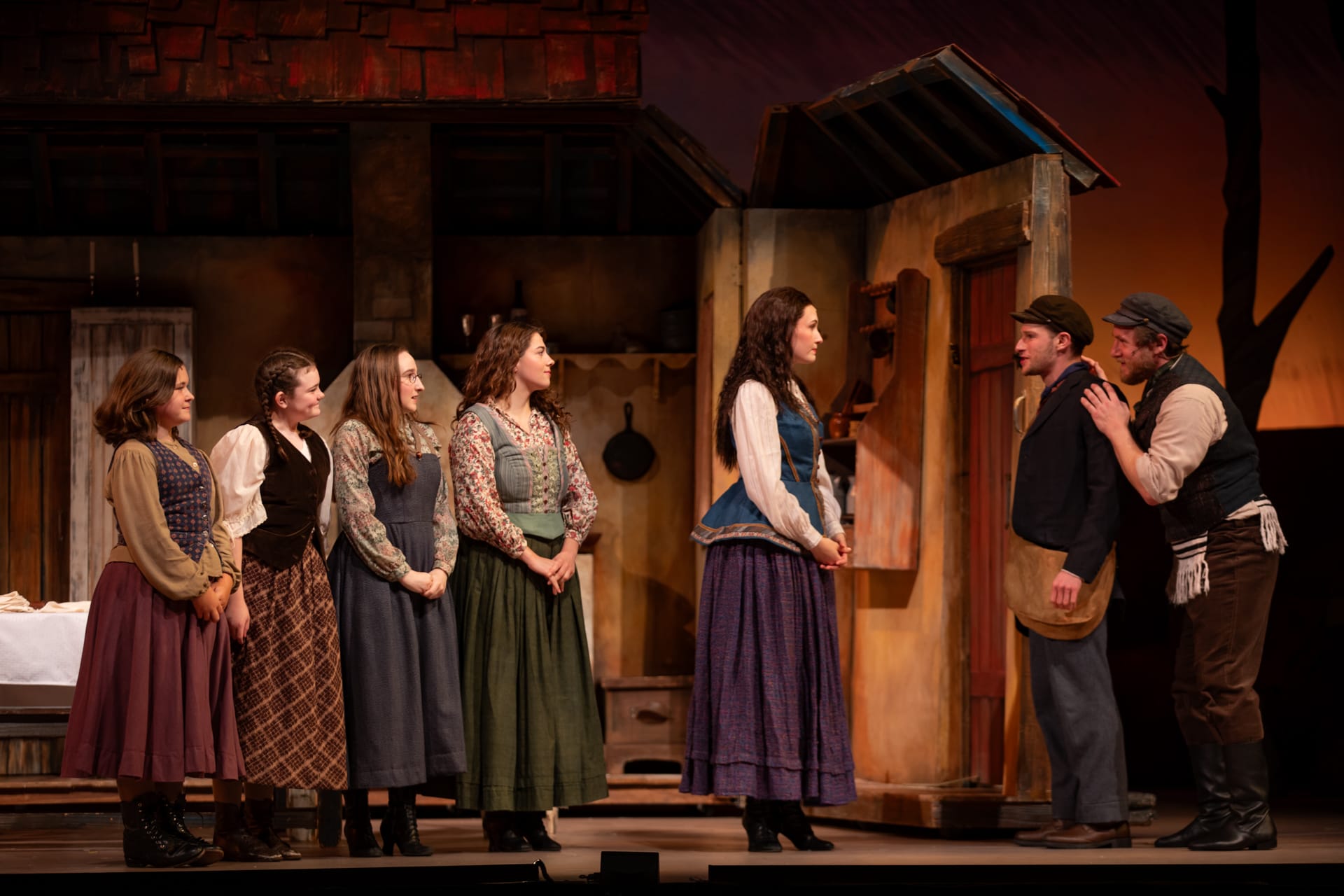
The choreography is a close revival of the1964 version by Jerome Robbins. As I learned at the pre-show talk, the Robbins' estate requires every professional production of "Fiddler" to engage a preapproved expert who can teach the company the original Broadway steps – in Wichita's case, James Monroe Števko.
The arrangement has presumably cost the world whatever later choreographers might have invented with a free hand, but I can't say I mind, since it let this audience see Robbins' dances. They remain an uncommonly powerful way to tell a story through movement, trading much of the standard Broadway vocabulary for rooted processionals and folk forms, and for the plain, near-pantomime gestures that underline the words being sung. In "To Life," a tavern toast among the Jewish men is joined by a band of Russians, and the two idioms meet in a spirit of optimism shadowed by barely latent menace. At the wedding, the famous bottle dance, so tightly controlled, gives way to the most liberated and unselfconscious kind of vernacular movement. The young resident company handled all of it with confidence. There is a difference between performing a style and discovering it, and this mostly college-age cast was doing the latter; their excitement came across clearly.
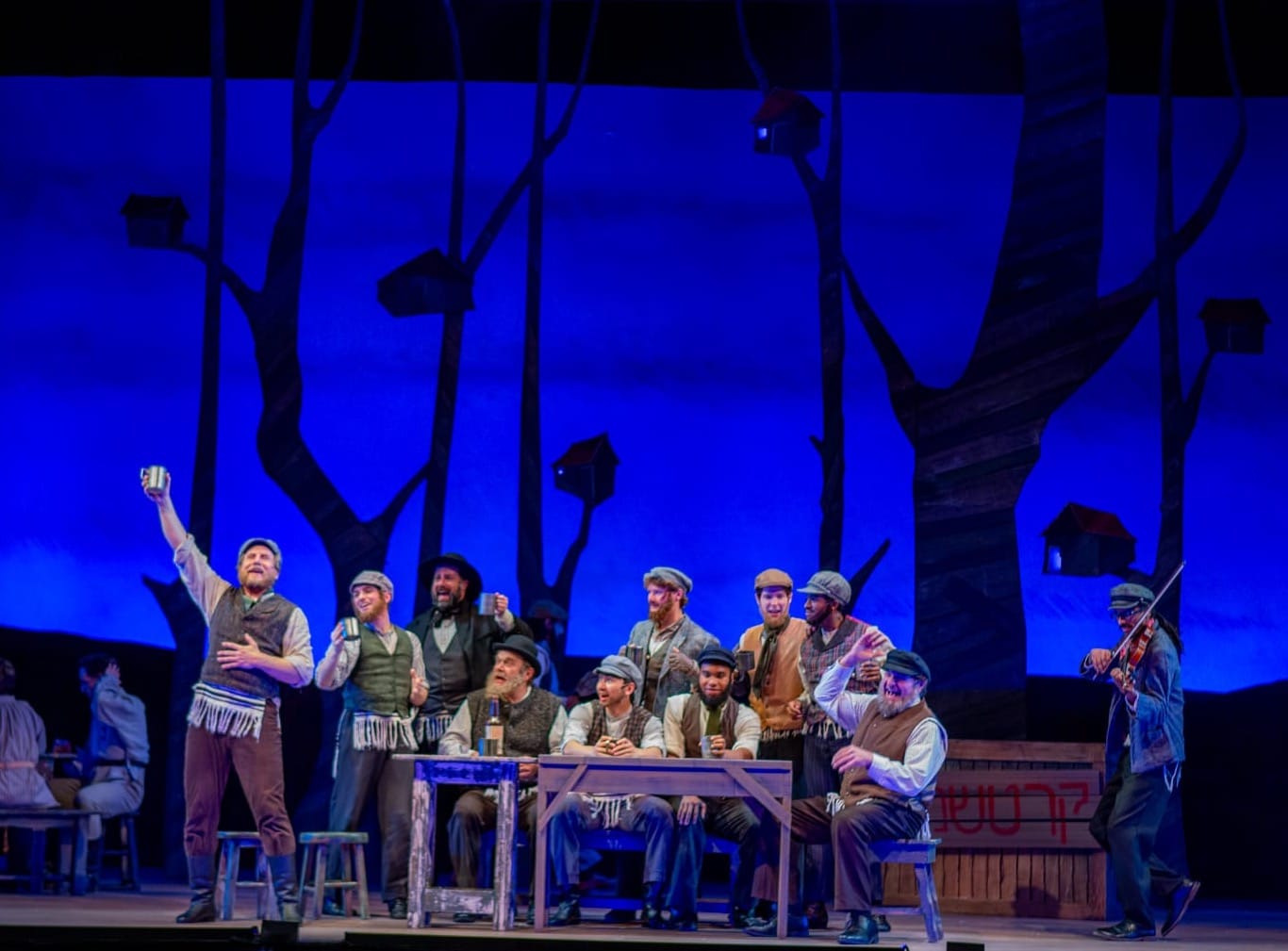
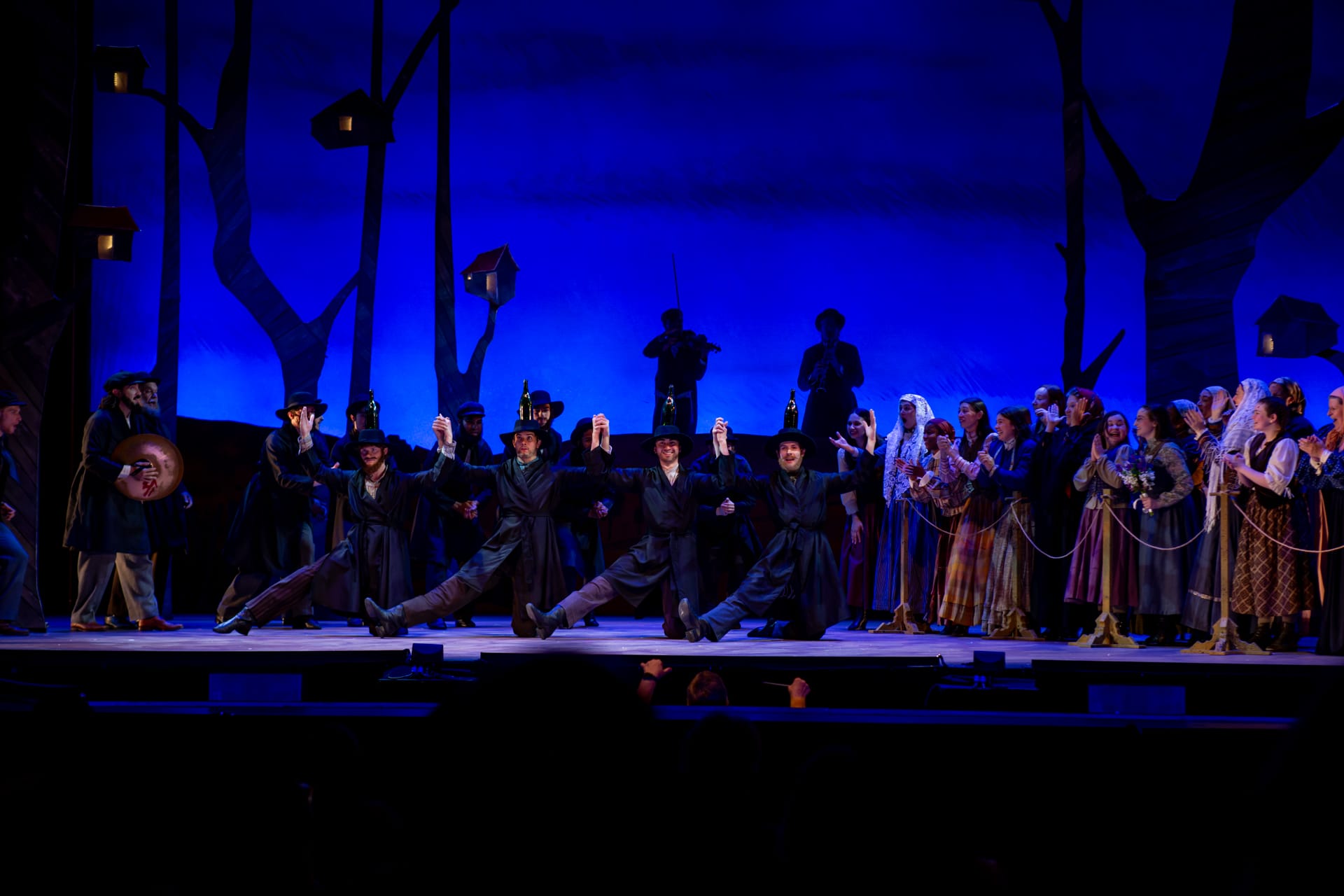
It was also a good night for the MTW sound crew and for sound designer David Muehl. Compared with the season's two earlier opening nights, "Hello, Dolly!" and "Elf," when the orchestra sometimes swamped the voices, the balance here was excellent, with orchestra and singers in clear proportion throughout.
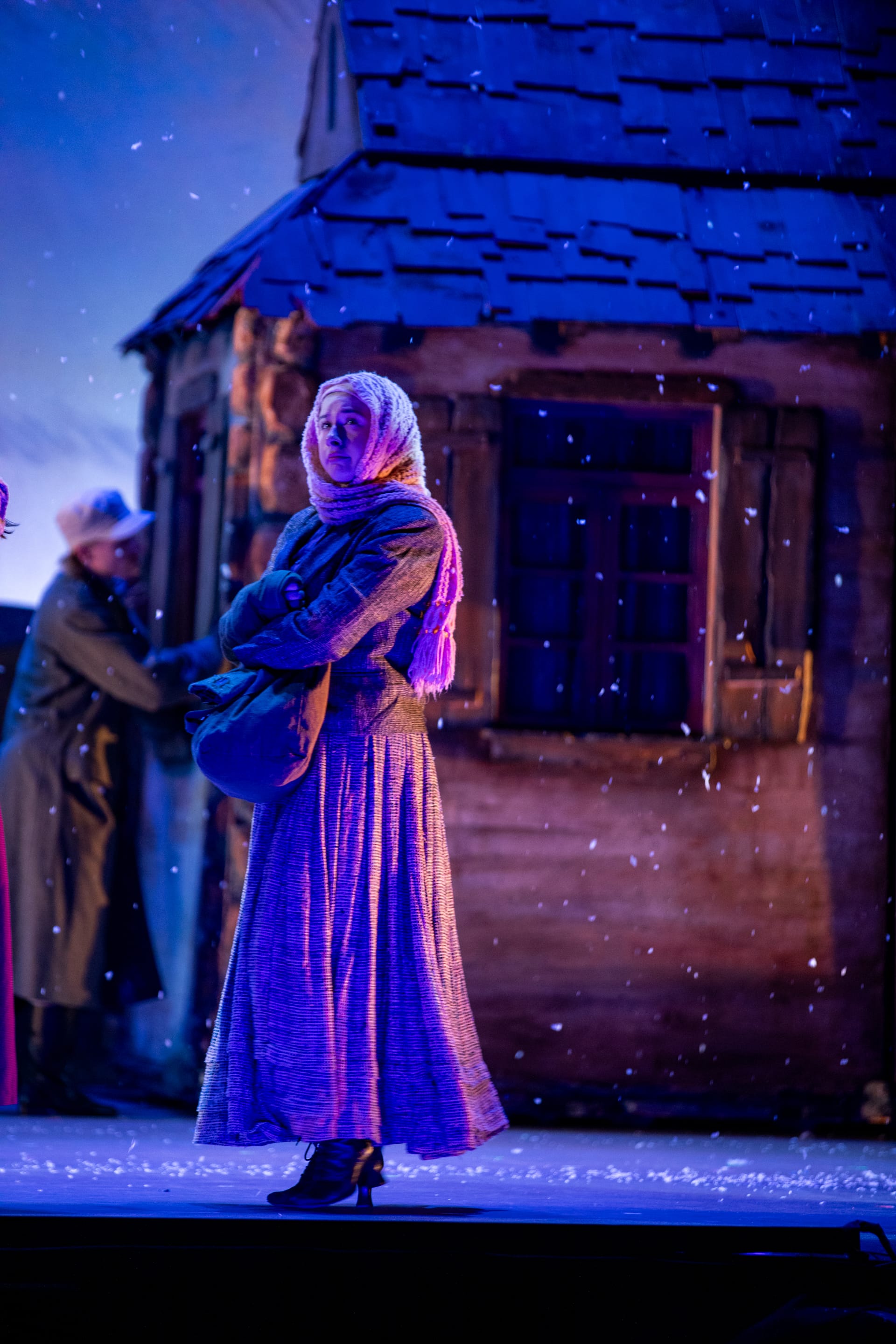
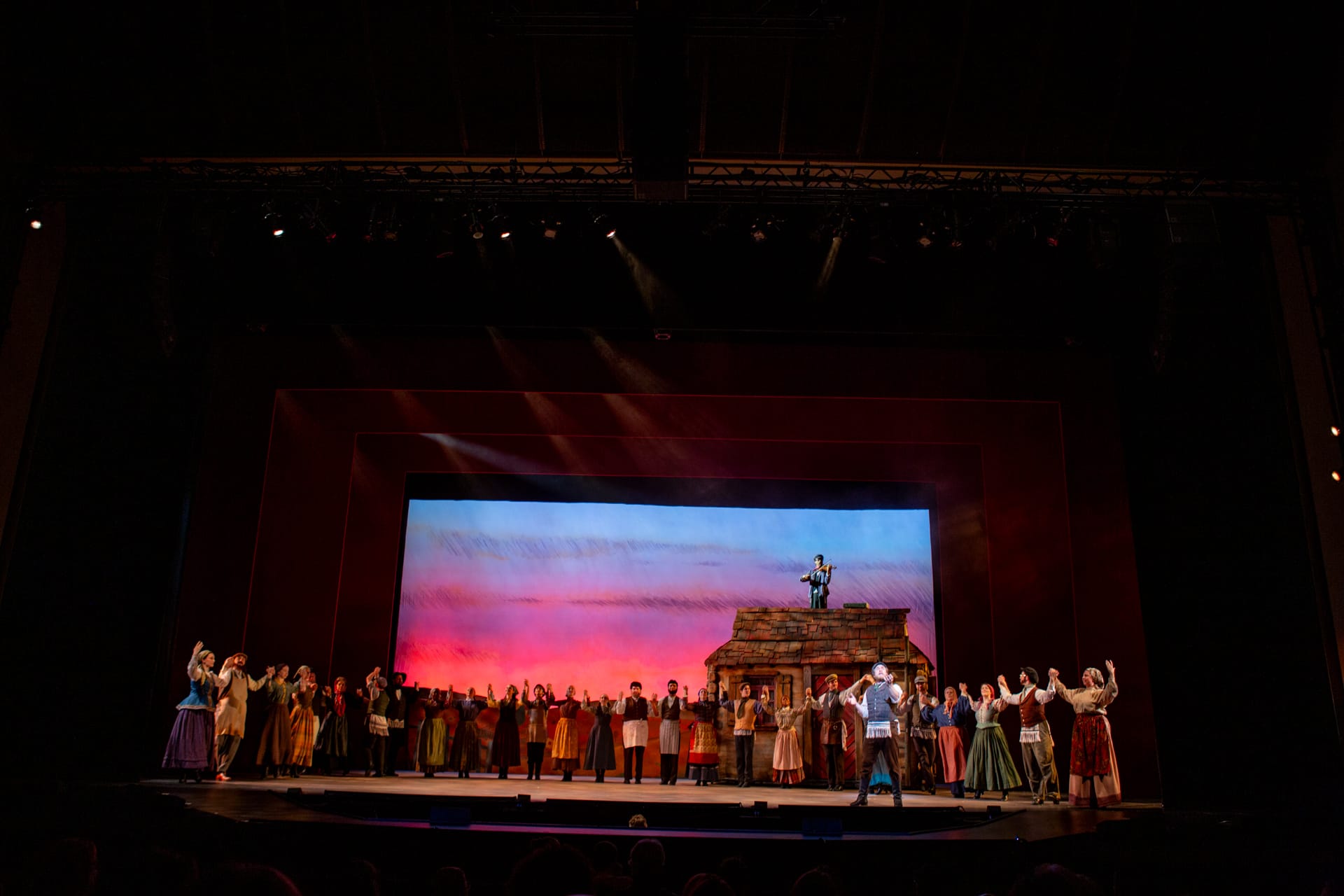
The physical production is a refreshed version of the staging MTW last brought out in 2012. At the pre-show talk, Schneider said scenic coordinator Logan Greenwell had added a set of flats painted with trees, each one cradling a small house up in its branches, representing the other humble homes of Anatevka. It is a Chagall-like touch, of a piece with the dreamlike village imagery the show has used since Boris Aronson's original Broadway designs. Each little house holds a light in its doorway, and during "Sabbath Prayer," when the stage fills with candle-lit tableaux, the houses glow in the branches above. The stage lighting stays warm through much of the show, settling the village into an hour that could be dusk or could be dawn.
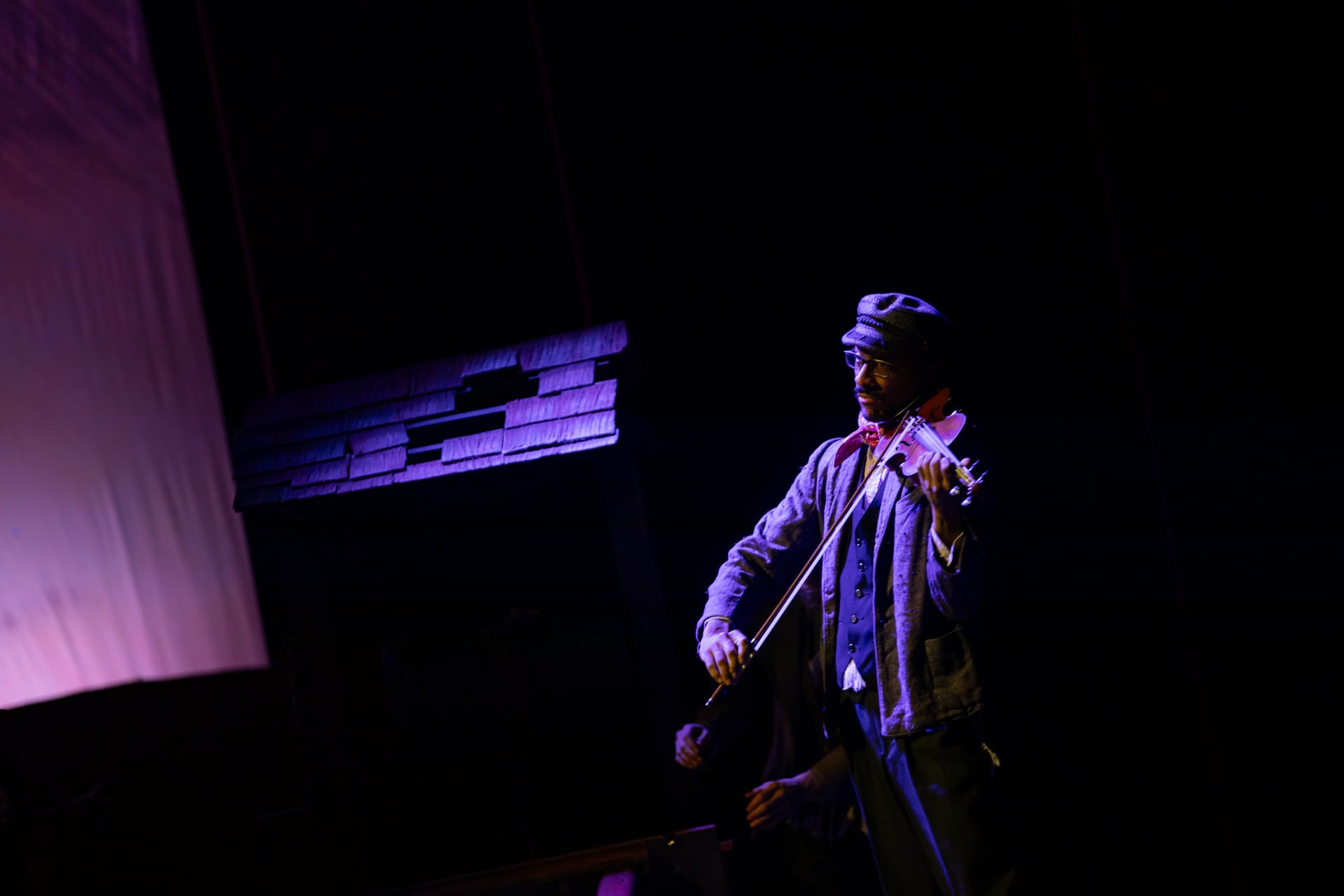
The fiddler of the title is usually mimed onstage by a dancer while a violinist plays from the pit. Here the two jobs are one. Timothy Jones, professor of violin at Wichita State University and associate concertmaster of the Wichita Symphony Orchestra, is a familiar presence in the Century II pit for MTW and Wichita Grand Opera. For this "Fiddler" he stepped up onto the stage and played the role himself, with a puckish lightness that suited it exactly.
The Details
Music Theatre Wichita presents "Fiddler on the Roof"
July 29-August 2, 2026, at Century II Performing Arts Center, 225 W. Douglas Ave. in Wichita
Performances take place at 7:30 p.m. Wednesday and Thursday, 8 p.m. Friday, 2 p.m. and 8 p.m. Saturday, and 2 p.m. and 7 p.m. Sunday.
Reserved tickets are $25-101.
Century II is accessible to people with physical disabilities. ASL interpretation is available during the Saturday matinee.
Learn more and purchase tickets online.
Sam Jack is a poet, a classical tenor, and the adult services librarian at Newton Public Library. He performs with several local groups, including Wichita Chamber Chorale, Wichita Grand Opera, and Opera Kansas. He received a Master of Fine Arts in creative writing from the University of Montana.
❋ Derby man has the kind of voice that turns heads — and chairs
❋ Socializing while sober: how some Wichitans are cultivating alcohol-free communities
❋ As a small creative business closes, the owner mourns
❋ Painting through it: Autumn Noire on 20 years of making art
❋ How a guy from Wichita resurrected 'Dawn of the Dead'
❋ Bygone Friends University museum housed curious collections
Support Kansas arts writing
The SHOUT is a Wichita-based independent newsroom focused on artists living and working in Kansas. We're partly supported by the generosity of our readers, and every dollar we receive goes directly into the pocket of a contributing writer, editor, or photographer. Click here to support our work with a tax-deductible donation.