Power, nature, and transformation in 'Linda Lighton: Love & War' at the Nerman
A retrospective of works from 1975-2025 functions as a 'meditation on life itself — its tensions, transformations, and fragile beauty.'
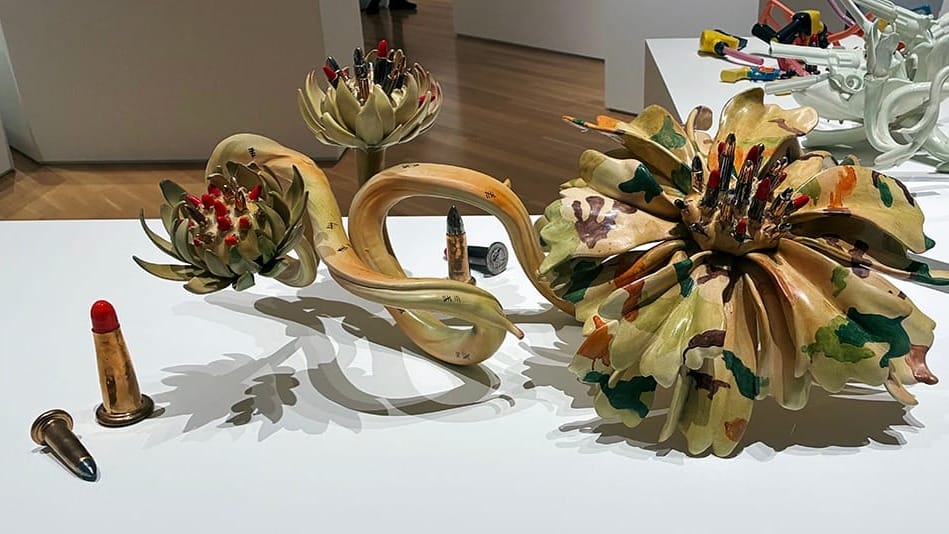
At the Nerman Museum of Contemporary Art, “Linda Lighton: Love & War, A Fifty-Year Survey, 1975–2025” traces five decades of work by the Kansas City-based ceramic artist Linda Lighton. The exhibition reveals a practice that moves between pointed political critique and fervent celebration of life’s many forms. Spanning half a century, it follows successive phases of Lighton’s sculptural work while returning to several core concerns: desire and power, the relationship between the personal and the political, and the tension between fragility and vitality.
Organized largely in chronological order across the museum’s galleries, “Love & War” presents a body of work that vacillates between two distinct energies. Lighton’s early pieces emphasize conceptual restraint and social critique, while later works embrace organic forms, humor, and a more exuberant visual language. As visitors move deeper into the galleries, this shift becomes increasingly apparent. What begins as a measured examination of social roles gradually opens into something more playful, expressive, and celebratory.
Lighton’s early work emerges from the cultural and political upheavals of the late twentieth century, and much of it addresses the dynamics of labor, power, and gender. In her sculptures from the late 1970s and 1980s, the artist isolates everyday objects associated with work or domestic life, transforming them into carefully rendered ceramic forms that double as social critique.
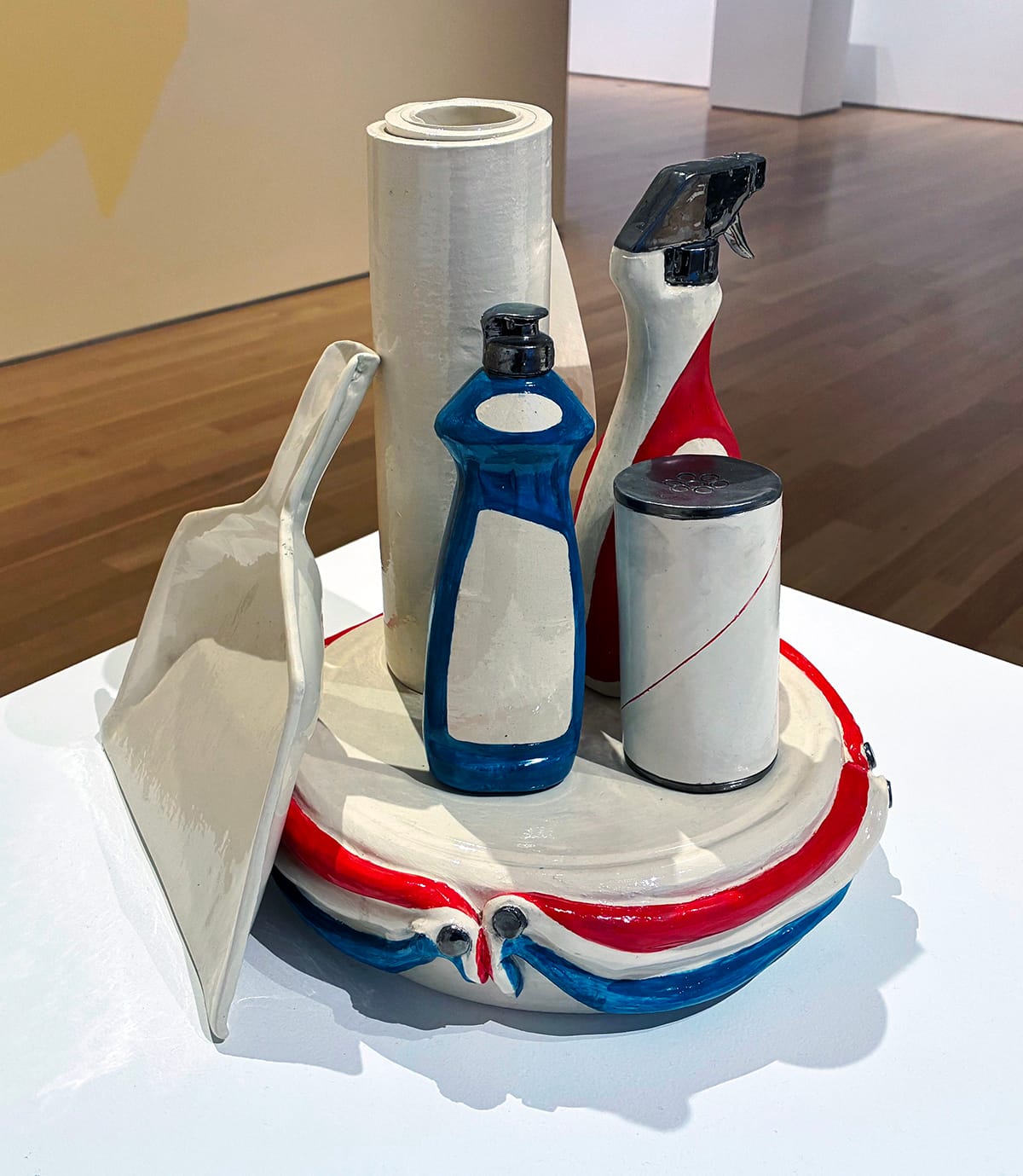
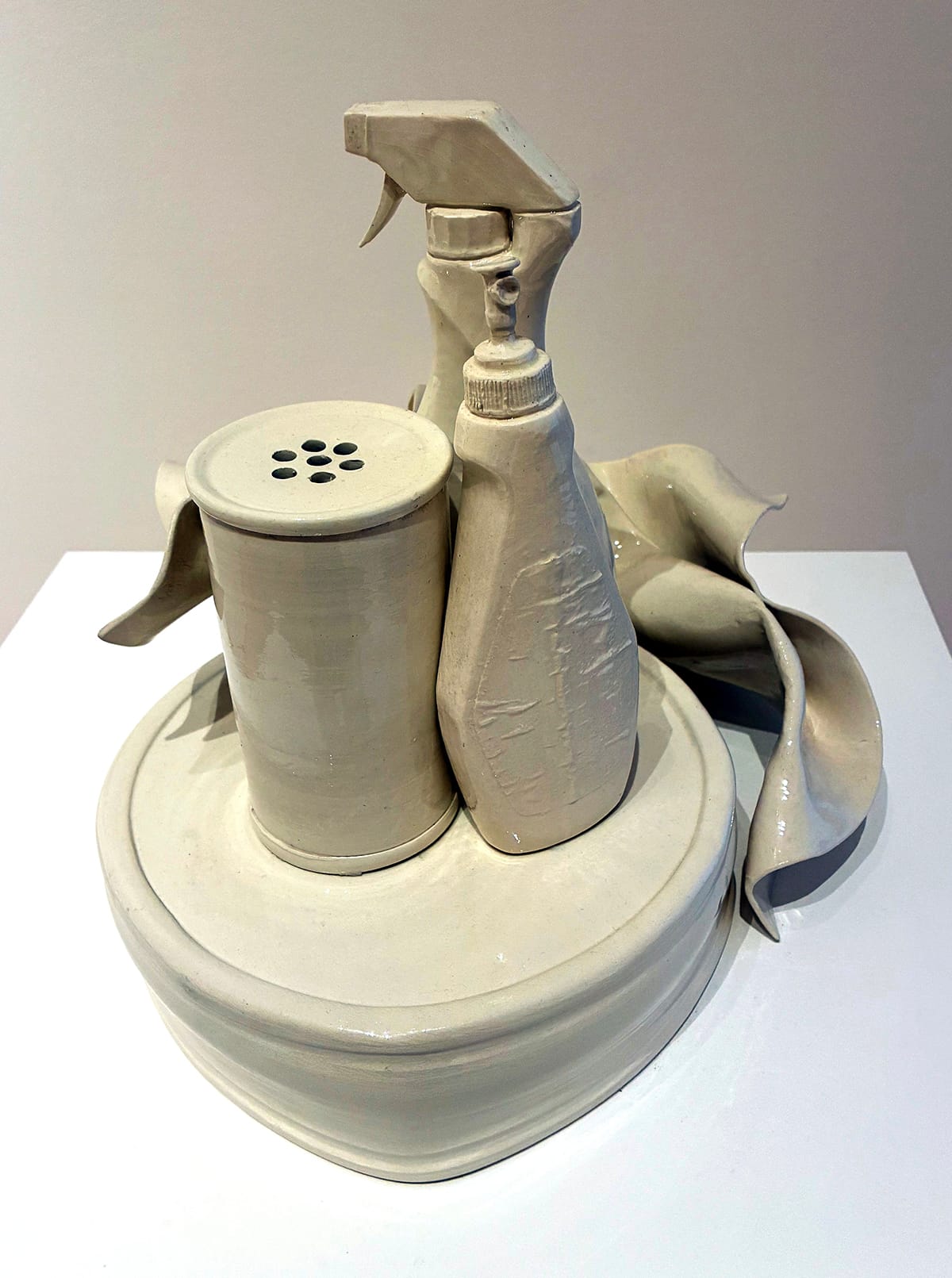
“The First Lady,” a piece depicting pristine red, white, and blue cleaning supplies displayed on a pedestal reminiscent of a political stage, considers not only power but also the roles that enabled women in the twentieth century to access power, often through their husbands or jobs. Lighton alludes to proximity to power through the pedestal, but the patriotic sashes that decorate it — as well as the immaculate cleaning supplies — seem to suggest the impossible demands women face to appear perfect, as well as the way those demands are multiplied for those in the public eye.
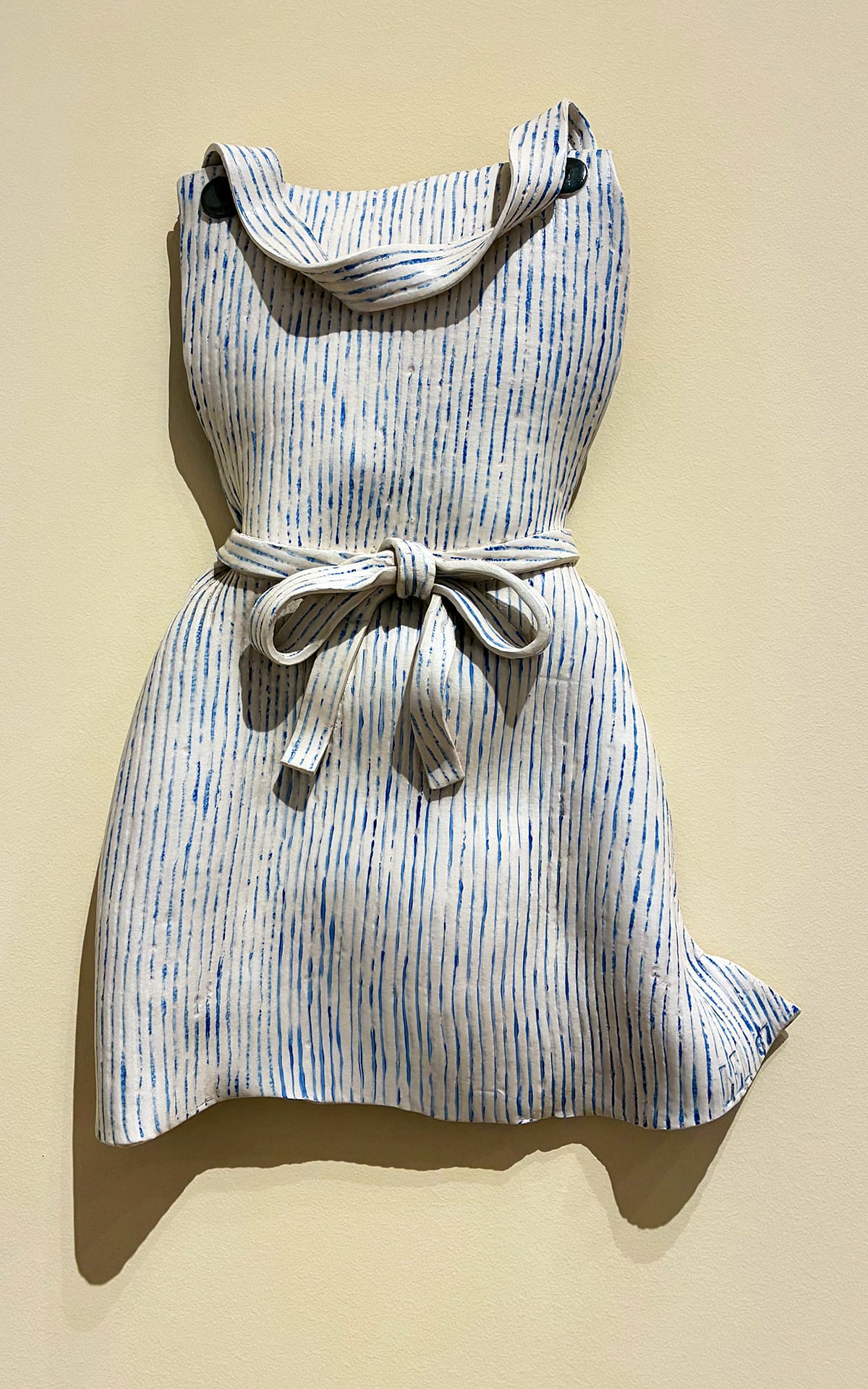
These works demonstrate Lighton’s technical command of sculptural form while also functioning as products of their historical moment. Their commentary on gender roles and consumer culture remains significant, yet some early pieces — such as “Apron,” a ceramic rendering of a white and blue striped apron, tied and cinched at the waist to suggest a feminine form — feel closely tied to the debates of their era.
Lighton’s early pieces reflect the concerns of second-wave feminism, including workplace equality, reproductive freedom, domestic violence, and sexual assault, but also embody that movement’s shortcomings through the limited visual language of white, middle-class America. Their symbolism can appear somewhat direct for contemporary viewers, especially when compared with the more layered works that appear later in the exhibition.
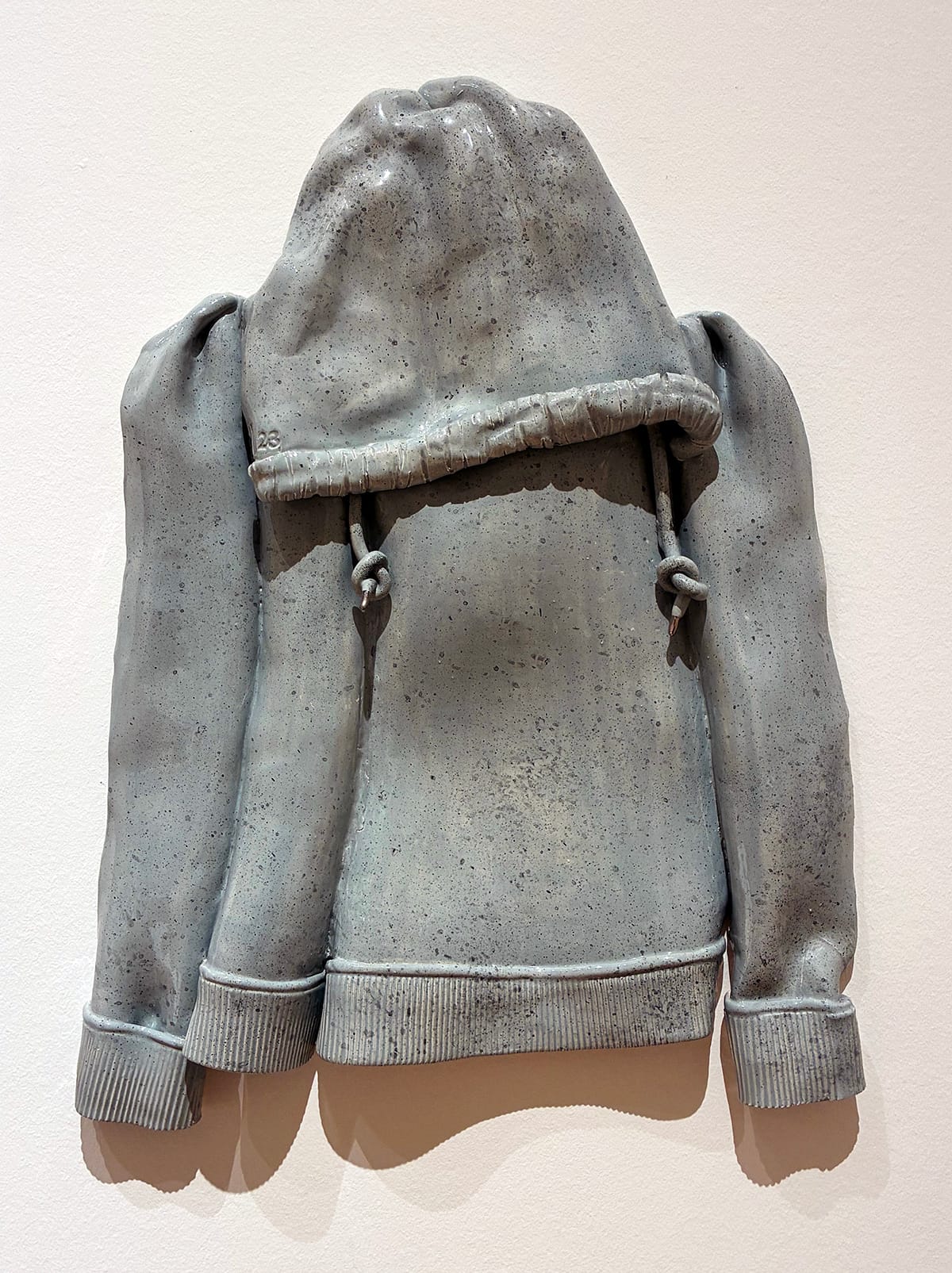
Even so, these early sculptures establish ideas that continue to shape Lighton’s practice. Her interest in how clothing and personal objects communicate identity appears in works that isolate garments or accessories as symbols of social roles. A more recent sculpture such as “Sweatshirt” extends this inquiry while shifting its focus. This ceramic piece is covered in a blue-gray glaze speckled with darker gray and black flecks, mimicking the appearance of a well-loved garment. The hood, rather than being pulled back, droops over the front to obscure the nonexistent face beneath it, perhaps either in defiance or fear.
Rather than examining how clothing reflects prescribed roles as in “Apron,” this work asks viewers to confront the assumptions they project onto others based on appearance — specifically the tendency to associate hooded sweatshirts with criminality. In this sense, the work reflects an evolution in Lighton’s social commentary, moving from broad critiques of gender roles toward a more nuanced consideration of intersecting cultural biases.
As the exhibition progresses into the 1990s and 2000s, the energy of the work begins to change. Sculptures incorporate organic shapes, brighter palettes, and a growing sense of whimsy. This shift unfolds through Lighton’s fascination with the natural world: buds, flowers, marine creatures, and sea sponges that she renders in delicate ceramic forms.
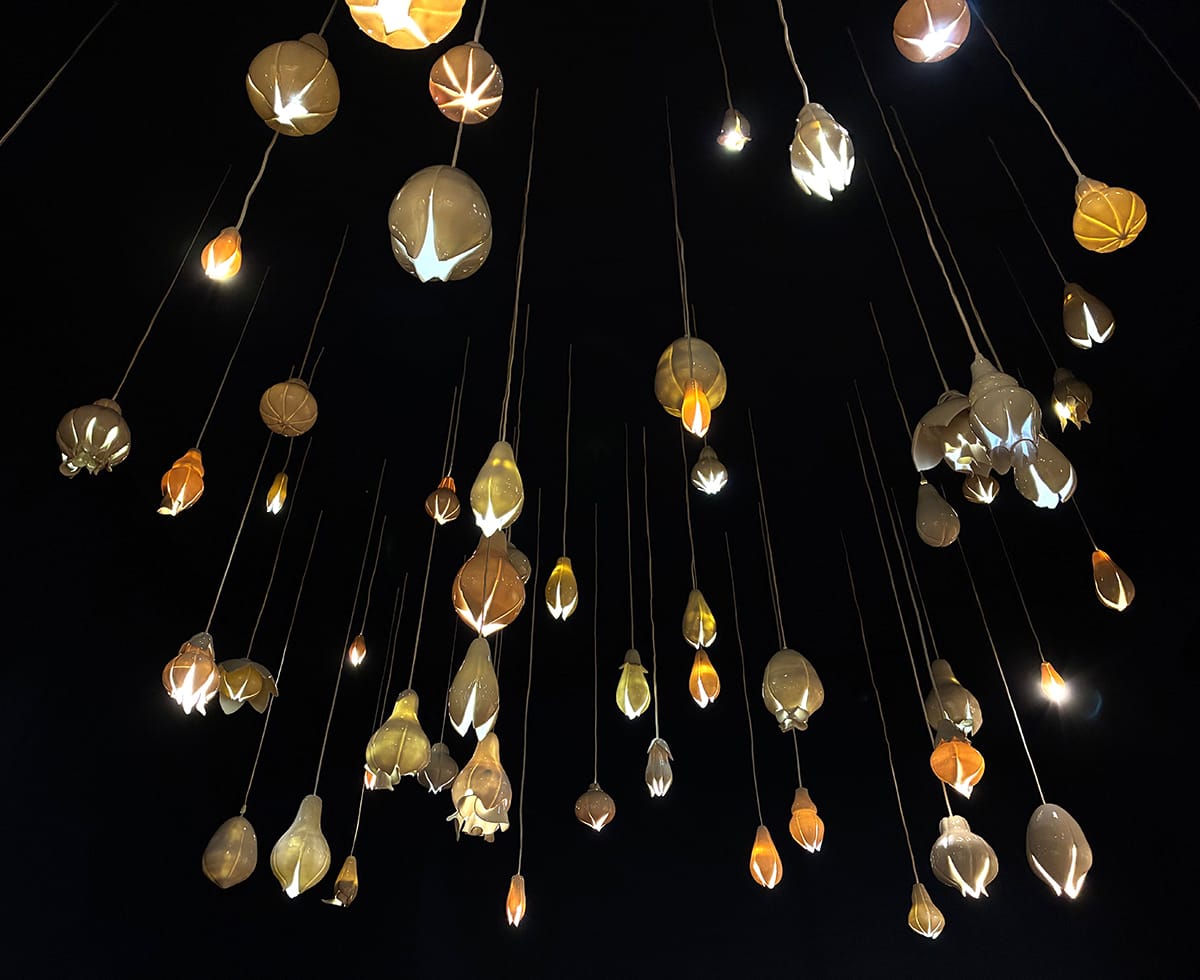
Linda Lighton, “Luminous,” 2012, porcelain and glaze. Photo by Abby Bayani-Heitzman for The SHOUT.
One of the most memorable works in this section is the installation “Luminous.” Installed in a darkened room, flower bulb-shaped lanterns in shades of white and yellow and various stages of opening hang overhead, casting a soft glow that envelops the viewer. The work functions almost like a retreat within the exhibition. By suspending the lanterns above visitors and surrounding them with darkness, the installation creates a contemplative atmosphere that invites stillness. An artist quote by Lighton displayed as wall text in the exhibition describes the piece as an exploration of a suspended moment in life — a “tipping point” that reflects the fragility of existence.
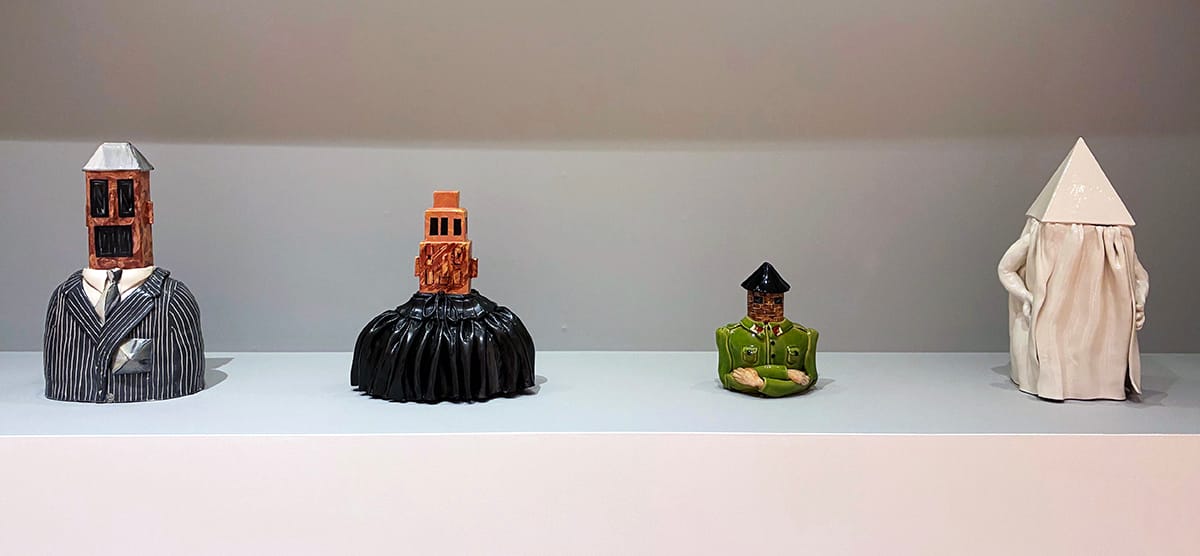
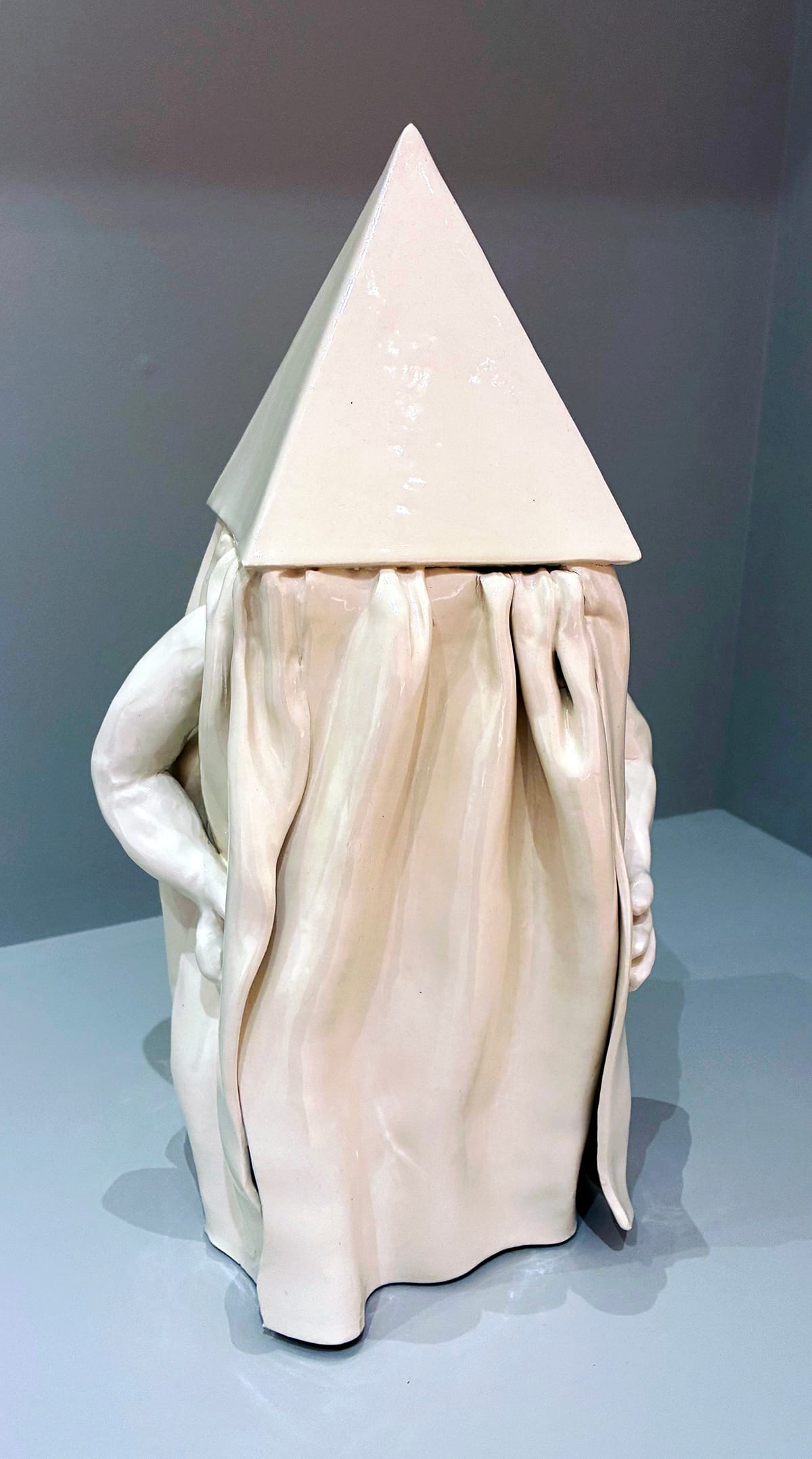
Elsewhere, Lighton’s sculptures display a more overtly playful sensibility. The four works known as the “Building People,” created in the late 1980s, introduce a degree of whimsy while retaining the artist’s critical perspective on social roles. Displayed on pedestals, they depict the busts of individuals so bound to their occupations that they physically merge with architectural structures around them. For instance, the businessman in “Figure in Architecture” has become rigid in his pinstriped suit, his facial expression frozen in the wide-eyed and open-mouthed shape of a building’s darkened windows.
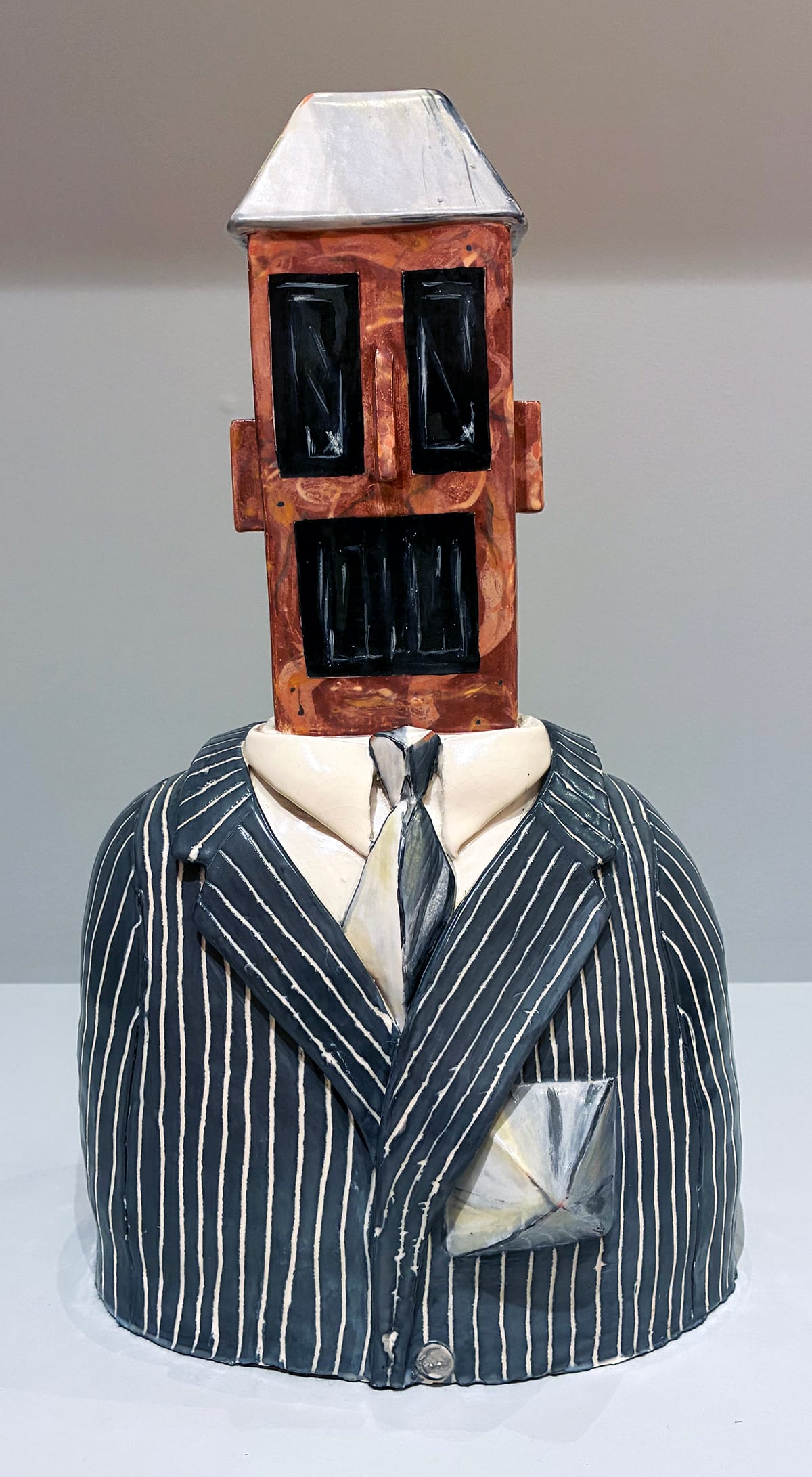
Nevertheless, the “Figure” continues to stand tall even as he loses his human identity to his business — perhaps in preparation for becoming a name partner. In contrast, the “Stepford Wife” has lost all color, appearing ghostlike, and recedes into her house, showing only her arms through a curtain of billowing sheets and hiding her face below the roof’s peak, thoroughly boxed into her domestic role. Conceptually sharp, in these works Lighton also employs a cartoon-like exaggeration that anticipates the more expressive tones of her later sculptures.
This playful impulse expands in the sculptures known as the “Divas,” along with a series of tubeworm-like forms and other organic shapes. Installed on a U-shaped pedestal structure that invites viewers to join the “circle of women” who inspired them, the “Divas” are among the most visually striking works in the exhibition. They feel celebratory and animated, embracing color, movement, and organic vitality.
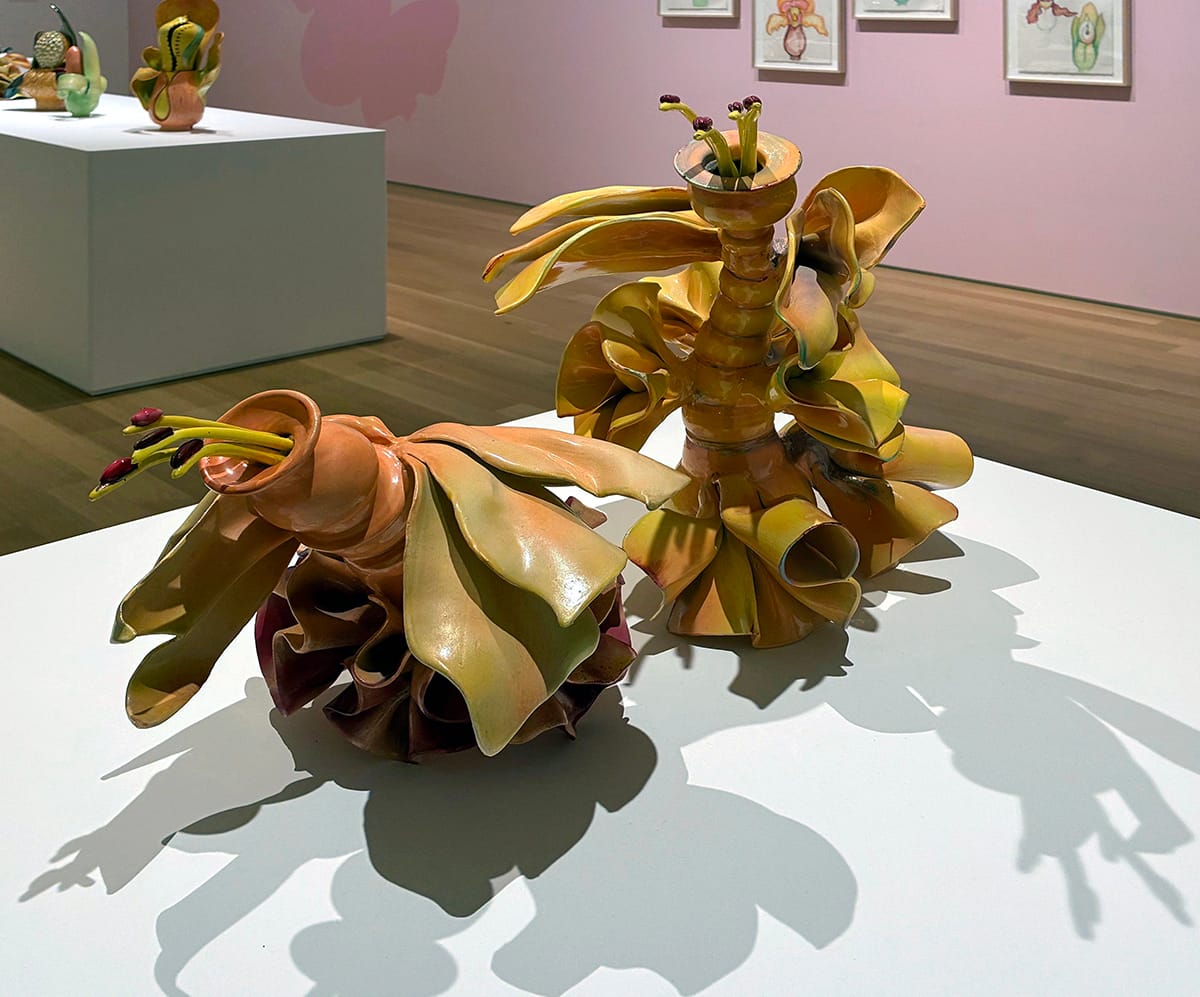
Two “Divas” are displayed prominently on a separate podium directly in front of the U-shaped installation, highlighting some of Lighton’s finest and most vivacious sculpting. With its fluttering frills seemingly frozen in time, “Nude Descending a Staircase” appears to pay homage to Marcel Duchamp’s rending of motion in an instant, albeit in warm, vibrant colors and incorporating the elegance of an orchid. “Tinkerbelle” is similar in color and composition, but rather than standing upright, the piece bends low as if in preparation to take flight.
On the U-shaped table, the orchid-like “Divas” evoke comparisons to the flower paintings of Georgia O’Keeffe. Like O’Keeffe’s blooms, they are graceful and richly colored while remaining grounded in natural form. Yet Lighton’s sculptures possess a striking sense of corporeality as well as individuality. Installed in pairs, the “Divas” appear almost animated, as though conversing or dancing together. Their curving forms suggest not only botanical life but also the vitality of human presence and connection.
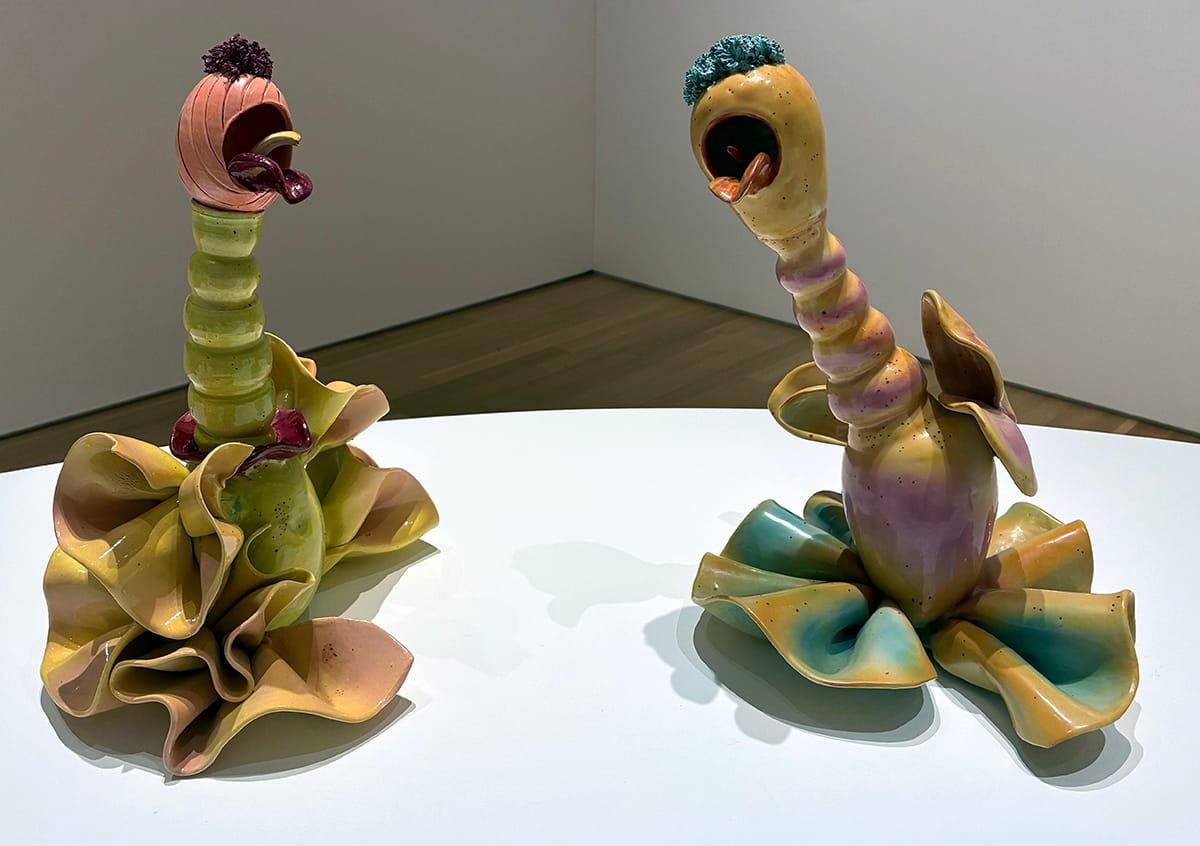
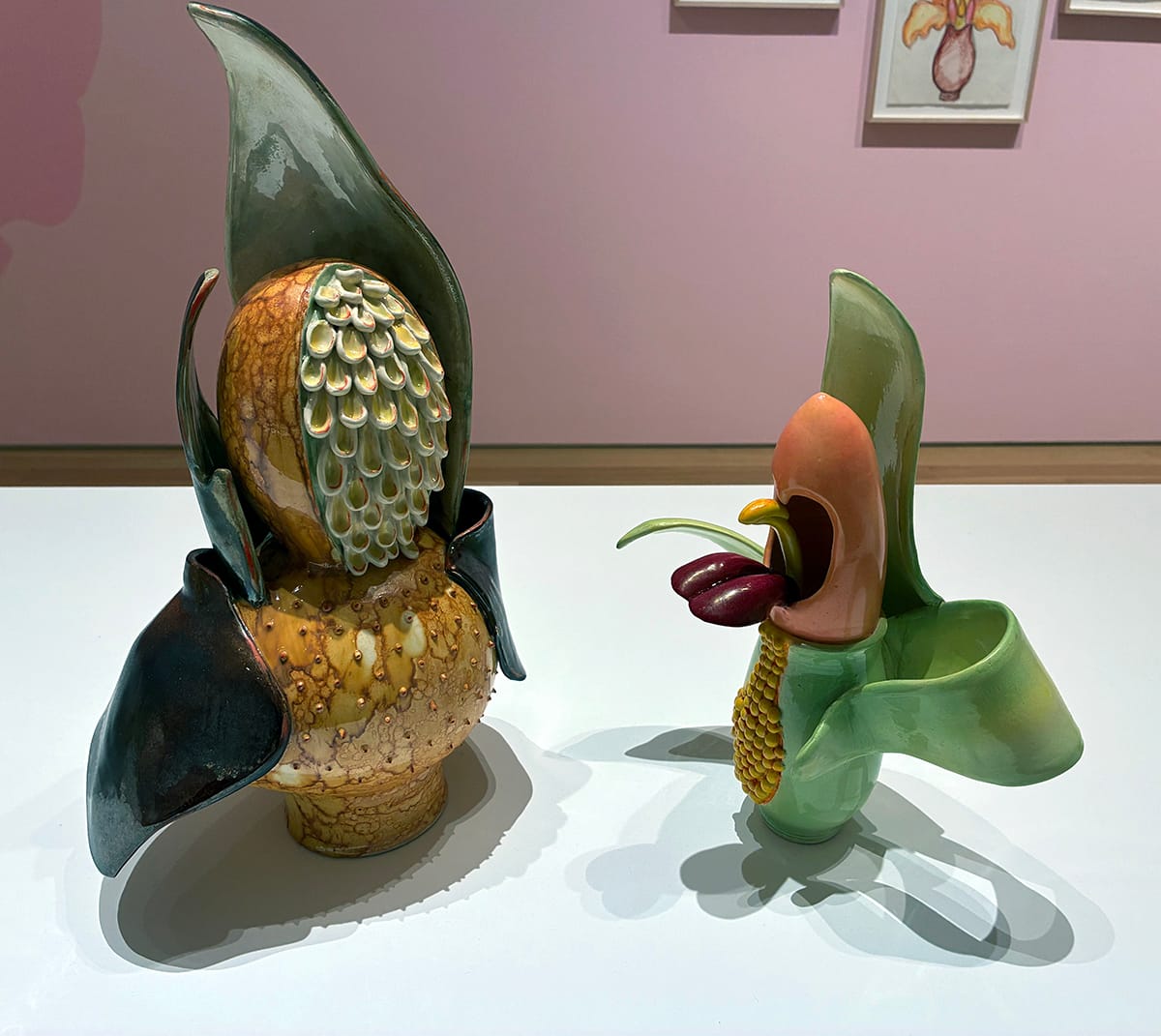
“Samba Chicken” and “Diva Peregrine” possess similar frills to “Nude” and “Tinkerbelle,” but their birdlike beaks and combs introduce a degree of humor and lean into Lighton’s playfulness. “Diva Aretha,” a gourd-shaped piece with a face of seed-like objects, studded base, mottled glazing, and large brown leaves that wrap around it protectively, is a highly abstracted representation of the feminine form that appears unconcerned with conventional womanhood. It is paired with “Diva Bebe,” a piece that also features a chicken beak and wattles but heightens its agricultural associations by incorporating the husk and kernels of an ear of corn. As a collection, the “Divas” not only represent the unique personality of each woman who inspired Lighton, but they also embody the rich social and cultural networks that bring different women together.
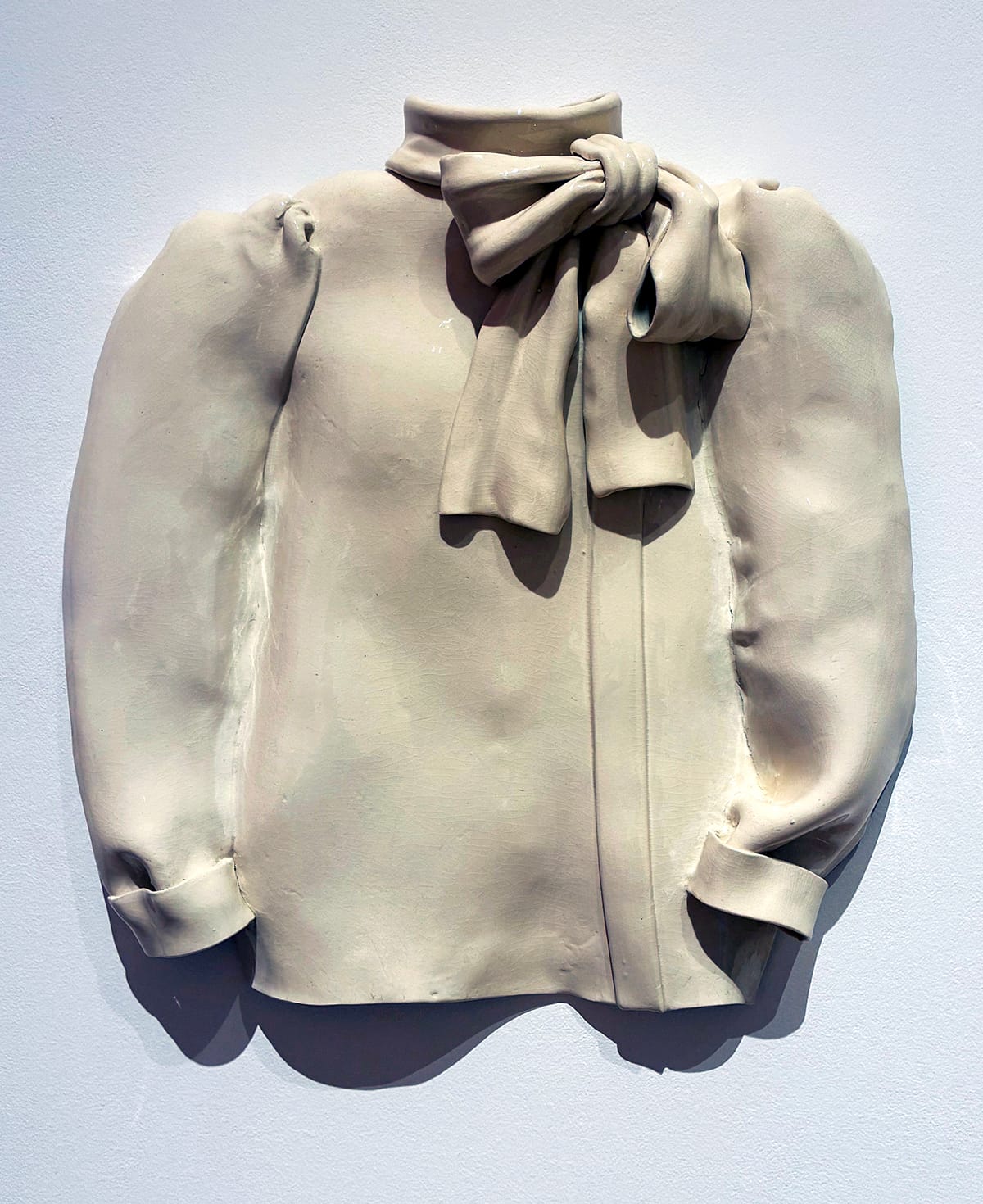
While explorations of femininity in its many forms seem to motivate much of Lighton’s work, her depictions of masculinity have also evolved throughout her career. While early works like the plain white dress shirt wall sculptures “Mr. Business” and “Mr. Business 2” embody the traditionally privileged, dominating roles of men in American society, later pieces like the phallic-shaped tubeworm sculptures presented alongside the “Divas,” sea sponges, buds, and flowers seem largely free of overtly negative symbolism. Instead, they radiate the playful energy of nature in its many forms.
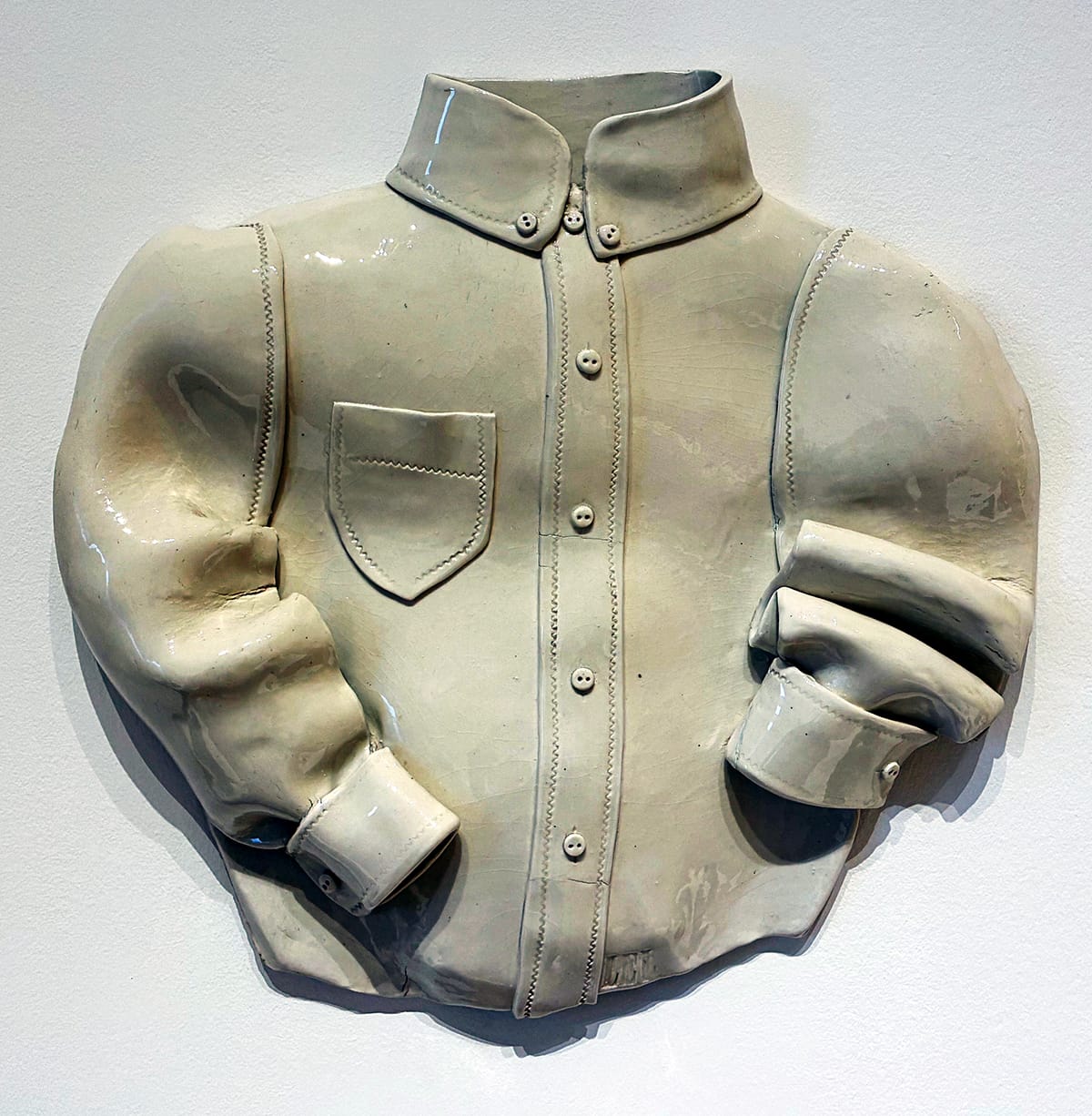

From left: Linda Lighton, “Mr. Business,” 1981, glazed earthenware; Linda Lighton, “Mr. Business 2,” c. 1981, glazed earthenware. Photos by Abby Bayani-Heitzman for The SHOUT.
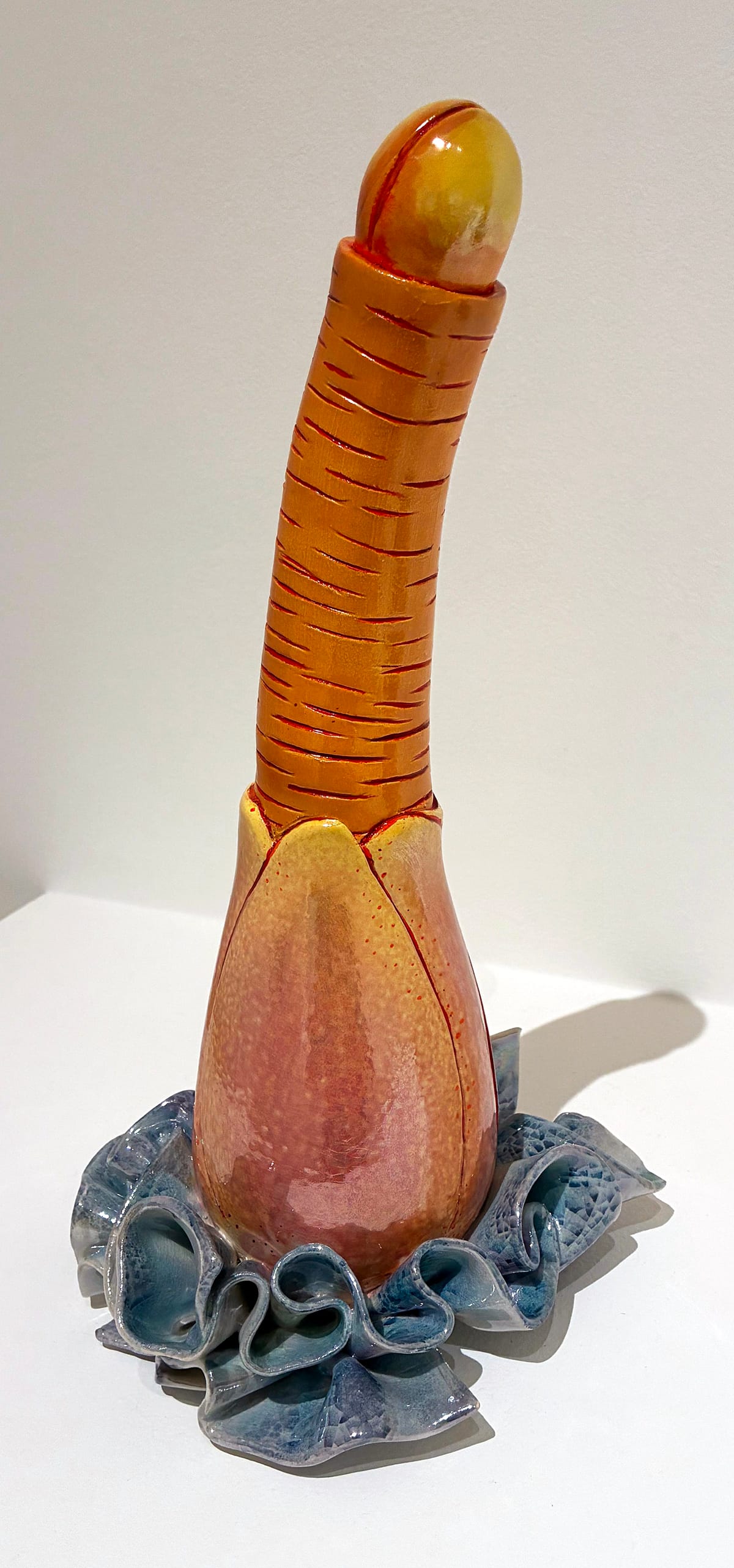
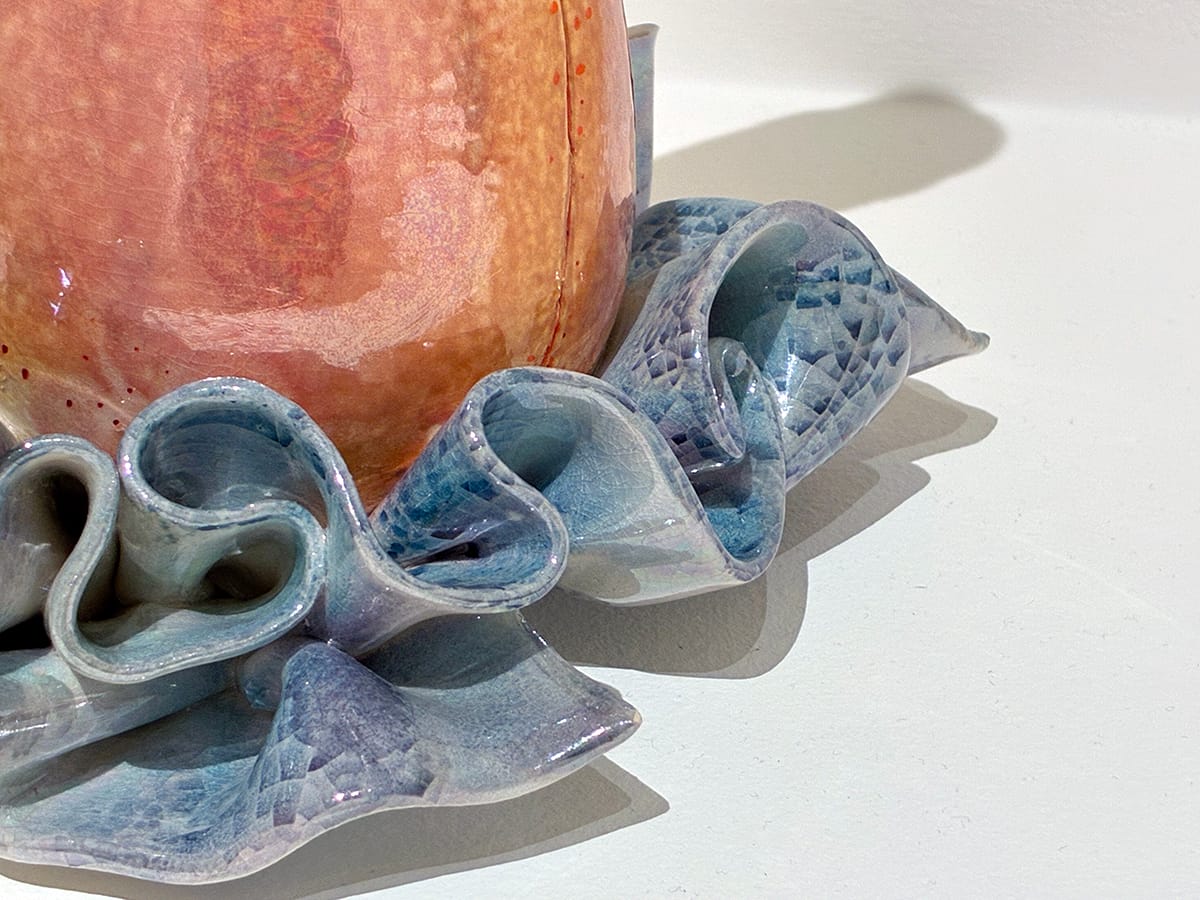
Linda Lighton, “Tubeworm,” 2004, glazed earthenware, china paint, and steel. Photos by Abby Bayani-Heitzman for The SHOUT.
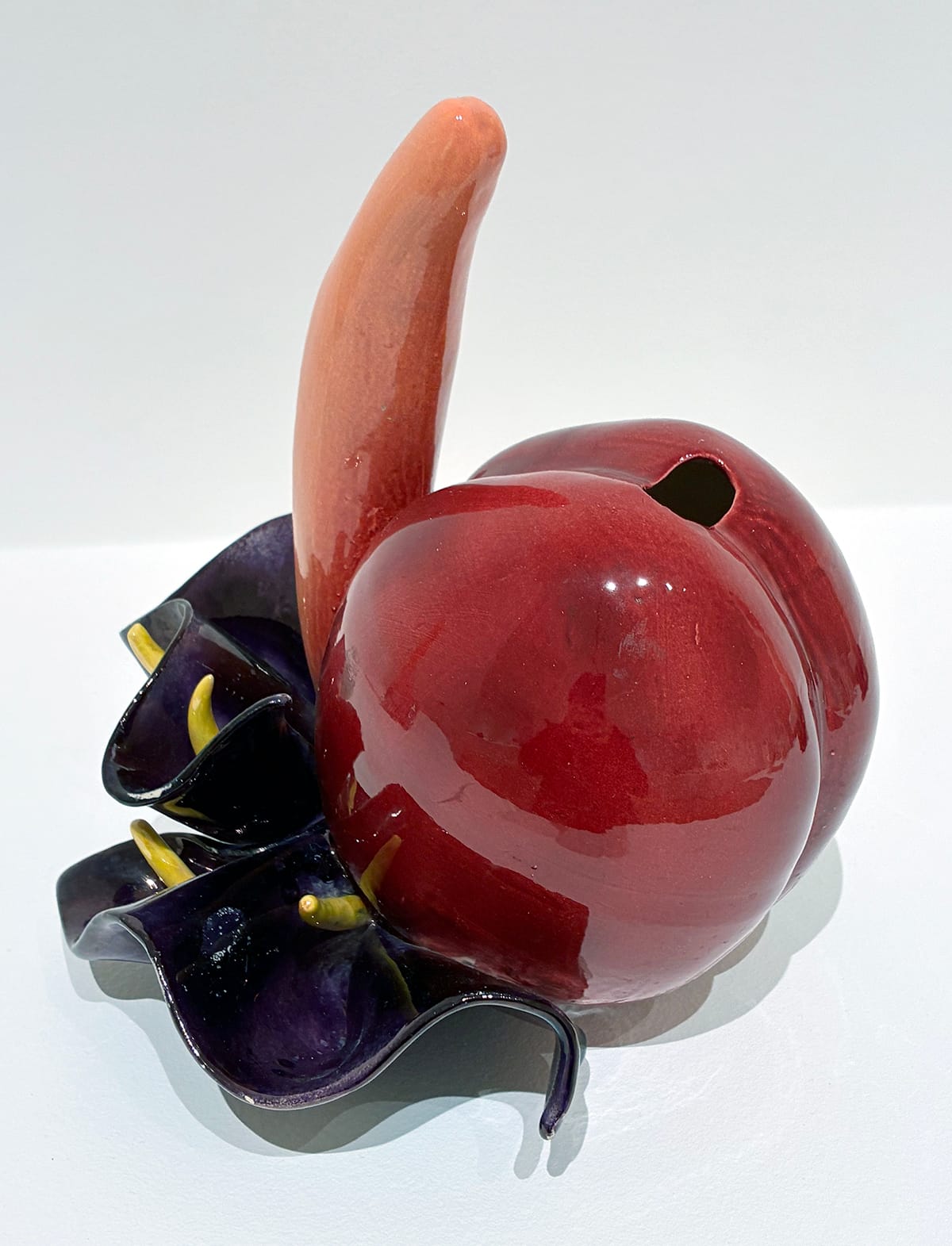
“Tubeworm” and “Bad Behavior” sit up proudly on their shelf as if stretching or taking a deep breath, but their relaxed upright forms suggest pliant, flexible extension. “Tubeworm” stands tall, a few inches shy of a foot, while “Bad Behavior” sits low at half the former’s height, showcasing the diversity of life. Their exaggerated shapes, vivid jewel-tones, and frilly, floral details draw connections between human anatomy and other organic structures while questioning the cultural impulse to project negative associations of human masculinity onto otherwise neutral biology.
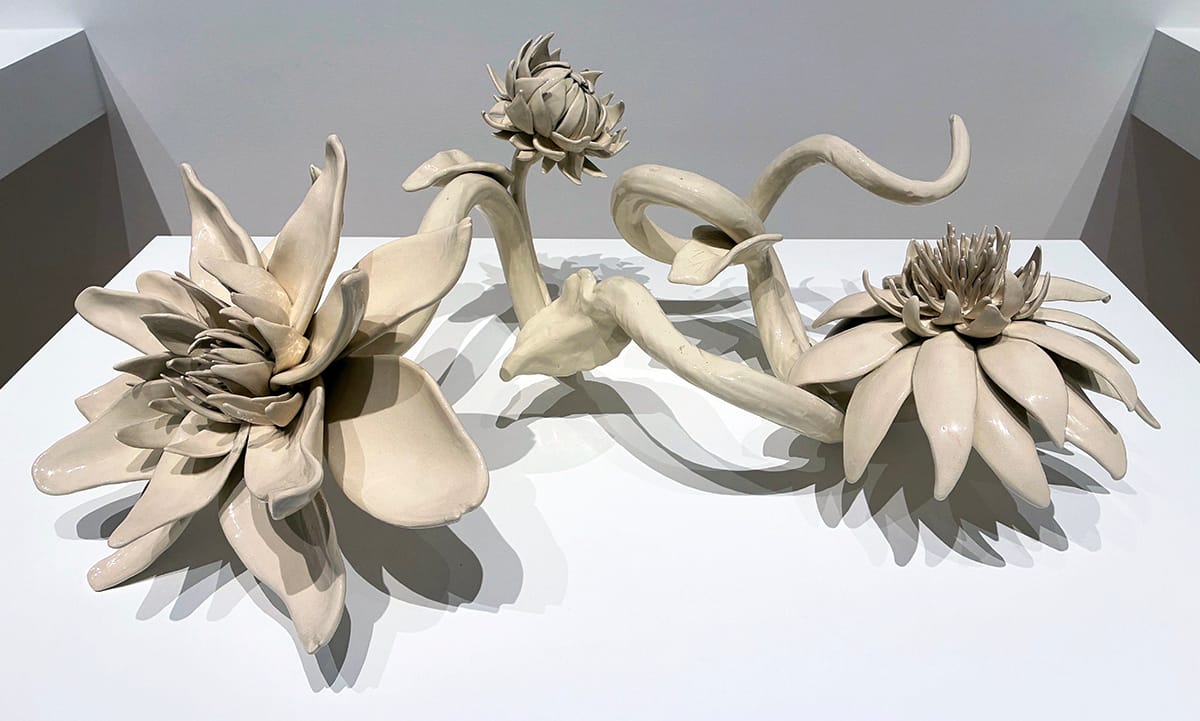
Lighton’s skill as a sculptor becomes particularly evident in works such as “Triple White Zinnia.” Although many of her sculptures incorporate vibrant china-paint palettes, this piece demonstrates that color is only one of her tools. Displayed on a pedestal, the two blossoms in full bloom are the size of large platters, yet its petals and stems curl and droop delicately, preserving the fragile structure of a real bloom. Despite its size, the sculpture maintains a sense of vulnerability.
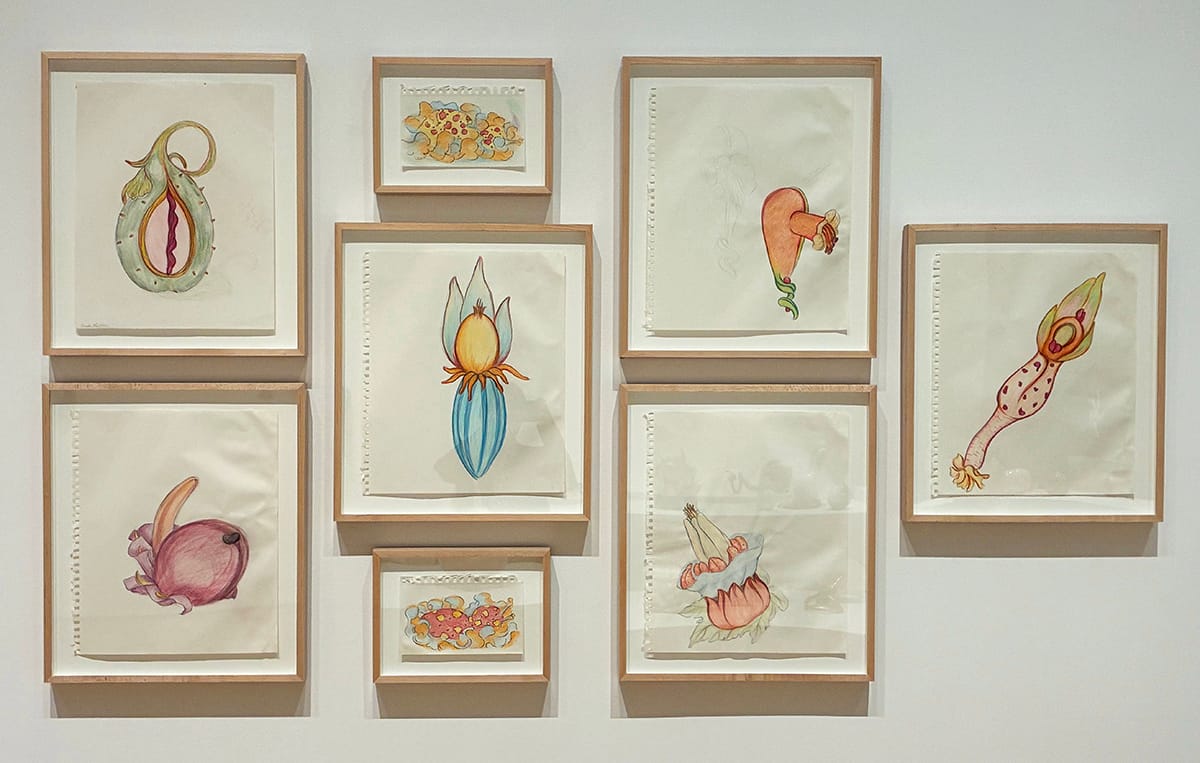
The exhibition also includes drawings and watercolors that illuminate Lighton’s creative process. Many, such as the “Untitled (1-8)” series, function as studies for later sculptures, revealing a process of experimentation and iteration; two studies are immediately recognizable as the “Bad Behavior” tubeworm and the spiky “Untitled” bulb with a curling stalk and large opening for germination reminiscent of labia. Three botanical illustrations (“Velvet Leaf,” “Dandelion,” and “Plantain”) are executed like scientific field notes, precise in their detail and comprehensive in their consideration of the different stages of these plants’ growth and development. These works examine transitory moments in the cycle of life — the sprouting of seeds or the budding of flowers — while suggesting that Lighton’s engagement with the natural world is both aesthetic and investigative
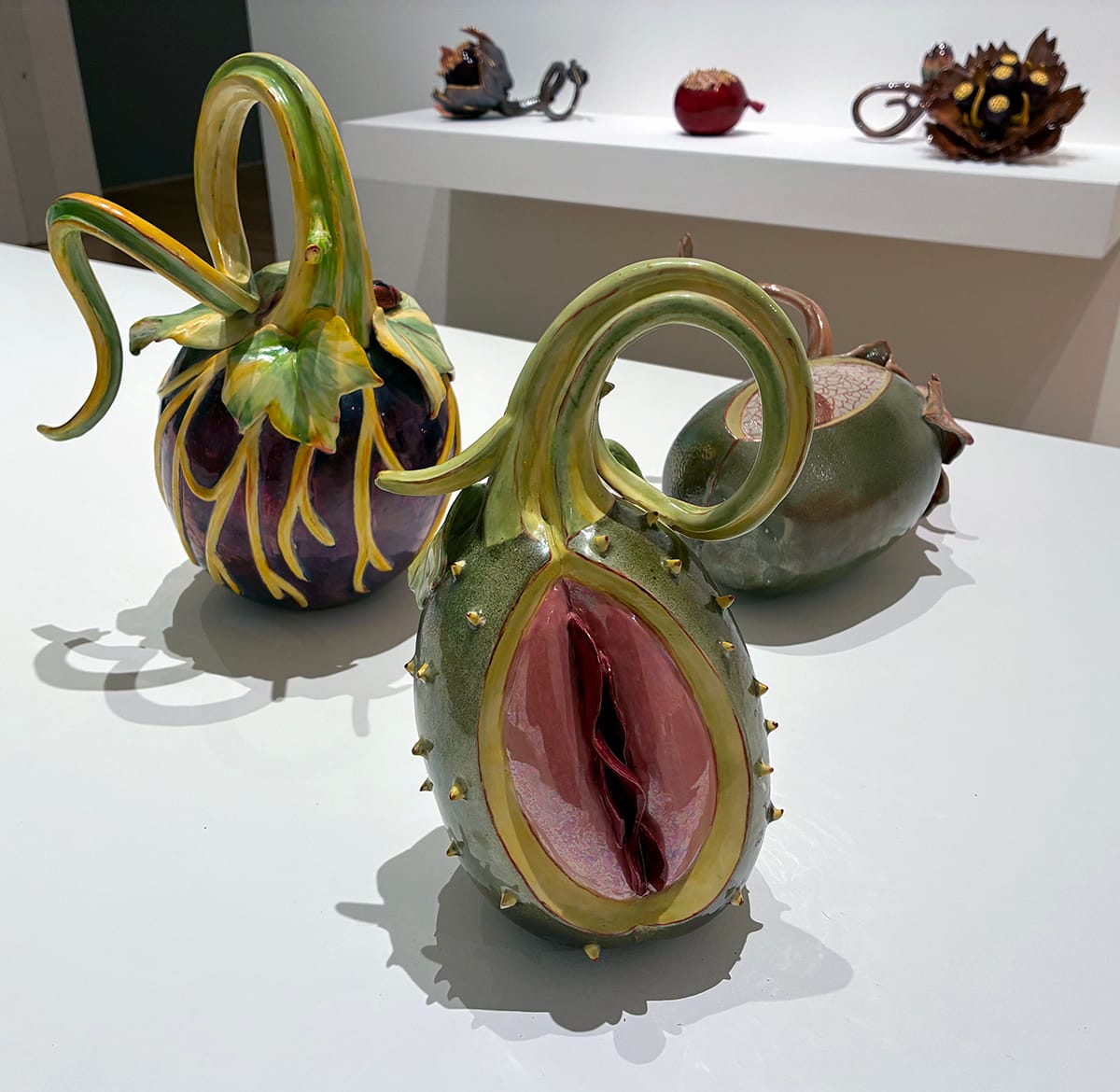

A later section of the exhibition, titled “Taking Aim,” returns to the sharper political critique that characterizes Lighton’s early work while addressing the urgency of contemporary concerns. Created largely in the 2010s, these sculptures examine the devastating toll of gun violence in the United States. Several works play on the visual resemblance between lipstick tubes and bullets, highlighting the different forms of weaponry that society deploys when seeking power or agency.
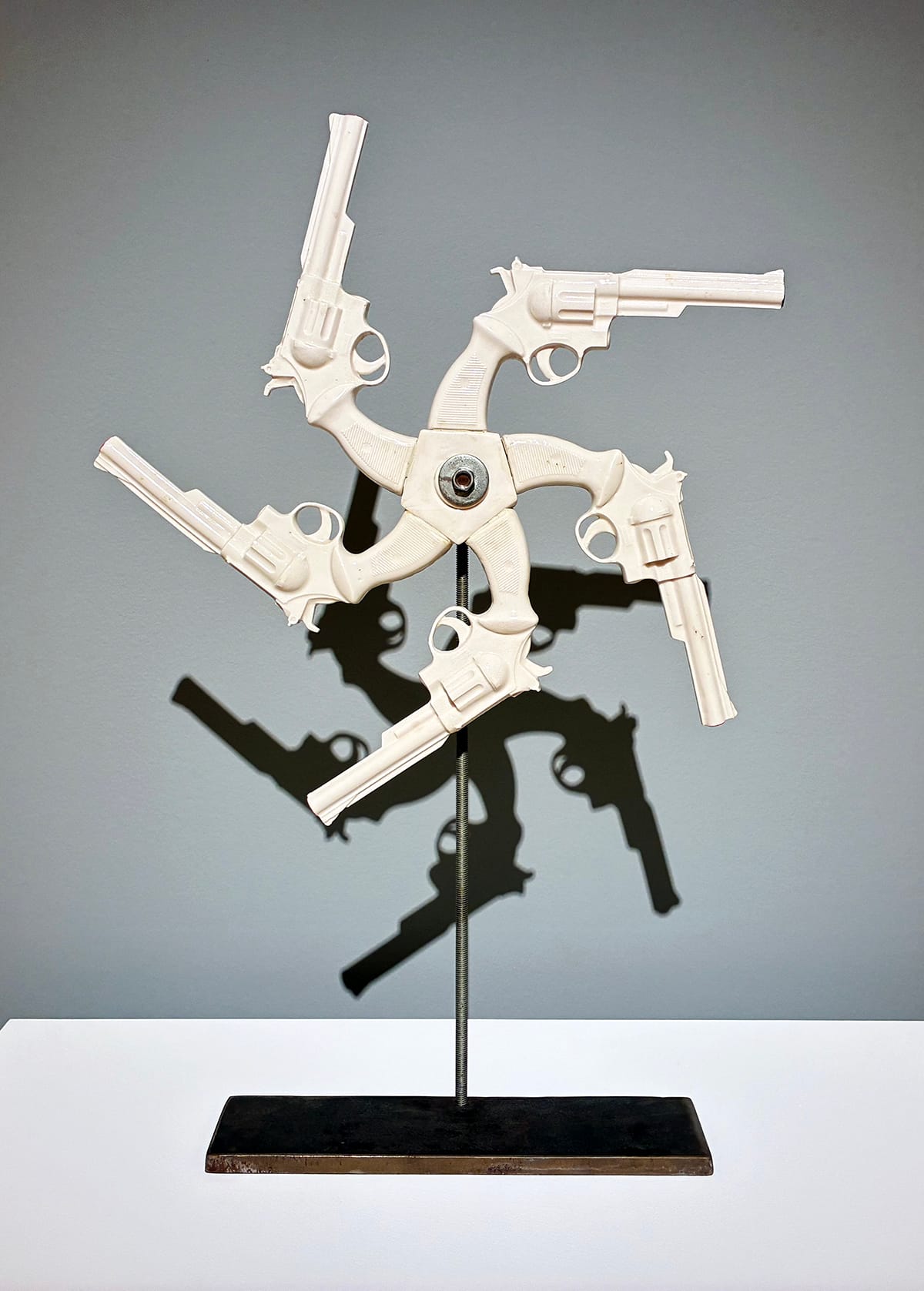
In “44 Magnum Mandala,” a pinwheel of five handguns in white porcelain forms a circular pattern reminiscent of the spiritual symbol traditionally used for meditation. The sculpture evokes a revolving cycle of violence — or the relentless repetition of gunfire — yet the mandala form also suggests contemplation and focus. The work appears to ask viewers to bring a meditative clarity to the urgent task of ending gun violence, transforming prayer from a passive gesture into a call for deliberate action.

Other works expand this critique through immersive scale. In “I Don’t Want a Bullet to Kiss Your Heart,” guns lean toward one another to form an arched passage through which visitors can walk, creating a monumental portal that suggests the architecture of fear and the systems of power built upon it.
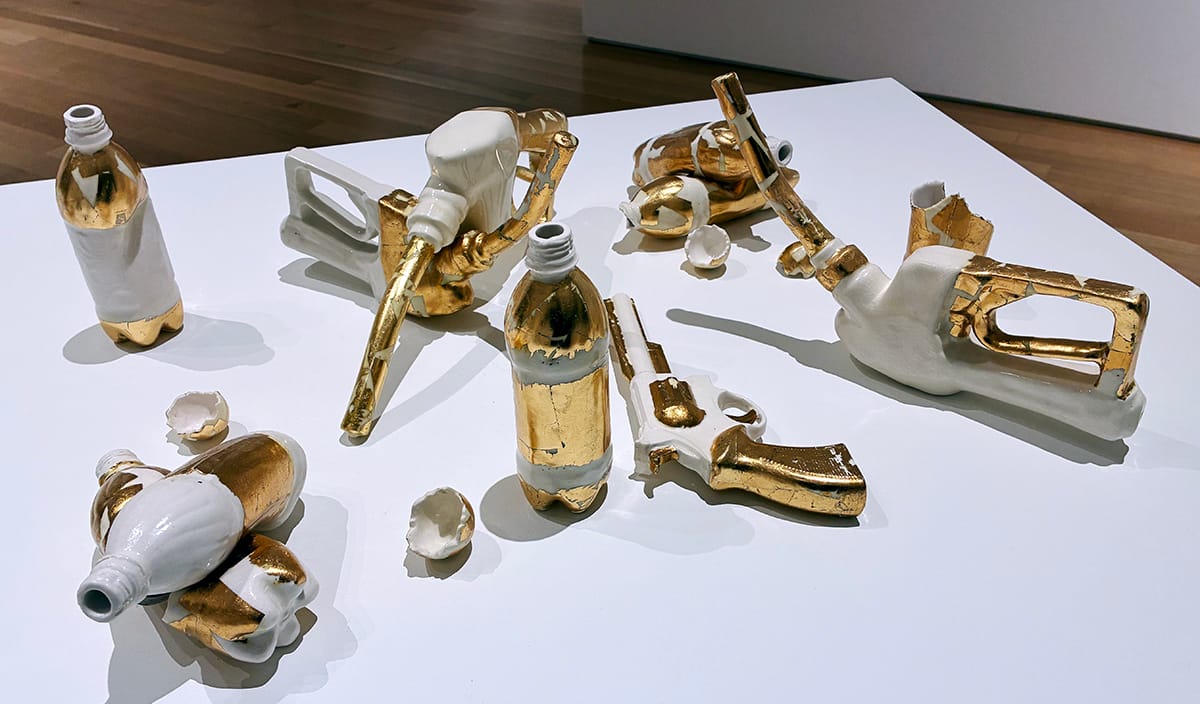
Pieces such as “Sweatshirt,” discussed earlier, show an evolution of themes in Lighton’s work and her own growth and maturity as an artist. While still interested in clothing and other social symbols for their power to define people, Lighton’s more recent work complicates the “readings” of these symbols. “Trump Trash,” a ceramic collection of white refuse — including gas pump handles and guns — accented with gold leaf, is another fascinating example of this artistic development, where Lighton’s treatment of waste and refuse is reexamined and reversed.
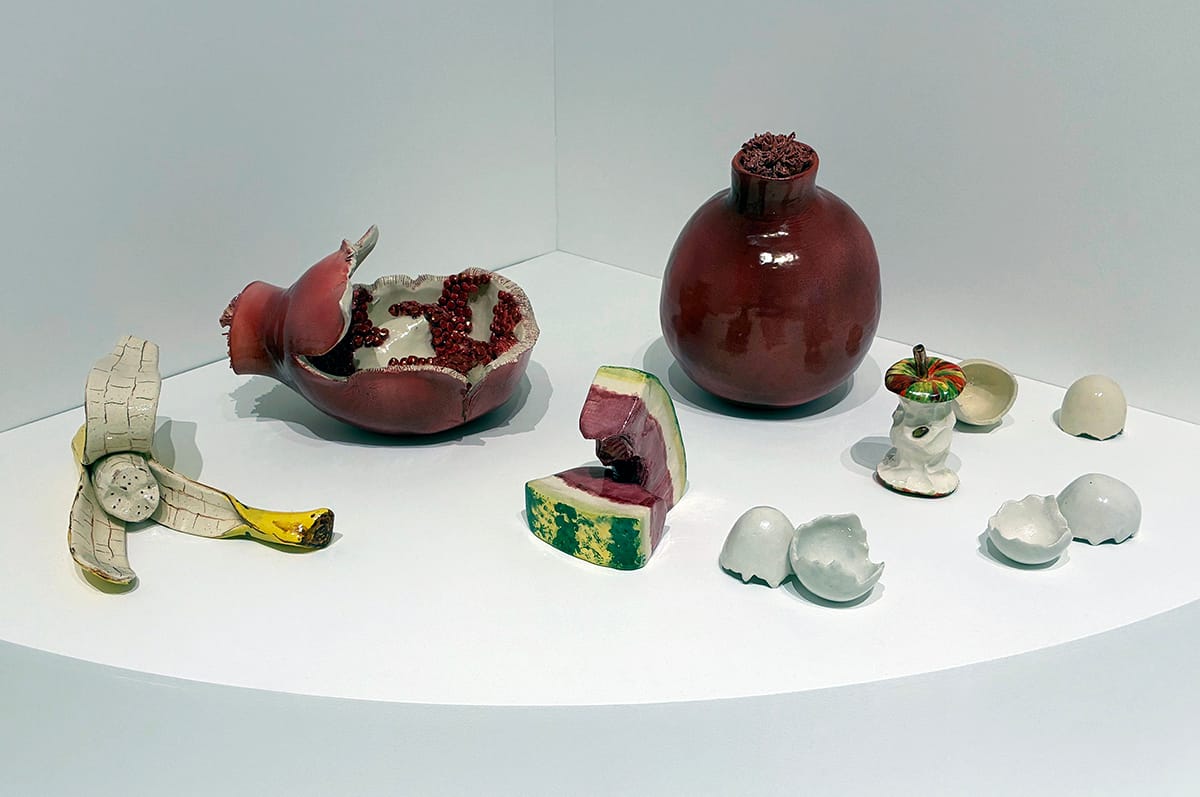
In early works like “Compost” and “White Trash,” Lighton makes an appeal to environmentalism in line with the introduction of public recycling programs, elevating the potential of trash to art. “Compost” features 12 separate pieces of ceramic rotting fruit and broken eggshells, a collection of food waste that has been given a purpose — symbolically, to be composted and help grow new food, and conceptually, to raise awareness about environmentalism. In contrast, “White Trash” depicts an array of cans, bottles, egg cartons, and other recyclables all in the same plain white color, calling attention to the need for society to be mindful and intentional when considering waste, so that recyclables can be properly identified and separated from true garbage.
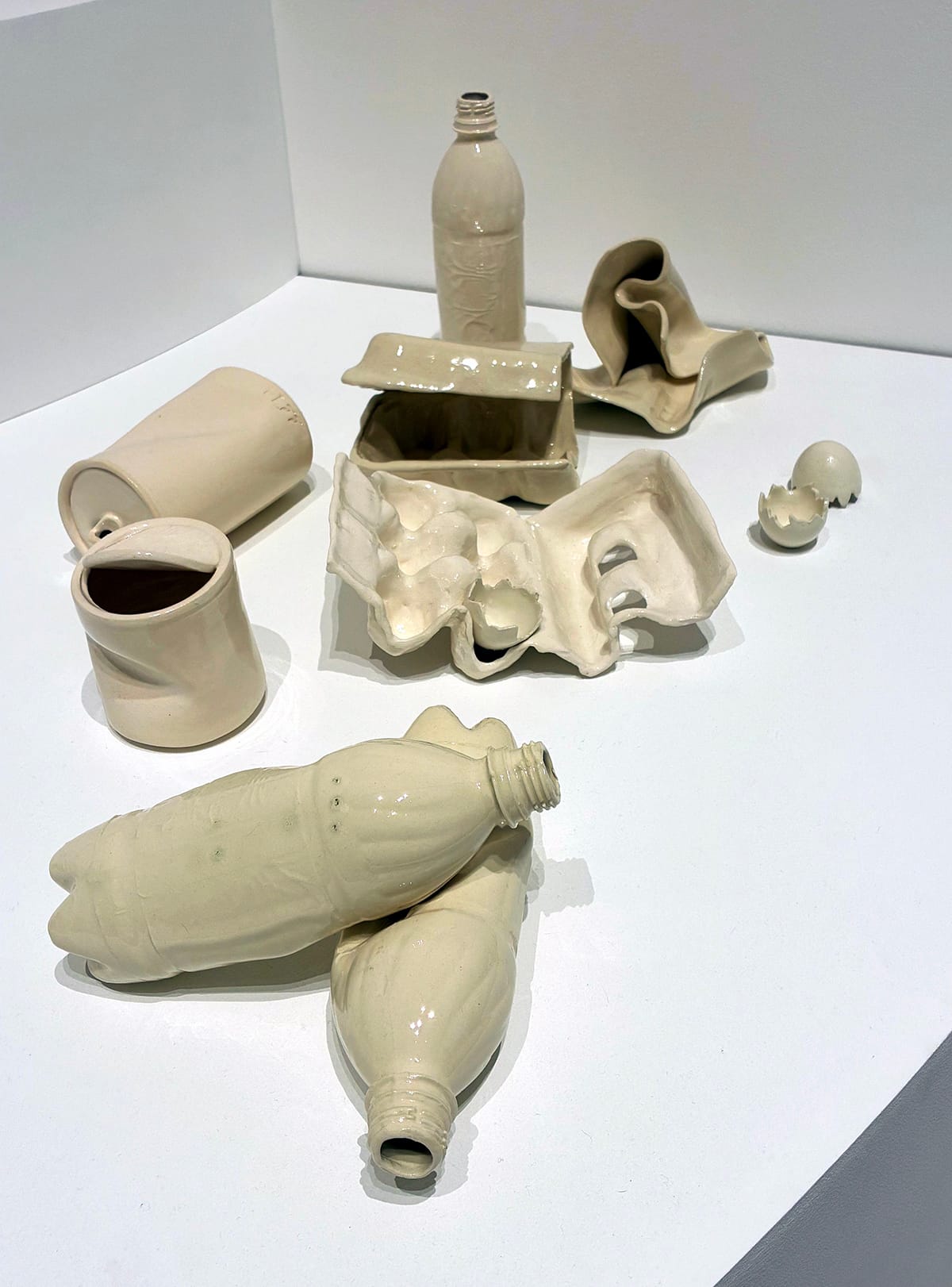
As a later period work, “Trump Trash” takes a different approach to environmental concerns and instead lambasts the call to “Make America Great Again” by comparing the domestic policies and incentives of the first Trump presidency to the act of gilding garbage with gold. “Compost” and “White Trash” appeal to the individual’s responsibility to the environment, while “Trump Trash” directs criticism at the institutions that allow industries to pollute the environment while trading carbon credits. Just as the “Building People” gave way to the “Divas,” representations of confining social structures give way to a consideration of complex social processes over the course of Lighton’s career.
Taken together, the works in “Love & War” reveal an artist whose practice moves fluidly between critique and celebration. Early sculptures confront social structures that shape identity and opportunity, particularly those related to gender and labor. Later works turn toward the generative forces of nature, embracing organic forms that suggest growth, reproduction, and transformation.
Seen across fifty years, the shift from austere conceptual pieces to more expressive forms feels less like a departure than an expansion. By the time viewers reach the final galleries, the exhibition’s message becomes clear: for Lighton, fragility and vitality are inseparable. The same organic forms that suggest beauty and abundance also hint at impermanence and change, turning the retrospective into a meditation on life itself — its tensions, transformations, and fragile beauty.
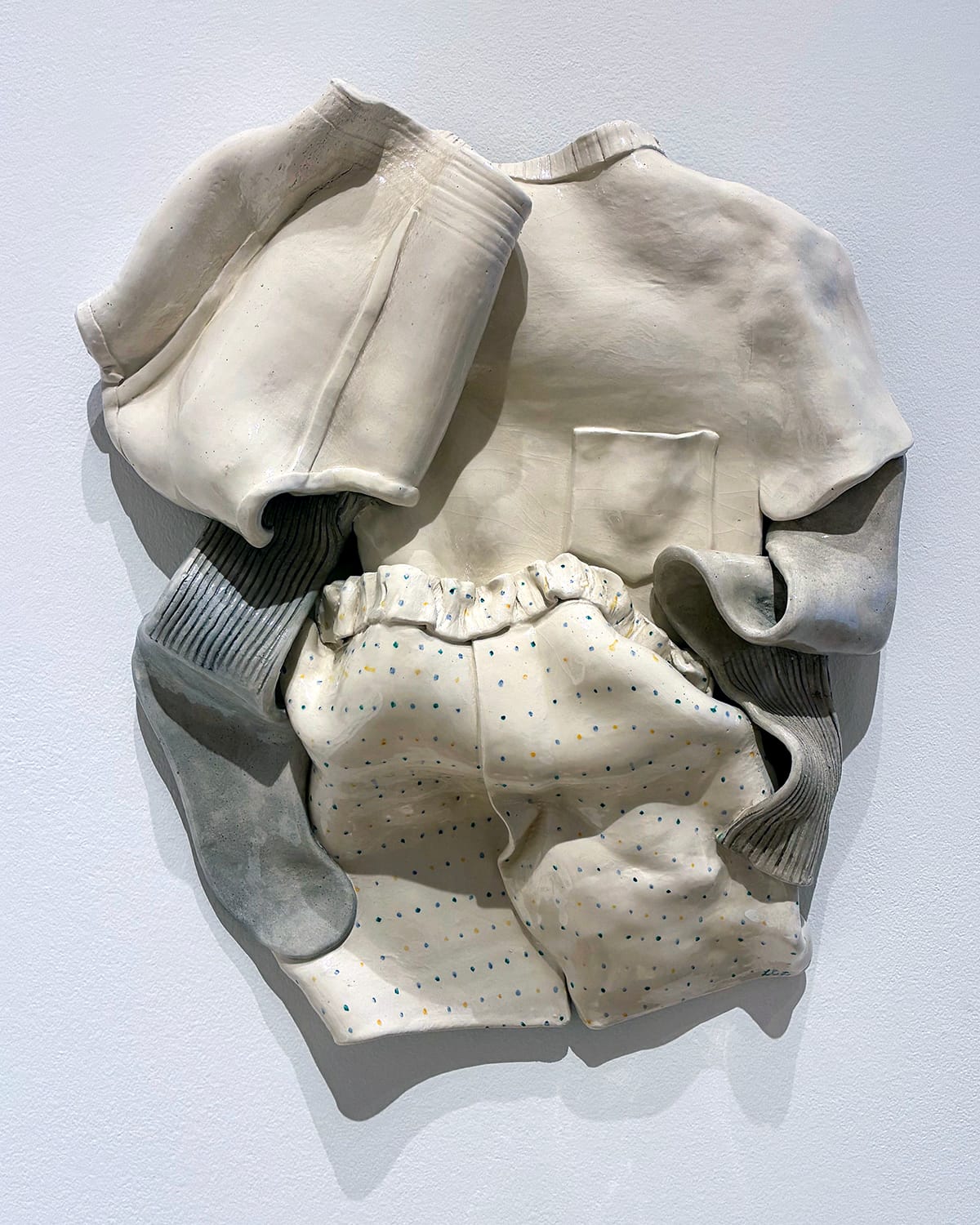
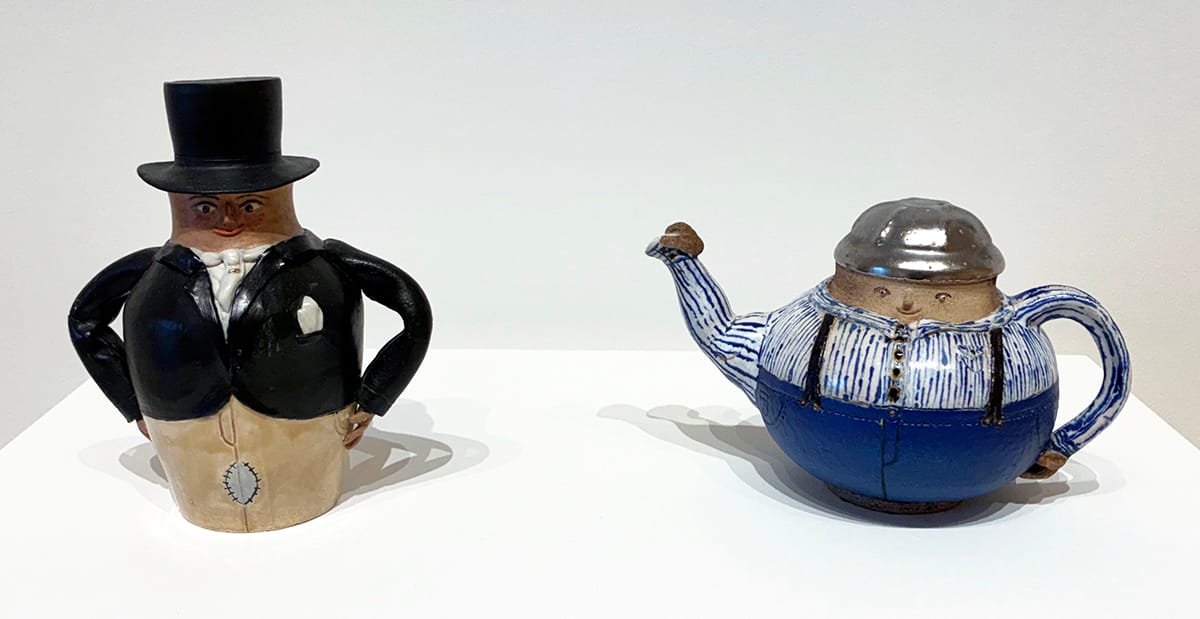
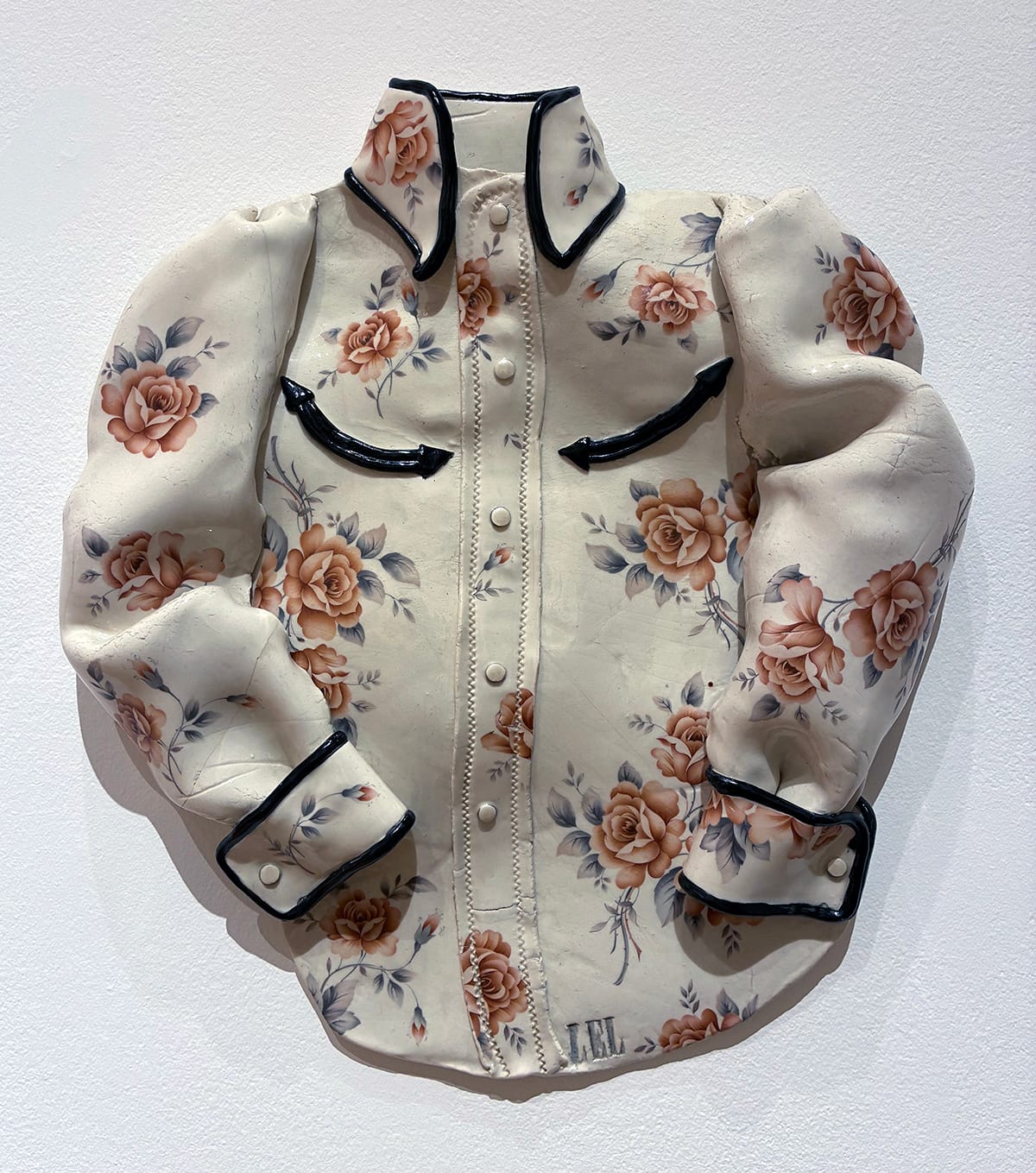
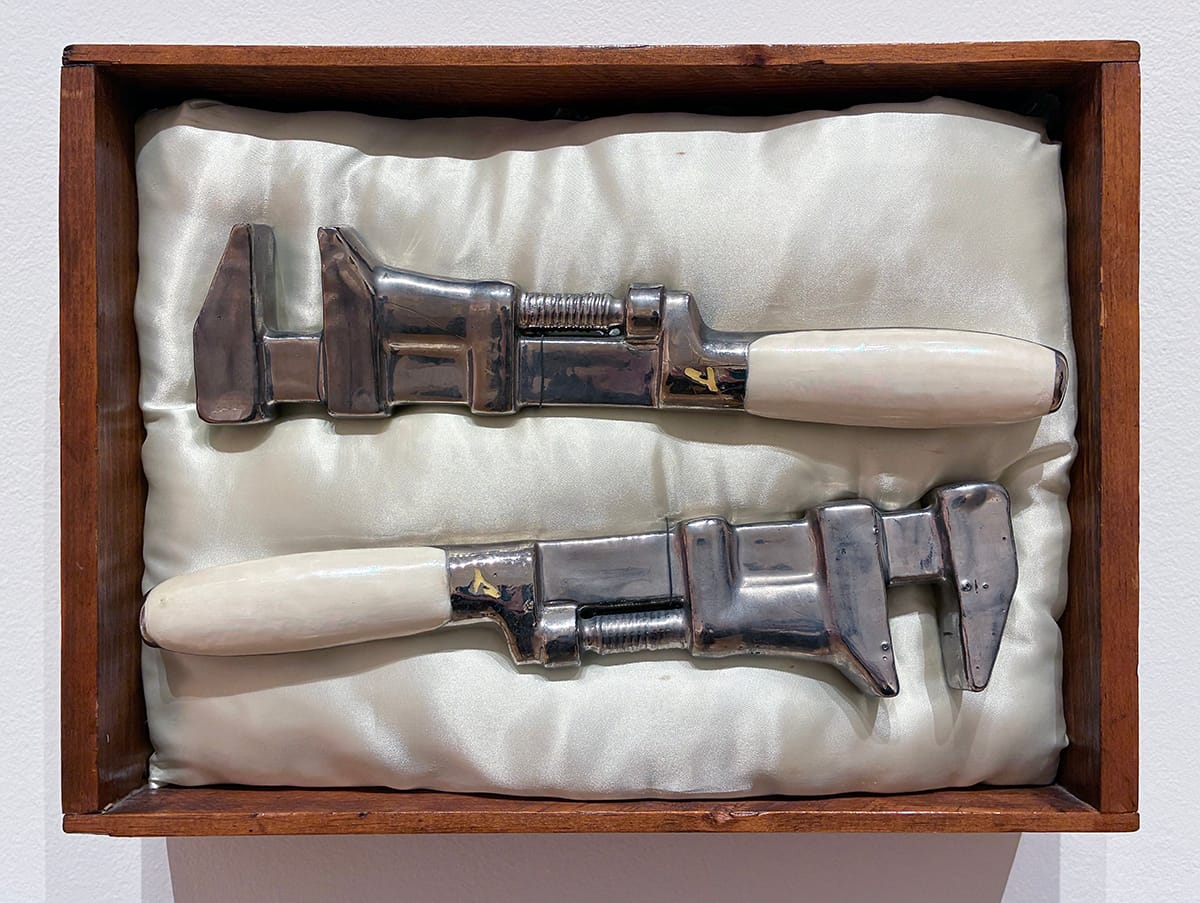
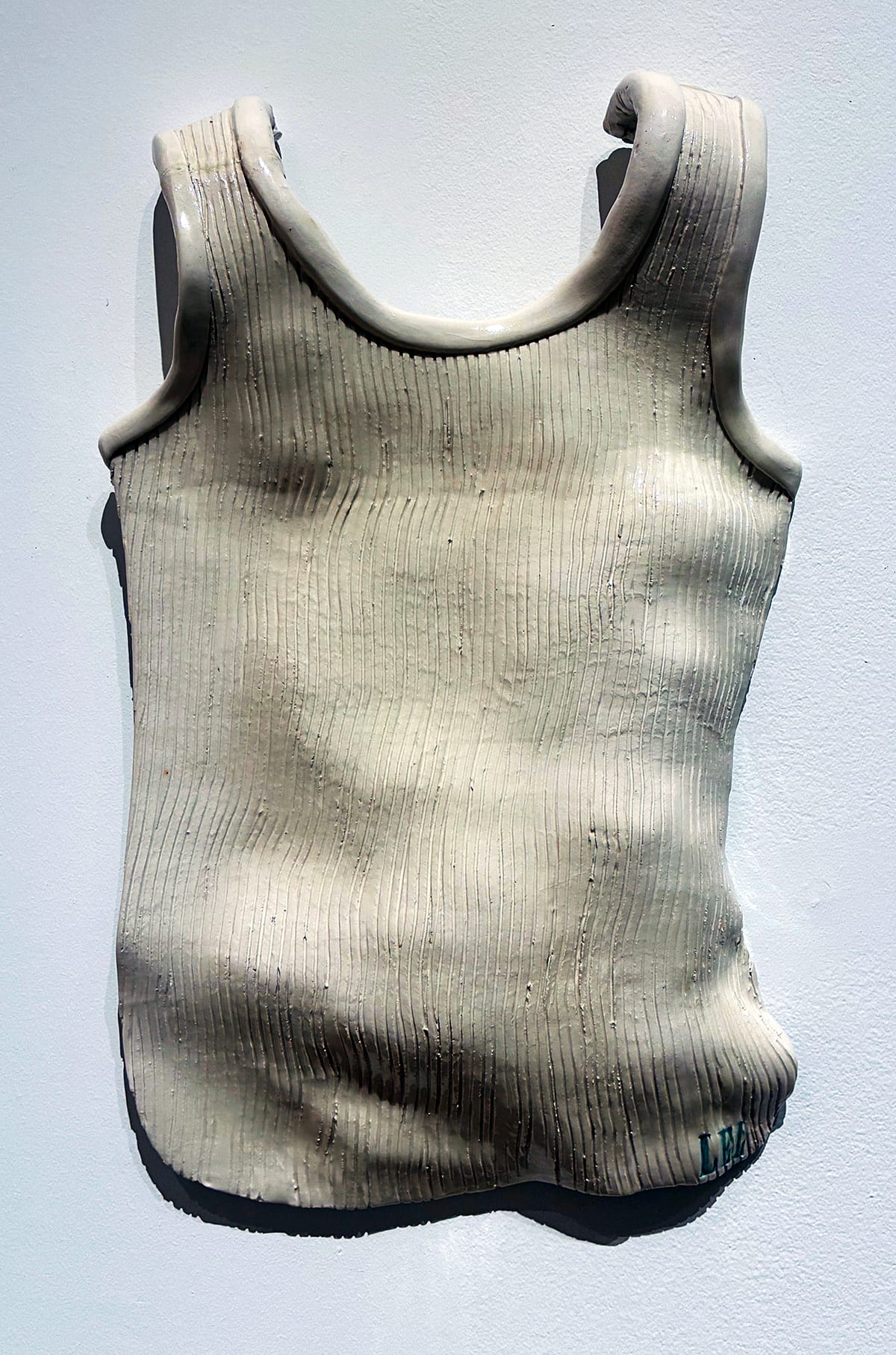
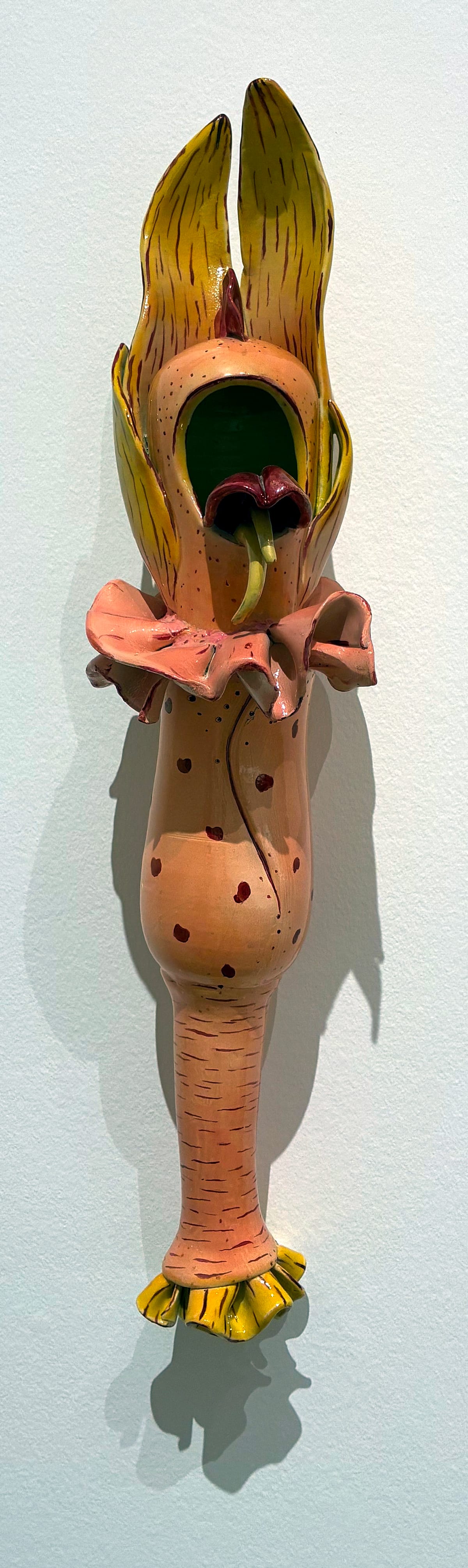
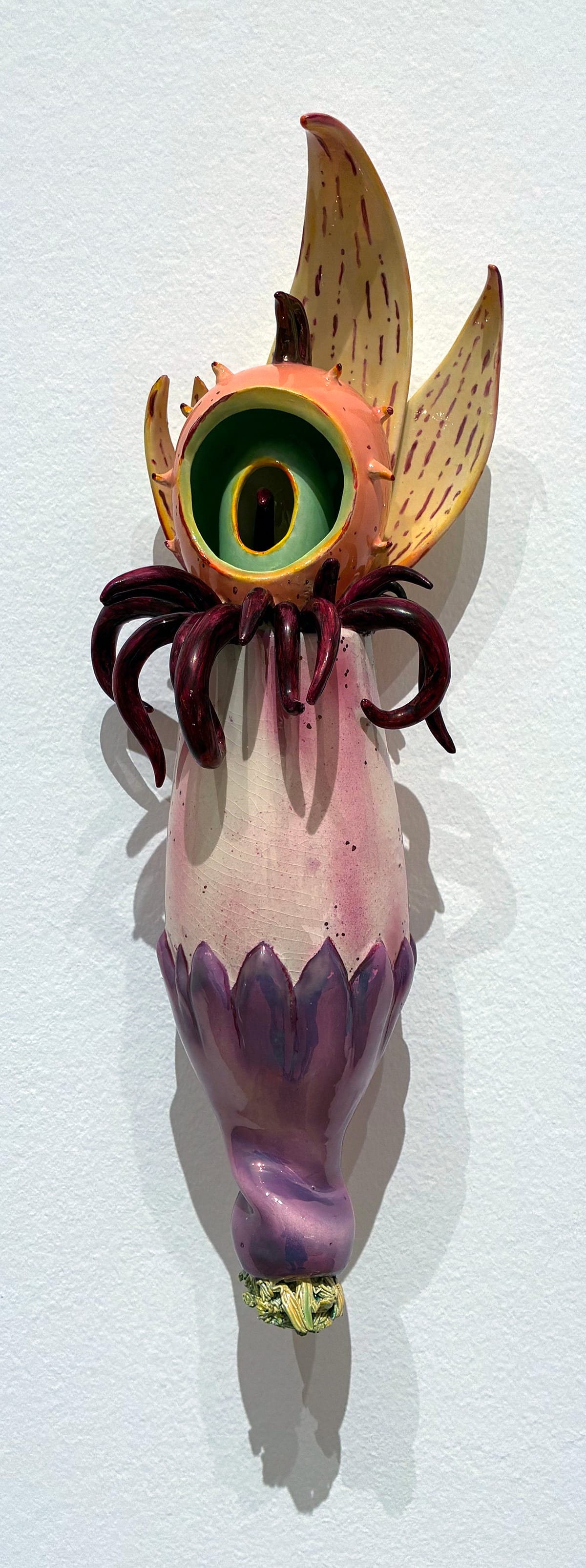
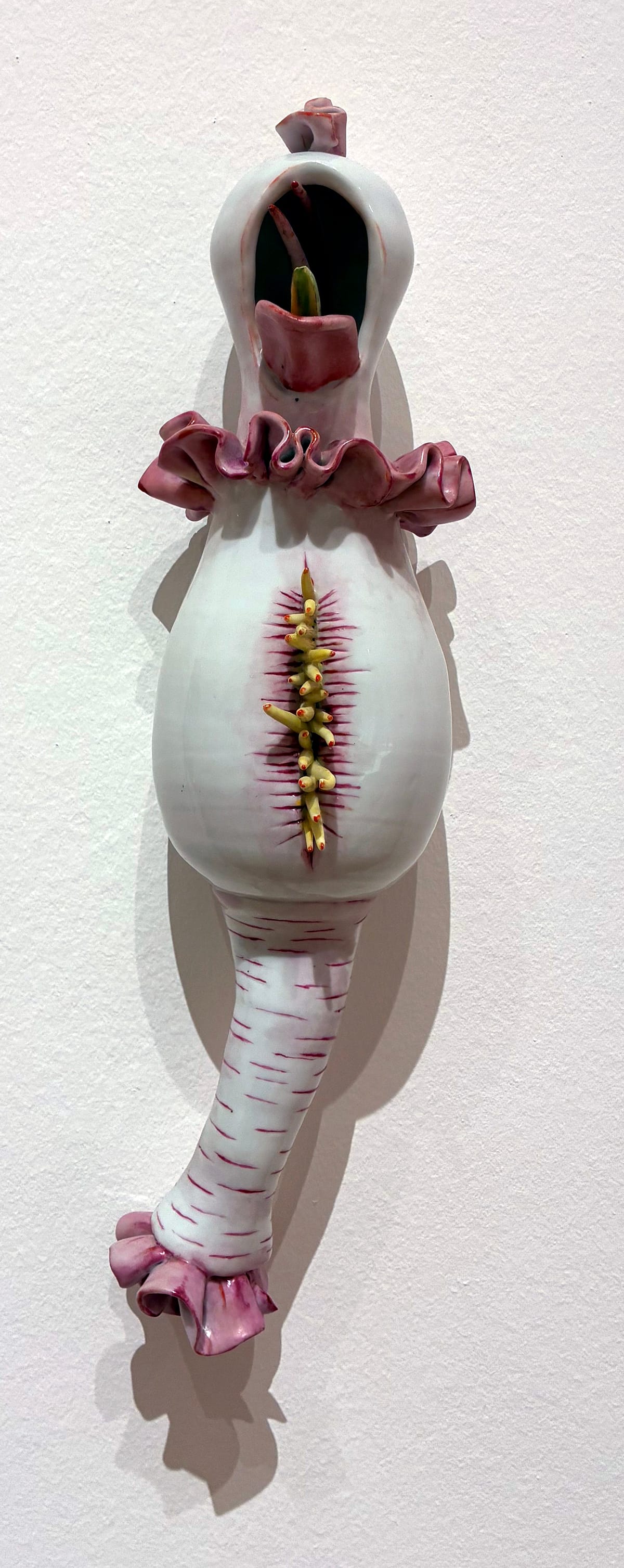
From left: “Laundry,” 1981, glazed earthenware; (left to right) “Huntsman Teapot” (1979, porcelain, glaze, and china paint) and “Logger Teapot” (1978, glazed earthenware and luster); “Cowboy Shirt,” 1980, glazed earthenware with decal; “Pearl Handled Dueling Monkey Wrenches,” 1981, glazed earthenware, china paint, luster, satin, and wood; “Dude,” 1981, glazed earthenware; “Circus Tubeworm,” 2002, glazed earthenware, china paint, and luster; “Dame Edna,” 2002, glazed earthenware, china paint, and luster; “Tenacious Tubeworm,” 2005, glazed earthenware and china paint. Photos by Abby Bayani-Heitzman for The SHOUT.

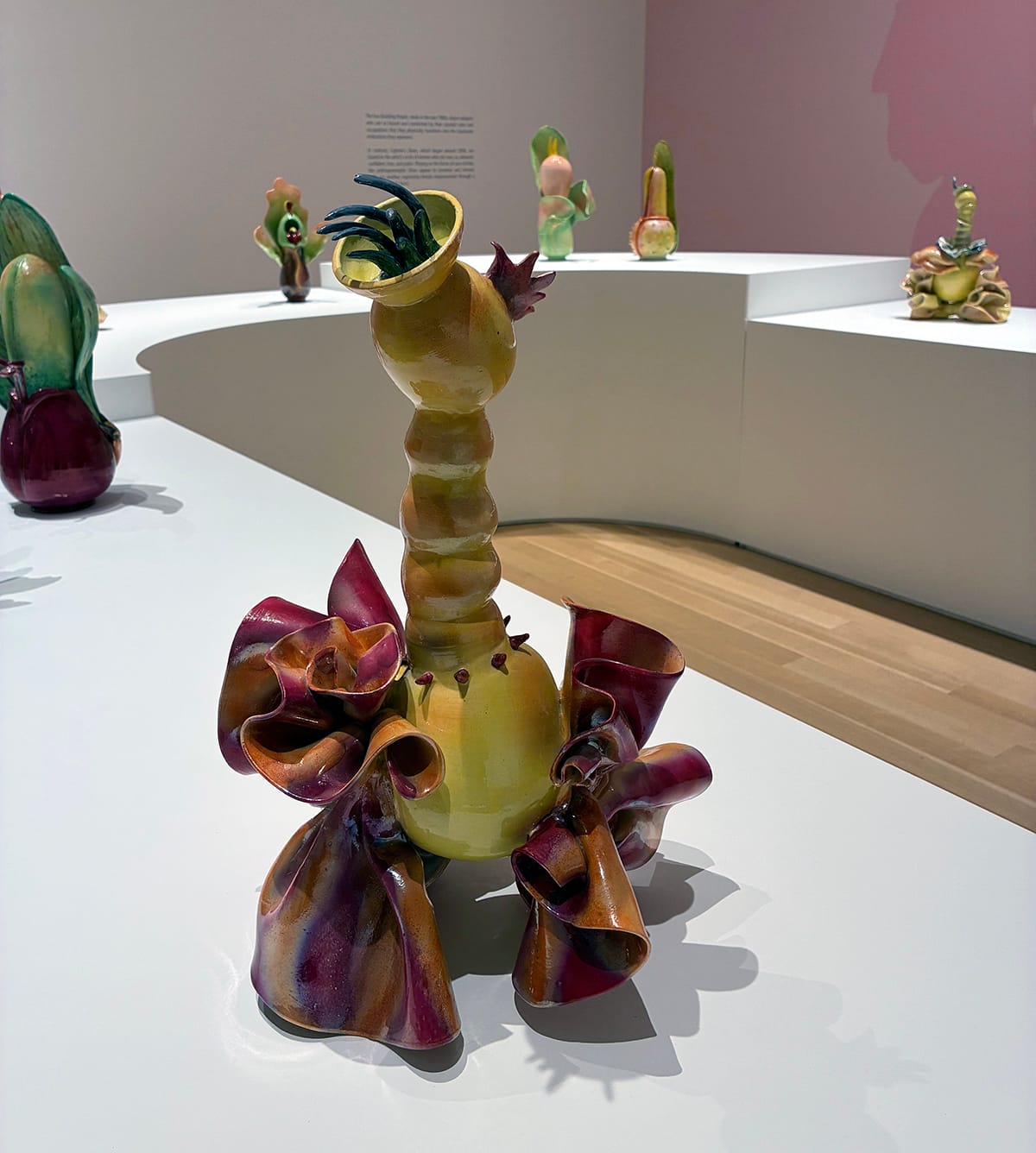
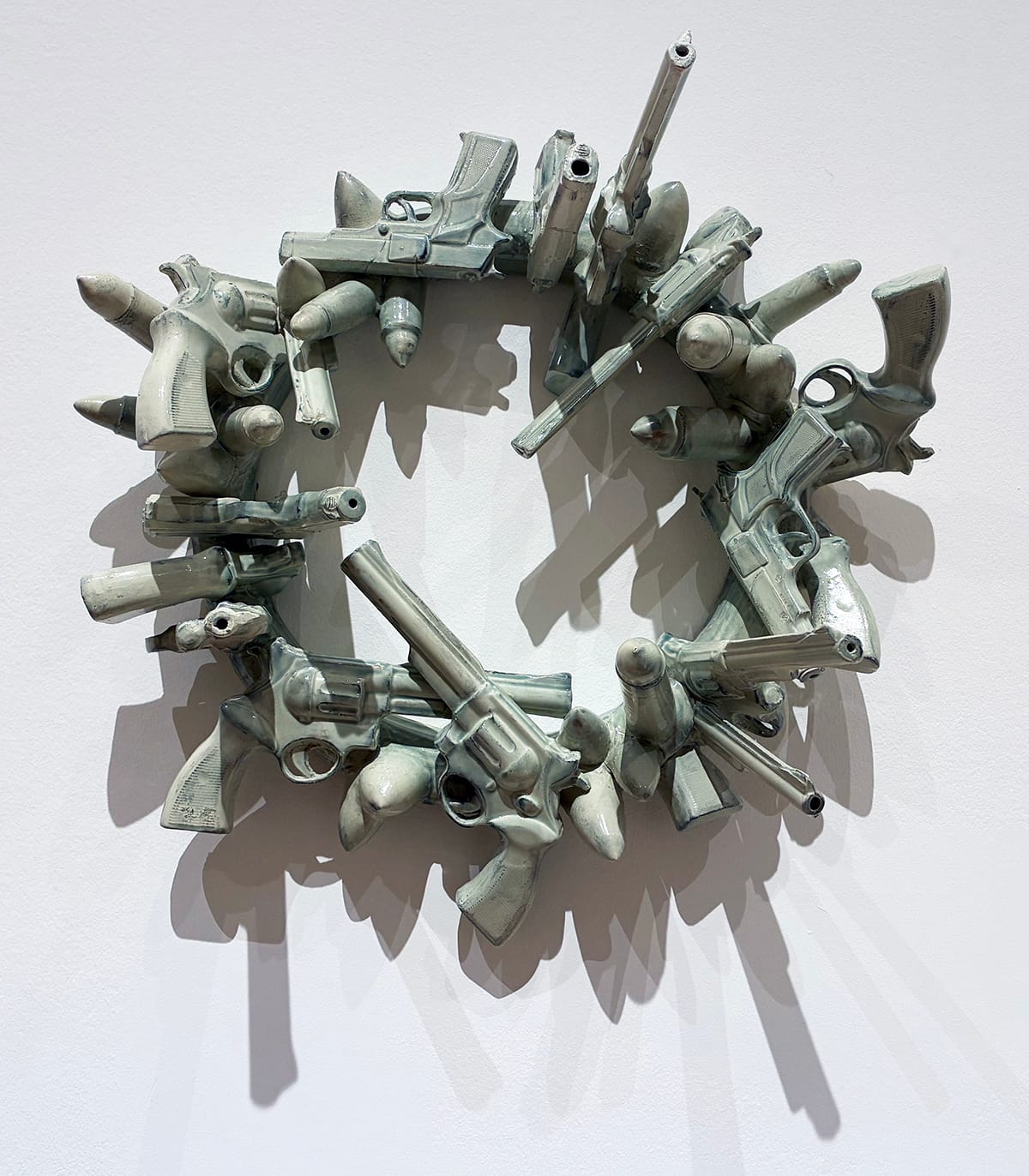
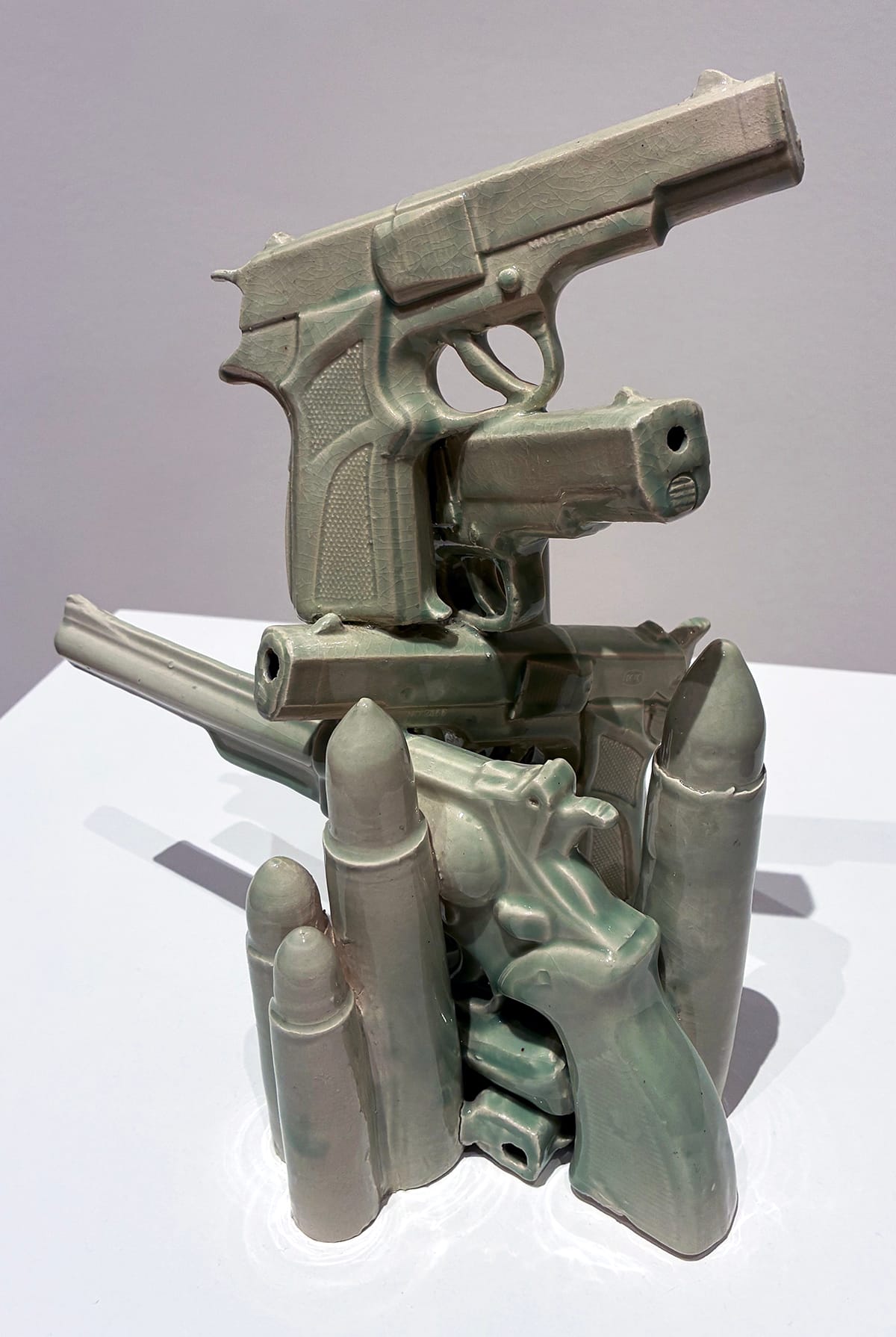
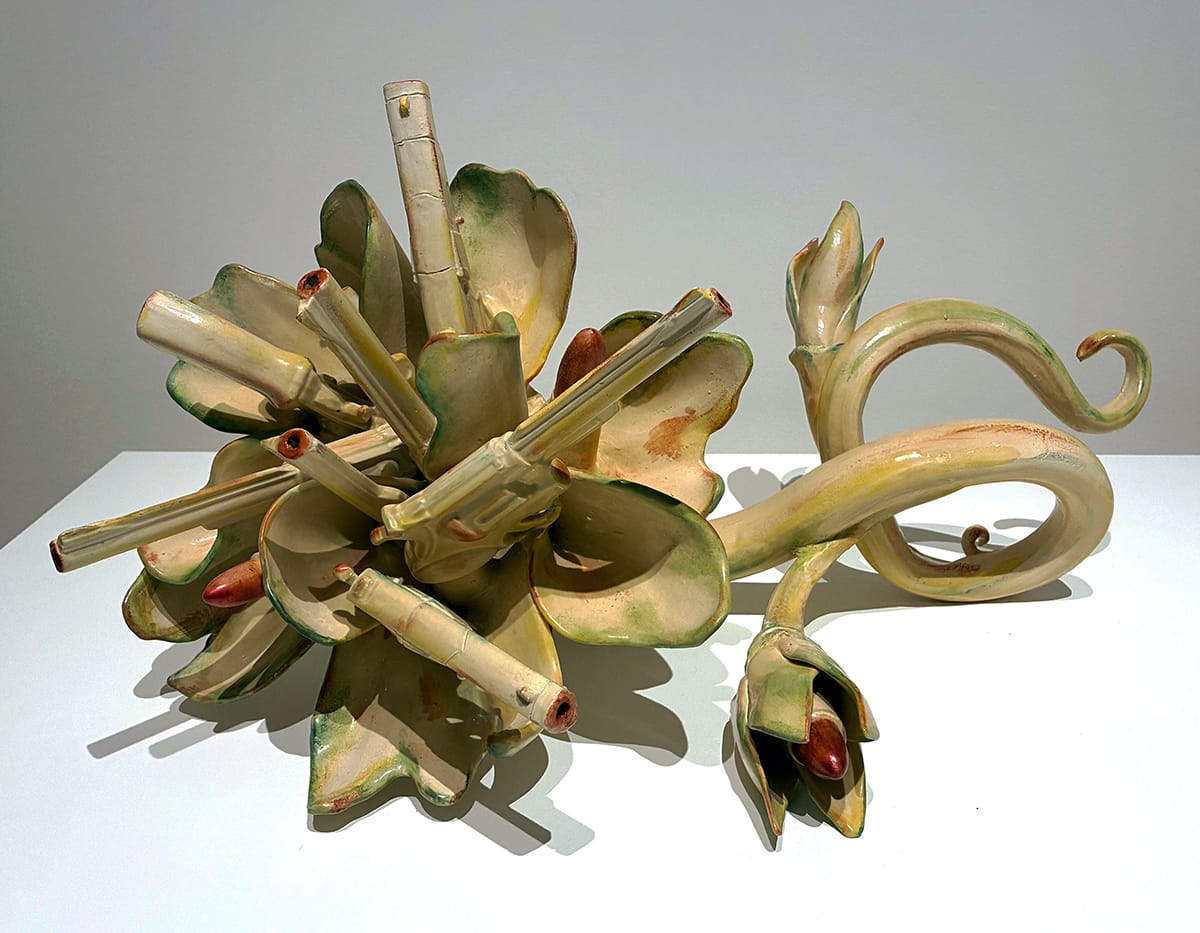
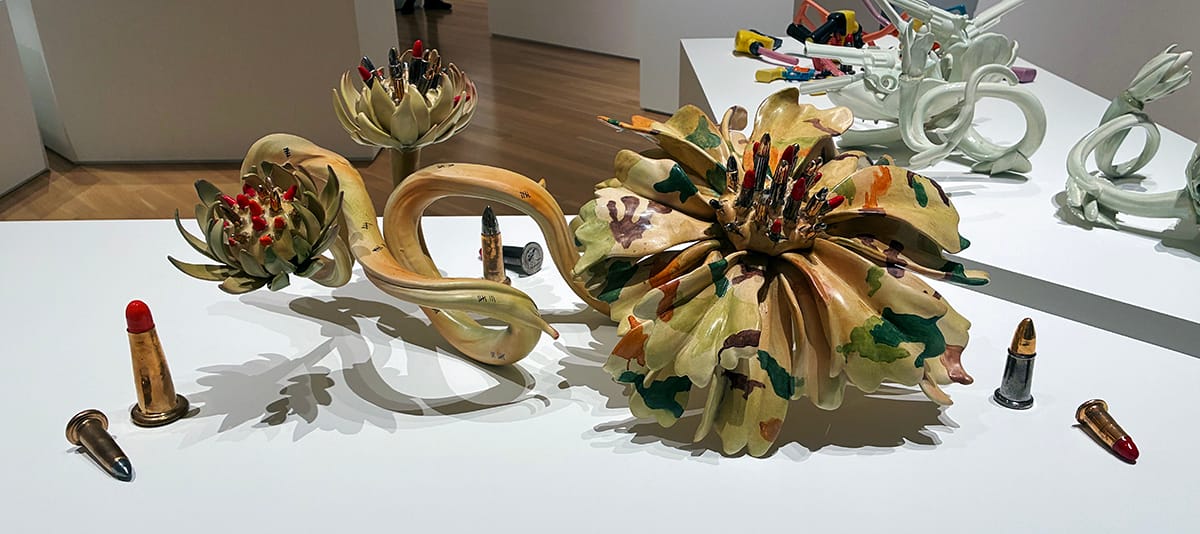
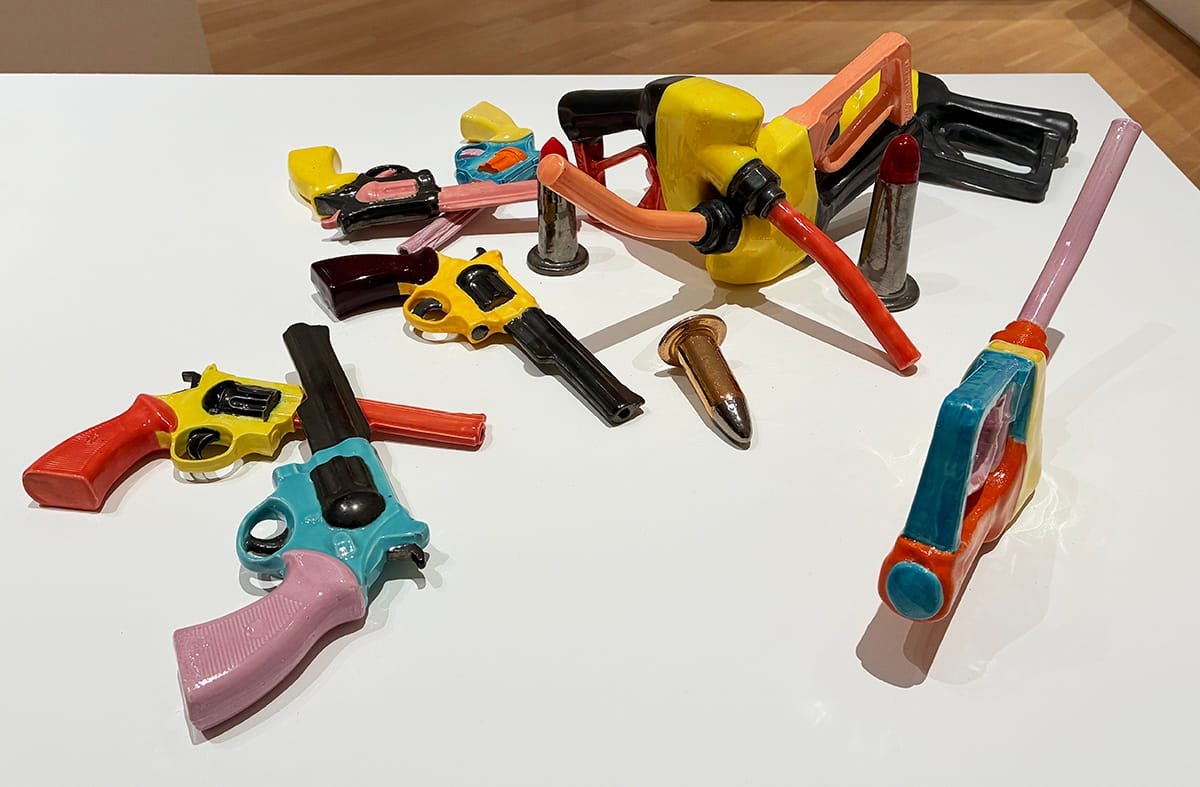
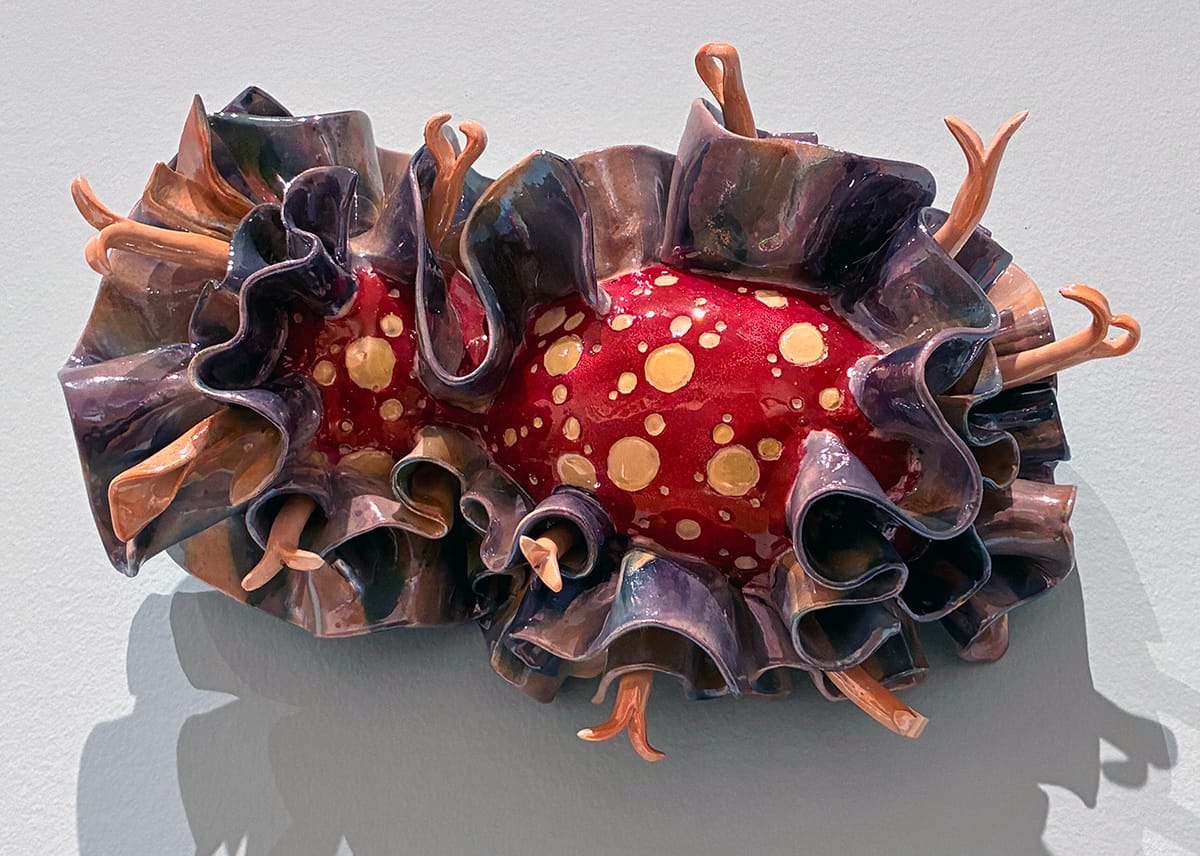
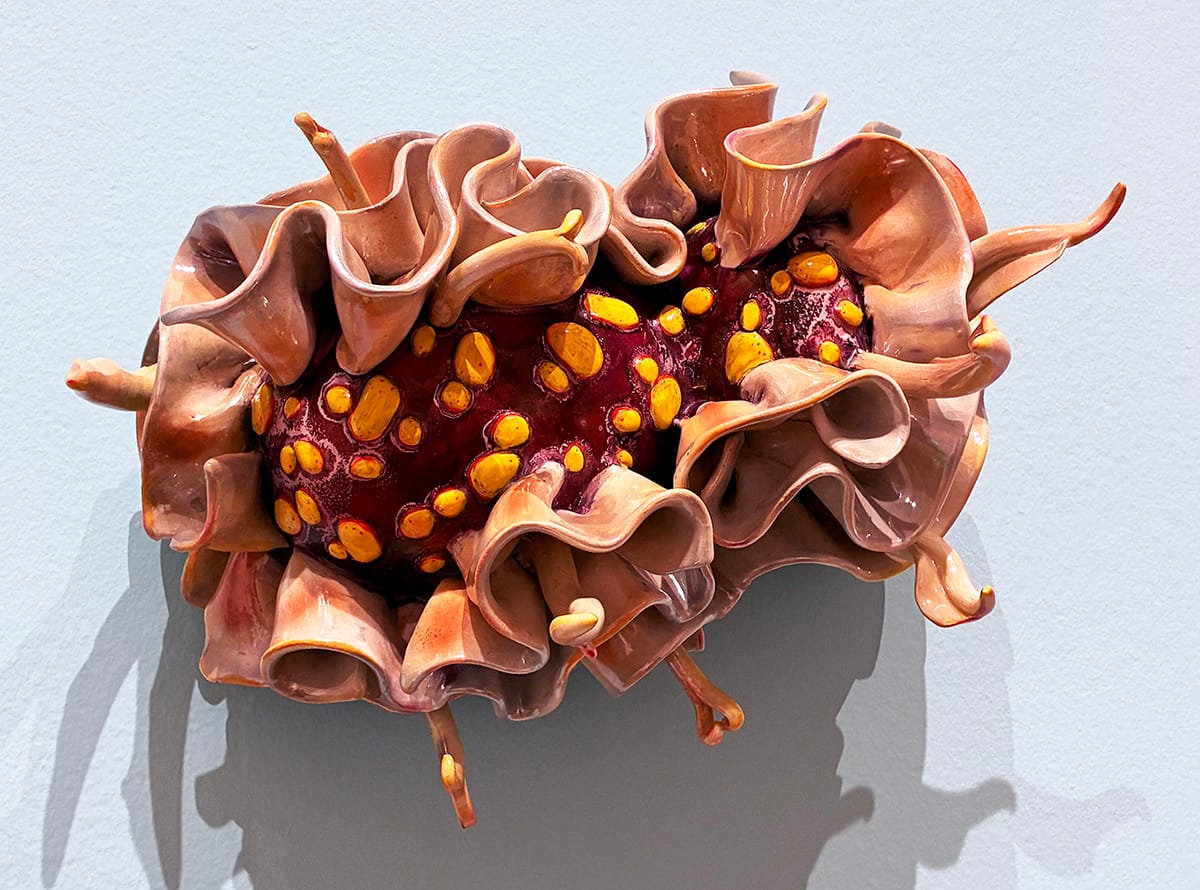
From left: “Tenacious Tubeworm,” 2005, glazed earthenware and china paint; “Ricci’s Samba Partner,” 2007, glazed earthenware and luster; “Thoughts and Prayers 2,” 2018, glazed earthenware and paint; “Hands Up Don’t Shoot #2,” 2015, glazed earthenware; “Le Petite Mort,” 2016, glazed earthenware and china paint; “Camouflora,” 2004, glazed earthenware, china paint, and luster; “Candy Coated Fear and Greed,” 2011, glazed earthenware and luster in 11 parts; “Sea Sponge,” 2007, glazed earthenware and luster; “Fire Sponge Tedania Ignis,” 2004, glazed earthenware, china paint, and luster. Photos by Abby Bayani-Heitzman for The SHOUT.
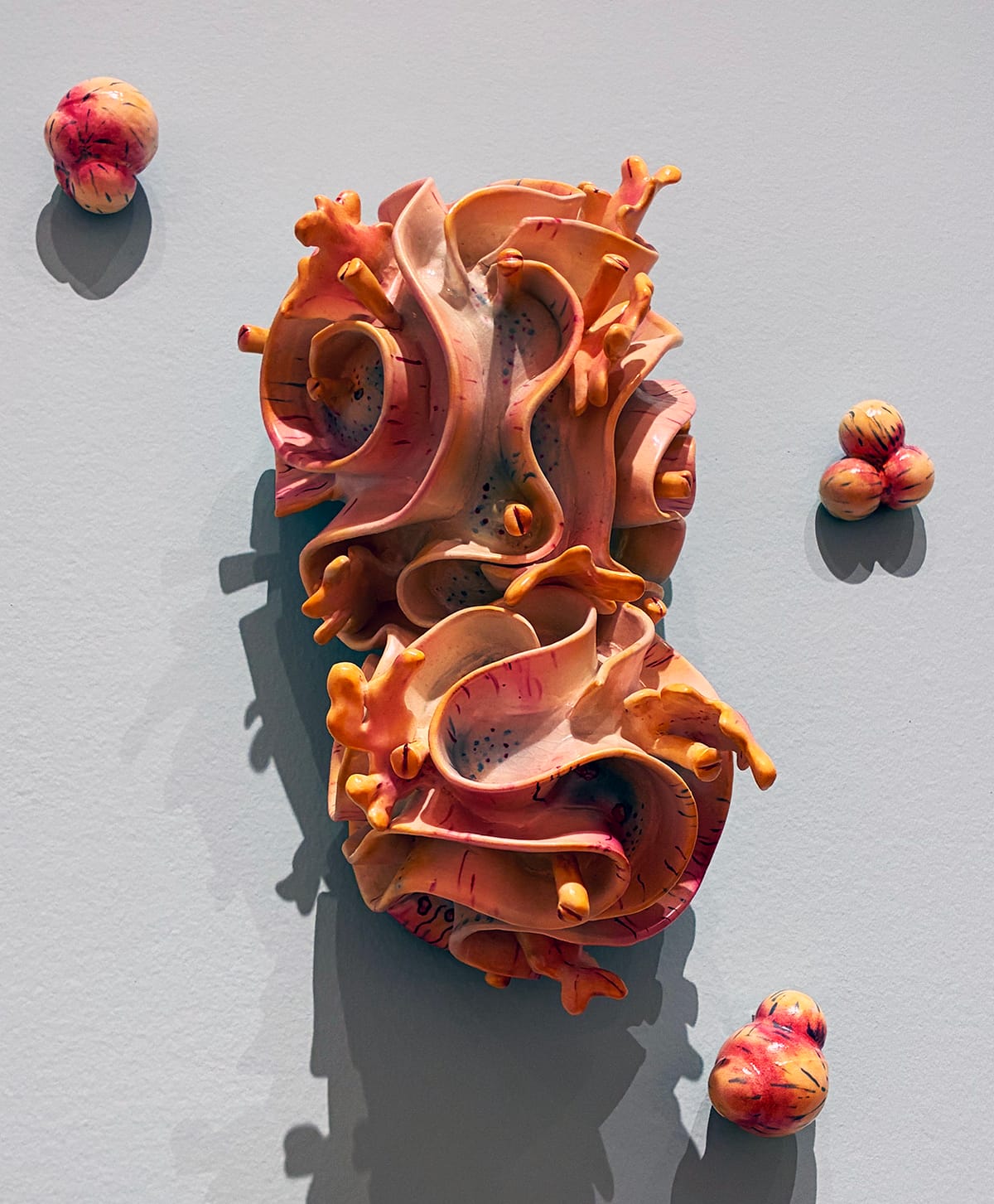
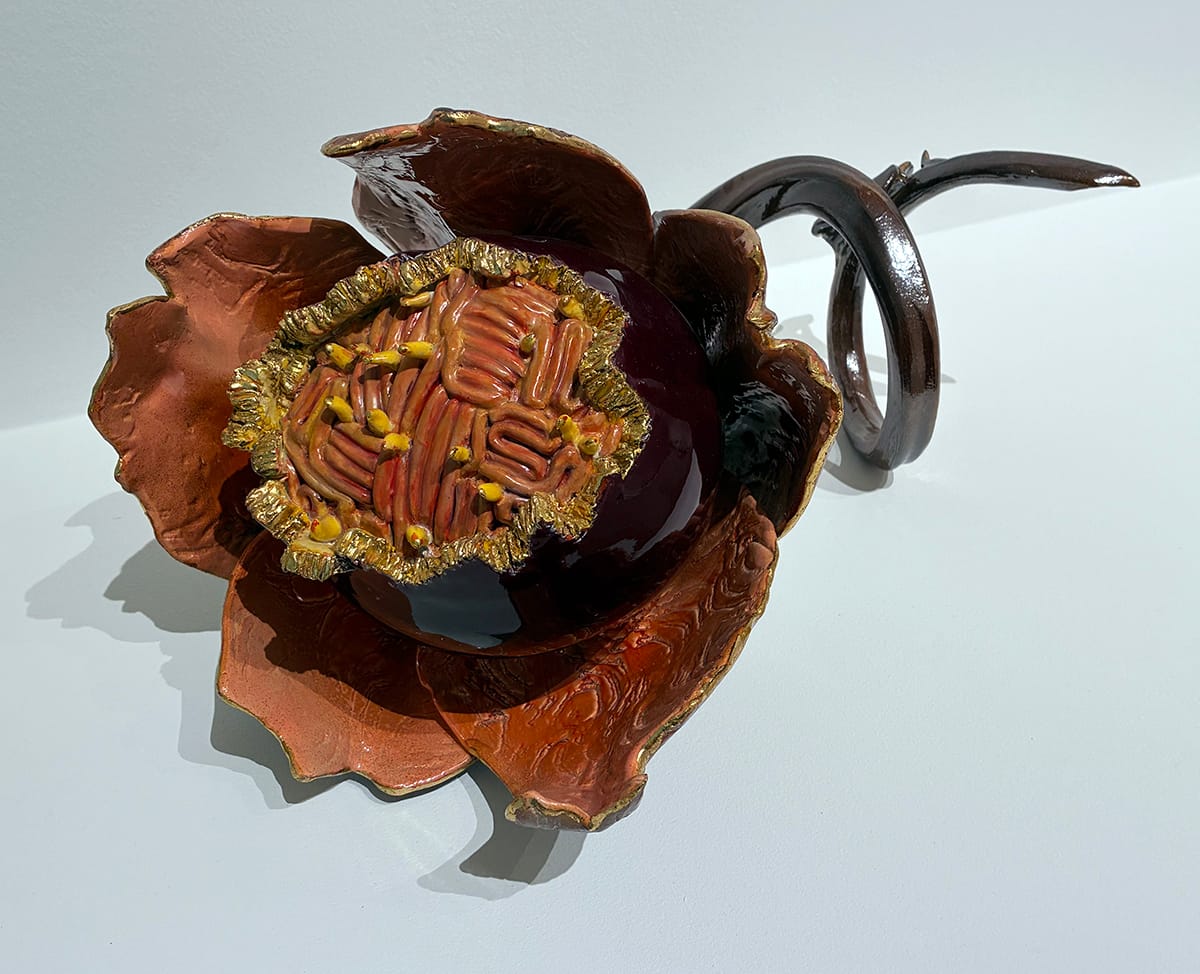
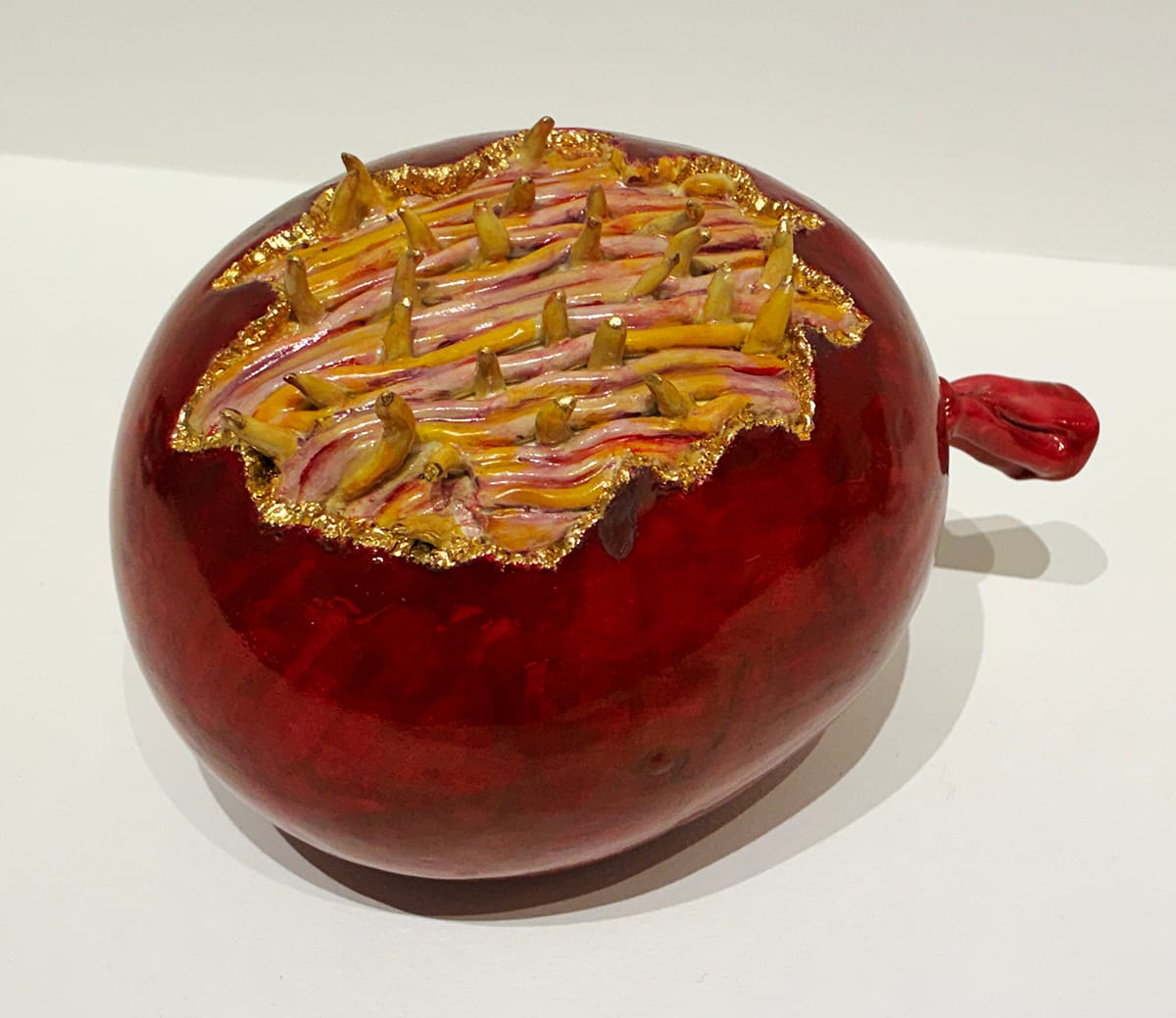
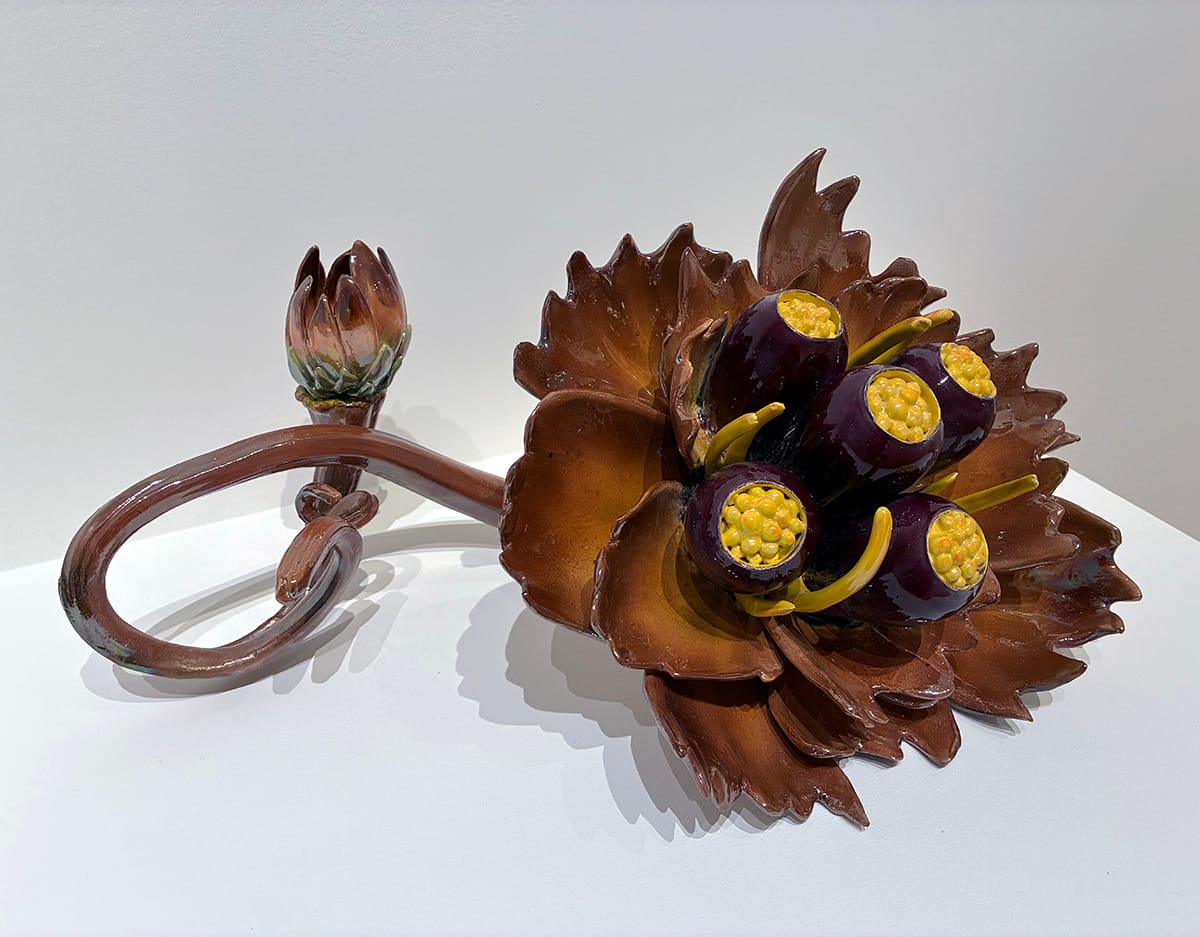
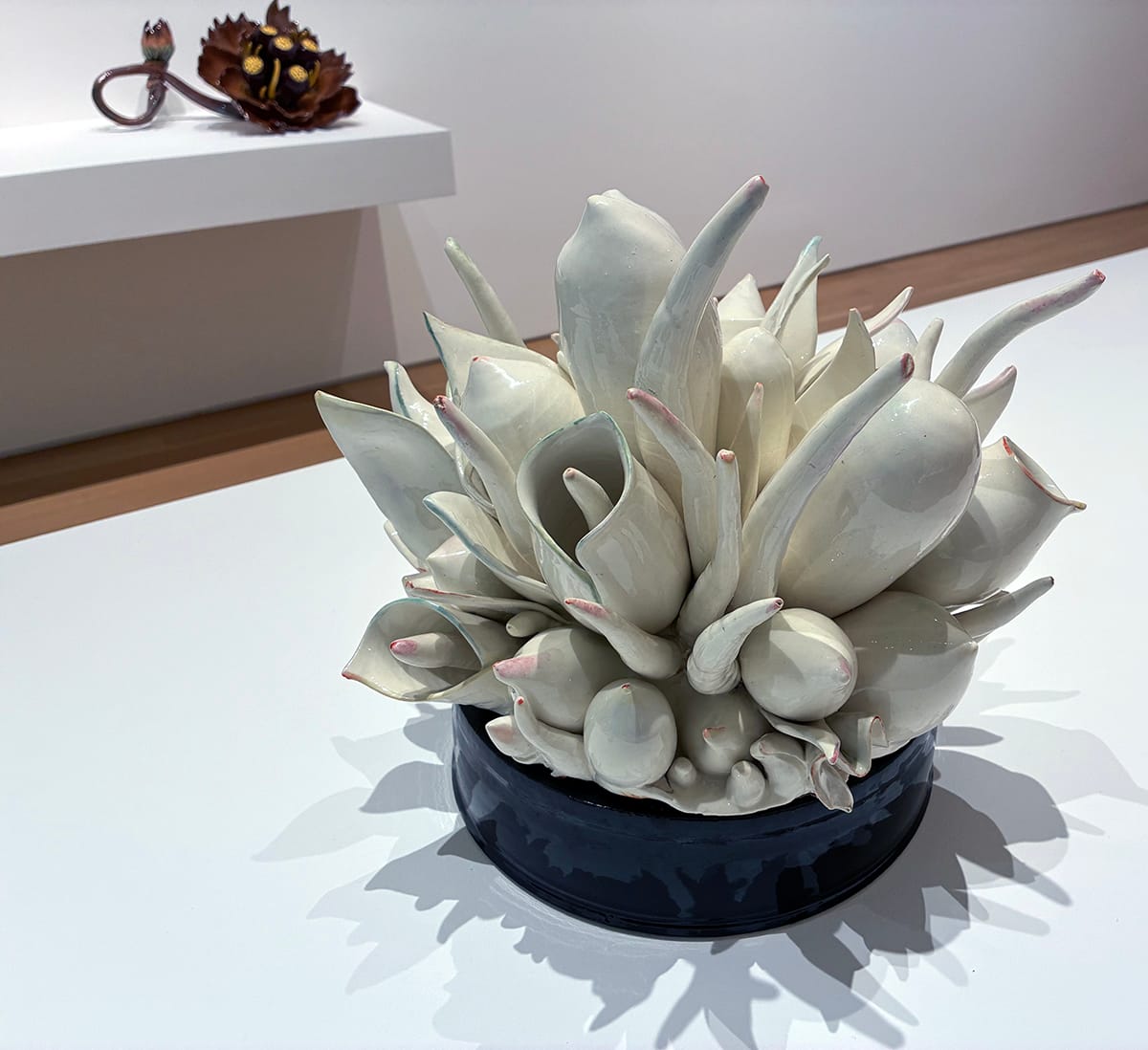
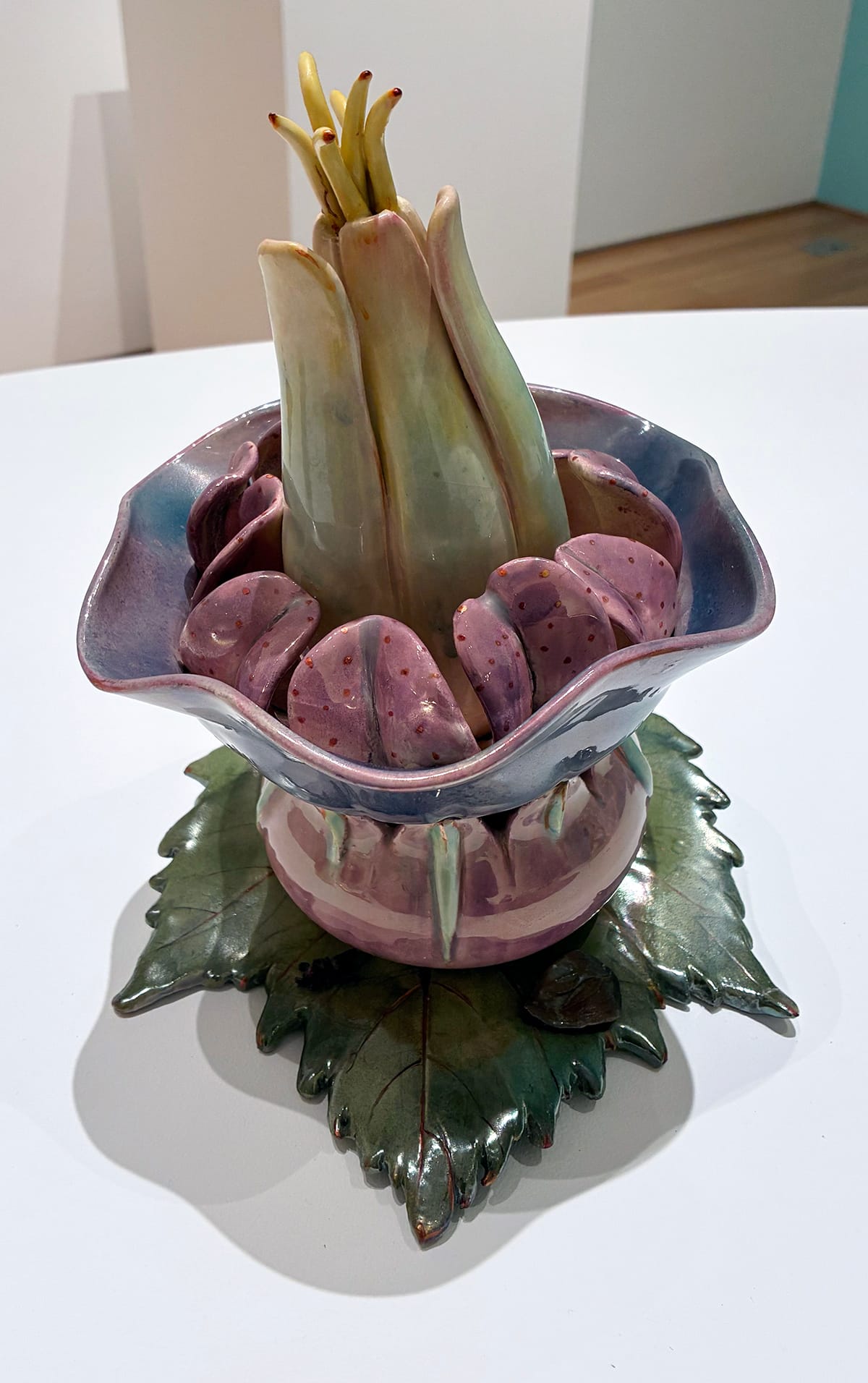
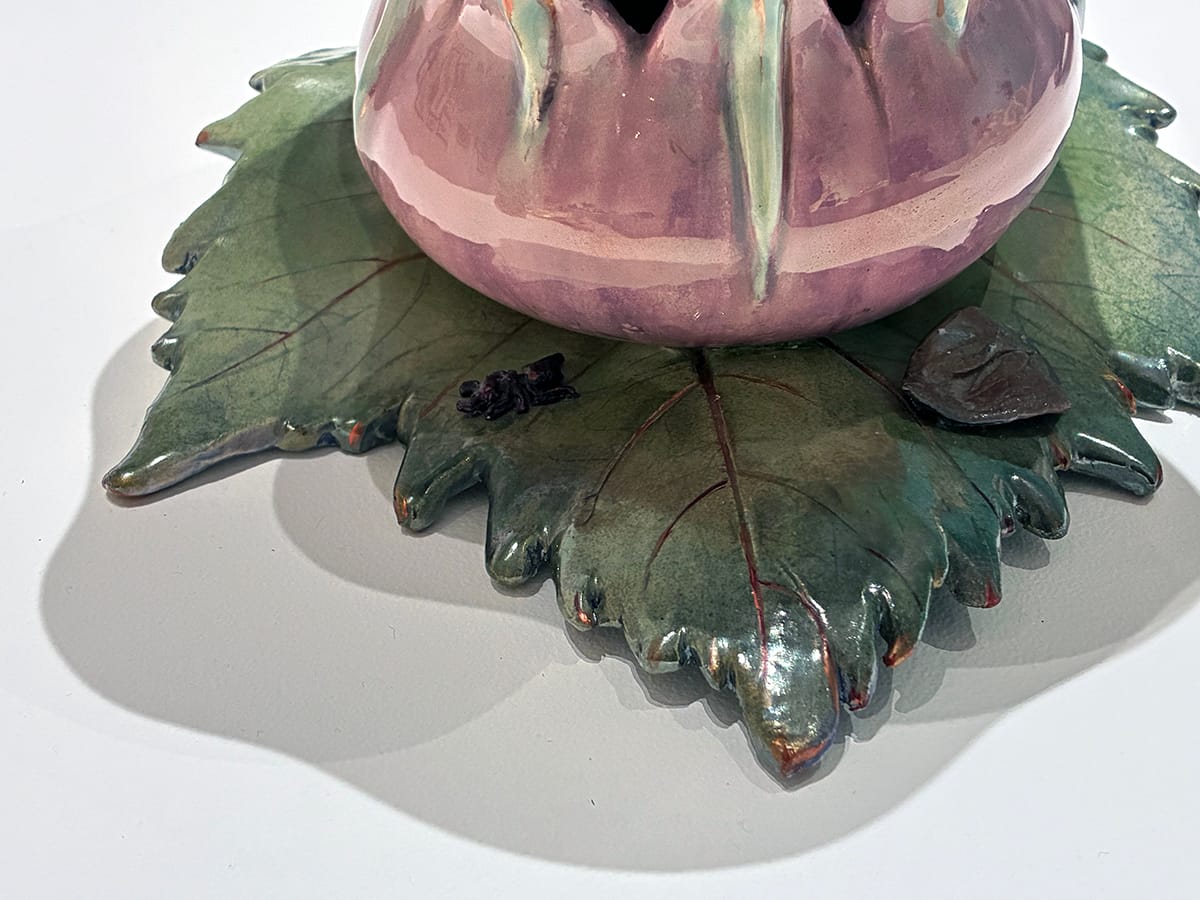
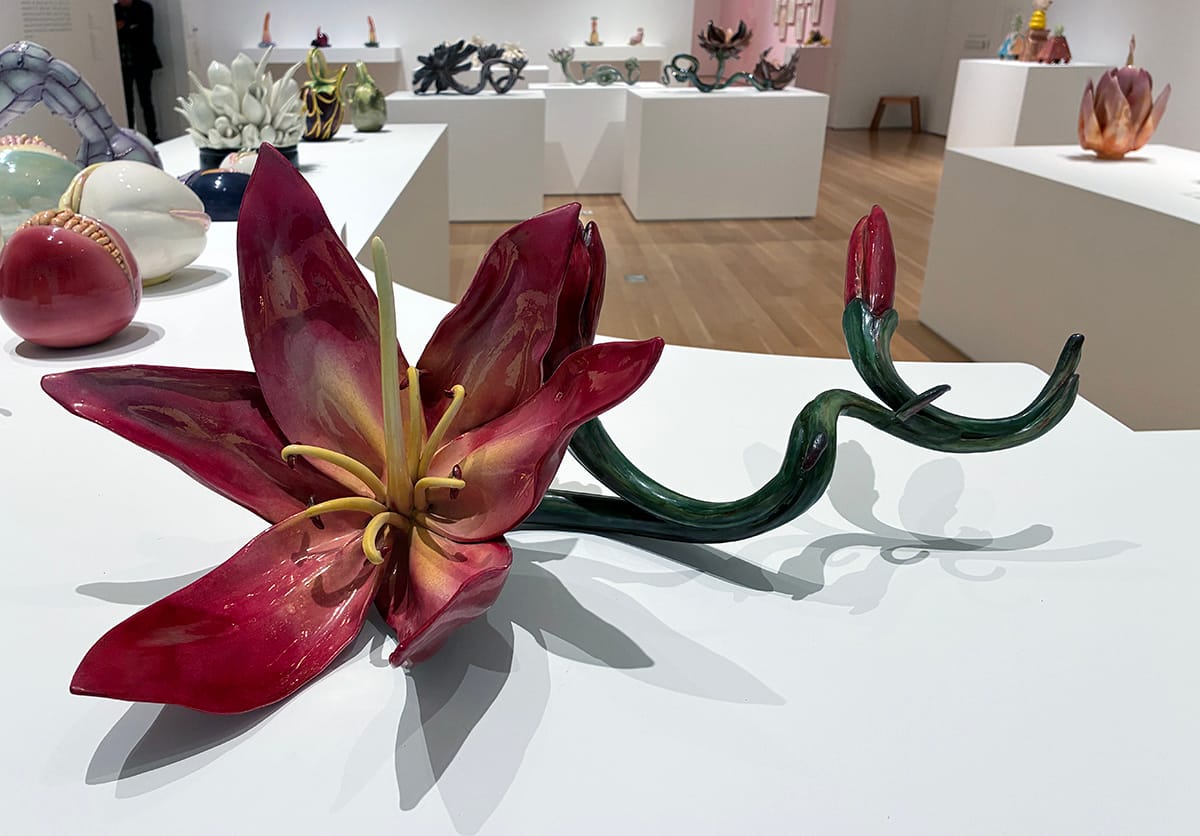
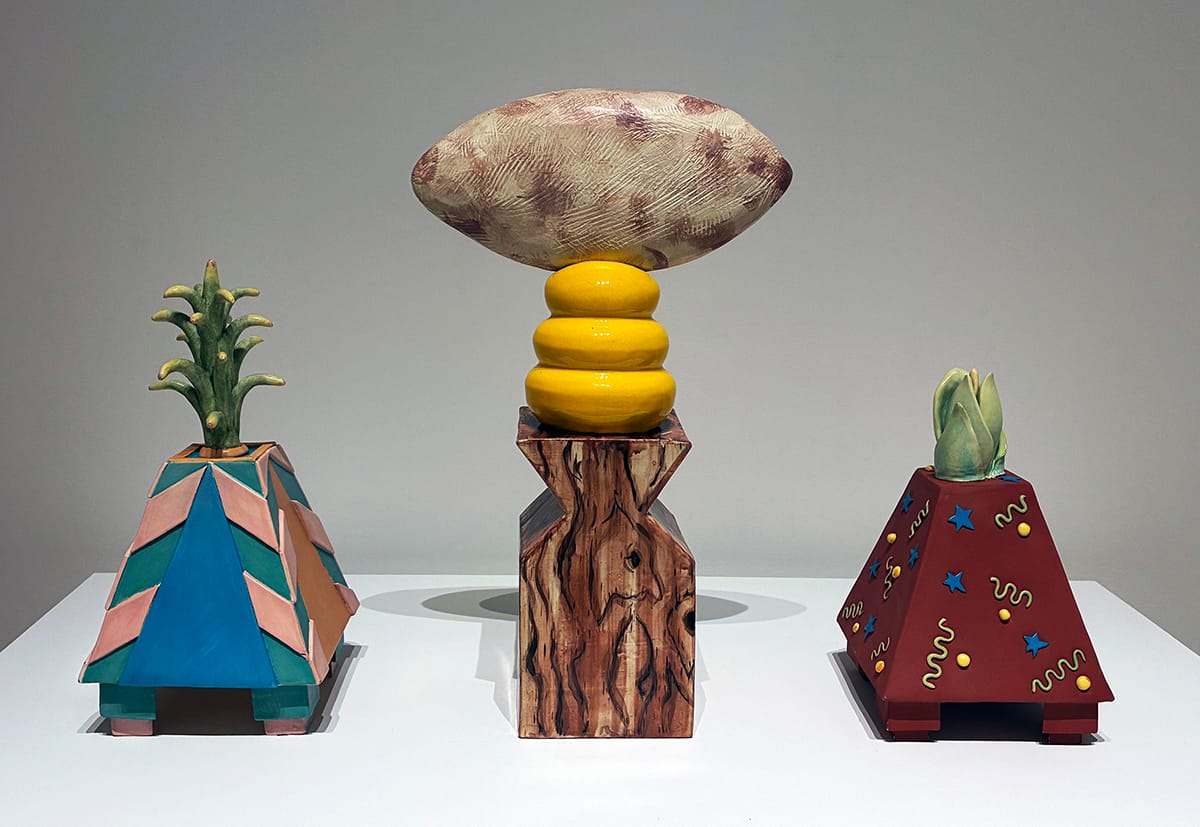
“Miami Sea Sponge,” 2017, glazed earthenware and china paint; “My Desire,” 2016, glazed earthenware, luster, and gold leaf; “My Desire,” 2015, glazed earthenware, luster, china paint, and metal leaf; “My Desire (Brown),” 2016, glazed earthenware and china paint; “Flowering Bulb,” 1986, glazed earthenware; “Wondrous Kiss,” 2005, glazed earthenware, china paint, and luster; detail of “Wondrous Kiss;” “Lily,” c. 1996, glazed earthenware and china paint; (left to right) “Untitled” (1985, glazed earthenware and underglaze), “Untitled” (1985, glazed earthenware and china paint), and “Untitled” (1985, glazed earthenware and china paint). Photos by Abby Bayani-Heitzman for The SHOUT.

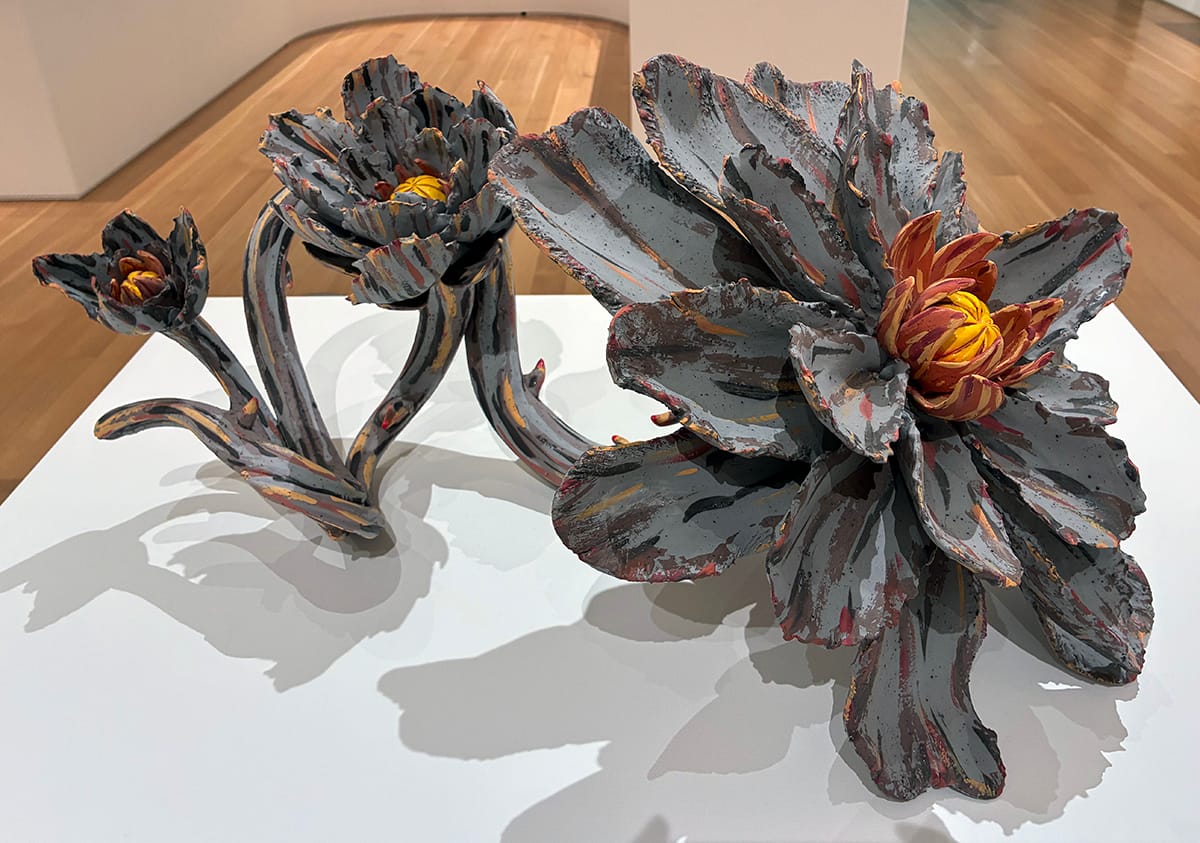
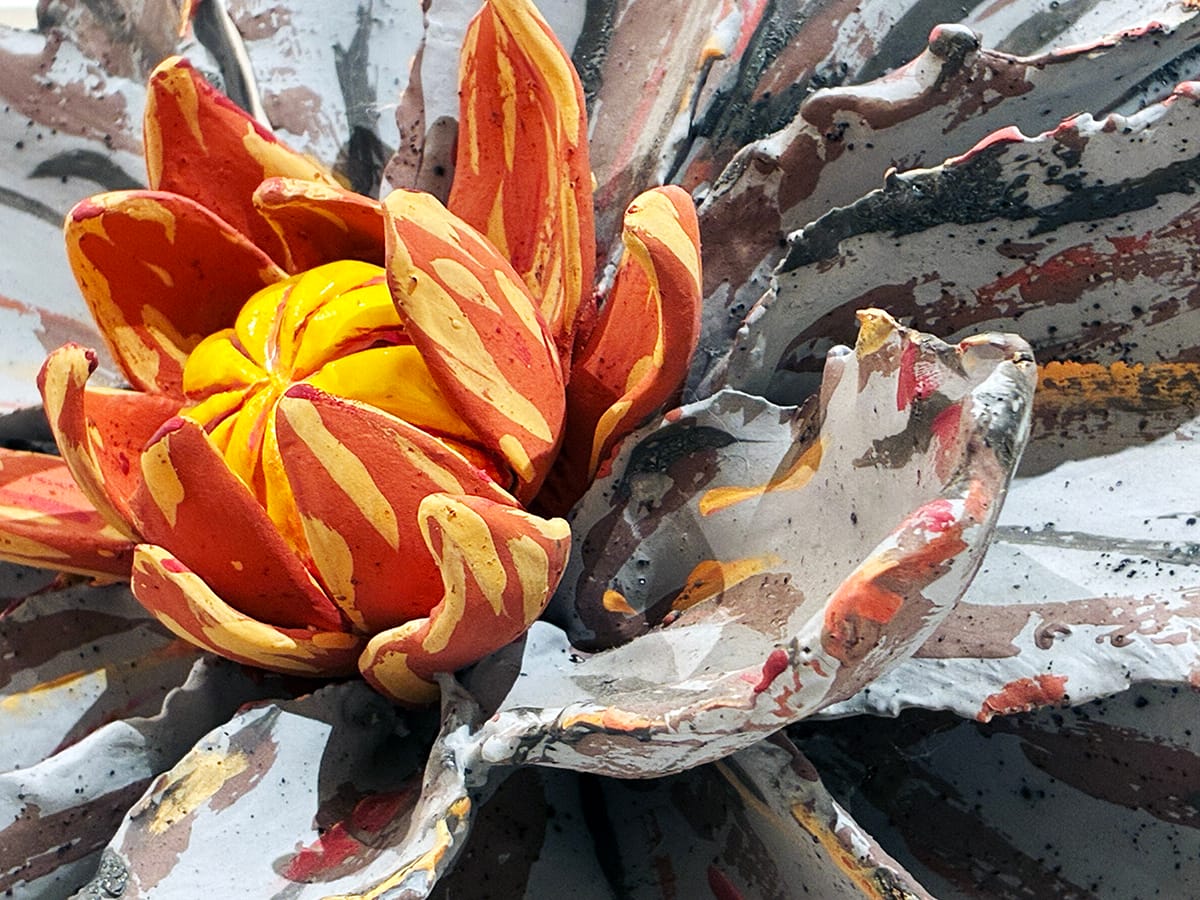
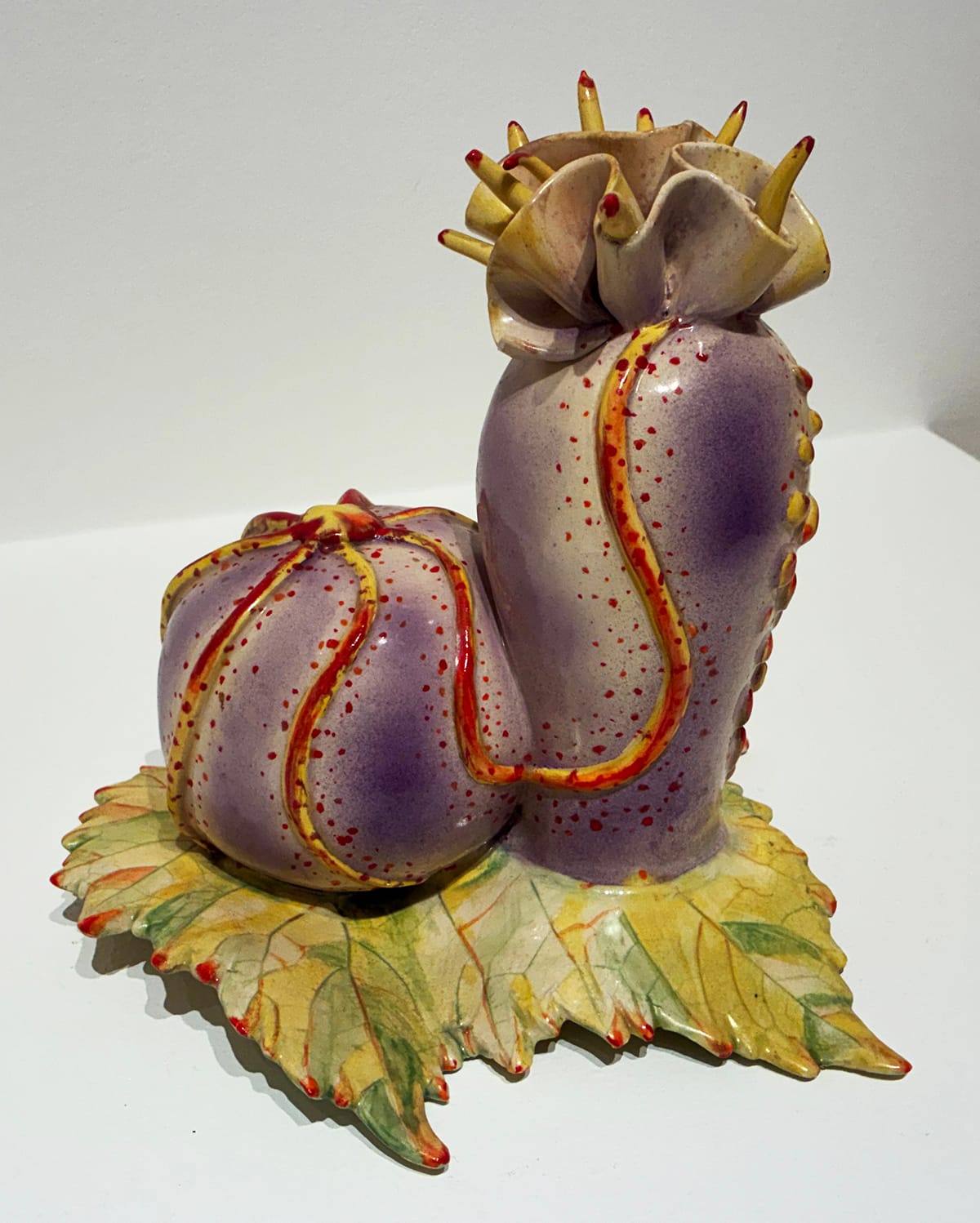
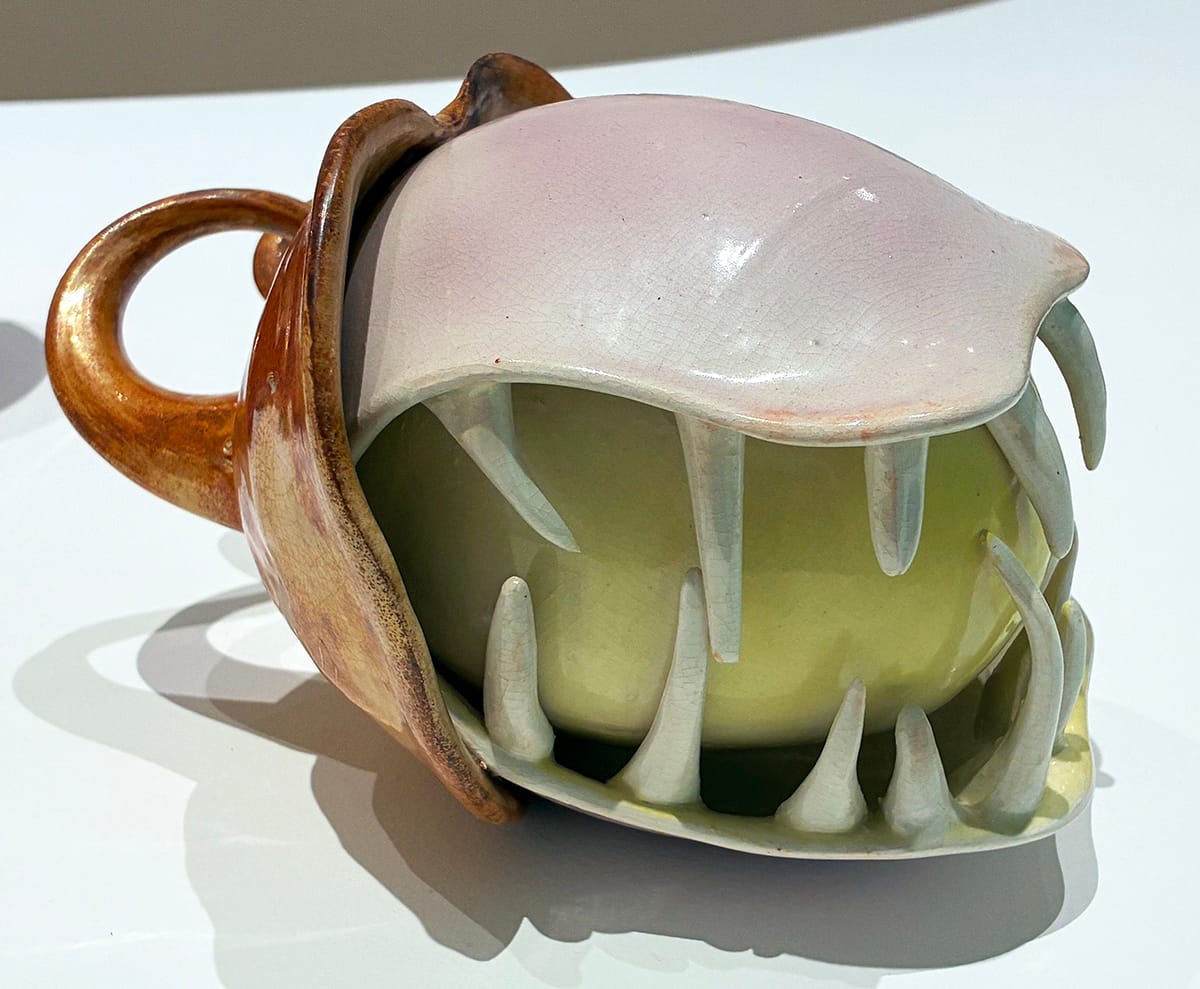
From left: “Triple Thistle,” 2007, glazed earthenware and luster; “Black Widow,” 2018, glazed earthenware and china paint; detail of "Black Widow;" “Sea Snail,” 2002, glazed earthenware, china paint, and luster; “The Iron of a Mother’s Love,” 1987, glazed earthenware and china paint. Photos by Abby Bayani-Heitzman for The SHOUT.
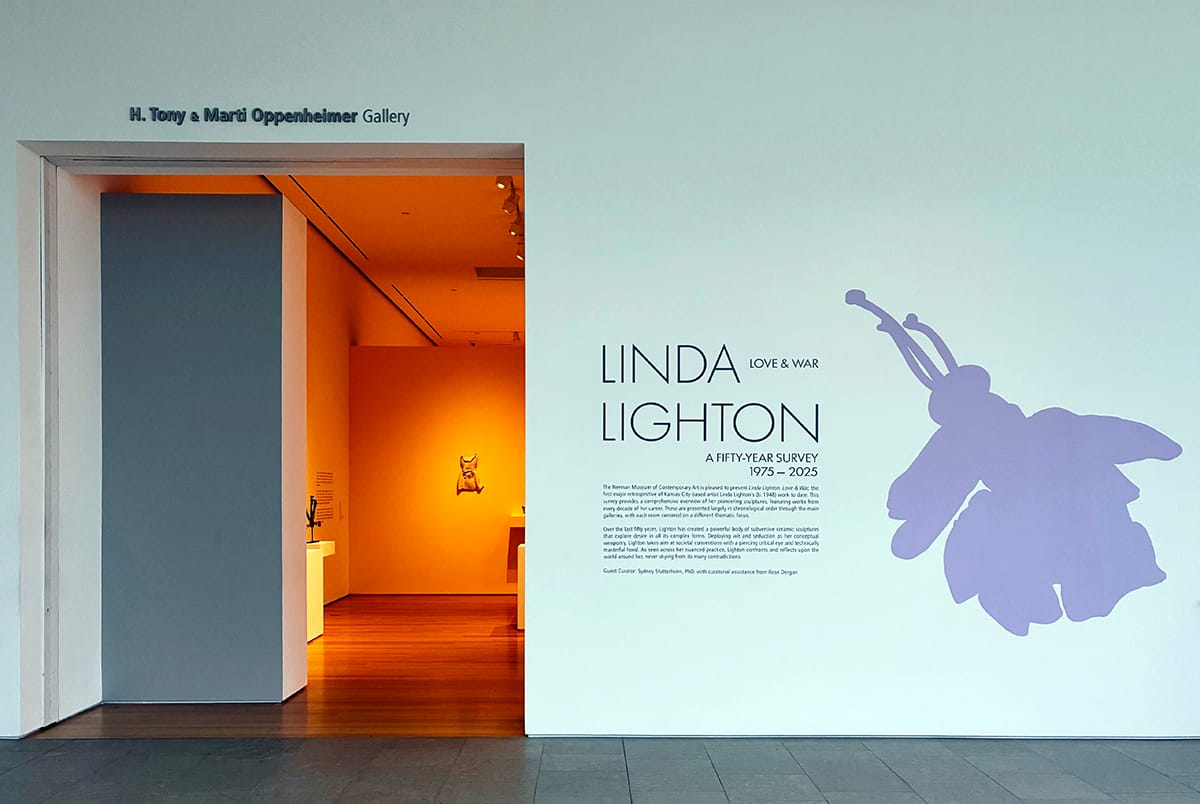
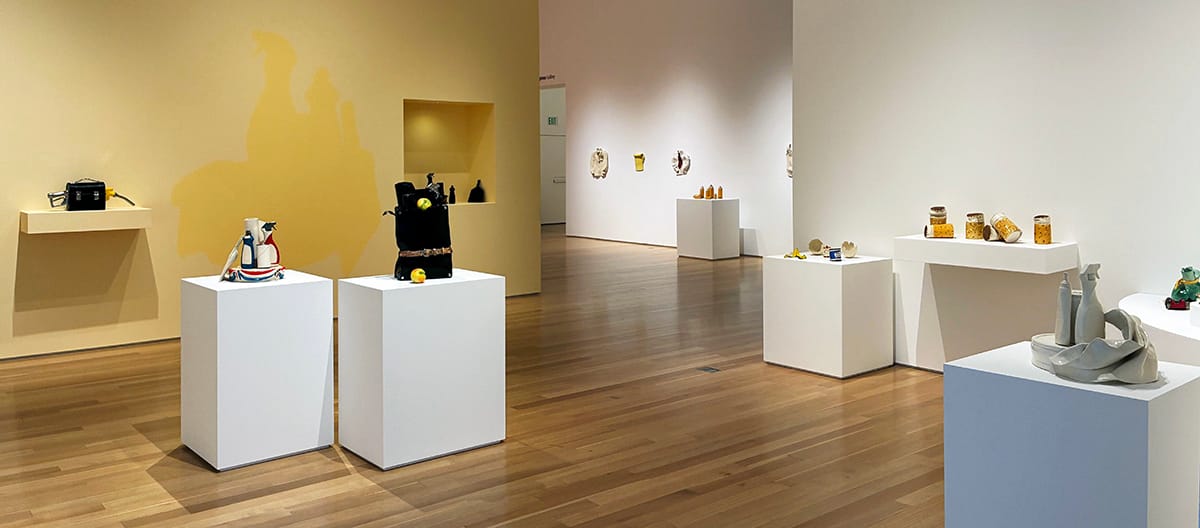
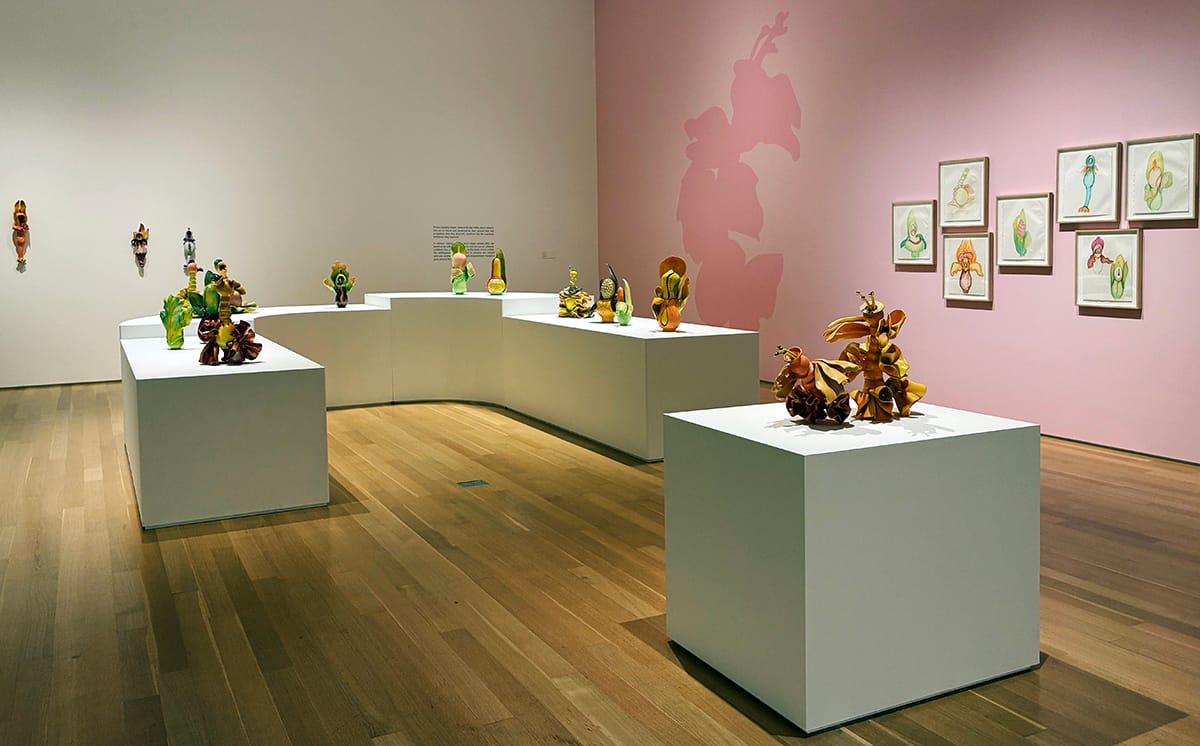
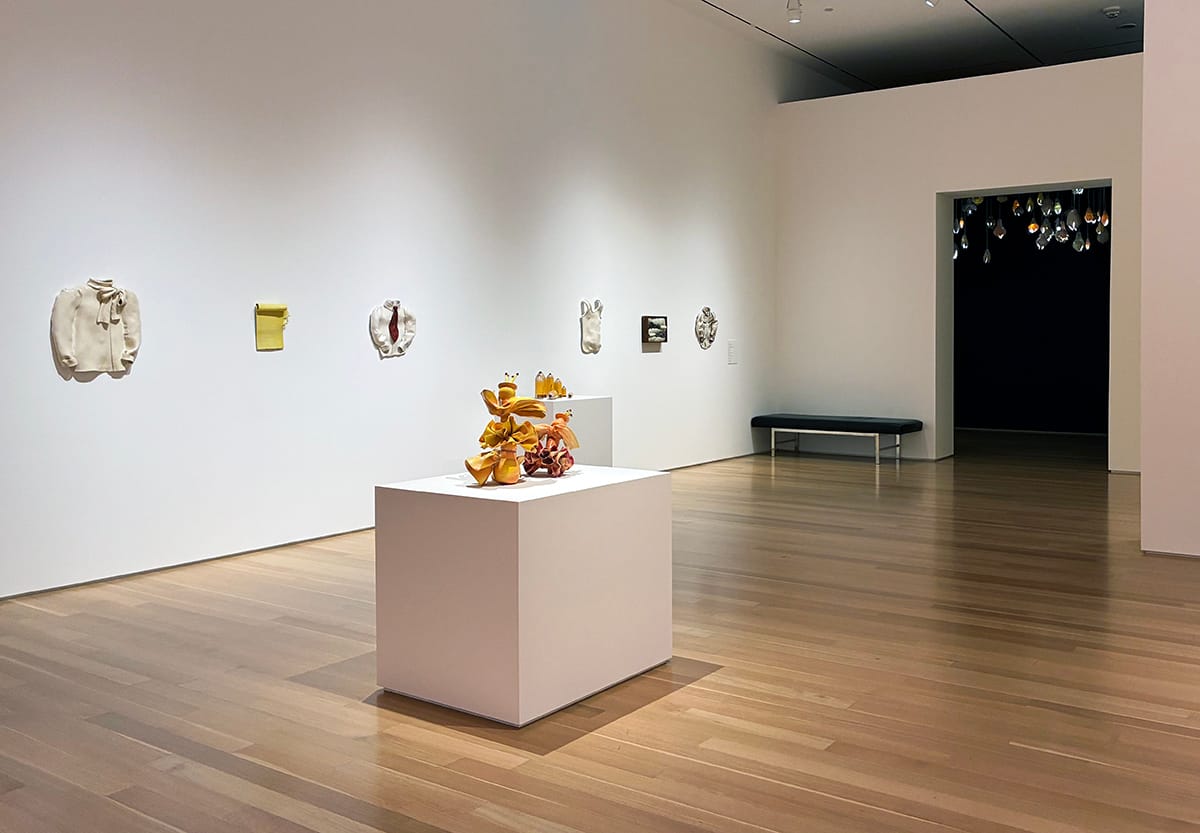
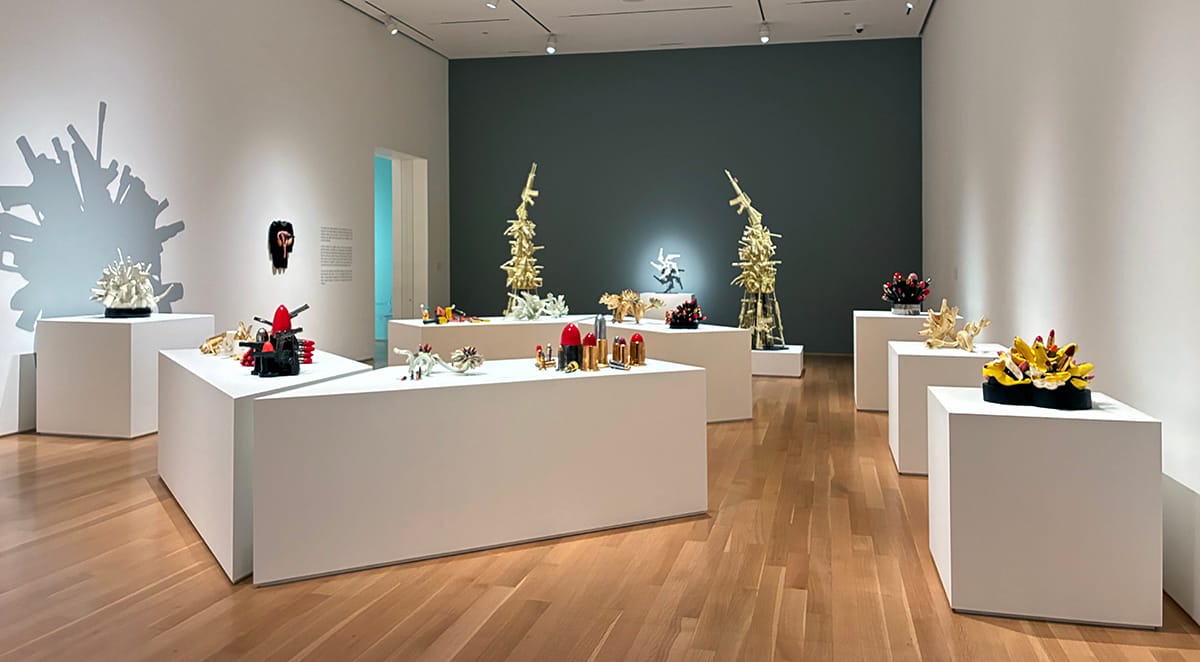
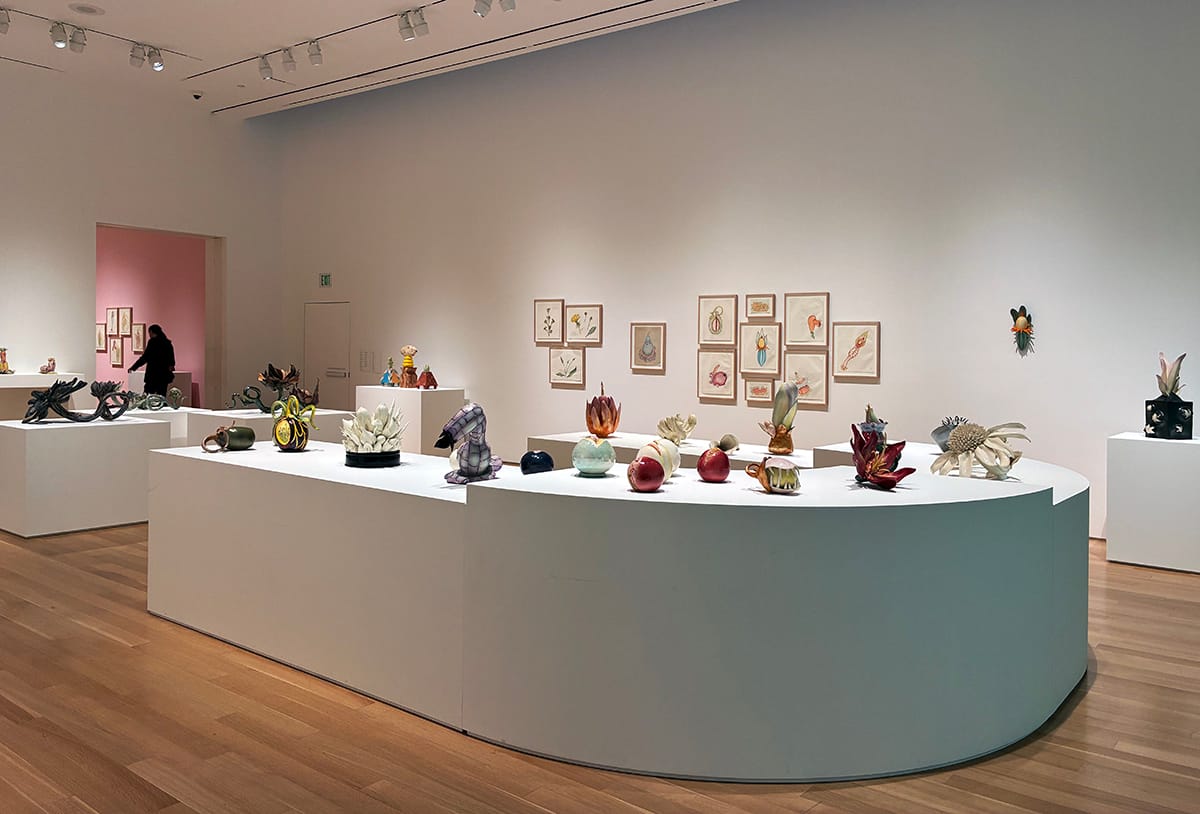
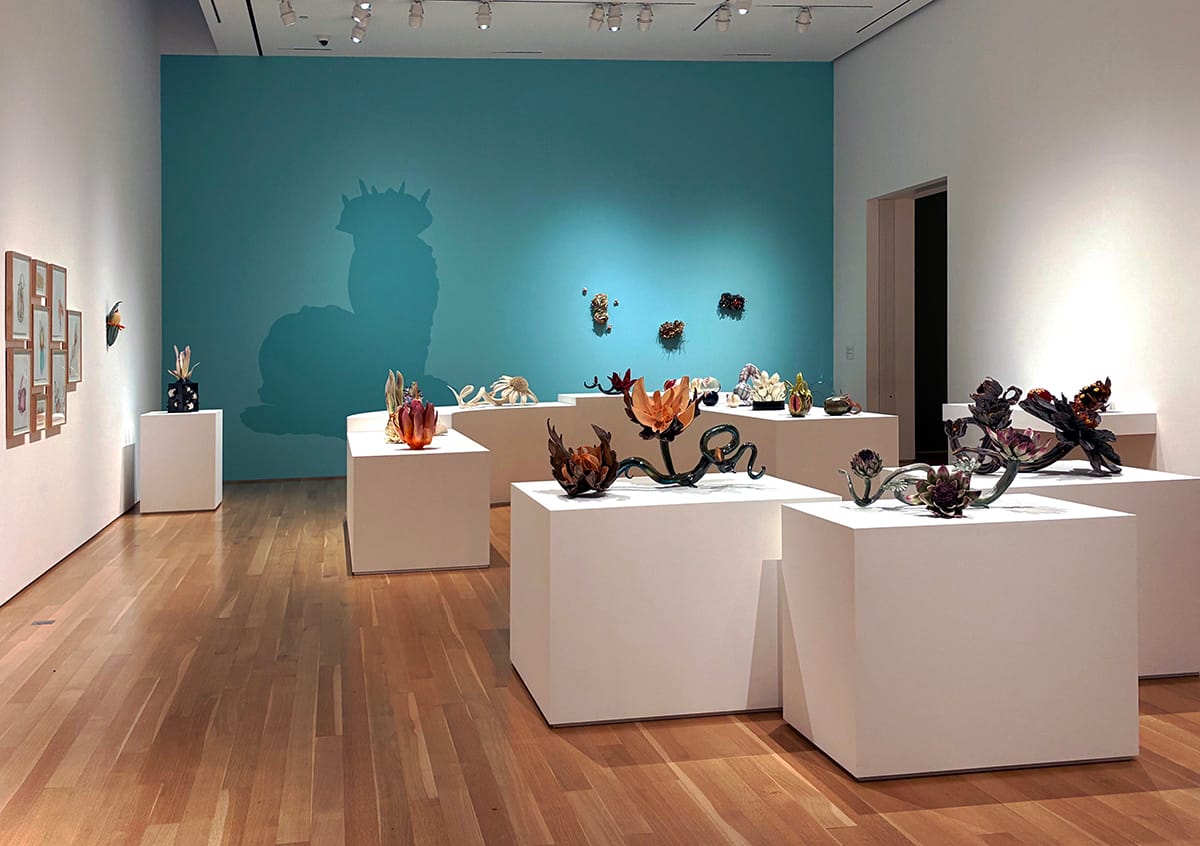
Installation view of "Linda Lighton: Love & War, A Fifty-Year Survey, 1975-2025" at the Nerman Museum of Contemporary Art. Photos by Abby Bayani-Heitzman for The SHOUT.
The Details
“Linda Lighton: Love & War, A Fifty-Year Survey, 1975–2025”
December 13, 2025-May 3, 2026, Nerman Museum of Contemporary Art, 12345 College Blvd. in Overland Park, Kansas
The Nerman Museum is open from 10 a.m.-5 p.m. Tuesday, Friday, and Saturday, 10 a.m.-8 p.m. Wednesday and Thursday, and noon-5 p.m. Sundays. Admission is free, and the facility is accessible to people with physical disabilities.
Abby Bayani-Heitzman is a Filipino American writer from Northeast Kansas. She received her Master of Arts in English from Wichita State and participated in the second cohort of the Kansas Arts Commission’s Critical Writing Initiative.
❋ Derby man has the kind of voice that turns heads — and chairs
❋ Socializing while sober: how some Wichitans are cultivating alcohol-free communities
❋ As a small creative business closes, the owner mourns
❋ Painting through it: Autumn Noire on 20 years of making art
❋ How a guy from Wichita resurrected 'Dawn of the Dead'
❋ Bygone Friends University museum housed curious collections
Support Kansas arts writing
The SHOUT is a Wichita-based independent newsroom focused on artists living and working in Kansas. We're partly supported by the generosity of our readers, and every dollar we receive goes directly into the pocket of a contributing writer, editor, or photographer. Click here to support our work with a tax-deductible donation.