
In Music Theatre Wichita's 'Hello Dolly!' a matchmaking widow makes her own bid for happiness
The production is a 'postcard of an America that never existed,' but it's a delightful place to visit nonetheless.
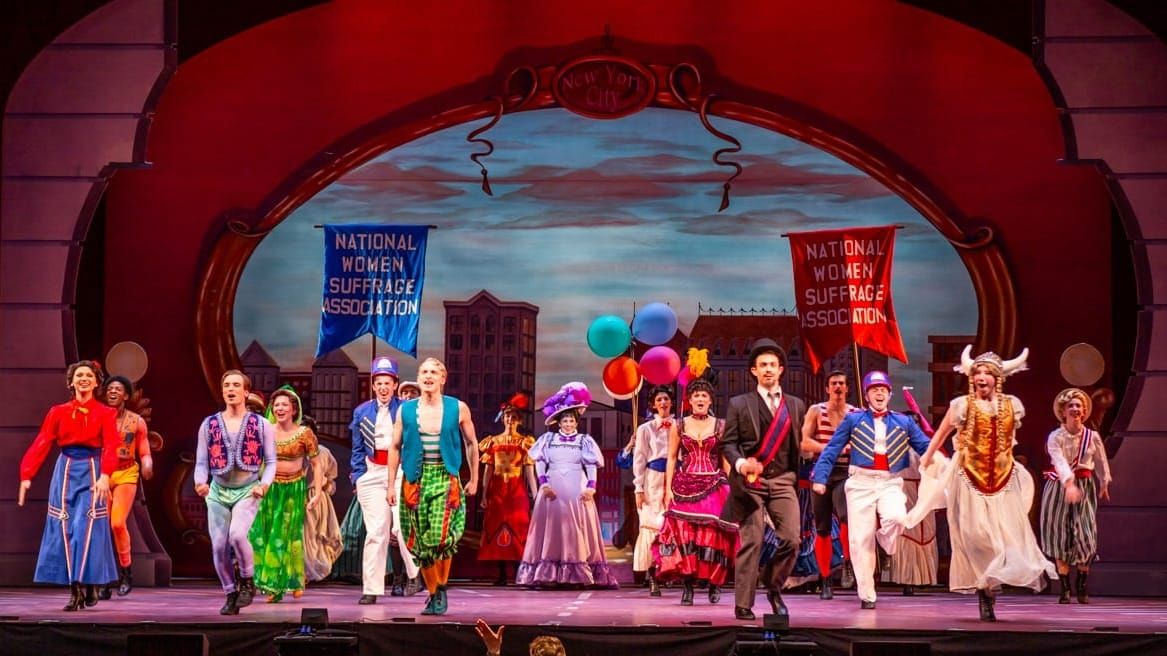
Almost every character in the 1964 musical “Hello, Dolly!” is drawn in bright, flat strokes. Horace Vandergelder, the “half-a-millionaire” and leading citizen of Yonkers, is a skinflint business owner. His two clerks, the young Barnaby and the not-so-young Cornelius, are endearing innocents. His niece Ermengarde? Well, she cries a lot, and that is essentially all there is to her.
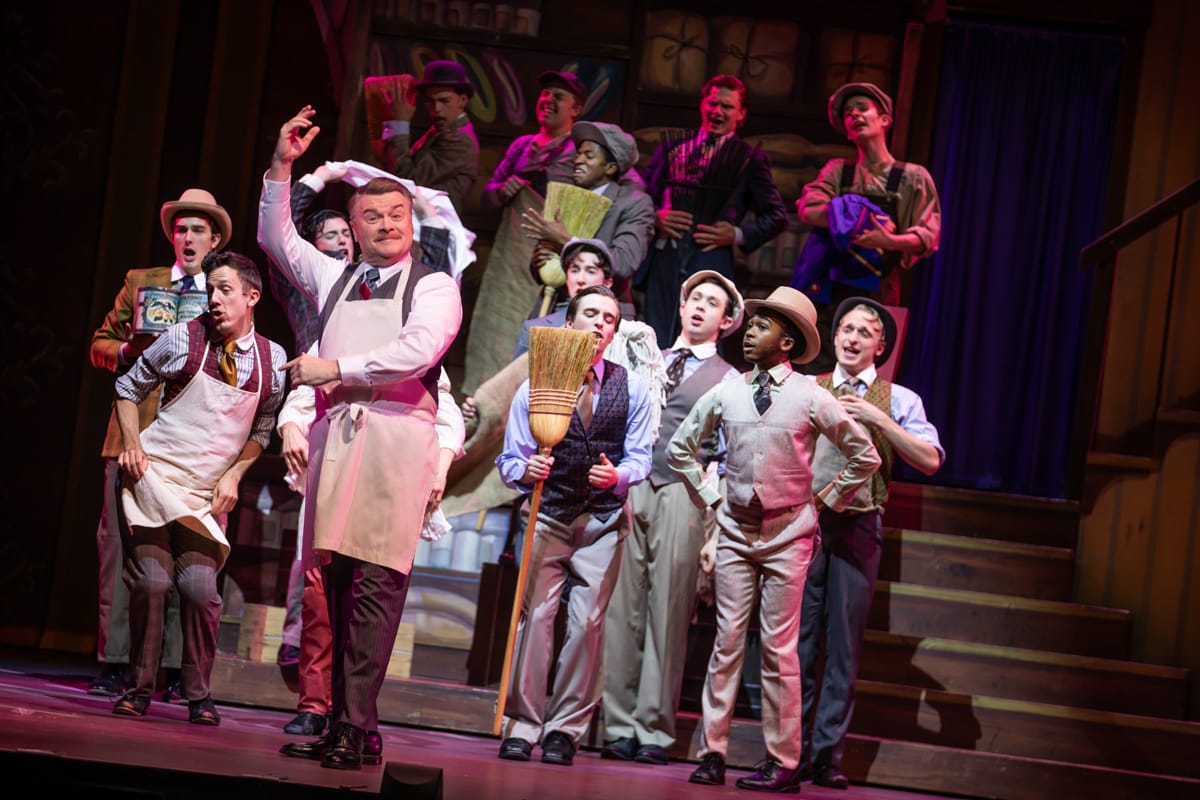
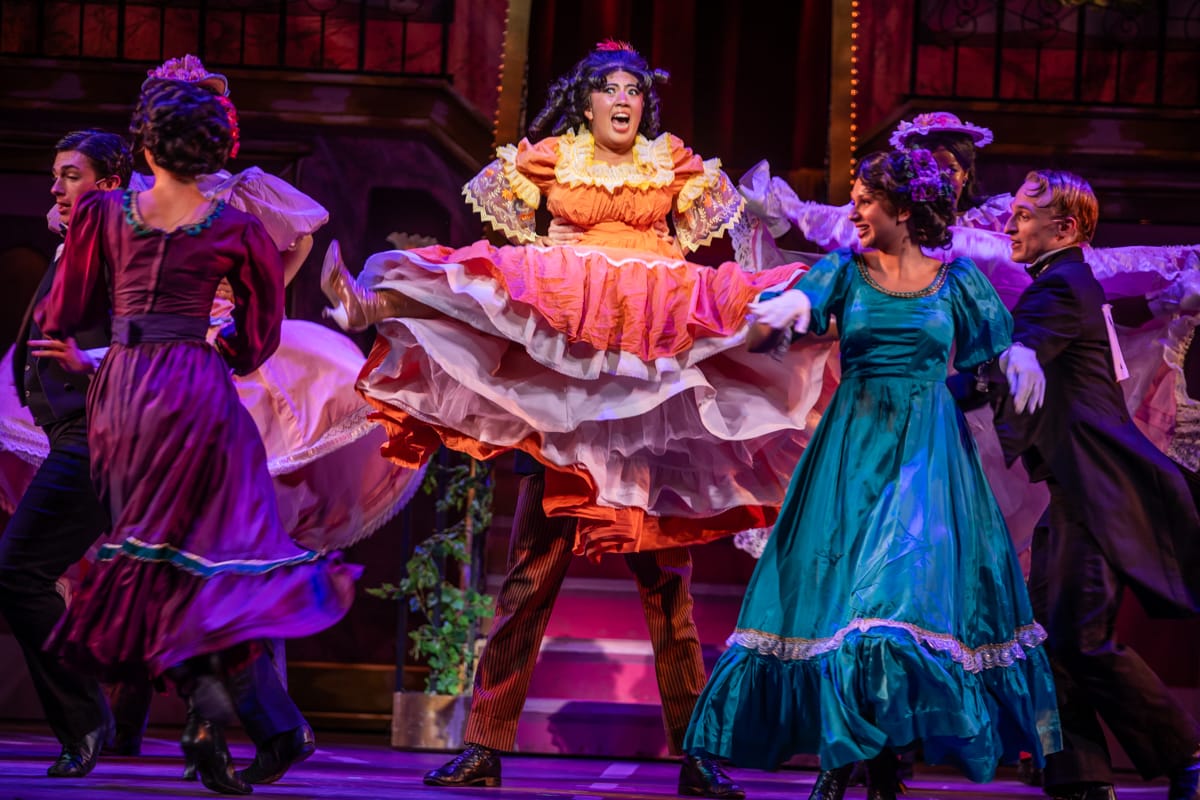
This vivid but two-dimensional world of 1890s Yonkers throws the show’s one three-dimensional character into sharper relief. Dolly Levi is a widow who has kept herself ceaselessly busy in the years since her husband Ephraim died — matchmaking and offering “financial consultation, instruction in the guitar and mandolin, short distance hauling, and varicose veins reduced.” In her role as matchmaker, she rearranges the clockwork people around her so that their stubborn gears can mesh — solving, for instance, the height disparity between two lovebirds by supplying a box for the man to stand upon.
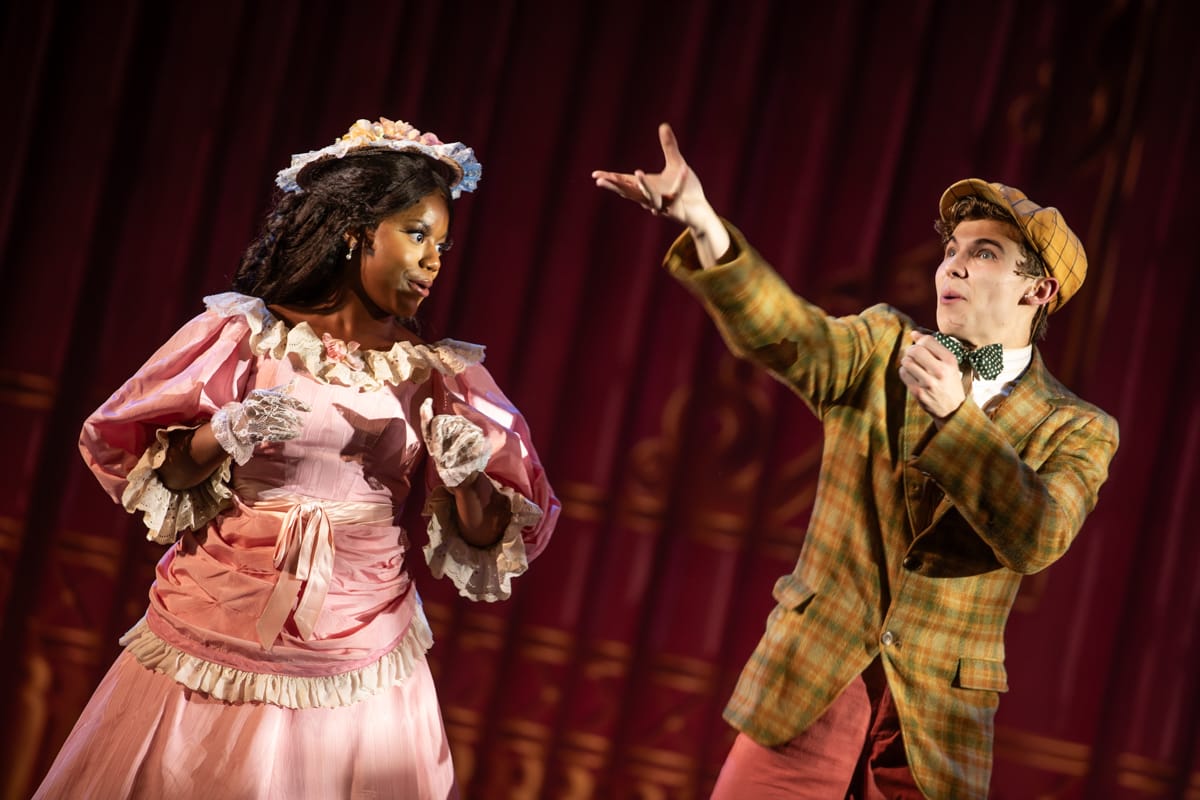
Gabi Bradley as Minnie Fay and Arick Brooks as Barnaby. Courtesy photo by Kacy Meinecke for Music Theatre Wichita.
But there’s one client Dolly hasn’t taken on. While she has conducted everyone else’s happiness, she has neglected her own. The show is the story of her decision to step out again and take new risks. The role of Dolly asks its performer to be the bustling engine of everyone else’s farce, yet to let us see, underneath the bluster, a widow working up the nerve to ask for something more.
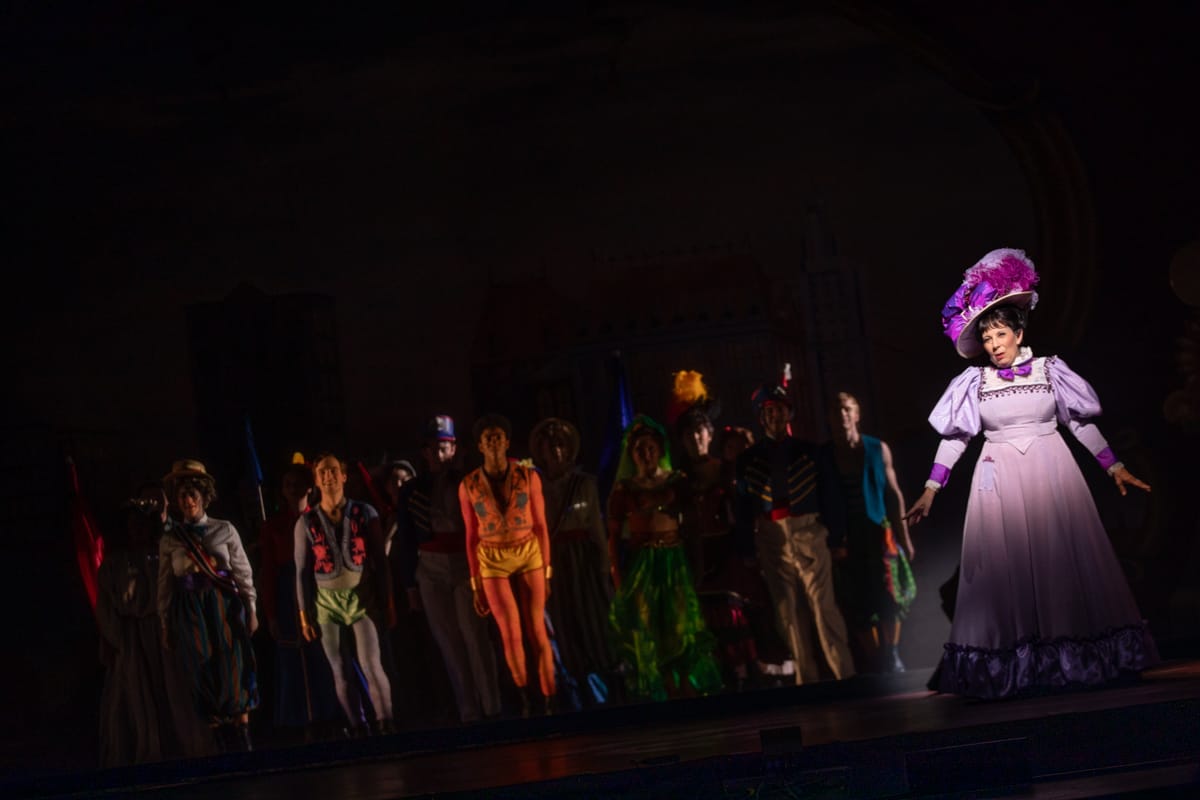
Dolly has been a star vehicle for such performers as Carol Channing, Ethel Merman, Barbra Streisand, Bette Midler — a lineage that might condition an audience to want, or expect, a domineering diva presence from her first entrance. When Christine Pedi assumed the title role on Wednesday, opening Music Theatre Wichita’s 2026 season, she declined that approach. Pedi’s Dolly is determined not to let anybody see her sweat — yet years are escaping her, and life is wearing her down. She sets out to marry for money because, as she says in one of her soliloquies to her late husband, she is “tired of living from hand to mouth.”
In these crucial non-singing scenes, Pedi expertly controls her voice and affect. And when she transitions from speech into song, there is no sense of gears shifting: The character is still solidly present, only scaled up.
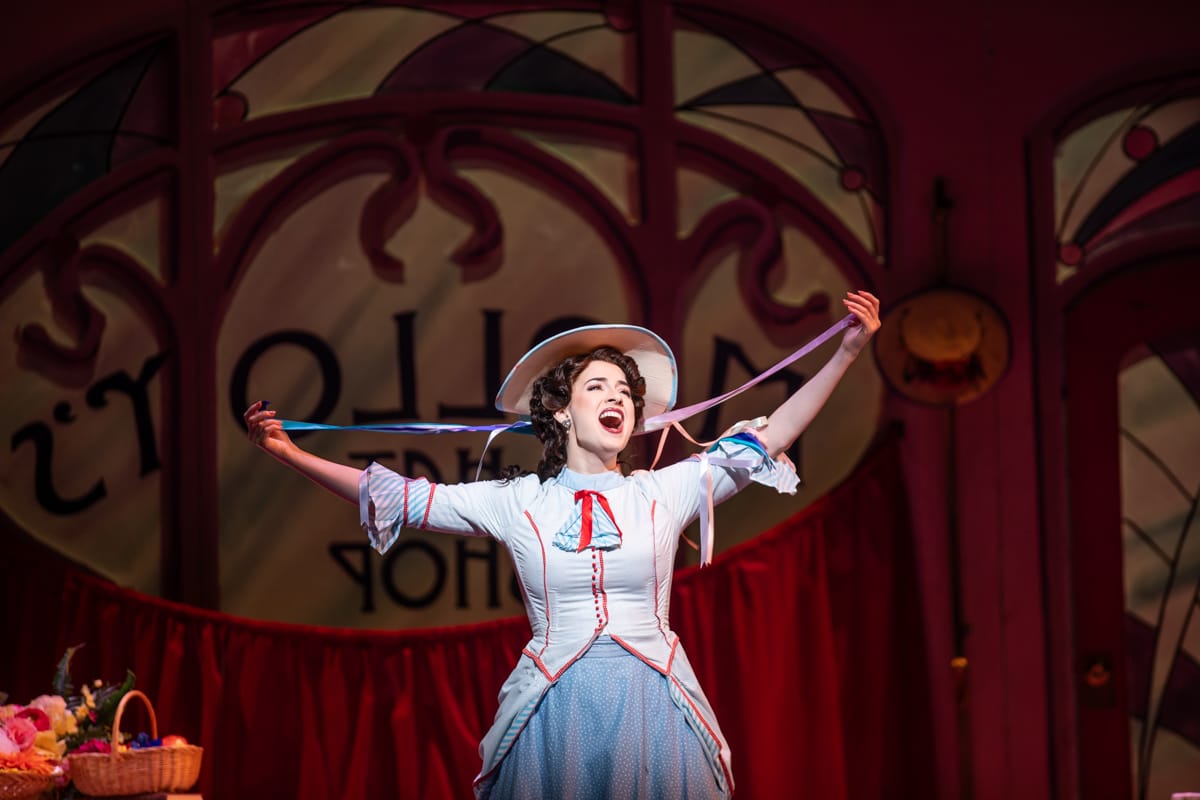
Pedi reveals Dolly’s unfulfilled desire and vulnerability in gradual increments. In contrast, the wants and desires of the supporting players are put across with rapid simplicity. Irene Molloy (Cassie Austin) punctuates her exasperation with the life of a lady’s hatmaker by stabbing a mannequin’s head with a pin. Cornelius sings to Barnaby, “Out there, there’s a world outside of Yonkers” — and today is the day they intend to see it.
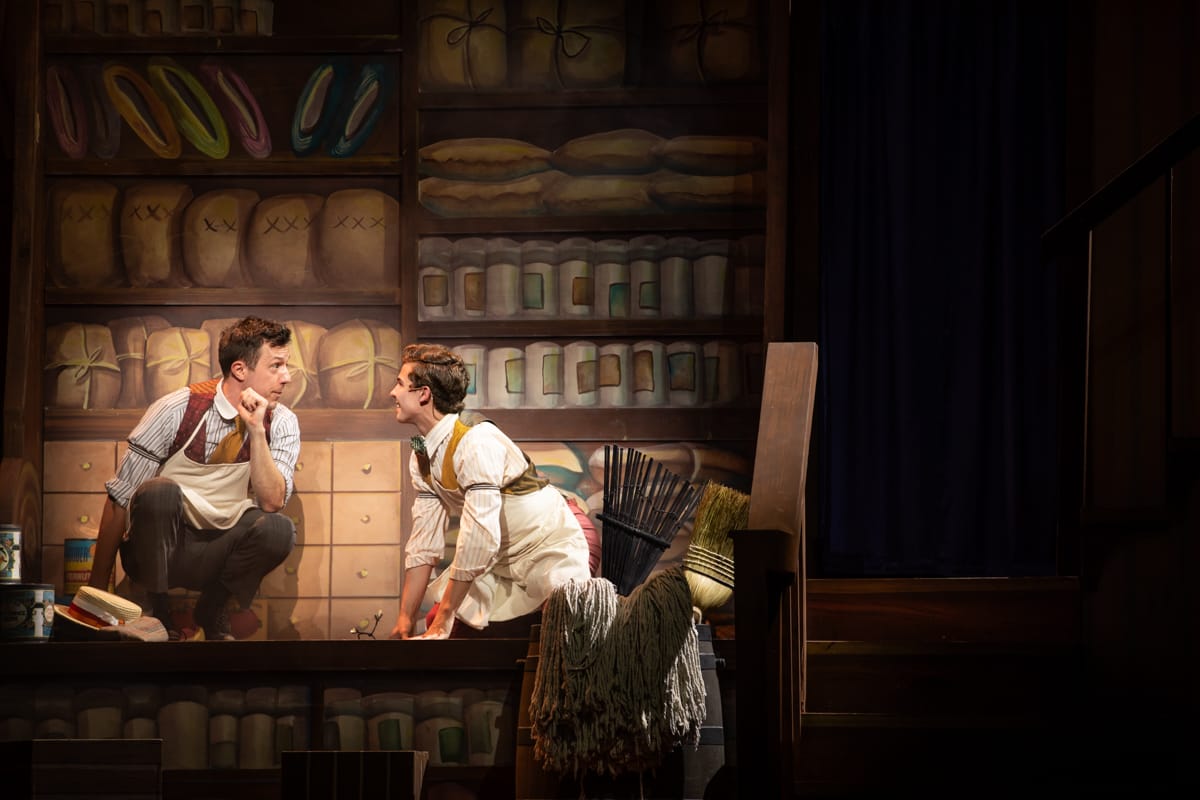
Wichita State professor of musical theatre Jacob McGlaun makes his MTW main-stage debut as Cornelius, and his version of the character is more knowing, less bumpkinish, than others I’ve seen. In his exaggerated physicality, he pairs nicely with Barnaby (Arick Brooks). Young Barnaby tends to compensate for his shorter height by leaping and bounding around, while Cornelius struts and bends at the waist, trying on different attitudes as he imagines his way into a life bigger than the one he’s lived up to now.
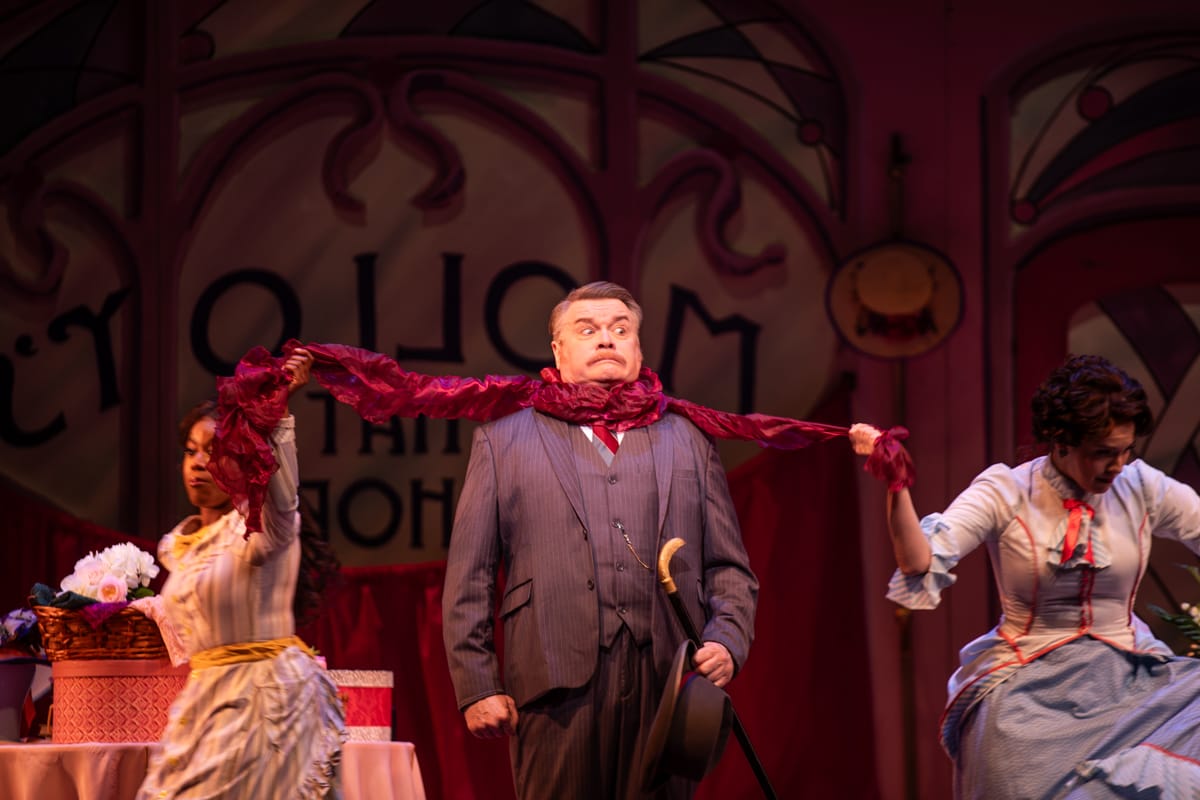
John Scherer’s Horace Vandergelder is a tightwad and, for most of the evening, nothing but — blunt, loud, and sure of himself. Played even slightly too sour, I imagine Vandergelder could curdle into someone the audience actively dislikes, and Dolly’s campaign to marry him could start to look like a mistake rather than a match we want sealed. Scherer keeps him on the right side of that line: small-minded with such explosive force and conviction that it's comedic rather than menacing. Late in the show, Vandergelder allows that money is like manure, best when it’s spread around, “encouraging young things to grow.” Under Dolly’s ongoing ministrations, we can imagine him turning from a Scrooge into a Fezziwig.
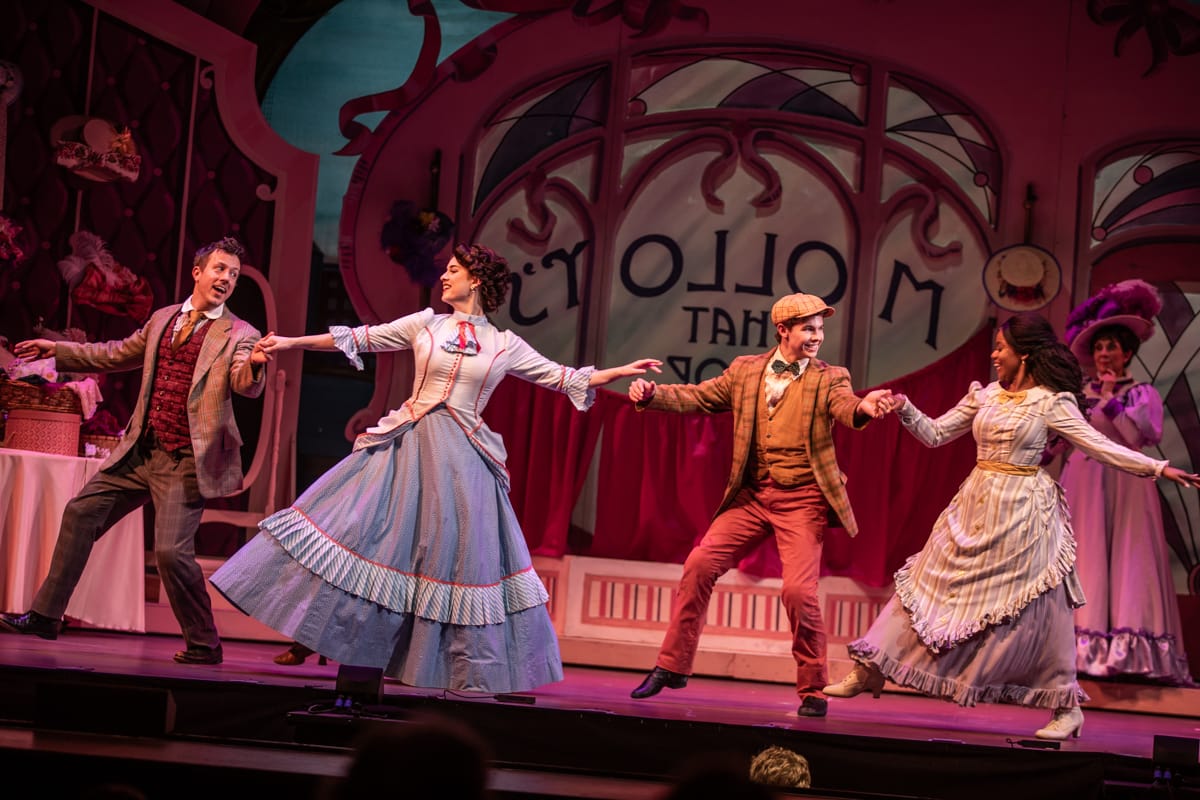
The resident ensemble deserves considerable credit for the show's success. As director and choreographer Eric Sciotto noted during a pre-show talk, the company had just seven and a half days to learn the show before dress rehearsals began. Yet the ensemble navigated the production's dense choreography and intricate stage pictures with impressive confidence. “Hello, Dolly!” calls for a particularly stylized performance mode, an evocation of the 1890s as well as Broadway's romanticized memory of them, and the cast consistently finds the balance between individual characterization and ensemble precision.
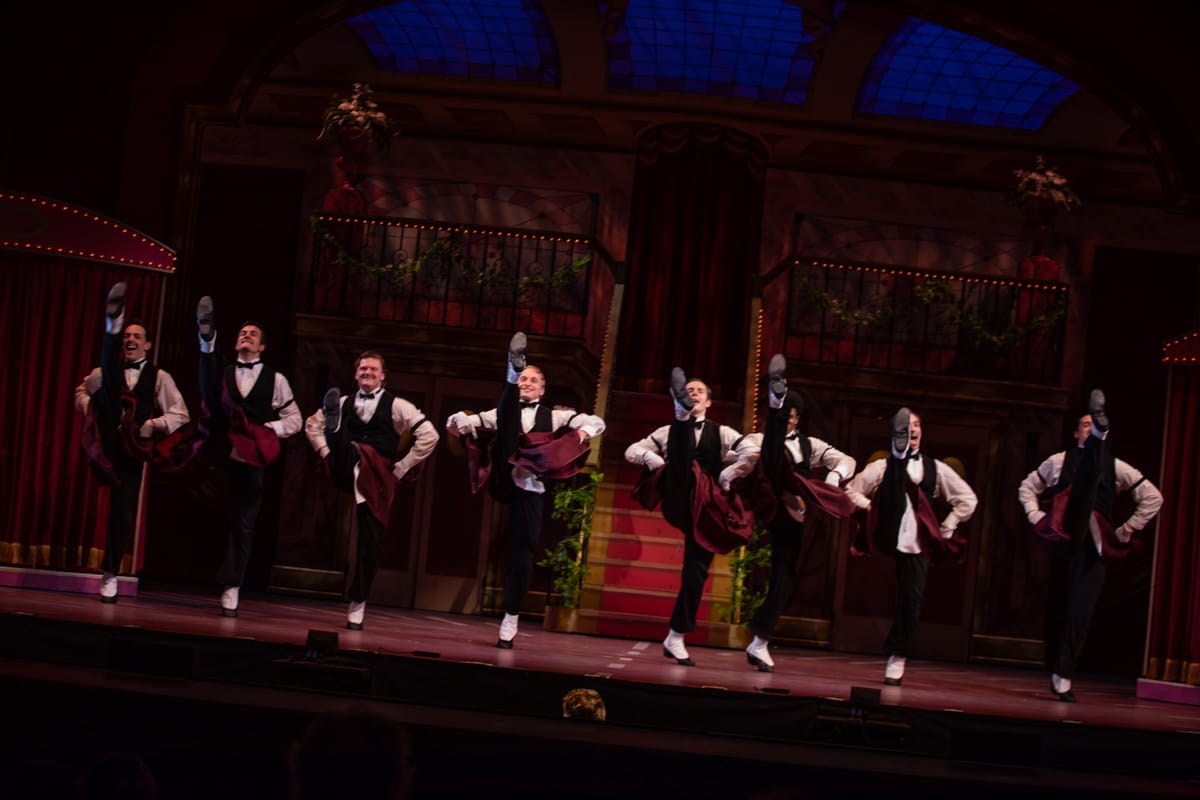
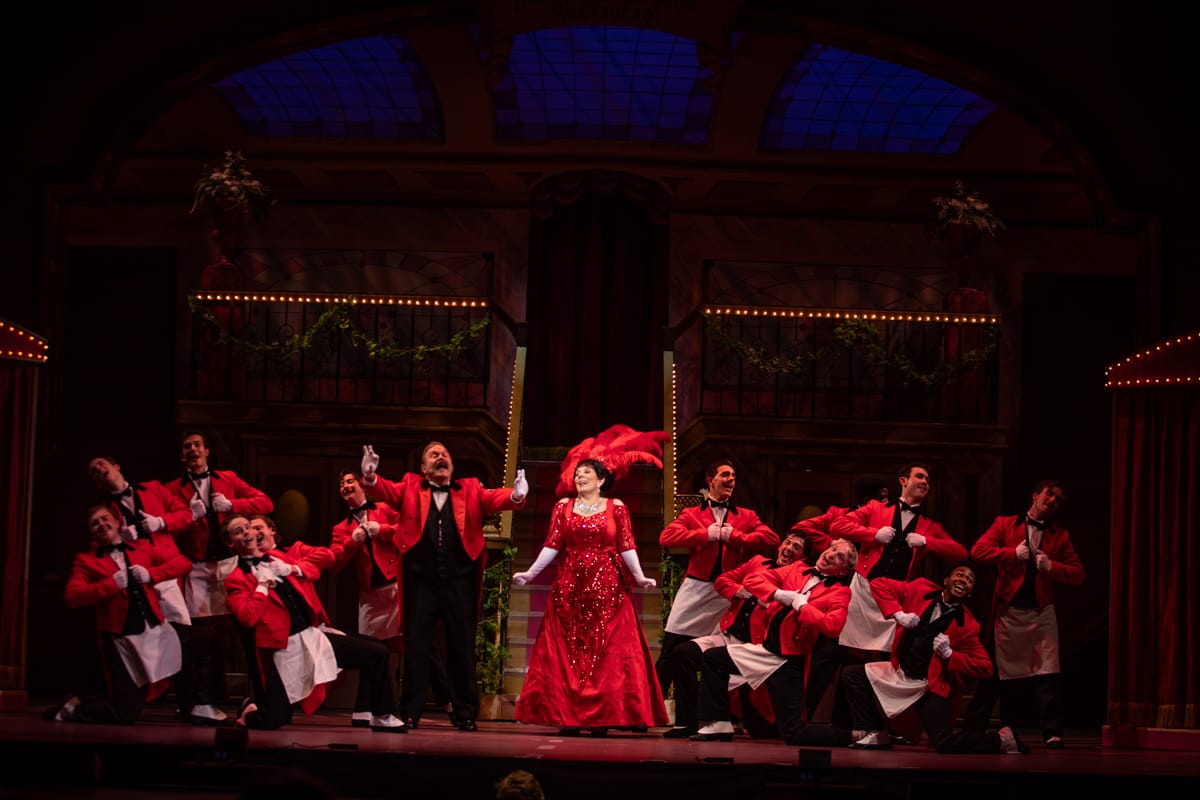
That balance is most evident in the title number. As Harmonia Gardens waiters, the men spin skewers of meat, flourish towels through kick-line choreography, balance champagne glasses, and execute bursts of acrobatics, all while maintaining the controlled chaos that gives the sequence its comic energy.
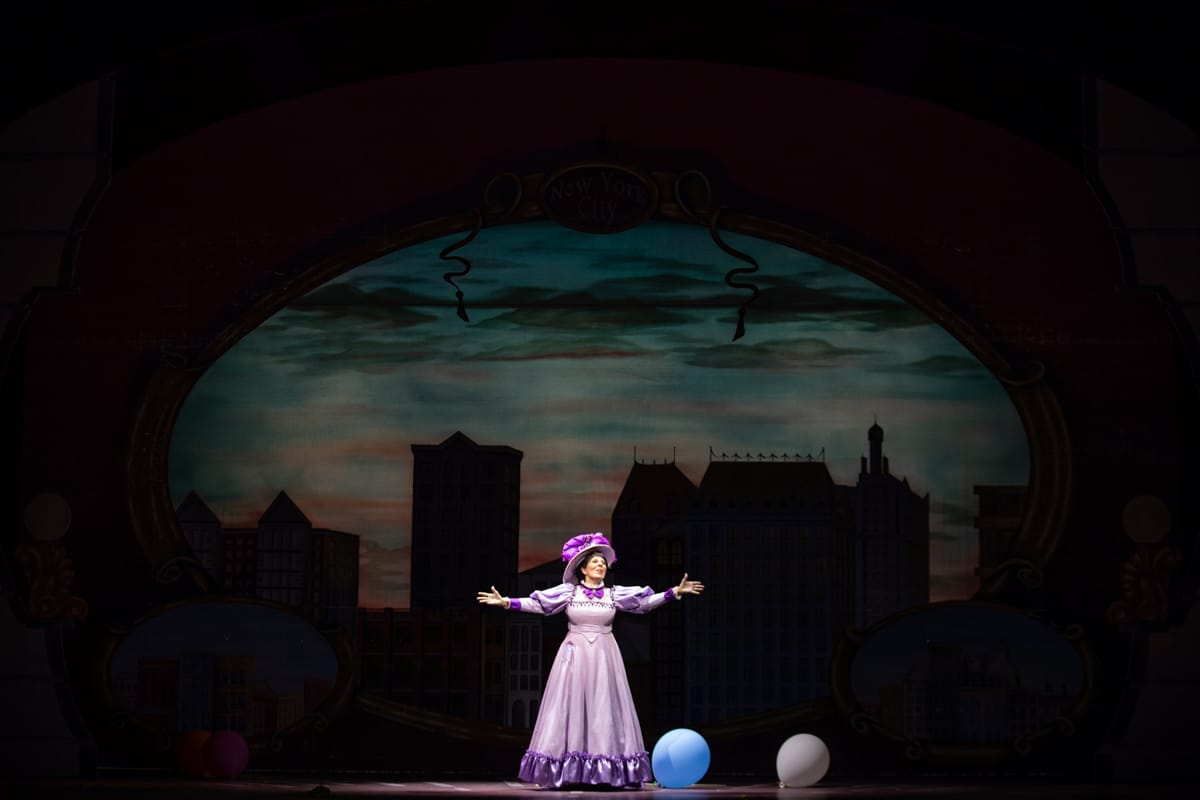
Credit for much of the production’s visual splendor goes to the costume shop, led by costume coordinator Shannon Regnier. This revival reuses sets and costumes last seen on the Music Theatre Wichita stage in 2015, though Sciotto noted that many garments were refreshed or newly fabricated for the current production. The scale of the undertaking becomes apparent in the sheer volume of wardrobe changes. Dolly alone cycles through a parade of memorable gowns, while a large cast navigates multiple costumes and accessory pieces. Irene Molloy’s hat shop overflows with extravagant millinery. The result is a postcard of an America that never existed, but is delightful to visit for an evening.
The Details
Music Theatre Wichita presents "Hello, Dolly!"
June 17-21, 2026 at Century II Concert Hall, 225 W. Douglas Ave. in Wichita
Performances take place at 7:30 p.m. Thursday, 8 p.m. Friday, 2 p.m. and 8 p.m. Saturday, and 2 p.m. and 7 p.m. Sunday.
Ticket prices range from $25-89. The facility is accessible to people with physical disabilities.
Learn more and purchase tickets.
Sam Jack is a poet, a classical tenor, and the adult services librarian at Newton Public Library. He performs with several local groups, including Wichita Chamber Chorale, Wichita Grand Opera, and Opera Kansas. He received a Master of Fine Arts in creative writing from the University of Montana.
❋ Derby man has the kind of voice that turns heads — and chairs
❋ Socializing while sober: how some Wichitans are cultivating alcohol-free communities
❋ As a small creative business closes, the owner mourns
❋ Painting through it: Autumn Noire on 20 years of making art
❋ How a guy from Wichita resurrected 'Dawn of the Dead'
❋ Bygone Friends University museum housed curious collections
Support Kansas arts writing
The SHOUT is a Wichita-based independent newsroom focused on artists living and working in Kansas. We're partly supported by the generosity of our readers, and every dollar we receive goes directly into the pocket of a contributing writer, editor, or photographer. Click here to support our work with a tax-deductible donation.