Find catharsis in Music Theatre Wichita’s ‘Hairspray’
Despite technical glitches, this production of the iconic musical displays strong ensemble chops and colorful set and costume designs.
“Medicine for the soul.”
That's how director and choreographer Brian J. Marcum described the role of musicals like “Hairspray,” the second to last show in a season dedicated to inspiring connection in a time of division.
Music Theater Wichita’s “Hairspray” delivers a cathartic, polished rendition of a modern American musical that, through its rose-colored presentation of the ongoing fight against oppression, reminds audiences that change is possible, but not easy.
“Hairspray,” the American musical written by Marc Shaiman and Scott Wittman, was adapted to the stage in 2002 from a 1988 John Waters film of the same name.
The audience follows the optimistic 16-year-old Tracy Turnblad in 1962 Baltimore and her dream to dance on “The Corny Collins Show.”
Turnblad is initially rejected because of her size and style but makes her way onto the show with her charm and determination. Throughout, she leverages her position to push for full integration on the platform, giving her Black peers an opportunity to dance on a national stage.
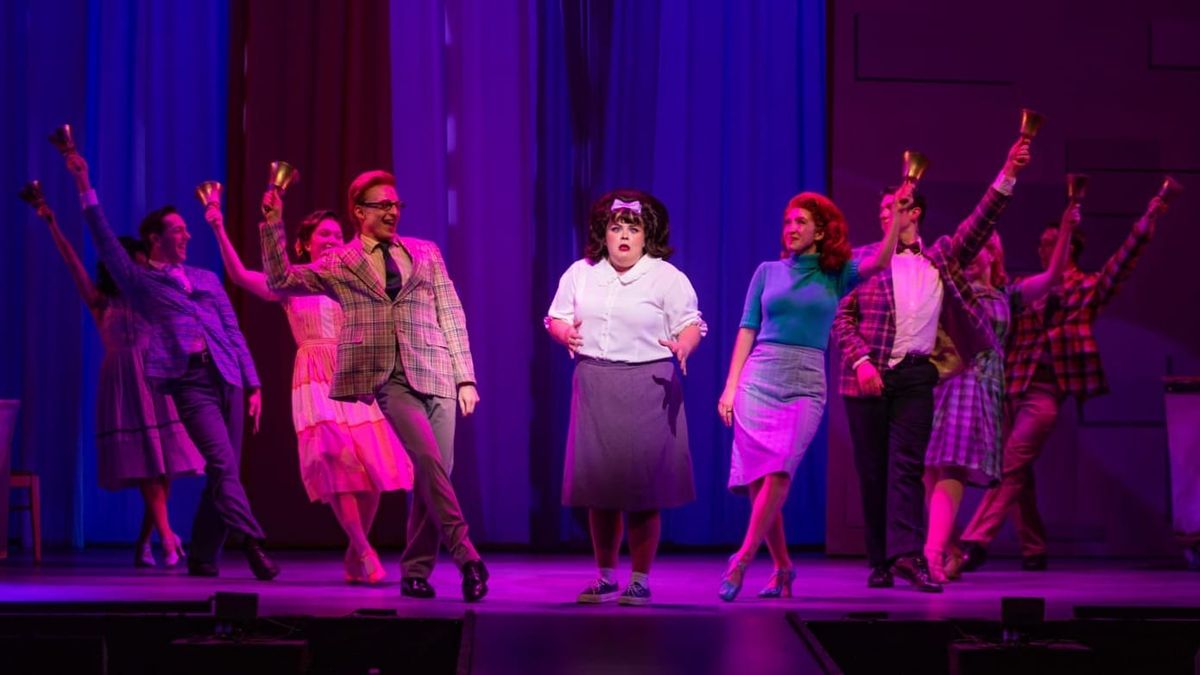
Turnblad, performed by Niki Metcalf at a towering 5 feet, 1 and a half inches, embodies the desire for change and what’s right found in girlhood. Metcalf’s embodiment is true to the source material. Her powerful, bright soprano voice gives the audience a journey back into the youthful ambition and stubborn values of teenagedom.
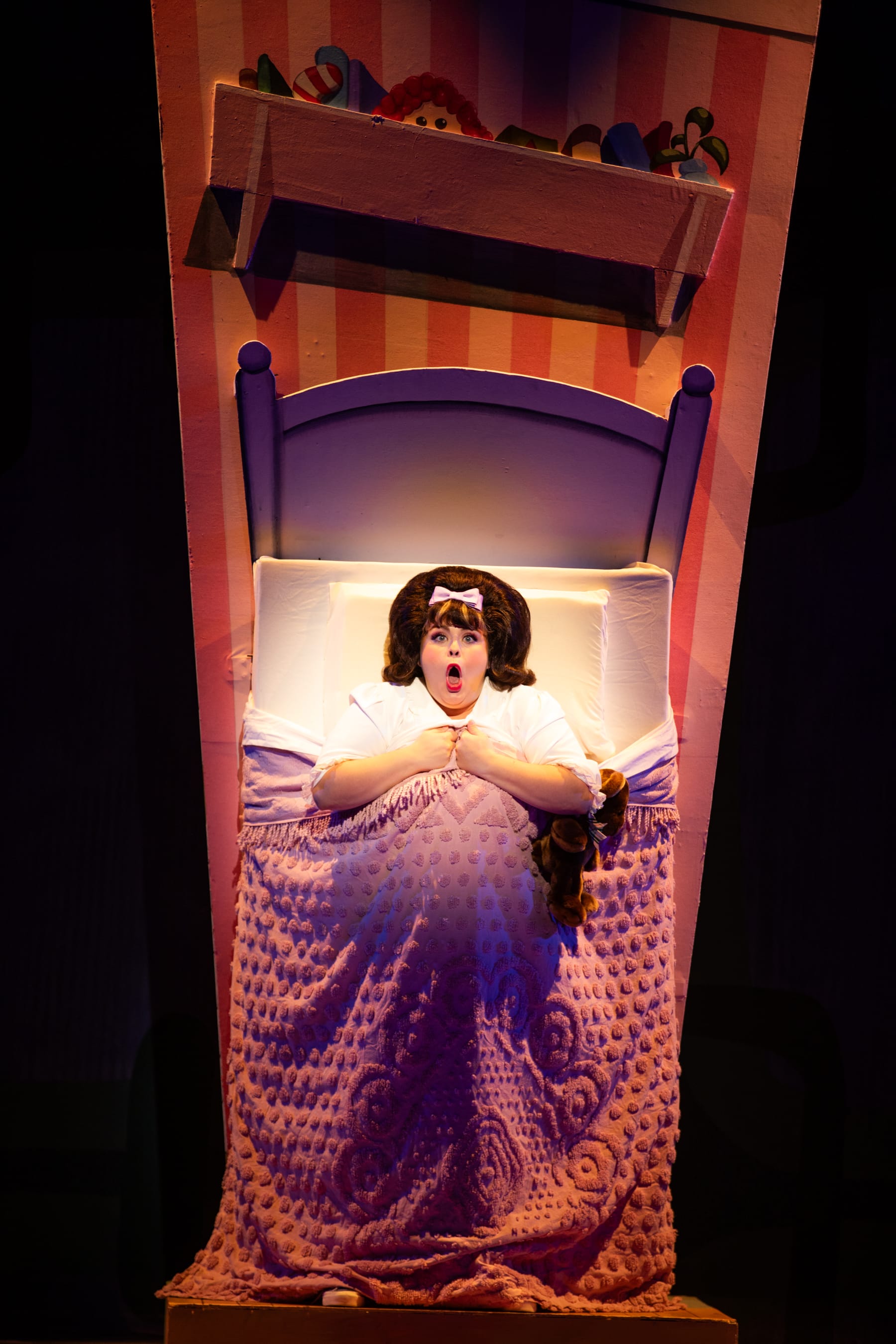
From the first drum clicks and brassy motifs in “Good Morning Baltimore,” the auditorium is filled with Turnblad’s cartoon-like energy and dreams of fame. The choreography adapts the free-form expressive nature of ’60s dance, expertly staged with actors dancing side-by-side in simple, energetic whole-body movements.
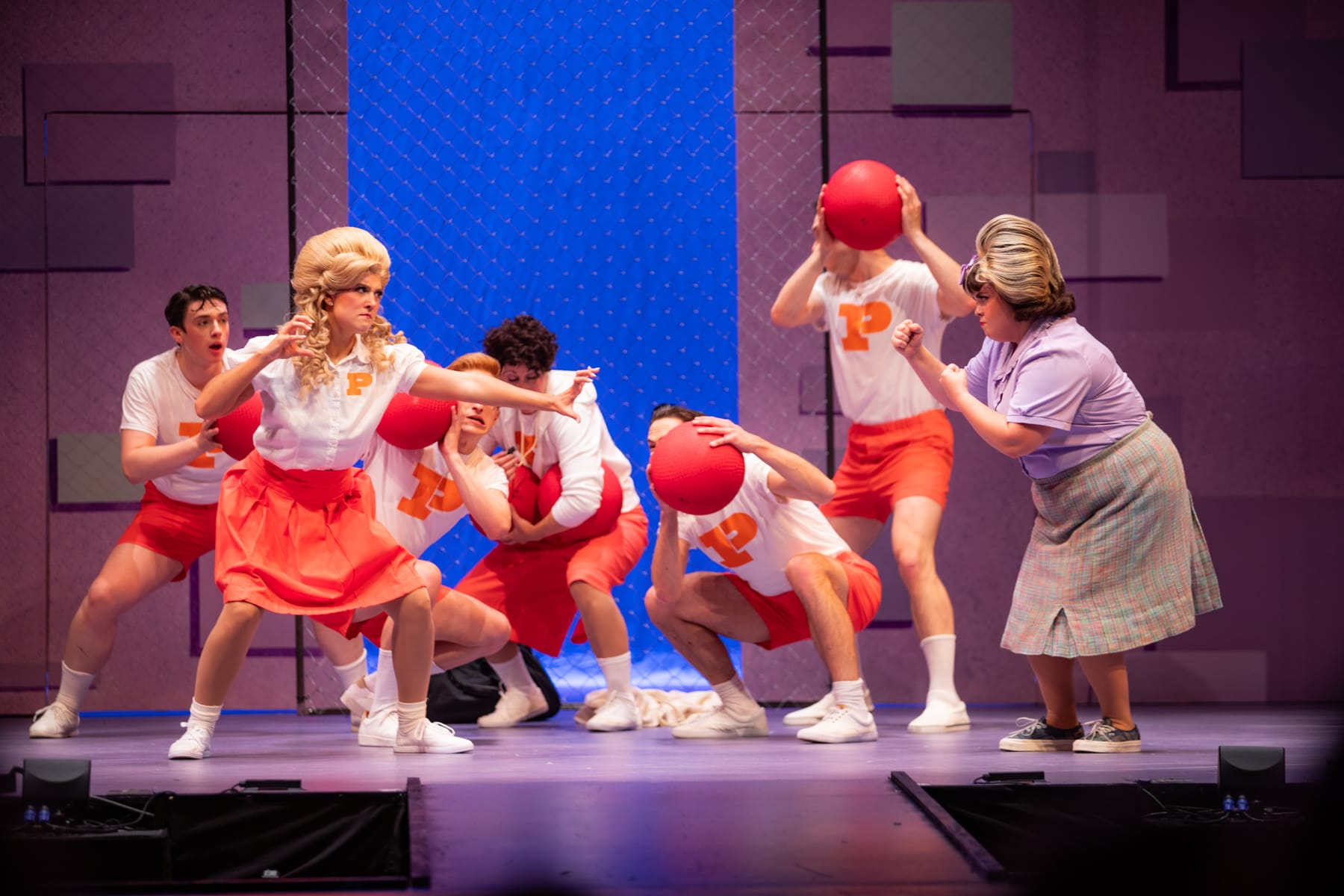
Turnblad is contrasted with her similarly stubborn but ideologically opposed peer, Amber Von Tussle, played by Sophia Mascaluso. Turnblad is hopelessly enamored with Von Tussle’s boyfriend, Link Larkin (Nick Gundrum), who becomes one of her biggest supporters.
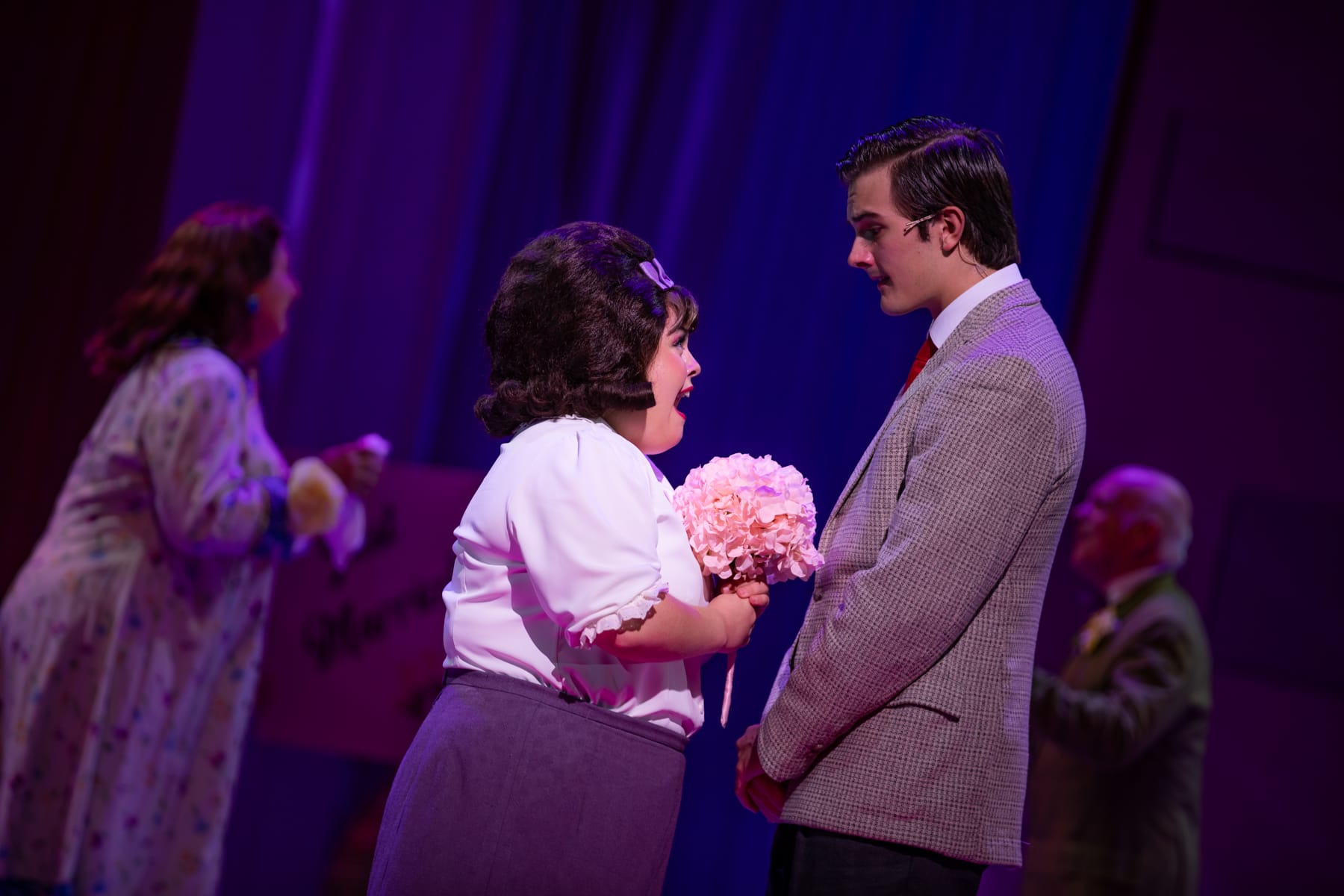
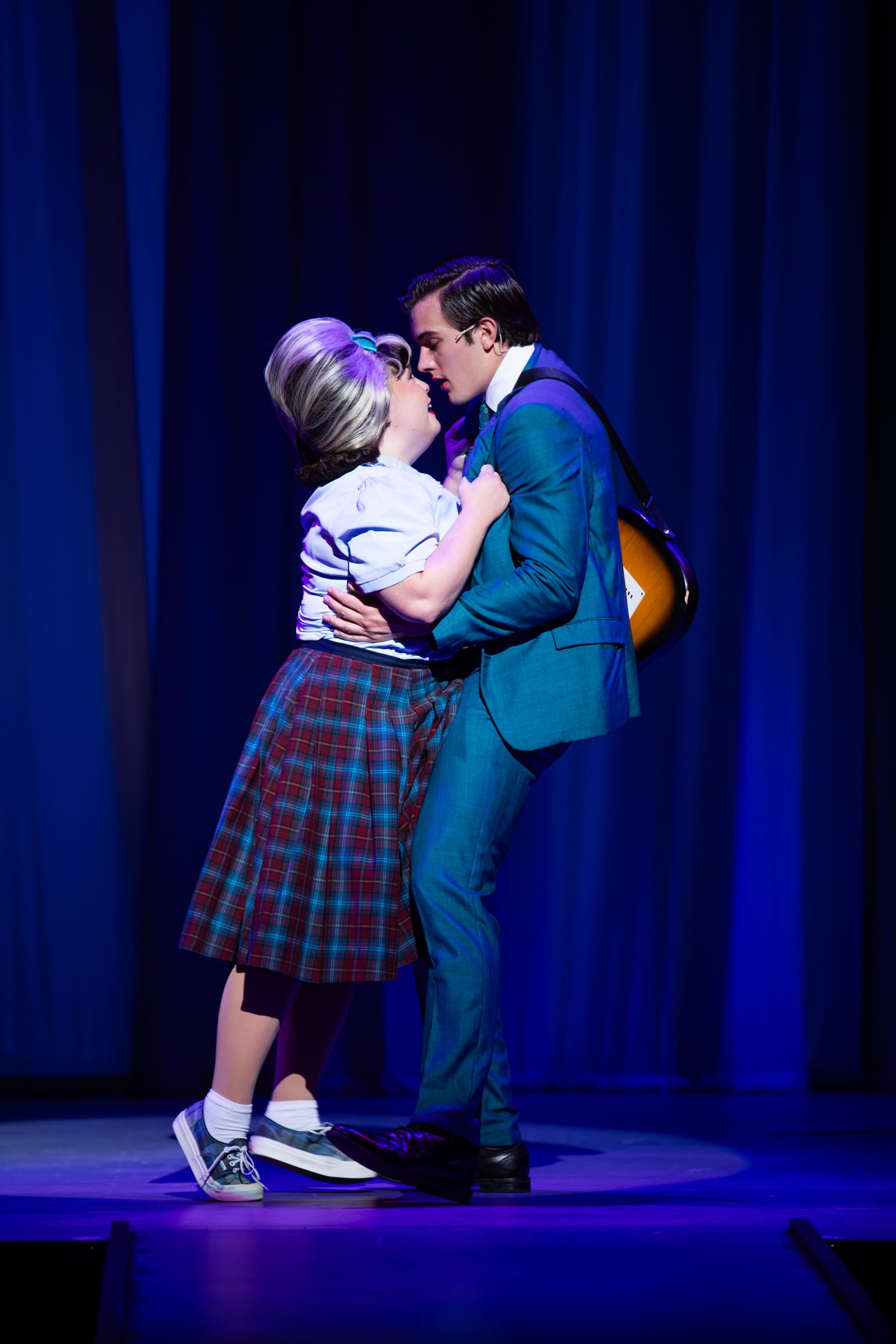
Tracy gets what she wants, and she wants Link. Courtesy photos by Kacy Meinecke for Music Theatre Wichita.
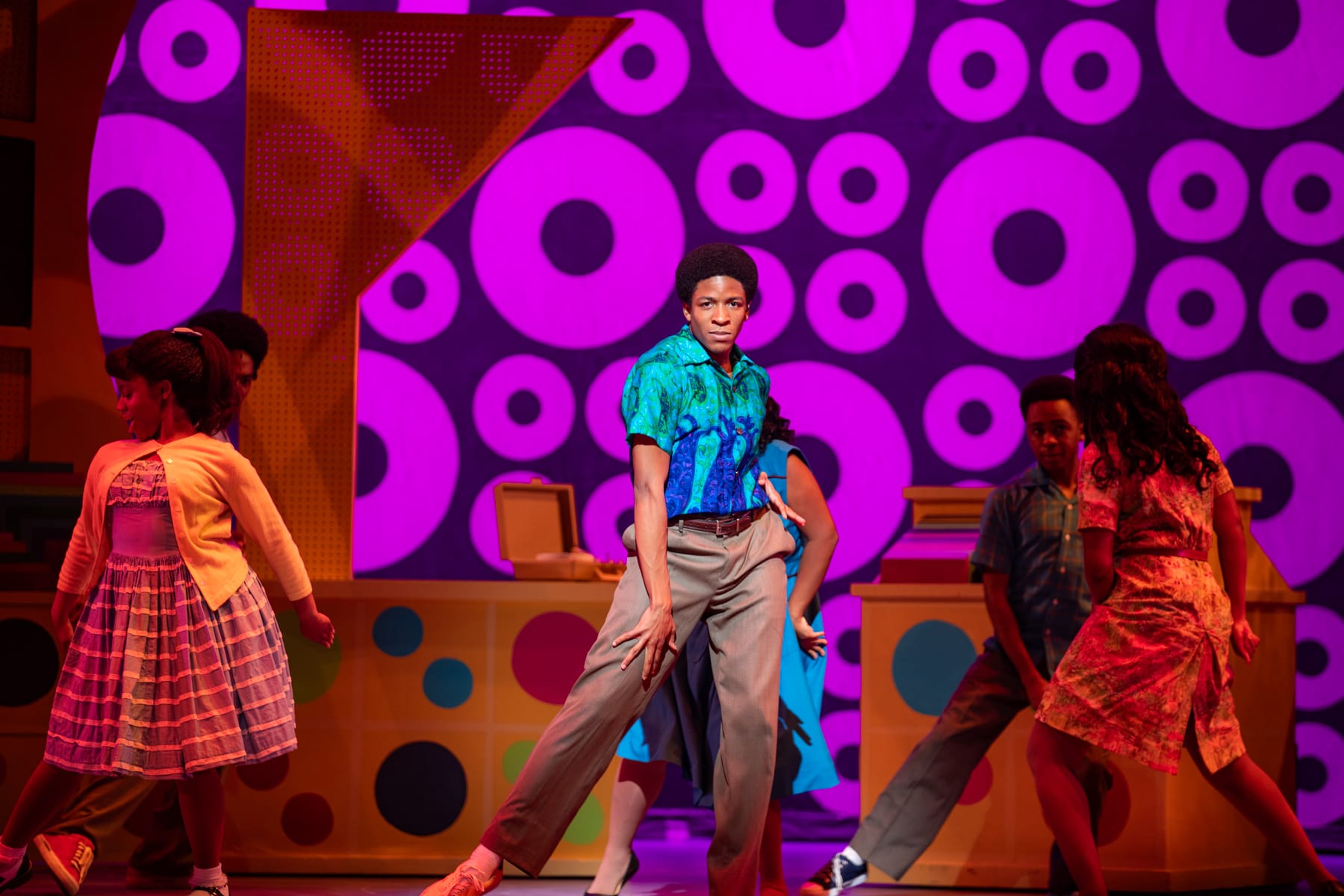
Turnblad’s success relies on her proximity to Black culture, especially through her friend Seaweed, played by Chase Ra’Mel Phillips. The show slips between the polished (and white) “Corny Collins Show” and the support and plights of the Black characters fighting for change.
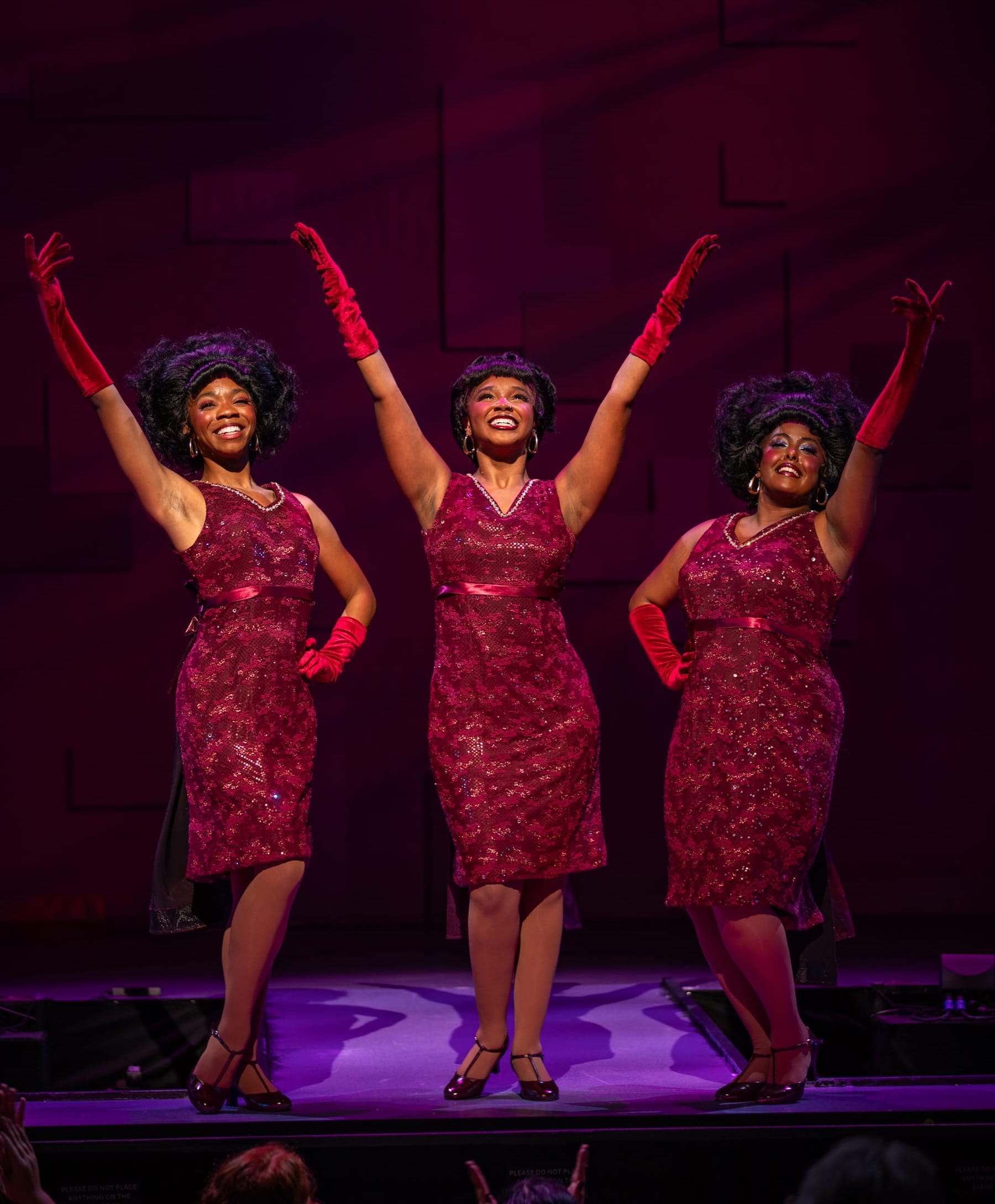
The production offered a creative use of Century II’s stage, with seamless changes of depth, expanding and contracting the space dynamically through partitions, revealing distinct sets for each scene.
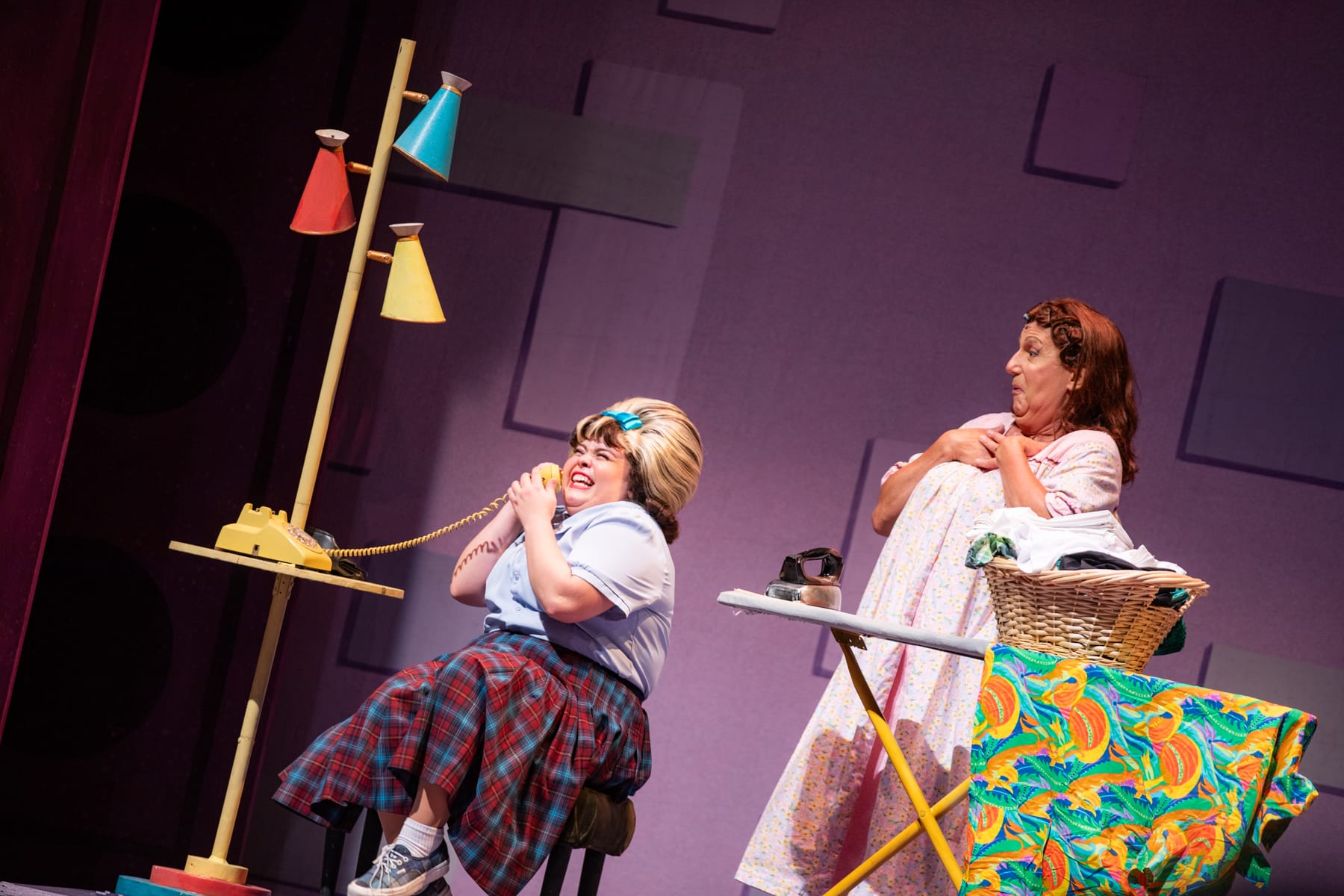
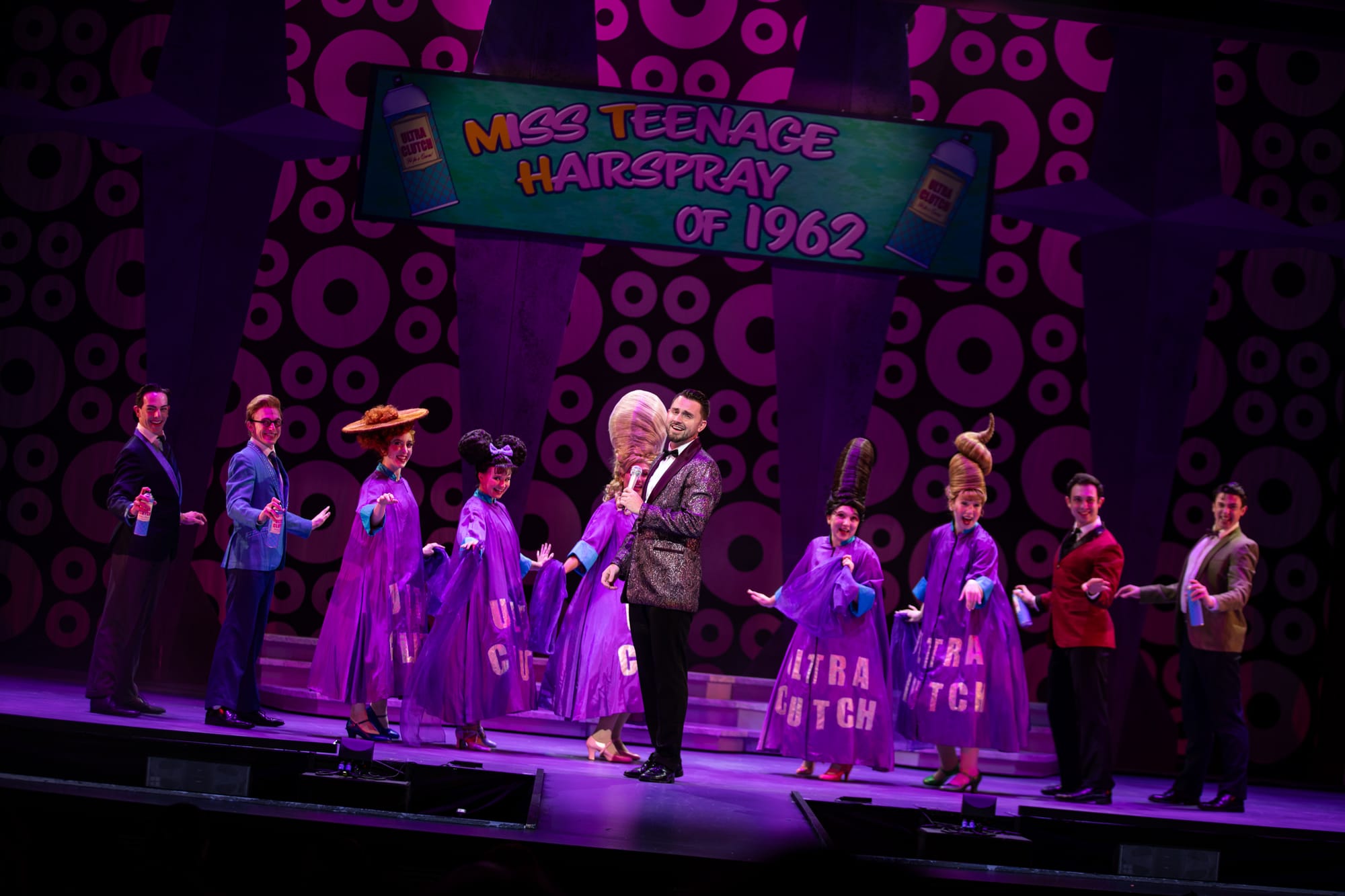
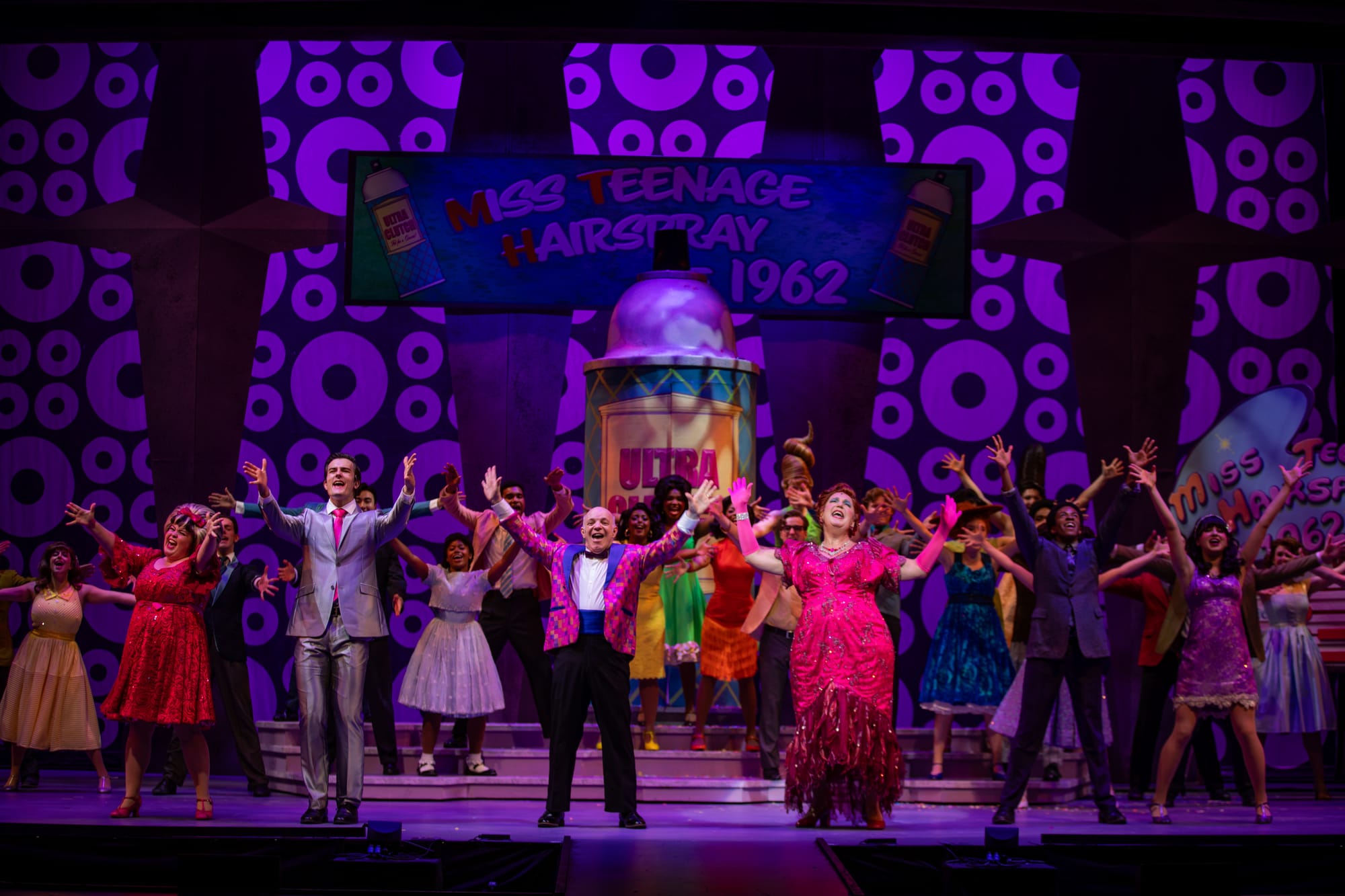
The costumes and sets are stuffed with color. Pinks, oranges and blues dominate the pallet, with groovy patterns sprinkled across the backs of the sets. Set designers set the tone for Turnblad’s cartoon-like outlook on life with pink elements, rolling set pieces that separate the show for the audience. Costuming and hair are pristine, with actors dressed in mod styles and cast sporting various hairstyles, including, obviously, Turnblad’s iconic, classic beehive.
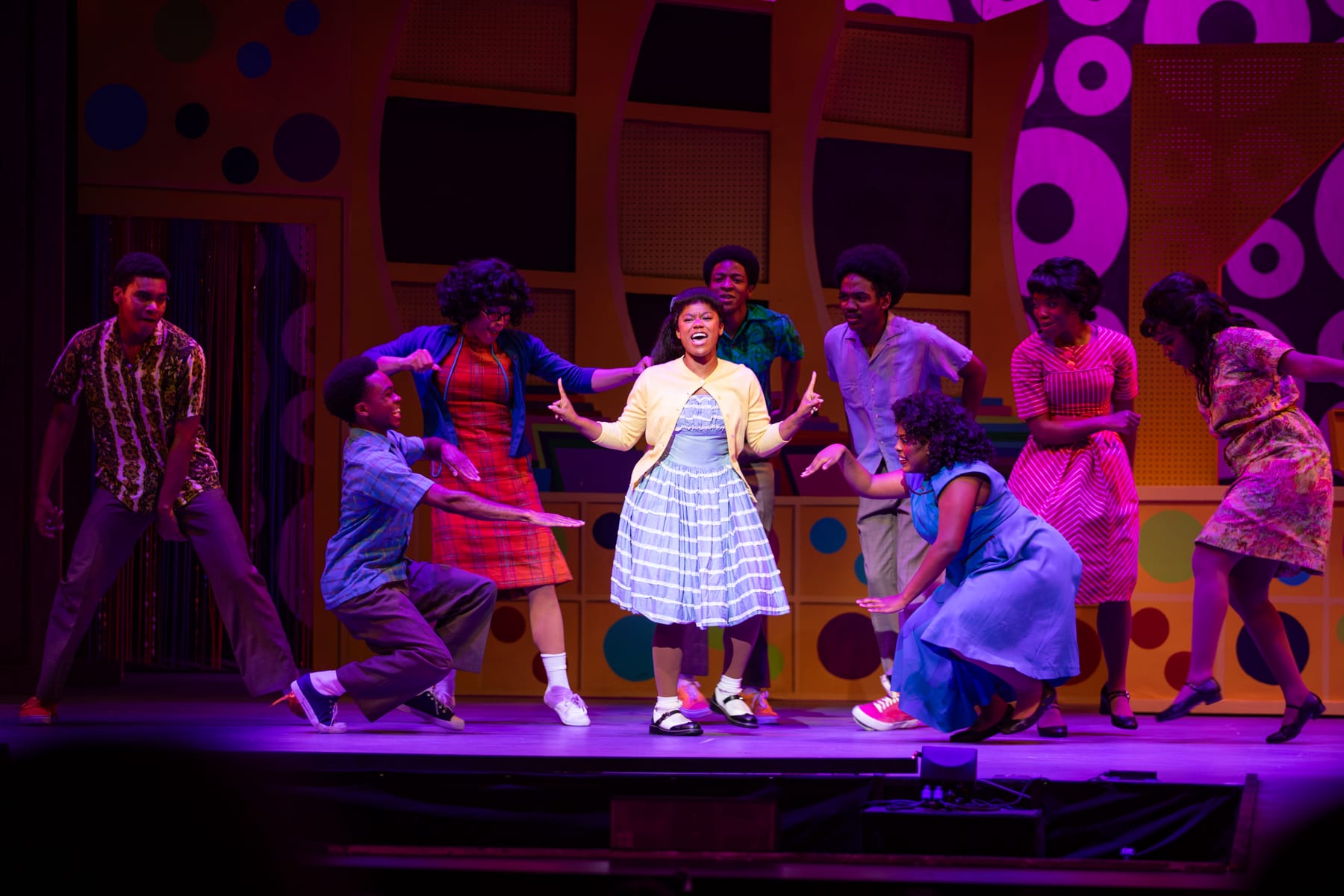
The live orchestra and high-energy cast permeated the wonder of ’60s swing dance and rhythm and blues. The orchestra and lighting operated in sync, powering the momentum of the show.
But persistent mic balancing issues (especially in bass and baritone registers) frequently disrupted the show’s flow. Often, lower voices were muddled and difficult to parse over the band and full chorus.
Regrettably, the issues dampened the impact of powerful moments in the show, like Seaweed’s “Run and Tell That” and the vocal showcases of the male actors.
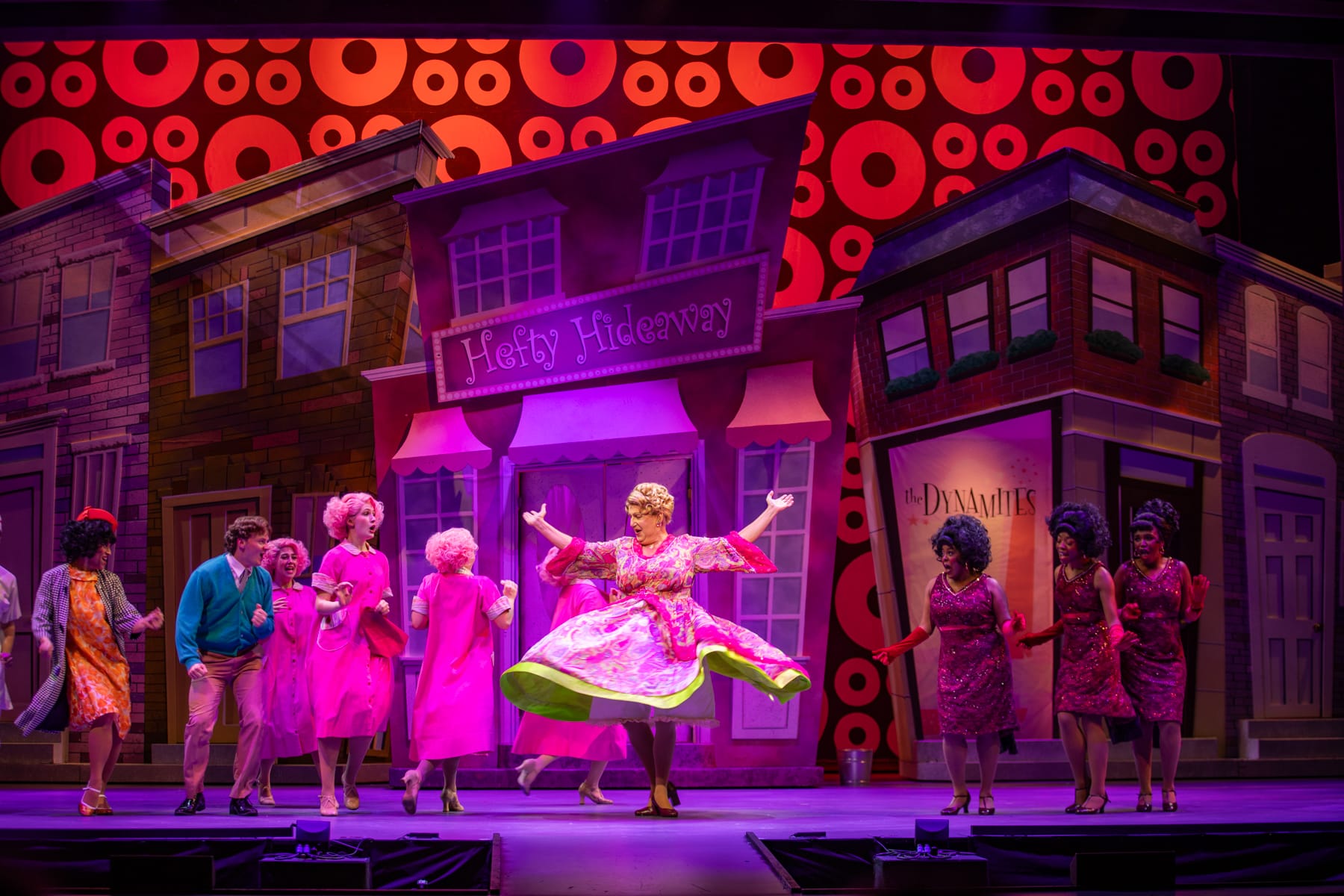
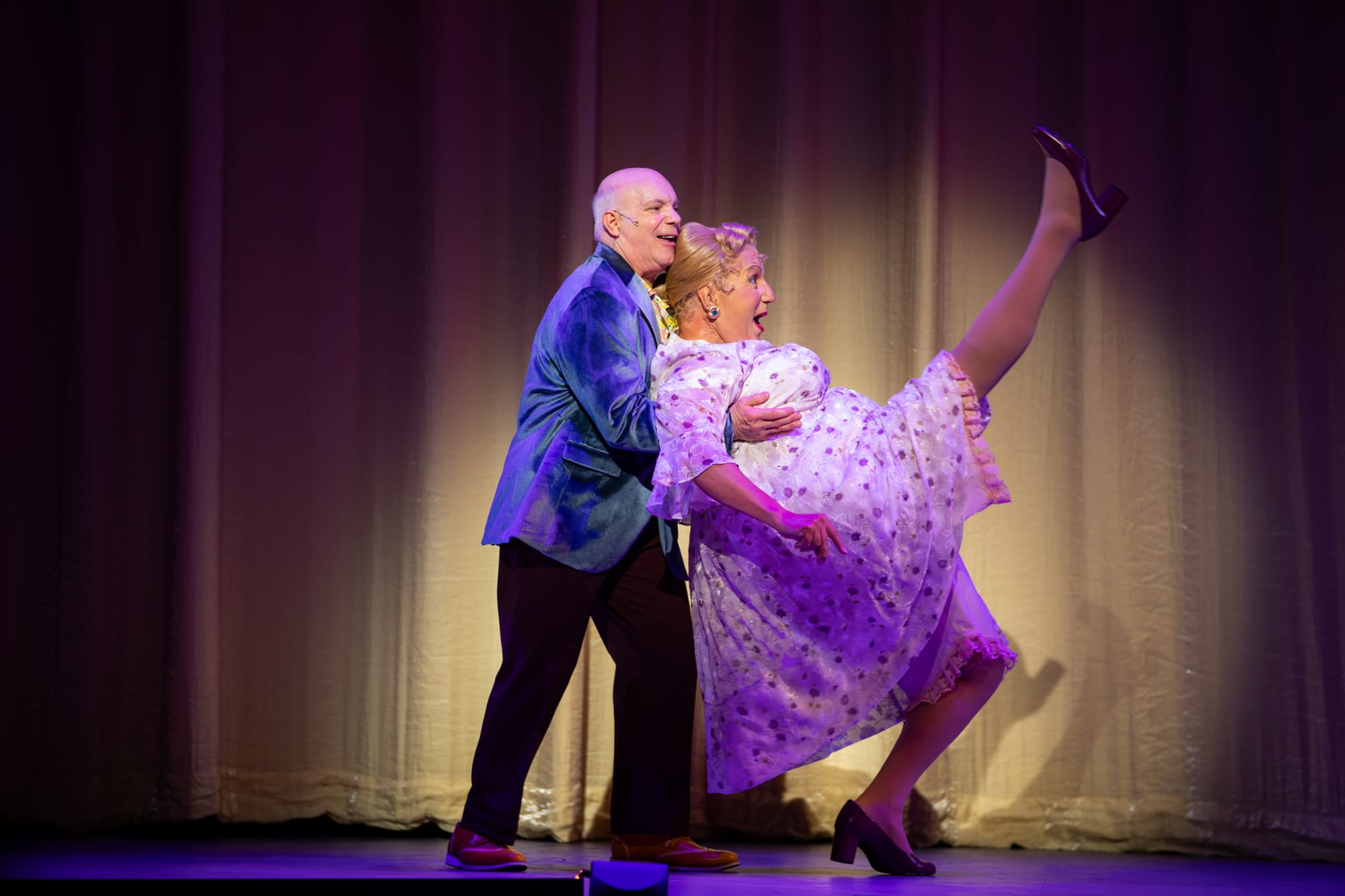
Songs featuring Turnblad’s mother, Edna, played by David Lowenstein, were particularly affecting. But despite the mic errors, the cast’s star power was evident. Each actor was high caliber, delivering powerful sound and impressive execution of the choreography, which blended classic dances from the 60s like the Madison cohesively through “televised” moments and the breaks into song typical in a musical.
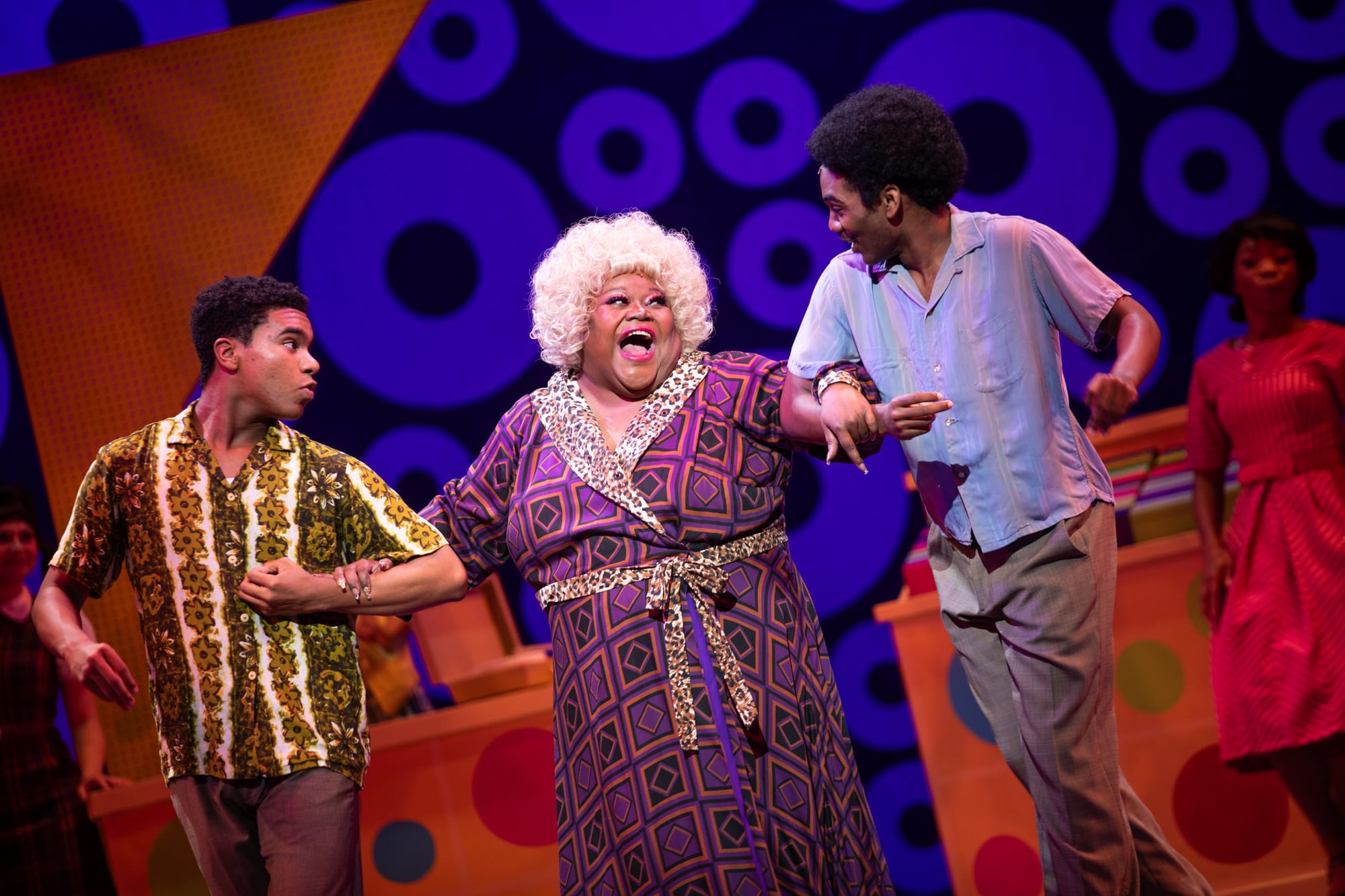
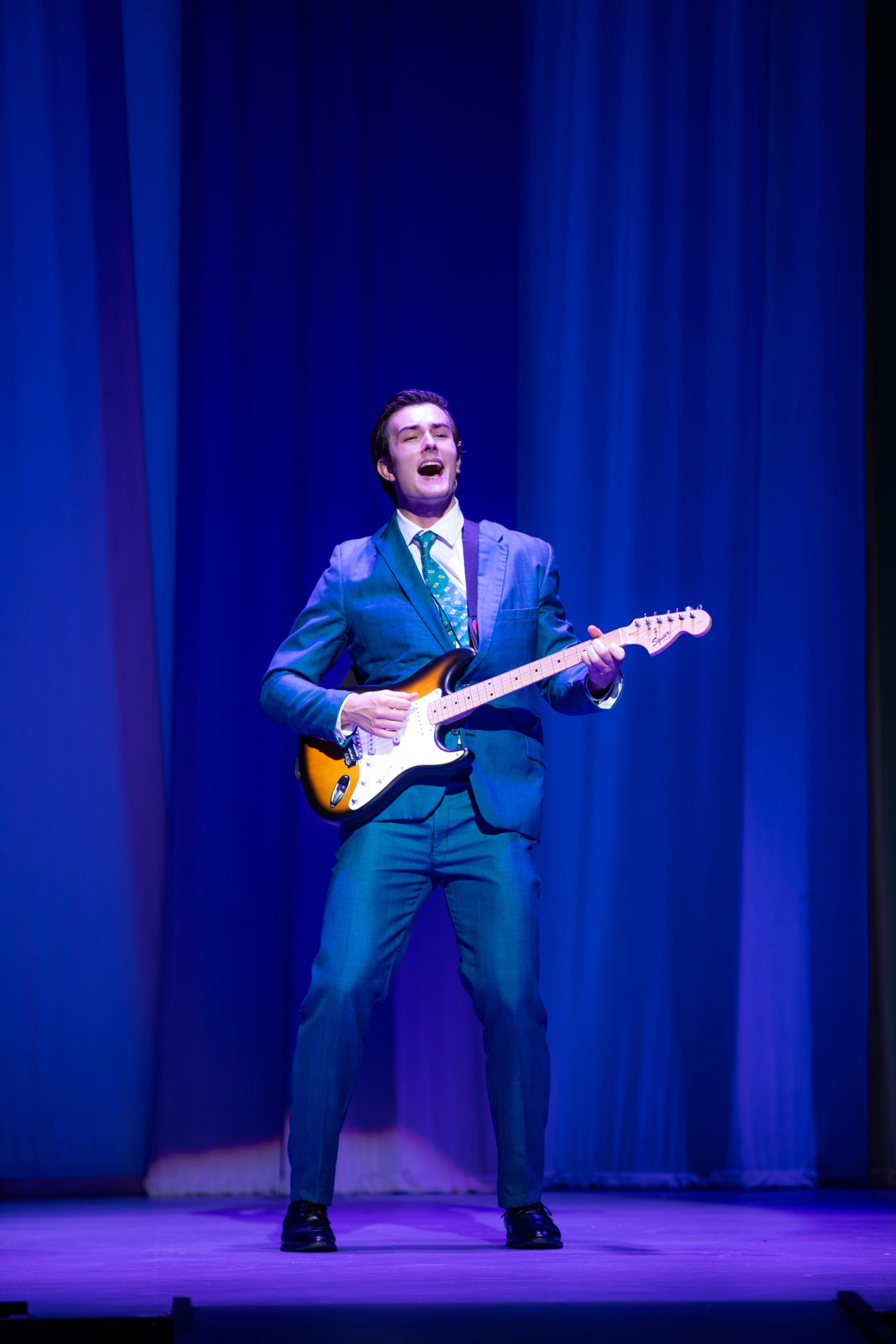
Injoy Fountain tugged at the audience's heartstrings as Motormouth Maybelle. Gundrum’s Larkin serenaded the audience as it witnesses Turnblad’s infatuation. The cast easily switched from high-energy dance and laugh-out-loud performances to sad, soulful ballads embodying struggle.
The ’60s offer an idyllic American setting, especially in a modern world where oppression and freedom don’t seem as cut and dry. Today we struggle with an overload of information constantly at our fingertips and a boiling pressure online to have the “right opinion” on topics on a worldwide scale – from AI to global conflicts and national security. In comparison, the world of “Hairspray” feels more localized on struggles facing the community, with a narrower focus – to bring Black and white teens together on the same stage.
During the pre-show, Marcum reminded the audience that the musical was born out of the tragedy of 9/11.
In the ever-so-pervasive political environment we all sit in, it feels almost relaxing to look back at America’s past. Though discrimination in the Civil Rights Era was nothing but simple, “Hairspray” offers a familiar, less polarizing snapshot in a ground of discourse that always seems to be moving from under your feet.
Perhaps that’s what the authors felt in 2002, and it still resonates today.
Despite minor opening night audio hiccups, MTW’s “Hairspray” offers a deeply satisfying, cathartic experience that leaves you ready to tease your hair, put on your dancing shoes and stand up for what’s right.
The Details
Music Theatre Wichita presents "Hairspray"
August 19-23 2026, at Century II Performing Arts Center, 225 W. Douglas Ave. in Wichita
Performances take place at 8 p.m. Friday, 2 p.m. and 8 p.m. Saturday, and 2 p.m. and 7 p.m. Sunday.
Reserved tickets are $25-103.
Century II is accessible to people with physical disabilities. ASL interpretation is available during the Saturday matinee.
Learn more and purchase tickets online.
Taliyah Winn is a senior studying political science and journalism at Wichita State, where she serves as the editor-in-chief of the student newspaper The Sunflower, leading a team of more than 40 student journalists to cover news for the WSU community.
❋ Derby man has the kind of voice that turns heads — and chairs
❋ Socializing while sober: how some Wichitans are cultivating alcohol-free communities
❋ As a small creative business closes, the owner mourns
❋ Painting through it: Autumn Noire on 20 years of making art
❋ How a guy from Wichita resurrected 'Dawn of the Dead'
❋ Bygone Friends University museum housed curious collections
Support Kansas arts writing
The SHOUT is a Wichita-based independent newsroom focused on artists living and working in Kansas. We're partly supported by the generosity of our readers, and every dollar we receive goes directly into the pocket of a contributing writer, editor, or photographer. Click here to support our work with a tax-deductible donation.