Reflections and fragmented visions in 'Eye Sea Seeds Sewn: Mirror or Mirage' at the Lawrence Art Center
On view though February 28, Kristin Morland's exhibition resists stillness, asking viewers, "What does it mean to look?"
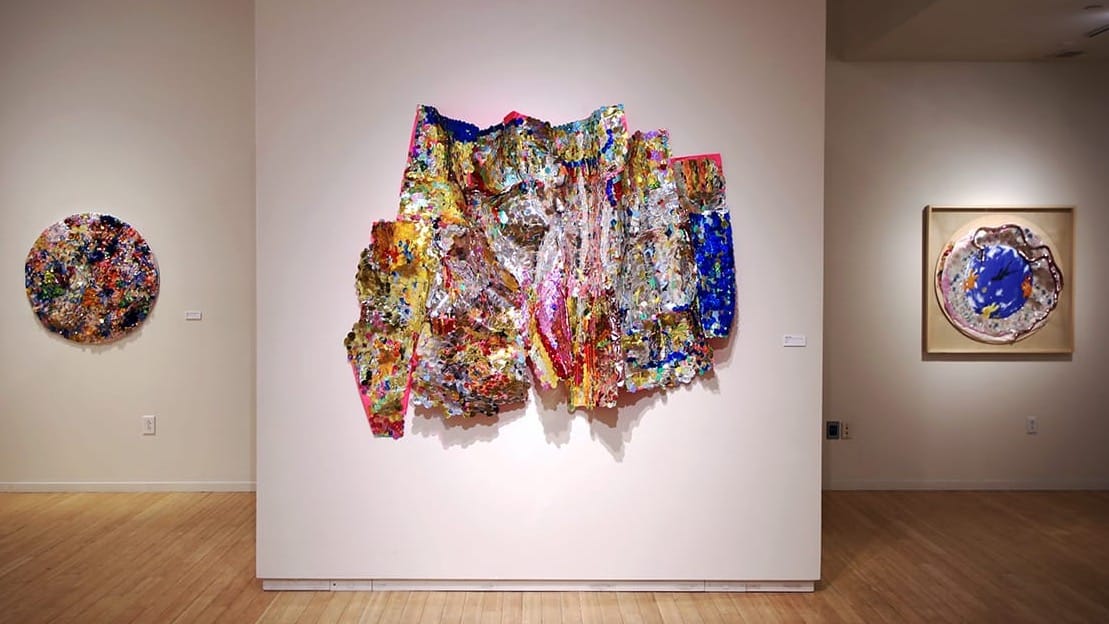
When you step into Kristin Morland’s exhibition “Eye Sea Seeds Sewn: Mirror or Mirage” at the Lawrence Arts Center, you enter a world that feels at once familiar and uncanny — a place where light, color, reflection, and perception are unfixed, constantly shifting under your gaze. Primarily constructed from hand-sewn sequins, beads, and paillettes, Morland’s works are not simply visual experiences; they are optical events, shimmering into being with every nuance of the gallery light and the viewer’s movement.
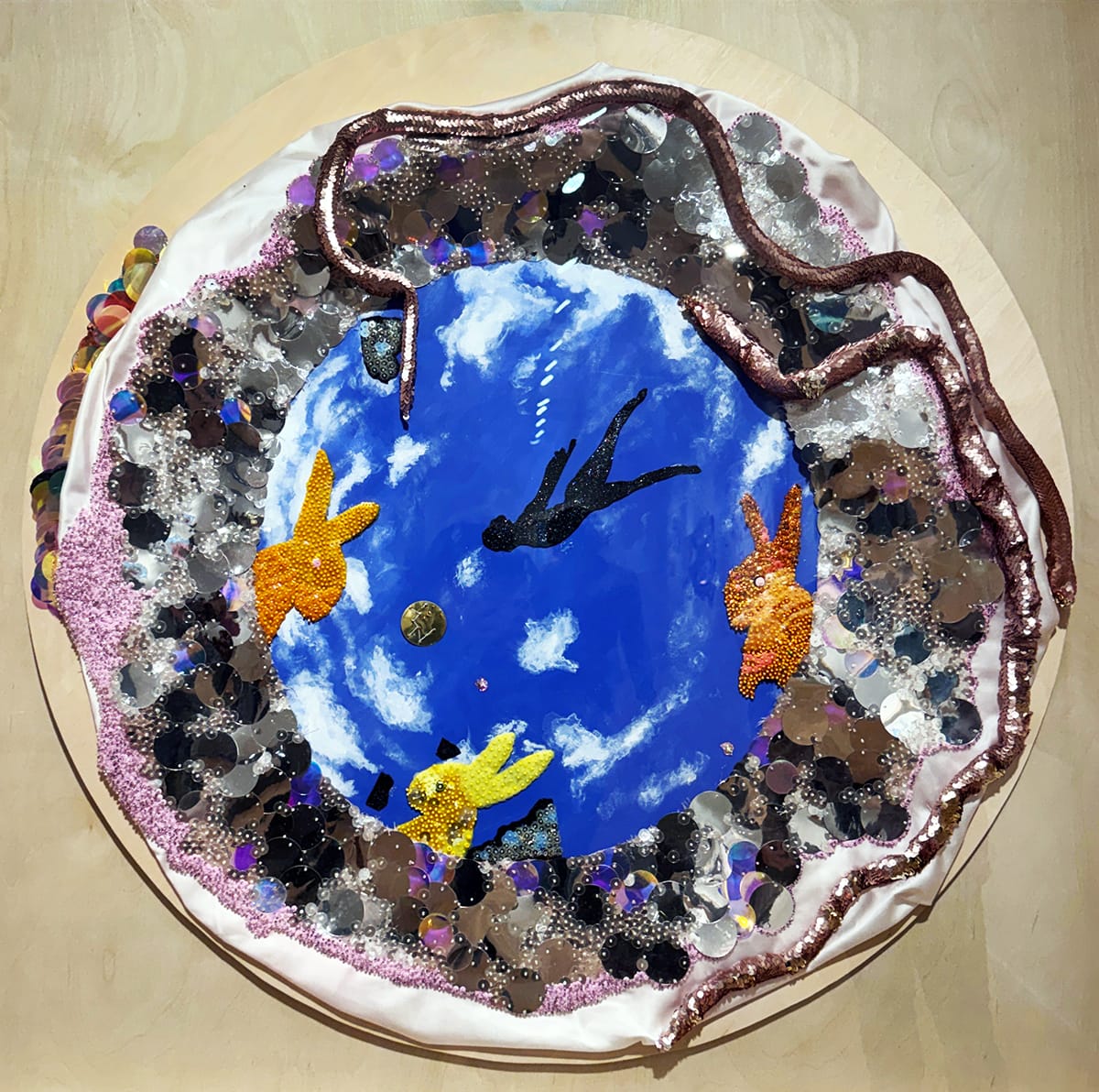
At first glance, her abstract sequin compositions seem almost playful: pastel palettes evoking dawn skies or the whisper of cotton candy clouds, with hints of hearts and small creature-like shapes tucked into doily-esque landscapes. But as your gaze lingers, these surfaces — far from static — reveal themselves as complex topographies that flirt with both familiarity and distortion, with identity and dream.
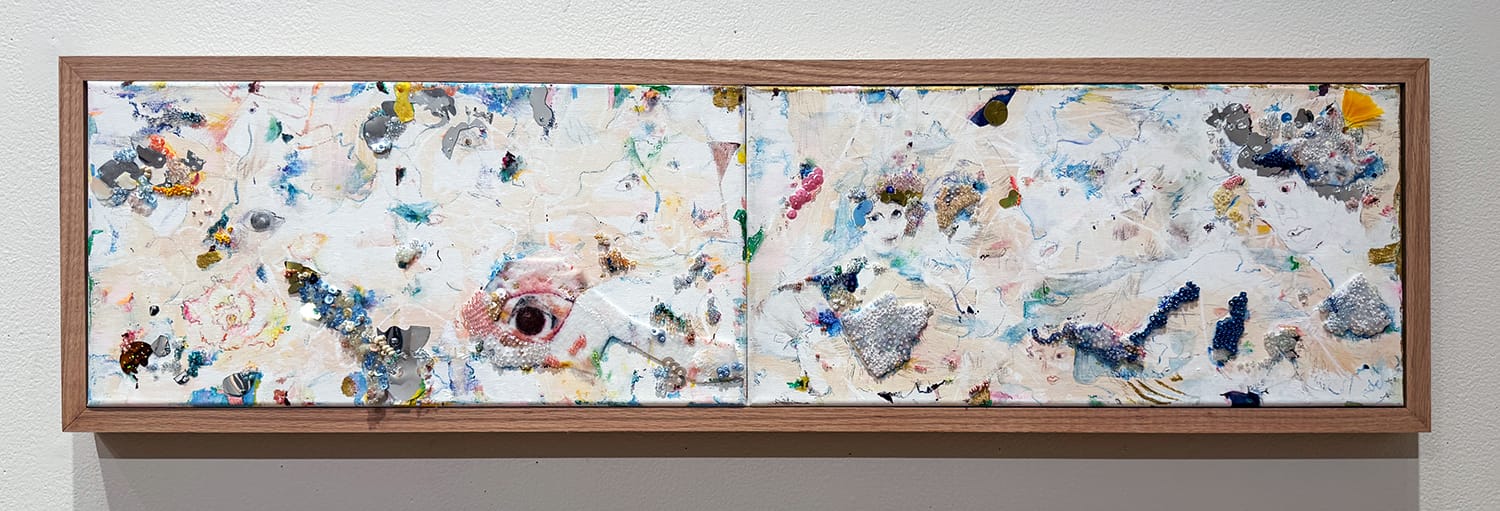
Dreamscapes of light and reflection
The first thing that struck me about Morland’s work is how it resists stillness. Sequins and beads are, by nature, reflective — they catch and scatter light in multitudinous directions. Morland embraces this effect fully, creating surfaces that feel alive and animated by the very light that illuminates them. In pieces dominated by pastel hues, this reflective quality creates a gentle, dreamlike air; colors float and dissolve as you move through the room. Yet in other works, the metallic surfaces — silvers and golds especially — introduce a harder, more disruptive flash that interrupts this softness with a gleam almost too electric to fully absorb.
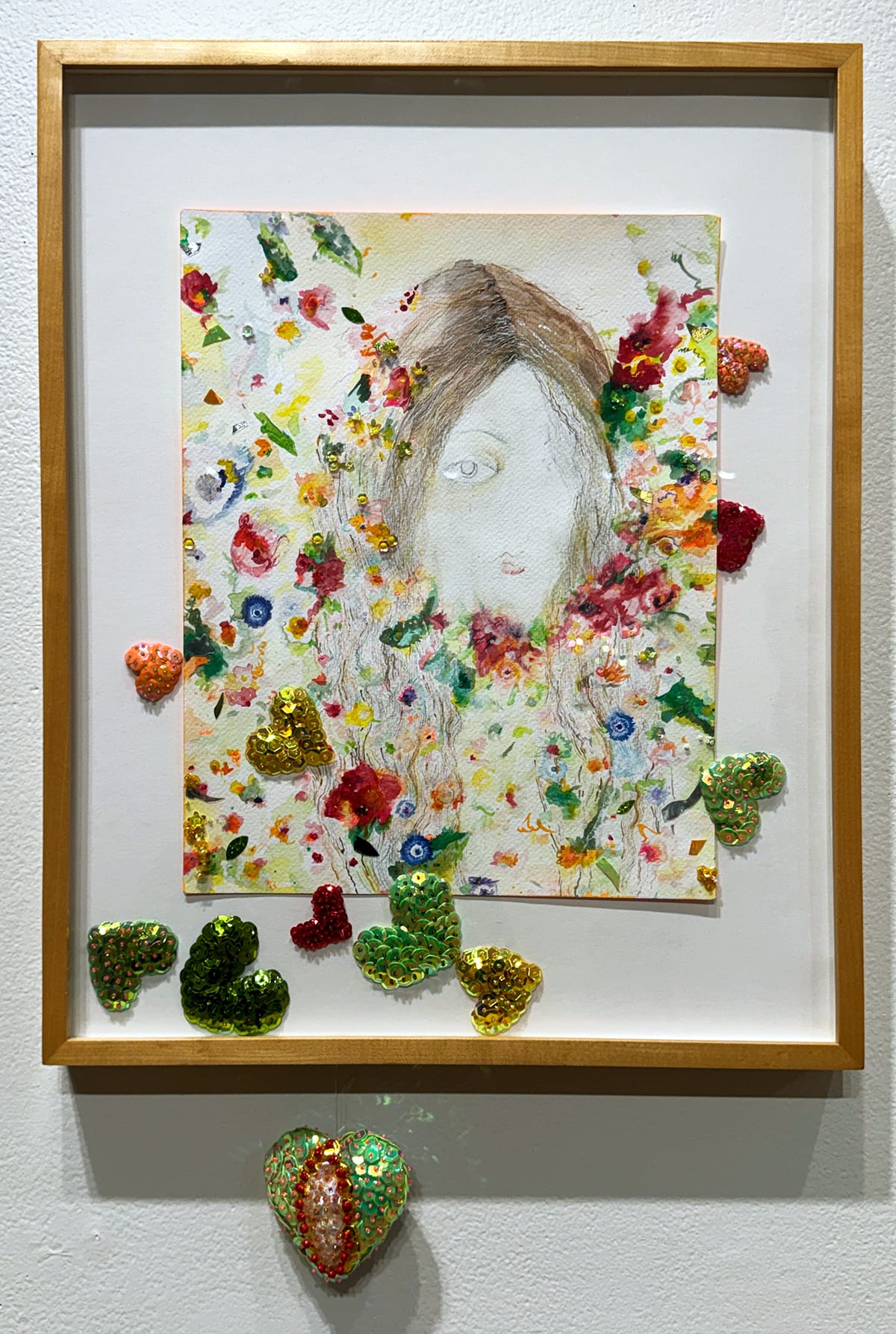
This work with light feels inextricably linked to perception itself. Morland seems to ask: What do we see when we look at reality? At ourselves? At one another? The exhibition title’s duality — “Mirror or Mirage” — suggests this tension between clarity and illusion, between reflecting back what is real and conjuring something that seems real but slips always at the point of focus.
Morland’s use of eyes and faces across many works amplifies this theme. These elements — sometimes clear, sometimes obscured — invite the viewer to see themselves not just in the work, but through it. Yet the reflections are fractured, broken up by shifting colors and contours, recalling not so much traditional mirrors as the fragmented surfaces of a funhouse kaleidoscope. In this sense, the glimmering sequins don’t simply reflect: they reshape, refract, and reimagine what it means to look.
Fragments of Faces and Memory
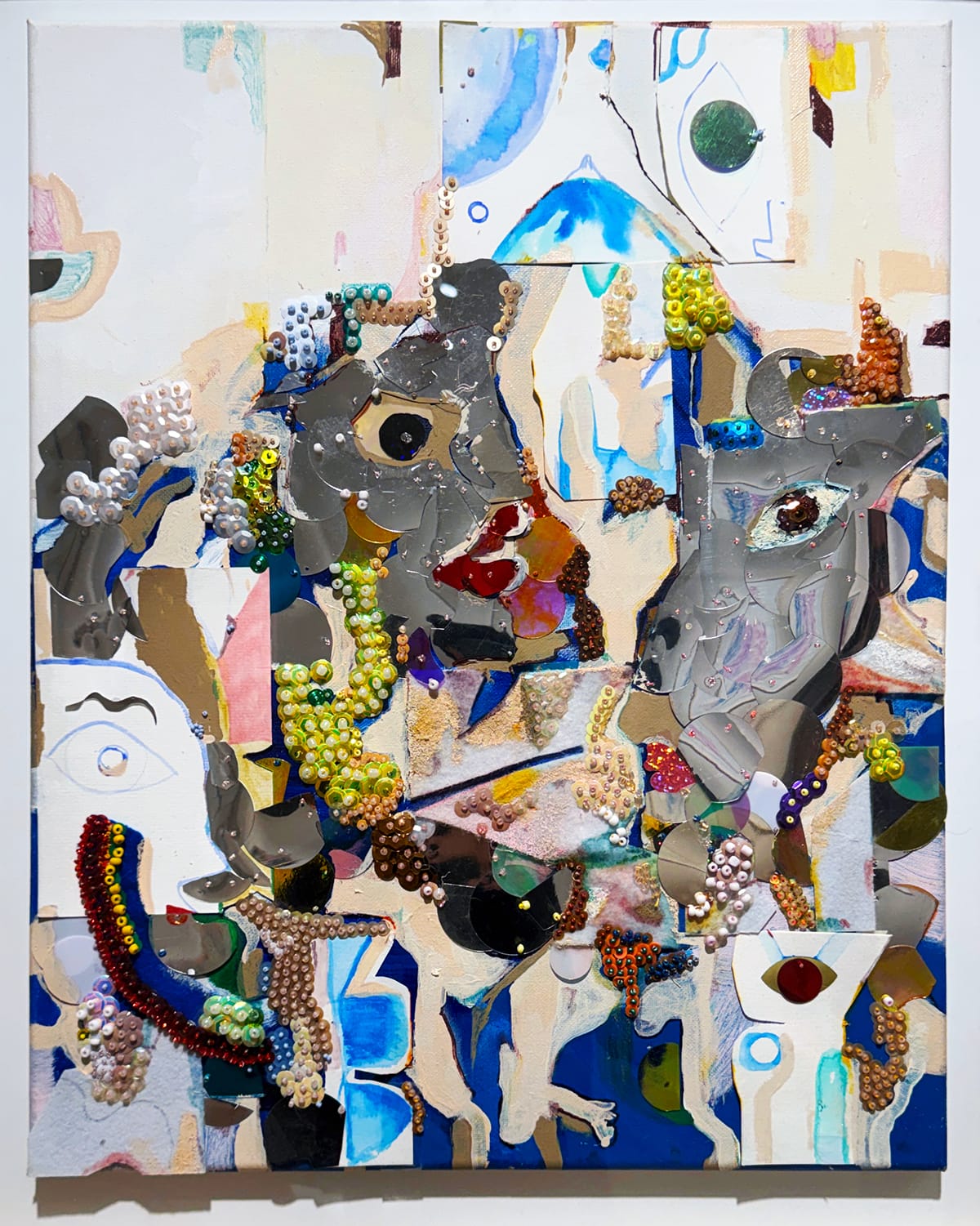
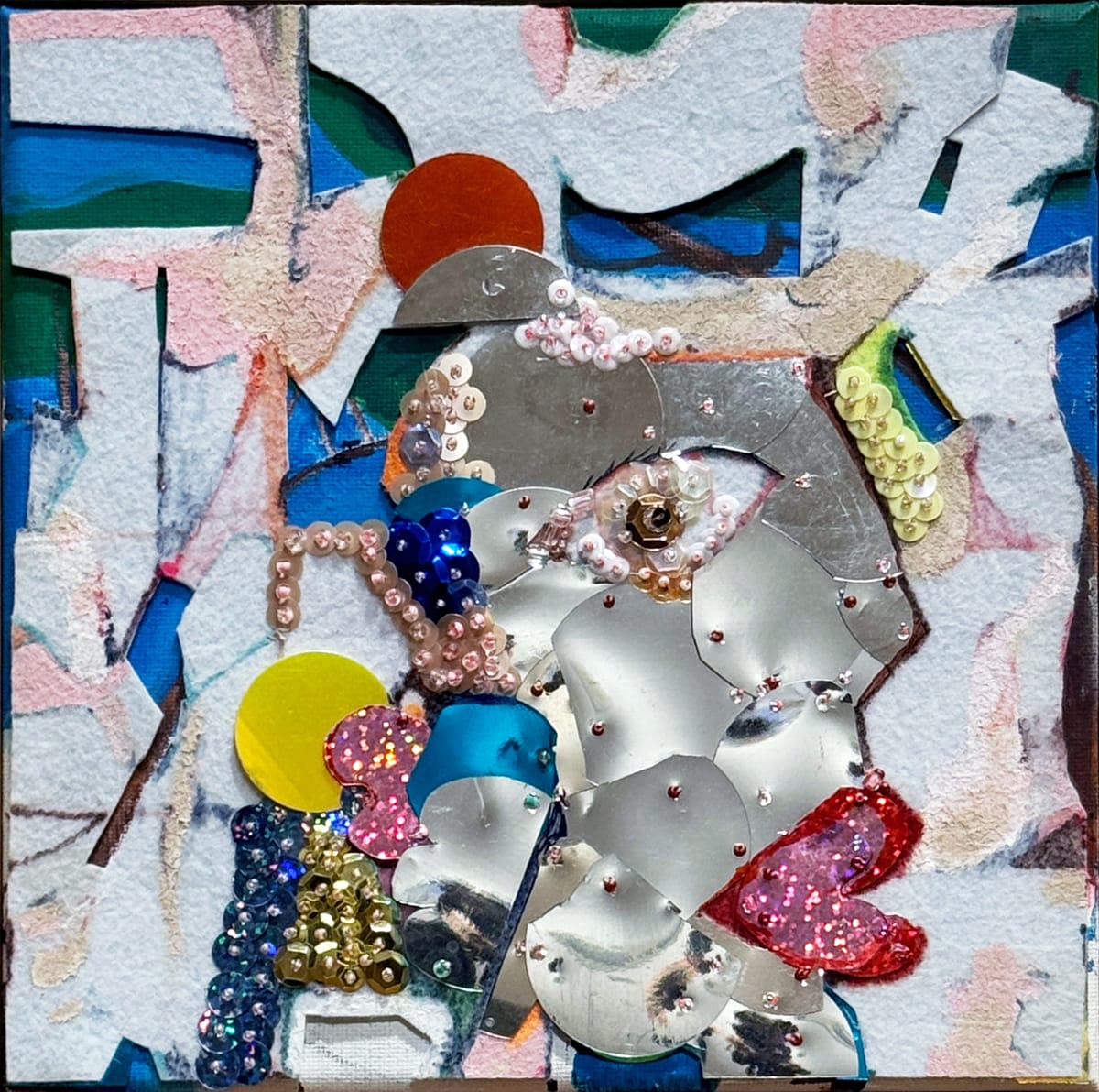
Many of the figurative motifs in the exhibition, especially the faces, are fragmented or obscured. These are not serene, classical portraits but surfaces of flickering light, where features can appear and disappear depending on the vantage point. In “Reflection Perception #2,” a profile constructed of silver paillettes with reddish-pink lips set against variegated pastel fields, the face feels almost collaged — assembled from pieces that want to be held together but remain distinct. The eye, bordered with translucent pink sequins, seems to glimmer with an intent to see, but the fragmented assembly reminds the viewer of the instability of vision itself.
Elsewhere, in “In My Mind’s Eye, Heard Your Heart Speak #1,” two sequin-embroidered faces on felt seem to look at, or perhaps past, one another. Their contours are defined yet playful, with heart shapes and soft pastel colorings that almost undercut the intensity of their gaze. These faces do not confront the viewer directly; rather, they beckon you into a shared, reflective space where vision is not singular but communal.
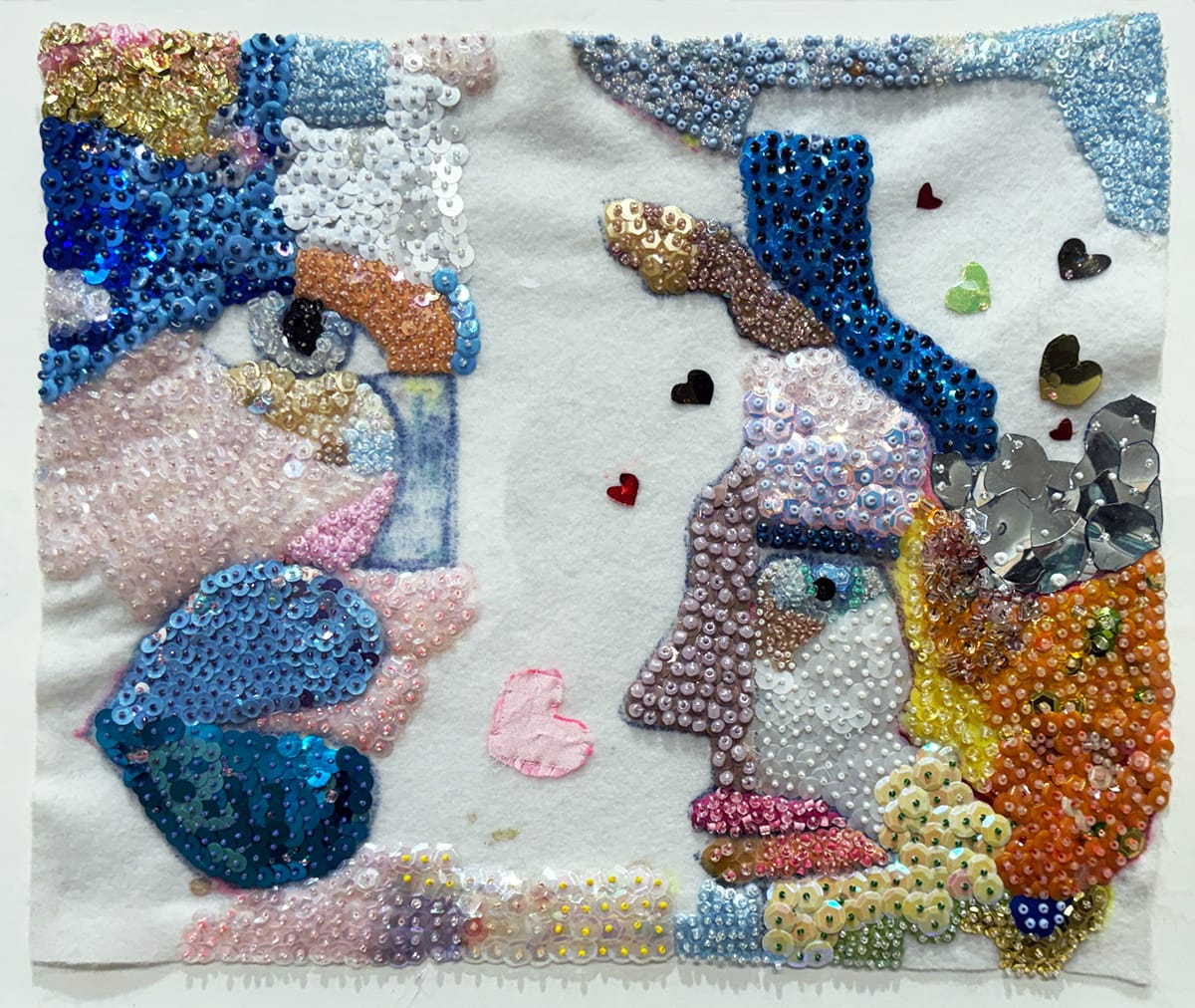
There’s a Cubist echo in these fragmented visages — a sense that more than one viewpoint is being offered at once, as though Morland acknowledges that perception is never monolithic but layered, shifting, and sometimes contradictory.
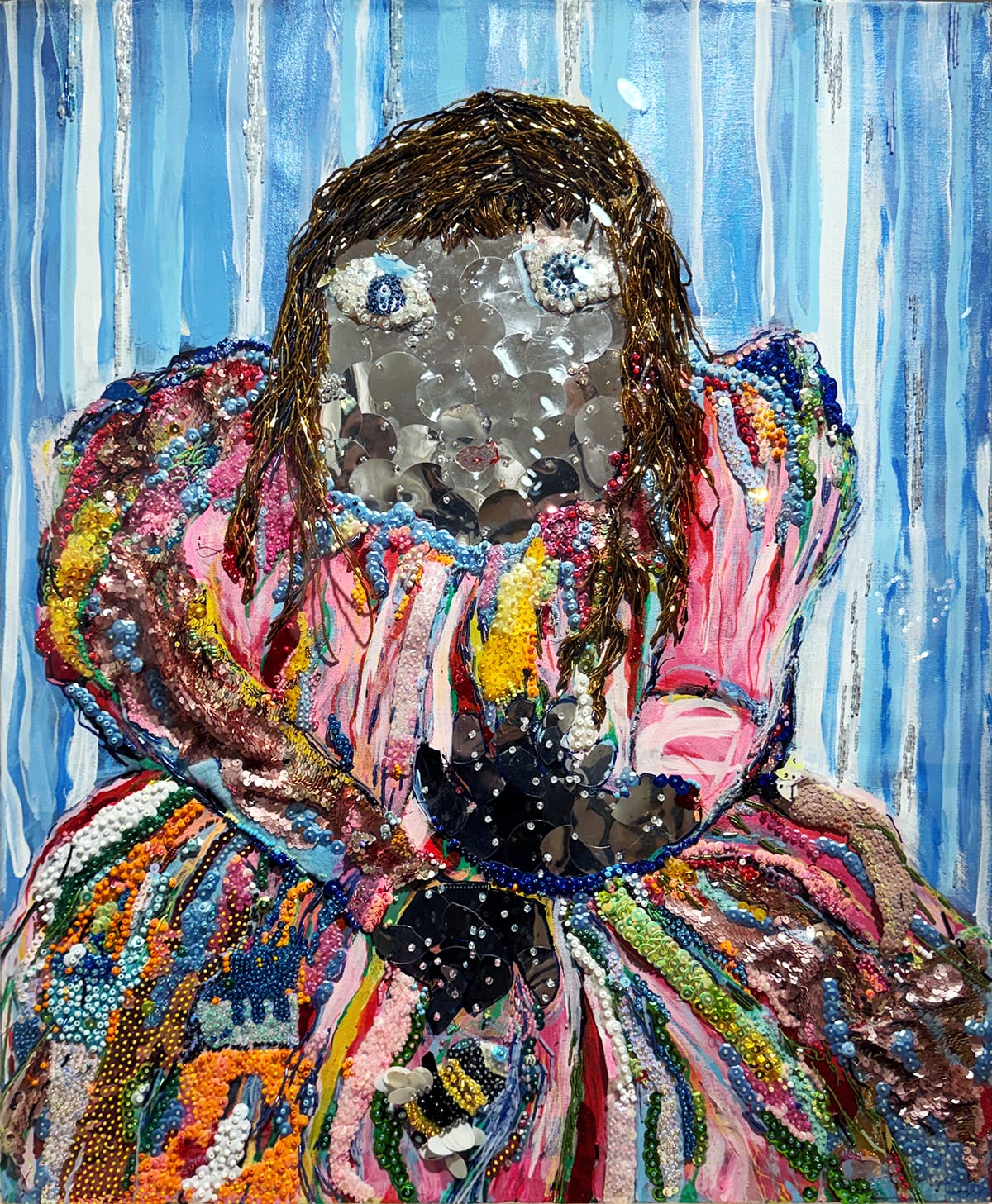
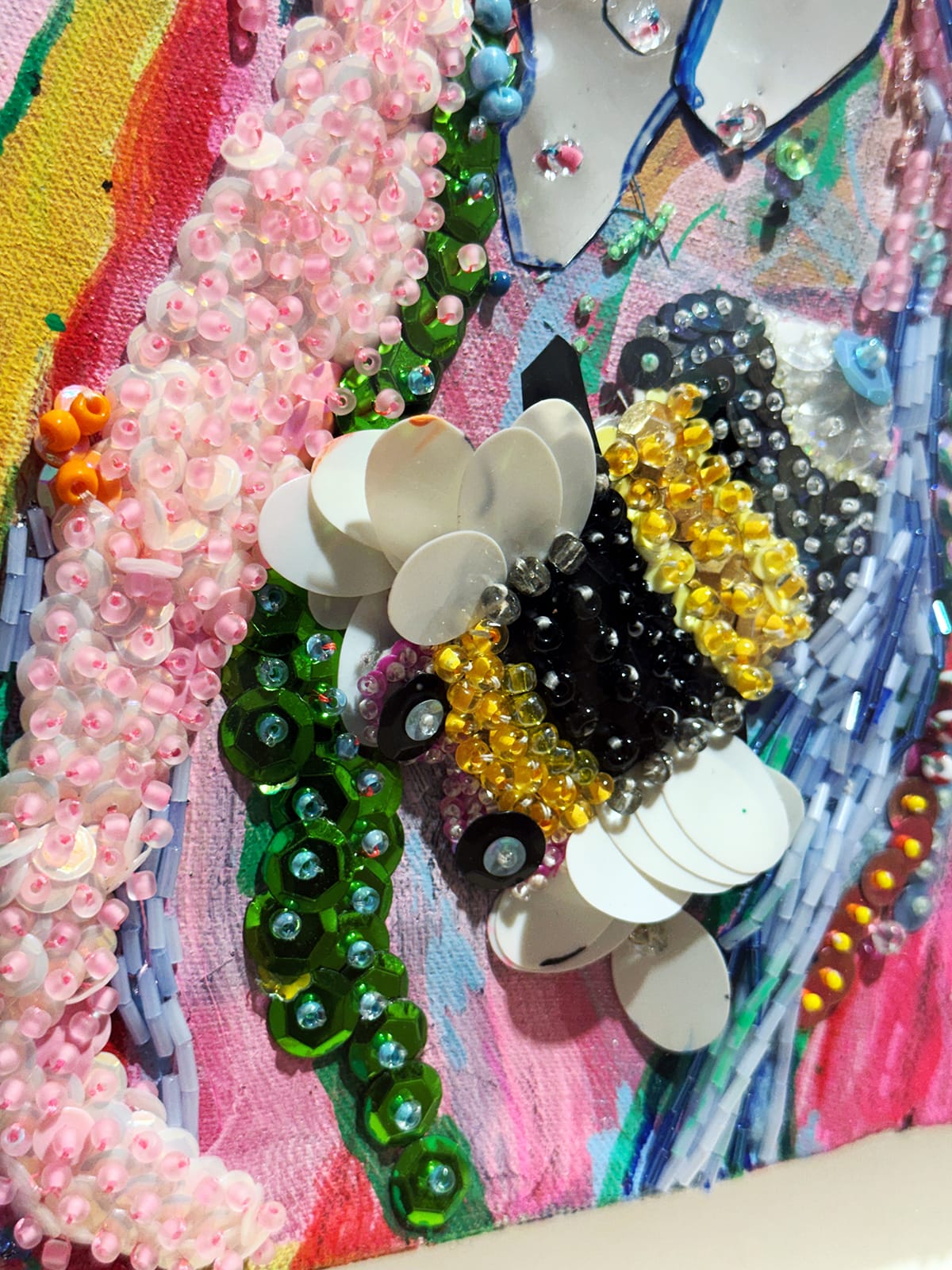
Kristin Morland, “Me and All My Mothers,” 2025, sequins, beads, thread and paint, 36 by 30 inches; detail of “Me and All My Mothers.” Photos by Abby Bayani-Heitzman for the SHOUT.
Girlish motifs and monumental forms
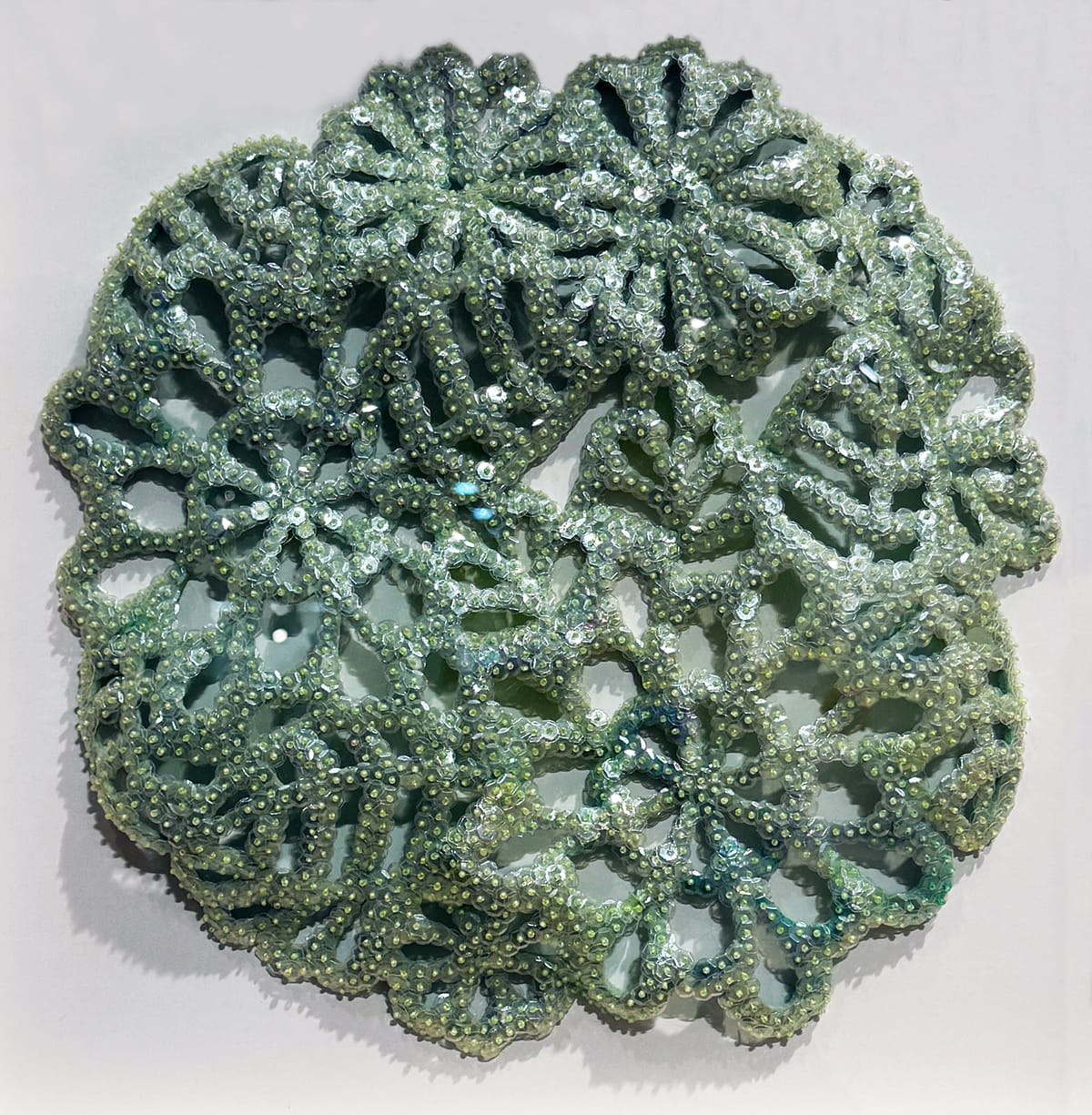
Interspersed among the more abstracted figures are works with what one might call traditionally “girlish” motifs: cloth-like shapes, hearts, small animals, and elements that feel tender and whimsical. “She Sewed Seeds Just For Us,” for example, has a delicate doily quality, its sage-green sequins forming floral and leaf shapes that feel nostalgic, almost heirloom-like. These pieces might, at first glance, read like charming curiosities; but surrounded by Morland’s larger, more imposing works, they take on new resonance — as intimate counterpoints to some surprisingly monumental forms.
The exhibition is visually dominated by four large paillette sculptures: “B1-2C1,” “Light Fields,” “Walleyes Caught in a Delta,” and “The Sun Does Not Ration Its Light.” These works are at once more assertive and more enigmatic than the smaller pieces around them. Made of thousands of shimmering sequins and paillettes meticulously hand-sewn together, they resemble chainmail armor or mythic shields as much as they do “sparkly” ornamentation. These are forms of great presence: bold, almost martial in their physicality, yet still suffused with luminescent color and fluid motion.
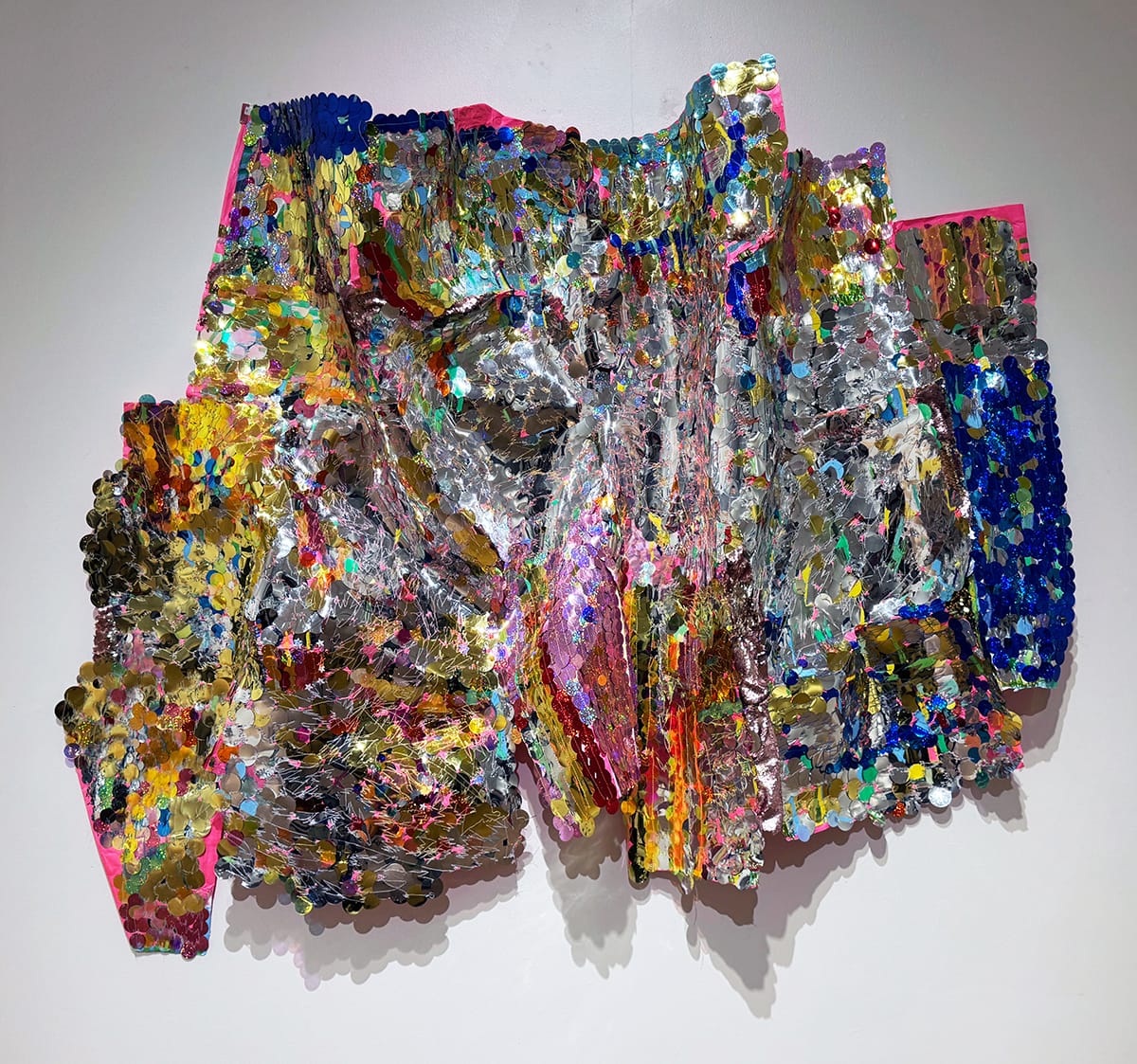
“B1-2C1,” composed of silver paillettes and shimmering seed beads, has a kinetic energy that feels almost liquid. Though monochrome, its surface refracts hints of surrounding colors, sparkling like a prism in motion. It resembles a turbulent quicksilver mirror — one that challenges the viewer to step closer, perhaps even to consider the conceptual role of the mirror as not just an object of reflection but a portal into another perception. This idea echoes some of her earlier commentary on her work: Morland has described her pieces as both mirror and blanket, revealing yet concealing the viewer’s connection to the present moment.
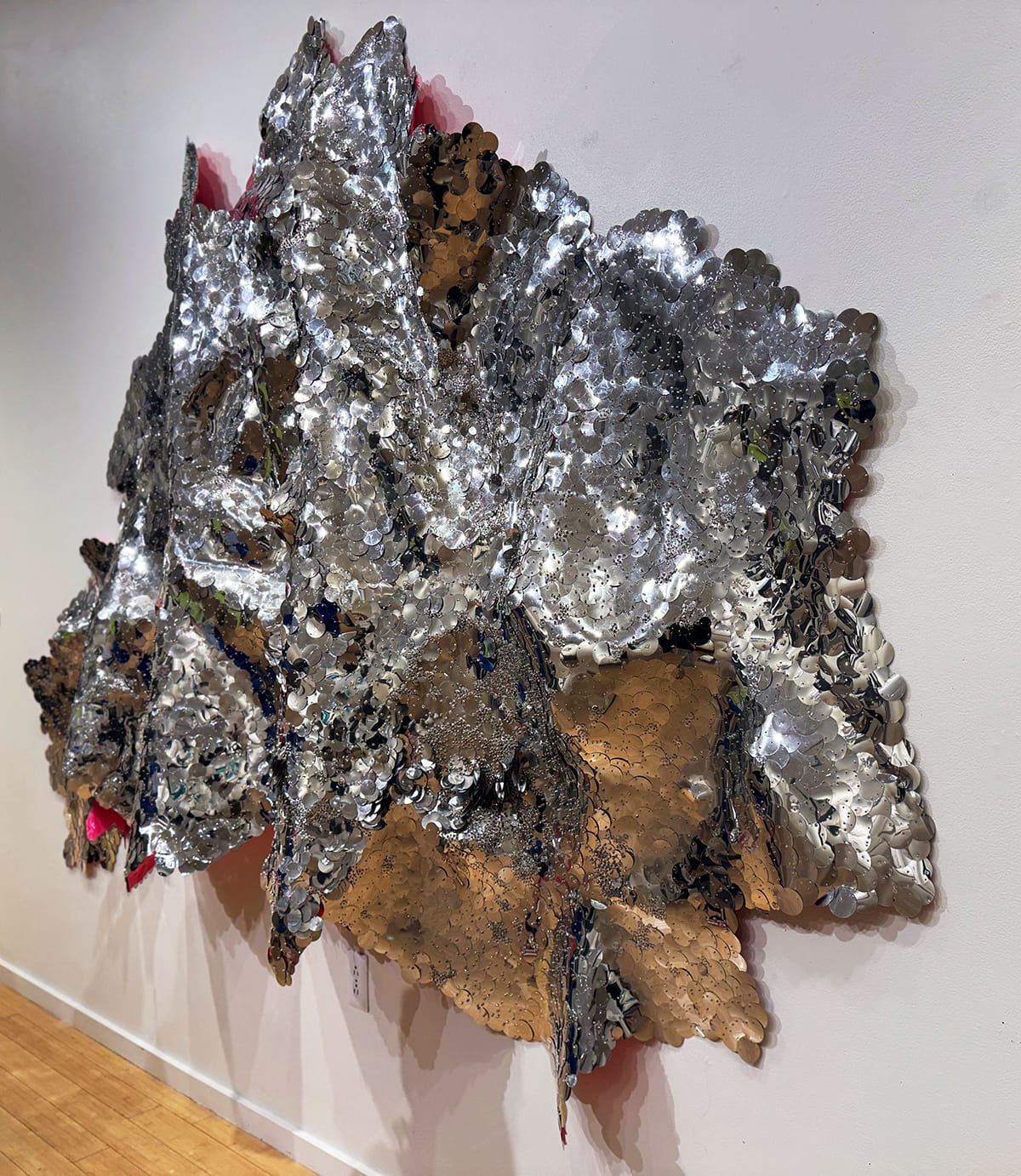
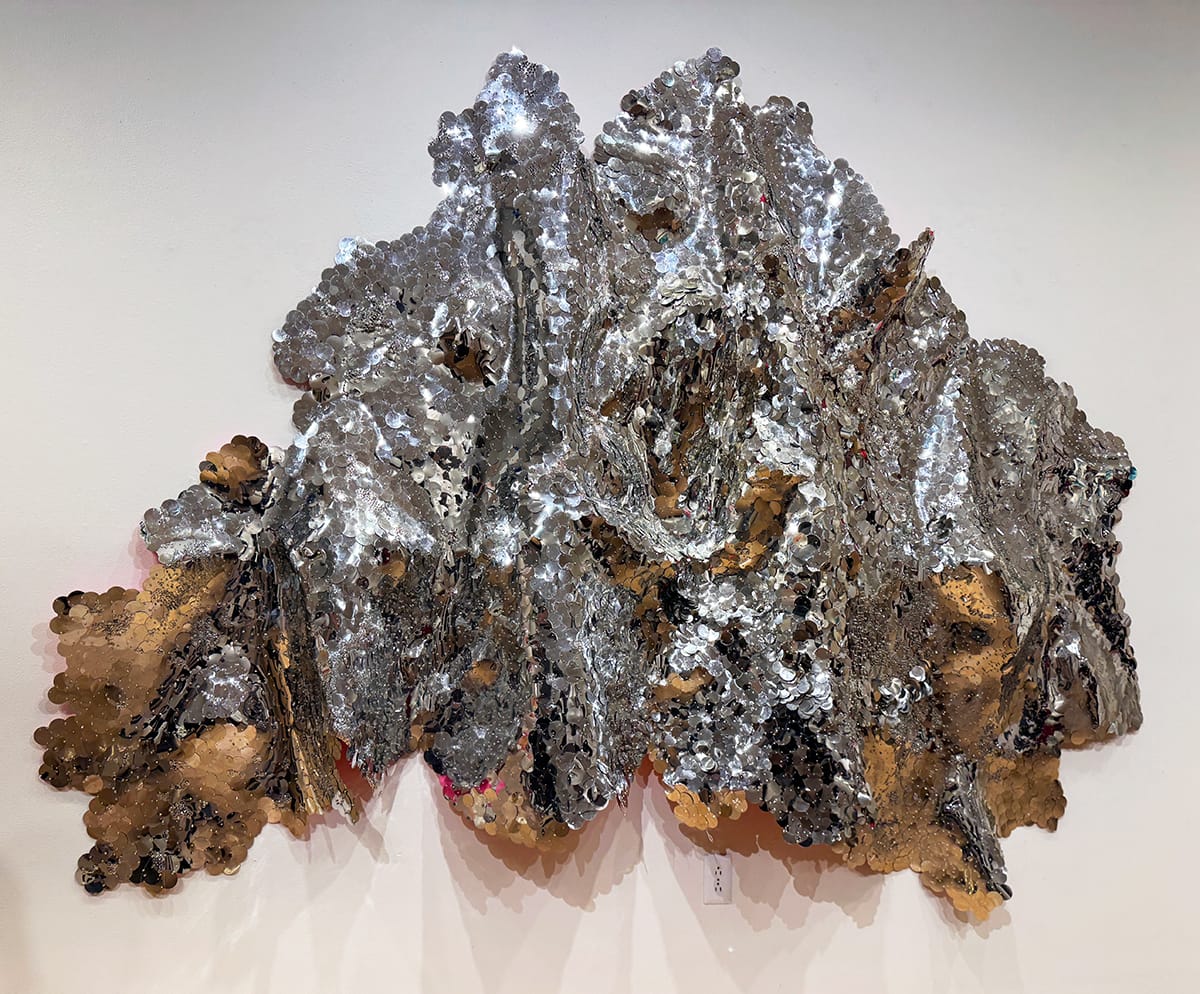
Kristin Morland, “B1-2C1,” 2020-2025, paillettes, sequins and beads, 126 by 108 inches. Photo by Abby Bayani-Heitzman for The SHOUT.
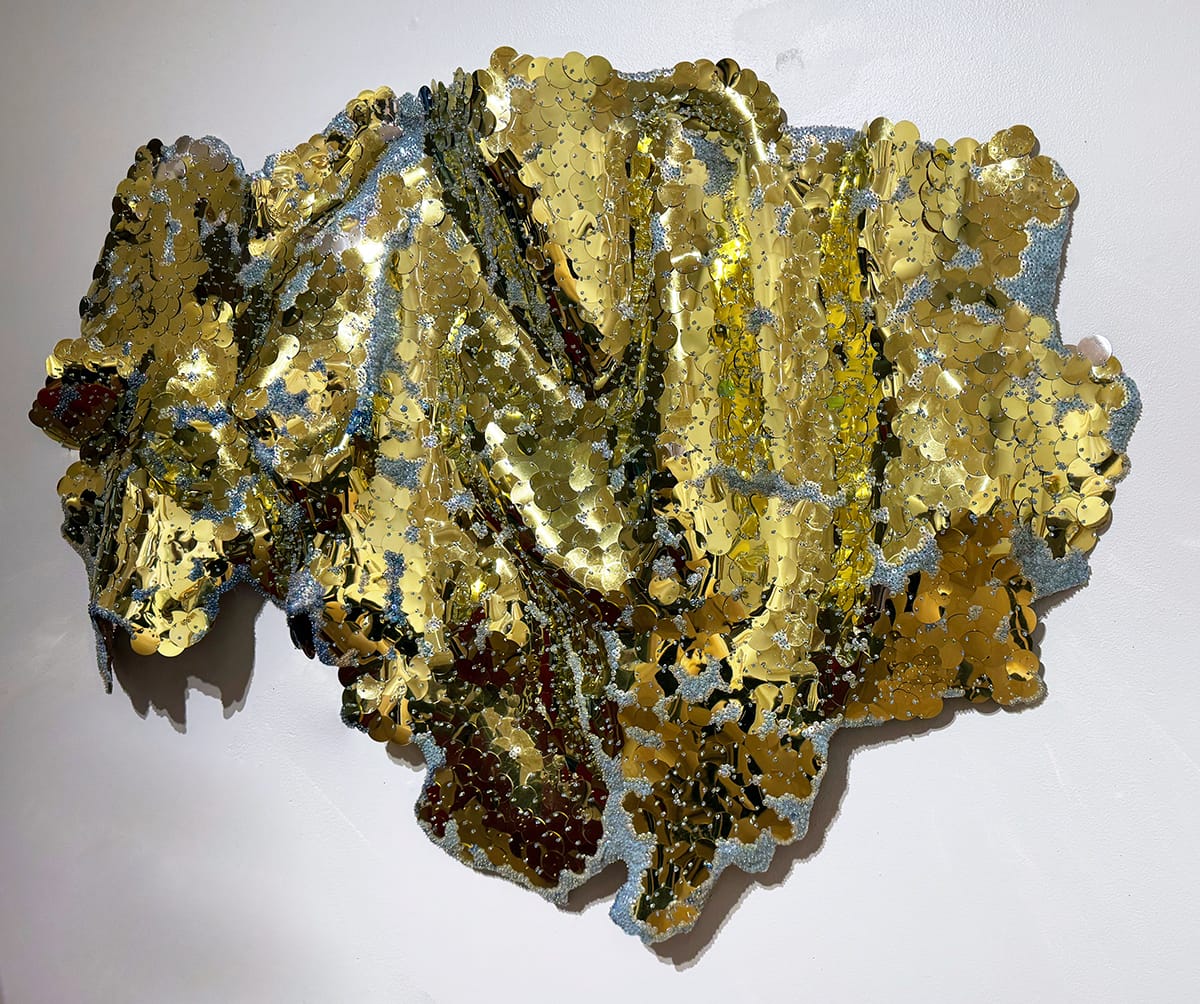
Similarly, “Walleyes Caught in a Delta” combines golds, blues, pinks, and greens into crashing, energetic forms that evoke natural forces like waves, currents, and tides. Unlike the softer pastel works, this piece nearly vibrates with force — an explosion of elemental motion that makes the sequined surface seem both animate and elemental, like a living thing caught in perpetual flux.
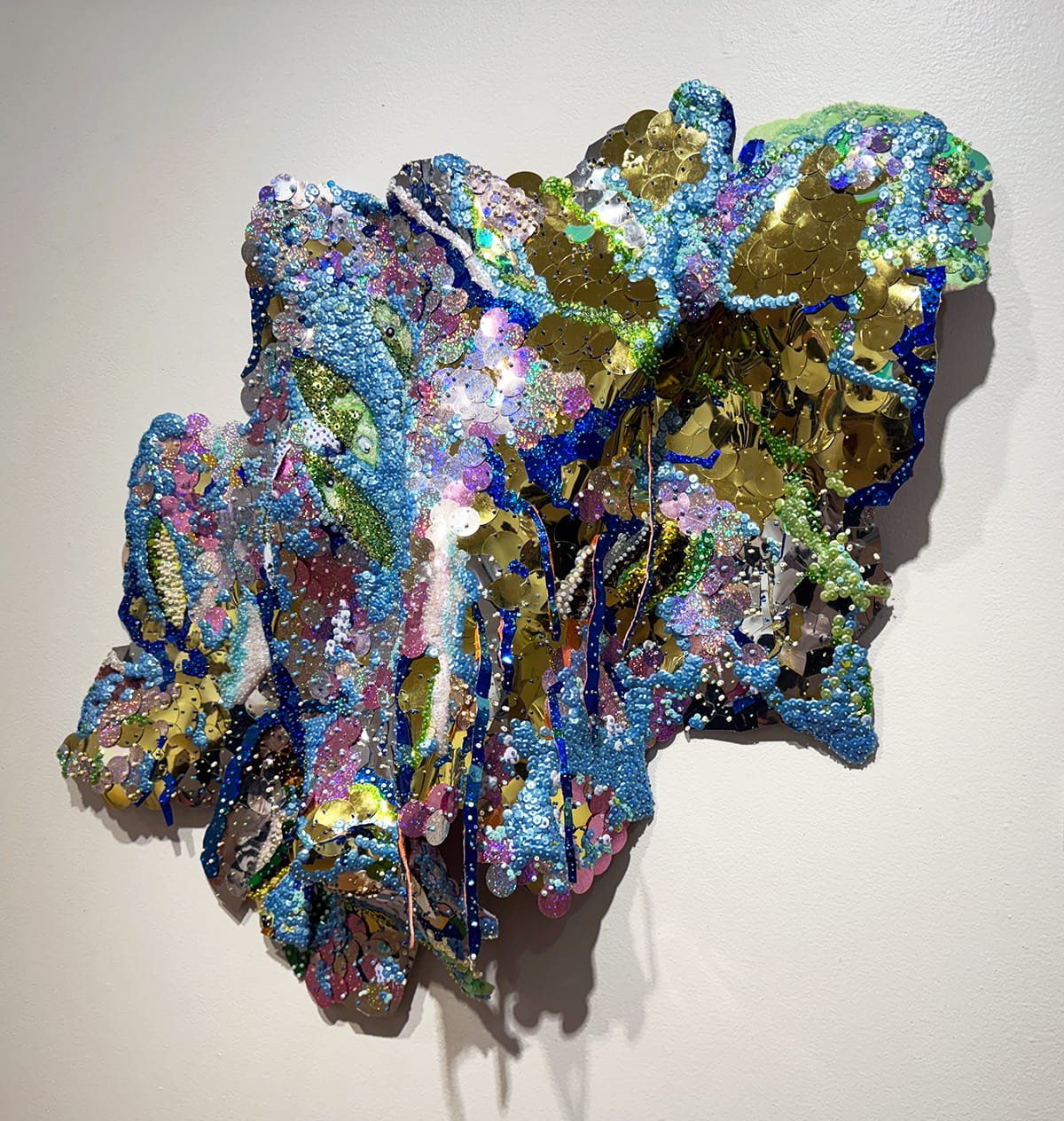
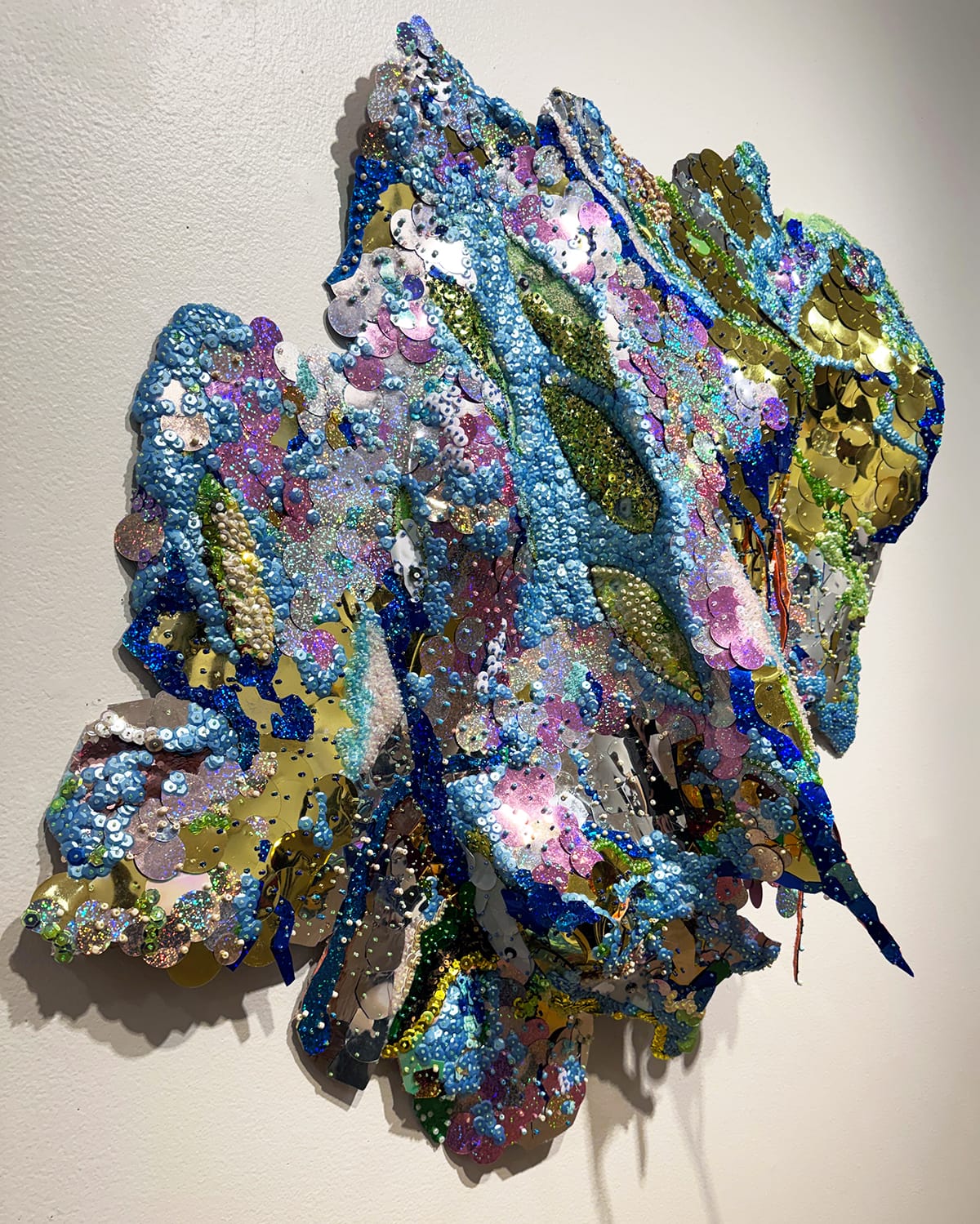
Kristin Morland, “Walleyes Caught in a Delta,” 2025, sequins, beads, thread and paint, 38 by 44 by 8 inches. Photo by Abby Bayani-Heitzman for the SHOUT.
Craft, Technique, and Artistic Legitimacy
Work with textiles — sewing, quilting, and beading — has traditionally been relegated to the realm of craft in ways that often diminish its artistic ambition. Morland’s show stands as a compelling counterargument to this outdated hierarchy. Her technique isn’t merely decorative but deeply disciplined: She intentionally places every sequin and bead, integrating them into compositions that challenge the viewer’s sense of depth, perspective, and material logic. These pieces are not mere objects; they are highly refined visual languages, born of patience, intuition, and rigorous skill.
The rhythmic labor of sewing becomes, in Morland’s hands, a meditation on light itself. Her works move between painting and textile, object and image, surface and depth. This hybrid quality reflects her artistic lineage. Morland received her BFA from the University of Kansas, where she studied painting and weaving, and she has spent decades weaving these practices into her unique sequin works.
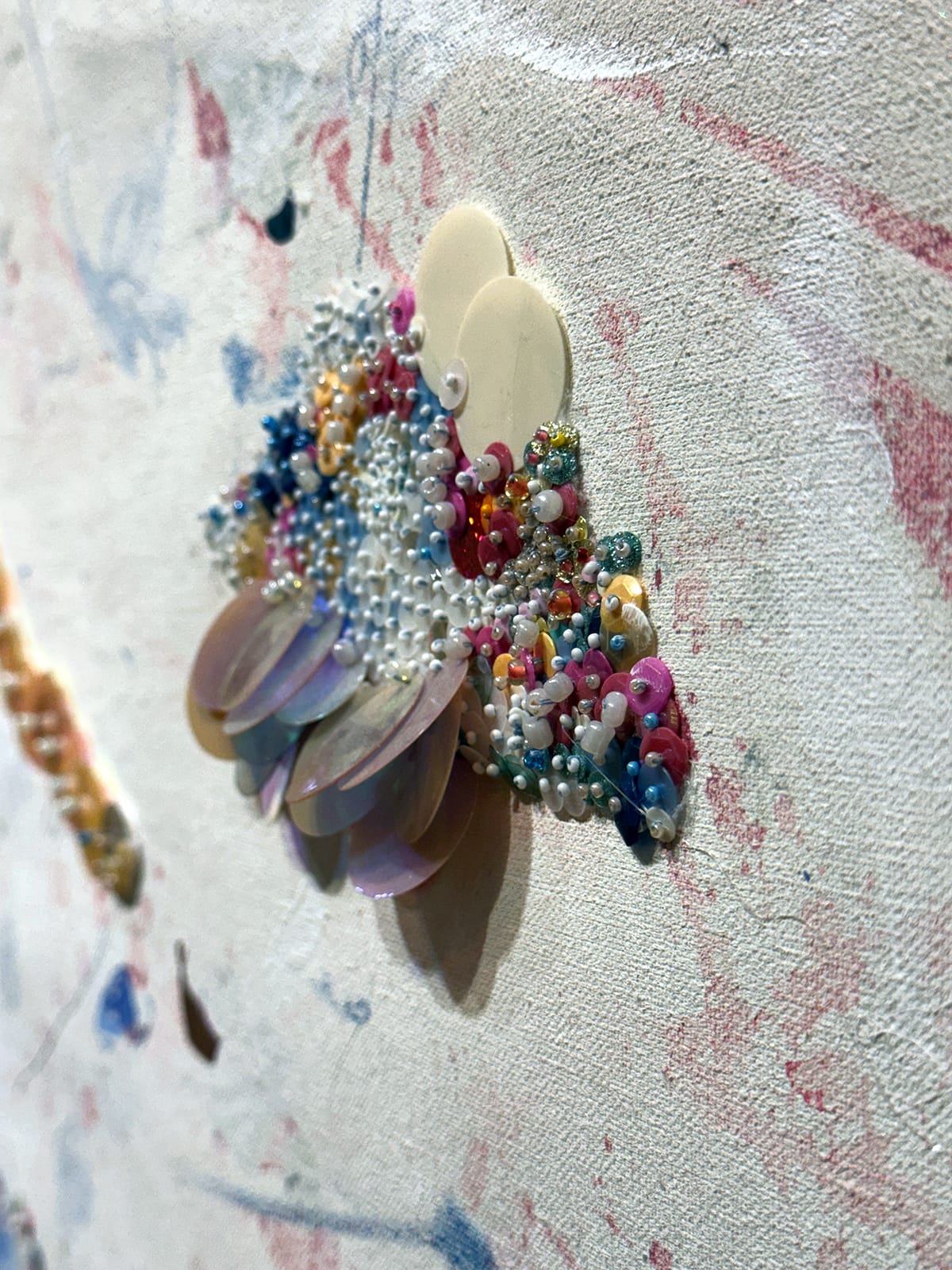
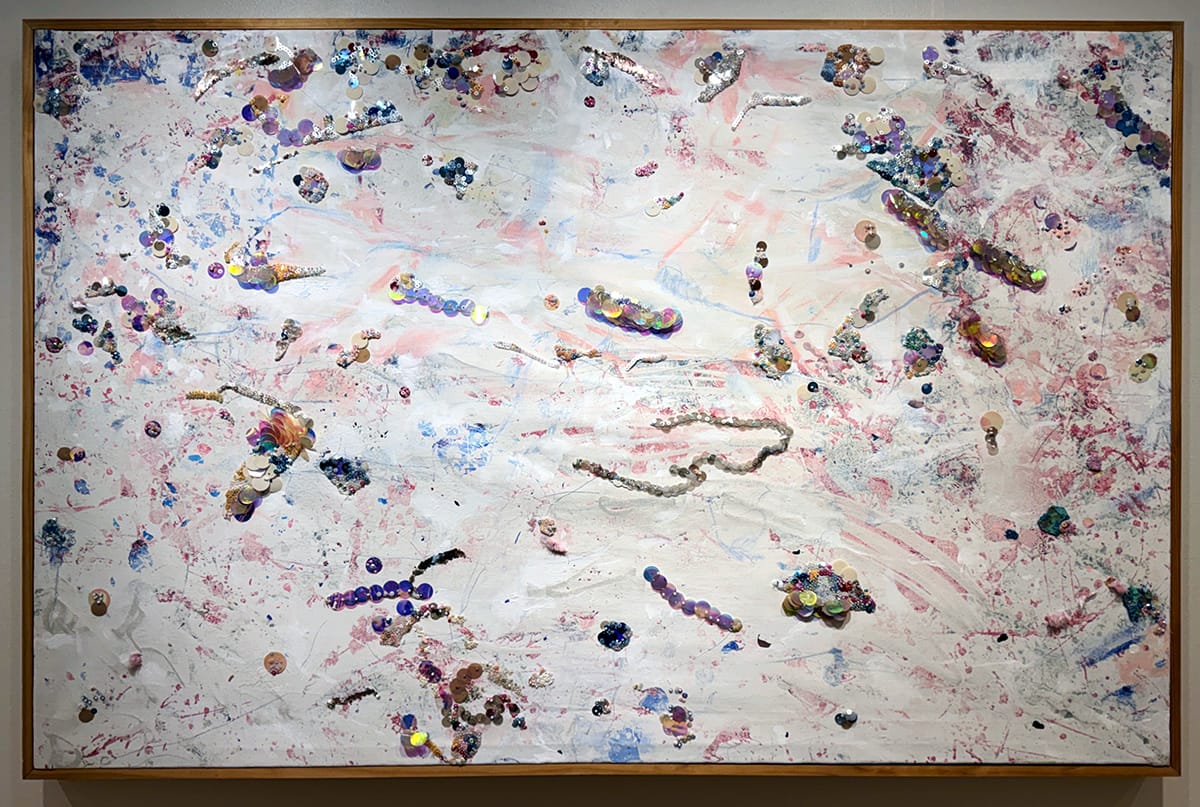
In works like “Finding the Space of Stillness,” where abstracted pastel sequin movements spread across a field of white, there is an interplay of painterly gesture and textile technique. The piece could be read as a kind of choreographed dance, with sequins swirling like brushstrokes captured mid-movement. The effect is visceral and meditative, inviting pause as much as engagement.
Mirrors, mirages, and perceptual play
The tension at the heart of this exhibition — between reflecting and imagining, between mirror and mirage — is as conceptual as it is visual. Morland’s mirrored surfaces do reflect: They bounce light back to the viewer, catching the environment of the gallery and even your own shifting form. Yet they also conjure illusions: fragmented faces, quasi-figurative elements, and fields of color that seem to float beyond definition.
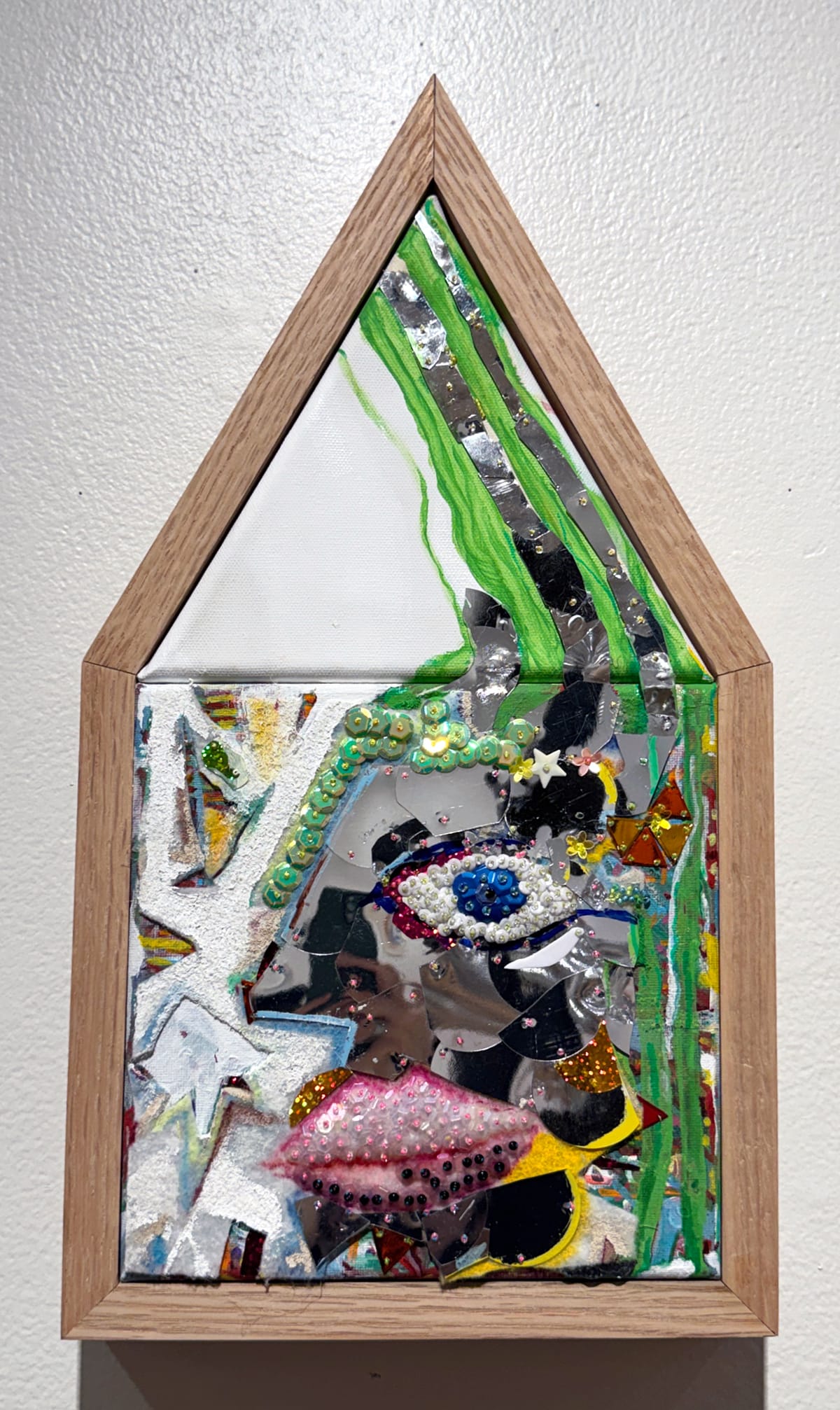
This duality — the reflective and the refractive — embodies the show’s central theme. Like a mirage, these works can feel as though they almost are something familiar — a face, a beachscape, an animal — yet just as quickly drift into abstraction as your eyes move over them. They compel you to question what you know of seeing: when is a surface truly transparent, and when is it merely pretending?
“Eye Sea Seeds Sewn: Mirror or Mirage” is an exhibition that rewards slow looking. Its luminescent surfaces and shifting reflections are not distractions but invitations to acknowledge that vision is never passive and that every gaze carries its own distortions, attractions, and elisions. Morland’s sequined worlds shimmer with both vulnerability and strength — the intimate glow of pastel threads combined with the radiant power of monumental paillettes.
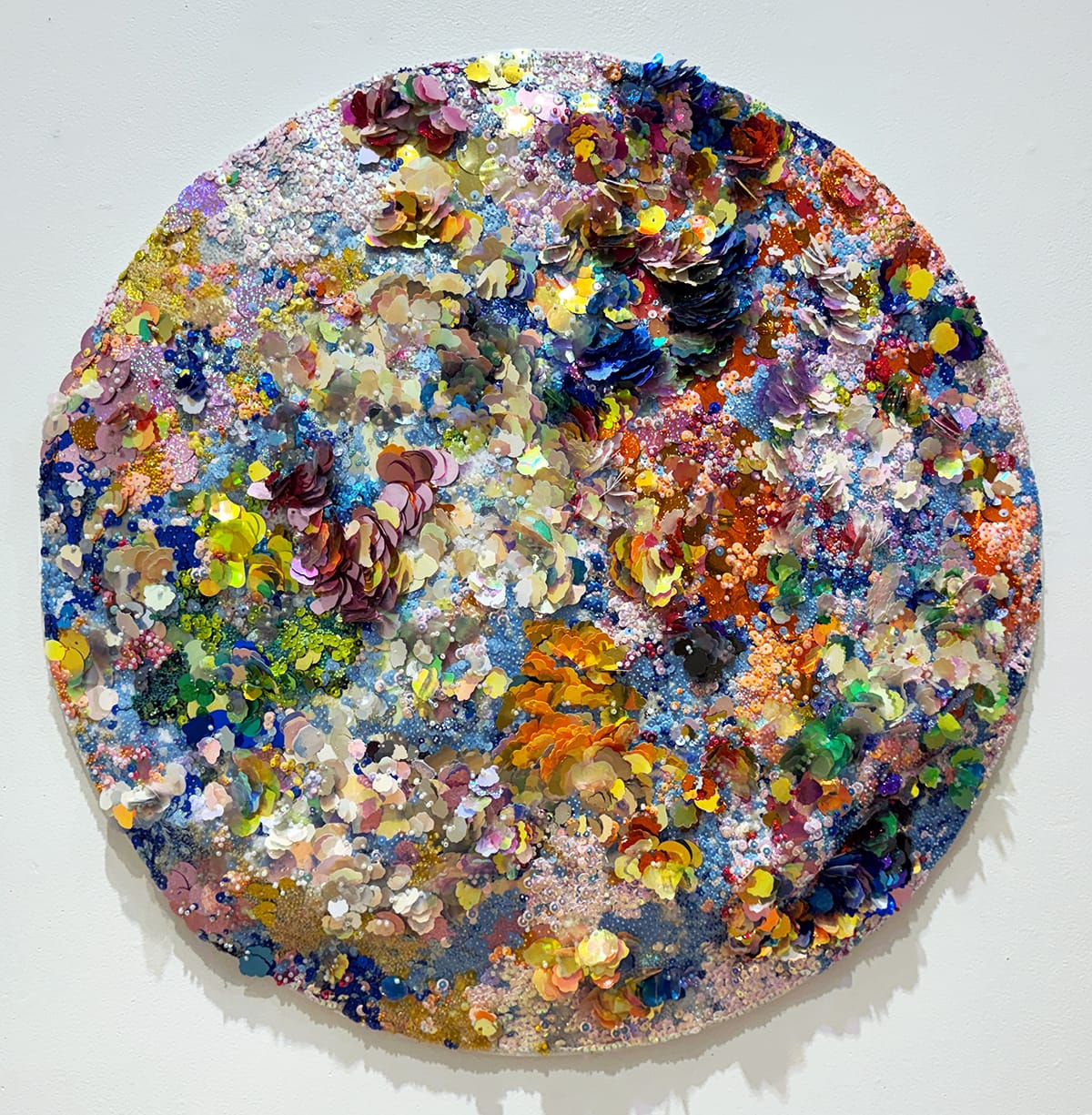
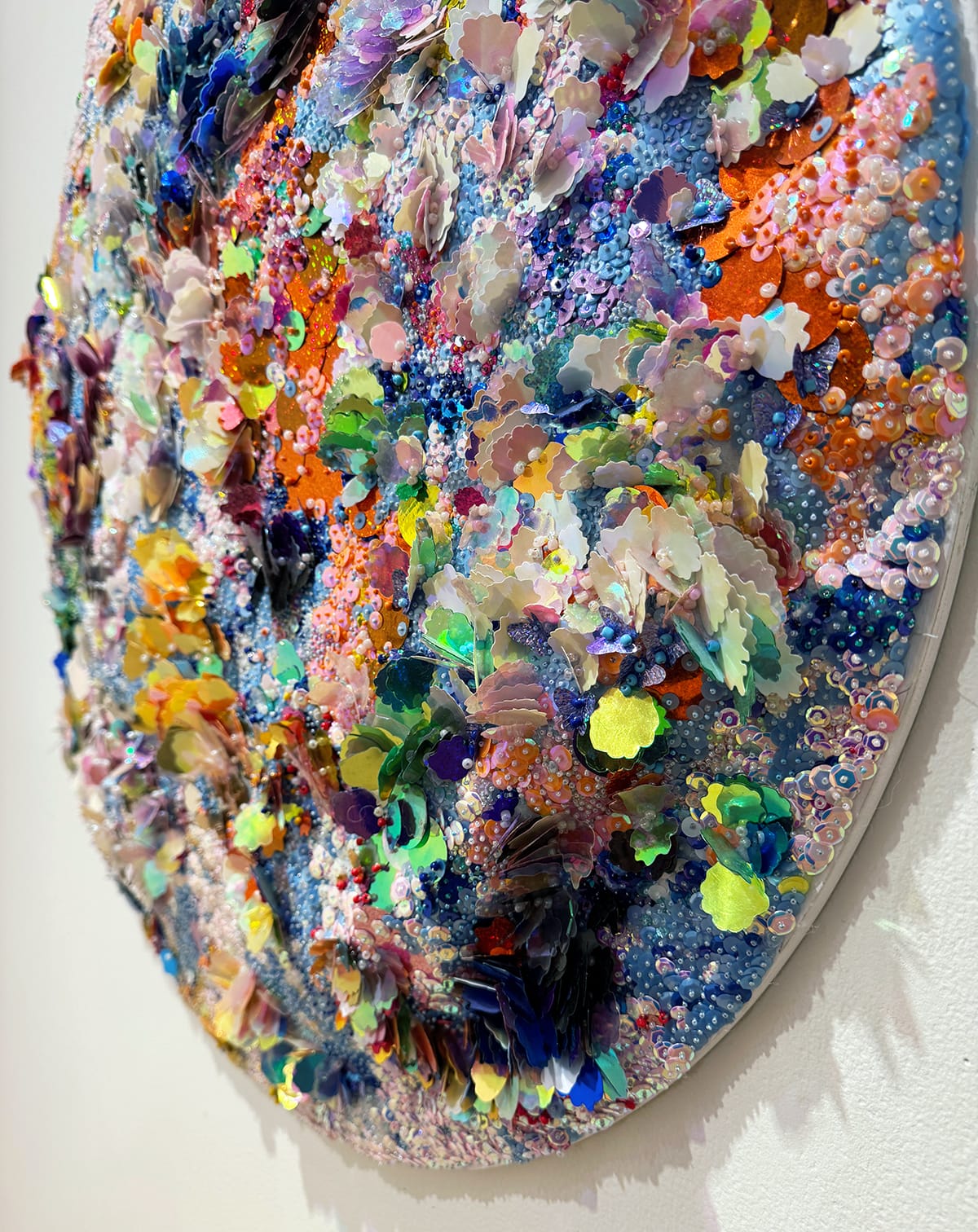
Kristin Morland, “Jenny! A Sparkling Rainbow in a Cloud,” 2022, sequins, beads and thread, 36 inches in diameter; detail of “Jenny! A Sparkling Rainbow in a Cloud.” Photos by Abby Bayani-Heitzman for The SHOUT.
By the exhibition’s end, it appears that Morland is not simply making objects that dazzle; she is conjuring experiences that expand how we understand what an artwork can be. In the glittering play of light and perception, her pieces are mirrors, but also dreamscapes, enigmas, and portals. In other words: mirages worth looking into.
The Details
“Kristin Morland | Eye Sea Seeds Sewn: Mirror or Mirage”
January 16-February 28, 2026, Lawrence Arts Center, 940 New Hampshire St. in Lawrence, Kansas.
The Lawrence Arts Center is open from 9 a.m.-8 p.m. Monday-Thursday, 9 a.m.-9 p.m. Fridays, and 9 a.m.-8 p.m. Saturdays. Admission is free.
Related coverage from The SHOUT
Kristin Morland's work was included in Topeka Competition 34 at the Sabatini Gallery of the Topeka-Shawnee County in spring 2025. Abby Bayani-Heintzman also reviewed that exhibition.
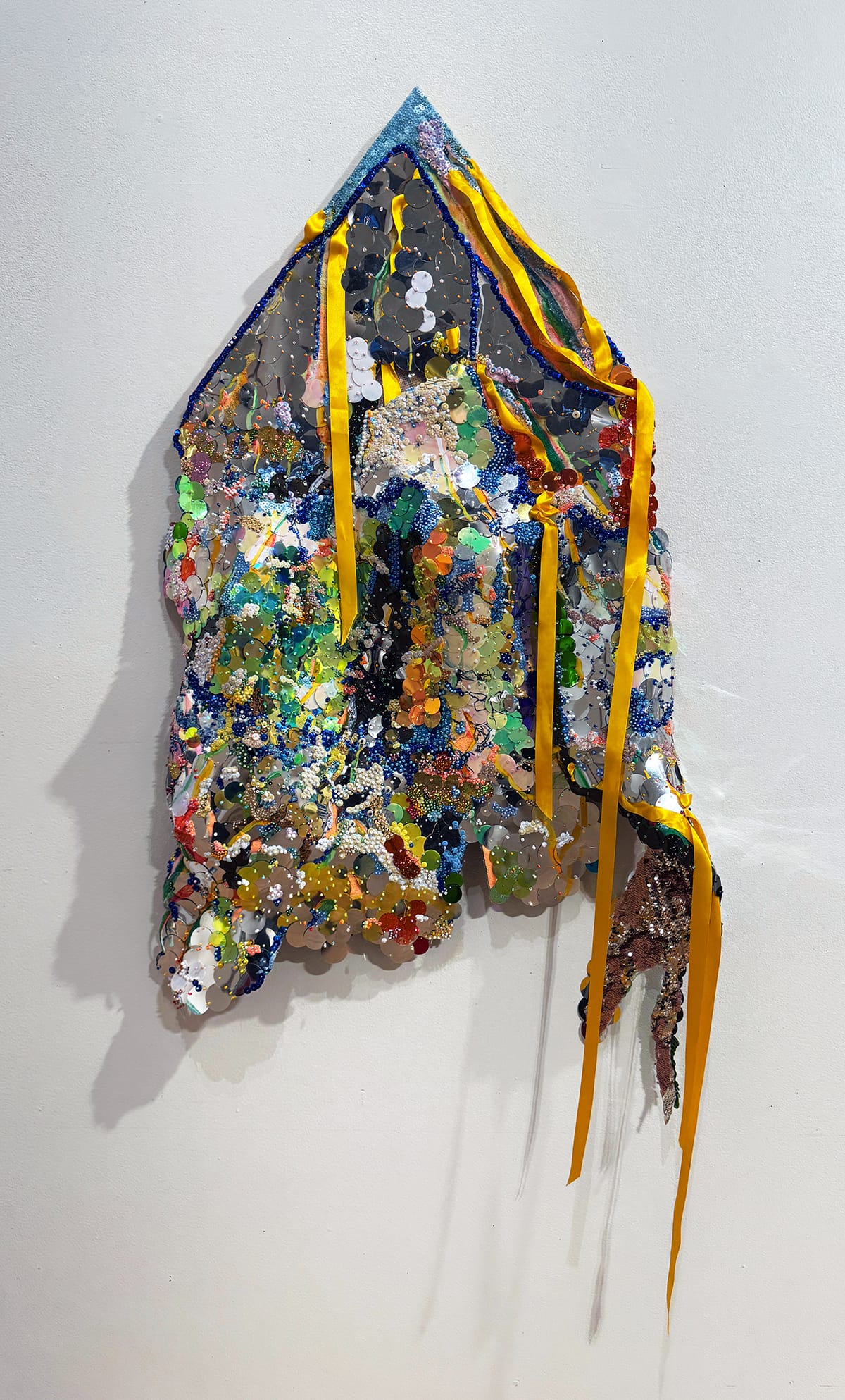
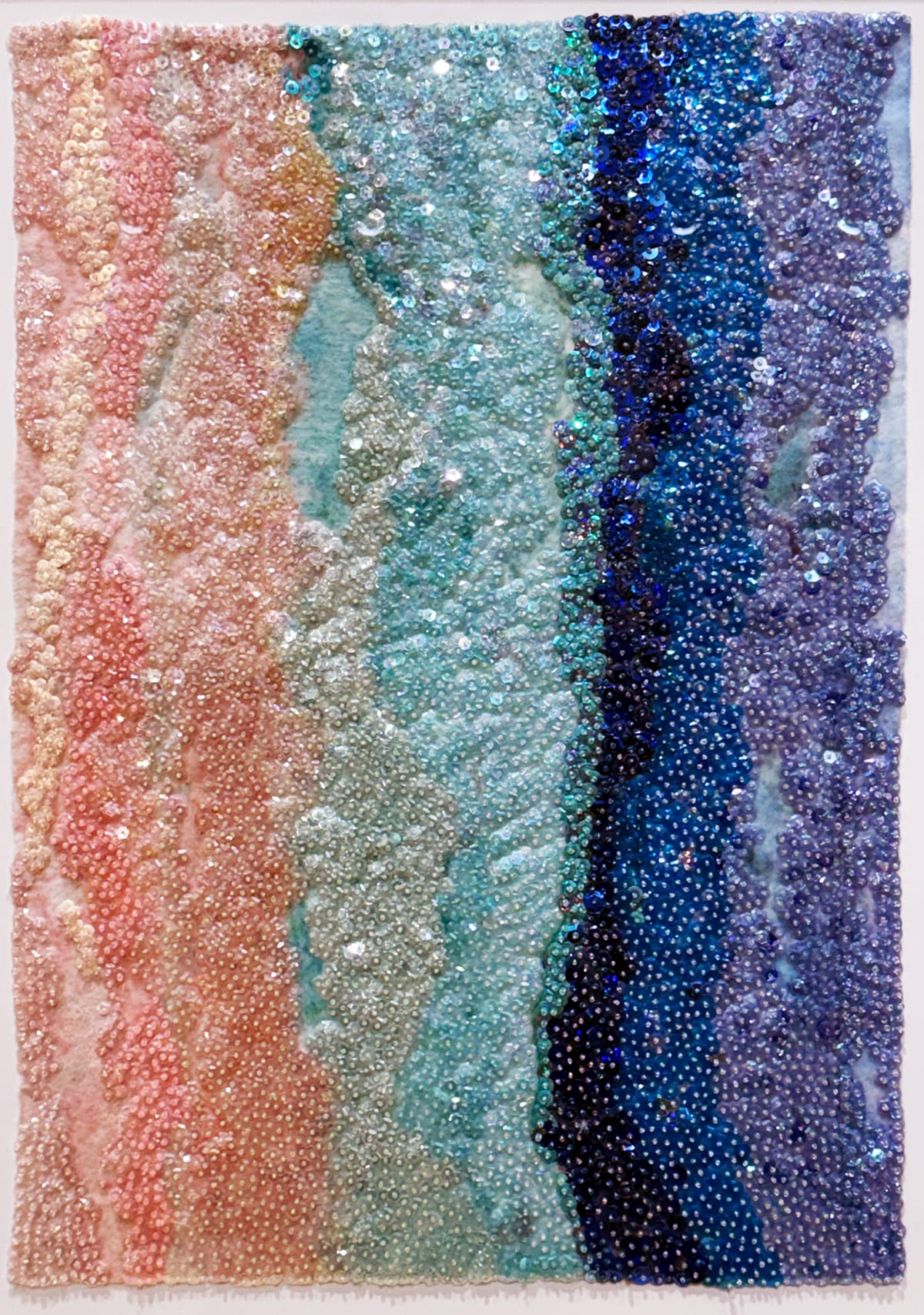
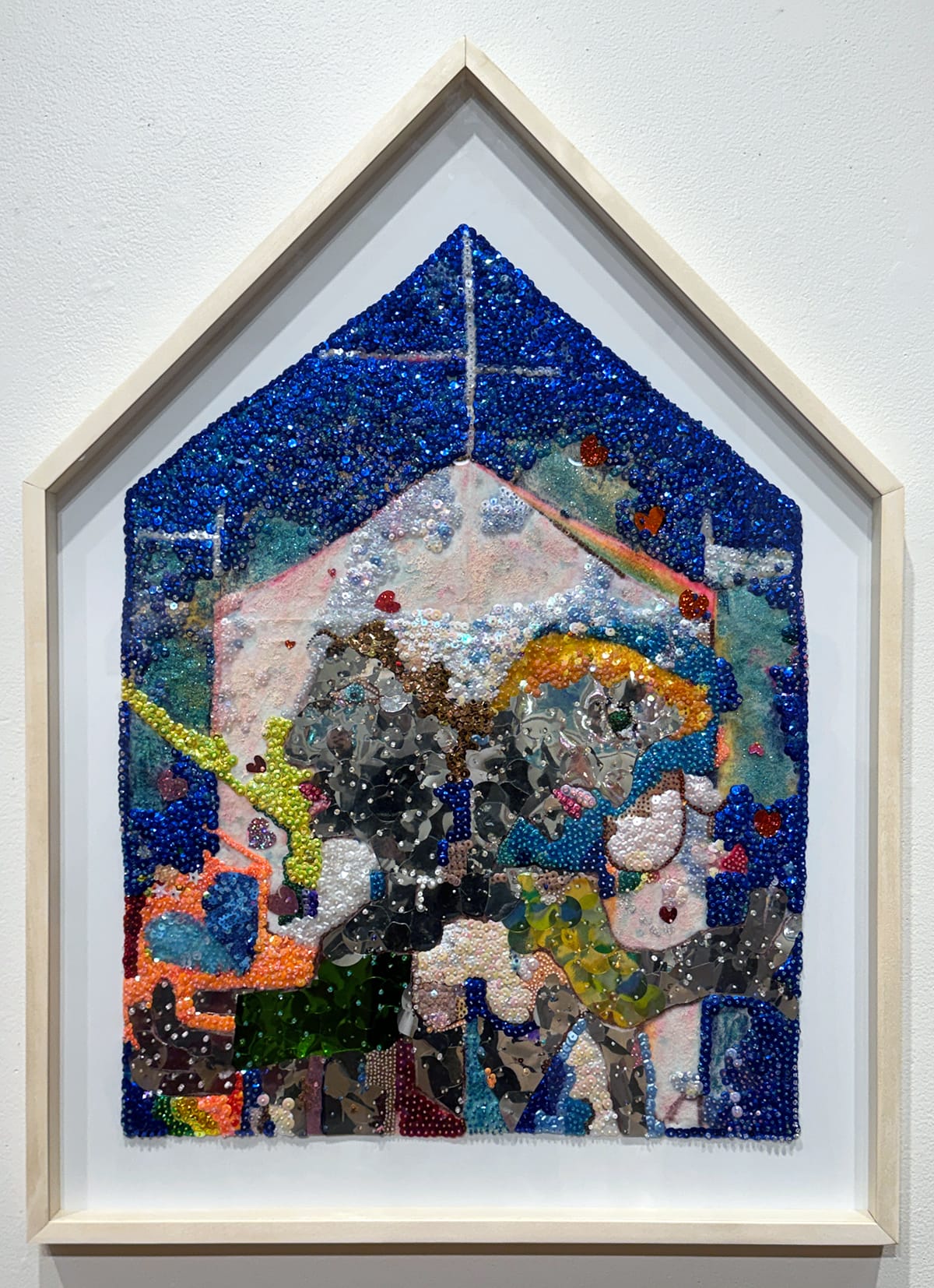
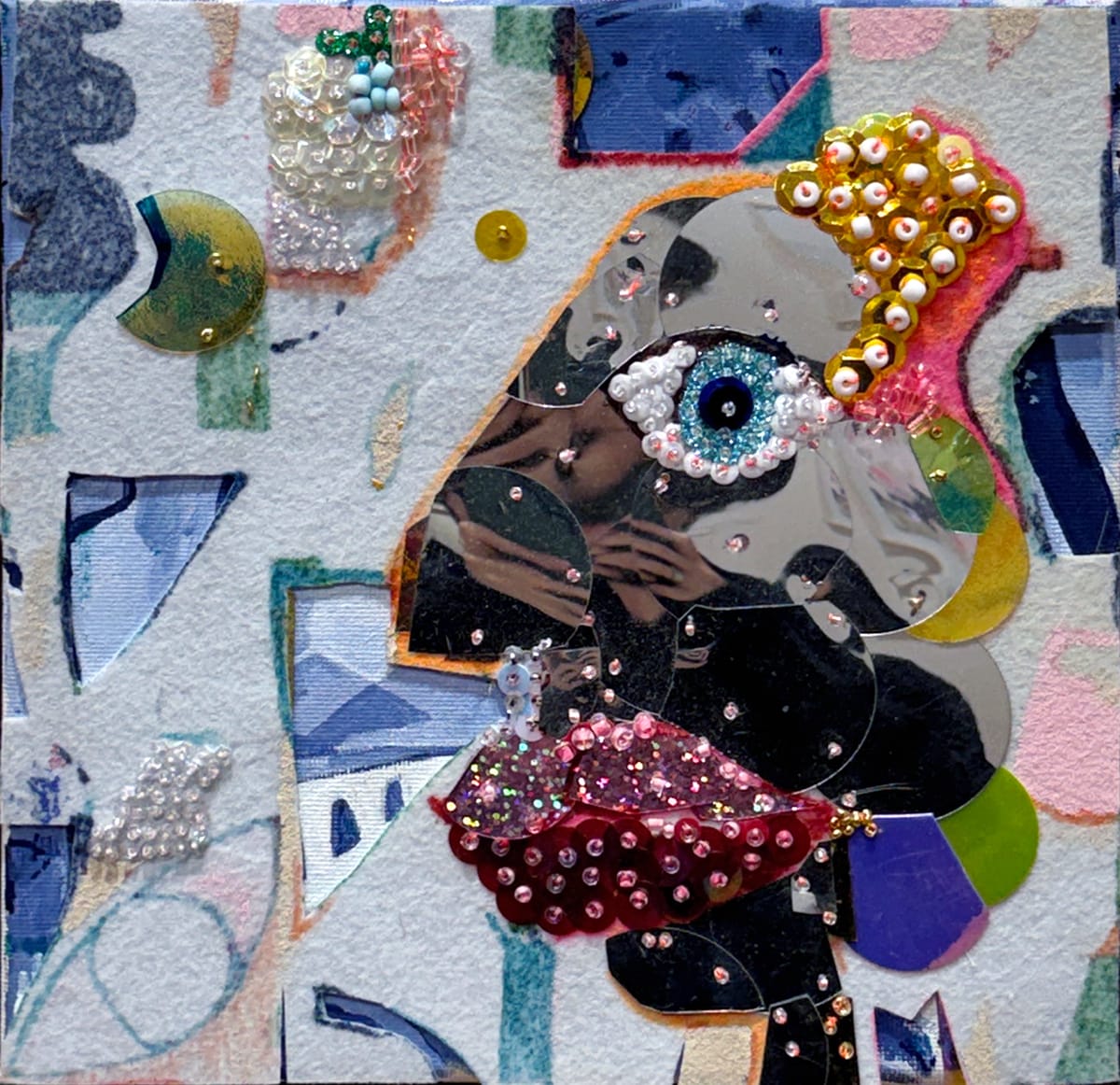
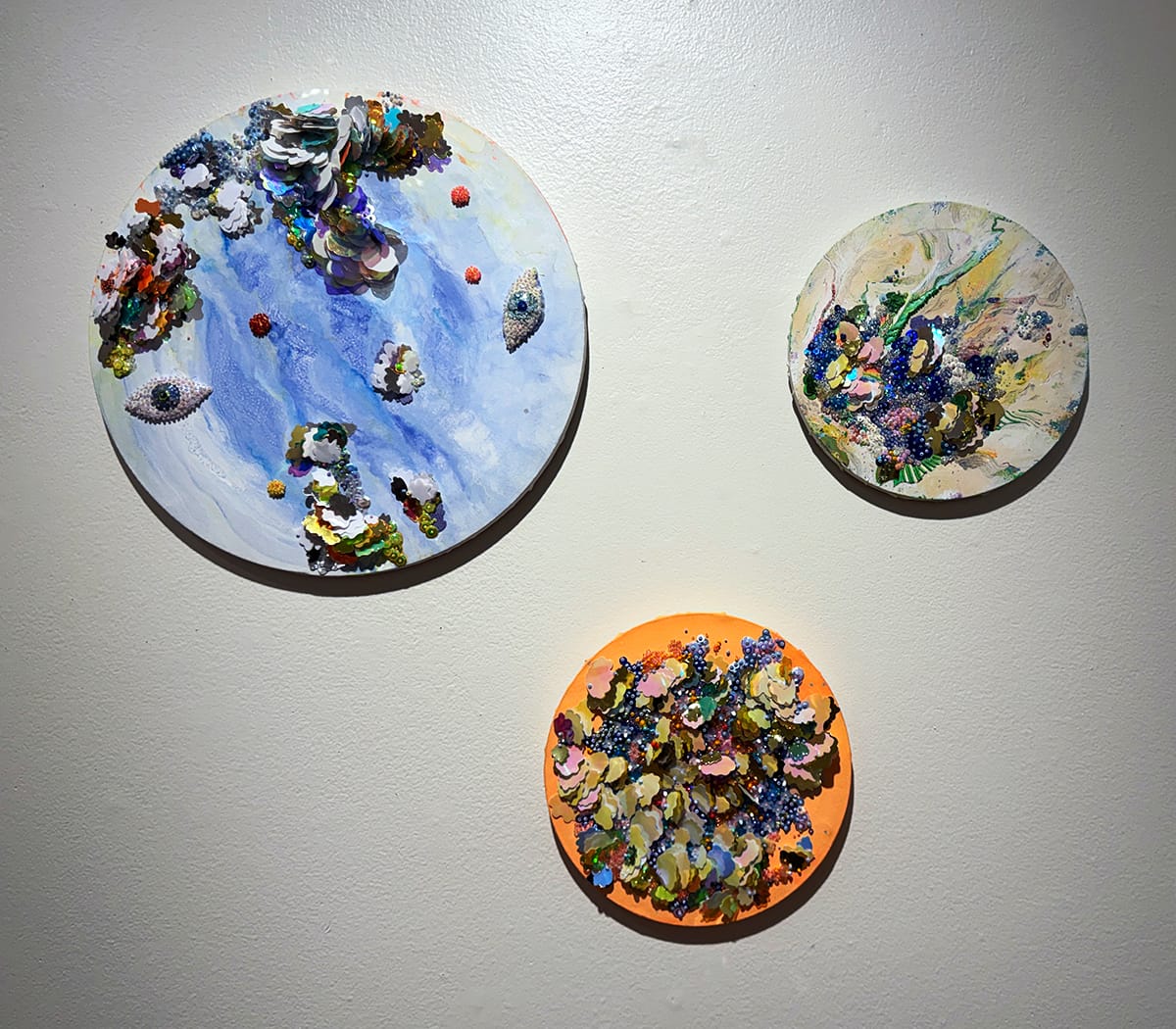
From top left: Kristin Morland, “In My Mind’s Eye, Heard Your Heart Speak #2,” 2025, sequins, beads and thread, 16 x 18 inches; Kristin Morland, “Spiaggia Rosa,” 2025, sequins, beads and thread, 30 x 24 inches; Kristin Morland, “Anima + Animus,” 2025, sequins, beads and thread, 41 x 30 inches; Kristin Morland, “Reflection Perception #1,” 2024, sequins, beads, paillettes, paint and thread, 9.5 x 9.5 inches. Photos by Abby Bayani-Heitzman for the SHOUT.
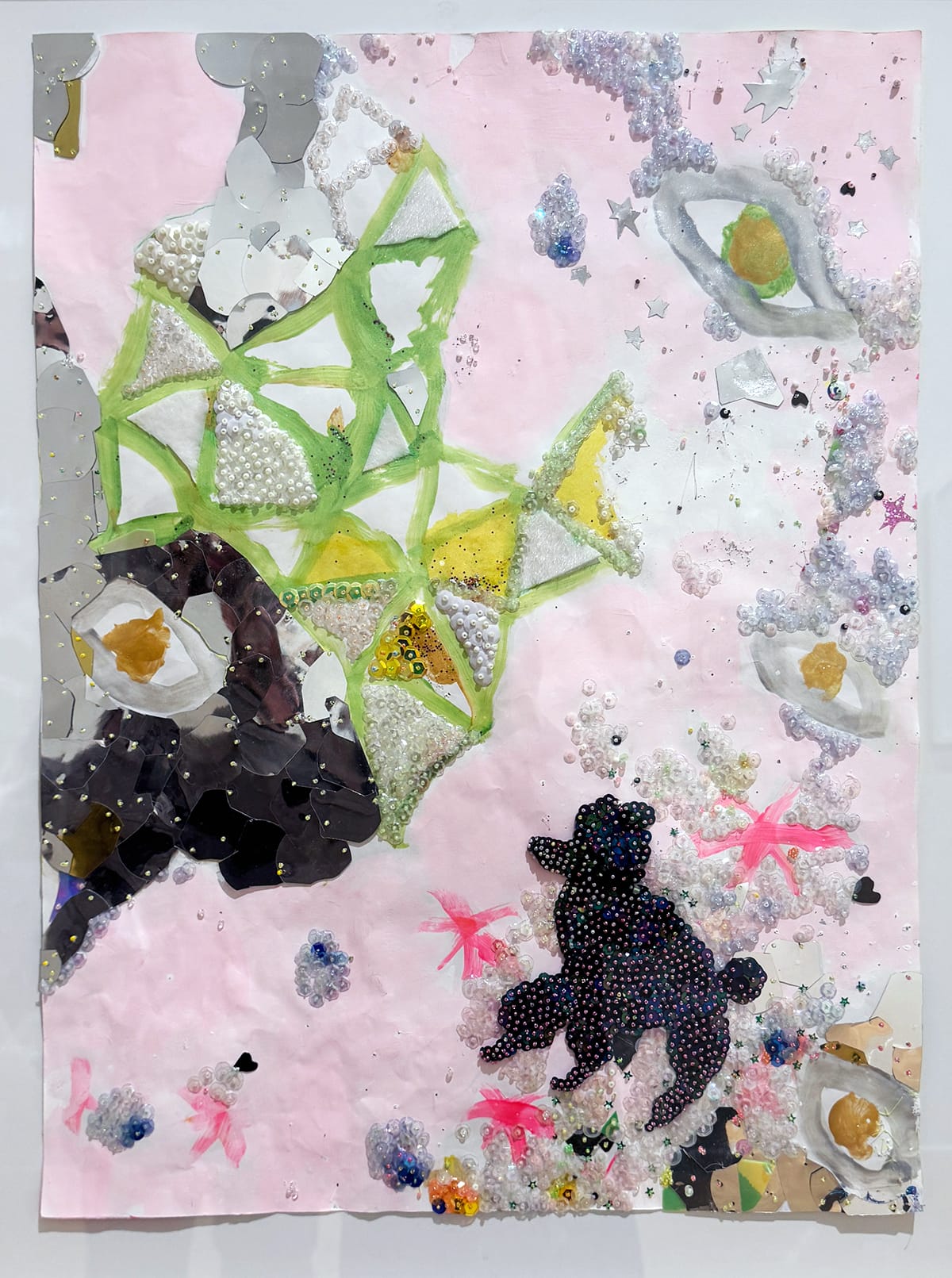
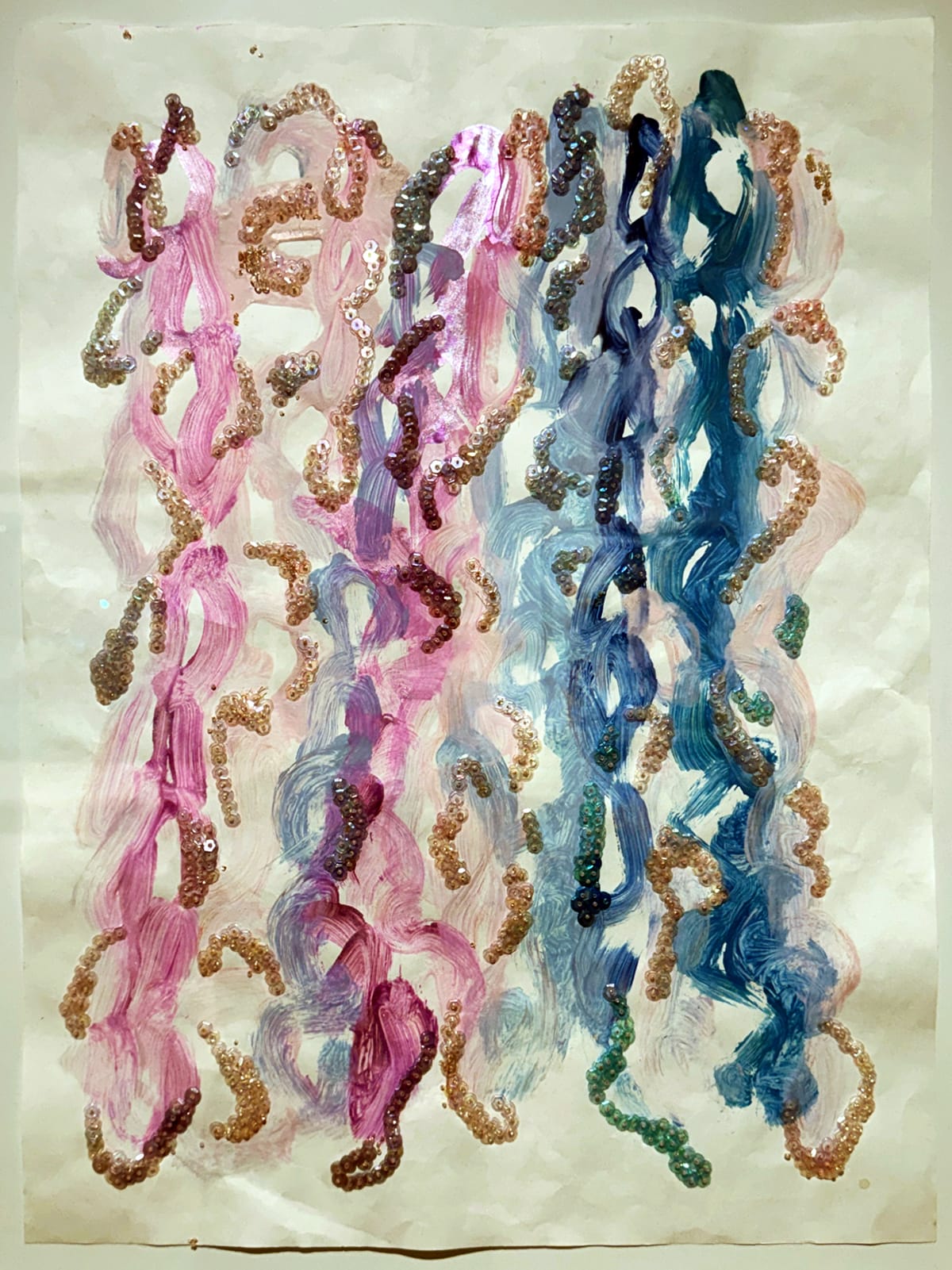
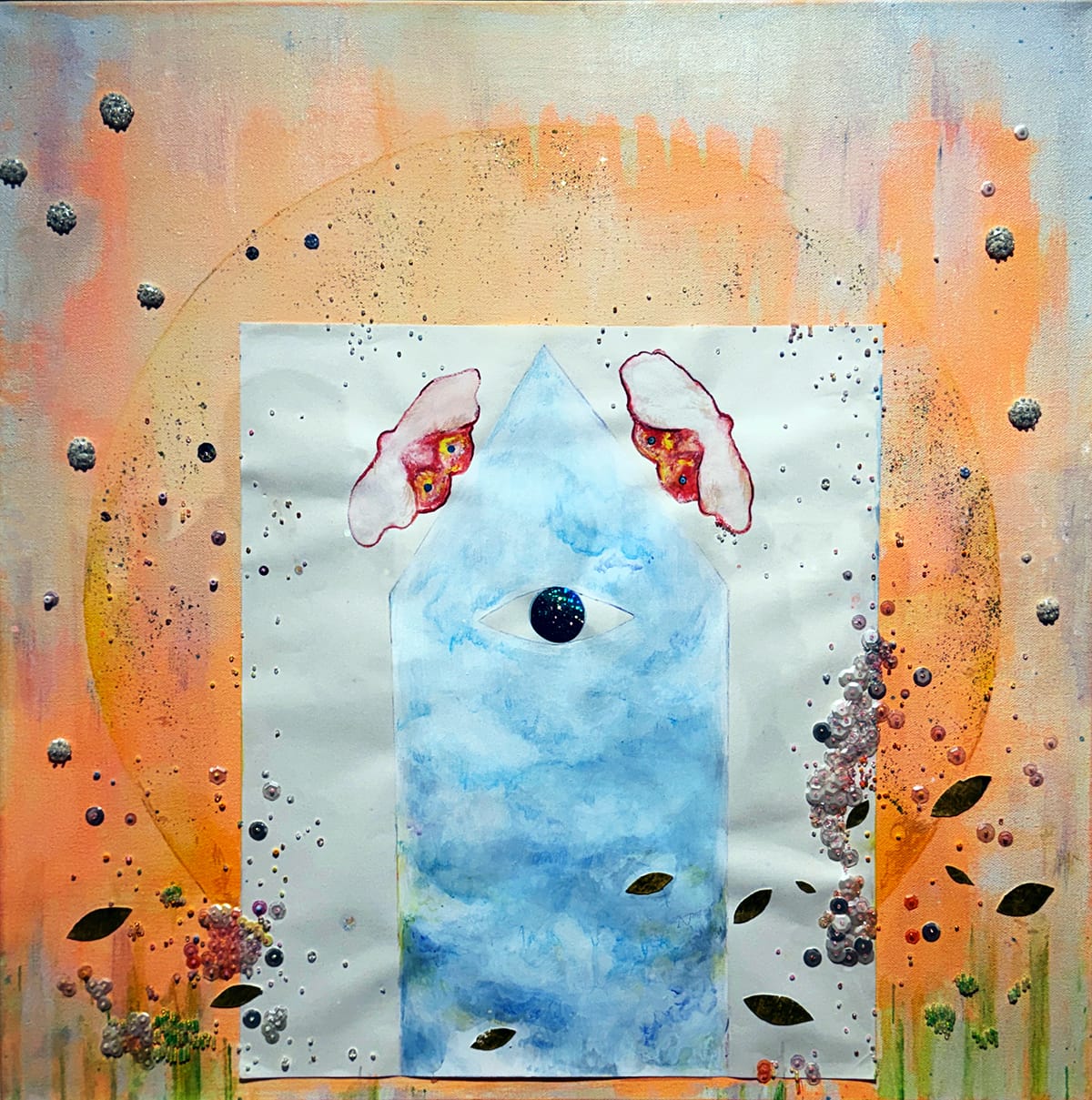
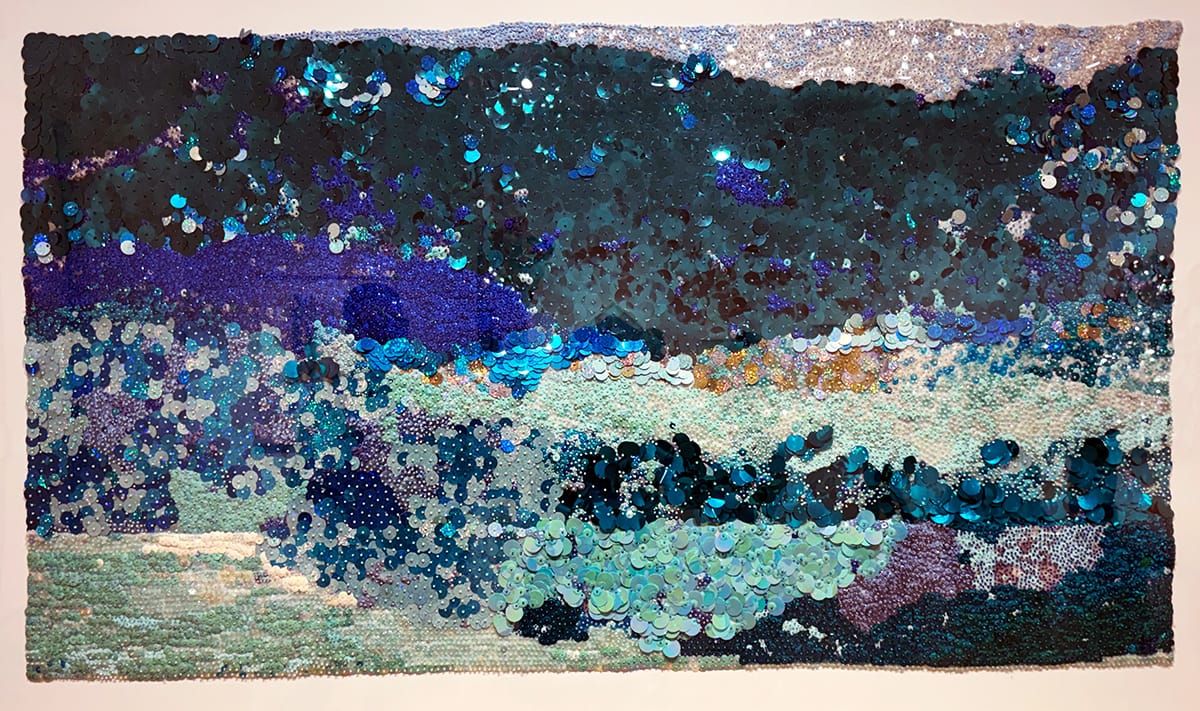
From top left: Kristin Morland, “Painting with Grace,” 2025, sequins, beads, paillettes, paint and thread, 30 x 24 inches; Kristin Morland, “Ariadne’s Thread,” 2025, sequins, beads, thread and paint, 30 x 24 inches; Kristin Morland, “The Eye of the Storm,” 2025, paint, pencil, sequins, beads and thread, 27.5 x 37.5 inches; Kristin Morland, “Blue,” 2017, sequins, beads and thread, 37 x 61 inches; Kristin Morland, “A Grand Air Trine,” 2025, sequins, beads, paint, thread and pencil, 16 inches, 10 inches, and 10 inches in diameter. Photos by Abby Bayani-Heitzman for the SHOUT.
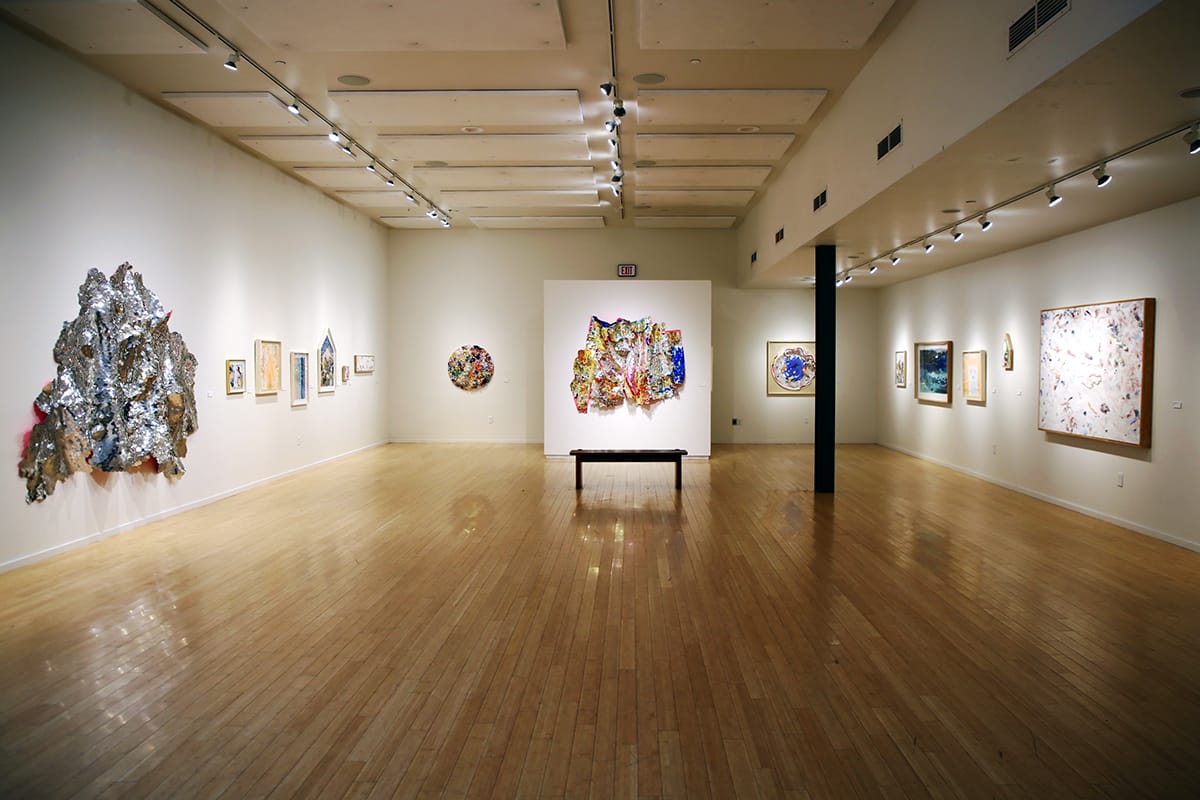
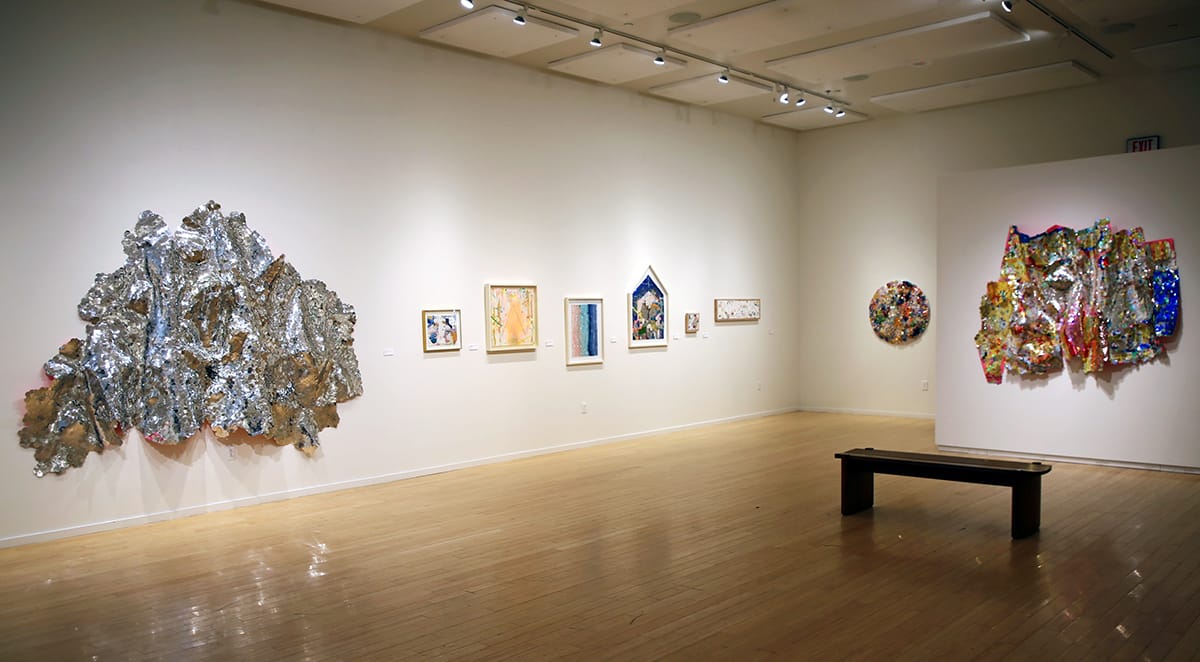
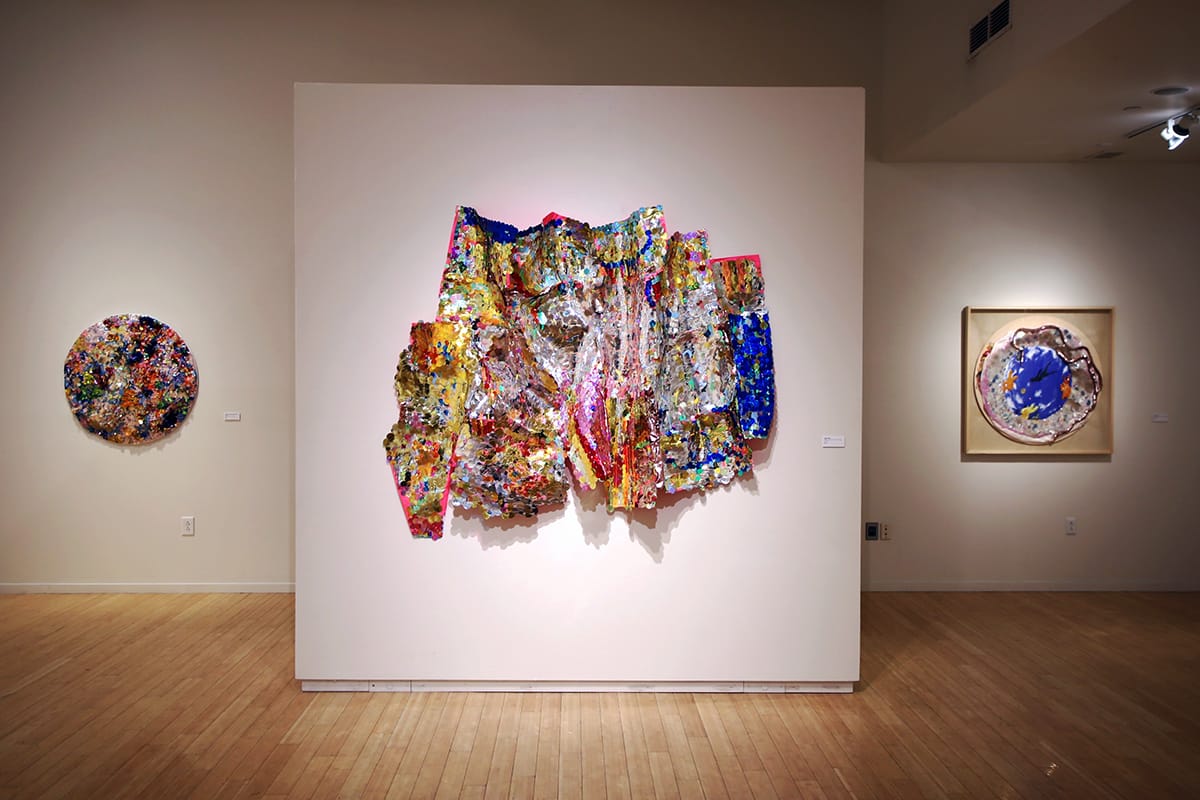
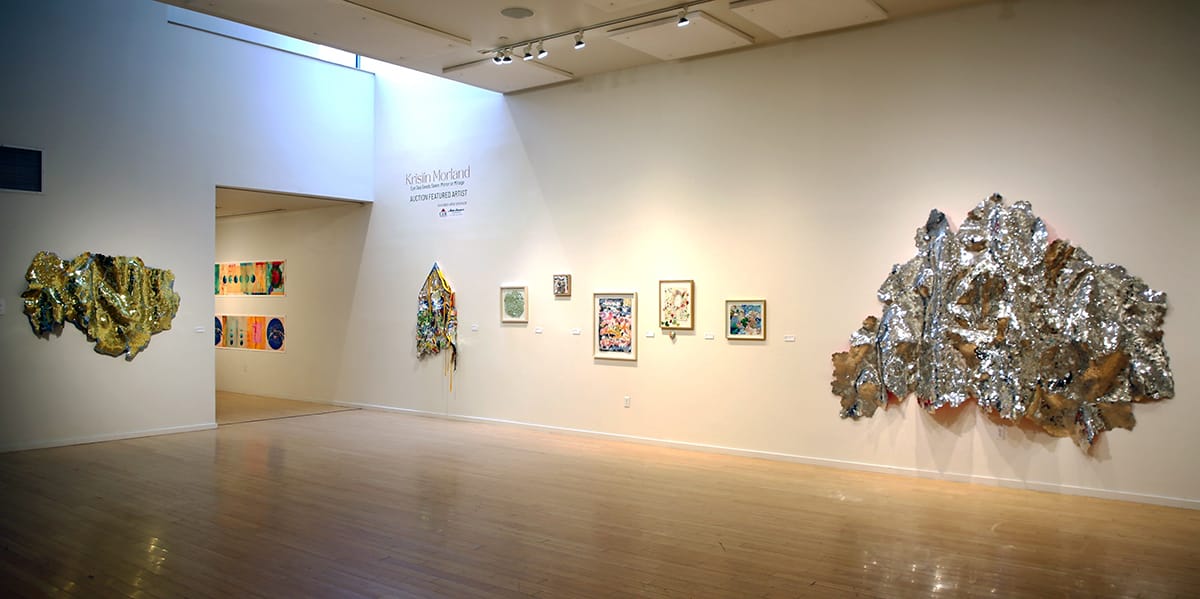
Installation views of "Eye Sea Seeds Sewn: Mirror or Mirage" at the Lawrence Arts Center. Photos courtesy of the Lawrence Arts Center.
Abby Bayani-Heitzman is a Filipino American writer born and raised in Northeast Kansas, where she continues to live and work. She received her Master of Arts in English from Wichita State and participated in the second cohort of the Kansas Arts Commission’s Critical Writing Initiative. Since 2021, she has published the fanzine Played Out, which focuses on music and subculture in Kansas.
❋ Derby man has the kind of voice that turns heads — and chairs
❋ Socializing while sober: how some Wichitans are cultivating alcohol-free communities
❋ As a small creative business closes, the owner mourns
❋ Painting through it: Autumn Noire on 20 years of making art
❋ How a guy from Wichita resurrected 'Dawn of the Dead'
❋ Bygone Friends University museum housed curious collections
Support Kansas arts writing
The SHOUT is a Wichita-based independent newsroom focused on artists living and working in Kansas. We're partly supported by the generosity of our readers, and every dollar we receive goes directly into the pocket of a contributing writer, editor, or photographer. Click here to support our work with a tax-deductible donation.