Bill Gardner on 'Iconic Branding'
A new book by the founder of Gardner Design and LogoLounge is a road map for graphic designers.
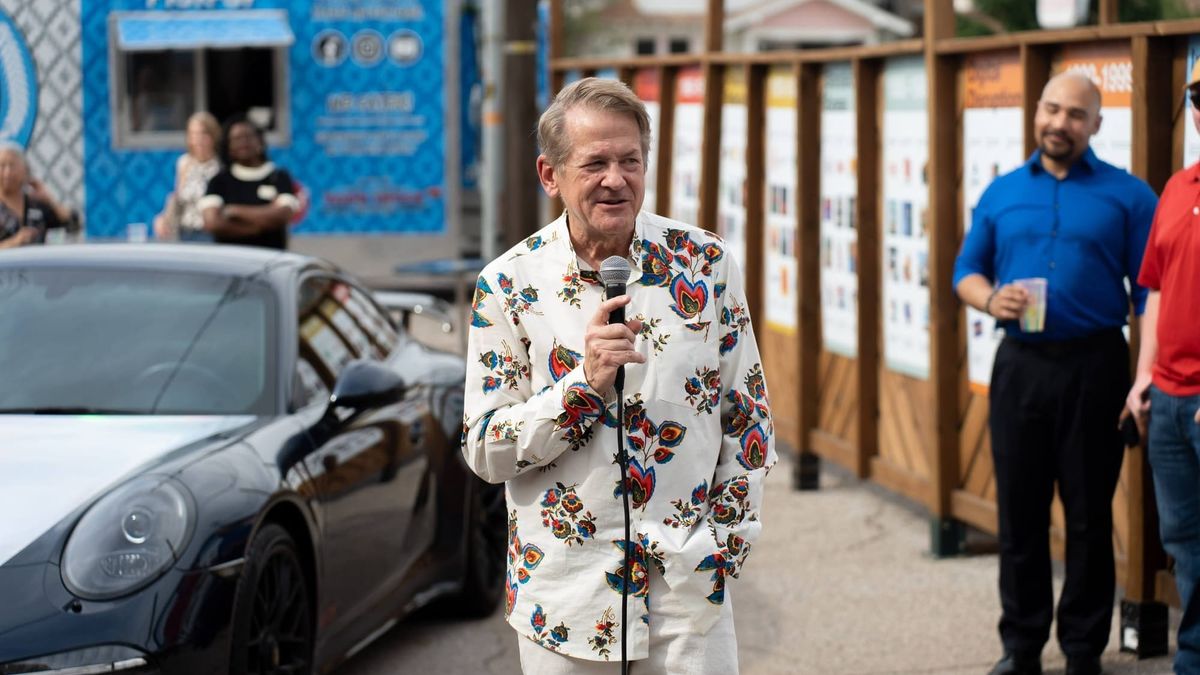
Wichita-based graphic designer Bill Gardner is known for his annual trend reports and "LogoLounge" series of compendiums. In a new book, he dives into the evolution of branding. Fellow graphic designer Jenny Venn sat down with Gardner to talk about the book in an interview for The SHOUT.
Jenny Venn: "What's next?" is a pivotal question in "Iconic Branding." But I'm curious to know what happened before. What led to your work in branding, to creating a book series, and now to "Iconic Branding"?
Bill Gardner: When eBay was introduced in the 1990s, suddenly somebody who was in England that had a teapot for sale could take a picture of it and put it up online. Somebody in America could type in “teapot,” and Lloyd's teapot over in England would show up.
I started thinking about how designers should be able to upload their logos (in a similar way). Instead of searching for a teapot, they could search for teapot logos.
The technology wasn't there yet, but I thought about the idea for about three years. That gave me time to noodle on what designers understand, and they understand competitions. They understand writing a check to submit a logo to a competition that they may or may not ever hear back from. Maybe I write a $100 check or a $200 check, and what's the payoff?
With LogoLounge, the payoff was that they may end up in a book. In 2001, we launched the site. It was immediately after 9/11, and it was the worst time possible to create anything that somebody had to pay money for. Somehow or another, the design community embraced it. I didn't ever market the thing. I had designers from around the world who were paying me a hundred dollars to upload these logos.
One of the keys to LogoLounge is that it has been this incredibly democratic gathering. It includes the very best designers — the gods that we bow to — and the person putting something together on their kitchen table.
Designers have come back to me over the years to tell me that I got their career started. Studios have told me that somebody walked in the front door carrying a LogoLounge book and said, “I found you in here. Could you guys do this project for me?”
JV: “Iconic Branding” reads like a capstone after years of documenting logo and identity design through LogoLounge and your annual trend reports. Why was right now the time for “Iconic Branding”?
BG: We started publishing trend reports 23 years ago, and my publisher was interested in having me write a book about logo trends. But here's the deal: The trend report has a sell-by date of about a year. If we did a book, it would probably be dated by the time it hit the press.
It's more important to know where you've come from than it is to know where you are. By looking back at how branding got to this point, you can see the pendulum swinging. You can forecast where things are going to go.
All the artifacts we associate with branding are going to appear dated in two years, in five years, because our industry moves rapidly. So how do you get ahead of that parade? The leader of a parade only needs to be a few steps in front of it. If you're miles ahead, the parade doesn't know where to go. But if you're just a few steps in front of it, and you can forecast where you're going, then people are going to follow you. That's the way great designers move.
JV: Branding has the power to shape cultural narratives for better or worse. Locally, you helped with North High’s transition from the Redskins to the Redhawks. What responsibility do designers have to move culture forward?
BG: I'm glad you brought that idea up in regards to North High, but also keep in mind that it wasn't our idea — we were the facilitators.
My belief is that, as designers, we can integrate some of our own thoughts into (our work). Personal projects are opportunities for us to move culture forward. When we are doing projects for entities that have beliefs parallel to ours, we're also helping move that forward.
If somebody walks in here with a project that I disagree with, I may elect not to do that project. But if somebody wants to sell more lumber, or redesign a theater, I am going to do everything I can to understand their culture, to be able to press their ideas forward. It’s not about my ideas really as much as it is about our clients’ ideas. We often tell people that we just do two things in branding: We provide clarity and we provide consistency.
The vast majority of what we do (at Gardner Design) is rebranding. Over a period of time shifts can happen, and you need to find a way to be relevant to your audience again. We go in and help clarify what their story and their message are.
Back to your question — I don't look at it as a responsibility. If a client comes to me and doesn't want to move culture, I'm still going to work for them as long as it's a project or product I'm good with. But not everything has to move the culture.
I'm a graduate of North High and very proud of that. My father attended North High. There's a legacy there, and it's such a beautiful building. Bruce Moore was an amazing sculptor who graduated from Wichita High School (which became Wichita East High School). As a student, he had submitted a sculpture to a competition in Paris and was accepted as a grand prix winner. The architect for North High hired him to develop all the terracotta work on the outside of the building, which is covered with majestic terracotta sculptures of Native American scouts and buffalo being hunted — various iconic elements from Native American societies. At the very top of North High’s iconic six-story tower are 16 pairings of birds of prey hunched, sitting proudly up there, beautifully sculpted. You could say they were eagles, you could say they were hawks, you could say that they were falcons. They’re not really identifiable.
Adam Anderson, who did the design work on this, was able to look at Bruce Moore's sculptural work, and it was so iconic that we were able to draw from that to create this beautiful Redhawk symbol.
All of the alums who were so concerned about the scattering of heritage by dropping the Redskin name started to realize that the real commonality at North High was that building that they all had walked through. It framed their life. It was this great story, and the alums bought into it.
There's probably no harder project in branding than a school or an athletic team's mascot, because generations have developed an affinity for those elements that extends beyond common sense. You've got to deal with those emotions, those people. At Gardner Design, that's what we do.
It's delicate, and you've got to be really cautious. One of our secret sauces is understanding how to do that.
JV: Wichita is not a small town, but it doesn't have the distinct brand recognition of cities like Austin or Portland. What is your take on Wichita's brand right now — what does it need, if anything?
BG: A brand is about what people have come to know about it. There’s that old story of the blind men touching the elephant. Each touch a different part and get a different sense of (what an elephant is). There are aspects of this community that have very strong feelings about Wichita in both directions.
But I think that we have a generation — including my daughter, who's now 30 — that has a new allegiance to Wichita. They stand up and vehemently fight for it, and there are enough boomerangs now that have returned to the community, and we enjoy telling their stories.
Are there people who have left our community who still have raw nerves about it, who don’t feel like Wichita represents them, who want to be elsewhere? Yes. Find me a community that doesn't have that. Every community is going to have detractors. We used to be so focused on the detractors, but we've changed that pattern now. We view ourselves differently.
When we were helping rebrand Wichita State, one of the questions we always got was, “Are you going to keep the wheat in the logo?”
Almost to a person, individuals from Kansas were not in favor of keeping the wheat, and people who had elected to move to Kansas felt the wheat was incredibly important because it tells a story of regionality. It differentiates this WSU from Wayne State or Wright State or Washington State.
Dr. Fox, the former dean of the College of Health Professions, told me that when he looks at the WSU logo, he remembers the story of wheat in the U.S. It was brought over by (Mennonite) immigrants who struggled across Europe, sailed to America, and traveled to the middle of the U.S. with a bag of wheat seed they’d hauled all the way from Russia. They planted it and prayed there would be rain.
He said, I think about the chances that those immigrants took. If you think about what wheat means, it's the bread of life. You can take it back to the Bible or you can take it back to the beginning of mankind. Now we not only feed a nation, but the world, with wheat from Kansas.
Because we live here, we forget that. And we forget that people outside the state have a different perspective. They're not teasing us when they mention Dorothy — that's just what they know of us. You can take that and build it into a respected brand, or you can be offended by it. Kansans need to get that chip off their shoulder and just be willing to say, yeah, that's us. This is what we are.
JV: You've built an internationally respected design practice from Wichita. What has the Midwest, Kansas and Wichita made possible for you that couldn't have happened elsewhere?
BG: Susan Mikulecky and Sonia Greteman and I were all independent designers, and we started the AIGA chapter here — American Institute Graphic Arts. Susan and I had started investigating whether there was an organization we could affiliate with that would give us some connectivity to the (larger design community). In 1987, there were 16 chapters in the U.S., and Wichita was not on their bingo card. They had no idea.
The world started looking at Wichita because we started bringing in amazing speakers — Charles Spencer Anderson and Michael Vanderbyl and Kit Hinrichs and Dugald Stermer, and on and on.
That built up this Wichita market, as did (printing company) McCormick Armstrong. I would talk to designers from New York, Minneapolis, Dallas, LA, San Francisco, and they would tell me about some (specialty) printing capability that they had. And I was going, yeah, we do too.
I figured out that there's nothing that we couldn't do here.
The Details
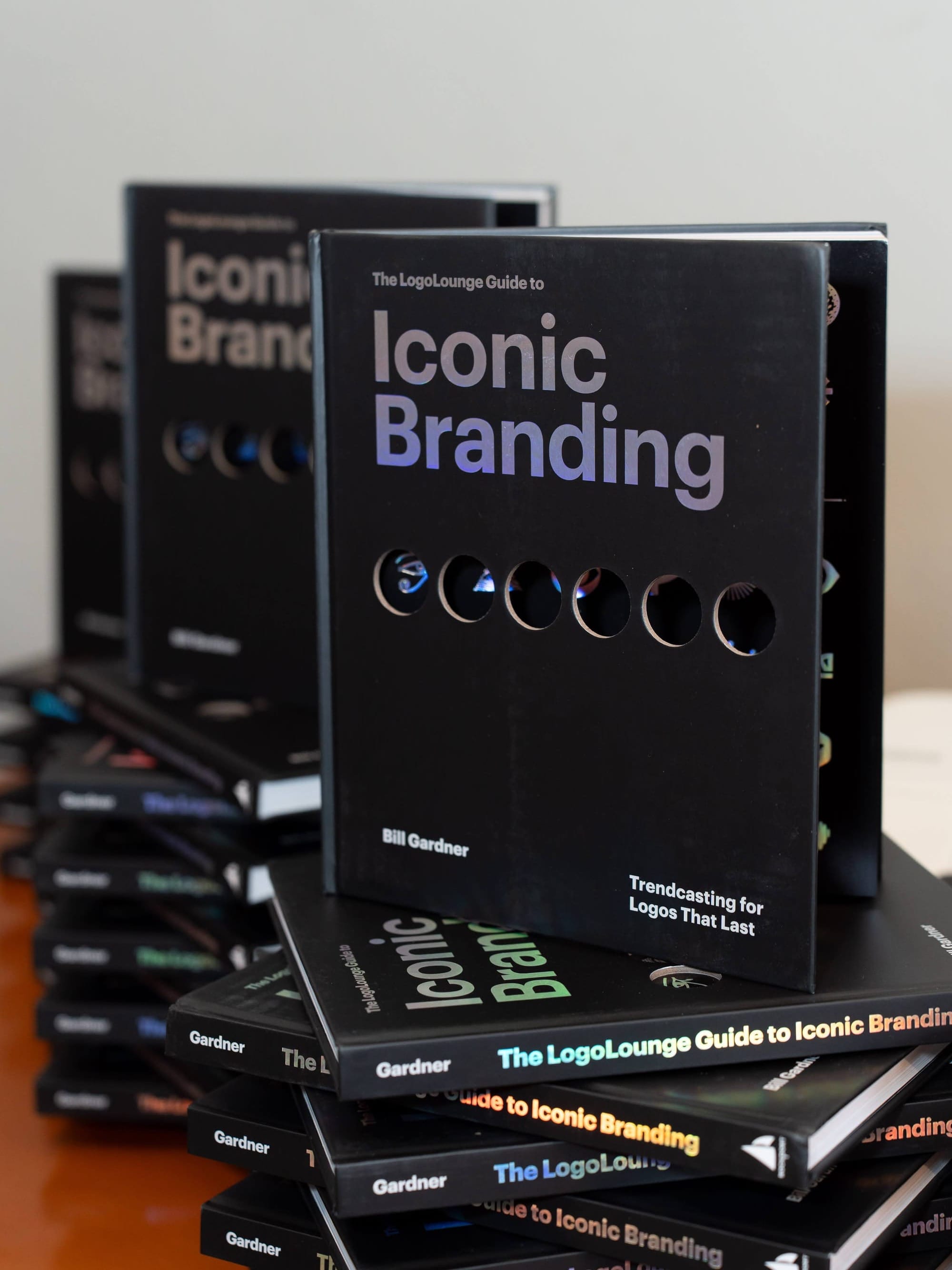
"The LogoLounge Guide to Iconic Branding" by Bill Gardner
Published by Rockport Publishers, 216 pages, and available anywhere books are sold.
Learn more about the designer on Gardner Design's website.
This post was updated to reflect that sculptor Bruce Moore graduated from Wichita High School, not Wichita North High School. This was an editing mistake. Read about our commitment to accurate information.
Jenny Venn is a designer, educator and founder of StudioJenVenn in Wichita, Kansas. In her free time, she’s a maker, reader and Hello Kitty aficionado.
❋ Derby man has the kind of voice that turns heads — and chairs
❋ Socializing while sober: how some Wichitans are cultivating alcohol-free communities
❋ As a small creative business closes, the owner mourns
❋ Painting through it: Autumn Noire on 20 years of making art
❋ How a guy from Wichita resurrected 'Dawn of the Dead'
❋ Bygone Friends University museum housed curious collections
Support Kansas arts writing
The SHOUT is a Wichita-based independent newsroom focused on artists living and working in Kansas. We're partly supported by the generosity of our readers, and every dollar we receive goes directly into the pocket of a contributing writer, editor, or photographer. Click here to support our work with a tax-deductible donation.