Material richness: 'Anne Samat: Avatars' at the Ulrich Museum of Art
The artist combines traditional Malaysian weaving practices and secondhand detritus to comment on gender roles and the meaning of wealth.
On the coldest day (so far) of 2026, I made a trip to see the exhibition “Avatars” by Anne Samat at the Ulrich Museum of Art, on display through May 30. Maybe the weather that day kept the crowds at bay, but I felt grateful for the solitude and the chance to sit in the gallery uninterrupted, looking and then looking again at the material richness of this body of work.
Samat is a Malaysian artist whose work transforms everyday objects into imaginative and decorative delights. She draws on specific weaving techniques indigenous to Malaysia — including songket (a type of brocade with metallic threads, which originated in Kuala Lumpur), and pua kumbu (a form of backstrap loom weaving, from Sarawak, East Malaysia). Samat integrates these processes with modern-day found materials, many of them sourced from thrift stores. The longer I sat in the gallery, the more the disparate materials came into focus: items such as brooms, costume masks, kitchen utensils, rakes, and toy swords, each woven together and recontextualized such that their original form seemed initially unrecognizable.
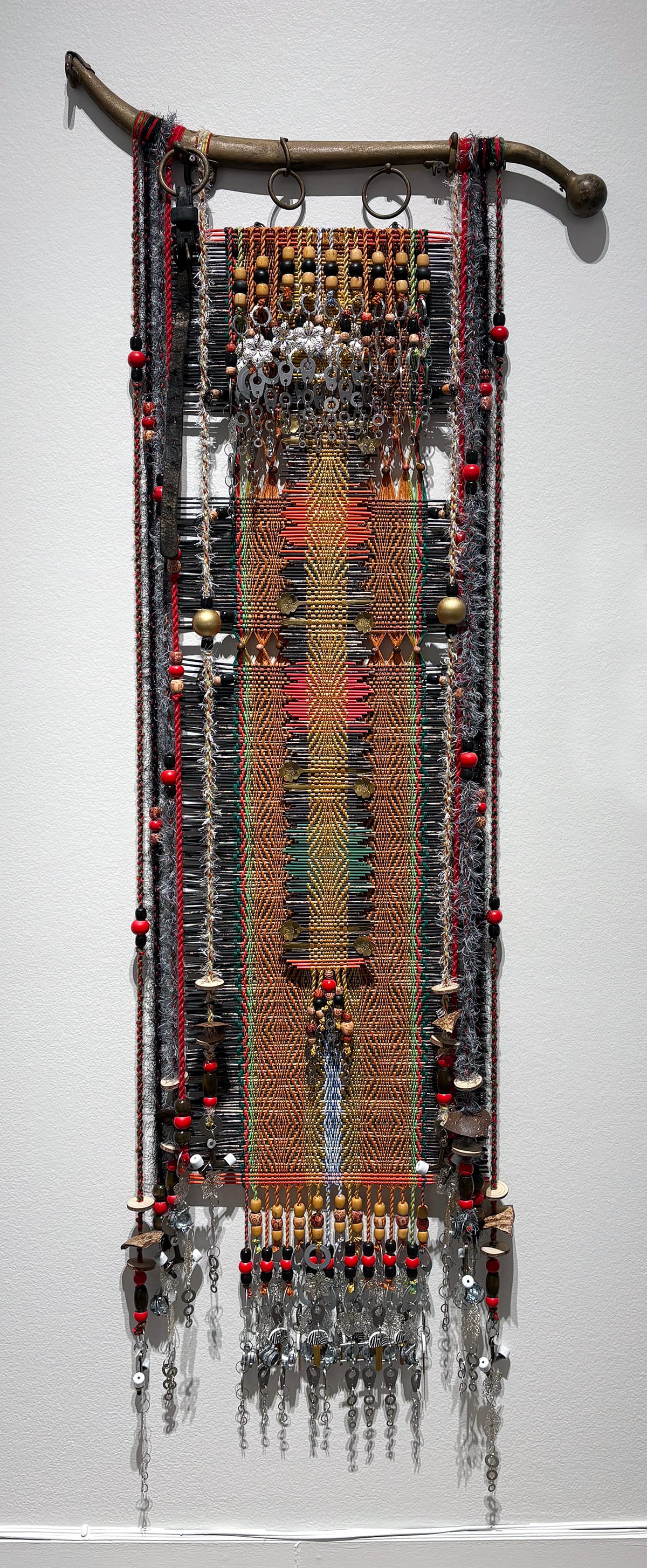
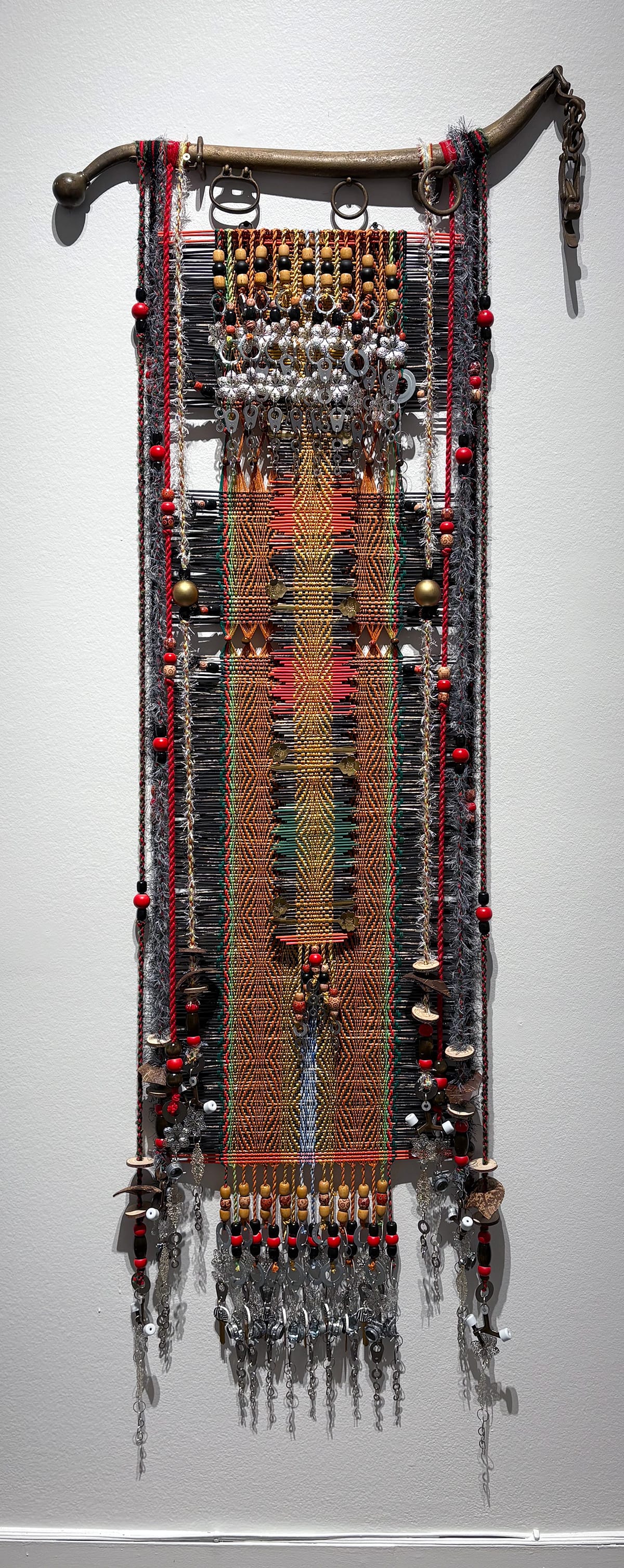
Works by Anne Samat, from left: “Kalambi 3 (A),” 2024; table loom woven piece with hand painted rattan sticks, recycled and upcycled jeans/denim, wooden horse harness, numerous types of yarn, washers, wooden beads, and metal and plastic ornaments; “Kalambi 3 (C),” 2024, table loom woven piece with hand painted rattan sticks, recycled and upcycled jeans/denim, wooden horse harness, numerous types of yarn, washers, wooden beads, and metal and plastic ornaments. Photos by Rachel Epp Buller for The SHOUT.
Samat’s title of “Avatar” primed me to expect figurative work. Historically, an avatar refers to the earthly manifestation of a deity; in more recent times, an avatar also signifies a stand-in for the self in a digital or video-game setting. Of the seven pieces in the installation, however, only four clearly read as humanoid representations. Those sculpturally assembled figures emerge from the walls with their many arms, long braided tresses, or layered necklaces extending toward the viewer.
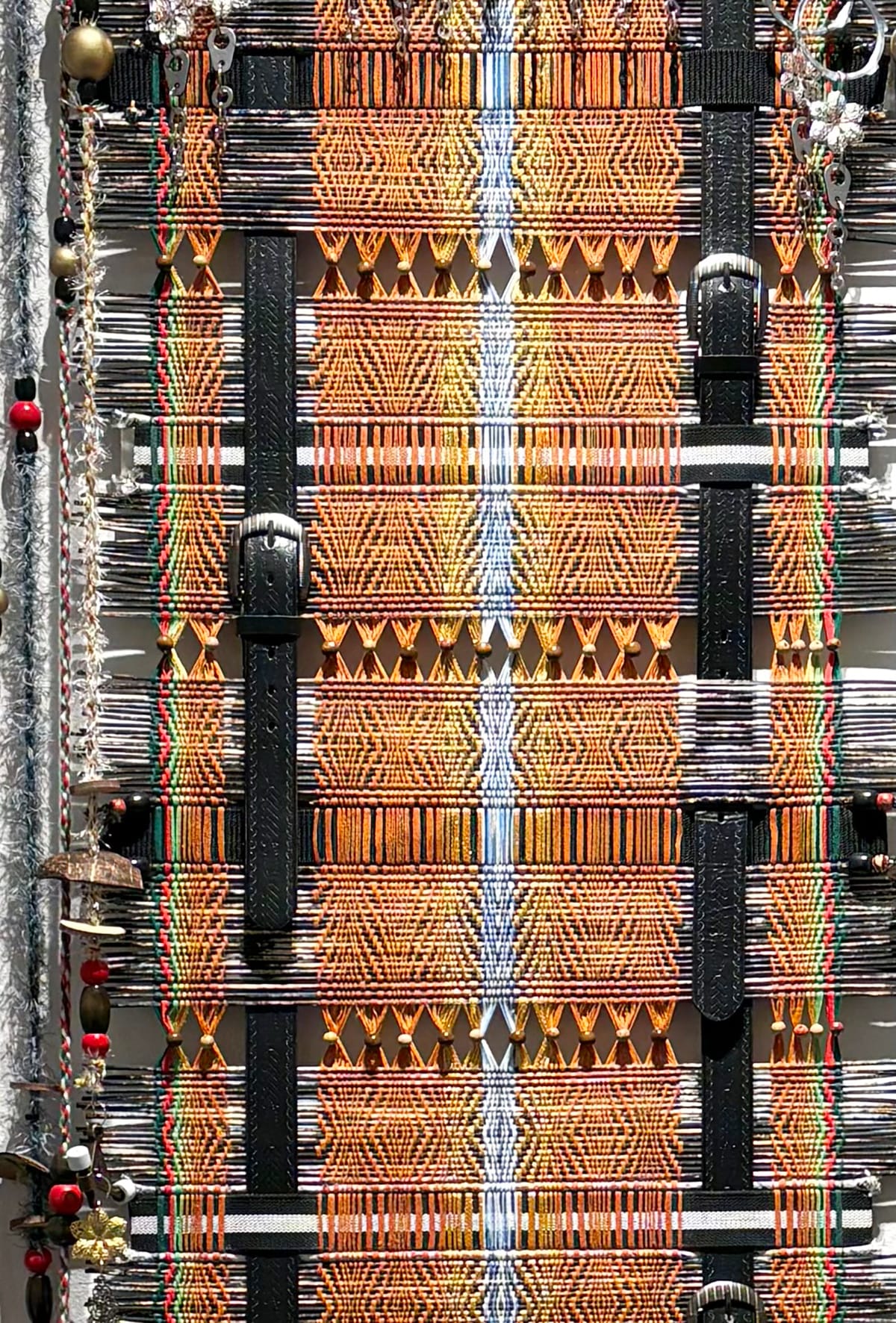
Alongside them, three non-figurative pieces, woven on table looms and hung from wooden horse harnesses, hang flat like tapestries against the walls. While all seven works showcase a visual feast of mixed-media assemblage, the stark difference between the two types of artworks prompted me to reconsider my assumption about the title’s meaning. Are the four figurative works the avatars and the other three pieces accompanying decoration? Or are all seven meant to be avatars? Are the non-figurative pieces perhaps intended as cultural representations of the self through region-specific processes and materials?
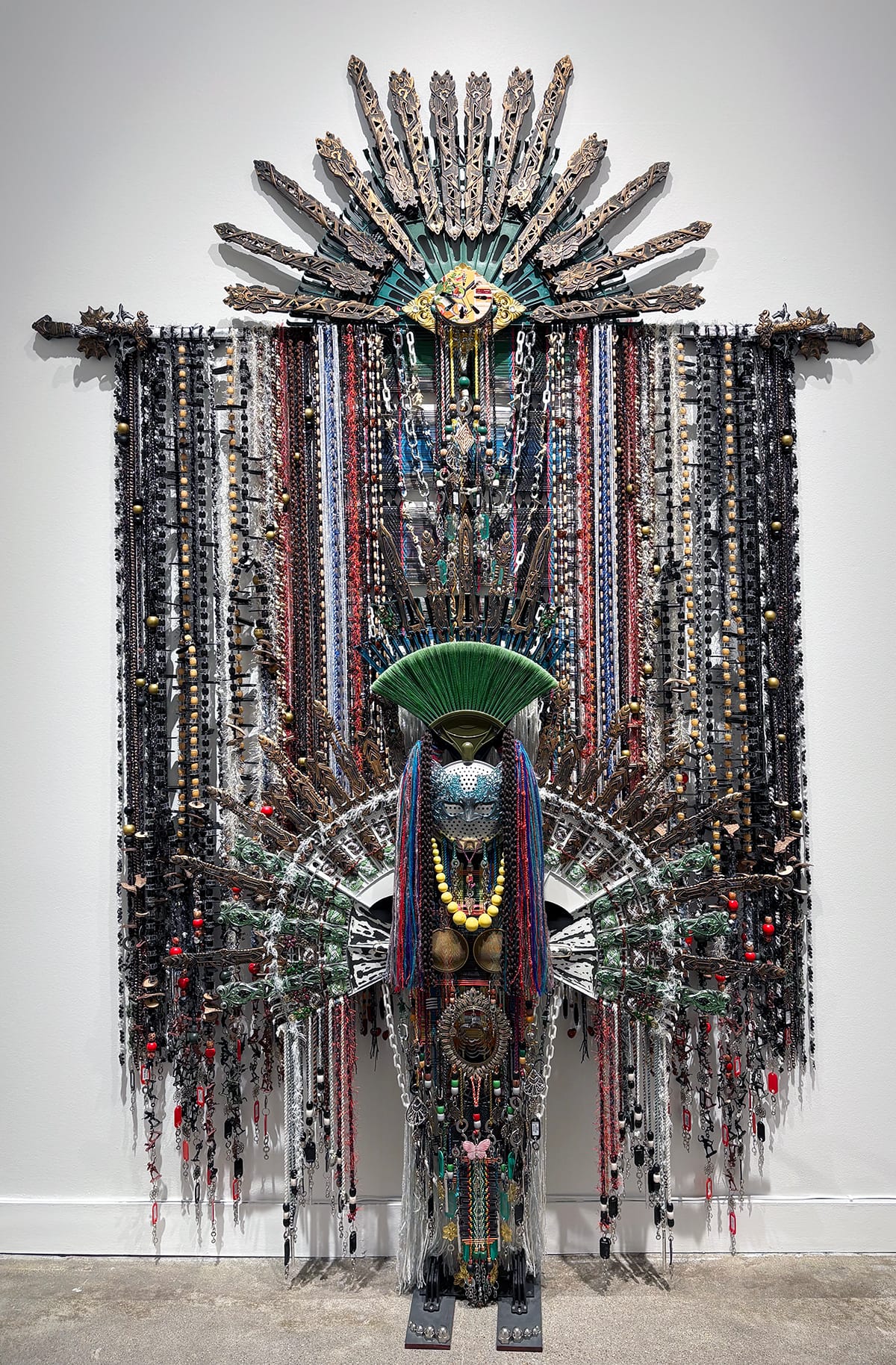
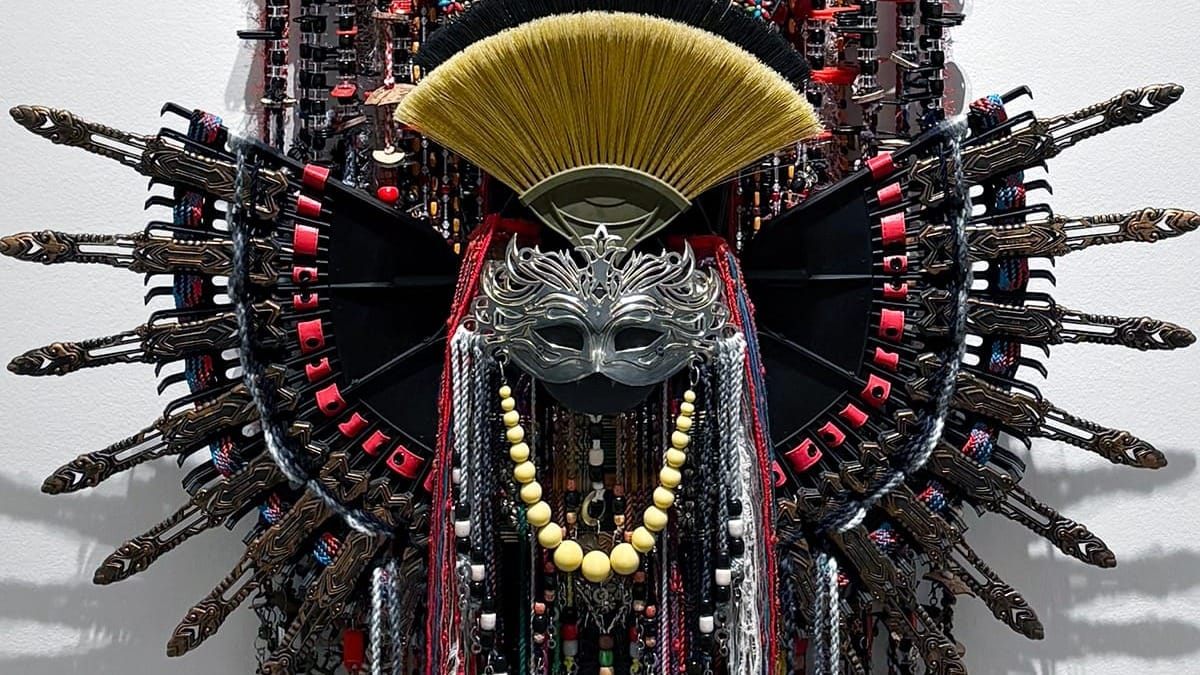
The two assemblages that repeatedly drew and sustained my attention are figures from the same series: “No Place for Beginners or Sensitive Heart #2” and “No Place for Beginners or Sensitive Heart #3.” Both pieces dominate the space, their just-under-life-sized figures made prominent by elaborate headdresses and a shiny metallic décor of beads, ornaments, and plastic toys that rise eight feet up the wall. Samat compellingly renders the faces from unexpected materials.
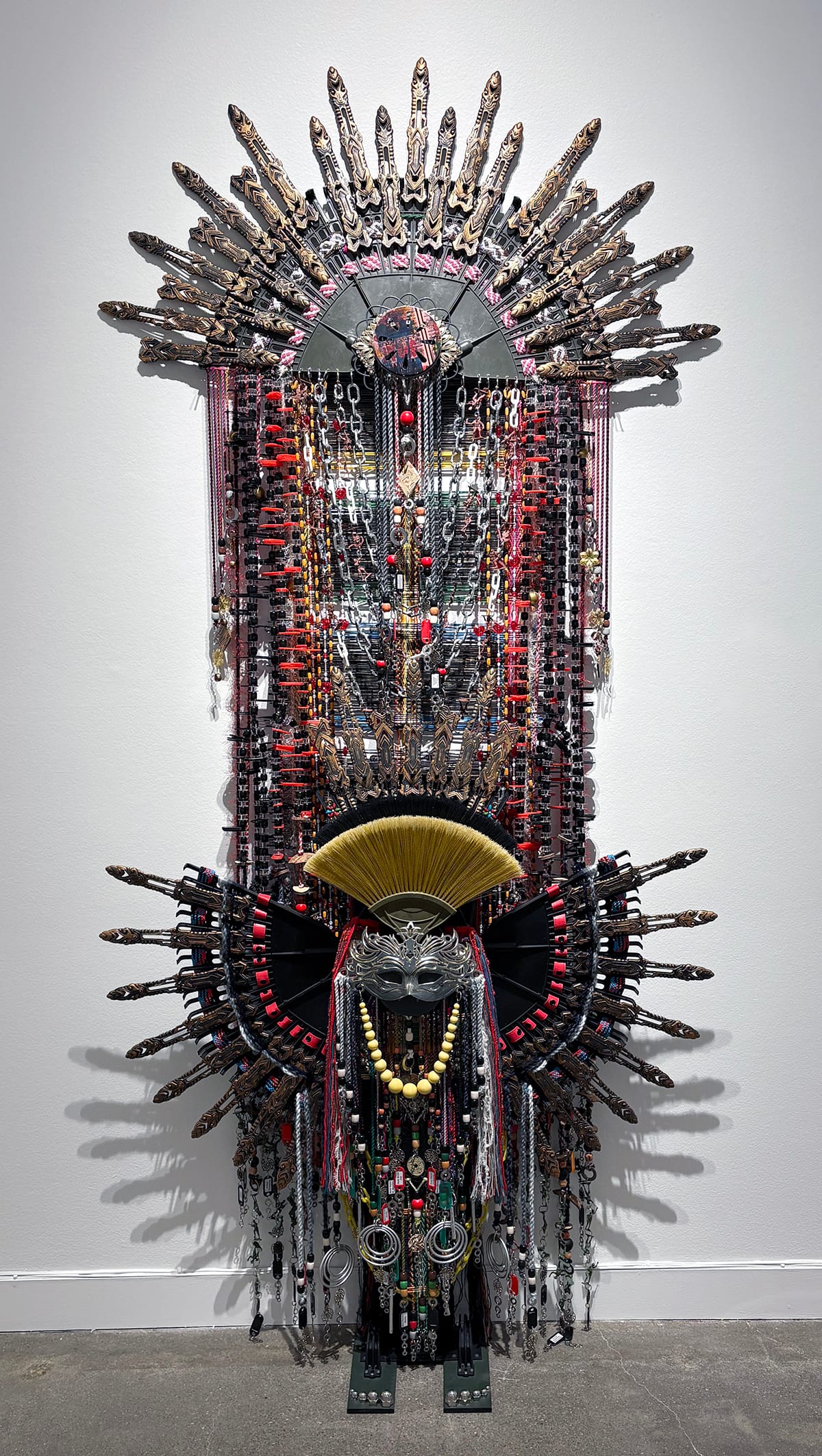
In “#2,” she uses a round metal sieve to evoke the head and an eye mask to stand in for facial features, with thread and beads dangling from the bottom. I read both figures as royalty of a sort—ornately adorned figures backed by even more embellished decoration. I imagined them in a procession, their oversized and over-the-top costuming facilitated by a host of unseen attendants.
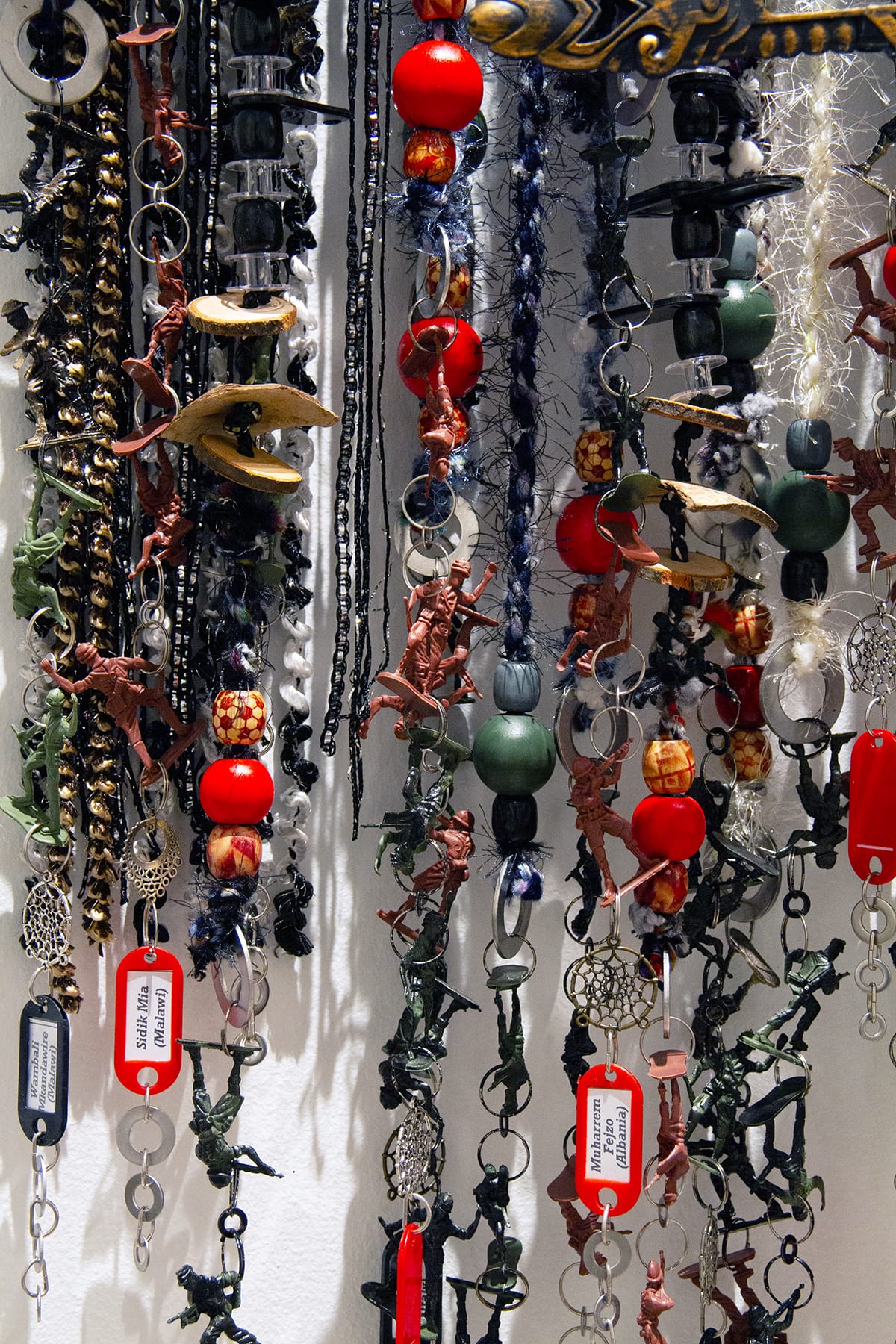
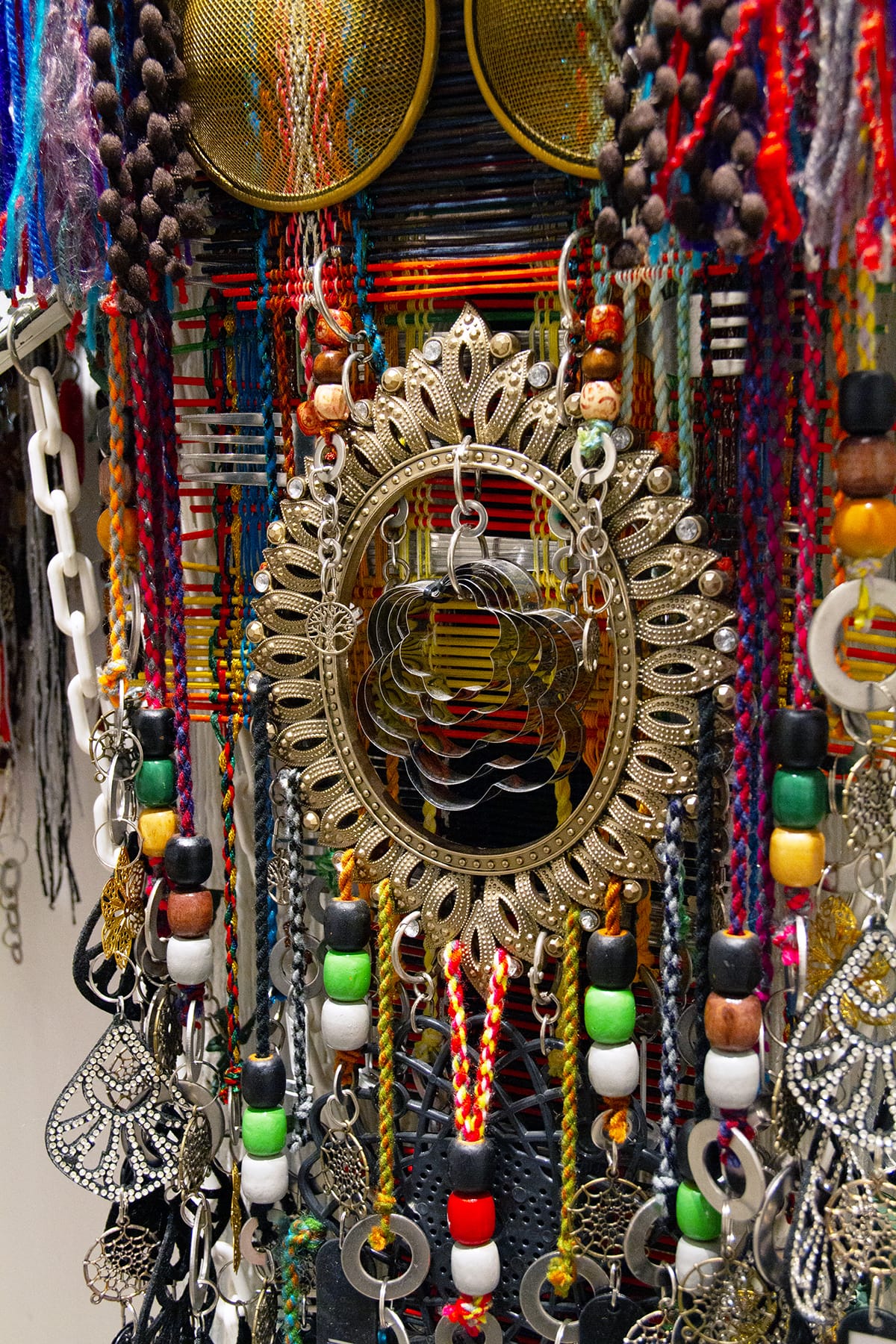
Detail views from oAnne Samat’s "No Place for Beginners or Sensitive Heart" series. Courtesy photo by Madison Bowron for the Ulrich Museum of Art.
As I continued to gaze at them, however, I realized that in each one, their plumages are in fact wonderfully tactile broom heads. The materials are in disguise, masquerading as something other than they are and prompting me to question what I see. The quotidian materials suddenly seemed at odds with the surface implication of wealth and status.
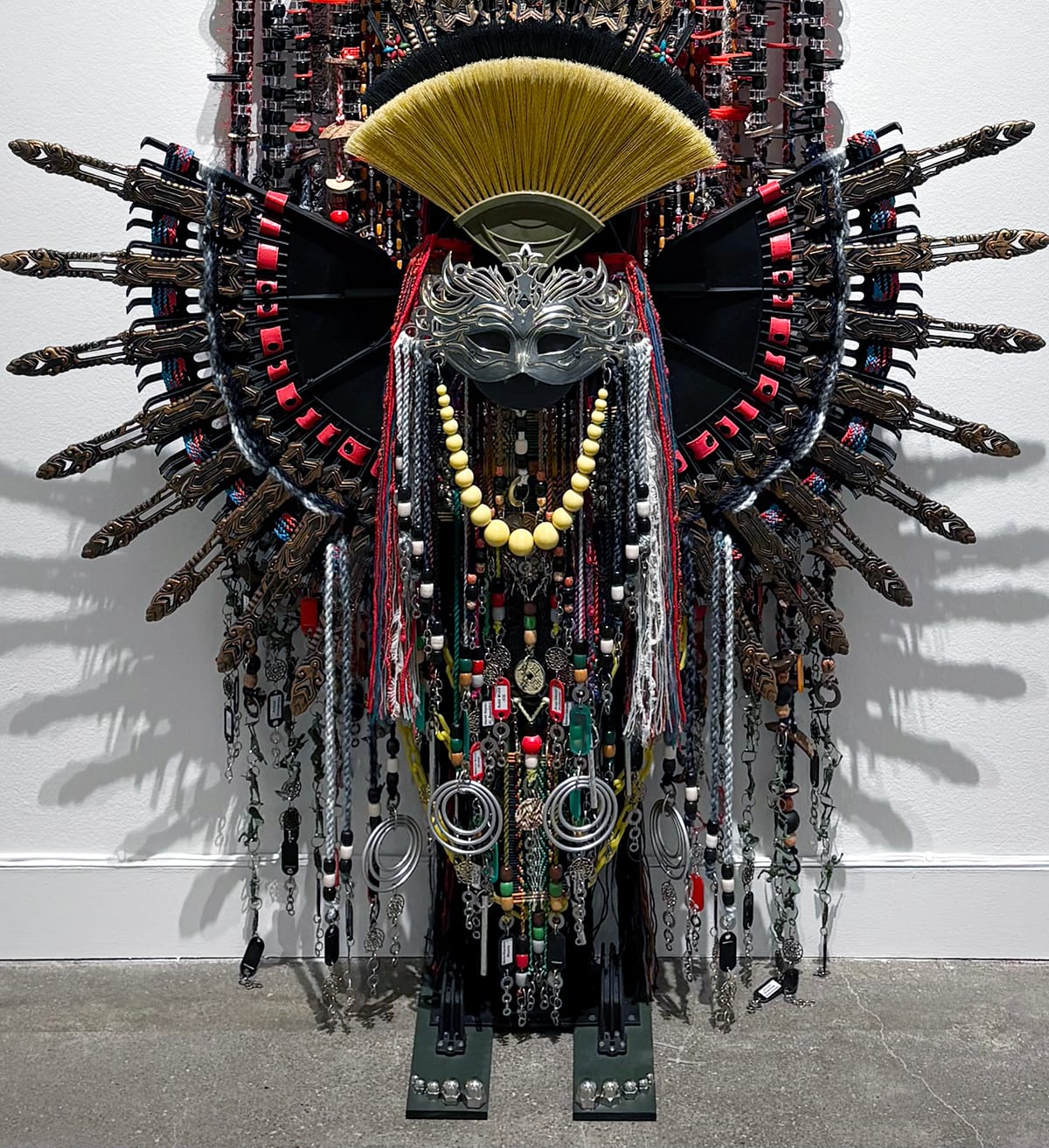
Even once I recognized them for what they are, many of the found objects woven into the works had a trompe l’oeil quality, threatening to fool my eye. Are they metal or plastic? It is not always easy to tell. Rakes, for instance, exist in both plastic and metal forms. The toy swords are likely plastic but coated with metallic paint to give a moderate illusion of gilded metal handles. Samat’s shiny objects and varied textures beckon for handling, and when I noticed a sword handle bent out of place, I wondered if some viewer might have been unable to resist.
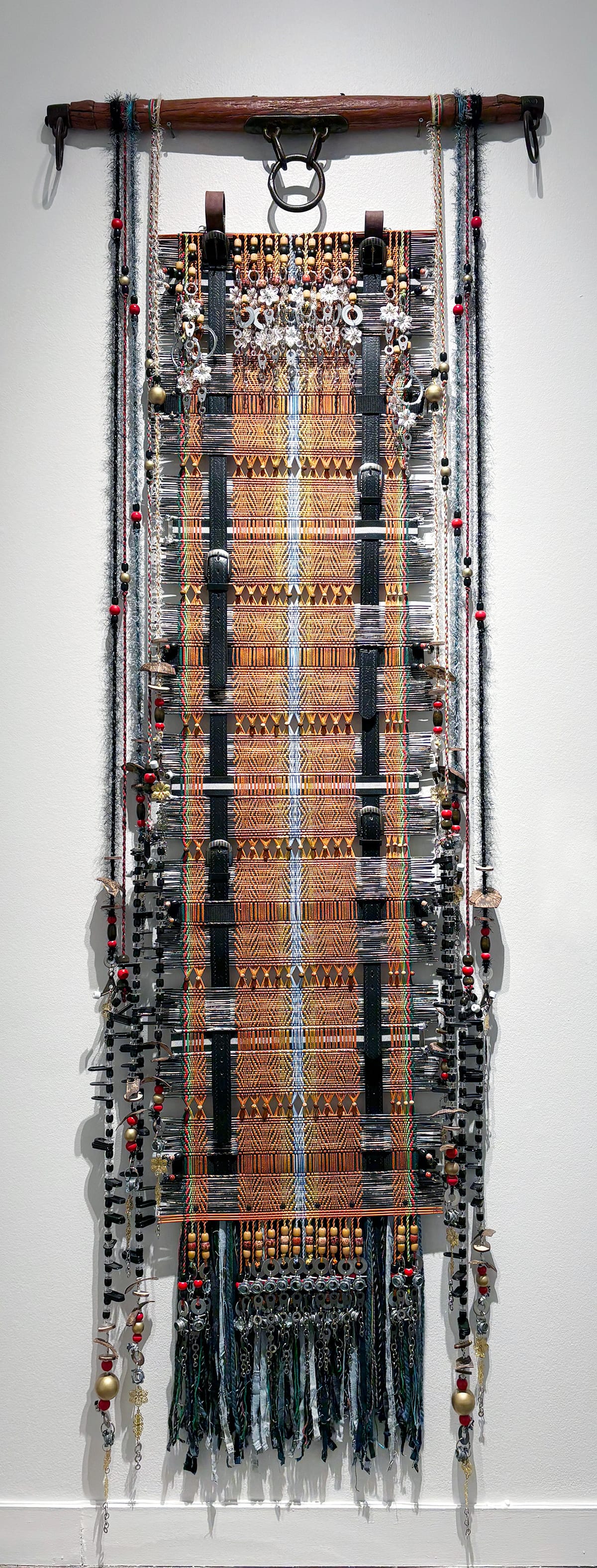
Samat’s choice of materials invites a gendered reading as well. The wall text suggests that Samat redefines gender roles by upending the expectations of Malaysian weaving, taking a traditionally female craft and infusing it with markers of masculinity. "Kalambi 3 (B)," a tapestry more than 6 feet in height, showcases yellow and orange yarn woven around rattan sticks with hanging adornments of wooden beads. While she often disguises her materials, in "Kalambi 3 (B)" Samat prominently threads men’s leather belts through the piece, undisguised and apparent.
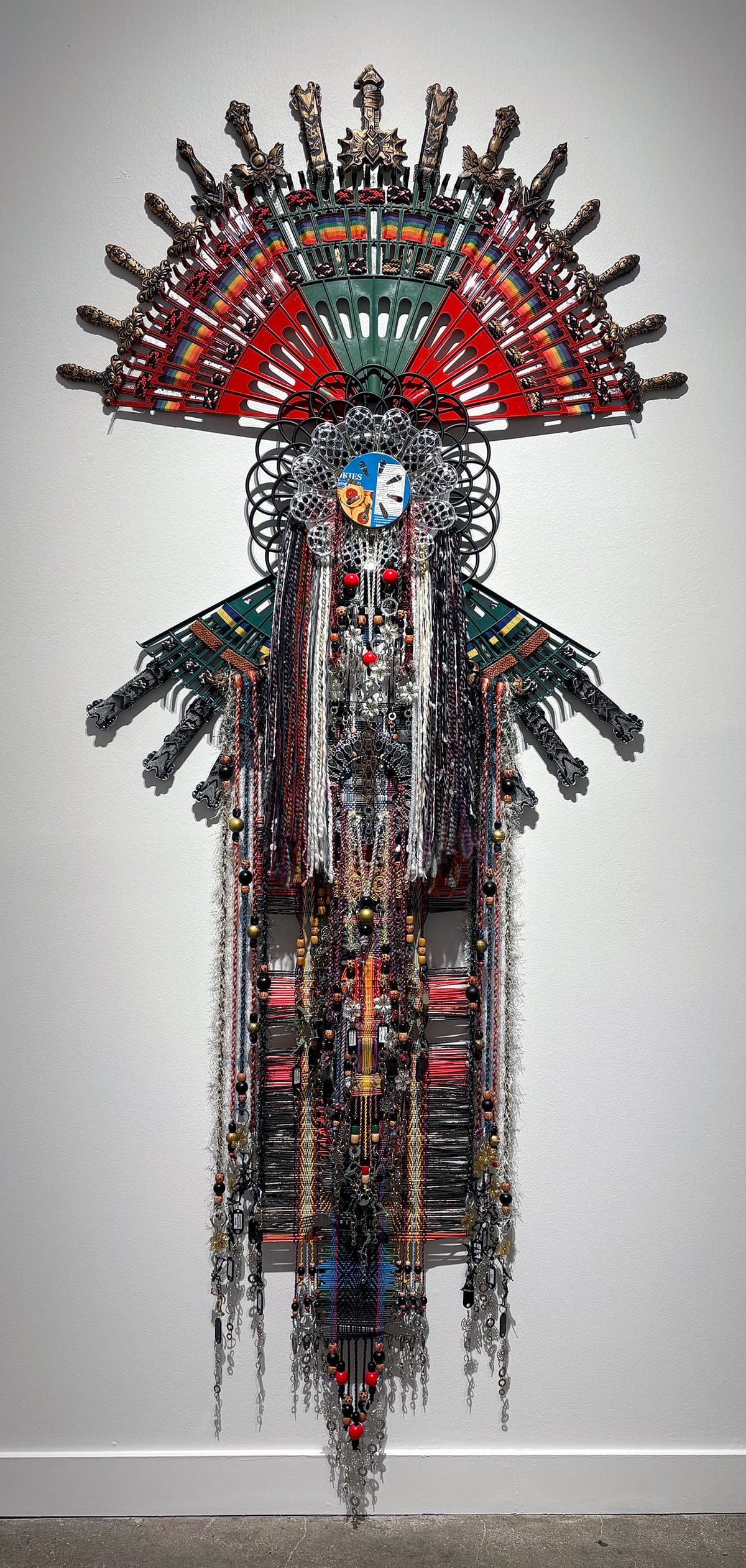
In all four of the figurative avatars, Samat transforms the masculinist associations of weaponry into feminine decoration. She assembles toy swords and scabbards to make the many-armed figures contained within "Never Walk in Anyone’s Shadow 2(C)" and "No Place for Beginners." She weaves toy swords and daggers through the heads of plastic rakes to create elaborate headdresses for each of the figures.
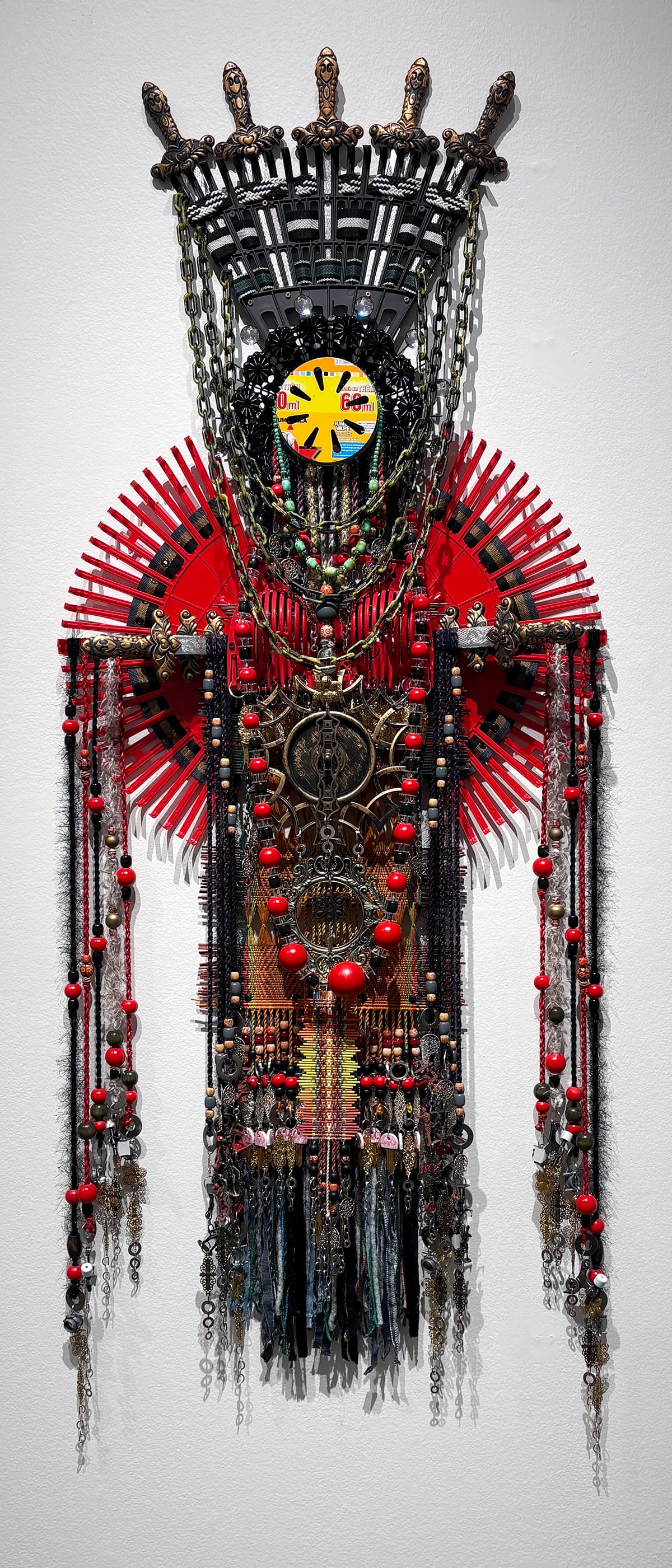
In "Mysterious Beauty 3 (Sarawak Series)," Samat creates a smaller, more modest crown from five toy daggers woven into a single plastic rake head. Here she adds a series of metallic chains, hanging down to frame the figure’s would-be face. Samat shifts the association of chains from masculine to feminine and from menacing to ornamental. The chains are clearly plastic, not metal, and their placement evokes pendilia — the gold chains and filigree that dangle from imperial crowns. Samat’s work as a transgender activist may also inform this questioning of gender identities, whether through material processes, cultural expectations, or costumed presentation.
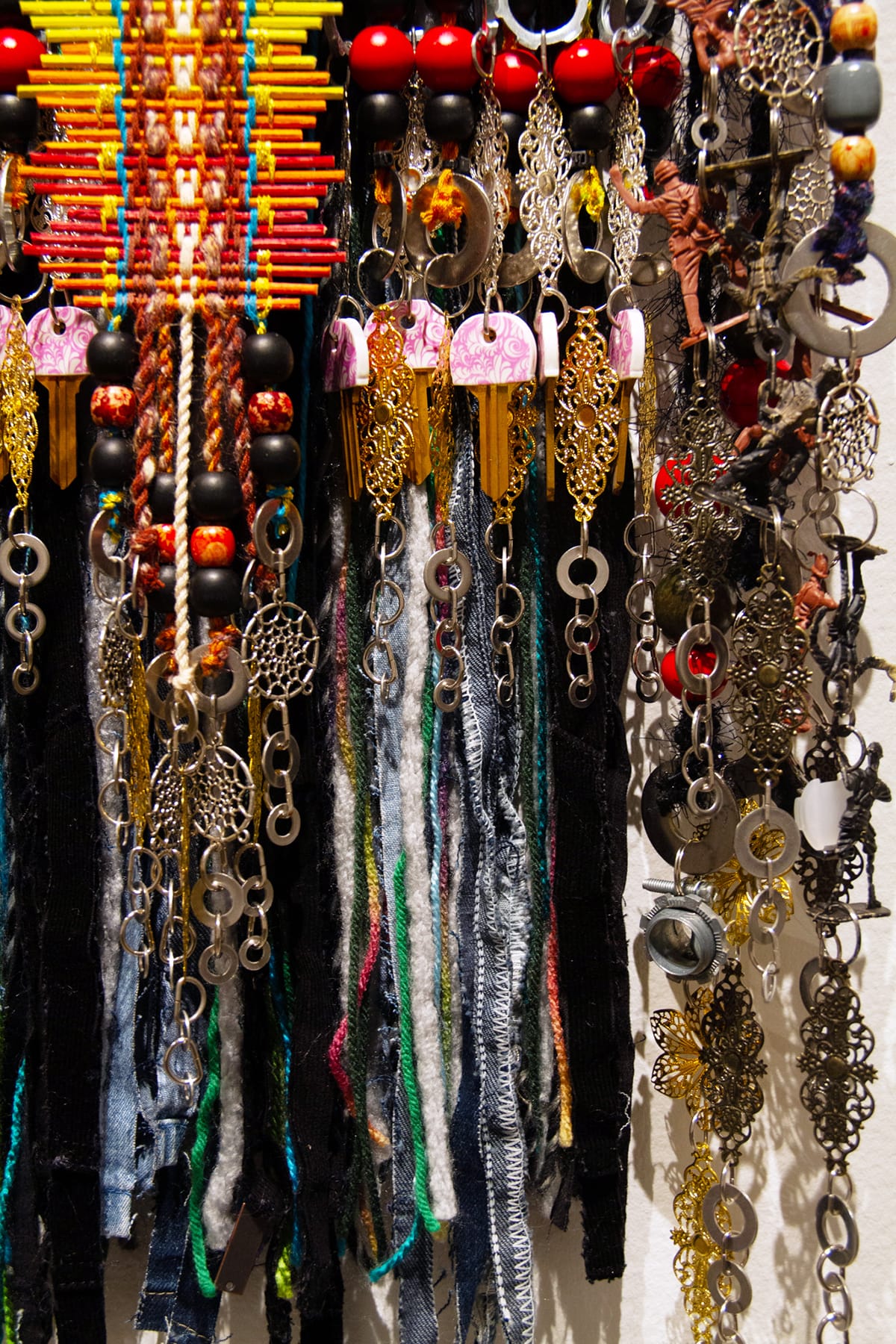
At the same time, Samat’s excessive ornamentation hints at a critique of excess more generally. Her works call to my mind a lineage of past and present rulers for whom excess is a visualization of power. And, yet, her use of cheap materials, based on the glut of mass-produced plastic goods available in our world today, troubles this evocation of wealth. Samat invites us to relish the surface splendor, if only for a moment, before we tune into the artifice at play.
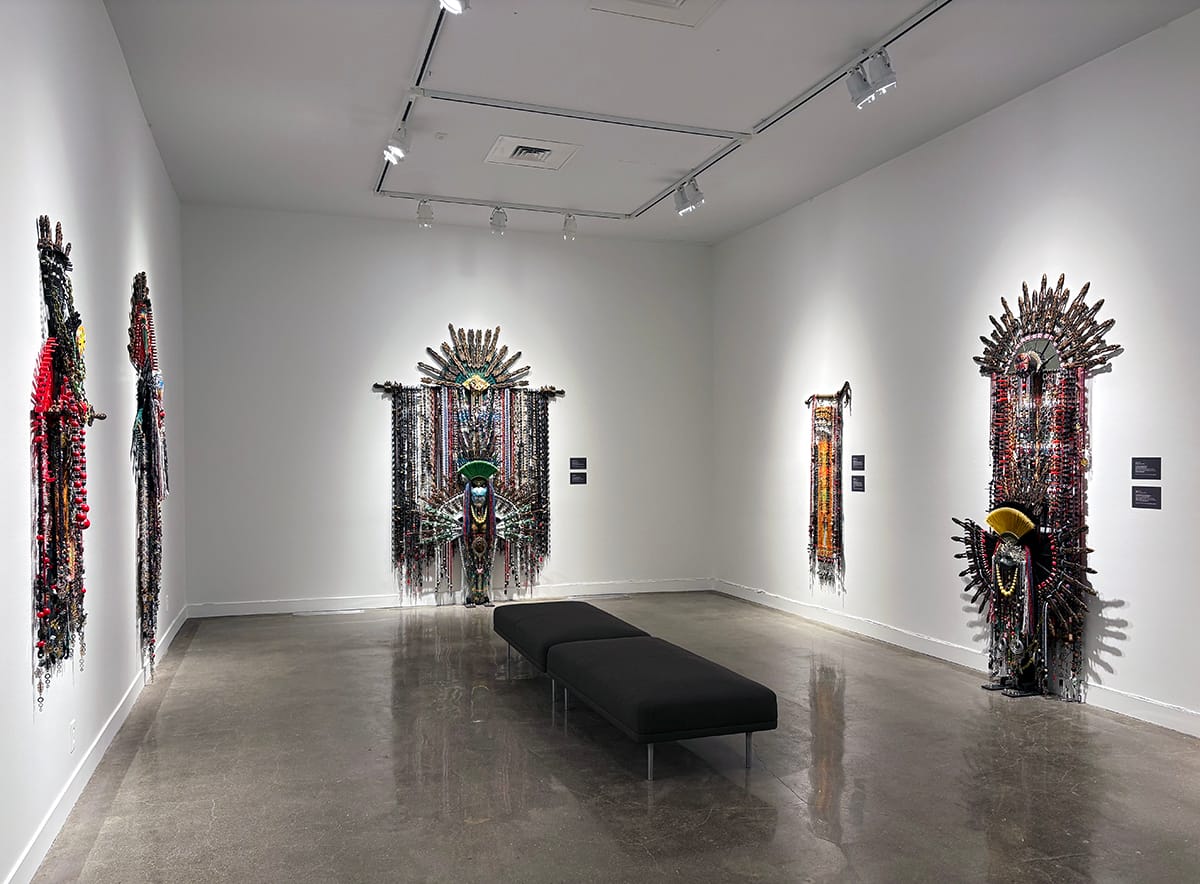
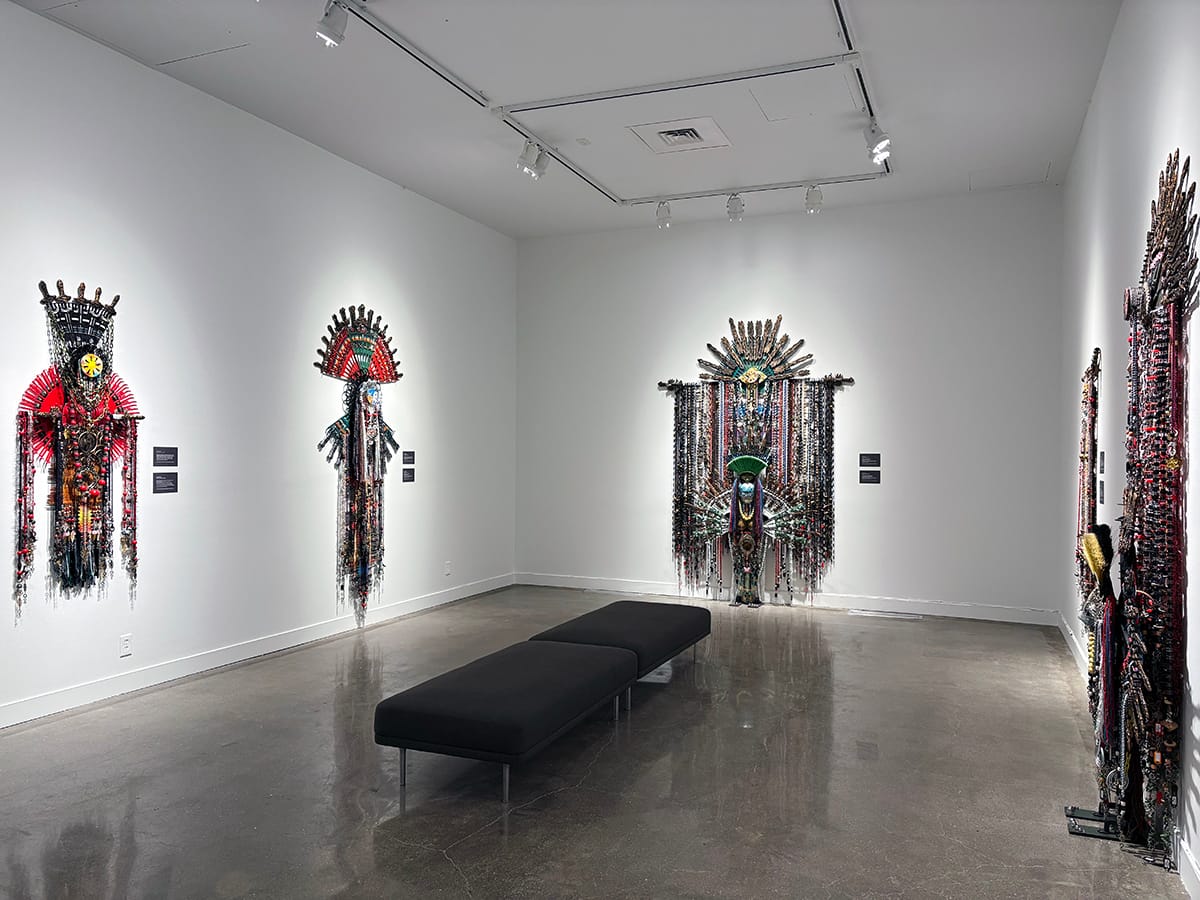
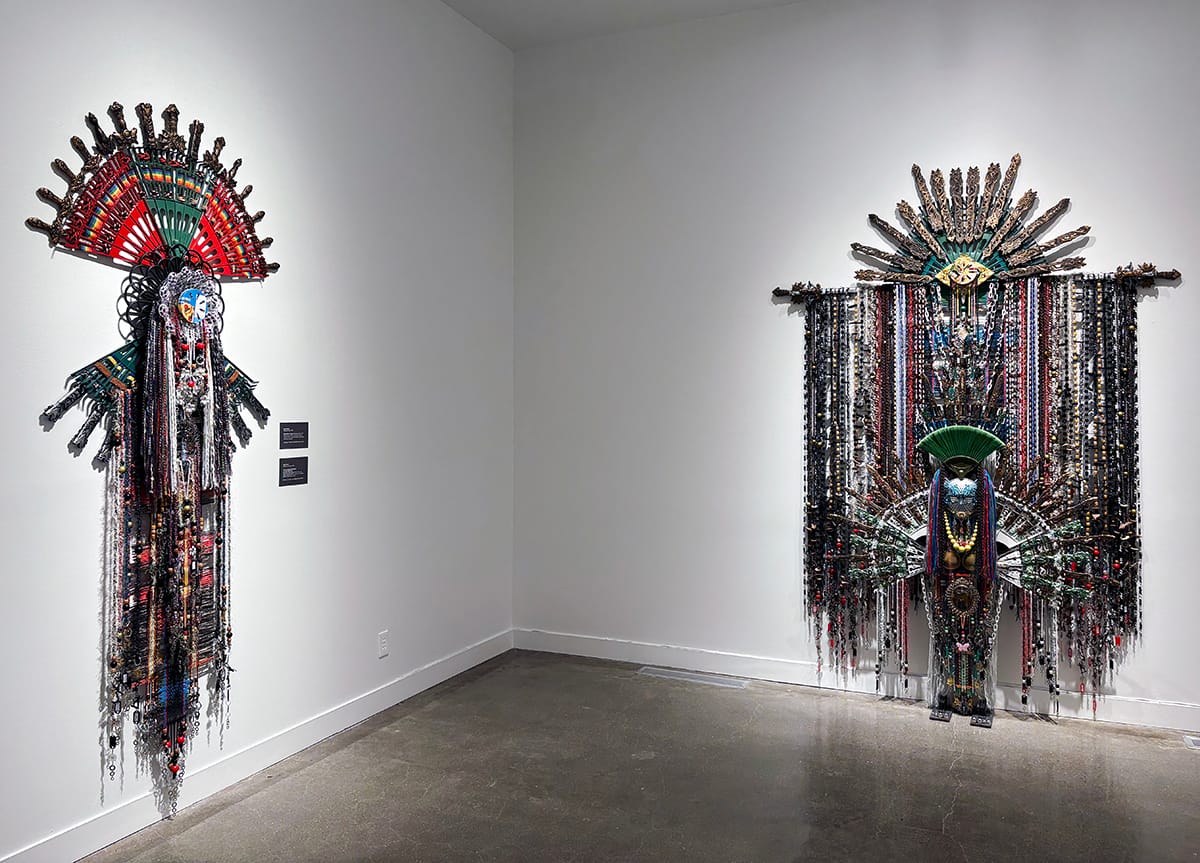
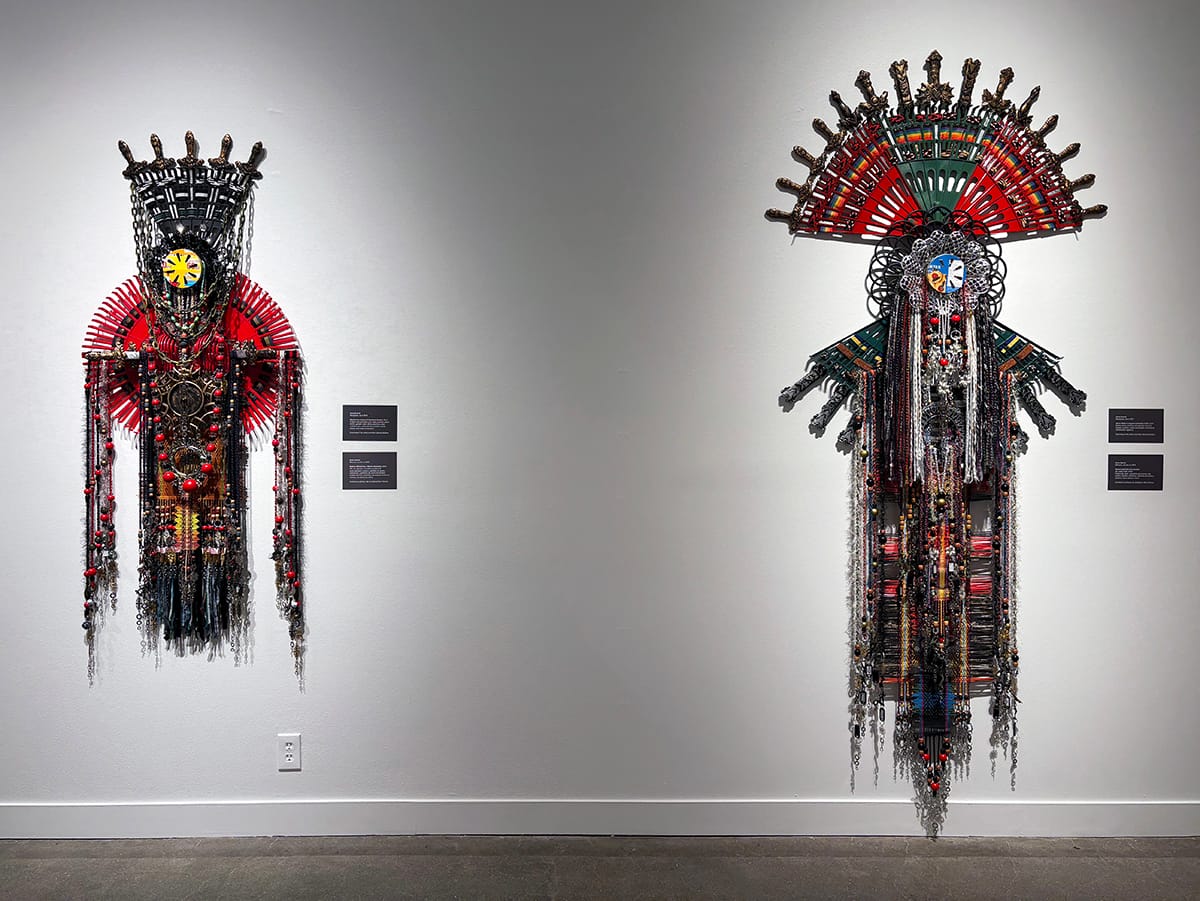
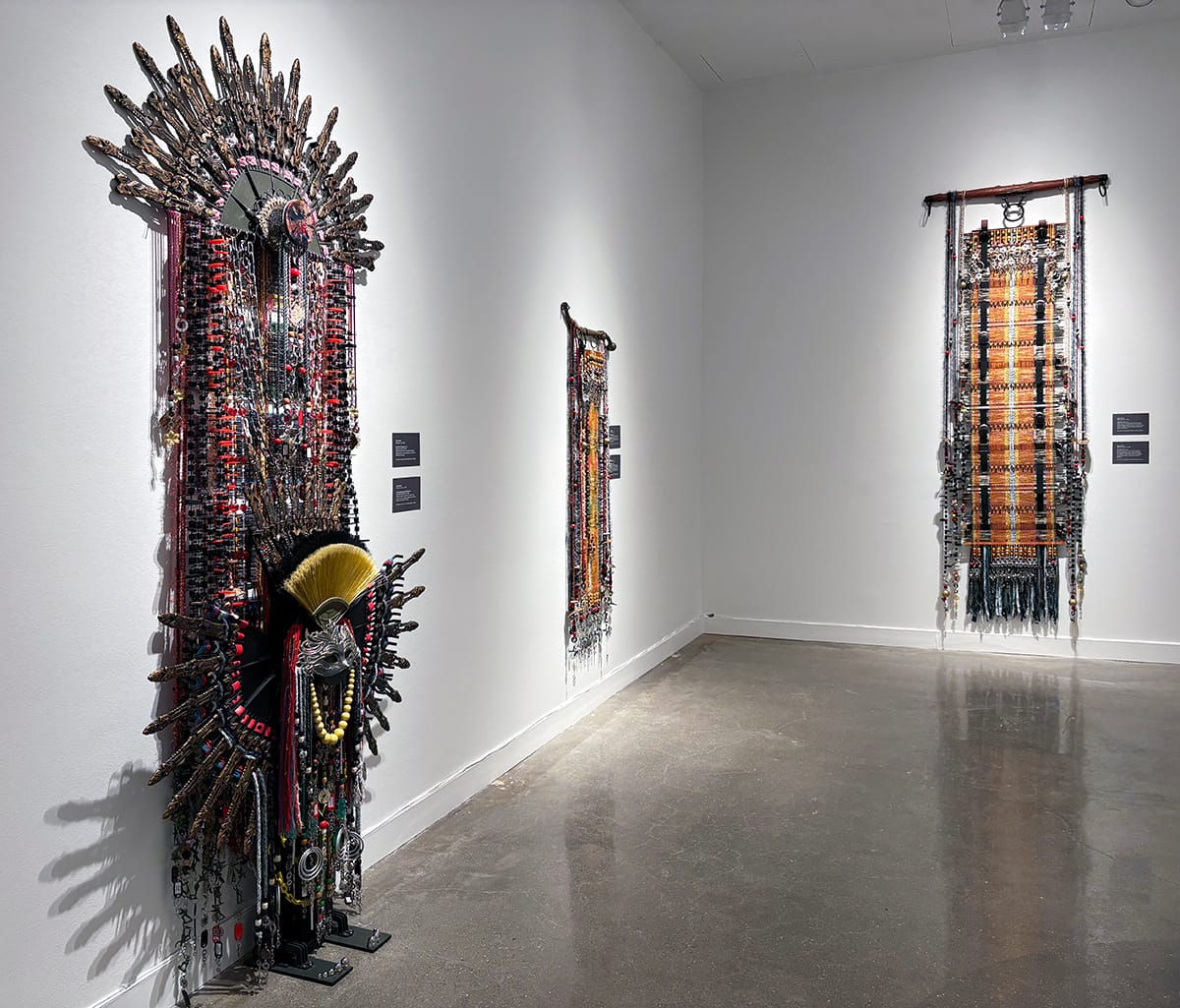
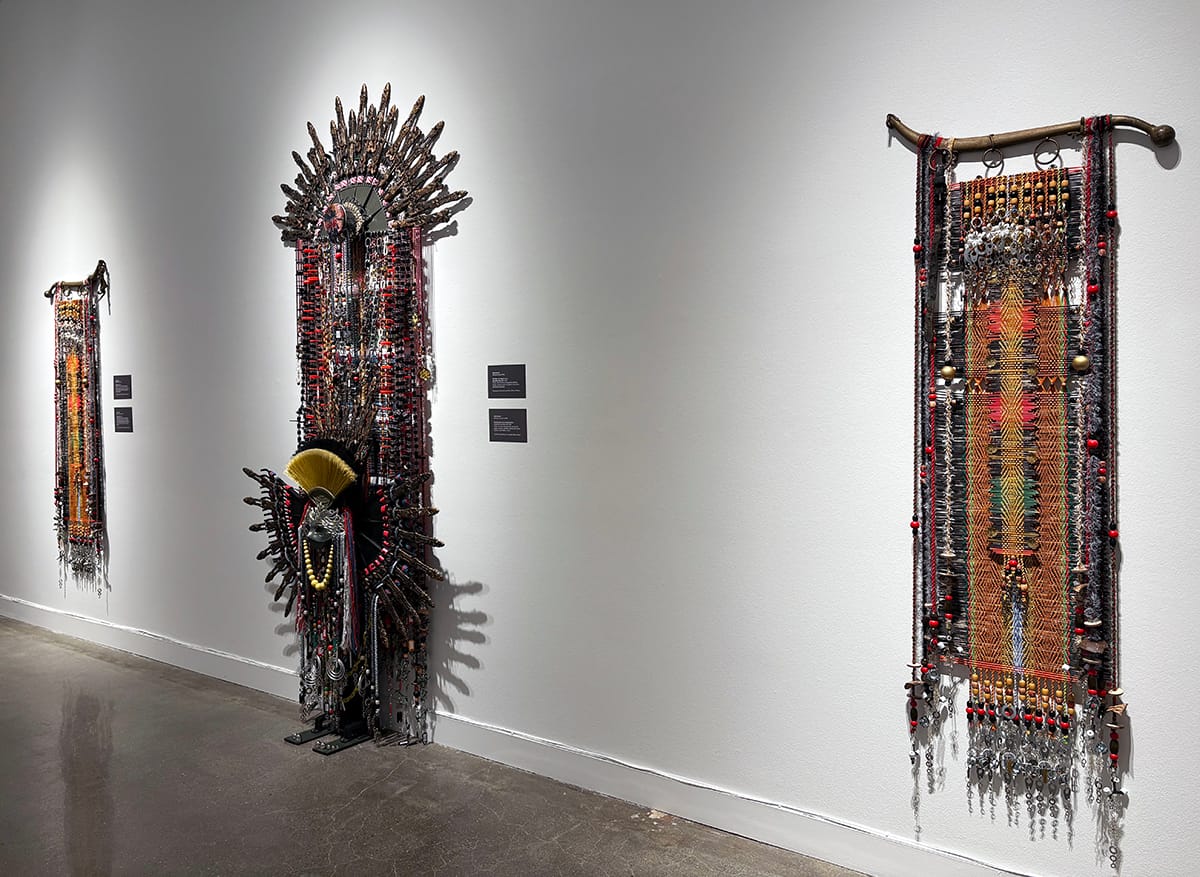
Installation views of Anne Samat’s exhibition “Avatar” at the Ulrich Museum of Art. Photos by Rachel Epp Buller for The SHOUT.
The Details
"Anne Samat: Avatars"
January 22-May 30, 2026 at the Ulrich Museum of Art on the Wichita State campus, 1845 N. Fairmount St. in Wichita
The exhibition is on the second floor. Admission is free, and the facility is accessible to people with physical disabilities.
The Ulrich Museum is open 11 a.m.-5 p.m. Tuesday through Saturday with extended hours until 8 p.m. Thursdays.
Learn more on the Ulrich's website and the artist's gallery.
Rachel Epp Buller is an artist and art historian whose current research explores listening as an artistic method. She is a two-time Fulbright Scholar, a certified practitioner in deep listening, and a professor of visual arts and design at Bethel College.
❋ Derby man has the kind of voice that turns heads — and chairs
❋ Socializing while sober: how some Wichitans are cultivating alcohol-free communities
❋ As a small creative business closes, the owner mourns
❋ Painting through it: Autumn Noire on 20 years of making art
❋ How a guy from Wichita resurrected 'Dawn of the Dead'
❋ Bygone Friends University museum housed curious collections
Support Kansas arts writing
The SHOUT is a Wichita-based independent newsroom focused on artists living and working in Kansas. We're partly supported by the generosity of our readers, and every dollar we receive goes directly into the pocket of a contributing writer, editor, or photographer. Click here to support our work with a tax-deductible donation.
f