An unexpected double-header: Valentine's Day weekend at the Wichita Symphony
Concerts 'Voyage to Vienna: Haydn & Brahms' and 'Tango Caliente' featured earnest, focused playing and arresting performances.
On my way into the Century II Concert Hall on Friday evening, Feb. 13, I walked past the Bob Brown Expo Hall, where a mechanical bull was entertaining attendees at the weekend’s Wichita Boat, Fishing & Hunting Show.
Or to be more specific, what I saw first, as I rounded a corner, was a body falling through the air. What I heard first was the not-too-violent smack of that body hitting a cushioned crashpad. It took a moment before my pattern-recognition skills kicked in and I understood what I’d just witnessed.
As I settled in for the Wichita Symphony’s performance, my mind kept returning to that moment of incomprehension, when I encountered something out of place and the normal rules of everyday life momentarily suspended.
Anna Clyne’s “Restless Oceans,” the violent four-minute curtain-raiser that opened Friday’s concert, is built to evoke such moments of disorientation. The piece calls on string players to sing, loudly, while simultaneously playing their instruments, and it asks all musicians to stamp their feet — loudly, repeatedly, and to an irregular rhythm — while playing. These are breaches of a certain idea of decorum: raw outcries that suggest individualistic attacks against orchestral tradition. The seated WSO players abruptly stood as they struck the piece’s final chord, as though ready to stalk out of the concert hall and join battle.
If not quite “battle,” Johannes Brahms’ Symphony No. 4 can still function as a test of collective nerve, and for much of the WSO’s Friday performance of the work, one had the sense of an ensemble with its hands full. Brahms’s score features some sudden, loud entrances that call for confident attacks; instead, I sensed a degree of reserve as musicians focused on maintaining ensemble. Tempos were generally noble and monumental, if not always maximally volatile in the symphony’s agitated passages. Given that the concert was postponed from January 24 to February 13 due to winter weather, it was hard not to judge some of that restraint as the result of a disrupted rehearsal process.
The symphony’s final movement, comprising 30 variations on an eight-bar theme, is awe-inspiring in any performance. Christina Marie Webster caught the movement’s tragic undertow in her flute solo, sustaining the tension as conductor Daniel Hege broadened the tempo around her. Overall, the WSO delivered earnest, focused playing, even if not at the level of spontaneity and risk the piece can sometimes support.
Haydn’s Cello Concerto No. 1 rounded out the Friday program, featuring WSO principal cellist Leonid Shukaev. As former WSO executive director Don Reinhold writes in a program note, pieces from the early Classical era of the 1760s are rarely heard on concert programs, but this work is an exception. The piece is quieter, and in some ways simpler, than more frequently heard concert music, challenging the audience to lean forward and maintain focus. Still, it exploits the cello’s full capabilities, with rapid passagework and wide leaps. Shukaev met the concerto’s demands with a sparing vibrato and a frank, candid sound that commanded the hall, especially in the Adagio second movement.
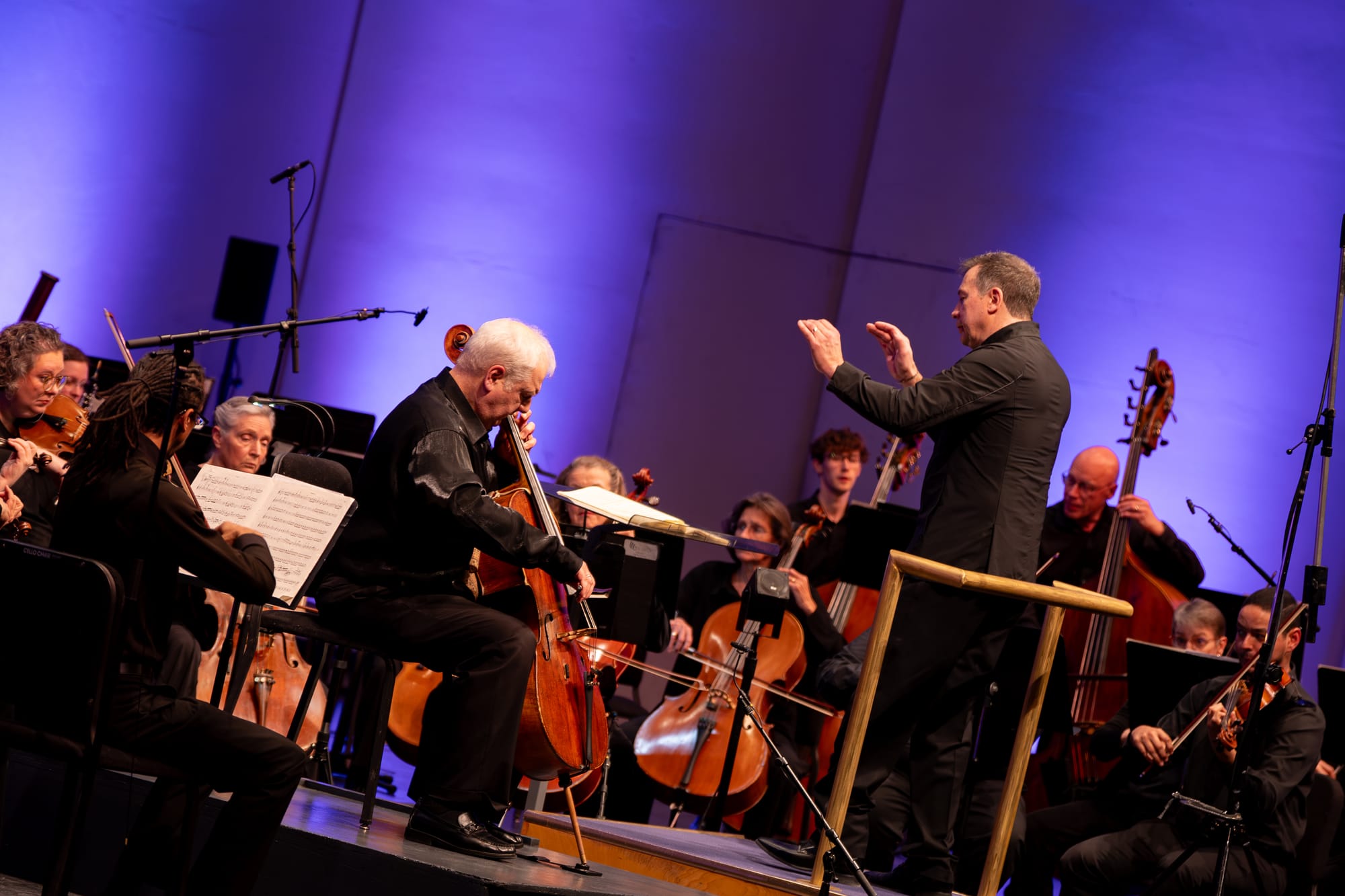
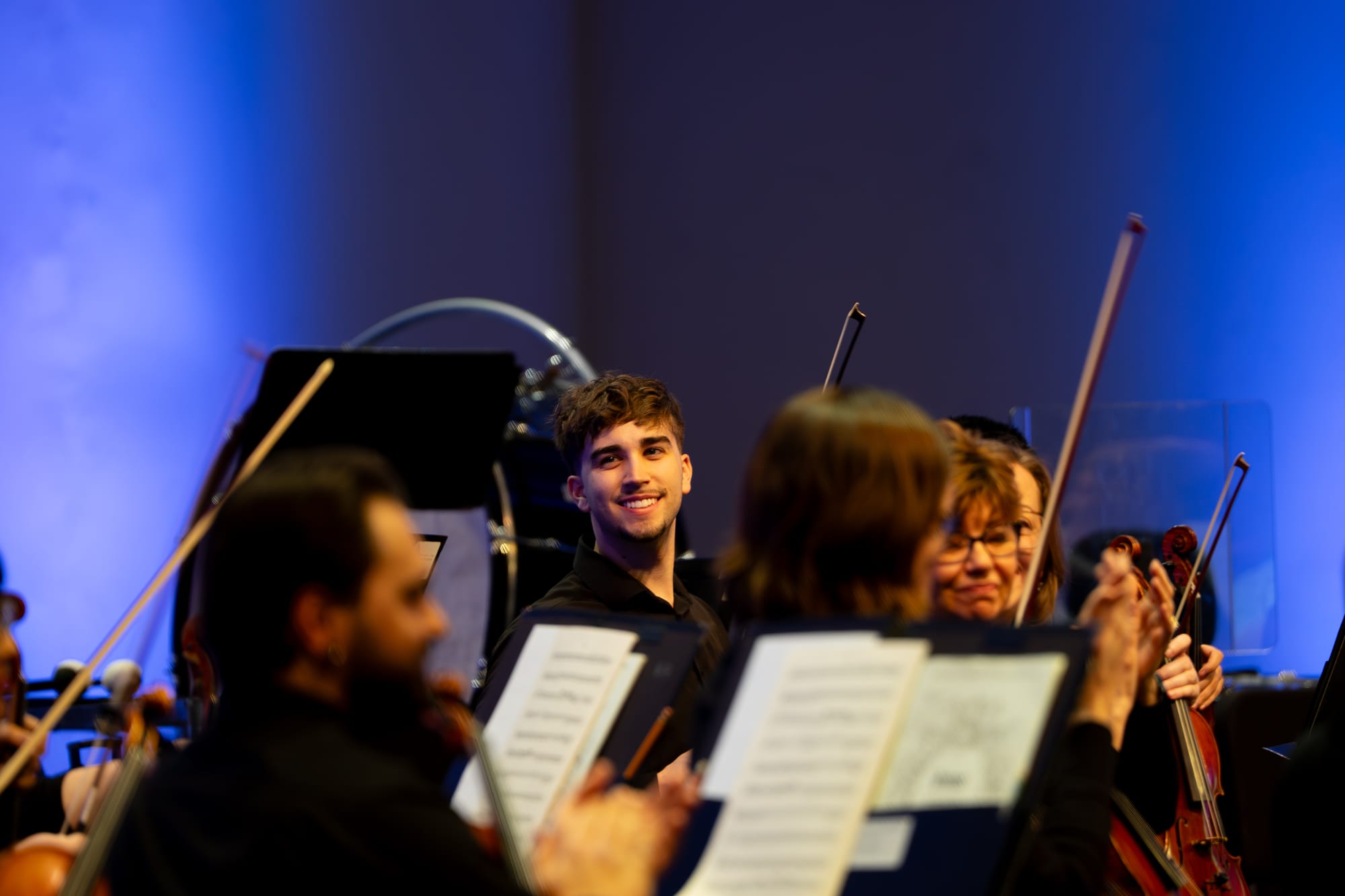
Attendance looked strong for Friday’s concert, which was encouraging, given that the audience had to follow it to a new date and time. That scheduling adjustment set up a symphony “double header,” with a pops concert, “Tango Caliente,” performed the following evening.
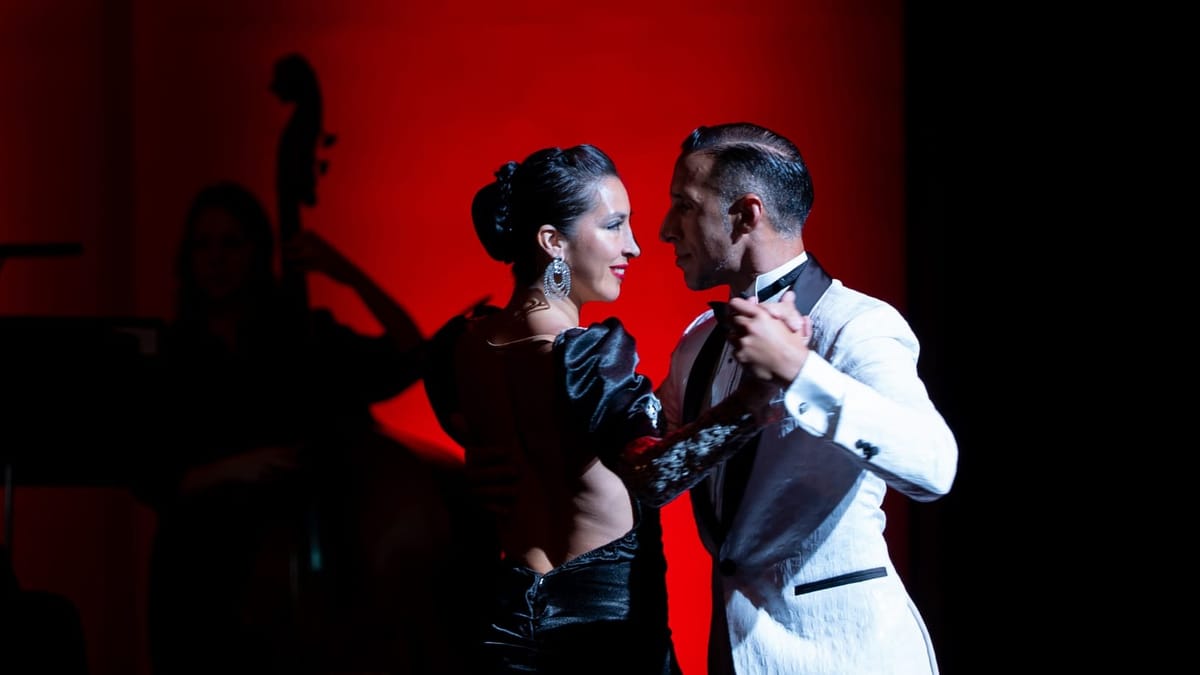
“Tango Caliente,” likewise, was strongly attended, and many couples were dressed to the nines for their Valentine’s Day dates. The event more than delivered on its promised entertainment value; professional tango dancers Ariel Leguizamón and Yésica Esquivel dazzled with fancy footwork and elegant lifts.
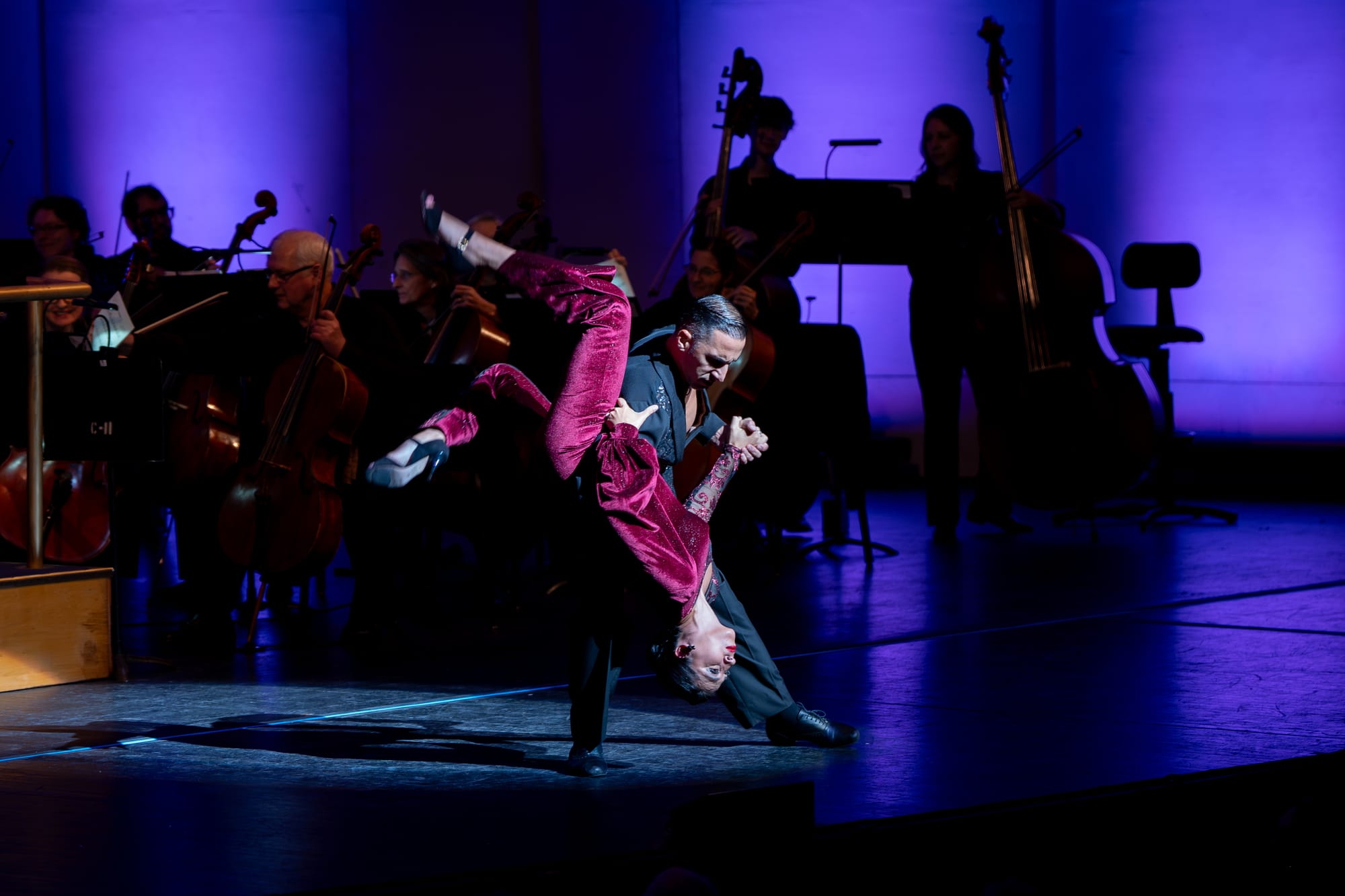
The program also provided more variety and depth than the audience may have been expecting. Guest bandoneon player Héctor Del Curto took a few moments to give an intro to his accordion-like instrument, which provides Argentine tango with its distinctive sound.
“I thought it would be easier than guitar — no,” he said to laughs. The arrangement of the bandoneon’s buttons is far from intuitive, and the instrument is “bisonoric,” meaning that each button plays a different note depending on whether the bellows are being pulled open or pushed closed.
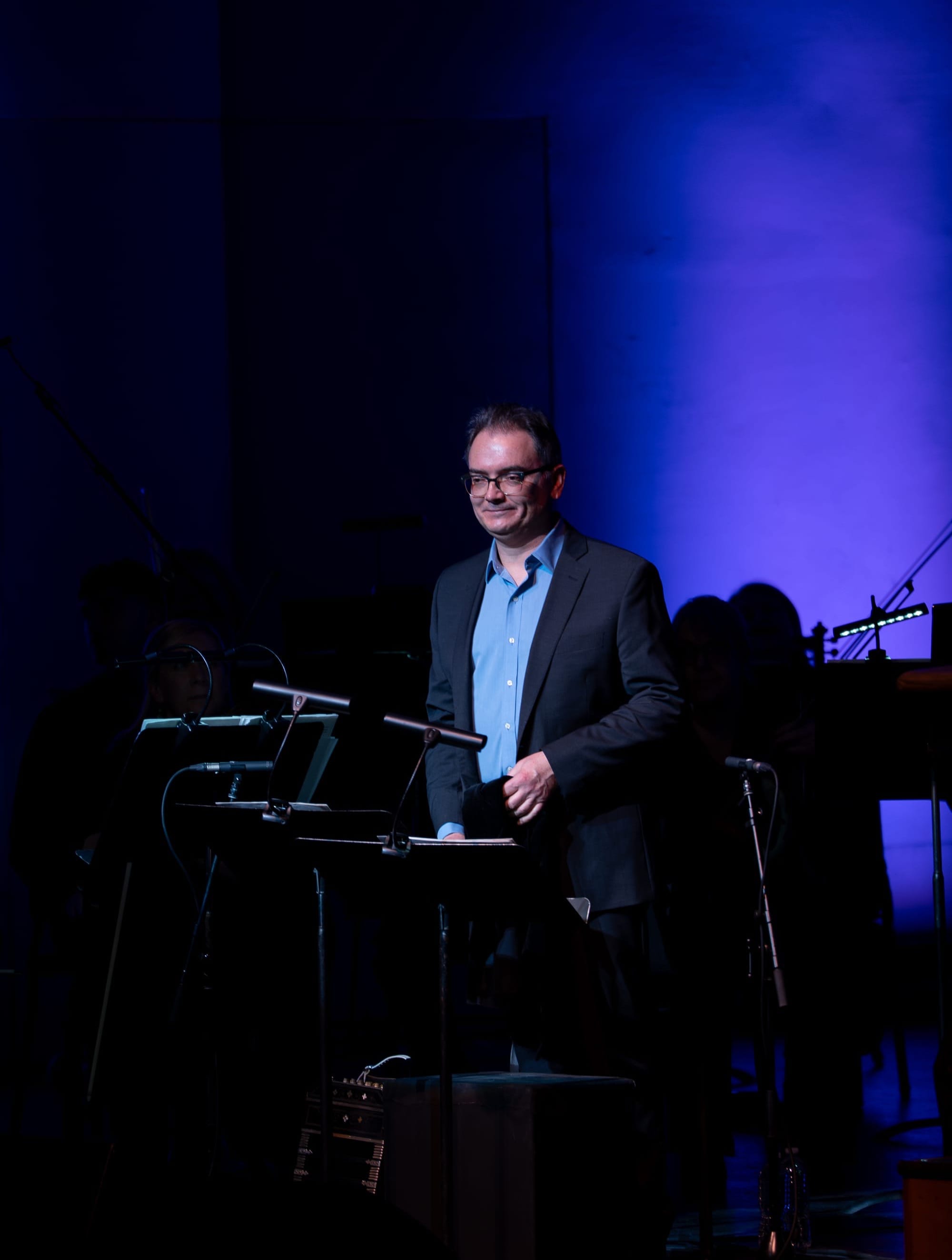
Del Curto followed that talk with an unaccompanied solo, “Che Bandoneon,” by Anibal Troilo – an arresting piece and performance that received an emphatic ovation.
Singer Camille Zamora, one of Del Curto’s longtime collaborators, conceived “Tango Caliente.” She introduced the audience to zarzuela, an opera-adjacent genre of Spanish musical theater. “The cool thing about zarzuela is all of it is informed by dance — like Verdi taking ‘La Traviata’ to his favorite salsa bar,” she said. She illustrated the point with “Carceleras,” a soprano showpiece from Ruperto Chapí’s 1889 zarzuela “Las hijas del Zebedeo.” Zamora articulated the piece’s rapid-fire text so cleanly and with so much character that I almost felt like I was somehow understanding the Spanish words.
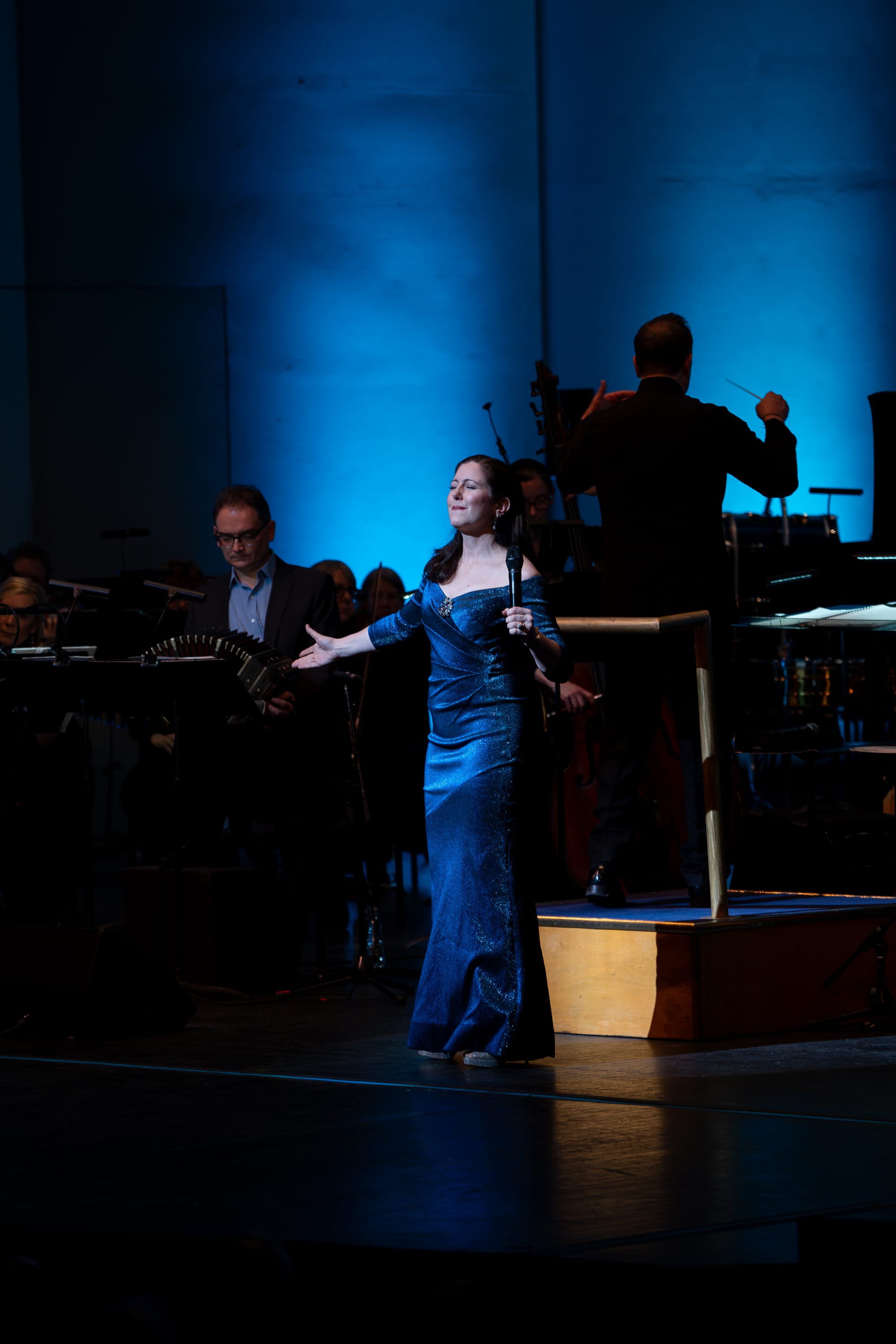
Which I wasn’t – but that was OK. As Bad Bunny’s Super Bowl halftime show also demonstrated, a language barrier isn’t much barrier at all when people meet across cultures in a spirit of curiosity and exploration.
The Details
The Wichita Symphony Orchestra will perform their next concert, "Rhapsody in Red, White & Blue," at 3 p.m. Sunday, February 22, at Century II Concert Hall, Wichita.
Reserved tickets are $29-$85, and student tickets are $10. They are available online and at the door.
Sam Jack is a poet, a classical tenor, and the adult services librarian at Newton Public Library. He performs with several local groups, including Wichita Chamber Chorale, Wichita Grand Opera, and Opera Kansas. He received a Master of Fine Arts in creative writing from the University of Montana.
❋ Derby man has the kind of voice that turns heads — and chairs
❋ Socializing while sober: how some Wichitans are cultivating alcohol-free communities
❋ As a small creative business closes, the owner mourns
❋ Painting through it: Autumn Noire on 20 years of making art
❋ How a guy from Wichita resurrected 'Dawn of the Dead'
❋ Bygone Friends University museum housed curious collections
Support Kansas arts writing
The SHOUT is a Wichita-based independent newsroom focused on artists living and working in Kansas. We're partly supported by the generosity of our readers, and every dollar we receive goes directly into the pocket of a contributing writer, editor, or photographer. Click here to support our work with a tax-deductible donation.