Cooperative press opens with 'Movable Monument'
Wichita author Sarah Green tells a Kansas story of public art, taste, craft, history, and civic pride. It's the first release from Rock Paper Feather Press.
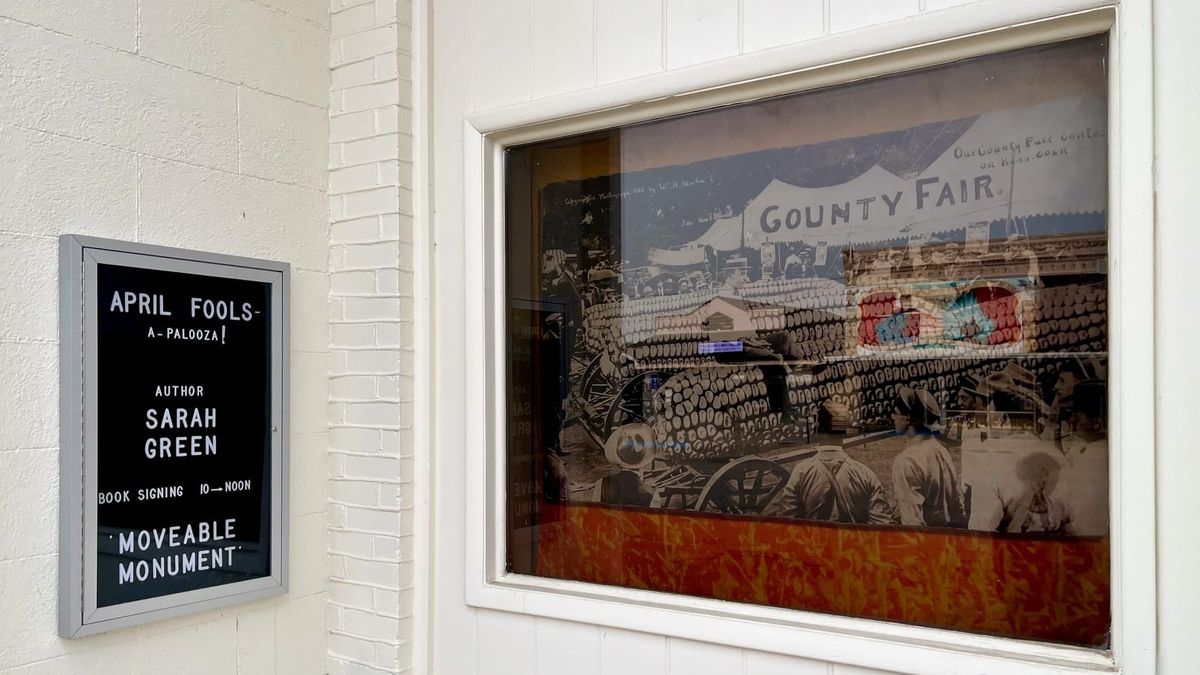
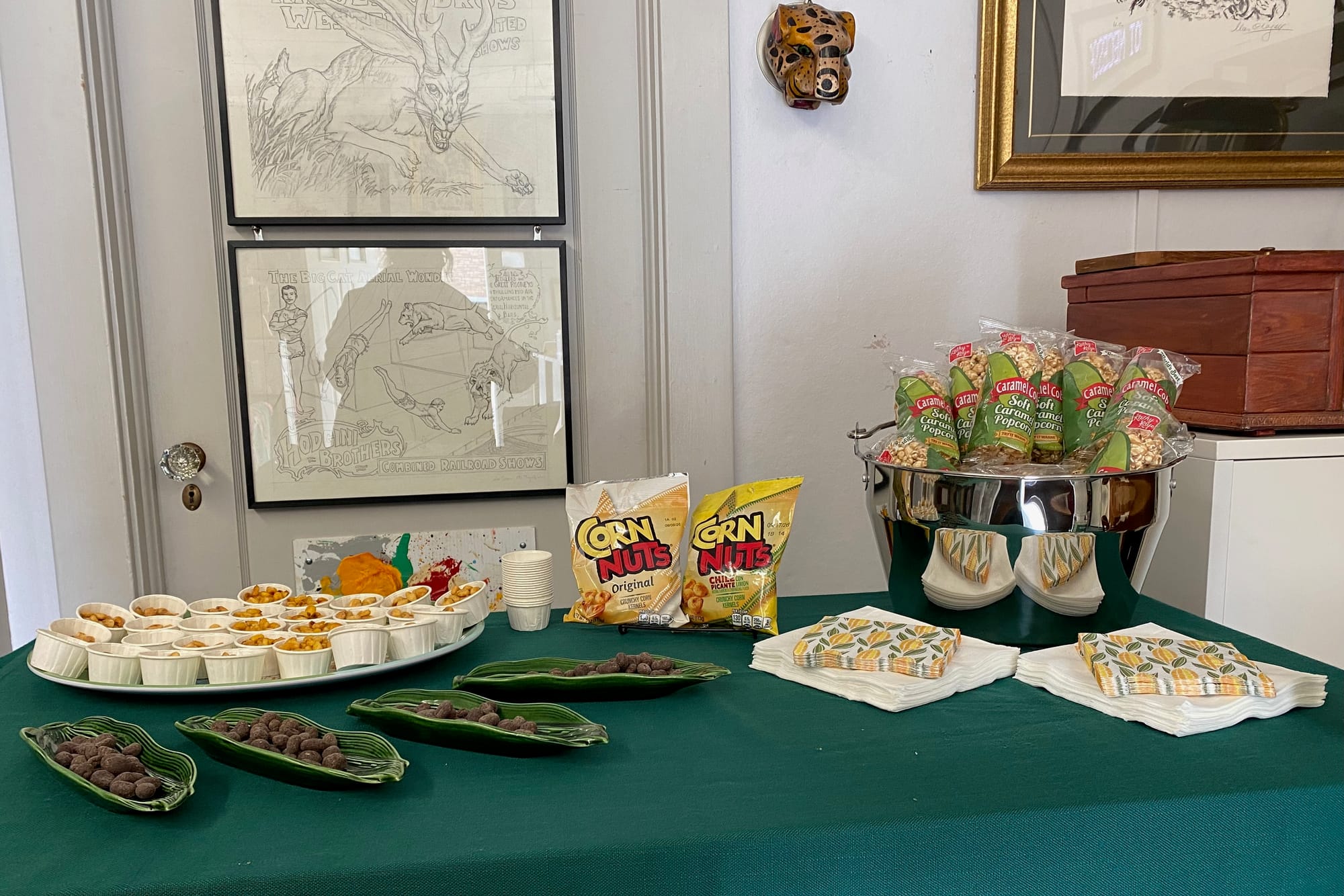
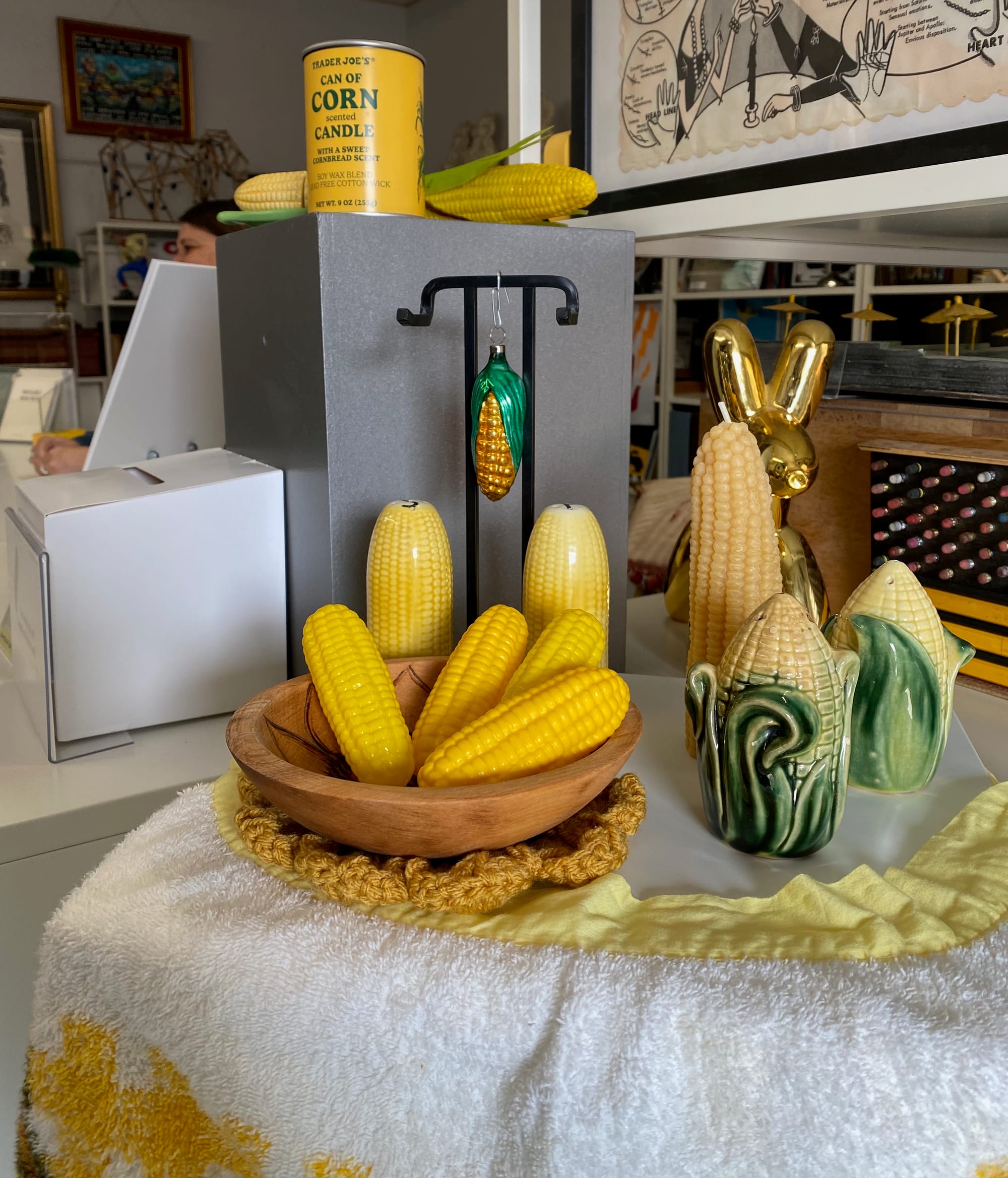
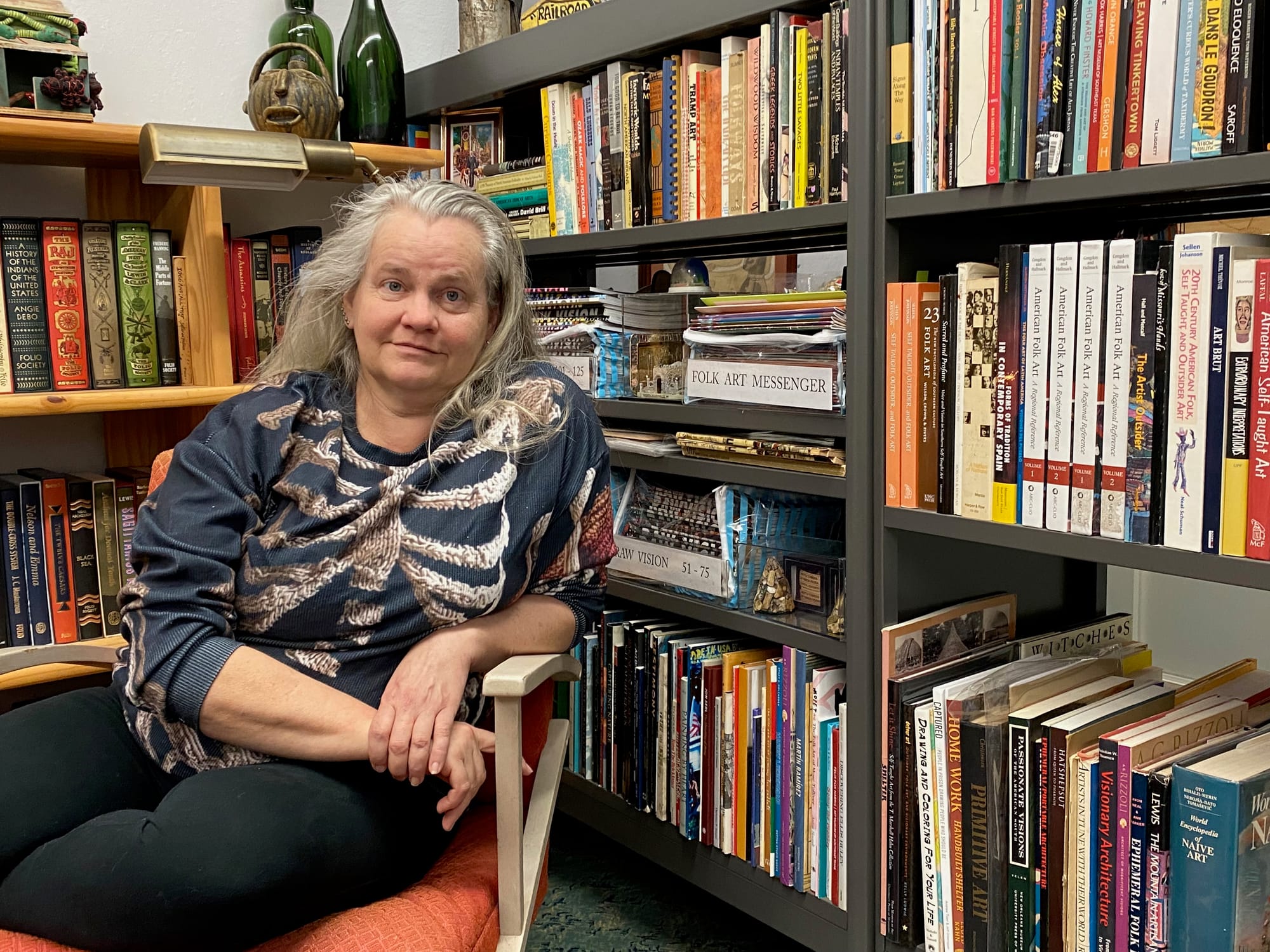
Sitting next to a buffet of corn nuts and a display of corn-cob themed ceramics from the past, Sarah Green, sporting golden corn earrings, signed copies of her book “Movable Monument.” She was invited to Woodpecker Archives in Lucas as part of April Fools-a-Palooza, the artist-created event that happens each April 1. Green, who is based in Wichita, handed out 12 copies of the visually rich and comprehensively investigated booklet and spoke with more than 30 visitors about the 1893 monument at its center: a carved limestone water fountain designed with a corncob water feature.
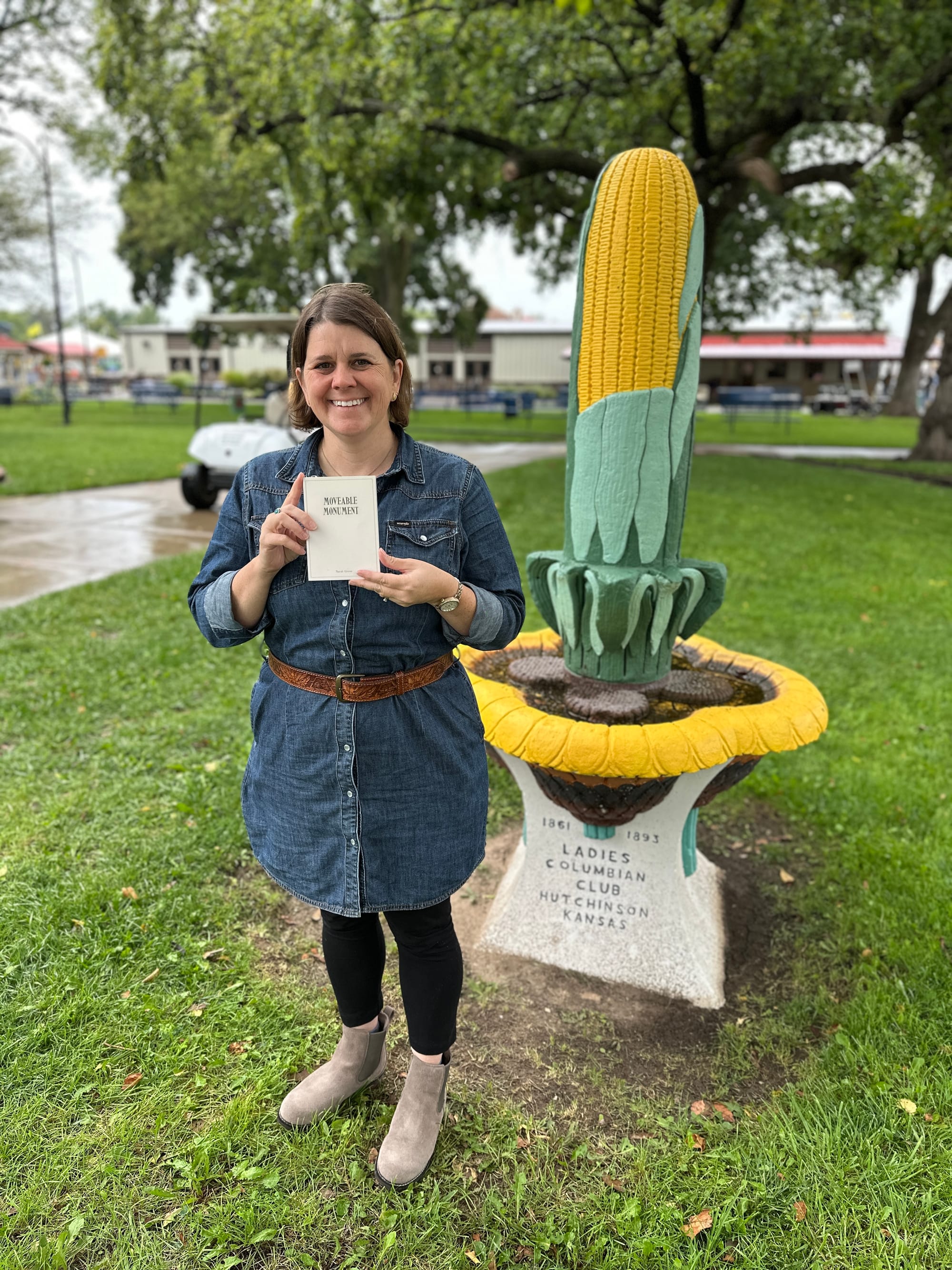
“I don’t know who certifies this, but it was certainly the first piece of public art in Hutchinson, and it’s thought the first in Kansas,” Green said. “It was striking to me that it was such a goal of the ladies’ club. They planned that this would be a thing of beauty forever, the expectation it would be a beautiful object for people to enjoy, and almost immediately it wasn’t. That happened fast. And somehow, about 135 years later, it’s still here and people are still taking pictures of it and appreciating it against all odds.”
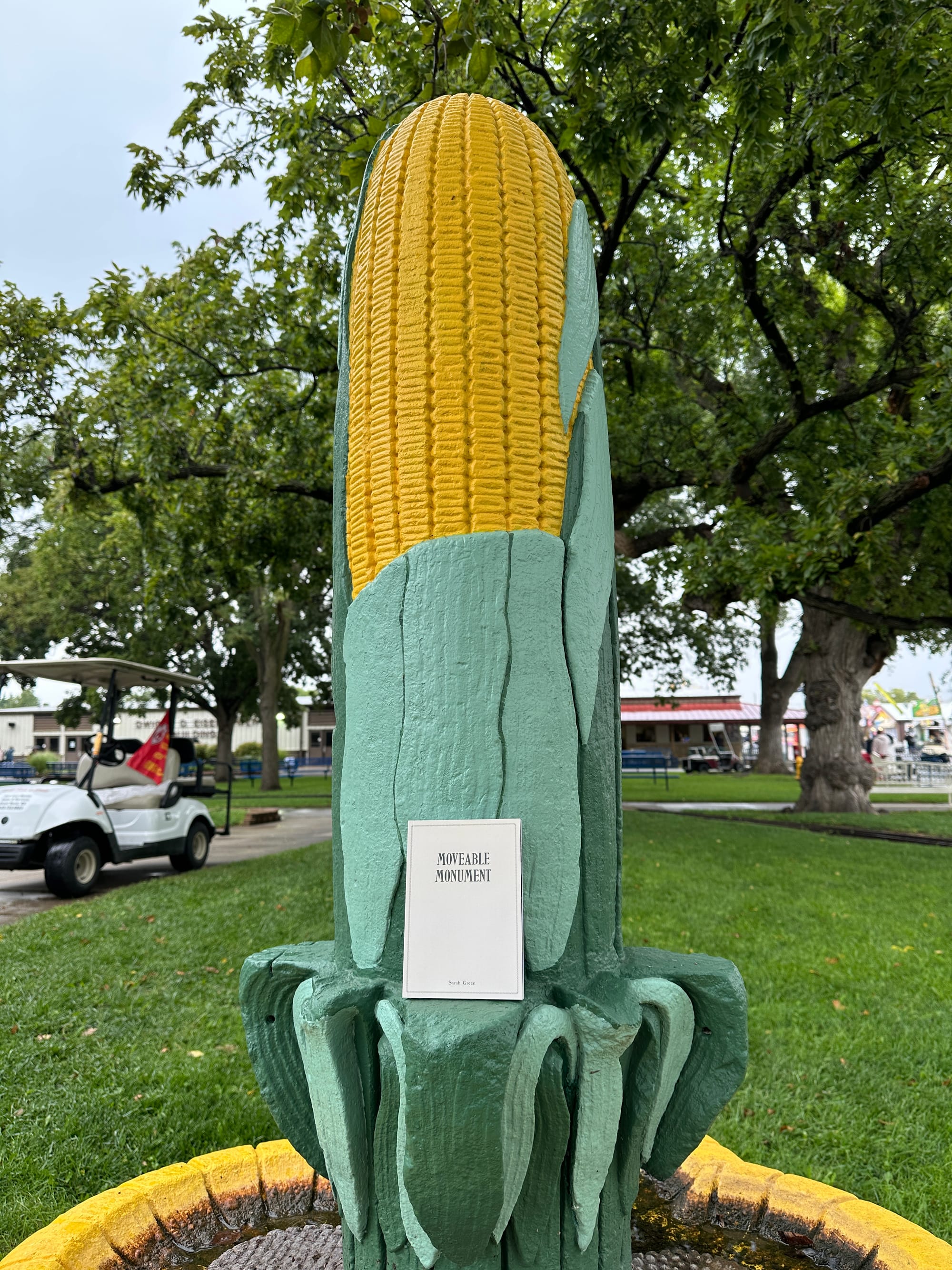
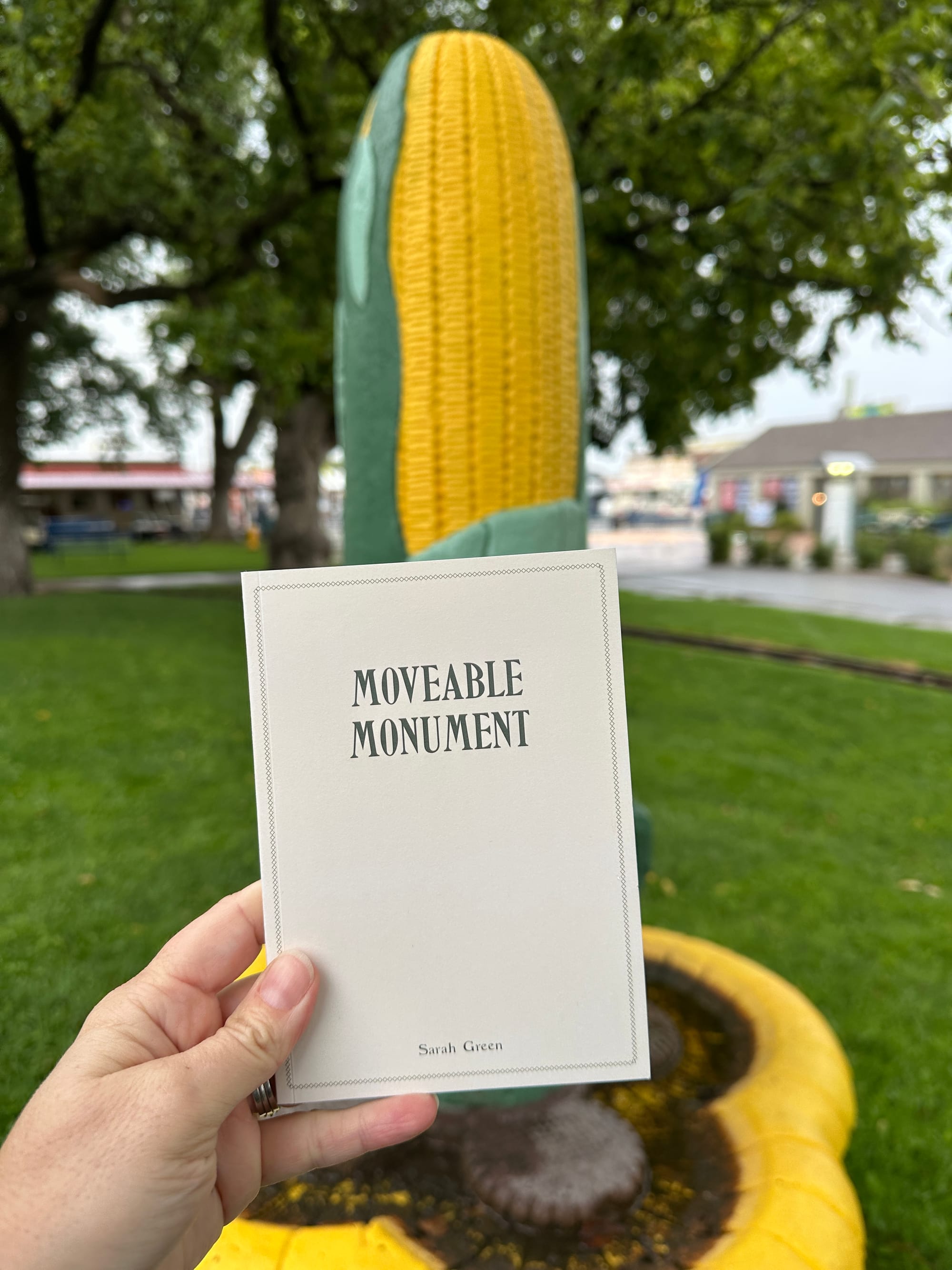
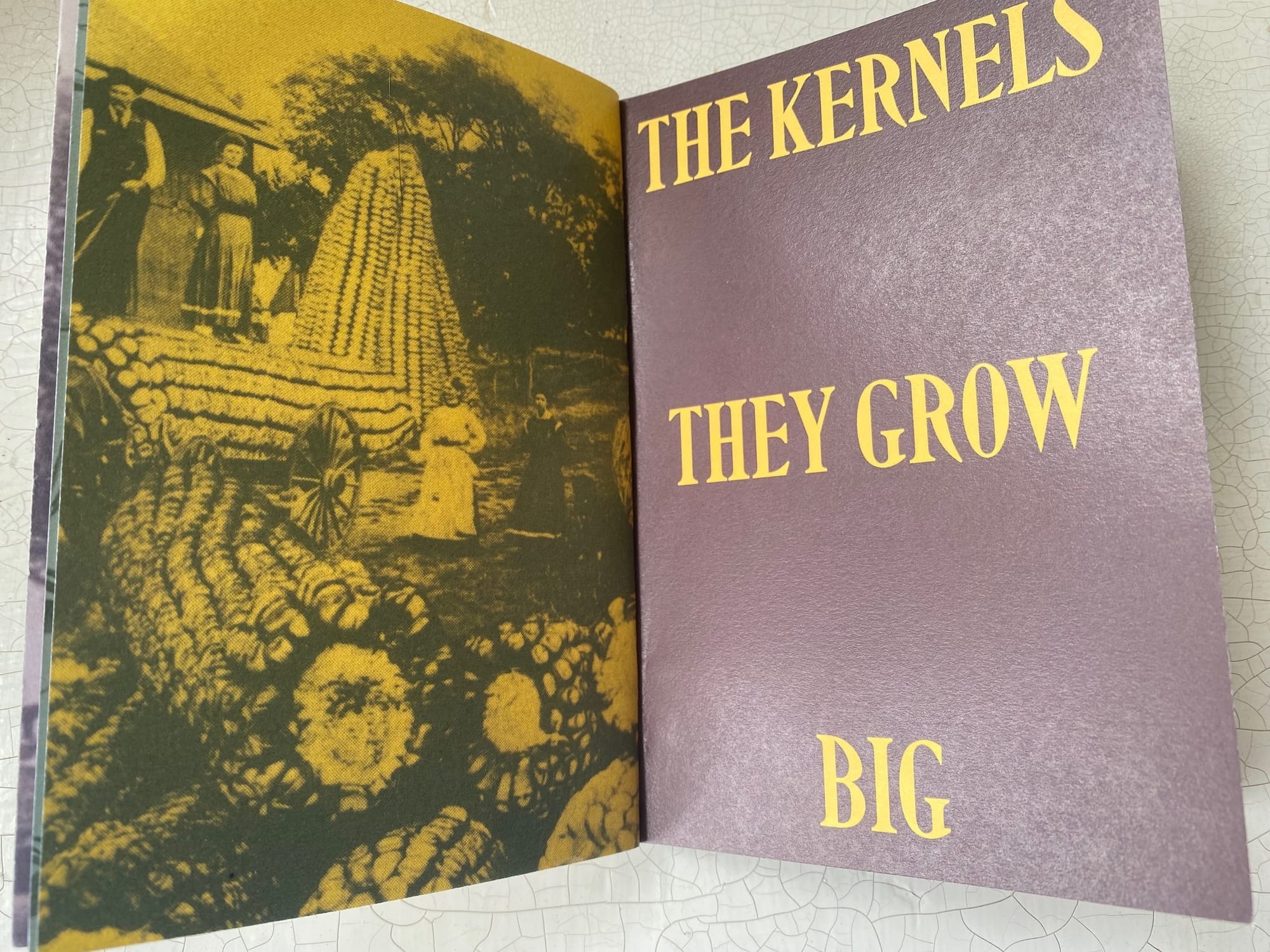
Today, the Ladies Columbian Club corn monument is about 7 feet tall and no longer operates as a fountain. The green, yellow, and brown painted sculpture resides on the Kansas State Fairgrounds in Hutchinson. Green’s book describes it as “a four-foot-tall ear of corn (that) emerges from a bouquet of sunflowers” which make up the base, and “originally topped with a spurting waterspout in lieu of tassels, for use as a drinking fountain.” The Hutchinson News called it “a fine ear of corn in full kernel, with the husks partly turned down to show that the kernels they grow big out in Kansas.”
When Green spotted the fountain in an out-of-the-way spot on the state fairgrounds in 2006, she captured its quirkiness with a photograph. By 2025, she had 19 years of photos – variously “funny, rainy, freshly painted, looking pretty rough” – and embarked on her research. She imagined publishing her essay as a zine, stapled together at the dining room table.
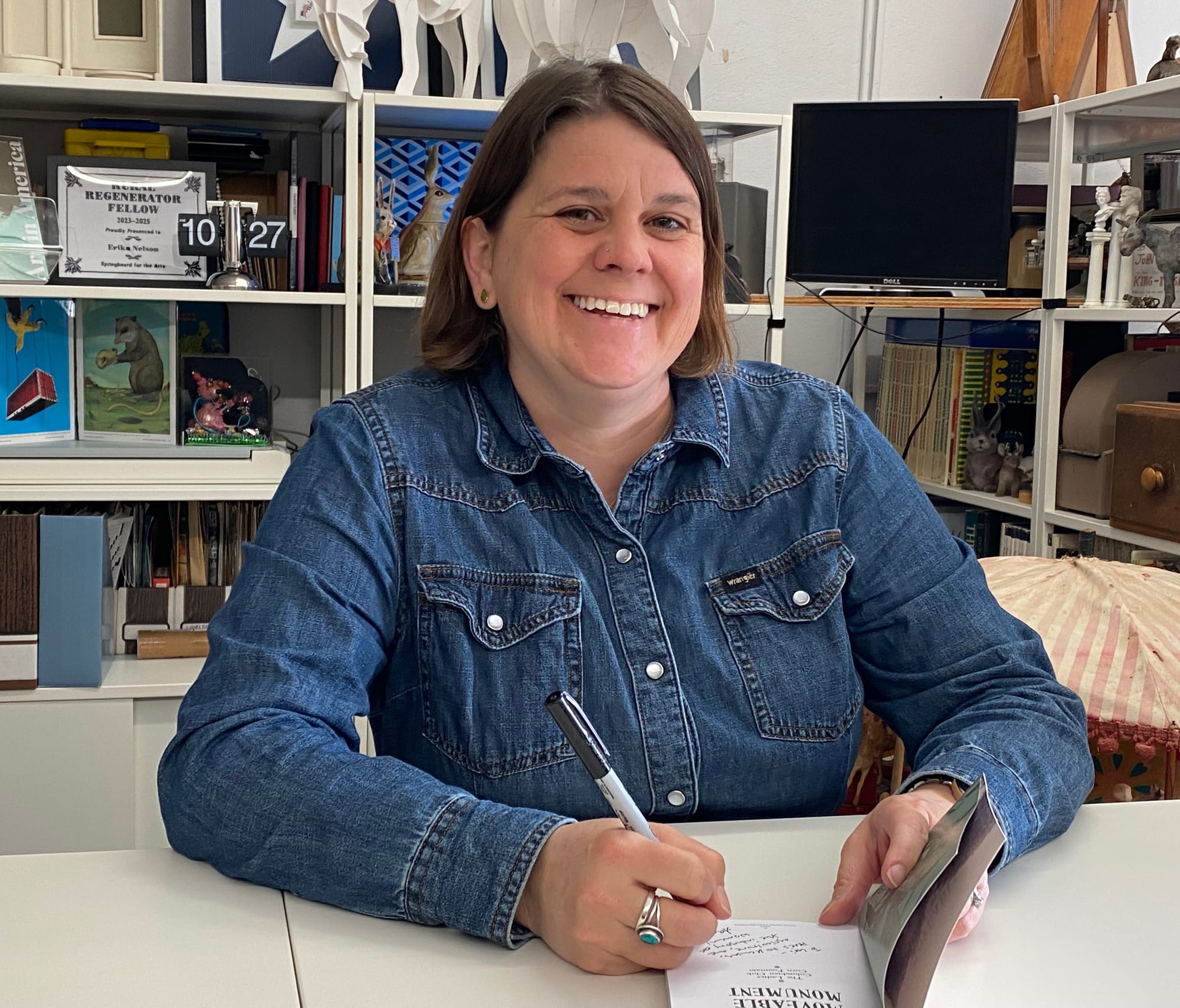
She asked designer Mary Welcome of Palouse, Washington, to help with the visuals and format. While Welcome was scholar-in-residence at Woodpecker Archives in Lucas, she brought artist-archivist Erika Nelson into the conversation. Soon, or perhaps immediately, a cooperative press formed with a “fairly short, very intense history because of the three people involved,” as Nelson put it.
“Movable Monument” is the first publication. It is about as big as your hand, a striking small book that traces the less-than-monumental creation, exhibition, loss, and recovery of the magnesia stone fountain. The book begins in 1892 with a group of Hutchinson women who signed on to a national call for exhibits to send to the Columbian Exposition, the Chicago international display now famous for its “White City” neoclassical architecture and Gilded Age opulence.
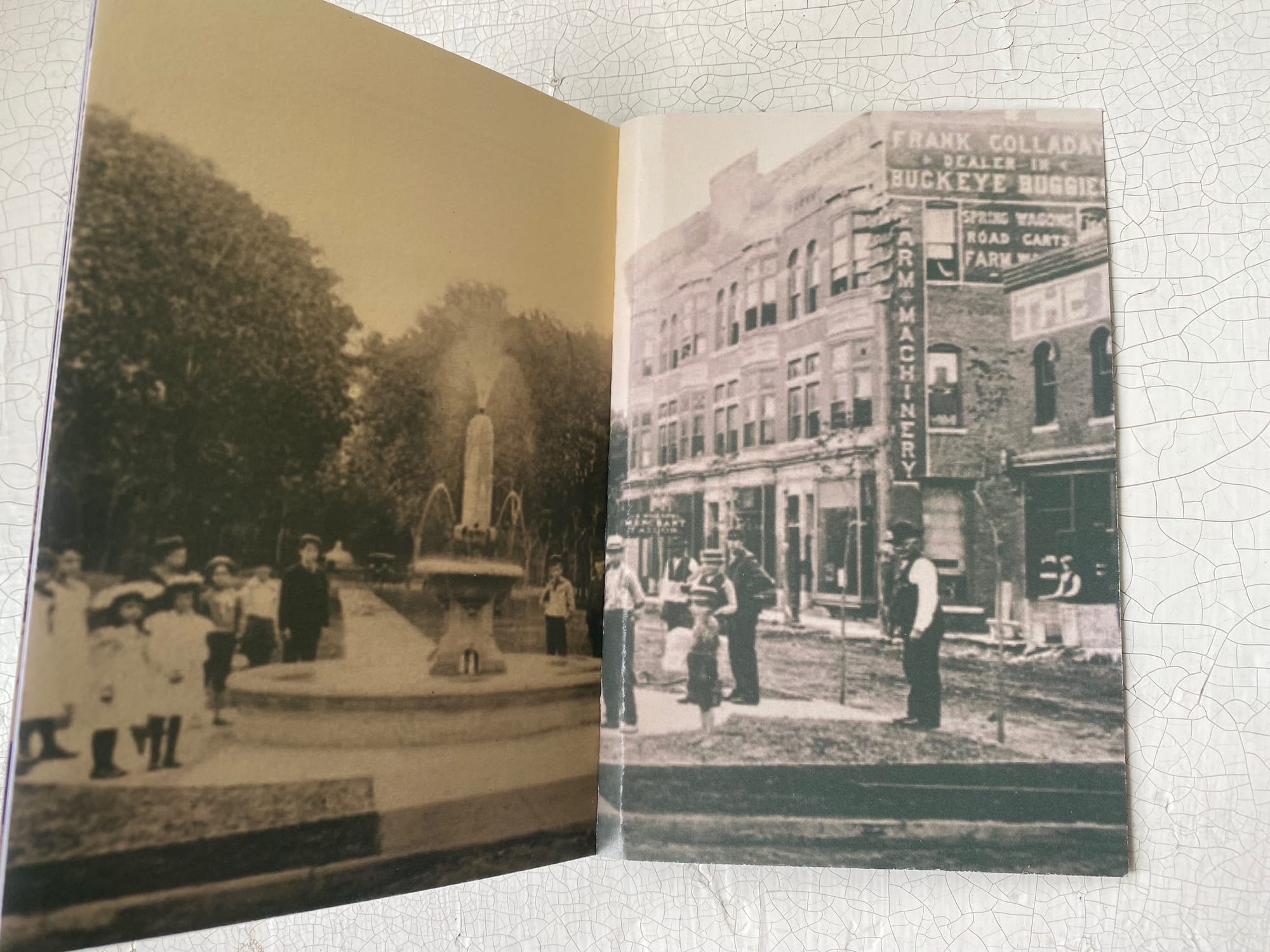
The problem was that the corn fountain was neither opulent nor neoclassical. A double-page spread in the book reproduces an antique photograph from the site outside the Kansas building on the exposition grounds. In place, it looks small and stumpy. No water is running to complete the illusion of tall corn plants topped with tassels. People in their 19th century hats lined up to enter the building seem not to notice the fountain where it sits behind a small boulder in the shade of a tree.
Despite its underwhelming reception, Hutchinson wanted the fountain back. The ladies club raised money to install it in a park after its Chicago appearance.
“The fountain was a celebration of a place and of an industry,” Green said. “What do we celebrate like that today? Of what are we so proud that we get an entire community rallying together to invest in a lasting monument? Maybe one reason the ladies could pull it off was because they got so many different kinds of people to participate at all levels. It’s stunning how much faith the community seemed to have in the process. They had no clue what the end product would be, what it would look like — and they did it anyway.”
“Movable Monument” is an evocative origin story for a peculiar Kansas artifact because it traces issues of artistic taste, craft, civic pride, and commemoration that are still with us. The book is available by happenstance at organizations the partners each represent.
“When friends and readers have asked about ways to contribute to the effort, we've offered them the option to offset costs, including those related to upcoming projects. We're crowdsourcing the future,” Green said.
Artistic issues and more are important to Rock Paper Feather Press, which occupies a cultural niche in an ongoing Kansas-centric publishing renaissance. The press is a critical addition to Kansas publishing because of its emphasis on book arts, history, and literature.
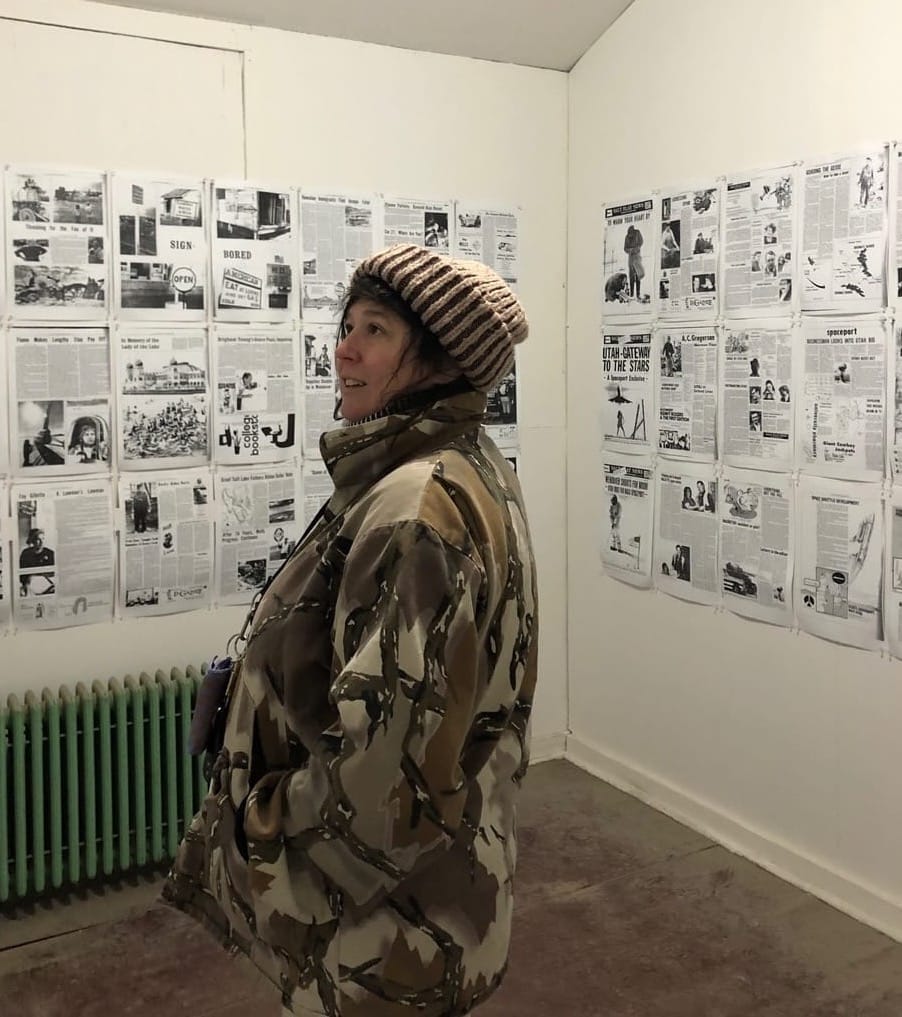
Welcome, who designed the book, said of the press’s goals, “I think about Rock Paper Feather Press as being a vehicle for storytelling, but in a very homespun, front porch, kick the can, riffin’-with-your friends kind of methodology. A little more honest than spinning a yarn but not so serious as quarreling over the Oxford comma (I’m pro, obviously).”
About a dozen such potential topics are listed on the website, and “Movable Monument” begins the press’s initial project – a series of small-batch, single-topic booklets. Two more subjects are in the works with the goal of publication this year. Upcoming releases will be announced in the press’s newsletter.
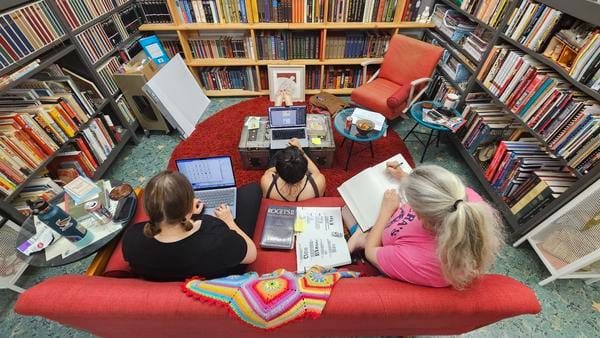
These first books will be movable memory, portable and precious objects, passed from hand to hand.
“Most of my projects ask the question: how can people and their places work better together? The stories we tell — about ourselves, our neighbors, our places, our kin, and our history are doing the heavy lifting in the invisible fabric of cultural work,” Welcome said “The process of learning, listening, researching, and translating — well that’s where all the joy is, isn’t it?”
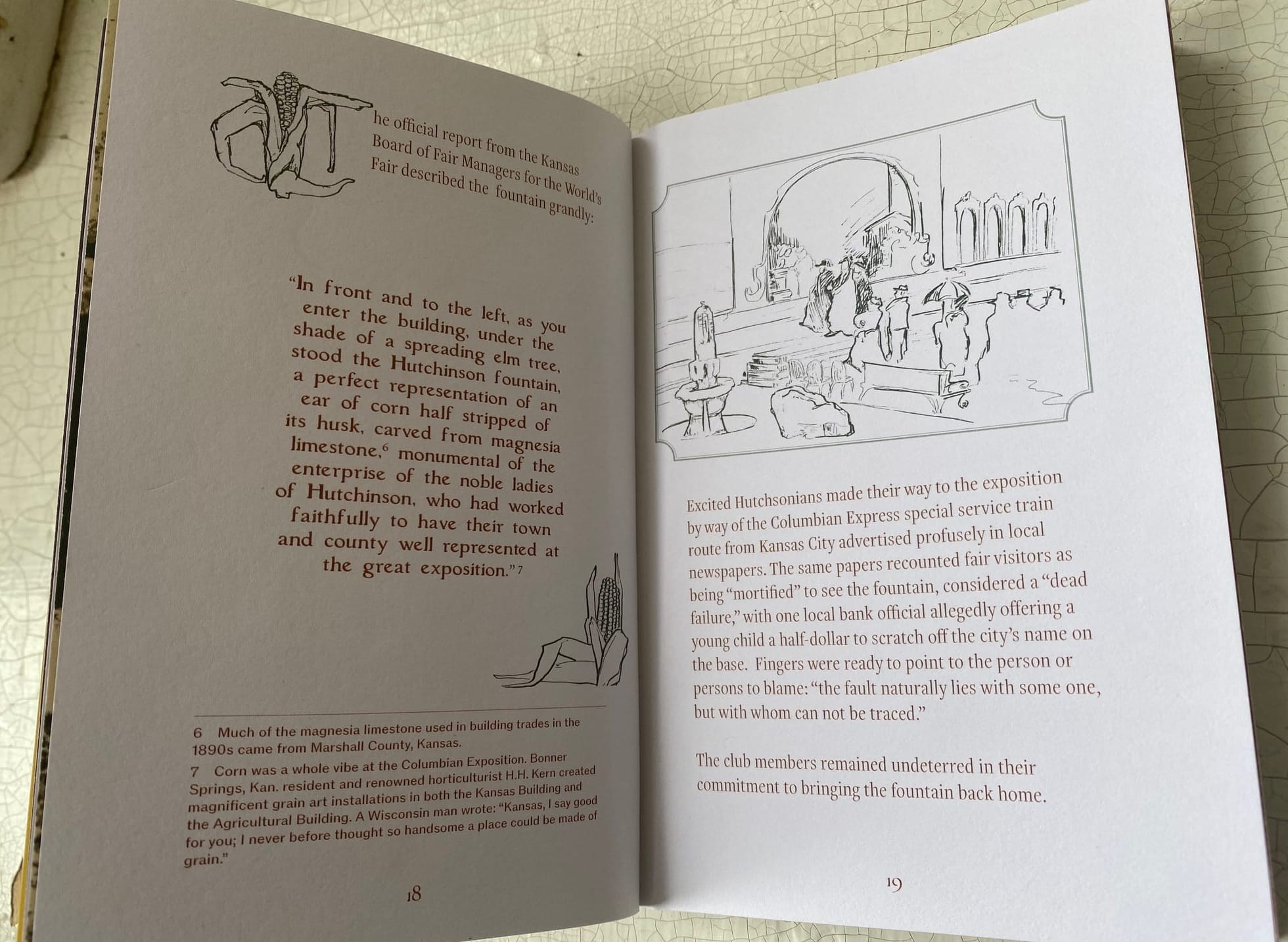
Nelson, who drew the illustrations for the book, said it was a passion project, funded by pooling resources of design, time, and writing as a way to see how much such a vision costs. Two grants — from A Blade of Grass and Creative Change Coalition — supported research and in-person work sessions.
“Mary and I brought our design backgrounds and ability to put things together in a physical, tangible way to what Sarah was writing,” Nelson said. “So when we were thinking about what this booklet looks like, I pulled out every small tome that felt really good, like Dinsmoor’s tour guide that he did for the Garden of Eden, the Humanities Kansas poetry chapbooks, the zines that were paper-bound from the 80s that I had from the punk rock scene. We really looked at all of these things that were just slightly above self-published, but still self-published.”
Green credits Welcome’s and Nelson’s graphic work and editorial feedback for the essay’s final form, which includes Green’s personal story with the fountain’s history.
“Sarah and I had the overlap of Kansas subjects,” Nelson said. “Mary and I had the overlap of loving the way that the printed word looks.”
“When the design of it, and the content of it, and the shape of it, and the size of it, and the feel of it, and the texture of the paper of it, all comes together, it becomes this little living tome that is going to outlast you, Nelson said. “And that to me is the magic of books.”
Lori Brack is a writer and arts worker based in Lucas, Kansas. She is the author of three books of poems and many essays in anthologies and journals. Links to her writing and full bio are at www.loribrack.com.
❋ Derby man has the kind of voice that turns heads — and chairs
❋ Socializing while sober: how some Wichitans are cultivating alcohol-free communities
❋ As a small creative business closes, the owner mourns
❋ Painting through it: Autumn Noire on 20 years of making art
❋ How a guy from Wichita resurrected 'Dawn of the Dead'
❋ Bygone Friends University museum housed curious collections
Support Kansas arts writing
The SHOUT is a Wichita-based independent newsroom focused on artists living and working in Kansas. We're partly supported by the generosity of our readers, and every dollar we receive goes directly into the pocket of a contributing writer, editor, or photographer. Click here to support our work with a tax-deductible donation.