Mad props: Meet the unsung heroes behind the scenes in Wichita theaters
Prop artists work to create the visual magic of theater. Teri Mott visited with seven of them and heard their stories.
When was the last time you grabbed a theater program to seek out not the actors or designers, but the folks behind the props?
Properties, environments, production design — all of these are achieved by nimble artists who work with other theater talent to make the visual scene complete.
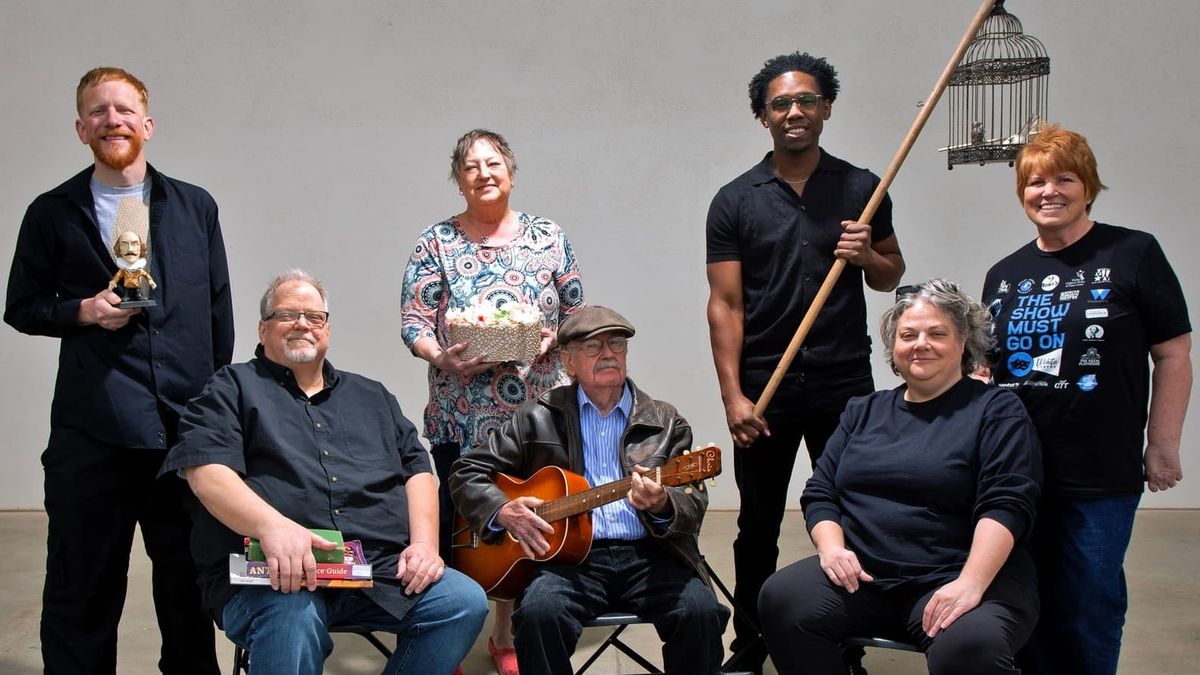
Often a combination of collector, researcher, and spontaneous creative, these artists have thrived in and around Wichita for at least six decades. I visited with seven; apologies to the many others not included here. I see you and everyone in this vital yet under-recognized field.

I was too dumb to know I couldn't get a job, so I got a job
At Heights High School, Tim McGill noticed something about his fellow students.
If a vocational class teacher asked them to get “screws or bolts or something, they'd leave campus and wouldn't come back until the next day, no matter what time they left. But if theater people asked them to get something, they came back right away. When they did something in theater, they could sit in that audience and know ‘these people are enjoying what I built.’”
After graduation, McGill went to Emporia State University to study theater and communications with the intention of being a teacher. “I felt it was a little disingenuous to teach something you hadn't done for real,” he recalls. “So that's when I went out to California. I was too dumb to know I couldn't get a job, so I got a job — and boy, was I ever making a lot more money than I was ever going to make teaching kids.”
Periodically, between major film work, he came back to town and loaned props to Wichita Community Theatre, The Forum, and many other theaters.
Medieval items, weapons, original and replica firearms, odd, antiquated thingamabobs; uniforms from the Civil War, the Spanish-American war, the French Foreign Legion, both World Wars, and the Korean and Vietnam wars; and civilian clothes — double-breasted suits and women’s outfits spanning the early 1900s through the 1970s or so — are among his offerings. McGill, nearly an octogenarian, has become something of the de facto grandfather of props in Wichita, many other designers learning the craft at his knee.
I’ve always been very aware of the things people own
Louise Brinegar was introduced to theater as a child by her mother, Frances Powers Brinegar, who was looking for a way to keep her two daughters occupied without parking them in front of the TV.
First, she took them to Wichita Children’s Theater, a popular choice circa mid-1960s through the 1980s. Later, when Music Theatre of Wichita (now Music Theatre Wichita) was established, she joined her mother backstage.
“Before I could drive, Mom would take me with her, and I have memories of sewing green tulle onto the sleeves of the Scarecrow outfit for ‘The Wizard of Oz’ and buttons on Maria's jacket in ‘The Sound of Music.’”
Her mother also knew much about antiques, collectibles, and artwork. “I grew up going to estate sales, and I've always been very aware of the things that people own,” Brinegar said. “I love to research stuff, so it’s a natural fit for me to examine time periods, then get into the brains of directors and characters in the play and say, ‘Okay, what's going to bring this show to life? How can I make that happen?’”
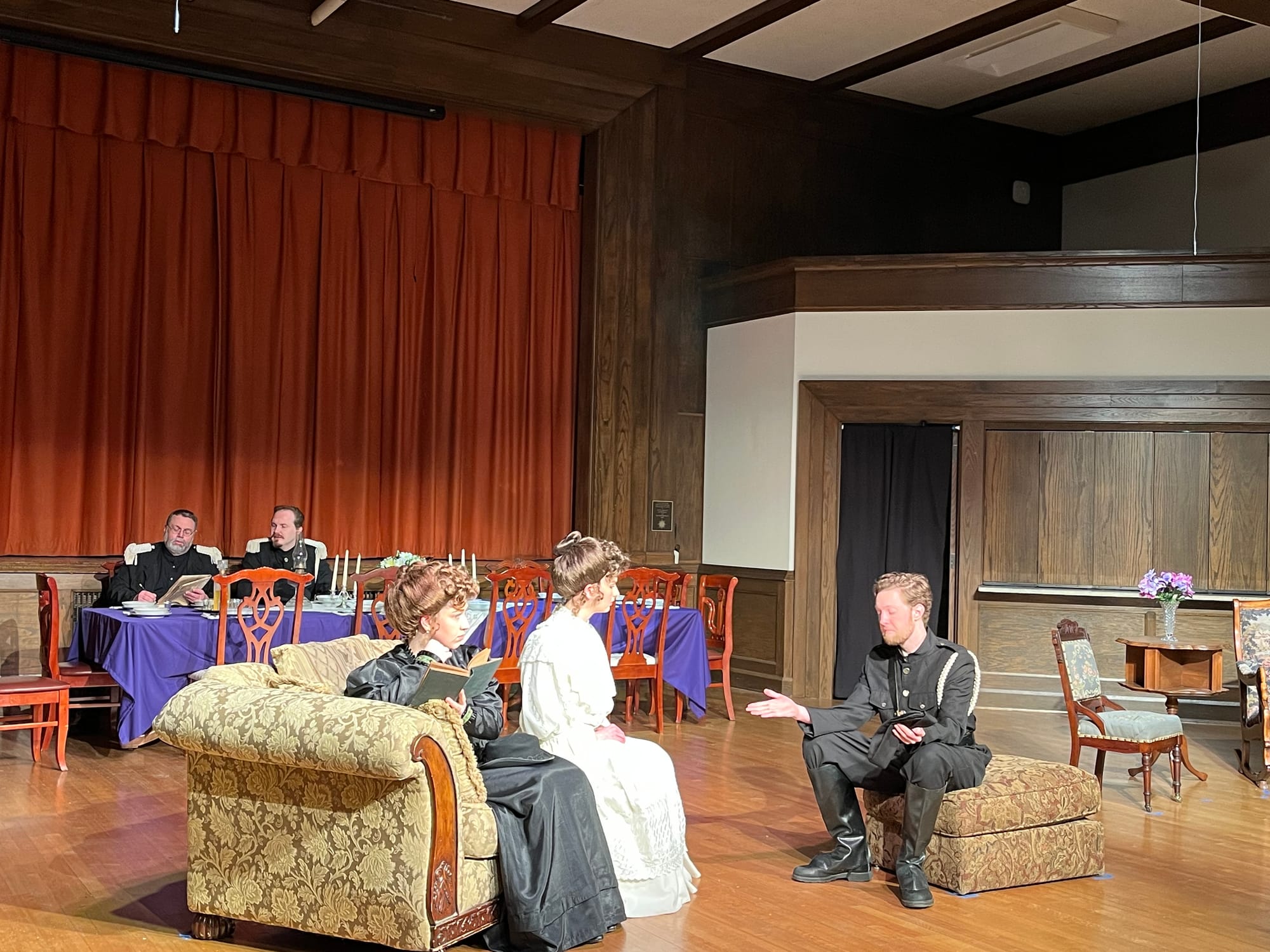
Guild Hall Players artistic director Phil Speary inspired Brinegar’s career when he invited her to do props for the company.
“It’s a different experience,” Brinegar said. “Because it’s an untraditional stage space, the props form a pattern or groups of playing areas that the audience sees from above, so what you choose is important. Often, it is the set.”
It was at Guild Hall that she recalls building her most maddening prop, the crocodile from “Peter and the Star Catcher.”

“I struggled with how to do something that looked like a crocodile but could move,” Brinegar said. “I ended up with a plastic blow-up crocodile, cut up so that I could stuff it.” She created a ‘skin’ and put together a duct-like metal that framed the skin and sported “round, red reflector things like you put on a trailer, cut in half to make the eyes. And two plastic clothes hangers that went into the bottom and the top of the snout, and a handle. It was bizarre. And it was on stage for just a few minutes.
“Phil trusts me, because he literally did not see that prop until final tech rehearsal.”
Brinegar has also designed props for Music Theater for Young People, WCT, Wichita Grand Opera, Wichita Center for the Arts, The Forum Theater, and Roxy’s Downtown.
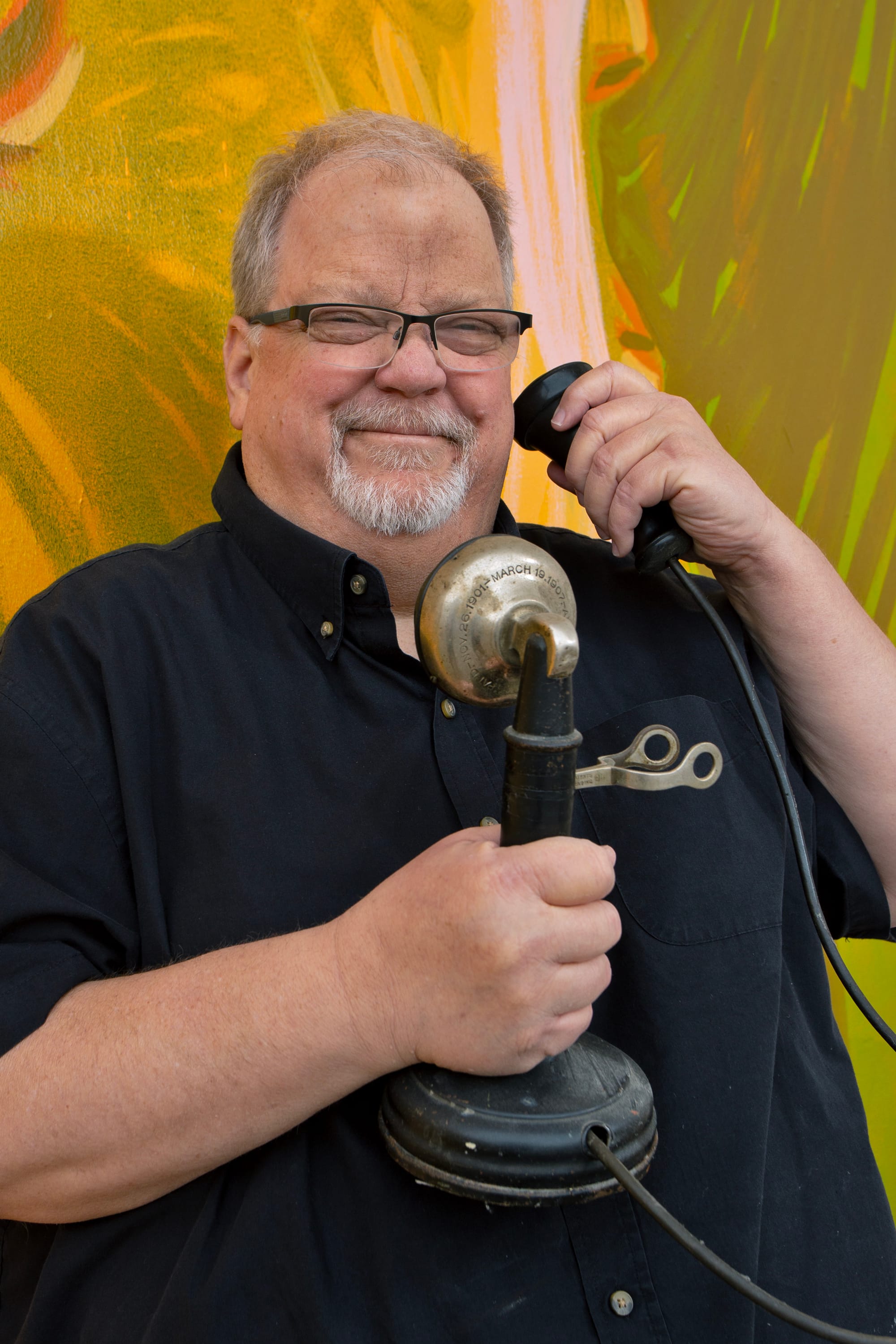
The weirder the ideas are, the more he likes them
Like many props artists, Tom Mittlestadt started experimenting with theater in high school. It wasn’t until he was attending Butler Community College in 1984 on a theater performance scholarship that he discovered that he preferred “the creative stuff in the tech world.”
“I just fell in love with doing props.” His first major project was the props-heavy “Brighton Beach Memoirs,” and as he watched the performance, dressed with vintage items he’d found with no budget, “I thought, ‘this is what I love doing.’”
Mittlestadt has designed properties for WCT, Wichita Center for the Arts, Music Theatre Wichita, Stage One, Opera Kansas, Wichita State Opera, Wichita Grand Opera, American Players Theater, and others. He is often called upon by people — including those shooting for National Geographic and Splash Discovery Channel — to loan or rent props of all kinds from his collection.
He has also made movies. In fact, he won an award at Cannes. Mittlestadt was in charge of props for Jim Jarmusch’s 1989 film, “Mystery Train,” which received the award for Best Artistic Contribution. He is now the director of events and logistics for Tallgrass Film Festival, where he has produced legendary parties for the annual festival for going on 24 years.
The weirder the ideas are, the more he likes them. “I enjoyed working with Ann Keefer at Tallgrass because she just didn’t let reality stop her,” he said. “She’s just let her imagination run, and then I’d try to make whatever crazy thing that was, happen. I love that.”
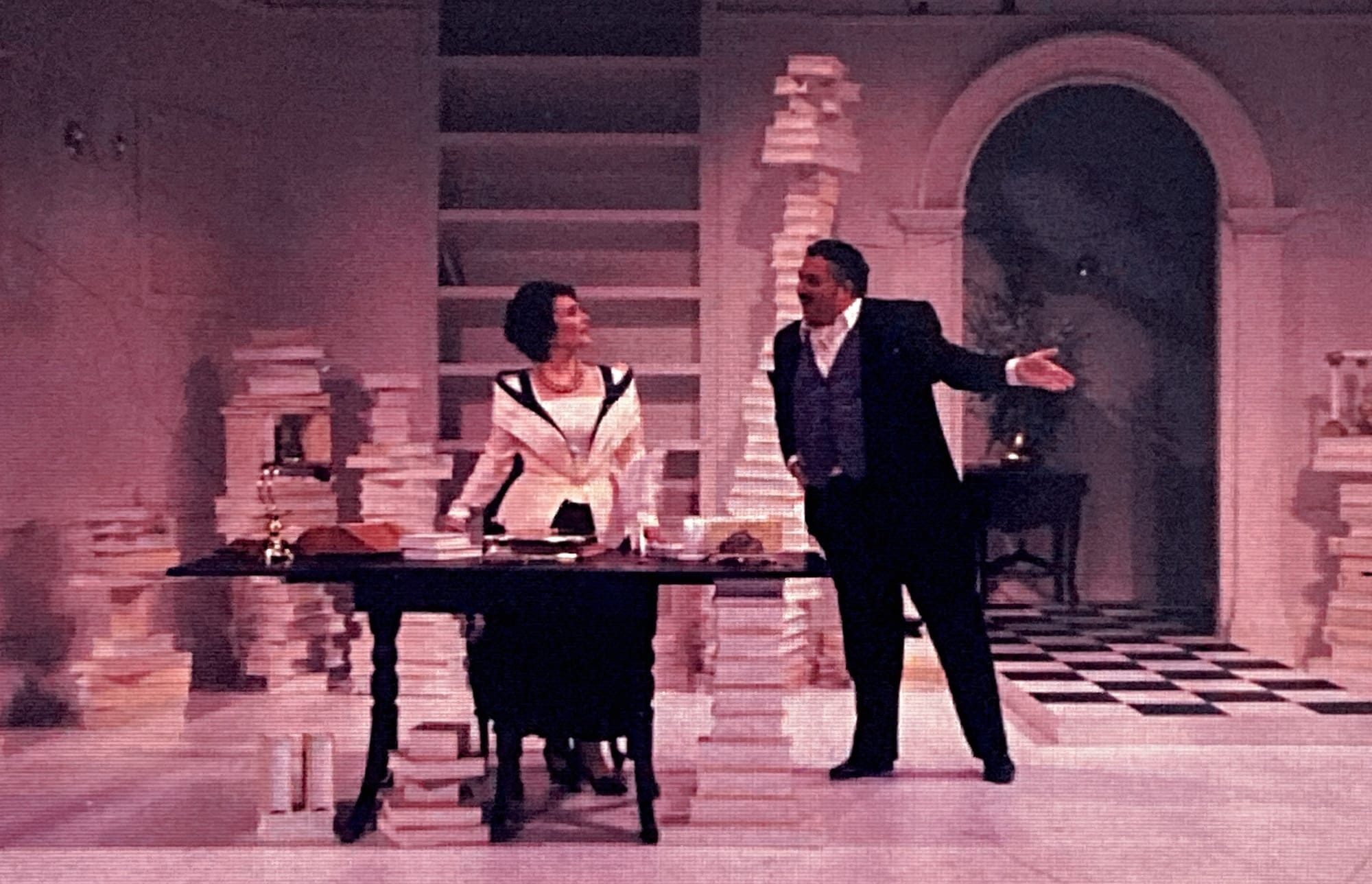
He looks back fondly on his set work with Charla Sanderson at Wichita Center for the Arts. “She has a wild way of seeing things. In one set, the furniture was stacked books, which we built. We did so many interesting sets there: one based on birdcages, one with silhouettes of figures to represent crowds, so many simple but unique ideas to bring these sets to life. She is an artist.”
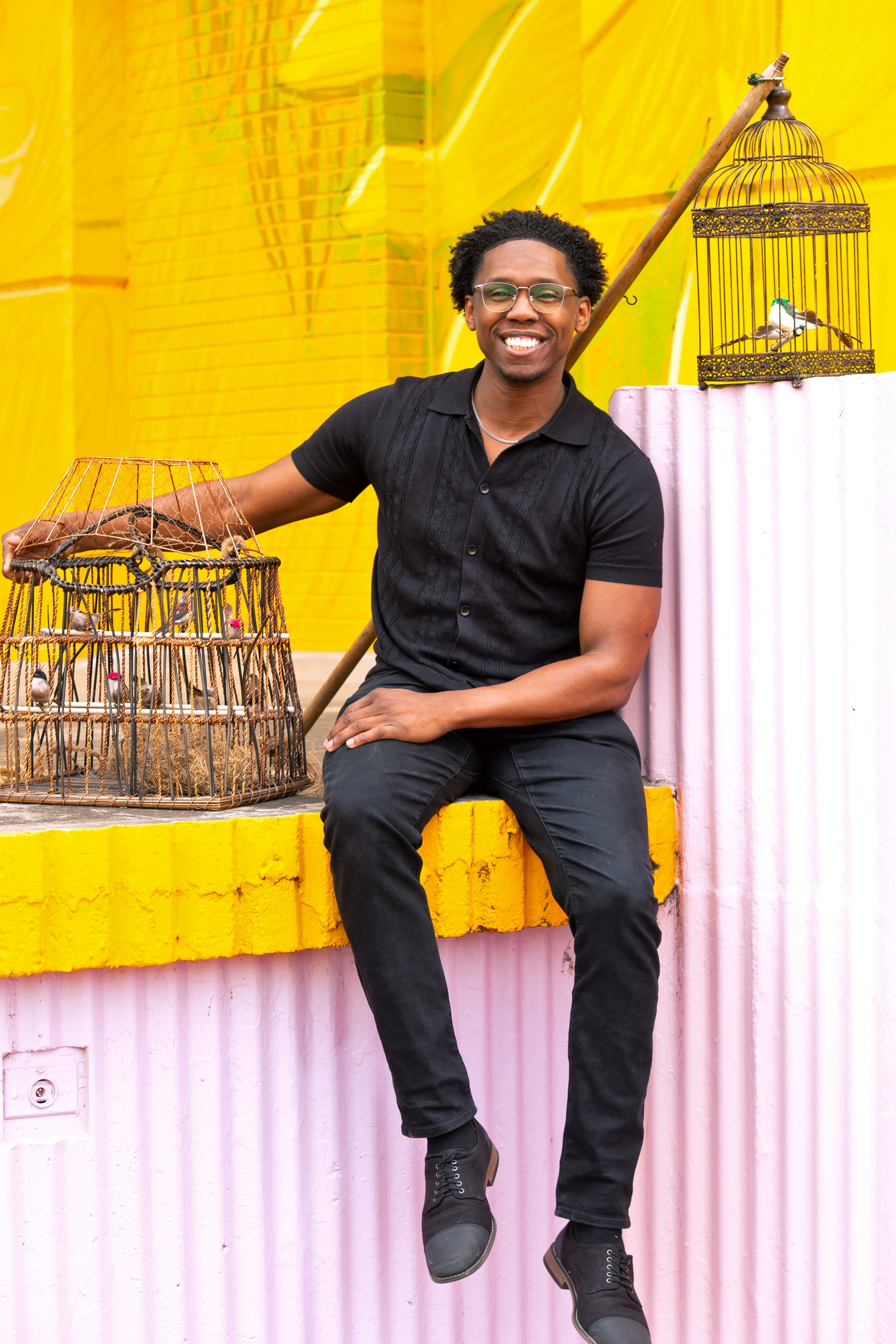
A knack for creating environments
“As a young person, I would always decorate,” Aaron Profit explained. “People used to say, ‘Come decorate my house.’ I had a knack for taking your items and displaying them nicely.”
When Profit was in high school, a mentor showed his artwork to Mittlestadt, then manager of the Design Center, who hired him to work in the warehouse. "I was 16. I went to school in the morning at East High and worked in the afternoon with Tom. Before I knew it, I'm working inside the Koch and Ruffin homes, doing their weddings, their kids’ weddings, and Christmas decor.”
Profit worked with Mittlestadt pulling and prepping props for Music Theatre Wichita and Stage One. “And that's how I got into theater.”
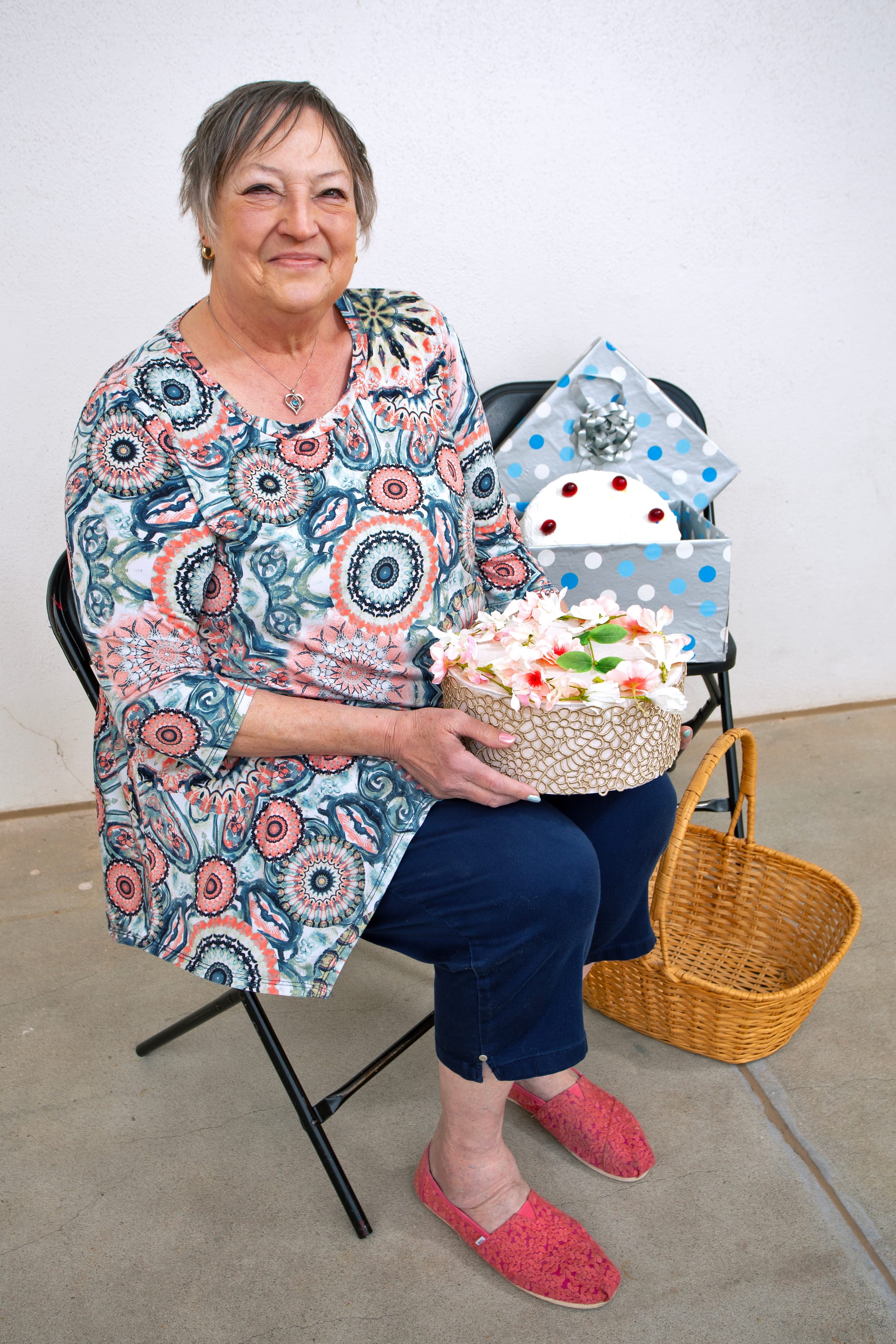
He said that making fake cakes and such was “what I did for fun as a child. But I didn't know you could get paid for it.”
Now associate producer of The Forum, Profit designs a majority of the theater’s properties and other environmental elements and has worked on hundreds of productions, events, and celebrations. He is also a performer and will appear in “Fences” in The Forum’s next season.

Profit cherishes audience responses to his work. “‘Oh, I remember that shaggy rug,’ they’ll say. They believe the actors because they believe in the shaggy rug.”
Those moments affirm his decision to pursue a career in the arts.
“I’ve never chased the money. I chase my happiness, and everything else will be supplied on down the line.”
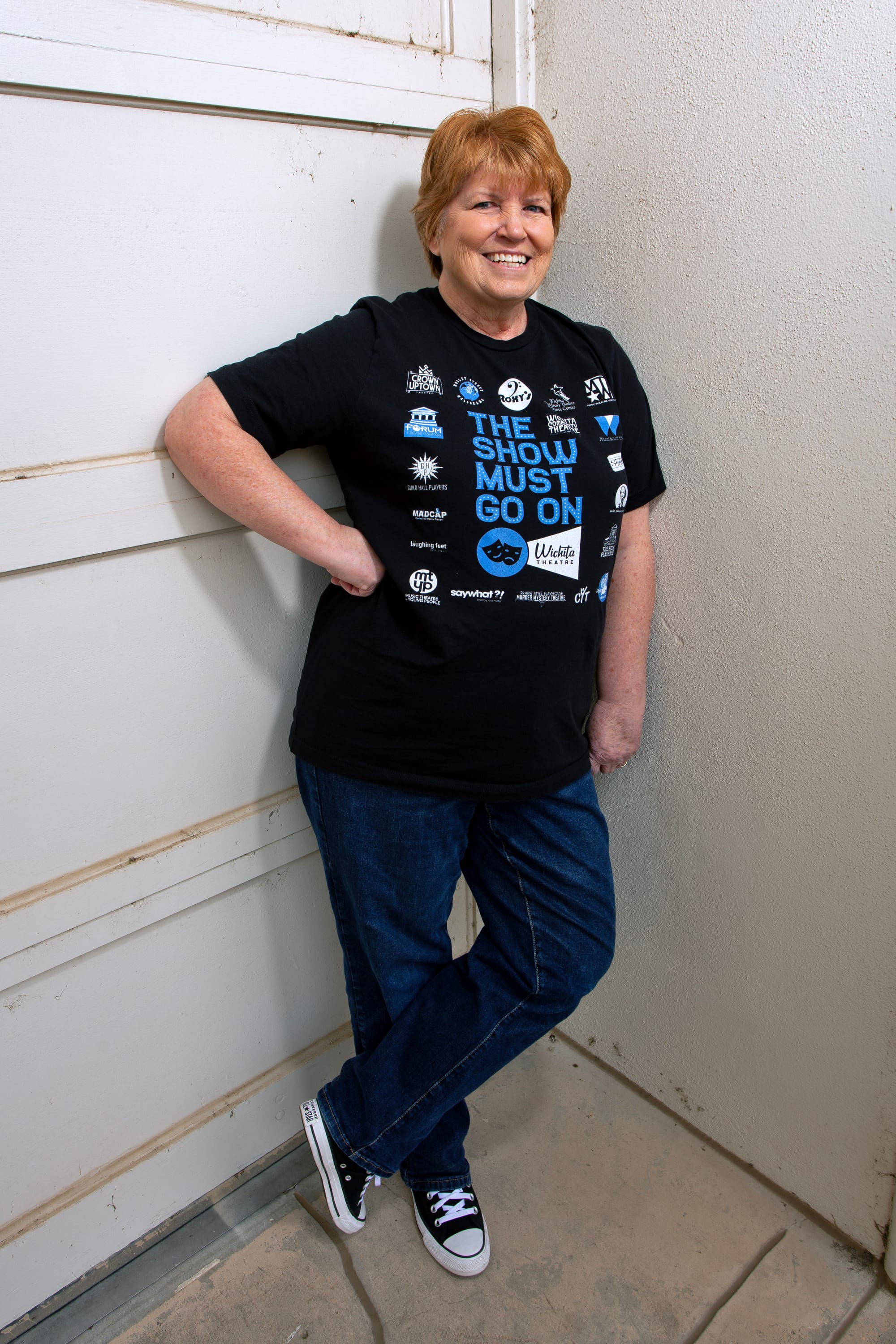
Part of the family
For a 2017 Signature Theatre production of “A Man of No Importance” at the Scottish Rite Temple, “Deb Campbell and Nathan Houseman were looking for a props person, and they knew me,” Kathy Woodward said. “I love a challenge, and sometimes it’s hard for me to say ‘no.’ So, I said ‘yes.’ When they handed me that list, I was like, ‘Oh my goodness, what did I get myself into?’ But then that became my life for three weeks. Hunting at thrift stores, wandering the Dollar Store and imagining what I could do with what. It was an incredible amount of work, and it was a lot of fun.”
Props needed for the show included items to replicate a butcher shop: a string of handmade sausages, cleavers and knives, and a lifelike severed hog’s head. John the Baptist’s bloody head on a platter. An antique bicycle. Stools and glassware and walking canes. Two legal pages of stuff to buy, borrow, or (mostly) build.
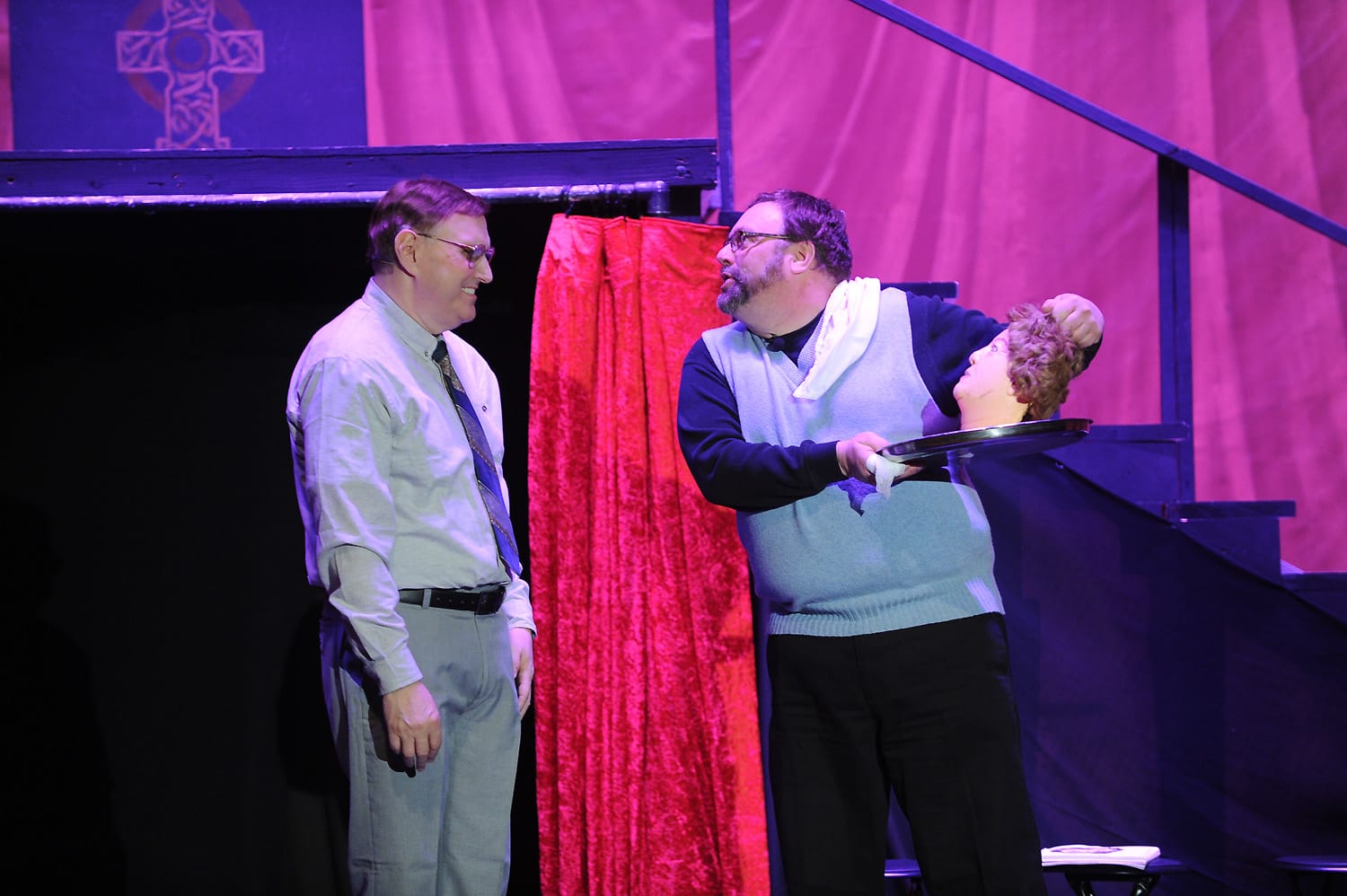
For several scenes involving people eating meals, Woodward made and painted much of the “food” out of clay. “But in one scene, they really needed to eat, so I made real spaghetti every day at intermission, so they’d have it fresh.”
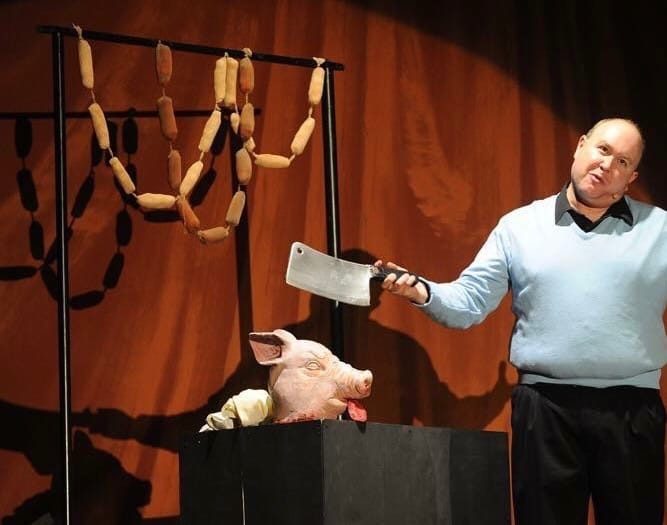
She also helped prop “Once Upon a Mattress” and “Rocky Horror Show” for Signature Theatre, both challenging in their own ways. She has assistant directed and pitched in with costuming and in other areas when needed.
“I like to be part of any show,” she said. “I don't care what I'm doing. I just like being part of that family.”
There's a lot more than sleight of hand
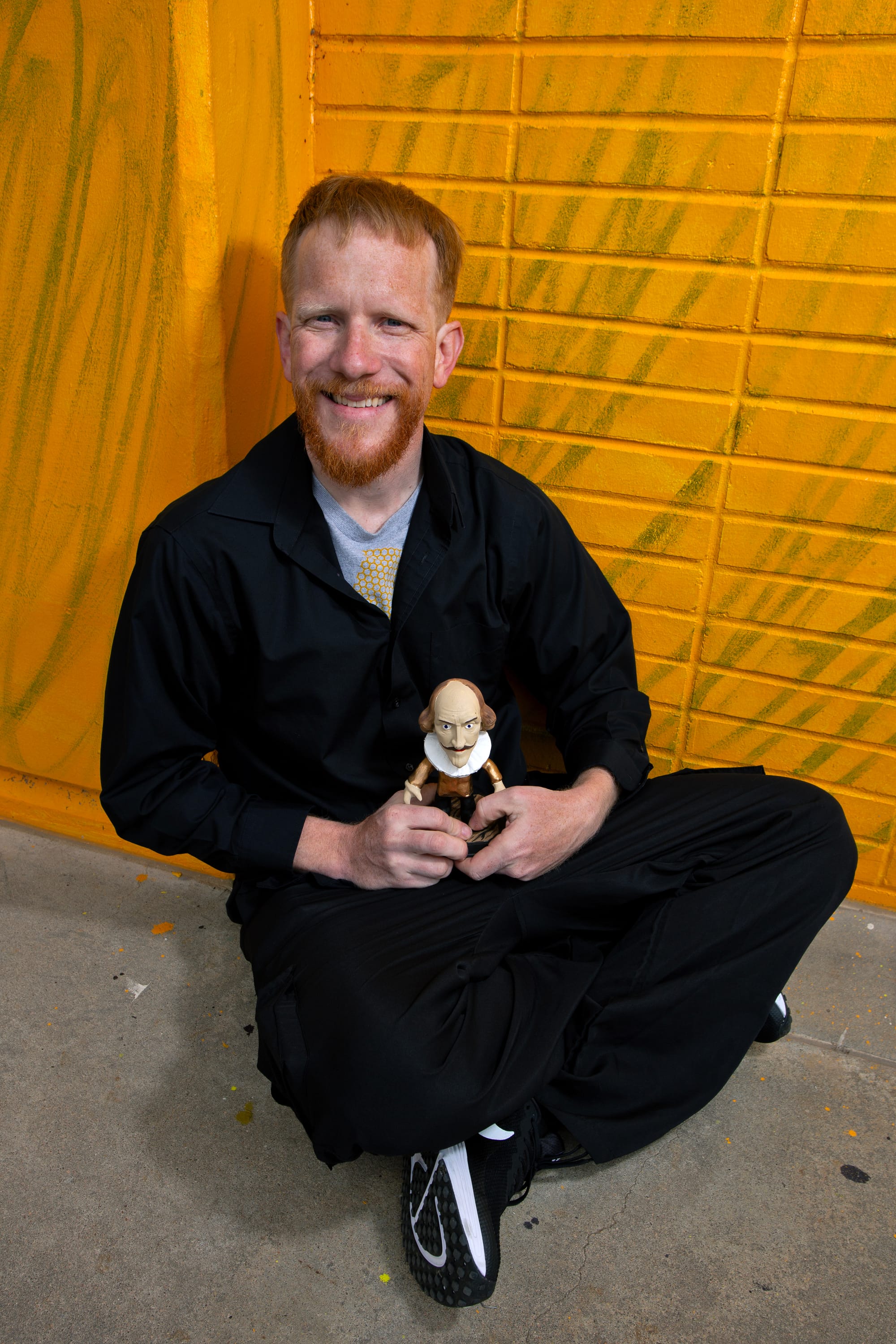
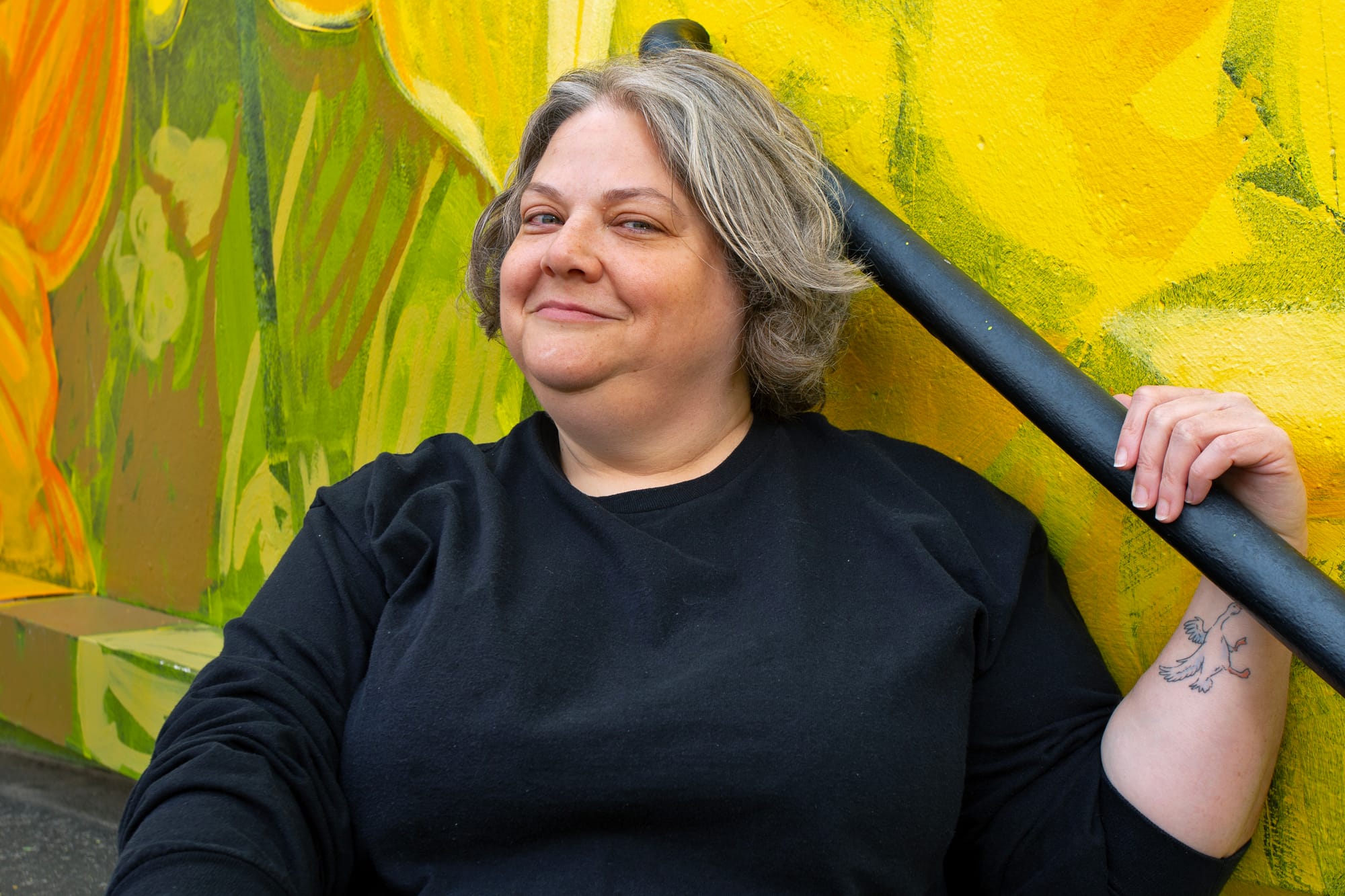
Ben Rogers, going into his fourth year with MTW, is a substitute teacher, an expert in plant genetics and phylogeny, and a self-proclaimed rogue artist.
“Music Theatre needed extra help and I was excited to jump in,” Rogers said. “Being an artist is about being able to take critique and be creative on the fly in the face of adversity, and changes, and challenges.”
He said that props people have a gift for repurposing items. “I can't tell you the number of times a director has come to me and said, ‘We need to make magic.’ If it's just making snow from a pocket, that's really easy. So much more often, there's a lot more than sleight of hand. You're thinking outside the box and conjuring things.”
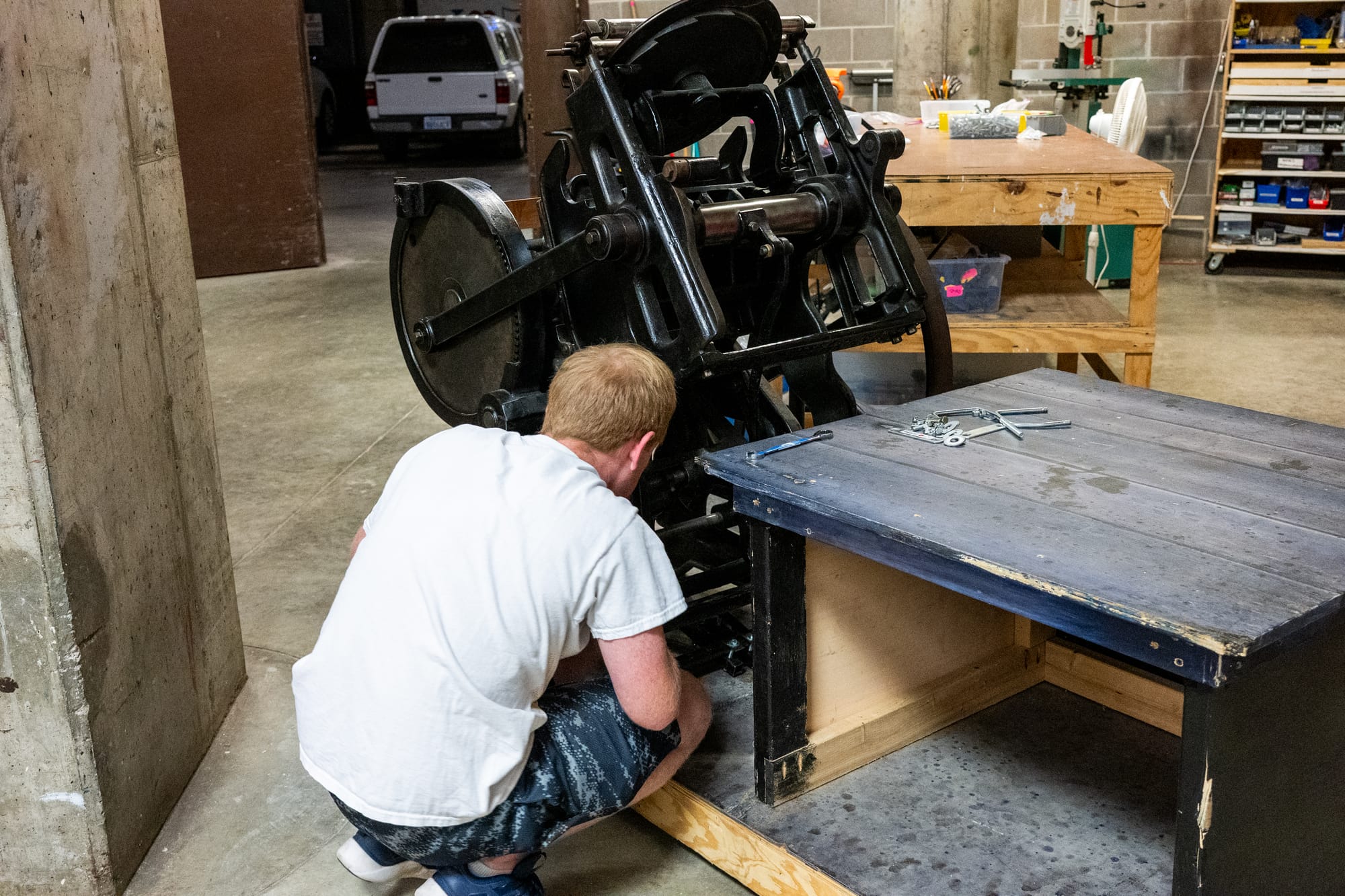
“When we were doing ‘Waitress’ last season, we were making pies that were like literally being thrown around as people are driven around stage. It made me think about the balance between props and scenic and costumes, because everything in theater is so collaborative.”
One of Rogers’ specialties is working with electronics and micro soldering, with tiny components and wires on small handheld props with circuit boards the size of a thumb.
“We often have to collaborate with the lighting team on some of their magic, too. It really is transformative.”
Bring on the impossible
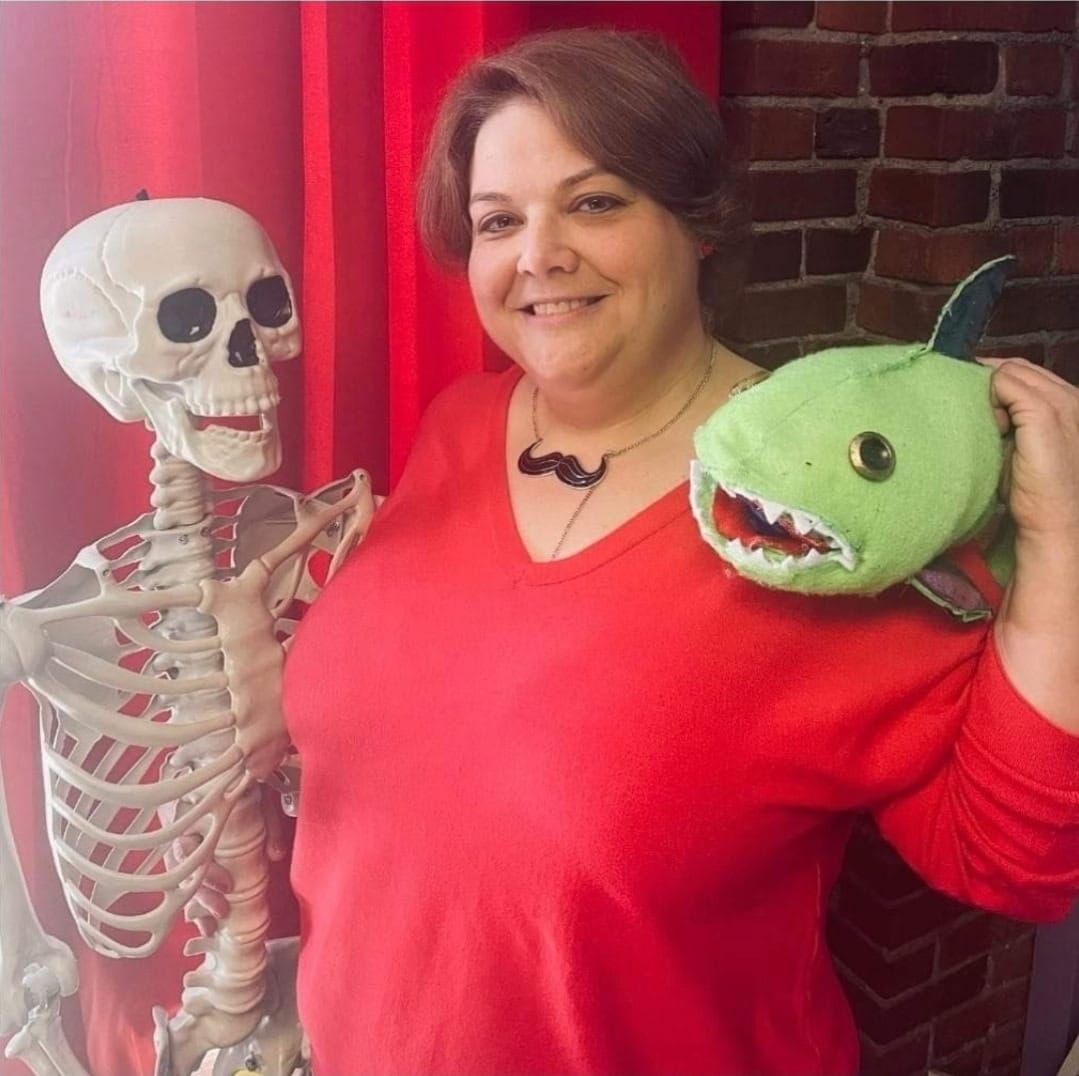
An opera student who fell in love with technical theater, Amy Saker loves a challenge. Like “Disaster” at Roxy’s Downtown in 2021.
“I think when writers write shows, they don't stop to think, ‘How in the world is that going to happen?’” Saker said. “Like an actor comes in carrying 12 trays and then falls without spilling anything. ‘Disaster’ has sharks eating people, and chandeliers that fall on people, and somebody who has to be covered in rats. All of these happen in split seconds, so they have to be quick things. I was crawling all over that stage, because you had to have things falling from the ceiling and things popping up from the floor.”
The most challenging item was an aquarium with piranhas that attacked and tore apart another fish, a big ask in props. “When (things) have to break, they need to break exactly the same, exactly on cue, every night, so they can be reassembled. It’s insane.”
Saker remembers her years at Mosley Street Melodrama, where she had “almost endless opportunities to be creative, because things didn't have to be quite so ‘real.’”
But sometimes, she said, a director will surprise you. For one show, two hours before opening the doors to the audience for dinner, director Mike Roark approached her.
“‘It sure would be nice if we had an applause meter.’ Not ‘Make me one’ or ‘I need one.’ He just throws it out there because he knows my personality. So, I spent three hours on it, put it in actor Scott Noah’s hands, and showed him how to work the little, tiny lever. I made that thing completely out of items I found in the theater: a pizza box, a little screw, some stuff I printed on the computer, all stuck together with tape. Scott, bless him, just made it work. Fantastic.”
She did props for the first time when she filled in last minute at WCT. Director Walter Stewart introduced her to Middlestadt, who taught her the business. They worked together many times, including on one of Saker’s favorite shows, “Violet,” at Stage One.
“I was on the running crew. Every night I had to light 100 votive candles and not set the curtains on fire. There was a point where a character needed to throw torn-up paper into a bowl, and then the paper was supposed to float in the air. I got to learn so much from Tommy about how to make it look magic. He used a tiny air pump and pushed the air through there, and sure enough the paper floated.
“I don't think people who haven't done props recognize how many props go into a show. Say you’ve got a show where three people sit at a table. Do they eat dinner at the table? Do they have something specific that they're eating? Are they drinking? Do you need practical food? And do you need plates and glasses and napkins and forks for everybody? And how does it get there, who takes that away? Most people don’t realize all that goes into it.”
Retired from properties design for now, Saker remembers with affection her career working for nearly every theater in Wichita.
“I love the impossible — when I figure out how to make somebody's arm come off every night. Or cover someone instantly in rats.”
Teri Mott is a writer and actor in Wichita, Kansas, where she covers the arts as a critic and feature writer. She is co-founder of The SHOUT.
❋ Derby man has the kind of voice that turns heads — and chairs
❋ Socializing while sober: how some Wichitans are cultivating alcohol-free communities
❋ As a small creative business closes, the owner mourns
❋ Painting through it: Autumn Noire on 20 years of making art
❋ How a guy from Wichita resurrected 'Dawn of the Dead'
❋ Bygone Friends University museum housed curious collections
Support Kansas arts writing
The SHOUT is a Wichita-based independent newsroom focused on artists living and working in Kansas. We're partly supported by the generosity of our readers, and every dollar we receive goes directly into the pocket of a contributing writer, editor, or photographer. Click here to support our work with a tax-deductible donation.