Growing pains: Metaphor and the loss of innocence in ‘Lost Girl’ at WCT
Wichita Community Theatre's production of the 'Peter Pan'-inspired drama is evocative, honest, and flawed.
When I was about 14, I abruptly realized that the people in another part of the house were strangers, even though I knew they were my parents. I wasn’t having a tantrum, nothing had happened. I just momentarily became an ephemeral “other” watching my life as if it were someone else’s. I was yet to go through any of the physical or experiential rites of adolescence, but I had become someone changed, and bewildered.
This memory came to me watching opening night of Kimberly Belflower’s “Lost Girl,” now on stage at Wichita Community Theatre through June 14.
Granted, I had not experienced the cosmic upheaval that befell Wendy Darling when Peter Pan seduced her away through her bedroom window to a land where children never grow up and she gave away her first kiss. That would mess with anybody’s head.
But it was fitting that I connected to the performance not cerebrally but viscerally, via memory, because that’s what this play evokes: memory, sadness, fleeting glimpses, enigmatic emotion, transformed into flesh and blood.
Copious metaphors are the script’s primary tools — the window, the toys, the “lost boys,” Peter Pan (the character and the story itself), the lost ability to fly, the kiss, and on and on. Quite a feat, because metaphors don’t generally have a long shelf life. (Alas, they do expire before the play does.) Those metaphors as the play’s foundational building blocks are, I think, why the play left my companion and me with so much to chew on.
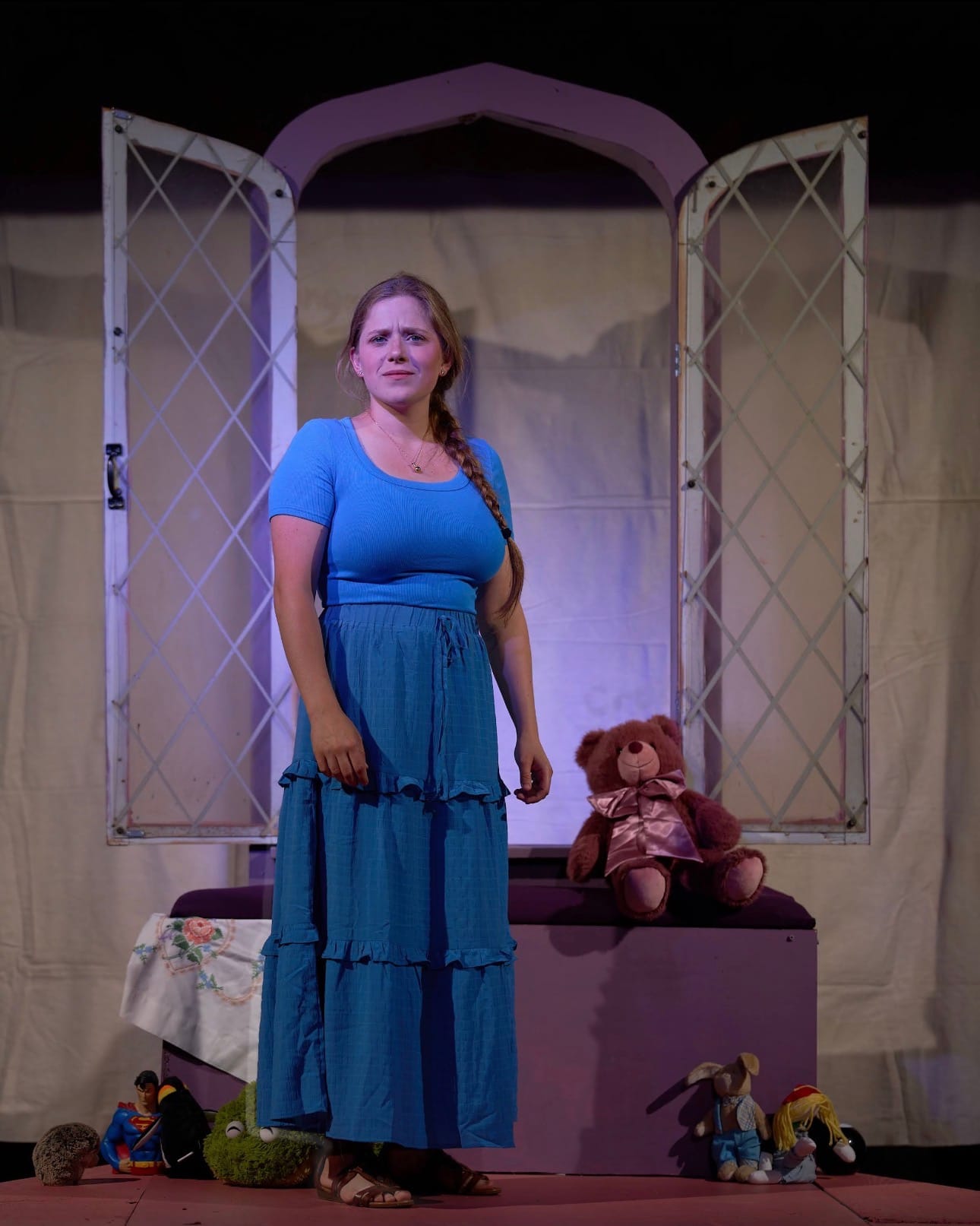
Bella Vogt’s simple set, embodying narrative and feelings, presents a lovely tableau: a window frame, its latticed French windows flung wide open, abutting a cozy seat with stuffed animals piled into a tidy triangle. That window, those comfort creatures, surrounded by wide-open nothingness. They are both an anchor for Wendy and the means of her eventual, inevitable changes. Further endowing the production is Beetle Hatch’s rich lighting design, featuring soft, diffused close-ups; daguerreotype-like projections behind a wide screen; overlaying shades of pale colors; and scenic shifts in moods, locations, and realities.
Francie Robu beautifully embodies Wendy and her lonely, messy, deeply sad place in the world, pining for Peter and his promise to return. She’s stuck like dust in that window’s sill — neither back in the land she left along with the story’s “lost boys” nor returned to the real world embracing her life’s next stages. The playwright has given her (at times, more accurately, saddled her) with plaintive exchanges and monologues that become, as the story unfolds, repetitive, contradictory, and eventually downright tiresome.
In short, she’s a lot. She mystifies her worried mother, her doctors, the detective working the case of her nine-day disappearance years earlier, and her real-world friends, whom she has abandoned. Even the lost boys themselves, who have moved on but good-heartedly fill in as avatars for genuine friends, eventually decide they must pull away for her own good.
I suspect Wendy’s maddening behavior is intended, given the common behaviors of young women mourning the loss of their first love, but it’s a lot to put on the shoulders of an actor whose job, along with the rest of the cast and crew, is to keep audiences engaged and rooting for her. Robu pulls it off, and does so with seeming ease — the tell of a skilled actor. Avoiding what could have become repetitive whining in the hands of a lesser performer, Robu endows Wendy with a light, wistful quality, achingly honest in her own self-exploration, her willingness to reconsider her assumptions.
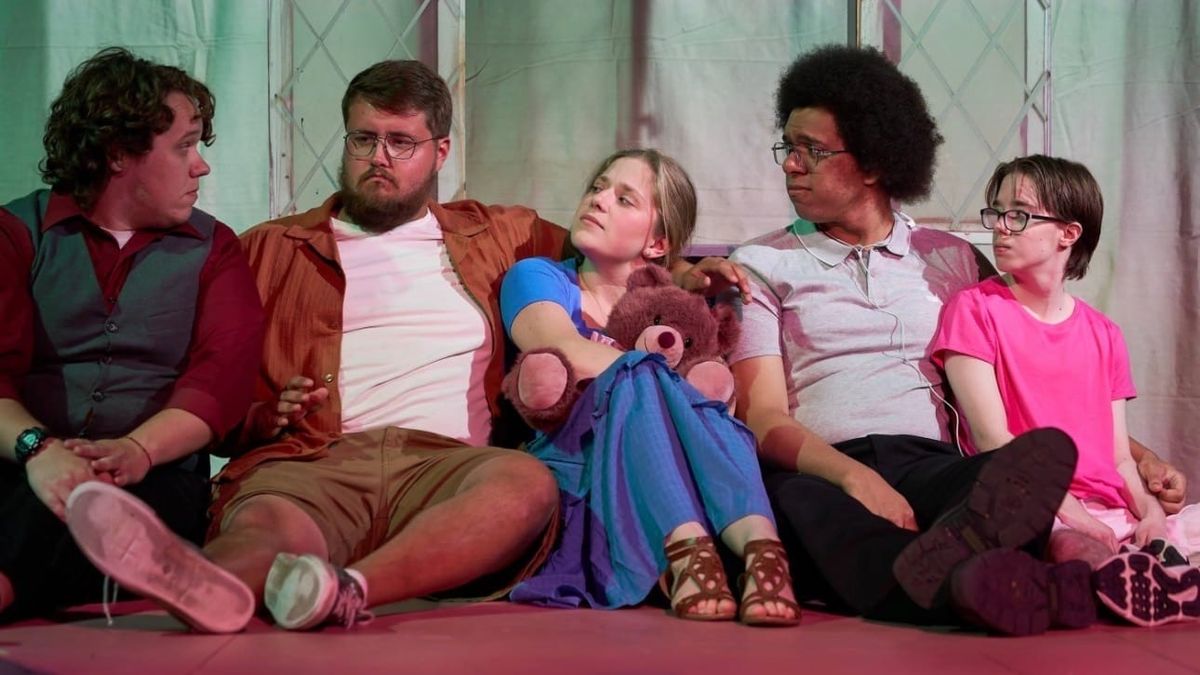
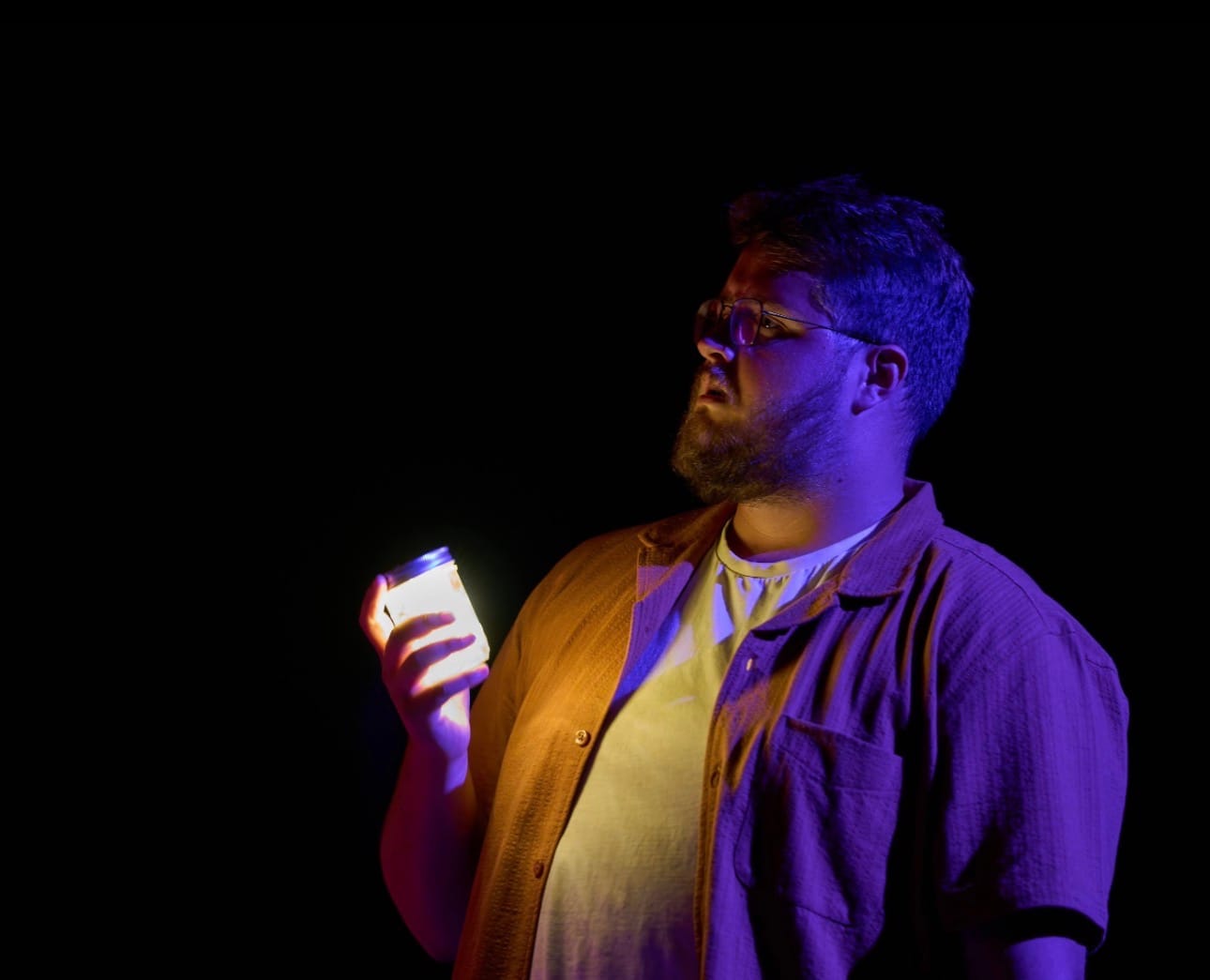
She is aided by a solid cast that offers strong performances, both as individuals and as a nicely gelled ensemble. Particularly notable are Shane Wilson, whose portrayals of Wendy’s therapist and lost boy Toodles are flexible, appealing, and distinct; Tryston Mitchell as a sensitive and funny Slightly, whose advances Wendy rejects as she continues to wait for the evasive Peter; and remaining lost boys Nathaniel Schmucker (also strong as the exasperated detective), and Caleb Jamal Manuel.
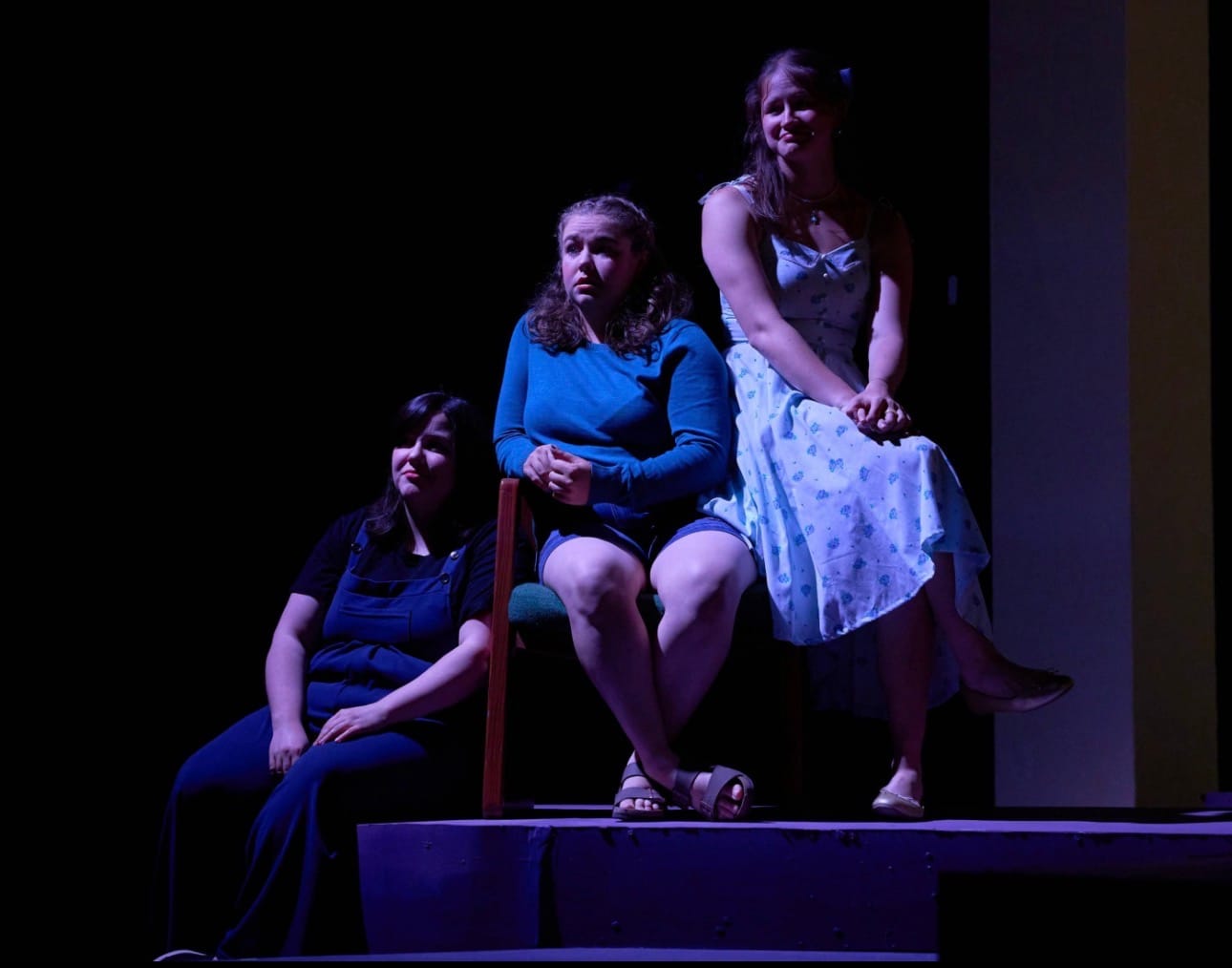
A trio of “other women” played by Ezri Mitchell (who stepped in for Rachel Criswell Thursday due to a family emergency), Laura Koerner, and Bella Vogt serve as a chorus, both reflecting and repelling Wendy’s feelings and also forming more of the tableaus that fill the production. Grey Thaw solidly plays Nina, a duplicitous “other woman” hiding an upsetting secret (of which there are several over the course of the story). Justice Murray plays an assured Peter and Grayson Williams plays a sweet real-life boyfriend unable to crack Wendy’s shell.
Laden with themes — fear of growing up, lost innocence, woman’s battle for agency — the one I find best depicted in this particular production is the relationship between a mother and a daughter on the cusp of … “something changed,” as Ashley McCracken says in her outstanding portrayal of Wendy’s mother. McCracken renders a strong but uncertain woman trying her best to support but also protect her daughter, even when faced with behaviors she cannot understand. McCracken evokes equal doses of warmth and parental power in a refreshingly healthy, loving mother-daughter relationship. Noting her daughter’s extended mourning of a fantastical adventure that’s ended, she admits, “I wish I could be more like you.”
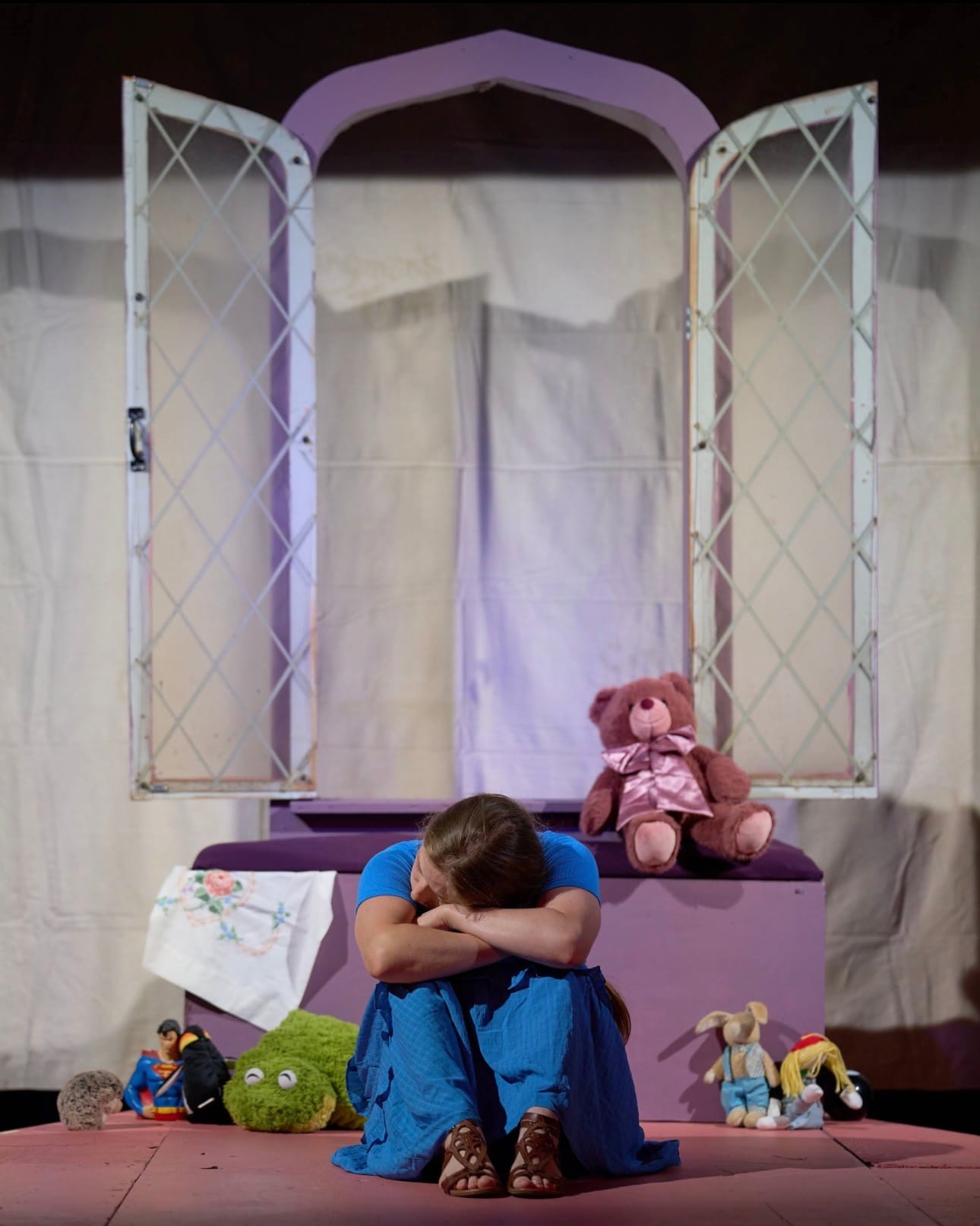
Director (and costume director) Jessica Heidrick has imbued the production with visual gifts: attractive arrangements of people, items, and colorful costumes. Wendy wears a pretty dress of an azure blue that my friend saw as signifying her lost ability to fly into the sky, and bright and pastel colors abound.
But Heidrick’s staging lacks rhythmic variety; scenes move at equal pacing, contributing to the latter part of the play’s heaviness and repetitiveness. The script comprises several short scenes rather than fewer longer ones more receptive to sustained arcs of emotional rises and falls. In many, Heidrick crisscrosses cast members while they walk and talk rapidly, but the theater’s old wooden stage renders the staging noisy, which adds to the choppiness already inherent in the script’s string of short scenes.
Nevertheless — and more crucially — this carefully crafted production is honest to the bone. Thoughtful care radiates through its strong, disciplined performances, interpretations, and visual filaments. “Lost Girl” dares to trust the audience with vulnerability, and we are rewarded with a theatrical, shared experience that will stay with us for some time.
The Details
Wichita Community Theatre presents “Lost Girl” by Kimberly Belflower
June 4-14, 2026, at 258 N. Fountain St. in Wichita
Performances take place at 8 p.m. Thursday-Saturday and 2 p.m. Sundays. The show runs about 100 minutes with no intermission.
Friday-Sunday general admission tickets are $20; students, seniors, and military tickets are $18. All tickers for Thursday shows are $16.
The Wichita Community Theatre building is accessible to people with physical disabilities, and there are numerous floor seats available.
Learn more and purchase tickets.
Anne Welsbacher writes plays, fiction, and nonfiction. She is the Performing Arts Editor for this publication. awelsbacher.com
❋ Derby man has the kind of voice that turns heads — and chairs
❋ Socializing while sober: how some Wichitans are cultivating alcohol-free communities
❋ As a small creative business closes, the owner mourns
❋ Painting through it: Autumn Noire on 20 years of making art
❋ How a guy from Wichita resurrected 'Dawn of the Dead'
❋ Bygone Friends University museum housed curious collections
Support Kansas arts writing
The SHOUT is a Wichita-based independent newsroom focused on artists living and working in Kansas. We're partly supported by the generosity of our readers, and every dollar we receive goes directly into the pocket of a contributing writer, editor, or photographer. Click here to support our work with a tax-deductible donation.