What’s Happening at The SHOUT: What we saw, heard & felt at the Kansas Arts Network Conference
The gathering of arts workers reminded us of the power of art and community.
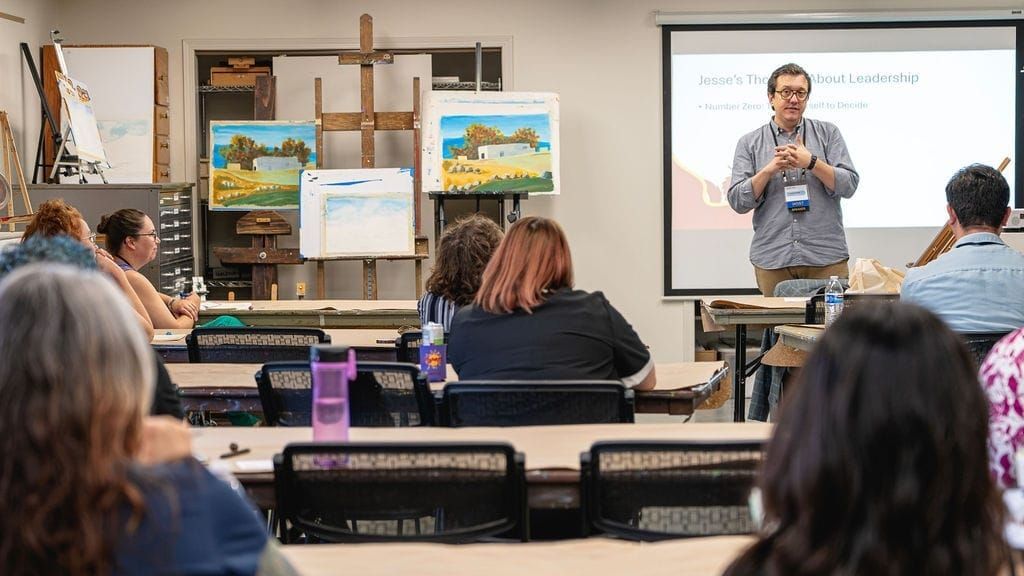
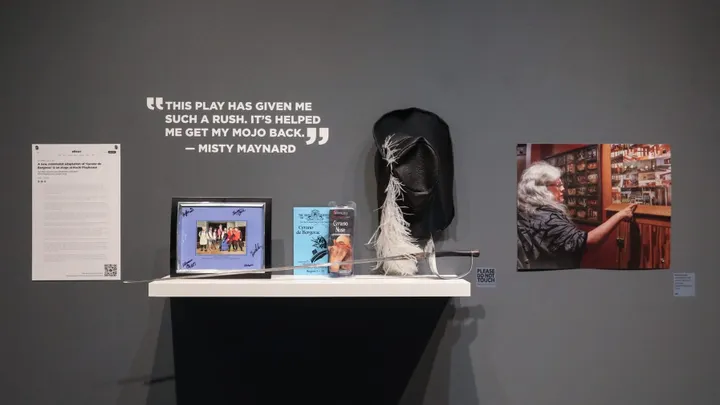
SHOUTsters were well represented at the Kansas Arts Network Conference in July in Wichita: Co-founders Emily Christensen and Teri Mott attended, along with performing arts editor Anne Welsbacher, digital editor Taylor Waller, and calendar editor Laine Schawe.
The annual conference is organized by a statewide advocacy group that grew out of the Kansas Arts Councils Symposium, and it convenes artists and arts workers from across the state.
The SHOUT largely operates in a remote and ad hoc fashion, so the opportunity to spend time together is rare and special. We approached the conference more as participants than journalists, so it feels appropriate to share our personal takes on the experience.
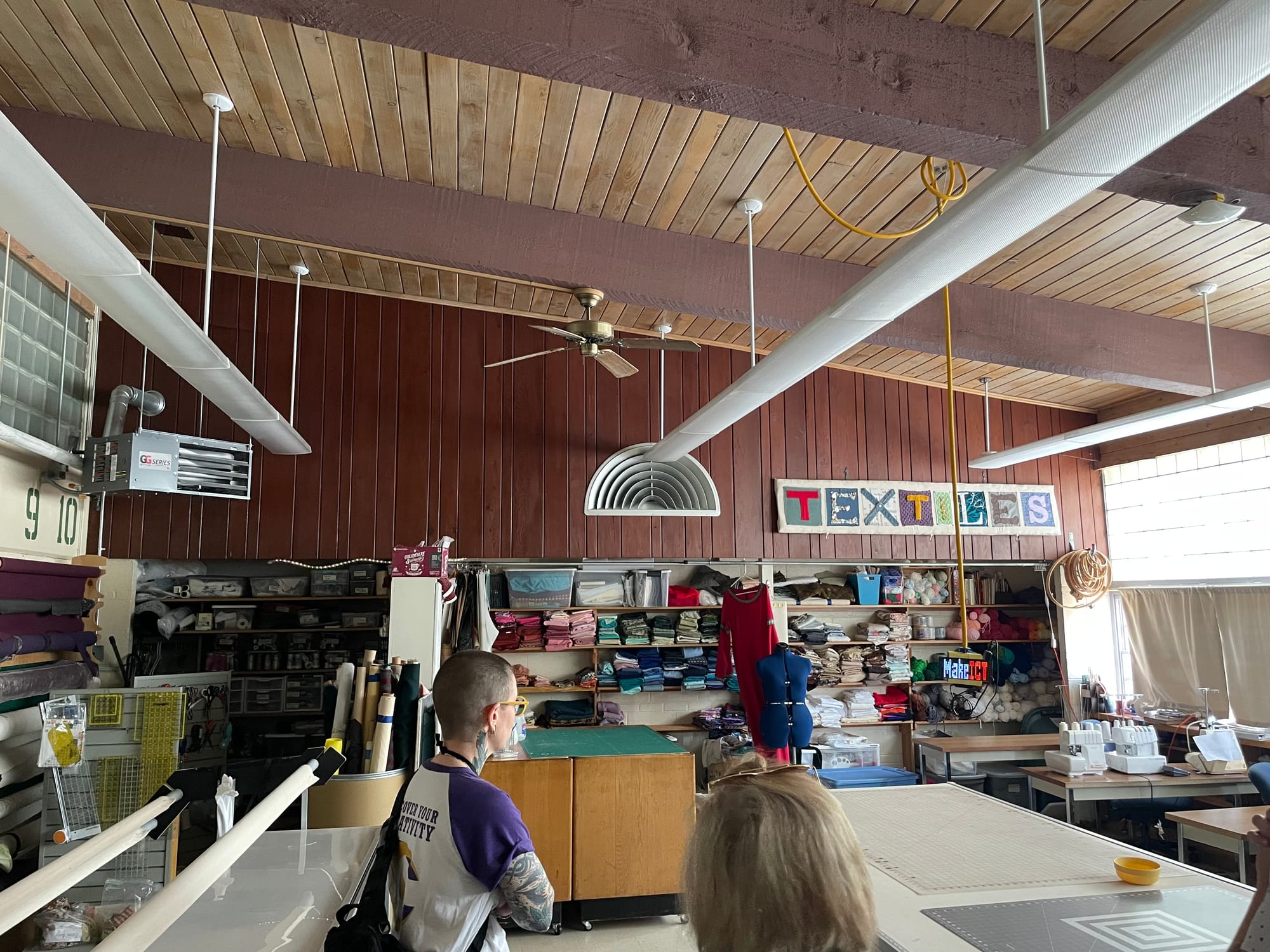
I attended and was impressed by last year’s KANCon, which was also held in Wichita. Both conferences were packed with valuable sessions geared toward artists, administrators, advocates, and educators. But since 2025, my mindset shifted from getting the word out about The SHOUT to being in community with people working in the arts across Kansas. Over the last couple of years, I’ve come to better appreciate the value of showing up and being present. It may not feel “productive,” but the benefits accrue over time.
Exciting work is happening in our state, which I've experienced personally in visits to the Flint Hills and west-central Kansas. Thanks in part to the people I met at KANCon, I'm looking forward to exploring even more arts communities across Kansas in the coming year. (See you soon, Topeka, Lawrence, Manhattan and Hays!)
— Emily Christensen
Messy Art: Big rocks of artist time management with Diane Scott
By Anne Welsbacher
I’m a lousy visual artist with no desire to become one. For one thing, unlike writing, which requires only a pencil or keyboard, visual artists need tools and the know-how to use them.
For another thing, visual arts are messy.
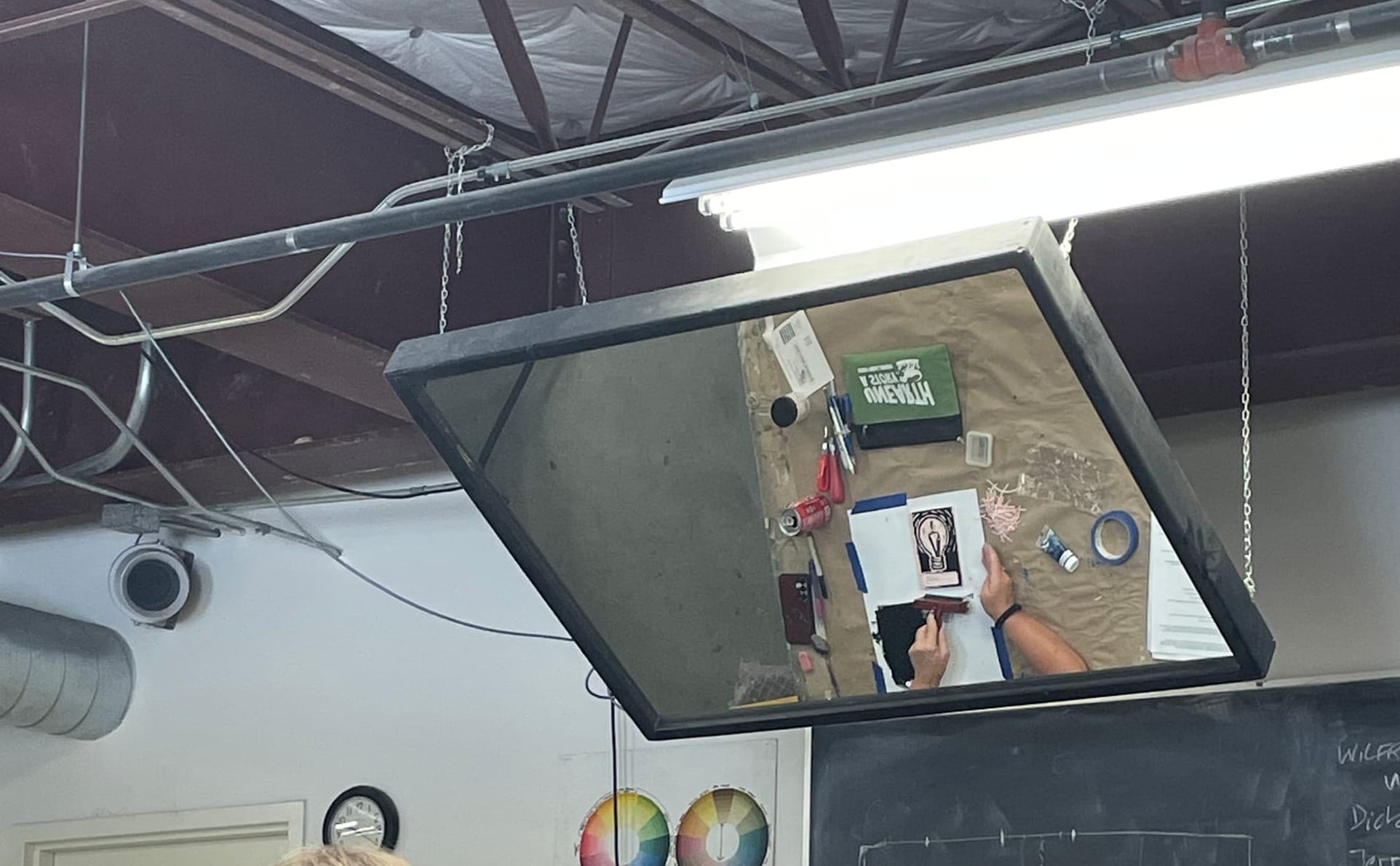
Which I demonstrated right off the bat by spilling my coffee all over the back table in Diane Scott’s terrific “Big Rocks of Artist Time Management” session. The surface was covered in kraft paper, but still. It created a fuss and put all attention on me — 180 degrees wrong.
But artists are nice people. They went to extremes not only to help clean up but also to invent ridiculous reasons the spill was a good thing. (“Now we can enjoy the delicious scent of coffee!”)
The class featured collaborative work involving fitting into a jar (one per table) fine sand, gravel, and smooth rocks large and small (and slightly damp at one table). Other than informing us that the objects were metaphors — major priorities, semi-important priorities, low priorities; finite space = finite time — Scott provided no instructions.
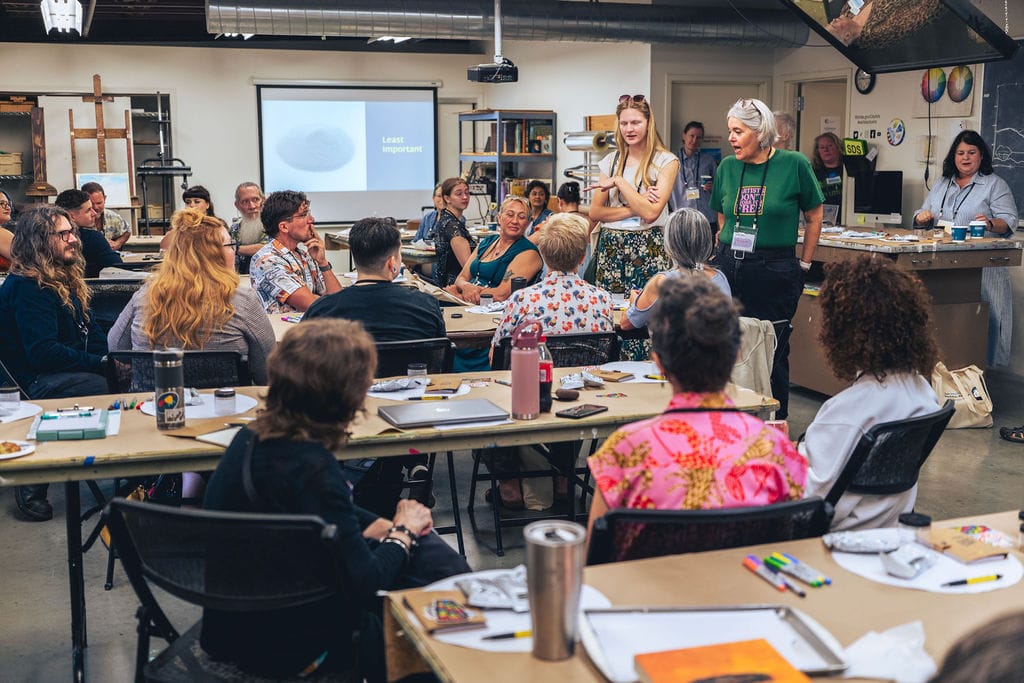
One table began with shared brainstorming, democratically electing plans before taking action. The rest of us just jumped right in. Most were pleased with themselves for squeezing in all our rocks. But after we’d shared, Scott noted we’d left no room for contingencies — good or bad.
From there, metaphors continued unfolding, including some Scott hadn’t thought of. We turned malleable clay-like gunk into our own multi-sized “rocks” labeled with our personal priorities. I got in all mine but then realized I’d forgotten my husband, beloved cats, house-cleaning, and exercise. A classmate noted that some “rocks” stuck to each other, suggesting that sometimes one task can affect another’s nature.
That got me to thinking. I wasn’t going to change my artistic leanings — writing is in my DNA — but when Emily invited me to join The SHOUT, she smushed up her clay rock against mine and changed its (my) nature. I’ve found artists who put up with my klutziness and ignorance — and teach me several graduate classes’ worth of stuff about a form of art I’m not intimate with.
As to my coffee calamity … it could have been worse. Scott told us in her earlier iterations of this class, the plastic jars had been glass — until one artist crammed in so many rocks it exploded.
Hope in the form of an arts conference
By Taylor Waller
Conferences are an enlightening and titillating time … according to few. I personally identify as one of those few, and I wouldn’t be surprised if my fellow KANCon attendees felt the same. After almost every session I heard excited chatter from my peers about what they'd learned and how it could impact their career going forward.
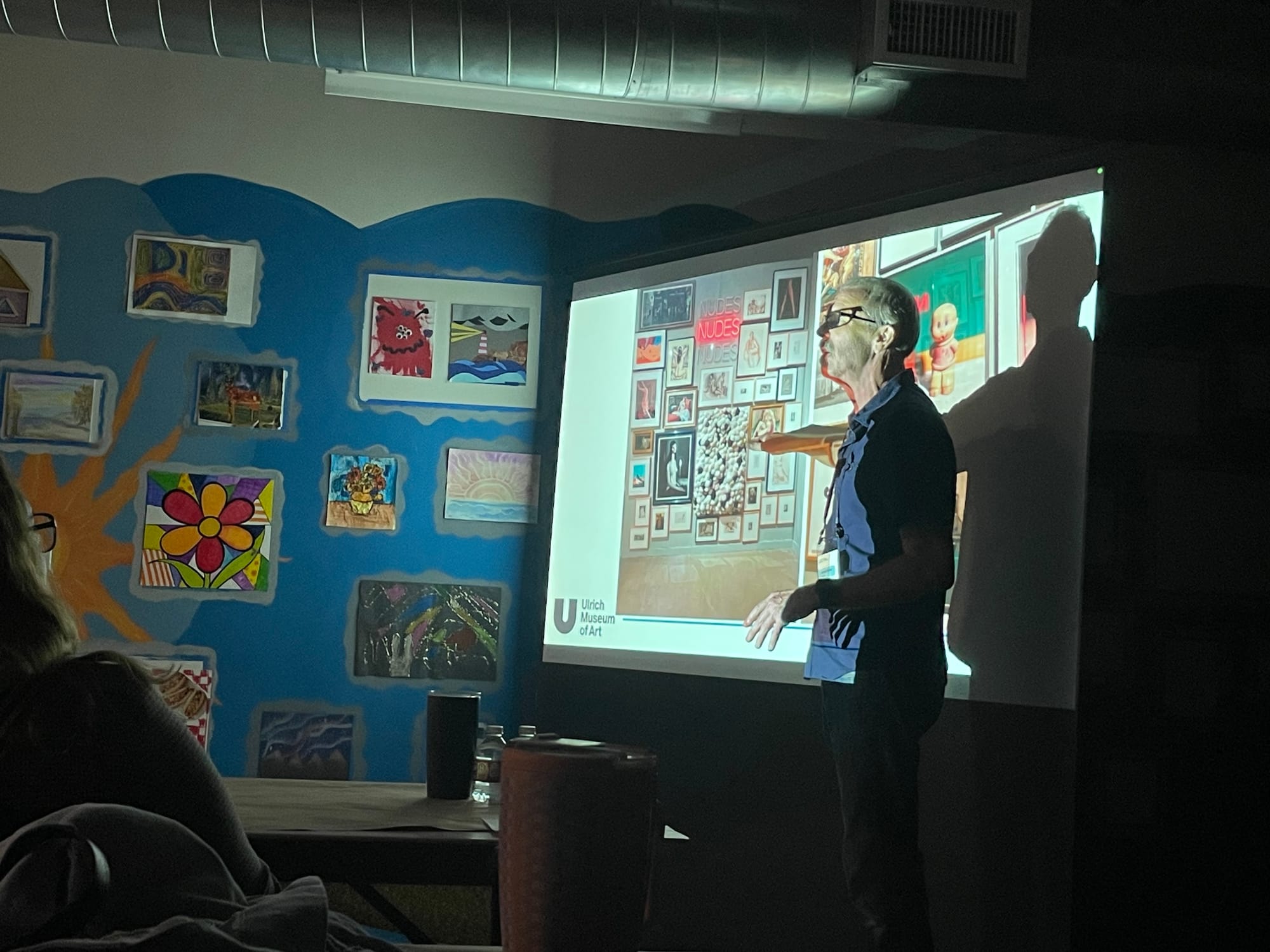
Unfortunately, not all conference enlightenments are created equally. For example, I learned that while many recommended grants fall through the cracks because of limited funding, it would take about $0.69 per capita to fund each of them fully. The current amount of Kansas state taxes that goes to funding arts is $0.25 per person, leaving us almost a dollar behind the national average of $1.18.
I learned that the arguments that “Arts funding is important because the arts return $29 billion in taxes!” and “Arts funding is important because the arts generate 5 million jobs!” would only make 30% of Americans more likely to support government involvement in the arts.
The arts’ role in celebrating America 250 and helping current or former military members’ recovery would change that number to almost 70%. The positive effects arts have on kids, older adults, and even health generally are also strong arguments, though not as persuasive.
On the other hand…
I learned how many of my peers are not only passionate about their practices and careers but are generous enough to share their knowledge with the rest of us.
I learned that it is essential for artists to have an “about” section on their website that’s completely separate from their CV. “I do not wanna waste my one precious, wild life digging through your CV,” Jenny Venn warned in her session on “Building Your Artist Brand: Start Here.”
I listened to three badass entrepreneurs — Maddie Butler, Angie Evans, and Jessie Gray — talk about taking a risk to pursue their passion. Notable takeaways: Butler’s business affirmations — “Art can make money, don’t let people tell you it can’t” — and Gray’s reassurance about letting go of judgement to free yourself creatively — “Go do your freaky thing, I love all of ya!”
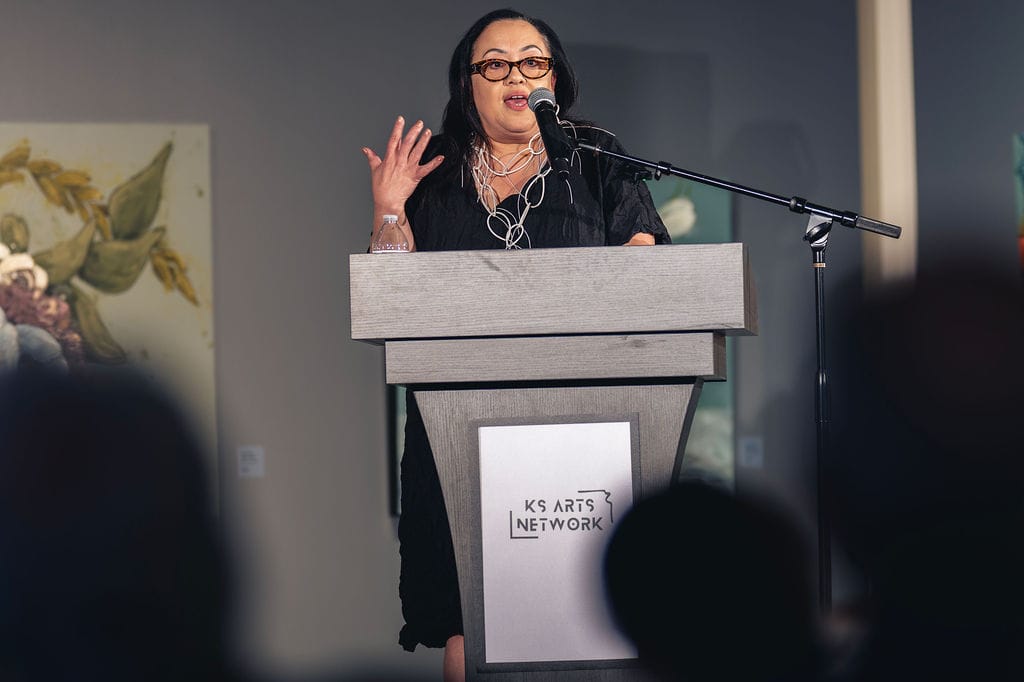
Most importantly, KANCon reminded me that our community is endlessly strong and supportive. Many dedicated folks bust their tuchuses on a daily basis to defend the scraps the arts receive and make the funding they get count while simultaneously working to grow resources and advocate for more dollars. The Kansas arts community is a well of kindness that pours back into itself so that everyone here can thrive together. I’m so glad to be a part of it.
For more information on arts funding in Kansas and across the country, pay a digital visit to the websites of the Kansas Art Network and NASAA. Thank you to Kate Van Steenhuyse, Curtis Young, Pam Breaux, and all of the other fantastic speakers for sharing their knowledge. I can’t wait to see what's in store for us next year.
Emily Christensen is one of the co-founders of The SHOUT. She is a past fellow of the National Critics Institute at the Eugene O'Neill Theater Center and a recipient of an Arts Writing Grant from The Andy Warhol Foundation. Send her a message: emily@shoutwichita.com.
Anne Welsbacher writes plays, fiction, and nonfiction. She is the Performing Arts Editor for this publication. awelsbacher.com
Taylor Waller is a mixed-media artist, an art historian, a writer, and an editorial assistant for The SHOUT.
❋ Derby man has the kind of voice that turns heads — and chairs
❋ Socializing while sober: how some Wichitans are cultivating alcohol-free communities
❋ As a small creative business closes, the owner mourns
❋ Painting through it: Autumn Noire on 20 years of making art
❋ How a guy from Wichita resurrected 'Dawn of the Dead'
❋ Bygone Friends University museum housed curious collections
Support Kansas arts writing
The SHOUT is a Wichita-based independent newsroom focused on artists living and working in Kansas. We're partly supported by the generosity of our readers, and every dollar we receive goes directly into the pocket of a contributing writer, editor, or photographer. Click here to support our work with a tax-deductible donation.