'It's always been about a love of stories': Jesse Koza on opera, 'Dido and Aeneas'
Koza directs Opera Kansas' upcoming production of one of the oldest English-language operas.
The aria that concludes Henry Purcell’s opera “Dido and Aeneas” deploys an extreme economy of means: a few repeated words, a sighing melody, a slowly drooping chromatic bass line. These combine to conjure a mood of inexorable woe.
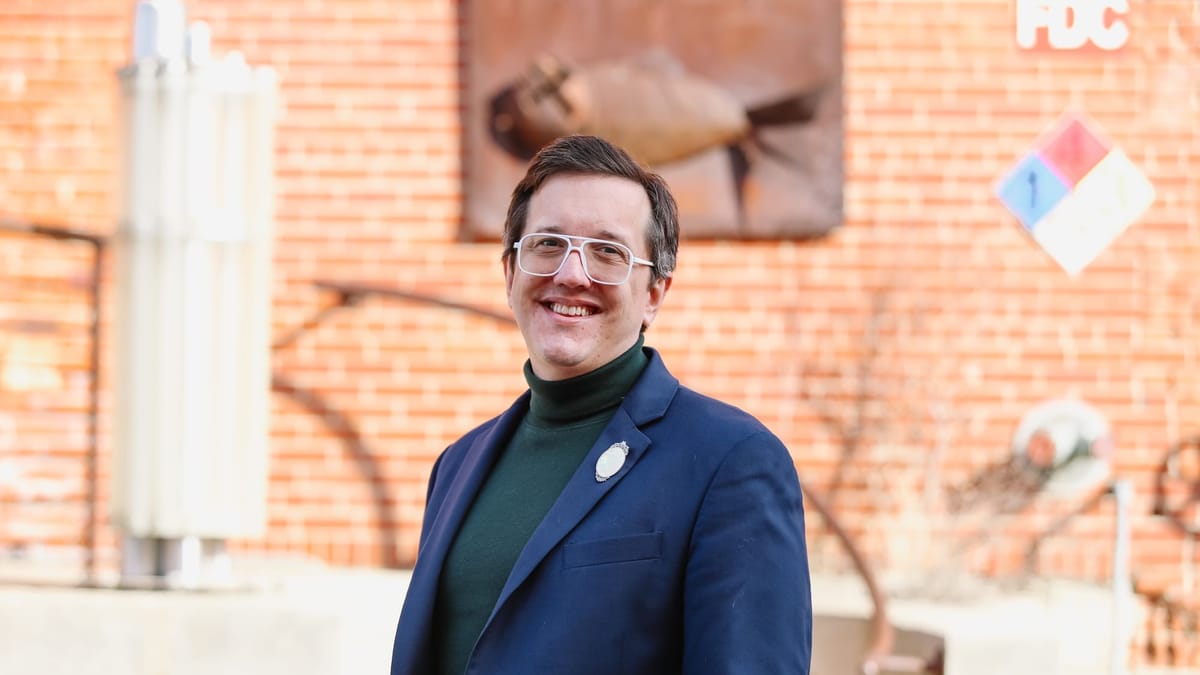
“Dido’s Lament” makes up the final five minutes of the one-hour opera, but in an effective performance, it can mess with your sense of the passage of time, said Jesse Koza, who is directing “Dido and Aeneas” for Opera Kansas, February 20-22 at Fisch Haus.
The final aria of “Dido and Aeneas” is "Dido's Lament" ("When I am laid in earth").
“That’s something that’s really great about opera, which I think distinguishes it. Opera will pause an emotion and stretch it for three minutes, for five minutes, for 12 minutes. You get to discover the nuances of those emotions, not just over the course of an entire narrative, but over the course of a single reaction to a feeling,” Koza said.
Composed sometime in the 1680s, and first performed by students at a London girls’ school, “Dido and Aeneas” is one of the two oldest surviving English-language operas. It adapts an episode from Virgil’s Aeneid, in which Dido, the widowed queen of Carthage, starts an affair with the Trojan hero Aeneas, proposing that he stay with her in Carthage as co-ruler. Little does Dido know that her love for Aeneas is just a speedbump on the road toward his destiny as the founder of Rome.
The opera’s original audience would have been intimately familiar with the Aeneid, which frees librettist Nahum Tate to skip a lot of background information. Koza, who previously directed “Dido and Aeneas” at Opera Memphis in 2015, said he is more concerned with conveying the immediacy and stakes of dramatic situations than with filling in the historical gaps.
“How I approach it is, whatever’s on the page, that’s the story we’re telling. If that means certain lines or concepts hit differently than originally intended, well, that’s what it is. For me, the show obviously centers around Dido and her reactions to things — the way that she perceives the world,” Koza said. Dido is already traumatized at the beginning of the opera, he pointed out: Her husband has been killed by her brother.
In Tate’s version of the story, a sorceress and some witches trick Aeneas into abandoning (and re-traumatizing) Dido. Those characters don’t appear in Virgil; they were perhaps added to support an oblique political subtext or as a nod to theatrical conventions of the era. But again, Koza is wary of historicized readings, or stagings, that could distract the audience and drain tension.
“The sorceress and witches, what is that about? For me, that represents Dido’s internal expectation of what is going to happen, that nothing is going to work out for her,” he said.
After informing Dido that he is bound for Rome, Aeneas tries to backtrack, but the queen is having none of it: “For ‘tis enough, whate’er you now decree, that you had once a thought of leaving me.”
“We’re seeing this all through Dido’s point of view,” Koza said. “Is this really what was said when Aeneas decided to leave, or is this just what she’s telling herself, because her brain has been rewired by trauma?”
This is Koza’s fourth Opera Kansas production as stage director. Previous outings include “The Murderess” in January 2024 and “Proving Up” in March of last year. He caught the opera bug as a student at Denison University in Granville, Ohio, earning a bachelor’s in voice in 2007. He continued his voice studies at Bowling Green State University, earning a master’s degree, then shifted his focus, sticking around at Bowling Green for an additional year to complete a second master’s, in theater. A few years later, he earned an artist diploma in opera directing from the University of Memphis. Most recently, he earned a fourth post-graduate degree, in arts leadership and management, at Wichita State. (“I like to say that I collect degrees like they’re Pokémon,” he joked.)
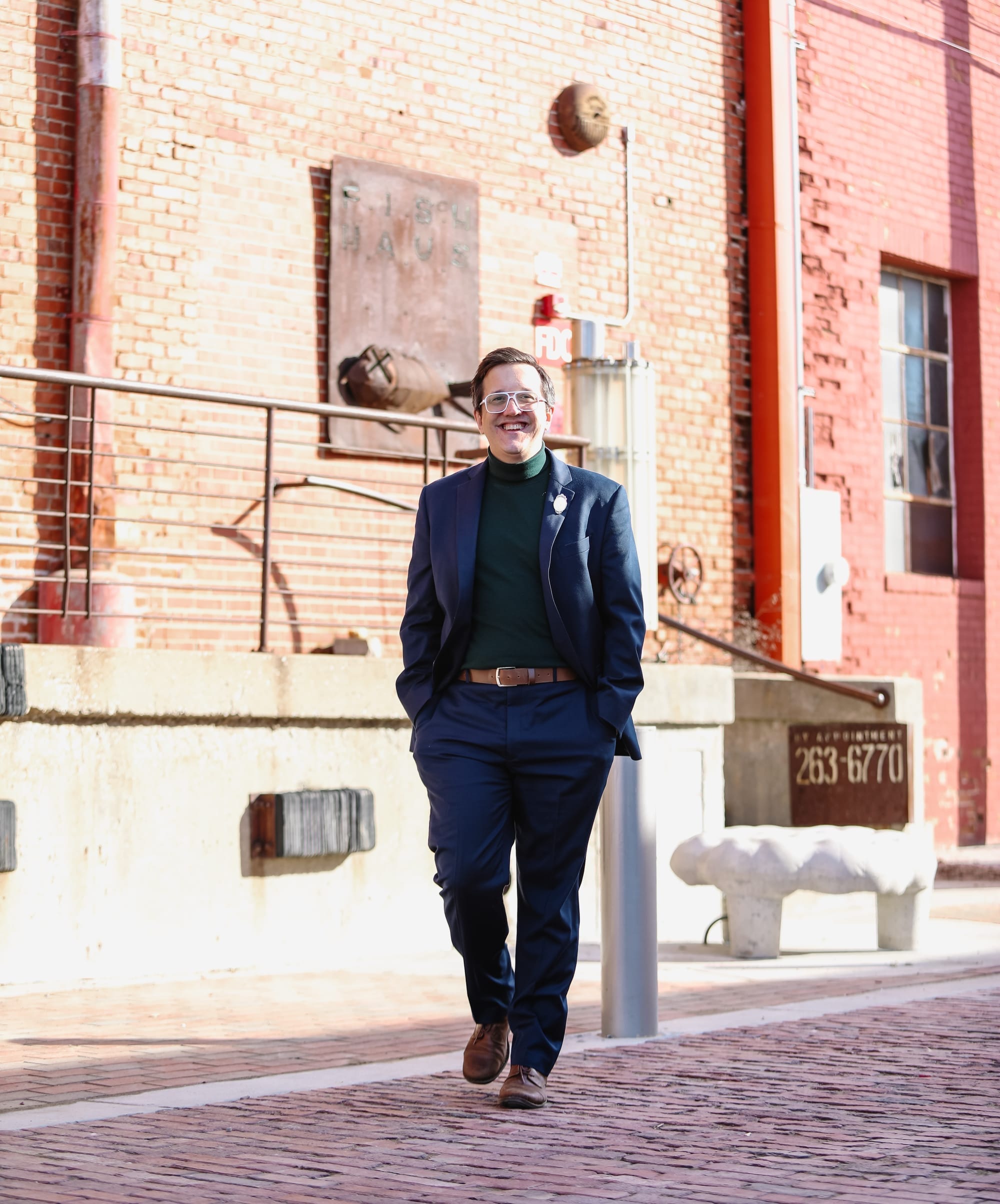
“For me, it’s always been about a love of stories,” Koza said, explaining his attraction to opera, and to opera direction specifically. “I would never say that opera is ‘above’ the other forms of storytelling, but it resonates for me because you are using so many different methods of communication all at once. I had a friend liken it to hockey: To be a good hockey player, you have to know how to play hockey, and you have to know how to skate. It can’t be one or the other. We have the word gesamtkunstwerk for a reason. In opera, you have to know how to sing well, but you also have to know these other forms of communication, of acting.”
Left to their own devices, many opera singers let the acting side of things suffer as they focus on producing the voice. I think of Gaston Rivero, who sang the title role of Verdi’s “Don Carlo” in Wichita in 2015. During loud moments, he stood with one foot flat, the other tiptoed, and canted his torso to one side — a breath-support trick of his own devising. It was clear why Gaston Rivero, opera singer, was standing like that, but less clear why Don Carlo, prince of Spain, would be doing so. More common opera acting problems are thousand-yard stares and stereotyped gestures that read as conventionally operatic but don’t actually convey any specific emotion.
“Not everybody can do this,” Koza said. “You want vocal technique to be second nature, because I need your brain doing other things. … I prefer large gestures that are allowed to live a full life. A lot of singers have a tendency to rush through motions, and they need to be encouraged to live in those places for a little longer. Anybody in the rehearsal room that tries something, my usual response is, ‘You did a great job. I want you to go even further. Let’s find out how far you can go, and then we’ll find out how far you need to go.’”
Koza’s “day job” since 2022 has been with the City of Wichita’s Division of Arts and Cultural Services, as cultural arts administrator. He said his work in that role has grown his “incredible love for Wichita,” and given him an appreciation of how the arts community has “re-forged” itself post-COVID.
Part of his job is to make it easier for local artists and organizations to get support from the city. “We’ve removed a lot of administrative burden,” he said. He pointed to a new round of “activation grants,” funded directly by the city, as a sign of progress. “They’re for individual artists, and some organizations, to build their capacity, but also just to make art. This is the first time the city has really spent its own money on a grant program to give people the opportunity to make art.”
The response to those grants has been strong. “My first year here, there were three applicants for an artist-access grant,” he said. “This last year, we had 82 applicants. The number of people that are trusting us to take them seriously for their art, it’s incredible.”
In addition to his involvement with Opera Kansas as a stage director, Koza has served on its board. In August of last year, he stepped up as board president, leading the company through its transition to a new executive director, Zeffin Hollis.
Alongside Wichita Grand Opera, Music On Site, and academic programs at Wichita State and Friends University, Opera Kansas contributes to a robust opera ecosystem in Wichita.
“It’s easy to say, ‘Oh, Wichita – we only need one opera company,” Koza said. “Well, I wouldn’t even say that it’s just OK to have multiple, I’d say that you need to have these multiple companies. We fill that role of providing opportunities for local singers to either come back to the stage, or who are on their way up to companies like Wichita Grand Opera but need experience. It is so important for a community, for an arts scene, to have that local option.”
He is just as firm about what opera, as an art form, should be.
“It is to our detriment that we are still associated with tuxedos and top hats. I will forever argue that opera is for everyone. Opera is for the people.”
The Details
Opera Kansas presents “Dido and Aeneas”
February 20-22, at Fisch Haus, 524 Commerce Street in Wichita
Performances take place at 8 p.m. Friday and Saturday and 3 p.m. on Sunday.
General admission tickets are $45. A table for four, with wine and charcuterie board, is $195.
Sam Jack is a poet, a classical tenor, and the adult services librarian at Newton Public Library. He performs with several local groups, including Wichita Chamber Chorale, Wichita Grand Opera, and Opera Kansas. He received a Master of Fine Arts in creative writing from the University of Montana.
❋ Derby man has the kind of voice that turns heads — and chairs
❋ Socializing while sober: how some Wichitans are cultivating alcohol-free communities
❋ As a small creative business closes, the owner mourns
❋ Painting through it: Autumn Noire on 20 years of making art
❋ How a guy from Wichita resurrected 'Dawn of the Dead'
❋ Bygone Friends University museum housed curious collections
Support Kansas arts writing
The SHOUT is a Wichita-based independent newsroom focused on artists living and working in Kansas. We're partly supported by the generosity of our readers, and every dollar we receive goes directly into the pocket of a contributing writer, editor, or photographer. Click here to support our work with a tax-deductible donation.