Composer David Lord goes ‘Way Over the Rainbow’
An upcoming Wichita release party for the new album will celebrate this hometown jazz luminary.
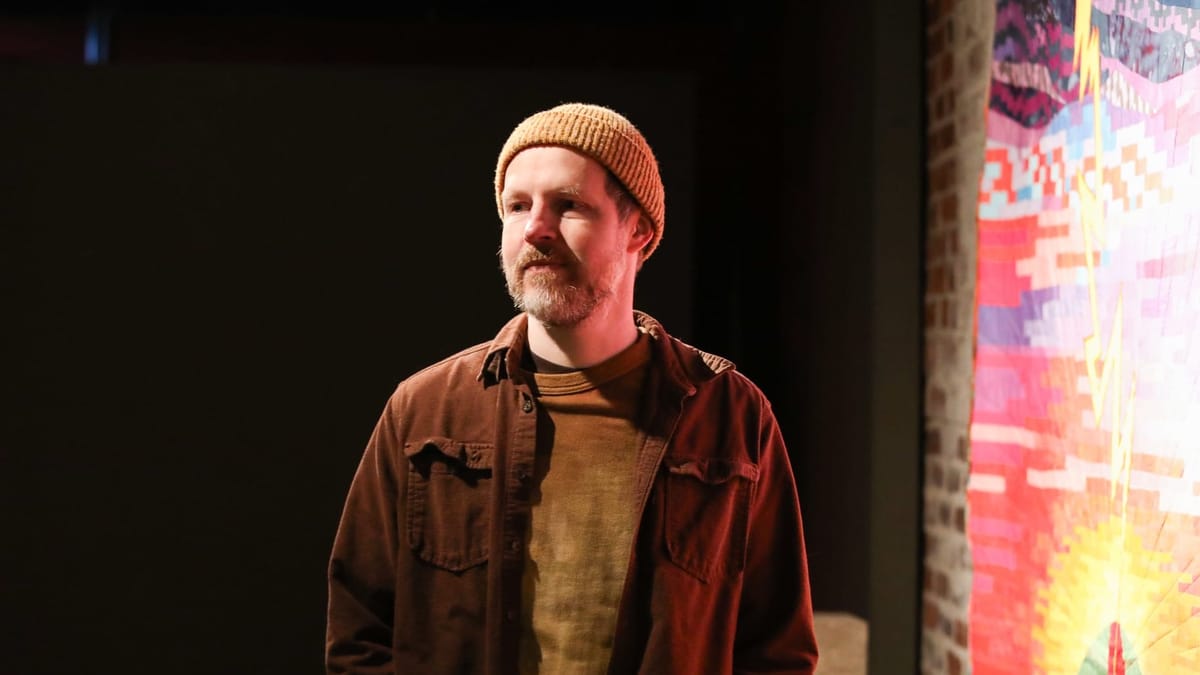
Composer/guitarist/bandleader David Lord is a force of nature. He’s original. He’s eclectic. He’s a sound pioneer with his own musical system.
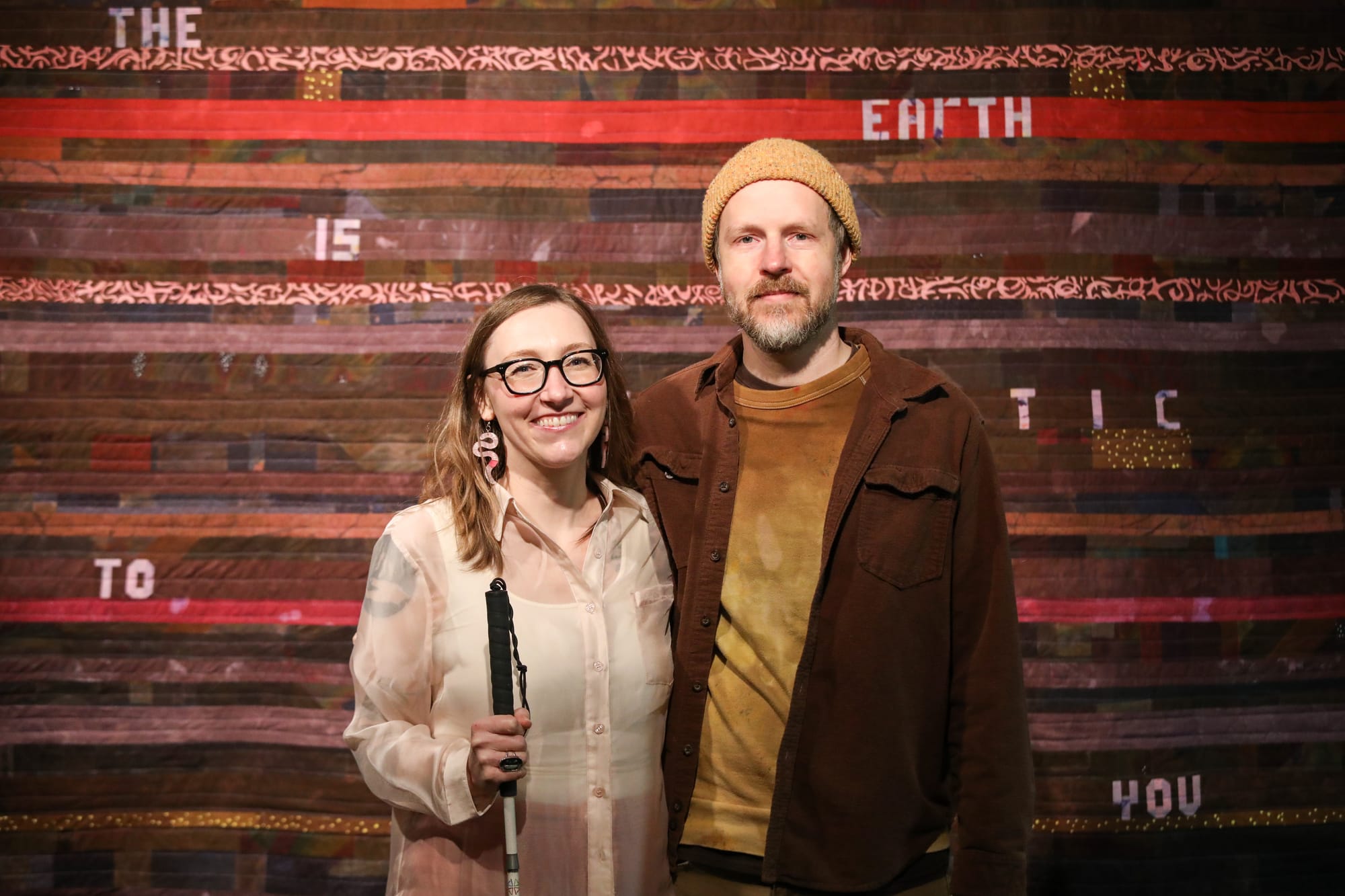
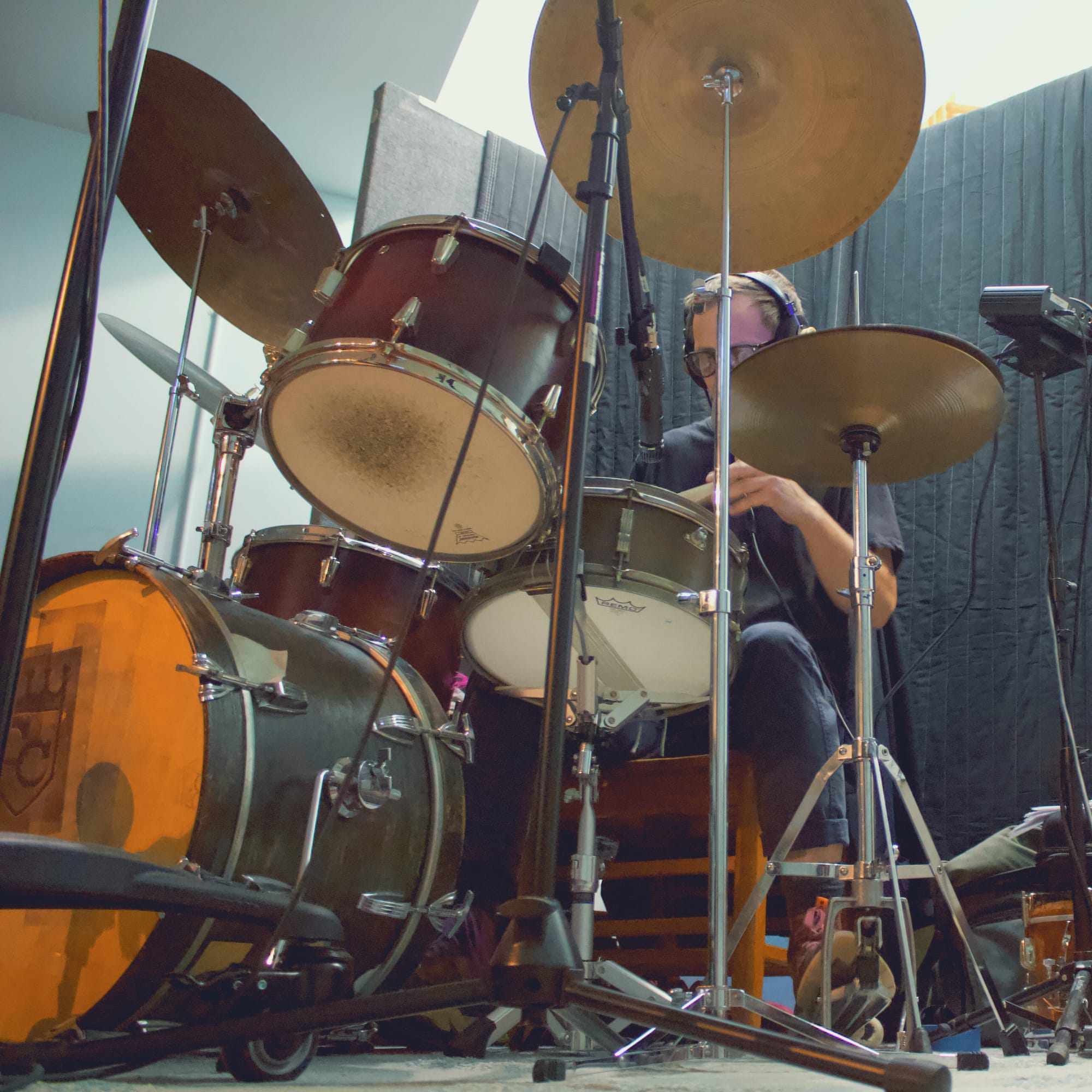
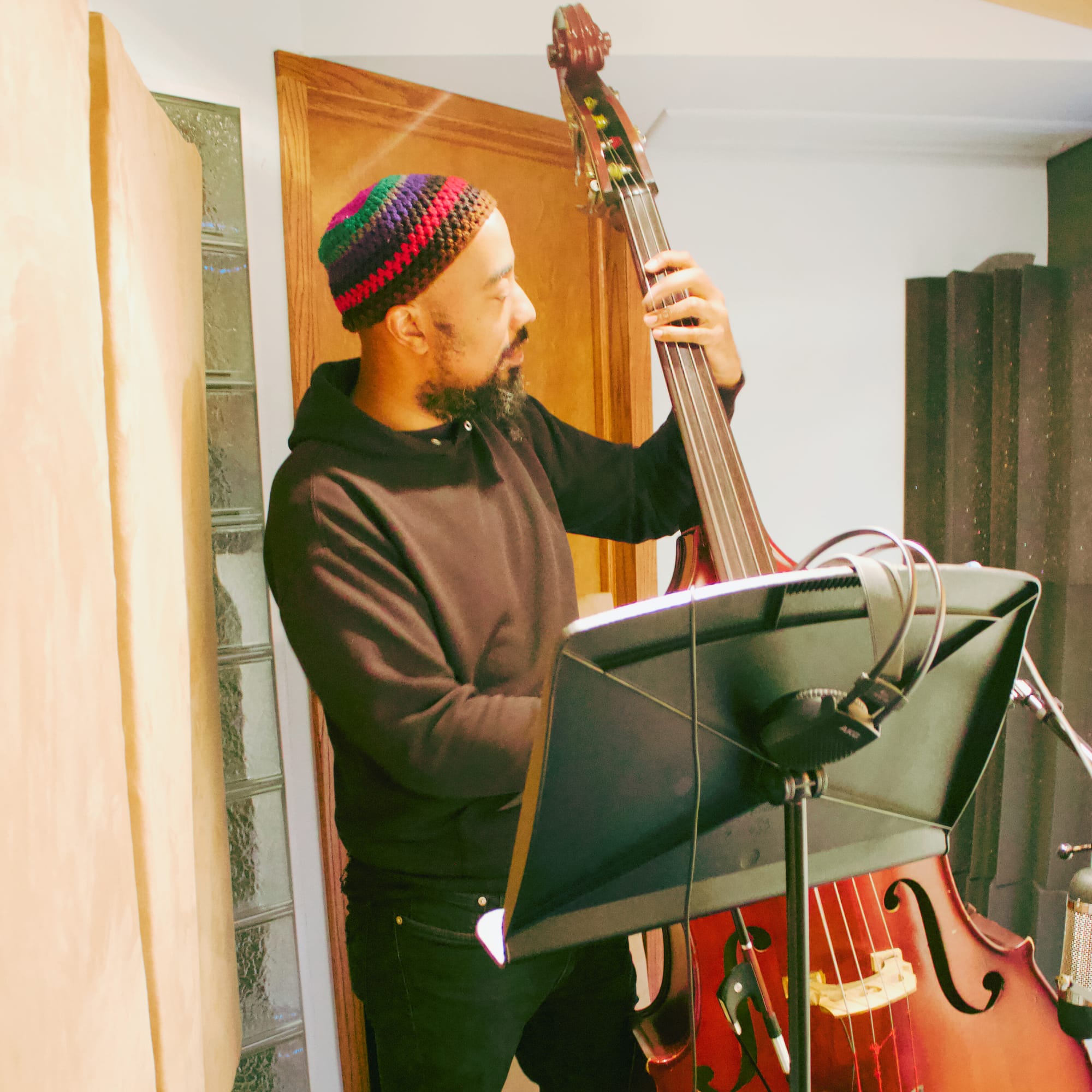
You can hear Lord perform songs from the new album live at 7:30 p.m. this Friday at Fisch Haus, 524 S. Commerce St. in Wichita. Lord’s personnel for the release party include Dale Black on bass and Randy Bowen on drums. The event will also feature fiber art by Lord’s partner Lindsay Lion Lord, which is on view in the gallery. As with a classic Malachy Papers event, jazz and visual art will be featured in unity.
“If you’re from Kansas, everywhere you go outside of the Midwest, you’ll hear, ‘You’re not in Kansas anymore,’” Lord said, speaking of the album title and its first song. “I did that reharmonization a long time ago. Maybe back to 2003-2004. It has become a special concept to me. I finished this album for the most part when I was living in Santa Fe and had just moved there. It was supposed to be a farewell to Kansas … But now I’ve moved back, (so) it’s both a farewell and a homecoming … of leaving and returning.”
Courtesy video by Dana Telsrow for Cloud Ear Records.
Lord’s “Over the Rainbow” is reminiscent of Keith Jarrett’s famous, plaintive, meditative, carefully halting solo piano version found on “La Scala.” Lord (on guitar) is just as emotionally nuanced and rich, and has a similar introspective feel, but he is joined by Charles Rumback’s unmetered rolls between cymbals and drums, somewhat like a train slowing and starting up again. Bassist Dale Black contemplative and complementary, deep and sparse, rounds out the sound. The song’s bridge is especially beautiful in Lord’s version. It has that characteristic touch of hope, perhaps emphasized by the raised fourth of the Lydian scale of which Lord is so fond. (The Lydian scale, often described with adjectives like “dreamy” and “magical” is similar to the C major scale, but it starts with the F note and the fourth note is B flat.)
“This system is named ‘extended Lydian polychordal system,’” Lord said. “It’s based on the extended Lydian scale, which is the Lydian scale with the added flat nine and sharp five. From that starting point … to be able to create polychordal or more-than-one-chord-at-a-time applications. (The system is) influenced by George Russell’s Lydian chromatic concepts. I was drawn to that early on in my studies of jazz and composition. The mood of it really stuck out to me. I fell in love with that sound and was able to build with that as a starting point.”
Lord’s teachers encouraged him to create his own system and sound.
“I think every person has the potential to find something that is uniquely theirs,” Lord said. “My mentor Craig Owens encouraged me to do that. It’s been extremely rewarding. It’s influenced everything I’ve done. The concept — 'Make your own concept. Make your own music.’ — is extremely empowering.”
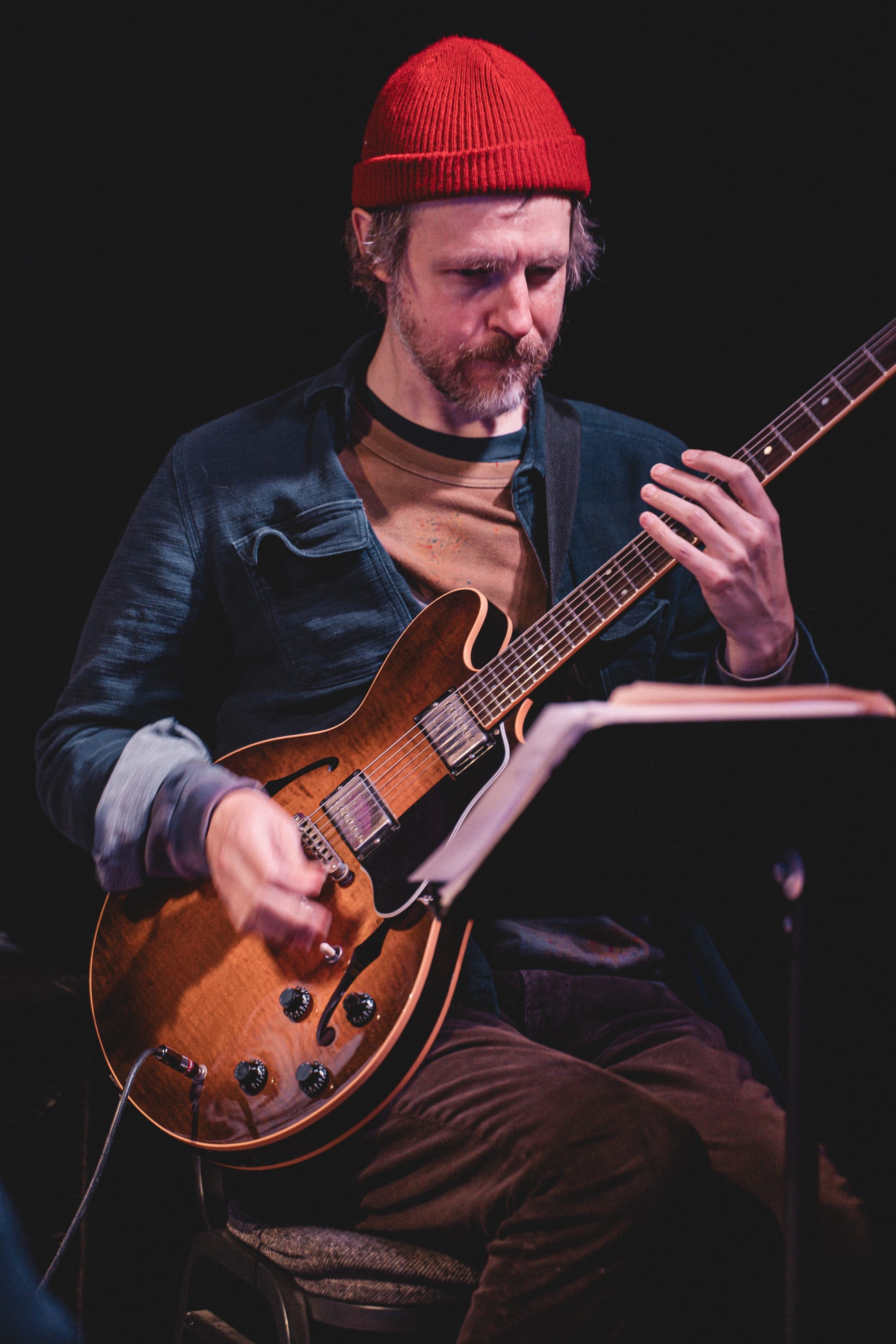
“Way Over the Rainbow” follows a series of Lord’s “Forest Standards” albums in a similar vein. But, Lord said, “Way Over the Rainbow” is “thematically … a little more minimal and sparse, more focused on mood.” Track 3, “Blood Red Cortinarius,” highlights that shift. A subdued latin/Caribbean groove on bass and bass drum propels the tune, while Lord is up front on a melodic ostinato pattern reminiscent of the inventive, harp-like work on Metheny’s solo guitar album “What’s It All About” (2011).
On his own sound, Lord says, “It could be considered avant-garde, but harmony is fairly important (too). When touring, I often play with free jazz groups, acts, and venues, as opposed to mainstream jazz clubs. But the bulk of what I do is compose,” he said. “I consider myself primarily as a composer, while I also improvise … With all my records, the compositional side is the focus. It’s not free jazz. It’s not too far out. But it’s not mainstream contemporary jazz. It’s somewhere in the middle — with also a little indie rock influence and background. And ambient and atmospheric stuff … I feel like I can fit into a variety of different scenes.”
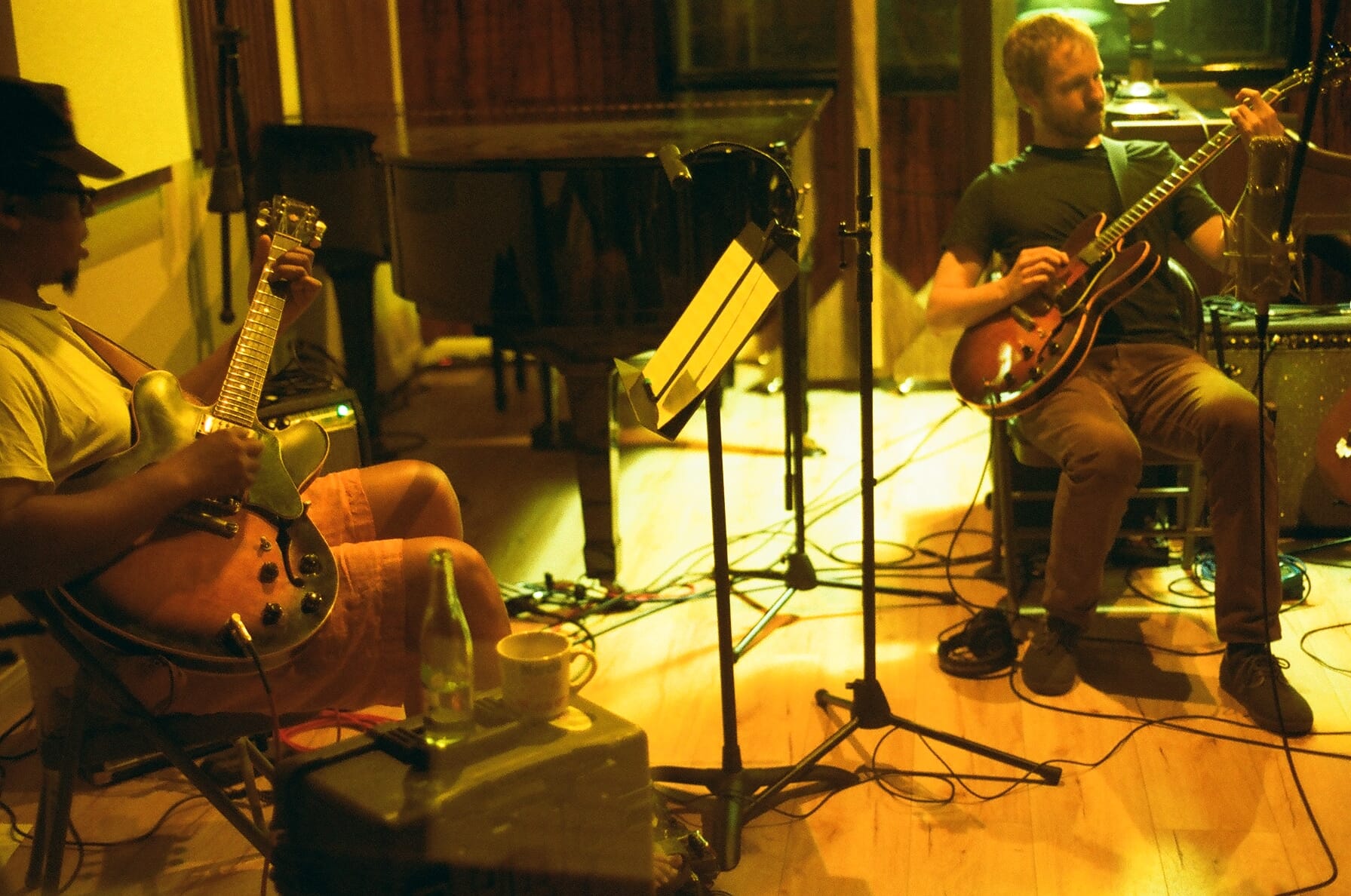
Influence-wise, “Everybody always compares me to Pat Metheny,” Lord said. “I think we’re both Midwesterners. There might be something with the mood.” Lord continued on another tack, “A lot of my favorite guitar players I wouldn’t say have much to do with my music at all, like Wes Montgomery and so forth. But a lot of them, I identify how much I love them and how good they are, so I don’t want to emulate them. I don’t want to disrespect them or do anything like what they do.”
“Jeff Parker has been a big influence,” Lord said, “and he played on several of these tracks, and he played on ‘Forest Standards: Volume II’ … He was an early influence. So getting an opportunity to work with him has been amazing … In general, Anthony Braxton is a huge influence … Olivier Messiaen, and his sense of harmony, has been a big influence in crafting my music. Different jazz artists that have created their own systems, like a lot of the AACM (The Association for the Advancement of Creative Musician) stuff. Thelonious Monk. Those are a few.”
Courtesy video by Dana Telsrow for Cloud Ear Records.
Lord started Air House Music Academy, which offers lessons for musicians of all ages, about 17 years ago. He also teaches classes in audio engineering at Wichita State. A talented recording engineer and producer, “Way Over the Rainbow” is the first album on Lord’s new label Cloud Ear Records.
The Details
David Lord, "Way Over the Rainbow"
A release party and performance will take place from 7:30-9:30 p.m. Friday, December 26, at Fisch Haus, 524 S. Commerce St. in Wichita. The cover is $10, or free with the purchase of a record.
Digital and vinyl versions of "Way Over the Rainbow" are also available on Band Camp.
Past Poet Laureate of Kansas (2017-2019) Kevin Rabas teaches at Emporia State University, where he directs the creative writing program. He has sixteen books, including "Lisa’s Flying Electric Piano," a Kansas Notable Book and Nelson Poetry Book Award winner, and "Elizabeth’s City," a novel, finalist for the 2023 Hefner Heitz Kansas Book Award in Fiction. Rabas is also a jazz drummer and performs regularly with the regional world fiddle music group String Daze. He lives in Newton, Kansas.
❋ Derby man has the kind of voice that turns heads — and chairs
❋ Socializing while sober: how some Wichitans are cultivating alcohol-free communities
❋ As a small creative business closes, the owner mourns
❋ Painting through it: Autumn Noire on 20 years of making art
❋ How a guy from Wichita resurrected 'Dawn of the Dead'
❋ Bygone Friends University museum housed curious collections
Support Kansas arts writing
The SHOUT is a Wichita-based independent newsroom focused on artists living and working in Kansas. We're partly supported by the generosity of our readers, and every dollar we receive goes directly into the pocket of a contributing writer, editor, or photographer. Click here to support our work with a tax-deductible donation.