Poet April Pameticky on embracing art and music fandom
Pameticky created a soundtrack for her new collection, which includes poems based on works at the Wichita Art Museum.
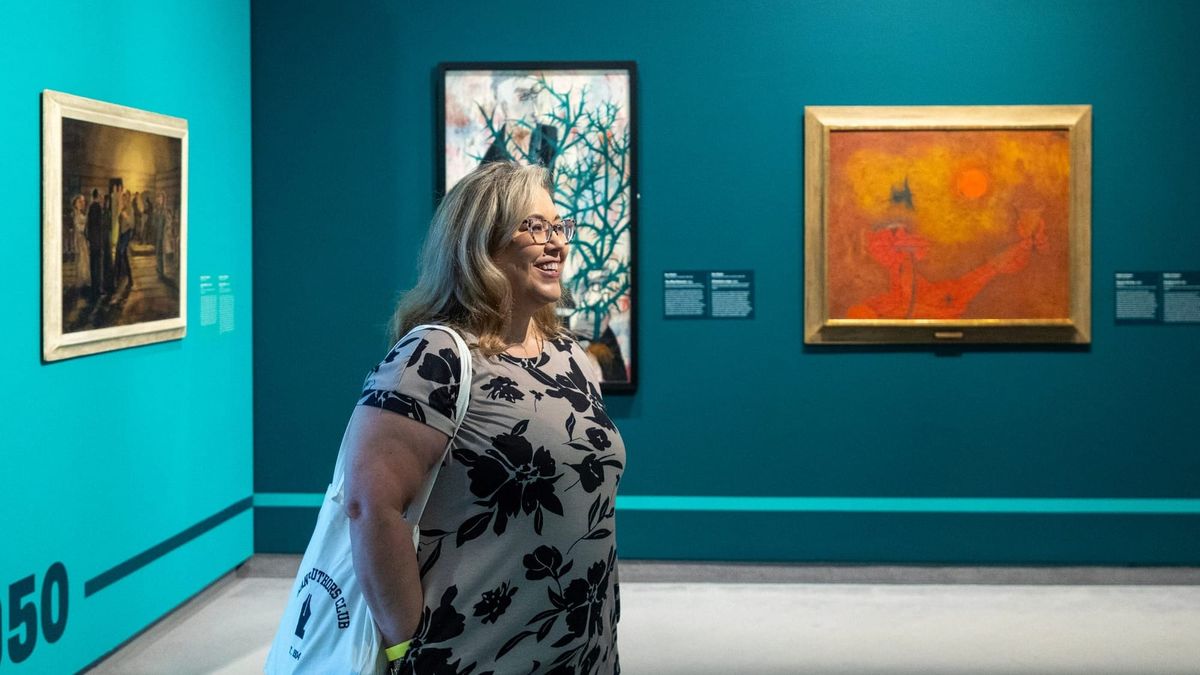
Wichita poet and educator April Pameticky recently released a new collection, “With Concern for How Words Land in the Body.” I interviewed Pameticky via Zoom about the ekphrastic nature of the book, which includes QR codes that link to artworks in the collection of the Wichita Art Museum that inspired many of the poems. Pameticky also created a Spotify playlist that complements the book.
Linzi Garcia: I got to see an early version of this book two years ago, so I know you've been working on it for a long time. Will you please tell us about the thought, the craft, and the prep work that went into making this book?
April Pameticky: I started writing elements of it in 2022. In the spring of 2023, I was getting frustrated because I didn't have time to write. I wanted to tell my story, but also there are puzzle pieces that are missing. I also read some things on memory, about how we kind of make it up. The event happens and it gets stored, but then we revisit the event over and over and over again, and as we revisit the event, we write over it, and the memory is more real than the event itself. That really stayed with me.
My poems are in dialogue with other things, and I wanted to embrace that. I wanted to acknowledge it in the poem itself as a way for other people to be like — Oh, this is what she was listening to, this is what she wanted to feel or was trying to capture, or this is how I feel when I'm listening to this. I wanted to interact with the audience in some way beyond just the poem on the page.
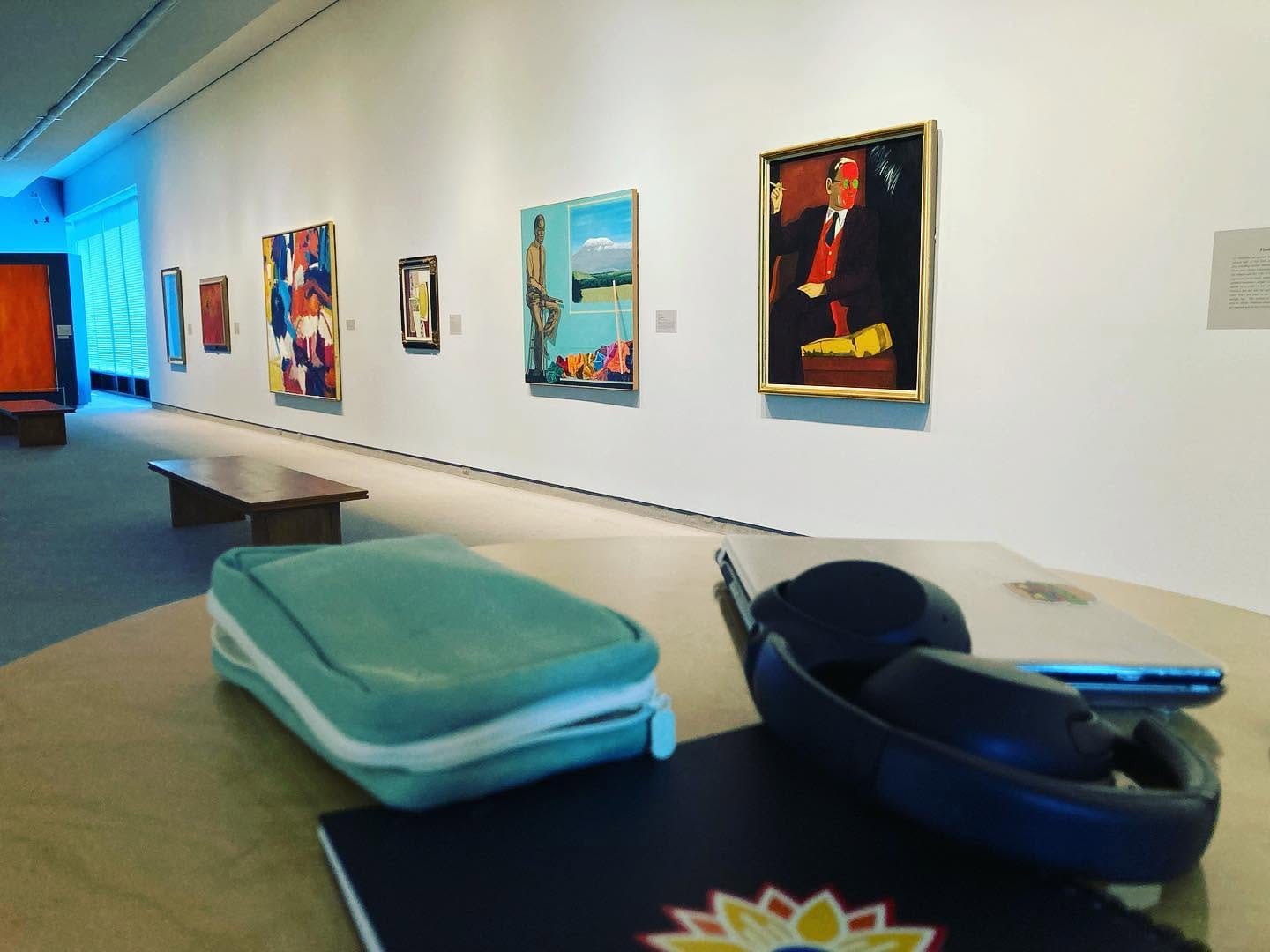
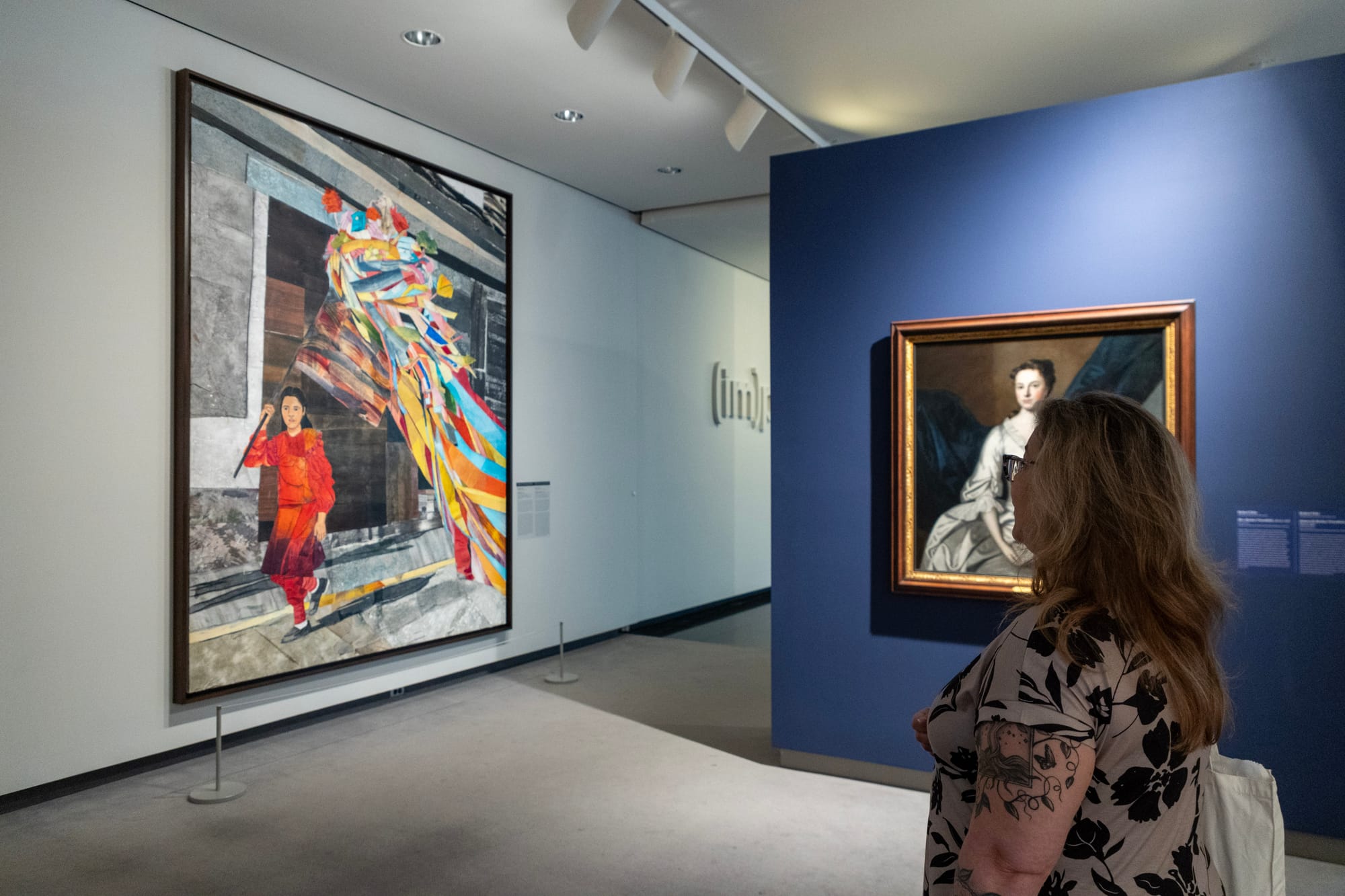
I approached the Wichita Art Museum because I wanted to do a residency. But due to the age of my kids, I really couldn't leave and go somewhere for a month. The museum was gracious enough to let me move in. I didn't sleep there, but if they were open, I was welcome. They made a space for me in the main gallery. Every week we would move that writing station to another place. Being in that space was inspirational.
The prep work was giving myself the opportunity to sit down and write and then also to stick to my guns about how I wanted readers to experience the work. I think QR codes were the easiest way, and as long as the links stay live they'll work.
LG: Working through these memories, thinking about them more, and writing them out, how did this book impact you?
AP: I took ownership over stories that I thought belonged to my mother. Childhoods are odd spaces because you have your own memories, and then your parents or your family tell you stories. There were some things that happened that I thought were my mother's story, and I decided, no, you were there. Taking ownership over my own story is hugely liberating. Some people have no problem doing that, but I would never want to hurt my mom or cause any of my family pain. But, frankly, shit happened. Out of respect for them, I didn't always tell those stories, and I'm done with that. I'm of an age where it's my story, and I get to tell it the way I want to.
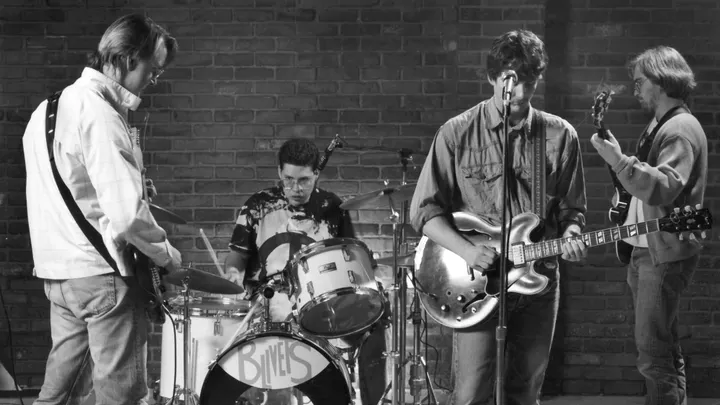
I also gave myself permission to indulge my art love and my music love and be a fan. I love music so much, but I'm not a musician. I love art so much, but I'm not an artist. This allowed me to be a fan, and that is its own beauty.
LG: How did you come up with the title and the book cover?
AP: “With concern for how words land in the body” is not actually my line. It's a line that I took from a dancer named Mina Estrada. She was talking about how storytelling informs dance on her podcast “Benevolent Instruction.” One of the things she said was that dancers were always concerned with how words and stories land in the body. I had such a physical reaction to that idea — that we carry things that people have said to us, things that people have said about us. It became the groundwork for all of the exploration of the poems.
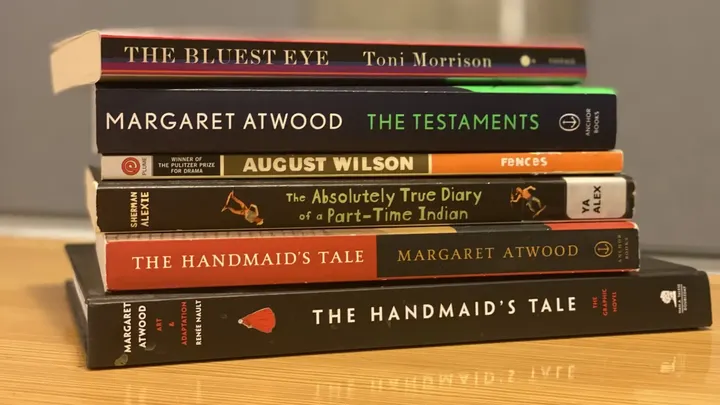
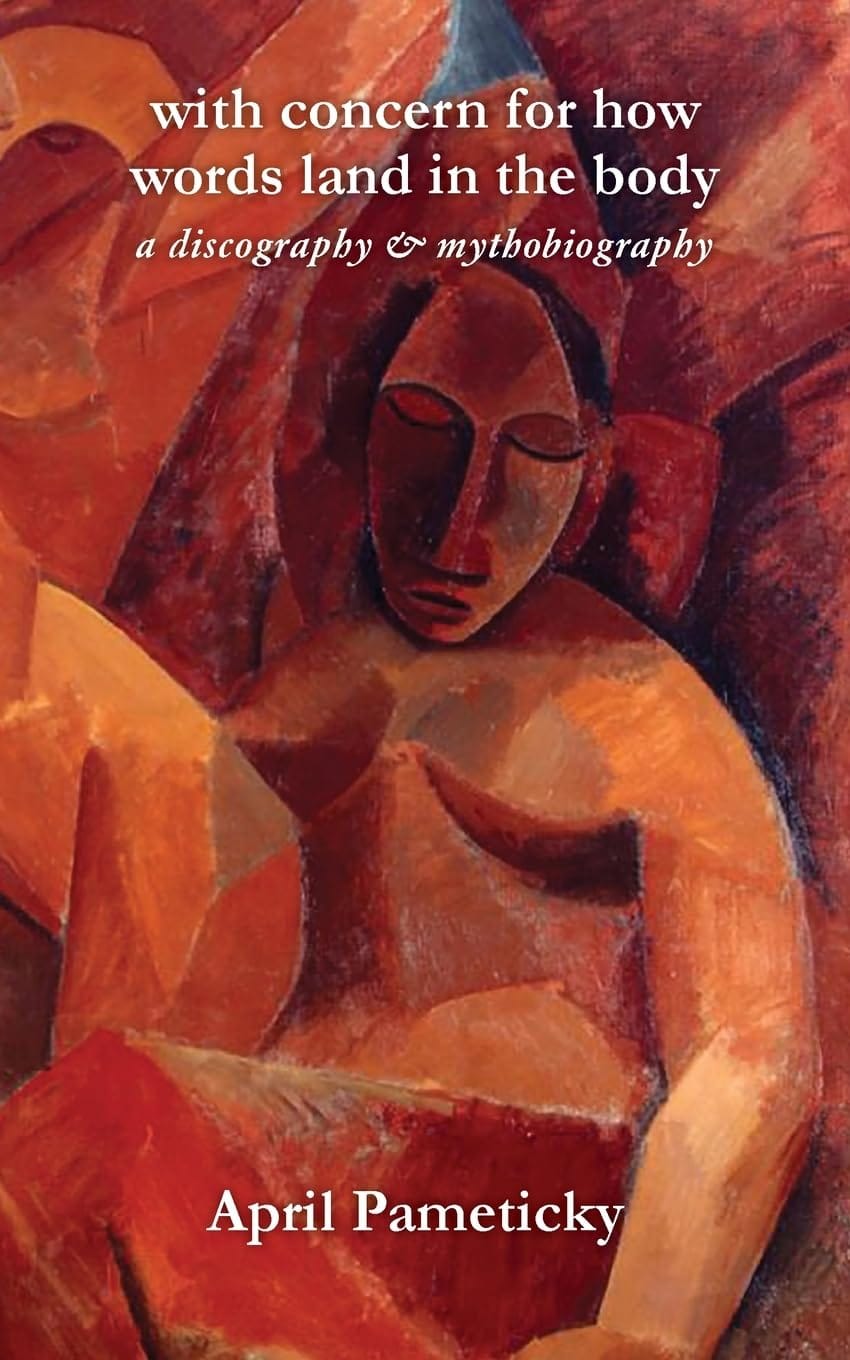
The book cover was not me. That was 100% (Jason Ryberg, publisher of Spartan Press). The cover art itself is Pablo Picasso’s “Three Women,” which is a painting that is dated from 1908. It is in the public domain. Given that a lot of the poems that I wrote for this collection are in response to artwork, it seems gorgeously fitting.
LG: It's smart of you to use the QR codes to lead readers to those artworks.
AP: It does two things for me. The first is I don't have to worry about doing the artwork justice in print. And two, it drives traffic to the Wichita Art Museum, which is my way of saying thanks. I continue to be someone they collaborate with. Since my experience there, they have expanded what they're offering for writers. I'm very grateful to them.
LG: It's a wonderful museum, and I would be interested in partaking in some of their writerly offerings. Do you have upcoming events with them? Readings? Workshops?
AP: I don't have anything forthcoming because I just did two things in the last month. First, I am working in collaboration with Harvester Arts, artist Kevin Kelly, and the Wichita Art Museum. We've created something called the Creative Futures Lab, which is kind of a two-day in-service for juniors and seniors in high school about whether or not they're considering a creative future or a potential career in the creative arts industry. We walk them through potential opportunities in their professional life, but we also get them to start thinking creatively about what sharing their artwork looks like. The idea that artists are really limited to just gallery showings is very outdated. We piloted our first curriculum, and we're fine tuning it now, and we'll hopefully offer it again in the fall.
And then I did an Art Venture day, where I was set up in the middle of the gallery and people take a prompt and go find an artwork that they want to respond to in poem form. I did a color hunt for people that weren't totally comfortable. I took that from Traci Brimhall, who does this amazing crowdsourced poem. I modified it so that people would go and look for color in the gallery, and then we collectively created a poem from that, which was very fun. Depending on what people chose to do, they could type out their poem and share their poem visually that way, or I would take their cards. We had a poem wall, where we were collectively collaborating together to create this poem. That's the kind of work that I love doing.
LG: I love to see your passion for teaching and for poetry combined.
AP: Talk about knowing where my heart is, right? Programs that I've done for (WAM) in the past that I will continue to do when they ask are Friday evening programs (which the museum calls WAM Nights). I do a little sharing of my own work, and then I send people out into the gallery as writers, and then we come back at the end of the evening and share our work. People meet who wouldn’t normally cross paths. They're sharing in the moment, and that is magical.
LG: Tell us about your life beyond this book. Who is April when she’s not putting books together and leading workshops?
AP: I am a year into a doctoral program. It's exciting, but it means the poet has shrunk. Oh, God — it's real. I'm not writing. It's really hard, (but) I knew I was going to make this sacrifice. It's been hugely informative, because I'm studying the best ways to teach writing.
When I'm not being a student, I'm being a teacher, and I'm being a mom. That's where the poetry comes from: those interactions with my students that make me look at the world differently. Trying to explain things to my kids. Poetry is giving myself permission to be in the moment and take notes for myself.
Right now I'm into transformation. Everywhere I look, things grow and things die and things wilt. I have to be intentional about looking at the world as a poet, as opposed to looking at the world as a researcher and a student.
I really believe in community connection. Being with other creative people is so rejuvenating. It's the best. I don't want to be friends with anybody else. I just want to be friends with other creative people, or other people struggling with creativity, or other people who are living life as authentically as they can. I wouldn't be continuing to create if it weren’t for a creative community.
LG: Tell me about your creative community.
AP: Part of it is my connection to Harvester Arts, which is a regional arts organization whose mission is to create artistic opportunity for artists. Because of that, I tend to run into other creatives. We start talking, then we're like, Oh, we have this in common. Would you like to work on the project? Creative community for me is these people that I get to run into through Harvester.
Wichita is really starting to come together. The arts community is working very hard. We emerged from COVID really hungry for connection. It's very apparent in the young artists who are doing amazing things. The city also has set aside a certain amount of money for creative investment. When a city is behind it, because the people in the city want this, and when there's money set aside, that means a lot.
The Details
“With Concern for How Words Land in the Body,” a collection of poems by April Pameticky
Published by Spartan Press, 108 pages, and available anywhere books are sold.
Learn more about the writer on her website and Instagram account.
Linzi Garcia is a journalist, editor, teacher, and international poet. She resides in Emporia, Kansas, where she works for Meadowlark Press and House of Morrow. Linzi is a recipient of a NextGen Under 30 Kansas Award and Kansas Governor’s Arts Award.
❋ Derby man has the kind of voice that turns heads — and chairs
❋ Socializing while sober: how some Wichitans are cultivating alcohol-free communities
❋ As a small creative business closes, the owner mourns
❋ Painting through it: Autumn Noire on 20 years of making art
❋ How a guy from Wichita resurrected 'Dawn of the Dead'
❋ Bygone Friends University museum housed curious collections
Support Kansas arts writing
The SHOUT is a Wichita-based independent newsroom focused on artists living and working in Kansas. We're partly supported by the generosity of our readers, and every dollar we receive goes directly into the pocket of a contributing writer, editor, or photographer. Click here to support our work with a tax-deductible donation.